



If your body feels welded together when the alarm goes off, that is not a personal failure. It is a stiff-back, sleepy-hips, half-awake problem, and it happens to plenty of people who spend the night in one position and then stand up like nothing happened.
Coffee helps the brain. It does not loosen a tight neck.
That first hour of the day is when a few slow stretches can change everything that follows. Your breathing gets deeper, your joints stop complaining quite so loudly, and that weird, rusty feeling in your lower back or shoulders starts to ease off before it turns into a full-day annoyance. The trick is keeping the work gentle. Morning stretching should feel like easing into movement, not chasing range for its own sake.
Hold each stretch for 20 to 30 seconds, or move through 4 to 6 slow breaths if that feels better. Go easy on the intensity. If a stretch makes you wince, back out of it a little and shorten the range. A good morning routine should leave you feeling taller, not wrung out.
I like to move from the top of the body down. It keeps the routine simple when your brain is still foggy, and it stops you from skipping the small stuff — the neck, ankles, and upper back often need more attention than people think. Start with the first one. It is the least dramatic, and that is exactly why it works.
1. Neck Nods and Side Bends for a Morning Stretch Reset
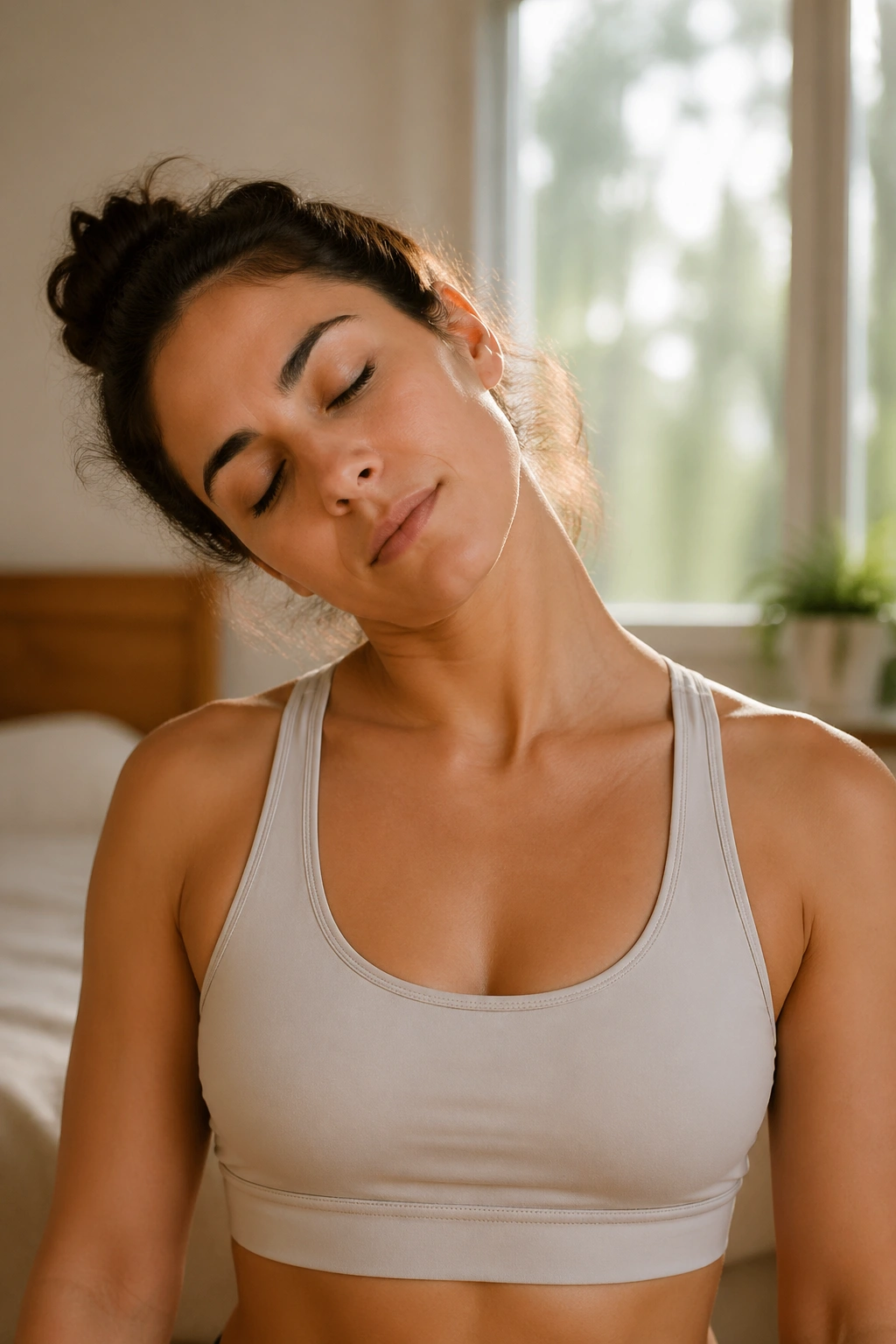
A tight neck can make the whole morning feel off. One lousy pillow angle, one slept-on shoulder, and suddenly turning to check the mirror feels strangely expensive. Neck nods and side bends are a calm way to wake up the muscles that support your head without yanking on them.
How to do it
Sit or stand tall, keep your shoulders soft, and tuck your chin a little like you are making a double chin on purpose. Hold that for one slow breath, then return to center. After that, tip your right ear toward your right shoulder until you feel a light pull along the left side of your neck, then switch sides.
Do 3 to 5 nods and 2 side bends on each side. Do not roll your head in big circles first thing in the morning — that old-school move can feel sloppy and aggravate a cranky neck. Clean, small motion is better.
A nice cue: your jaw should stay loose, and your shoulders should stay where they are. If one side feels tighter, stay there for an extra breath, but keep the stretch mild. No heroics before breakfast.
Quick check: if your neck feels pinchy rather than stretched, reduce the range by half and keep the chin tuck smaller.
2. Shoulder Rolls and Arm Hugs
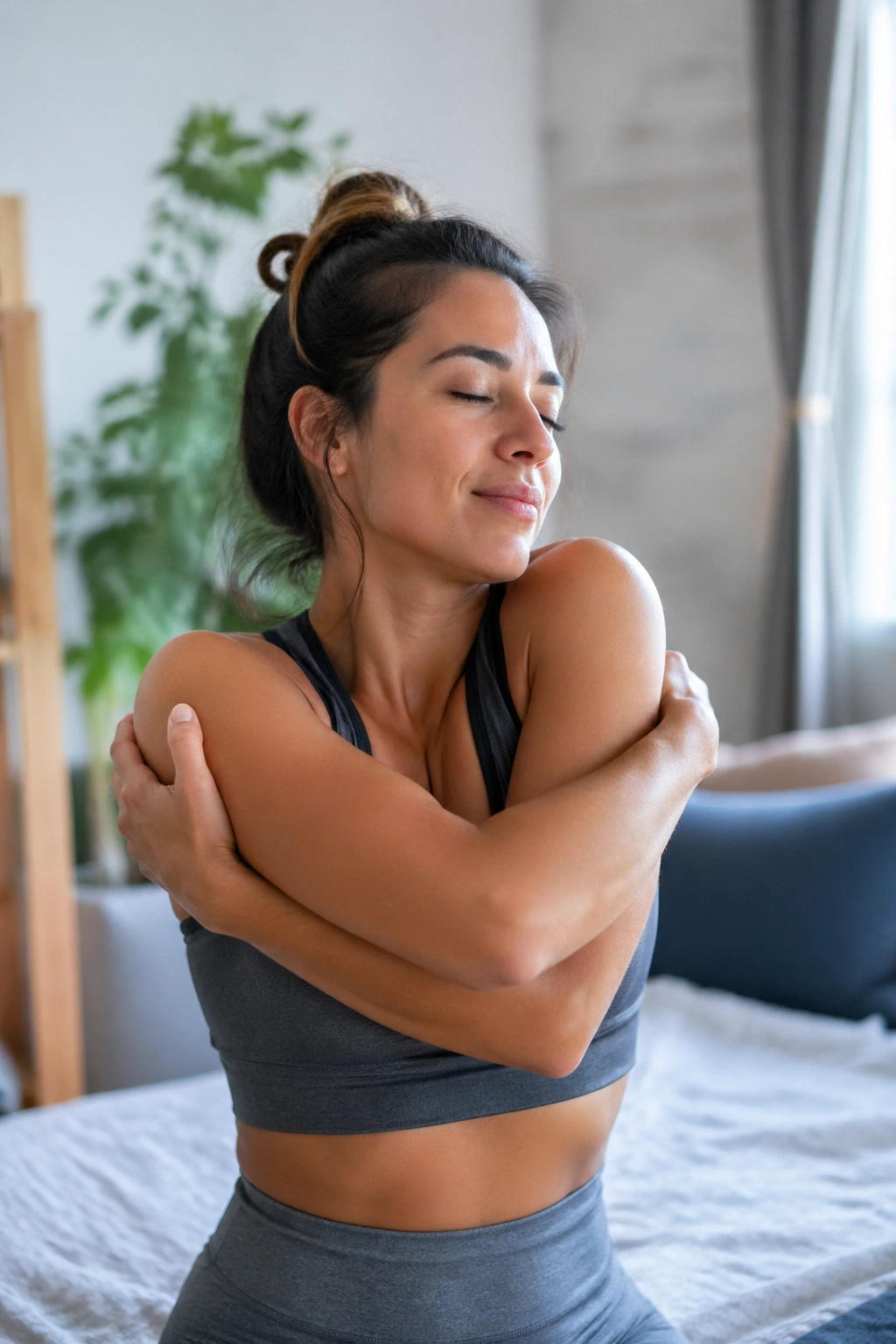
Shoulders hold stress like they have a grudge. They creep up toward your ears while you sleep, while you scroll, while you carry groceries, and then they act surprised when the morning feels stiff.
Roll them backward first. Ten slow circles is enough for most people, and I mean slow — not the frantic windmill version that looks like it belongs in a warm-up video from gym class. After that, bring both arms across your chest and give yourself a firm but gentle hug. Rock side to side for 3 breaths.
The hug part matters more than people think. It opens the muscles between the shoulder blades without forcing the chest into a big, theatrical stretch. That is useful when you are still cold and your upper back wants to move in pieces, not as one smooth machine. You should feel the back of the shoulders soften.
A one-sentence rule here: if your shoulders are already jammed up by your ears, exhale and let them drop before you do anything else.
3. Cat-Cow as a Morning Stretch for a Stiff Spine
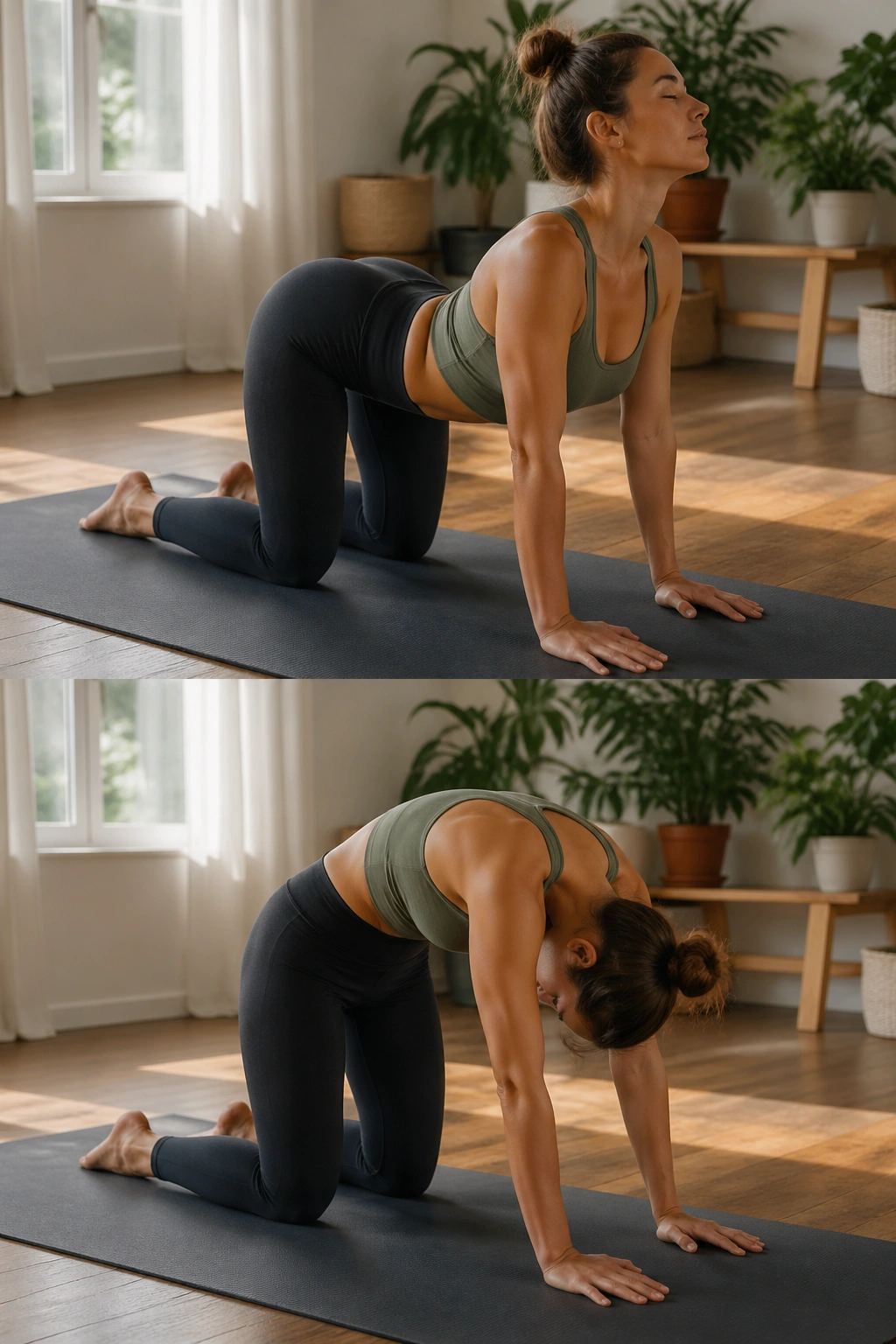
Why does cat-cow feel so good before you have even had a sip of coffee? Because it wakes the spine up in both directions instead of cramming it into one shape. That gentle flex-and-extend pattern is a friendly way to tell your back, ribs, and belly that movement is back on the table.
How to do it
Get onto hands and knees with your hands under your shoulders and knees under your hips. Inhale as you tip the tailbone up, let the belly soften, and lift the chest a little. Then exhale as you round the back and draw the chin down toward the chest.
Move through 6 to 8 rounds at an easy pace. If your wrists are grumpy, make fists or place your forearms on the floor. If your knees need padding, use a folded towel. Those little adjustments make the stretch feel much better than pretending you are tougher than you are.
Cat-cow works well because it links breathing to movement. The breath gives the rhythm, and the spine follows along. The goal is smooth motion, not the biggest arch you can make.
4. Thread the Needle for the Upper Back
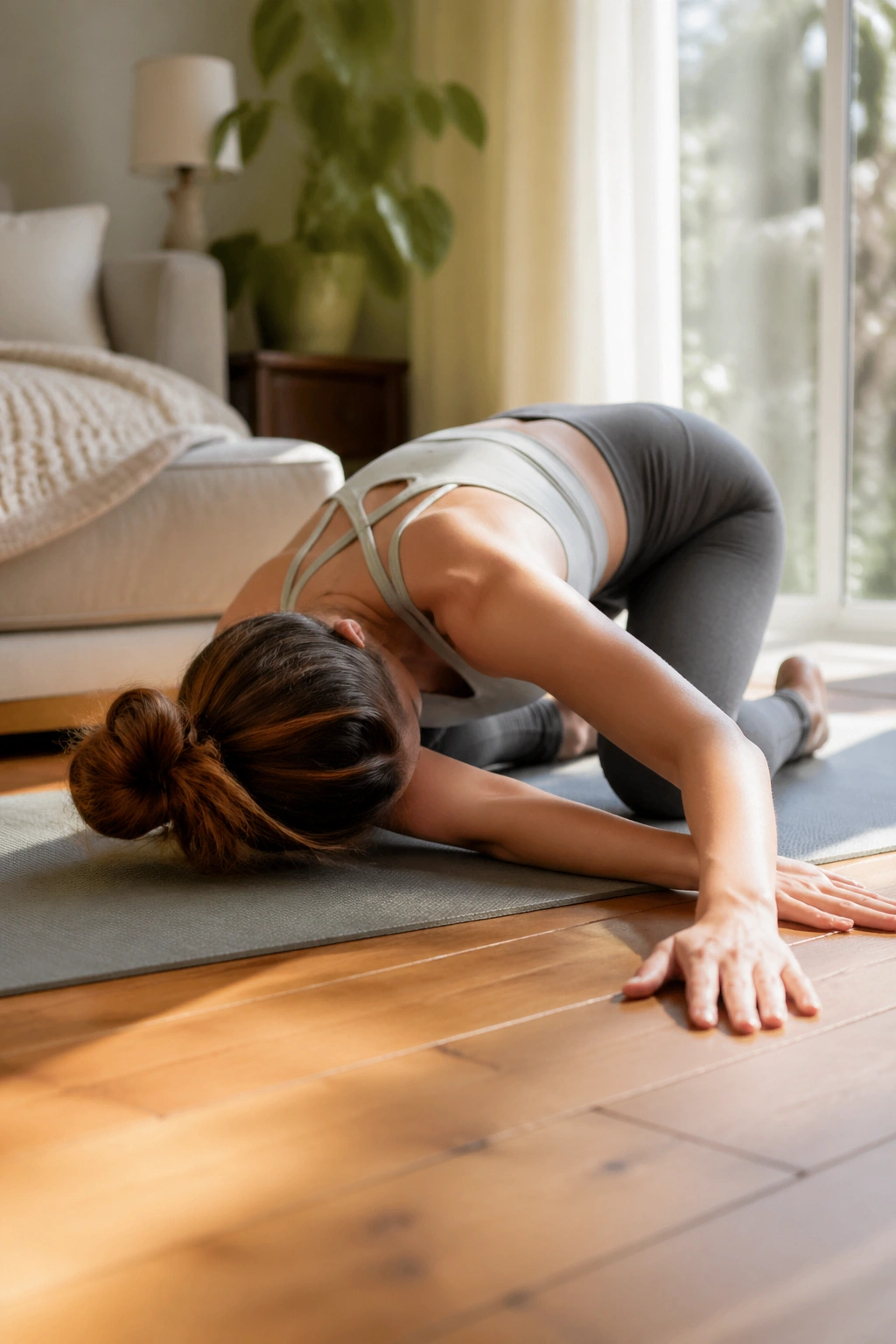
If your upper back feels glued together, this is the stretch that starts to peel things loose. I have seen people do a few lazy shoulder rolls and still look half-asleep; thread the needle is the one that usually changes their face. Fast.
Start on hands and knees. Slide your right arm under your left arm, palm up, and lower your right shoulder and temple toward the floor. Keep your hips stacked over your knees if you can, or let them drift a little if that makes the position easier. Breathe into the back of the rib cage for 3 to 5 breaths, then switch sides.
What to watch for
- Keep the movement slow enough that you can breathe through it.
- Don’t force the shoulder to the floor.
- Stay off the neck if it feels compressed.
- Use a pillow or folded blanket under the head if the floor is too far away.
The stretch works best when you stop trying to “win” it. You are after the space between the shoulder blades, not some deep contortionist moment. A small twist done well beats a big twist done badly.
5. Seated Spinal Twist Before the First Sip
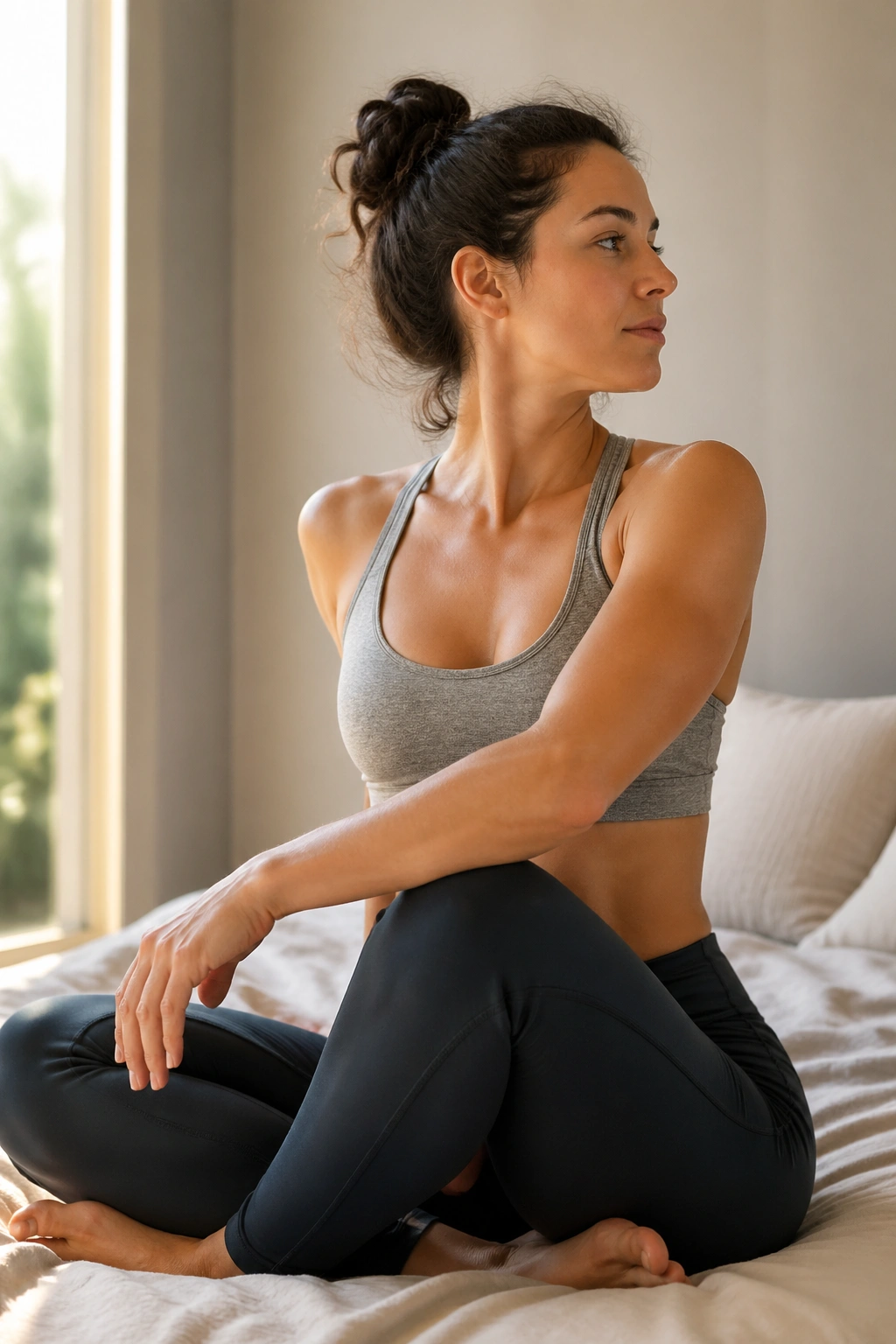
A seated twist is one of those stretches people either love or rush through badly. The good version is calm and tall; the bad version looks like someone trying to wring water out of a towel. Morning calls for the good version.
Sit cross-legged on the floor, on a cushion, or on the edge of your bed if that is easier. Lengthen your spine first, then place your right hand behind you and your left hand on your right knee. Turn from the ribs and shoulders, not from the neck alone. Hold for 3 breaths, come back to center, and repeat on the other side.
The point is to keep the spine long while you rotate. If you slump first, the twist ends up in your lower back and feels clumsy. If you sit a little taller, the motion spreads more evenly through the mid-back and chest. That is the part people usually need after a night of sleep.
Compared with an aggressive twist, this version feels boring. Good. Boring is useful before coffee. A soft twist should leave you feeling open, not cranked.
6. Standing Side Reach With Long Breaths
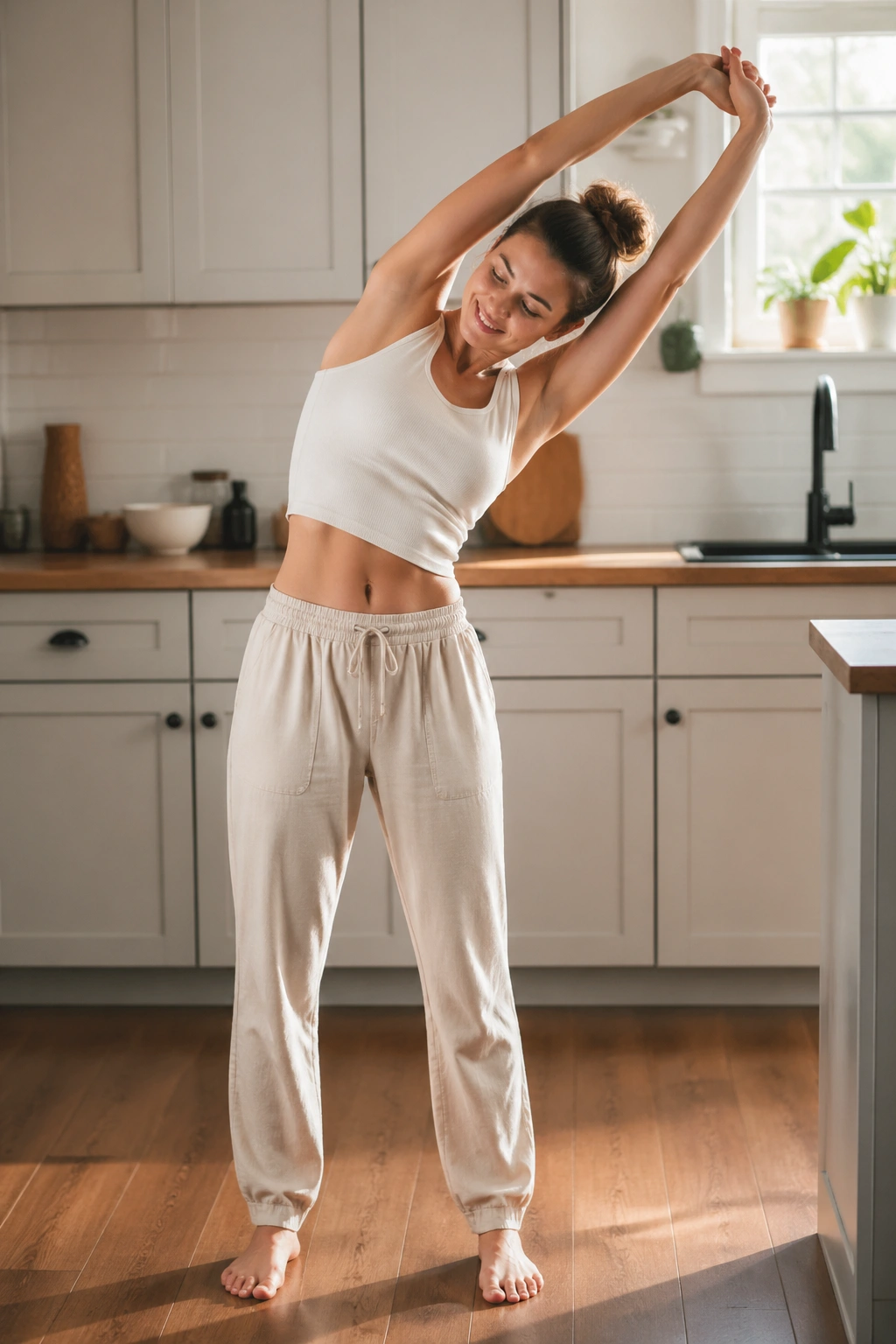
Standing side reaches are underrated because they look almost too simple to matter. Then you do them, and the sides of your ribs, waist, and upper back wake up like someone turned on a light.
Stand with your feet hip-width apart. Reach both arms overhead, clasp one wrist, and lean gently to the right while keeping both feet rooted. Take 2 or 3 slow breaths there, then switch sides. Keep the ribs from flaring wildly; the stretch should feel long, not collapsed.
What makes this one useful in the morning is the shape. Unlike a forward fold, which compresses the front of the body, a side reach gives your torso a bit of length without asking the lower back to do all the work. That makes it a smart choice if you wake up feeling compressed around the waist or stuck after sleeping on one side.
I also like it because you can do it anywhere. Beside the bed. Near the kitchen counter. In the narrow strip of floor between a chair and a wall. Three breaths each way is enough.
7. Downward Dog Pedal for the Back of the Legs
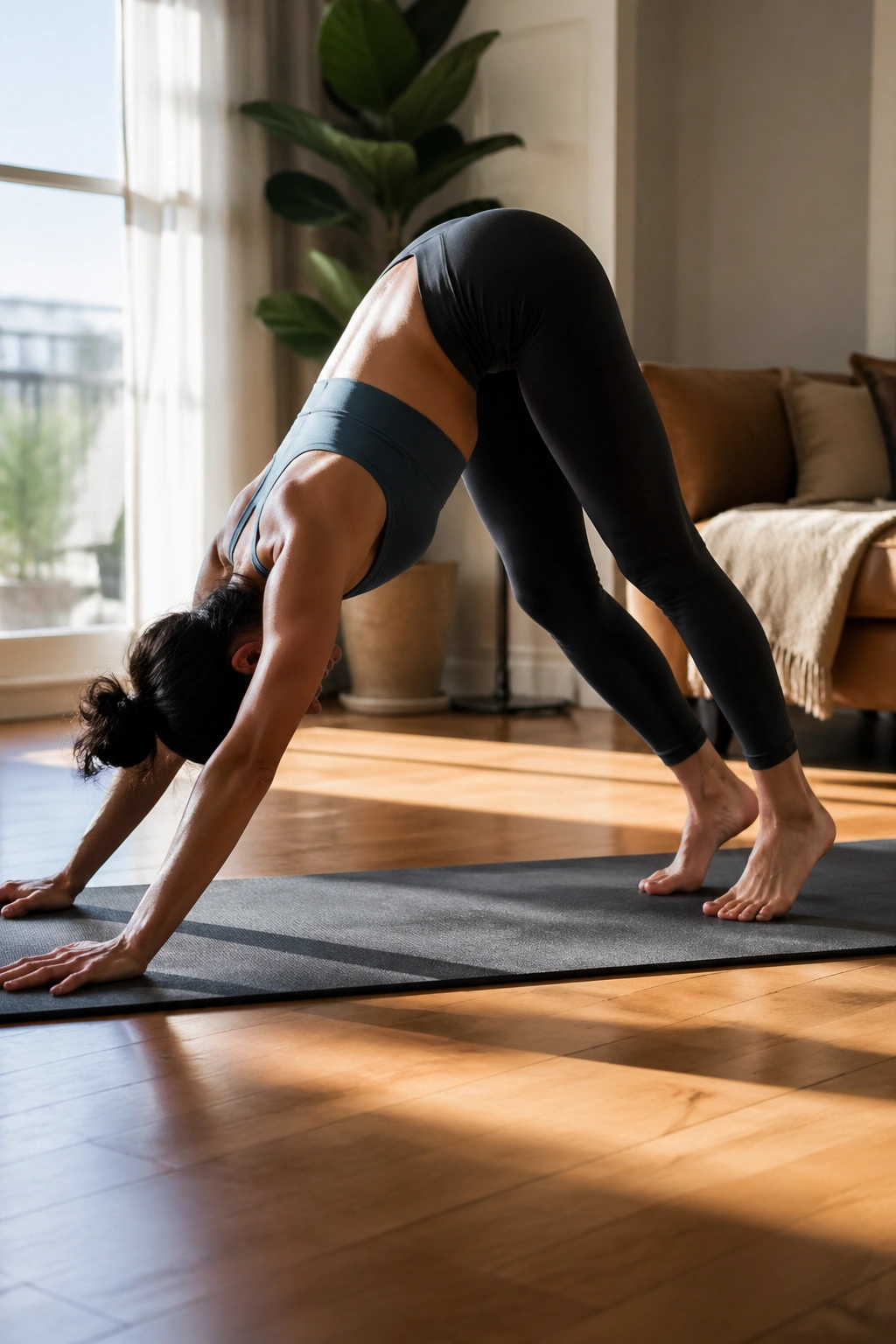
The back of your legs often feels tighter in the morning than it really is. Sleep shortens the position of the calves and hamstrings, and then the first few steps make everything seem worse than it is. Downward dog with a gentle pedal takes care of that without pushing too hard.
Place your hands on the floor or on a couch seat if the ground feels too low. Step your feet back and lift your hips into an upside-down V shape. Bend one knee, then the other, as if you are slowly walking the heels toward the floor. Keep pedaling for 6 to 10 switches.
Best way to use it
- Bend one knee at a time.
- Keep the hands broad and steady.
- Let the heels stay lifted if the calves are tight.
- Shorten the stance if your lower back feels strained.
The stretch changes depending on how you set your feet. A shorter stance usually feels kinder on the back, while a longer one gives the hamstrings more work. Start short. If the shape feels good after a few breaths, widen it a little.
If your shoulders hate floor weight, put your hands on a wall and make a standing version instead. Same idea, less drama.
8. Low Lunge Hip Flexor Openers
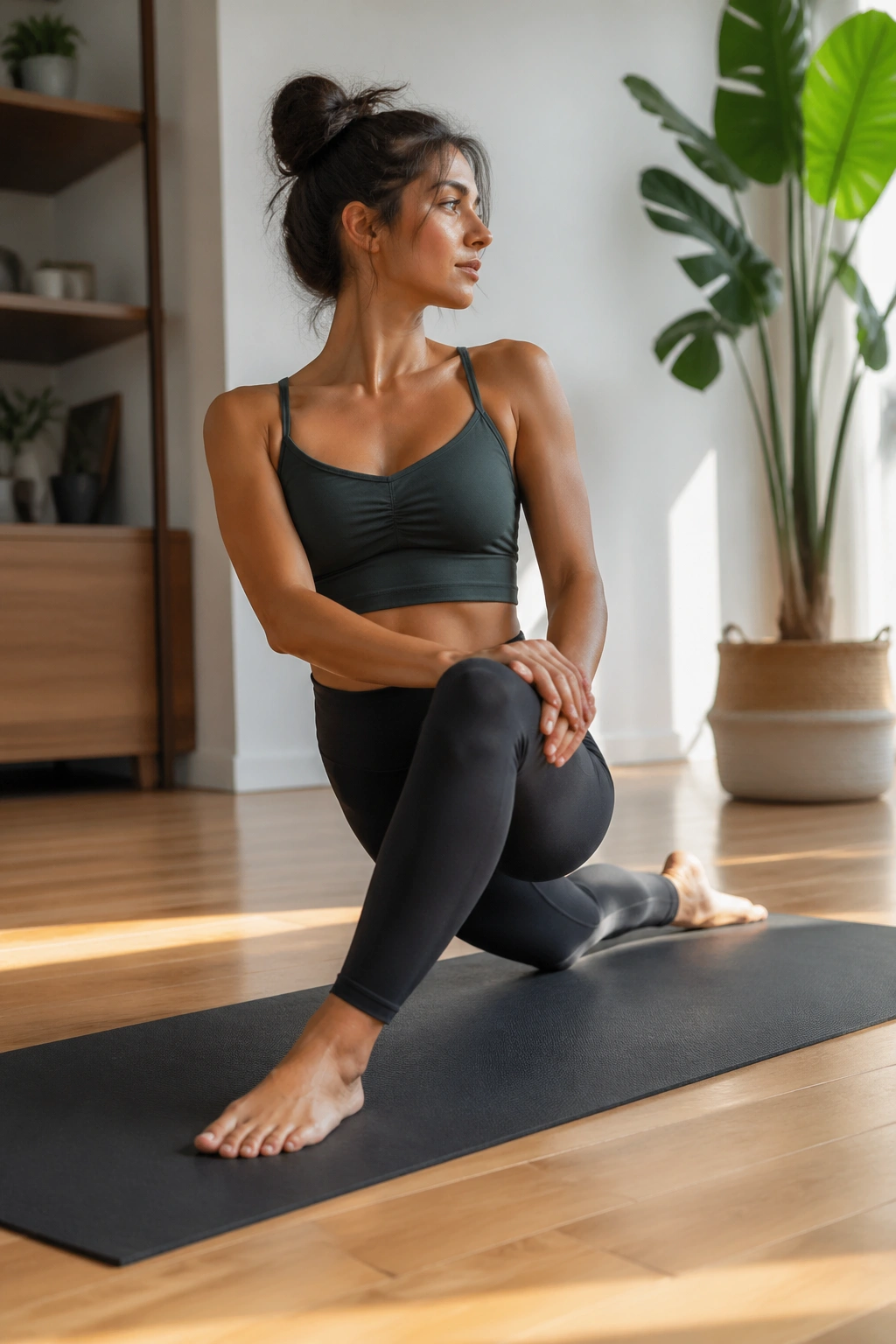
This is the one office workers usually need, even if they do not know it. Sitting all day leaves the front of the hips in a shortened position, and that stiffness can show up the second you stand up straight. Low lunge gives those muscles a polite lengthening without making the whole routine feel athletic.
Step your right foot forward into a lunge and lower your left knee to the floor on a folded towel or mat. Keep your right knee stacked over the ankle, then gently tuck the pelvis under a little until you feel the front of the left hip open. Hold for 3 to 5 breaths, then switch sides.
The key detail is the pelvis tuck. If you arch your lower back to fake a bigger stretch, you miss the point and annoy the lumbar spine instead. Keep the ribs soft and think about pressing the back thigh forward a touch. That usually gets the front hip to talk back in the right way.
A low lunge can feel more intense than it looks. Go easy on the first breath. The muscles often relax on breath three, not breath one.
9. Half Split Hamstring Hinge
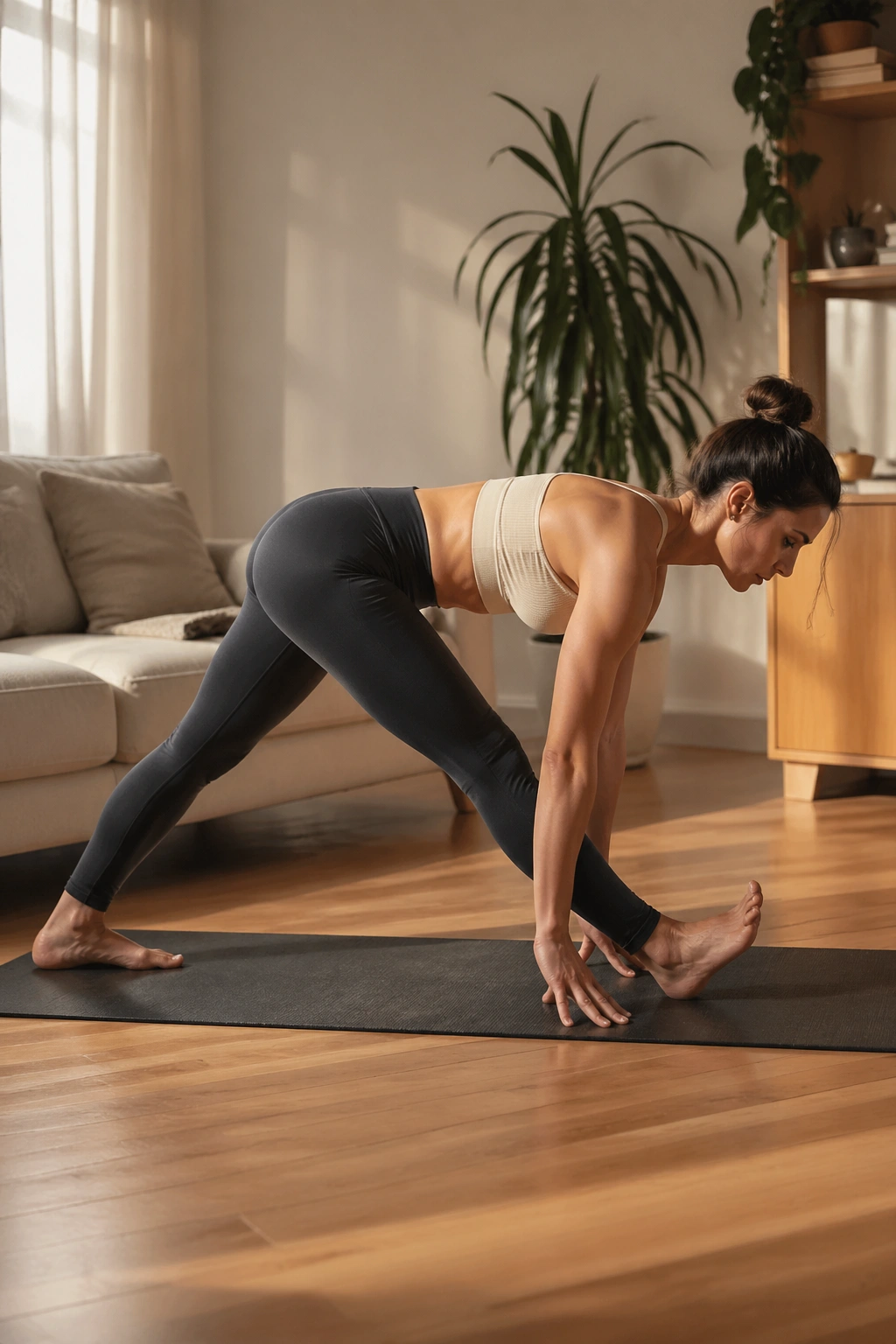
Morning hamstrings can be dramatic. You reach for your socks and they act like you asked for a personal miracle. Half split, or a simple hamstring hinge, is a cleaner way to loosen them than a full forward fold straight away.
From a low lunge, shift your hips back and straighten the front leg a little. Keep the front foot flexed so the toes point up, and hinge forward from the hips with a long spine. You should feel the stretch behind the thigh, not a round pull in the lower back.
The reason this works better than just bending at the waist is pretty simple: it targets the hamstring without collapsing the trunk. That matters in the morning, when your back is already a little stiff and the hamstrings are cold. Two or three breaths in each position is plenty. You can even pulse between a slight bend and a slightly straighter knee if that feels smoother.
A small note from experience: flex the foot hard enough to keep the leg active, but not so hard that your calf cramps. Tiny adjustments make this stretch more usable than most people expect.
10. Glute Bridge to Switch On the Back Chain
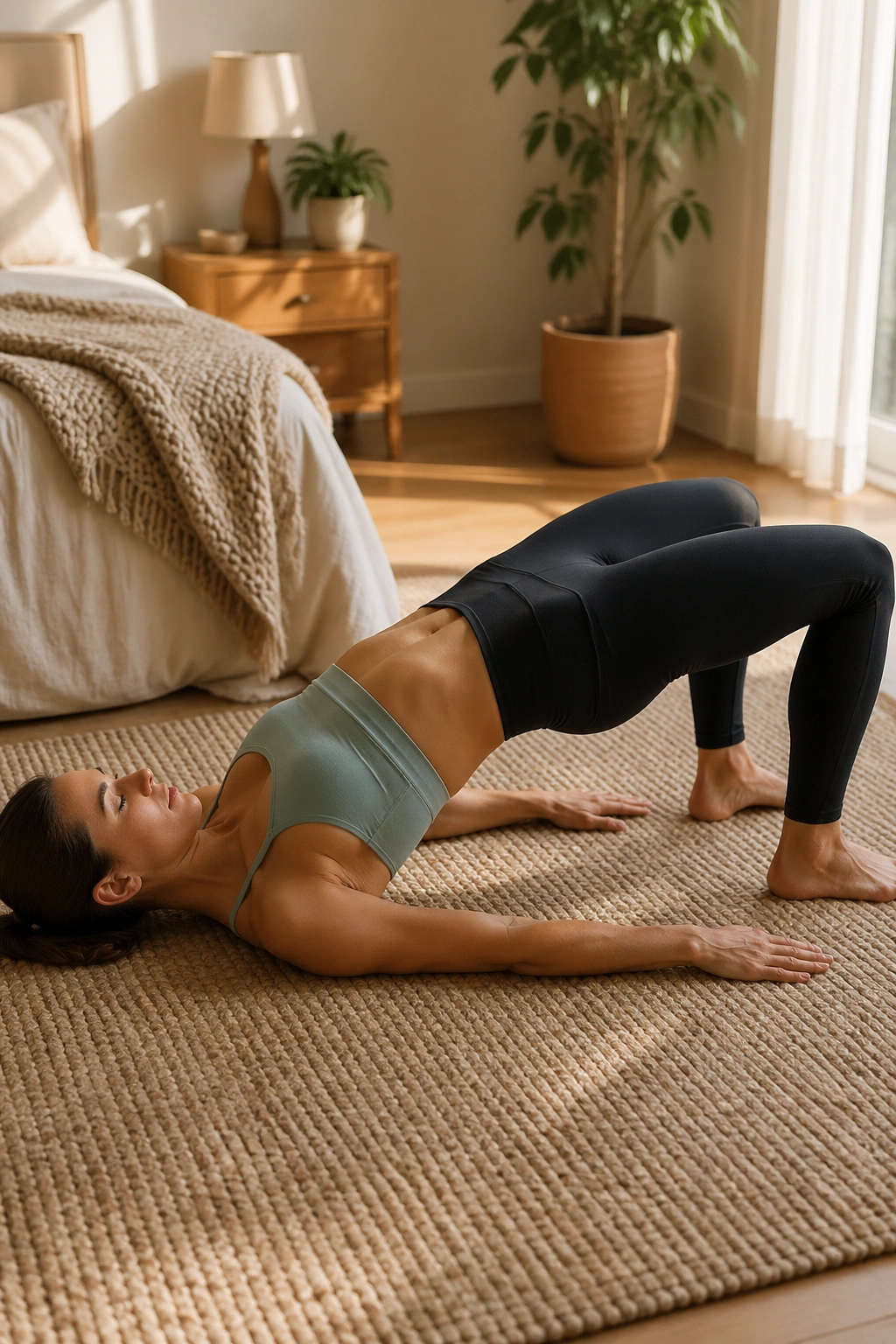
Not every useful morning move looks like a stretch. Glute bridges are more of a wake-up drill for the back of the body, and that is exactly why they belong here. If your lower back feels sleepy, your glutes may be asleep too, and your body will borrow the work from the wrong place.
Lie on your back with your knees bent and feet flat on the floor, about hip-width apart. Press through your heels and lift your hips until your body makes a gentle line from shoulders to knees. Pause for 2 seconds at the top, then lower with control. Do 8 to 10 slow reps.
The mistake people make here is arching the back and pretending that counts. It does not. The movement should come from the glutes and hamstrings, not a big rib flare. Keep the chin slightly tucked and the abs lightly engaged so the lower back stays calm.
I like bridges in the morning because they wake up the hips before standing work, walking, or a workout. They also pair well with stretching because they change how the body feels from the inside out. A bridge should feel like a clean squeeze, not a backbend.
11. World’s Greatest Stretch for a Full-Body Reset
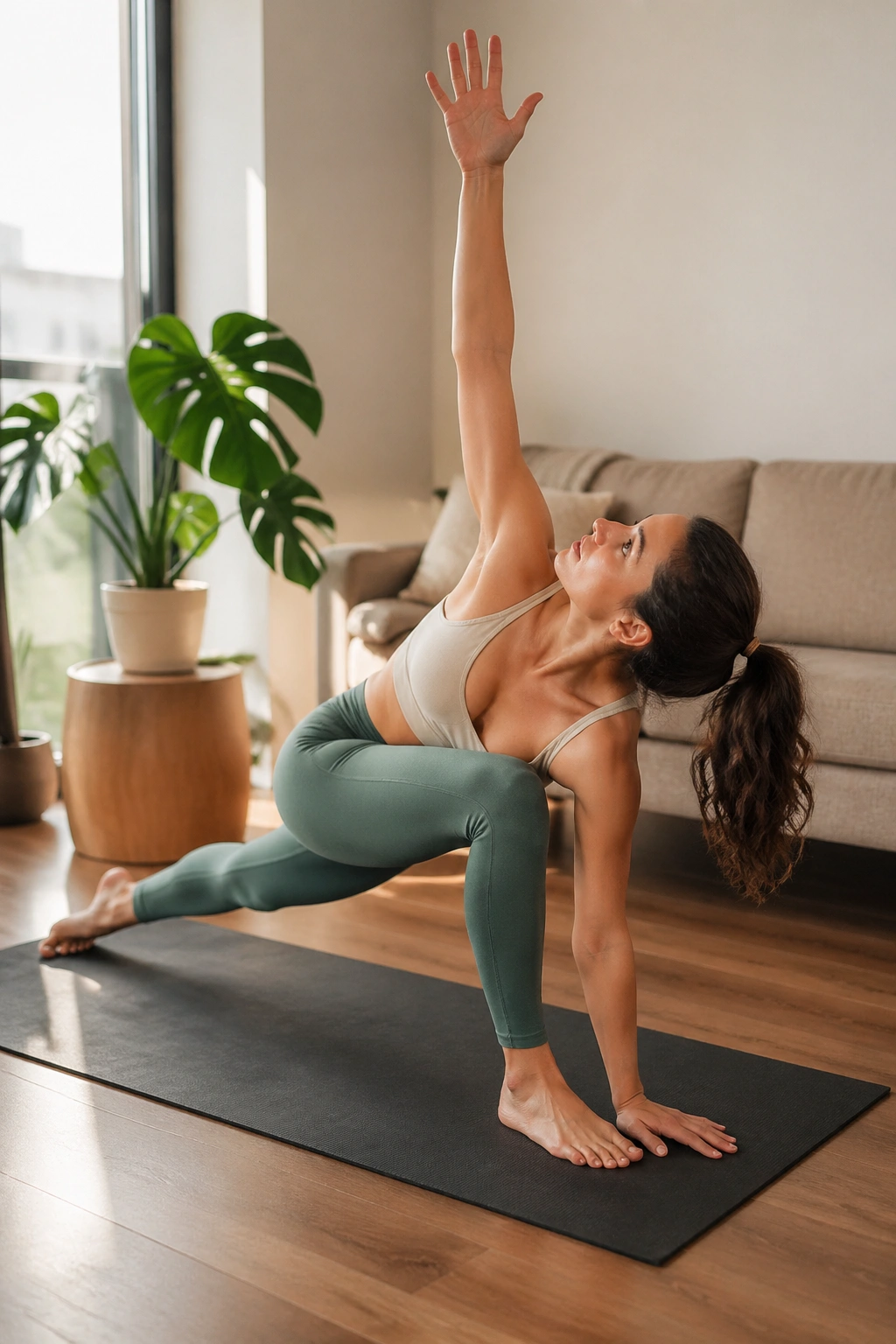
The name is a little dramatic. The stretch itself earns the hype.
Start in a high plank or a low lunge, depending on what feels easier. Step your right foot outside your right hand, lower the left knee if needed, and place your right elbow toward the inside of the right foot. Then rotate the right arm open toward the ceiling. Bring it back down and repeat 2 or 3 times before switching sides.
How to get through it without rushing
Move in pieces. Lunge first. Settle. Reach. Rotate. If you try to jump to the final shape right away, the hips and upper back do not get much out of it. Slow is the point here.
This stretch gives you hip opening, a hamstring hint, and thoracic rotation in one go. That combination is useful if you are short on time and want a single move that touches a lot of ground. It is also the one I would pick before a walk or a light workout because it feels like the whole torso has been checked and reset.
If the floor feels too low, put both hands on a chair seat and do the same sequence from a higher angle. Easy wins. They count.
12. Wall Calf Stretch for Tight Ankles
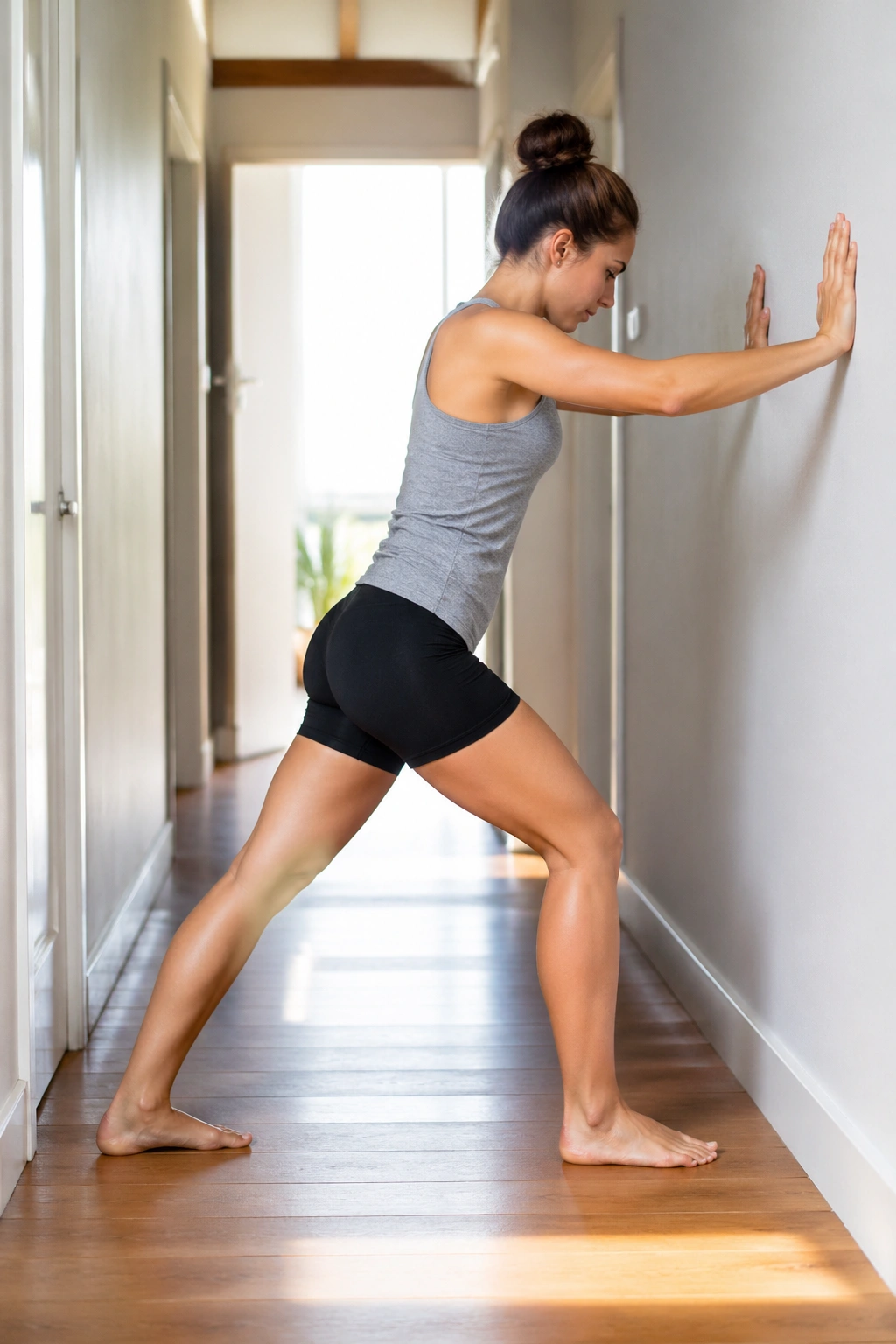
People love blaming the lower back for everything. Sometimes the calves are part of the mess. Tight calves can make standing, walking, and squatting feel awkward, and a quick wall stretch does more good than most people expect.
Stand facing a wall and place both hands on it. Step your right foot back with the heel planted and the toes pointing straight ahead. Keep the back knee straight to stretch the upper calf, or bend it slightly to get deeper into the lower calf and Achilles area. Hold each version for 20 to 30 seconds, then switch sides.
The difference between the straight-knee and bent-knee version matters. Straight knee reaches the bigger calf muscle; bent knee gets lower and a bit closer to the ankle. If your feet feel stiff when you first step out of bed, spending 30 seconds on each version is time well spent.
I’d rather see somebody do calf work near a wall than skip it completely and wonder why their legs feel clunky all day. The heel should stay down. If it keeps popping up, shorten the stance and try again.
13. Ankle Circles and Toe Points at the Bedside
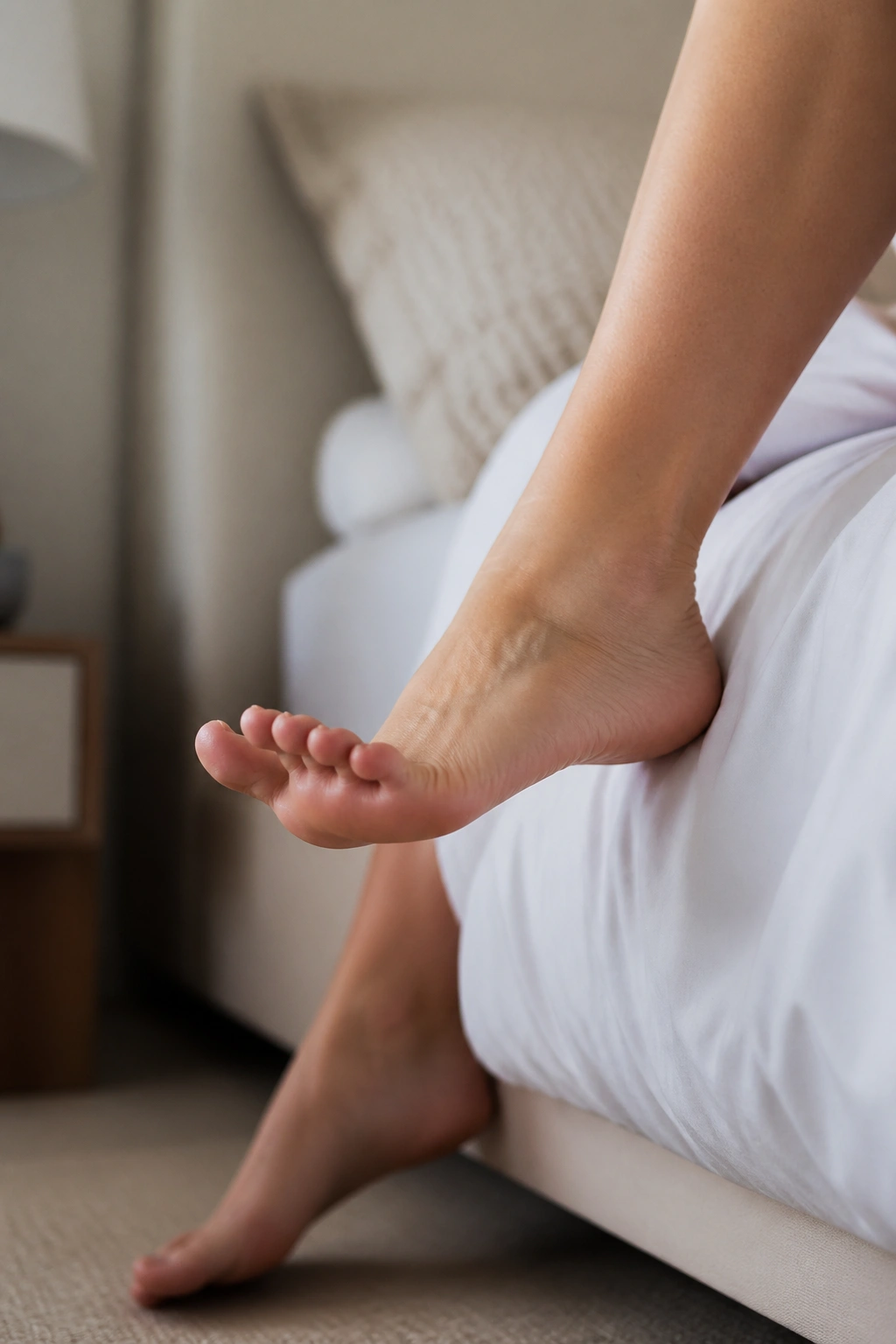
Why start with the ankles? Because they are the first joints to take your weight, and they often wake up last. A few circles and toe points can make the first steps feel smoother, especially if your feet tend to be stiff or puffy in the morning.
Sit on the edge of the bed or stay lying down. Lift one foot and draw 6 to 8 slow circles in each direction. Then point and flex the toes 10 times, pressing the ball of the foot away and pulling the toes back toward you. Repeat on the other side.
A lot of people skip this because it looks too small to matter. That is a mistake. Small joints love small work, and the ankles are full of tiny muscles and tendons that respond well to easy motion. You will not feel heroic doing this. You might feel awake, though.
Best for sleepy feet
- If you wake up with stiff arches.
- If your ankles feel stuck in boots or socks.
- If the first few steps feel heavy.
- If you want a no-floor option.
A minute or two is enough. Keep it quiet and unhurried.
14. Child’s Pose With Side Reach
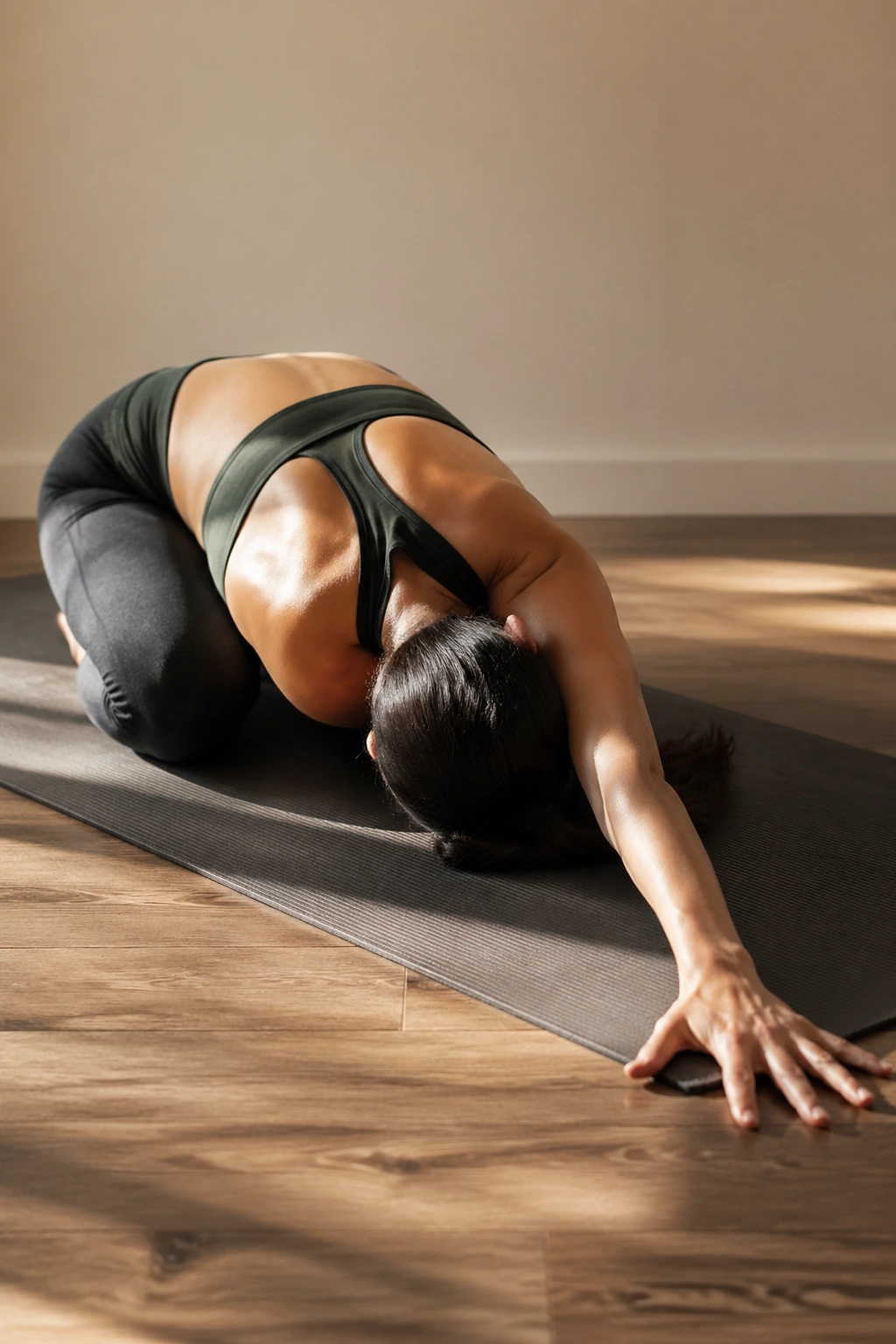
Child’s pose is the stretch people often use as a reset button, and the side-reach version gives it a little more value. Instead of staying centered, you walk your hands to one side so the opposite side of the ribs and back can lengthen.
Kneel on the floor, sit your hips back toward your heels, and reach your arms forward. Then walk both hands a few inches to the right and breathe into the left side of your torso for 3 breaths. Come back through center, walk the hands left, and repeat.
This one is especially nice when your lower back wants softness rather than a deep bend. It feels quieter than downward dog, and a little more comforting too. If your knees complain, put a folded blanket under them or keep the hips higher. There is no prize for forcing a low seat.
Compare it with the side reach while standing: the standing version opens the sides of the body with more lift, while child’s pose gives you compression relief and a calmer, grounded feel. Use the one that matches your morning mood. Some days you want space. Some days you want the floor to hold you up.
15. Standing Forward Fold to Finish Your Morning Stretches
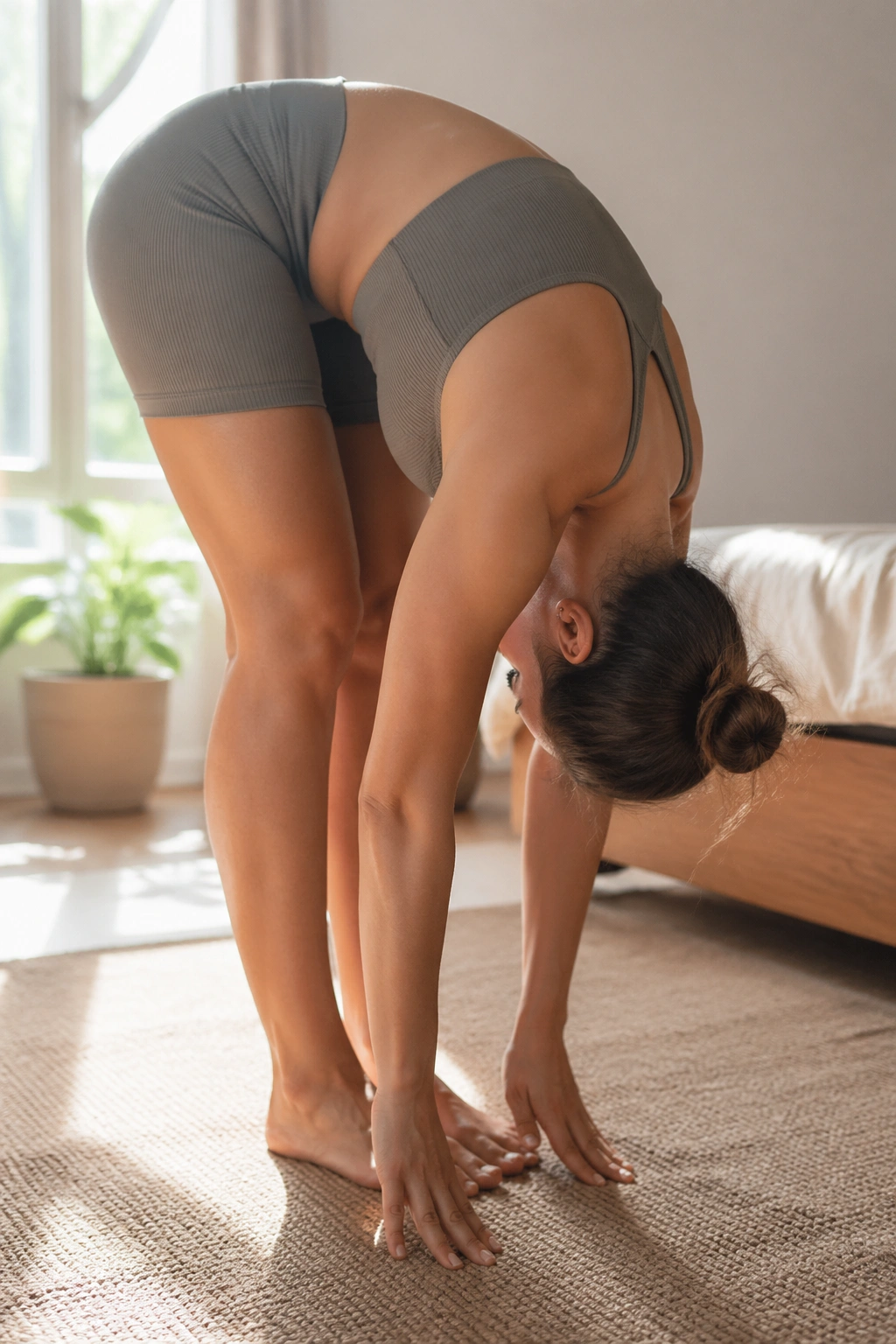
A forward fold is a fine place to end because it feels like a full-body exhale. Done well, it gives the back of the legs, the lower back, and the neck a chance to release without asking you to keep your torso rigid.
Stand with your feet hip-width apart and bend your knees enough that your belly can rest near your thighs. Fold forward from the hips, let your arms hang, and either hold opposite elbows or let your hands brush the floor. Sway gently from side to side for 3 to 5 breaths. If you feel pressure in the back of the knees, bend them more. A lot more, if needed.
That bent-knee version is the smarter version for most mornings. Straight legs can feel elegant in photos and lousy in real life, especially when your hamstrings are cold. A soft bend keeps the stretch in the muscles instead of dumping it into your lower back.
If you want to turn the whole routine into something repeatable, pair this fold with the earlier stretches and keep the order almost the same each day. Your body learns patterns quickly. After a while, the first reach after waking up starts to feel less like a negotiation and more like a habit worth keeping.
