



Sitting all day does a number on hips. By the time you stand up, the front of the pelvis can feel glued, the inner thighs can feel stiff, and even a short walk to the kitchen can feel oddly choppy.
That’s why the best hip stretches for sitting all day tight hips are usually the ones that hit more than one angle. The hip flexors want length. The glutes want to wake up. The adductors and deep rotators often need slow opening, not a hard yank.
A lot of people stretch the first thing that feels tight and stop there. That’s a mistake. Tight hips are usually a mix of shortened positions, sleepy muscles, and a nervous system that has been told to guard, so the fix is rarely one dramatic pose held for ten seconds.
Pick one stretch for the front of the hip, one for the inner thigh, and one for the back pocket area. Use a calm breath, move until you feel a strong pull but not a pinch, and start with the front-of-hip work if desk time has made your stride feel short and stiff.
1. Half-Kneeling Hip Flexor Stretch
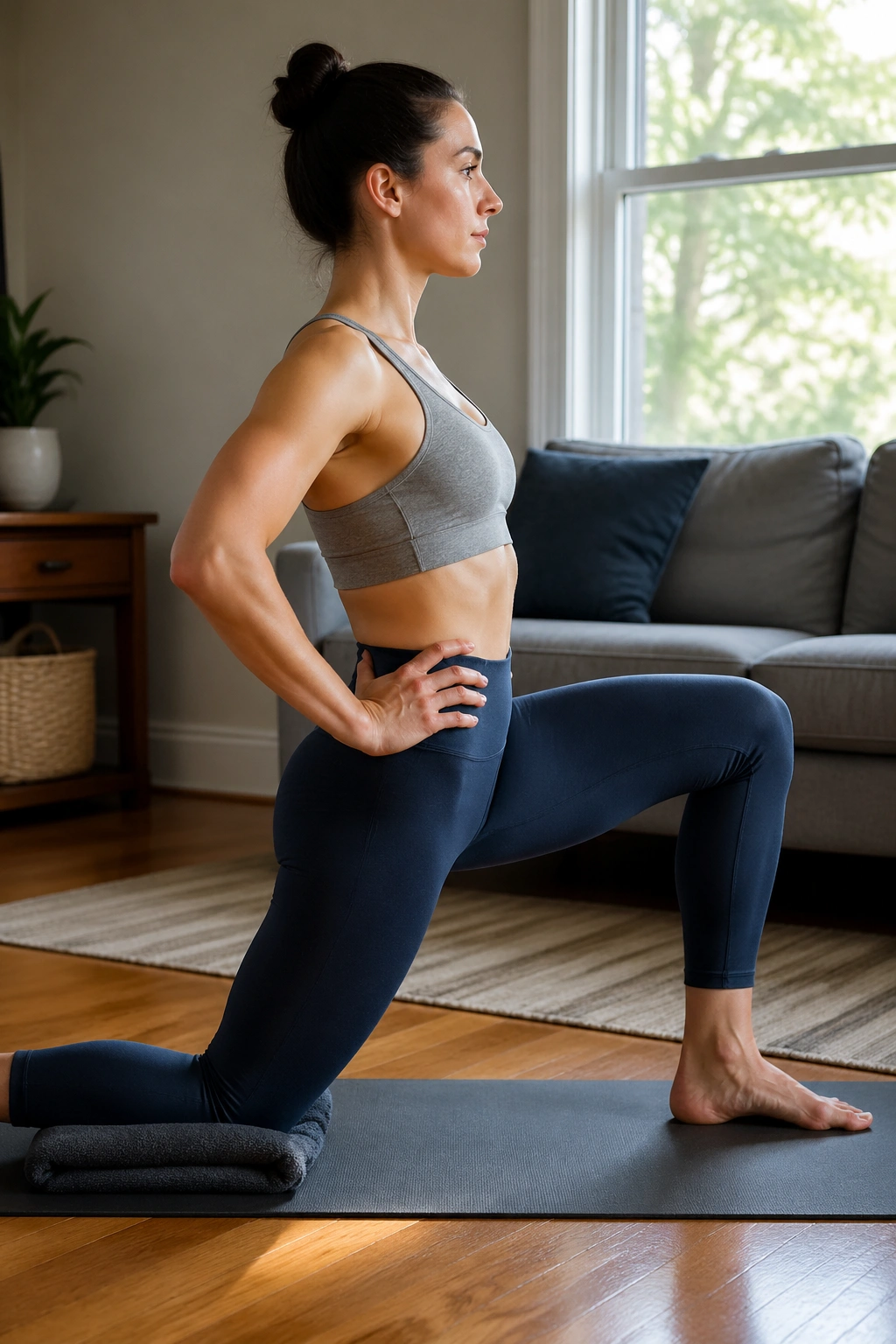
Start here if standing up from a chair makes your hips feel like they forgot how to open. The half-kneeling hip flexor stretch goes straight after the muscles that stay bent all day, especially the iliopsoas and the front of the thigh on the kneeling side.
How to set it up
- Put a folded towel or cushion under the back knee.
- Step the front foot forward so the front knee sits over the ankle.
- Tuck the tailbone a little and squeeze the back-side glute.
- Shift forward only 1 to 3 inches, then stop when you feel the stretch at the front of the hip.
That last part matters. Small shifts are usually enough. If you push too far, the stretch jumps into the lower back, and then you’re not doing what you think you’re doing.
A good rep feels long through the front of the pelvis and quiet everywhere else. Hold for 30 to 45 seconds per side, breathe out slowly, and try to keep the ribs stacked instead of flaring up. Tiny shift. Big difference.
2. Couch Stretch for the Front of the Hip
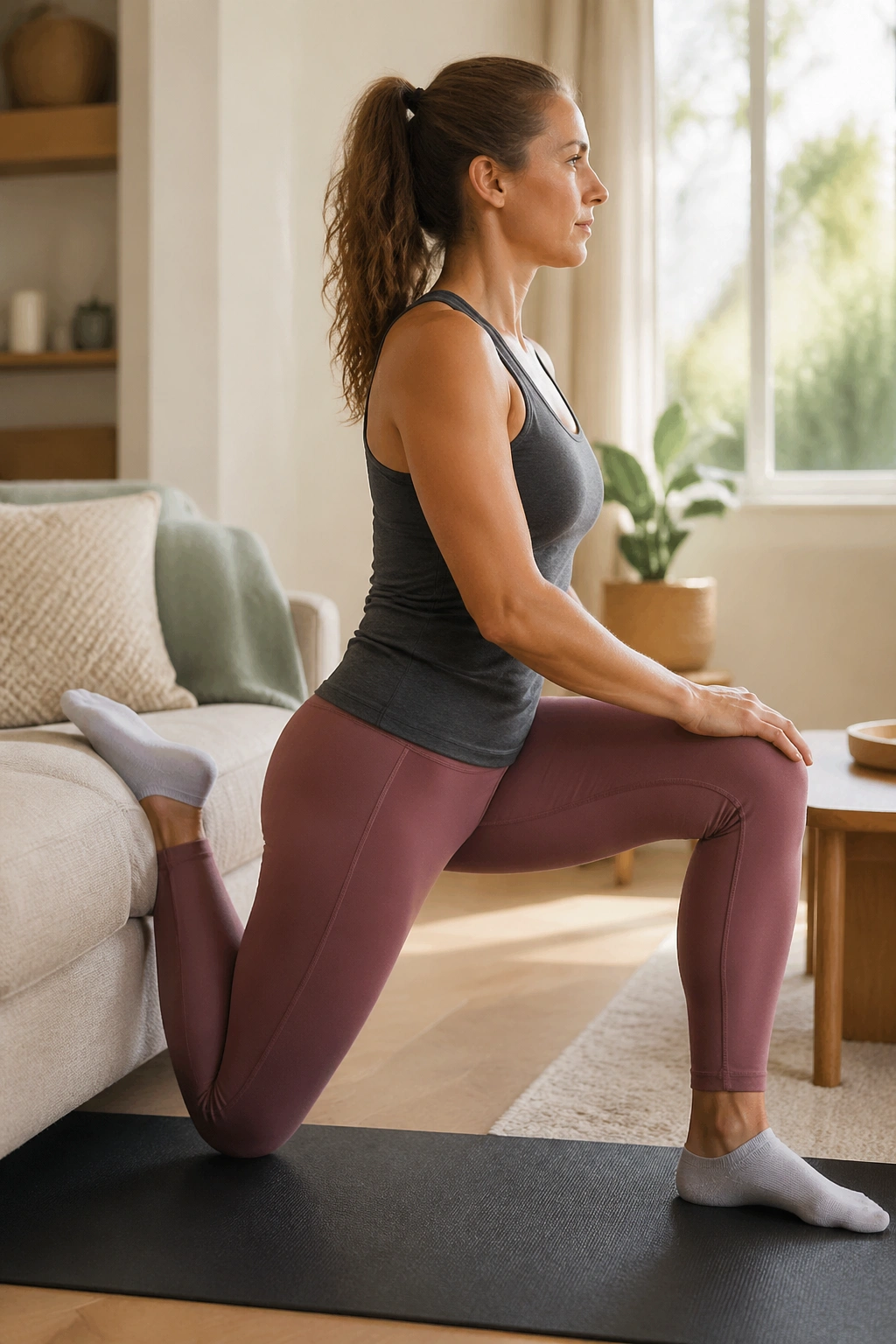
This one can feel rude the first time. The couch stretch is the stretch people either fall in love with or stare at in disbelief, because it goes after the rectus femoris, the quad muscle that crosses both the knee and the hip.
Set your back shin against a wall, couch, or sturdy bench, then bring the other foot forward into a half-kneeling lunge. Keep the front foot far enough out that the front knee isn’t jammed, and keep a pad under the back knee if the pressure feels harsh. A tall torso will make the front of the hip work harder; leaning forward a little softens it.
Nope, you do not need to force the heel to the wall on day one.
Hold 20 to 40 seconds at first and keep the back-side glute lightly on. If your lower back arches hard, back out a touch and start again. The stretch should feel like a long line from the top of the thigh into the front pocket of the hip, not a stabbing bend in the knee.
3. Figure-4 Stretch on Your Back
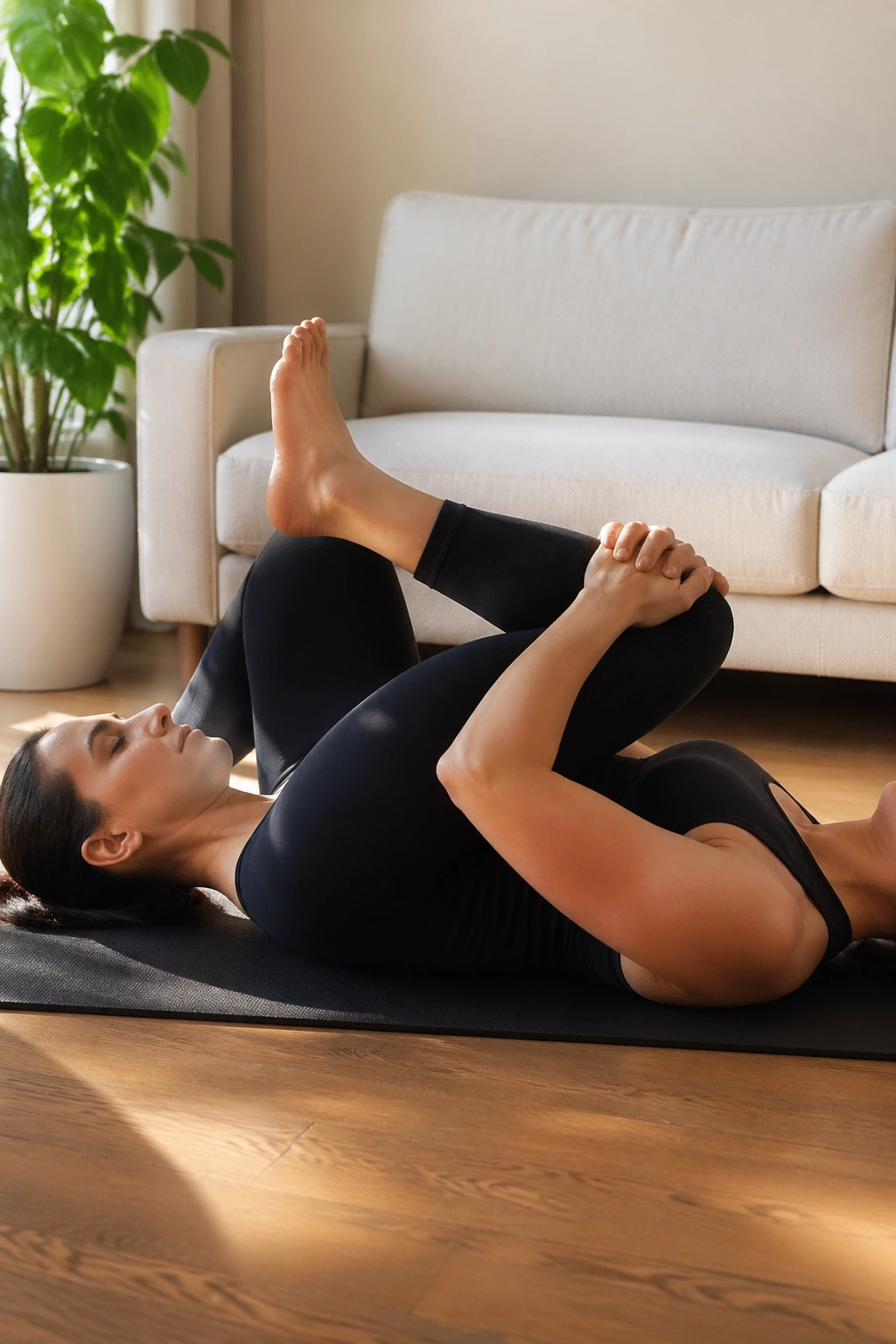
What if the tightness feels deeper than the front of the hip? Then the back pocket of the hip deserves a look. The figure-4 stretch is one of the simplest ways to open the glutes without asking you to twist yourself into a pretzel.
Lie on your back, cross one ankle over the opposite knee, and draw the supporting thigh toward your chest. Keep the crossed foot flexed. That keeps the knee happier and helps you feel the stretch in the outer hip instead of the joint itself.
What to watch for
- The stretch should land in the outer glute, not the knee.
- Keep the neck soft and the jaw unclenched.
- Pull the thigh in, not the foot.
- Stop if you feel a sharp pinch deep in the hip.
The foot matters. A flexed foot usually keeps the line of pull cleaner, especially if your knees are sensitive. Hold for 30 to 60 seconds on each side, then compare sides before deciding whether to go deeper.
4. Seated Figure-4 Stretch
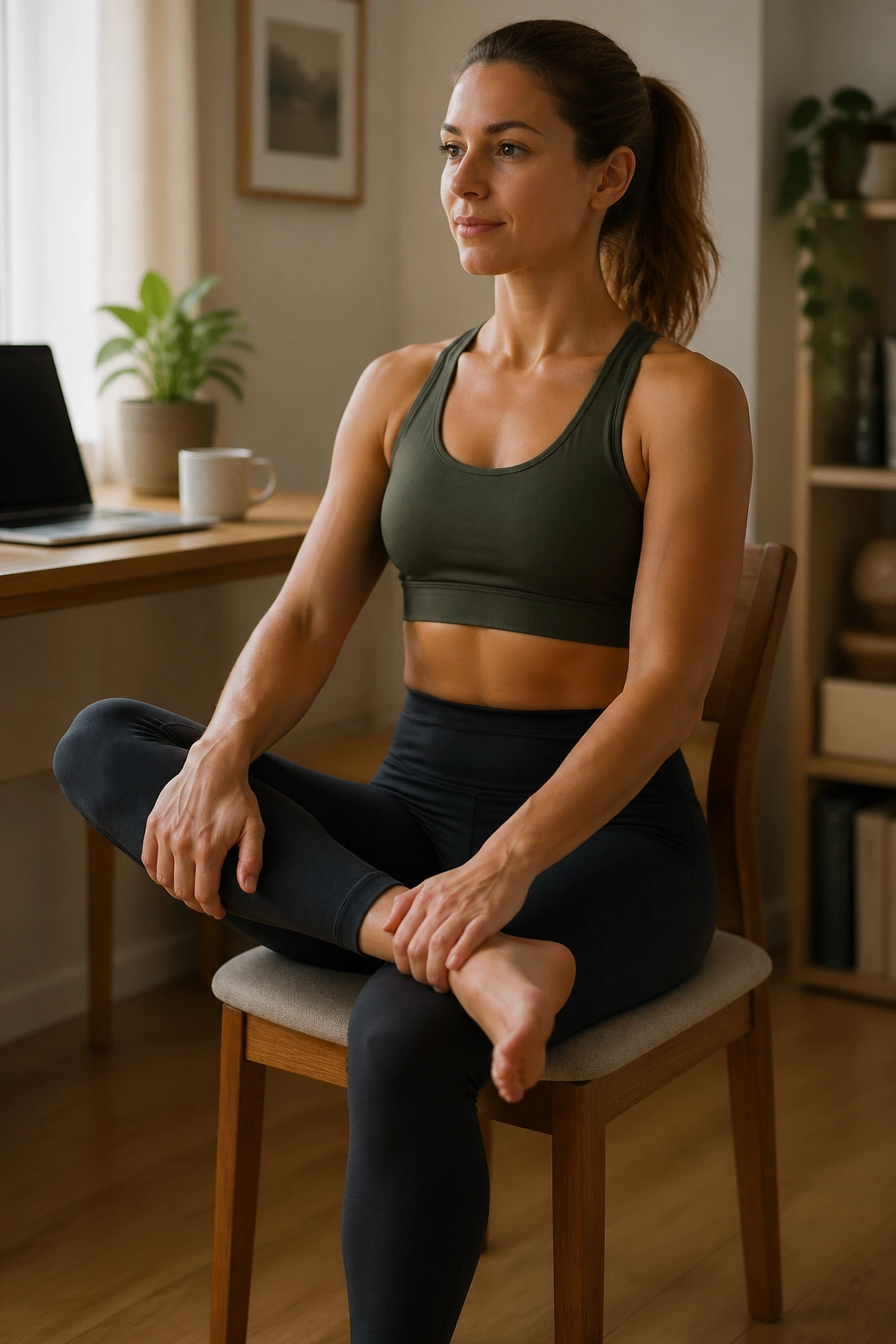
No floor space? Fine. The seated version works well at a desk, on a couch, or even on the edge of a bed if your hips are feeling cranky after a long drive. It’s a useful stretch because it lets you open the glutes without getting fully down on the ground.
Sit tall, cross one ankle over the opposite knee, and let the top knee open out to the side. If the position already feels strong, stay upright. If it feels easy, hinge forward from the hips with a long spine. Do not collapse and round your whole back just to get closer.
Desk-friendly beats perfect.
Hold the stretch for 20 to 30 seconds, then switch sides. If the top knee feels irritated, widen the angle a little or use the reclined figure-4 instead. A lot of people try to push the knee down with their hand. I’d skip that unless it feels gentle and natural. The goal is to let the hip open, not wrestle it.
5. 90/90 Hip Switches
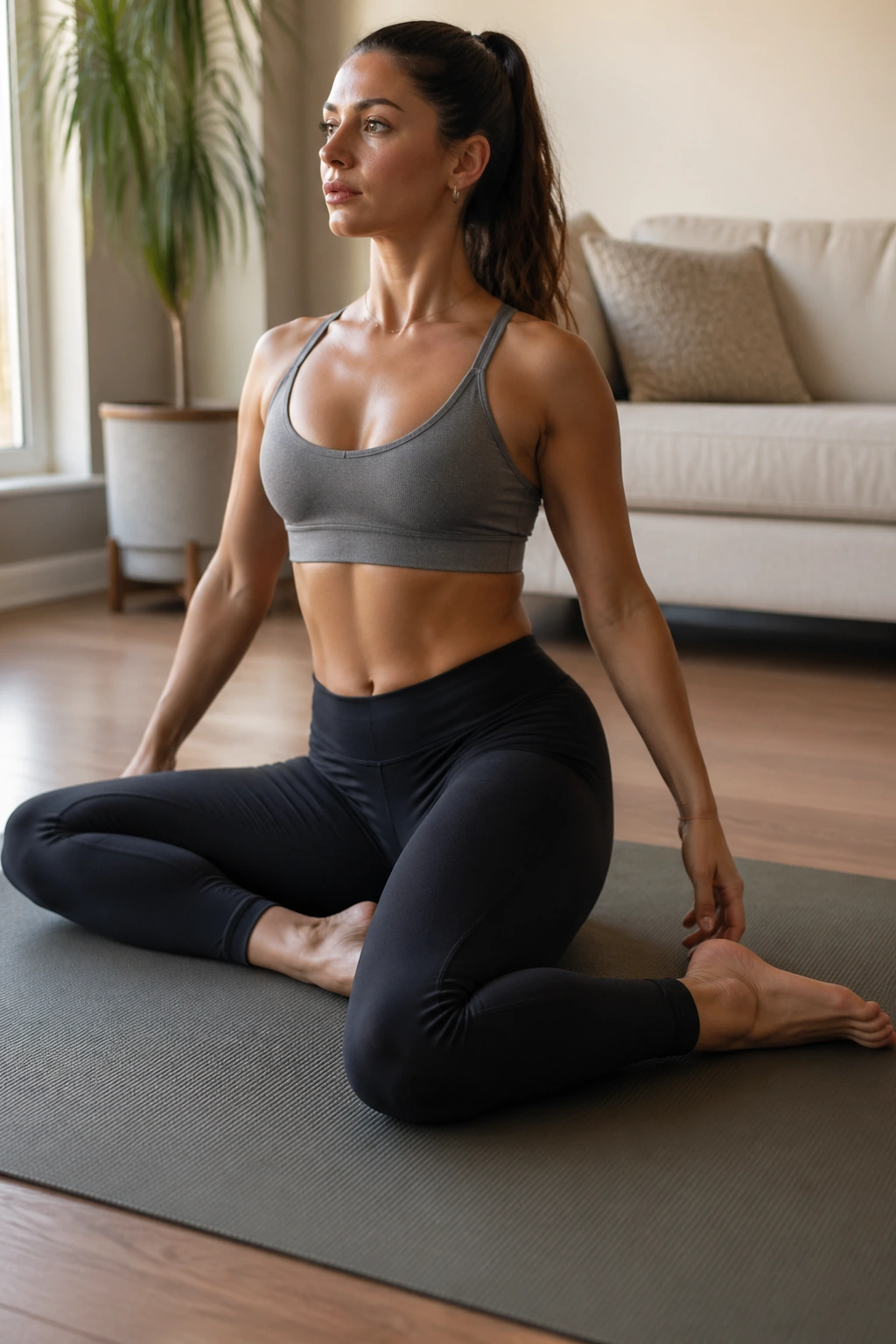
If your hips have been locked in one angle all day, motion beats passive stretching. That’s where 90/90 hip switches come in. They work both internal and external rotation, which is useful when a chair has kept you folded the same way for hours.
Sit with both knees bent about 90 degrees, one leg in front and the other behind. Keep the chest tall, then let both knees fall to the other side without using your hands unless you need support. Move slowly enough that you can feel each hip change shape.
A simple way to run them
- Sit upright, not slumped.
- Let the knees sweep side to side.
- Pause for one breath on each side.
- Do 5 to 8 switches per side.
The first few reps may feel awkward. Good. That usually means the joint is waking up. If your knees or hips get pinchy, shorten the range and keep the torso more upright. Slow, clean movement beats a big, sloppy range.
6. 90/90 Forward Fold
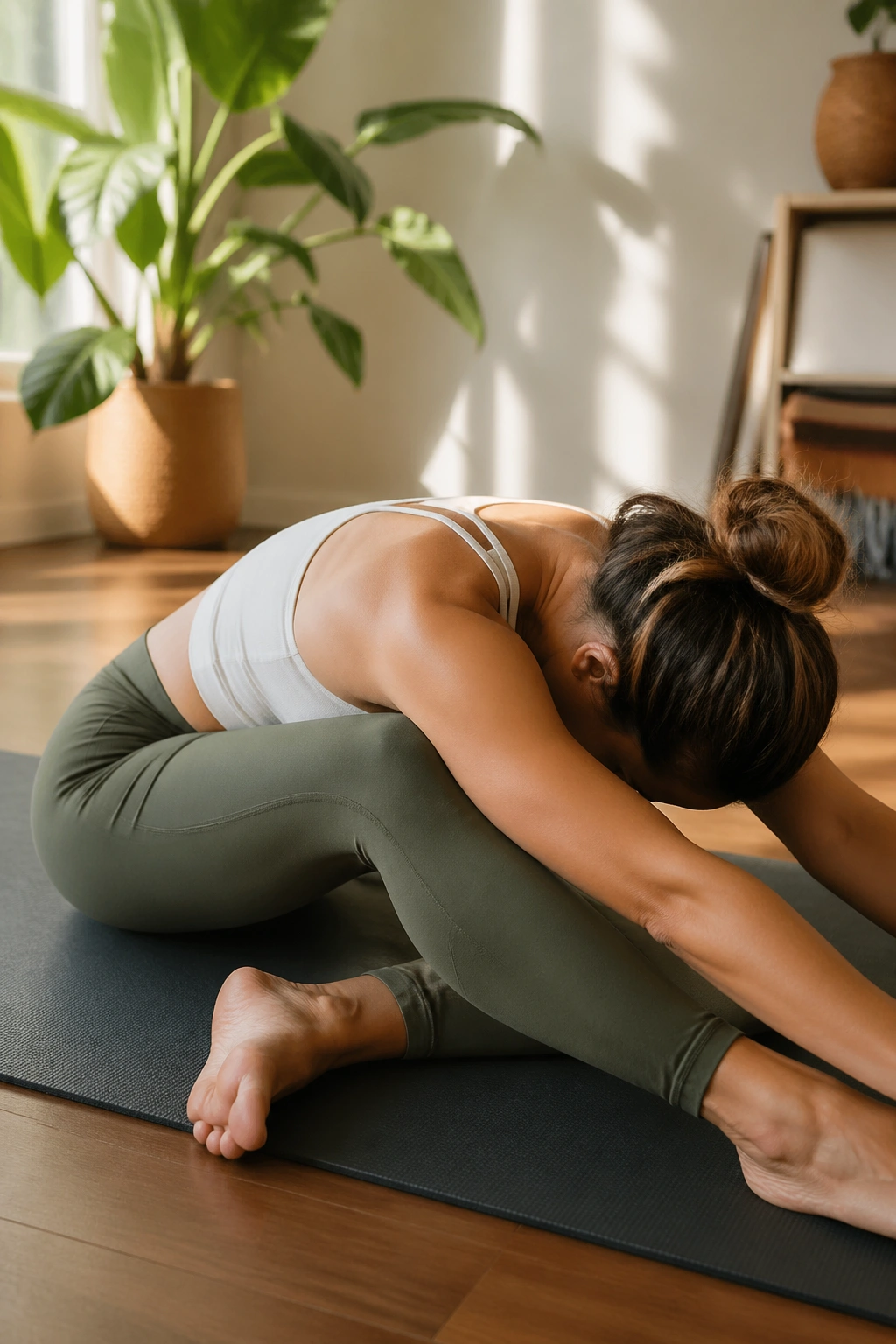
Why sit in the 90/90 and fold forward? Because this version reaches the front hip rotators and the glute on the front side in a way that feels different from a straight lunge. It’s one of those stretches that looks almost too calm to matter, then surprises you.
From the 90/90 seat, keep the front shin where it is and fold your chest toward the front leg. Think “hinge from the hip,” not “round the spine and dive.” If the floor is far away, sit on a folded blanket to lift your hips a bit. That small change can make the whole stretch cleaner.
A lot of people fight this pose by trying to get their forehead to the shin. That’s a waste of energy. Keep both sit bones heavy, breathe into the side ribs, and let the front hip soften over time. Hold for 30 to 45 seconds and come out slowly.
7. Frog Pose for Inner Thighs
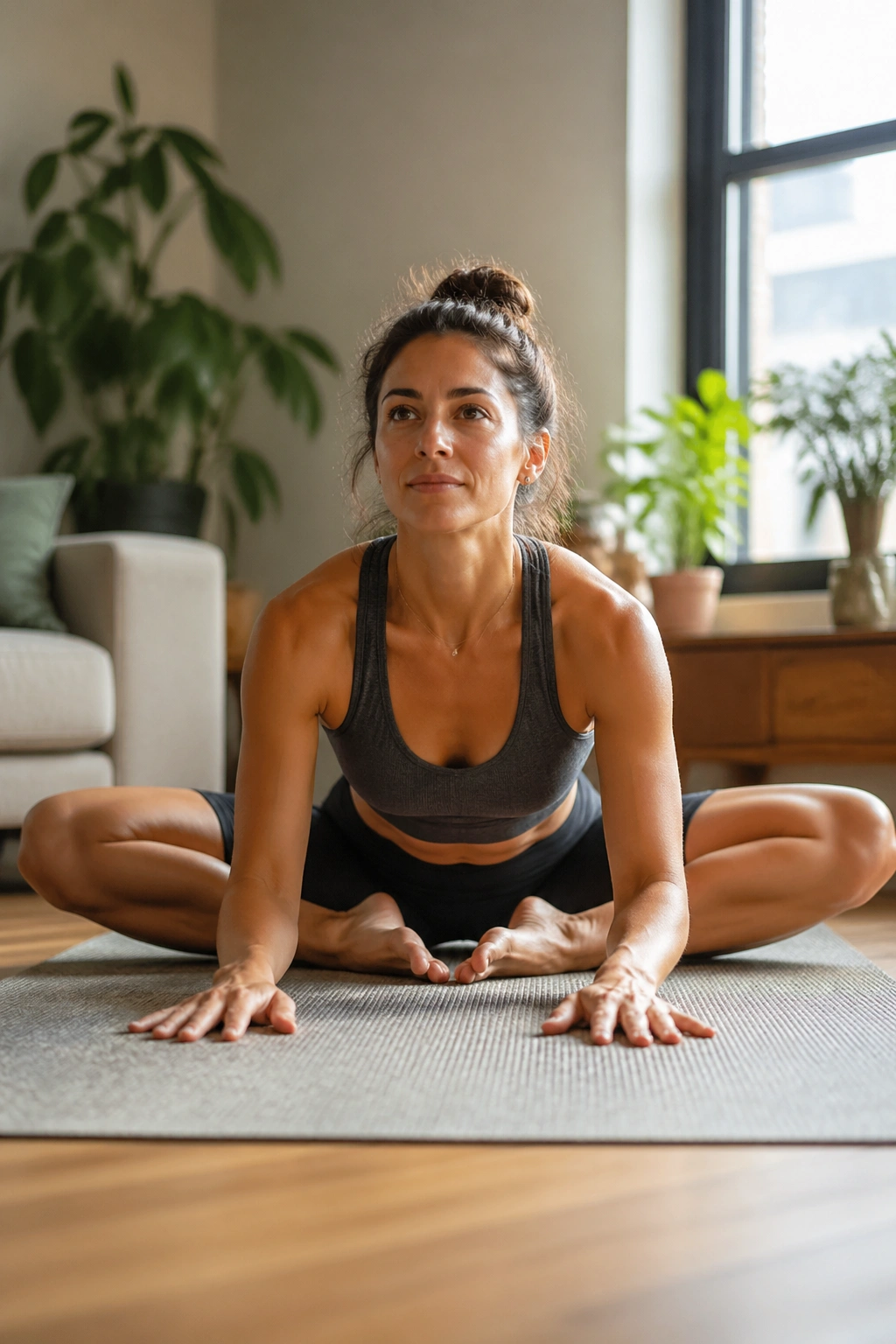
If your inner thighs are the complaint, a quad stretch won’t do much. Frog pose gets the adductors, and for a lot of desk-bound people, those muscles are the ones quietly complaining in the background.
Start on hands and knees, then widen the knees while keeping the lower legs turned out so the inner calves and feet line up roughly with each other. Slide the knees farther apart only as far as feels manageable. A folded mat or blanket under the knees is not a luxury here — it’s basic comfort.
How to protect the knees
- Put padding under both knees.
- Keep the ankles in line with the knees.
- Stop before the groin feels sharp.
- Rock back only a few inches at first.
The sensation should feel deep in the inner thigh, not like the groin is getting pinched. Hold for 20 to 40 seconds or add small rocks back and forth if stillness feels too intense. Gentle breathing helps more than people expect. Seriously.
8. Butterfly Stretch
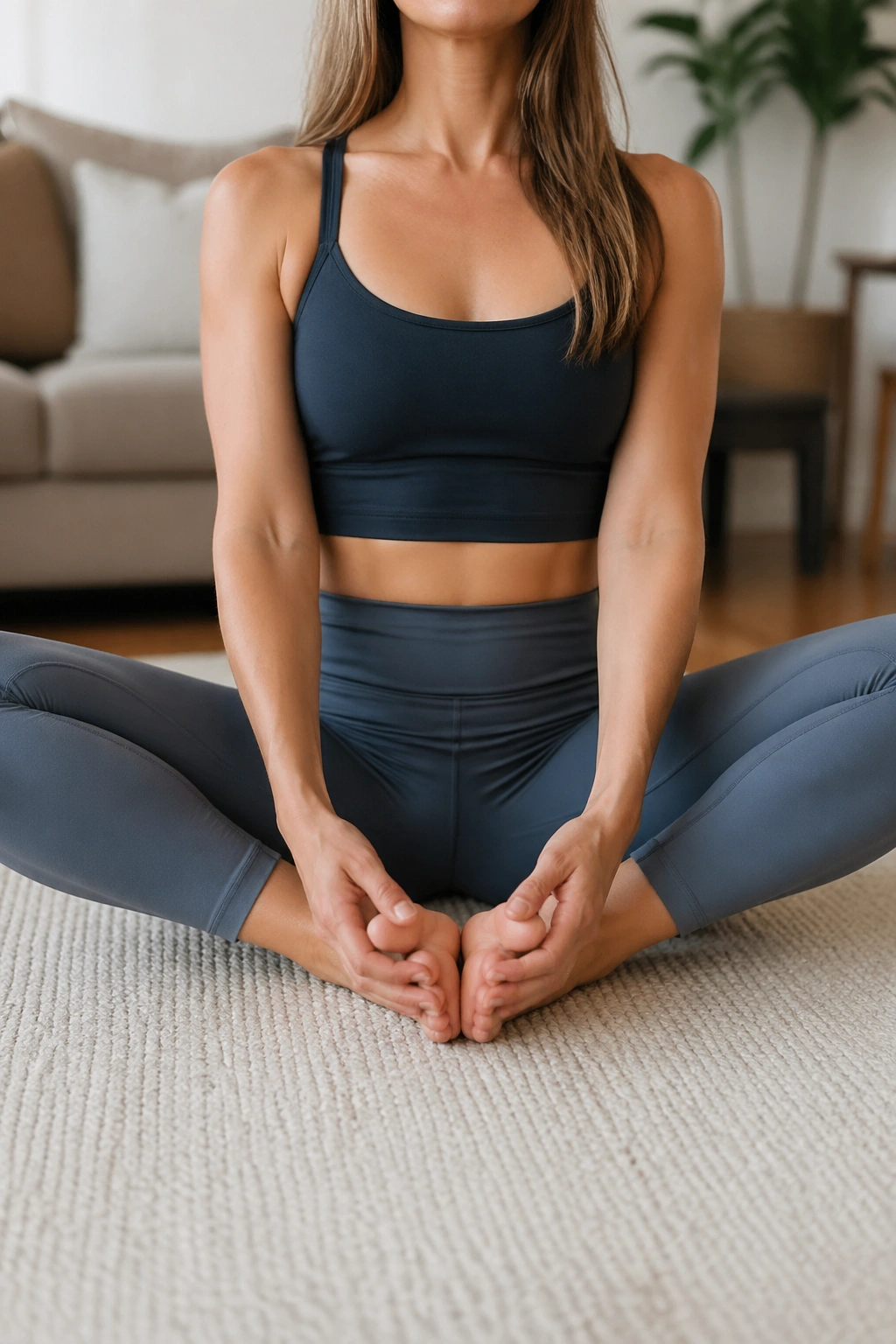
After a long drive, this is the stretch people end up doing on the living-room floor without thinking much about it. Butterfly stretch opens the inner thighs and lets the hips settle into external rotation, which can feel like a relief after a day of sitting with the knees glued forward.
Sit with the soles of the feet together and the knees falling out to the sides. Draw the heels in only as far as feels comfortable. If the knees lift high, that’s fine; forcing them down usually turns the whole thing into a groin fight. A tall spine will give you a cleaner stretch than a collapsed chest.
From there, hinge forward just a little, keeping the back long. You do not need to bow all the way to the floor. The real work happens when the pelvis tips forward and the inner thighs start to open. Hold for 30 to 60 seconds, and if one knee complains, move the feet a little farther away from the body.
9. Lizard Pose
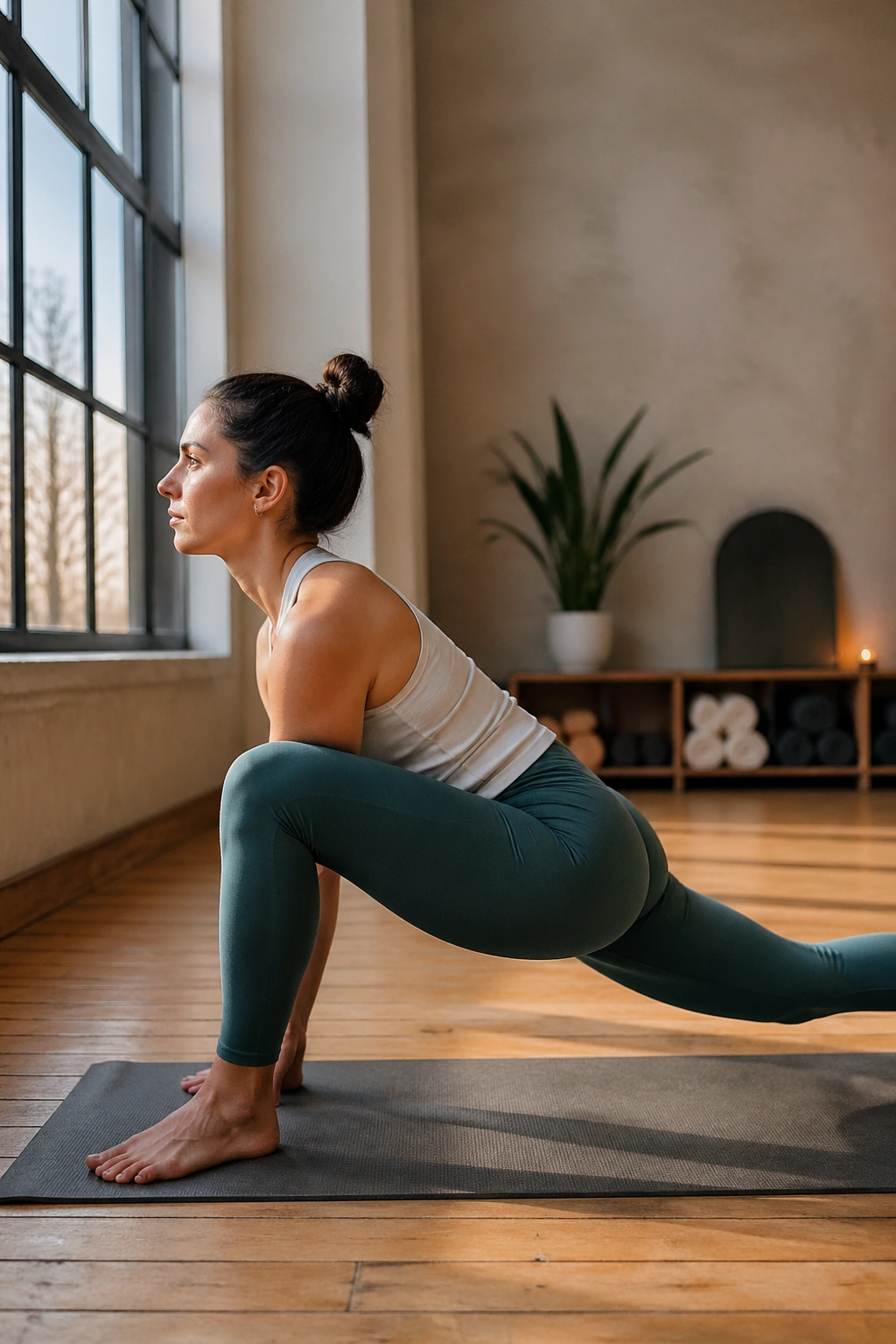
This is the most honest front-of-hip stretch on the list. Lizard pose gets into the hip flexors, the groin, and sometimes the glute of the back leg, depending on how you angle it. If your hips feel jammed from sitting, this one usually tells the truth fast.
Step into a long lunge, then place both hands inside the front foot. Keep the back leg long or let the back knee come down if the floor feels too intense. The front foot stays flat, and the front knee tracks roughly over the toes. It should feel long through the back leg and open through the front pocket of the hip.
Easy versions
- Drop the back knee to the floor.
- Put blocks under the hands.
- Stay on the palms instead of the forearms.
- Stop before the front knee caves inward.
The pose works best when you keep the back leg active instead of collapsing into it. Hold for 20 to 40 seconds per side. If the lower back starts taking over, come up a little and make the stance less dramatic.
10. Adductor Rock-Backs
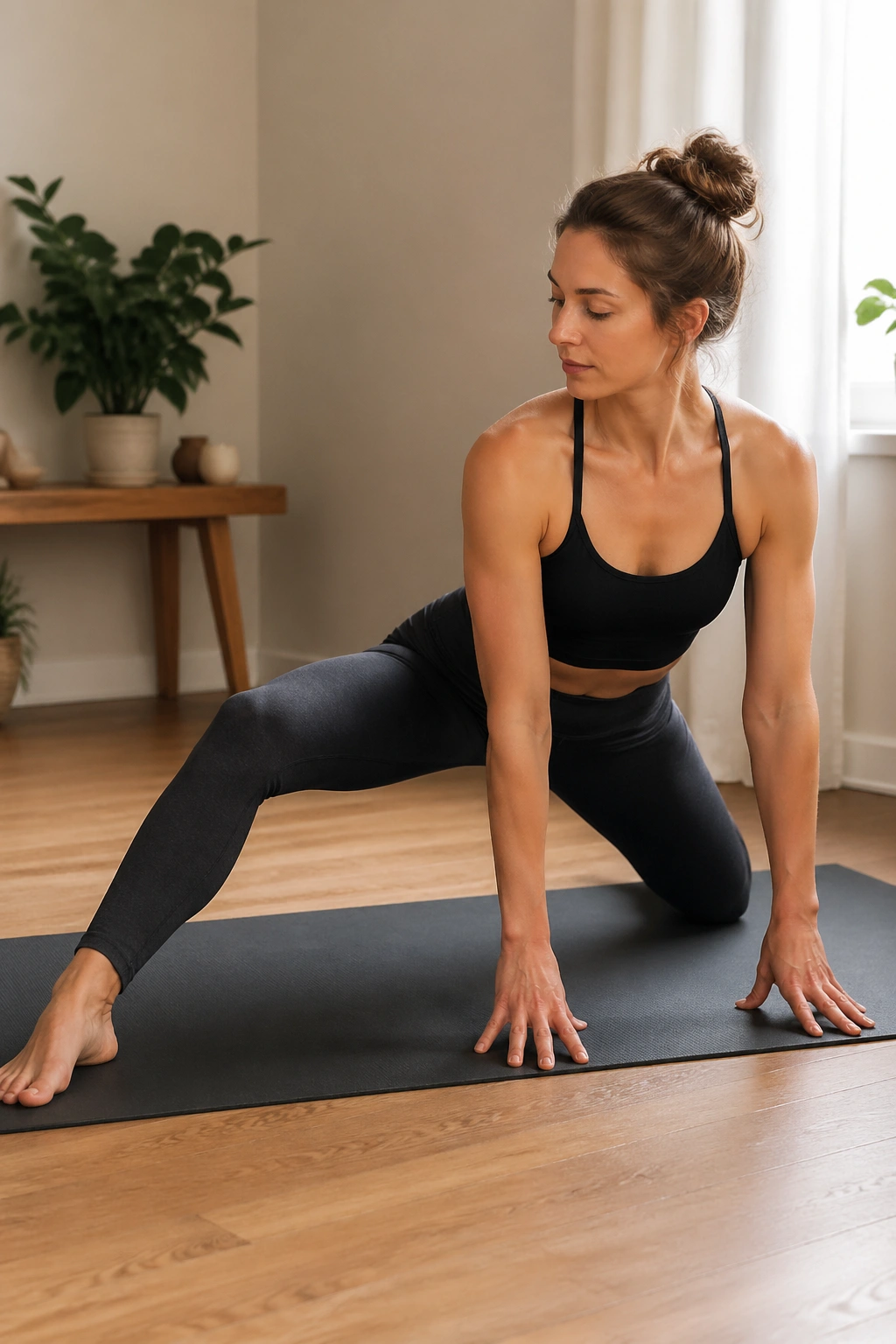
Feel the tightness more on the inside of the thigh than the front of the hip? Reach for this one. Adductor rock-backs are quick, direct, and easy to do between meetings, which makes them useful when your day is built from long sitting blocks and short stretches of movement.
Come onto hands and knees, then extend one leg straight out to the side with the foot flat or slightly turned up. Keep the supporting knee under the hip, brace lightly through the belly, and rock your hips back toward your heels. The moment you feel the inner thigh lengthen, pause, then come forward again.
A few solid reps are enough.
Good rep rhythm
- Rock back for a 2-count.
- Return to center slowly.
- Repeat 8 to 10 times on each side.
- Keep the spine long, not collapsed.
The stretch should feel like a clean pull along the inner thigh, not a jam in the knee. Fast and honest. That’s the best way to think about it. If you’re stiff, a smaller range with better control usually works better than forcing the hips all the way back.
11. Seated Wide-Leg Forward Fold
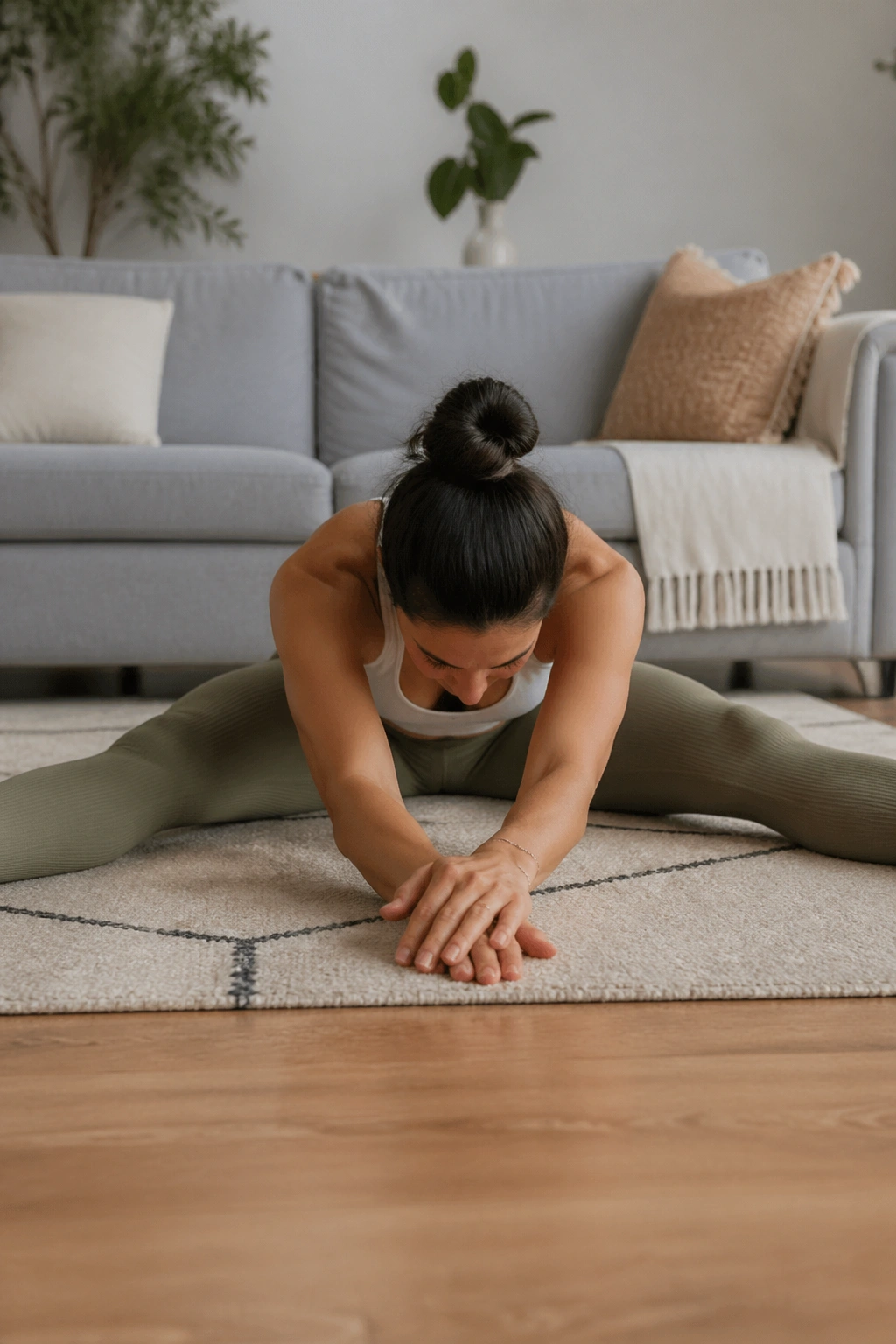
This stretch looks mild. It is not, once the inner hamstrings and adductors wake up. The seated wide-leg forward fold gives you a deep look at how your hips handle flexion when the legs are opened out to the side.
Sit with the legs in a wide V and the knees soft. If your pelvis tips backward right away, sit on a folded blanket or cushion. That little lift can make the difference between a helpful stretch and a sloppy round-back fold. Point the toes up or let them relax, whichever feels better.
How to make it friendlier
- Sit on a blanket if your low back rounds fast.
- Keep the knees slightly bent if needed.
- Hinge from the hips before reaching forward.
- Stop when the hamstrings say “enough,” not when the forehead tries to win.
The goal is a long, open feeling along the inner thighs and back of the legs. Hold for 30 to 45 seconds, breathing into the side ribs. If you can only fold a few inches, that counts. You’re not trying to impress anyone on the floor.
12. Standing Quad Stretch with a Tucked Pelvis
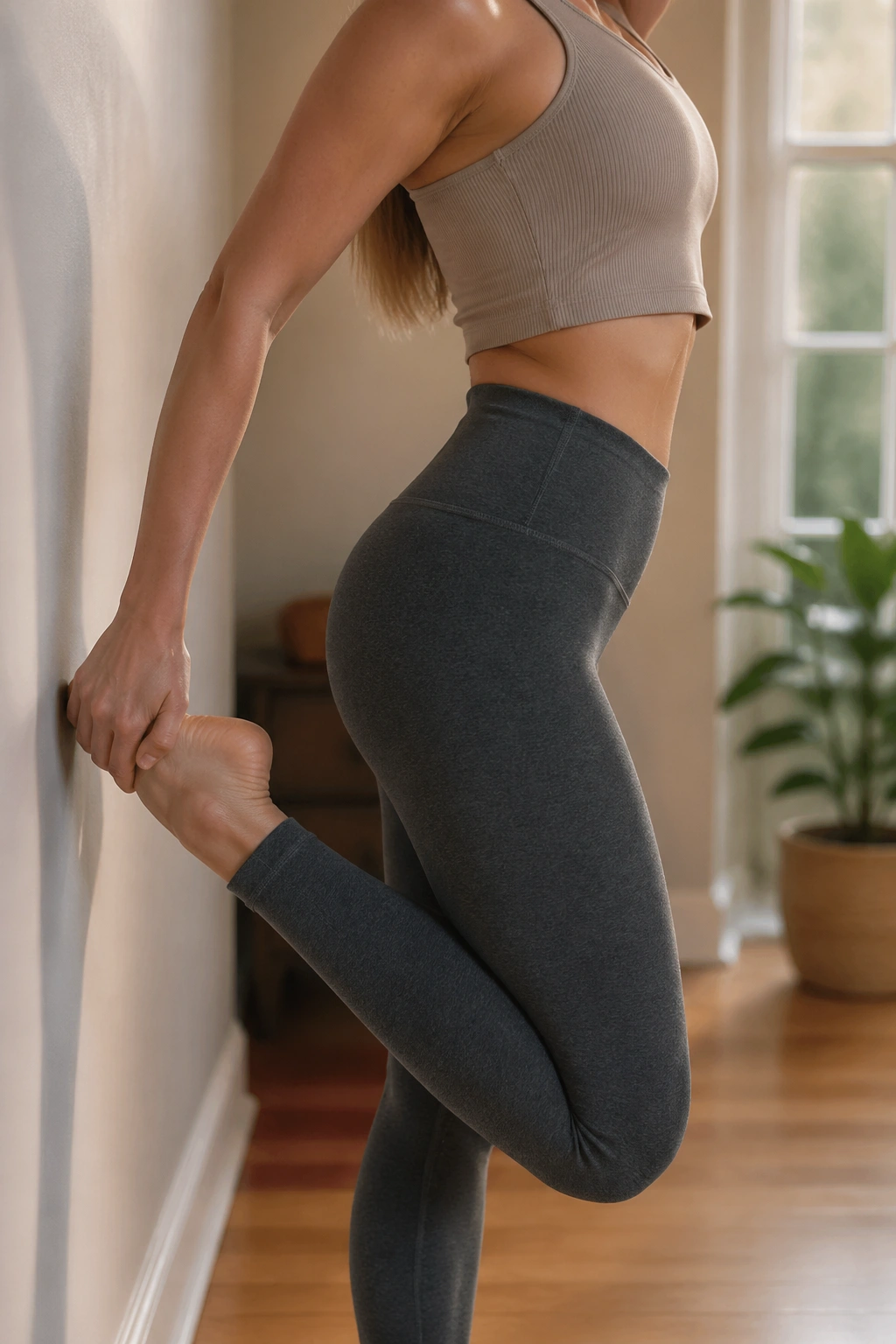
You do not need to kneel to stretch the front of the hip. The standing quad stretch is a solid choice when you’re short on floor space, or when your knees don’t love being loaded on a hard mat.
Stand next to a wall or chair for balance, bend one knee, and grab the ankle on the same side. Bring the knees close together, tuck the pelvis slightly, and squeeze the glute on the stretching side. That pelvic tuck matters more than people think. Without it, the stretch often stays in the knee and lower back instead of reaching the front of the thigh and hip.
Hold for 20 to 30 seconds on each side. If balance feels shaky, keep one hand on a wall and stand tall through the chest. The stretch should feel like the front of the thigh is lengthening upward, not like your lower back is arching and doing all the work.
13. Low Squat Hip Pry
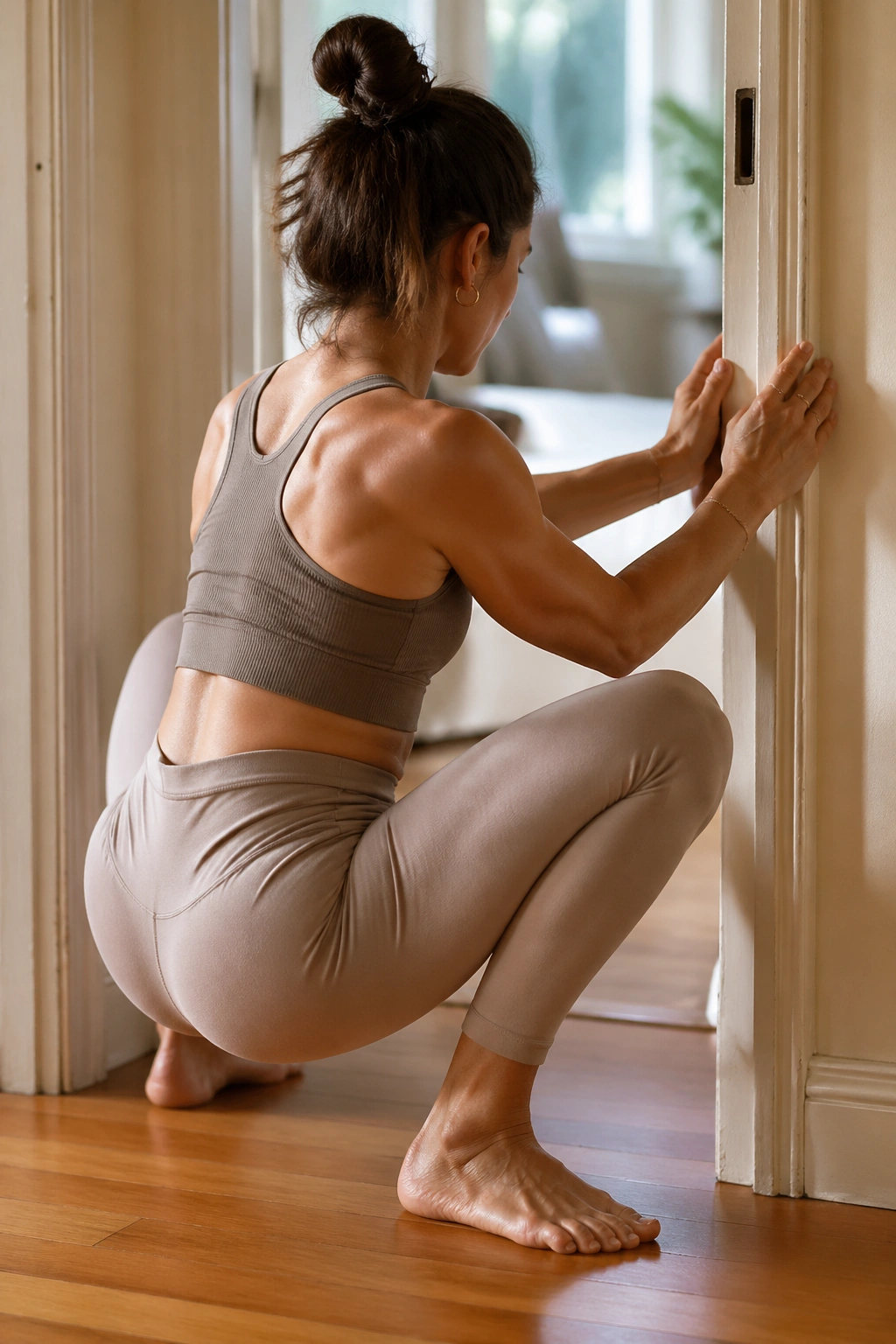
Squats are not only for the legs. A deep supported squat can open the hips, ankles, and groin in one shot, which is useful when sitting has made your lower body feel boxed in.
Hold a doorframe, countertop, or sturdy table with both hands and sink into a low squat as far as your heels allow. Keep the chest lifted, then gently shift your weight side to side. You can use the elbows to nudge the knees apart a little, but not in a hard, forceful way.
What makes it useful
- It opens the groin and inner hips.
- It gives the ankles a bit of work.
- It helps you feel how the hips move under load.
- It’s easy to scale with support.
If your heels lift, slide a small folded towel under them and try again. If the knees hurt, come up higher. A supported hip pry should feel like joint space, not pressure. Hold it for 20 to 40 seconds, breathe, and shift. No drama needed.
14. Crescent Lunge with Side Bend
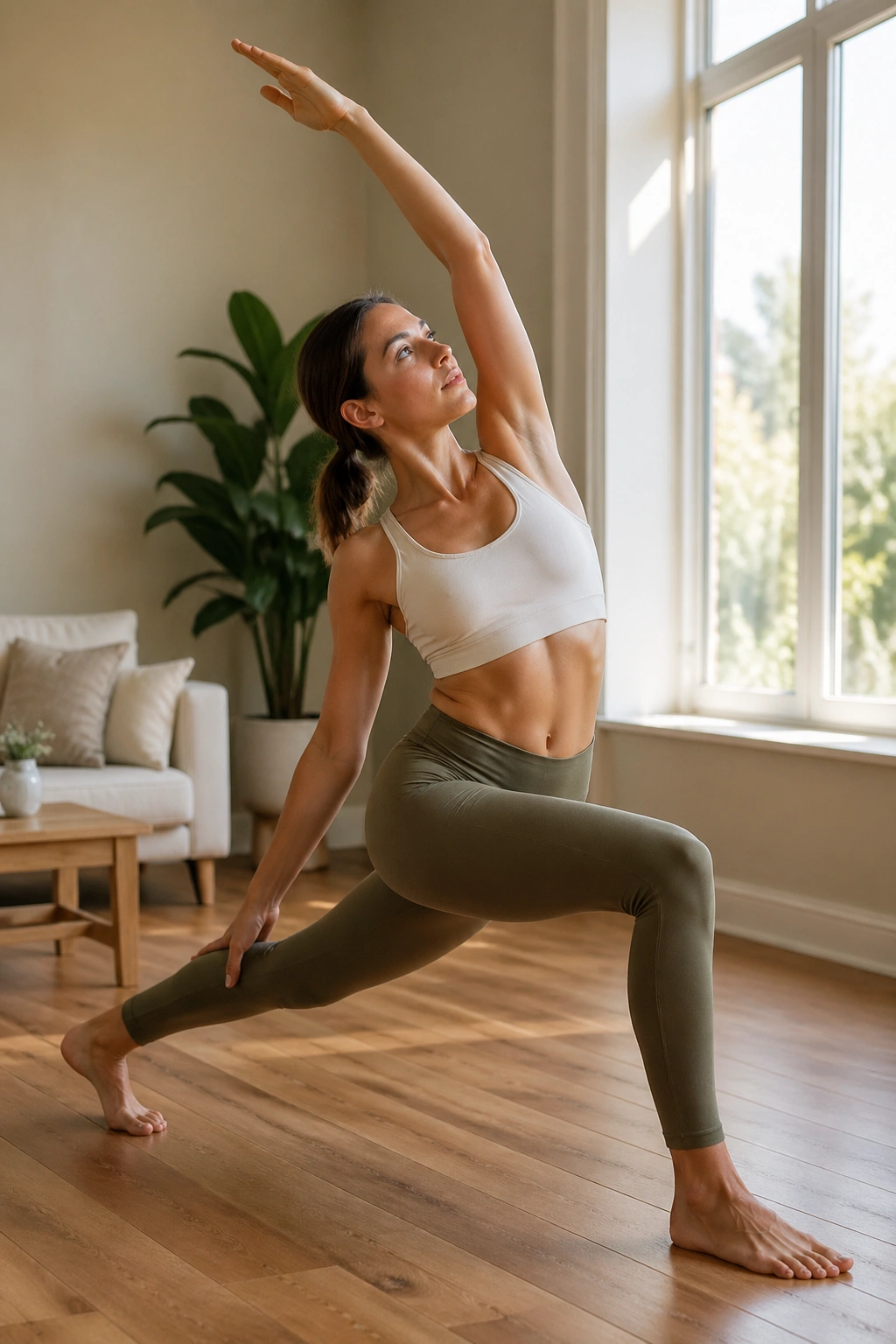
Want a stretch that reaches the hip flexor and the side body at the same time? Crescent lunge with a side bend does exactly that, and it’s a nice change from the more standard straight-ahead lunge work.
Step into a lunge with the back heel lifted and the back leg active. Keep the pelvis tucked a little so the front of the back hip can open. Then raise the arm on the same side as the back leg and reach it overhead, leaning slightly away from the back leg. That small side bend changes the line of pull in a useful way.
The part people miss
- Keep the back glute on.
- Keep the ribs from flaring.
- Reach up before you lean over.
- Stay tall through the front of the chest.
That last point matters. If you collapse forward, the stretch loses its shape. Hold for 20 to 30 seconds on each side and breathe into the back ribs. The feel should be long through the front hip and along the side waist, not compressed in the lower back.
15. Happy Baby Pose
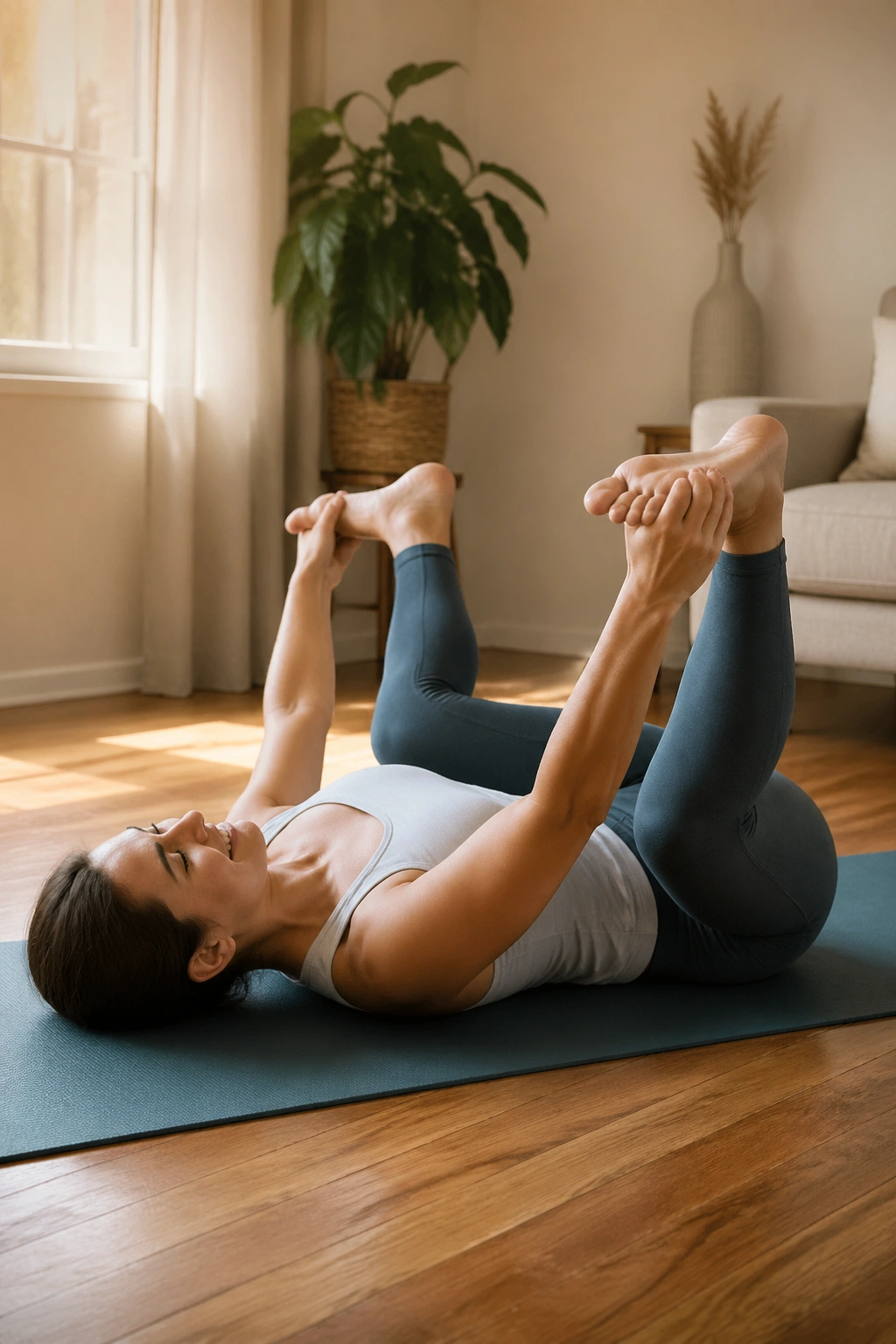
When the hips feel cranky after a day in a chair, this is the one that lets the nervous system exhale. Happy baby pose opens the inner thighs, glutes, and lower back at once, and it’s a nice way to finish because nothing about it feels aggressive.
Lie on your back and bring your knees toward your ribs. Hold the outside edges of the feet if you can reach them, or grab behind the thighs or calves if that’s easier. Let the knees drift toward the armpits, then gently rock side to side. Keep the lower back heavy on the floor.
Some people yank on the feet and turn it into a wrestling match. Don’t. A light hold is enough. Gentle rocking beats hard pulling. Stay here for 30 to 60 seconds, breathing slowly and letting the hips settle.
A simple rule helps here: if the front of the hip feels glued, start with a lunge stretch; if the inner thigh feels tight, use frog or adductor rock-backs; if the back pocket feels stubborn, use figure-4 or happy baby. You do not need all 15 stretches every time. Pick three, do them well, and stop before your body starts bracing again.
