



Most shoulder workouts miss the point. They pile on pressing, then wonder why the shoulders still look flat from the front and narrow from the side. If you want defined capped shoulders, the side delts and rear delts need real work — not a quick token set at the end.
That shoulder cap people notice from across the room is not built by front raises. Your front delts already get hammered by bench presses, push-ups, dips, and overhead pressing. What usually changes the shape is a mix of overhead work for thickness, lateral raises for width, and rear-delt training so the whole shoulder looks round instead of lopsided.
The trap is loading too heavy. Once the weight swings, shrugs, or turns into a half-rep heave, the side delt checks out and your upper traps steal the rep. You can get farther with clean form, slower lowers, and a couple of smart variations than with one ego lift.
The 15 shoulder workouts below cover the whole job: pressing, isolation, angles, and finishers. Some are old reliables. A few are more joint-friendly than flashy, and a couple are ugly in the best possible way. The first one sets the tone.
1. Seated Dumbbell Overhead Press
A seated dumbbell overhead press is the anchor lift for a lot of good shoulder training because it gives you load without turning the movement into a full-body heave. With your back supported, you can keep the work on the delts instead of turning every rep into a leg drive contest.
How to keep it out of your lower back
Set the bench at a slight incline, not straight upright like a church pew. Your ribs should stay down, your feet should stay planted, and the dumbbells should start around ear level. Press up in a smooth arc until your arms are straight, then lower under control for 2 to 3 seconds.
A lot of people chase range by leaning back. Bad trade. Once your lower back starts taking over, the press stops being a shoulder builder and turns into a sloppy incline bench with worse form.
- Sets and reps: 3 to 4 sets of 6 to 10 reps
- Rest: 90 to 120 seconds
- Grip: neutral or slightly turned in if your shoulders feel cranky
- Cue: keep your elbows just a little in front of your body, not flared hard to the side
Pro tip: stop the rep just before the dumbbells touch overhead. That tiny bit of tension matters more than the satisfying clink.
2. Standing Barbell Overhead Press

Why bother with a standing barbell press when dumbbells already exist? Because the barbell press lets you move more load, and more load still matters when you want shoulders that look thick from the side and solid from the front.
The catch is that this lift exposes every lazy habit you have. If you lean back like a broken lawn chair, the lower back takes a beating and the shoulders get less of the job. A clean bar path is a straight shot from the upper chest to overhead, with your head moving back just enough to let the bar pass, then sliding through under the bar at the top.
The clean bar path
Think “up and slightly back,” not “forward and away.” The bar should skim close to your face. If it drifts out in front, the lift gets harder and the shoulders lose leverage.
- Sets and reps: 4 to 5 sets of 3 to 6 reps
- Rest: 2 to 3 minutes
- Best use: strength blocks or the first lift in a shoulder session
- Watch for: rib flare, soft knees, and a bar path that loops too far forward
This one is less about isolation and more about building a sturdy base. That base lets the rest of the cap-building work hit harder later.
3. Arnold Press
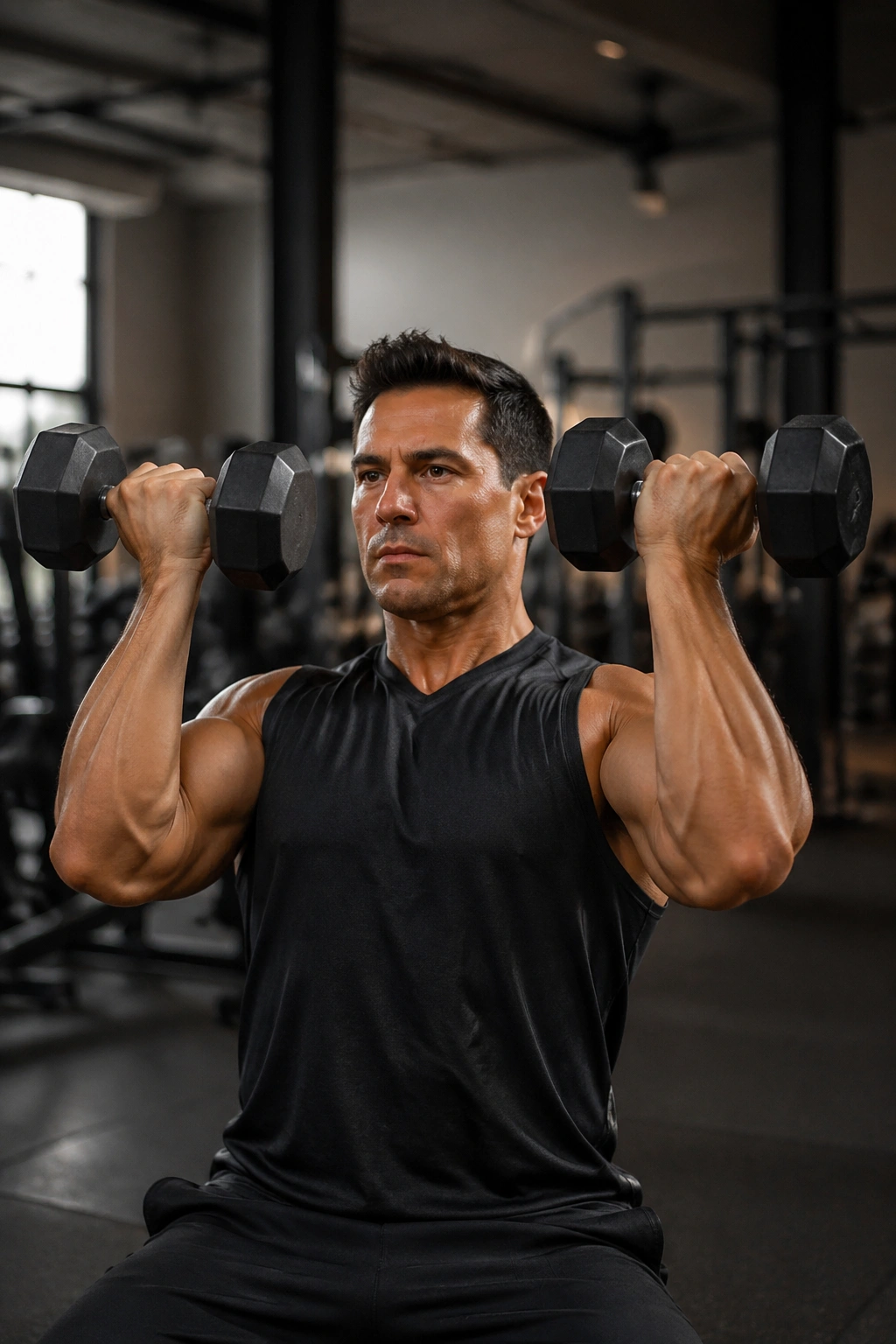
The Arnold press looks flashy, and a lot of flashy lifts are junk. This one isn’t junk, though you do need to respect it. The rotation gives the shoulder a longer path and a little more time under tension, which can be useful if your front delts dominate every press you do.
Start with your palms facing you at the bottom, elbows tucked in front of your ribs. As you press, rotate the dumbbells so your palms face forward near the top. Don’t twist like you’re trying to open a jammed jar lid. Smooth is the goal.
If your shoulders feel pinchy, cut the range a little and keep the motion controlled. This is one of those exercises that feels better when you stop trying to impress somebody in the mirror.
Why the rotation helps
The turn lets you move through a more natural shoulder path than a rigid straight-up press. It also keeps the movement from turning into the same old groove every time, which matters if your shoulders are stubborn and get bored easily.
Use 8 to 12 reps and keep the dumbbells light enough that you can move without jerking. The rep should look smooth from the side. If it looks like a wrestling move, the weight is too heavy.
4. Dumbbell Lateral Raise
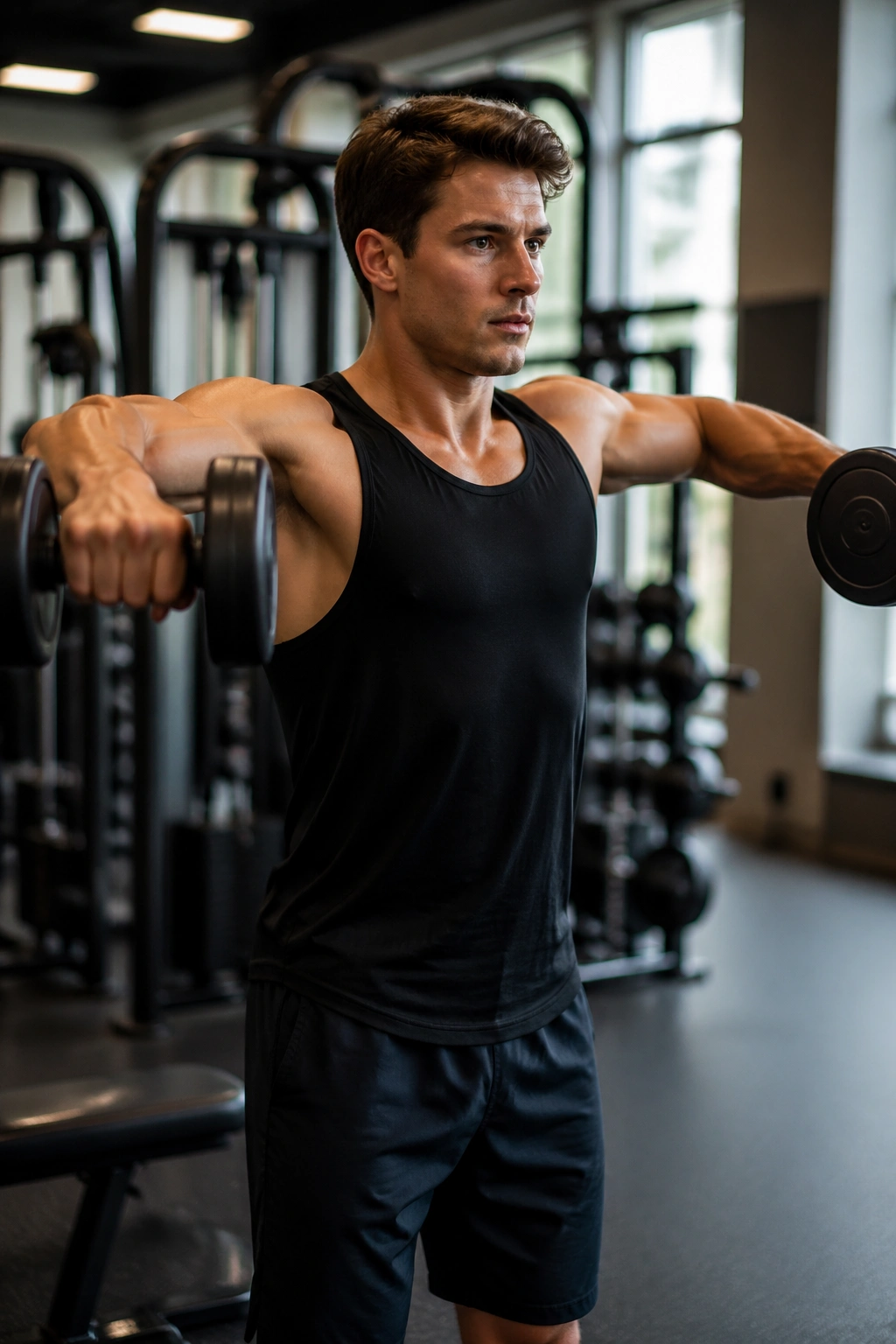
If you want a shoulder cap, the lateral raise is the rent you pay. It’s not glamorous, and it doesn’t feel powerful. It works, though, because it hammers the middle delt in a way that pressing never quite does.
The mistake here is almost always the same: too much weight, too much shrugging, and too much swinging. The side delt is a small muscle compared with the chest or quads. It does not need a 40-pound ego tour.
What to feel
Think about lifting your elbows out and slightly up, not lifting your hands. Your wrist should stay mostly neutral. Raise until your upper arm is about level with your shoulder, or a hair below if the top position starts to feel messy.
- Sets and reps: 3 to 5 sets of 12 to 20 reps
- Tempo: 1 second up, 2 seconds down
- Best cue: stop the moment your traps start stealing the rep
- Common mistake: turning the top half into a shrug
A clean lateral raise leaves the side of your shoulder burning in a way that feels almost unfair. Good. That’s the point. If your neck is barking louder than your delts, lower the load and tighten the path.
5. Cable Lateral Raise
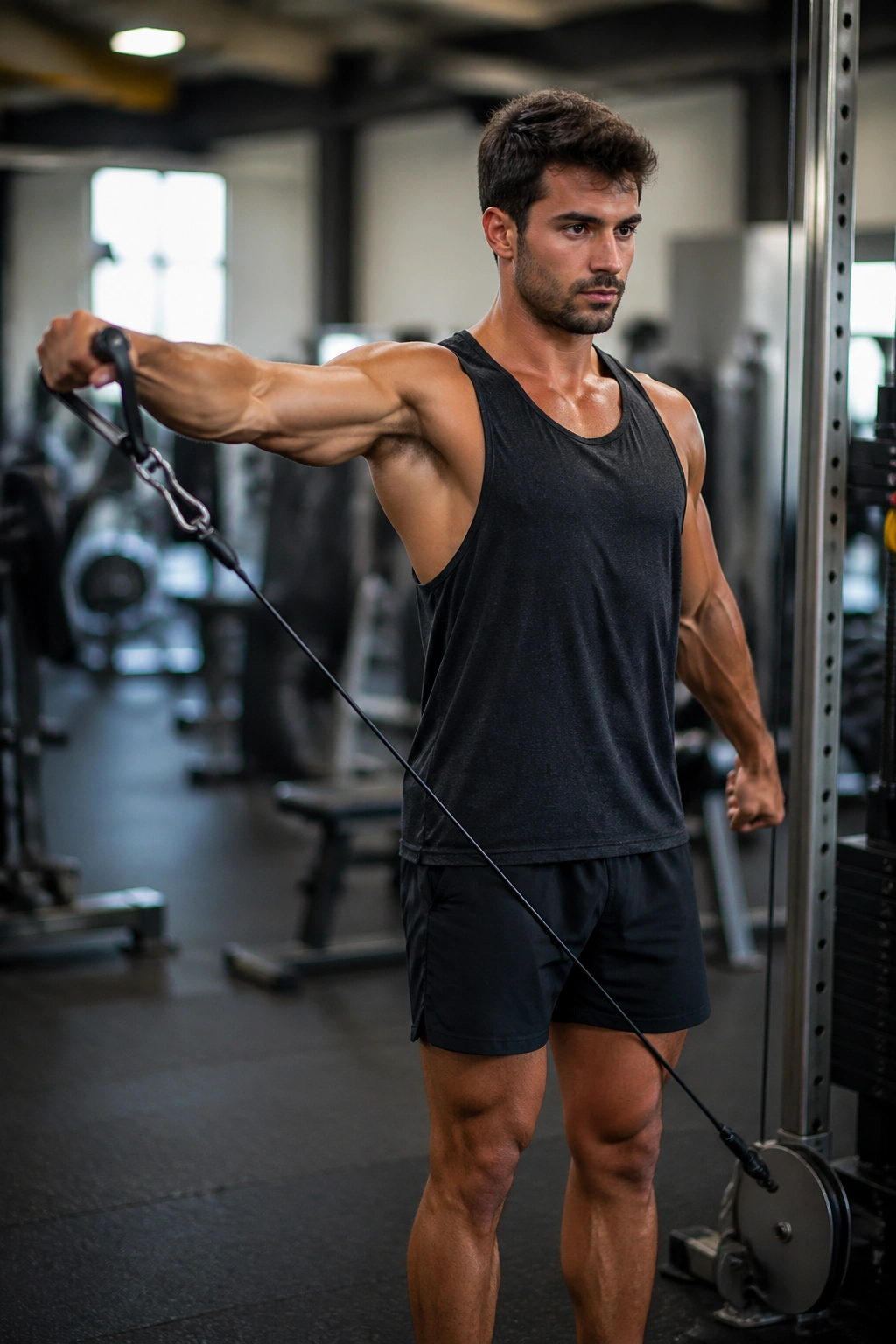
Cable lateral raises feel different the first time you get the setup right. The dumbbell version loses tension near the bottom; the cable keeps pulling the arm inward the whole time, which means the side delt stays under load in a way that catches people off guard.
Stand with the cable low and slightly behind you, not directly beside you. Let your working arm cross a little in front of your body at the start, then lead with the elbow as you raise. That tiny behind-the-body start changes the feel a lot. It makes the first third of the rep count, which is where most people cheat with dumbbells.
Cable setup that keeps tension honest
- Keep the pulley at the lowest setting.
- Step far enough away to create tension at the bottom.
- Use a single handle and one arm at a time.
- Stop at shoulder height or slightly below.
- Keep your torso still, even when the last few reps get ugly.
Use 12 to 15 reps with a slow lower. If you want a more “capped” look, this one is hard to beat because it keeps the muscle working through a fuller part of the range. It also tends to feel cleaner than dumbbells when fatigue sets in.
6. Lean-Away Lateral Raise
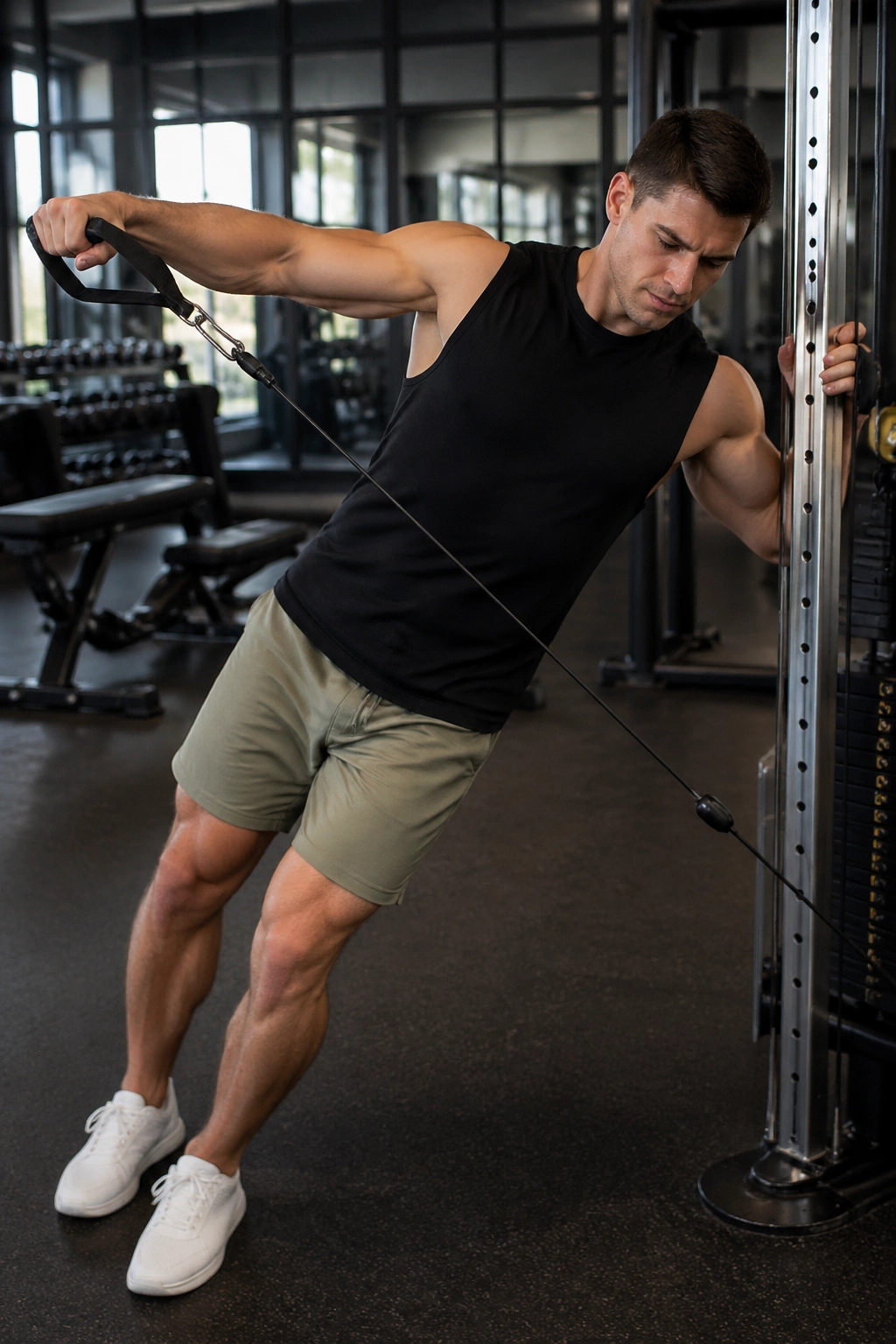
Lean away from the stack and the lift gets meaner fast. That’s why people like it. The angle gives the side delt a bigger stretch at the bottom, and that stretched position tends to light up fibers that a straight standing raise can miss.
You can do it with a cable or a dumbbell, though the cable version is easier to control. Hold onto the rack with your free hand, lean your body away a little, and let the working arm start across your body. Then raise with the elbow leading and the shoulder staying down.
This is not the place for a wild load. Light weight. Tight form. Slow lower. The stretch at the bottom is the point, not the number on the dumbbell.
Why the stretch matters
A stretched side delt has to work harder to get the arm moving, and that can make the set feel brutally effective without needing much weight at all. That’s a useful trade when you want width but don’t want to beat up your joints.
- Reps: 10 to 15
- Rest: 45 to 75 seconds
- Best slot: later in the session, after your main press
- Watch for: twisting your torso to fake the rep
This one looks simple. It isn’t. The angle makes it honest.
7. Machine Shoulder Press

Boring is fine when the machine shoulder press is doing its job. A good machine lets you push hard without worrying about balance, which means you can chase real muscle fatigue instead of wasting energy stabilizing the weight every second.
That stability matters more than people think. Free weights are great, but once you already have a heavy press in the session, a machine gives you a clean place to accumulate more volume. And volume is one of the main things that changes how the shoulder looks.
Set the seat so the handles start around chin or ear level. Too low and the press turns awkward. Too high and you lose range. Push up without slamming into the stack, then lower until your upper arms are about parallel to the floor.
When a machine press earns its keep
It’s useful on high-volume days, on tired days, and for anyone whose shoulders hate being forced to stabilize heavy dumbbells. You can also push it closer to failure than most free-weight presses without the form falling apart as fast.
Use 8 to 12 reps. If the machine lets you keep your shoulder blades moving naturally and the path feels smooth, it’s doing its job. If it jams you into a weird angle, skip that model and use something else.
8. Rear Delt Fly
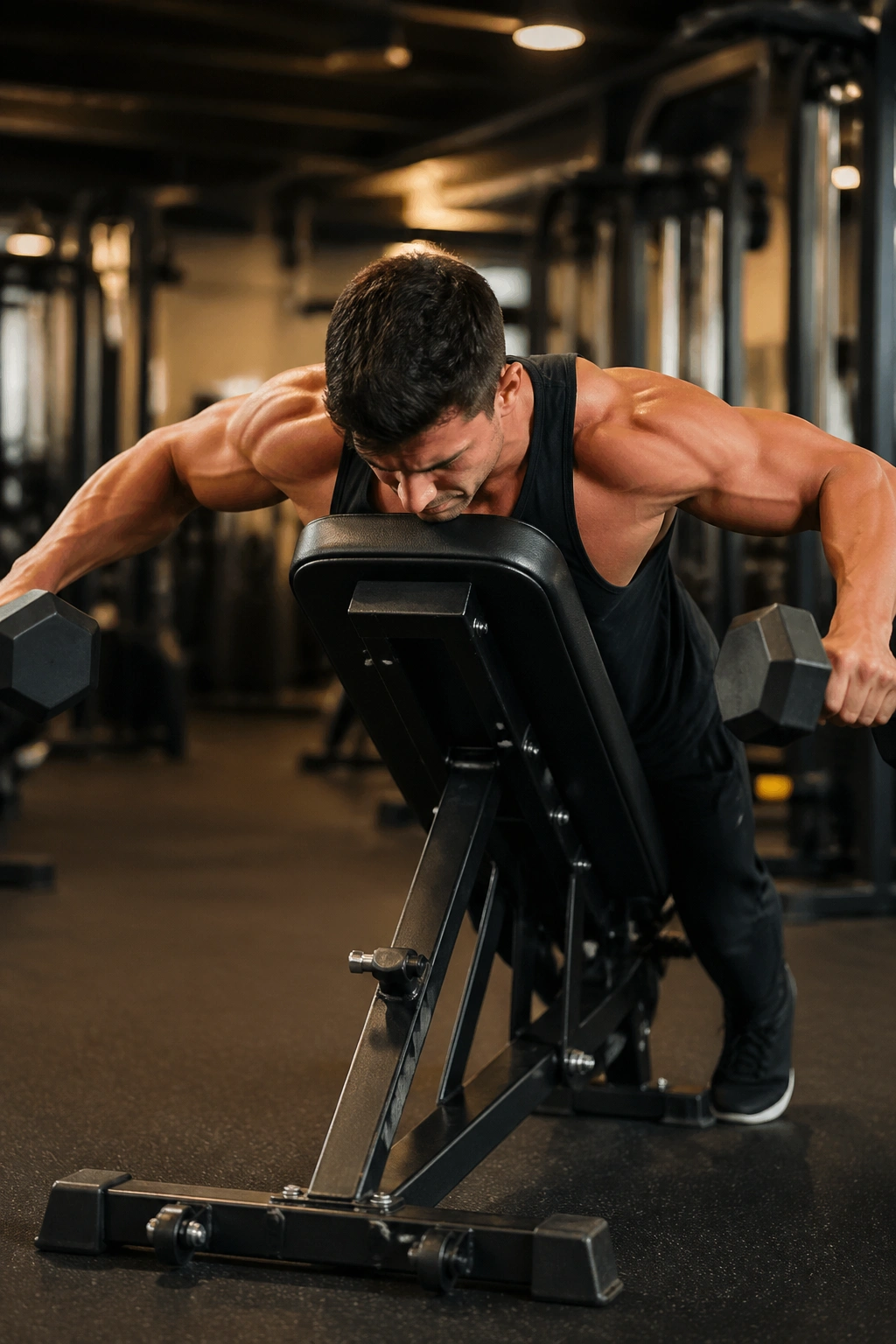
A rear delt fly is the kind of movement people ignore until they see what happens when the rear delts are actually trained. Then the shoulders look wider from the front and rounder from the side, and the upper back stops looking like an afterthought.
Chest-supported rear delt flys are the version I like most. Lie face down on an incline bench, let the dumbbells hang, then lift with your elbows slightly bent and your hands moving out and back. Don’t turn it into a row. If the elbows travel too far down the ribs, the mid-back takes over and the rear delt gets shortchanged.
Boring? Sure. Effective? Also yes.
- Reps: 12 to 20
- Tempo: controlled both ways
- Cue: thumbs can turn slightly up at the top
- Mistake to avoid: swinging the dumbbells past the line of your torso
This movement pairs well with pressing because it balances the shoulder work out. A lot of lifters live in the front of the body. Rear delt flys drag them back to center.
9. Face Pull

Why does the face pull keep showing up in good shoulder programs? Because it does a little of everything you want without pretending to be some magical cure. Rear delt work, upper-back work, and external rotation all show up in one clean cable movement.
Set the rope at upper-chest or face height and pull toward your forehead while letting your hands split apart at the end. The elbows stay high, but not cartoonishly high. Think “pull to the face and finish wide,” not “yank the cable to your nose.”
How to keep it honest
If you arch your lower back or drop your ribs, the pull gets sloppy. If you turn it into a lat pulldown, you’ve drifted off target. The rope should come apart near the forehead, and you should feel the rear delts and upper back doing real work.
- Reps: 12 to 15
- Use it: warm-up, finisher, or between pressing sets
- Best grip: rope attached to a cable stack
- Good cue: end with thumbs behind you, not fists glued together
Face pulls are not flashy. They also save a lot of shoulders from doing dumb things.
10. Prone Y-Raise

A prone Y-raise looks tiny on paper, and that’s exactly why people dismiss it. They shouldn’t. This little movement hits the lower trap and rear delt in a way that helps the shoulder blade sit better, which can make pressing and raising feel cleaner over time.
Lie chest-down on an incline bench with light dumbbells or no weight at all. Let your thumbs point up, then raise your arms in a Y shape. The movement is small. That’s fine. You are not trying to lift a tree stump here.
What makes it worth doing
A lot of lifters shrug every time they raise their arms. The Y-raise trains the opposite pattern. It teaches the shoulder blade to move without jamming everything toward the ears.
- Reps: 10 to 15
- Load: very light
- Best time: after pressing or on a day when your shoulders feel beat up
- Cue: keep the neck long and quiet
Use it like a tidy corrective drill with a training effect. It won’t blow up your ego. It may make your shoulders behave better, which matters more.
11. Single-Arm Landmine Press
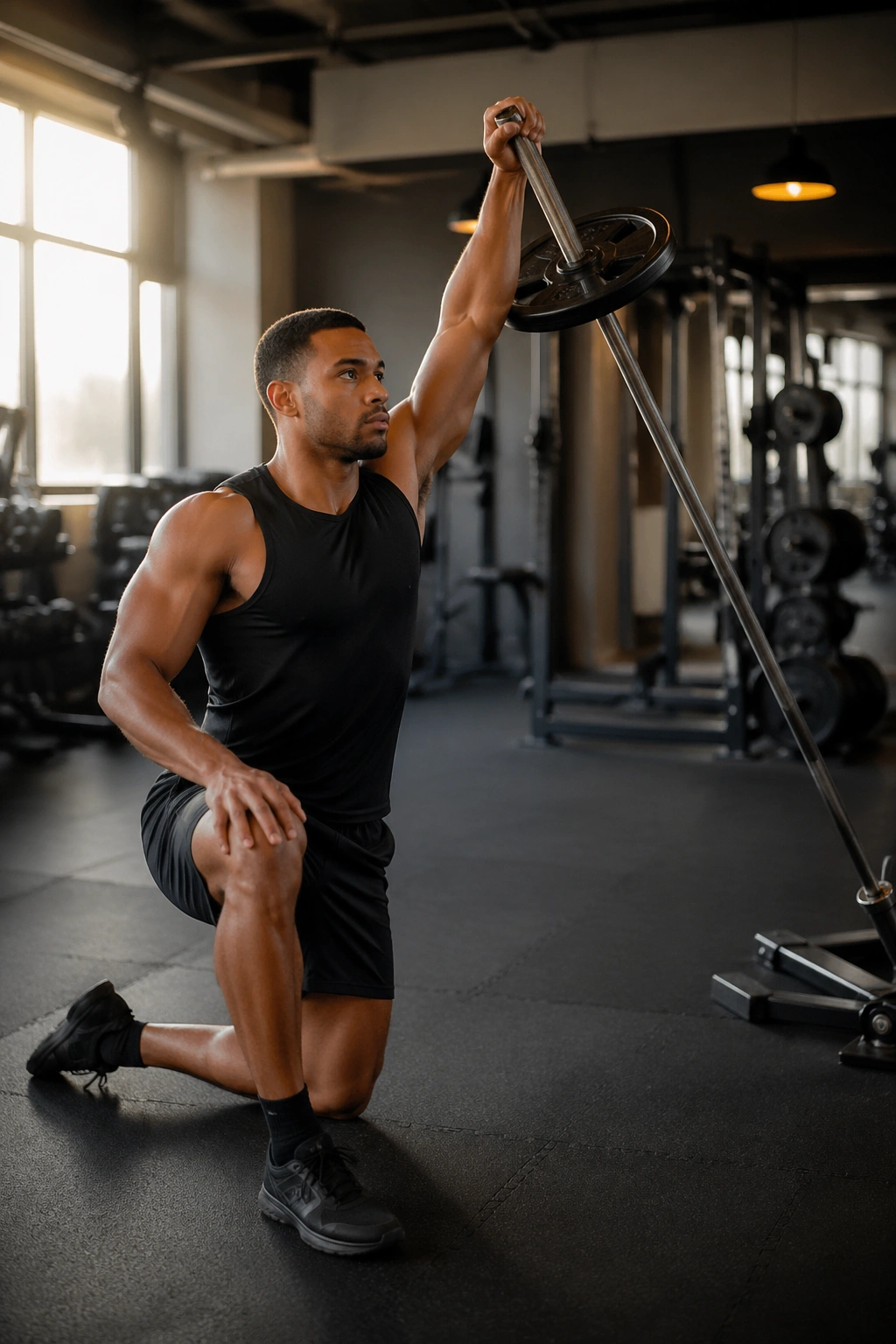
If overhead pressing bugs your shoulders, a landmine press can keep you training without making the joint angry. The bar travels on a diagonal path, not straight overhead, which often feels friendlier and lets you press hard with less strain.
Half-kneeling is my favorite setup because it forces you to brace. Plant one knee, keep the ribs stacked, and press the bar up and forward. The arc should feel natural, almost like you’re reaching into the top corner of a room instead of straight to the ceiling.
This lift is sneaky. It trains the shoulder, the upper chest, and the core at the same time. One side has to stabilize the body while the other side drives the bar. That matters if you want shoulders that look strong, not just tired.
Best setup
Use 6 to 10 reps per side and keep the rep smooth. If you need to lurch to finish it, the weight’s too much. The shoulder should feel loaded, not stabbed.
Landmine presses are also useful when you want a press early in the workout but aren’t ready for strict overhead loading. They’re a nice bridge between rehab-ish work and real training.
12. Rope Upright Row

The upright row gets a bad rap because people crank it too high and too narrow. Done that way, yes, it can feel awful. Done with a rope, a wider hand position, and a shorter range, it can be a useful side-delt and upper-trap builder.
Pull the rope up to the lower chest or upper ribs, then stop. You do not need to drag it all the way to your chin. Elbows should travel up and out, but the hands stay below the elbows. If the shoulder pinches, that is your cue to stop and switch exercises.
What to watch for
- Use a rope on a cable stack instead of a fixed bar if possible.
- Keep the grip a little wider.
- Stop before the painful zone.
- Use controlled reps, not yanks.
- Skip it if your shoulders hate it.
I like this one more as a tool than as a staple. Some shoulders like it. Some do not. There’s no prize for forcing a lift that bites back. If it feels smooth, it can add a nice chunk of work to a capped-shoulder session.
13. Scaption Raise

A scaption raise is what I give people when their shoulders hate pure lateral raises. The arm comes up in the scapular plane — roughly 30 to 45 degrees in front of your body — which usually feels more natural and less pinchy than lifting straight out to the side.
Use your thumbs up or slightly turned in, and raise to about shoulder height. The load should be modest. This is not a lift where heavy weight makes you more impressive. It usually just makes you sloppy.
How to use it
If your front delt is overworked and your shoulder joint feels grumpy, scaption can slide into the warm-up or live as a higher-rep accessory. It’s especially handy after a pressing day, when you want the shoulder to move without more grinding.
- Reps: 12 to 15
- Load: light to moderate
- Tempo: smooth up, slow down
- Best use: warm-up or accessory work
This is one of those quiet exercises that saves you later. Not flashy. Useful. There’s a difference.
14. Mechanical Drop Set Lateral Raise
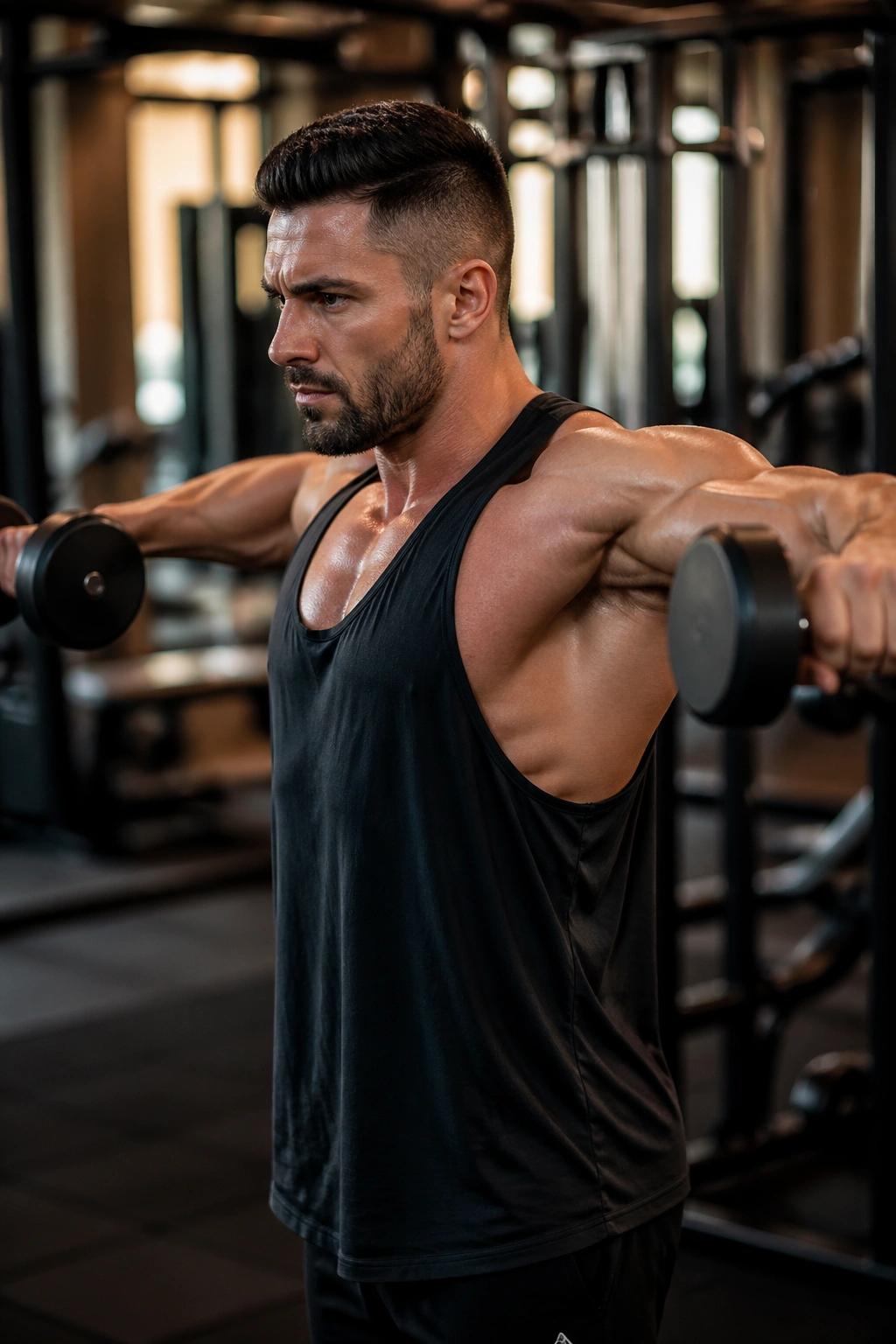
A mechanical drop set is what happens when you stop pretending light weights can’t hurt. You start with the hardest version of the lateral raise, then strip away difficulty without changing the weight, which keeps the side delts working long after the first clean reps are gone.
Here’s a simple version: do 10 to 12 strict lateral raises, then shift into 6 to 8 partial reps from the top half, then hold the arms near shoulder height for 10 seconds. Rest, then repeat for 2 or 3 rounds. The weight stays the same. The leverage changes.
A simple three-stage burn
- Strict reps: clean, controlled raises to shoulder height.
- Top-half partials: short reps where the muscle stays under tension.
- Isometric hold: freeze near the top until the shoulders start to complain.
This is a finisher, not a main lift. If you do it right, your side delts will feel packed with blood and your traps will be begging for mercy. Good. That means the set did its job.
Keep the rest short, around 45 to 60 seconds. And don’t be sloppy with the first round just because the later phases are supposed to burn. The clean reps still matter.
15. Three-Move Shoulder Finisher Circuit
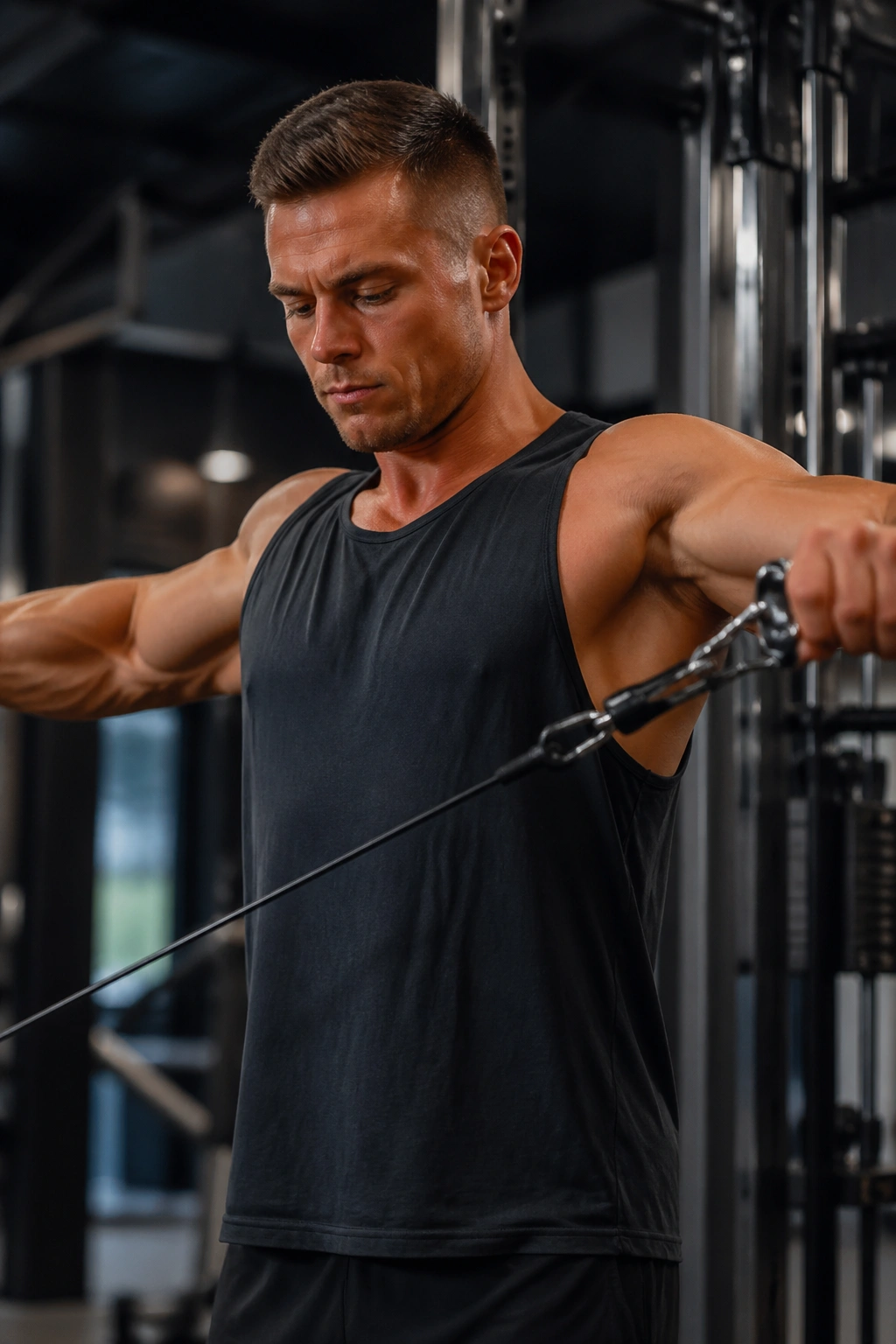
A shoulder finisher works best when it feels a little unfair. Not dangerous. Just annoying in the right way. A short circuit can squeeze a lot of quality work out of the side delts and rear delts without asking for heavy loading or perfect energy.
Try this: 12 cable lateral raises, 15 chest-supported rear delt flys, 15 face pulls. Rest 60 to 90 seconds. Do 3 rounds. If you want to make it meaner, shorten the final rest to 30 to 45 seconds. That’s usually enough to turn the shoulders into a shaky mess.
Why this circuit works
The lateral raise hits width. The rear delt fly keeps the back of the shoulder honest. The face pull cleans up the shoulder blade work and adds a little upper-back overlap. Put together, they give you a lot of tension without needing to load the joint like a press.
This is a smart add-on after chest day or back day if you still want the shoulders to get their own work. It also plays nicely with higher-volume phases when you’re chasing size more than a one-rep max.
If you only have time for one short shoulder block, this one is hard to beat. It’s fast, ugly, and effective.
The Bottom Line

Defined capped shoulders come from doing a few things well, not from chasing random shoulder exercises at full blast. Presses build thickness. Lateral raises build width. Rear-delt work keeps the whole thing from looking flat or forward-heavy.
The cleanest setup is usually one press, two raise variations, and one rear-delt move. Add a finisher if you’ve got the energy and the joints feel fine. If your raises turn into shrugs, the weight is too heavy. If your presses turn into back bends, the load is too heavy there too.
That shoulder cap shows up when the middle delt gets enough honest work. Keep the reps clean, keep the tension where it belongs, and stop trying to make every set look impressive. That attitude leaves more shoulders underbuilt than bad genetics ever did.
