



A back day that only chases a pump leaves too much on the table.
If your shoulders drift forward, your upper back feels sleepy, and your shirts hang flat where you want shape, you do not need more random pulling. You need back day ideas that train the muscles that actually hold you tall: lats, rhomboids, mid and lower traps, rear delts, spinal erectors, and the small stabilizers around the shoulder blade.
That’s the part people miss. A good back session is not only about width. It’s about thickness across the middle of the back, cleaner shoulder position, and enough hinge work to stop your trunk from looking soft when you turn sideways. One layer gives you sweat. The other changes the way you carry yourself.
The best part is that back training does not have to be complicated. A few rows, a pull-up or two, one hinge, one carry, and a small isolation move can cover a shocking amount of ground if the reps are honest and the setup is tight. Start with the movement that lets you load the back hard without turning the lower back into the weak link.
1. Chest-Supported Rows for a Thicker Mid-Back
If your lower back gets tired before your back does, this is the row you should keep coming back to. A chest-supported row takes the cheating out of the lift and puts the work where it belongs: middle traps, rhomboids, rear delts, and a good chunk of the lats.
Why the chest support matters
A bench angled around 30 to 45 degrees gives you enough room to pull hard without turning the movement into a half-stand, half-shrug. That matters. When the torso stays planted, you can row with a cleaner elbow path and hold the squeeze for a beat at the top instead of bouncing through the reps.
Use a neutral grip if your shoulders like it, or a pronated grip if you want a little more upper-back bias. Either way, keep your chest pressed into the pad and your neck long.
- Pull the handles toward your lower ribs or upper stomach.
- Pause for 1 second at the top.
- Lower for 2 to 3 seconds.
- Stop the set when your shoulders start rolling forward.
Best use: 3 to 4 sets of 8 to 12 reps, with enough load that the last 2 reps feel earned.
One sentence tip: If your chest leaves the pad, the set is already turning messy.
2. Pull-Ups That Build Width Without Cheating

Pull-ups are still one of the cleanest tests of upper-body pulling strength. They also happen to make the back look wider in a way that cable work sometimes misses. That V-shape matters when you want visible strength, not just a tired pump.
The mistake is trying to turn every rep into a chin-to-bar performance contest. Don’t crane the neck. Don’t kick the legs like you’re trying to start a lawn mower. Pull your ribcage down, reach long at the bottom, then drive your elbows toward your pockets on the way up.
If bodyweight pull-ups are not there yet, use a band or an assisted machine. If you can already do solid sets, slow them down. A 3-second lower and a brief dead hang between reps can make 5 clean pull-ups harder than 10 rushed ones.
Where they shine: lat width, grip strength, and that dense, athletic look across the upper back.
A small detail matters here. Start every rep from a dead hang or near-dead hang, then pull the shoulder blades down before the elbows move. That first inch is the whole game.
3. Face Pulls for Rear Delts and Cleaner Shoulder Position

Why do face pulls keep showing up in good back programs? Because most people’s shoulders live a little too far forward, and face pulls hit the rear delts and external rotators that help pull things back into line.
This is not a big ego movement. It’s a precision move. Use a rope on a cable stack, set the pulley around upper-chest height, and pull the rope toward your forehead or the bridge of your nose while the elbows stay high and slightly wider than your hands.
How to use it
- Choose a light to moderate load.
- Pull with control, not momentum.
- Finish with the knuckles apart and the rope near eye level.
- Hold the squeezed position for 1 second.
Twelve to twenty reps works well here because the goal is clean muscle work, not max loading. If the traps take over and your neck starts shrugging, the weight is too heavy.
A good face pull leaves the rear delts warm, the upper back a little more awake, and the shoulders sitting better by the end of the session. Small movement. Big payoff.
4. Romanian Deadlifts for a Stronger Back Line
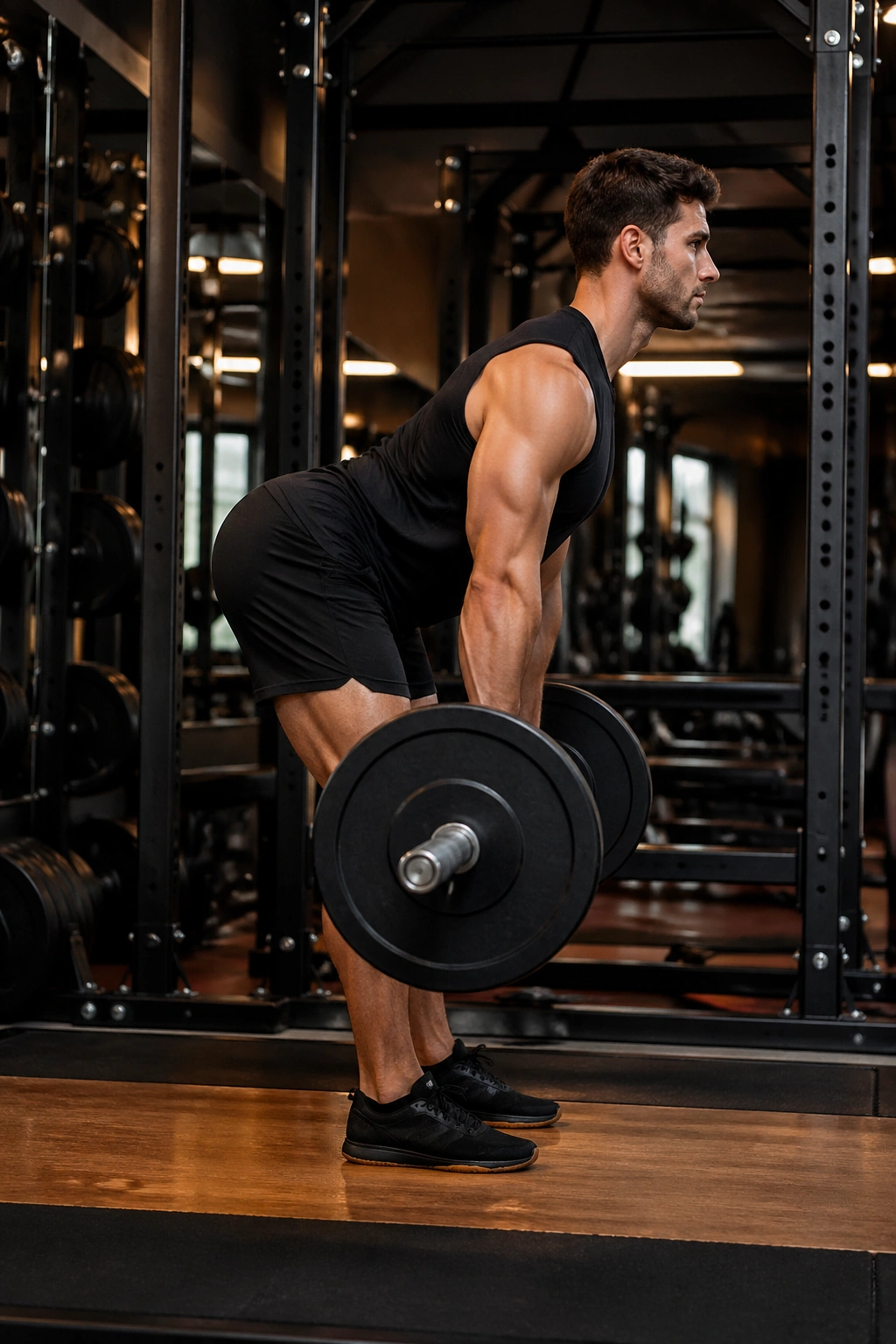
A lot of lifters chase rows and pulldowns, then wonder why their back still looks like it belongs to a person who sits all day. The missing piece is usually a hinge. Romanian deadlifts train the spinal erectors, glutes, and hamstrings together, which helps the whole posterior chain look and function like one unit.
Picture a lifter who can row a decent amount but folds over at the hips the second fatigue shows up. That’s a back that needs hinge work, not just more upper-back fluff. The RDL teaches the trunk to stay braced while the hips move back and the spine stays long.
Use a barbell or dumbbells. Keep a soft bend in the knees, push the hips back, and stop the descent when the hamstrings are at full stretch and the back still feels neutral. If the weight reaches the floor, you probably went too far.
- Keep the bar close to the legs.
- Lower under control for 3 seconds.
- Drive up by pushing the floor away.
- Finish tall, not leaned back.
Six to eight reps is usually enough. Heavy enough to matter, clean enough to repeat.
5. Single-Arm Cable Rows for Symmetry and Control

Single-arm cable rows are one of those exercises that look plain until you do them well. Then the whole back starts talking. The cable gives you constant tension, and the one-arm format exposes side-to-side differences fast. One side always feels cleaner. That is useful information.
Set up in a split stance or half-kneeling position so your torso does not twist all over the place. Reach forward slightly at the start to get a real stretch through the lat, then row by driving the elbow back without yanking your shoulder up toward your ear. The goal is a smooth pull, not a yank-and-hop.
I like these when someone’s upper body feels uneven or when heavy bilateral rows are starting to get sloppy. You can also make the movement more back-friendly by using a bench for support with your free hand.
The nice part is how much posture work sneaks in here. The cable wants to pull you out of position, so your core and shoulder blade have to stay honest. That’s a good problem to have.
6. Lat Pulldowns With a One-Second Pause

A lat pulldown looks boring until you do it with control. Then it becomes one of the best ways to build the width of the back without needing a pull-up bar or a bodyweight that cooperates.
This version is especially useful if you want the feel of pull-ups but need a more adjustable load. Keep the torso mostly upright, lean back only a little, and pull the bar to the upper chest with a one-second squeeze at the bottom. If you turn it into a giant swing, you’ve lost the point.
What makes it different from pull-ups
Pull-ups reward body control and relative strength. Pulldowns let you stack clean volume without the same grip and bodyweight limits. That makes them a smart pairing, not a replacement.
Use a grip that lets your forearms stay quiet. Too wide, and the shoulders can get cranky. Too narrow, and the biceps start stealing the rep. Something around shoulder width is a safe place to start.
Eight to twelve reps works well here. Control the return. Don’t let the stack crash.
7. Seated Cable Rows Pulled to the Sternum
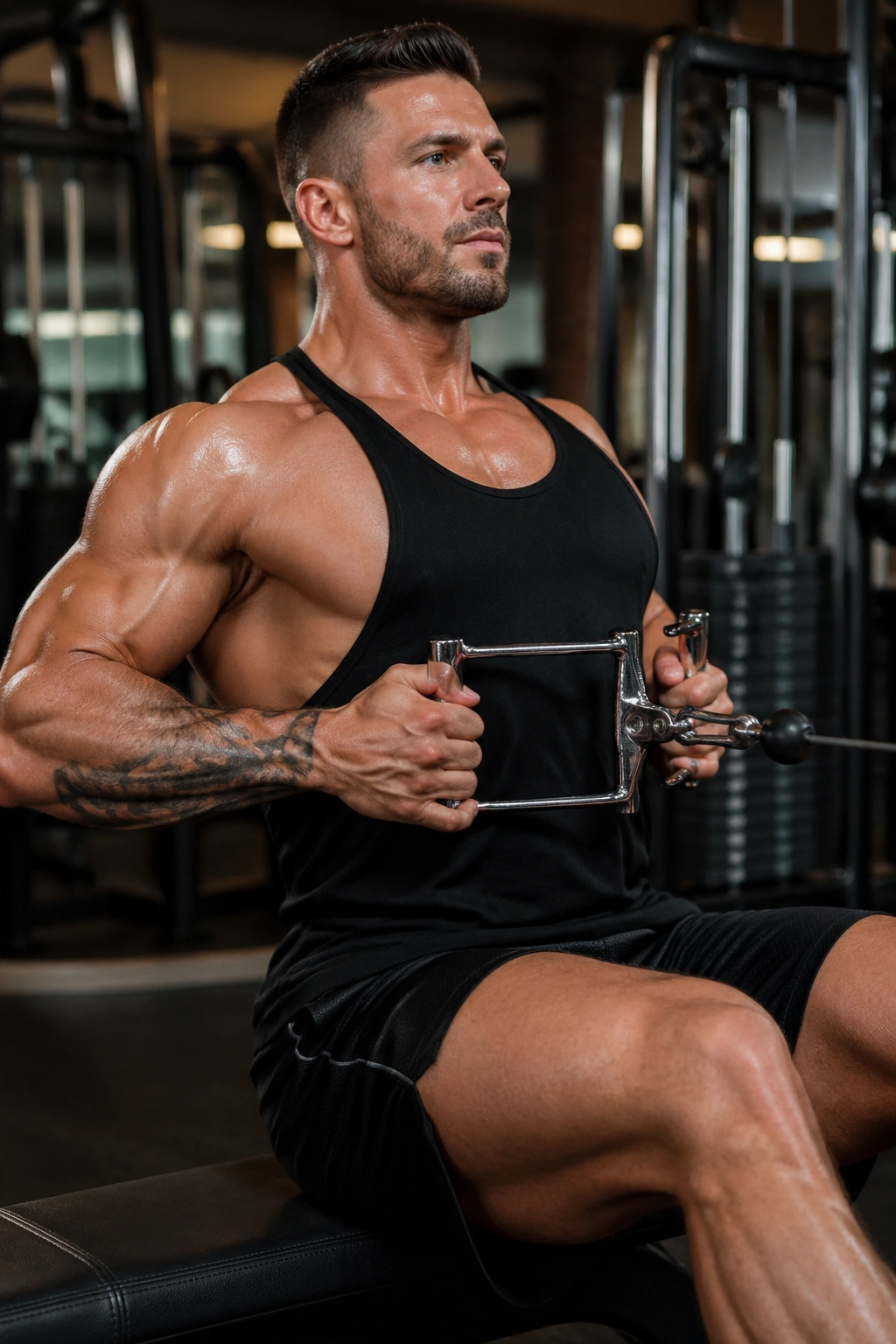
A seated cable row can look like a hundred different exercises depending on where you pull. Pull low, and it drifts toward lats. Pull high to the sternum, and the mid-back takes over.
That upper path is useful if you want a more upright posture and better thickness between the shoulder blades. Sit tall, plant the feet, and keep the chest open without over-arching the lower back. Then pull the handle to the middle of the chest while the elbows travel a bit wider than they do in a low row.
The common mistake is chasing distance. People lean way back and turn the rep into a torso swing. That usually means the weight is too heavy. You want the shoulders to move, not the whole body.
A clean sternum row gives you a dense feeling across the rhomboids and mid traps. It also teaches your body to stay stacked instead of collapsing forward. If your desk posture is ugly, this one tends to feel suspiciously relevant.
8. Reverse Pec Deck Flyes for a Cleaner Upper-Back Shape

Rear delts are tiny, stubborn muscles, and they matter more than they get credit for. Reverse pec deck flyes hit them with very little setup, which is a gift if you want the shoulders to look rounder from behind and less slumped from the side.
The machine gives you a fixed path, so you can focus on keeping the movement honest. Set the handles at shoulder height, keep a slight bend in the elbows, and open the arms until the shoulder blades move without turning into a shrugging contest. Light weight works. Heavy weight usually ruins it.
A lot of lifters do not need more pressing when their upper body looks rounded forward. They need the back of the shoulder to catch up. This is one of the faster ways to do that.
- Keep the neck relaxed.
- Stop the rep before the elbows drift behind the body.
- Use 15 to 25 reps.
- Slow down the return.
That last point matters. The eccentric phase is where the control lives.
9. Landmine Rows in a Split Stance
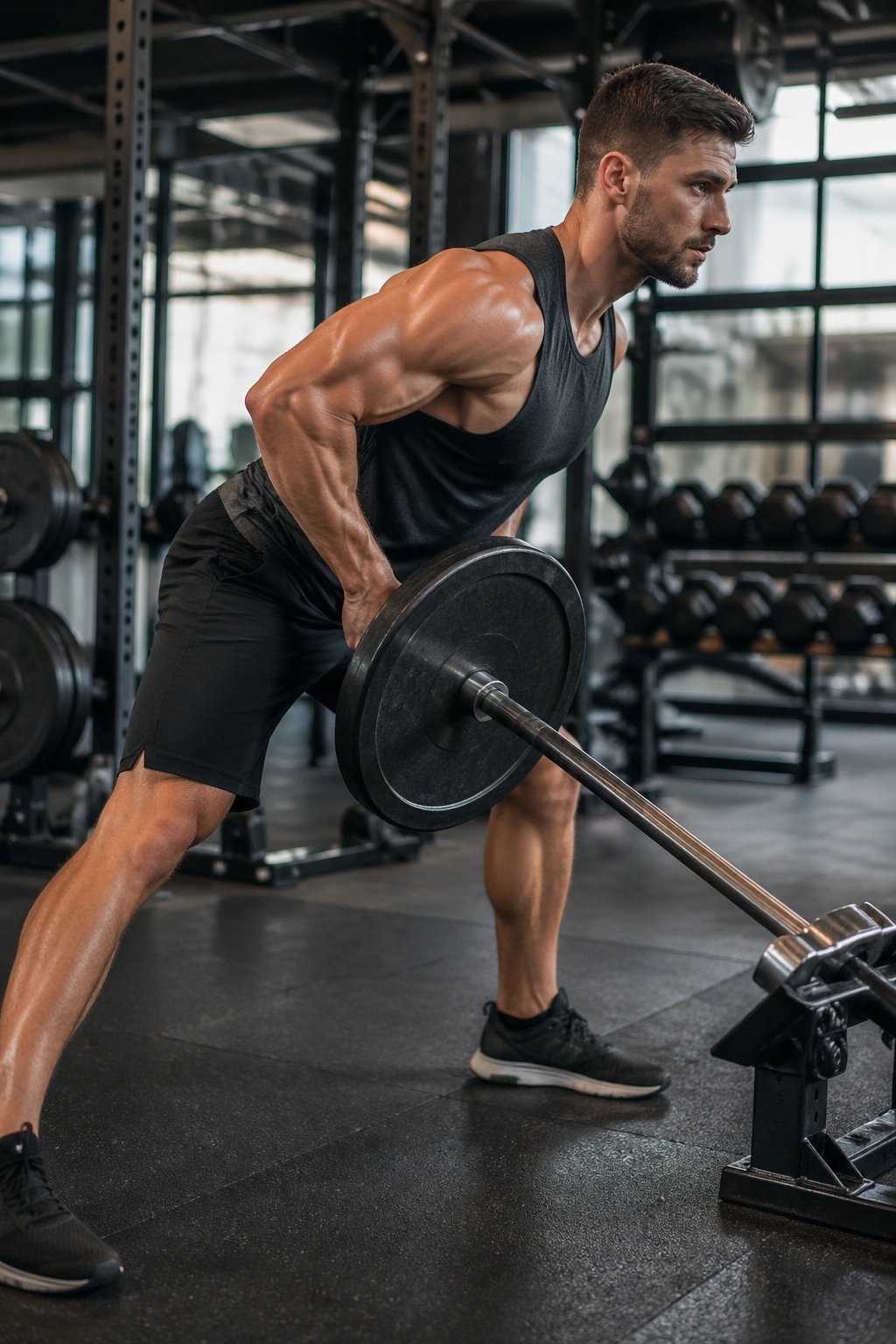
Need a row that feels heavy without beating up your lower back? Landmine rows fit that job well. The angled bar path changes the pull just enough to make the motion feel smooth, and the split stance keeps your torso from doing a lot of extra nonsense.
The setup is simple. One foot forward, one foot back, hips square, torso angled over the bar, then row the weight toward the hip or lower ribs. A narrow elbow path tends to hit the lats harder, while a slightly wider pull brings more upper-back work into the picture.
How to get the most from it
Keep the front foot planted and avoid rocking forward to start the rep. If you have to shift your body to move the bar, the load is too ambitious or the brace is too loose.
This row is a nice middle ground between strict machine work and free-weight chaos. It has enough stability to go heavy, but enough movement freedom to feel athletic. That combination makes it a staple for people who want real thickness across the back without feeding the lower back every session.
10. Straight-Arm Pulldowns for Lat Isolation
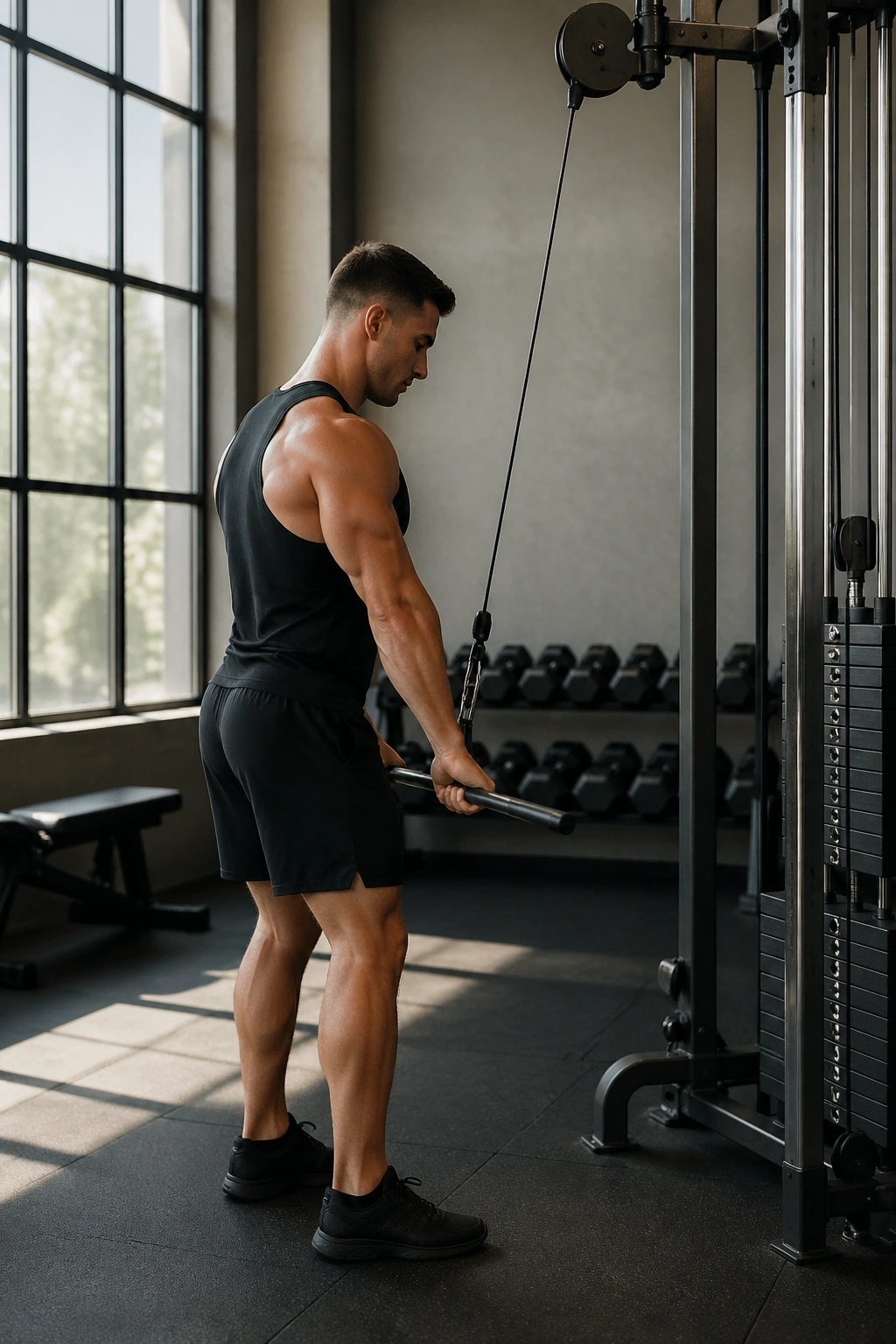
Straight-arm pulldowns are one of the cleanest ways to teach the lats how to do their real job: pull the upper arm down and back without a lot of elbow bend. That makes them a good finisher on back day, and a good primer before heavier pulling if the lats tend to stay asleep.
Set the cable high, grab the bar or rope, and step back until there’s tension at the start. Keep the ribs stacked over the pelvis, then sweep the arms down in a slight arc until the hands reach the thighs. The elbows stay softly bent, but they should not turn the exercise into a triceps pushdown.
A lot of people like this movement because it gives a clear lat contraction without the biceps taking over. That matters if your pulldowns and rows are always getting hijacked by the front of the arm.
Use 12 to 15 reps and think about moving the upper arm, not the hands. The second your shoulders creep up, reset and go lighter.
11. Inverted Rows for Body Control and Scapular Strength

Inverted rows are underrated because they look simple. They are not simple. Not if you do them properly.
The body hangs at an angle under a bar or set of rings, and that angle makes the whole lift scale itself. Feet flat on the floor is the easiest version. Feet elevated on a bench or box is harder. Rings add a little instability and a little honesty, which some people love and some people hate.
What makes inverted rows so good for posture is the way they force the shoulder blades to move without losing control. You start by letting the arms lengthen, then row the chest toward the bar while the shoulder blades slide back and down. No neck jutting forward. No banana spine.
A beginner can build real back strength here. An advanced lifter can use them as a tempo drill and feel muscles that heavy barbell rows sometimes bulldoze past. They’re also kind to the joints, which never hurts.
If you want more difficulty, raise the feet, slow the descent, or pause the top for a full second. Simple upgrades. They work.
12. Back Extensions That Teach the Hips and Spine to Work Together
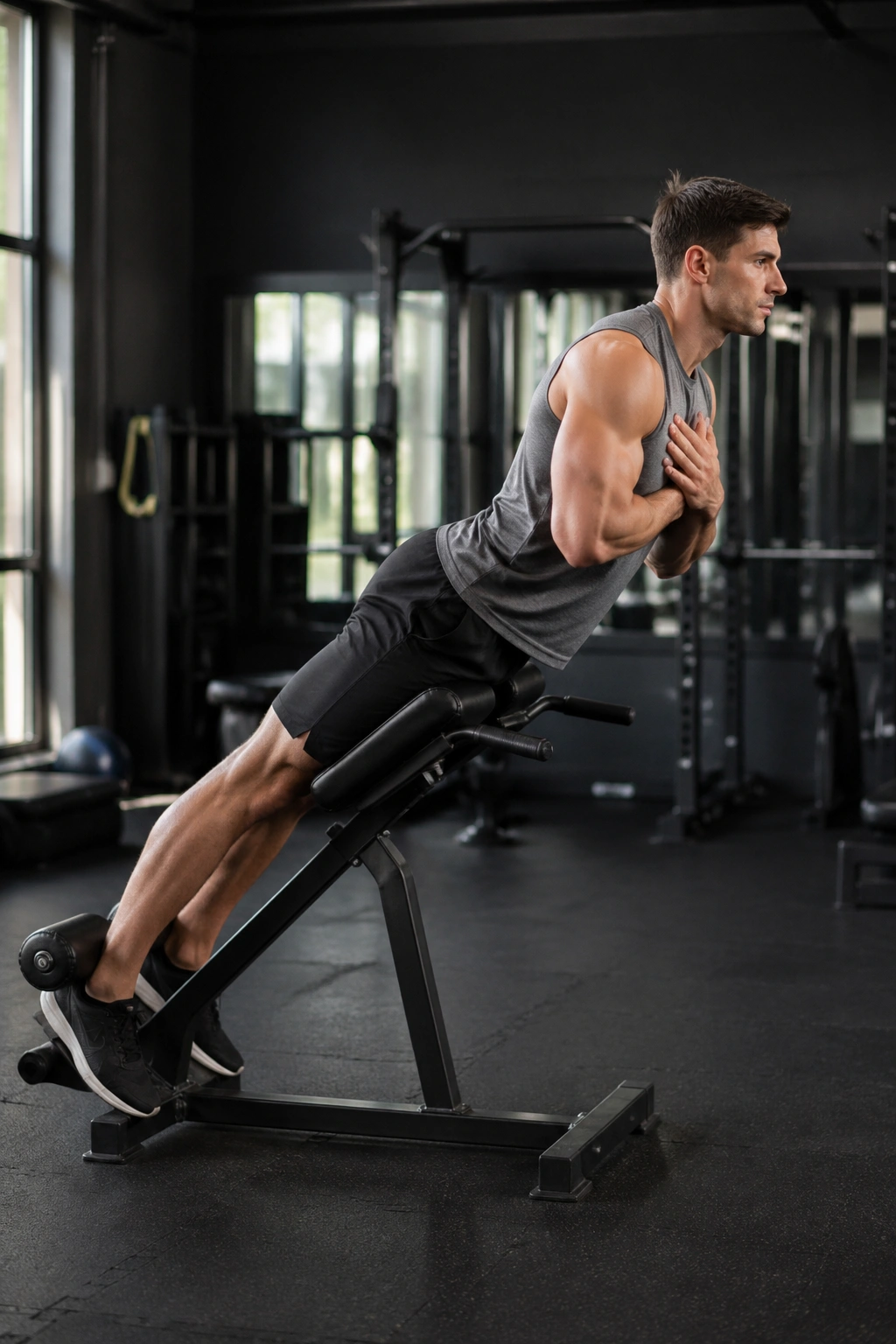
Back extensions deserve more respect than they get. Done well, they train the spinal erectors, glutes, and hamstrings in a way that supports posture, deadlift strength, and day-to-day resilience. Done badly, they become a lower-back jam session. The difference is small and obvious.
Use a 45-degree bench if you have one. Set the pad so your hips can hinge freely, then lower under control until your torso is at a mild stretch. Come up by driving the hips through until the body is straight. Not hyperextended. Straight.
Common mistakes to avoid
- Rounding hard at the bottom.
- Bending only at the low back.
- Cranking past neutral at the top.
- Holding the plate so low that the shoulders cave forward.
A plate hugged to the chest is a fine way to add load. A dumbbell held under the chin works too, though it can feel awkward if the setup is poor.
Back extensions are not flashy. They do, however, build the kind of endurance that keeps your trunk from folding when fatigue hits. That matters more than people want to admit.
13. Meadows Rows for Heavy Lat Thickness

Meadows rows have a certain old-school feel to them. Maybe it’s the landmine setup. Maybe it’s the way the torso stays braced while the working side gets loaded through a long path. Either way, they hit the back hard and give you that dense, meaty look around the upper lat and lower trap area.
Use a staggered stance, hinge slightly, and grab the sleeve of the bar with an overhand grip. From there, row the load up and back with the elbow tracking toward the hip. The stretch at the bottom is half the magic. If you cut that short, the exercise loses a lot of its edge.
How to get the most from it
Keep the free hand planted on the thigh or frame for stability. Resist the urge to rotate the torso. A little rotation is fine if the load is heavy, but a big twist means the setup has drifted.
This row is not the easiest on-ramp for beginners because the setup takes a minute to learn. Once it clicks, though, it becomes a favorite for lifters who want more thickness without living under a barbell every week.
Five to ten hard reps per side is usually enough. Anything sloppier than that tends to turn into a shrug.
14. Prone Y Raises for Lower Traps That Actually Wake Up

Most people chase bigger traps and forget that the lower traps are the muscles that help keep the shoulder blades positioned well. Prone Y raises are tiny on paper and annoyingly effective in practice.
Lie face down on an incline bench and raise the arms into a Y shape with the thumbs pointing up. Keep the motion small. If the arms go too high, the upper traps take over and the point of the drill gets lost. The goal is a clean lift from the lower shoulder blade area, not a fancy front-delt illusion.
This is one of those movements that looks almost too light to matter. Then you do 12 slow reps and realize your mid-back has been neglecting basic housekeeping.
Use a very light pair of dumbbells or no weight at all. A one- or two-pound jump can be plenty. That’s not a joke. Small muscles do not need much load before form breaks.
If posture is part of the goal, this drill belongs near the end of the session or on a separate light day. It’s small work. Small work still counts.
15. Farmer Carries and Suitcase Carries for Posture That Holds Up Under Load

If you want a back day idea that carries over into real life fast, pick up something heavy and walk. Farmer carries train the traps, grip, core, and whole upper back in one shot. Suitcase carries add a sideways challenge that forces the trunk to stay square instead of collapsing toward the weight.
That makes them a sneaky fix for people whose posture falls apart the second the set is over. The muscles have to keep working while you breathe, brace, and keep your ribs from flaring. There’s nowhere to hide.
Use heavy dumbbells, kettlebells, or trap-bar holds if space is limited. Walk for 20 to 40 meters, turn around, and repeat for 3 to 5 trips. Stay tall. Do not lean back. Do not let the shoulders creep up to your ears. If the grip fails first, that’s fine; it still trained the whole line.
Suitcase carries are my pick when one side feels less stable than the other. Farmer carries are the simpler option when you want brute-force loading. Both build that dense, upright look that makes a back seem stronger even before anyone sees a single rep.
A good back day does not need fifteen exercises. It needs the right few, done with enough control that the muscles can’t cheat their way through the work. Pick one row, one vertical pull, one hinge, one rear-delt drill, and one carry, then keep repeating that pattern until the numbers and the mirror both start to agree.
