



A pair of dumbbells can do more for your arms than a crowded weight room full of machines, provided you stop treating arm day like a hundred random curls. The look most people want — fuller biceps, sharper triceps, some shape through the forearms — comes from angles, grip changes, and enough tension to make the muscle work instead of letting the shoulders sneak in.
That part gets missed all the time. People chase the burn, but the burn is not the goal. Smart dumbbell arm workouts should hit elbow flexion, elbow extension, and grip work, because the arm is not one neat little muscle with one job.
And no, you cannot spot-reduce fat from the upper arm. That “toned” look is really a mix of muscle, overall body composition, and the way the arm fills out under a sleeve. Build the muscle underneath and the shape changes. Plain and simple.
Some of these moves are basic. Some are sneaky. A couple look almost too small to matter until your last two reps slow to a crawl. Good. That is where the useful work happens.
1. Alternating Supinating Dumbbell Curl
The regular dumbbell curl gets dismissed because it looks simple. That’s unfair. The little twist at the top — turning the palm up as you curl — changes how hard the biceps have to work, and it also keeps the forearm honest instead of letting the motion turn sloppy.
Why the twist matters
When you supinate the hand, you ask the biceps to do more than just bend the elbow. The muscle helps with that turning action too, which is why this curl tends to feel more complete than a straight-up, straight-down rep. It’s a smart first pick if you want toned sculpted arms without doing anything flashy.
Keep the upper arm still. That matters more than the weight number on the dumbbell. If your elbow starts drifting forward and your shoulder rolls in, the rep is getting stolen.
- Curl one arm at a time.
- Turn the palm up near the top.
- Lower for 2 to 3 seconds.
- Use 8 to 12 reps per arm.
- Pick a weight that leaves 1 or 2 clean reps in reserve.
Pro tip: stop the rep the moment the shoulder tries to help. That’s the line.
This is the kind of curl that belongs near the front of your arm session, not after you’ve already smoked everything with heavier pressing.
2. Hammer Curl
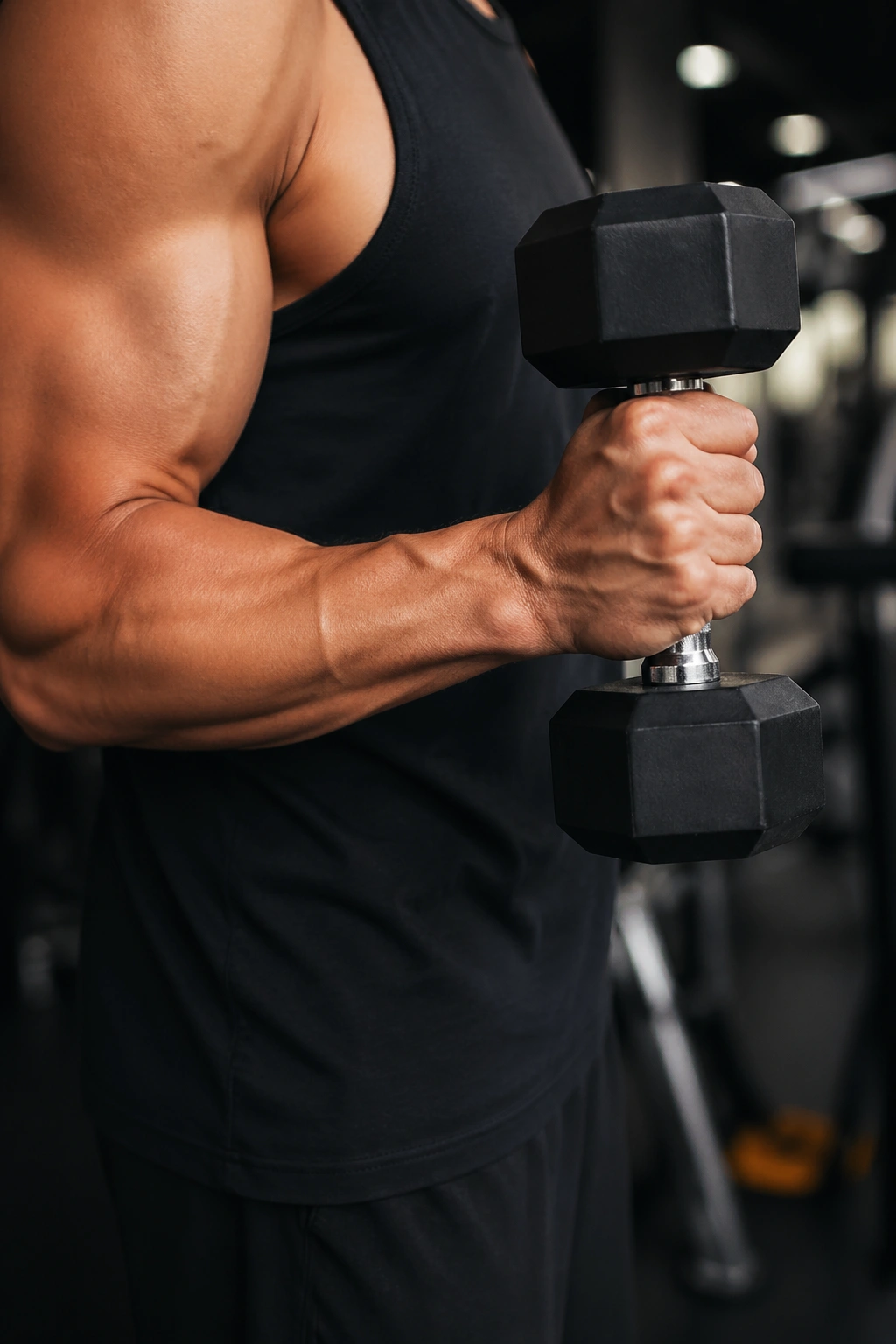
Hammer curls make arms look thicker from the side. That is the whole reason I keep them around.
A neutral grip shifts work toward the brachialis and brachioradialis, the muscles that sit under and around the biceps. That extra work adds width, which is why hammer curls often make the upper arm look more solid in a T-shirt than a pile of regular curls ever will. They also tend to be kinder on wrists, which is a nice bonus when straight-bar curls start feeling cranky.
I like them as a middle-of-the-workout move. Not first, not last. Right in the middle, where you still have enough energy to keep the reps clean and heavy enough to matter.
Use a pair of dumbbells you can control for 10 to 12 reps without swinging. If both arms move at the same time, fine. If you alternate, that’s fine too. What matters is that the elbows stay close and the wrists stay neutral, not bent back.
A lot of people rush hammer curls and call it intensity. Nope. Slow the lowering phase a little. The arm shape you want comes from tension, not from tossing the dumbbells around and hoping the forearms catch up.
3. Incline Dumbbell Curl
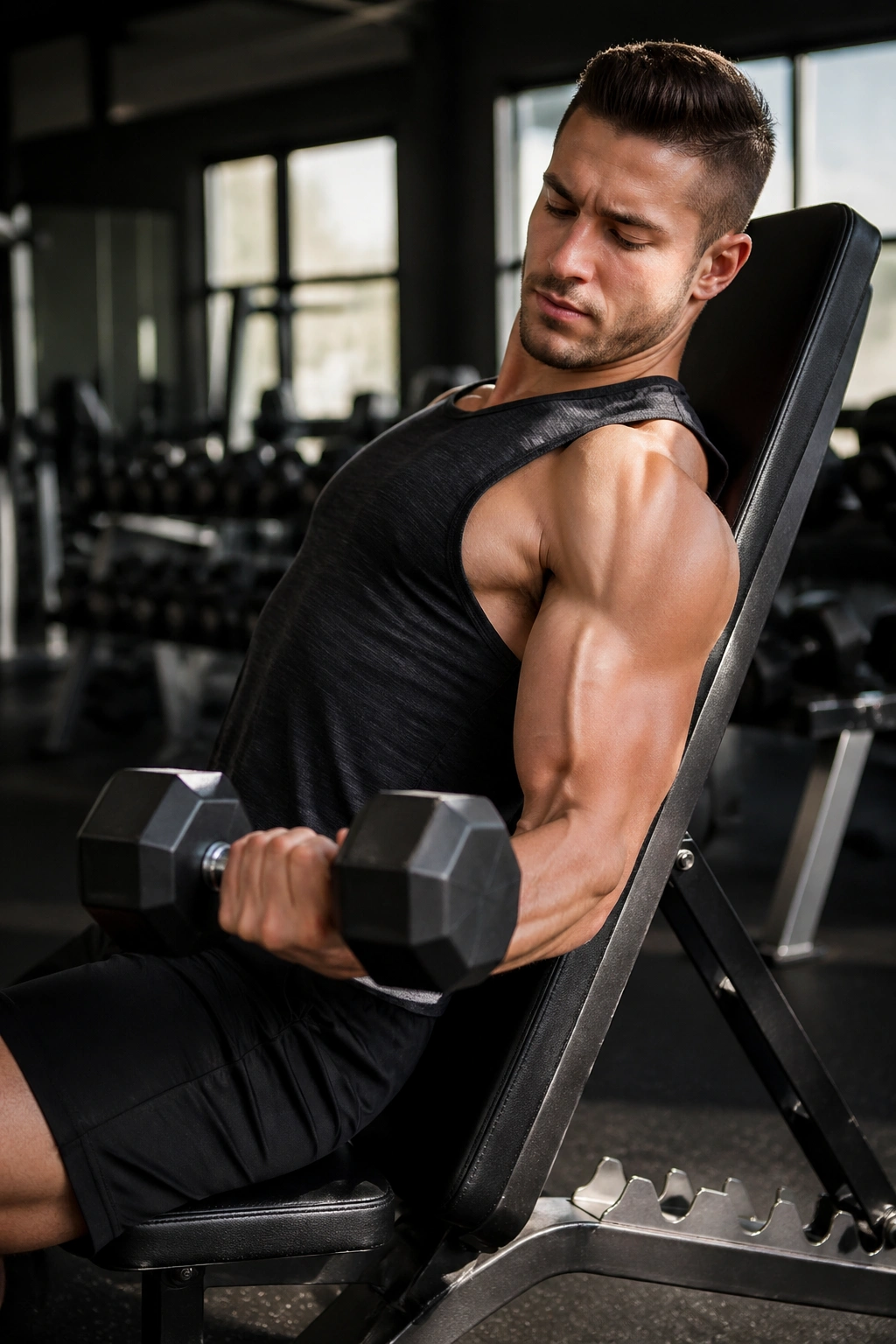
Why do incline curls feel harder than standing curls? Because they are. The arms hang behind the torso, the biceps start from a longer stretch, and that stretch makes the top half of the curl feel brutally honest.
How to set the bench
Set the bench around 45 to 60 degrees. Too upright and you lose the stretch. Too flat and the setup gets awkward fast. Sit back, let the shoulders stay down, and let the dumbbells hang with the palms facing forward before you start.
The key is not to turn this into a chest lift. Keep the rib cage quiet. Keep the upper arm still. If the shoulders roll forward at the bottom, you’re losing the whole point of the exercise.
This one rewards a slower lowering phase. Three seconds down is a good target. That pause at the bottom? You will feel it immediately. So will your biceps.
Use this for 8 to 10 controlled reps. It’s not the move for ego loading. It’s the move for making the long head of the biceps do its job, which is one of the reasons the arm looks fuller from the side when this curl shows up in a program.
A lot of people skip incline curls because they don’t look dramatic. Fine. The mirror says otherwise.
4. Concentration Curl
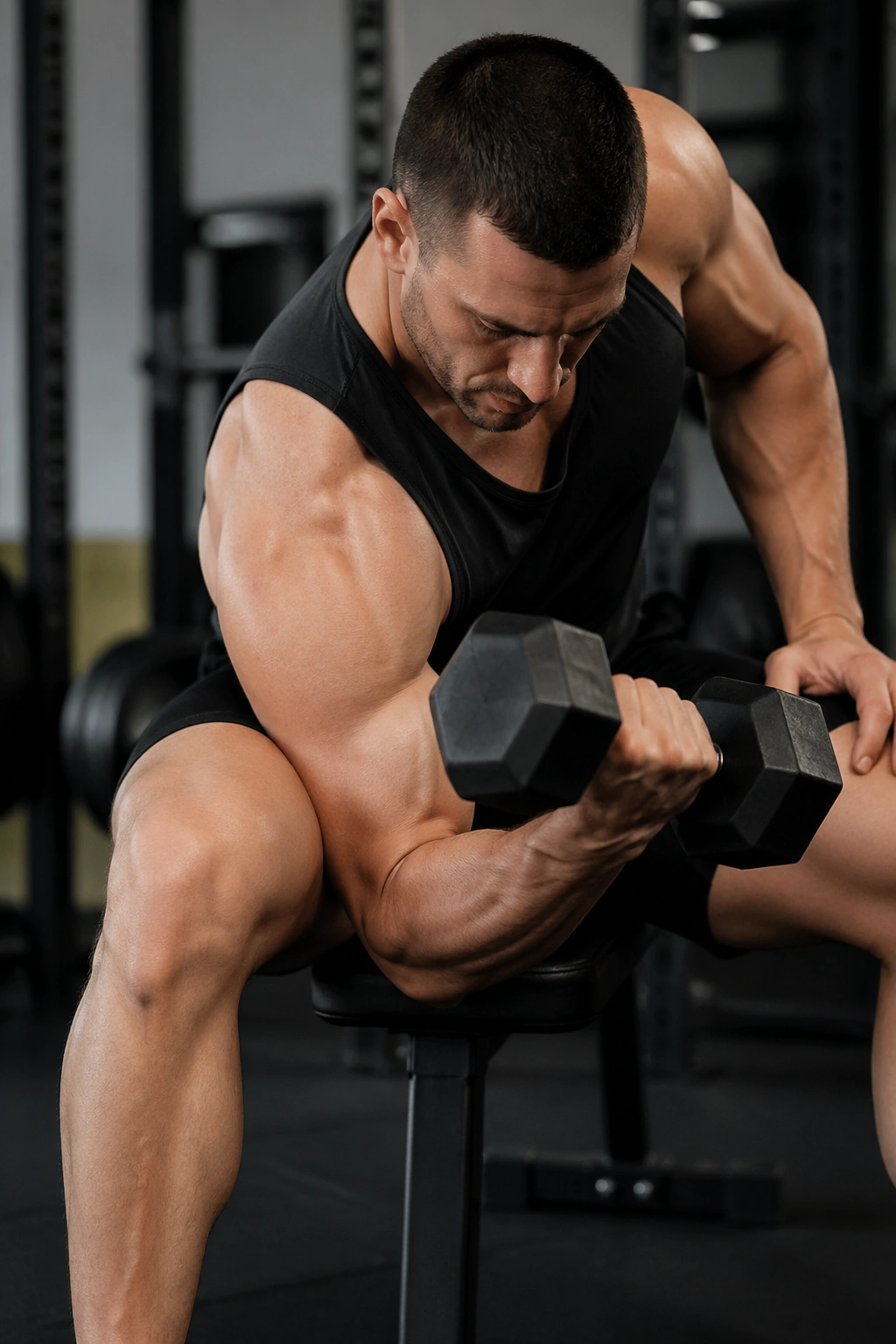
Picture a single dumbbell, one chair, and no place to hide the cheat reps. That’s the concentration curl in a nutshell.
It strips the motion down to the part that matters: elbow flexion under control. You sit, brace the working elbow against the inner thigh, and curl without help from your back, hips, or the other arm. The result is a strict biceps contraction that feels small at first and very real by rep eight.
Set it up cleanly
Sit on a bench or sturdy chair with your feet flat. Lean forward just enough to plant the working elbow against the inside of the thigh. From there, let the arm hang, curl smoothly, and squeeze the top for 1 full second before lowering.
- Use 10 to 15 reps per arm.
- Keep the wrist straight.
- Don’t slam the dumbbell down.
- Pause at the top instead of rushing.
- Use it as a finisher after heavier curls.
One arm at a time exposes all the little cheats. That’s why I like it. If the non-working side is twisting, leaning, or speeding up, you’ll feel it immediately.
Concentration curls are not about moving the biggest weight in the room. They’re about teaching the biceps to actually finish the rep.
5. Zottman Curl
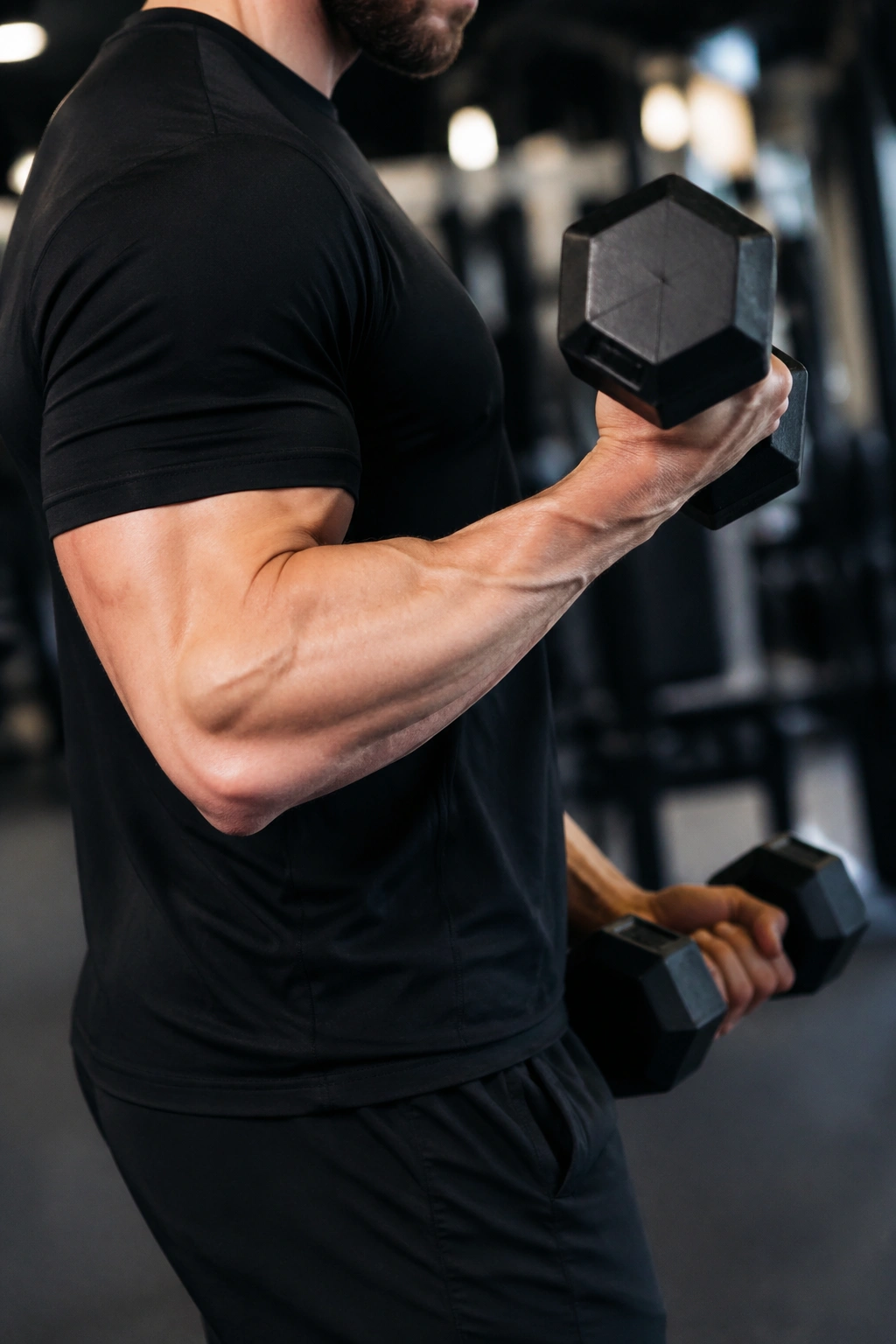
Zottman curls are a little old-school and a little rude. Curl up with palms facing you, rotate at the top, then lower with palms facing down. That simple switch turns one rep into two jobs: biceps on the way up, forearms on the way down.
They’re not fancy. They just make you earn the rep.
The lowering phase is where the real bite shows up. With the palms turned down, the forearms have to control the descent, and that’s where a lot of people discover they were relying on momentum more than they thought. Start lighter than you want to. Seriously. The ego load disappears fast once the wrists and forearms have to hold their end of the deal.
I like these for 8 to 10 reps with a smooth, controlled pace. If the dumbbell twists in your hand or the wrist starts folding back, the weight is too heavy. That part is not negotiable.
They’re especially useful when your forearms lag behind your biceps. A lot of arm programs ignore that gap, which is why the lower arm looks narrow even when the curls are going fine. Zottman curls fix that without asking for extra equipment or a weird setup.
One rep. Two angles. That’s the whole trick.
6. Cross-Body Hammer Curl
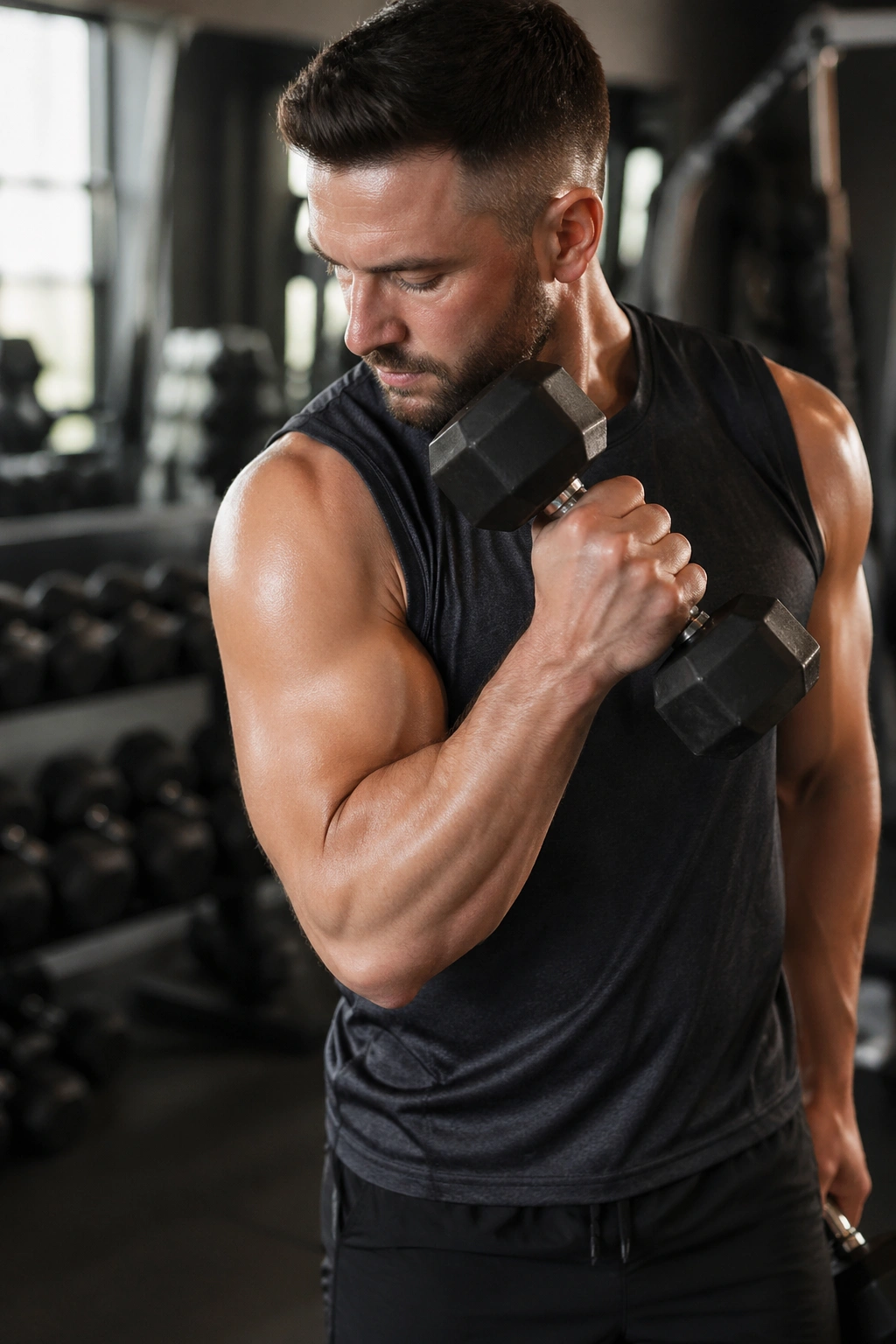
Unlike a straight hammer curl, the cross-body version sends the dumbbell toward the opposite shoulder. That tiny path change shifts the load and makes the arm work from a slightly different angle, which is why the exercise feels thicker and a touch more brutal in the brachialis.
It also tends to let you use a little more weight than a strict supinated curl, because the motion is more natural for a lot of people. That does not mean you should start yanking the dumbbell across your chest like you’re tossing a bag into the back seat of a car. Keep the elbow close. Keep the torso still.
This is a nice move if regular curls start feeling stale. The path is simple, but the result is different enough to matter. If hammer curls work the arm straight up and down, cross-body hammers hit the line from a slightly different direction, and the upper arm gets a fuller look when you train both.
Use 8 to 12 reps per side. A controlled squeeze at the top makes a bigger difference than adding five extra pounds. That’s the annoying part. Also the useful part.
Best of all, it’s easy to slot into a dumbbell-only arm workout when you want thickness without needing a bench or a cable stack.
7. Reverse Dumbbell Curl
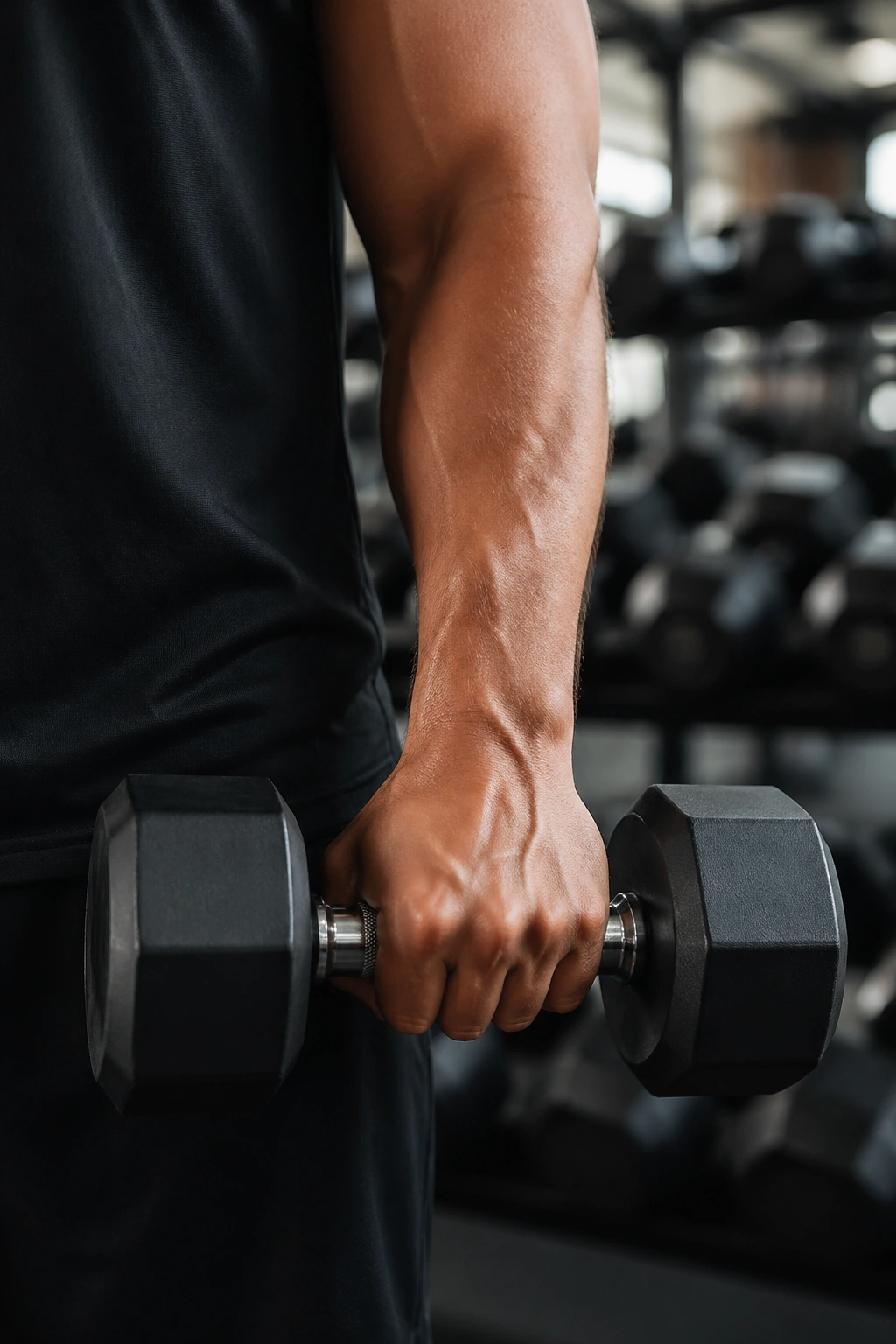
Can a reverse curl really help arms look better? Yes. It usually shows up in programs for forearms, but the brachialis gets a serious share of the work too, and that muscle helps push the biceps up so the upper arm looks thicker.
The overhand grip changes everything. Palm down, wrists straight, elbows tucked. That combination makes cheating harder and makes the forearms light up fast. If your wrists bend back to fake the rep, the load is too heavy. Drop it. That isn’t a moral failing. It’s just smart training.
What to watch for
- Keep the hands about shoulder width apart.
- Curl with the elbows near the ribs.
- Stop the rep before the shoulders roll forward.
- Use 12 to 15 reps with lighter dumbbells.
- Lower slowly so the wrists stay stacked.
This one looks plain in a gym video. It feels different in real life, especially if you’ve never trained the forearms directly. There’s a sort of deep ache that shows up around the top of the forearm, and that’s the signal you’re in the right place.
If your curls and hammer curls are all biceps, reverse curls are the move that fills in the gaps. Not glamorous. Useful.
8. Overhead Dumbbell Triceps Extension
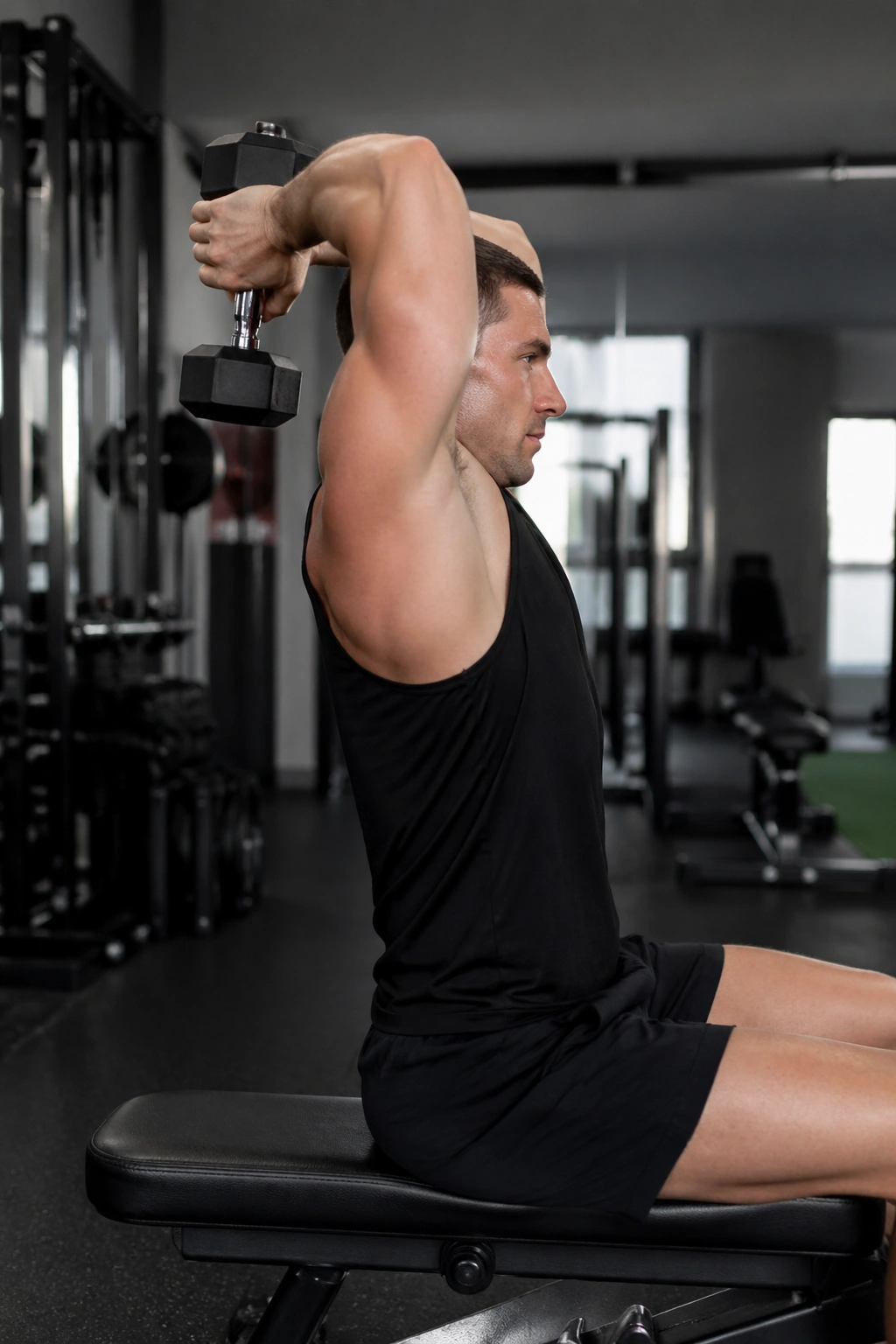
Overhead triceps work is where the long head finally gets honest attention. That matters because the long head runs across the shoulder joint, which means it responds well when the arm is taken overhead and the muscle gets stretched under load.
Setup
Hold one dumbbell with both hands, or use a single dumbbell in one hand if the load is light enough to stay stable. Raise it overhead, bring the elbows close to the ears, and lower the weight behind the head until you feel a strong stretch without your lower back arching.
Why the stretch matters
The bottom position is the whole point. If you rush it, the exercise turns into a half-hearted elbow bend. If you let the triceps lengthen under control, the back of the arm has to work through a bigger range, and that’s where the shape changes start to show.
How to use it
- Try 10 to 15 reps.
- Keep the ribs down.
- Let the elbows point slightly inward.
- Lower for 2 seconds.
- Press up without locking out hard at the top.
Do not turn this into a backbend. If the spine starts arching to steal range, the dumbbell is too heavy.
This is one of the best triceps moves in a dumbbell-only session. It’s direct, it’s awkward in the right way, and it hits a spot that a lot of people leave undertrained.
9. Lying Dumbbell Skull Crusher
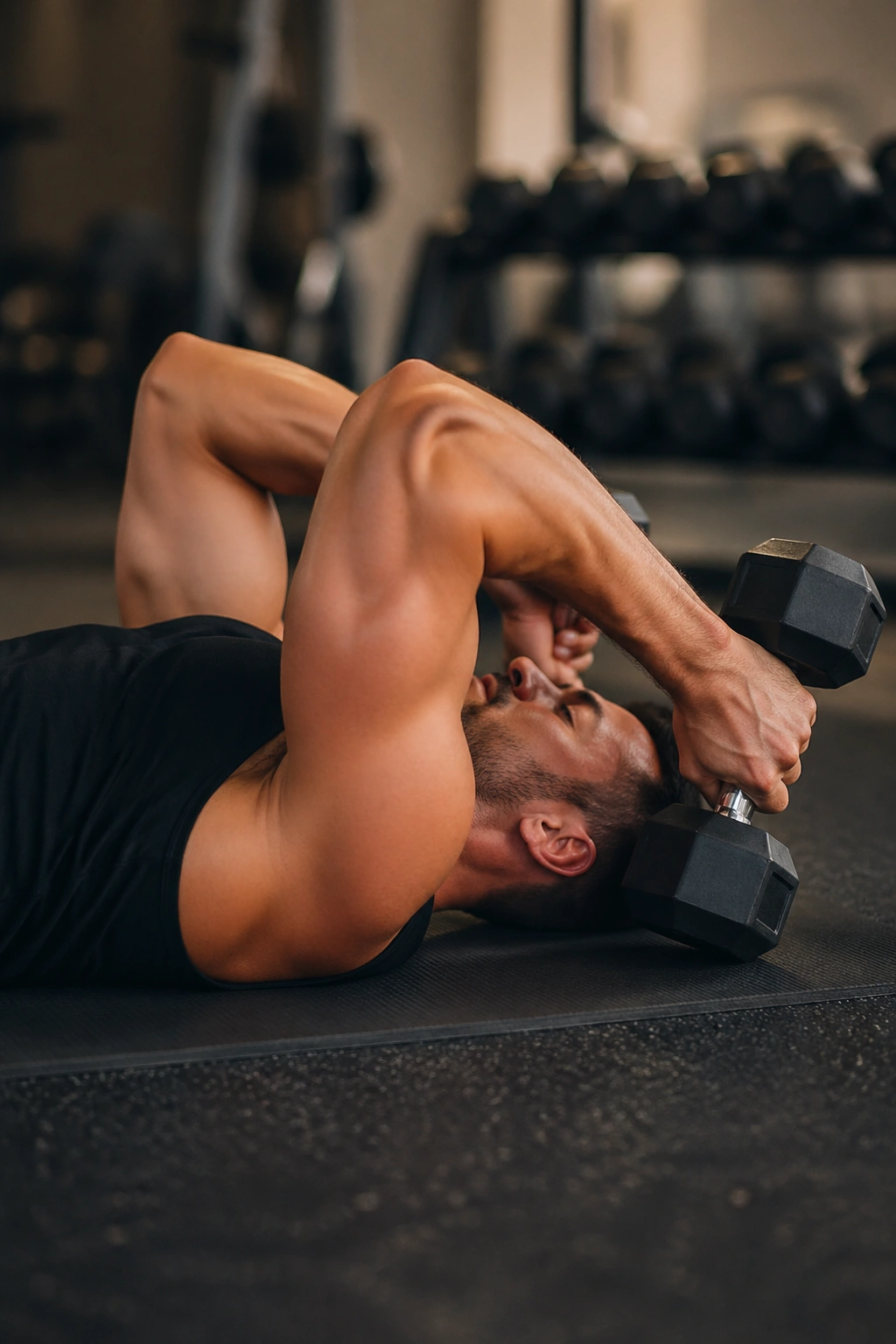
Lie down with a pair of dumbbells and the triceps suddenly have nowhere to hide. That’s the appeal of the skull crusher. It puts the elbow into a fixed lane and makes the triceps extend the weight without the help of a leg drive or a shrug.
The floor version is the one I like most for most people. A bench lets you lower farther, sure, but the floor gives you a built-in stop and can feel friendlier on cranky elbows. That stop matters. A lot.
- Lower the dumbbells toward the sides of the head or just behind it.
- Keep the upper arms angled up and nearly still.
- Use 8 to 12 reps.
- Let the elbows bend, but don’t let them flare wide.
- Keep the wrists stacked over the elbows on the way down.
A small bend in the shoulders is fine. A collapse is not. If the dumbbells drift all over the place, the load is too heavy or the setup is too loose.
I like skull crushers after an overhead triceps move. The stretch from the first exercise wakes the long head up. The skull crusher then finishes the job with a more fixed path and a harder lockout. That combination works better than people expect.
Sharp elbow pain is a stop sign. Reduce the range, lighten the load, or switch to the floor. No drama.
10. Dumbbell Triceps Kickback
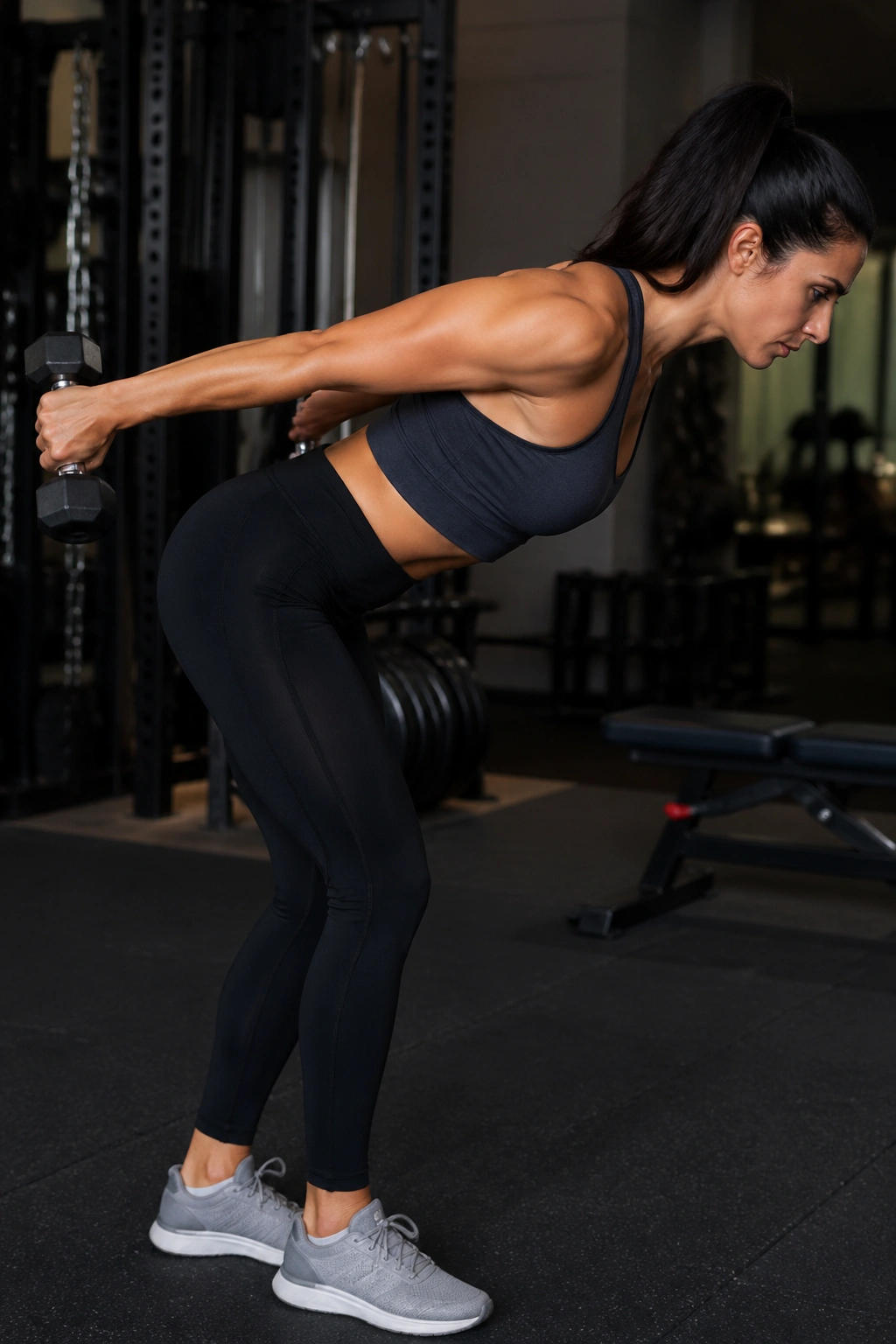
Triceps kickbacks look tiny, and that’s exactly why people mess them up. They pick up too much weight, swing the elbow around, and then wonder why the back of the arm never feels like it’s working.
The move is a strict squeeze, not a strength contest. Hinge at the hips, bring the upper arm parallel to the floor, and extend the elbow until the arm is straight behind you. That’s the whole shape. The upper arm stays still. The forearm does the work.
This is where lighter dumbbells are a feature, not a flaw. For a lot of lifters, 5 to 15 pounds is more than enough here. The goal is a hard lockout and a clean pause, not a dramatic load. If you need to swing the body to finish the rep, the weight has already won.
Kickbacks are best at the end of a triceps block. They’re useful after presses or overhead extensions when you want a little extra blood flow and a real squeeze without beating up the joints. I also like them for people who struggle to feel their triceps on heavier work. The feedback is immediate.
One-second hold at full extension. That’s the part most people skip.
11. Close-Grip Dumbbell Floor Press
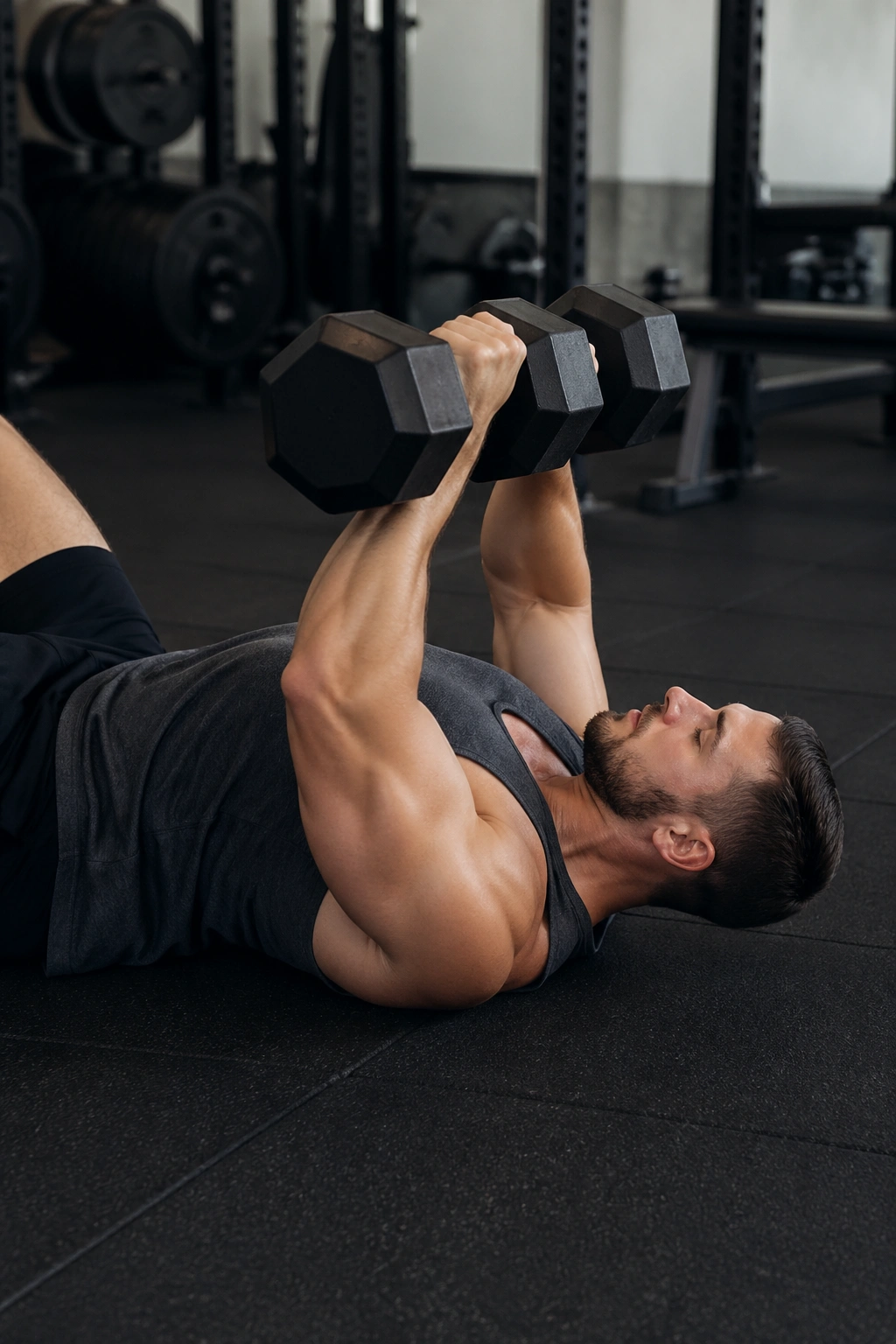
If you want to load the triceps without fancy setup, this is the move. It’s a pressing pattern, not an isolation drill, which means you can use more weight than you can on kickbacks or overhead extensions and still hammer the back of the arm.
Lie on the floor with a dumbbell in each hand, palms facing in or angled slightly forward. Keep the dumbbells close to the body as you press, and let the elbows stay around 30 to 45 degrees from the torso instead of flaring out wide like a chest press. The floor shortens the range and removes a lot of shoulder nonsense.
That shorter range is part of the appeal. You can drive hard through the triceps lockout without worrying about dropping too deep and losing control. If your bench setup is limited, this is one of the simplest ways to get serious upper-arm work from a pair of dumbbells.
Use 6 to 10 reps here. Heavy enough to matter, clean enough to keep the wrists stacked and the dumbbells steady. The press should feel smooth, but not easy.
This is also the move I reach for when the session needs a little more muscle and a little less fuss. It just works.
12. Tate Press
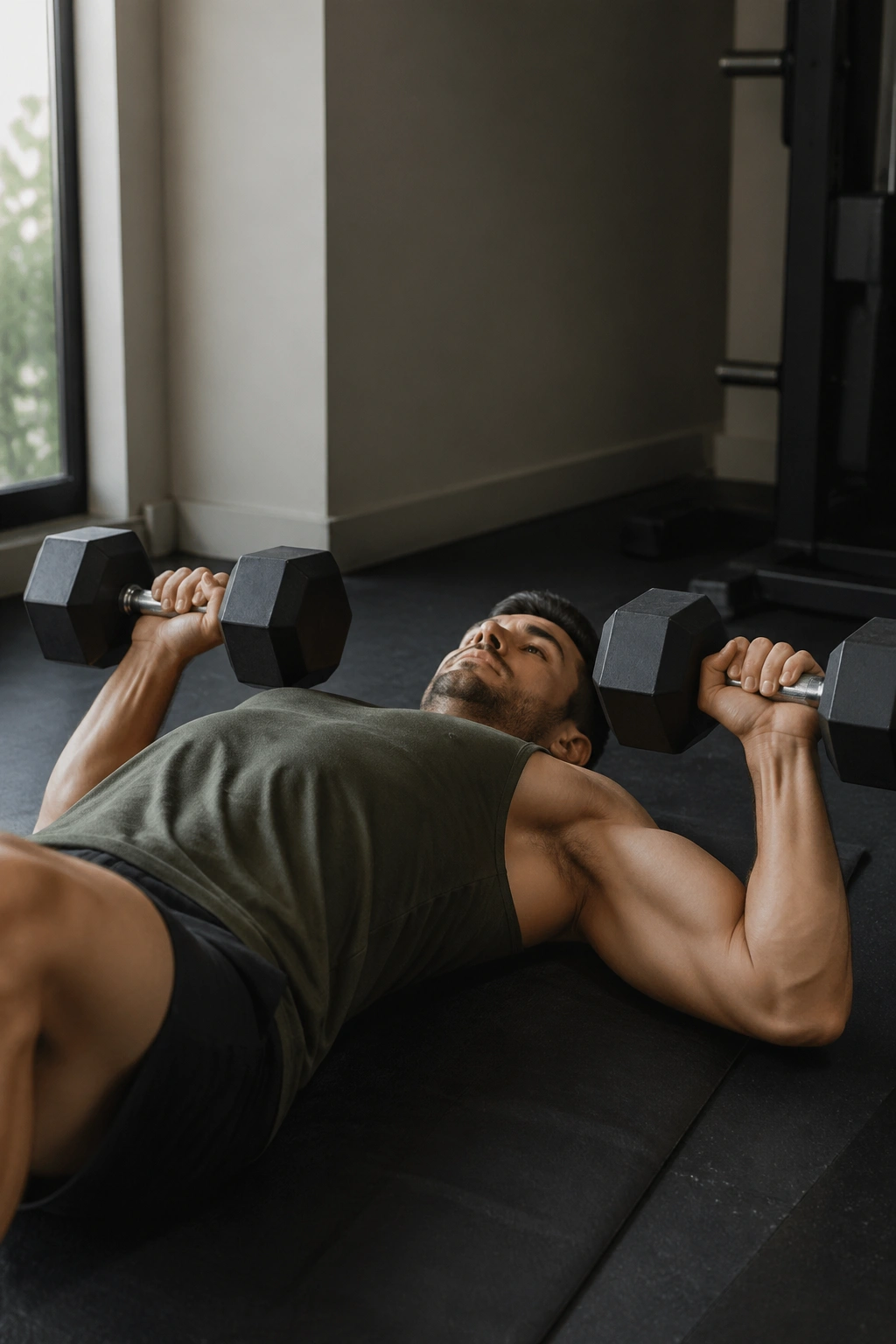
What does the Tate press do that a skull crusher doesn’t? It changes the elbow path. That’s the main idea, and it’s why the move feels odd for the first few reps.
You lie back with the dumbbells above the chest, palms facing forward, then lower the weights by bending the elbows out and down until the dumbbells come near the upper chest. From there, you press them back up by straightening the elbows. The shoulders stay quiet. The triceps do the real work.
How to get the feel right
Start light. Much lighter than you think. The dumbbells move in a weird little arc, and chasing weight too soon makes the wrists fight the setup instead of helping it. The rep should feel controlled and a little cramped, not wild.
This is one of the better triceps options if direct overhead work bothers your shoulders or if skull crushers feel too harsh on the elbows. The path is shorter and the stress lands differently, which gives you another way to train without repeating the same pattern over and over.
Use 10 to 12 reps and keep the motion smooth. If the elbows are flopping around like hinges on a loose gate, the weight is off.
I like Tate presses when I want a triceps move that feels different enough to stay honest. They’re weird in a good way.
13. Single-Arm Overhead Triceps Extension
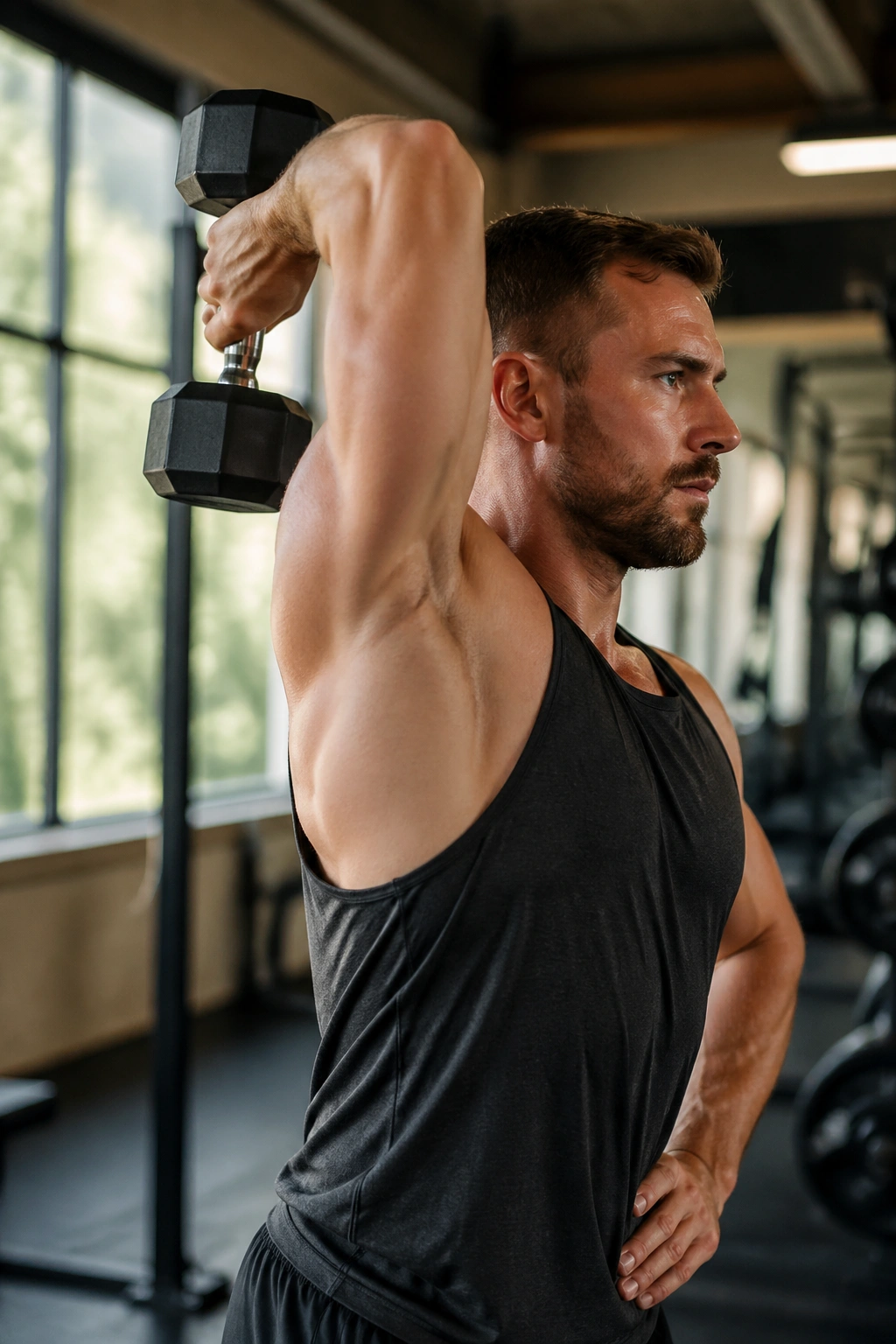
A single-arm overhead extension is one of those moves that quietly exposes everything. The weak side. The lazy side. The side that likes to arch the lower back and pretend it’s doing great.
Hold one dumbbell overhead with one hand, keep the working biceps close to the ear, and let the elbow bend until the dumbbell drops behind the head. The free hand can rest on the ribs or brace the waist if you need a little control. The point is to keep the torso stacked while one arm moves.
This is a good choice when one triceps lags behind the other. It also asks the core to do a little more work, because one side of the body wants to tip and rotate the moment the dumbbell gets heavy. That anti-rotation demand is useful. You feel it in the midsection, but the arm still gets the spotlight.
- Use 10 to 12 reps per side.
- Pause briefly in the stretched position.
- Keep the ribs from flaring.
- Lower slowly and press cleanly.
A lot of people rush the first side and then fake the second. Don’t. Match both arms. That’s where the payoff shows up.
14. Dumbbell Curl to Press
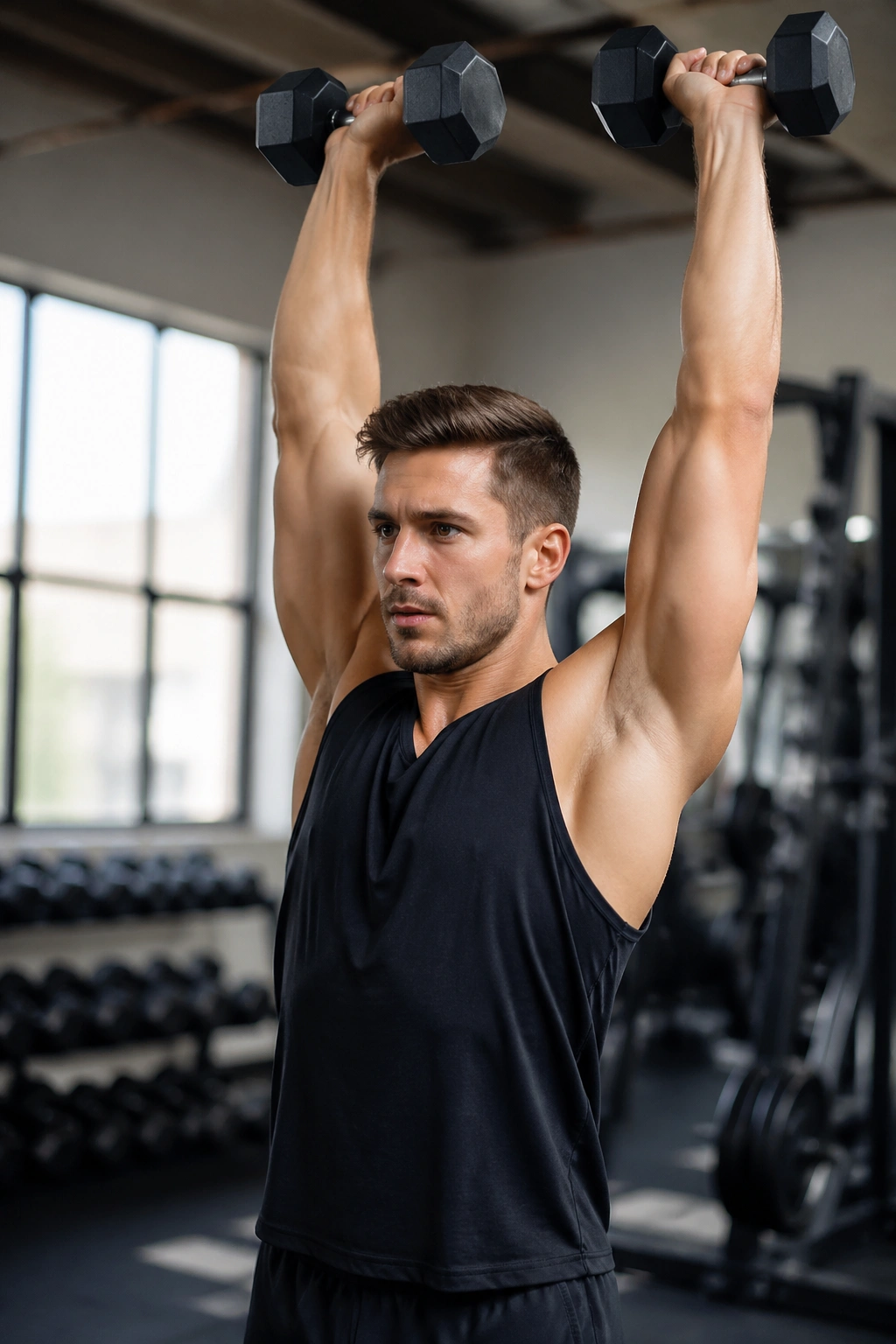
Unlike strict isolation moves, the curl to press ties the upper arm together in one smooth line. Biceps, shoulders, triceps — they all show up. That makes it a useful exercise when you want more total arm work in less time.
Start with the dumbbells at your sides, curl them to shoulder height, then rotate and press overhead without leaning back. The lower half is a curl. The top half turns into a press. Simple enough. Harder than it looks when the dumbbells get heavy enough to matter.
This move is best with moderate loads, not the heaviest pair you own. If the press turns into a back lean or a shoulder shrug, the weights are too much. Keep the rep smooth and the path clean. The curl should not be a swing, and the press should not be a heave.
Use 8 to 10 reps for a compact arm-and-shoulder finisher. It’s especially handy when you want to leave the session with the whole upper arm feeling worked, not just one isolated slice of it.
For some people, this is the move that makes arm training feel less like a collection of tiny exercises and more like a real upper-body effort.
15. Dumbbell 21s and Triceps Pulses Finisher
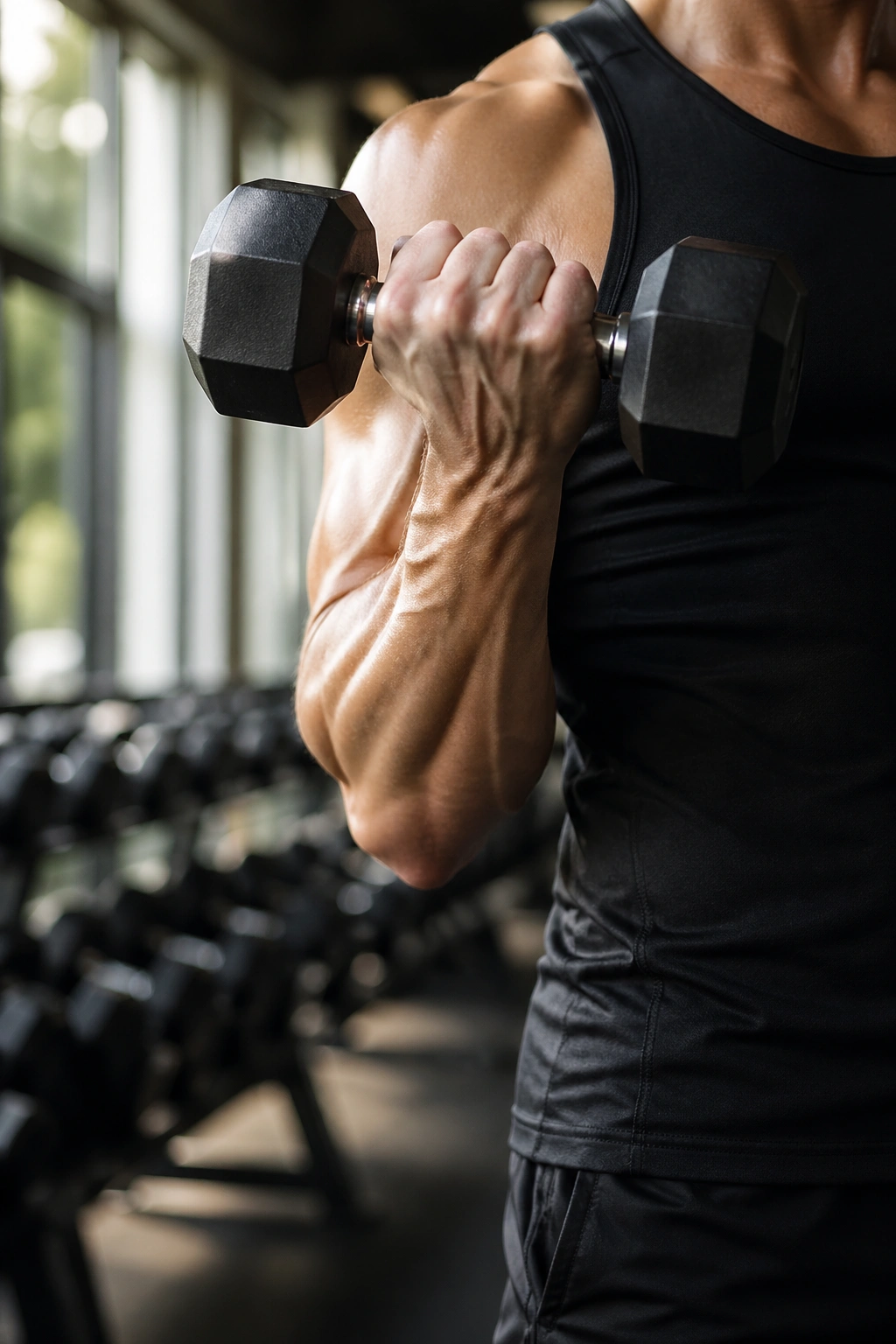
If you want a short, mean finish to a dumbbell arm workout, this is the one. The 21s pattern gives the biceps three ranges of work, and the triceps pulses keep the back of the arm under tension when the muscles are already tired. That combination is messy in the best way.
Do 7 half-reps from the bottom to halfway up, then 7 half-reps from halfway to the top, then 7 full curls. Rest about 20 to 30 seconds, then go straight into 12 to 15 triceps pulses with kickbacks or a very light overhead extension. That’s one round. Two rounds is enough for most people.
The point is not to move heavy weight. The point is to stay clean while the muscles start to complain. Once form breaks, the set is done. There’s no prize for turning the finisher into a circus.
I like this at the end of the session because it gives the arms one last reason to grow without needing much equipment or time. It also leaves a proper pump in the biceps and triceps, which is satisfying, even if pump alone is not the whole story.
Pick three or four moves from the list above, pair one curl with one triceps exercise, and finish with this. That’s enough for a serious arm day. Keep the reps crisp, keep the dumbbells honest, and the sleeves start fitting differently.
