



The first strict pull-up is stubborn in a very specific way. You can be strong enough to row, press, deadlift, and still hang under the bar like the movement has a personal grudge.
That’s why the smartest pull up progressions don’t start with heroics. They start with positions, control, and small wins that look almost boring from the outside. Boring is fine. Boring is how you stop kicking, stop swinging, and stop doing half-reps that make you feel productive while your first clean rep stays out of reach.
A strict pull-up asks for more than arm strength. Your hands have to hold, your shoulder blades have to move, your ribs have to stay down, and your lats have to take over without the rest of your body turning into a loose rope. Miss one piece and the whole thing leaks energy.
So the ladder matters. Start where you can own the position, then trim the help until the bar stops feeling like a problem and starts feeling like a familiar piece of equipment.
1. Own the Dead Hang First
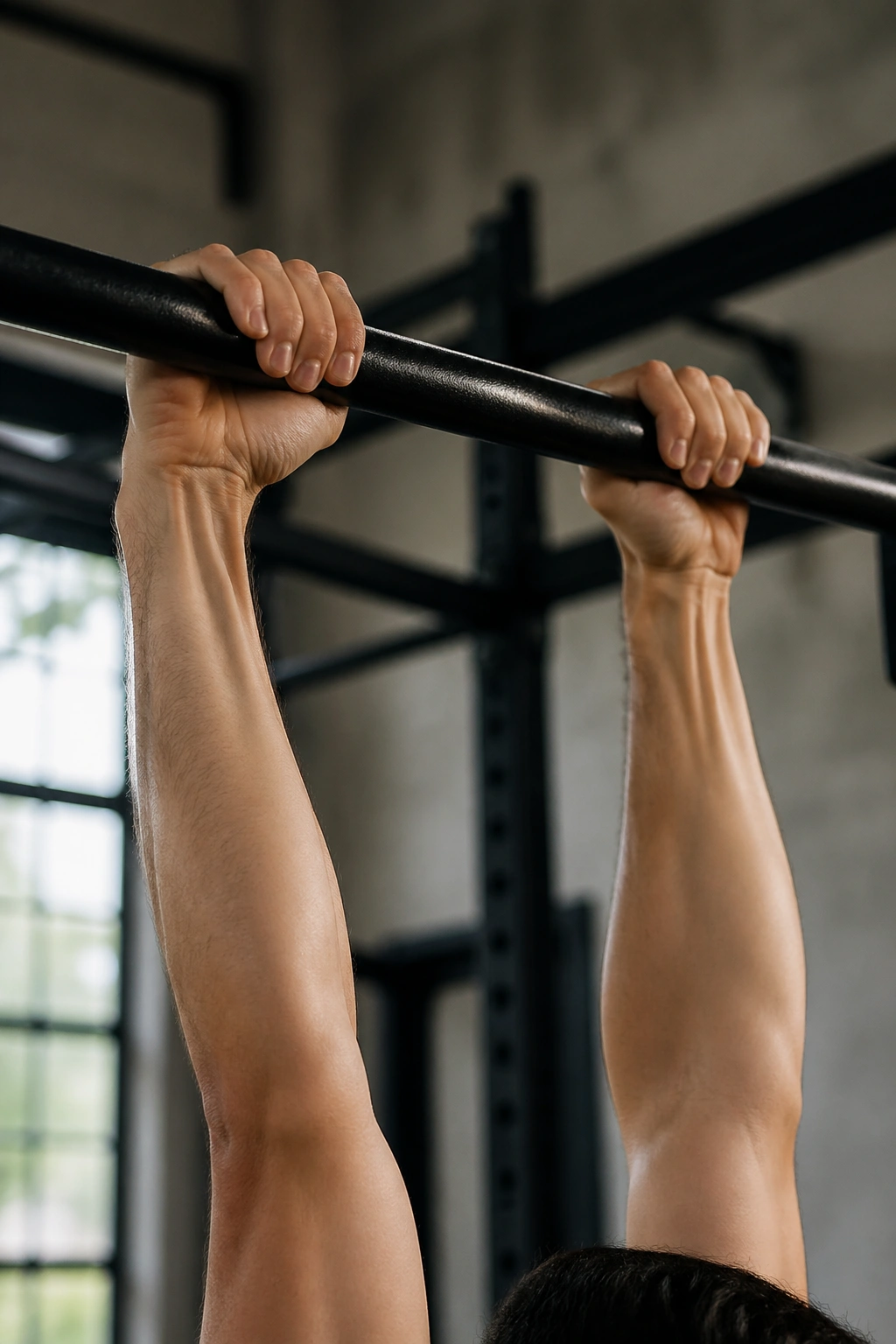
A dead hang looks almost too plain to matter. It matters a lot.
If you cannot hang from a bar with straight arms and a quiet body, every later progression gets messy fast. The grip tires early, the shoulders get cranky, and the lower body starts swinging to steal momentum. A dead hang teaches your hands to stay on the bar while your torso learns not to panic.
Aim for 3 to 5 sets of 15 to 40 seconds. Use a full grip, not a lazy fingertip hold. The bar should sit deep in the palm, with the thumb wrapped unless your shoulders prefer a false grip style for a very specific reason. For most people, a normal overhand grip is the right place to begin.
What It Should Feel Like
Your shoulders should not be jammed up into your ears. Let them hang, but don’t collapse into a dead, painful shrug. Think long body, not limp body.
A clean dead hang is one of those things that gets easier only after you stop cheating it. Keep your legs still. Keep your ribs from flaring. If 30 seconds turns into a swing fest, cut the hold shorter and make it cleaner.
One clean hang beats three sloppy ones.
2. Learn Scapular Pull-Ups
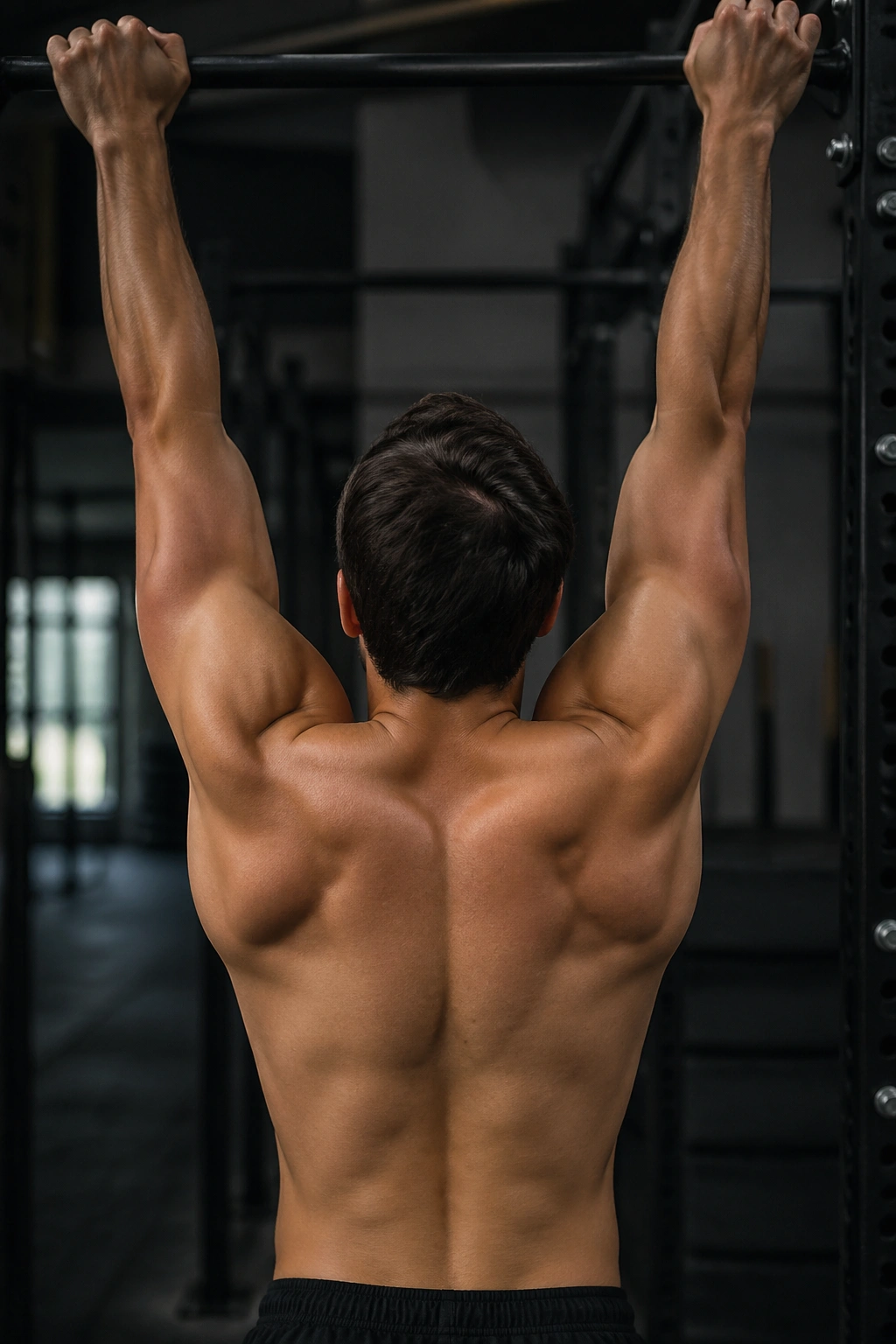
What moves first in a pull-up—hands, shoulders, or elbows? Shoulders.
Scapular pull-ups teach that tiny first action: the shoulder blades slide down and slightly back before the elbows bend. You are not trying to do a real pull-up yet. You are teaching the body the opening note of the movement.
Hang from the bar with straight arms. Without bending your elbows, pull your shoulders away from your ears so your torso rises an inch or two. Then let the shoulders come back up under control. That is the whole rep. Small, crisp, and a little weird the first time you do it.
How to Use Them
- Do 2 to 4 sets of 5 to 8 reps
- Pause for 1 second at the bottom hang
- Keep the elbows locked the whole time
- Stop if the motion turns into a shrugging race
The point is not height. The point is control.
If you can’t feel the shoulder blades move, slow the rep down and make the range smaller. The motion is subtle, and that’s the point. Big pulling strength later depends on this tiny adjustment now.
3. Brace Your Body With Hollow Holds
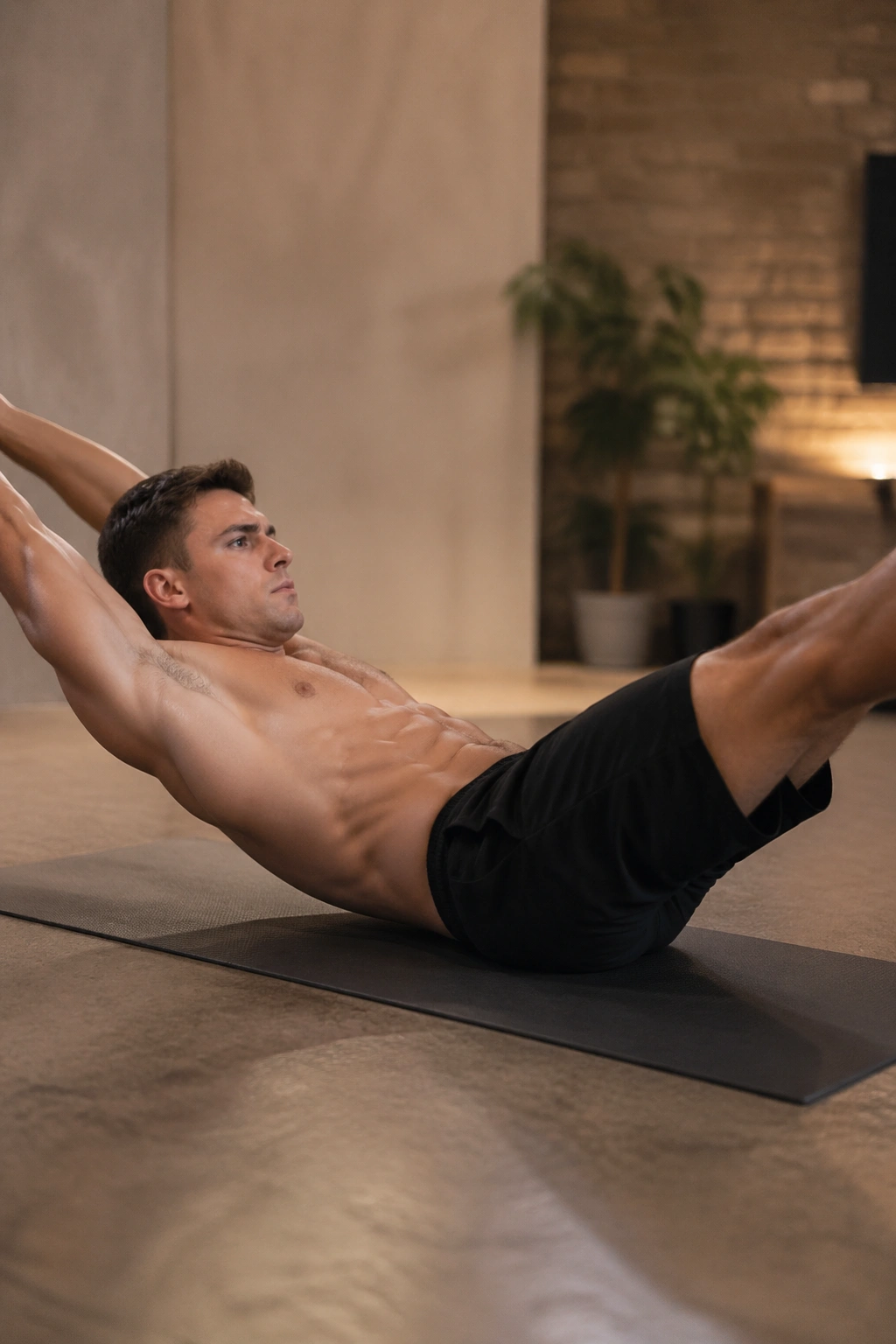
Core work sounds like a side dish here. It isn’t.
A pull-up gets ugly fast when the ribs flare, the lower back arches, and the legs start flapping around like they’re trying to escape the gym. A hollow hold teaches the body to stay compact, which makes every pull more efficient. Less leak. More force.
Lie on the floor, press your lower back into it, and lift your shoulders and feet slightly off the ground. Your stomach should feel tight, and your ribs should stay down. Hold that shape for 10 to 30 seconds, then rest and repeat for 3 to 5 rounds.
You can also use a dead-bug style brace if a full hollow hold feels too spicy at first. Same idea. Keep the midsection from folding open.
Loose ribs leak force.
That’s the real reason this belongs in a pull-up plan. When your torso stays stacked, your lats have something solid to pull against.
4. Build Strength With Inverted Rows

If your feet swing like a pendulum during rows, the bar is too high or your body angle is too steep. Fix that first.
Inverted rows are the simplest way to teach a strong pull without the full bodyweight demand of a strict pull-up. Set a bar in a rack, grab it with an overhand grip, walk your feet out, and pull your chest toward the bar. Lower yourself until your arms straighten again. Clean reps only. No hip snap. No worming.
Start with 3 to 4 sets of 6 to 10 reps. If 10 reps feel easy, lower the bar or walk your feet farther out. If your shoulders shrug or your neck cranes forward, the line is too hard right now.
Good Row Cues
- Keep the body in one long line
- Pull the chest, not the chin
- Squeeze the bar at the top for 1 second
- Lower in 2 to 3 seconds
I like rows because they show you the truth. If the body line falls apart here, it will fall apart on a pull-up bar too.
5. Make the Rows Harder by Elevating Your Feet
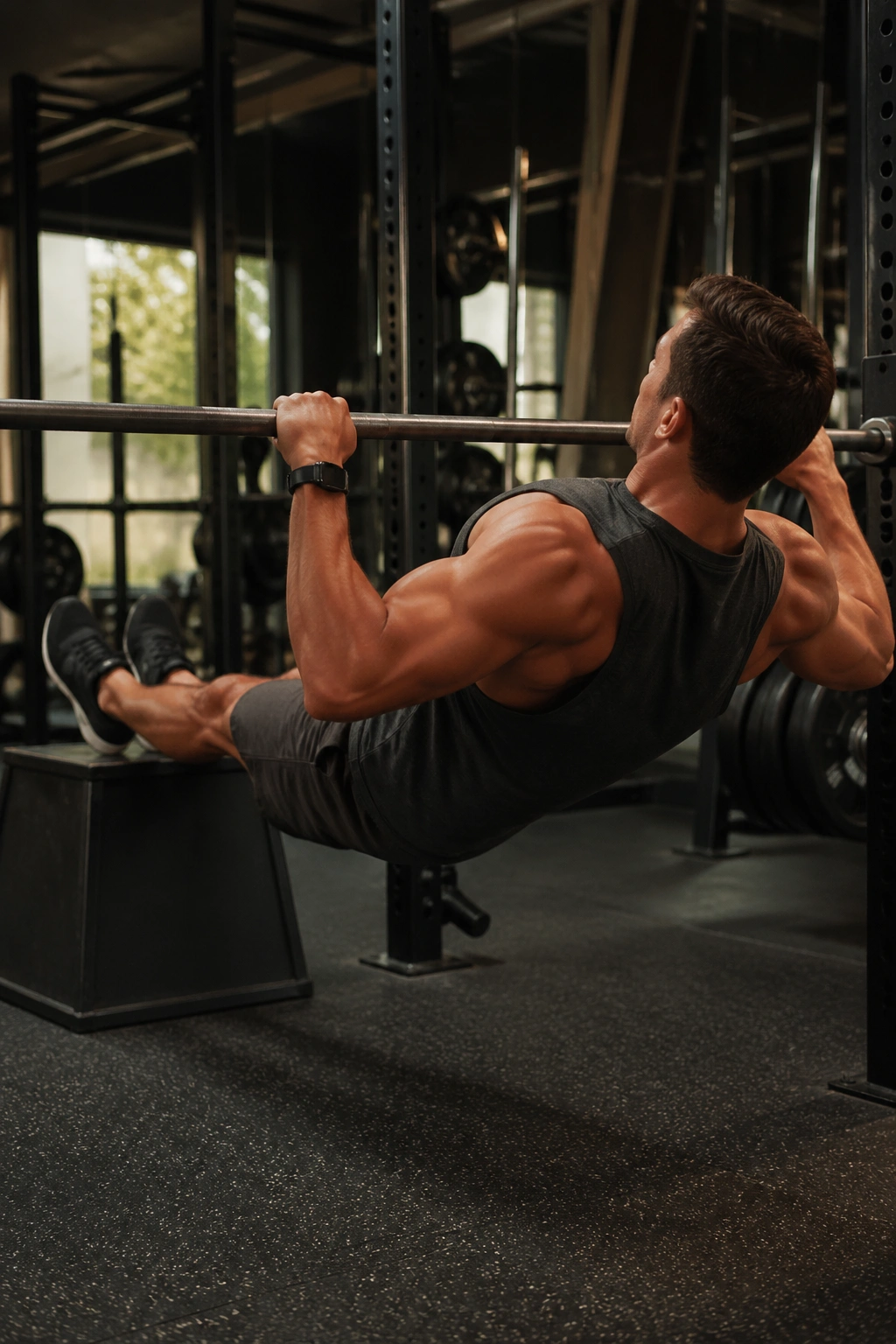
Feet-elevated rows are where many lifters finally feel the back instead of the biceps doing all the talking.
Raise your feet onto a box, bench, or sturdy step so your torso has to work harder against gravity. That small angle change matters more than people expect. The row gets longer, the core has to stay tighter, and the upper back can’t coast.
Why the Angle Matters
With your feet raised, the pull starts from a harder position and ends with more body control. You can no longer cheat by bending the hips or letting the chest sag. That makes these rows a strong bridge between basic horizontal pulling and the vertical pull of a strict pull-up.
Use 4 sets of 5 to 8 reps. If you can crank out 12 clean reps with no torso wiggle, raise the feet a little higher or slow the lowering to 3 seconds.
The row should feel like a controlled fight, not a flung-up shrug. If your hips drop halfway through the set, shorten the range or lower the foot placement. Clean tension beats sloppy reps every time.
6. Hold the Top Position Before You Chase the Whole Rep

Can you hold your chin over the bar for 10 seconds without shrugging? If not, the top inch is not ready yet.
Top holds are a sneaky good way to build confidence in the exact position that scares most beginners. Step, jump, or use a box to get your chin above the bar. Then lock in: chest tall, shoulders down, elbows tucked, body still. You are teaching the finish of the pull before you ask for the whole climb.
Start with 3 to 5 holds of 5 to 15 seconds. If you can’t keep the shoulders from creeping into your ears, use a little assistance from a box under one foot so you can unload some bodyweight and stay in position longer.
A lot of people waste time thinking they need more raw strength when what they really need is tolerance at the top. The finish matters. So does the way you lower yourself out of it.
7. Lower Yourself Slowly on Negatives
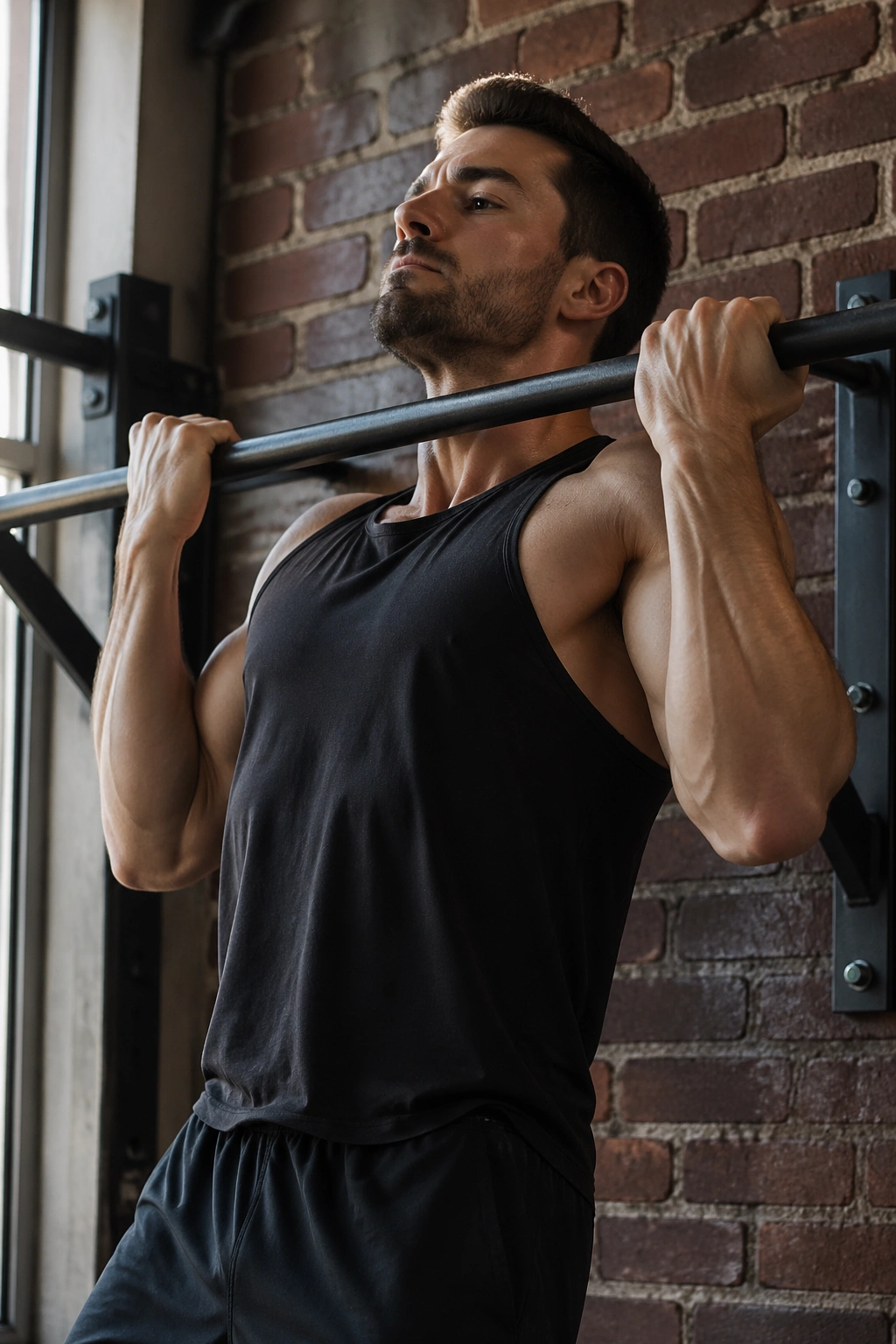
Lowering yourself from the bar feels awkward the first few reps. Good. That means you’re working the right tissue.
Negatives, or eccentric pull-ups, are one of the fastest ways to teach the body what a strict rep feels like. Start at the top with your chin over the bar, then lower under control for 3 to 8 seconds until your arms are straight. No dropping. No free-fall. If you hit the bottom and collapse, the rep was too long or too heavy.
Use 3 to 5 sets of 2 to 4 reps with full rest between sets. The lower should feel smooth and deliberate, not jerky. If your elbows bark or your shoulders pinch, shorten the range or use more assistance on the way up.
Slow Enough to Count
- 3 seconds is the minimum useful pace
- 5 seconds is a sweet spot for most beginners
- 8 seconds is plenty hard if your form stays tidy
Negatives are where a lot of people get impatient. Don’t. The rep starts at the top, and the descent does a lot of the heavy lifting for strength and control.
8. Use a Band Without Letting It Bounce You Around
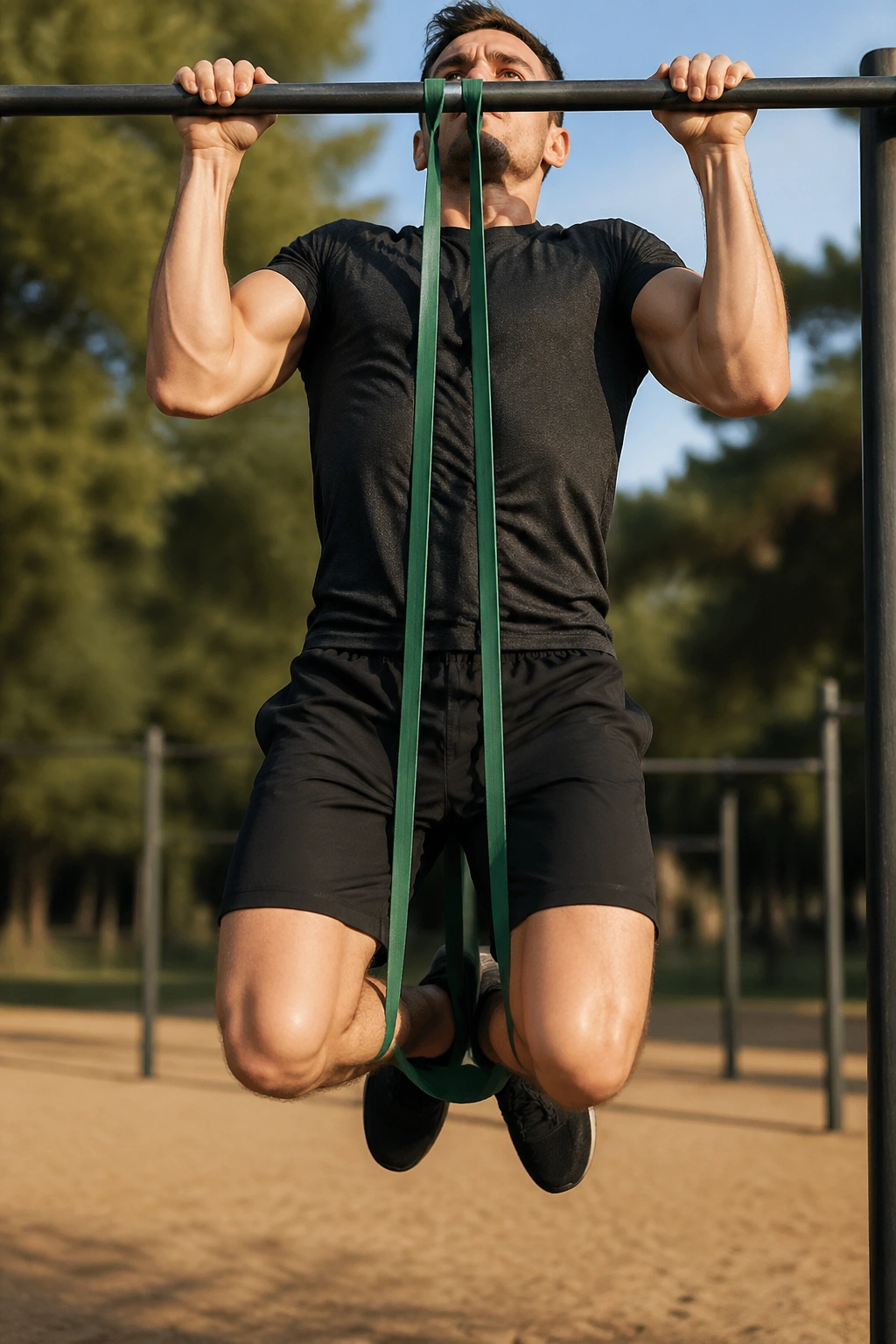
Bands are useful, but they are not magic.
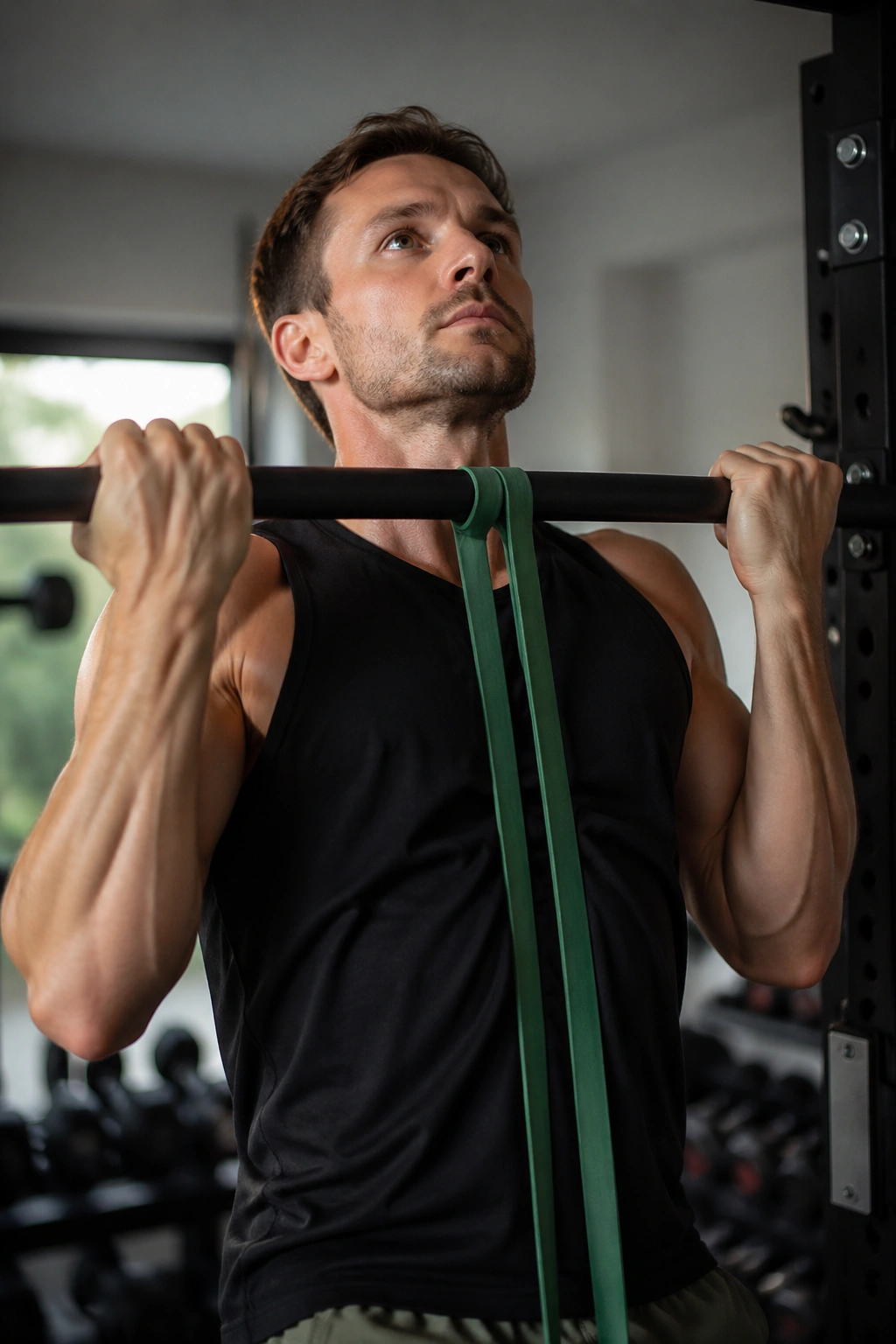
A band-assisted pull-up can help you practice the exact movement pattern of a strict pull-up while shaving off some bodyweight. That’s a nice bridge. The catch is that the band helps most at the bottom and least at the top, which means you still need honest strength where the rep gets hardest.
Choose a band that lets you get 3 to 6 clean reps. If you can do 12, the band is too thick. If you can’t get your chin near the bar without a wild kick, the band is not giving enough help.
How to Keep Band Reps Clean
- Step or kneel into the band so it stays centered
- Start each rep from a dead hang
- Pull without bouncing out of the bottom
- Lower in control and reset each time
I prefer bands for people training at home or on a simple pull-up bar. They are cheap, portable, and effective. They also make it too easy to swing if you rush. Keep the rep strict, or the band just teaches bad habits faster.
9. Use the Assisted Pull-Up Machine the Right Way
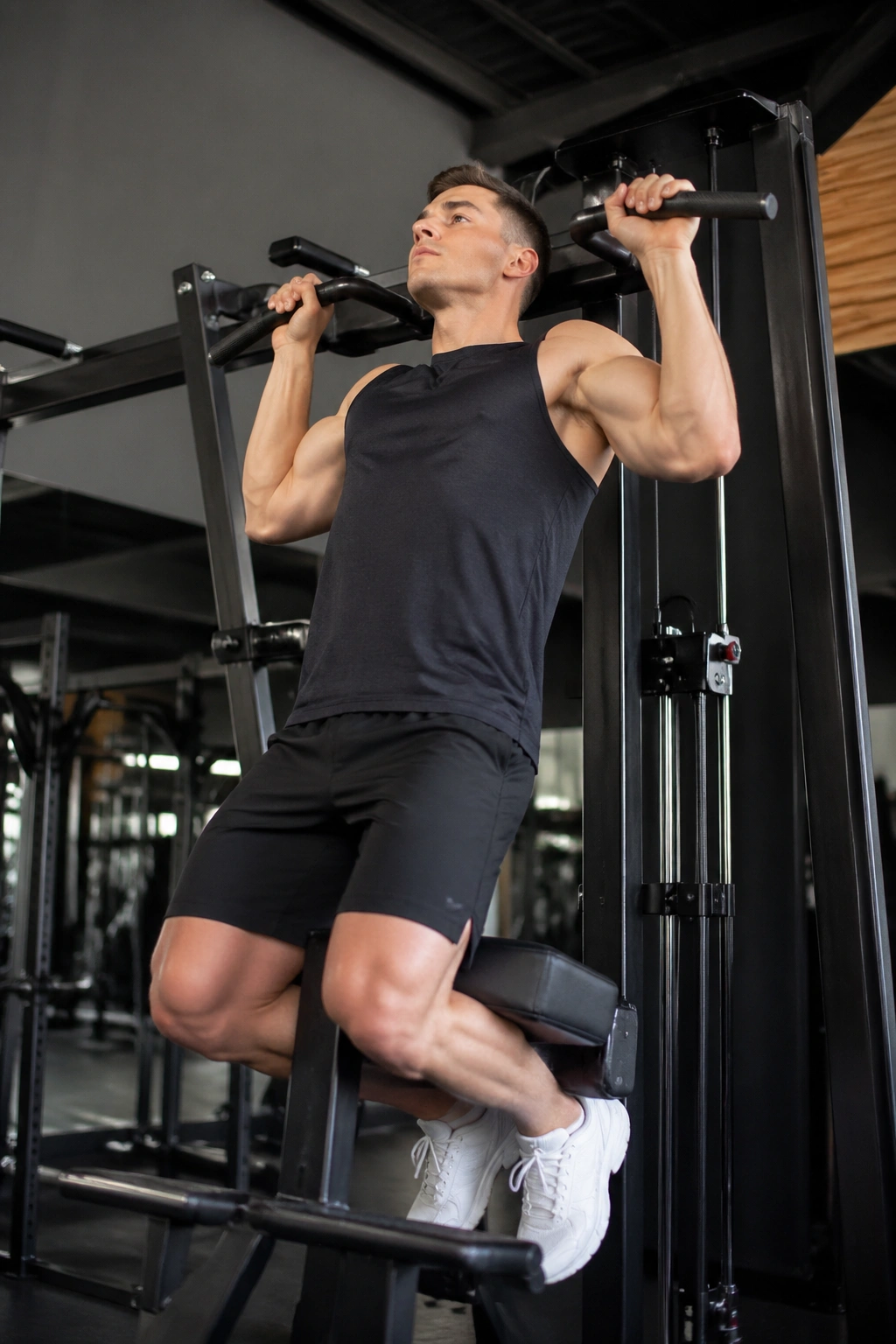
The assisted machine gets ignored because it looks a little boring. Boring tools are often the best tools.
Unlike a band, the machine gives you more even help through the whole rep. That makes it easier to keep the path clean, especially if your first problem is not knowing how a real pull-up should feel. Set the assistance so you can knock out 4 to 8 strict reps without kicking your legs.
What Makes It Useful
- The platform or knee pad keeps you from swinging
- Assistance stays steady through the full range
- You can track small changes by lowering the help in small steps
A lot of lifters use too much assistance and call it training. Don’t. If the machine is doing nearly all the work, you are just practicing a machine rep. Lower the help until the last two reps are honest.
The best use of this machine is simple: make the rep look and feel like a pull-up, then let the machine cover the missing strength. That is the whole point.
10. Train Lat Pulldowns Like a Pull-Up, Not a Pulldown
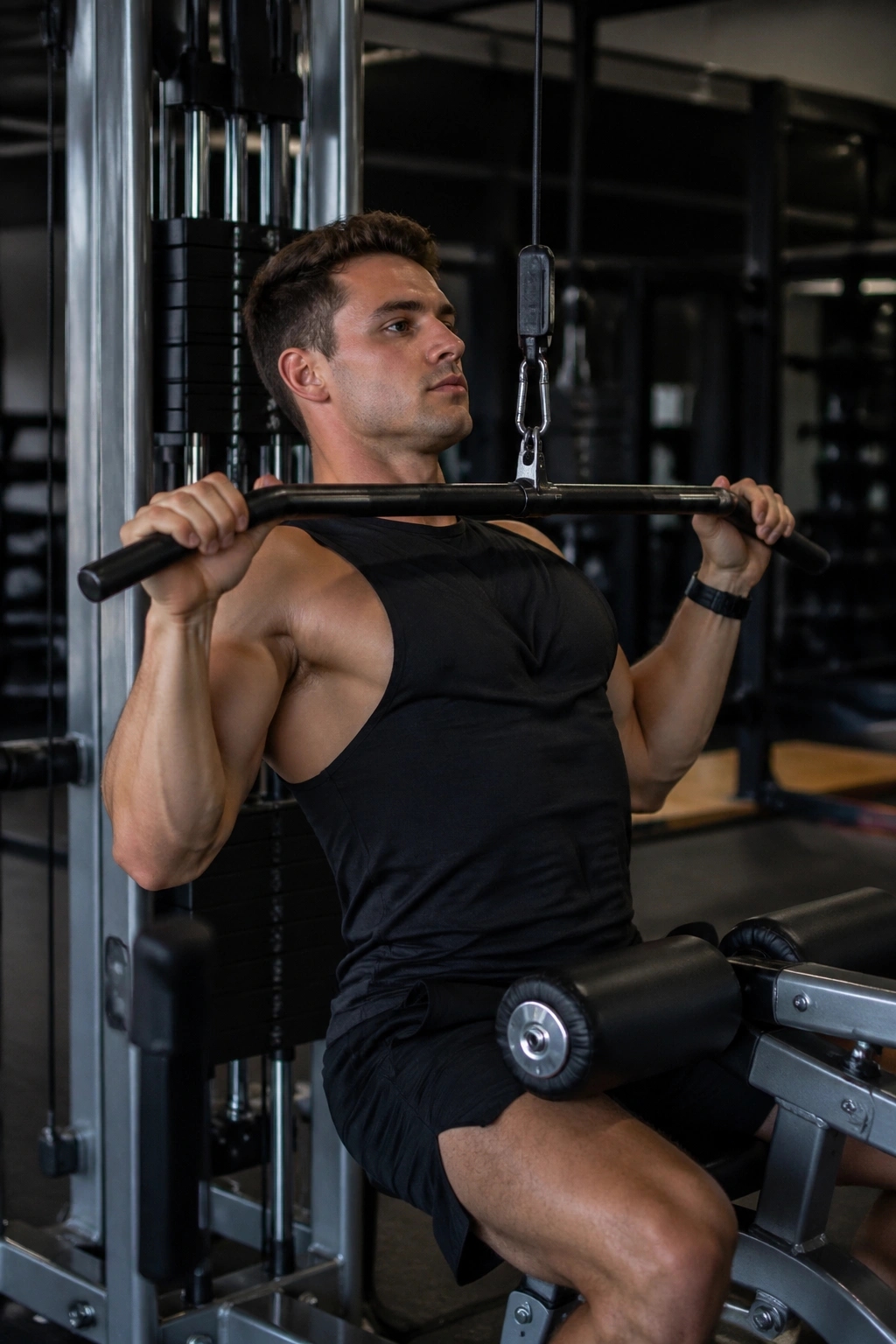
Lat pulldowns get dismissed by purists who act like only bar work counts. That’s nonsense.
A pulldown can build the exact vertical pulling strength you need for your first strict rep, as long as you stop turning it into a body-swaying ego lift. Use a shoulder-width or slightly wider grip, sit tall, and pull the bar to the upper chest while keeping the ribs from popping up.
Work in the 8 to 12 rep range and pause for 1 second at the bottom. If the bar has to crash down to get there, the weight is too heavy. If you have to lean back so far that it turns into a half-row, same problem.
A good pulldown should feel like the lats and upper back are doing the work while the torso stays mostly still. No heaving. No yanking. The descent should be smooth too, around 2 to 3 seconds.
Pulldowns are not a replacement for pull-ups. They are support work that fills a gap, especially when your strict vertical pull is still a little short.
11. Row Heavy Enough to Matter
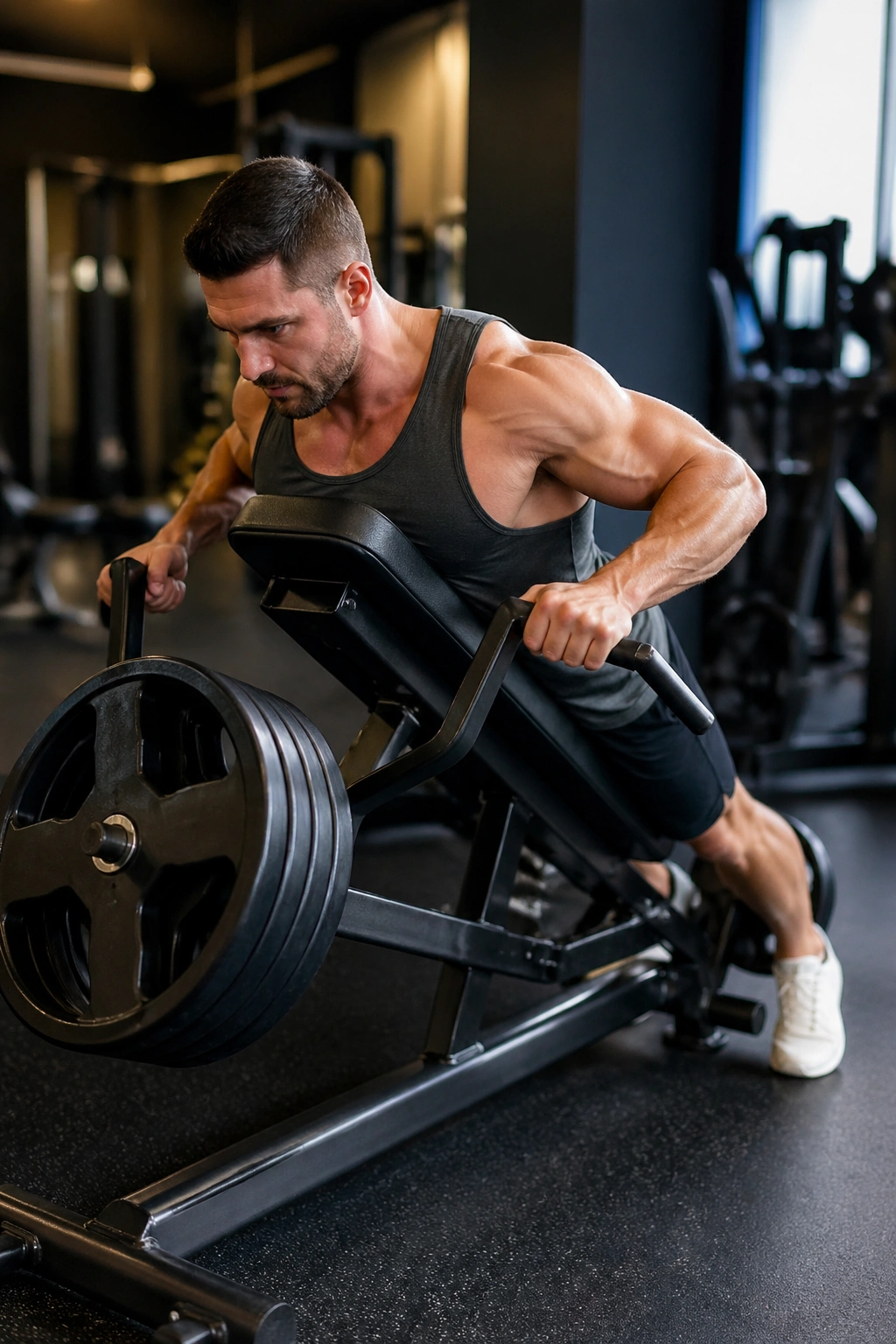
Heavy rows are the boring backbone of this plan.
A strict pull-up is a vertical pull, yes, but the mid-back still has to hold the whole shape together. Chest-supported rows, one-arm dumbbell rows, and cable rows all help build that base. The goal is not to pile on endless volume. The goal is to get strong enough that the back stops being the weak link.
Use 3 to 5 sets of 6 to 10 reps. Keep the last rep clean. That matters more than the number itself. If your torso twists all over the place on one-arm rows, brace harder or drop the load.
Best Row Choices
- Chest-supported row if your lower back gets tired fast
- One-arm dumbbell row if you need side-to-side control
- Seated cable row if you want smooth resistance and easy loading
I like chest-supported rows for beginners because they remove the cheating. Once the load gets honest, the back has to work. That’s what you want before you go back to the bar and ask for a full rep.
12. Train Grip So the Bar Stops Slipping
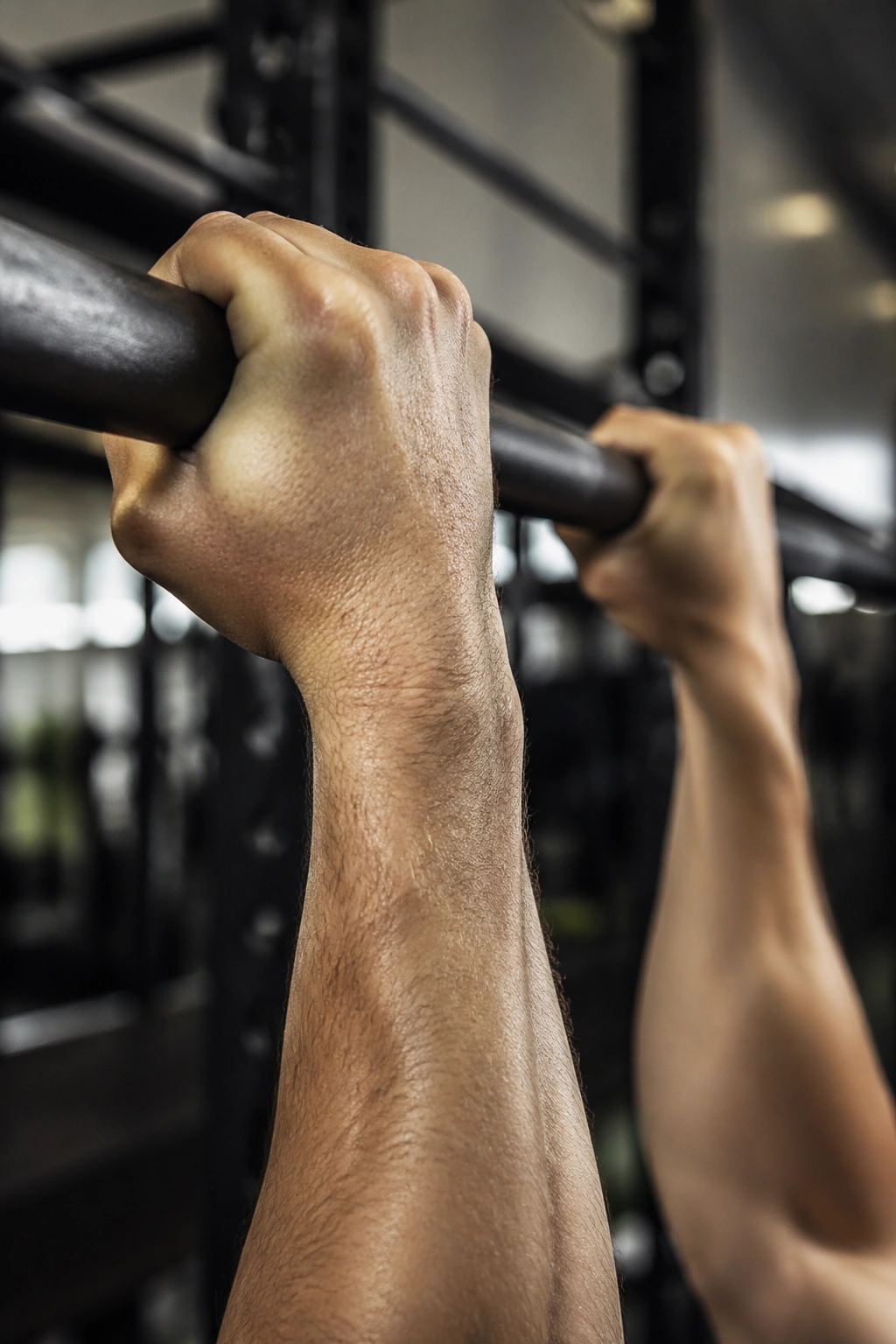
Grip work is the part people skip, then they wonder why the set ends early.
If your back can keep going but your hands are opening up, you do not have a back problem. You have a grip problem. Farmer carries, towel hangs, and thick-bar hangs all help. They also make your pull-up feel more secure because your hand stops panicking halfway through the rep.
Simple Grip Options
- Farmer carries: 3 to 4 carries of 20 to 40 meters
- Towel hangs: 3 to 5 holds of 10 to 20 seconds
- Dead hangs with a slow squeeze: 3 to 4 holds of 20 to 30 seconds
Towel hangs are brutal in a good way. The bar feels thicker, the forearms light up fast, and your hands learn to clamp down without drifting. Do not chase long holds at first. Shorter, harder holds give you more useful carryover.
Grip work is not glamorous. It is also one of the fastest ways to stop losing reps for a dumb reason.
13. String Together Cluster Singles With Light Help

Cluster singles are a strange little bridge between assisted work and the first strict rep.
Do one assisted pull-up, rest 15 to 20 seconds, then do another. Repeat for 4 to 6 total singles. The help can come from a light band or a machine setting that lets you move with clean shape. You are teaching the body to repeat a high-quality rep without sliding into fatigue.
Why Clusters Help
A long set turns ugly when the later reps get sloppy. Clusters keep each rep fresh. That means better bar speed, better position, and less chance of learning a grimace-driven version of the movement.
Use them when your assisted reps are already close to strict and you want to narrow the gap. If the singles slow to a grind after the second one, the assistance is too light. Back it off a bit and keep the quality high.
This is a good place to pay attention to the first inch off the bottom. If that part is smooth, the rest of the rep usually follows.
14. Use Grease-the-Groove Mini-Sets
Grease-the-groove only works when the reps stay tiny.
That means short, crisp sets done far from failure. Think 1 to 3 reps per set, repeated 3 to 6 times across the day if you have a bar at home or easy access at work. The goal is practice, not fatigue. You want the nervous system to rehearse the movement while the muscles stay fresh.
This approach works best once you already have a clean assisted rep and you’re close enough to try unassisted singles. Pick a variation you can do with perfect form and no strain—usually a light band, a machine, or even just one strict negative followed by a reset.
What to Watch For
If the second rep slows down, stop.
If your body swings, stop.
If your shoulders feel cranky later that day, scale back.
That’s the whole trick. People ruin this method by turning it into a workout. It’s not a workout. It’s rehearsal.
15. Test the First Strict Rep and Clean Up the Messy Parts
The first strict rep should feel boring, not heroic.
Warm up with a dead hang, a few scapular pull-ups, one or two rows, and maybe a single negative so the pattern is fresh. Then take a full rest, grab the bar, and go for one clean rep with no kick, no chin crane, and no leg swing. Pull from a dead hang, keep the ribs down, drive the elbows toward the ribs, and lower with control.
If you get stuck an inch below the bar, do not panic and turn it into a knee drive. That turns the rep into something else. Step back, use a little more assistance for a few sessions, and come back to the test when the positions feel steadier.
A useful way to think about the first strict pull-up is this: it is usually the final proof that all the small work finally matched up. Dead hangs, scapular control, rows, negatives, grip, body tension—they all matter because they remove one failure point at a time. The rep appears when the pieces stop arguing with each other.
Once that first clean pull-up happens, don’t get greedy and chase a sloppy second rep right away. Own the single. Let it settle. Then build the next one the same way, with patience that feels almost annoyingly plain.
