



Most arm workouts fail for a simple reason: they chase the burn and miss the shape. A few sloppy curls will give you a pump, sure, but they won’t do much for the clean line that shows up when your sleeve hangs a little differently and your triceps stop looking like an afterthought.
Toned, lean, defined arms come from more than one angle. Biceps matter. Triceps matter even more than most people admit. Forearms matter. Shoulders matter a lot, because a capped shoulder changes the whole look of the upper arm. If you only do curling work, you’re leaving half the picture untouched.
And no, lighter weights by themselves do not magically carve definition. The muscle has to be challenged, the reps have to be clean, and the last few reps need to feel like work without turning into a circus. I’d rather see ten controlled reps with a strict lowering phase than twenty half-reps with a body swing you can spot from across the room.
These 18 arm workouts cover the lifts that actually pull their weight: curls that hit different parts of the biceps, triceps work that fills out the back of the arm, shoulder movements that sharpen the outline, and a couple of finisher-style moves that make your forearms and grip do their share. Pick a few, train them hard, and give the small muscles enough honest tension to respond.
1. Alternating Dumbbell Curl
A clean alternating dumbbell curl is still one of the simplest ways to build arms that look trained instead of just tired. It lets you focus on one side at a time, which matters more than people think when one arm is stronger, tighter, or a little more stubborn than the other.
How to make each rep count
Hold a dumbbell in each hand with your palms facing forward. Curl one side up without letting your elbow drift ahead of your rib cage, squeeze for a beat near the top, then lower it slowly before switching sides. Keep your wrist straight and think about turning the pinky slightly up as the weight comes near your shoulder.
A good working range is 3 to 4 sets of 8 to 12 reps per arm, with about 45 to 75 seconds of rest between sets. If your torso starts rocking, the weight is too heavy or the set is too long. No drama. Just lighten the load and keep the tension where it belongs.
- Elbow stays close to the body
- Upper arm stays quiet
- Lowering phase lasts 2 to 3 seconds
- Stop the set when the last rep turns into a shrug
One strict curl beats three sloppy ones. That sounds boring, and it is. It also works.
2. Hammer Curl
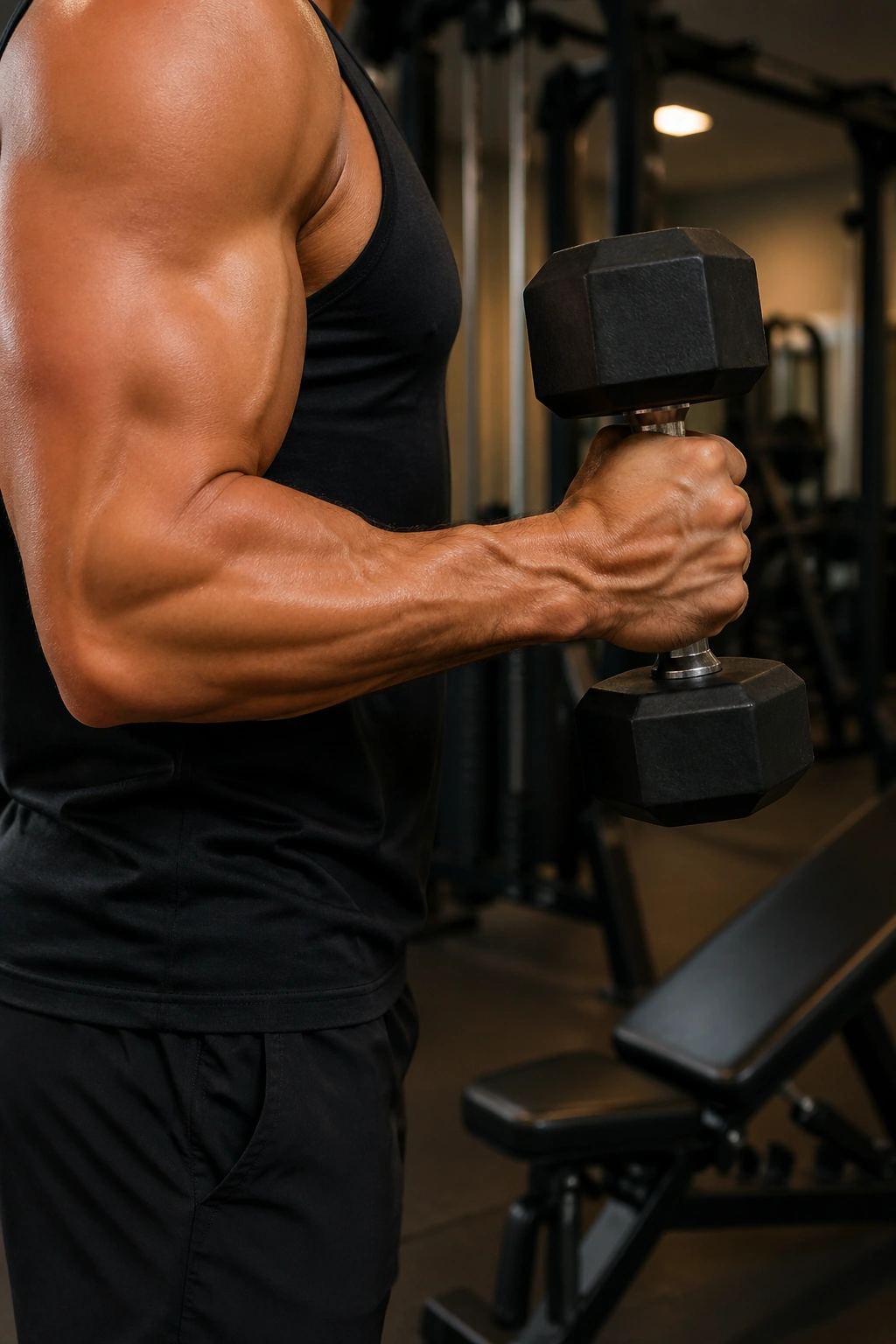
Heavy enough. That’s the point. Hammer curls don’t always get the spotlight, but they build the brachialis and brachioradialis — the stuff that makes the upper arm look thicker and the forearm look more complete.
The neutral grip takes some strain off the wrist and shifts the feel away from the classic palm-up curl. That’s a good thing if regular curls bother your elbows or if your arms already do plenty of supinated work. Cross-body hammer curls are useful too, because they force a little more control and keep the movement from turning into a shrug.
Try 3 sets of 10 to 12 reps with a weight you can lower under control. The top of the rep should feel solid, not rushed. If you want a bit more forearm work, hold the dumbbell tight enough that your grip starts talking back by the last three reps. That’s the sweet spot.
A lot of people use too much weight here. Then the shoulders creep up, the body leans back, and the exercise stops being a hammer curl and turns into a fancy hip drive. Skip that.
3. Zottman Curl
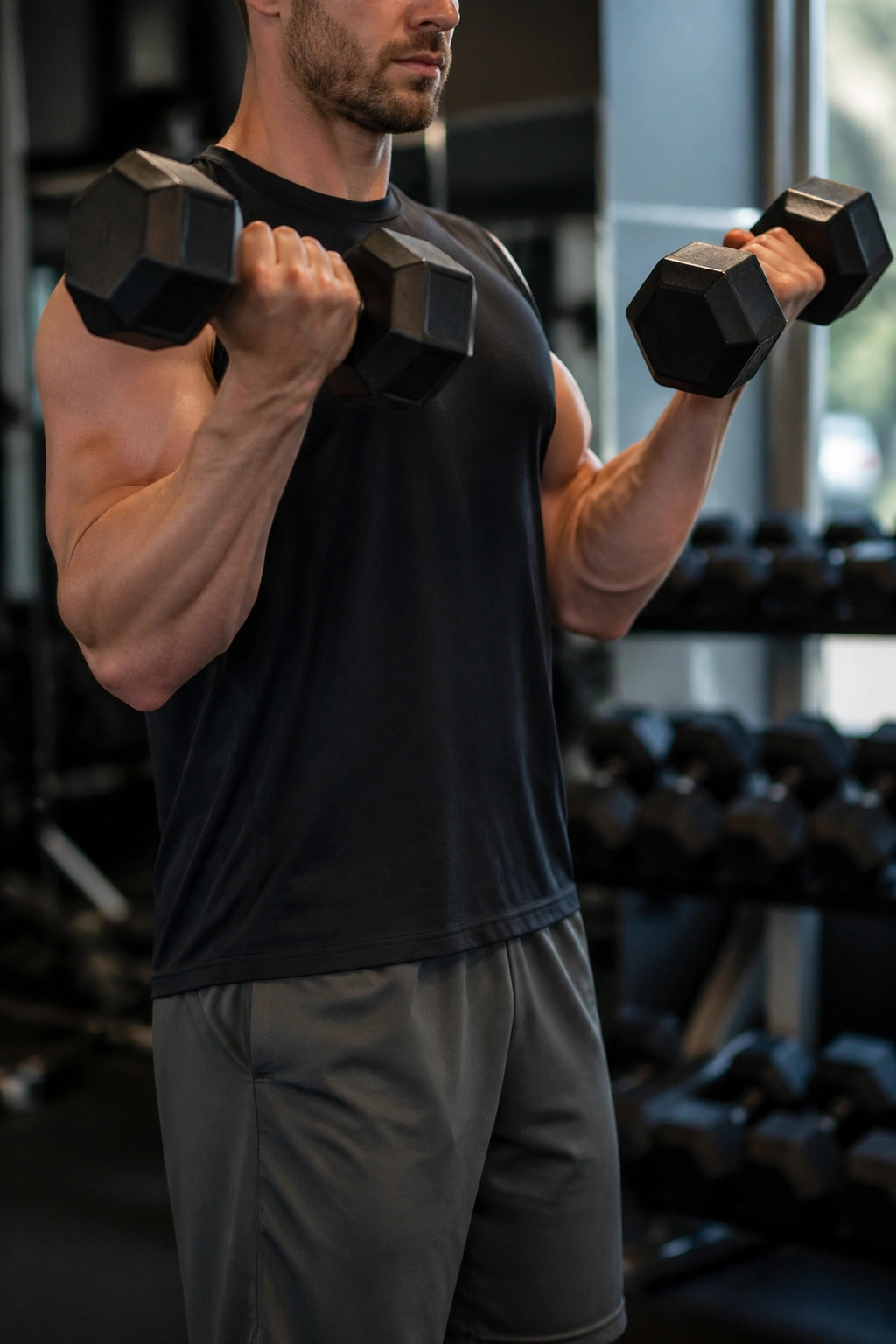
Why does one curl hit the upper arm and forearm at the same time? Because the Zottman curl cheats a little in the best possible way. You curl up with a palm-up grip, then rotate at the top and lower with your palms facing down.
That lowering phase is where the money is. The forearms light up, the biceps still work on the way up, and the whole rep feels slower than a normal curl. Use a lighter dumbbell than you think you need. People load this too heavy, then the wrist starts flopping around and the movement turns ugly.
How to use it
- Curl up for 1 to 2 seconds
- Rotate at the top with control
- Lower for 3 seconds
- Keep your elbows pinned in place
A good target is 2 to 3 sets of 8 to 10 reps. If you like finishing a biceps session with something that makes your grip feel cooked, this one earns its place. It is not flashy. That’s part of the appeal.
4. Incline Dumbbell Curl
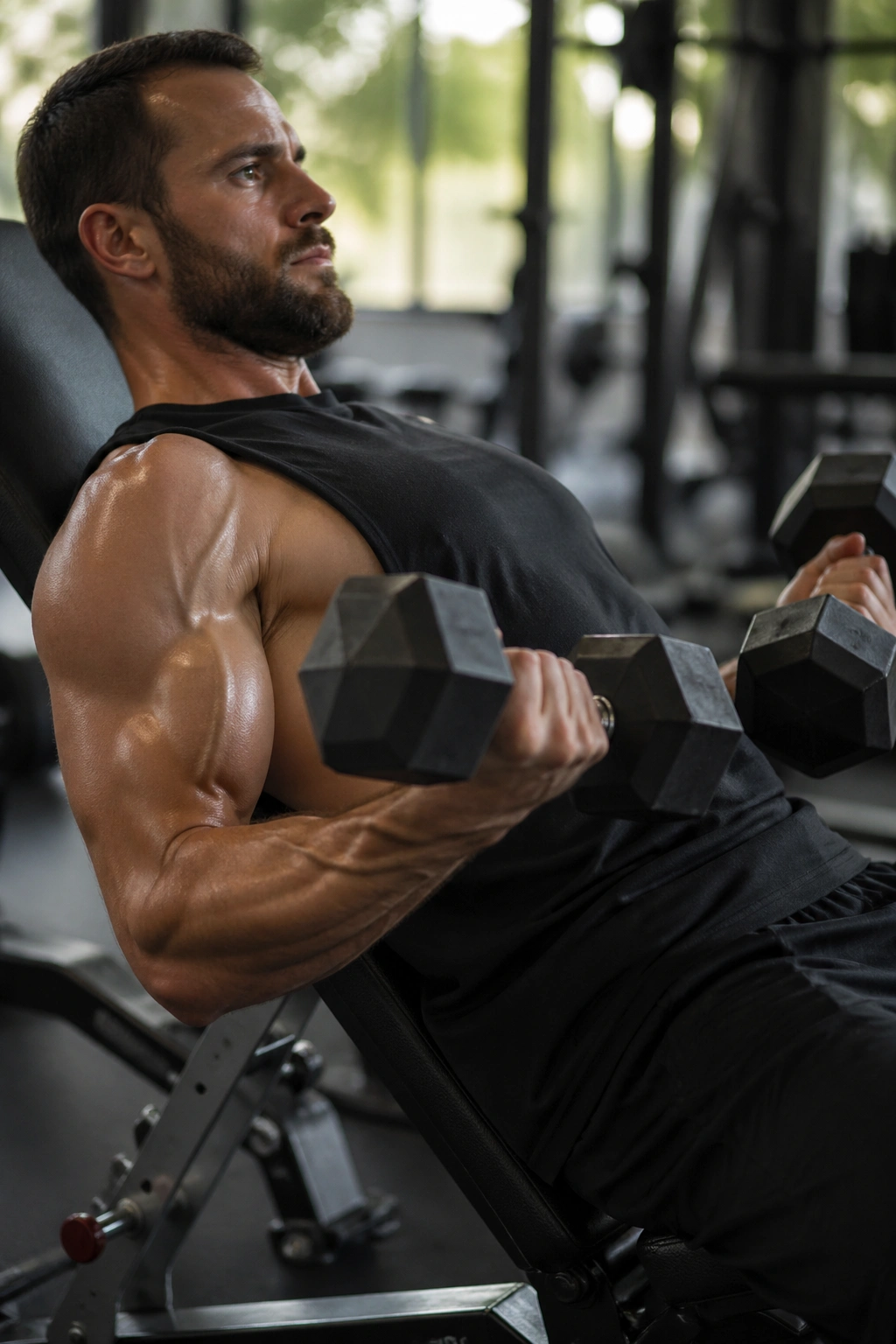
Sit back on a 45- to 60-degree bench and your biceps stop hiding. The arms hang slightly behind the torso, which puts the long head of the biceps under a deeper stretch and makes the whole movement feel more honest than a standing curl.
That stretch is the real reason people keep this one in rotation. The bottom of the rep should feel long and slightly uncomfortable in a good way, especially if you lower slowly and resist the urge to bring your elbows forward. Keep your chest open, shoulders down, and lower all the way until your arms are almost straight without locking out hard.
A lot of lifters use too much weight here and lose the stretch. Don’t. The point is control, not survival. 3 sets of 10 to 12 reps is enough if the last few reps are slow and clean.
If your gym has a preacher bench packed all day, this is the smarter choice anyway. Less waiting. Better tension.
5. Preacher Curl
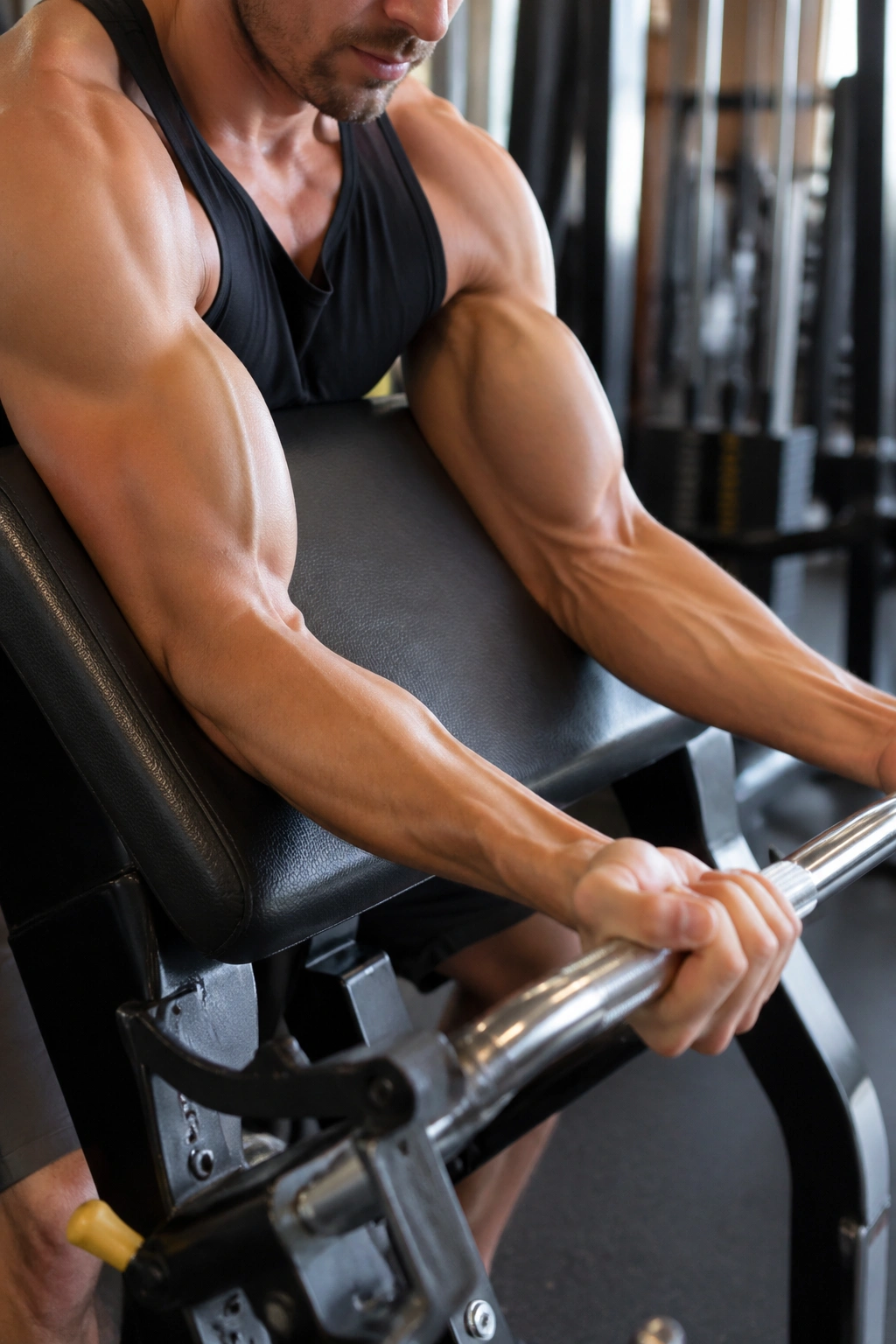
The easiest curl to cheat is also the one that fixes cheating. Preacher curls pin your upper arm into place, so the biceps do the work without help from a back lean or a tiny hip throw at the bottom.
The best version is the one that feels smooth all the way through, whether you’re using an EZ bar, dumbbells, or a cable attachment. A cable preacher curl is especially nice because the tension stays steadier near the bottom, where a lot of lifters usually lose it. Lower with care. That bottom position is where elbows start getting annoyed if you slam the weight down.
I like 3 to 4 sets of 8 to 12 reps here, with a controlled tempo and no bouncing. If you can’t keep your shoulders from creeping up off the pad, the load is too heavy. Simple.
The prettier the rep looks, the better this exercise usually works. Ugly preacher curls are mostly just a warning sign.
6. Barbell Curl
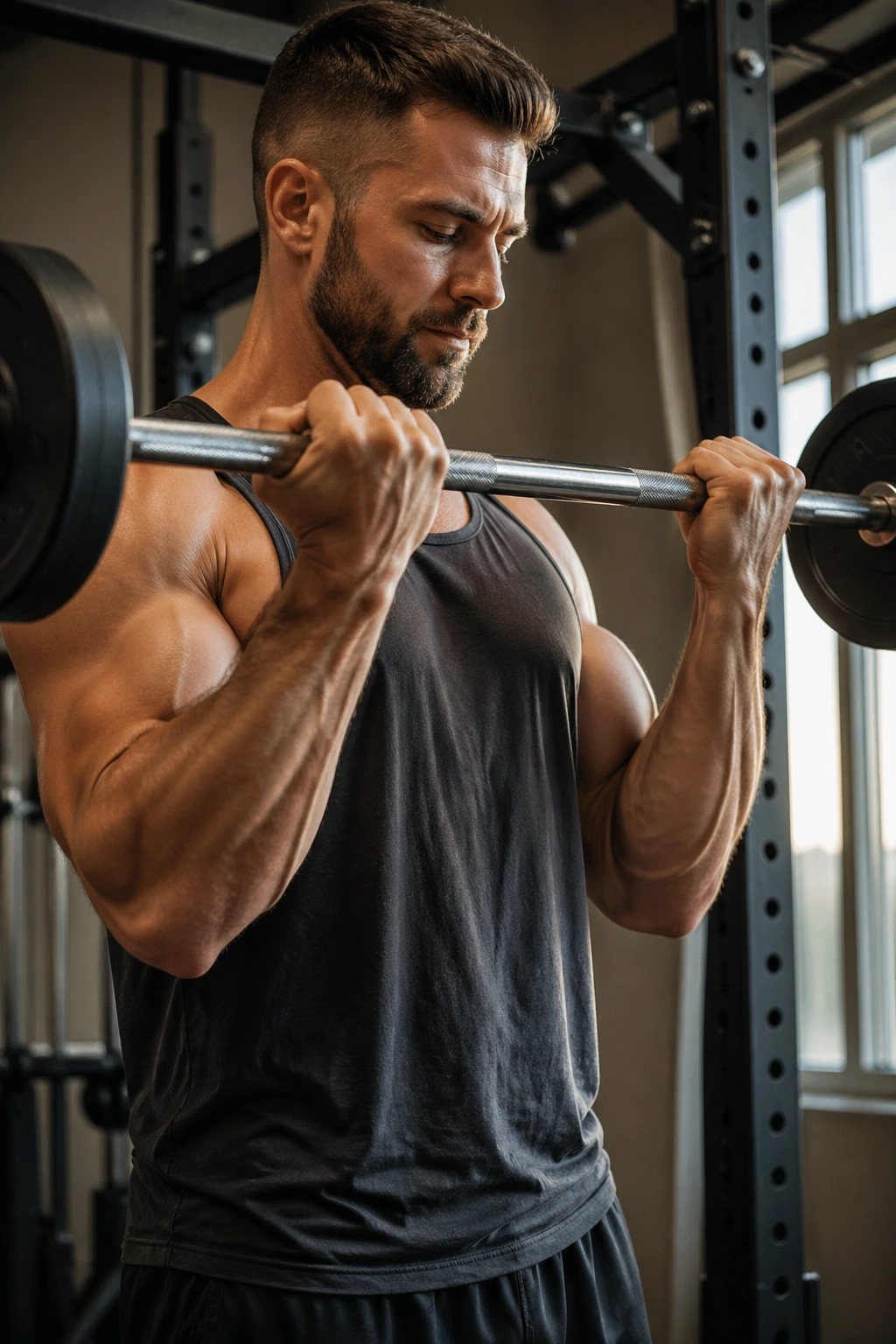
The first good barbell curl should feel like your forearms are bolted to the room. That’s what makes it useful. It’s a straightforward way to load both arms at once and build enough tension that the biceps have no place to hide.
A straight bar gives you a fixed path and a harder wrist angle. An EZ bar is kinder on the wrists and elbows, which is why a lot of people end up preferring it once the novelty wears off. Grip the bar just outside shoulder width, brace your ribs, and curl without letting your torso fold backward. If your hips shoot forward, the set is gone.
A practical range is 4 sets of 6 to 10 reps. Lower the bar for 2 to 3 seconds and let the arms do the work from top to bottom. If you want a heavier curl day in the week, this is the one. If you want something that feels better on the joints, use the EZ bar and stop pretending the straight bar is the only serious option.
Heavy and clean beats heavy and messy. Every time.
7. Chin-Up
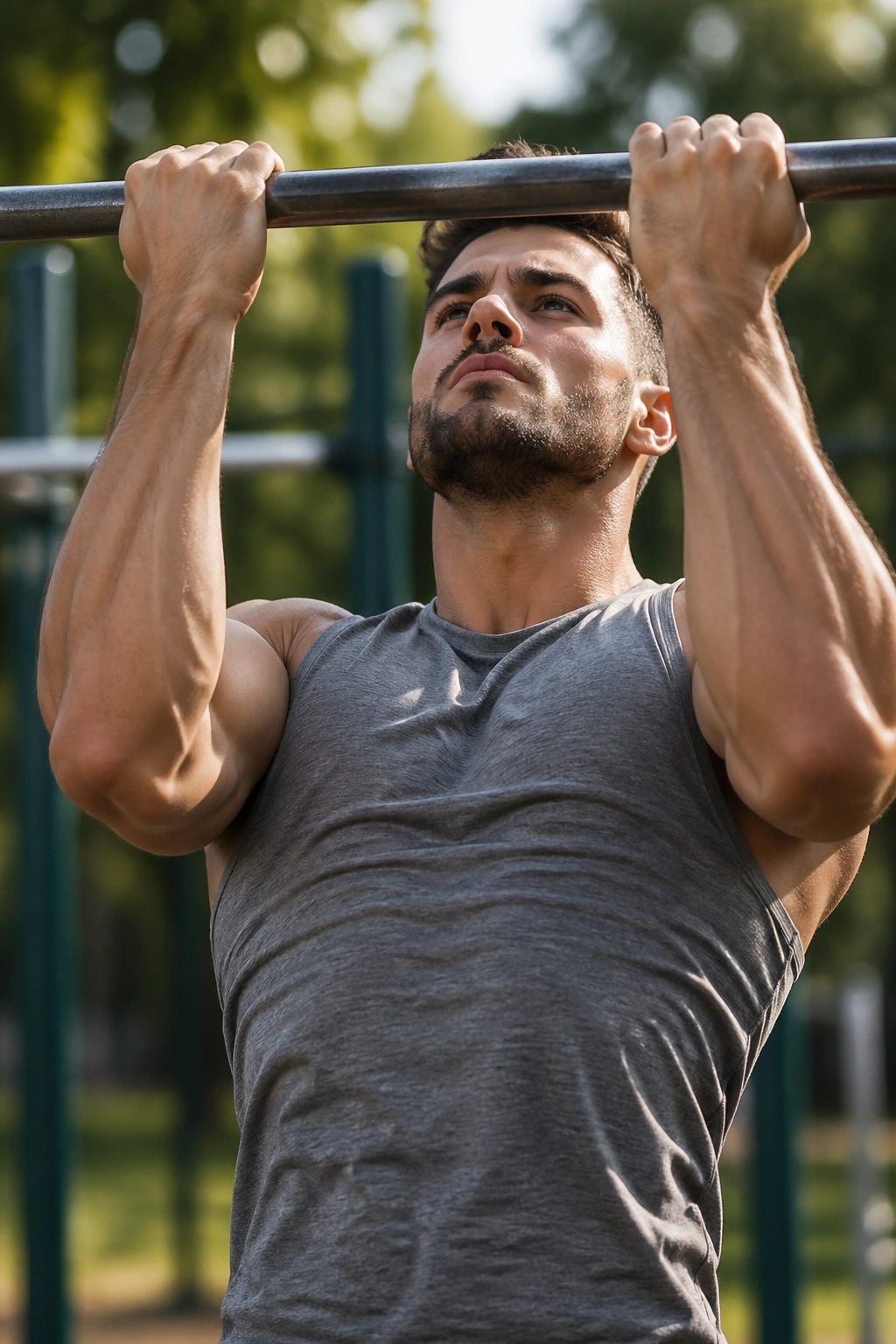
What if the most useful biceps move isn’t a curl at all? Chin-ups are the answer a lot of arm routines ignore. The underhand grip turns this into a serious biceps-and-back builder, and the bodyweight demand gives the arms a reason to stay tight instead of drifting through the rep.
How to make chin-ups work for your arms
Start from a dead hang or a controlled near-hang, pull your chest toward the bar, and keep the elbows driving down rather than flaring wide. If you can’t get full reps yet, use a band, a machine assist, or slow negatives where you jump to the top and lower for 3 to 5 seconds.
A solid goal is 3 to 5 sets of 4 to 8 reps. If you’re using assistance, aim for 6 to 10 clean reps with the same strict body line. The movement should feel smooth, not wrung out.
Chin-ups are one of those lifts that quietly expose weak spots. Grip. Upper back. Biceps. Core. All of it.
8. Close-Grip Push-Up
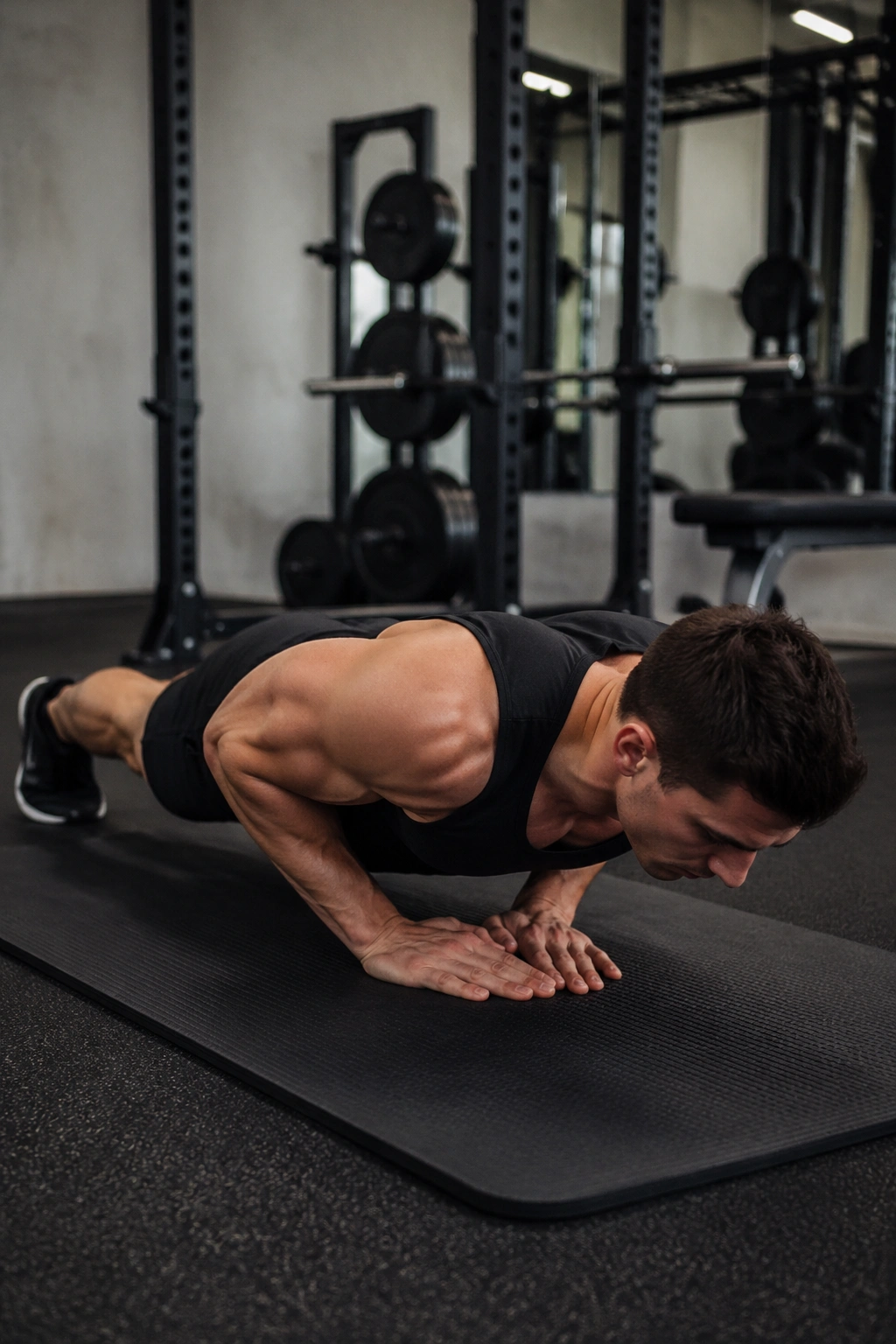
Close-grip push-ups are a triceps test disguised as a basic bodyweight drill. Move your hands under your shoulders or just inside that line, keep your elbows tucked at roughly 30 to 45 degrees, and lower your chest under control until it’s close to the floor.
The triceps do a lot of the work here, especially when you press hard through the lockout instead of collapsing at the bottom. Your core matters too. If your hips sag, your shoulders dump forward, and the set starts turning sloppy fast. A good push-up looks like one solid plank moving as a single unit.
Use 3 sets near technical failure, usually somewhere in the 8 to 20 rep range. If full-floor reps are too much, elevate your hands on a bench or box and keep the same hand position. That version still hits the arms without making the set a grind from rep one.
Simple movement. No excuses.
9. Rope Triceps Pushdown
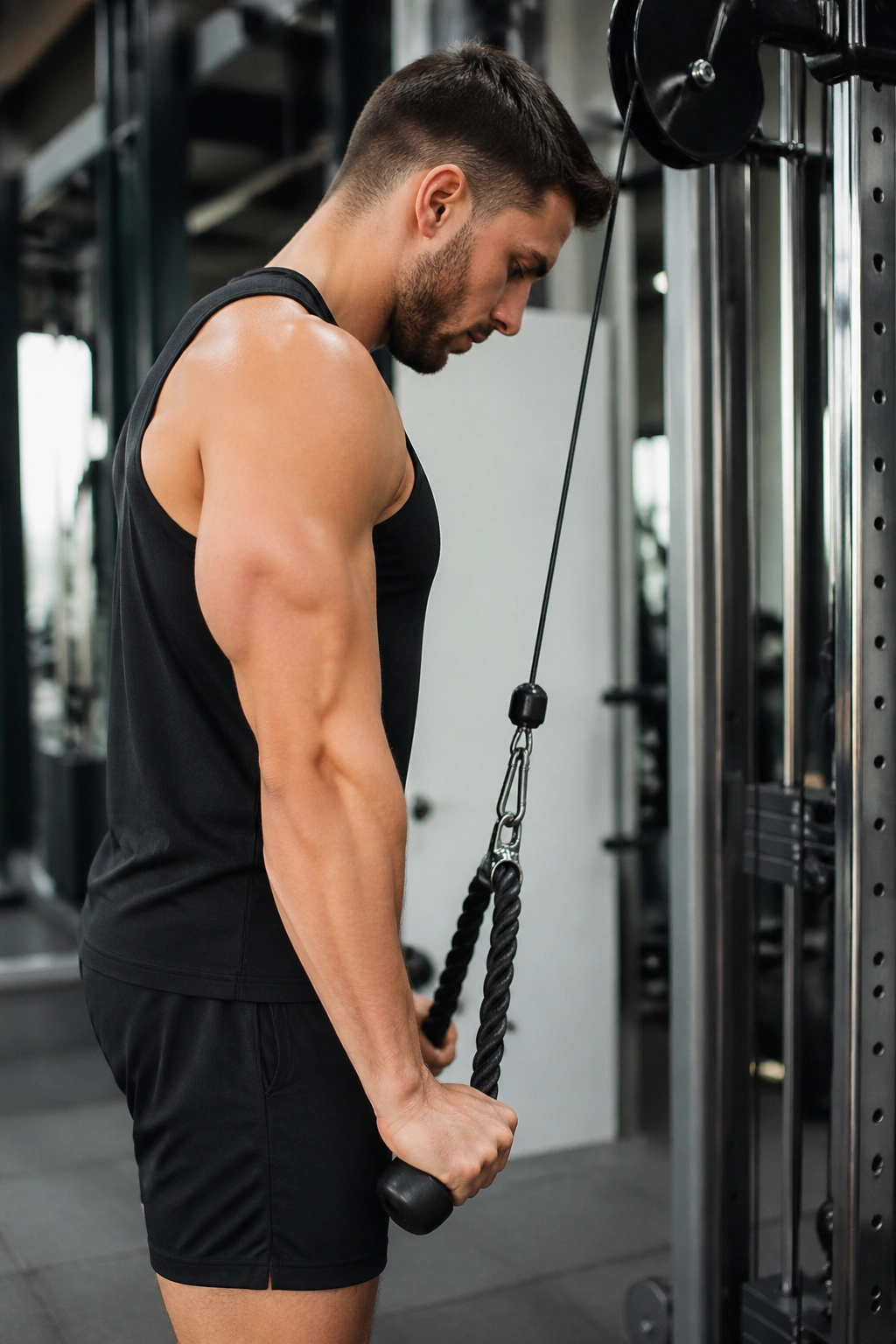
At the cable stack, a rope pushdown tells on sloppy elbows fast. If the elbows drift, the shoulders help, and the triceps lose part of the job. Keep the upper arms pinned to your sides, grab the rope, and press down until the rope splits apart at the bottom.
That split matters. It lets you finish with a small outward turn that gives the triceps a harder squeeze, especially in the long and lateral heads. Hold that bottom position for one full second. Don’t lean your body weight into it. Don’t toss the rope down and call it a rep.
Cable setup matters
Set the pulley high enough that you can start with elbows bent around 90 degrees. Step back just far enough to feel tension before the first rep even starts. Then keep the same elbow position the whole set.
- 3 to 4 sets of 10 to 15 reps
- Small pause at the bottom
- Slow return to the start
- No torso rocking
This one is a staple for a reason. It gives the triceps steady work without beating up the joints.
10. Overhead Triceps Extension
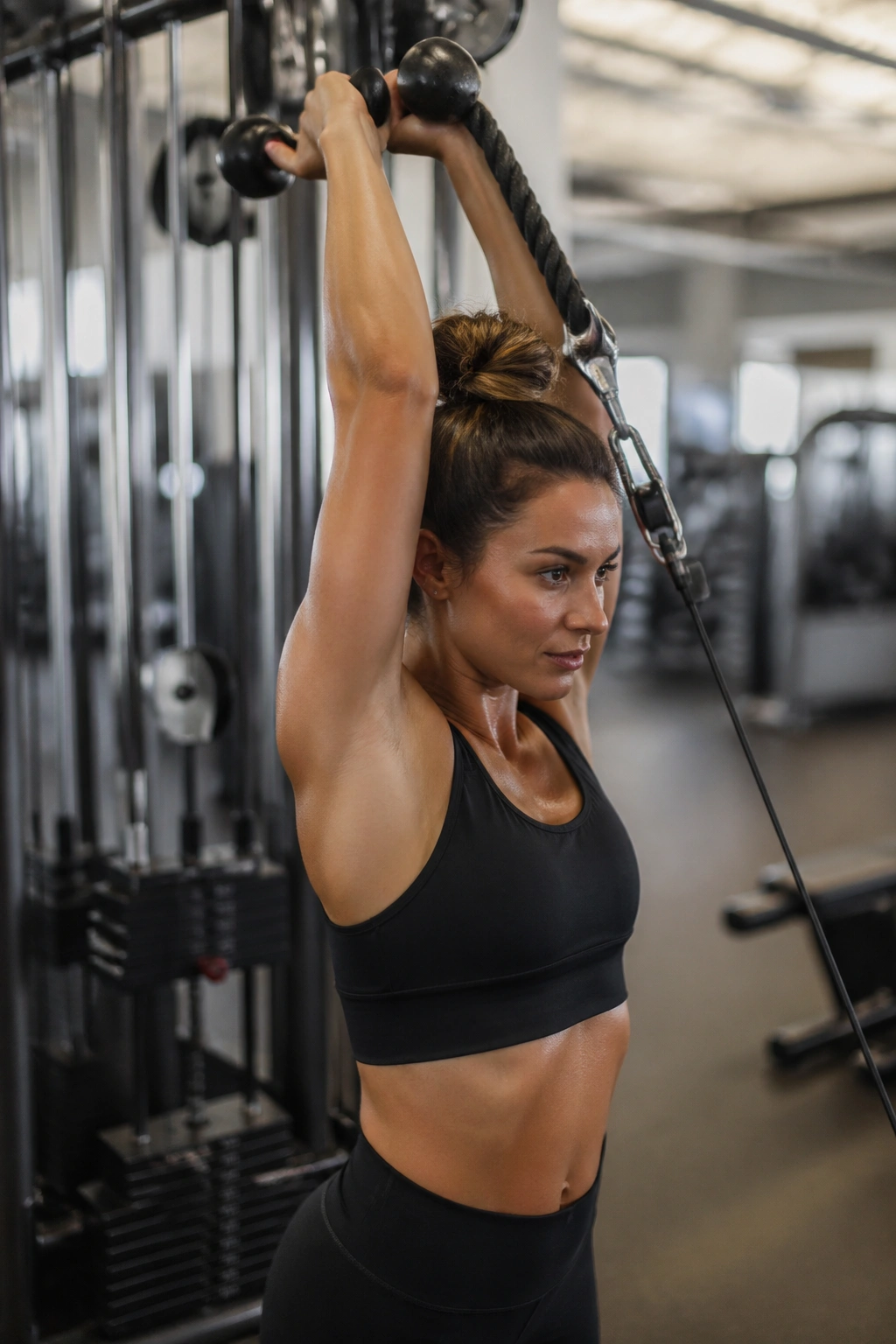
The triceps look bigger from the side than most people think, and the overhead position is why. When your arm goes up over your head, the long head of the triceps gets stretched harder, which gives the back of the arm a fuller look over time.
Use a dumbbell, a cable rope, or a single handle. I like the cable version because the tension stays smoother, but a dumbbell works fine if your elbows stay narrow and your ribs don’t flare into a giant arch. Keep the upper arms pointed more or less straight up and lower until you feel a real stretch, not a joint pinch.
A good dose is 3 sets of 10 to 12 reps. If your lower back starts doing the job, your weight is too heavy. Drop it and keep the elbows from wandering.
This is one of those movements that looks simple and feels slightly awkward at first. That usually means you’re doing it right.
11. Skull Crusher
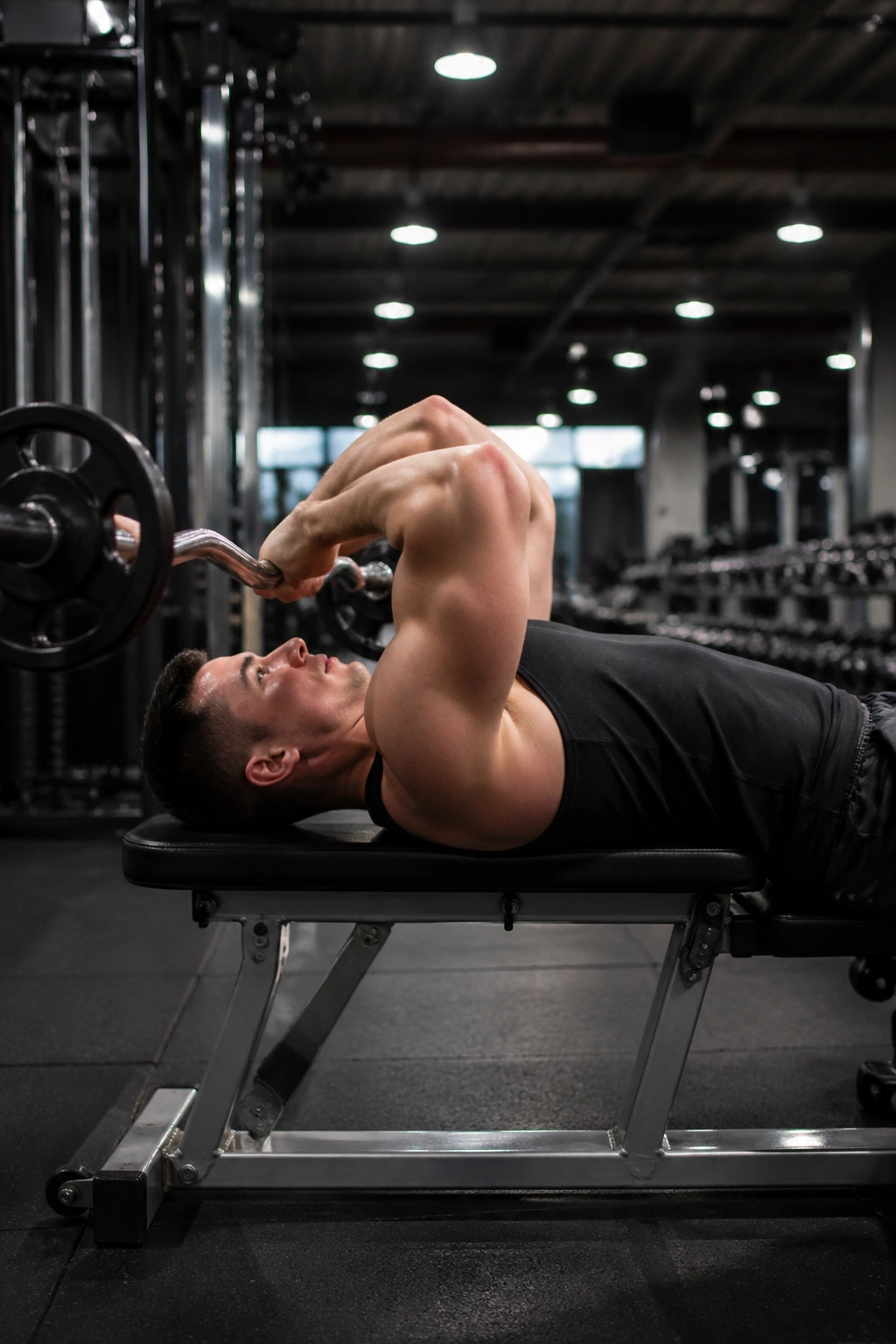
Brutal name. Accurate name. Skull crushers are one of the better triceps builders if you respect the setup and don’t turn the rep into a wrist-flicking mess.
Lie on a flat bench with an EZ bar or dumbbells, start with the arms pointed up, then bend only at the elbows as you lower the weight toward your forehead or just behind it. I prefer a slightly behind-the-head path for many lifters because it gives a nicer triceps stretch and can feel friendlier on the elbows. Keep the upper arms mostly still. That’s the whole game.
What to watch for
- Elbows stay narrow
- Wrists stay stacked
- Lowering is slow
- The bar does not crash down
Use 3 sets of 8 to 12 reps. If your elbows complain, use lighter weight, reduce the range a little, or switch to dumbbells. Some people love this movement. Others need to handle it carefully. Both are normal. The exercise is useful; it just asks for patience.
12. Bench Dip
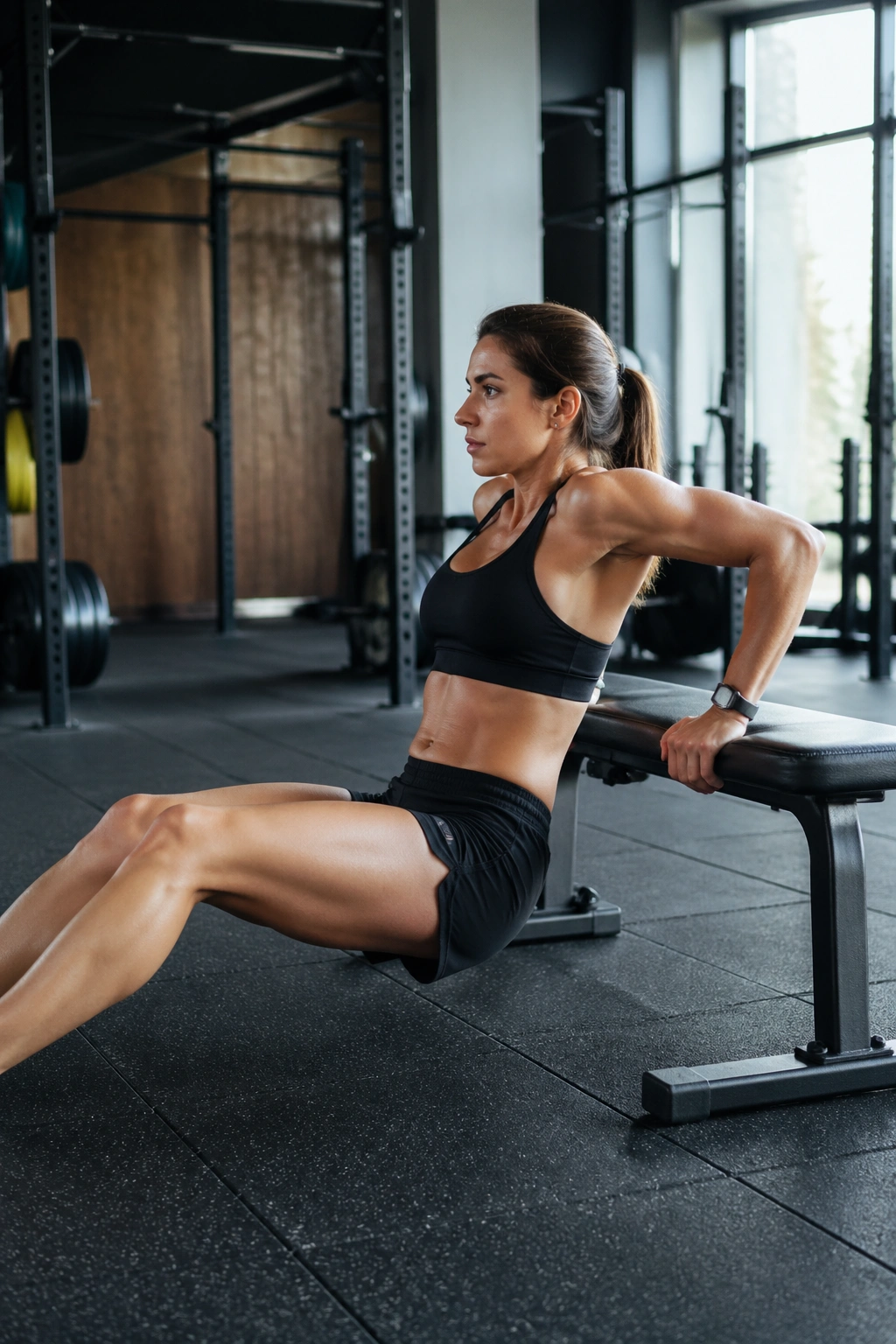
Should you still use bench dips? Sometimes, yes — but only with a shoulder that likes them. They’re a simple bodyweight triceps move, and when they feel good, they feel very good. When they don’t, they can pinch the front of the shoulder and turn the set into a bad idea.
Hands go on the bench, feet on the floor, and the body lowers under control until the upper arm is about parallel to the floor. Don’t dive deep just because you can. A smaller, cleaner range is often enough. Keep the shoulders from shrugging up by thinking about putting them in your back pockets.
If full bench dips bother your shoulders, elevate the feet less, shorten the depth, or switch to a parallel bar dip or cable extension. No prize is given for suffering through a movement that doesn’t fit your body.
I like these as a high-rep triceps finisher, around 2 to 4 sets of 10 to 15 reps, but only if the setup feels smooth. Easy on the ego. Hard on the triceps. That’s the point.
13. Arnold Press
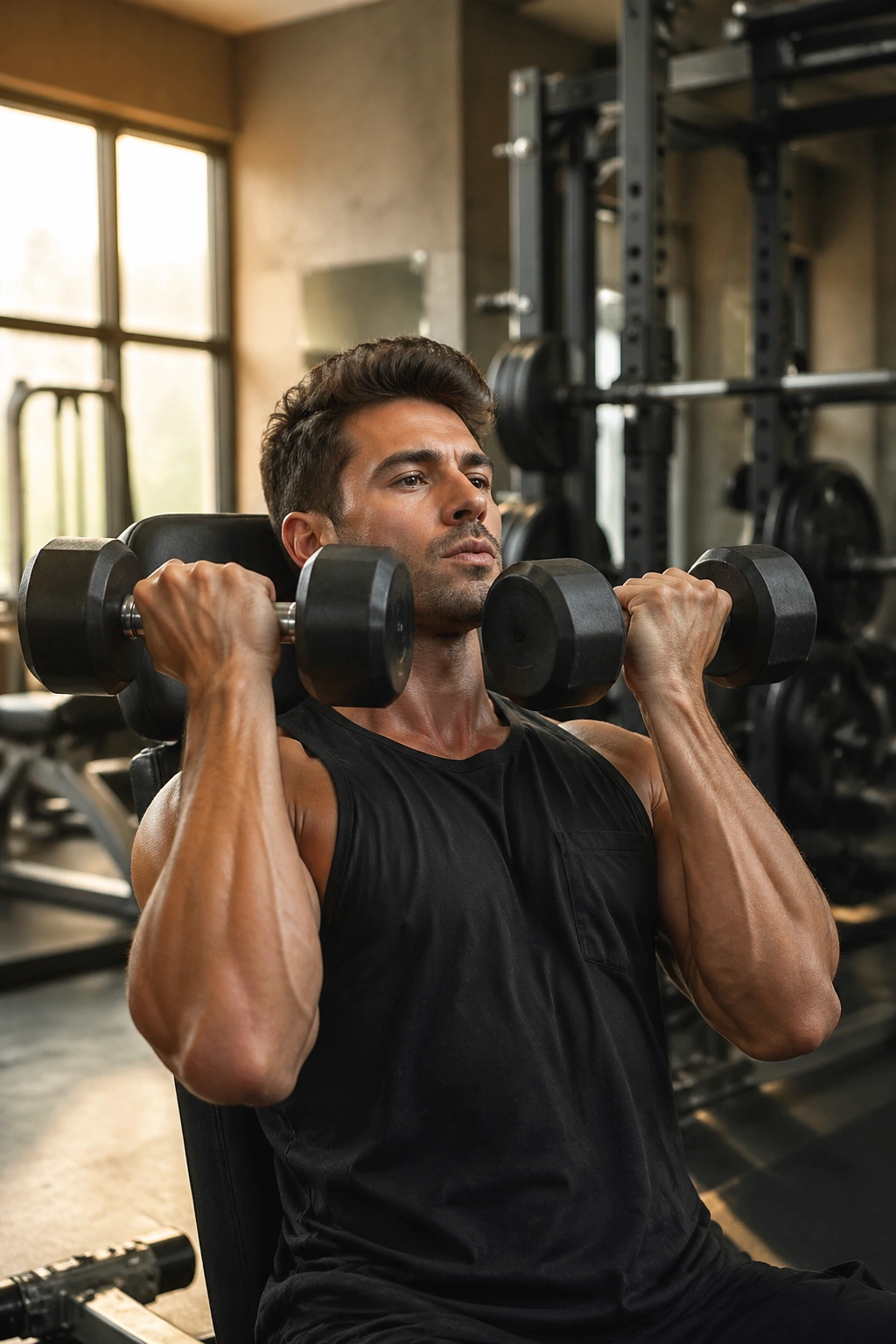
Shoulders change the whole arm silhouette. That’s why the Arnold press belongs in an arm-focused upper-body day even though it’s not a pure isolation move. The rotation on the way up brings the front delts, side delts, and triceps into play, which gives the upper arm more shape from every angle.
Start with the dumbbells in front of your shoulders, palms facing you. Press up while rotating the palms forward, then reverse the motion on the way down. Keep the ribs down and stop the arch in your lower back before it starts. A little body English ruins this fast.
Why it belongs here
The front of the shoulder and the triceps help fill out sleeves, and that changes how lean arms look in a mirror and in motion. The shape is more rounded, more complete, less flat.
Try 3 sets of 8 to 12 reps with moderate weight. If the rotation feels awkward, slow it down. Fast Arnold presses are mostly just messy overhead presses with a twist.
14. Lateral Raise
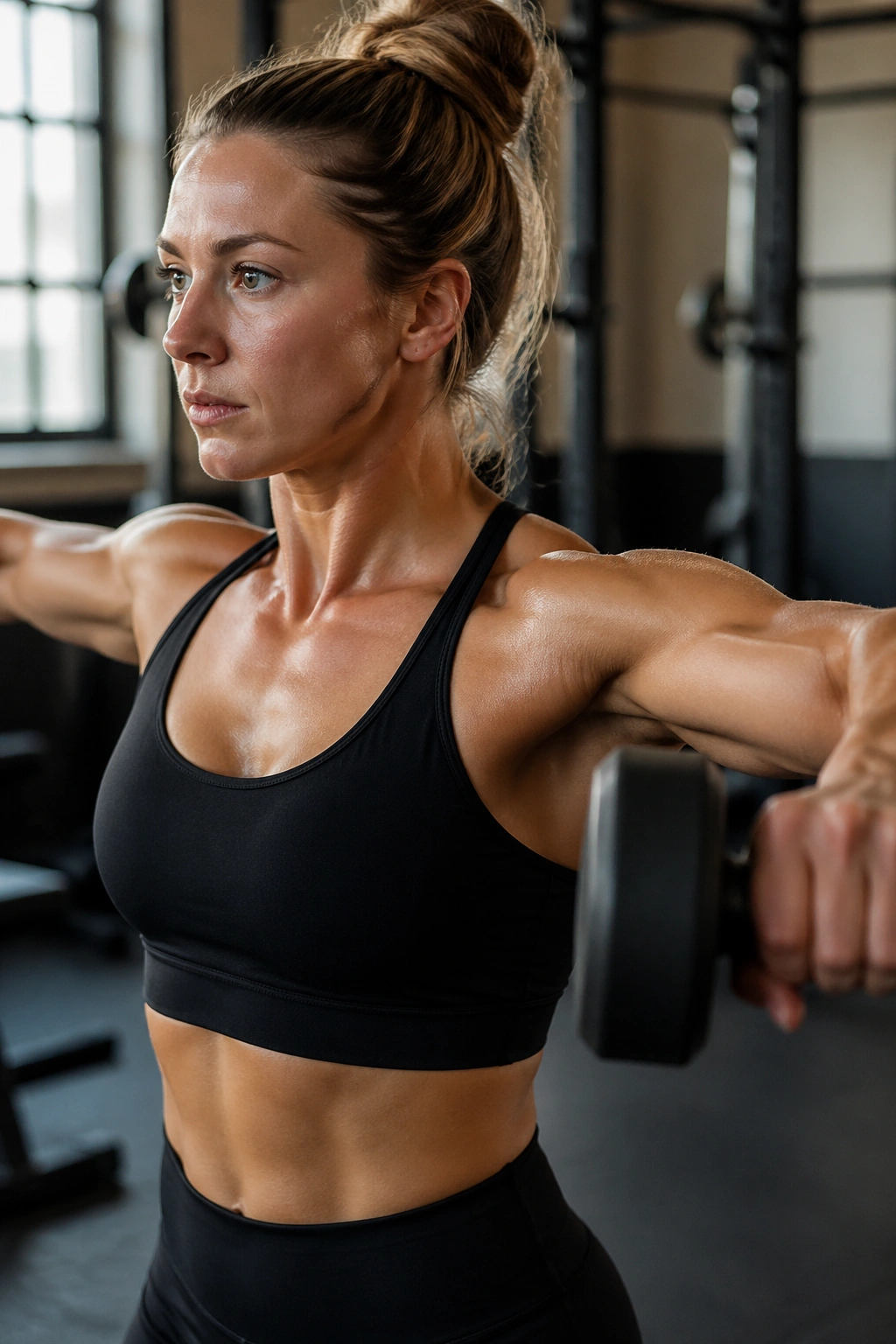
Watch a lifter grab 20-pound dumbbells for lateral raises and swing them like they’re waving at someone across the room. Then watch the side delts shrug and disappear. That’s the wrong move. Light to moderate weight, strict control, and a small arc usually work better here.
Raise the dumbbells out to the sides with a slight bend in the elbows, stopping around shoulder height or just below. Lead with the elbows, not the hands. Keep your traps quiet. If the top of your neck starts taking over, drop the weight and clean up the path.
I like 3 to 4 sets of 12 to 20 reps. The burn shows up fast, and that’s fine. This exercise is about shaping the shoulder cap, which makes the upper arm look sharper even though the biceps and triceps aren’t the main movers.
- Slight forward lean is fine
- Small pause at the top helps
- No throwing the dumbbells
- Stop when form turns to swinging
Small muscle. Big visual payoff.
15. Face Pull
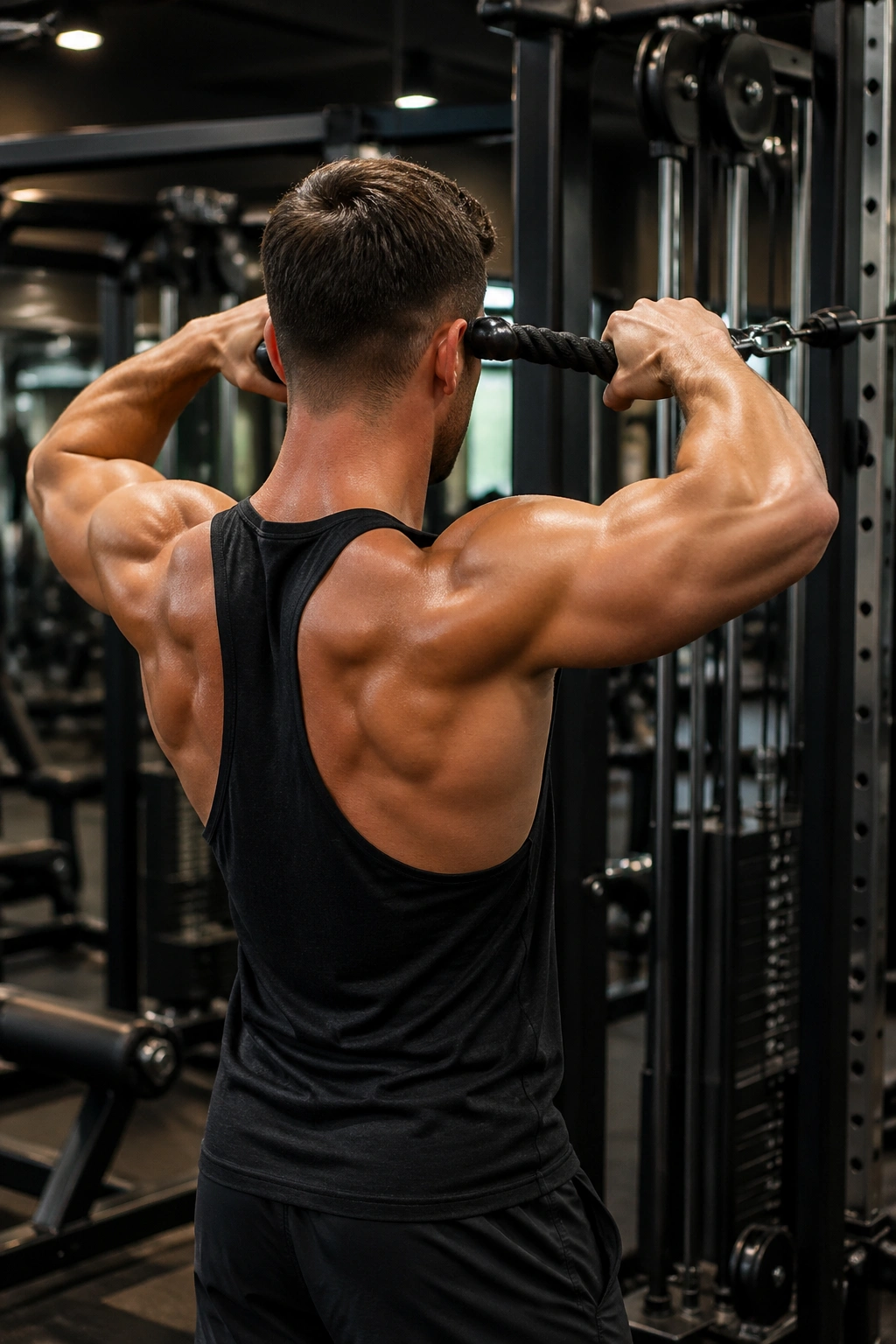
Face pulls don’t look like an arm exercise, and that’s exactly why they matter. Rear delts and upper back work changes how the shoulders sit, and that changes how the arms look when they hang at your sides. If your shoulders round forward, your arms usually look smaller and less defined than they actually are.
Set the rope at about face height, pull toward your nose or upper forehead, and finish with the hands apart and elbows high. The squeeze should feel like the back of the shoulders and the upper back are doing the job, not your lower back or your neck. Keep the motion smooth. Jerky face pulls are mostly just cable flailing.
This is a smart place for 3 sets of 12 to 15 reps. It can live at the end of a workout or between heavier arm sets as a posture reset. Some people skip it because it doesn’t feel like a classic arm move. That’s a mistake. Stable shoulders make arm work better, and the mirror tends to agree.
16. Close-Grip Bench Press
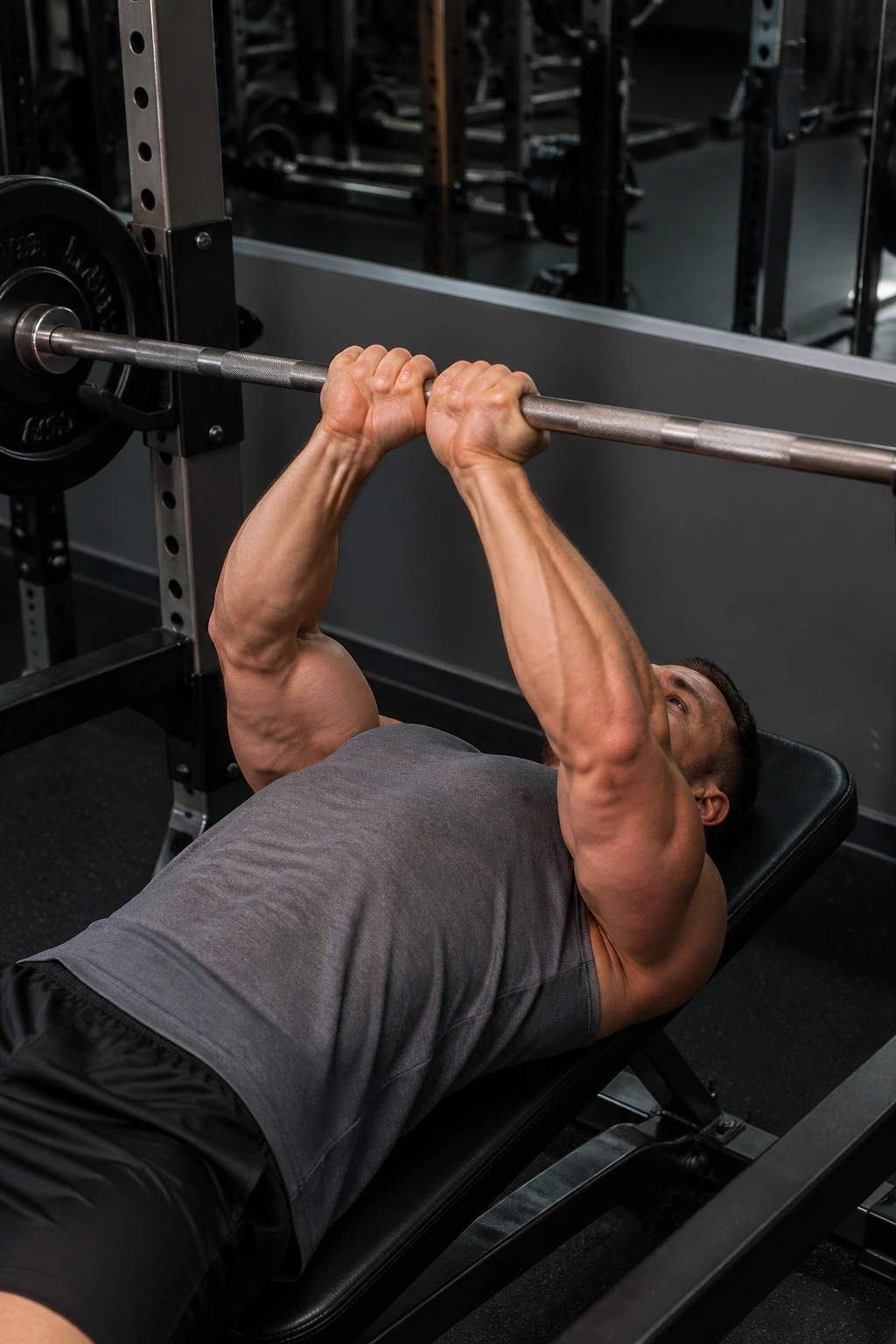
If you want triceps thickness, load belongs somewhere. Close-grip bench press gives you that load. It’s one of the few arm-focused moves that lets you move serious weight while still hitting the back of the arms hard.
Use a grip just inside shoulder width — not inches and inches inside. Too narrow turns the wrists and elbows into a complaint department. Lower the bar with control, keep the elbows tucked around 30 to 45 degrees, and press to full lockout without bouncing off the chest. The triceps finish the top half of the rep in a way that really matters for arm size.
Hands and elbow setup
A grip that’s too close usually feels awkward before it feels productive. Start moderate, then adjust by a finger or two if your wrists ask for it.
- 4 sets of 5 to 8 reps
- Controlled descent
- Hard lockout at the top
- Spotter or safeties if the load is serious
This is a heavy triceps day lift. Treat it that way. When it’s done right, the back of the upper arm gets the kind of work bodyweight moves can’t always supply.
17. Reverse Curl
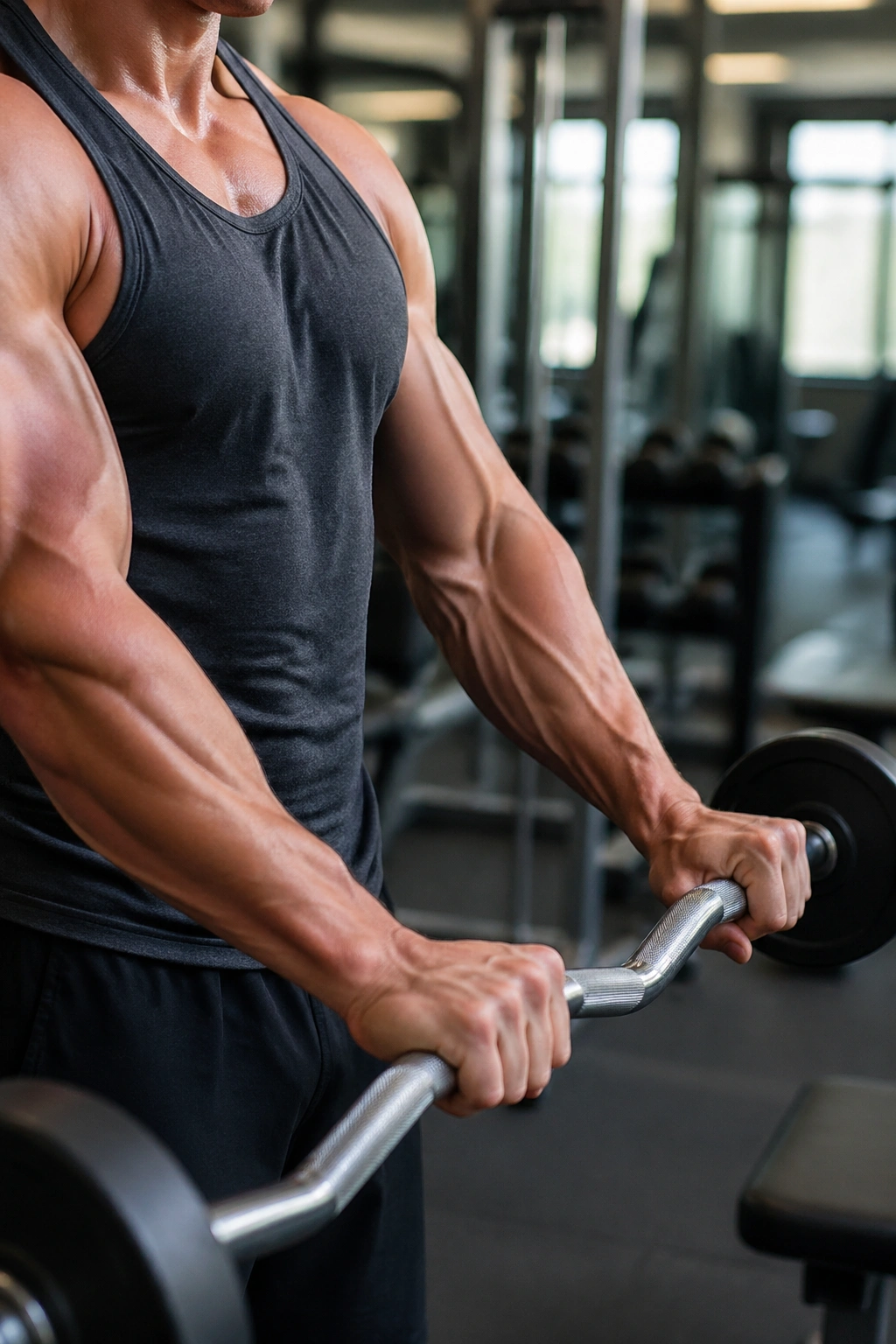
Forearms change the whole picture. A reverse curl gives them a louder voice and adds work to the brachioradialis, the thick muscle that runs along the top of the forearm and helps the elbow-to-wrist line look more filled out.
Use an EZ bar if a straight bar feels rough on the wrists. Grip it palms down, keep the elbows still, and curl in a controlled path without letting the hands bend back. The movement will feel smaller than a regular curl. That’s normal. The target muscles are different, and they usually need less load than people think.
A good target is 3 sets of 10 to 15 reps. Lower slowly. If the wrists start folding, the bar is too heavy. If the shoulders start helping, the bar is too heavy again. There’s a pattern there.
This is the kind of move that doesn’t scream for attention but quietly changes how the arm looks from the front and side. Sleeves notice.
18. Farmer’s Carry
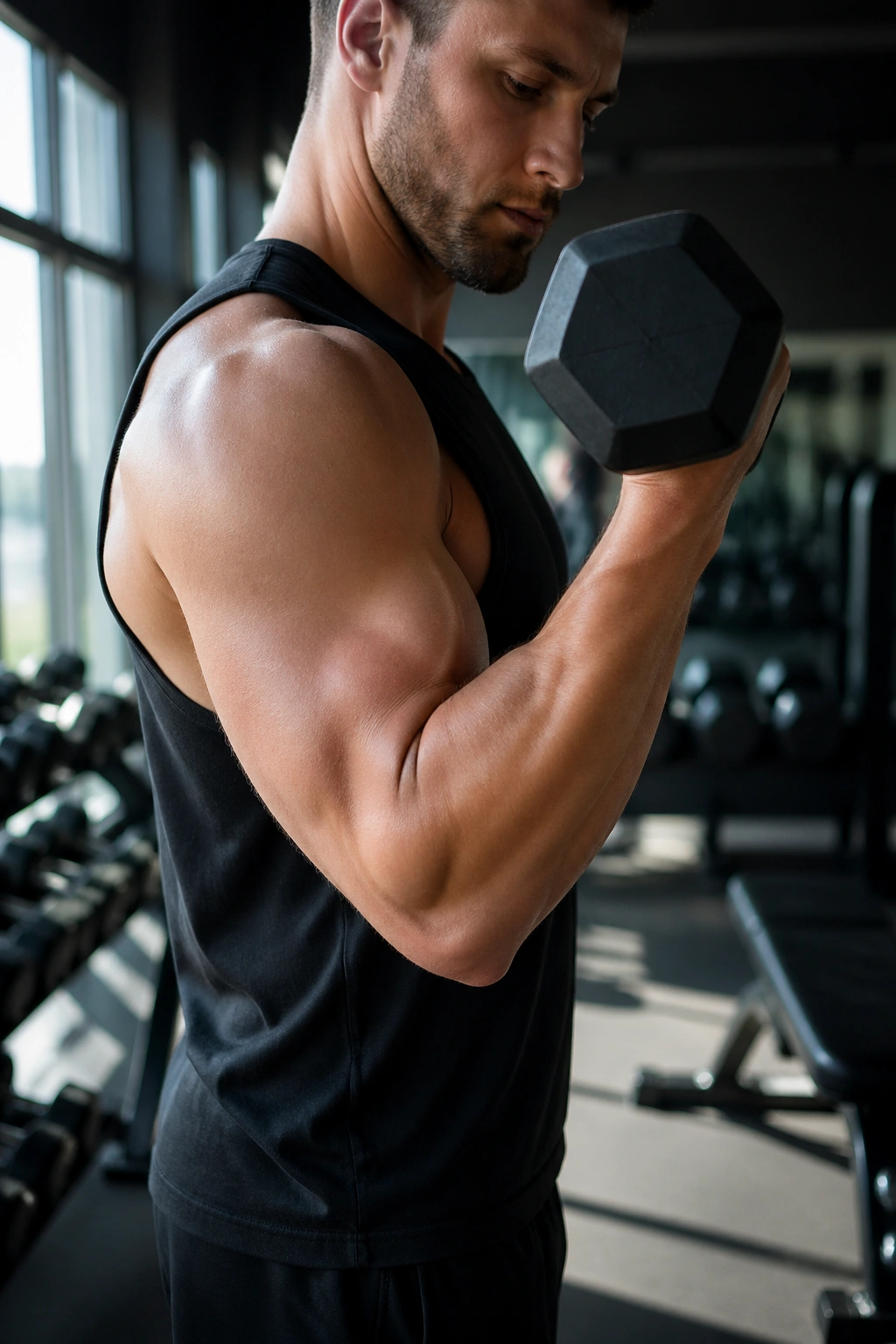
What finishes an arm session without another curl? A heavy carry. Farmer’s carries are not glamorous, and thank goodness for that. They build grip, forearm strength, shoulder stability, and that dense, worked look that shows up in the lower part of the arm when everything else is already tired.
Grab a pair of heavy dumbbells or kettlebells, stand tall, and walk for 30 to 60 seconds or about 30 to 40 meters. Keep your shoulders level, ribs stacked, and hands squeezed hard enough that the bells don’t sway. Don’t lean. Don’t rush. The point is steady tension, not a sprint.
Carry cues that matter
- Chest tall
- Chin level
- Arms long, not loose
- Steps short and quiet
If you want a direct finisher after curls and triceps work, this is a good one. If you want the kind of grip strength that makes the rest of your lifts feel more stable, it’s even better. And if your forearms have been lagging behind the rest of your upper body for a while, this move tends to show that gap fast. Finish with this once or twice a week, and your arms start to look trained from the hand up.
