



A lot of people blame posture on sitting too much, and that’s only half the story. A weak, lazy chest can make the upper body feel folded in on itself, even when you’re trying to stand tall. The right chest workouts don’t fix posture by magic — nothing does — but they can help you build a stronger front side, press with better control, and stop looking like you’re always bracing for bad news.
Heavy benching with flared elbows and a wild rib arch? That can make things worse. I’ve seen it too many times. The lifter gets stronger on paper and tighter through the shoulders in real life.
What actually helps is chest training that keeps your shoulder blades moving cleanly, your ribs stacked, and your torso honest. That usually means a mix of pressing angles, controlled fly work, and a few bodyweight moves that force your whole upper body to stay organized. Pair that with rows and rear-delt work on other days, and the whole package starts to make sense.
Start with the presses that let you stay tall. The list gets more demanding from there.
1. Incline Dumbbell Press for a Taller Upper Chest
The incline dumbbell press is where I’d start if your goal is a chest that looks lifted instead of saggy through the front. A bench set around 20 to 30 degrees is enough. Go steeper and you start turning it into a shoulder drill, which is not what most people need.
Why it helps posture
Dumbbells let your arms travel a little more naturally than a barbell, and that matters. You can keep your elbows at about 30 to 45 degrees from your sides, keep your ribs down, and press without jamming the front of the shoulder. That setup builds the upper chest while teaching your torso to stay stacked.
I like this lift for people who spend all day hunched over a desk. It gives you a pressing pattern that asks for control instead of brute force. The top of the rep should feel strong, not sloppy.
How to get it right
- Lower the dumbbells to the outer chest area, not way up by the neck.
- Keep your wrists straight. Bendy wrists waste force.
- Stop the descent when your upper arms are about level with the bench; deeper isn’t better if your shoulders roll forward.
- Press up and slightly back so the dumbbells finish over the shoulders.
Try 3 to 4 sets of 6 to 10 reps, resting about 90 seconds between sets. One clean set tells you more than three ugly grinders ever will.
2. Push-Up Plus to Wake Up the Front of the Shoulder

This one looks too easy until you do it properly. The push-up plus isn’t just a chest move; it teaches your shoulder blades to glide instead of locking up. That’s a big deal if your upper body tends to feel stiff, pinched, or tucked in.
The “plus” part is the extra reach at the top. After you press up from the floor, push the ground away a little more so your upper back rounds slightly without collapsing your core. That last bit wakes up the serratus anterior, the muscle that helps your shoulder blade move well around the rib cage.
Do 2 to 4 sets of 8 to 15 reps, and add a 2-second hold at the top of each rep if you want more control. The range of motion is small, but the effect is real. If your neck starts taking over, you’re shrugging instead of reaching.
A clean push-up plus should feel like your chest is working with your shoulders, not fighting them. That’s the whole point.
3. Neutral-Grip Dumbbell Bench Press
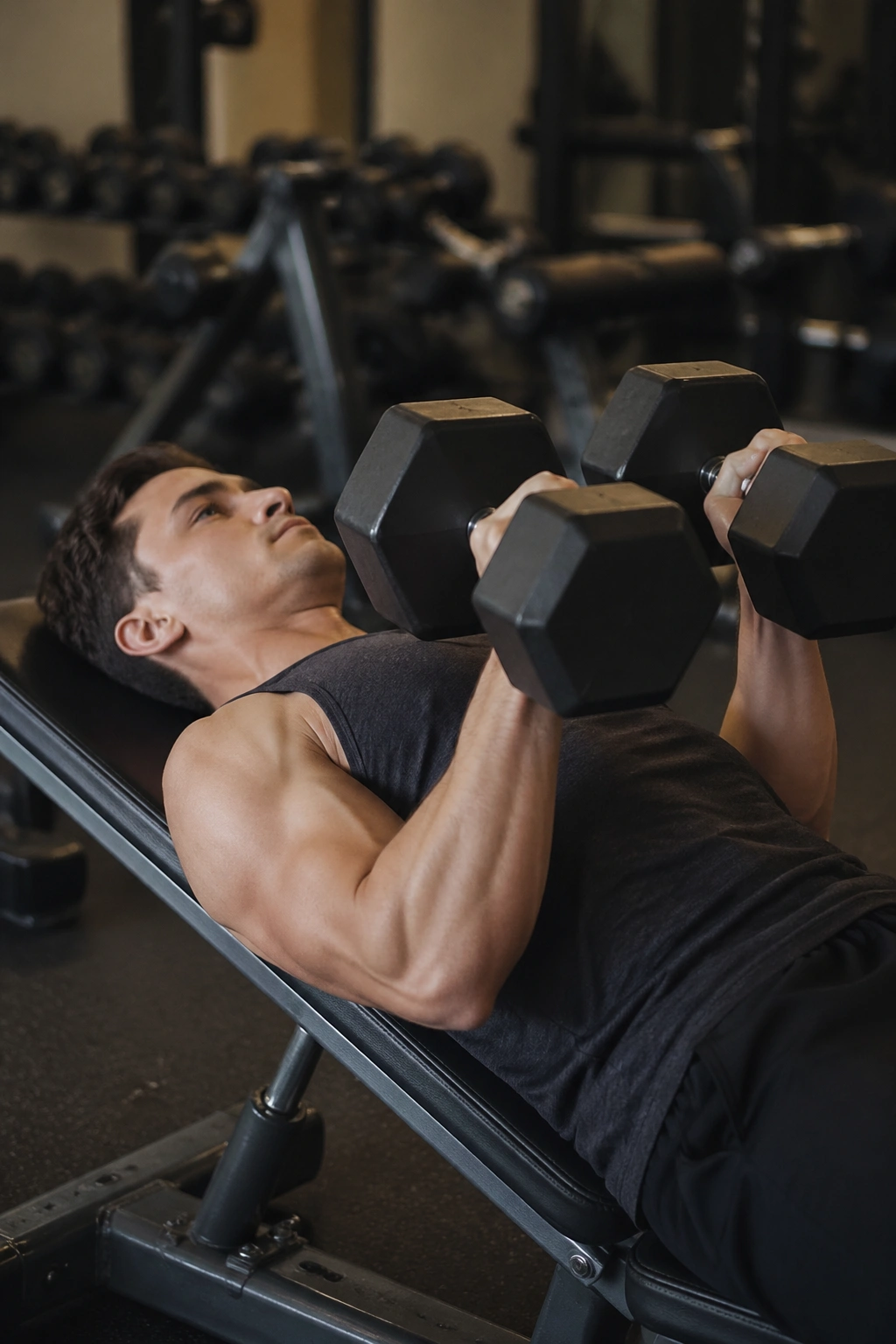
Why does a neutral grip feel so good for a lot of lifters? Because the palms face each other, the elbows stay closer to the body, and the shoulder usually gets a break from the wide, cranky bench-press position.
This version is one of my favorites for people who want chest work without beating up the front of the shoulder. It’s still a real press. You still need to brace. But the line of stress is friendlier, and that often means better reps and fewer compensations.
How to use it
- Set the bench flat or at a slight incline.
- Hold the dumbbells with palms facing each other the whole time.
- Lower under control for 2 seconds.
- Pause briefly when the elbows are just below the bench line.
- Press until the dumbbells are over the shoulders, not drifting toward the face.
Aim for 3 to 5 sets of 6 to 8 reps. If you feel your chest working and your shoulders staying quiet, you’ve got the setup right. If not, the dumbbells are probably too heavy.
4. Cable Chest Press for Clean Shoulder-Blade Path
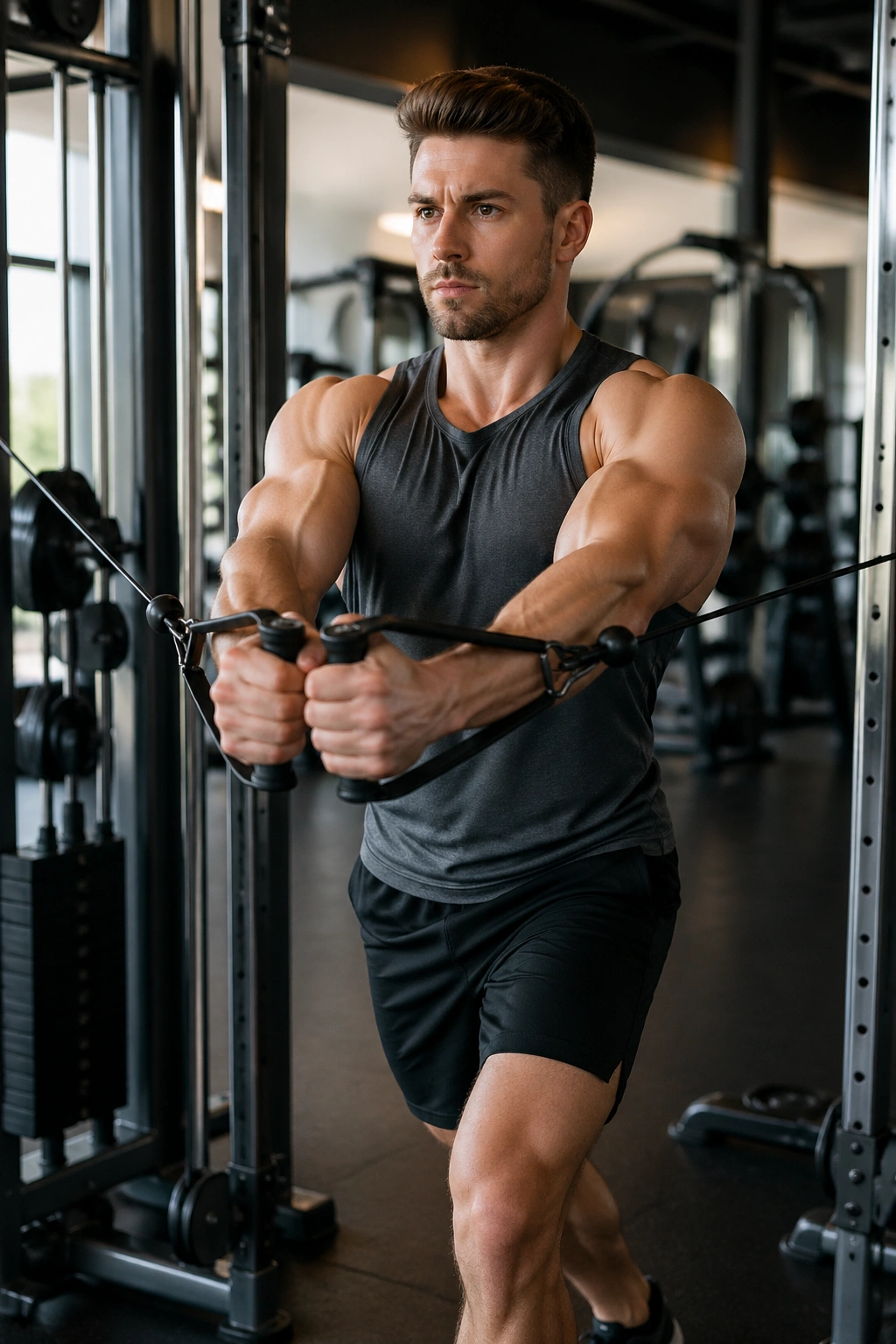
A cable press is what I give to someone whose bench work turns into a low-back arch contest. Cables keep tension on the chest through the whole rep, and the handles can move in a more natural line than a fixed bar.
That freedom matters. You can set one foot forward, keep your ribs down, and press in a slightly arcing path that doesn’t jam the shoulder. It feels smoother than a barbell. Less dramatic, too. Which is a good thing.
Quick setup notes
- Put the pulleys around mid-chest height.
- Step forward enough that the stacks stay lifted the whole time.
- Press handles together only if your shoulders stay relaxed; don’t smash them in.
- Stop the return when your upper arms are in line with your torso.
Use 3 sets of 10 to 12 reps, and keep the last rep crisp. If the cable stack slams down, you’ve lost control. I’d rather see a modest weight done with smooth reps than a heroic load that turns into shoulder shrugging.
5. Dumbbell Floor Press When Your Shoulders Need a Break
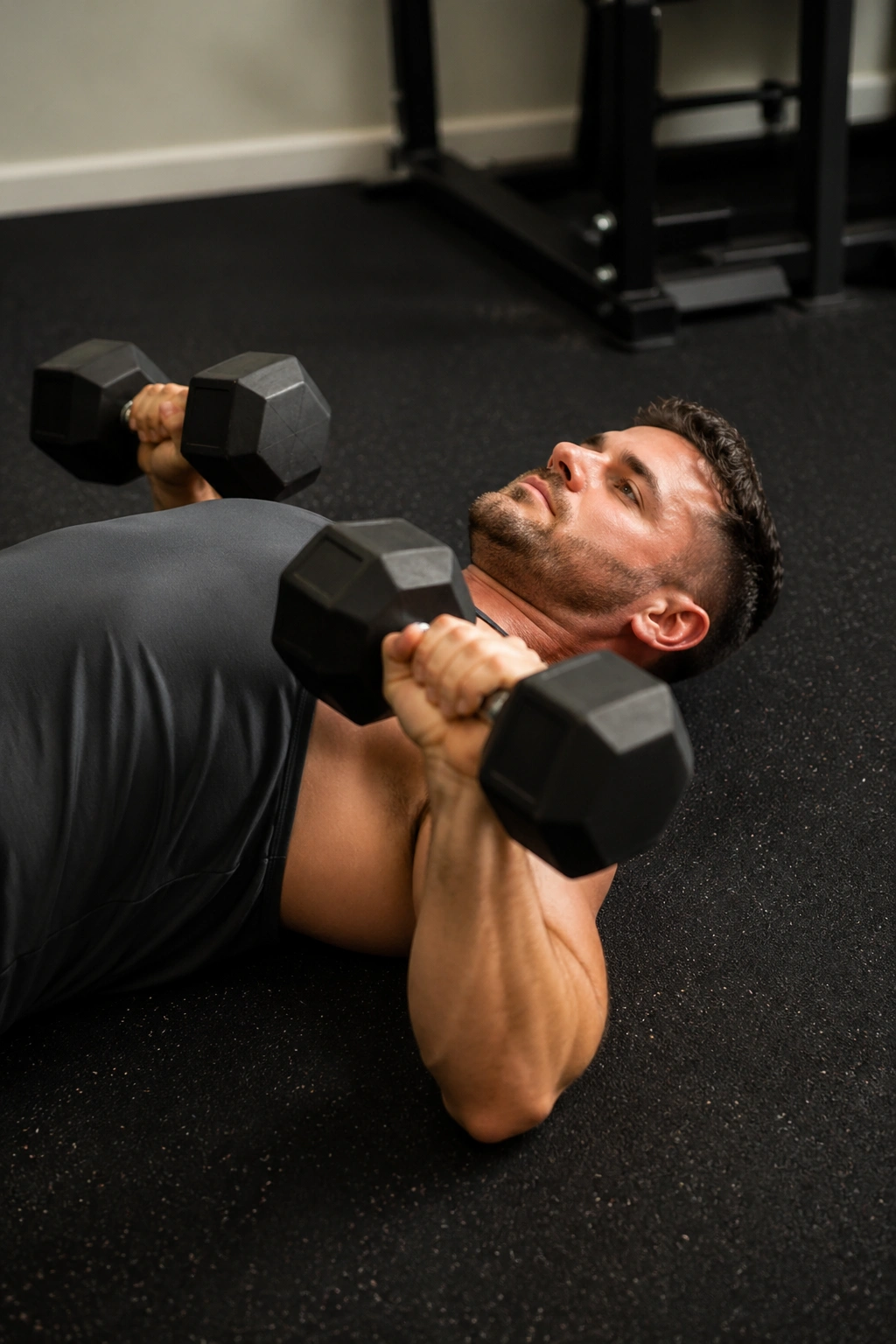
The dumbbell floor press is brutally simple, and that’s why it works. You lie on the floor, your elbows hit the ground before your shoulders can sink too far back, and the whole press stays shorter and tighter. That limited range can be a gift.
For people with cranky shoulders or a habit of over-arching on the bench, the floor press teaches restraint. You still train the chest hard, but the floor stops the sloppy bottom end where a lot of bad positions start. The torso feels more braced, the rib cage less flared, and the press itself more honest.
I also like it because it forces you to own the top half of the movement. No bouncing. No dropping into the bottom with a grin and a prayer. Just controlled force.
Do 4 sets of 8 reps with a deliberate 2-second lower. Let your elbows kiss the floor lightly, then drive back up. If your triceps light up hard, that’s normal. If your shoulders feel pinched, shorten the range and lighten the load.
6. Low-to-High Cable Fly for the Upper Chest Line
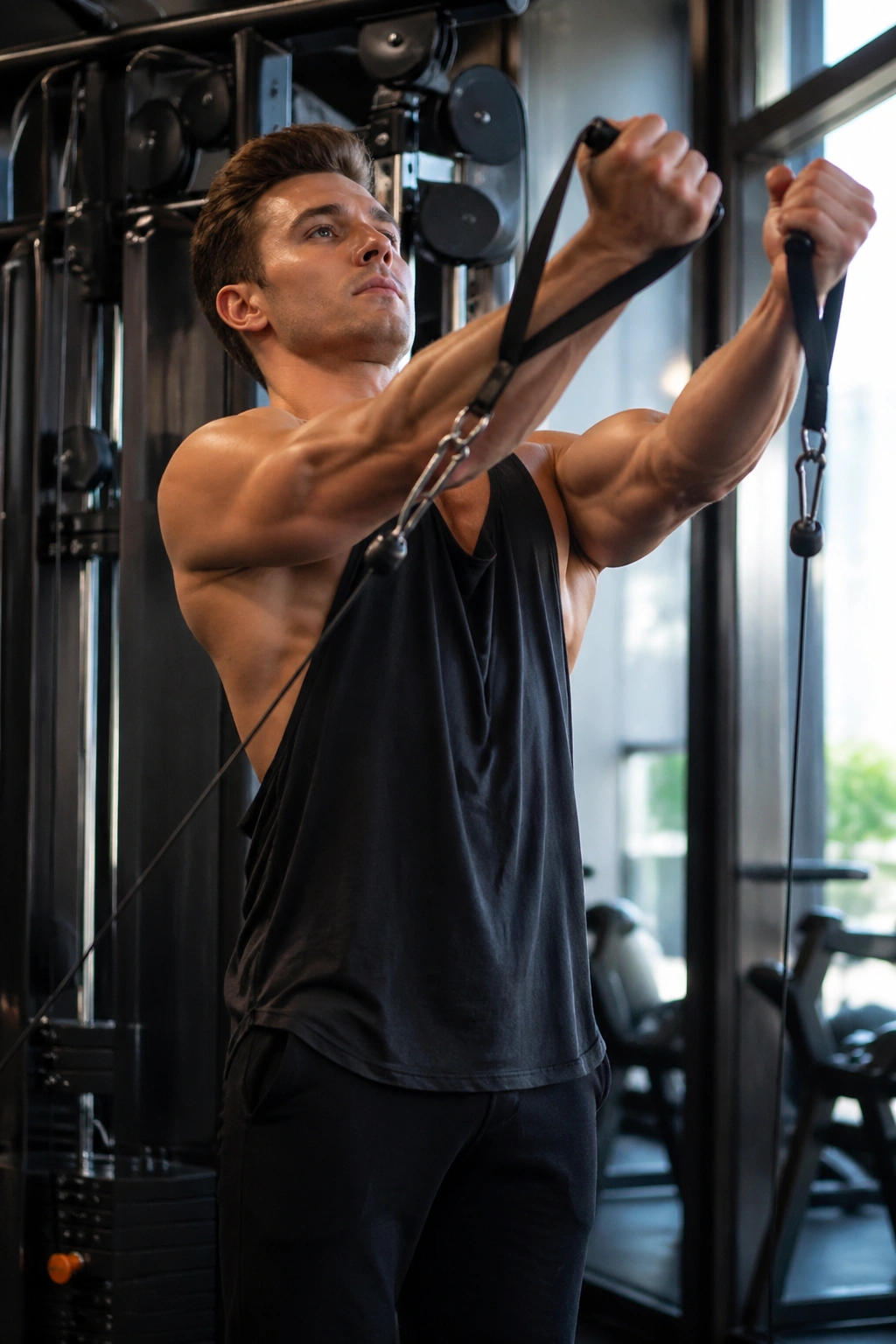
The low-to-high cable fly is where the upper chest gets a chance to do its job without a pile of shoulder stress. Unlike a flat fly, which can drift into a chest-and-shoulder blur, this angle sweeps the arms upward and inward. That line of pull is the whole point.
You’ll feel a long stretch across the chest if you let the handles start low and slightly behind the body. Good. That stretch should feel meaty, not sharp. If the front of the shoulder complains, shorten the range a bit and keep the motion slower.
What makes it different
- The cables stay tense from start to finish.
- The motion finishes near upper-chest height, not belly level.
- The load is lighter, which keeps the shoulders honest.
- The movement teaches control at the end range, where posture often gets sloppy.
I’d use 2 to 3 sets of 12 to 15 reps after pressing work. Don’t chase a huge load here. You’re after shape, control, and a clean squeeze at the top. The rep should look smooth from the outside and feel like a slow burn inside the pecs.
7. Machine Chest Press for Stable, Repeatable Work
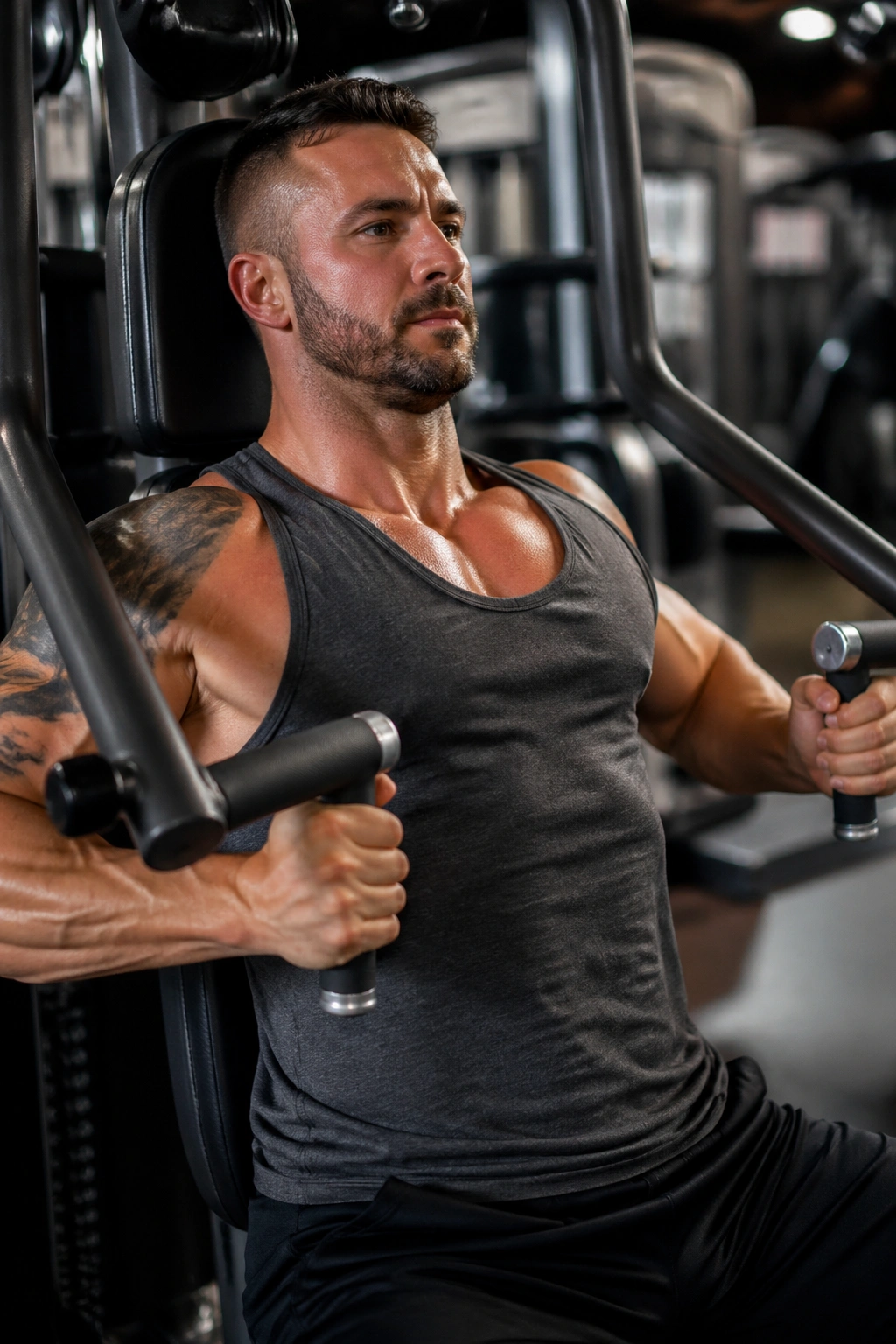
Machine presses get ignored by gym purists, which is funny to me, because they’re often the cleanest way to train the chest when fatigue is high. The seat and back pad take the wobble out of the equation. That leaves you free to focus on one thing: pressing hard without turning the movement into chaos.
Set the handles so your elbows start a little below shoulder height. Too high, and the joint gets cranky. Too low, and the chest loses its job. If the machine has a neutral or semi-neutral grip, I’d usually pick that first. Feels better on the joints. Less drama.
What to watch for
- Keep your shoulders down as you press.
- Don’t let the chest cave in at the bottom.
- Use a full stretch only if it stays smooth.
- Pause for a beat near the top so you don’t bounce.
A solid range is 3 to 4 sets of 8 to 12 reps. The machine should let you repeat the same good path over and over. That’s boring in the best way. Boring builds the kind of strength you can actually use.
8. Dumbbell Squeeze Press and the Midline Squeeze
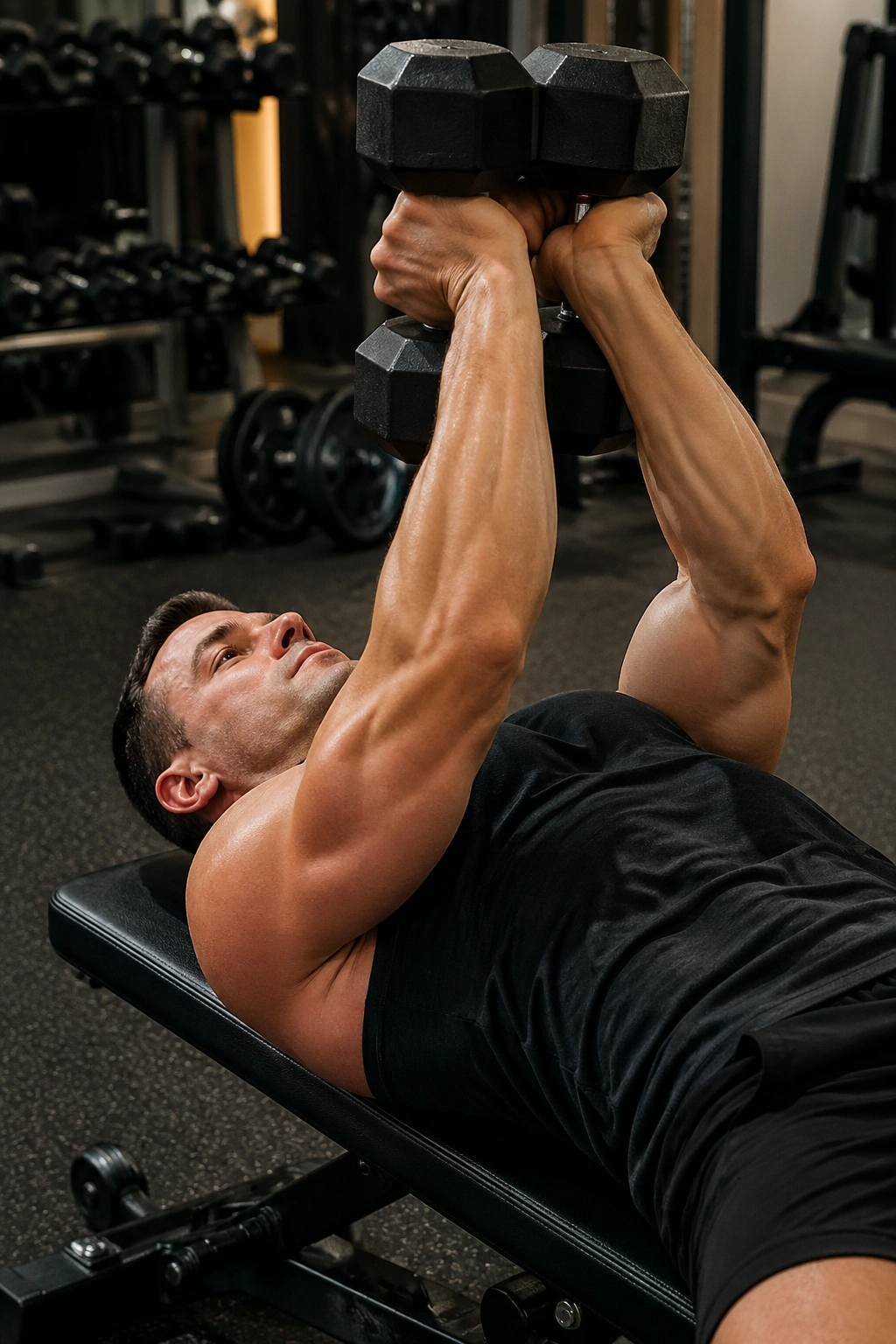
This is the move I use when someone says they can press heavy but cannot seem to feel their chest. The squeeze press fixes that fast. You hold two dumbbells together, press them as if you’re trying to crush one bell into the other, and keep that pressure through the whole set.
It’s not magic. It’s leverage. The constant inward squeeze makes the pecs work harder without needing a ton of load, and the lighter weight makes it easier to keep the shoulders in a sane position. A lot of lifters discover that they’ve been letting the arms drift apart and the chest go along for the ride. This shuts that down.
Why it feels different
- You get a strong chest contraction with less shoulder strain.
- The midline squeeze keeps the torso honest.
- The lighter load makes tempo work easier.
- The movement usually reveals side-to-side weakness fast.
Try 3 sets of 10 to 12 reps with a 3-second lower. If the dumbbells separate even a little, the set gets less useful. Keep them touching. That tiny detail changes the whole exercise.
9. Single-Arm Cable Press to Fix Left-Right Imbalance
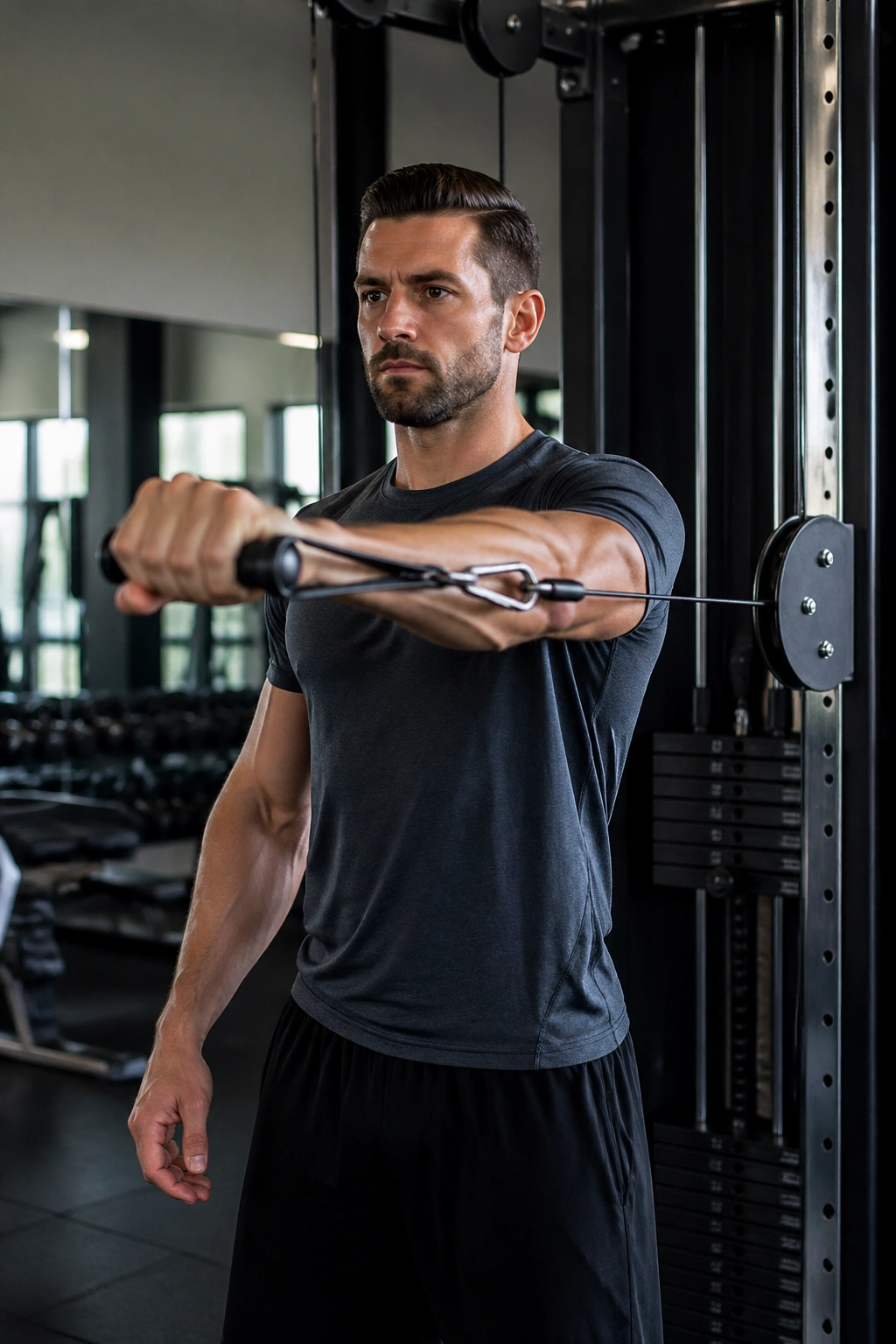
Ever notice one side of the chest doing the work while the other side tags along? This is the fix. Single-arm cable pressing makes you deal with rotation, which means your core, ribs, and shoulder all have to stay lined up instead of drifting off into their own little arguments.
The cable gives constant pull, so the body has to resist twisting on the way out. That anti-rotation demand is gold for posture. You’re pressing, yes, but you’re also learning not to collapse into one hip or one shoulder.
How to press without twisting
Why it helps posture
The chest gets stronger, but so does the line from your rib cage to your pelvis. That line matters. If it wobbles every time you press, your torso never really learns to stay tall.
How to press without twisting
- Set your feet shoulder-width apart.
- Square your hips before every rep.
- Press straight out from the chest, not across the body.
- Finish with the palm facing slightly inward, not locked flat.
Use 3 sets of 8 to 12 reps per side. Slow enough to control, heavy enough to challenge. If your torso spins toward the cable stack, the weight is too much.
10. Pec Deck Fly Without the Sloppy Stretch
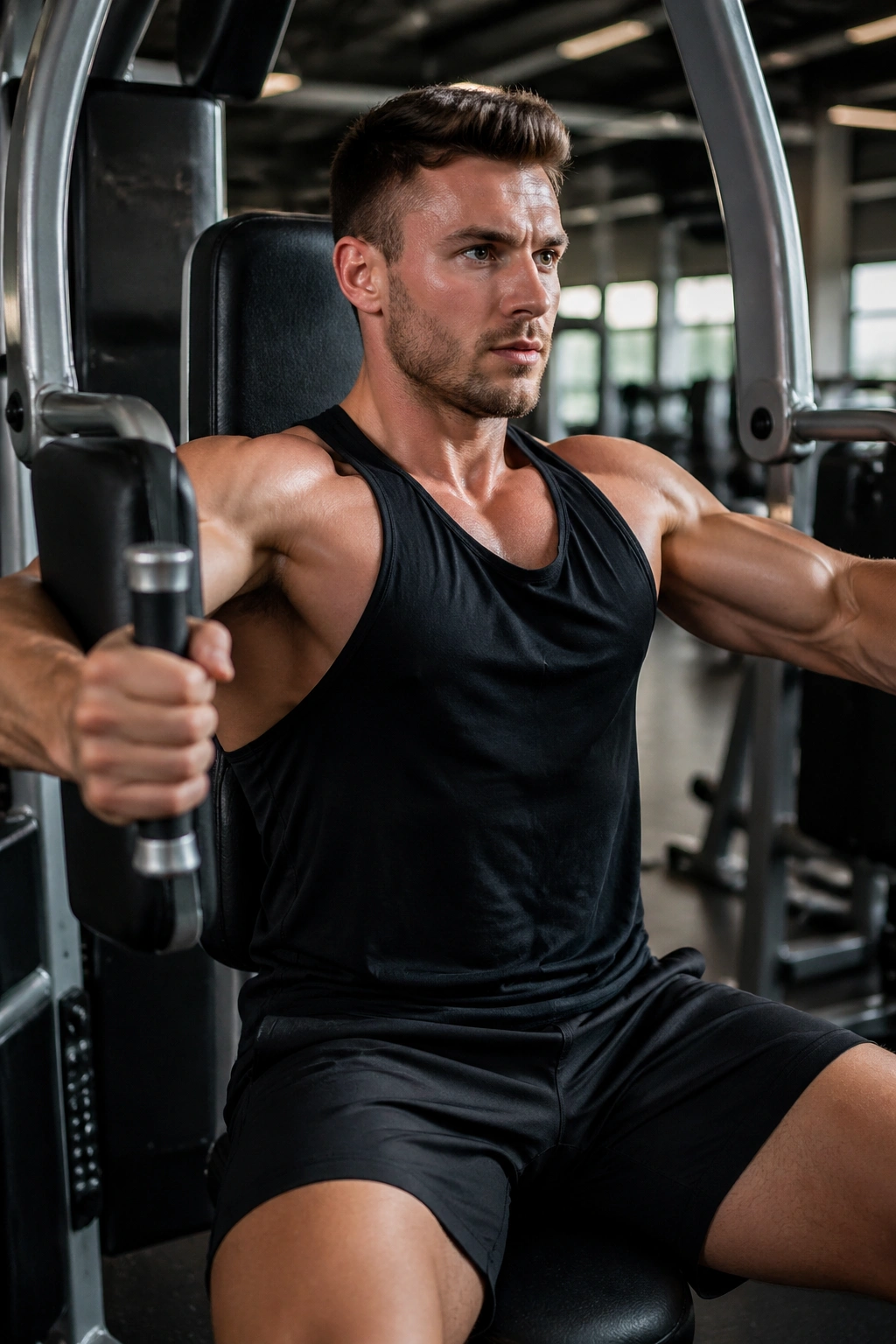
The pec deck has a bad reputation in some gyms, mostly from people who turn every rep into a shoulder yawn with the stack pinned too heavy. Done right, it’s a clean chest isolation drill. Done wrong, it feels like your shoulder is being asked to file a complaint.
I like the pec deck because it removes a lot of balance issues. You sit down, set your shoulders back gently, and let the pads guide the arms through a fixed path. That makes it easier to focus on the squeeze across the chest instead of the noise everywhere else.
A good pec deck rep should feel like the front of the chest lengthens on the way back and contracts hard as the handles come together. You do not need to smash the pads together with violence. A controlled close is enough.
Use 2 to 4 sets of 12 to 15 reps. If your elbows dip too low or your shoulders roll forward at the back of the rep, shorten the stretch. That little adjustment saves a lot of irritation.
11. Landmine Press on a Friendlier Angle
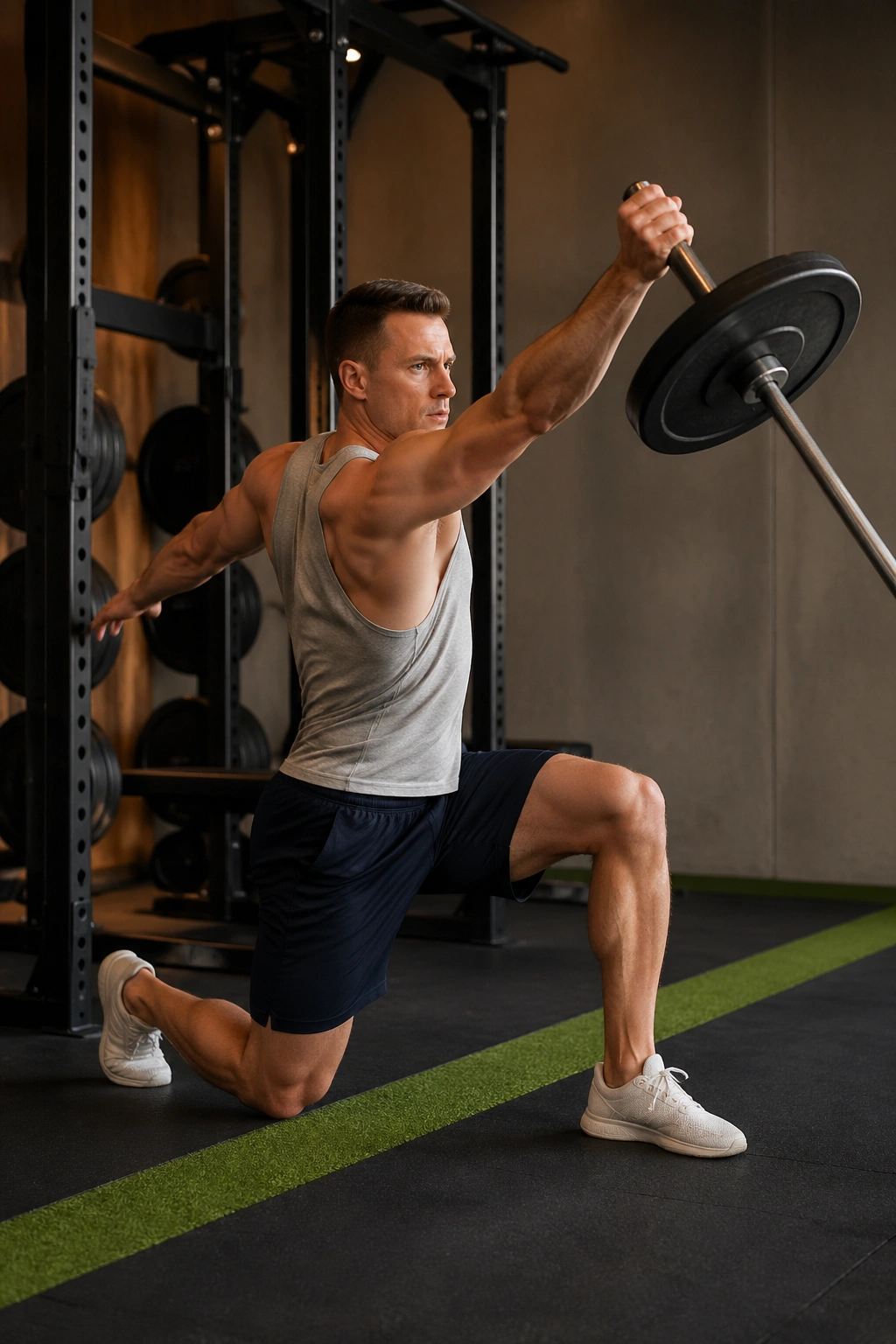
Not every chest workout looks like a chest workout. The landmine press proves it. The angled bar path gives you a pressing line that’s easier on the shoulders than a straight-overhead or flat barbell press, and that can be a nice middle ground for people who want power without feeling beat up.
I like the half-kneeling version best. One knee down, front foot planted, ribs stacked. You press the bar up and forward, which forces the upper body to stay organized instead of leaning back and stealing the rep with the low back.
This is a sneaky-good choice for posture because it asks for control through the trunk. The chest still works, but the whole front side has to stay connected. That matters.
Do 3 to 4 sets of 6 to 10 reps per side. Keep the wrist straight, reach at the top, and stop the set when the ribs start flaring. The goal is a strong press, not a dramatic arch.
12. Decline Push-Up for Harder Bodyweight Pressing
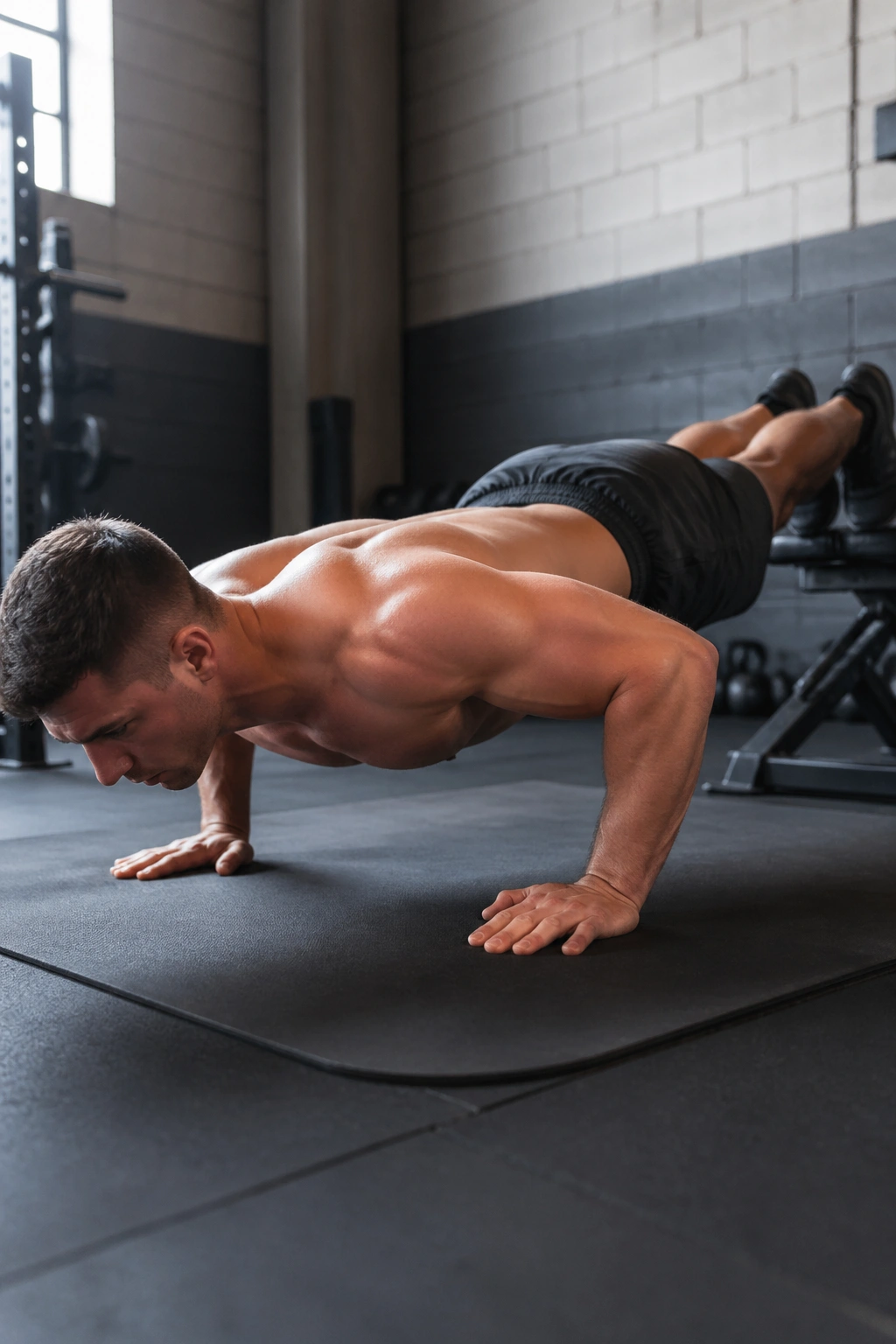
Why choose decline push-ups when flat ones already hurt? Because the feet-up version shifts more work toward the upper chest and front delts, and it asks for a tighter body line. That tighter line is what makes the move useful for posture.
Put your feet on a box or bench about 12 to 18 inches high. Hands stay under the shoulders. Lower with control until your chest gets close to the floor, then press back up without letting the hips sag. The higher foot position makes the rep harder, but it also gives you a clearer chance to feel whether your torso stays rigid.
How to use it
A slow negative changes the whole feel. Try 3 seconds down, 1 second pause, then drive up hard. That pace keeps the shoulders from bouncing through the bottom and gives the chest more time under tension.
If the lower back starts dipping, the set is done. I’d rather see six clean reps than twelve ugly ones. 3 sets of 6 to 12 reps is a good target.
13. Chest Dips With Enough Respect for the Shoulder
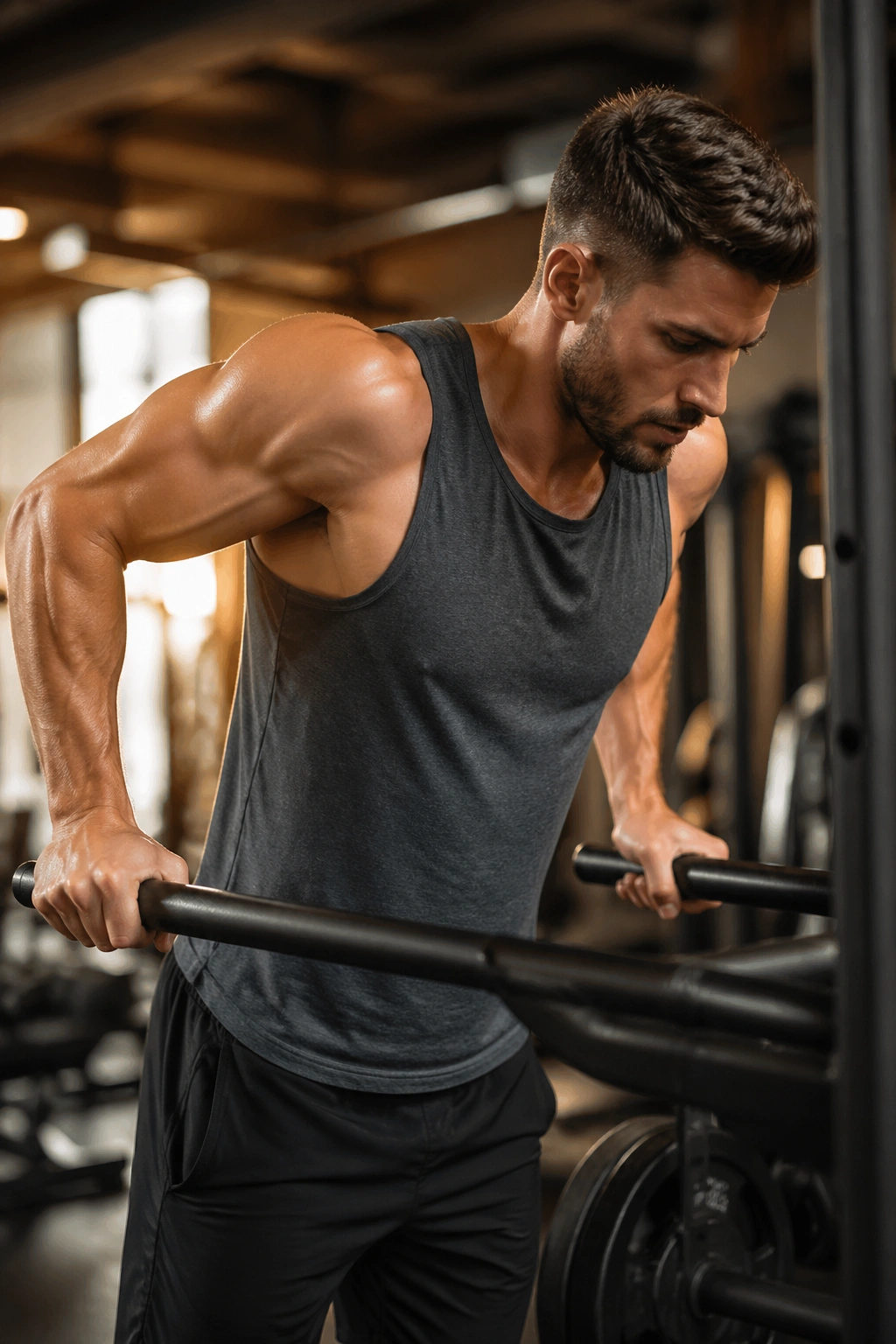
Chest dips can build a dense, thick-looking chest. They can also irritate the front of the shoulder if you rush the depth or let the body turn into a hanging shrug. So yes, they belong on this list. No, they’re not a casual first-date exercise.
The key is a slight forward lean, elbows tracking back at a comfortable angle, and a descent that stops before the shoulders feel yanked. Going deeper is not a badge of honor. Past a certain point, you’re just collecting joint stress.
A short reality check
- Use a controlled dip bar or assisted dip machine if needed.
- Keep the chest open, not puffed to the point of rib flare.
- Think “lower under control,” not “plunge.”
- Stop the set if the shoulder feels sharp at the bottom.
2 to 3 sets of 5 to 8 reps is enough for most people. If bodyweight dips feel sloppy, use assistance and keep the range clean. Strong posture is built with good positions, not macho depth.
14. Tempo Push-Up for Control You Can Feel
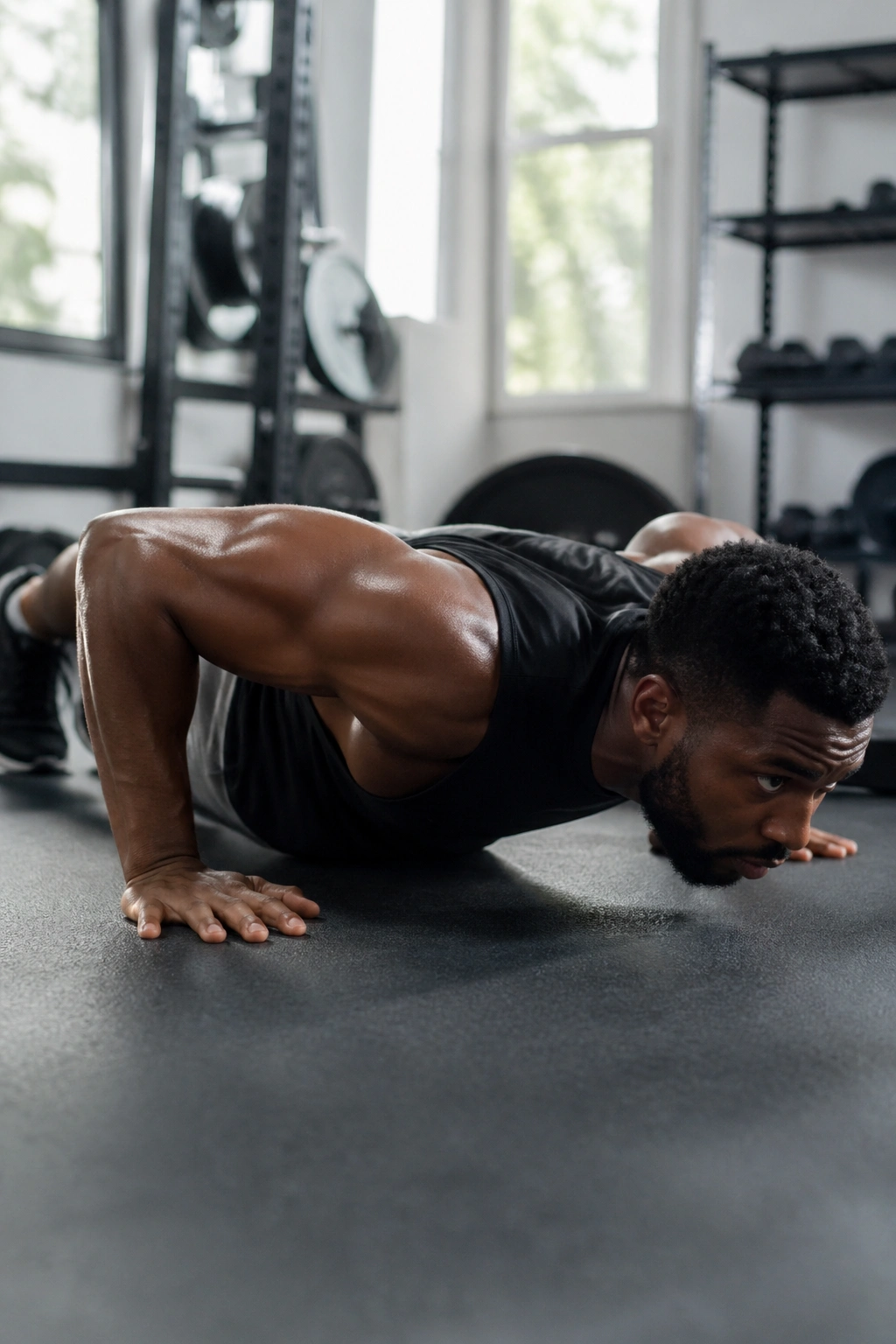
Tempo push-ups are what happen when a basic movement grows up. Same pattern. Much more control. And the slower pace makes every sloppy habit obvious.
Here’s the difference: a fast push-up lets momentum hide weak bracing. A tempo push-up does not. Lower for 3 to 4 seconds, pause just off the floor for a beat, then press up with purpose. That little pause tells you whether your chest, triceps, and core can actually hold the line.
What to feel
Your chest should feel loaded near the bottom, not your lower back. Your hands should stay planted, your neck relaxed, and your body moving as one piece. If the hips rise first, you’ve lost the rep. If the head dives ahead of the chest, same problem.
I like tempo push-ups as a finisher after heavier pressing because they expose the gaps. They also build patience, which is not a flashy quality but does a lot for posture. 3 sets of 6 to 10 reps is plenty when the tempo is honest.
15. Band-Resisted Push-Up to Finish Strong

A band-resisted push-up adds tension where a regular push-up gets easiest: near the top. That top-end resistance matters because it teaches you to finish the press with force, not just survive the bottom. It also gives the chest one more clean dose of work without needing a bench or a stack of plates.
Loop a resistance band across your upper back and anchor the ends under your palms. The band should feel snug at the bottom and noticeably tighter as you lock out. If the band is too light, you’ll barely notice it. Too heavy, and the whole thing turns into a spinal wrestling match. Find the middle.
A simple way to program it
- Do 3 sets of 6 to 10 reps.
- Keep your ribs down.
- Pause for 1 second at the bottom.
- Press fast, but not wild.
- Stop before your lower back starts cheating.
The band-resisted push-up is a nice last exercise because it leaves you with a pumped chest and a braced torso. If your first move is the incline dumbbell press and your last move is this, you’ve covered both ends of the spectrum: control and finish. That’s a smart chest day.
A little honesty here. If your posture is really poor, no chest routine can paper over hours of slumping, tight pec minor, and weak upper-back work. But these chest workouts can help a lot when they’re done with clean mechanics. Pick four or five, train them well, and let the better positions show up in the mirror before they show up in a photo.
And if you want the simplest possible chest day, make it this: incline dumbbell press, push-up plus, and tempo push-up. That trio covers strength, control, and bodyline without beating your shoulders into the floor. Stick with that long enough to own the positions, and your upper body starts to look and feel more awake.
