



Arm workouts to lose stubborn arm fat sound simple until you try them and realize the back of the upper arm is often the last place to tighten up. The fix is not endless wrist curls or random light dumbbell flurries. You need movements that build the triceps, shoulders, back, and grip while your overall training nudges body fat downward.
That last part matters. You cannot spot-reduce fat from one exact patch, and I’d rather say that plainly than pretend a few arm circles will melt anything off. What arm training does well is build shape under the soft tissue, improve muscle tone, and burn enough energy that the whole upper body starts looking sharper.
The workouts below mix heavy presses, smart pulls, bodyweight work, band drills, and a few higher-rep finishers. That mix is deliberate — the arms respond well to both load and density, especially when the rest periods don’t drift into phone-scrolling territory.
If you want slimmer-looking arms, pick a handful of these moves, train them hard two or three times a week, and keep the reps honest. Start with the first one; it’s the kind of push-up that does more than most people think.
1. Close-Grip Push-Ups for Stubborn Arm Fat
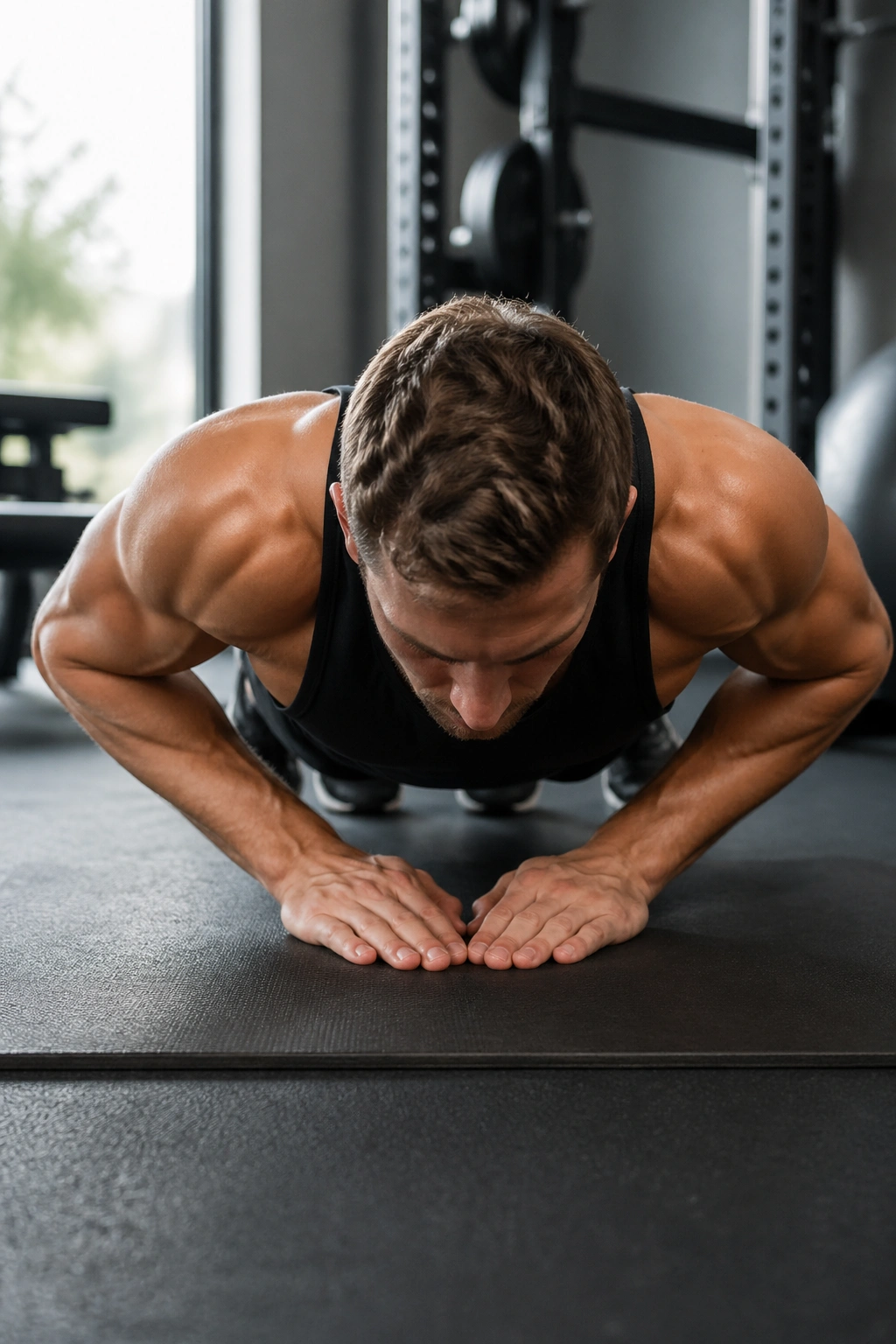
Close-grip push-ups are one of the cleanest ways to hit the triceps while still working the chest and shoulders. They look simple. They are not easy when you do them well.
Why It Works
A narrow hand position shifts more of the load into the back of the upper arm, which is exactly where a lot of people want more firmness. Your core has to stay tight too, so you’re not just training the arms in isolation; you’re training the whole front of the body under tension.
A lot of people cheat these by flaring the elbows or turning them into a half-range shrug. Don’t. Keep your hands just inside shoulder width, brace your middle, and lower until your chest is an inch or two from the floor.
Quick Form Check
- Place your hands just inside shoulder width.
- Keep your elbows angled about 30 to 45 degrees from your sides.
- Lower under control for 2 to 3 seconds.
- Press up until your arms are straight, without locking out hard.
Best rep range: 6 to 15 reps, for 3 to 4 sets.
One useful trick: elevate your hands on a bench if full floor reps make your lower back sag.
2. Standing Dumbbell Overhead Press
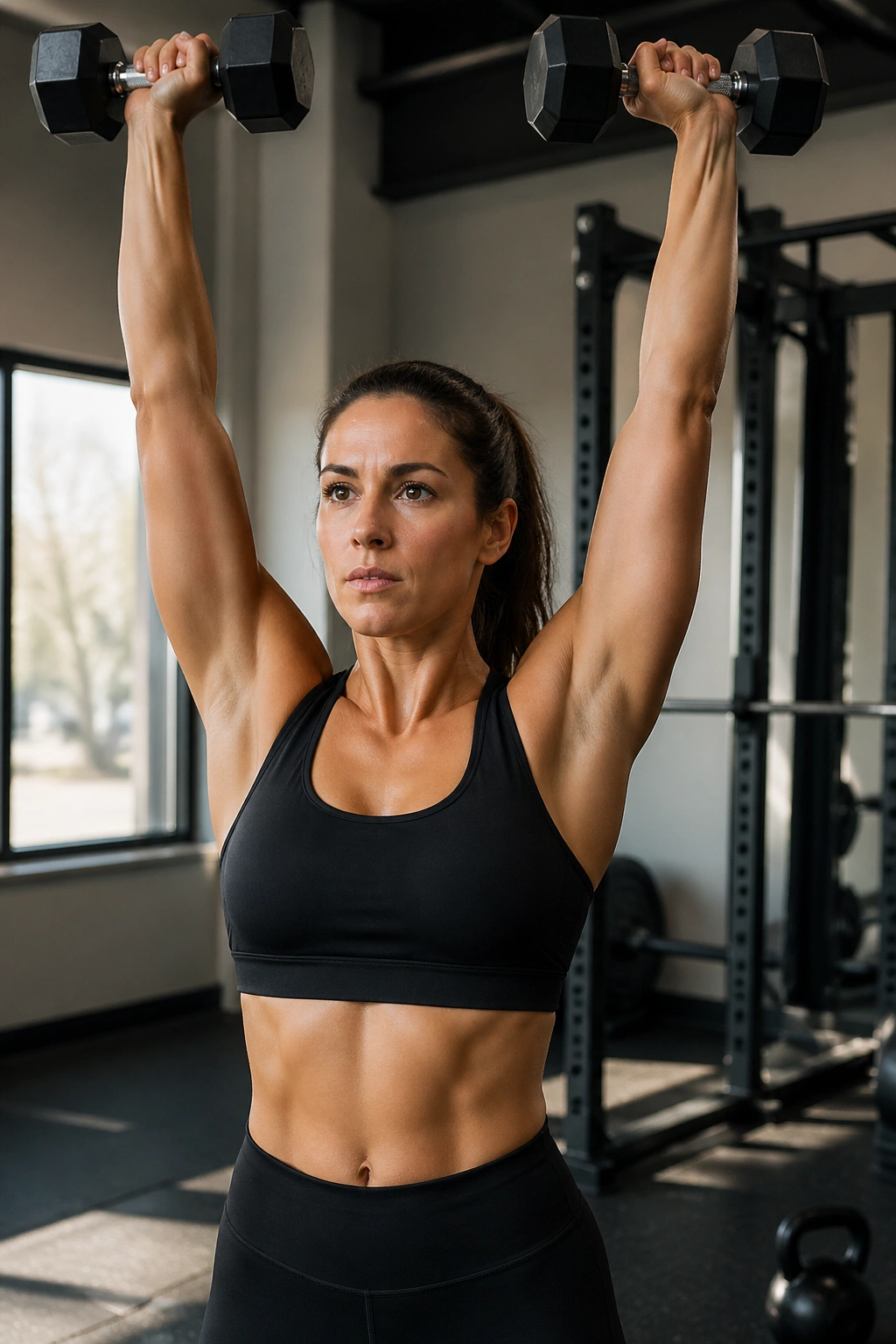
If you only choose one dumbbell move for arm fat loss support, make it this one. The standing overhead press loads the shoulders and triceps in a way that carries over into almost every other upper-body movement.
Standing matters. A seated press can be fine, but standing forces your core, glutes, and upper back to stay switched on. That means more total work, which is exactly what you want when the goal is leaner-looking arms instead of just a tired pump.
Keep the dumbbells at shoulder height, squeeze your glutes, and press in a slight arc so the weights finish over the middle of your feet. If your ribs flare like you’re trying to show off your shirt, the load is too heavy or the set is getting sloppy.
A lot of people chase numbers here and end up turning the press into a backbend. Don’t do that. Use a weight you can move for 6 to 10 controlled reps for 3 to 5 sets, and leave one clean rep in the tank. The arms will get more from that than from ugly heaving.
3. Bent-Over Dumbbell Row for Leaner Arms
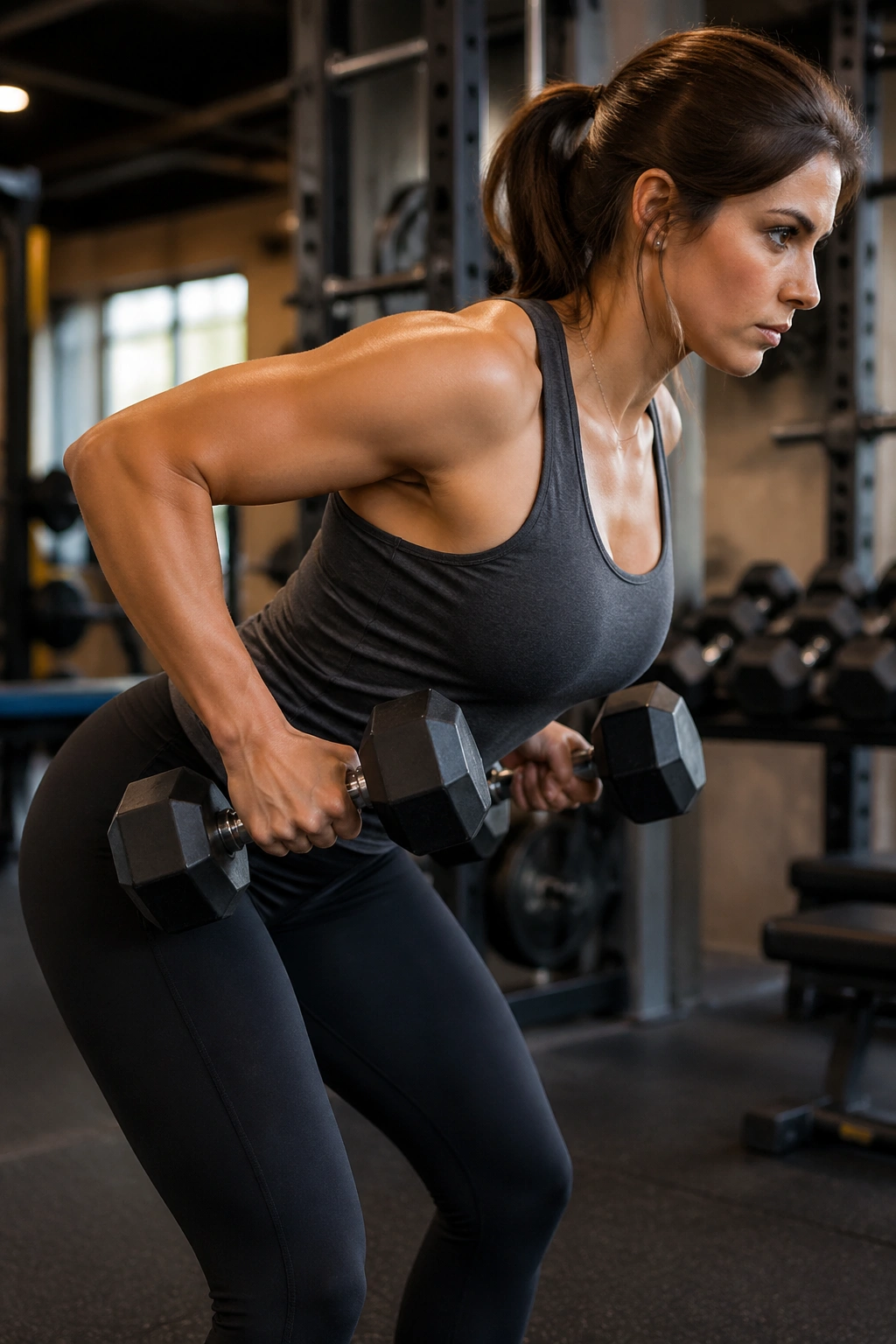
Why put a back exercise in an arm workout? Because your arms do not exist alone. Rows build the biceps, the rear shoulders, and the upper back, and that upper-back work changes how the whole arm sits against your side.
How It Helps the Arms Look Better
A stronger upper back improves posture, which matters more than people admit. When your shoulders round forward, the upper arm often looks softer. When your back is stronger and your shoulder blades sit where they should, the arm line looks cleaner even before you lose much fat.
Hinge at the hips until your torso is about 45 degrees to the floor, let the dumbbells hang under your shoulders, and pull the elbows toward your hips. Pause for one second at the top. That pause is the part many people skip, and it’s where the work actually lands.
How to Use It
- Choose a pair of dumbbells you can row for 8 to 12 reps with control.
- Keep your neck long and your chest slightly open.
- Pull without jerking the weight off the floor.
- Lower fully until your arms straighten.
If your lower back starts doing the job, you’re using too much load or standing too upright. Both fixes are easy. Both matter.
4. Bench Dips That Light Up the Triceps
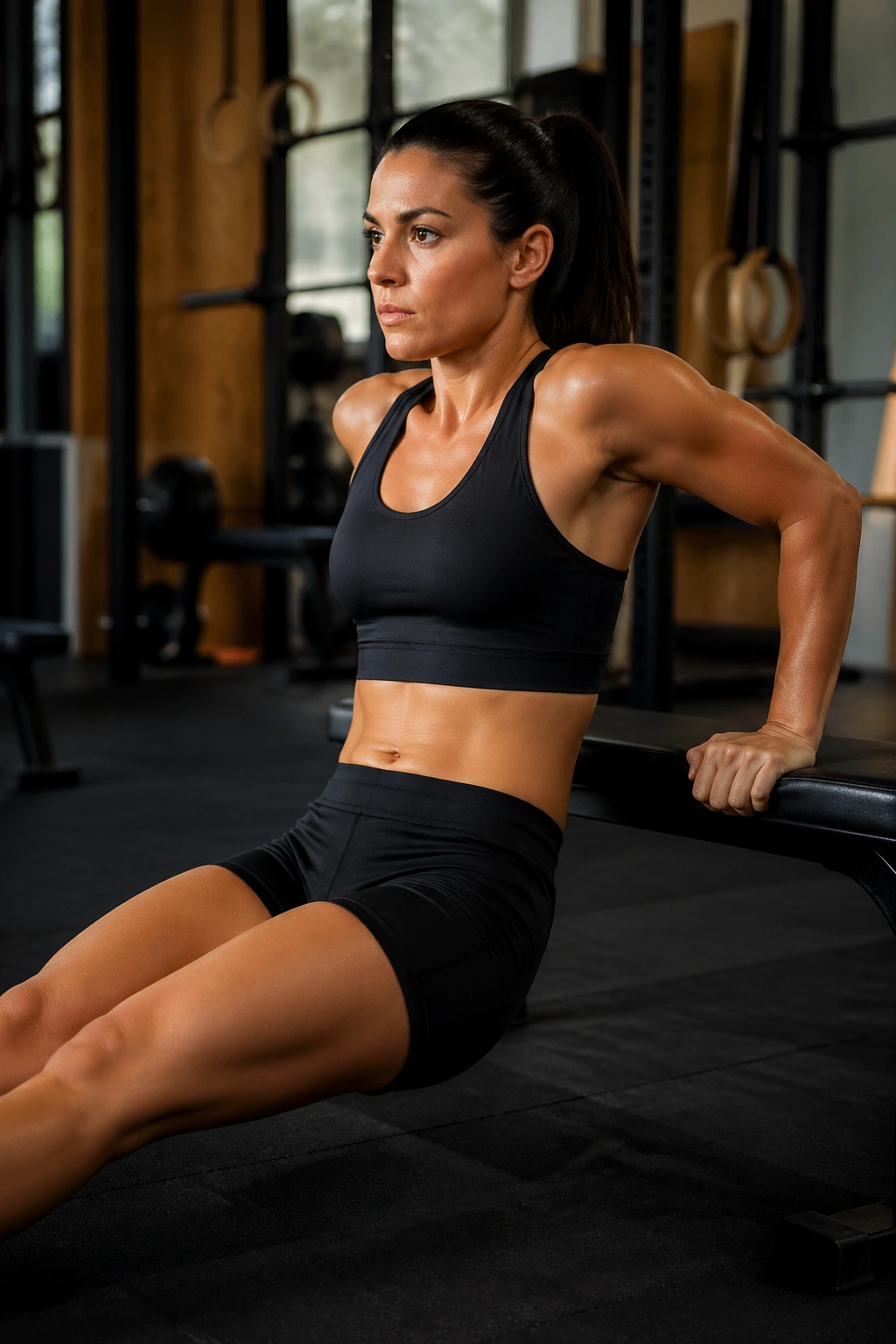
Bench dips can feel brutal fast, and that is exactly why they show up on so many good upper-body routines. They hammer the triceps in a short range of motion, which makes the back of the arm light up in a hurry.
Picture the back of your upper arm after a clean set of 12. That tight, slightly shaky feeling? That’s the point. You’re loading the triceps hard while asking your shoulders to stay stable.
What to Watch For
- Keep your hands on a bench, box, or sturdy chair.
- Walk your feet out only as far as you need.
- Drop until your elbows reach about 90 degrees, not deep past that.
- Press through the palms and keep your shoulders away from your ears.
Too deep is the mistake here. People think a bigger range is always better, then wonder why the front of the shoulder complains. It isn’t worth it. A controlled half to three-quarter dip with good posture will do more for your arms than a sloppy deep dip ever will.
If bench dips bother your shoulders, swap them for close-grip push-ups or floor triceps extensions. No drama. Better choices exist.
5. Hammer Curls for Arm Fat Loss
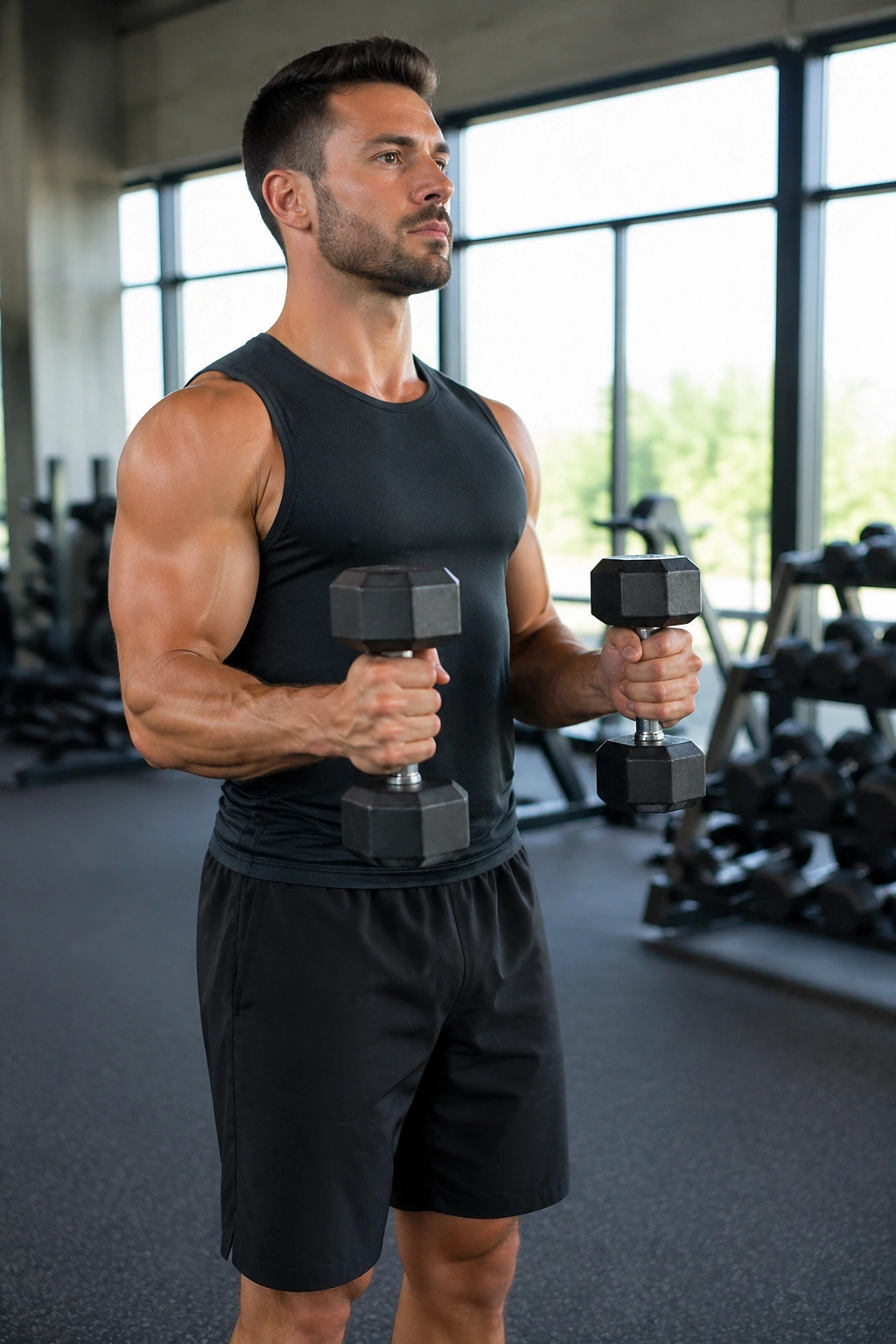
Hammer curls do something regular curls don’t always do: they thicken the side of the arm. That comes from hitting the brachialis, the muscle that sits underneath the biceps, along with the forearm muscles that help your grip and arm shape.
This is one of those exercises that looks boring until you do it right. Then the last few reps start feeling heavy in a way that makes your forearms buzz and your upper arms feel packed.
Keep your palms facing each other, your wrists straight, and your elbows pinned close to your sides. The temptation is to swing the dumbbells up with your body. Don’t give in. A tiny lean-back steals work from the arm and dumps it into your lower back, which is a bad trade.
I like hammer curls in the 8 to 12 rep range for strength and size, or 12 to 15 reps if you want a little more burn at the end of a workout. Use a slow lower, about 2 seconds down, and you’ll feel why this move earns its spot.
6. Renegade Rows for the Core and Arms
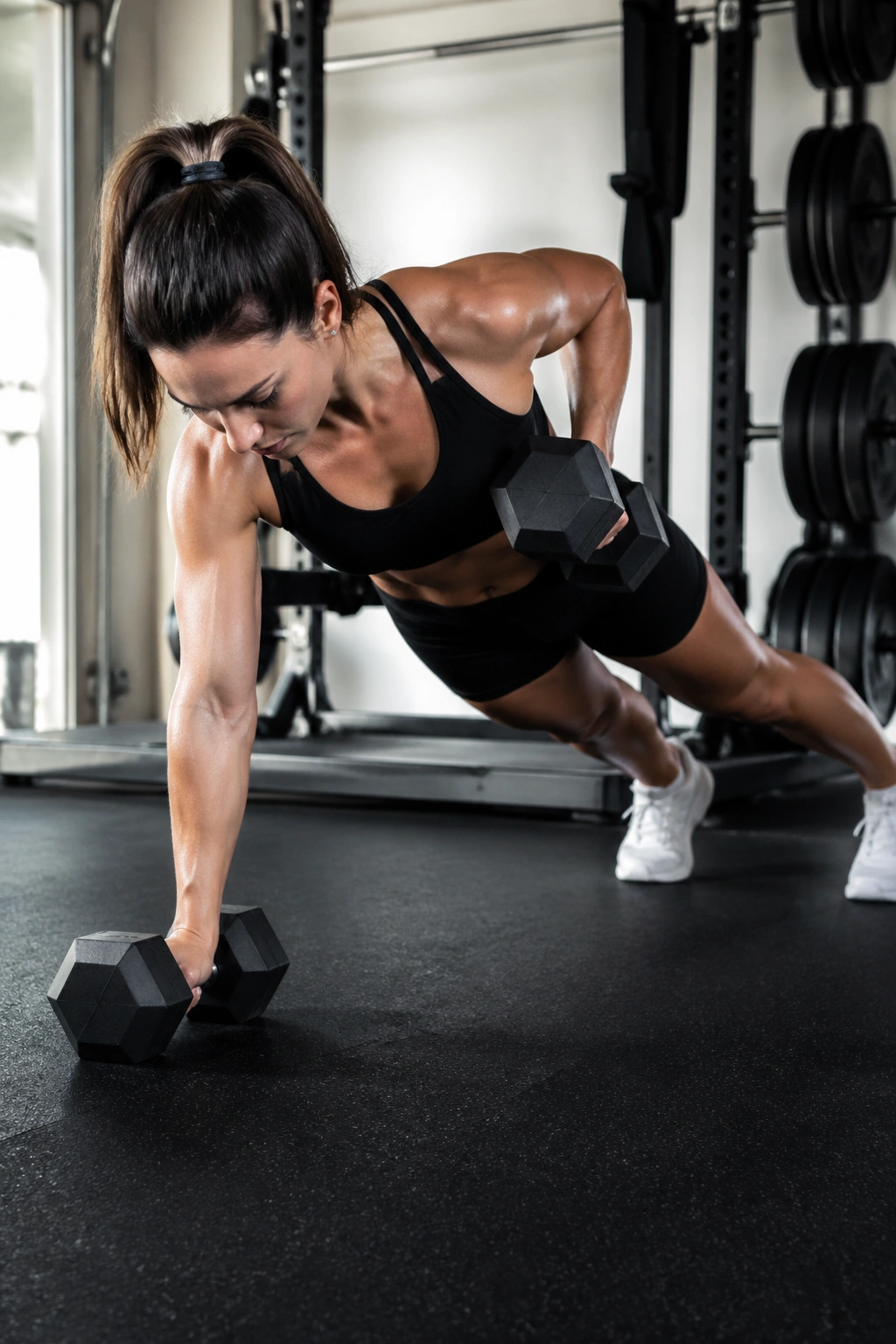
Unlike a plain dumbbell row, the renegade row makes your core fight to keep your body from twisting. That matters more than it sounds. When the torso stays quiet, the arm and back have to work cleanly.
What Makes Them Different
You start in a high plank with your hands on dumbbells, feet wide for balance, and row one dumbbell without letting the hips rock. The anti-rotation challenge is the sneaky part. It turns a simple pull into a full upper-body drill.
Best case? You get stronger arms and a tighter midsection at the same time. Worst case? You let your feet stay too narrow, your hips swivel like a door hinge, and the row turns into a mess. Widen your stance a little and use a lighter weight than you think you need.
How to Use It
- Do 6 to 8 rows per side.
- Keep your feet wider than hip width.
- Tap the dumbbell to the floor softly before each rep.
- Move slowly enough that your torso does not spin.
This is not the move to chase fatigue with sloppy form. It’s a control exercise first. A hard one, sure, but still a control exercise.
7. Lateral Raise Ladders for Cleaner Shoulder Lines
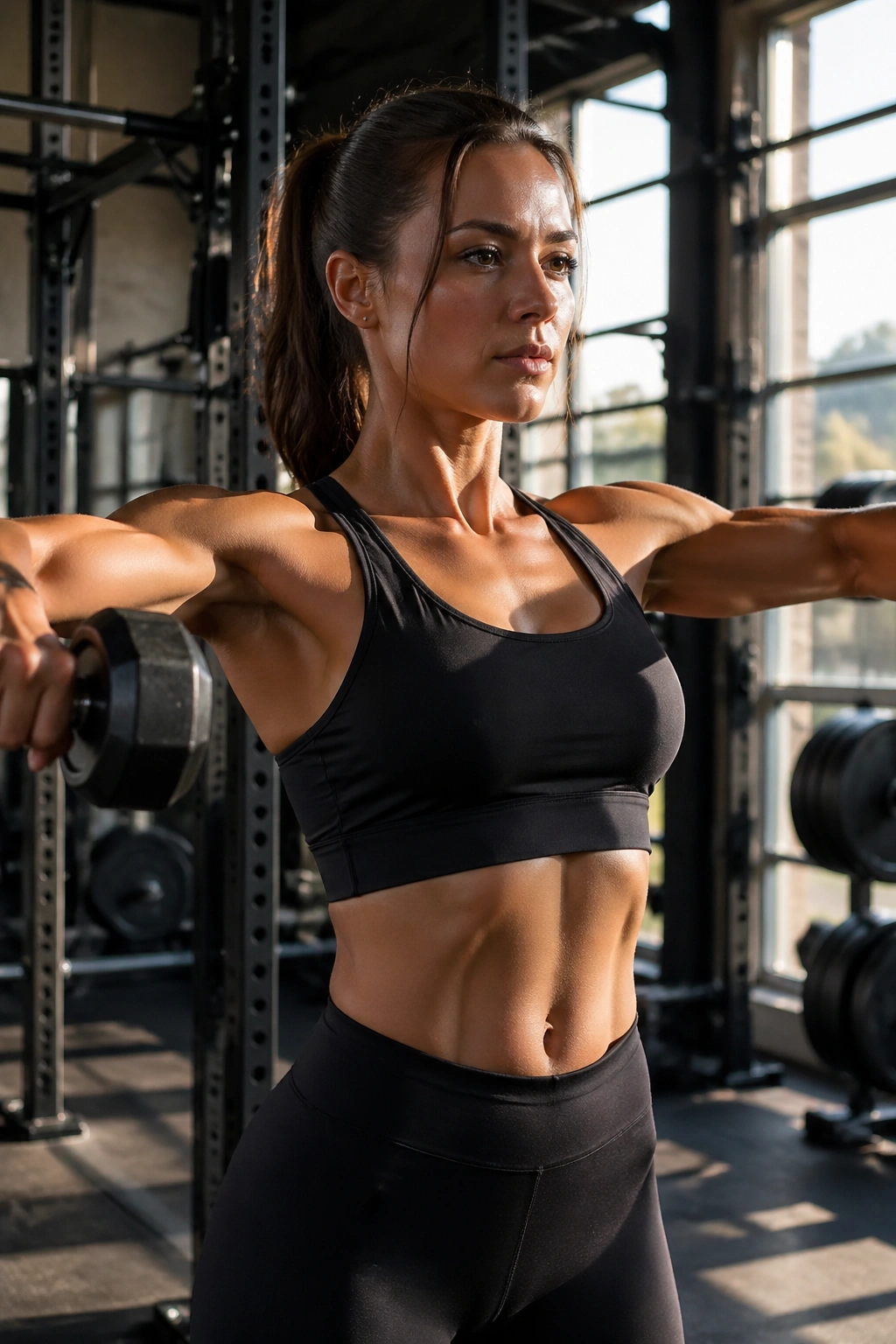
Lateral raises don’t look dramatic from across the room. Then you try them for real and feel the side of the shoulder start burning after 10 careful reps.
That side delt work matters because broader, rounder shoulders make the arms look firmer and more defined. It’s a visual trick, sure, but a useful one. A little shoulder width changes the whole frame.
A Simple Ladder
Try a ladder like this with light dumbbells:
- 12 reps
- Rest 15 seconds
- 10 reps
- Rest 15 seconds
- 8 reps
Use the same weight for the whole ladder if you’re new. If you’re stronger, bump the weight slightly on the final set and keep the range strict.
The common mistake is shrugging the shoulders up toward the ears. That turns a side raise into a neck exercise, which nobody asked for. Keep a tiny bend in the elbows, lift to shoulder height, and stop there. Higher is usually worse.
Good lateral raises should feel smooth, not jerky. If you have to swing, the dumbbells are too heavy.
8. Arnold Press for Arm Fat Loss
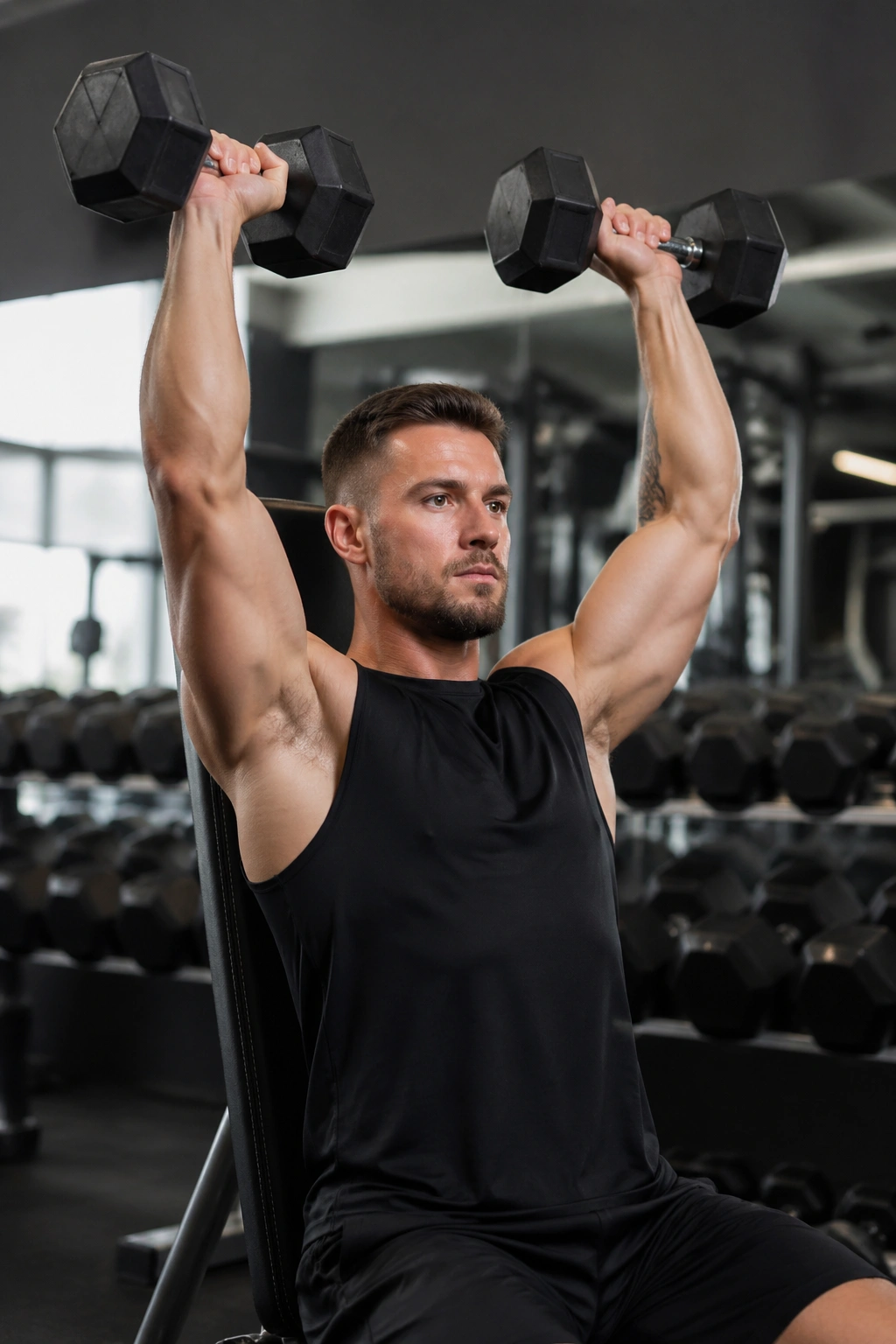
The Arnold press is what I reach for when a standard shoulder press starts feeling stale. The rotation makes the move longer and a little more awkward, which means the shoulders and triceps have to stay honest.
Start with the dumbbells in front of your face, palms toward you, elbows tucked in. As you press, rotate the hands so the palms face forward at the top. That twist gives the shoulders a fuller job, and the triceps still have to finish the press.
A lot of people turn this into a circus by using too much weight. Not worth it. Go lighter than your ego wants and keep the motion smooth. You should feel the shoulders working through the middle of the rep, not the lower back trying to save the day.
For most lifters, 3 sets of 8 to 10 reps is plenty. If your wrists feel cranky, shorten the rotation a bit and keep the elbows under control. Clean motion beats fancy motion every time.
9. Triceps Kickbacks With Strict Control
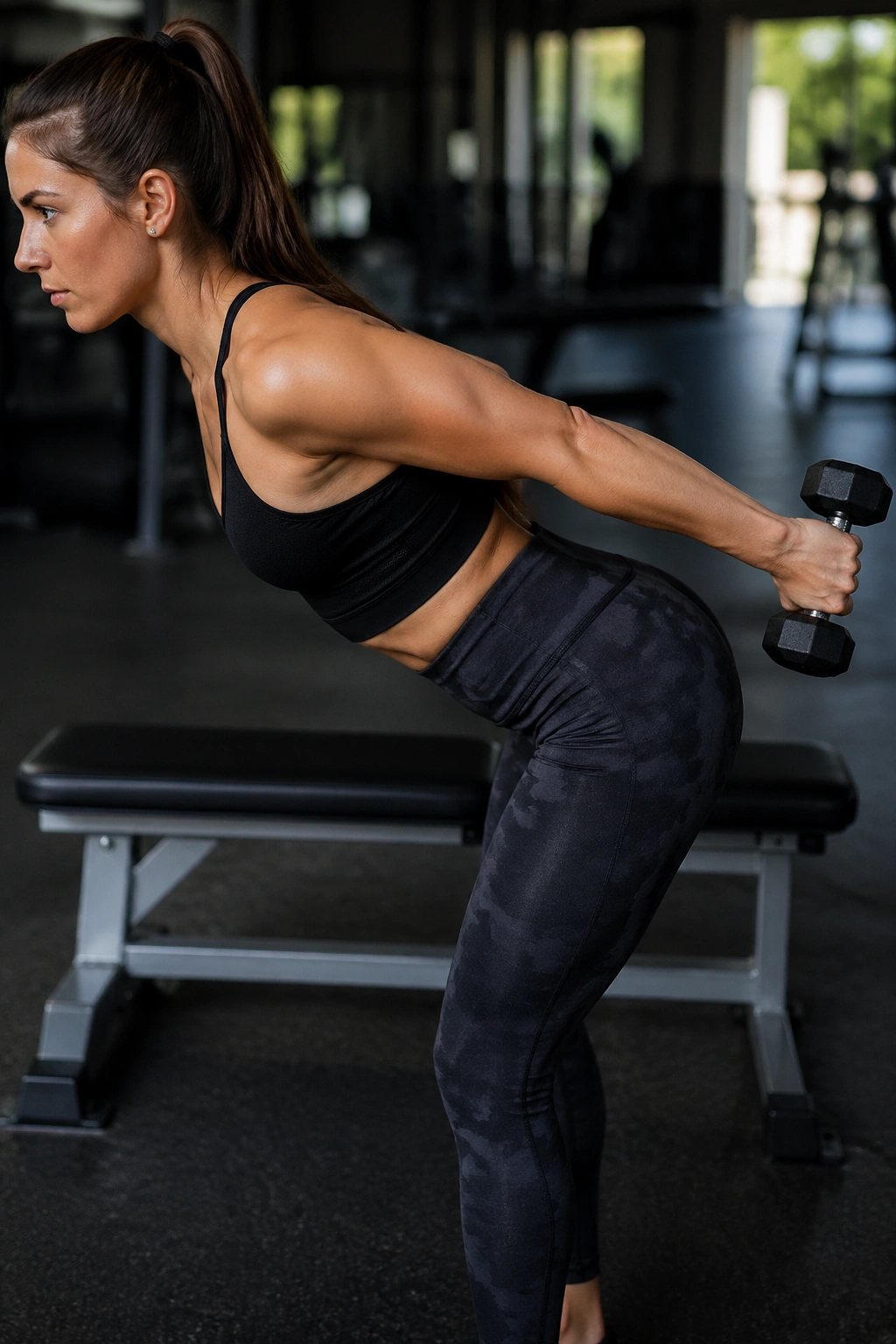
Why does such a small movement burn so much? Because the triceps get very little help here. Once your upper arm is fixed in place, the only real way to finish the rep is to straighten the elbow and squeeze hard.
How to Get It Right
- Hinge at the hips until your torso is near parallel to the floor.
- Keep your upper arm glued to your side.
- Extend the dumbbell back until the arm is straight.
- Pause for a beat at the top.
The mistake is easy to spot. People swing the weight, let the elbow drift, and turn a kickback into a weird rowing motion. That steals tension from the triceps and makes the rep sloppy. Drop the weight if that happens. Seriously.
Best Rep Range
Kickbacks shine in the 12 to 20 rep range because the load is small and the form has to stay strict. Use them after heavier work, not as your main strength move. They’re a finisher, and a good one.
If you want your arms to feel tight by the end of a session, this move earns its place.
10. Curl-to-Press Combinations for Faster Arm Burn
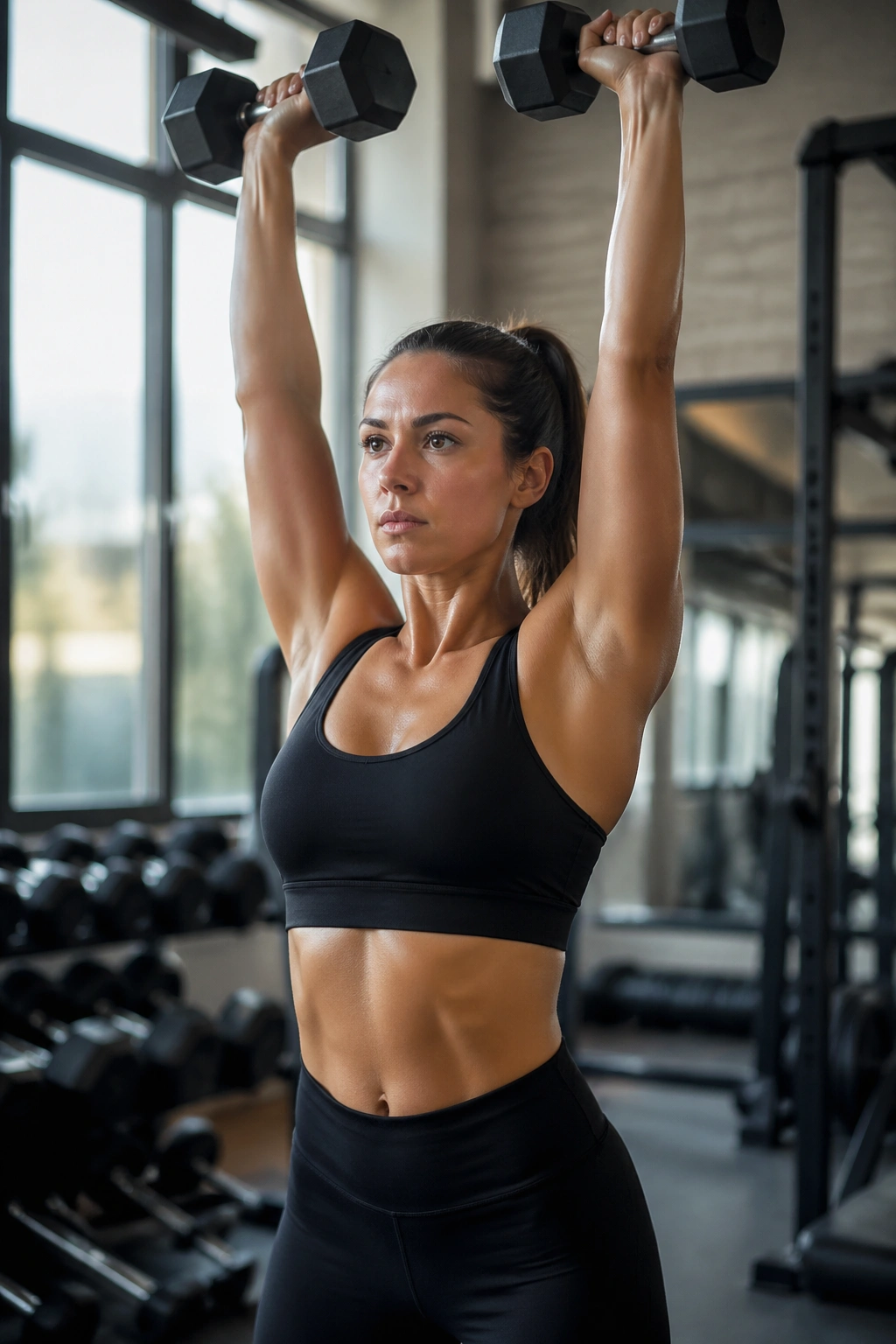
When you’ve got one pair of dumbbells and maybe 15 minutes, the curl-to-press combo is hard to beat. It links a biceps curl straight into an overhead press, so the arms never get much of a break.
That constant work drives the heart rate up, which is helpful when you’re chasing fat loss and not just arm size. It also forces the transition from elbow flexion to shoulder pressing, and that transition is where weak links show up fast.
Use a weight that lets you curl without jerking and press without leaning back. If the second half of the move turns into a lower-back bend, the dumbbells are too heavy. You want a clean lift from floor to overhead, not a fight with your spine.
A solid prescription is 8 to 10 reps for 3 rounds, resting 45 to 60 seconds between rounds. It’s one of those exercises that feels almost too simple until the last set, when your shoulders and biceps start talking back.
11. Plank Shoulder Taps That Steady the Whole Upper Body
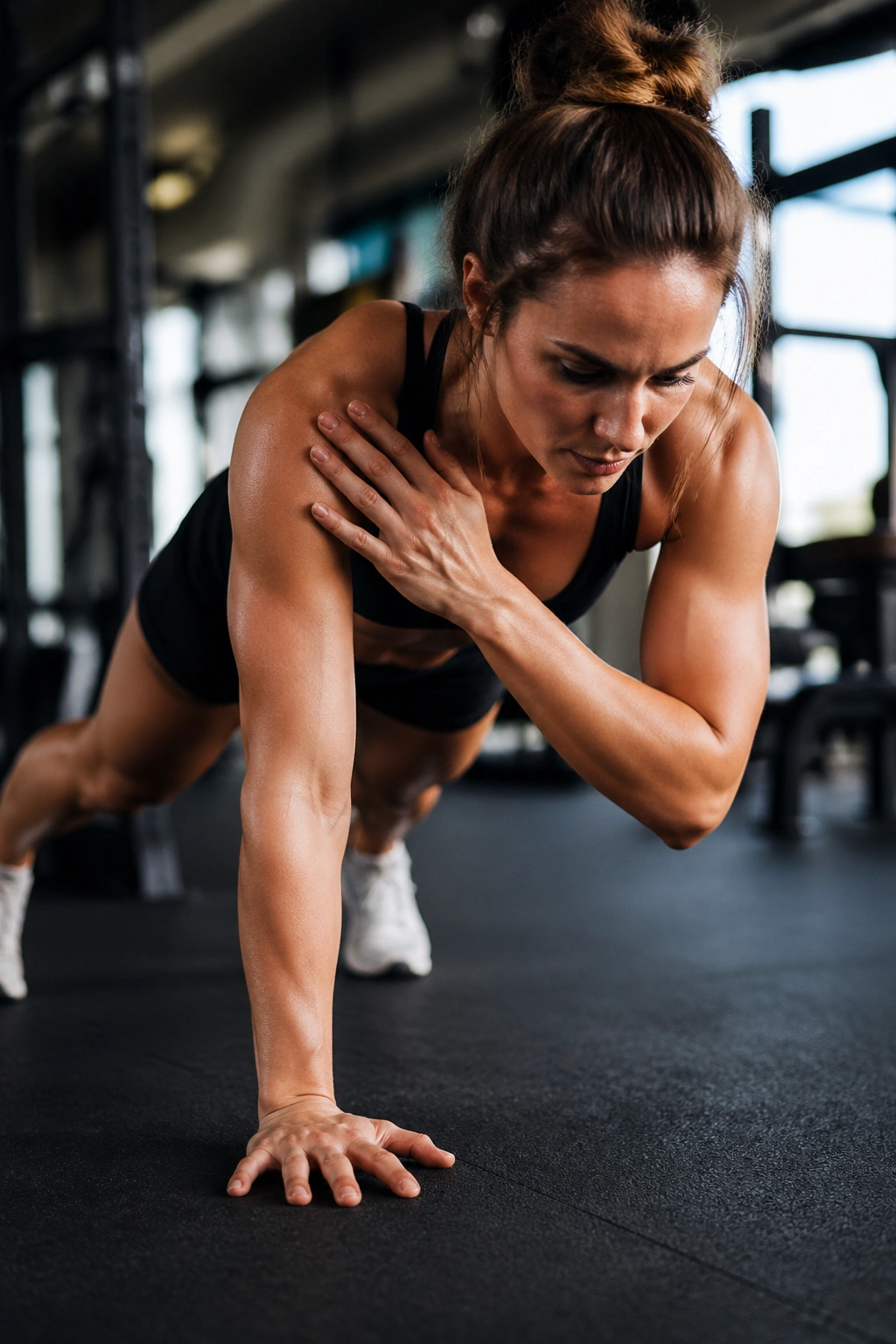
Plank shoulder taps look easy for about six seconds. Then your hips start to sway, your feet shuffle, and the whole body reminds you that the arms don’t get to work alone.
This move trains shoulder stability, core control, and the small muscles that keep the upper body from wobbling under load. That stability matters because unstable shoulders make every pressing and pushing exercise worse. You might not feel it right away, but the payoff shows up in better push-ups, cleaner presses, and less wasted effort.
What to Focus On
- Start in a high plank with feet a little wider than hip width.
- Tap one shoulder with the opposite hand.
- Pause long enough to stop the hips from rocking.
- Keep breathing; don’t hold your breath through the whole set.
A good target is 20 taps total, or 10 per side, for 3 to 4 rounds. If your lower back starts sagging, shorten the set and reset. Quality matters more than speed here.
One sharp note: this is not a chest-chasing push-up variation. It’s a control drill. Treat it that way and it pays off.
12. Band Straight-Arm Pulldowns for Home Arm Training
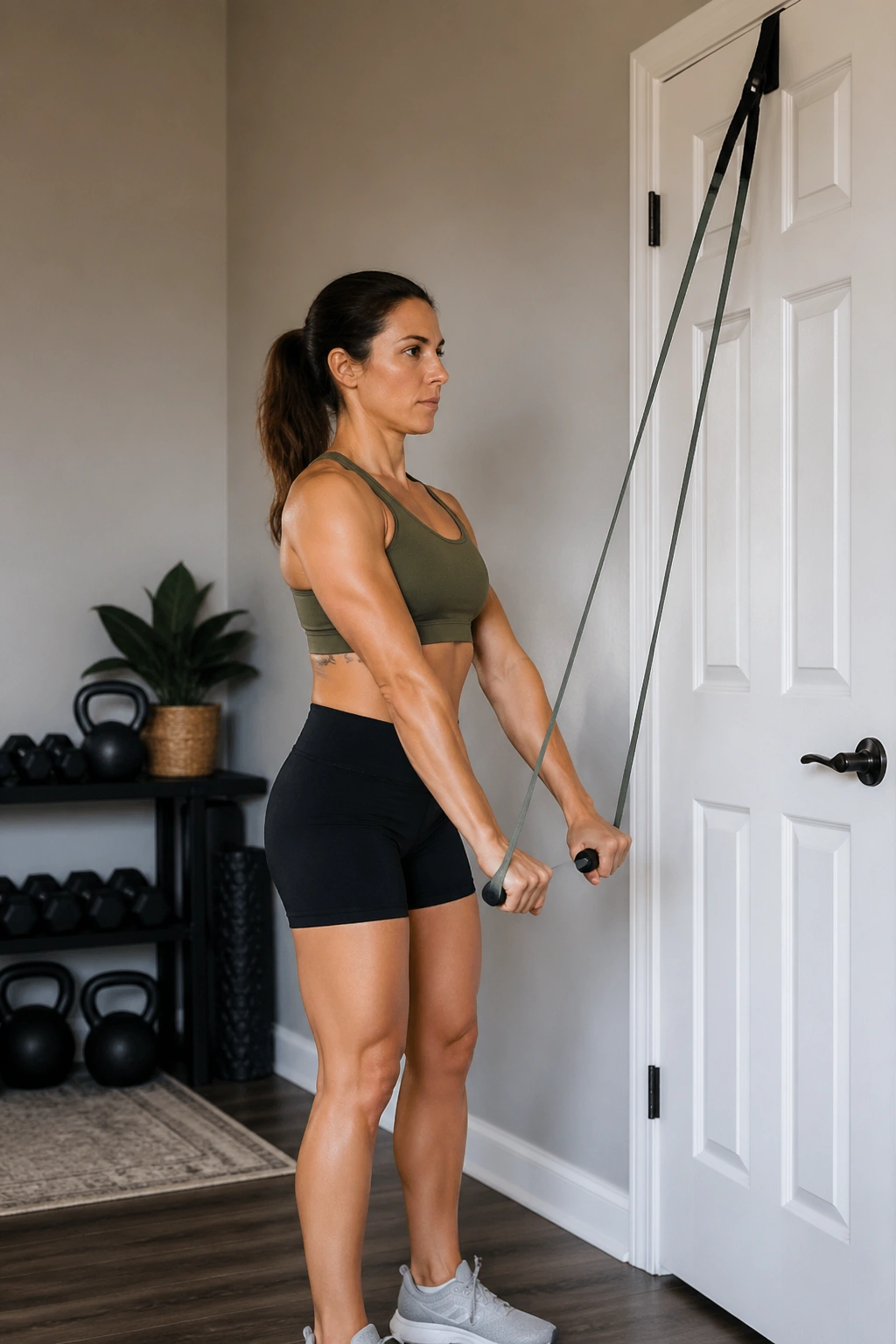
Bands are underrated for arm work because they let you keep tension through the whole rep. The straight-arm pulldown is a nice example: the elbows stay almost fixed, the lats and triceps share the work, and the top of the movement never gets a lazy rest.
Why I Like It
Unlike a row, which bends the elbows, this move keeps the arms long and makes the upper body work in a different pattern. That’s useful if your pressing volume is high and your shoulders need some cleaner pulling.
Anchor the band overhead, step back until there’s real tension, hinge slightly, and pull your hands down toward your thighs. Your arms should stay almost straight the whole time. If the band is so loose that you can barely feel it, step farther back or move to a thicker band.
Good Setup Details
- Use 15 to 20 reps.
- Keep the ribs down and chest tall.
- Squeeze the lats for one second at the bottom.
- Control the return instead of letting the band snap back.
This is one of the best home moves for people who want arms that look tighter without loading the joints too hard. Quiet exercise. Real burn.
13. Shadow Boxing Intervals for Arm Fat Burn

Three minutes of crisp shadow boxing can leave your shoulders and arms more tired than a whole pile of lazy curls. That’s because the punches repeat fast, the guard stays up, and the shoulders never fully relax.
Why It Works
Shadow boxing isn’t just cardio dressed up as boxing. It trains the delts, triceps, forearms, and upper back while keeping the heart rate high enough to matter. If fat loss is part of the goal, that combination is gold.
Keep the punches sharp rather than wild. Jab-cross, jab-cross-hook, slip, reset, repeat. The hands should travel fast, but your shoulders should stay relaxed between strikes. Tight fists and a stiff neck will wear you out faster than the punches themselves.
Easy Round Structure
- Work 2 minutes
- Rest 30 seconds
- Repeat for 6 to 8 rounds
If you want more challenge, add light hand weights under 1 pound or just move faster on the last 30 seconds of each round. I’d rather see clean punches than heavy, sloppy ones. The clean work lasts longer, and the joints like it better.
14. Push-Up Plus for Better Shoulder Control
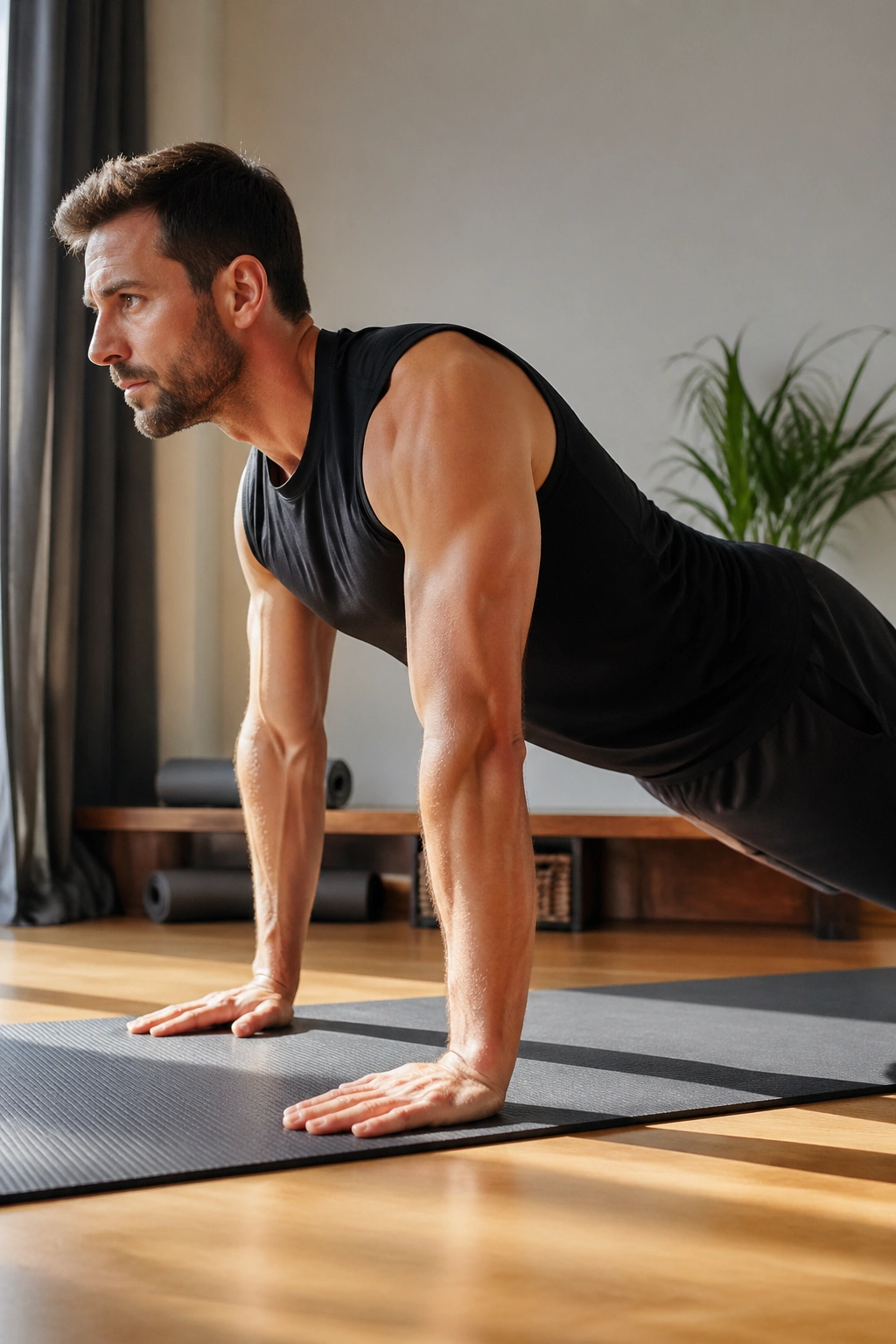
The best-looking arms are often attached to shoulder blades that move well. That’s where the push-up plus comes in. It adds one extra squeeze at the top of the push-up, and that tiny motion wakes up the serratus anterior, the muscle that helps the shoulder blades glide instead of winging.
Start in a regular push-up position, lower with control, then press up. At the top, push the floor away a little farther so your upper back rounds slightly without collapsing your core. That extra inch is the “plus.”
This is a smart move if your shoulders feel cranky during pressing or if your push-up mechanics are a little sloppy. It teaches the body to stabilize before it asks for more load. Not sexy. Very useful.
A clean set of 8 to 12 reps works well. If you can’t keep the ribs from sagging, shorten the range or do it from your knees. The goal is control, not showing off.
15. Farmer’s Carries That Finish the Job
Carry a pair of heavy dumbbells for 30 seconds and your forearms will tell on you fast. That’s the beauty of farmer’s carries. They train grip, shoulders, traps, core, and the small stabilizers that keep your arms looking strong instead of loose.
Walk tall. That part matters more than people think. If you hunch over or lean to one side, the load isn’t doing the right job. Keep your ribs stacked over your hips, hold the dumbbells hard, and take slow steps for 30 to 60 seconds.
How to Program It
- Use a load that feels heavy by the halfway mark.
- Walk in a straight line if you have the space.
- Rest 60 to 90 seconds between carries.
- Repeat for 3 to 5 rounds.
This is a finisher I like because it doesn’t waste time. No fancy setup. No strange angle. Just honest work that tightens the whole upper body.
And that’s the part worth repeating: leaner-looking arms usually come from a mix of smart strength work, enough total effort, and consistency that lasts longer than one hard week. Pick four or five of these exercises, train them with purpose, and keep your rest periods from drifting into laziness. That’s how arms start to change in the mirror.
