



If your shoulders drift forward by the end of the day, you do not need more random pulling. You need back workouts that make the upper back, lats, rear delts, and spinal erectors do their jobs again.
That matters for more than posture. A stronger back changes how your torso looks in a shirt, how you carry a bag, how your neck feels after long sitting, and how stable your whole upper body feels when you press, carry, or hinge. The right moves give you width from the lats, thickness through the mid-back, and enough control around the shoulder blades that standing tall stops feeling like a deliberate pose.
Most people make back training messier than it needs to be. They yank on cable handles, shrug through rows, and call it a day. Better exercise selection fixes a lot of that. When you pair heavy rows with vertical pulls, then finish with rear-delt and posture work, the whole thing starts making sense.
The list below starts with the big builders and ends with the smaller drills that keep the picture clean. Some are old standbys. Some are a little less flashy. All 18 earn their place.
1. Chest-Supported Dumbbell Row
A chest-supported row is the one I reach for when I want the back to work and the lower back to take a break. Set the bench at about 30 to 45 degrees, lie face down, and row the dumbbells toward your hips, not your shoulders. That slight angle shifts the work into the lats and middle back while cutting out most of the body English.
Why it matters for posture: you cannot cheat much here. That is the point. Your shoulder blades have to move cleanly, and your rib cage stays put instead of flaring and twisting all over the place.
What to watch for
- Keep your chest glued to the pad.
- Pull with the elbows, not the hands.
- Pause for 1 second at the top.
- Lower the weights until your arms are long and the shoulder blades get a small stretch.
Use a weight that lets you keep the shoulders down. If the traps start taking over, the set is already too heavy.
2. Pull-Up

Pull-ups are still one of the fastest ways to build the kind of back people notice first. They hit the lats hard, but they also force your shoulder blades to move under load, which is where a lot of posture work starts to pay off. When you get better at them, your upper body usually looks wider from the front and denser from the back.
The key is not to turn every rep into a neck-tensing scramble. Start from a dead hang or a controlled active hang, brace your ribs, then pull until your chin clears the bar or your chest gets close to it. If you have to kick, crane your neck, or whip your legs, the set is too ambitious for the moment.
A lot of people treat pull-ups like a test. Better to treat them like a skill. Three to five clean reps beats eight ugly ones every time. If you need assistance, use a band or do slow negatives: jump or step to the top, then lower for 3 to 5 seconds. That eccentric work builds strength fast, and it teaches the shoulders where to sit. No drama. Just honest reps.
3. Lat Pulldown
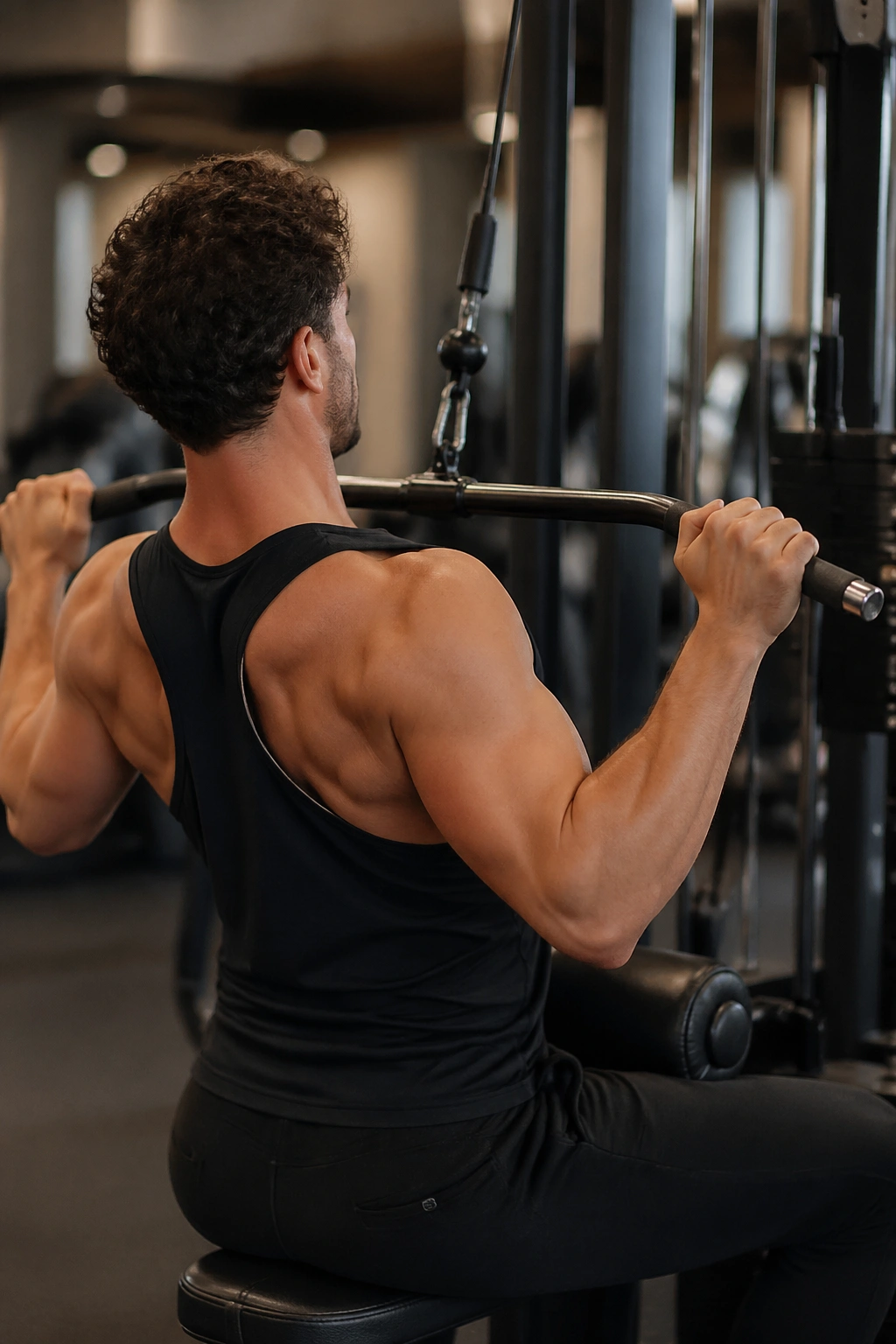
Can’t do smooth pull-ups yet? The lat pulldown is the smart place to live for a while. You still get the vertical-pull pattern, but you can dial the load, the grip, and the tempo without wrestling your own bodyweight. That makes it easier to build the lats without turning the whole set into a swingy mess.
How to use it
Pull the bar to your upper chest, keep the chest tall, and drive the elbows down toward your back pockets. The bar should travel in a clean line, not slam into your face and bounce away. A medium grip is usually kinder to the shoulders than an extra-wide one, and it often gives you better lat engagement anyway.
Here’s the part many people miss: don’t lean back into a fake row. A small lean is fine. A giant backward heave is not.
Use 8 to 12 reps for most sets, and let the last few inches of the lowering phase matter. That slow return is where the lats learn to resist instead of just yank.
4. One-Arm Dumbbell Row
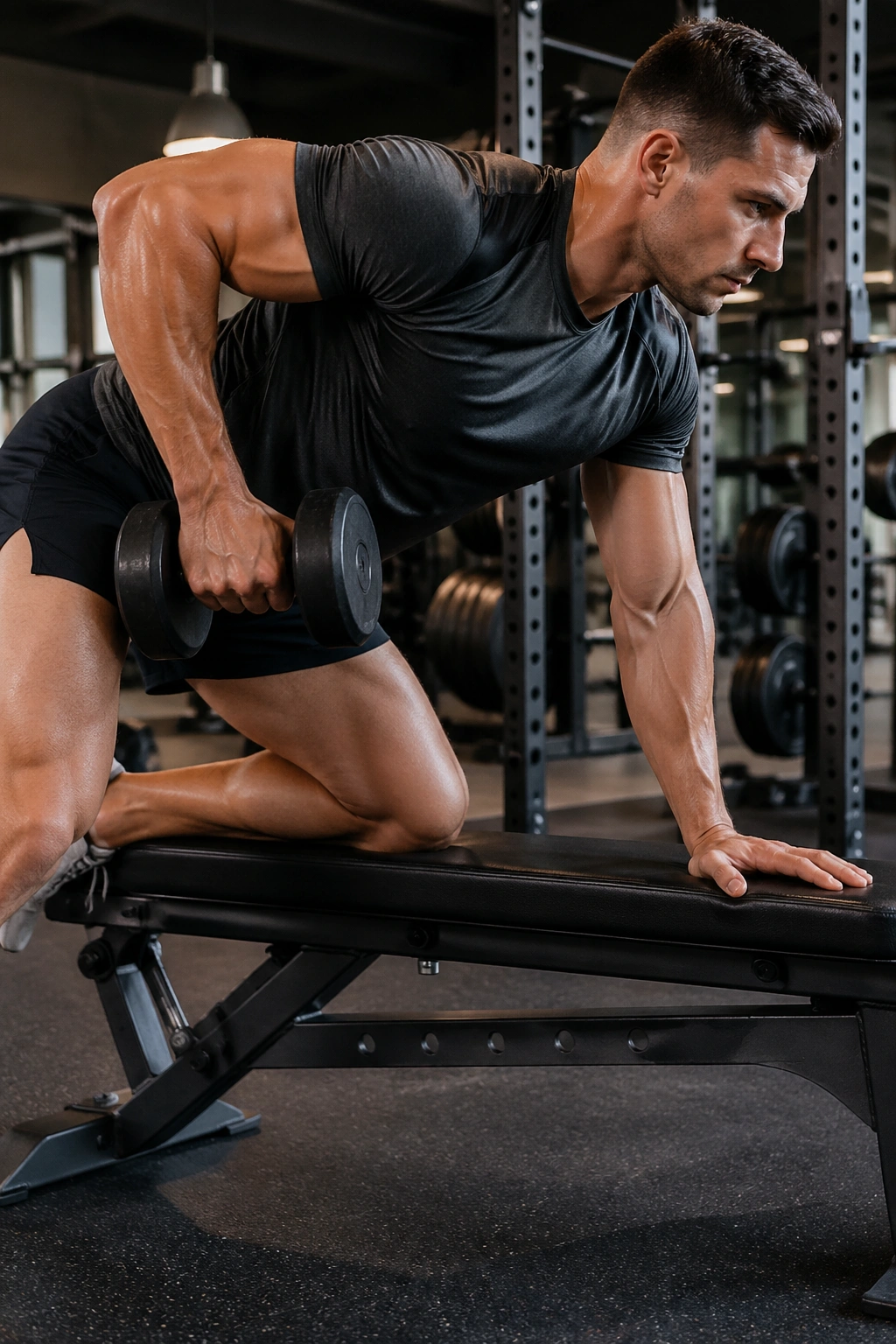
A single-arm dumbbell row is a blunt tool in the best way. One side works at a time, so you notice twisting, shrugging, and cheating much faster. It also gives the lat a bigger stretch at the bottom, which is one reason this movement sticks around in serious back programs.
Brace one hand and one knee on a bench, keep the hips square, and row the dumbbell toward the back pocket rather than straight up to the armpit. That path tends to hit the lat more cleanly. If you pull too high, the upper trap starts stealing the show. If you twist the torso open, the set turns into a half-body rotation drill.
The real value here is balance. A desk-heavy life often leaves one side a little lazier than the other, and a unilateral row tells on that quickly. Use 8 to 12 reps per side and match the same pace on both sides, even if one side feels easier. One sentence here matters: slow the lowering phase and stop swinging.
5. Seated Cable Row
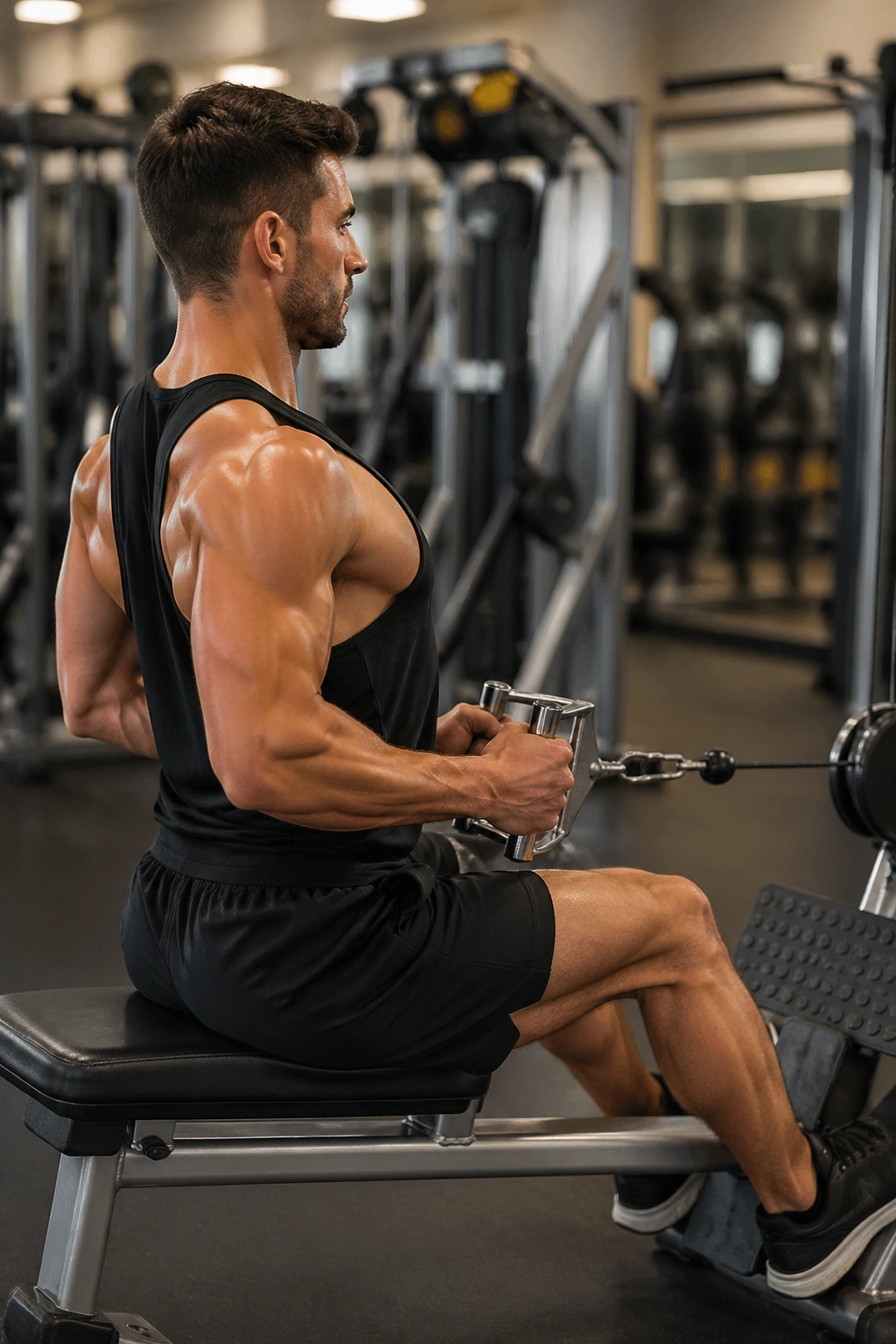
A seated cable row is the most underrated row for people who want their back to look full without wrecking their lower back. Compared with a bent-over row, the cable keeps tension on the muscles through a bigger chunk of the rep, and the seated position lets you focus on the shoulder blades instead of bracing for your life.
If you want mid-back thickness, this is a reliable place to get it. Use a neutral handle if your shoulders prefer it, or a medium-wide grip if you want a slightly more upper-back bias. Pull the handle to your lower ribs or belly button, depending on elbow path, and stop before your shoulders roll forward at the end.
Best for people who sit a lot
The seated row tends to feel especially good if your upper back gets stiff from long desk work. Not because it “fixes” sitting — that’s too neat and too easy — but because it trains you to pull the shoulder blades back without yanking the neck or arching the spine.
My recommendation: make this your second row of the week, not your first. It pairs well with a heavier free-weight row earlier in the session.
6. Bent-Over Barbell Row

A barbell row belongs in almost any serious back plan, but only if you respect the hinge. The lift starts with your hips pushed back, knees soft, torso angled forward, and bar close to the shins or knees. From there, you row the bar toward the lower ribs while the torso stays fixed. If your chest rises and falls like you’re doing a miniature deadlift, the set has drifted off course.
Why it earns a spot
This is a dense, heavy builder. It loads the lats, mid-back, rhomboids, and rear delts at the same time, and it can add that thick look across the upper torso that machines sometimes miss. The catch is simple: fatigue makes form sloppy fast.
Use these guardrails:
- Hinge to about 30 to 45 degrees.
- Keep the bar brushing close to the legs.
- Row under control for 6 to 10 reps.
- Stop when the torso starts to bounce.
A quick tip: if your lower back gives out before your upper back does, the load is too heavy or your hinge is too shallow.
7. Face Pull
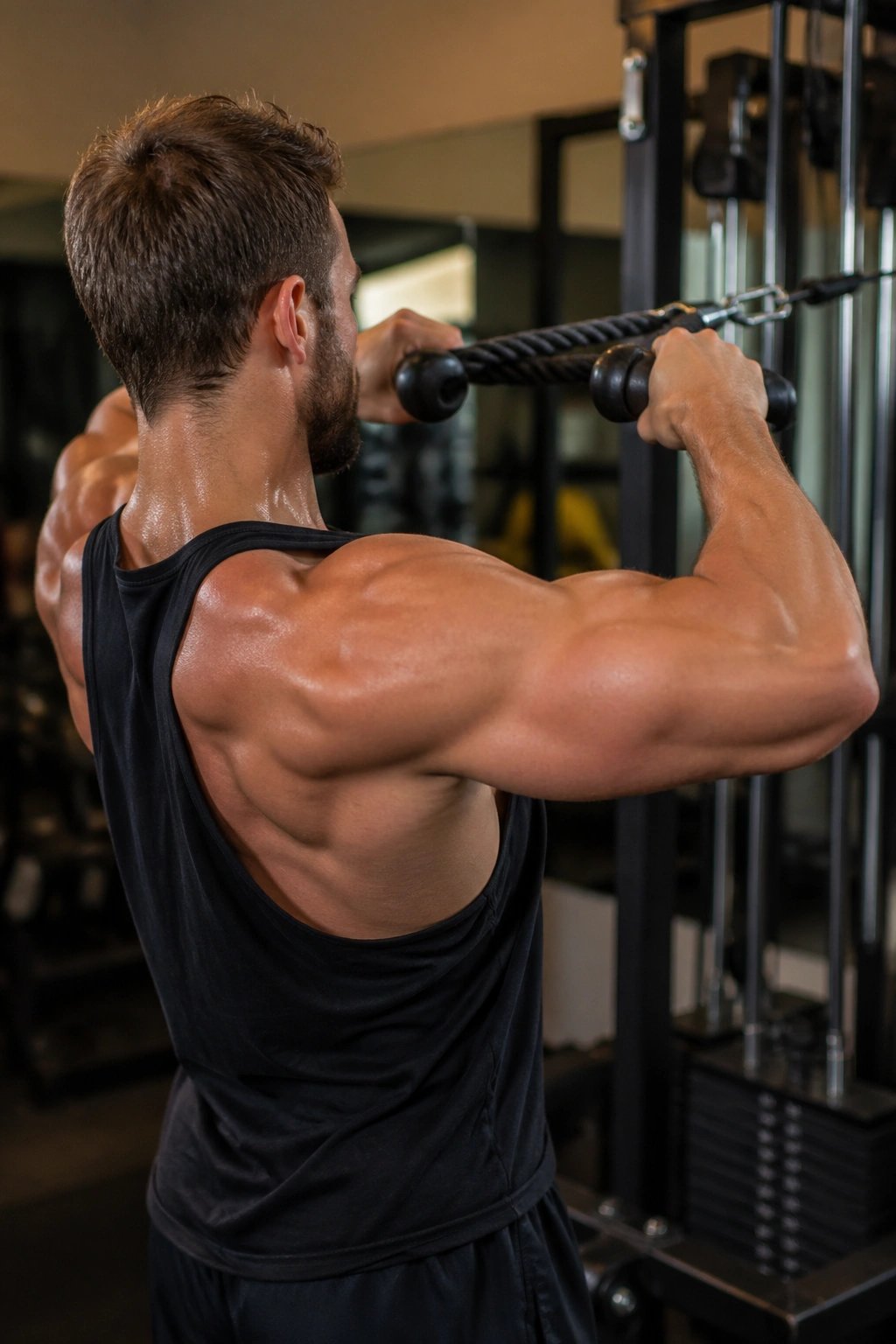
Why does a face pull show up in almost every good posture plan? Because it does a lot with a little. It wakes up the rear delts, lower traps, and the small muscles that help the shoulder blades rotate and settle without shrugging upward. That sounds minor until you do it for a few weeks and notice your shoulders sit a little less like coat hangers around your ears.
Use a rope on a cable station and pull toward the forehead, not the chest. Finish with your hands apart and your thumbs behind you, as if you were trying to show the back wall your palms. That little external-rotation finish is where a lot of the benefit lives.
Where you should feel it
You should feel this more in the upper back and rear shoulders than in the lower back or biceps. If your neck is doing most of the work, lighten the weight and slow down. Fifteen to twenty reps is a sensible place to live here, and the last few should burn without turning ugly.
Face pulls are not showy. They work because they clean up the parts of the shoulder girdle that heavy rows can leave a little messy.
8. Reverse Pec Deck Fly
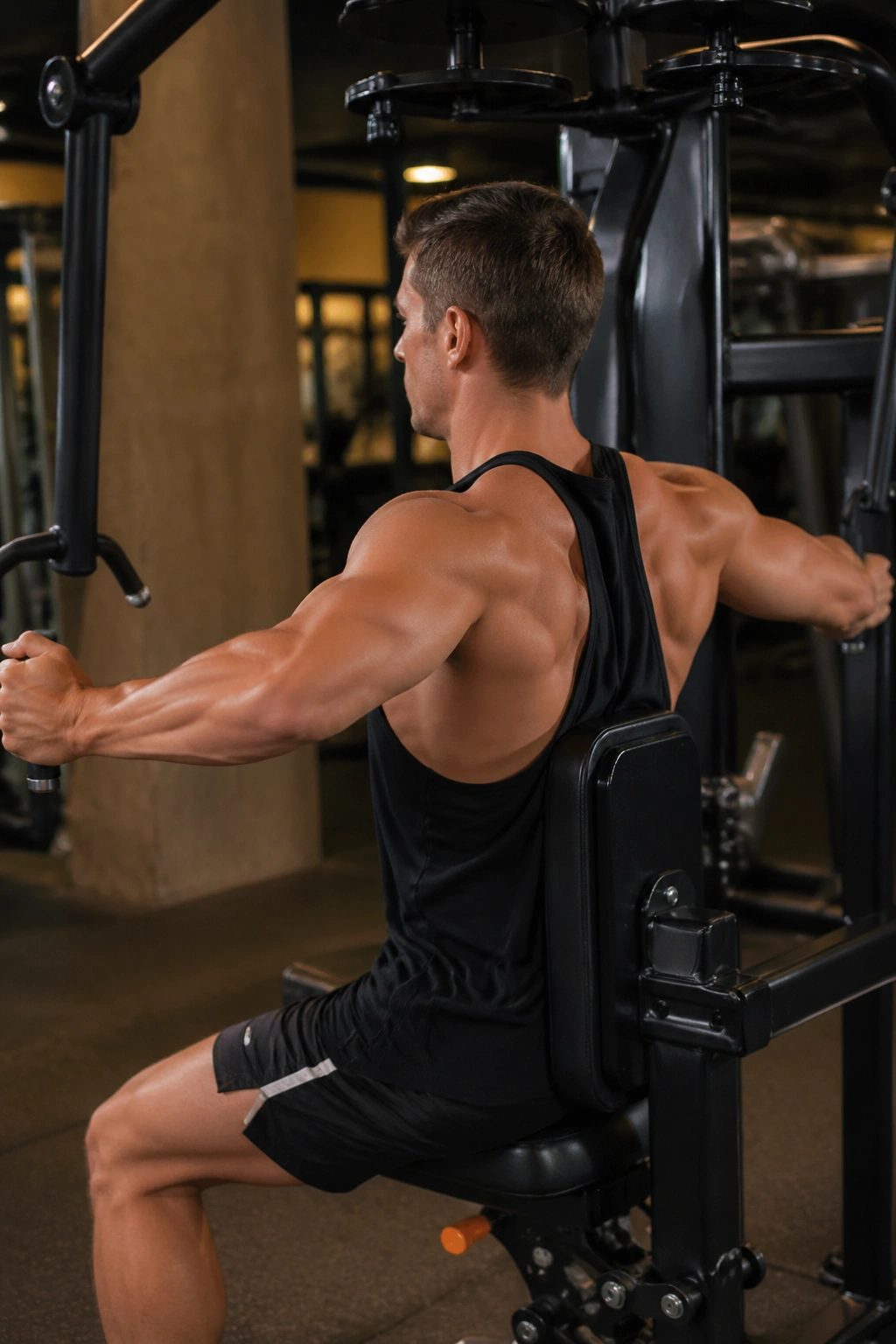
The reverse pec deck is the machine version of a rear-delt specialist, and I mean that in a good way. It takes balance out of the equation and lets you focus on the small muscles that give the upper back a rounder, more finished look from behind. If your rows are building the frame, this is one of the things that sharpens the edges.
Sit with the handles lined up with shoulder height, keep a soft bend in the elbows, and sweep the arms out until the shoulder blades open without the chest collapsing. The move looks tiny when it is done right. That’s normal.
The biggest mistake is trying to turn it into a trap exercise. Once the shoulders start climbing, the rear delts lose the party. Use light to moderate load, 12 to 15 reps, and a short pause at the back. That pause matters more than people think. It stops the machine from becoming a swing.
If you want a back that looks broader from the side, rear delt work is not optional. It is the finishing layer.
9. Straight-Arm Pulldown
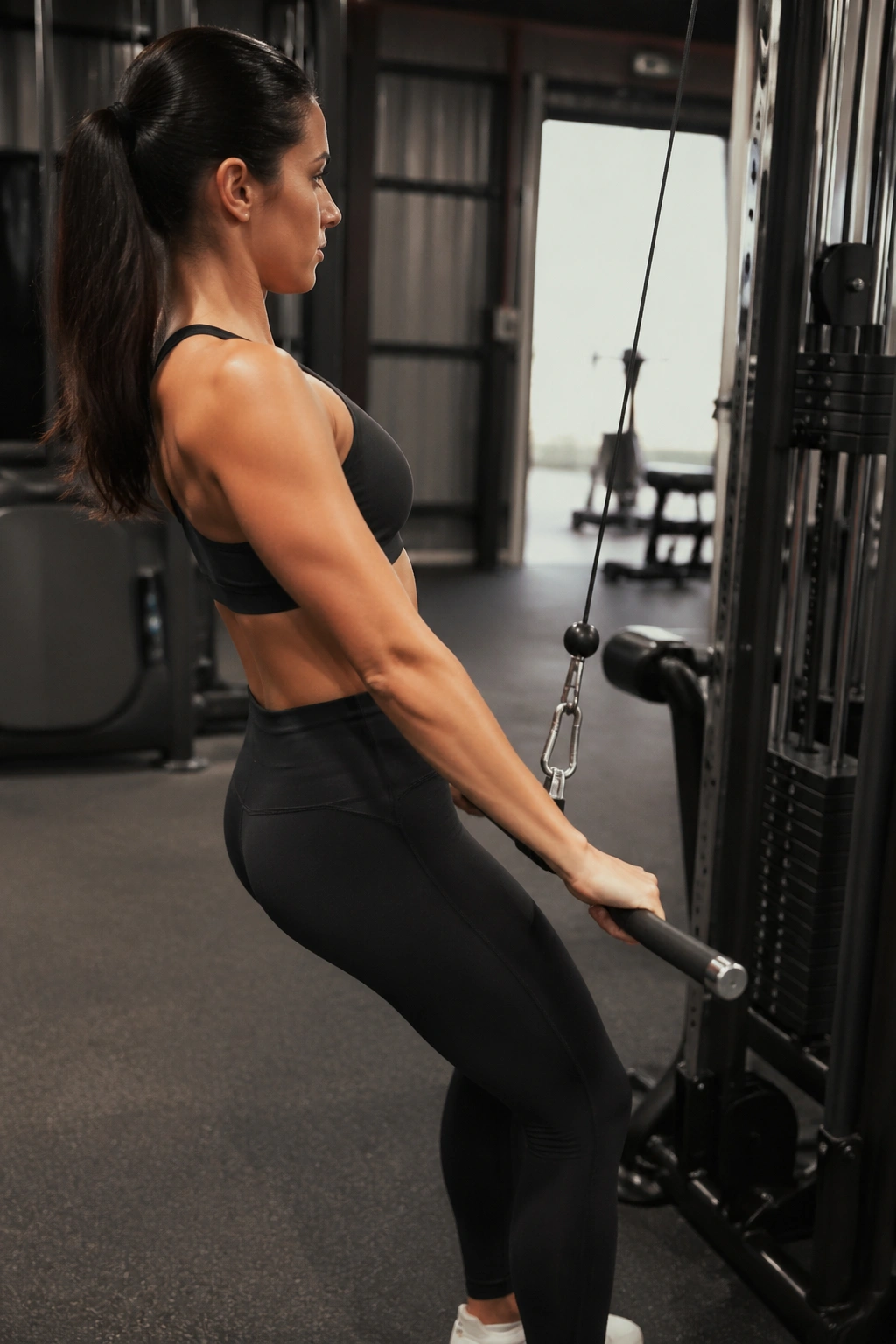
A straight-arm pulldown is one of the best ways to train the lats without the biceps hogging the work. That alone makes it worth keeping around. Set a cable pulley high, hold the bar or rope with mostly straight arms, and sweep it down to your thighs while keeping the rib cage stacked and the shoulders out of your ears.
How to get the lat to do the work
The movement should feel like your upper arms are tracing a long arc, not like you’re doing a triceps press-down in disguise. There’s a subtle difference, and it matters. If you bend the elbows too much, you lose the point of the exercise. If you arch the lower back, the lats also lose their clean line of pull.
Use 10 to 15 reps and a controlled return. The stretch on the way back up should feel long, but not sloppy. If you’re after that wide back look, this movement helps because it teaches the lats to contract without being masked by heavier arm flexion.
A little boring? Maybe. Very effective? Also yes.
10. Inverted Row
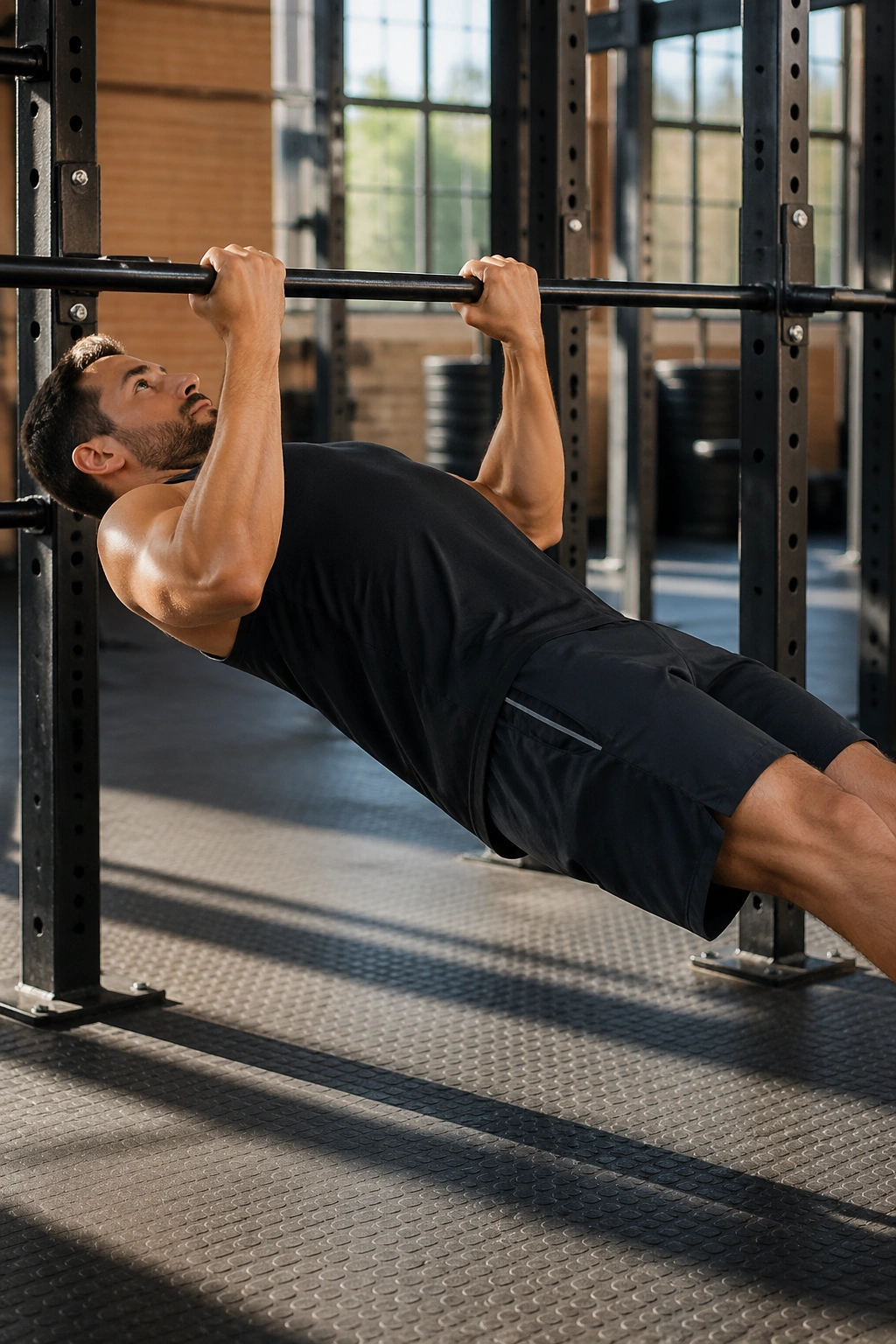
An inverted row looks simple, then humbles people who rush through it. Lie under a fixed bar, grip it, and pull your chest toward the bar while your body stays straight like a plank. The closer your feet are to the floor, the easier it is. Elevate the feet and the movement climbs fast.
This is a strong choice for posture because it teaches the upper back to pull while the core keeps the ribs from flaring. That whole-body tension is the part many people miss. You are not just rowing. You’re learning to stay organized while rowing.
If your shoulders feel cranky during free-weight work, inverted rows can be a nice bridge. They let you practice the pattern without loading the spine much. Use a neutral or underhand grip if that feels better, and aim for 8 to 12 clean reps with no hip drop. One sentence: keep the body rigid enough that the movement comes from the shoulders and elbows, not the waist.
11. Single-Arm Cable Row
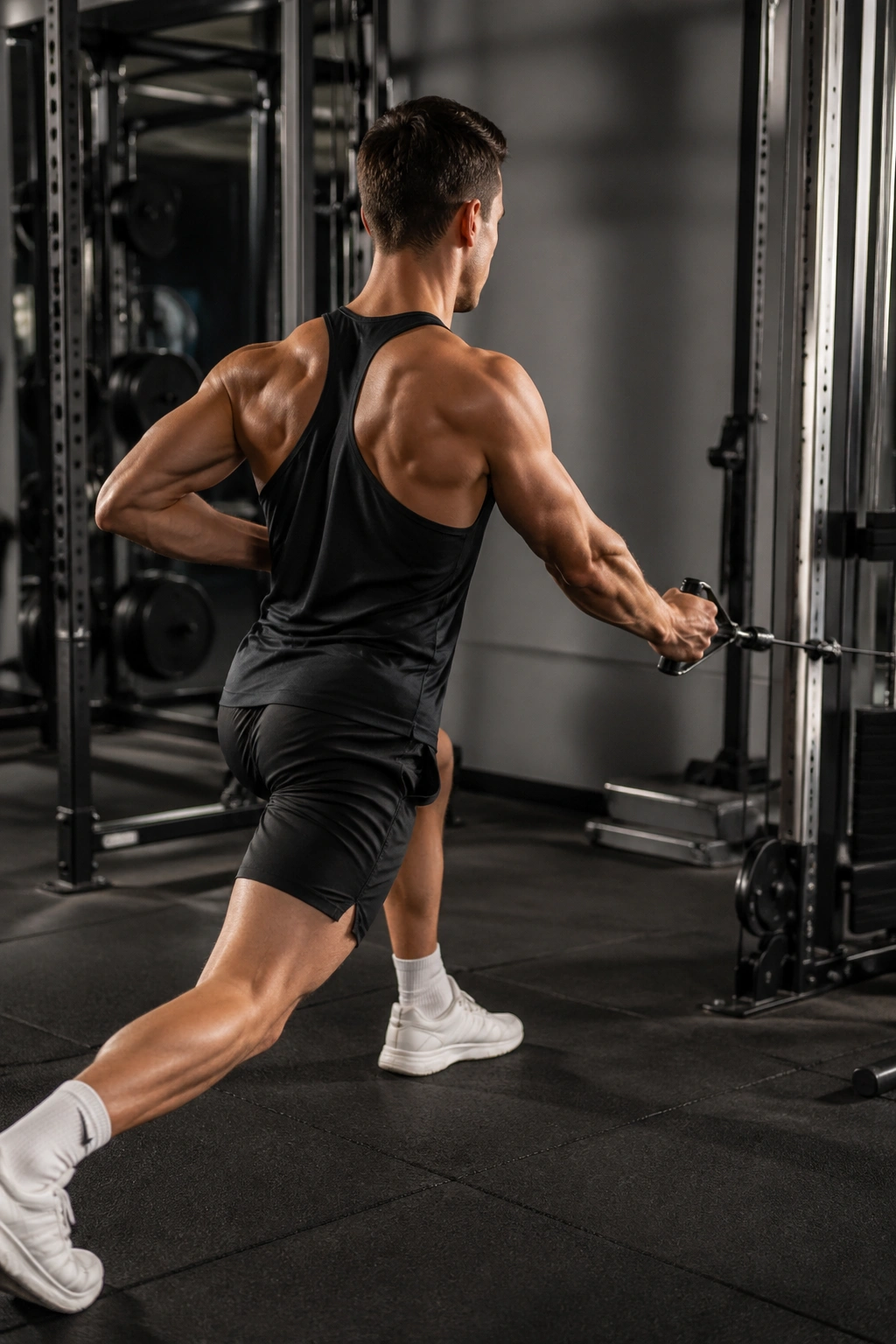
Compared with a dumbbell row, the single-arm cable row keeps tension more constant and often feels cleaner through the whole rep. That matters if you want to work on symmetry and stop one side from racing ahead. It also lets you adjust the line of pull a little more precisely, which is handy when you’re chasing lats, mid-back, or both.
Stand in a split stance, reach forward enough to feel a stretch, then row the handle back while the shoulder blade glides, not jerks. The cable should not yank you into a twist. If it does, the weight is too heavy or your stance is too narrow.
This version is especially good for people who sit and round forward, because it asks you to resist rotation while the shoulder moves. Use 10 to 12 reps per side and keep the torso quiet. That quiet torso is not flashy, but it is where the posture benefit lives. If one side always feels clumsy, start there and match the cleaner side’s form.
12. Meadows Row
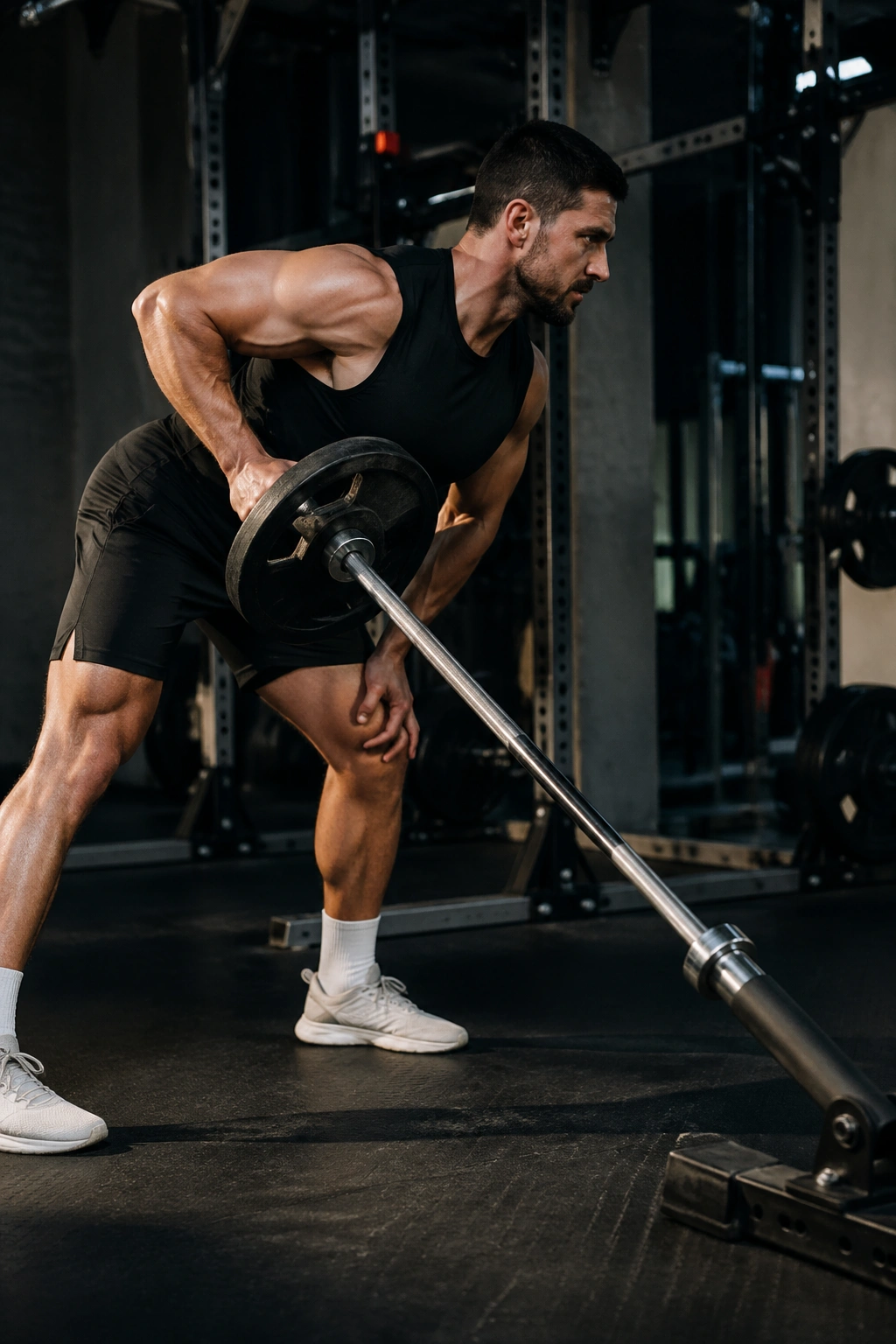
A Meadows row has a little attitude, and that is part of why I like it. Set up beside a landmine attachment, hinge at the hips, and row the bar with one arm while the torso stays braced and angled. The setup lets you pull on a slightly different line than a standard dumbbell row, which is why this movement feels so good in the lower lat and side of the upper back.
What makes it different
The bar path is a bit more diagonal, and that changes where the muscle tension lands. It also tends to let you row heavier than you might with a loose dumbbell, since the setup gives you something solid to pull against. Six to ten reps per side is a strong range here.
Use straps if grip starts failing before the back does. Keep the shoulder packed, and don’t over-rotate the torso just to get the bar higher. The best Meadows rows look compact and hard, not wild.
This is the sort of row that makes your back feel thick from the side. Not because of magic. Because the angle is different.
13. T-Bar Row

A good T-bar row is one of the best thickness builders in the whole list. It’s heavy enough to load the middle back hard, stable enough to keep your body honest, and simple enough that you can focus on pulling instead of balancing a wobbly dumbbell. The chest-supported version is my favorite if your lower back gets tired easily. The free-standing version has its place too, but it asks for more bracing.
Use a neutral handle if you want a smooth elbow path, and pull the load toward the lower chest or upper stomach depending on the machine. The goal is a deep squeeze between the shoulder blades without shrugging. If you yank the plates up with momentum, the set becomes noise.
How to make it count
Keep the first rep controlled. Keep the last rep uglier only in the muscles, not the form. Eight to twelve reps usually works well here, and the machine should feel heavy in a way you can still own. One hard truth: if you can’t pause the weight for a beat near the top, it’s probably too much.
14. Romanian Deadlift
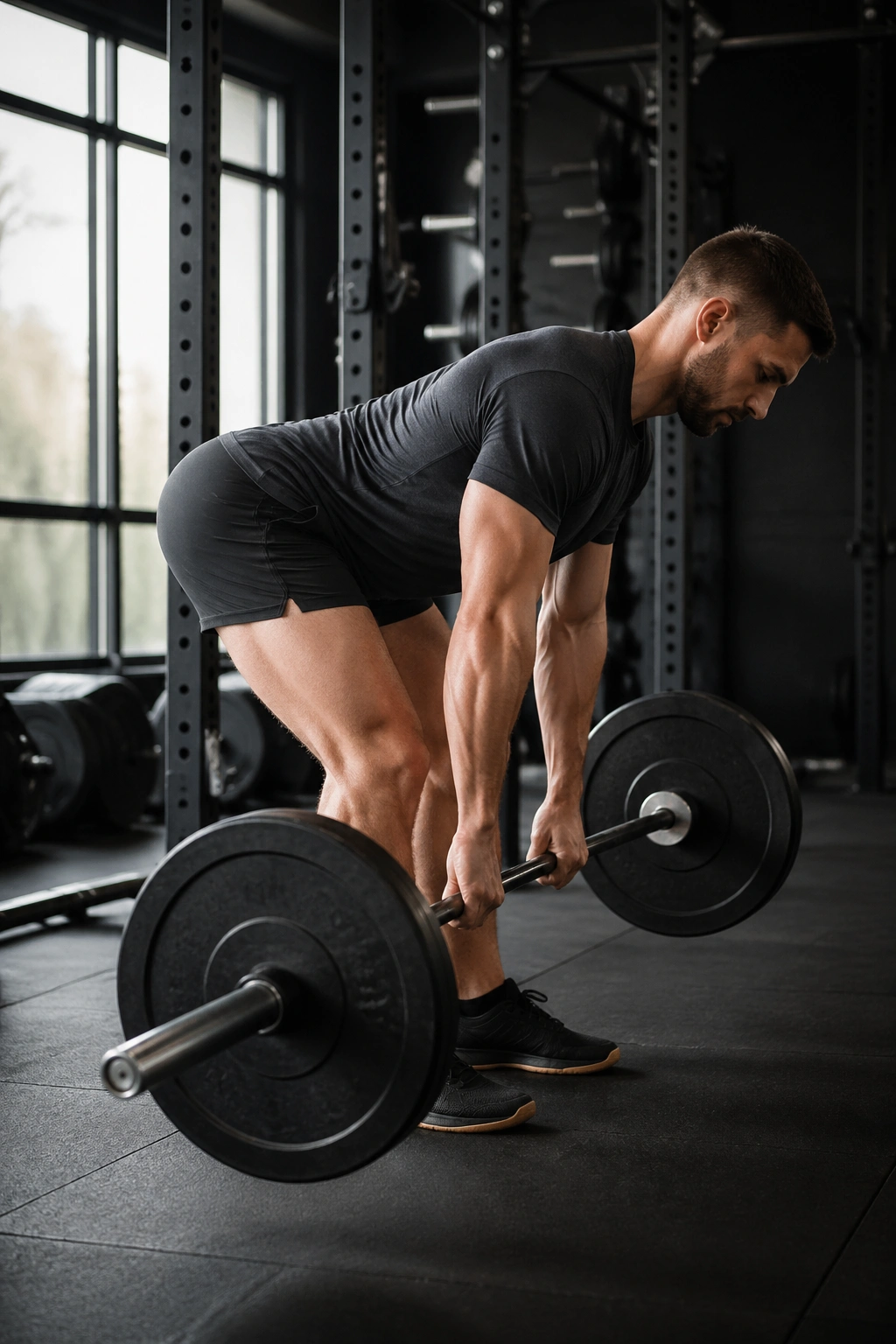
A Romanian deadlift isn’t just a leg move. It is one of the cleanest ways to build the spinal erectors, glutes, and hamstrings while teaching your back to stay braced under load. That bracing is a big deal for posture, because a weak hinge usually shows up as a soft, slumped trunk before it shows up anywhere else.
Start tall, soften the knees, and push the hips back until the bar travels down the thighs with a long stretch in the hamstrings. The back stays neutral. The bar stays close. You stop the descent when the torso wants to round or the hamstrings say, enough. That moment matters. Go past it and the whole lift gets sloppy.
Use a load you can control for 6 to 8 reps. If you’re trying to touch the floor, you’ve missed the point. The range of motion ends when the hinge ends, not when the plates scrape the ground. That sentence saves a lot of lower backs.
15. Back Extension
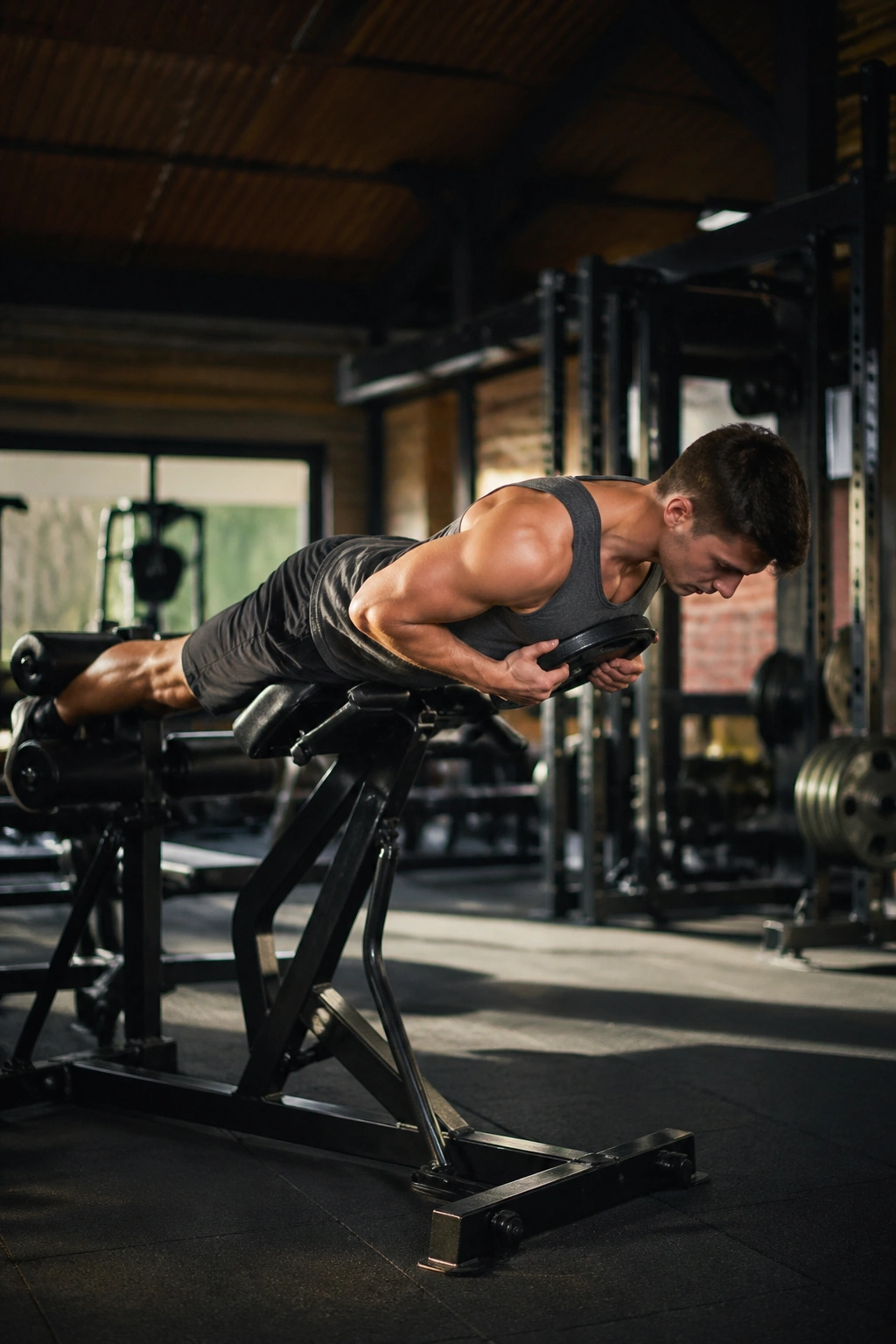
A back extension looks almost too easy until you hold a plate and do it with care. On a Roman chair or GHD bench, set the hips so the pads sit just below the crease, then lower the torso under control and raise it until the body is in a straight line. The lift should come from the hips and spinal erectors, not from flinging the chest upward.
This is a useful posture builder because it trains the back to extend and stabilize without the load of a full deadlift. If you sit a lot, the erectors tend to go quiet. A few hard sets here wake them up again.
You can keep it bodyweight only, or hold a 5 to 25 pound plate against the chest once the movement feels steady. Use 10 to 15 reps and stop before hyperextending the lower back at the top. That last part matters. You want a strong back, not a cranky one.
If your hamstrings start cramping, shorten the range a little and slow down.
16. Rack Pull
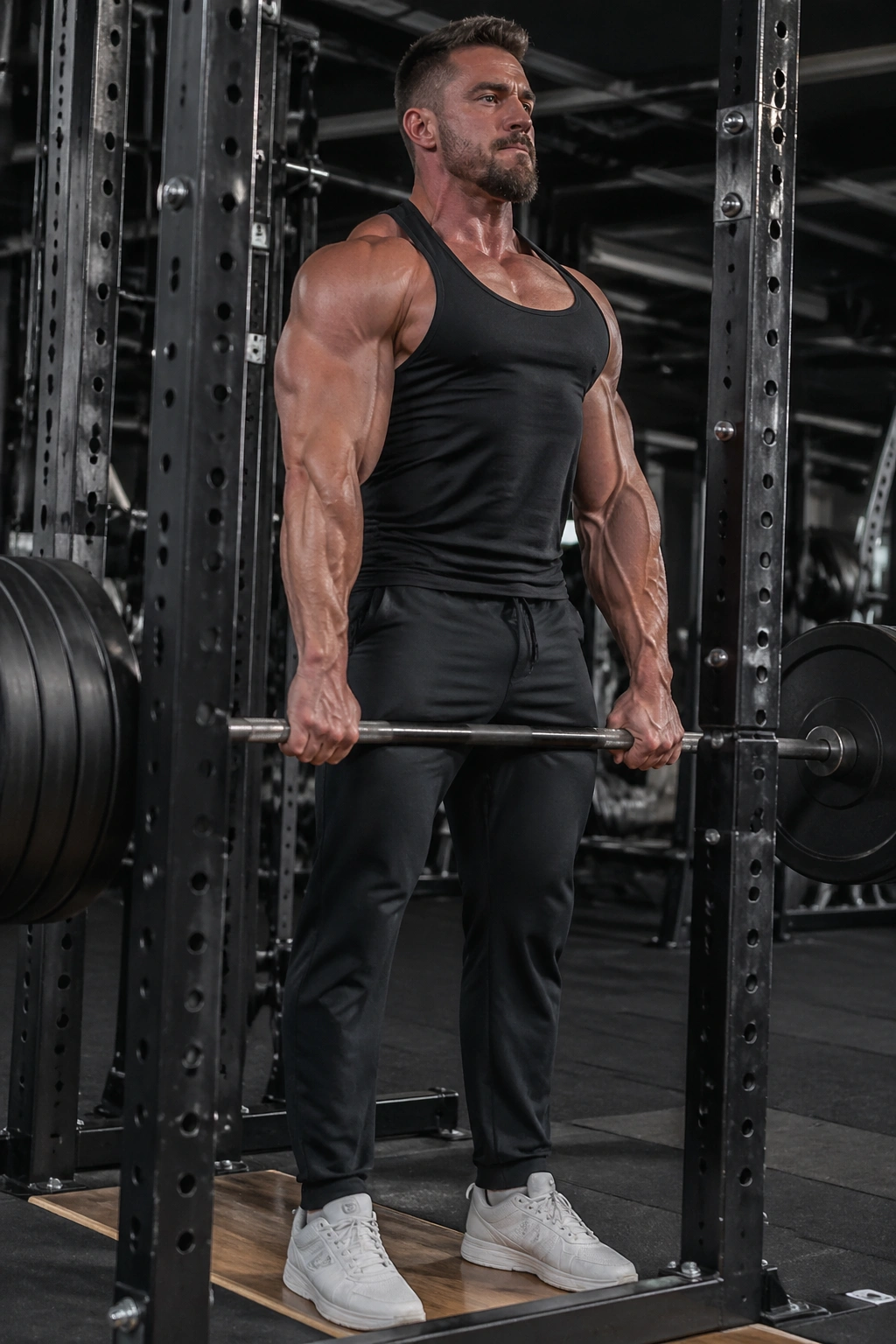
Rack pulls are not subtle, and I do not think they should be. Set the bar just below the knees or around mid-shin, brace hard, and pull the weight to lockout. Because the range is shorter than a full deadlift, you can usually handle more load, which makes this a strong choice for upper back density, traps, and lockout strength.
A lot of lifters like this movement for the heavy, packed look it gives the upper torso. The traps get loaded hard, the spinal erectors have to stay tight, and the whole shoulder girdle has to own the weight as it moves. The downside is obvious: ego creeps in fast.
Use straps if grip is the weak link, keep the bar close, and avoid the trap of bouncing the plates off the pins. Three to five clean reps is plenty. If your back rounds like a question mark, lower the pins or cut the load. The lift should feel like a controlled haul, not a rescue mission.
17. Scapular Pull-Up
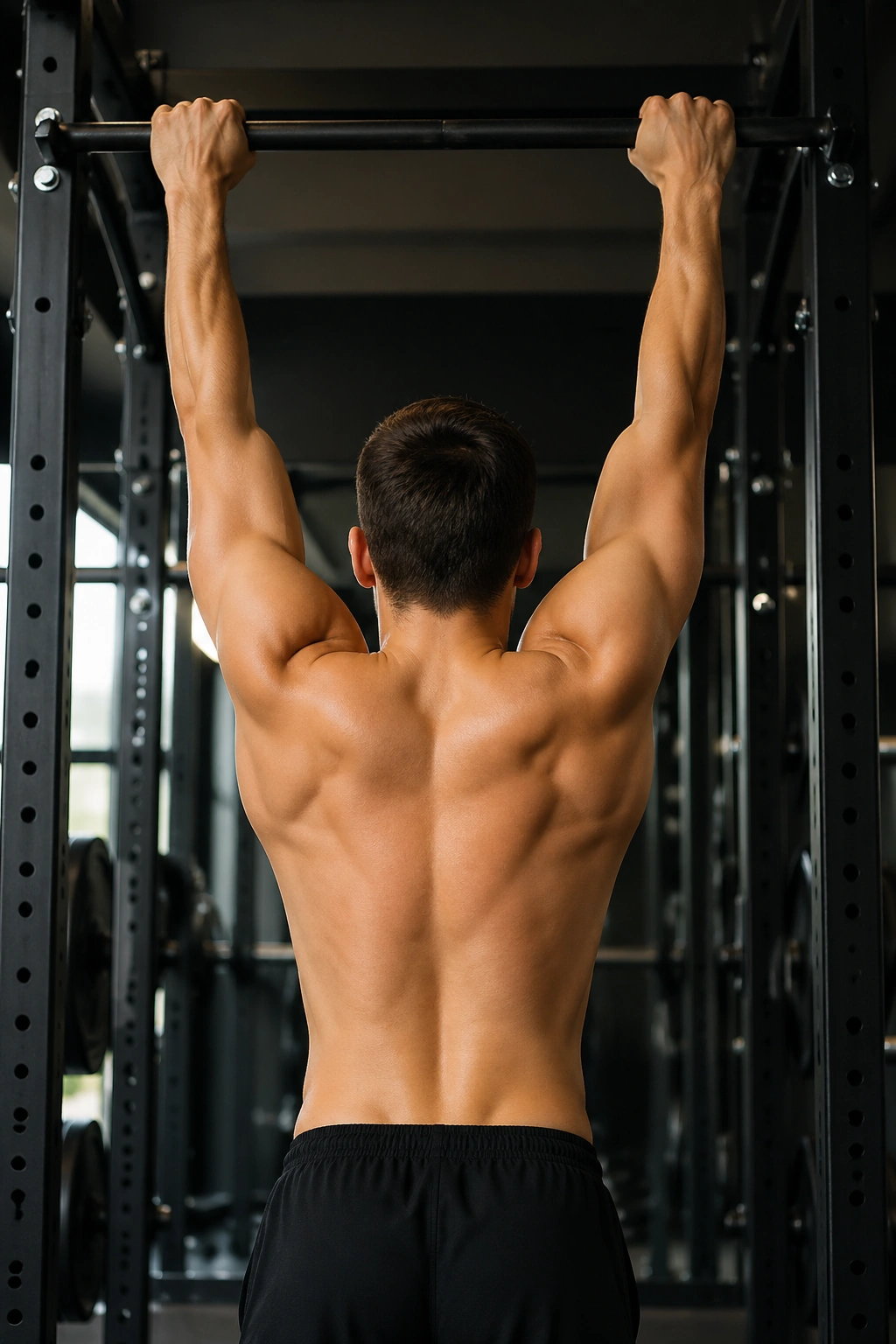
A scapular pull-up is tiny, and that is exactly why it works. Hang from a bar with straight arms, then pull your shoulder blades down and slightly back without bending the elbows. You’ll move only an inch or two. That’s fine. The point is not height; the point is control.
Why bother with such a small rep?
Because a lot of back training fails at the shoulder blade level. People can row and still not know how to depress the scapula. This drill teaches that missing piece. It also gives the lower traps and lats a clean job to do before heavier pull-ups or pulldowns.
Use 5 to 10 reps with a one- or two-second pause in the lowered position. If your elbows bend, you’ve turned it into something else. If your neck tightens, reset and breathe out before the next rep.
This is one of those unglamorous moves that makes the louder ones work better. Not exciting. Useful.
18. Farmer’s Carry
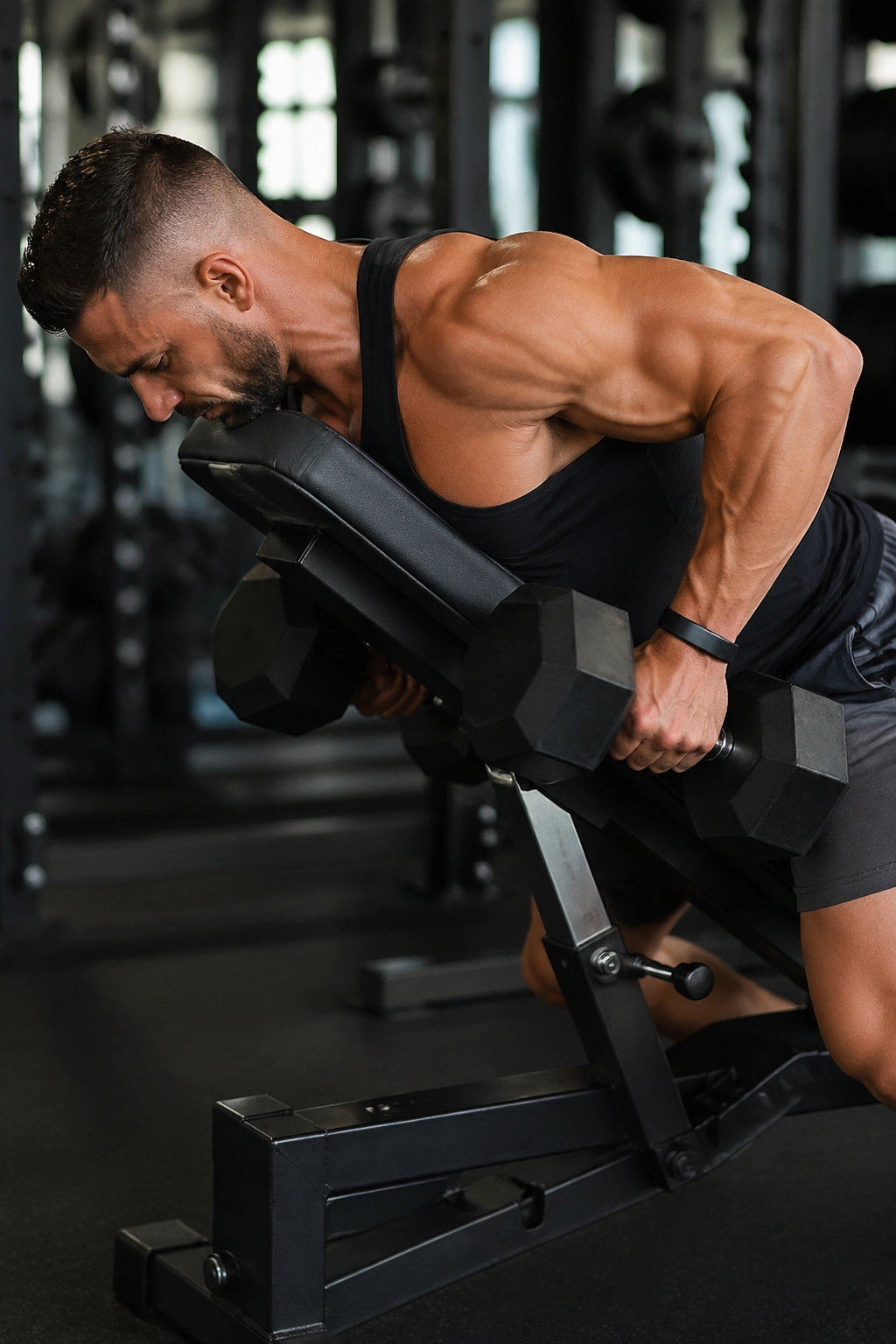
A farmer’s carry is not a row, and it does not pretend to be. That’s why it belongs here. Pick up two heavy dumbbells or kettlebells, stand tall, and walk for 20 to 40 meters or about 30 to 60 seconds. The upper back, traps, forearms, and core all have to lock in so you do not fold, lean, or let one shoulder drift lower than the other.
What makes this so valuable for posture is the obvious thing: you are practicing standing under load. Not posing. Not stretching. Standing. That means your rib cage, shoulders, and neck have to cooperate while you move, which carries over to almost every other back exercise in the list.
Keep the steps smooth and the torso quiet. If you start waddling like a shopping cart with a bad wheel, the weights are too heavy. Two or three hard carries at the end of a workout can leave your upper back feeling finished in a way rows alone sometimes miss.
And if you only have room for one loaded finisher, this is the one I’d keep.
