



A chair can wreck your back by lunch. The fix is not a heroic workout or a mat you never unroll. It’s a handful of seated Pilates exercises for office workers that wake up the spine, ribs, hips, and deep core without asking you to change clothes or clear the floor.
Your hips know it first. Then the upper back tightens, the shoulders creep toward your ears, and the lower back starts doing extra work it was never meant to carry for eight straight hours. None of that is mysterious. It’s just what happens when the body gets stuck in one shape for too long.
Use a sturdy chair, keep your feet flat, and if the chair has wheels, pin it against a wall or a desk so it does not drift around under you. Small, controlled movements matter more than big dramatic ones here. Pilates is picky about that, and honestly, that’s why it works so well for desk stiffness.
The best part is how little space this takes. Five minutes between calls can change how your back feels for the rest of the afternoon, and if you stack a few of these movements together, you get a break that actually does something useful instead of just pretending to stretch.
1. Seated Spine Stretch Forward
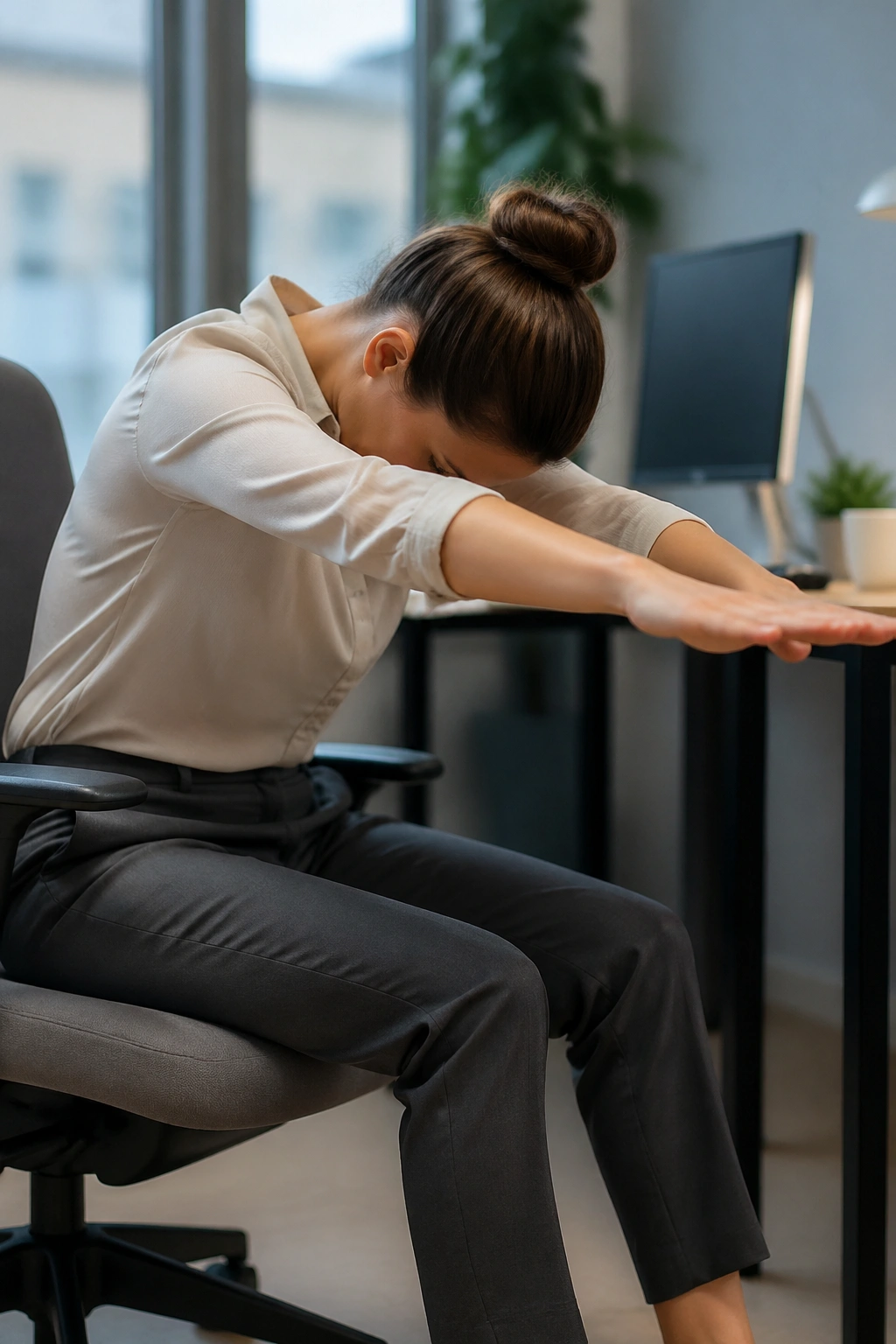
This one is the cleanest place to start because it tells your back to lengthen instead of brace. Sit toward the front edge of your chair, plant both feet, and reach your arms forward at shoulder height. Then exhale and let your head nod first, your ribs soften, and your spine round forward one piece at a time.
The trick is not to collapse. Keep your weight heavy through both sit bones and think about sending your fingertips away from your hips, not diving toward the floor. If your lower back rounds a little, fine. If your shoulders drop and your neck stays long, even better.
What it should feel like
- A gentle stretch along the whole back line, not a pinch in the low back.
- Your ribs widening on the inhale before you fold.
- Your shoulder blades sliding apart instead of clamping together.
- A soft release behind the knees if you straighten the legs a touch.
One good rep is slow. If you rush this, it becomes a shrug with a curve in it, which is not the same thing at all.
2. Seated Cat-Cow for a Stiff Back
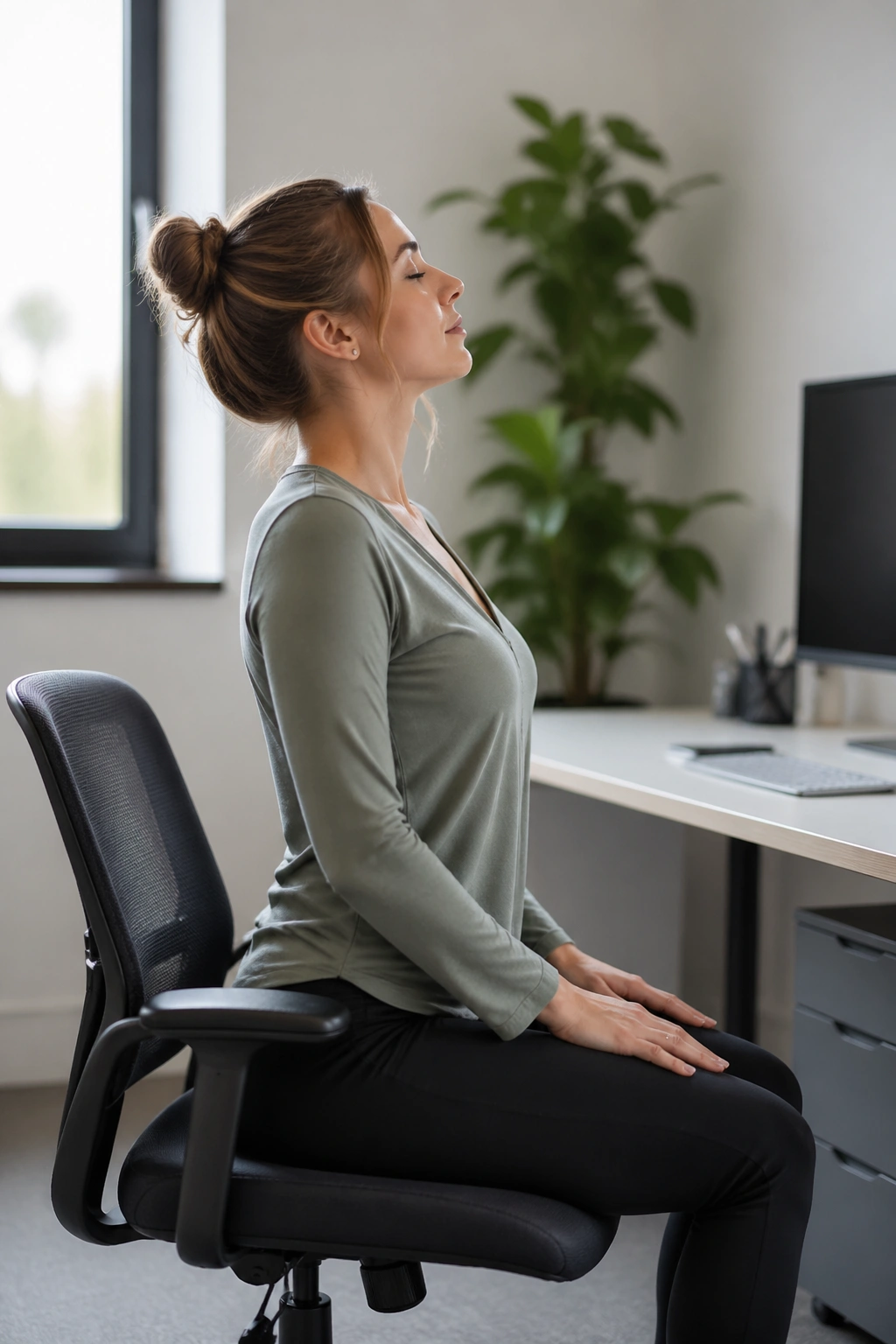
Why does a cat-cow feel so good in a chair? Because it gives your spine permission to move in two directions it spends the day ignoring: gentle extension and gentle flexion. Sit tall with your hands on your thighs, inhale as you tip the chest forward and lift the sternum, then exhale as you scoop the belly and round the upper back.
Keep the motion small. The goal is not to throw your head back or tuck so hard you feel jammed. A good seated cat-cow looks almost modest from the outside, but your back will register every inch of it.
The breathing matters more than people think. Inhale to open the front body. Exhale to draw the ribs in and let the low belly help you round. If you only chase shape and ignore breath, the movement gets clumsy fast.
Your neck should feel free, not yanked. If you catch yourself leading with the chin, reset and think about the chest moving first on the arch and the tailbone moving first on the round. Simple. Slow. Better.
3. Pelvic Tilt Clock in Your Chair
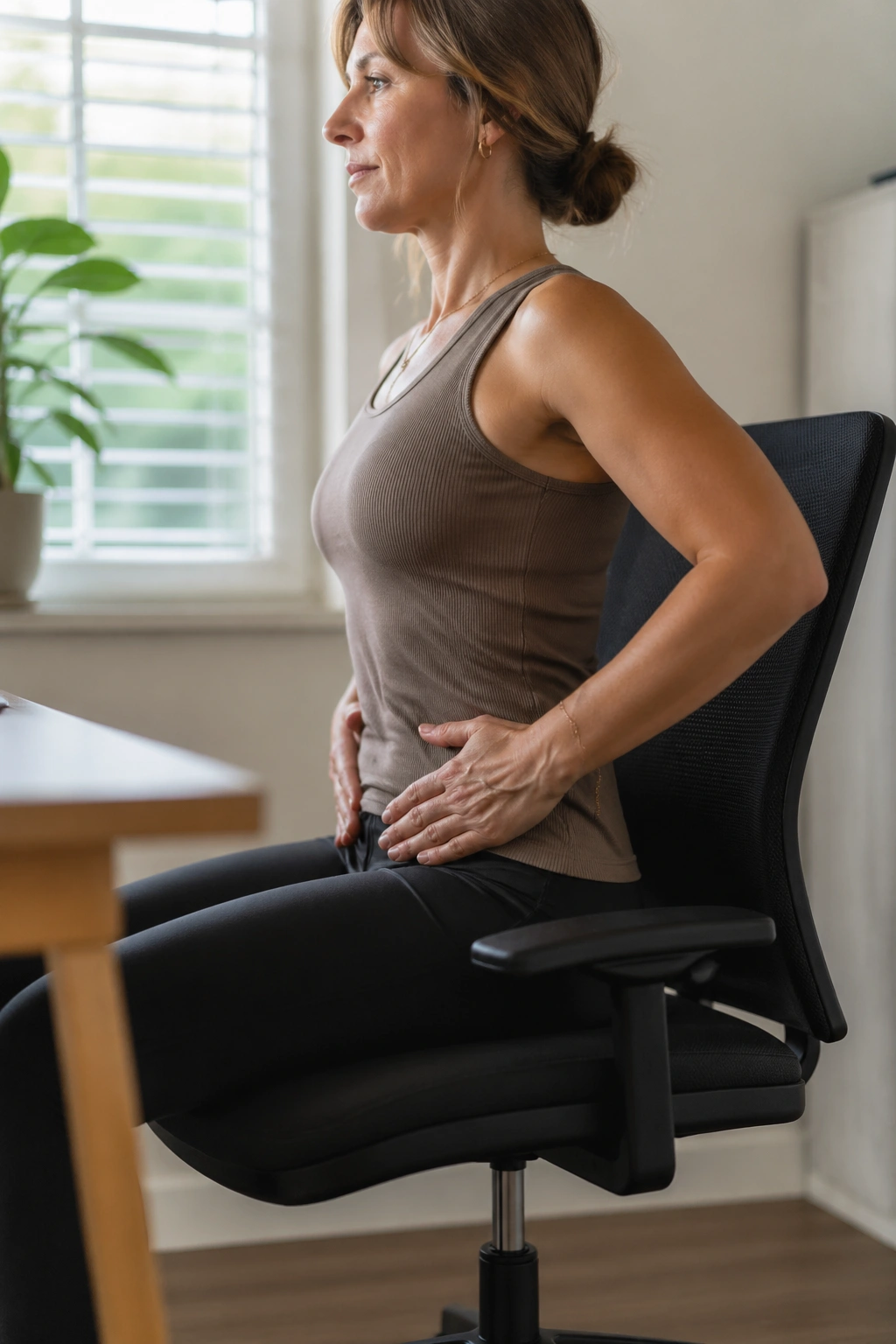
If your lower back feels welded to the seat, this is the reset I reach for. Imagine your pelvis sitting on the face of a clock. Twelve o’clock is a small tuck, six o’clock is a tiny arch, and the side numbers help you notice whether you favor one hip over the other.
Sit with your feet flat and hands resting lightly on your front hip points. Rock the pelvis forward and back a few times, then shift side to side, and finally draw a slow circle as if your belt buckle were tracing the edge of that clock. Keep the circle tiny. You are finding control, not making a spectacle.
How to find neutral
- Move toward 12 o’clock and feel the tailbone tuck under.
- Move toward 6 o’clock and feel a small lumbar arch.
- Tip toward each side without collapsing one rib cage.
- Stop in the middle, where the pelvis feels balanced and your ribs stack over your hips.
That middle spot is the prize. Once you find it, your standing posture tends to improve too, because you remember what centered feels like.
4. Seated Spine Twist for a Slumped Upper Back
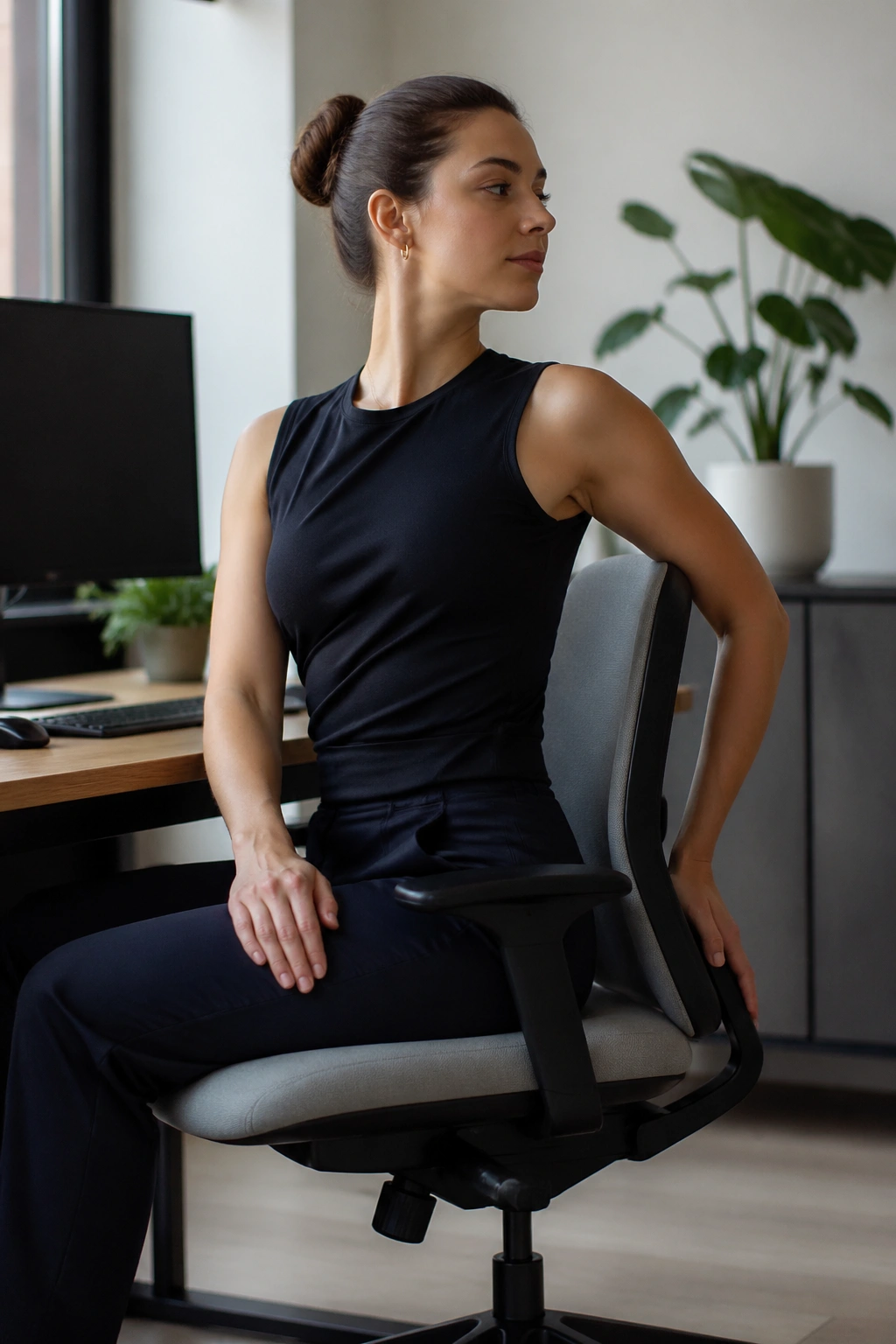
A twist should not be a yank. If you wrench yourself around in the chair, your hips stay frozen and your upper back does all the ugly work. That is not Pilates; that is office panic with a rotation attached.
Sit tall, keep both sit bones heavy, and place one hand on the opposite thigh or the side of the chair. Inhale to grow taller. Exhale to rotate from the ribs, not the neck, and let your eyes follow the turn only after the torso has started. The movement should feel smooth and quiet.
No flinging.
That one line matters. A good twist makes space between the ribs and wakes up the small muscles along the spine. A bad twist just forces the shoulders to spin while the pelvis stays stubbornly glued down. You want the first version, obviously.
If your lower back complains, make the range smaller and keep the twist higher in the rib cage. If your neck is tight, stop letting the chin lead. The head comes last, not first. Always.
5. Shoulder Blade Slides That Wake Up Desk Posture
Boring? Yes. Useful? Absolutely.
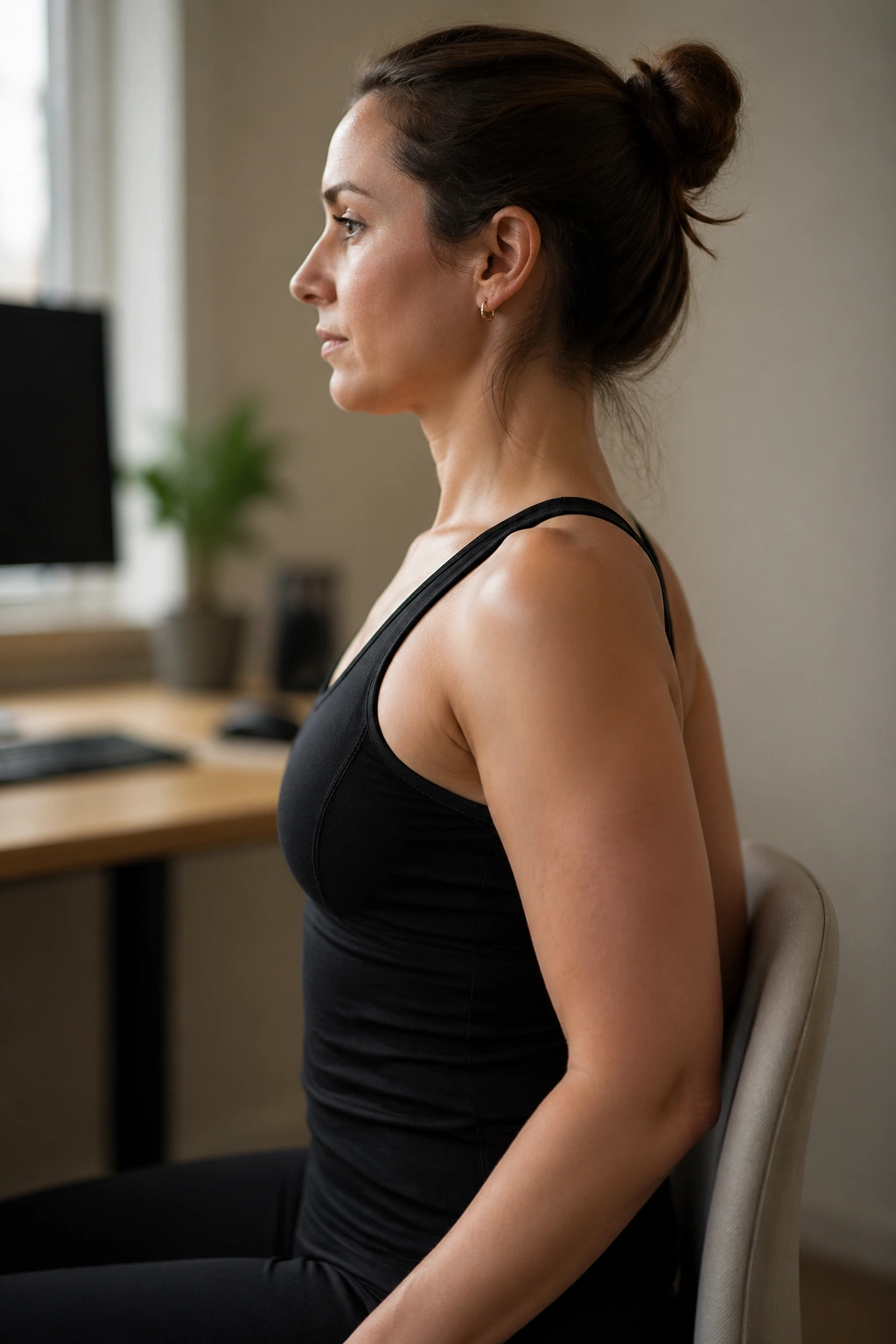
Sit upright with your arms relaxed by your sides. Without shrugging, slide the shoulder blades down and slightly together, as if you were tucking them into your back pockets. Hold for one breath, then release with control. The motion is tiny, and that is the point. You are teaching the upper back to organize itself again after a day of hovering over a keyboard.
Do this slowly enough that you can feel the difference between pulling the shoulders back and actually moving the shoulder blades. The first version jams the neck. The second one makes room across the chest and gives your arms a better home.
If your shoulders live near your ears, exhale as you slide the blades down. That little breath cue keeps the ribs from flaring and stops the movement from turning into a stiff military pose. A lot of people overdo this one because it feels so corrective. Don’t. Two or three clean reps are better than ten ugly ones.
6. Seated Chest Expansion
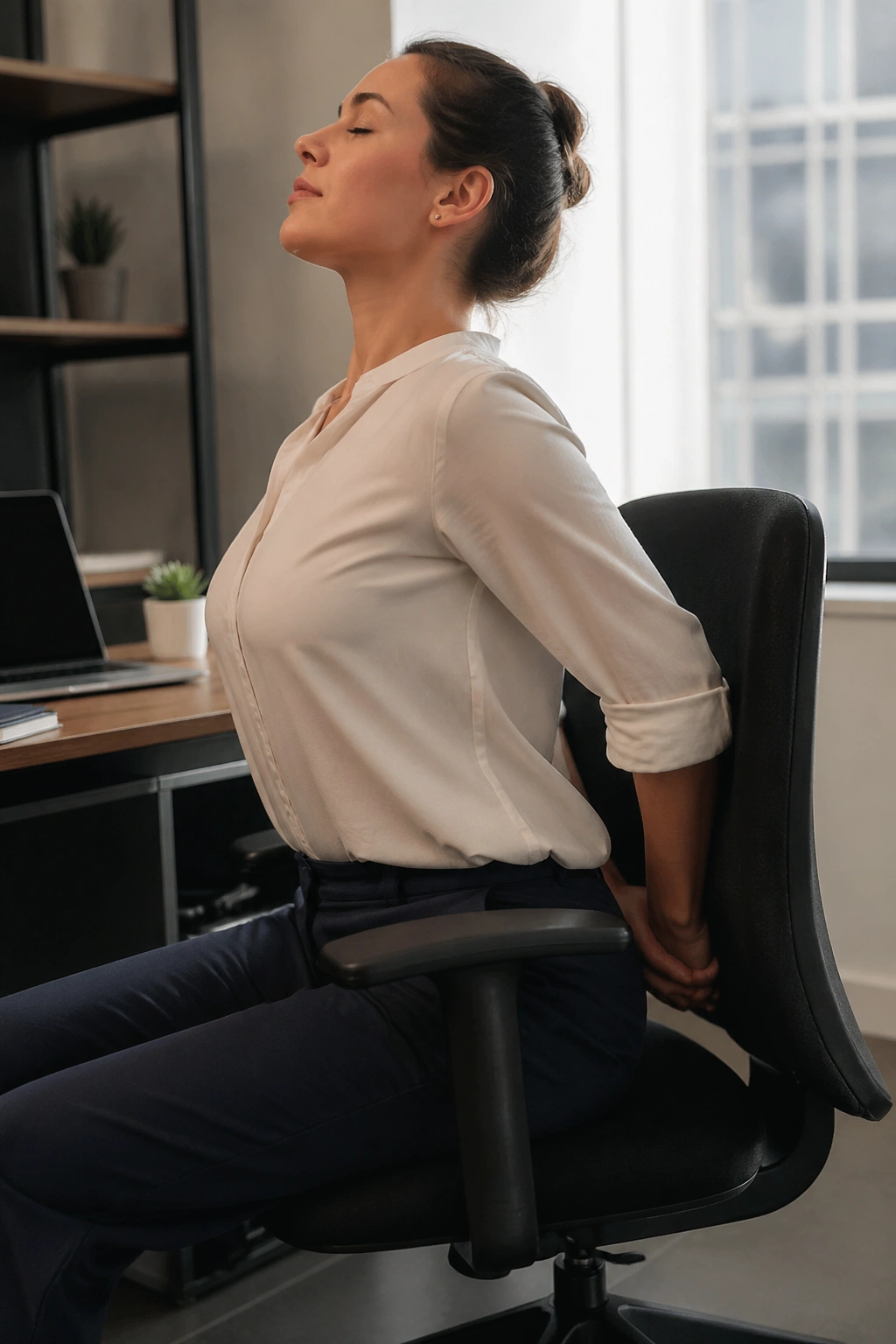
Set up the body first
Sit toward the front of the chair, clasp your hands behind your lower back if your shoulders allow it, or hold the sides of the chair if they do not. Lift the chest without puffing the ribs out. The sternum rises, but the belly stays gently drawn in.
Use the breath to open the front body
Inhale and feel the collarbones spread. Exhale and draw the shoulder heads down as the arms press slightly back or down. That’s the Pilates part: the chest opens, but the front of the ribs do not pop forward like a linebacker stance.
What to avoid
If your neck tightens, the range is too big. If your lower back arches hard, you are cheating the movement into a backbend. Keep it controlled, and stop the moment the front of the shoulders begins to pinch.
This one is excellent after long computer sessions because it reminds the chest that it is allowed to open without drama. You finish feeling taller, not flung open.
7. Seated Knee Lift March for Deep Core Control
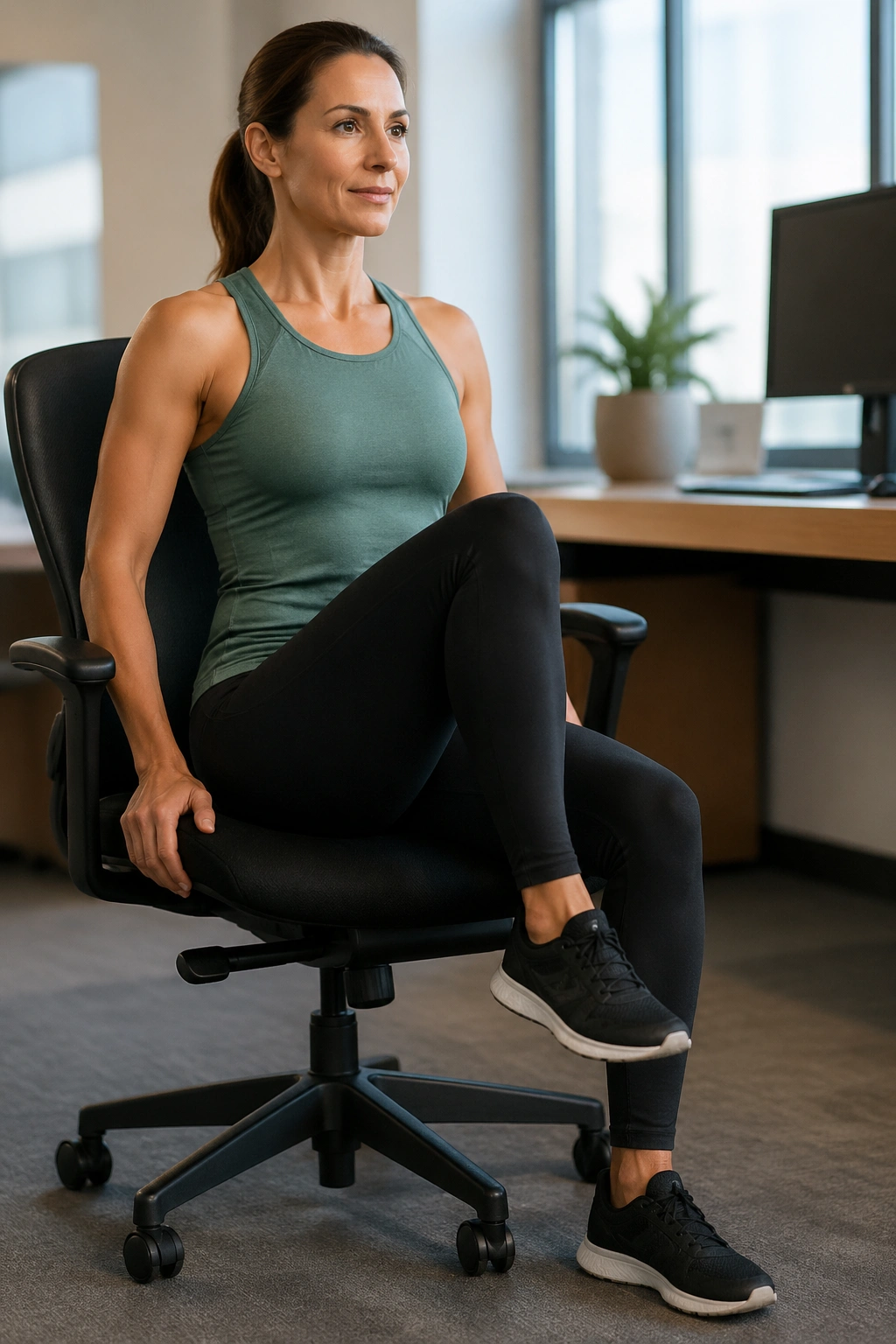
You know that moment in a long meeting when your lower body goes numb and your abs switch off? This is the antidote. Lift one knee a few inches, lower it with control, then switch sides without letting your torso sway. The goal is steadiness, not height.
Keep your hands on the chair seat or lightly on your thighs if that helps you stay upright. Each lift should feel deliberate. If you have to lean back to get the knee up, the lift is too high. Lower the target and stay honest.
One side will usually feel shakier. That’s normal. The body tends to hide asymmetries until you ask for one-legged support, and then the truth shows up fast. Good. That is useful information, not failure.
Try six to ten lifts per side, breathing steadily through the set. The marching action wakes up the lower abdominals, hip flexors, and the stabilizers around the pelvis without asking for a big range of motion.
8. Seated Leg Extension for Quads and Core
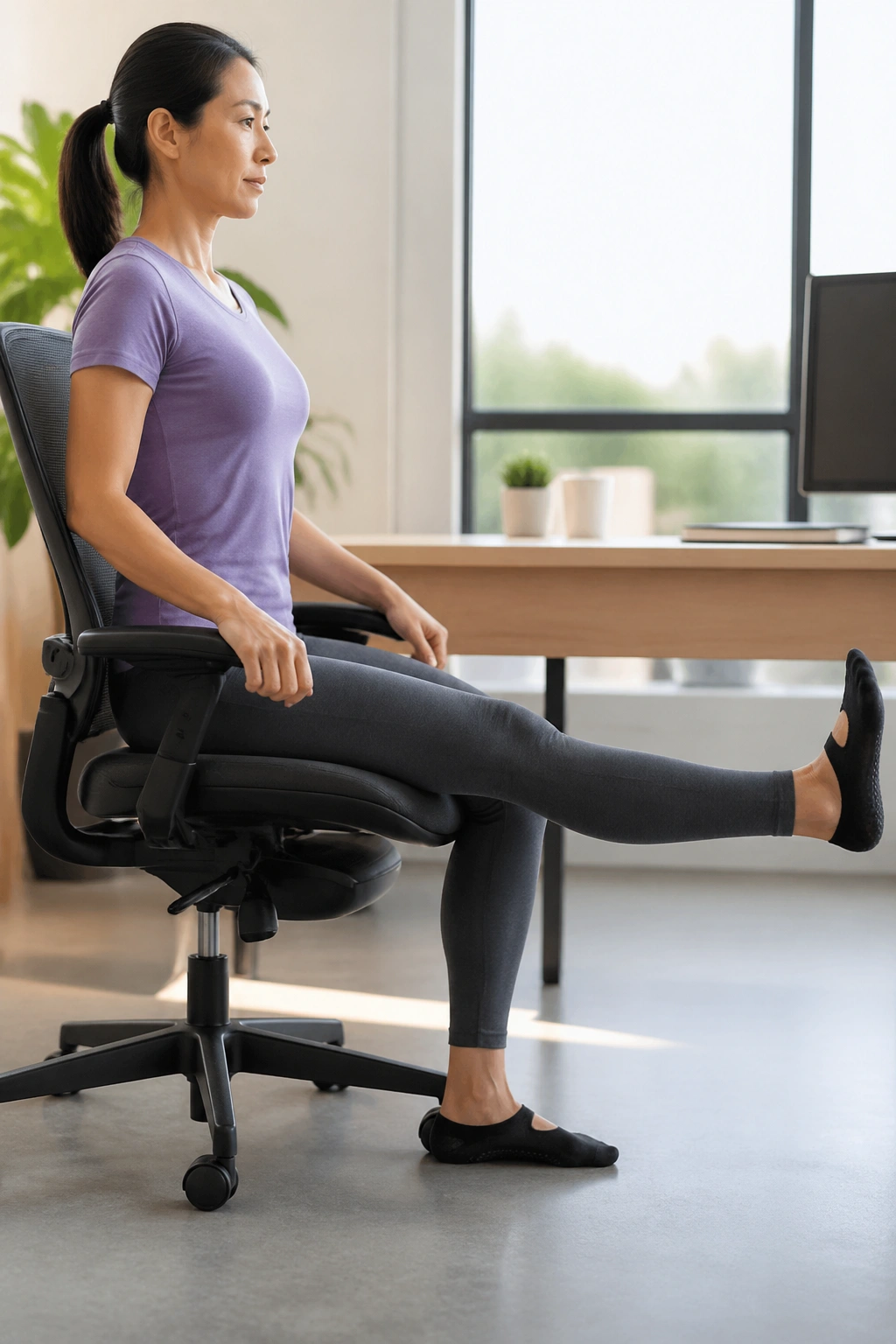
Can you train your legs while staying in the chair? You can, and this move proves it. Sit tall, extend one leg straight out from the knee, flex the foot hard, hold for a beat, and lower it with control before switching sides. The lift is small, but the demand is real because your trunk has to stay quiet while the leg works.
Keep both hips level. If you lean back, you turn it into a balance dodge. If you kick the leg wildly, the quad does all the work and the core checks out. Neither option is useful. Smooth extension, steady trunk, slow return.
A lot of office workers feel this one in the front of the thigh first, then in the lower abs once the movement settles in. That is a good sign. The whole point is to reconnect the legs to the center instead of letting the feet and hips drift through the day on autopilot.
Use four to eight reps per side. If your hamstrings are tight, do not lock the knee hard at the top. Reach long, keep the toes flexed, and stop one inch before the joint starts to protest.
9. Figure-Four Stretch for Tight Hips
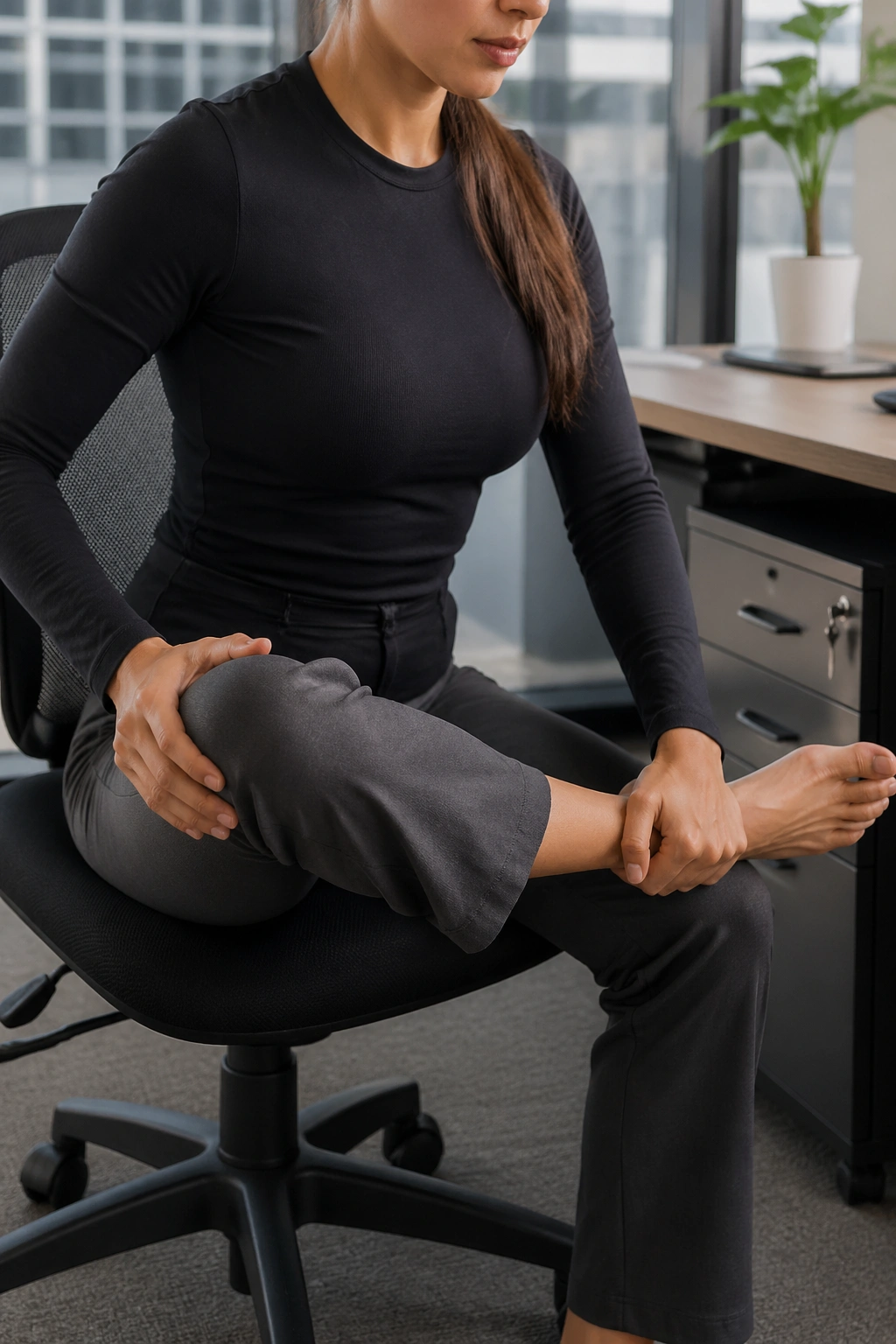
The first thing you notice is the hip joint opening, then the outer glute starts to soften, and if you sit there for a breath or two, the whole pelvis feels less welded together. Cross one ankle over the opposite thigh, flex the lifted foot, and sit tall before you hinge slightly forward.
Do not shove the knee down. That is the move people always want to do, and it usually backfires. Let the thigh rest where it can, keep the spine long, and lean from the hips until you feel the stretch across the back of the lifted leg. A little stretch in the outer hip is fine. A sharp pinch is not.
If the shape is too much, keep the crossed ankle lower, closer to the shin, or place the ankle on the floor beside the opposite foot and angle the knee open a little. Same idea. Less drama.
This is one of the best seated Pilates stretches for office workers because sitting shortens the hips in a way that sneaks up on you. You stand up, take three steps, and suddenly one side feels like it belongs to a different body. This move helps with that.
10. Seated Mermaid Side Bend for the Ribs
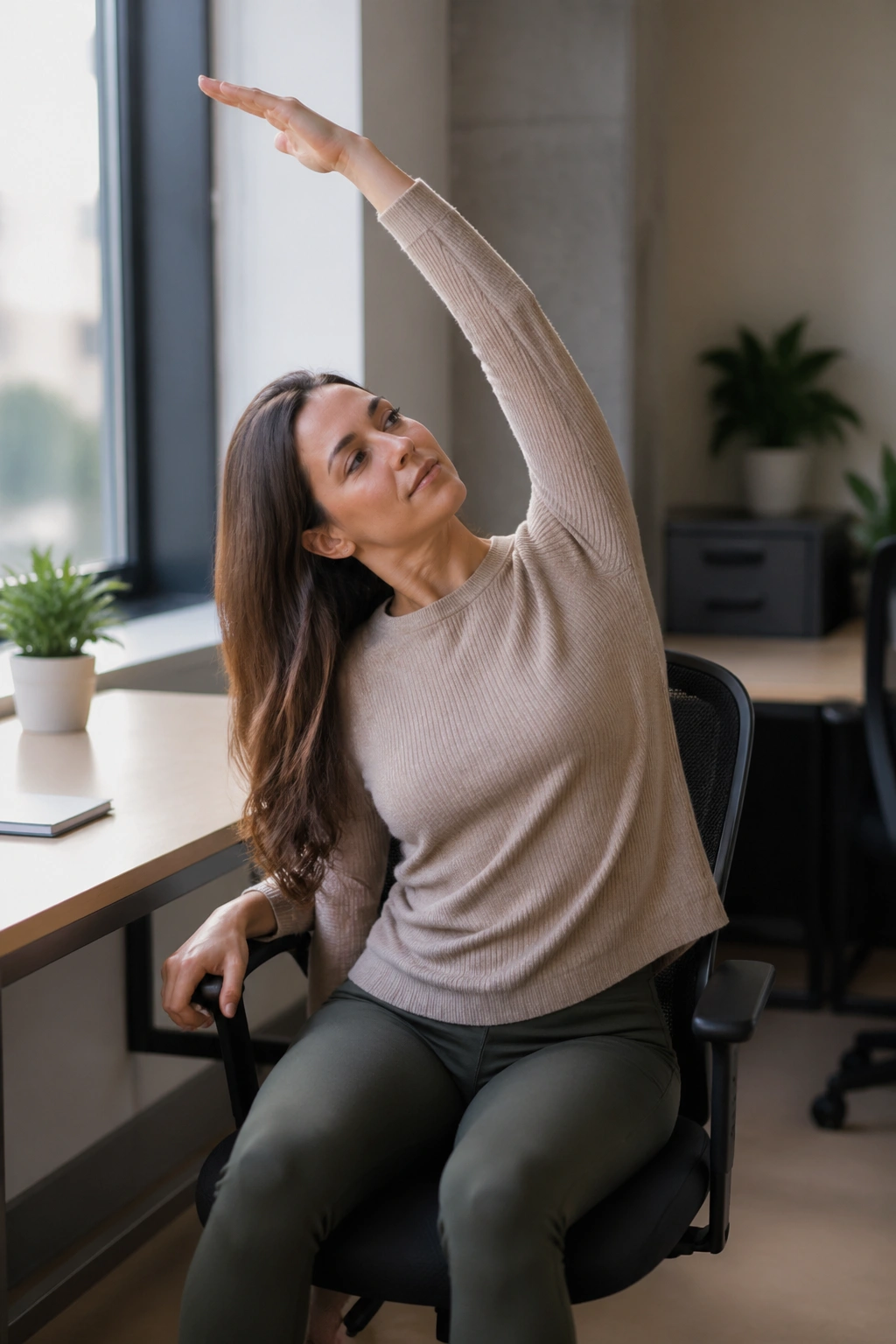
A desk day can make your ribs feel locked in place, and that is where mermaid comes in. Sit tall with both feet grounded, one hand holding the side of the chair for support, and the other arm reaching overhead. Then side bend away from the grounded hand, letting the top ribs arc open without collapsing the chest forward.
Why it helps after long email marathons
The side body gets ignored all day. We type, click, scroll, lean forward, and breathe shallowly into the top of the lungs. Mermaid wakes up the obliques, the intercostals between the ribs, and the muscles that help the torso bend and lengthen at the same time.
How to do it well
- Keep both sit bones heavy.
- Reach the top arm long before you bend.
- Think about length first, curve second.
- Take two slow breaths in the bent position.
The pretty version of mermaid is easy to fake. The useful version feels like the whole side of your body has been unzipped a little, and that is the one worth doing.
11. Seated Saw for Rotation and Hamstrings
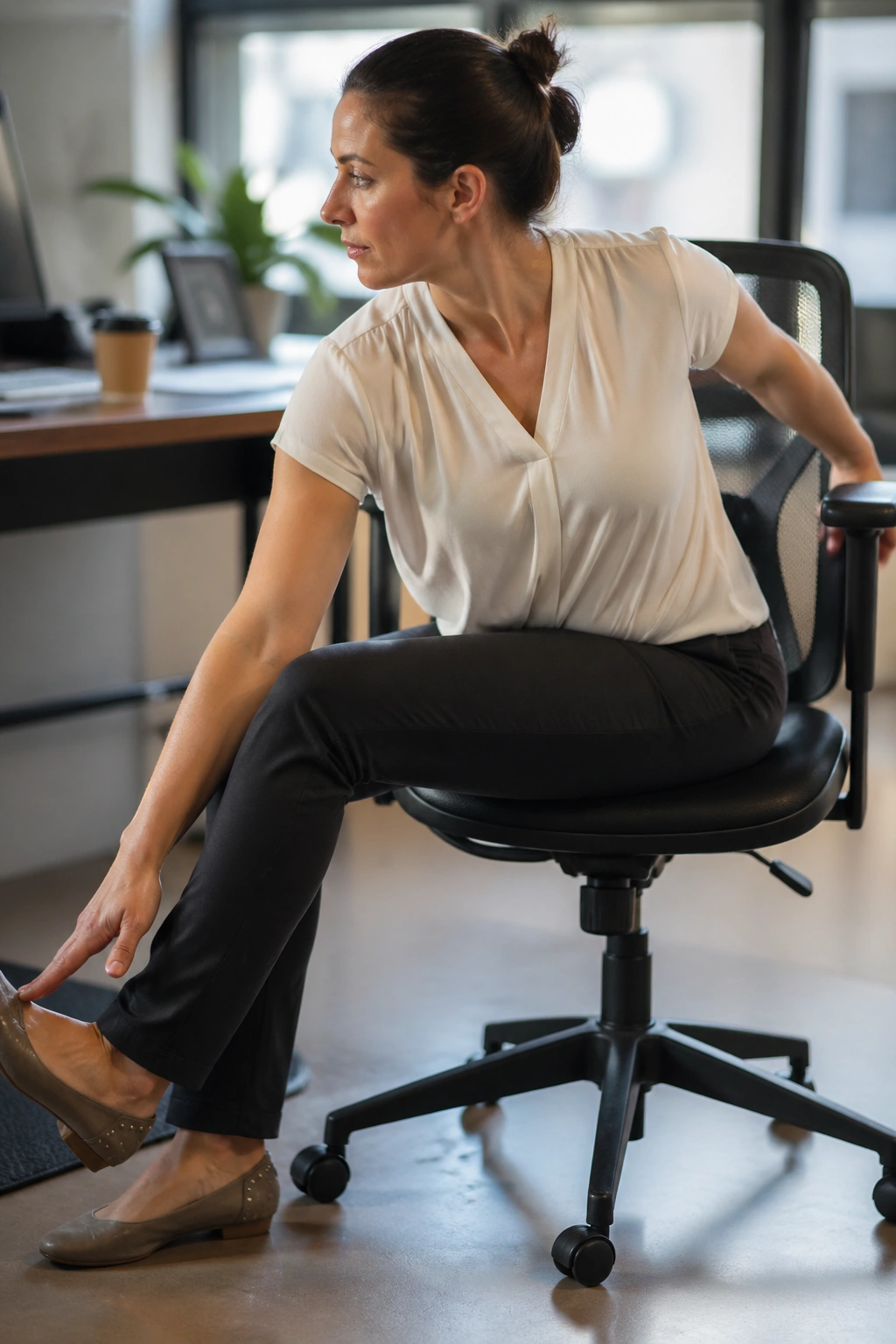
Picture this: your back is stiff, your hamstrings feel short, and one side of your torso has spent all morning twisted toward a monitor. The seated saw handles all three at once. Open the arms wide, twist the torso, then reach the opposite hand toward the outside of the opposite foot while the back hand reaches away behind you.
Keep the spine long as you twist. The reach should come from the ribs and hip crease, not from collapsing the chest toward the knee. If the hamstrings are tight, bend the knees a little. If the shoulders tense up, shorten the arm reach and keep the neck soft.
Three things to watch
- Both sit bones stay rooted.
- The chest keeps turning, not diving.
- The final reach should feel long, not aggressive.
I like this one because it has some personality. It feels like a real Pilates move, not just a desk stretch wearing Pilates clothes. There is rotation, length, and a bit of challenge, which makes it useful without becoming fussy.
12. Seated Footwork for Ankles and Calves
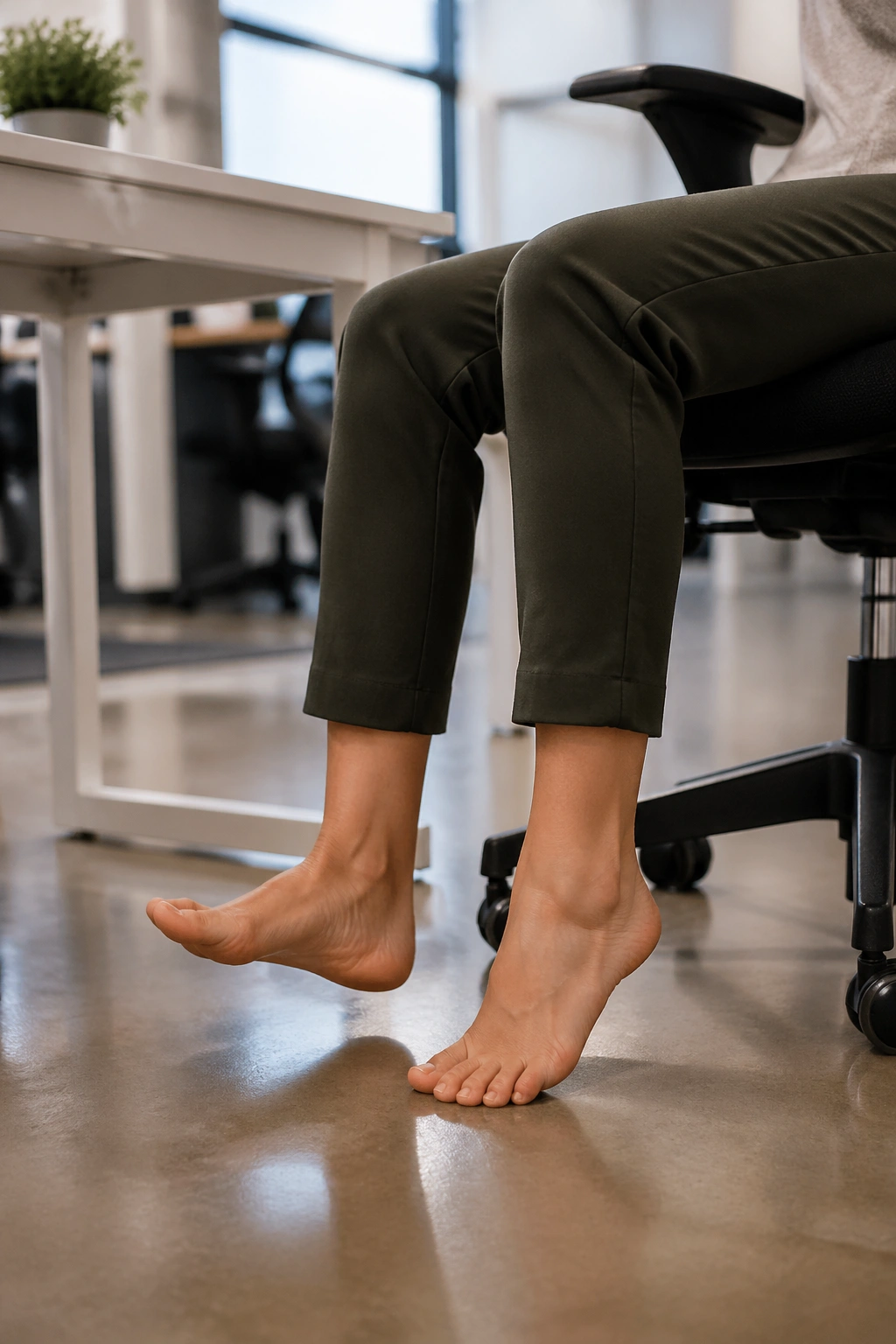
Do not ignore the feet. They spend all day holding you up, then they get blamed for nothing when the calves feel tight and the ankles forget how to move.
Sit with both feet flat. Press through the balls of the feet and lift the heels, then lower and lift the toes. After that, point and flex each foot a few times, keeping the knees still. The range is small, but your lower legs will notice it fast, especially if you tend to stay planted in one position for hours.
Here is a simple sequence that works well at a desk:
- Ten heel lifts.
- Ten toe lifts.
- Eight slow point-and-flex reps.
- Five ankle circles in each direction.
Keep the movement clean. If the knees start bouncing around, slow down and reduce the range. This is about circulation, ankle mobility, and waking up the lower legs so the whole chain feels less sluggish when you stand.
13. Inner-Thigh Squeeze for Pelvic Support
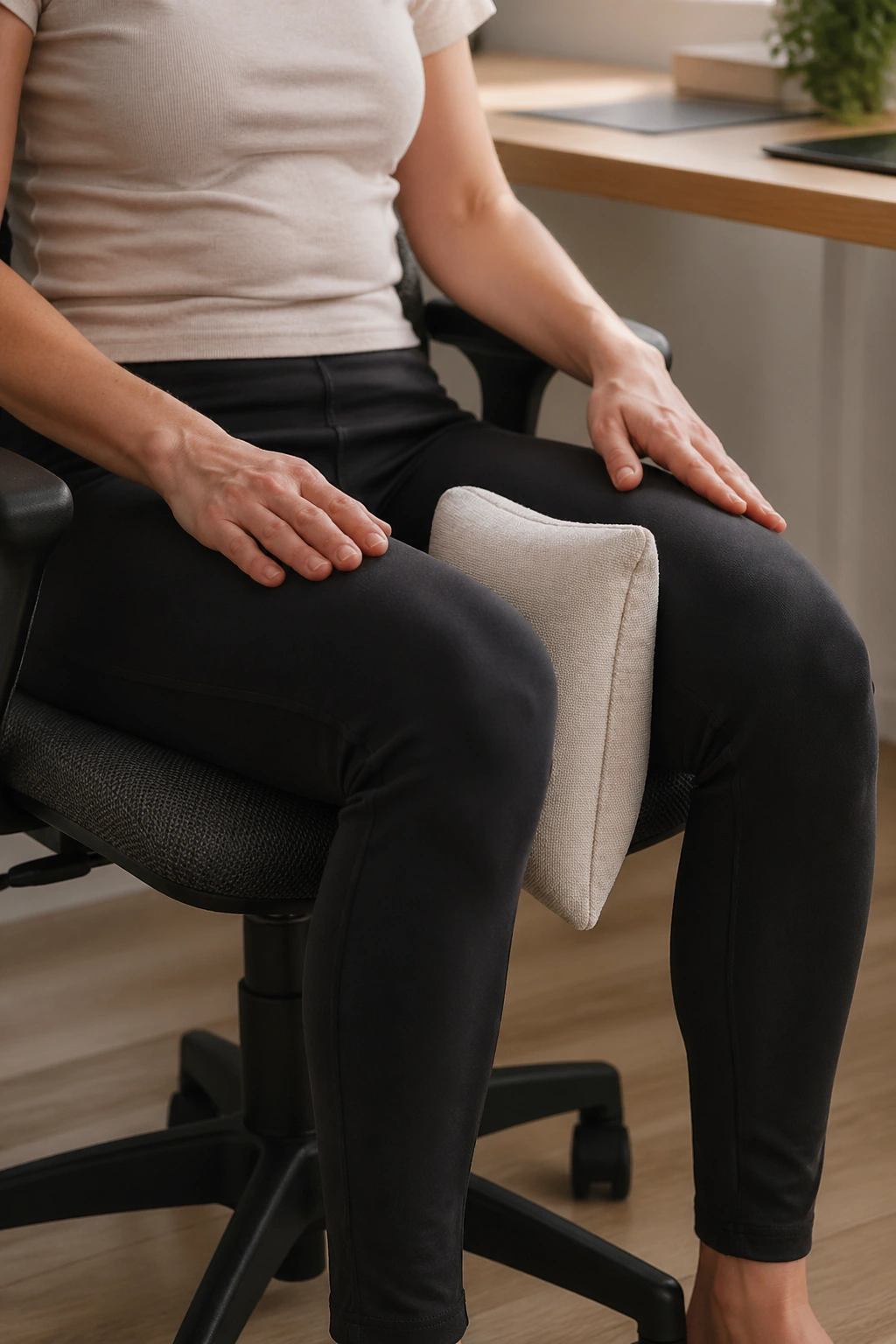
Ever notice how your legs can go numb in a chair and your pelvis starts feeling unstable for no obvious reason? The inner thighs are part of that story. Place a small pillow, rolled towel, or soft ball between your knees and squeeze gently for five seconds, then release for five seconds.
The pressure should feel firm but not cranked up. You are not trying to crush the pillow. You are teaching the adductors to help stabilize the pelvis, and that support often makes the lower belly engage more naturally too. If you’ve never paid attention to this connection, it can feel strangely satisfying.
Use eight to twelve rounds, and breathe all the way through them. On the inhale, soften the squeeze a little. On the exhale, draw the thighs in with control. The movement is subtle, but subtle is not the same as weak.
This one is a nice choice before standing up after a long spell of sitting. The legs often feel more connected, and the pelvis feels less wobbly on the first steps.
14. Hundred Arms for Breath and Core Control
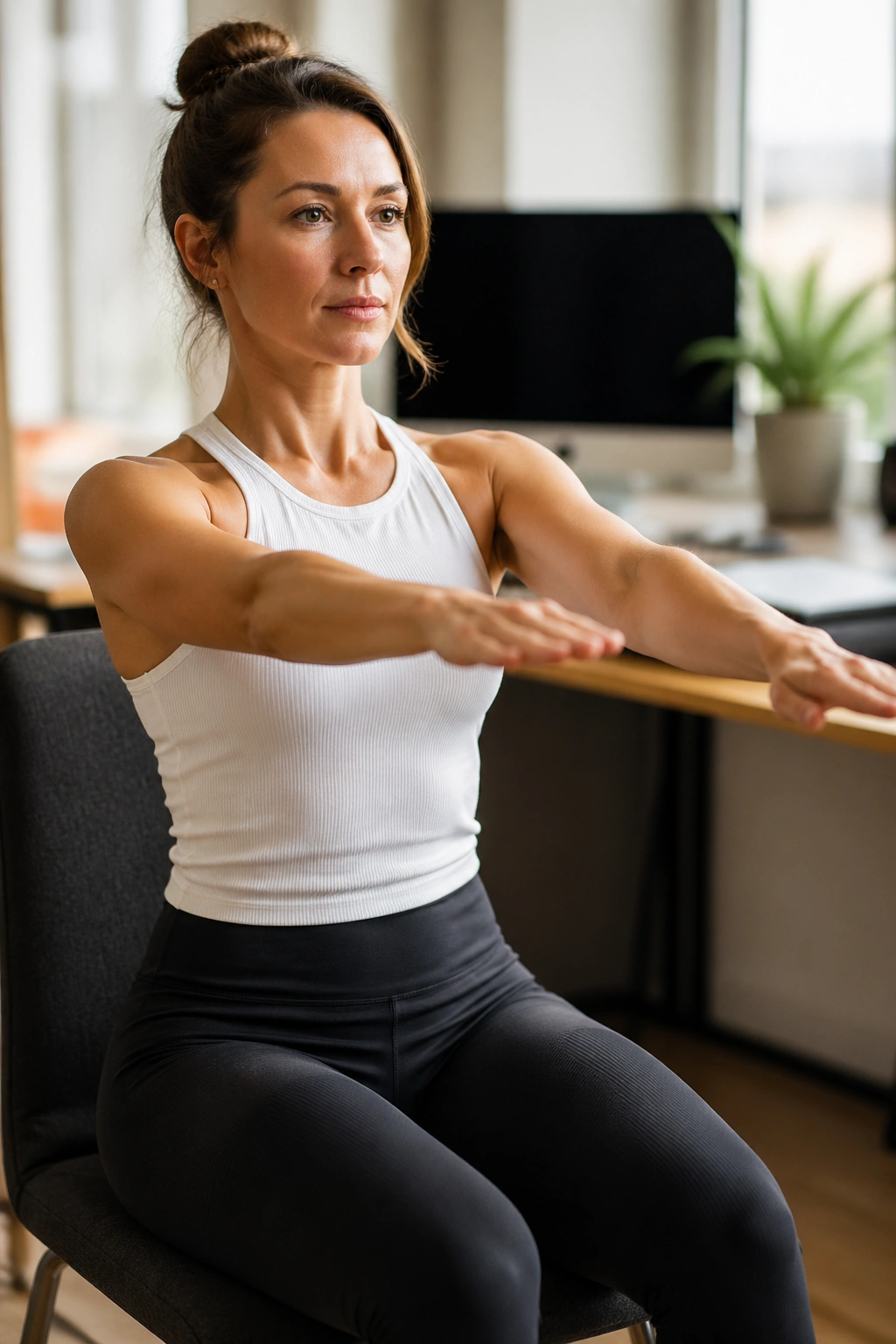
The classic hundred is a floor exercise, but the seated version still gives you the good part: breath pattern, arm stamina, and deep core engagement. Sit tall, lift the arms forward or slightly down by your sides, and pump them a few inches while you inhale for five counts and exhale for five counts. Ten rounds is a full set, but even five gets the job done on a busy day.
Keep the shape small
The shoulders stay low. The ribs stay knitted. The belly draws inward on the exhale without the spine collapsing backward. If the neck starts to grab, lower the arms or stop after fewer rounds. There is no prize for pretending you have more endurance than you do.
What this move is really doing
It teaches you to keep the trunk steady while the arms work. That matters more at a desk than people think, because shoulders and breath often get tangled together when the day runs long.
A slow, tidy hundred arms set can leave you feeling oddly refreshed. Not hyped. Just more organized.
15. Seated Roll Back for a Stronger Midsection
Small is not weak.
Sit near the front of the chair with your feet grounded and your hands on the thighs. Inhale to grow tall. Exhale and gently scoop the lower belly as you roll the pelvis back a few inches, letting the low back curve away from the chair just enough to feel the abs switch on. Then inhale to return to upright with control.
That is a half roll-back, not a recline. If you drop backward, you lose the point and turn it into a rest break. If you push the knees forward to compensate, you miss the core work. Keep the movement compact and precise, and stop before the lower back feels strained.
I like this move as a finisher because it ties everything together. The pelvis organizes, the abs wake up, and the spine learns how to move without dumping effort into the neck or hip flexors. Five clean reps can do more than a sloppy ten.
If you have time for only a few pieces, choose the spine stretch, the twist, and this roll-back. That trio covers length, rotation, and control, which is about as useful a desk reset as you can get without leaving the chair.
Pick three. Do them between meetings, not after your body has already complained for hours. That’s where the payoff lives.
