



No resistance band workout erases belly fat on its own.
That sounds blunt, but it saves a lot of wasted effort. Resistance band workouts for belly fat work because they make you move more muscle, brace your trunk harder, and keep your heart rate up without needing a gym full of machines.
A band also has a nice trick up its sleeve: the resistance gets heavier the farther you stretch it. That means a simple chop, press, or squat can feel smooth at the start and nasty near the end of the rep, which is exactly why a medium band is often more useful than a heroic one. If you can do 25 sloppy reps, the band is too light. If you can’t keep your ribs down on rep 6, it’s too heavy.
The best setup is usually plain and cheap. A loop band, a long tube band with handles, and a door anchor will cover most of what you need. Anchor it safely. Use a band you can control for 10 to 15 clean reps, or 20 to 40 seconds if the move is more cardio-driven. The first move below is one of the best places to start because it wakes up the whole trunk fast.
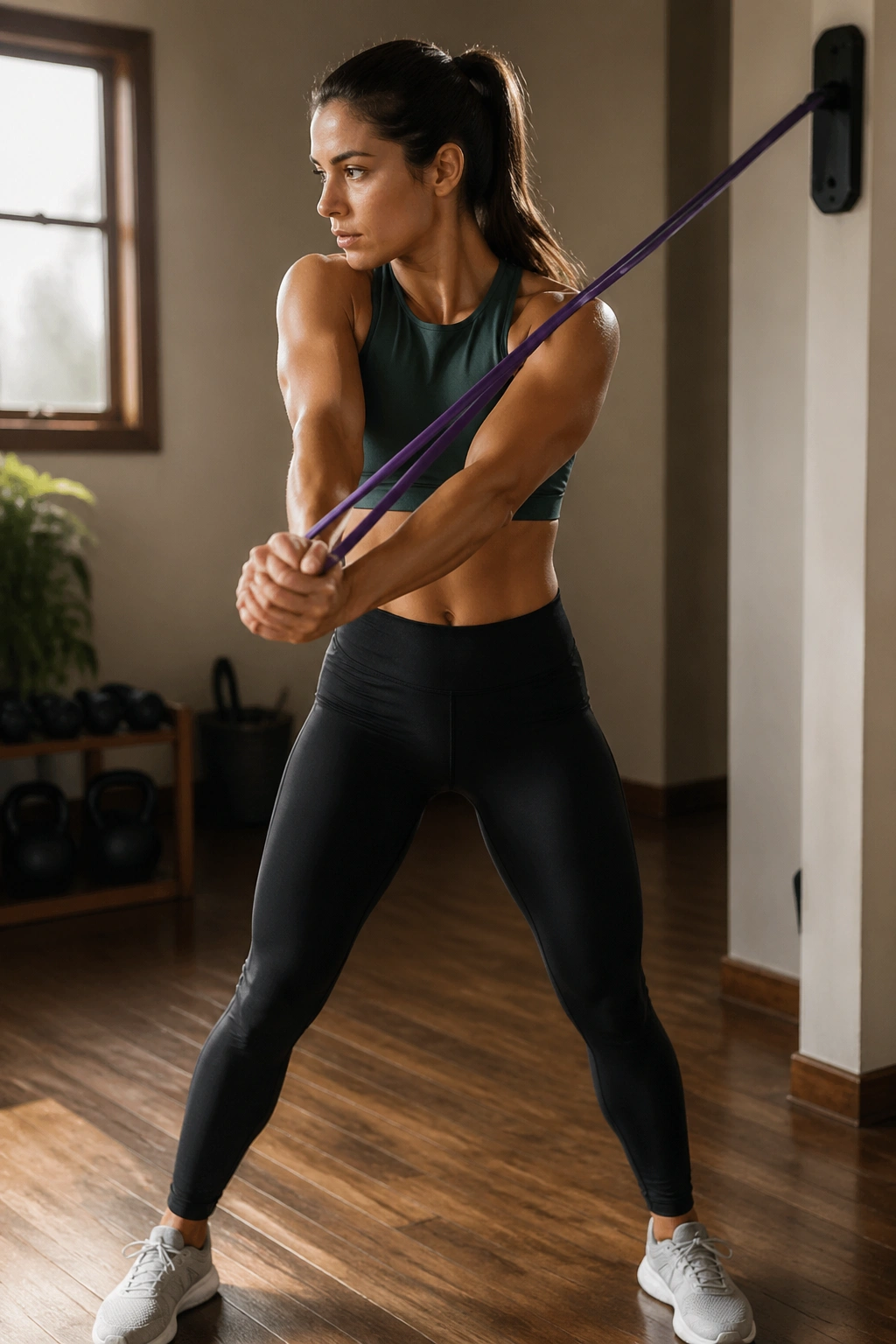
1. Standing Band Woodchops
This is one of those moves that looks simple until you do it with real tension. Woodchops hit the obliques, shoulders, hips, and upper back in one clean pattern, which makes them a smart choice when you want a workout that feels bigger than an ab routine.
Why It Works
The band keeps pulling on you the whole time, so your torso has to stay tight instead of wobbling through the rep. That matters more than people think. A lot of “core” work fails because the arms do the job while the midsection freeloads. Here, the trunk has to rotate, stop rotation, and then control the return.
Anchor the band high for a high-to-low chop, or low for a low-to-high version. Stand with your feet a little wider than hip-width, soften the knees, and turn through your ribcage rather than yanking with your arms. Exhale as you chop down or across. That small breath cue keeps your waist from going soft at the hardest point.
- Do 10 to 12 reps per side
- Use 2 to 4 rounds
- Keep your shoulders away from your ears
- Move with control on the way back
Tip: If the lower back takes over, shorten the range and slow the return. The waist should work hard. The spine should not feel like it is getting twisted for fun.
2. Pallof Press Holds
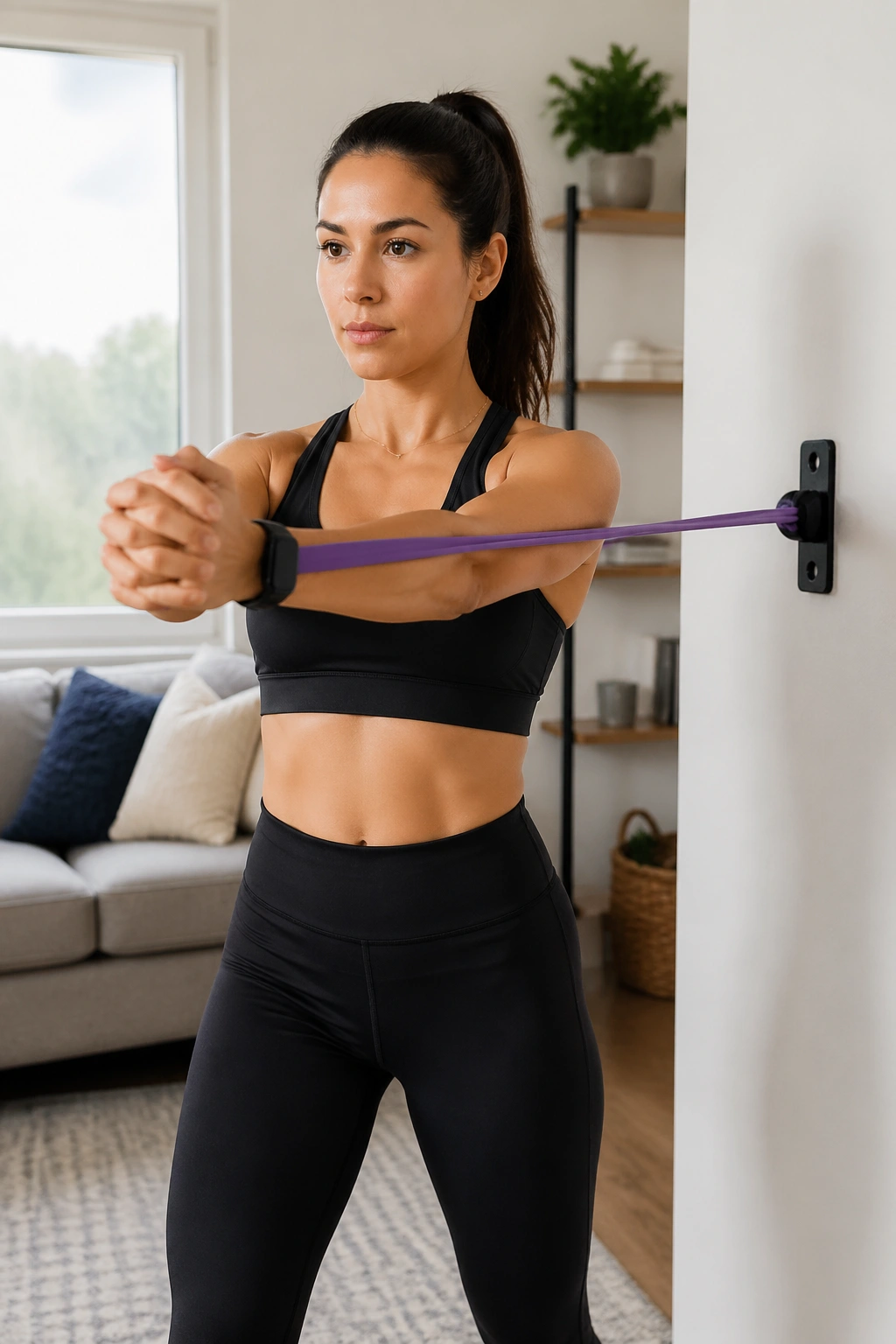
Why does standing still with a band feel so hard? Because your body hates being pulled sideways when you refuse to twist.
The Pallof press is one of the cleanest anti-rotation moves you can do with a band. You anchor the band at chest height, stand sideways to the anchor, press the handle straight out from your sternum, and fight the pull without letting your shoulders turn. That quiet battle is the point. Your obliques, deep abs, and glutes all have to brace to keep you square.
How to Use It
Set the anchor so the band pulls from the side, not from above or below. Take one step away from the anchor until the band has steady tension. Press the band out for a 2-second hold, then bring it back to your chest without letting your torso rotate. Eight to 10 presses per side is enough for most people. If you want a tougher version, hold the press for 20 to 30 seconds.
Stillness can be brutal.
I like this move because it teaches the core what a real brace feels like. Not a crunch. Not a twist. Just a firm wall around the midsection while the arms do their job. That skill carries over into almost everything else on this list.
3. Squat to Overhead Press
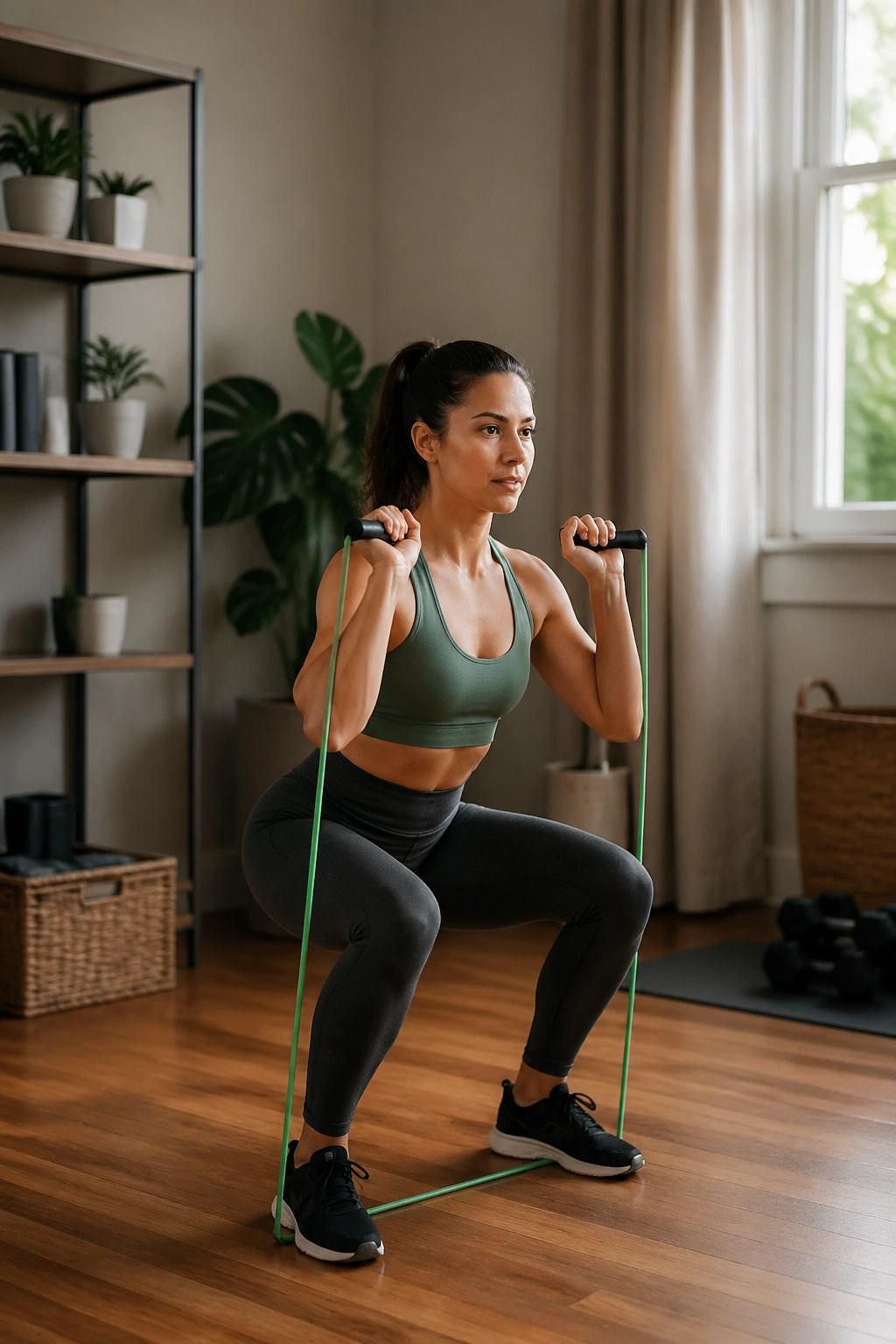
If you want one move to do the job of three, this is the one. A squat to press makes your legs, shoulders, and trunk cooperate instead of taking turns.
Compared with a plain squat, the press adds a bigger demand on the upper body and a longer work phase, which helps keep your heart rate up. That matters for a belly-fat-focused routine because you’re not just trying to flex your abs; you’re trying to use enough muscle that the session actually costs something.
Stand on the middle of a long band with your feet about shoulder-width apart. Hold the handles at shoulder level, palms forward or slightly in. Sit down into a squat until your thighs are near parallel, then drive up and press the band overhead in one smooth motion. Do 10 to 15 reps for 3 sets.
The trick is not to lean back when you press. That is the easiest cheat in the world. Keep your ribs stacked over your pelvis and think about reaching tall rather than throwing the band up.
A medium band works best here. Light bands turn it into arm waving. Heavy bands make the press ugly before the squat even starts.
4. Banded Speed Skaters for Belly Fat
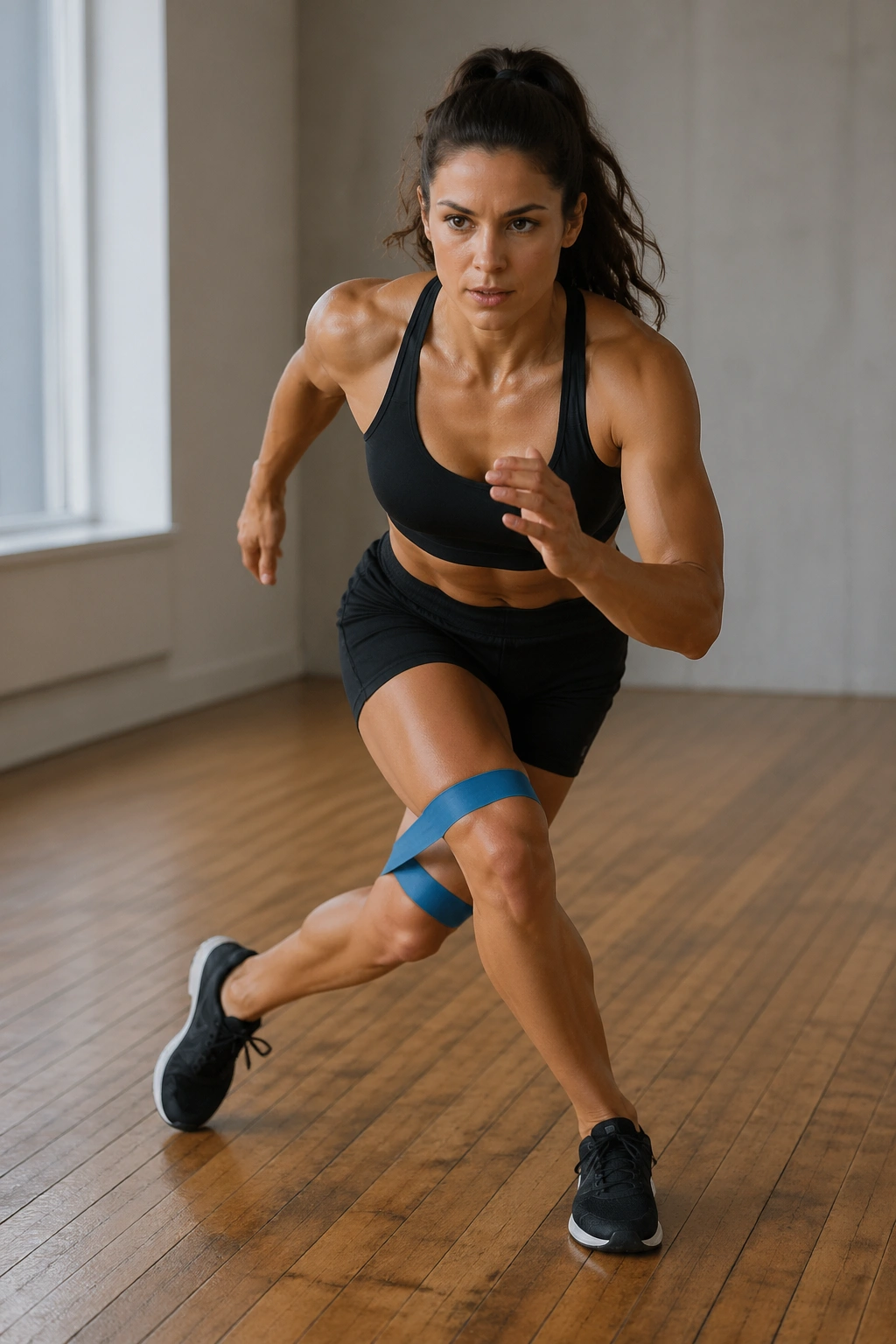
The room feels a lot smaller when you do these. Your feet start moving side to side, your breathing gets loud, and the band keeps your thighs honest the whole time.
Speed skaters are a sneaky good addition to resistance band workouts for belly fat because they combine lateral movement, balance, and a little jumpy cardio without needing much space. Put a mini band above the knees if you want more glute work, or just use bodyweight and move faster if your knees hate jumping.
What Makes Them Different
The side-to-side pattern hits the outer hips and inner thighs in a way straight-line moves do not. That extra stabilizing work matters because your pelvis has to stay controlled while the legs move. Keep a slight bend in both knees, land softly, and let your chest lean forward just a little so you can catch your balance.
If jumping feels rough, step behind instead of hopping. Same idea, less impact. Do 30 to 40 seconds at a time, rest for 20 seconds, and repeat for 3 to 5 rounds.
The best version is the one you can keep crisp. Once your feet start slapping the floor and your knees cave inward, stop and reset. Speed matters less than clean side-to-side drive.
5. Dead Bug with Band Pulldown
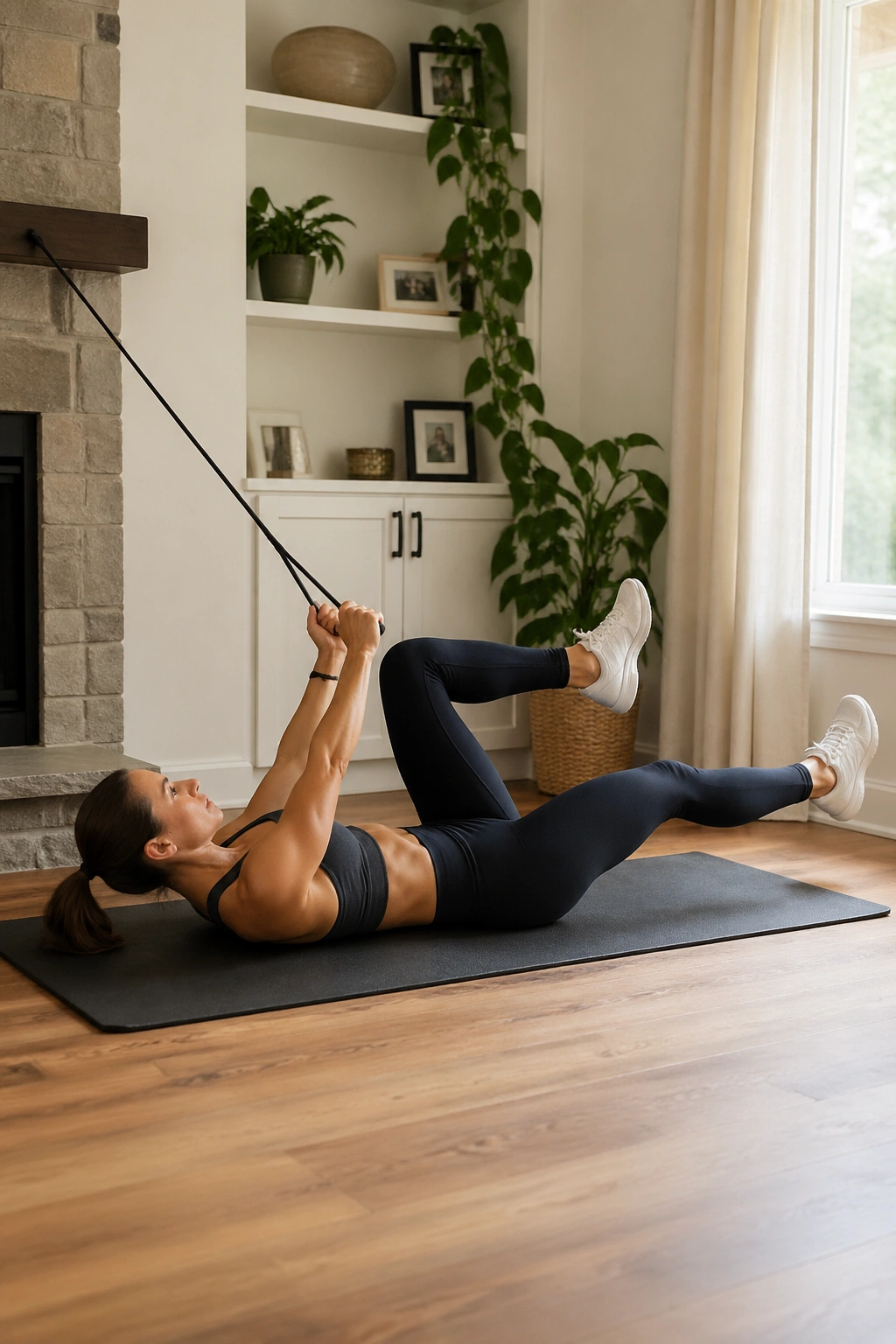
A lot of people skip floor drills because they think slow work is boring. Then they try a dead bug with band tension and realize slow can be sneaky hard.
This one is gold for core control. You lie on your back, anchor a band overhead, and hold the handles or band ends in your hands while you press down toward your thighs. As one leg extends, the band tries to pull your ribs out of place. Your job is to keep the lower back heavy and the trunk quiet.
How to Set It Up
Anchor the band safely above your head, either to a proper door anchor or another stable point. Bend your knees to 90 degrees with your shins parallel to the floor. Press the band down toward your hips, then extend one leg away while keeping the other knee stacked over your hip. Switch sides slowly. Six to 8 reps per side is enough to start.
The lower back is the tell. If it arches off the floor, the band is too heavy or the leg is moving too far. Keep the range tight and the exhale steady.
It looks calm from across the room. It is not calm.
6. Reverse Lunge to Row
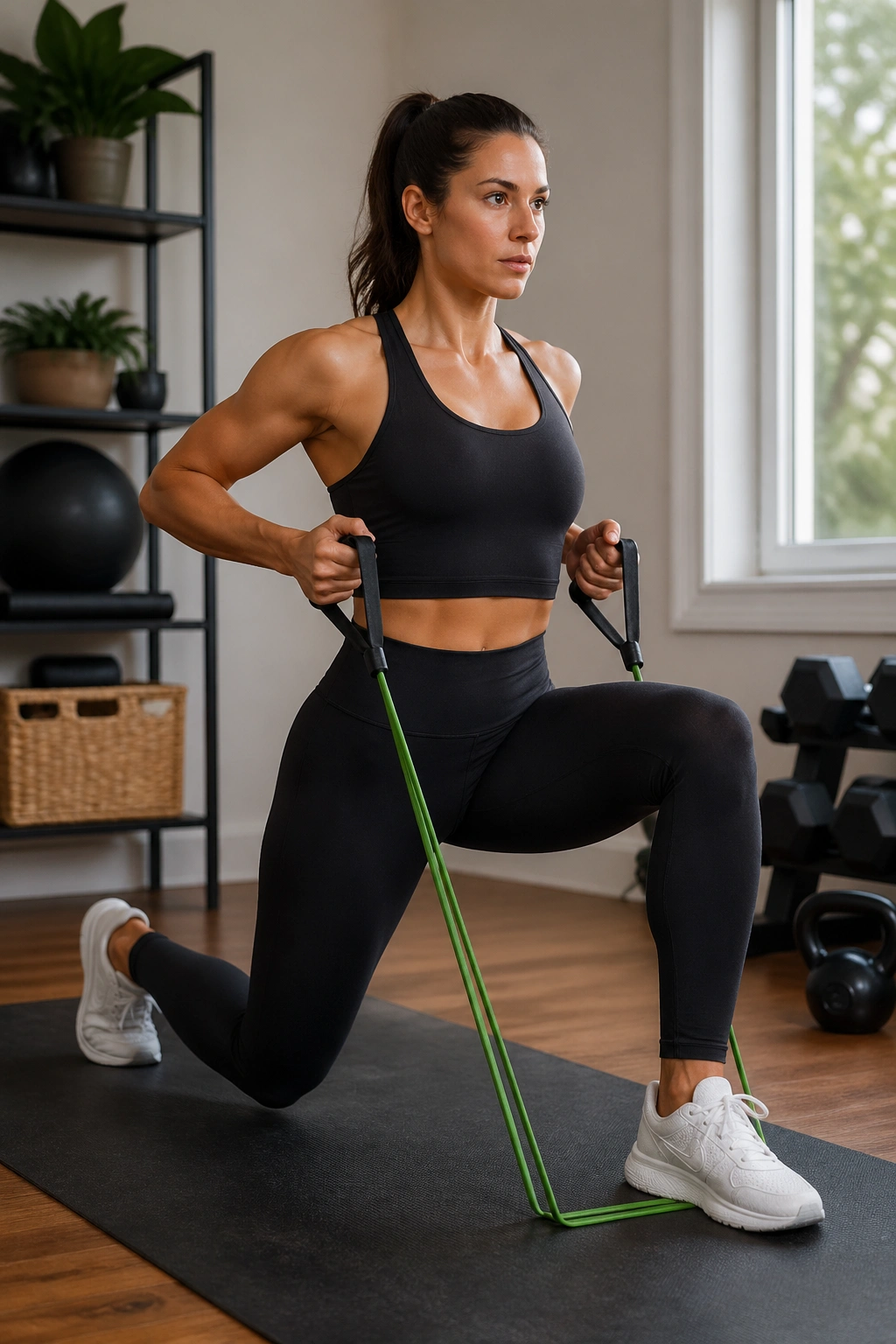
Walk into a small living room with one band and this move still makes sense. That’s one reason I like it.
The reverse lunge to row is a nice blend of lower-body work and upper-back tension. Step back into the lunge while you row the band toward your ribs, and you get legs, lats, glutes, and core all working at once. That’s a far better use of time than doing ten tiny isolation moves that barely raise your pulse.
Stand on the center of the band with both feet. Hold the handles, step one leg back, and lower into a reverse lunge as you row the band toward your lower ribs. Then stand back up and lower the arms. Do 8 to 12 reps per side.
The row should feel smooth, not jerky. If your shoulder shrugs up or your torso leans forward like you’re trying to reach a countertop, the band is probably too heavy. Keep your chest proud and your front heel rooted.
This is a move that rewards rhythm. Once the steps and rows sync up, it starts to feel a lot like a compact full-body circuit.
7. Plank Shoulder Taps with a Band
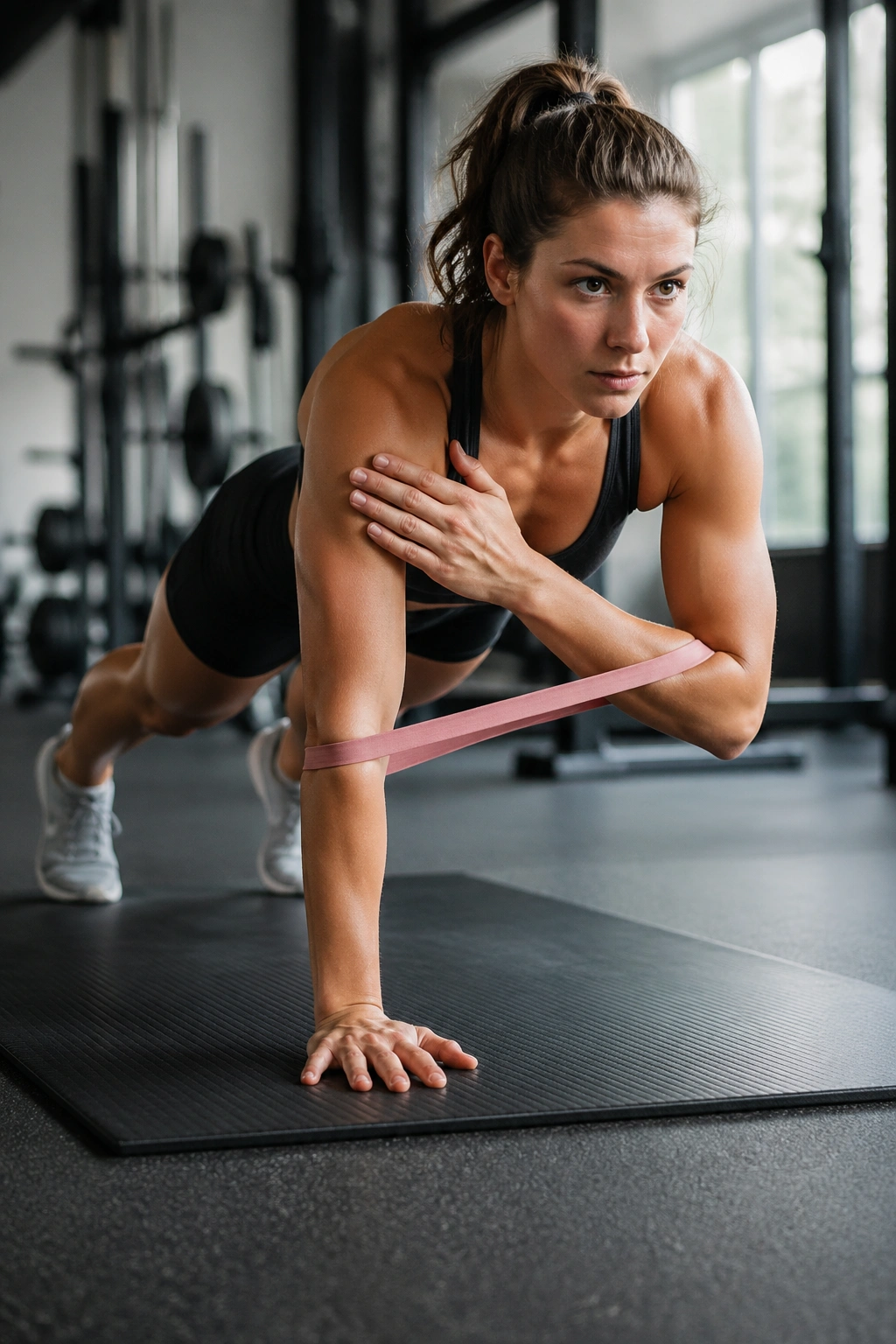
The body gets sloppy fast when you ask it to stay quiet in a plank. That is the whole point here.
Put a light loop band around your wrists and drop into a high plank with your hands under your shoulders. Press one hand into the floor while the other hand taps the opposite shoulder, then switch. The band adds a small outward pull that makes your upper back and core work harder to stop your hips from rocking.
What to Watch For
Keep your feet a little wider than hip-width if you need more stability. That is not cheating. It is smart. Tap slowly enough that the band stays stretched and your waist does not sway from side to side. If your hips are dancing all over the place, widen the stance or use a lighter band.
Try 20 total taps or 30 seconds per round. Two to four rounds is plenty.
A one-sentence version: If you rush this move, you miss the point.
What makes it useful for belly-fat training is the anti-rotation demand. Your abs have to work to keep the body steady while the shoulders and arms move, and that is much more useful than endless fast crunches.
8. Banded Bicycle Crunch
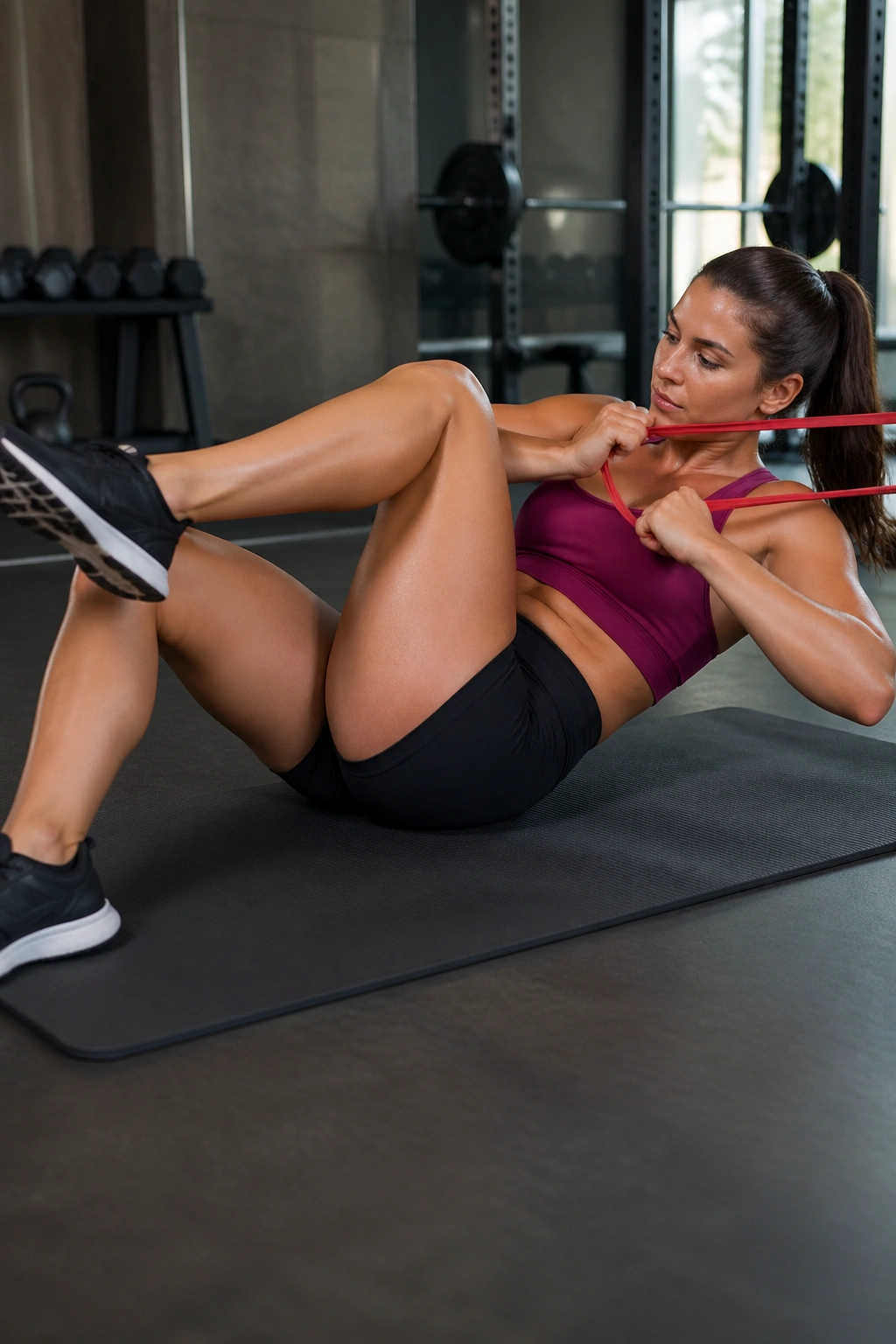
You feel this one in your ribs before you feel it anywhere else.
A banded bicycle crunch turns a familiar floor exercise into something less lazy. Instead of just cycling the legs and hoping the abs show up, you add resistance that makes the twist and crunch more deliberate. The band can be anchored lightly behind you at chest height, or you can hold tension between your hands while you twist. Either way, the key is control.
Lie on your back, knees bent, and keep the low back pressed into the floor. Rotate one shoulder toward the opposite knee while the other leg extends. Move slowly enough that the band has time to pull back. Ten to 12 reps per side is usually enough, especially if you keep the crunch small and clean.
Do not yank on your neck. That old mistake is still everywhere, and it still does nothing useful. The movement should come from the ribcage and torso, not from the hands tugging the head forward.
A tighter, slower bicycle is far better than a frantic one. Your abs will tell you the difference within the first minute.
9. Glute Bridge March
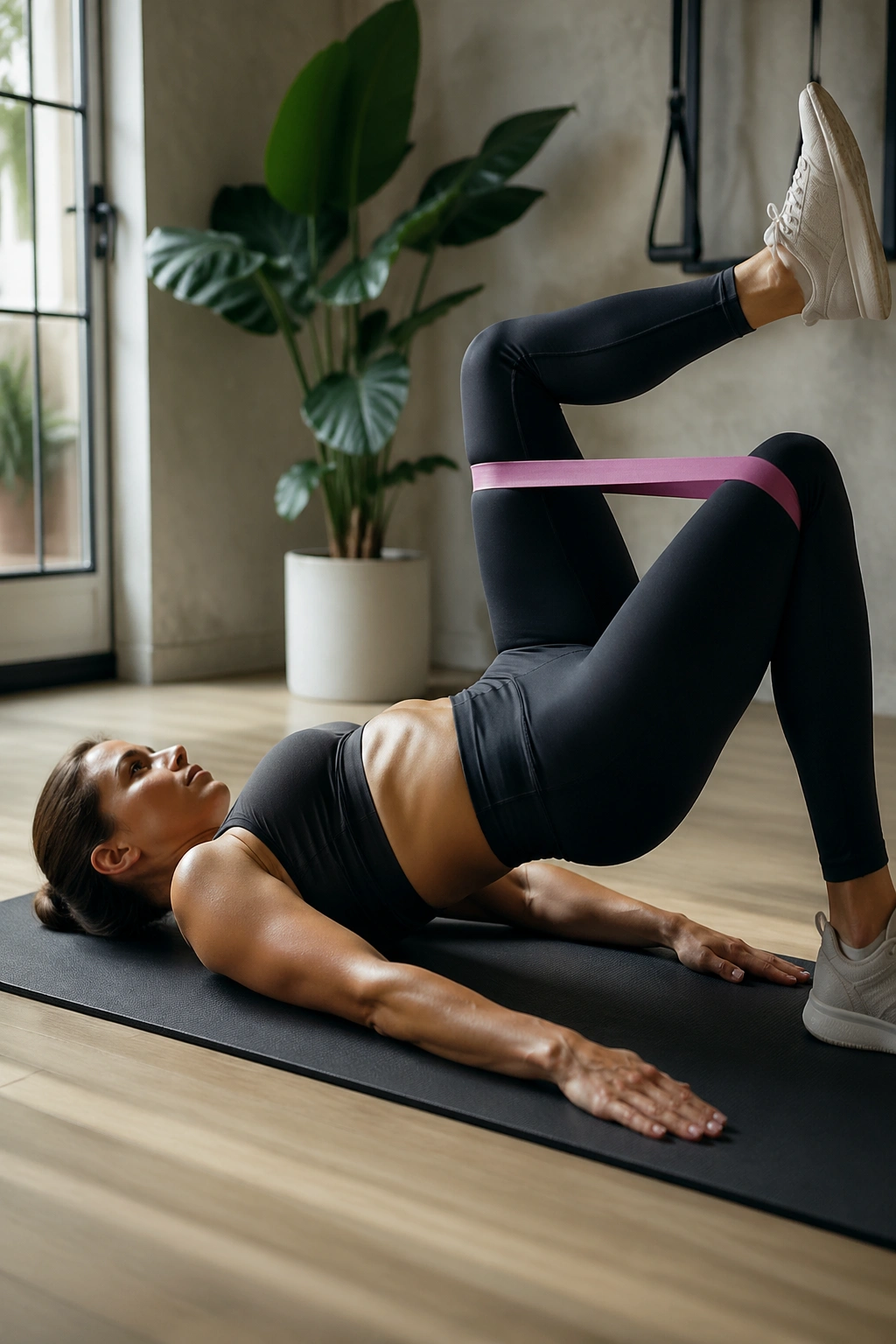
A strong backside makes core work look easier. That’s not a cute saying; it’s what happens when your pelvis has something solid to stand on.
Put a mini band just above your knees and lie on your back with your feet flat. Press your hips up into a glute bridge, then lift one foot a few inches at a time in a marching pattern without dropping your hips. The band keeps the knees from drifting inward and makes your outer hips work harder.
Why It Belongs Here
The glutes and abs share the job of keeping your pelvis from wobbling. If the glutes are lazy, the lower back often does too much. This bridge march fixes that by making you control the pelvis while one leg leaves the floor. That is a simple thing, and it matters a lot.
- Drive through the heels
- Keep the ribs down
- Lift each foot only as high as needed
- Do 8 to 10 marches per side
The harder version is not always better here. A bridge that feels stable is better than a giant hip lift with a wobbly spine. If your lower back cramps, lower the hips a little and slow the march.
10. Standing Side Crunch

Want a move that hits the sides of your waist without lying on the floor? This is a clean option.
Set a band overhead or hold one end anchored above you, then stand tall and pull one side of the ribcage toward the hip on the same side. Think of it as a standing side crunch, not a side bend you throw yourself into. The resistance should make the side of your torso do real work, while the hips stay mostly stacked.
A lot of people turn side work into a loose sway. Don’t. Keep the movement short and controlled. The goal is not to lean dramatically; the goal is to compress the side waist against the band’s pull and then return with control. Ten to 12 reps each side is enough.
This move pairs well with chops and Pallof presses because it gives the waistline a different angle of work. One drill rotates, one resists rotation, and this one shortens the side of the trunk under load.
Short range. Clean control. That is the whole deal.
11. Band Good Morning
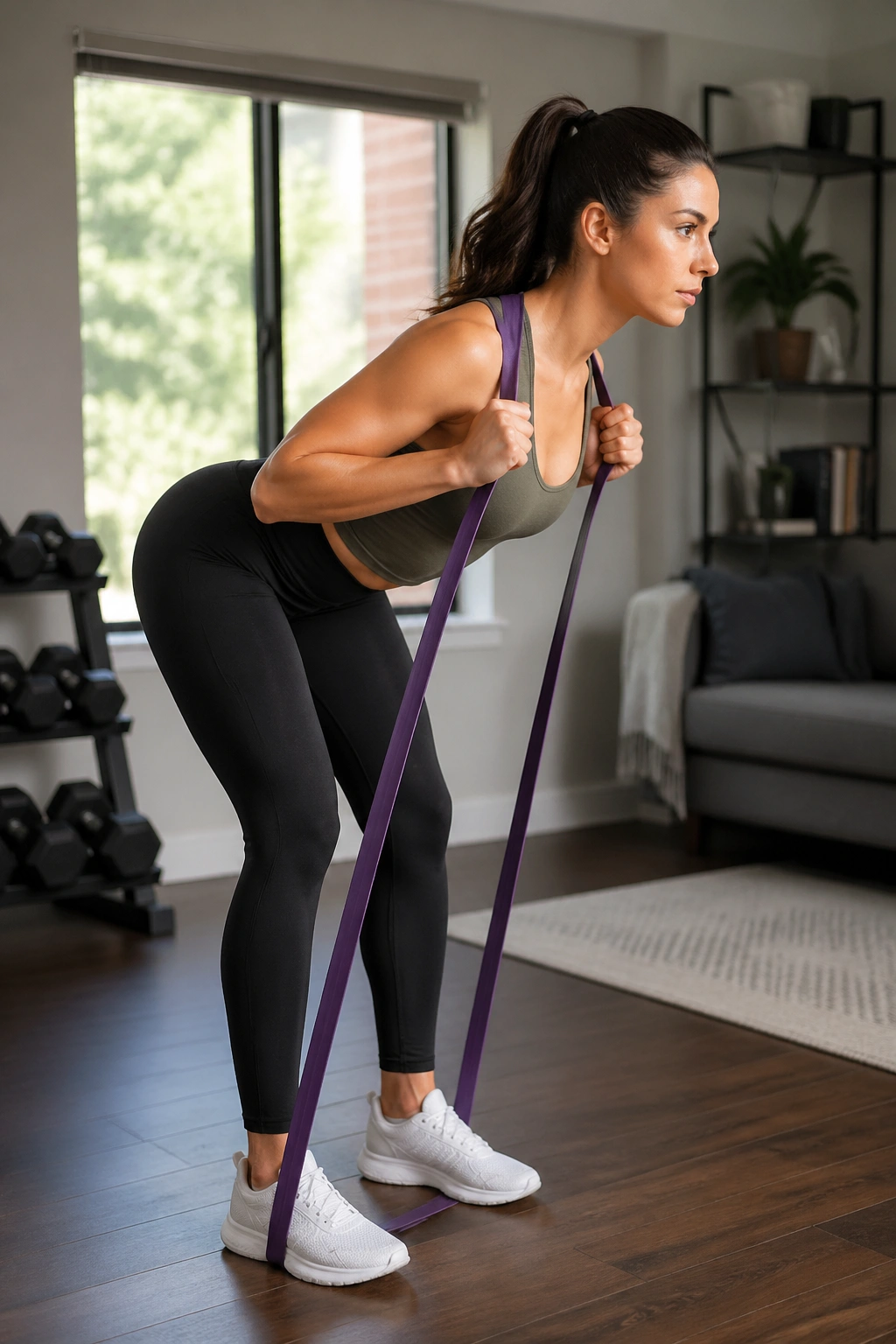
This is a hip hinge, not a back bend.
Stand on the middle of a long band and loop the top around the back of your shoulders, or hold the band at chest level if that feels better. Hinge at the hips until your torso tilts forward, then stand back up by driving the hips through. The knees stay soft, the spine stays long, and the abs stay braced.
Form Notes
- Push the hips back, don’t fold from the waist
- Keep a slight bend in the knees
- Stop when the torso is about 30 to 45 degrees forward
- Use 12 to 15 reps with a band you can control
This move matters because the posterior chain burns energy and supports better posture, which helps nearly every other exercise on this list. If your lower back does the lifting, the band is too heavy or you’re going too deep. Cut the range first. That solves most of the trouble.
Good mornings are not flashy. Fine. They work. And the person who can hinge well usually gets more out of squats, presses, and rows too.
12. Lateral Band Walk and Squat
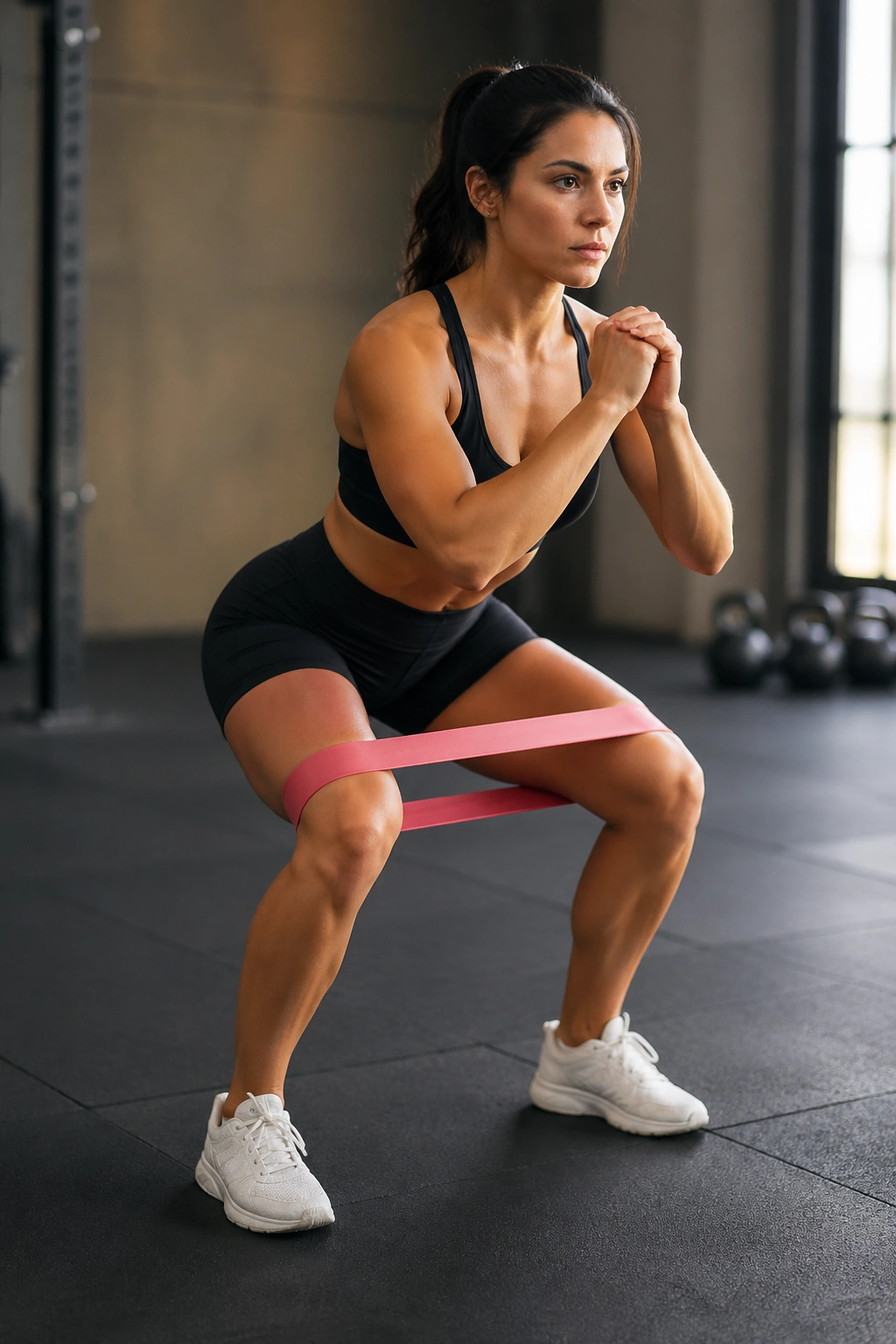
If your knees cave in on squats, this one is worth your time. If they don’t, it still earns its place.
Put a mini band above the knees or around the ankles, step out to the side a few times, then drop into a squat and come back up. The band keeps the outer hips active, and the squat keeps the whole lower body honest. It is a nice little package: glutes, thighs, core, and balance all in one circuit-friendly move.
How to Feel It in the Right Place
Keep tension on the band the whole time. That means no snapping the feet together after each step. Stay low enough that the legs never fully relax, but not so low that the squat turns into a half-sit. Three steps one way, three steps back, then a squat is a simple pattern that works well.
Do 8 to 10 passes or 30 seconds if you want a timed round.
A small detail matters here: the band should not slide down into a wrinkle at the knees. If it does, it usually means the band is too loose or your stance is too narrow. Move it up, widen the feet, and keep going.
13. Alternating Band Punch-Outs
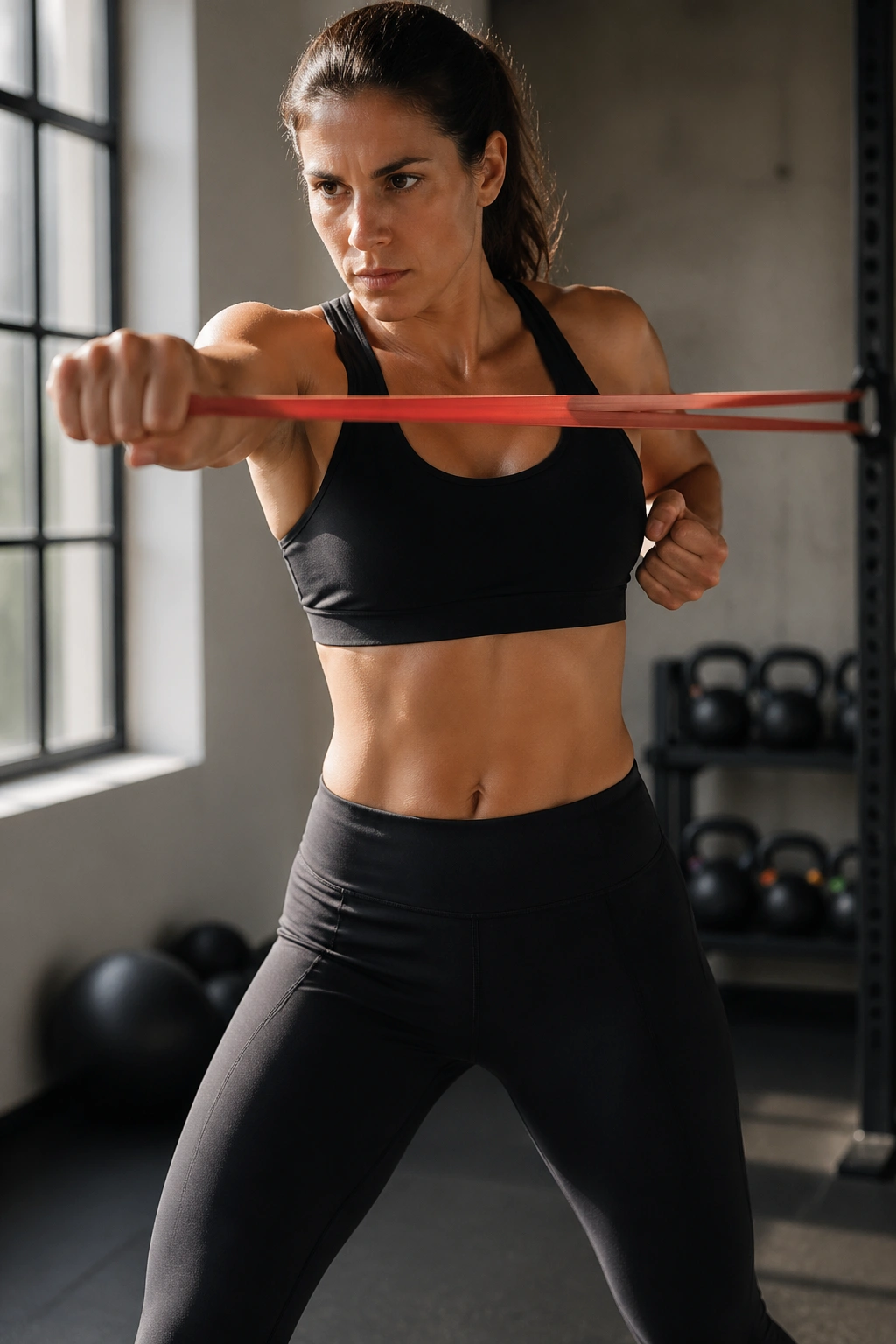
Cardio doesn’t have to mean jumping.
Anchor a long band behind you at chest height, stand in a split stance, and punch one arm straight forward at a time against the band’s pull. The arm has to travel fast enough to feel athletic, but your ribs still need to stay down. That mix of speed and control is what makes the move useful. You get shoulder work, trunk tension, and a heart-rate bump without pounding the floor.
Punch-outs are especially good when you want a short, sweaty block in the middle of a band session. Thirty to 45 seconds is enough. Keep the wrists straight, breathe through the effort, and resist the urge to lean forward into each punch. If you do that, the lower back starts helping too much.
Your shoulders will complain before your lungs do.
That is a good sign, up to a point. You want the punches to feel crisp, almost snappy. Once the motion turns choppy and your torso twists, slow down and reset your stance.
14. Seated Band Russian Twists
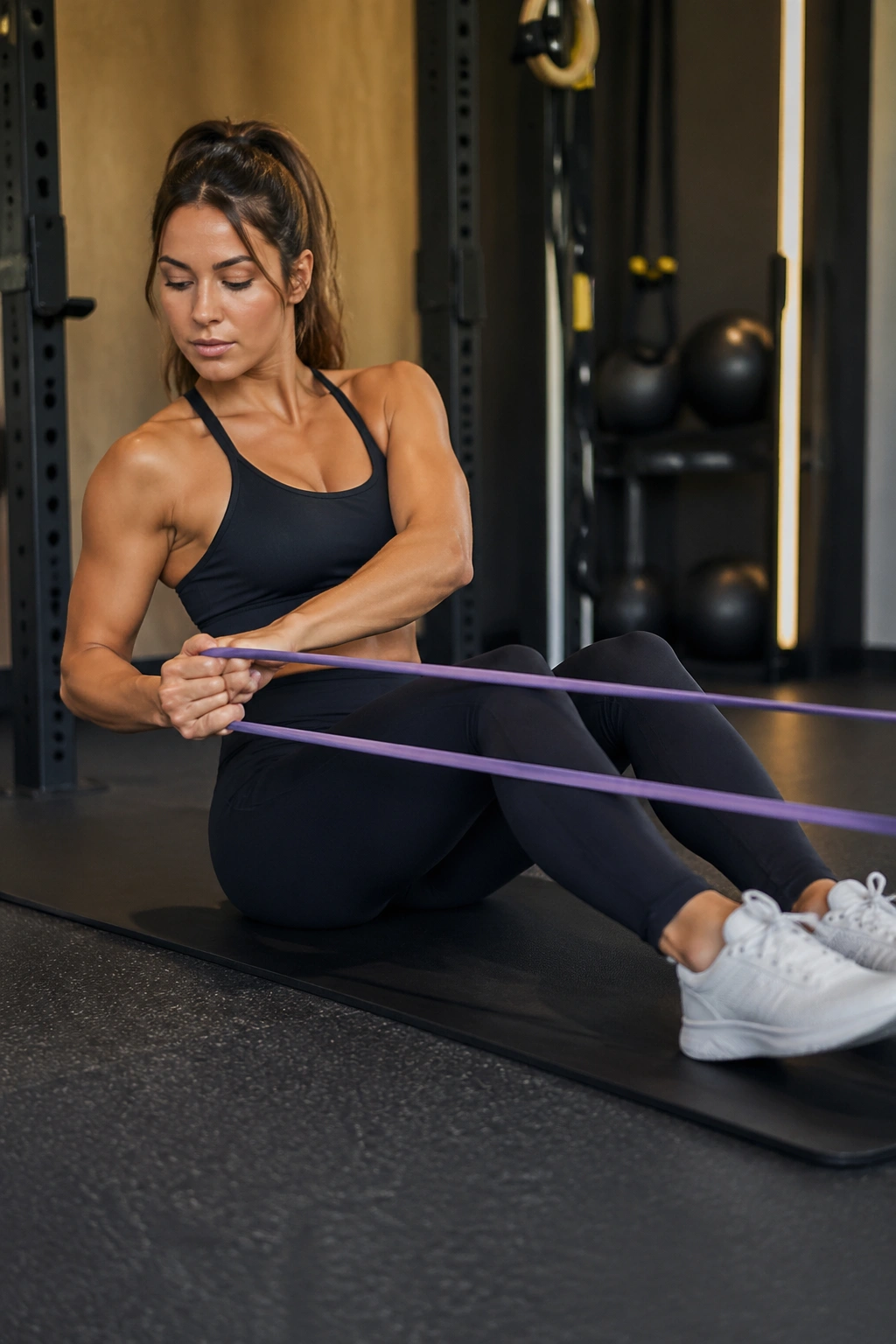
Unlike a bodyweight twist, this version makes your trunk earn the rotation.
Sit on the floor with your knees bent, lean back a few inches, and hold the ends of a band that’s anchored low in front of you or looped around a solid point. Rotate from side to side under control, keeping the chest open and the spine long. The band adds load to the turn, which makes the obliques and deeper trunk muscles work harder.
If your lower back rounds, sit a little taller. If your hip flexors start screaming, bring the feet down or bend the knees more. A cleaner twist with a smaller range beats a big sloppy one every time. Ten to 12 turns per side is usually enough.
This move works best when it’s slow. The point is not to fling your hands side to side like you’re stirring soup. The point is to keep tension through the middle of the body while the shoulders and ribs rotate together.
If twists bother your back, swap this for Pallof presses. No drama. Same training family, easier on the spine.
15. A Full-Body Band Finisher for Belly Fat
This is the piece that makes the whole list come alive. A single exercise is fine. A short circuit is better.
Put three or four of these band moves together and you get a workout that feels compact but never lazy. Use 30 seconds of work, 15 seconds of rest, and run 3 rounds. A simple order looks like this:
- Squat to overhead press
- Standing woodchops
- Band punches
- Banded speed skaters
That mix covers legs, torso rotation, upper body, and a little cardio. Your breathing stays elevated, your trunk keeps bracing, and the band keeps resistance on the muscles instead of letting them coast. If you want a gentler version, swap skaters for Pallof holds and keep the rest periods a little longer.
The people who get the most out of resistance bands are usually the ones who keep the sessions short enough to repeat. Twenty minutes done well beats a heroic 90-minute plan you hate by week two. That’s the annoying truth. It isn’t glamorous, but it works because you can actually stick with it.
If you only remember three ideas from this whole list, make them these: use a band that challenges the last few reps, choose moves that train the trunk and big muscles together, and repeat the work often enough that it becomes routine. The routine is the thing. The band is just the tool that keeps it interesting.
