



The stubborn part isn’t your treadmill—it’s the myth that one workout can melt fat from only your waist. Treadmill workouts that burn belly fat work because they help you burn more energy overall, and that’s what actually nudges body fat down over time. The belt gives you one useful thing most outdoor walks don’t: exact control over speed and incline.
That control matters. A brisk flat walk is fine, but a steep incline, a hard sprint, or a hard-and-easy interval pattern pushes your heart rate higher without needing fancy equipment, a big space, or perfect weather. The waist usually changes after the weekly habits get boring in a good way.
No, you cannot spot-reduce belly fat with a treadmill. You can, though, build the kind of consistent calorie burn that slowly shrinks your midsection while keeping your joints happier than a pile of random all-out runs. Some of these workouts are gentle enough for beginners. Others are rude in the best possible way.
A smart warm-up changes everything. Five minutes of easy walking before the hard parts and a calm cooldown afterward make the whole session safer, smoother, and easier to repeat next week. That repeatability is where the real progress lives.
1. Incline Walk Intervals for Belly Fat Loss
Incline walking looks polite. It is not.
The moment you tip the belt up to 4% or 6%, your glutes, calves, and breathing all wake up. That extra slope raises effort fast, which is why incline intervals are one of the easiest treadmill workouts that burn belly fat without hammering your knees like sprinting can.
Why It Works
A flat walk asks for basic movement. An incline walk asks your body to lift itself with every step, and that costs more energy. You still get a lower-impact session, but the calorie burn climbs enough to matter if you repeat it often.
- Walk 2 minutes at 4% to 6% incline.
- Drop to 0% to 1% incline for 1 to 2 minutes.
- Keep your speed around 3.0 to 4.0 mph.
- Repeat for 20 to 30 minutes.
- Stay off the rails unless you truly need balance.
Best tip: shorten your stride. Long, reaching steps make the incline feel clumsy and can tug at your hips.
What It Feels Like
Your breathing should get heavier, but not panicky. If your shoulders creep up toward your ears, the pace is too aggressive. A good incline walk leaves you sweaty, upright, and ready to do it again tomorrow.
2. 30-Second Sprint Intervals

Short sprints are a blunt instrument. That is exactly why they work.
A 30-second sprint interval workout raises effort fast, then gives you enough recovery to do the next rep with quality. The magic isn’t in suffering for a long time. It’s in repeating a hard burst enough times that your body can’t coast through the session.
If you like structure, this one is easy to run. Warm up for 5 to 8 minutes, then hit 30 seconds hard followed by 90 seconds easy. Six rounds is plenty for a first try. Eight to ten rounds is plenty for most people. The hard part should feel like a strong run where talking is out of the question, but your form still looks tidy.
Skip the “go all-out” nonsense. That usually means sloppy steps, grabbing the rails, and turning the session into a shin test. Hard is enough. Hard with control is better.
If your joints are cranky, choose a brisk walk version instead and push the incline up a little. You still get the benefit of repeated effort, and you don’t spend the next day bargaining with your calves.
3. Tempo Runs That Help Burn Belly Fat

What if you hate sprints? Tempo work is the grown-up answer.
A tempo run sits in that useful middle zone between easy and savage. You’re breathing hard, your legs know they’re working, and the pace is still sustainable for a solid block of time. That makes it easier to stack weekly training without burning out after two sessions.
How to Find Tempo Pace
Start with a 5-minute easy walk or jog. Then move into a pace that feels like 7 out of 10 effort—you can speak in short phrases, but you would rather not hold a conversation. Hold that for 15 to 25 minutes, then cool down for 5 minutes.
- Easy runners may sit around a pace they can hold for a 5K or slightly slower.
- Newer exercisers can use a brisk power walk with a touch of incline.
- If your breathing becomes ragged in the first 5 minutes, back off.
Tempo runs are good because they teach your body to stay comfortable while working. That matters for fat loss because you’re not just chasing one brutal session. You’re building a pace you can actually repeat week after week.
4. Walk-Jog Pyramids

If your brain gets bored before your legs do, pyramids fix that fast.
You start small, build up, then come back down. Simple. The changing rhythm keeps the workout from feeling endless, and that mental relief matters more than people admit. Boredom ruins more treadmill plans than bad knees do.
Here’s a clean pattern: 1 minute jog / 2 minutes walk, then 2 / 2, 3 / 2, 4 / 2, and back down if you’ve got time. The jog segments should stay smooth, not frantic. The walk breaks are there to let your breathing settle without dropping all the way to nap mode.
This is one of the better treadmill workouts that burn belly fat for people who need variety but still want a clear plan. You get repeated calorie burn, a bit of speed work, and enough recovery that the next interval doesn’t feel like punishment.
How to Run It
Use the same jog pace for the lower rungs and only nudge it up if your form stays clean. That little detail keeps the pyramid from turning into a sprint-and-suffer mess.
5. Hill Ladder Climb

A ladder workout is mean in the nicest way.
Instead of changing speed, you change incline in a steady climb-and-descent pattern. That makes your legs work differently than flat running, and the treadmill hill ladder is excellent for the glutes, hamstrings, and calves. It also keeps your mind busy, which helps more than it should.
Try 2% incline for 2 minutes, then 4% for 2 minutes, 6% for 2 minutes, and 8% for 1 minute if you’re feeling spicy. Then come back down the ladder in reverse. Keep the speed in the walking or light jogging range so the incline does the real work.
The trick is to keep your stride short and your torso tall. When people lean too far forward, the climb turns ugly and the lower back starts complaining. That’s a bad trade.
A hill ladder is especially useful if your body dislikes straight sprinting. You still get a hard workout, but the load feels more controlled and less jerky.
6. Fartlek Speed Changes

Unlike fixed intervals, fartlek gives you freedom. A little freedom. Enough to keep you from staring at the timer like it owes you money.
The word sounds fancy, but the workout is plain: you mix faster and slower efforts based on feel, not a rigid clock. On a treadmill, that means changing speed every minute or every song section instead of sticking to one exact pattern. It’s a nice fit for days when your energy is scattered and you want the workout to stay interesting.
Picture this: 10 minutes easy, then 45 seconds quick, 75 seconds easy, 30 seconds quick, 90 seconds easy, 1 minute quick, 2 minutes easy. Repeat the pattern with different lengths if you want. The point is not perfect symmetry. The point is to keep your body awake.
Fartlek work helps with fat loss because the hard efforts raise demand while the easy pieces keep you moving longer than a pure sprint session would. You end up doing more total work without the mental drag of a fixed interval plan.
7. Tabata Treadmill Bursts

Twenty seconds sounds harmless until round six.
That’s the whole appeal of Tabata. It looks tiny on paper and hits hard in practice. The classic setup is 20 seconds hard, 10 seconds easy, repeated 8 times for one 4-minute block. On a treadmill, that means you need to be careful with speed selection because the recoveries come fast and the belt does not wait for you.
Use a fast walk, jog, or run that you can hit cleanly for each 20-second burst. Then grab the 10-second recovery to settle your breathing and reset your posture. If you’re new to this, one 4-minute block is enough. If you’re experienced, rest 2 to 3 minutes and do a second round.
Fast enough to matter. Not so fast that you wobble.
Tabata isn’t for every day, and it is not the place to show off. The best version feels sharp, short, and controlled. That’s how you get the training effect without turning the treadmill into a circus act.
8. Long Steady Incline Hike

This is the workout I’d pick for someone who wants sweat without feeling wrecked afterward.
A long incline hike turns the treadmill into a moving hill trail. Keep the belt at 2% to 6% incline, set your speed to a pace you can hold while breathing through your nose for part of the session, and stay there for 35 to 60 minutes. It sounds modest. It isn’t, once the minutes stack up.
The value here is volume. You don’t need dramatic speed to rack up a useful calorie burn, and that makes this session easy to repeat on tired days or after a poor night’s sleep. Some people skip workouts because they think every session needs to be brutal. That habit backfires fast.
There’s also a mental side to it. Long incline walking pairs well with a podcast, a phone call, or just a quiet block of time where you stop negotiating with yourself. The waistline likes that kind of consistency more than it likes heroics.
If you need a simple rule, use this one: once your form gets sloppy or your lower back starts arching, the incline is too high.
9. Negative Split Runs for Belly Fat
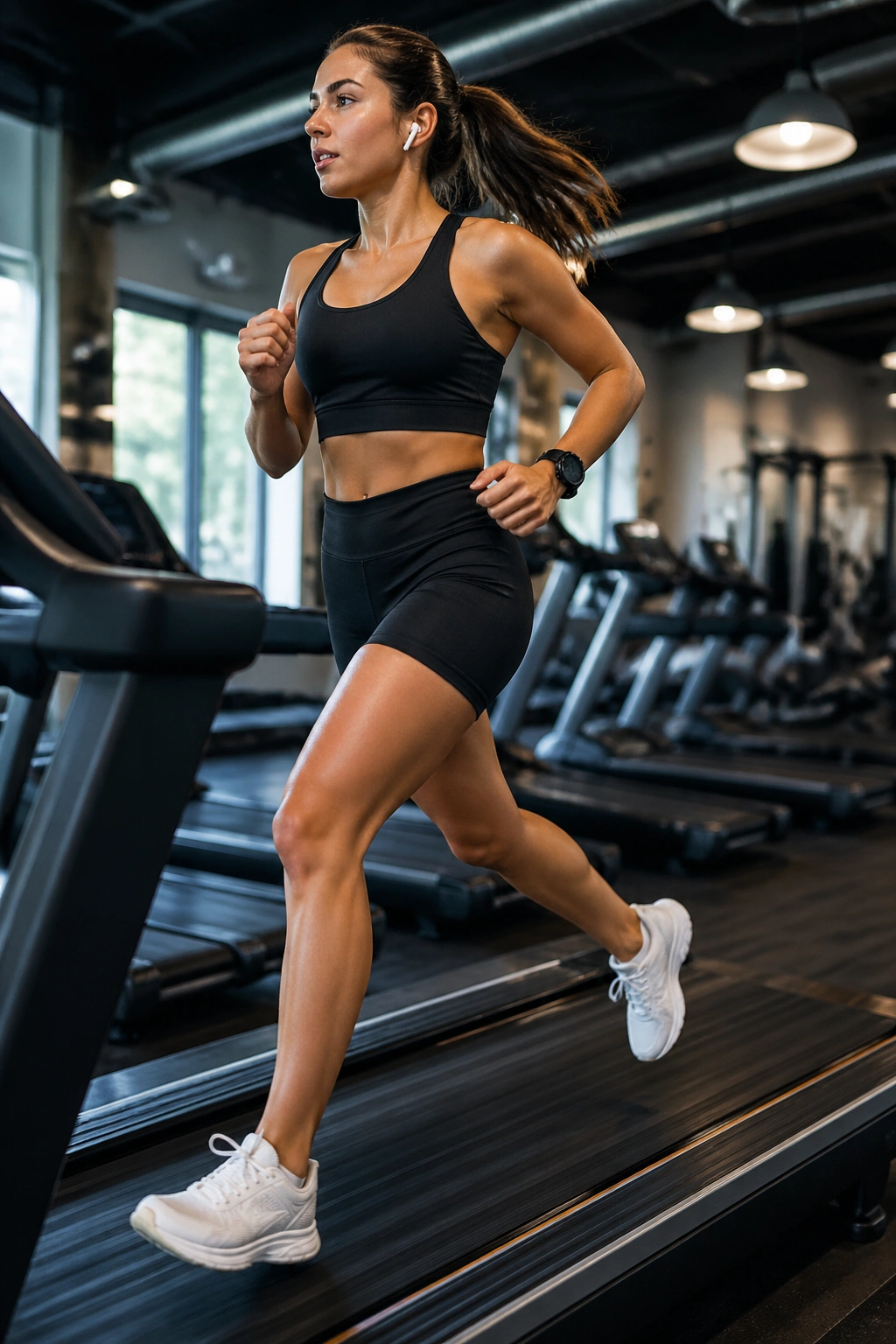
Why start easy on purpose?
Because negative splits are sneaky good. You begin the run at a pace that feels controlled, then finish the second half a little faster than the first. That small change keeps you from exploding early, and it usually leaves you with a stronger finish than a hard-start workout ever does.
Try 10 minutes easy, 10 minutes moderate, then 10 minutes slightly faster. The last block should feel assertive, not reckless. You’re not racing the treadmill. You’re teaching yourself to finish with gas still in the tank, which matters if you want a workout you can repeat without dread.
A Simple Split
- First third: comfortable conversation pace.
- Middle third: breathing gets deeper.
- Final third: short phrases only.
- Cool down: 5 minutes easy walk.
That pattern works because pacing mistakes are expensive. Start too hot and you spend the rest of the run bargaining with your lungs. Start under control and you can stack quality effort without falling apart.
10. Power Walk With Arm Drive
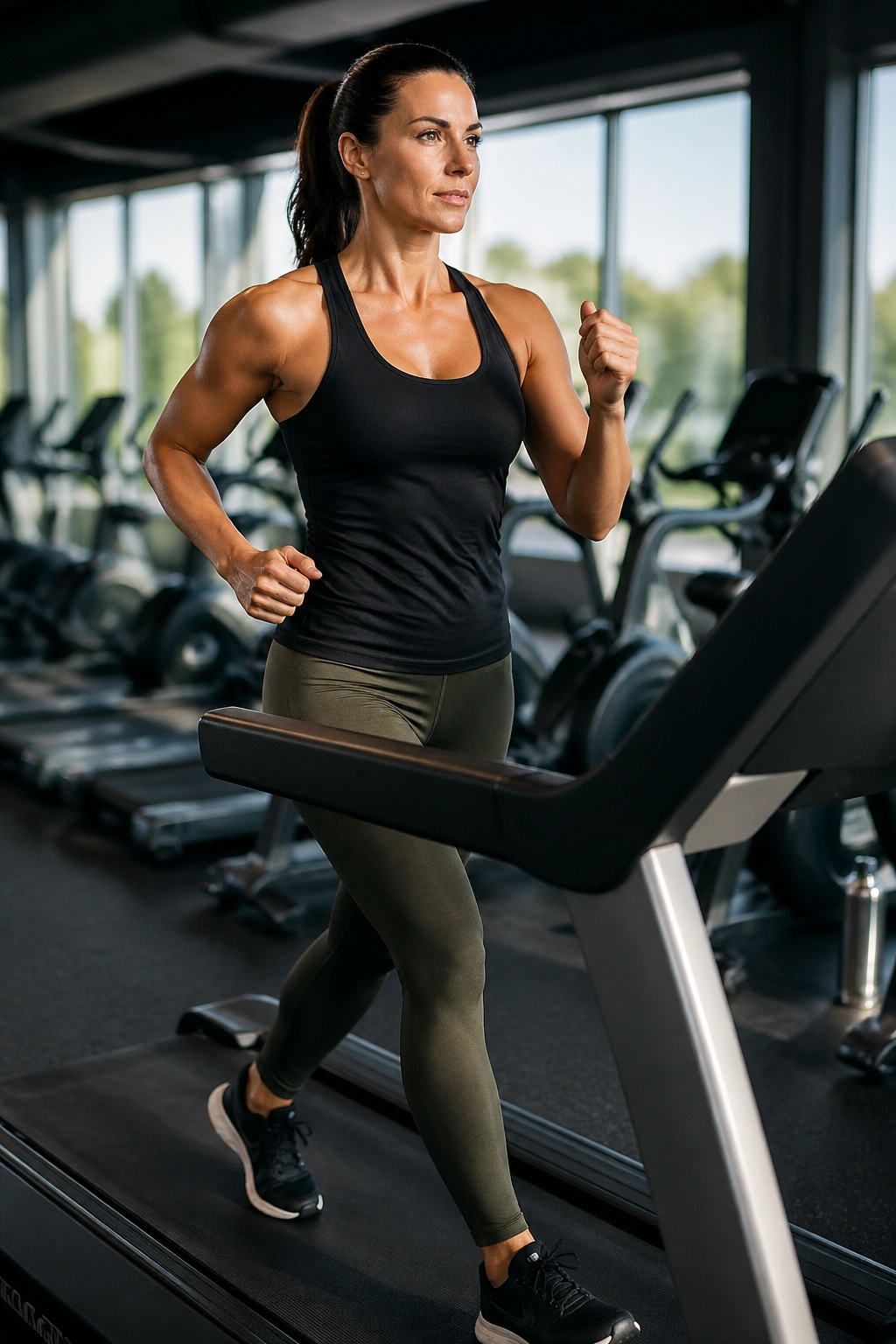
Some days your legs are willing and your lungs are not.
That’s where a real power walk earns its keep. Not the wandering-around-the-grocery-store version. A brisk treadmill power walk with sharp arm drive can push your heart rate up far more than people expect, especially if you add a slight incline.
Keep your elbows bent around 90 degrees, swing the arms from the shoulders, and let the hands move from roughly hip to chest level. Your steps should feel quick and purposeful. A speed of 3.5 to 4.5 mph works for a lot of people, though the right number is the one that makes you breathe harder without bouncing all over the belt.
This workout is especially useful if running irritates your shins, feet, or knees. You’re still building a meaningful calorie burn, but the impact stays lower and the pace feels more controlled. That makes it easier to stay consistent, and consistency is the real boss here.
Don’t hang on the rails. That ruins the body position and chops the work in half.
11. 1-2-3 Minute Speed Ladder

A speed ladder gives you structure without making the workout feel robotic.
The pattern climbs and then comes back down, which is a nice change from repeating the same interval forever. A simple version is 1 minute hard, 1 minute easy, 2 minutes hard, 1 minute easy, 3 minutes hard, 1 minute easy, then back down to 2, then 1. You can run it, jog it, or mix jogging and fast walking depending on your level.
What makes this one useful is the gradual build. The first minute doesn’t scare you, so you settle in. By the time you hit the 3-minute block, your breathing is already warm and your legs understand the assignment. That usually leads to better quality than jumping straight into a long hard effort.
It also keeps the session from getting stale. The changing durations force you to pay attention, and attention tends to clean up sloppy pacing. That sounds small. It isn’t.
If you tend to sprint too hard too soon, this is a better choice than raw intervals. The ladder keeps you honest.
12. Recovery Walk After Strength Training
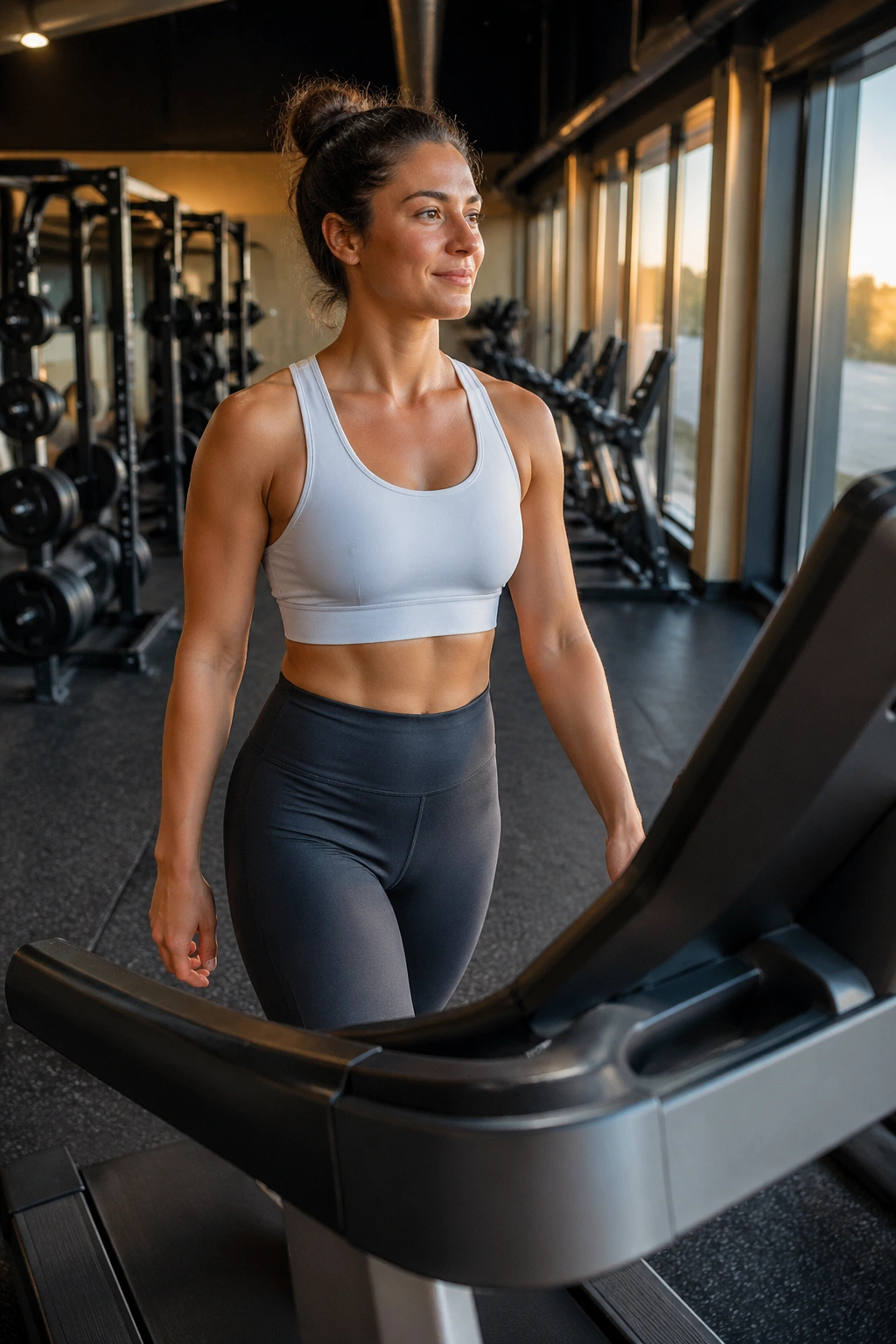
Not every fat-loss session has to leave you flat on the mat.
A recovery walk after strength training is a quiet little win. You’ve already lifted, so your legs are warm and your nervous system is switched on. Adding 15 to 25 minutes of easy incline walking at the end of the session bumps up your weekly calorie burn without making your lifting days feel like cardio marathons.
Keep the intensity moderate. You should finish feeling loose, not toasted. A 1% to 4% incline is enough for most people, and the pace should stay in that comfortable, breathing-through-the-nose range. The point is to add work, not steal recovery from the strength session you just did.
This is one of the most underrated treadmill workouts that burn belly fat because it solves a real problem: people often don’t have extra time for a separate cardio day. Pairing the walk with lifting means the work gets done without another trip to the gym.
If lower-body training leaves you heavy-legged, slow the speed and keep the incline modest. You’re aiming for accumulation, not proof of toughness.
13. Rolling Hills Run

Rolling hills feel more like a real route than a machine workout.
That matters. A lot of treadmill sessions fail because they feel flat in more ways than one. Rolling hills fix that by changing incline every few minutes so your legs never fully settle into autopilot. You get a steady training effect, but it feels more like moving through terrain than staring at a static screen.
The Rhythm
- 3 minutes at 1% incline
- 2 minutes at 3% incline
- 2 minutes at 5% incline
- 3 minutes back at 1% incline
- Repeat for 25 to 40 minutes
Keep the speed steady enough that the incline changes are the challenge. If the belt starts moving like a race and the slopes feel meaningless, you’ve gone too fast. The hill should do the work.
Rolling hills are useful because they spread the load across different muscles. One minute your calves are handling more of the push; the next, your glutes pick up the slack. That variety can be kinder to your body than one long, unbroken pace.
14. Steady-State Jog

Boring works.
That’s the part people hate hearing, and the part many of them need to hear. A steady-state jog at a comfortable, repeatable pace can burn a lot of calories across a week because it’s easier to recover from and easier to repeat than a session that leaves you limping. The treadmill makes this even simpler since you can lock in a pace and stop fiddling with it.
Pick a speed that lets you hold the workout for 25 to 45 minutes without drifting into a sprint. You should breathe harder than in a walk, but still feel in control. If you need to check the clock every minute, the pace is probably too hard.
This is not the flashiest option, and that’s fine. Flash is overrated when the real goal is shrinking the waist and keeping your routine intact. A steady jog has one huge advantage: it rarely feels so awful that you skip it next time.
If you need a mental trick, divide the run into 5-minute chunks. Ten little wins are easier to swallow than one giant block.
15. Fast-Finish Walks for Belly Fat Loss

A short workout can still be sharp.
Fast-finish walks are built for days when you’ve only got 20 to 30 minutes and a little extra drive near the end. Start at a moderate pace, hold that for most of the session, then ramp up the speed or incline during the final 5 minutes. The shift at the end gives the workout a real training edge instead of letting it fade into background noise.
How to Use It
- Walk easy for 5 minutes.
- Move to a brisk pace for 10 to 15 minutes.
- Raise the incline or speed for the last 5 minutes.
- Cool down for 3 to 5 minutes.
The key is restraint early. If you blast the first half, there’s nothing left for the finish and the whole point disappears. Keep the opening calm enough that the ending actually feels faster.
This style works well on busy days because it gives you a clear goal without a long time commitment. It also pairs nicely with a second workout later in the week, since it won’t smash your legs.
16. Run-Walk Fat-Burn Circuit

If running nonstop feels too harsh, don’t force it.
A run-walk circuit is a smart middle path. You alternate between moderate running and active recovery, which gives you a meaningful heart-rate boost without the grind of one long continuous push. Newer exercisers, heavier runners, and anyone returning after a break usually handle this style better than straight running.
Try 2 minutes run / 1 minute walk for 10 rounds, or 3 minutes run / 90 seconds walk if you’re a little more comfortable. Keep the run honest but controlled. The walk is not a nap; it’s a chance to bring the breath back down so the next running segment stays clean.
The nice thing about this workout is that it builds confidence fast. You start to realize you can cover a lot of work even if you’re not running nonstop. That usually makes people stick with training longer, and sticking with it matters more than chasing the prettiest session on paper.
If your knees or shins complain, shorten the run segments before you cut the whole workout. Small changes often fix the problem.
17. Cruise Intervals at Threshold

This is the workout for people who want structure without sprint-level chaos.
Cruise intervals live in the zone where effort is hard but controlled. You might run 6 to 8 minutes at a pace that feels firm and steady, then recover for 90 seconds to 2 minutes, then repeat. Three to five rounds is enough for most people. It’s a tidy setup, and the belt makes pace control easy.
The sensation is distinct. You’re breathing through your mouth, your legs know they’re working, and you’re not trying to win a race. That middle-ground effort is useful because it lets you hold quality for longer than a short sprint workout would, which means more total work and less panic.
Cruise intervals also teach you not to sprint every hard effort like you’re being chased. That habit alone can make treadmill training more sustainable. People often burn out because every hard day is too hard. This one stays hard without tipping into chaos.
Keep the recoveries honest. A sloppy 30-second shuffle between repeats won’t help much.
18. Mixed Pace Endurance Run

Some workouts feel like three workouts stitched together, and that’s not a bad thing.
A mixed pace endurance run uses a blend of easy jogging, quicker pushes, and incline blocks inside one longer session. It’s a good fit if you get bored fast or if you want a workout that feels dynamic without turning into a sprint day. Think of it as controlled variety, not random chaos.
A solid version looks like this: 10 minutes easy, 5 minutes moderate, 3 minutes hard, 2 minutes easy, 5 minutes incline walk, 5 minutes moderate, 3 minutes hard again, then a cool down. You can swap the order a little, but the pattern should keep changing enough that your mind stays engaged. The workout feels long before it feels dull, which is a useful balance.
This one works because it keeps you moving for a longer stretch while still nudging the intensity up and down. That tends to burn more energy than one single flat pace, and it often feels less brutal than a pure interval stack.
It’s a good finish for the list because it uses the best parts of the others without acting like a gimmick.
Final Thoughts

The best treadmill workouts that burn belly fat are the ones you’ll repeat without hating your life. That usually means a mix of incline walking, intervals, steady work, and the occasional harder session when your body feels ready for it.
You do not need every workout to be a war. A smart week often includes one hard session, one moderate session, and one longer, easier session that quietly does a lot of the heavy lifting. That mix tends to work better than chasing sweat every single day.
Pick the style that matches your knees, your schedule, and your attention span. The treadmill is useful precisely because it can be adjusted so many ways—and once you stop treating every session like a test, the waistline usually starts to respond.
