



Pilates can make you sweat long before your brain admits the work has turned hard. That is the charm, honestly. The best Pilates cardio workouts for fat burn don’t depend on wild jumping or wrecking your joints; they use pace, control, and just enough rest to keep your heart rate climbing while your form stays honest.
People still picture Pilates as slow, tidy, almost delicate. That picture misses half the story. Once you stack standing work, quick transitions, pulses, planks, and lower-body drills back to back, the session stops feeling like a stretch break and starts feeling like real conditioning.
And that matters if your goal is fat loss, not just a nice burn in your abs. You need repeatable work. You need something you can come back to three or four times a week without feeling flattened afterward. Pilates does that unusually well when you choose the right formats.
The workouts below lean into that sweet spot: low impact, high effort, lots of core tension, and enough variety that your body never settles into autopilot. Some look gentle. Some look almost too simple. A few are sneaky monsters. That’s exactly why they work.
1. Standing Pilates March-and-Reach Intervals
Standing work is the easiest place to turn Pilates into cardio without turning it into chaos. A fast march, a long reach, and a sharp exhale can light up your legs and get your breathing up fast.
Why It Works
The trick is simple: keep one foot moving while the upper body does something useful. March in place for 40 seconds, then add a diagonal reach, then a little overhead sweep, then a torso twist that stays in your rib cage instead of your hips. That mix wakes up the hips, the calves, and the deep core at the same time.
Use 40 seconds of work and 20 seconds of transition for 6 to 10 rounds. If you want more challenge, lift the knees higher and move the arms faster. If you want less impact, keep the feet low and make the march small but brisk.
- Keep your ribs stacked over your pelvis.
- Land softly through the whole foot, not just the toes.
- Drive the opposite arm and leg together.
- Finish each round with 3 deep breaths.
Best cue: think quick feet, quiet shoulders. If the shoulders creep toward your ears, the pace is too fast for clean form.
2. The Hundred Sprint Ladder
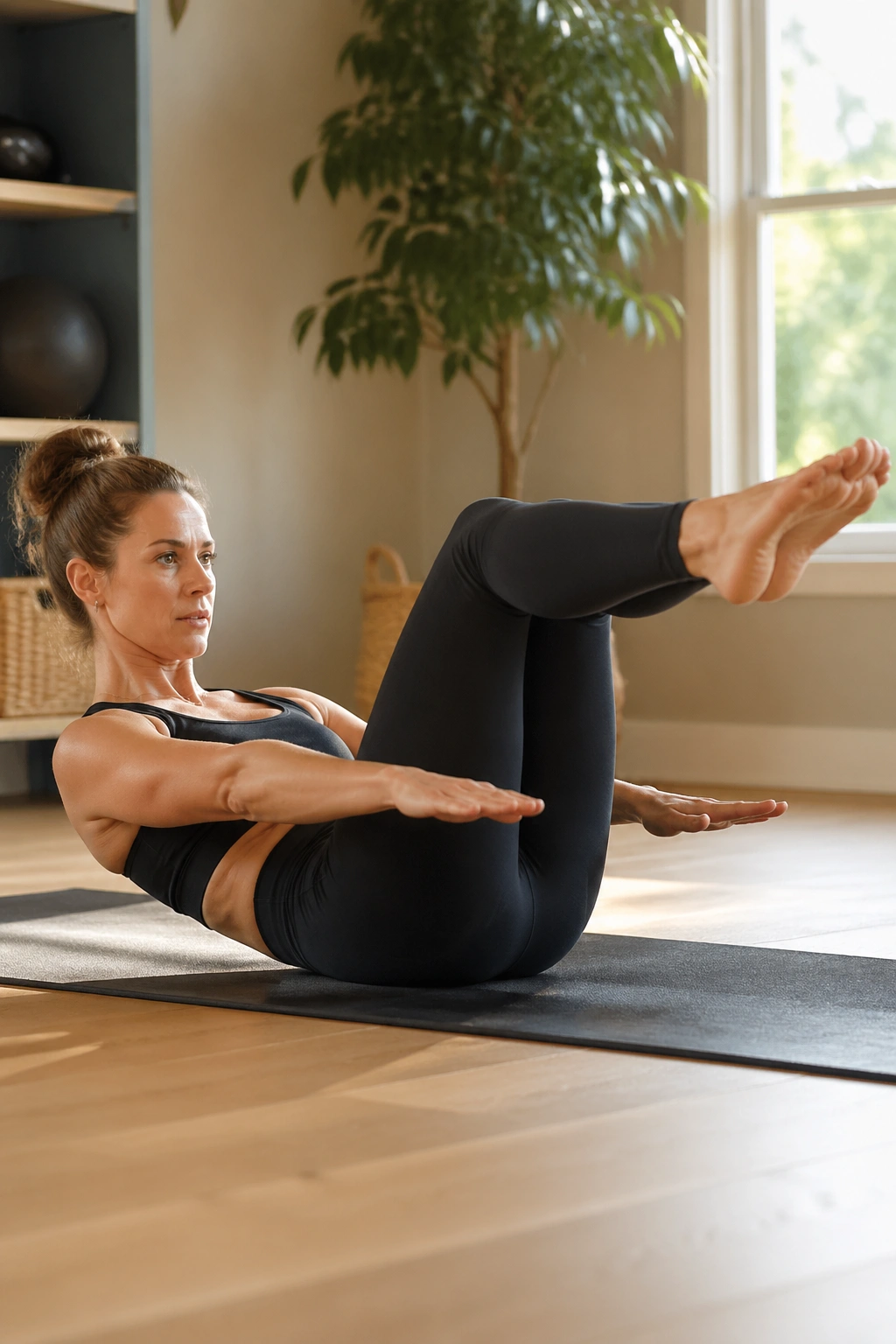
Can a move people treat like a warm-up become cardio? Absolutely. The Hundred turns into a serious heart-rate builder when you shorten the rest and climb the pump count in stages.
Start with legs in tabletop or extended at a comfortable angle. Pump the arms for 20 beats, rest for one breath, then go again for 30, 40, 50, and 100 if your neck and low back stay happy. The steady inhale-exhale rhythm keeps the trunk braced while the arms and legs do the work.
What makes this feel different from random ab work is the breathing demand. You cannot fake your way through the Hundred for long. The body wants to tense up, and that is the whole lesson: keep the abs engaged, keep the lower ribs down, and let the breath stay wide through the sides of the rib cage.
If your neck starts taking over, lower your head or keep one leg bent. No prize for grimacing through bad alignment. The real win is being able to repeat the ladder again the next day without feeling wrecked.
3. Plank Knee-Drive Flows
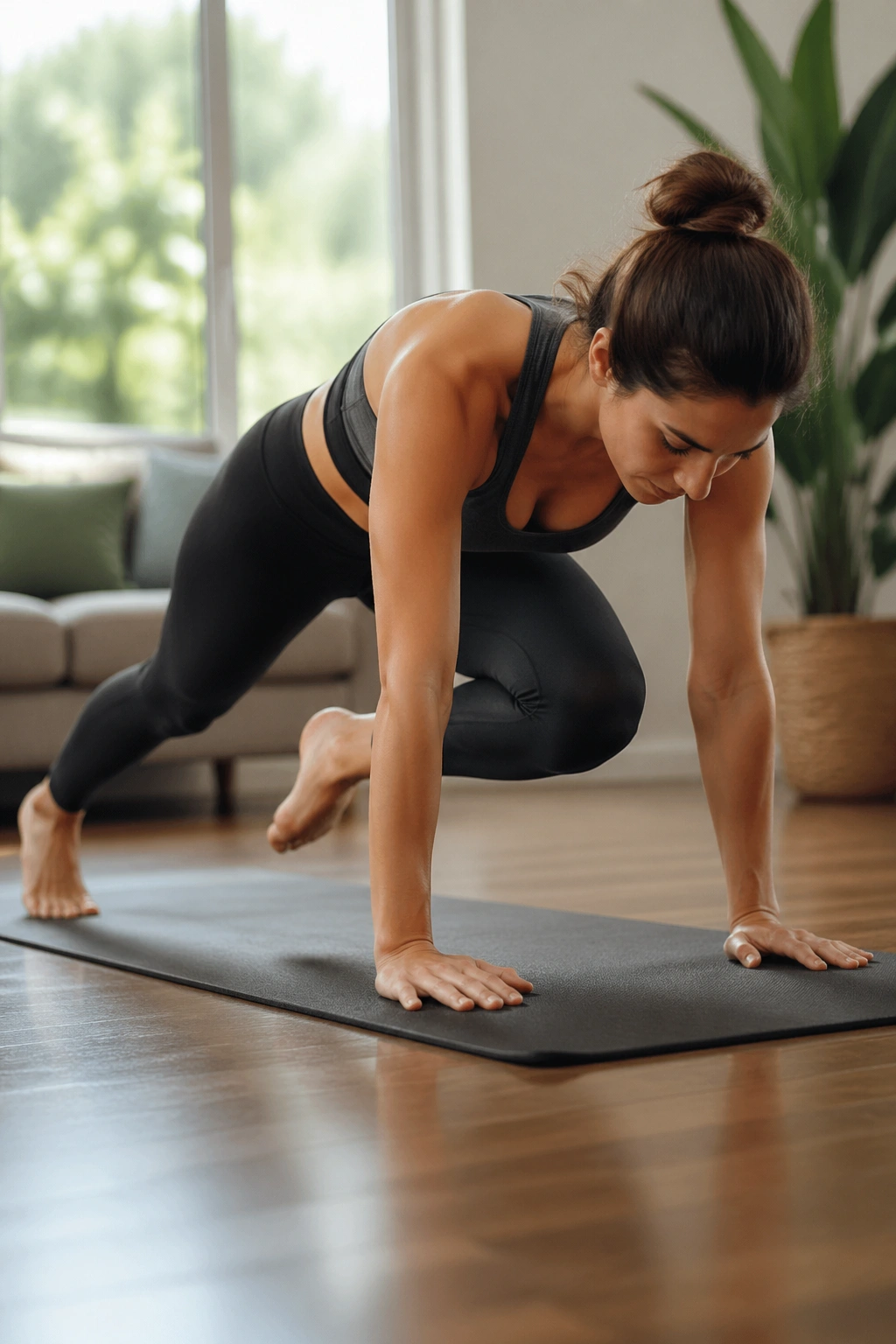
Planks are not slow if you stop pausing between moves. A plank knee-drive flow turns a basic hold into something much closer to interval training, especially when you alternate front, side, and cross-body drives.
How to Use It
Set up in a high plank or forearm plank. Drive one knee toward the chest, set it back down, then switch sides without letting the hips swing. Add a shoulder tap after every two knee drives if you want even more core demand. The cardio piece comes from the lack of dead time, not from speed alone.
Three rounds of 30 seconds on, 15 seconds off is enough to feel it. If that feels tame, use a mountain-climber rhythm for the final 10 seconds of each round. Fast feet are fine. Sloppy hips are not.
- Keep hands under shoulders.
- Press the floor away.
- Move the knees under control, not by throwing the pelvis around.
- Stop the set if the low back starts sagging.
One useful rule: if you can breathe through your nose for the whole set, the pace is probably too easy. Mouth breathing, a little? Fine. Gasping like you ran stairs? Too much.
4. Squat-Pulse Pilates Burn
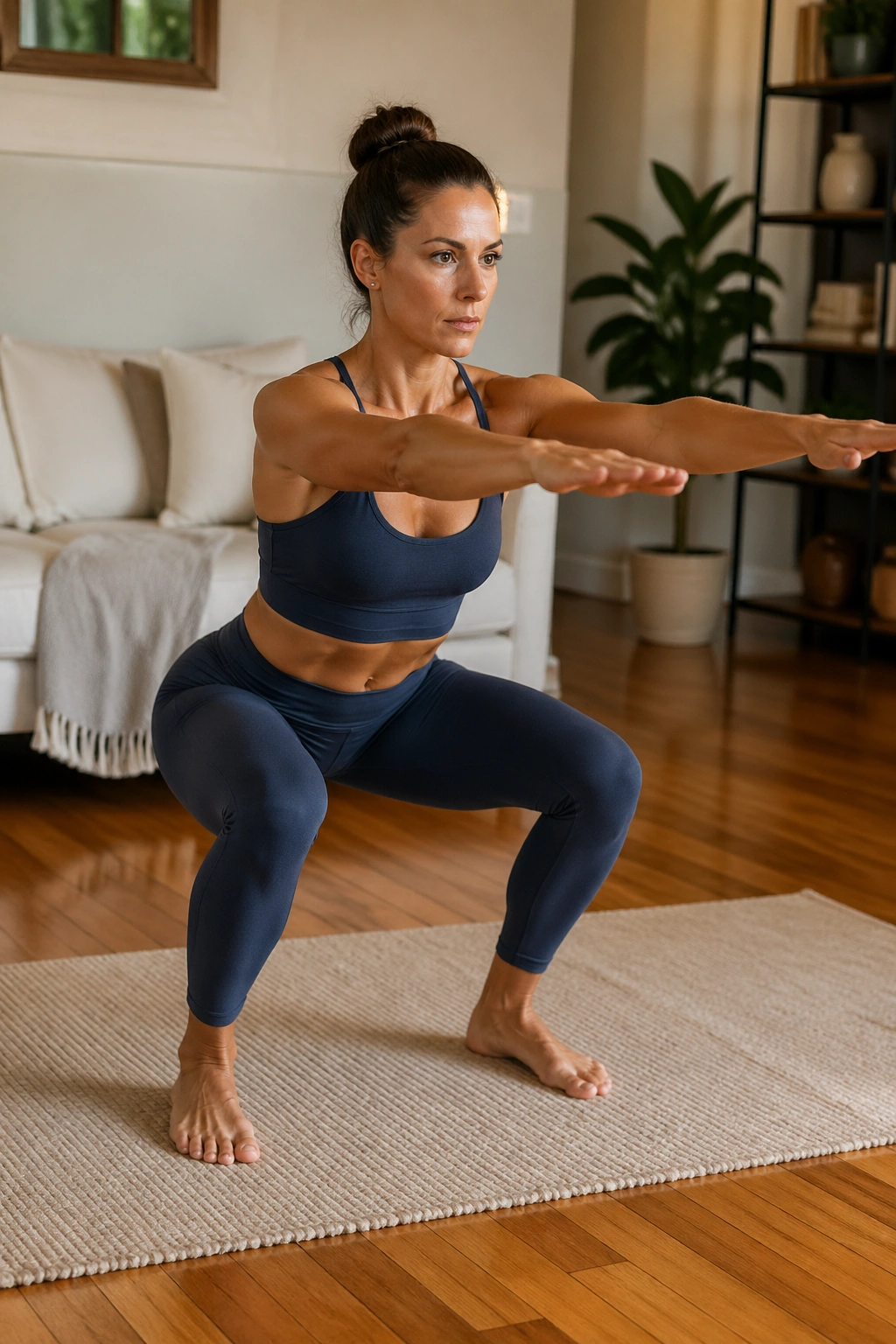
A squat pulse looks almost boring for the first ten seconds. Then your quads start speaking up in a language nobody enjoys.
Picture a shallow squat with heels rooted, ribs lifted, and arms reaching forward. Pulse two inches down and up for 20 counts, then sweep the arms overhead for 8 counts, then add a heel lift at the top. That small change in range keeps the legs under tension and nudges the heart rate higher than a static hold would.
The best version of this uses continuous motion for 45 seconds. Rest 15 seconds. Repeat 6 to 8 times. If you want a little more burn, turn the toes out only slightly and keep the knees tracking over the second toe. Don’t sink so low that the pelvis tucks under and the lower back rounds.
A small band above the knees can sharpen the outer-hip work, but it is optional. The exercise already earns its place on any list of low-impact cardio moves because it’s hard to stay casual when the legs are shaking and the arms keep moving.
5. Side-Lying Beat Series
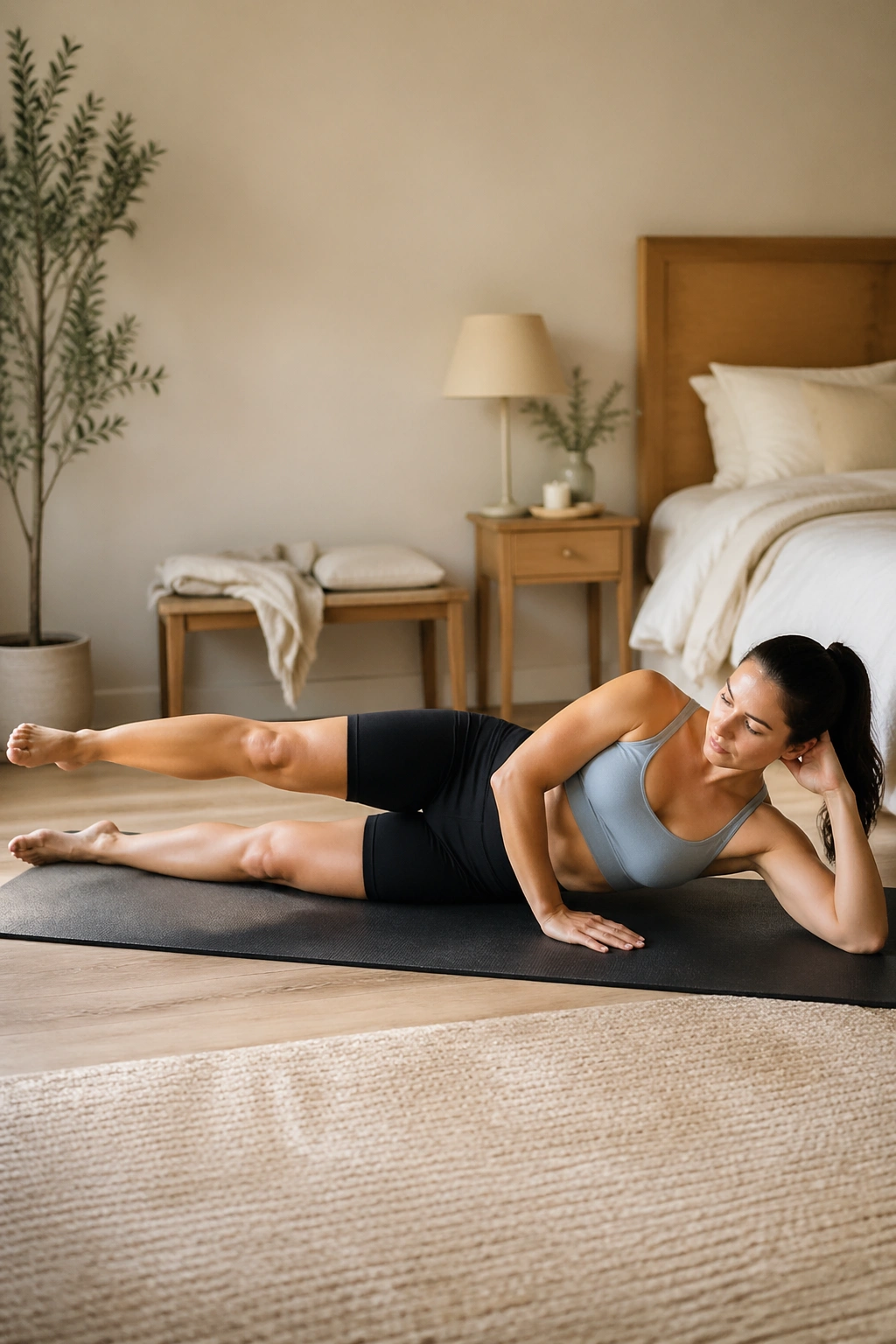
The outer hip starts talking back after about 30 seconds, and that is exactly why this series belongs here.
Side-lying leg beats, lifts, and tiny circles can look gentle from across the room. Up close, they are not gentle at all. Keep the waist lifted off the floor, the top hip stacked over the bottom hip, and the top leg long. Then beat the legs with a tight, quick rhythm for 20 to 30 seconds, switch to small lifts for another 20, and finish with circles the size of a dinner plate.
That constant side-body tension makes the move feel more athletic than it first appears. It also keeps the work low impact, which matters if your knees or ankles hate jumping. The heart rate climbs because you never really relax between patterns.
I like this one as a bridge between bigger standing work and floor work. It gives the legs a different angle, and it gives the mind a break from plank fatigue. Small moves. Big complaint from the glutes.
Do both sides. Obvious, yes. Still worth saying.
6. Teaser-to-Tuck Cardio Combos
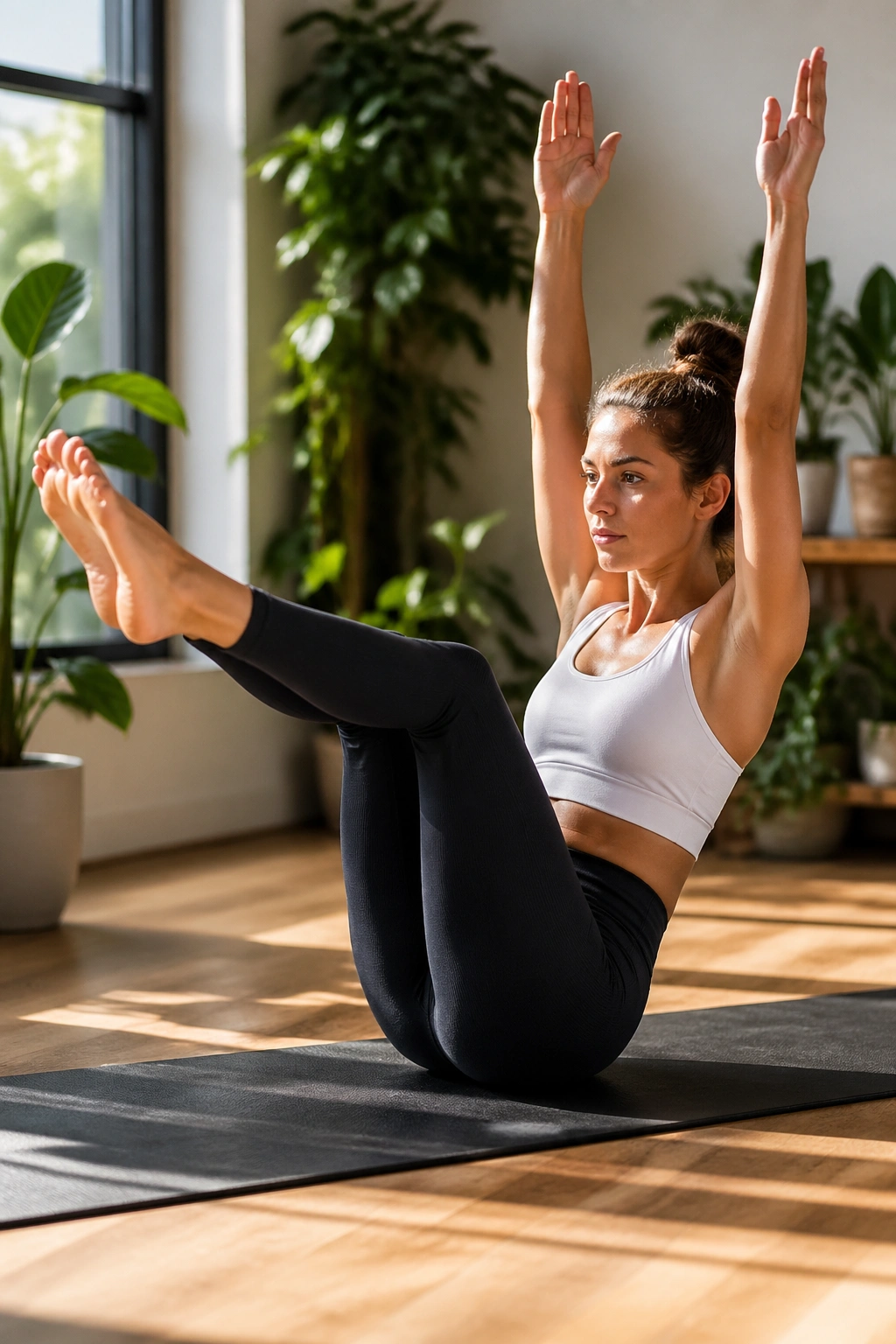
Unlike a straight crunch series, this one forces your body to reorganize itself every rep. That is why it feels harder than the move count suggests.
Start in a teaser or half-teaser position. Pull the knees in to a tuck, then extend back out with control and reach the arms overhead. If you keep the transitions brisk, the movement becomes a steady core-and-hip-flexor cycle instead of a slow ab exercise.
The combo works because it asks for balance, trunk strength, and timing all at once. On a mat, do 6 to 10 reps per round. On a reformer, keep the spring light enough that you can move quickly without yanking the carriage around. Too much resistance turns it into a strength drill. Too little resistance turns it into flailing.
This is a better fit for people who already know how to brace without holding their breath. If teasers make your neck angry, stay with bent-knee variations. The point is to keep moving cleanly, not to invent a heroic version of a Pilates pose.
7. Reformer Jumpboard Sprints
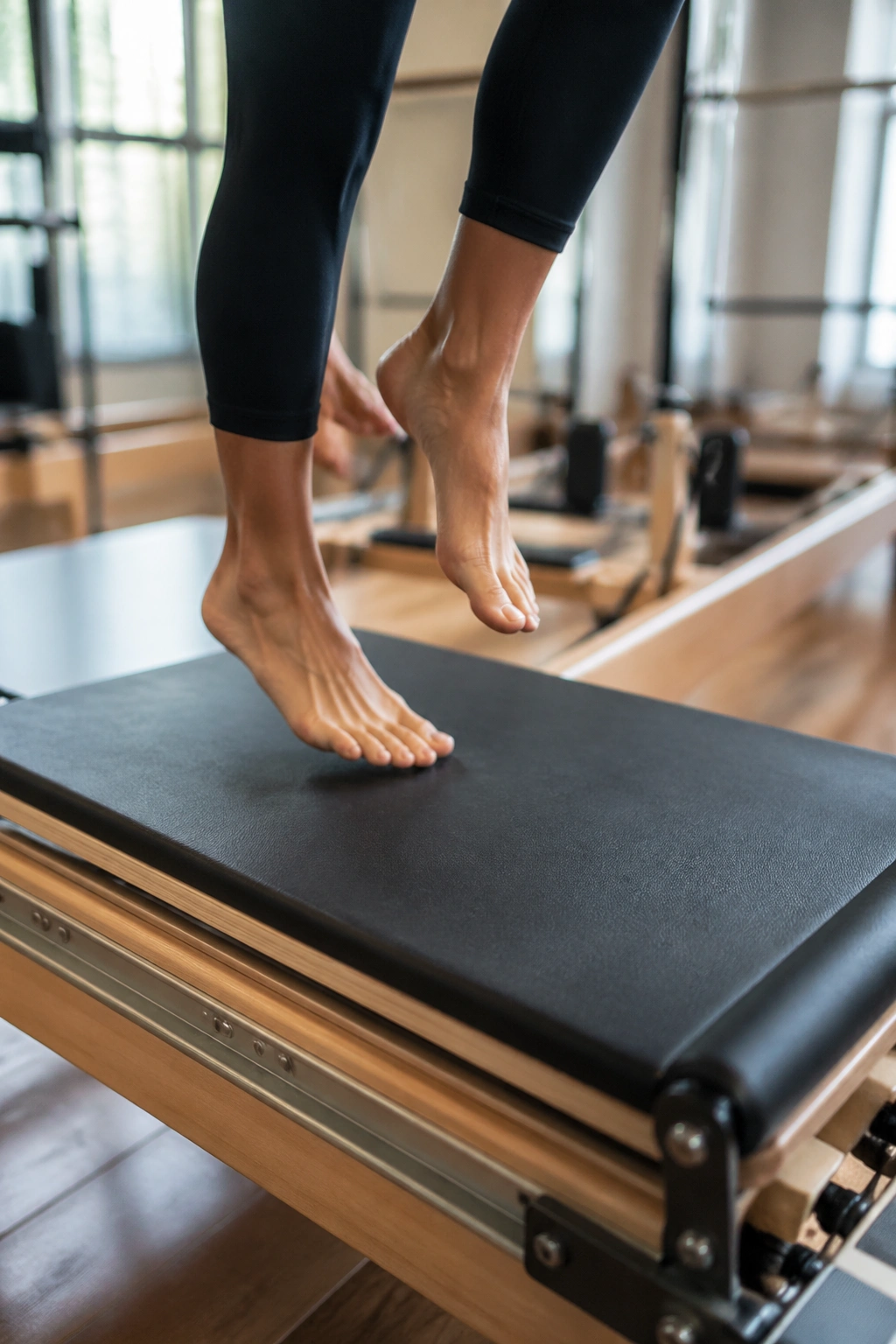
If you have access to a reformer, this is the closest Pilates gets to pure cardio. The jumpboard lets you push off and land softly, which means you get repeated effort without the pounding that comes with floor jumping.
Set the springs so the carriage returns with control. Lie down, place the feet hip-width on the board, and perform 20 to 30 second bursts of jump-land-repeat work. Keep the knees soft on landing and the ribs quiet. If the springs are too heavy, the jumps feel sluggish. Too light, and the carriage turns into a runaway cart.
- Land through midfoot, not the toes alone.
- Keep the pelvis steady.
- Stop the set before the lower back starts arching.
- Use 30 to 45 seconds of recovery between rounds.
A good jumpboard set should feel springy, not reckless. That little bit of rebound is what makes it effective. You are still using control, but the pace changes just enough to raise the heart rate fast.
Not everyone will love this. Fine. If your knees dislike impact, keep the focus on slower footwork instead.
8. Bear Hold Shoulder-Tap Circuits
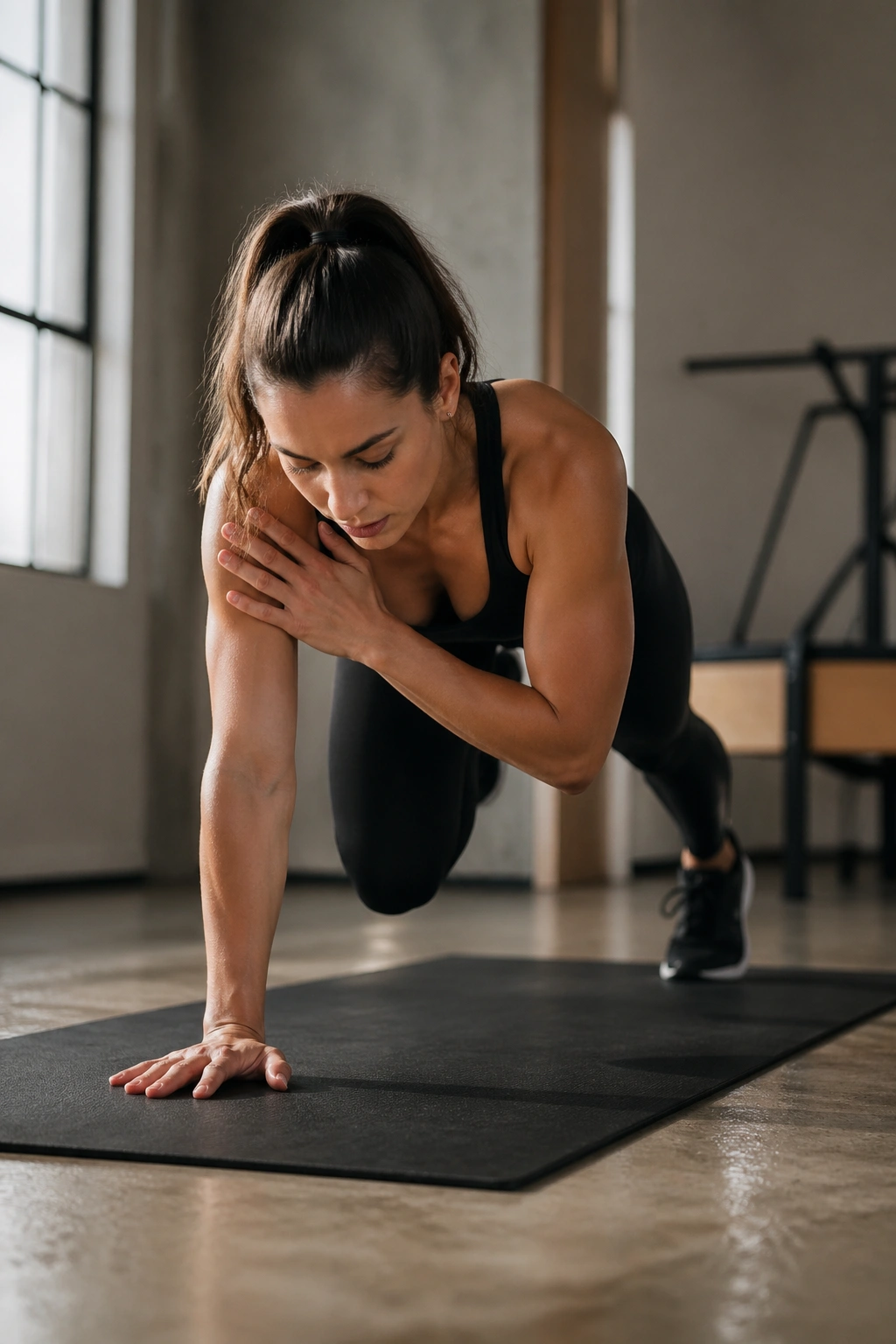
Need a move that fires the core and gets breathing hard without needing much space? Bear holds do that fast.
How to Get the Most From It
Start on hands and knees, then lift the knees an inch or two off the floor. That hovering position already asks a lot from the abs. From there, tap one shoulder, replace the hand, tap the other shoulder, then step the knees forward and back a few inches or hold the position and pulse the knees off the floor.
The key is stillness in the trunk. If the hips sway like a shopping cart with a bad wheel, slow down. Work in 20-second bursts and build toward 40 seconds as the shoulders and wrists adapt.
A lot of people rush this and miss the point. Bear holds are not about speed first. They are about staying compact while the body works harder than it wants to. The cardio payoff comes when you string the taps together without dropping the knees.
If wrists complain, use fists or forearms. If the shoulders feel shaky, keep the knees lower and shorten the set. Clean work beats ugly suffering every time.
9. Roll-Up and Reach Heart-Rate Ladder
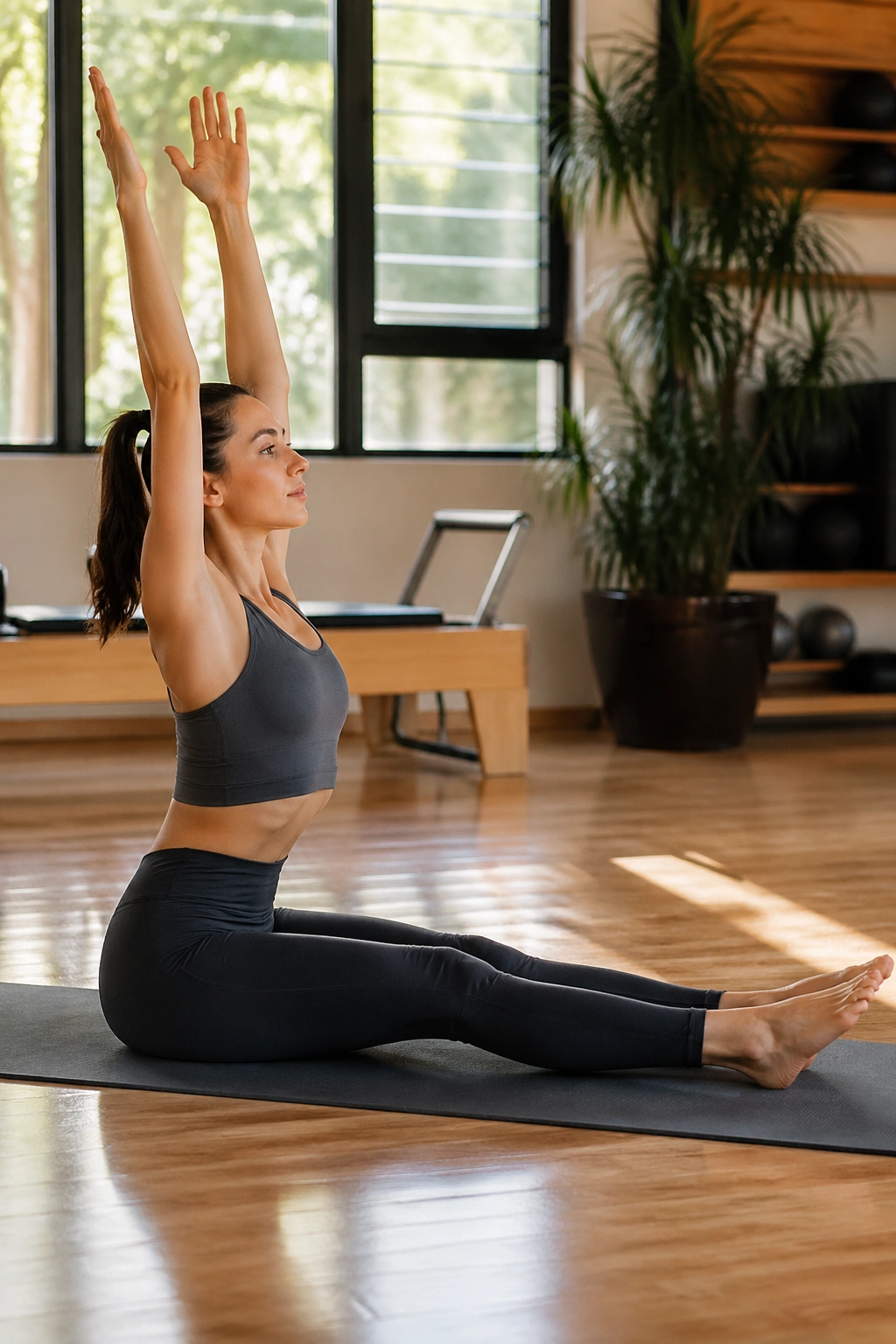
A floor sequence can still feel cardio if you keep moving through the levels instead of resting at the bottom.
Start lying down, roll up through the spine, reach overhead, fold forward, and roll back down with control. Then repeat the pattern faster for a ladder: 4 reps, then 6, then 8, then 10. Between each round, add a quick seated reach or a toe tap so the body never fully settles.
What makes this useful is the repeated change of shape. Going from supine to seated to folded and back again asks the core to manage momentum instead of just holding a pose. That creates a stronger conditioning effect than slow, singular roll-ups.
A few people hate roll-ups. Fair enough. They can be fussy. If your hip flexors grab or your lower back rounds too hard, bend the knees and shorten the range. Still counts. Still works.
The breath should guide the tempo. Exhale on the effort, inhale as you lengthen. If the movement gets ragged, the ladder is too long for your current control.
10. Bridge March Tabata
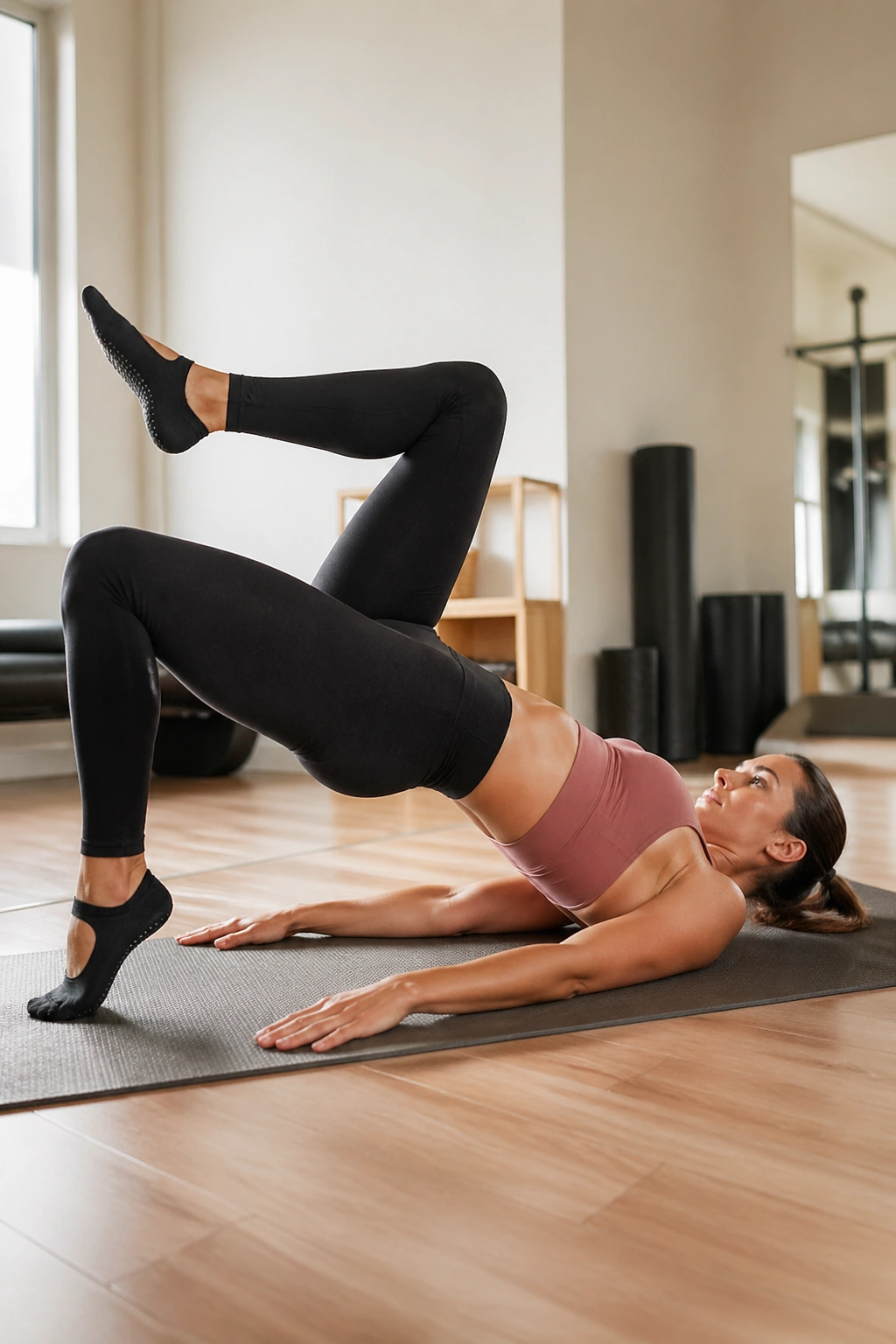
Twenty seconds feels generous until you try to keep your pelvis level while marching in a bridge. Then it feels like somebody shortened the clock.
Set up in a glute bridge with feet under knees, hips lifted, and ribs down. March one foot at a time without letting the pelvis wobble, and use a 20 seconds work / 10 seconds rest pattern for 8 rounds. If that is too easy, hold the top position for the whole work interval and switch to tiny heel lifts on the floor between rounds.
The bridge march hits the posterior chain hard. Hamstrings, glutes, deep abdominals — all of it has to cooperate. The heart rate goes up because the work never really stops, even though the movement looks small.
If your hamstrings cramp, move the feet a little farther from your hips. If the low back starts taking over, lower the hips and reset. There is no virtue in arching higher just to look like you are trying hard. The legs will tell the truth.
This is one of those workouts that feels almost too plain to matter. Then the tenth rep arrives.
11. Standing Oblique Twist Intervals
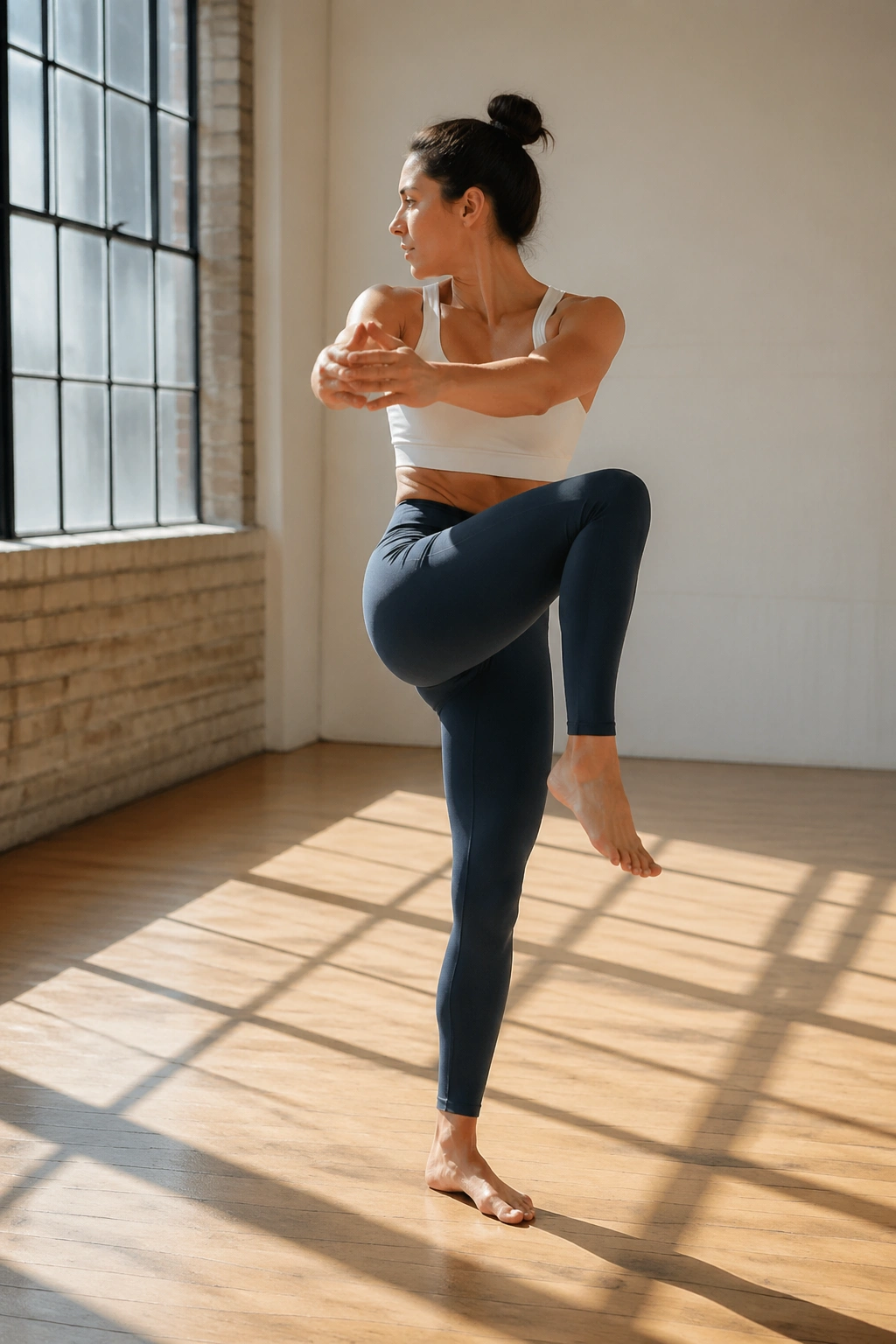
Want a cardio block you can do in a small room, beside a desk, or between longer floor sets? This is the one.
Keep the Twist in the Ribs
Stand with feet hip-width apart, one knee lifted, and both arms reaching forward. Twist from the rib cage toward the lifted knee, then switch sides in a smooth, quick rhythm. Add a light fist punch across the body if you want more pace, or hold a small ball to keep the arms awake.
The power here comes from repetition and posture. You are not spinning wildly. You are keeping the pelvis fairly stable while the upper body rotates around a strong center. That kind of controlled twist makes the obliques do real work, and the quick alternation keeps the cardio demand up.
Use 30-second rounds and aim for clean, brisk transitions. If balance is the limiter, keep one toe lightly on the floor instead of fully lifting the knee. That still challenges the waist, and it keeps the rhythm flowing.
It is a simple drill. Almost annoyingly simple. Then your sides start to burn, and your breathing catches up.
12. Swimming and Superman Bursts
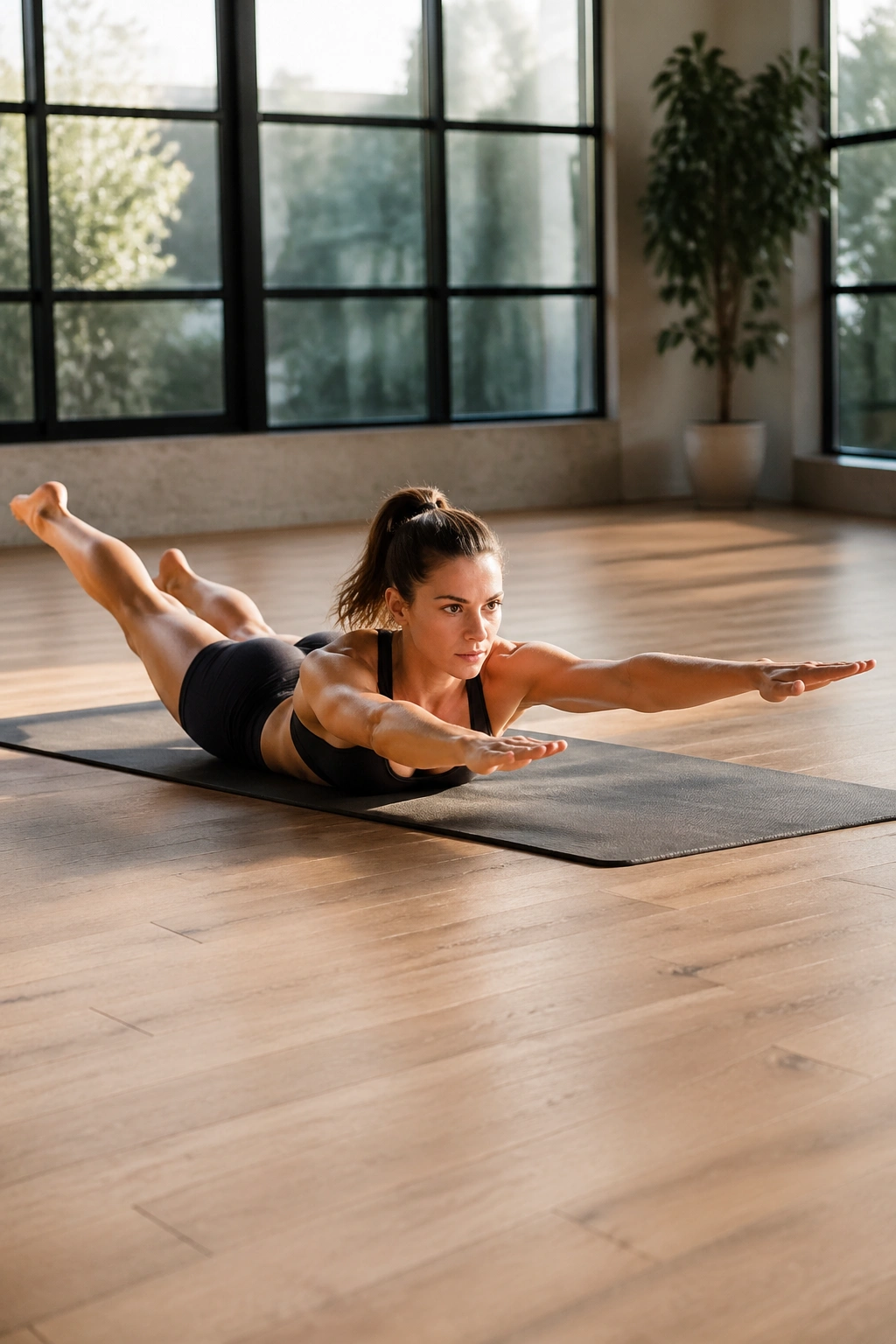
Pilates does not need to stay on your back, and this floor pattern proves it.
Lie face down, lengthen the legs, and lift opposite arm and leg in small, fast alternation. Then switch to a Superman hold for 10 to 15 seconds before returning to the swim. The alternating lifts keep the back line active while the hold raises the effort just enough to spike the pulse.
This one has a different feel from abdominal work. You’ll notice the upper back, the glutes, and the muscles around the spine all contributing. That matters because a lot of low-impact cardio work stays too front-heavy. This balances that out.
Keep the lift small. The goal is length, not height. If the head cranes upward or the low back pinches, lower the limbs and shorten the hold. That makes the movement safer and usually harder in the right places anyway.
I like short bursts here: 15 seconds swim, 10 seconds hold, 15 seconds swim. It sounds modest on paper. It doesn’t feel modest at all.
13. Leg Pull Front to Pike Flow
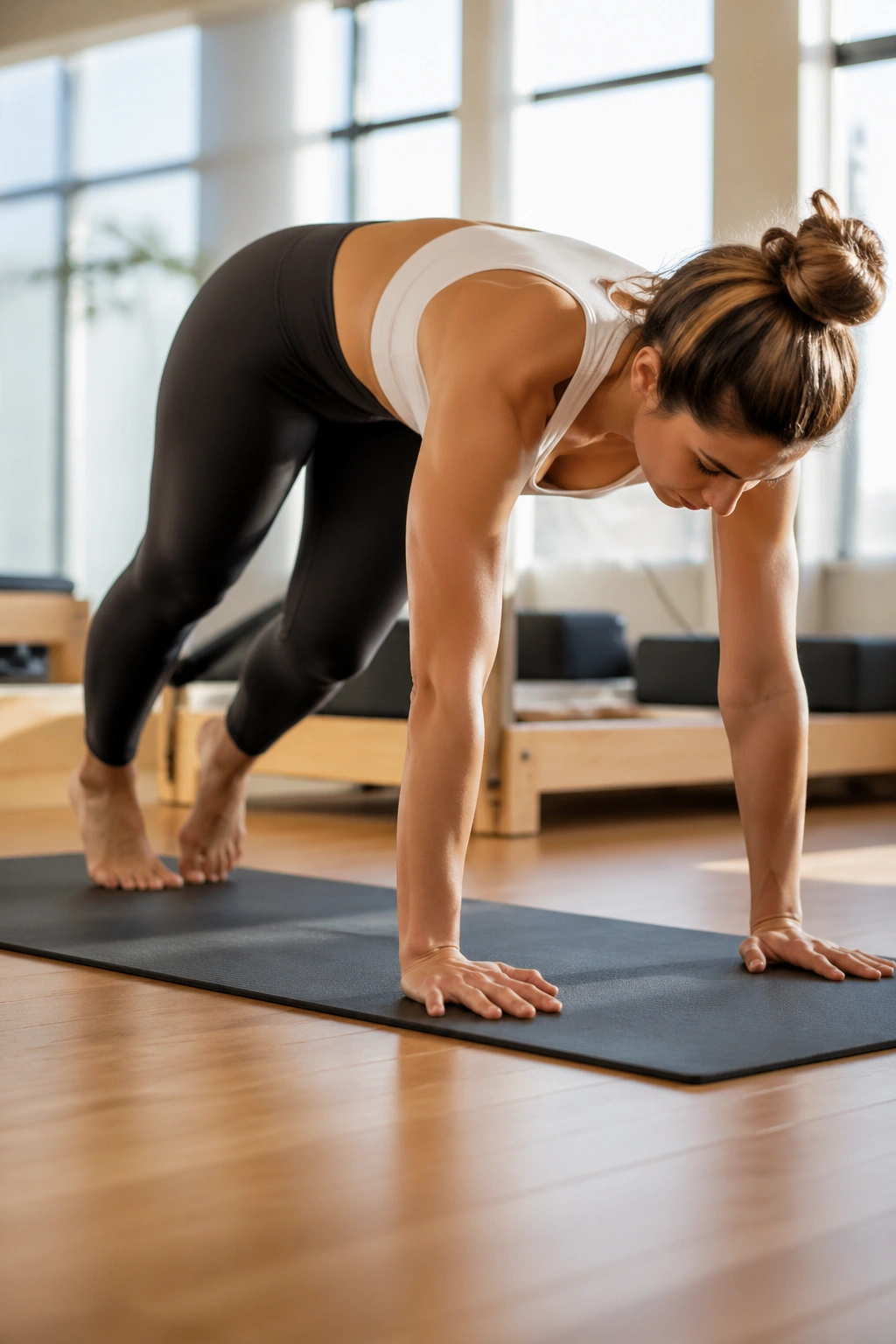
This is plank work with teeth.
From a high plank, step or hop the feet closer toward the hands into a pike, then extend back out to plank. If you want more challenge, add a single-leg lift in the plank or a tiny kick back before returning to pike. The continuous shift from one body shape to another turns a strength move into a conditioning drill.
The shoulders have to stay active, the core has to keep the ribs from flaring, and the hips have to move without collapsing the spine. That combination is what makes it useful for fat burn. You are working a lot of muscle at once, and you are doing it without much rest.
Hands under shoulders. Fingers spread. That part matters more than people think.
If your wrists hate the load, use forearms for a forearm-pike version. If the hamstrings are tight, keep the knees slightly bent on the pike. A cleaner, smaller move beats a big messy one every time.
14. Wall Sit and Arm Press Series
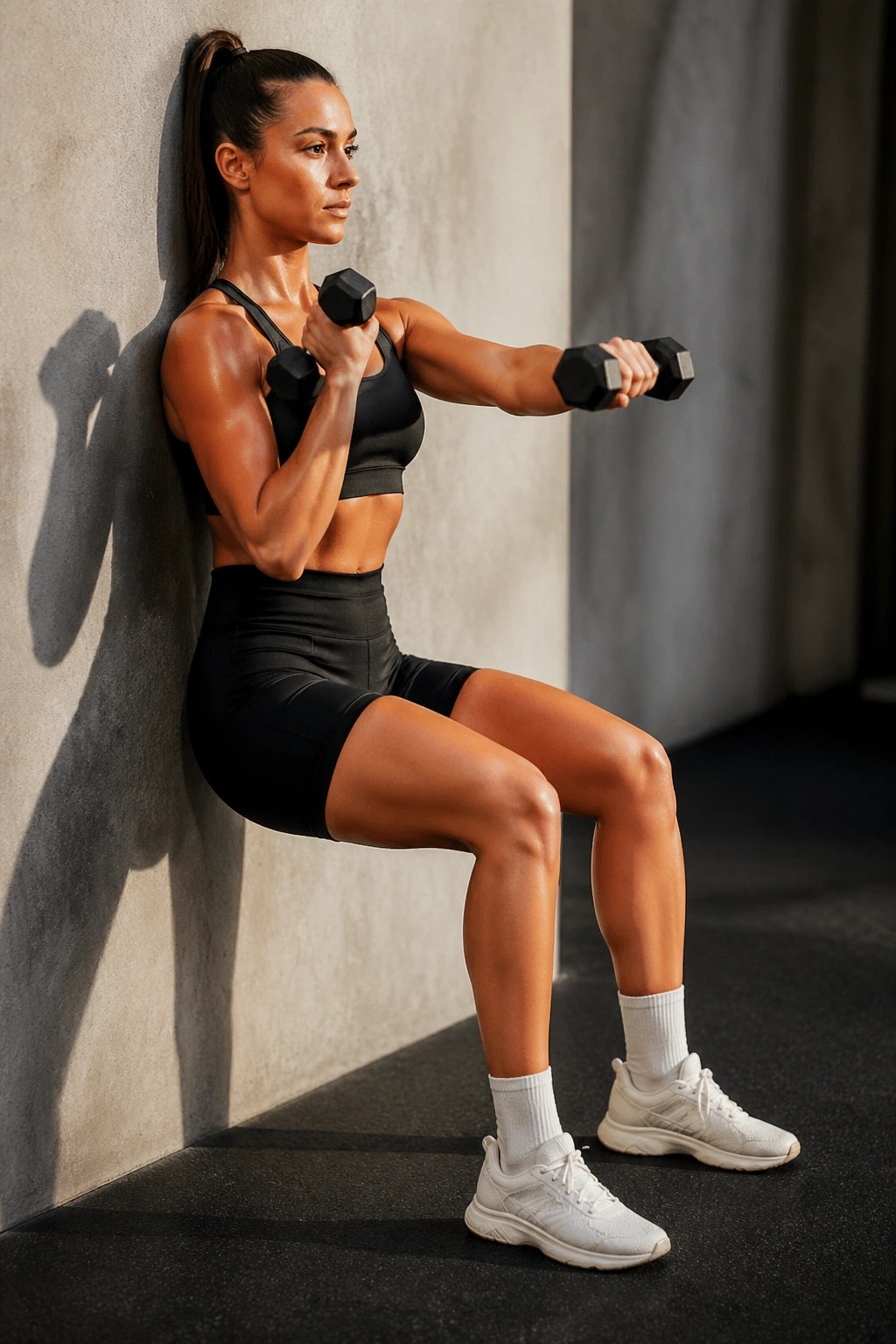
The wall gets boring fast, and then your quads start shaking. That’s usually the moment the workout gets good.
Sit against a wall with knees bent around 90 degrees, feet under knees, and the lower back gently long against the wall. Hold light hand weights or no weights at all. Press the arms forward, open to a T, lift overhead, and bring them back down in a quick rhythm while the legs stay parked.
What Makes It Hard
The legs are already working just from the hold. The arms add more work, and the stationary position makes your heart rate climb without any jumping. Do 30 to 45 second rounds, then step away from the wall for a few deep breaths before repeating.
- Keep the knees over the ankles.
- Press through the whole foot.
- Avoid over-arching the lower back.
- Use 1- to 3-pound weights if you want resistance.
A wall sit with moving arms is sneaky. It looks tame. Then your thighs start complaining in a very loud way.
15. Froggy Glute Sprint Sets
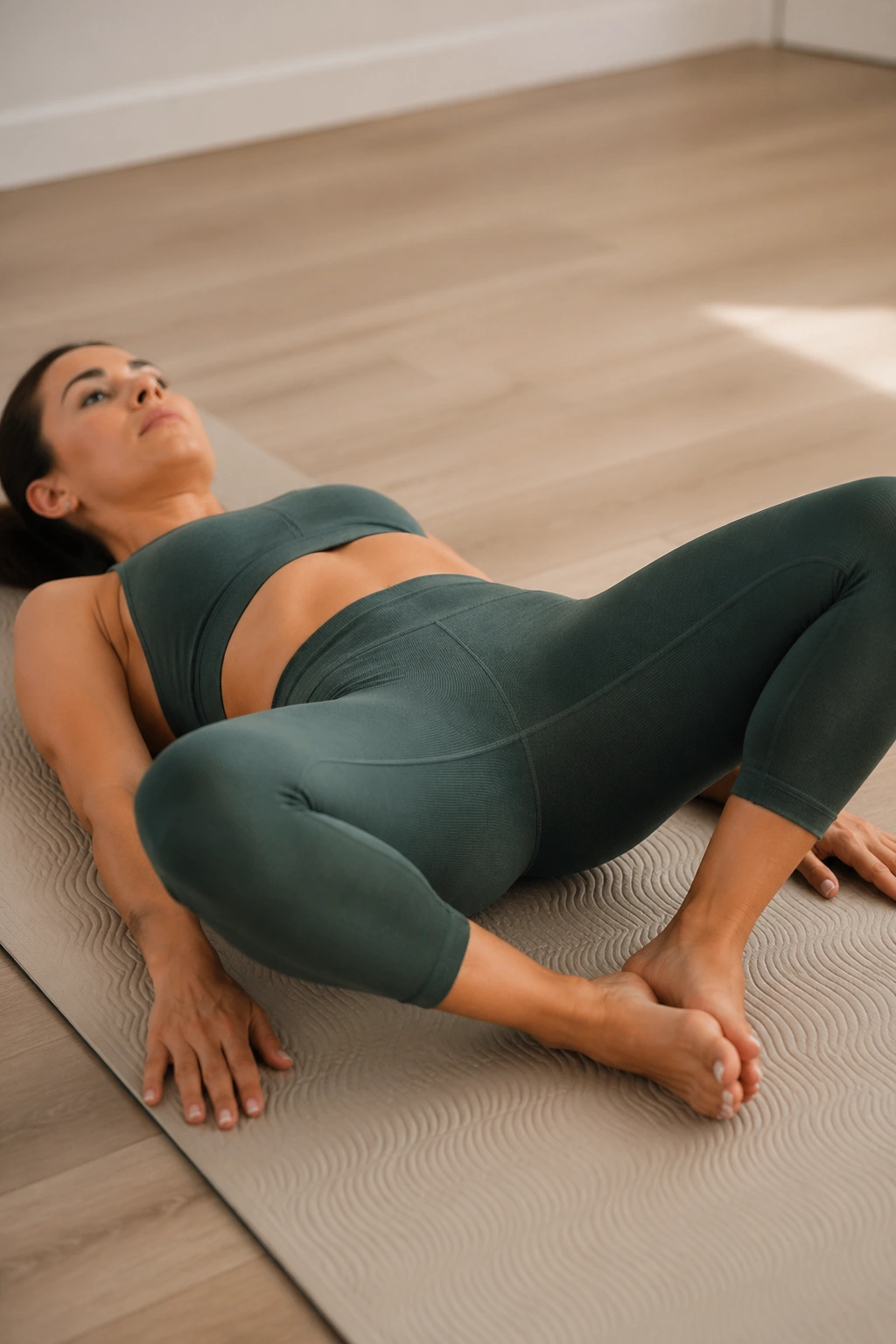
Why does a tiny range of motion feel so hard? Because the glutes hate being asked to stay active in a position that looks easy.
Lie on your back with the soles of the feet together and knees open wide, the classic frog shape. Lift into a bridge, then pulse the hips up and down a few inches. Keep the feet lightly pressed together and use short, quick beats for 20 to 30 seconds at a time.
This hits the glute medius and the inner thighs in a way straight bridge work does not. Add a mini band above the knees if you want more outer-hip work, but it is optional. The main event is the fast, controlled bridge pulse.
A useful cue: keep the tailbone heavy and the ribs quiet. If the lower back starts gripping, lower the bridge a bit. Do not chase height. Chase repetition with clean shape.
These sets are short for a reason. The burn comes on fast, and the body starts hunting for shortcuts even faster.
16. Side Plank Kick-Throughs
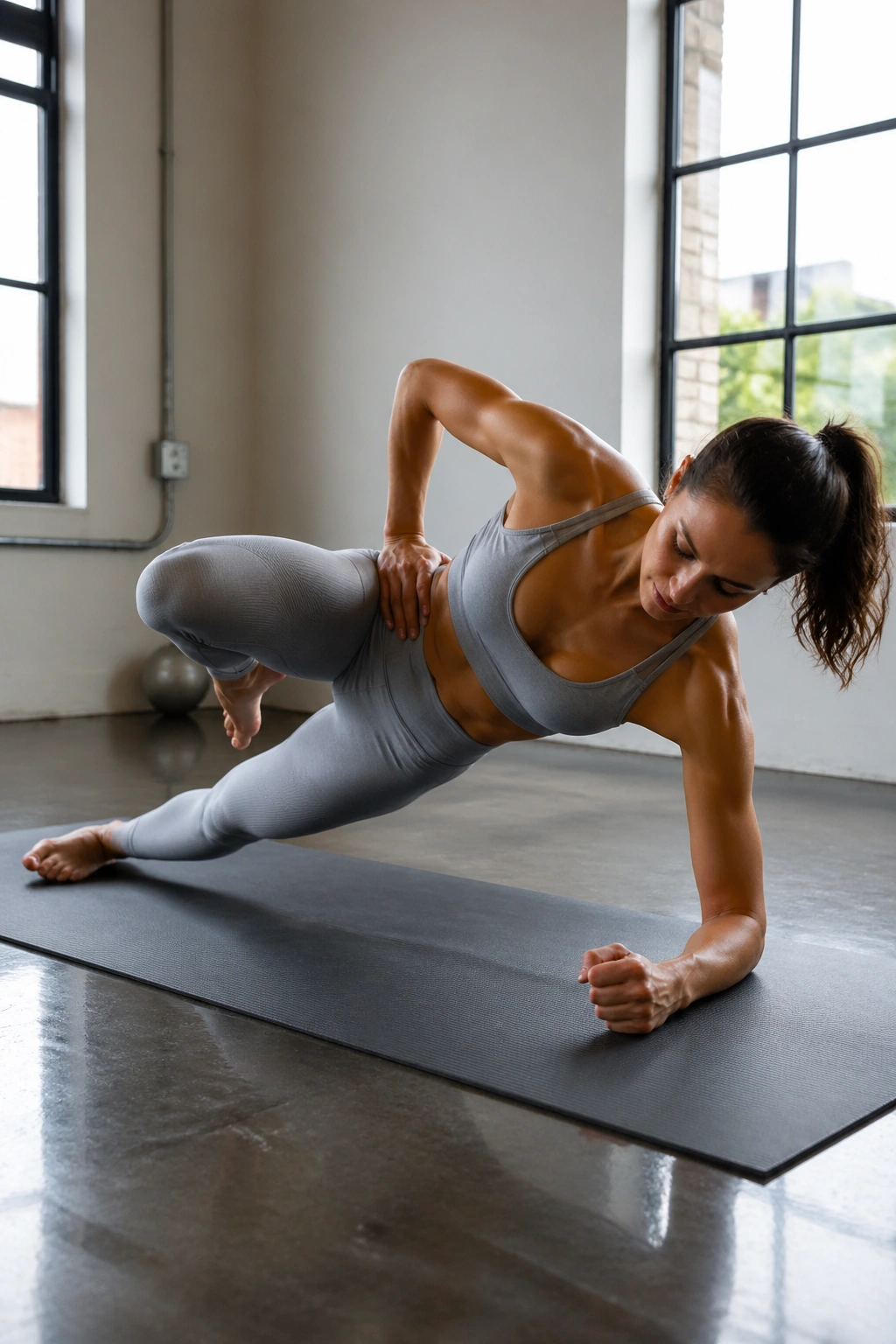
Three moves in one line. That is the whole appeal here.
Set up in a side plank, then thread the top leg through the space under your torso and kick it back out into a lift. The motion asks for shoulder stability, waist strength, and hip control all at once. That means the heart rate rises for reasons that go beyond pure speed.
What to Watch For
The top shoulder should stay stacked, not dumped forward. The supporting hand should press firmly into the floor. If the kick-through feels unstable, drop the bottom knee and keep the top leg moving in a smaller path.
Do 6 to 8 reps on each side, then rest 20 seconds. Or run it for 30-second intervals if you want a tougher cardio block. The movement gets especially interesting when you keep the leg path smooth and the torso steady.
This is not a beginner’s favorite, and that’s fine. It rewards people who already know how to brace without locking up. If your obliques start trembling, you’re probably doing the right thing.
17. Pilates Boxing Flow
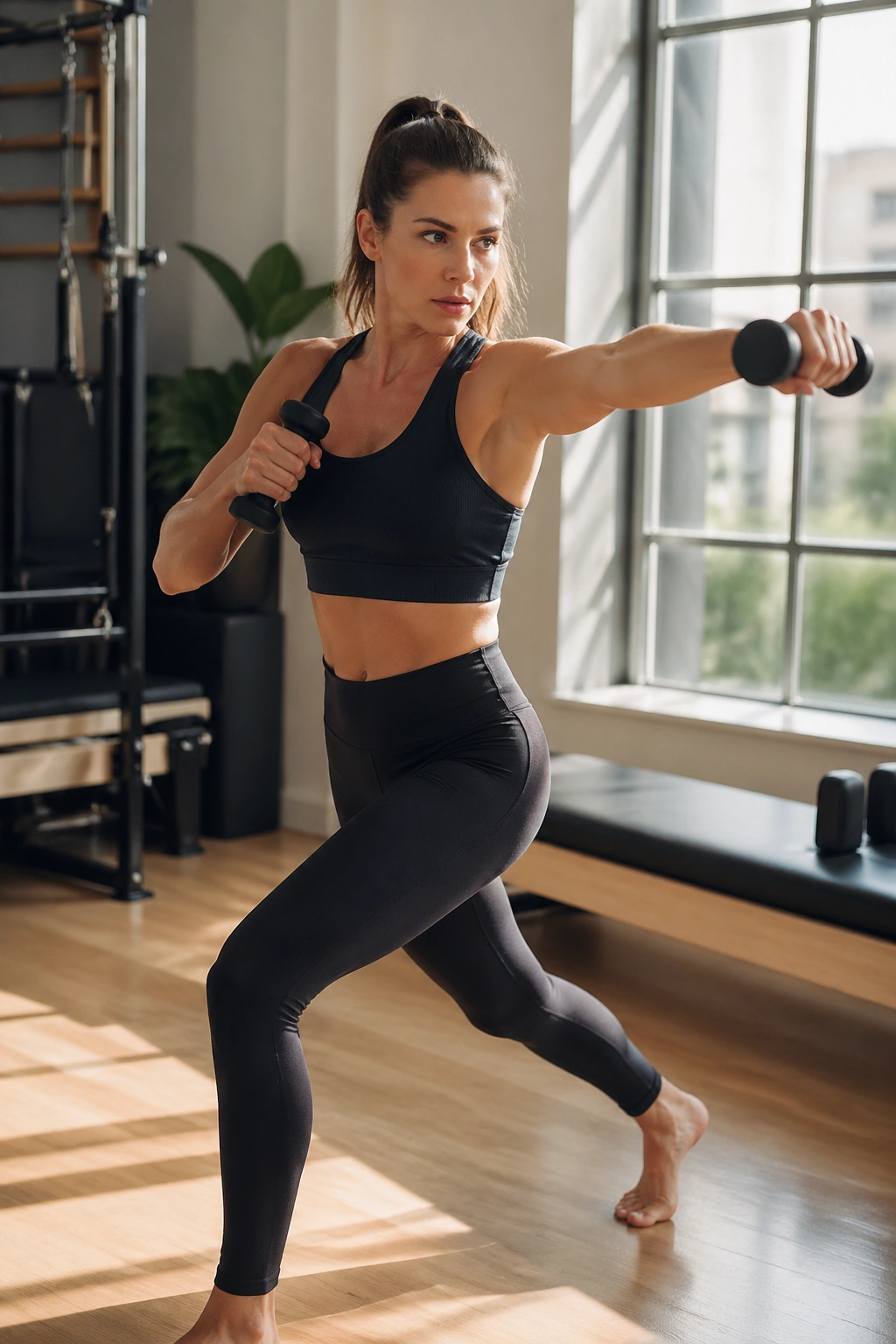
Unlike a straight shadowboxing workout, this keeps the ribs stacked and the pelvis quiet. That small difference changes everything.
Stand in a staggered stance, soften the knees, and throw a quick jab-cross pattern while the torso rotates from the center. Add a side step, a knee lift, or a heel raise between punches. The result is a Pilates cardio flow that feels athletic without turning sloppy.
The arms alone won’t do much. The core has to control the rotation, and the legs have to keep you grounded. That is why this version works better than flailing punches with no structure. You get more muscle involvement, and the breathing gets faster without the joints paying the price.
Use 45-second rounds with 15 seconds of rest. Light hand weights can add a little load, but they are not required. If you use them, keep them under 2 pounds and stop the set if the shoulders ride up toward the ears.
This one is good on days when the body wants to move and the mind wants something sharper than mat work.
18. Long Box or Band Row Sequence
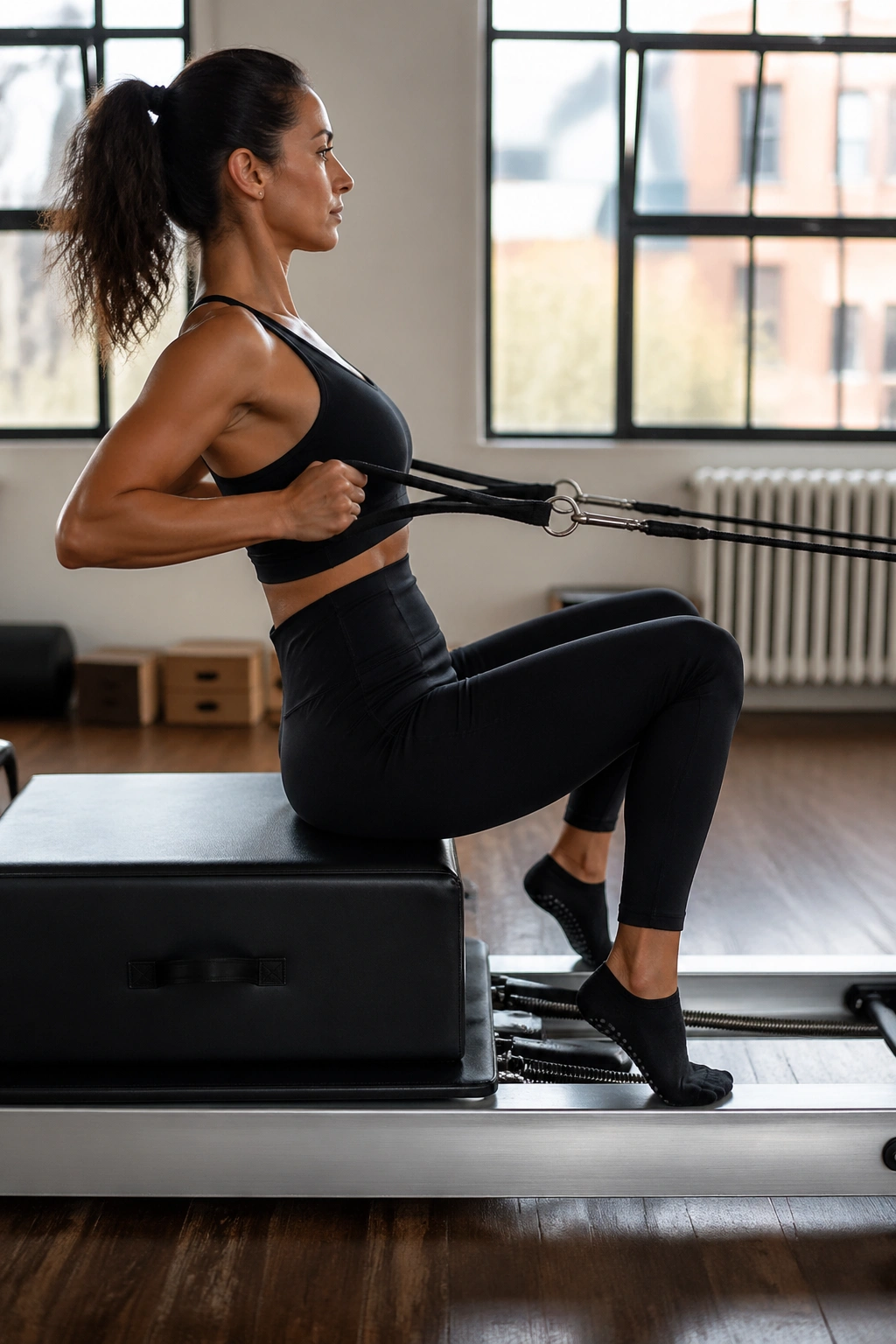
Rows are not only for back day. In Pilates, they can be part of a brisk, heart-rate-lifting sequence that wakes up the upper body and core together.
On a reformer long box, or with a resistance band anchored low, hinge slightly and row the arms back, then press forward, then open and close the arms in a rapid but controlled rhythm. Add a small squat or heel lift between sets if you want more lower-body work.
The magic here is posture under load. You are keeping the chest open, the abs engaged, and the spine long while the arms move repeatedly. That creates a clean cardio effect without the pounding of jumps or sprints.
If you use a band, choose one that gives enough resistance to feel the back muscles but not so much that the shoulders jerk. Too heavy and the movement gets clunky. Too light and it turns into arm waving.
A good row series leaves the upper back warm and the breathing a little sharper. It should not leave the neck angry. That line matters.
19. Travel Mat EMOM
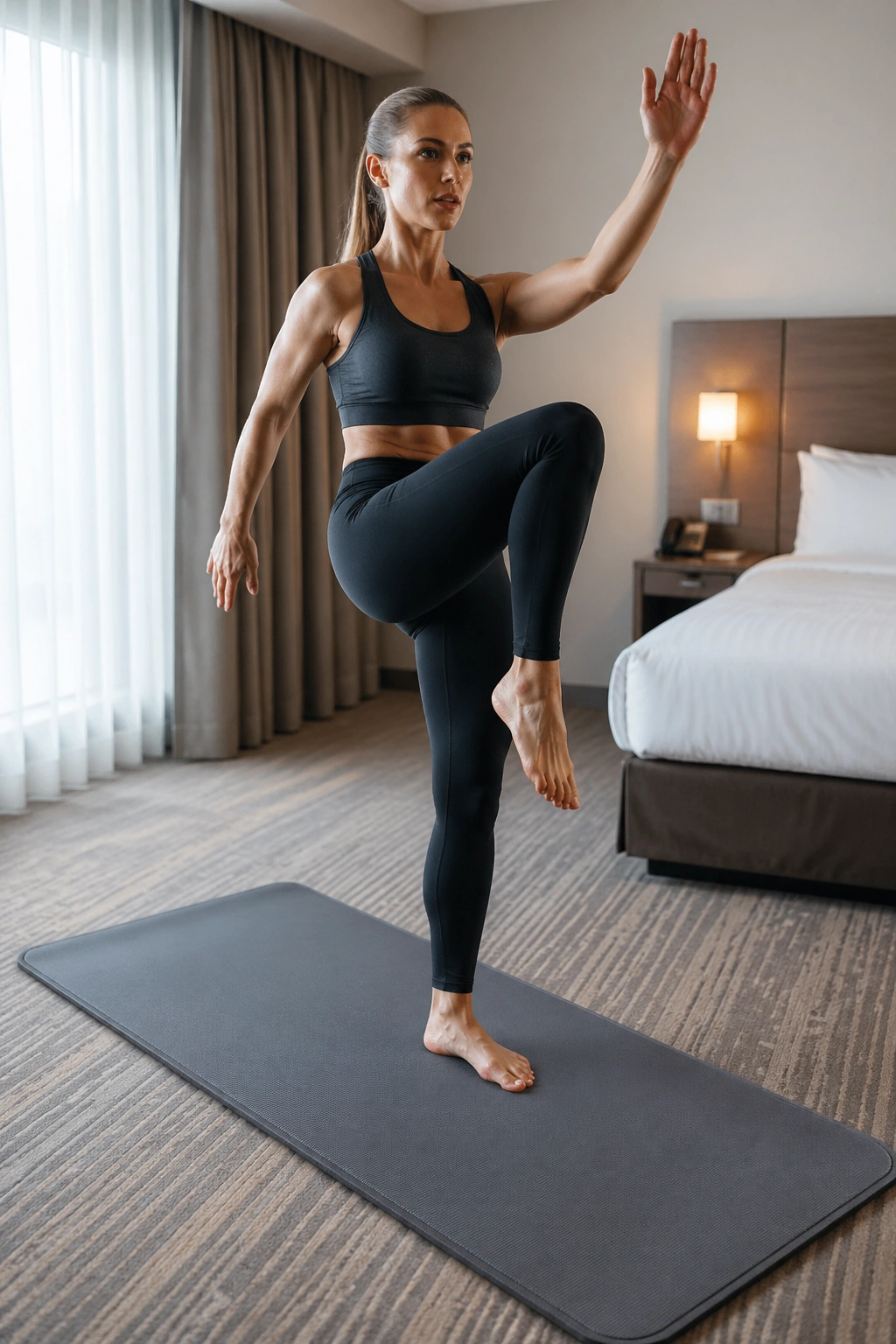
Got ten square feet and a timer? That’s enough.
A Simple EMOM Structure
EMOM means every minute on the minute. Pick four Pilates moves and rotate them for 10 to 20 minutes. Minute 1: standing march-and-reach. Minute 2: plank knee drives. Minute 3: bridge march. Minute 4: side-lying beats, then repeat.
The idea is brutally useful: work hard for the first part of the minute, rest for the leftover seconds, then start again. That built-in recovery keeps the session honest and keeps your form from slipping apart. It also makes a hotel room or a cramped living room feel like a workable gym.
- Choose 4 moves you can do well.
- Keep each work interval to 35 to 45 seconds.
- Leave 15 to 25 seconds for rest.
- Stop one round early if your form breaks.
This style suits people who like structure but hate long choreographed flows. It is tidy, efficient, and a little relentless. Good qualities in a workout. Less so in a dinner guest.
20. Mixed-Format Finisher Ladder
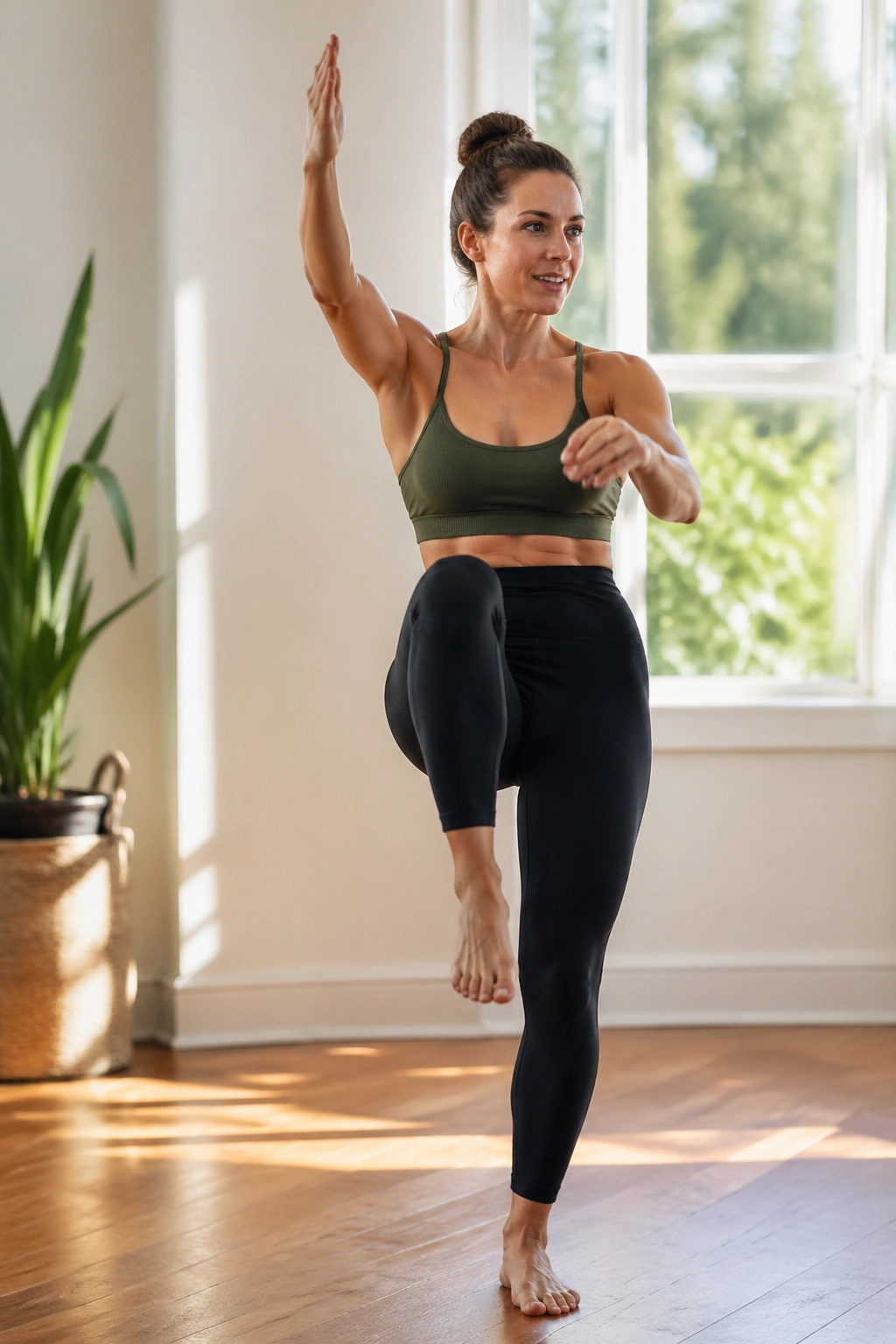
This is the one I reach for when I want the session to feel complete without adding extra fluff.
Start standing with a fast march and reach. Drop to a plank for knee drives. Roll onto your back for bridge marches. Finish with side-lying beats or froggy pulses. Keep each block to 30 seconds of work and 15 seconds of rest, and move through the ladder twice.
The reason this works is simple: it changes planes. Standing work wakes up the legs and balance. Planks tax the core and shoulders. Floor bridges and side-lying work keep the glutes honest. When you stack them together without long pauses, the whole session feels more like conditioning than isolated Pilates drills.
Keep the transitions tidy. That’s the whole game here. Set your mat, know your order, and do not spend half the minute deciding what comes next. If you want more intensity, shorten the rests. If you want a more joint-friendly version, keep the ranges small and the movements smooth.
Pick three of these workouts and repeat them through the week. That’s where the payoff shows up.
