



Some mornings, your body feels three steps behind your alarm. A good morning yoga flow can close that gap fast — not by forcing intensity, but by asking the spine, hips, shoulders, and breath to wake up in the same direction. The best ones leave you taller, warmer, and less grumpy before coffee.
Morning yoga flows work best when they’re short enough to repeat and clear enough to do half-awake. If a sequence needs six props and a memorized lecture, it will not survive a real weekday. A mat, a little floor space, and a few steady breaths are usually enough.
The trick is choosing the right shape of movement. Forward folds calm the nervous system, standing work turns on the legs, twists loosen the ribs, and backbends open the front body that tends to get stiff overnight. The right mix depends on whether you wake up tight, sleepy, or somewhere in the messy middle.
The first flow is the one I’d hand to almost anyone who wants a clean, no-drama start.
1. Sun Salutation A to Wake the Whole Body
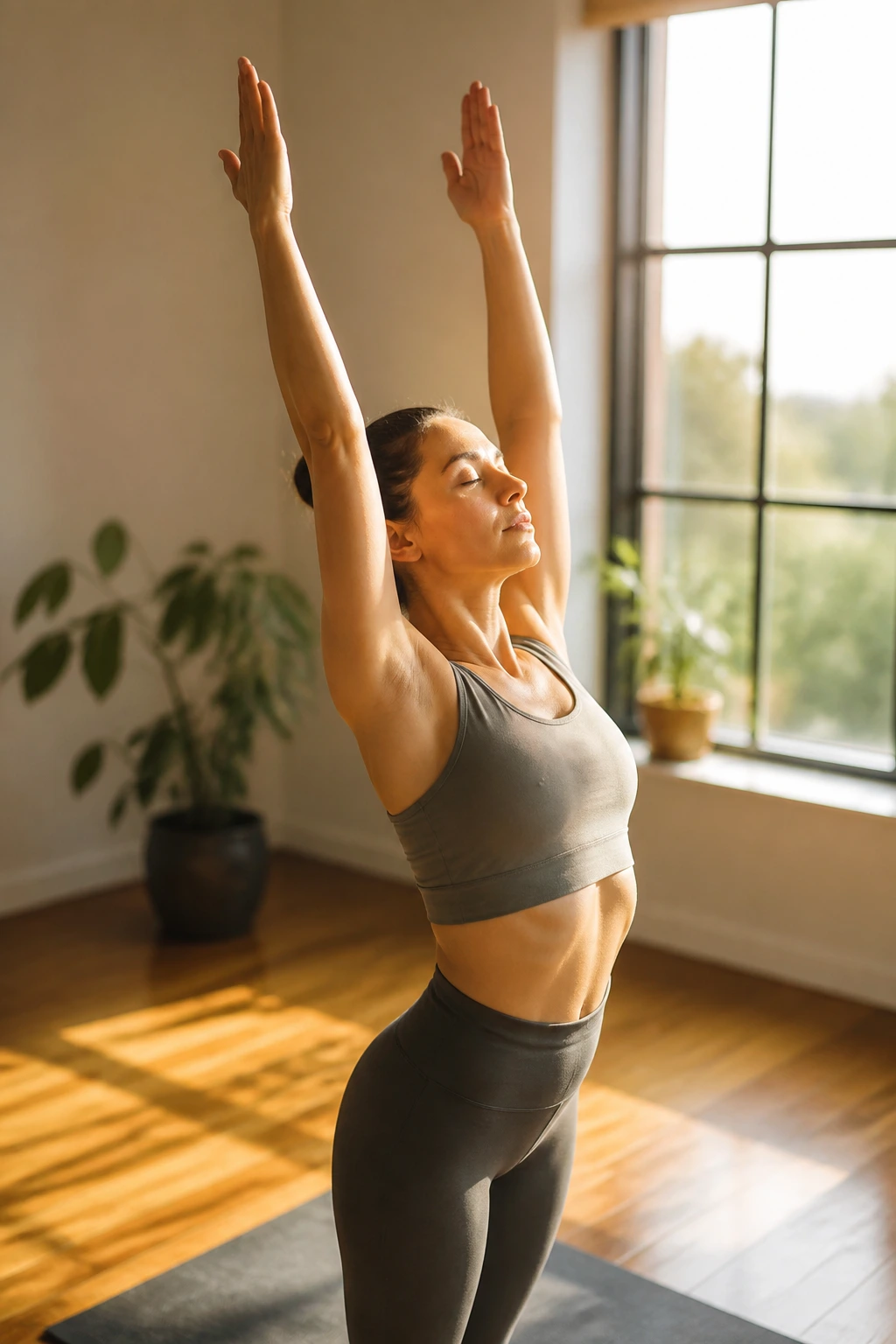
If you only have time for one sequence, make it Sun Salutation A. It wakes up the shoulders, hamstrings, calves, and upper back in one clean run, and it does it without asking your brain to negotiate every move.
The magic is in the rhythm. Move with the breath, not against it, and the body catches up fast. Three rounds feel light. Five rounds feel like you’ve crossed the line from sleepy to available.
Why It Works So Well
Start standing. Reach up on an inhale, fold on an exhale, half-lift on the next inhale, then step back to plank and lower with control. Cobra or upward dog is fine here, depending on how your low back feels.
- Inhale: reach tall
- Exhale: fold forward
- Inhale: lengthen halfway
- Exhale: step or hop back
- Inhale: cobra or upward dog
- Exhale: downward dog
- Walk or step to the top again
Keep the first round soft. No racing. If your wrists are cranky, lower your knees in plank or skip the full chaturanga and come straight to the floor. Clean form beats speed every single time.
2. Cat-Cow With a Long Downward Dog
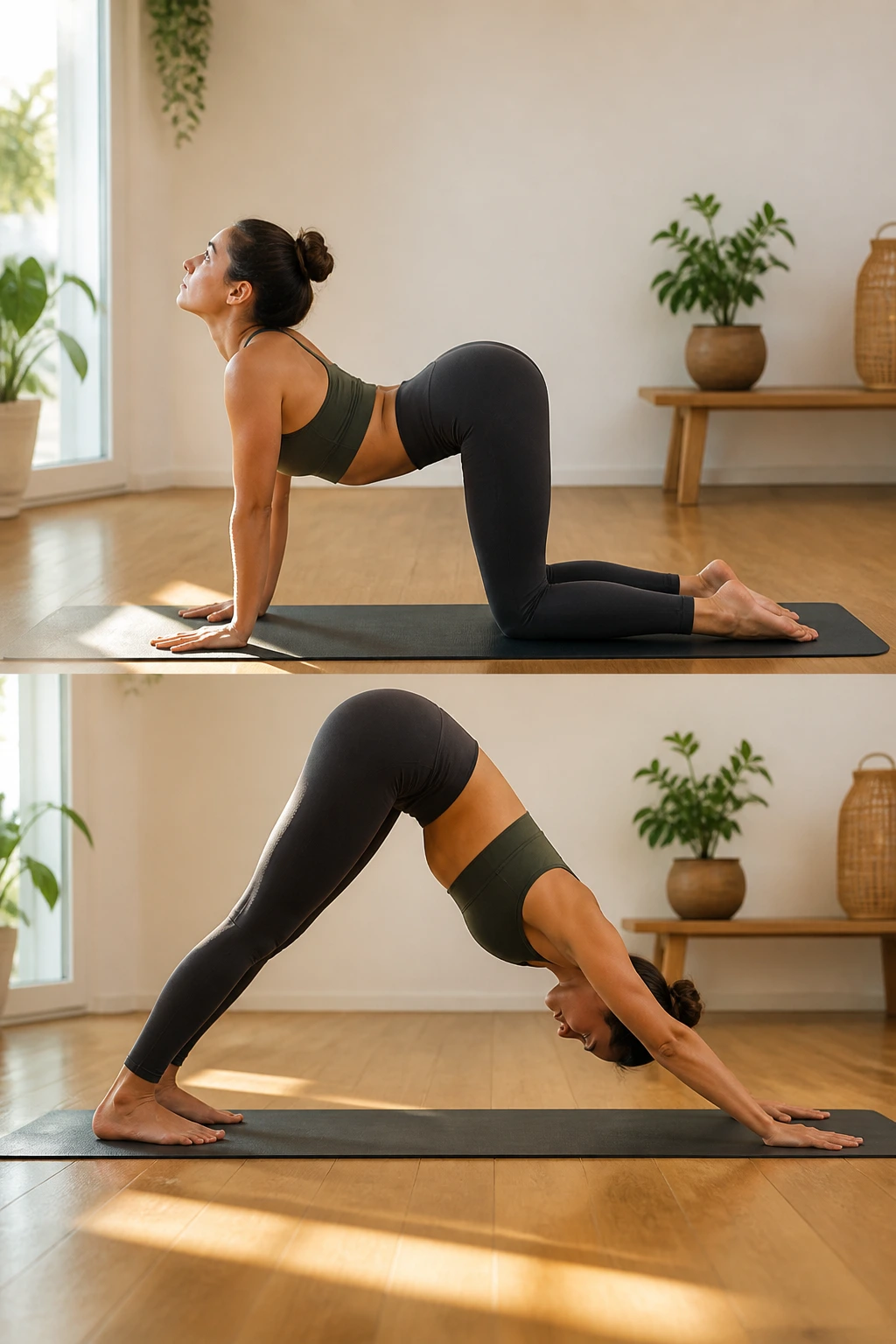
Why does this tiny spinal sequence feel like someone turning the lights on? Because it gives your back a chance to move in both directions before the rest of the body starts making demands.
Cat-Cow loosens the spine, but the real payoff comes in the pause. A long Downward Dog after a few rounds lets your shoulders spread and your calves lengthen without forcing anything. It’s a gentle wake-up, not a test.
No need to rush it. Four or five slow rounds are enough for most mornings, and if your neck feels glued in place, keep the chin tucked a little and let the movement stay small.
What to Watch For
Your hands should feel grounded, not crushed. Spread the fingers, press through the knuckles, and stop if you hear the wrists complaining early.
If your lower back feels pinchy in Cow, don’t chase a bigger arch. Make the movement smaller and let the breath do more of the work. The goal is a spine that feels awake, not dramatic.
3. Low Lunge Reach-and-Rotate Flow
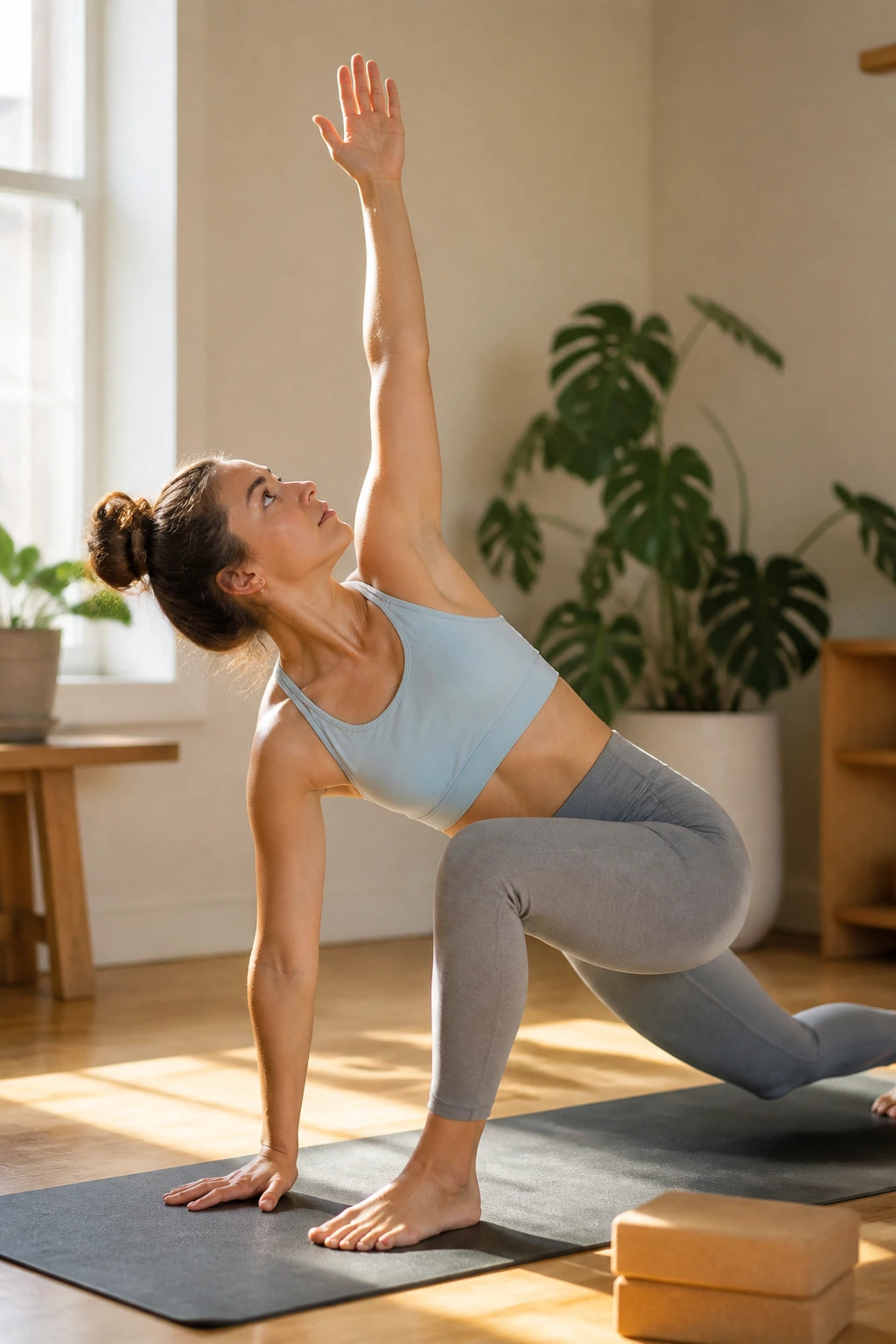
Desk shoulders and tight hip flexors show up fast in the morning, and this flow handles both without turning into a circus. Low lunge gives the front of the hip somewhere useful to go, while the reach-and-rotate piece opens the ribs and upper back.
Take the back knee down first if you’re stiff. That single choice makes the whole thing feel more available, and honestly, it’s the smarter place to start for most people.
Keep the Front Knee Happy
- Keep the front knee stacked over the ankle
- Shorten the stance if your hamstrings tug
- Use blocks under the hands if the floor feels too far away
- Rotate from the ribs, not by yanking the shoulder around
A steady breath here matters more than a deep shape. Hold each side for three to five breaths, then step back out slowly. If you feel a sharp pull in the front of the hip, back off and keep the pelvis a little tucked instead of dumping forward. That tiny adjustment saves the low back.
4. Standing Side-Bend Flow With Shoulder Openers
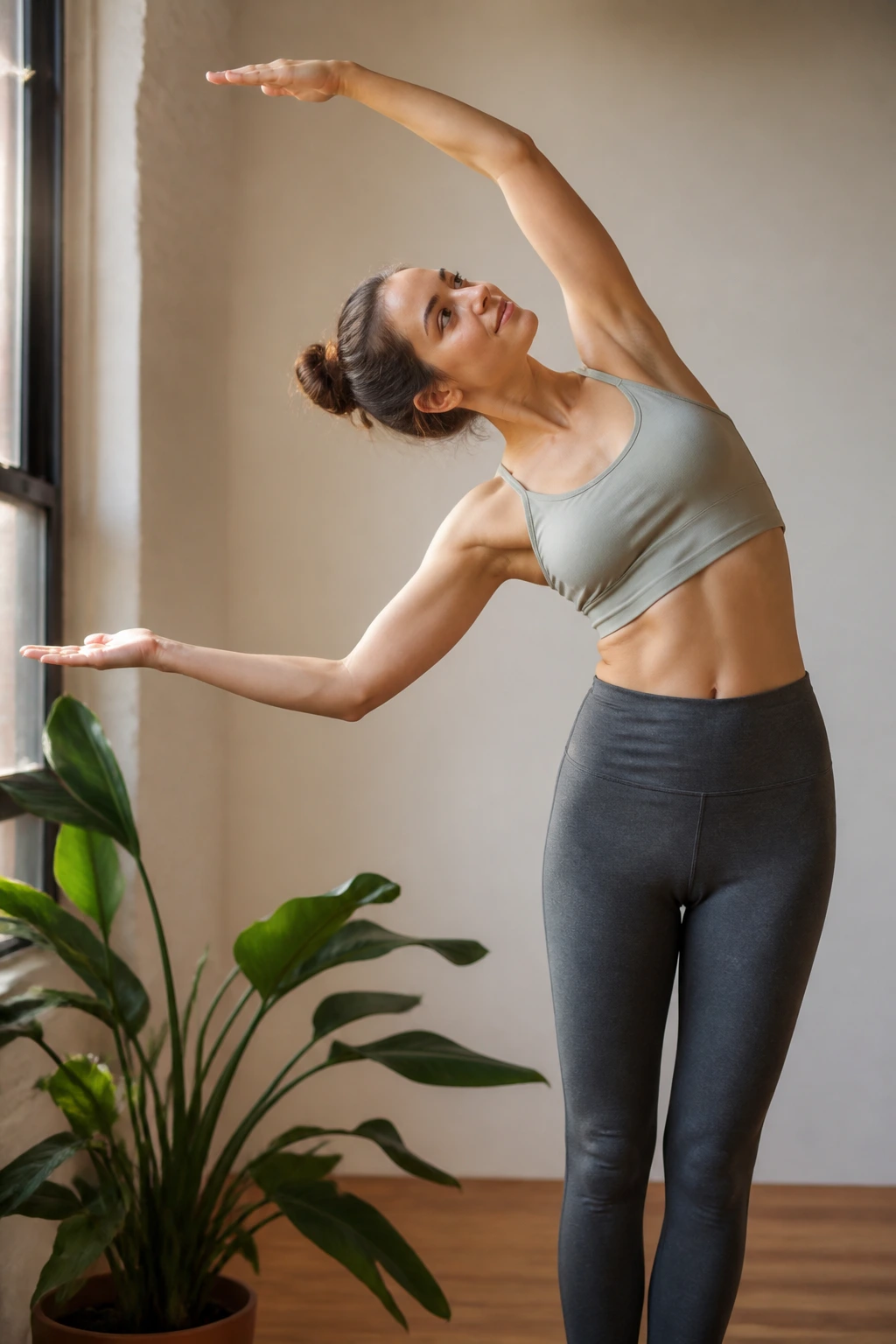
This is the flow I reach for when I want to feel tall before the day starts. The body spends a lot of time folded forward — sleeping, sitting, hunching over a phone — and side-bending is a good way to undo some of that compression.
Begin in Mountain Pose, lift the arms, then lean to one side without collapsing through the waist. Let the ribs open, not just the arm line. If you add a shoulder opener here, like clasped hands behind the back or a cactus-arm shape, the chest gets a little more room too.
It feels small while you’re doing it. Then you stand back up and notice you’re breathing more freely.
A lot of people skip side body work because it doesn’t look intense. Bad call. The side ribs are part of your breathing mechanics, and if they stay stiff, the whole morning feels flatter than it needs to. Two rounds per side is enough, and if one side feels tighter, stay there for an extra breath or two.
5. Warrior I, Warrior II, and Reverse Warrior
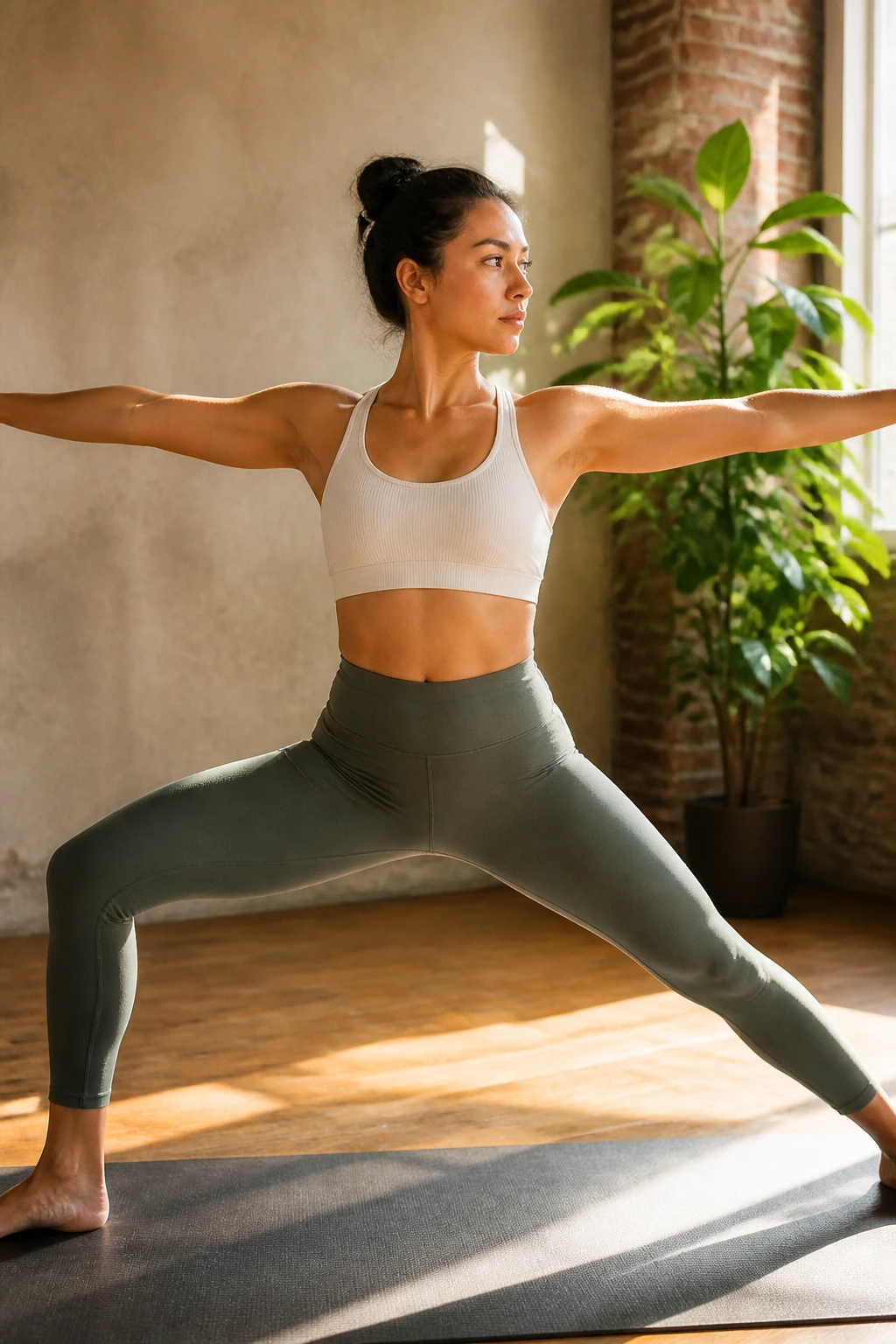
Nothing wakes up the legs faster than a clean warrior sequence. Warrior I builds the base, Warrior II opens the hips, and Reverse Warrior lets the front body stretch while the legs keep working. It’s a good trade.
Unlike passive stretching, this flow asks the body to hold shape while the breath stays calm. That’s what makes it useful first thing in the morning. You get heat without feeling scattered.
Why It Wakes the Whole Lower Half
Keep the stance shorter than you think at first. Most people go too wide, then wobble, then tighten their jaw like they’re doing math.
- Front knee tracks over the second toe
- Back foot plants firmly
- Outer edge of the back foot stays active
- Shoulders stay soft, not pinned up
Hold each shape for three breaths, maybe four if your legs want more time. If the hips feel jammed, shorten the stance and lift the back heel a little in Warrior I. The flow should feel strong, not forced. Strong and smooth is the sweet spot.
6. Chair Pose Pulse With Forward Fold
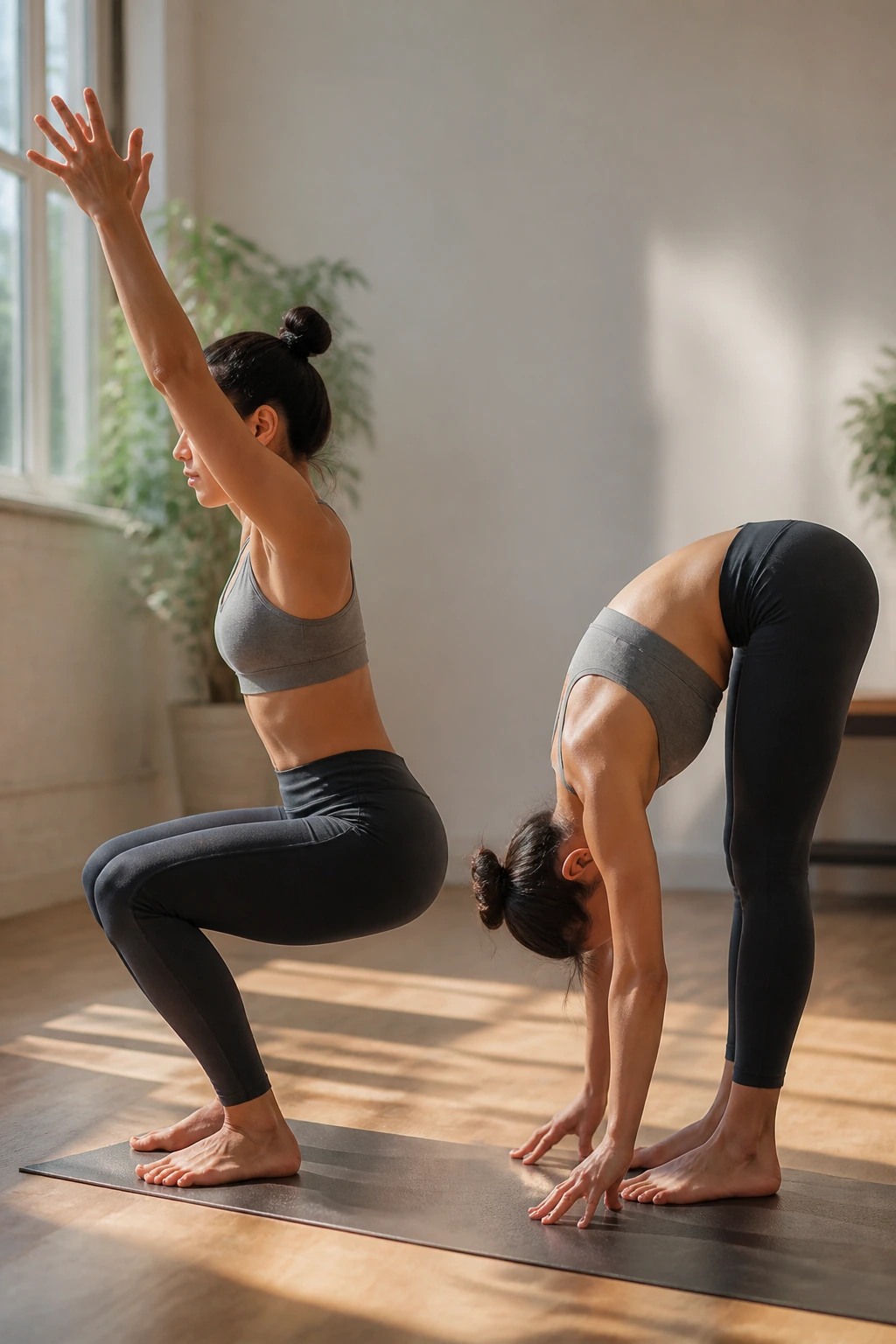
Burn, then breathe.
That’s the whole point of this one. A few small Chair Pose pulses switch on the thighs and glutes, then a forward fold gives your back a chance to let go before the morning starts asking for more.
Keep the pulses tiny. You’re not doing squat jumps. The knees should bend with control, the weight should stay in the heels, and the chest should stay lifted enough that you can still breathe through your nose.
A Simple Way to Keep It Honest
If your lower back talks too much in Chair, lift the sitting bones a little more and stop descending so far. That one adjustment usually helps.
Then fold forward and let the head hang heavy for two or three breaths. The contrast is what makes this sequence feel good. Leg work first, release second. If you need a gentler version, skip the pulses and hold the shape statically for five breaths. That still counts. A small version done well beats a big version done badly.
7. Triangle to Half Moon Balance Flow
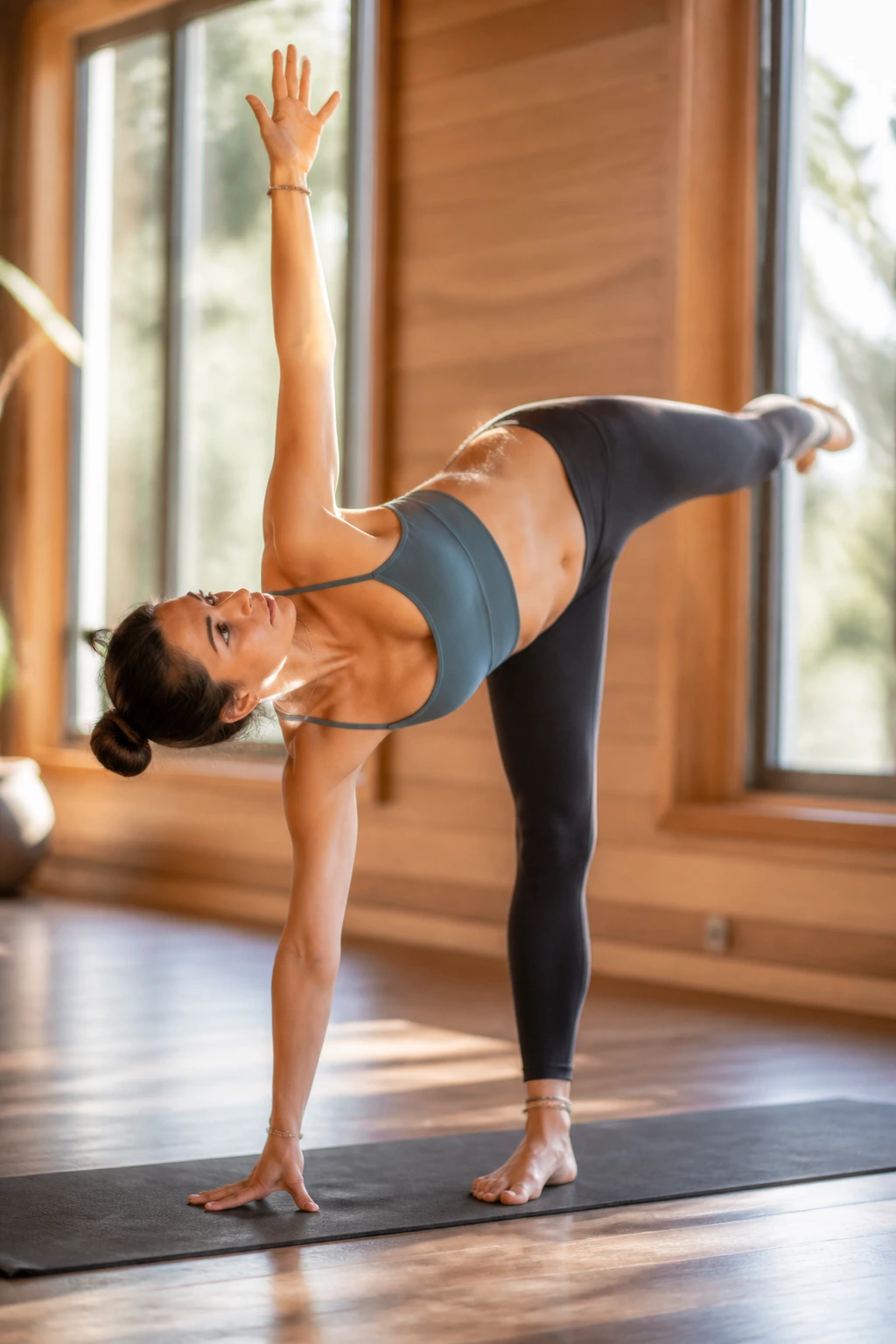
Want a flow that wakes up the brain as much as the legs? This is the one. Triangle Pose teaches the body to lengthen under load, and Half Moon asks for balance without shutting down the breath.
The combo is sharper than it looks. Your standing leg works, your core quietly steadies, and your eyes have to find a spot that doesn’t wobble. That’s useful on mornings when your head feels a little foggy.
How to Keep the Standing Leg Honest
Use a block under the lower hand in Triangle if the floor is too far away. That keeps the spine long and stops you from collapsing into the hip.
In Half Moon, keep the lifted leg active and the standing knee soft. A lot of people lock the knee and then wonder why balance feels impossible. That tiny bend changes the whole shape.
If you’re nervous, keep one hand on the wall. No shame there. A wall gives you the freedom to explore the pose without bracing like you’re on ice. Two rounds per side is plenty for a morning start.
8. Lizard Lunge With a Soft Twist
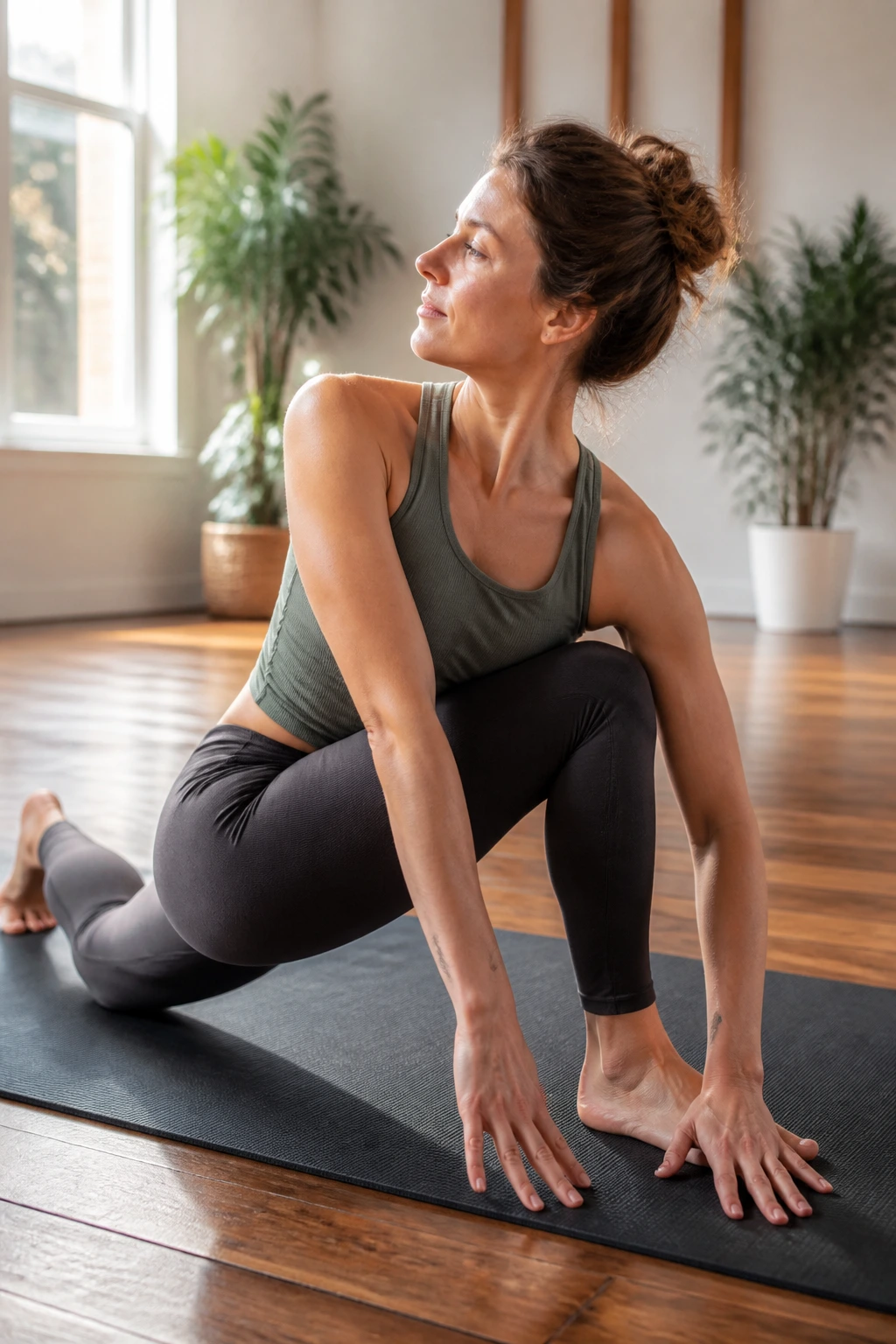
Deep hip openers do not have to be dramatic. Lizard Lunge is proof. It gives you a stronger stretch in the hips and inner thighs, but the soft twist keeps the upper body from feeling stuck in one plane.
Come into a low lunge, then walk the hands inside the front foot. Stay on your palms or drop to forearms if that feels fine. The twist can be tiny — chest turning a few degrees is enough.
It’s one of those shapes that feels different on each side, which is normal. Morning bodies are uneven. One hip is always a little more stubborn, and one side of the back always seems to have opinions.
What to Change If It Feels Too Much
- Keep the back knee down
- Put a blanket under the knee if the floor is hard
- Stay on blocks instead of dropping the forearms
- Skip the twist if your low back feels cranky
If the front knee complains, move the front foot a few inches wider and shorten the hold. The stretch should feel deep, not sharp. Three to four breaths is enough before you switch sides.
9. Bridge Pose With Controlled Marching
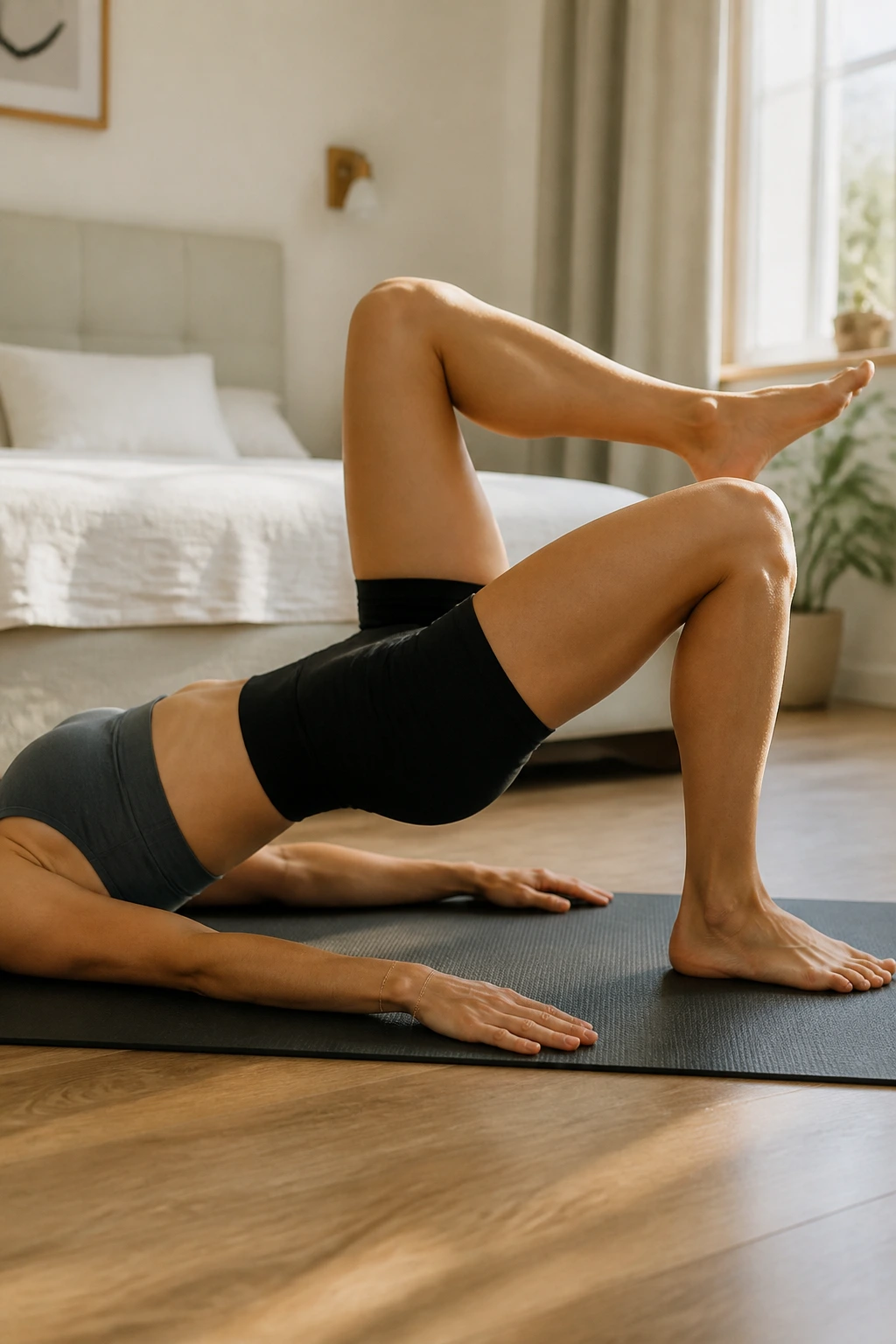
Some mornings my lower back feels flat, not sore — just sleepy. Bridge Pose fixes that better than a lot of people expect because it wakes up the glutes and opens the front of the hips at the same time.
Start with the feet hip-width apart and the heels close enough to graze the fingertips. Lift slowly, pause, then test a few controlled marches if the pelvis stays level. Those little lifts make the core work without turning the pose into a crunch.
A Back-Friendly Version
If your low back tends to take over, keep the lift modest. You do not need a high bridge to feel the benefit.
- Press evenly through both feet
- Keep the ribs from flaring
- Squeeze the glutes lightly, not hard
- Lower one vertebra at a time
A supported version with a block under the sacrum is worth trying on groggy mornings. It’s calmer, and honestly, sometimes calmer is what the body wants. That still counts as a real flow.
10. Sphinx, Cobra, and Locust Wake-Up
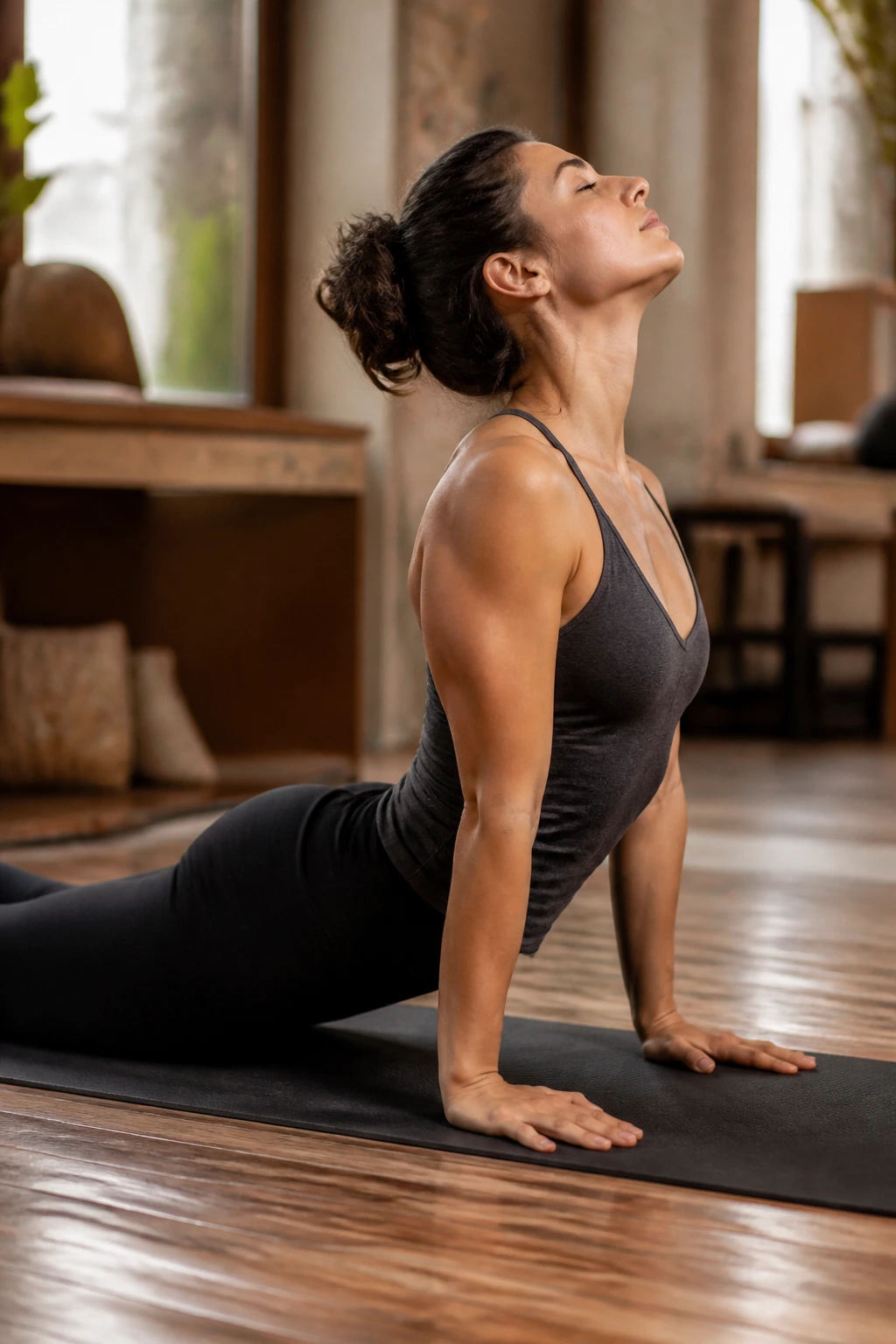
Unlike big backbends, these back-body shapes wake you up without asking for circus-level flexibility. That matters first thing, when the shoulders are stiff and the front of the hips still feel half asleep.
Start in Sphinx Pose for a few breaths. It’s low, grounded, and kind to the spine. Then move to a small Cobra, keeping the pelvis heavy, before trying a brief Locust Pose lift if your back feels ready.
The sequence teaches the body to work from the back side instead of hanging off the front. That’s the real win. A lot of morning fatigue lives in the upper back and the glutes, and this flow nudges both without overdoing it.
Why I Start Low
If you jump straight into a deeper backbend, the lumbar spine tends to do more than its share. That’s the wrong place to ask for heroics.
Keep the neck long. Keep the tops of the feet pressing down. If the lower back pinches, return to Sphinx and stay there longer. There’s no prize for forcing the shape.
11. Half Split to Standing Forward Fold
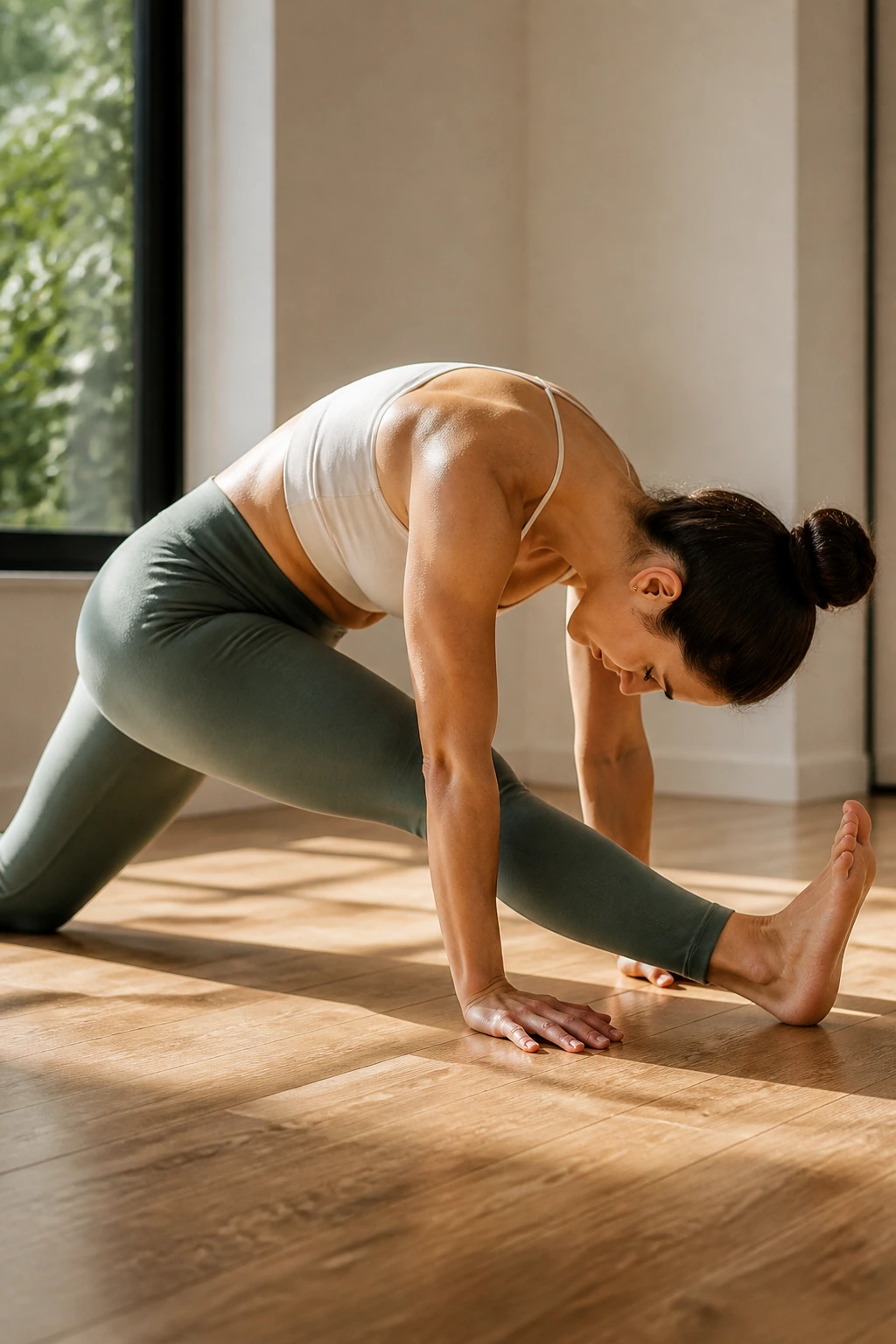
Runners love this one, and for good reason. Half Split stretches the hamstrings in a more controlled way than a straight-leg fold, and the standing forward fold gives the whole back line a chance to soften after that.
Set the hands on blocks or the floor, then shift your hips back while keeping the front knee slightly bent. That bend matters. A locked knee can make the hamstring grab instead of release.
The transition back to standing should feel unhurried. Roll up through the spine or bend the knees and use your hands on your thighs if you need a little support. On cold mornings, support is not a weakness. It’s smart.
A Couple of Details That Help
- Keep the toes of the front foot pointing up
- Don’t force the chest toward the shin
- Hold for three to five breaths per side
- Use a micro-bend in the standing knee if the hamstrings are tight
The flow works because it respects tension instead of arguing with it. That usually makes the body more cooperative.
12. Tree Pose Breath Ladder
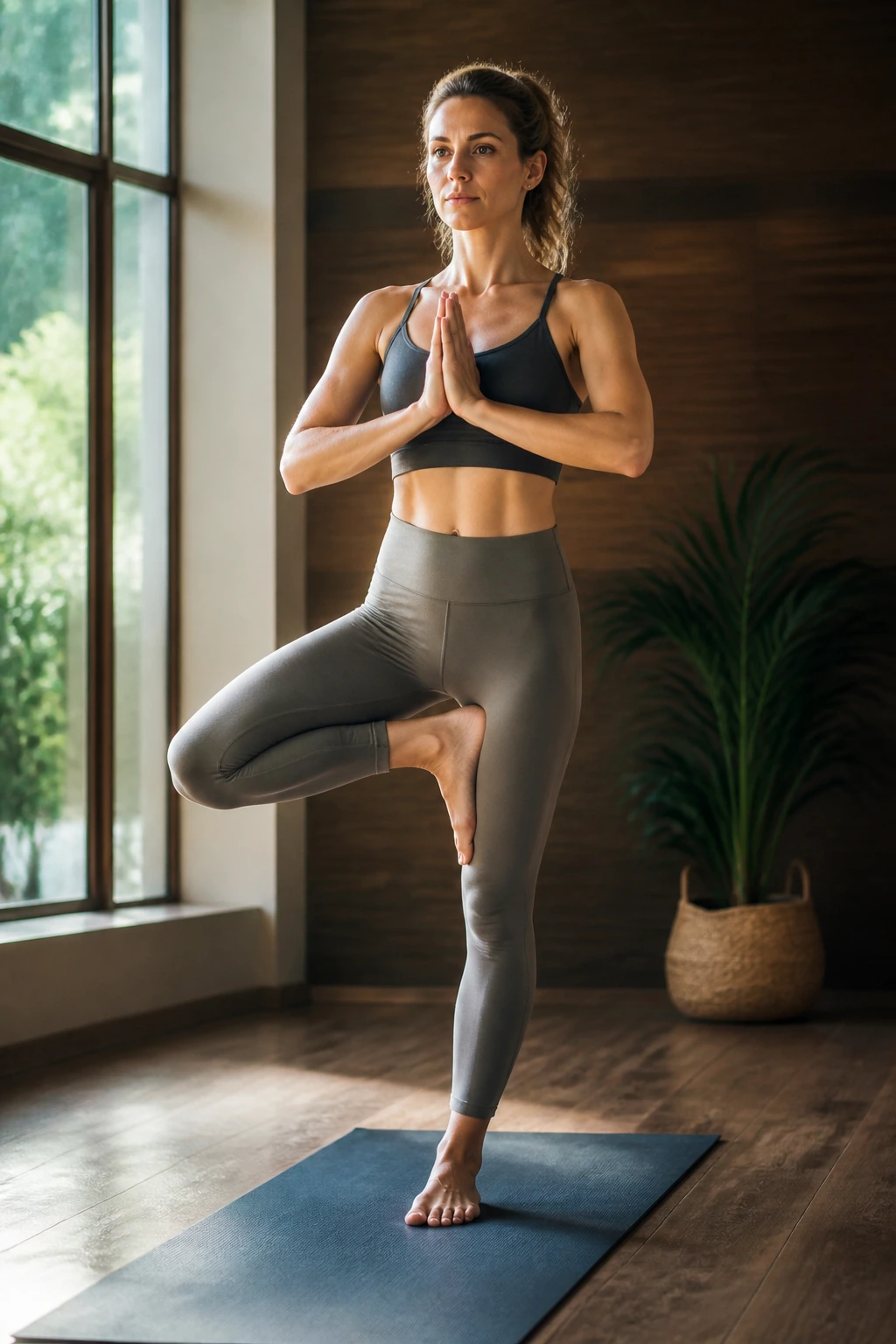
Balance work before breakfast sharpens focus faster than people expect. Tree Pose does that without needing much room, and the breath ladder turns it from a static hold into a real wake-up drill.
Start with the lifted foot at the ankle or calf. Skip the inner knee. That’s a bad trade and not worth the wobble. Once you’re steady, take one breath to lengthen, one to settle, and one to widen the collarbones.
How to Stay Steady Before Coffee
Use one fixed point on the wall or across the room. A wandering gaze makes the pose harder than it needs to be.
- Keep the standing foot grounded through all four corners
- Press the lifted foot lightly into the standing leg
- Soften the ribs instead of flaring them out
- Hold for four breaths, then switch sides
If you feel wobbly, that’s fine. Wobbly is part of the deal. The goal is not to stay frozen like a statue. The goal is to keep breathing while the body organizes itself.
13. Seated Twist Into Forward Fold
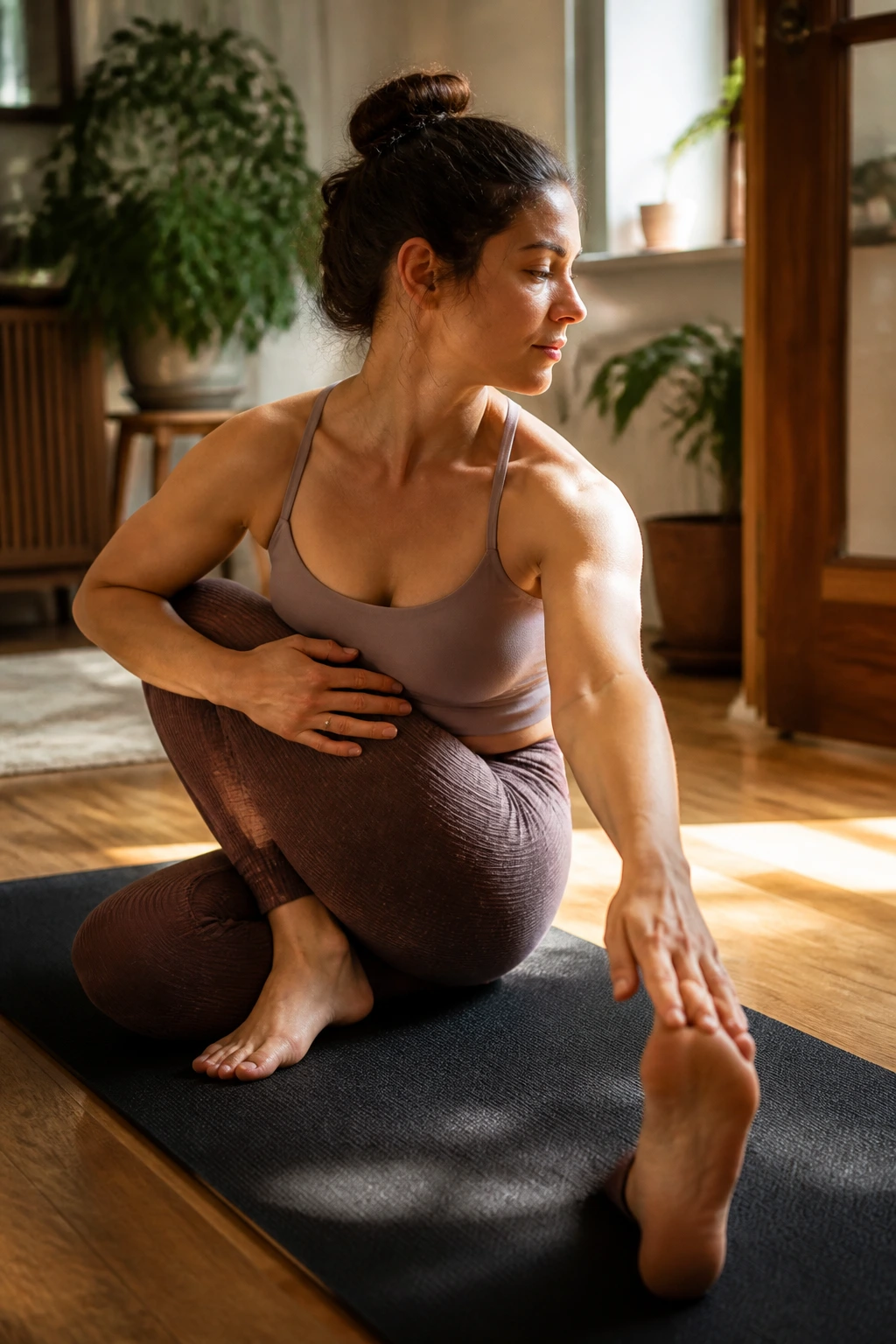
Not every morning wants loud movement. Some mornings want something quieter, something that feels like untying a knot instead of kicking the door open.
A seated twist does that well. It frees the ribs, wakes the waist, and gives the low back a gentle directional change. Follow it with a forward fold over one leg, and the whole back line gets a small, useful reset.
This flow is especially good on mornings when sleep was shallow or your body feels a little clamped down. It’s slower, and that’s the point. The breath has room to deepen, and the mind often settles along with it.
Hold the twist for three to five breaths without yanking the shoulder farther back each round. Then fold and let the head drop. If the hamstring is tight, keep the knee bent. No drama needed. The body usually responds better when it isn’t being bargained with.
14. Forearm Plank to Baby Cobra
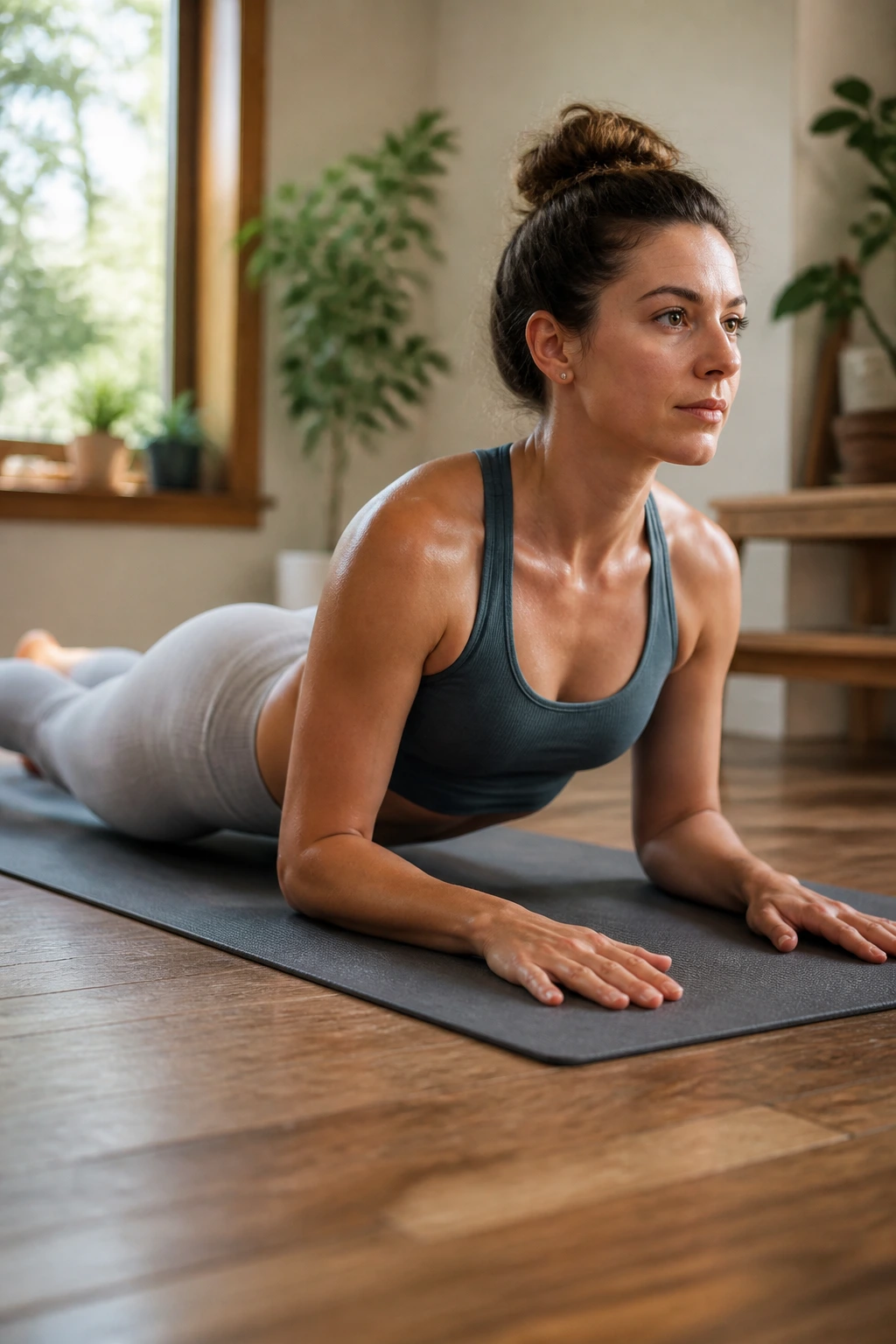
Short, sharp, useful.
That’s the feeling here. Forearm Plank turns on the core and shoulders without asking the wrists to take all the load, and Baby Cobra gives the front body a quick reset between rounds.
Use this when you want a little heat but don’t want to launch into a full workout. Two or three rounds are enough to raise the pulse and remind the body that it’s awake.
Two Rules That Keep It Clean
- Keep the ribs from sagging in plank
- Keep the shoulders away from the ears
If the low back starts talking, lower the knees or shorten the hold. That’s not a failure. That’s a smart adjustment. In Cobra, press the tops of the feet down and lift only as high as the chest can move without crushing the neck.
The flow is simple, and that’s why it works. You feel it fast.
15. The Five-Minute Reset Flow
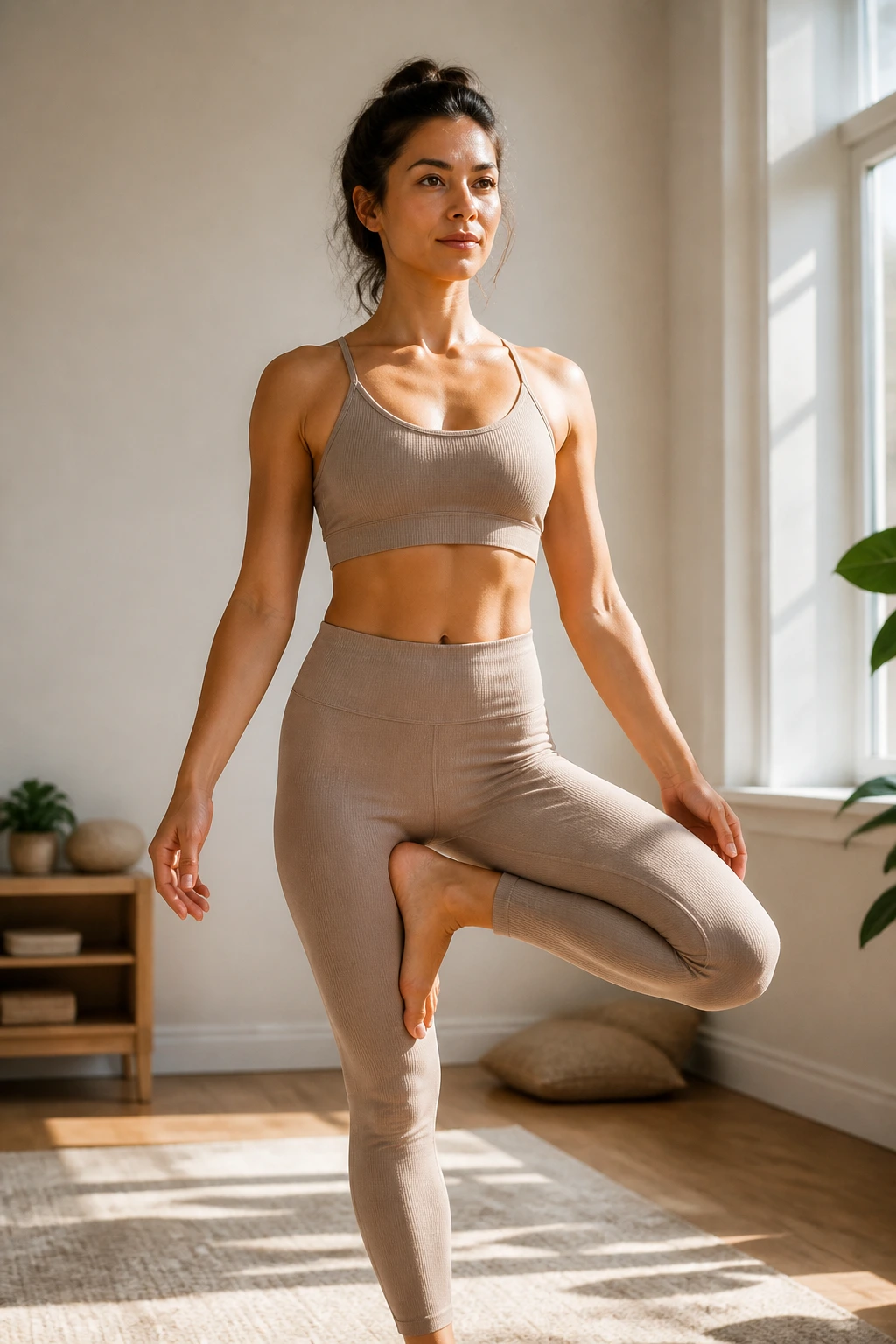
When the morning is messy, simplicity wins. This short reset stitches together the most useful pieces from the rest of the list: a forward fold, a low lunge, a standing opener, a balance shape, and one grounding breath at the end.
I’d use this one on a day that starts too early or one that already feels crowded. It does not try to do everything. It just gives your joints a clear path out of sleep.
The Sequence
- Mountain Pose for one breath
- Forward Fold for two breaths
- Low Lunge on each side for three breaths
- Standing Side Bend for one breath per side
- Tree Pose for four breaths per side
- Gentle twist standing or seated for two breaths
- Finish with hands at the heart and one slow inhale through the nose
Keep the pace smooth and the shapes modest. If you rush, the flow turns into a box to check. If you slow down a little, it becomes the kind of routine your body actually remembers.
A good morning yoga practice does not need to look ambitious. It needs to make you feel more awake in your own skin. Start with the flow that matches your morning, then repeat the ones that leave you standing a little taller by the time you’re done.
