



Morning yoga poses do not need to be noble, graceful, or performed by someone who greets the day with a smoothie and a smile. They just need to get your body from locked-up to usable.
If mornings make you grumpy, stiff, or weirdly offended by your own alarm clock, the smartest move is to start on the floor, keep the shapes simple, and skip anything that feels like a test. Cold bodies hate drama. They usually respond better to small spinal motions, gentle hip opening, and breathing that feels steady instead of heroic.
The real trick is this: do not chase a perfect stretch before breakfast. Chase a pose that feels good enough to repeat tomorrow. If you build a routine that asks for too much, you will abandon it the second your pillow looks more appealing than your mat.
Start with the easy stuff. Your body will notice.
1. Knee-to-Chest While Still Under the Blanket
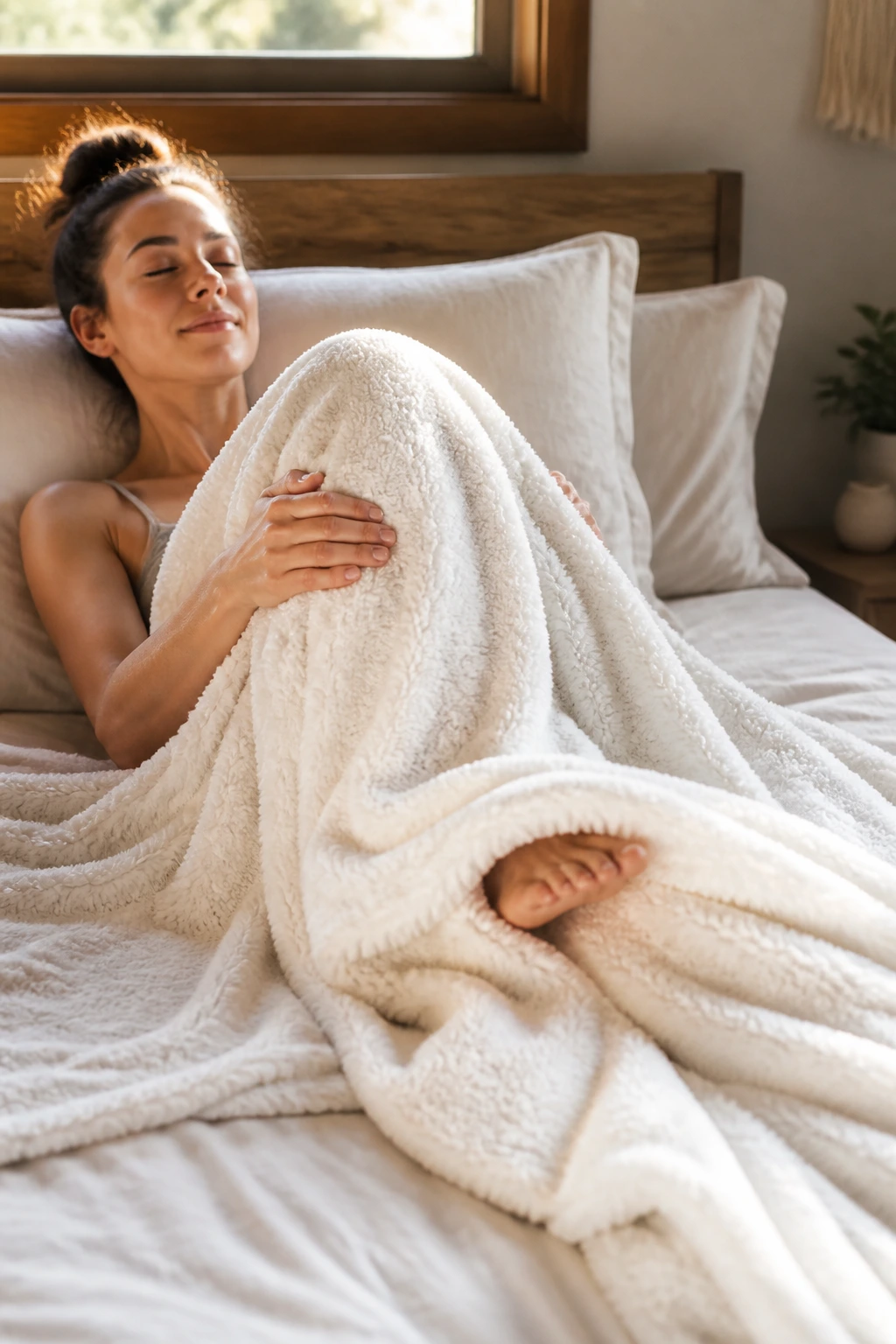
Still half asleep? Good. Start there.
This is the most forgiving of the morning yoga poses because it asks almost nothing from you. Lie on your back, hug one knee toward your chest, and let the other leg stay long or bend it with the foot on the bed. Breathe for three or four slow counts, then switch sides. If both knees feel good, draw them in together and let your lower back melt into the mattress.
A tiny movement goes a long way here. You are not trying to yank the spine into shape. You are giving the low back, hips, and belly a chance to wake up without a fight.
- Keep the shoulders heavy.
- Pull only until the stretch feels honest, not sharp.
- Rock a little side to side if your lower back feels cranky.
- Use a blanket under the head if your neck likes extra support.
Best use: the first 30 seconds of the day, before you fully decide to be a person.
2. Cat-Cow, a Morning Yoga Pose for a Stiff Spine
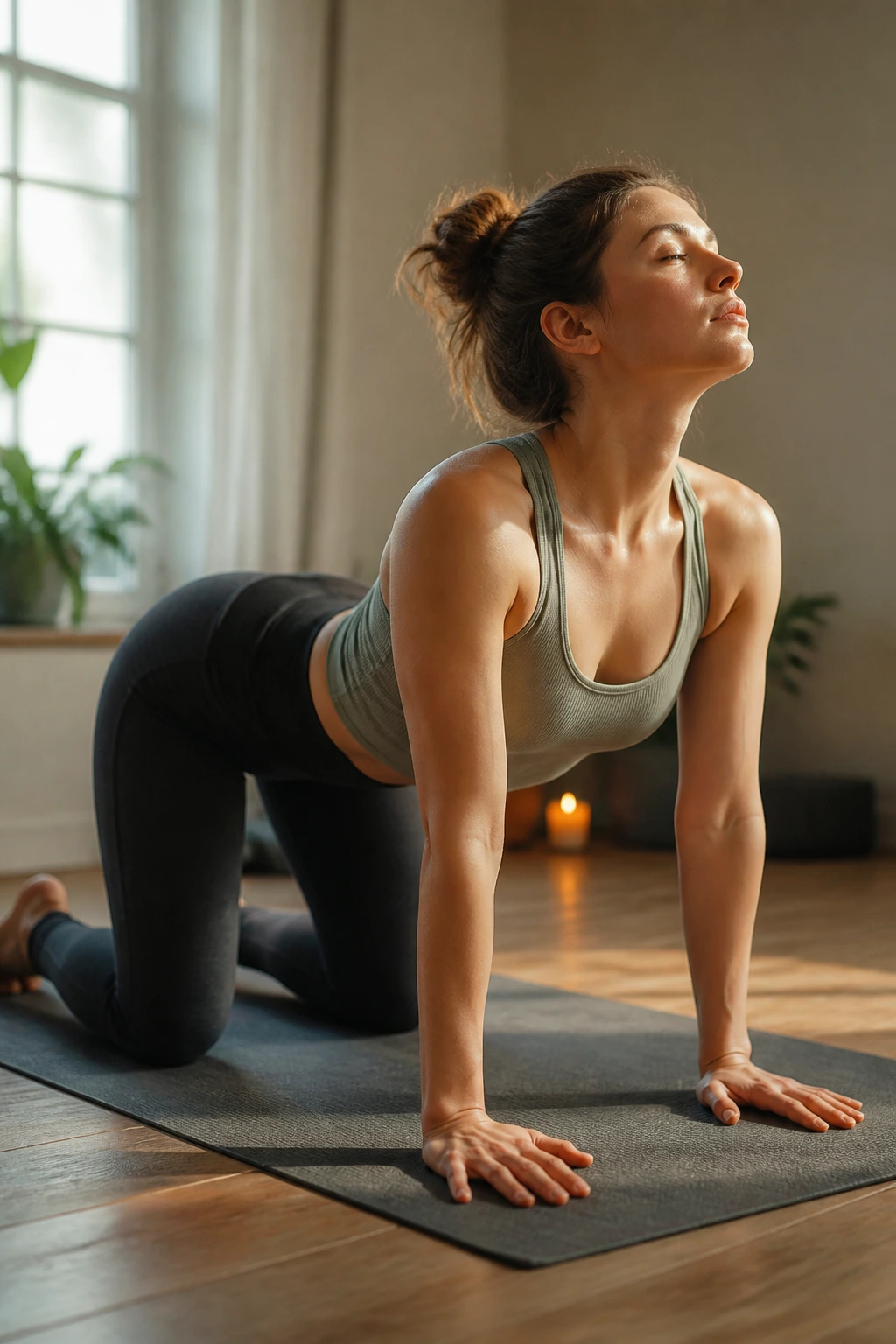
Cat-cow is the pose that makes the rest of the spine stop complaining.
Why It Works
Get onto hands and knees with your wrists under your shoulders and your knees under your hips. On an inhale, drop the belly a little, lift the chest, and let the tailbone tip up. On the exhale, round the spine, draw the chin slightly in, and press the floor away. Keep it small at first. A huge, theatrical arch can feel worse than no movement at all when your back is cold.
What to Watch For
- Spread your fingers wide so the wrists do not take all the load.
- Move with the breath, not ahead of it.
- Keep the neck long; do not throw the head back.
- Do 6 to 8 rounds, or fewer if your body says that is enough.
Pro tip: make the movement smaller than you think you need. Early-morning cat-cow often feels better when it looks almost boring.
3. Child’s Pose With Side Reach
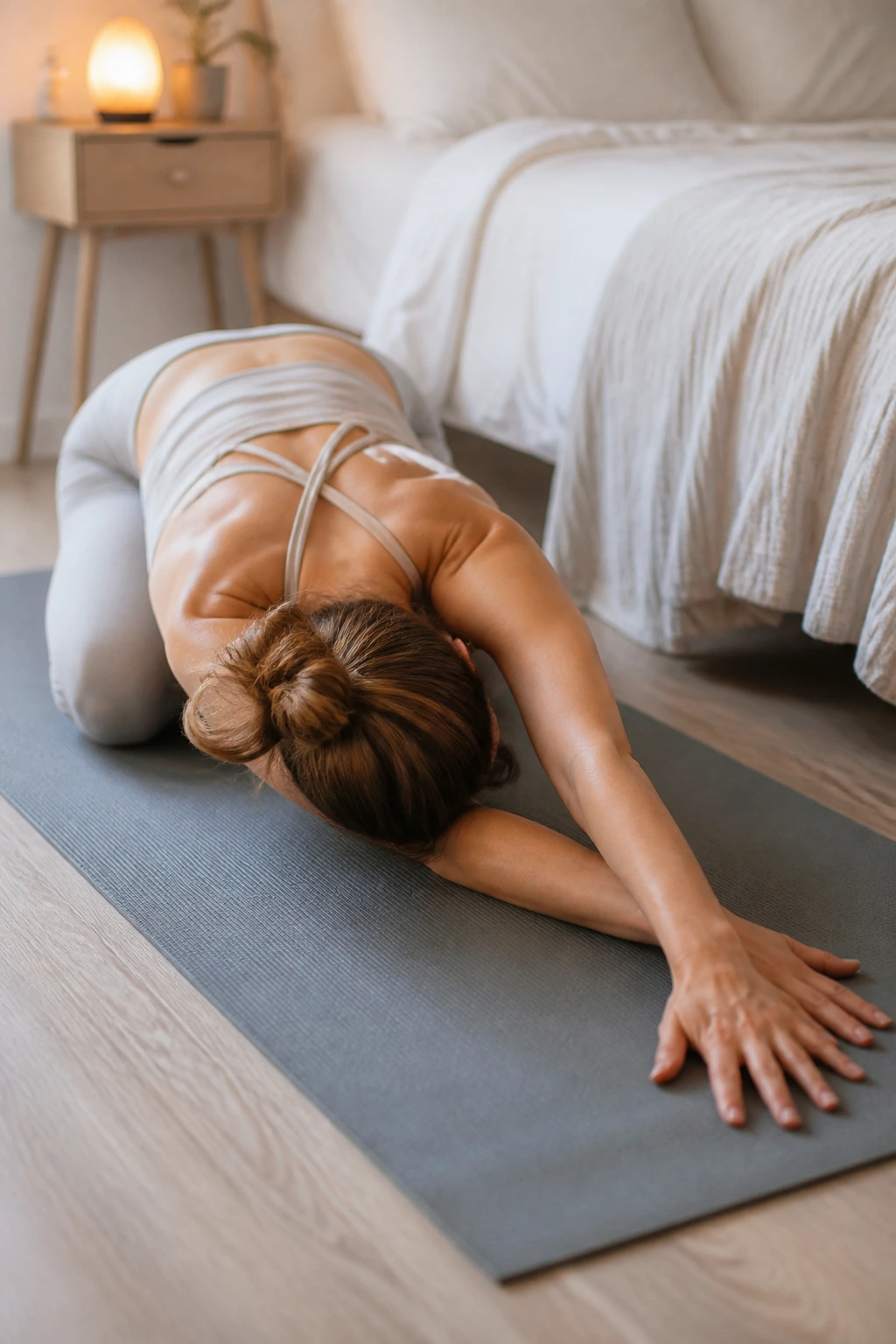
Child’s pose is the first real exhale of the morning.
Sink your hips toward your heels, spread your knees wide enough for your belly to fit, and walk your hands forward. Then walk both hands a few inches to the right and breathe into the left side of your ribs. Come back through center, then take it to the other side. That side reach matters. It wakes up the line from your hip to your fingertips, which is usually where the body hides a lot of morning stiffness.
There is a soft, almost heavy feeling to this pose when it lands well. The back of the ribs expands. The shoulders stop bracing. The forehead gets a place to rest, which is its own kind of mercy.
If your knees hate folding all the way, put a folded blanket behind them or a pillow under your hips. If your forehead floats far off the floor, stack your fists or a block under it. No prize is given for suffering.
One good breath here can change the tone of the whole morning.
4. Thread the Needle for Tight Shoulders
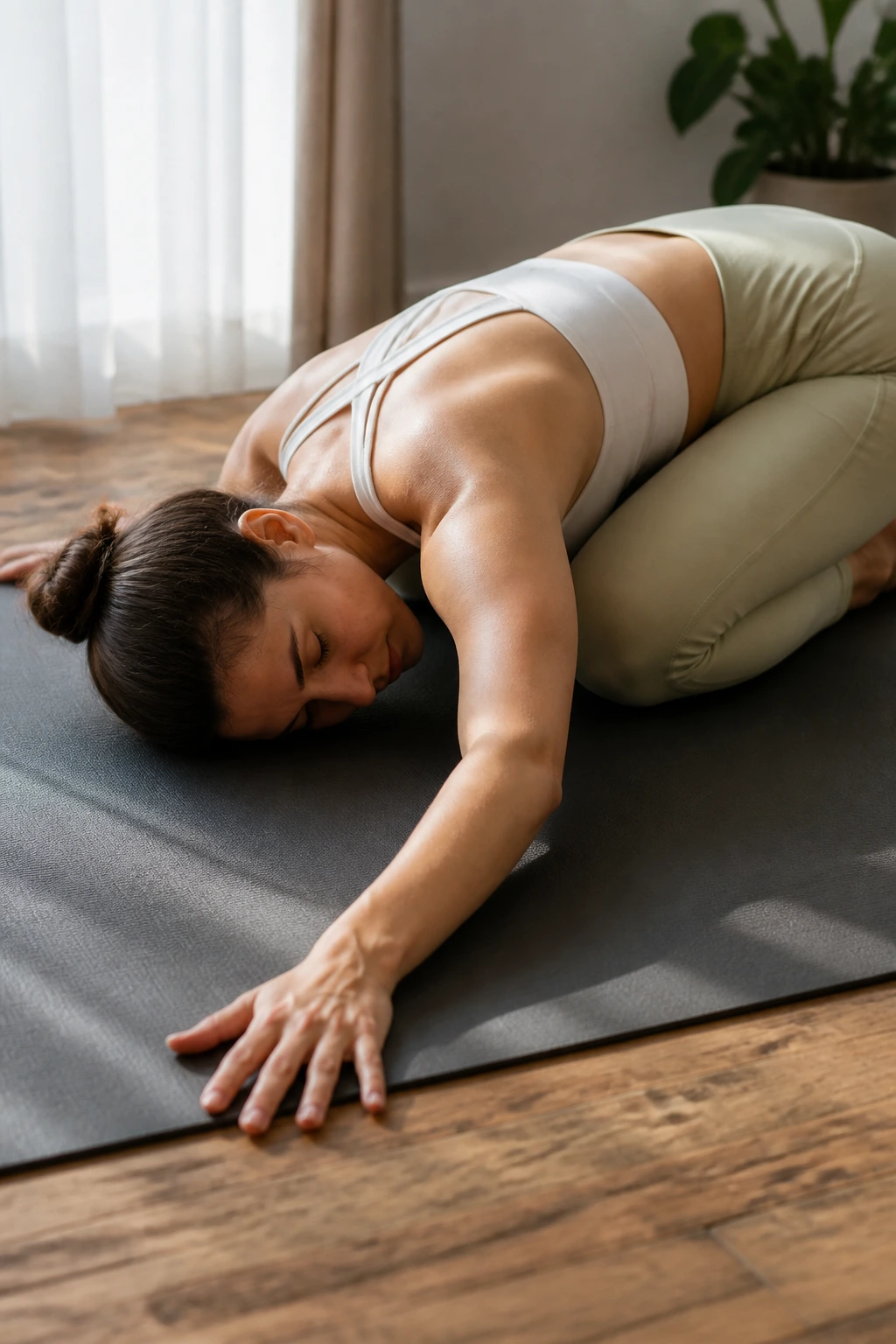
Why do shoulders wake up like they have been carrying bricks? Because sleep loves to bunch people up.
Thread the needle gets into the upper back without asking you to do much balancing or fancy work. From hands and knees, slide your right arm under your left arm, palm facing up, and let your right shoulder and ear soften toward the floor. Stay there for three to five breaths. Then switch sides. If your neck feels crowded, keep the top hand planted and let the twist stay smaller.
How to Make It Easier
- Put a folded blanket or pillow under the shoulder that’s down.
- Keep the hips stacked over the knees.
- Breathe into the back ribs instead of trying to sink deeper.
- Skip the deep twist if your low back feels pinchy.
This is a good one for anyone who sleeps curled up, lifts weights, or spends half the day looking at a screen. It gets the shoulder blade moving again. Quietly. No drama.
5. Sphinx Pose to Ease Into a Backbend
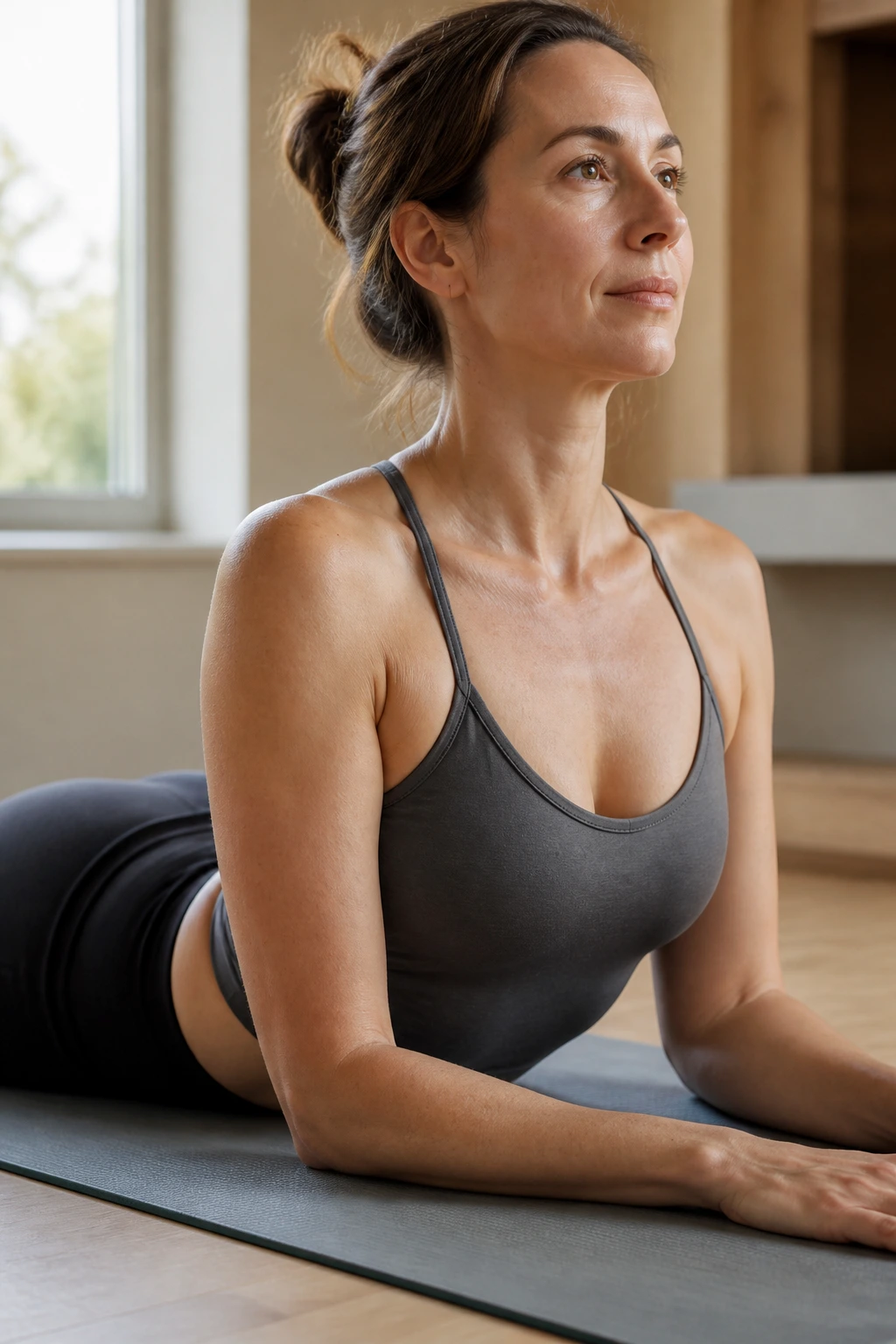
Sphinx beats a big cobra before breakfast. Every time.
Lie on your stomach, place your elbows under your shoulders, and let your forearms rest on the mat. Press lightly through the forearms, lift your chest a little, and keep your lower ribs grounded. The point is not to crank the spine into a dramatic arch. The point is to wake up the front of the body without startling the lower back.
The pose feels clean when it’s done well. Your chest opens. Your belly stays calm. Your glutes can stay soft instead of squeezed into a knot.
If the low back feels crowded, move your elbows farther forward and lower the chest. If your neck gets grumpy, tuck the chin a touch and look down.
Use It Like This
Hold for 20 to 30 seconds, rest, then come back for one more round. That is usually enough.
6. Low Lunge With a Gentle Hip Rock
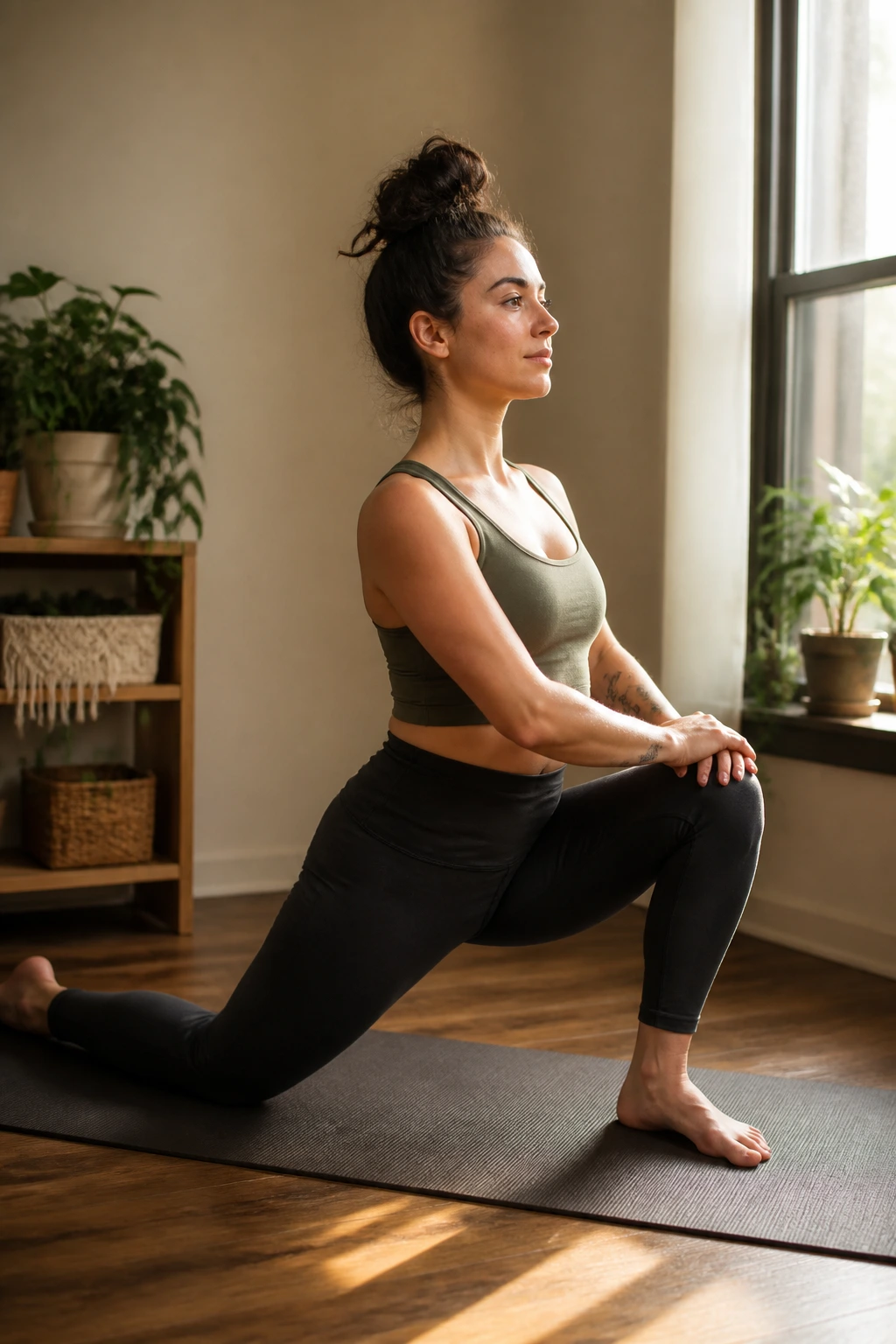
Unlike a deep runner’s lunge, this version has manners.
Step your right foot forward between your hands and lower your back knee to the floor. Put a blanket under the knee if the ground feels hard. Then rock forward and back a few inches, letting the front hip fold and reopen without forcing a giant stretch. Hands can stay on blocks, on the floor, or on the front thigh if that feels steadier.
The little rock is the part people skip, and it’s the part that helps. It tells the hip flexors that they do not need to clamp down in self-defense. Morning hips often feel glued shut, especially after sleeping in one position for hours.
If balance feels shaky, keep both hands on the floor and make the stance shorter. If the back knee complains, add more padding. There is no virtue in powering through a grumpy knee.
After three or four slow rocks, you will usually feel the front of the hip open a notch. That is enough.
7. Half Sun Salutation, the Morning Yoga Pose That Gets You Moving
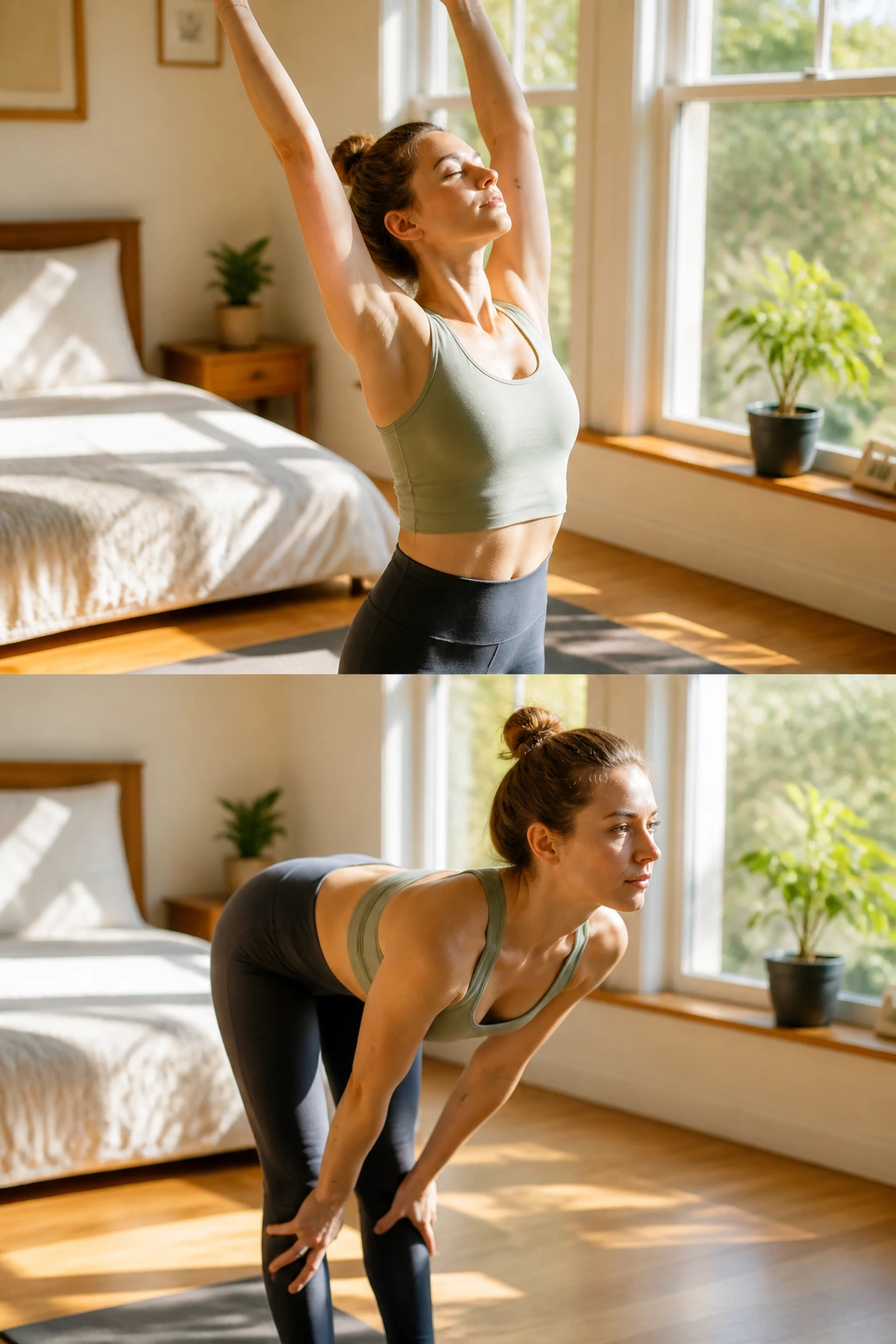
Half sun salutation is the closest thing yoga has to a gentle “start” button.
Stand tall, fold forward with bent knees, then lift halfway with a long spine. Fold again. Rise all the way back up with the arms by your sides or overhead if that feels good. Do it three times. Four is fine too, but three is plenty when your brain still lives in pillow mode.
A Simple Three-Round Pattern
- Inhale: reach up or stand tall.
- Exhale: fold forward and soften the knees.
- Inhale: halfway lift, spine long, hands on shins or thighs.
- Exhale: fold.
- Inhale: stand back up.
The magic here is not in the shape. It is in the rhythm. Breath plus movement tends to wake up the body faster than either one alone.
Use bent knees the whole time if your hamstrings are tight. That is not a cheat. It is smart.
8. Standing Forward Fold With Bent Knees
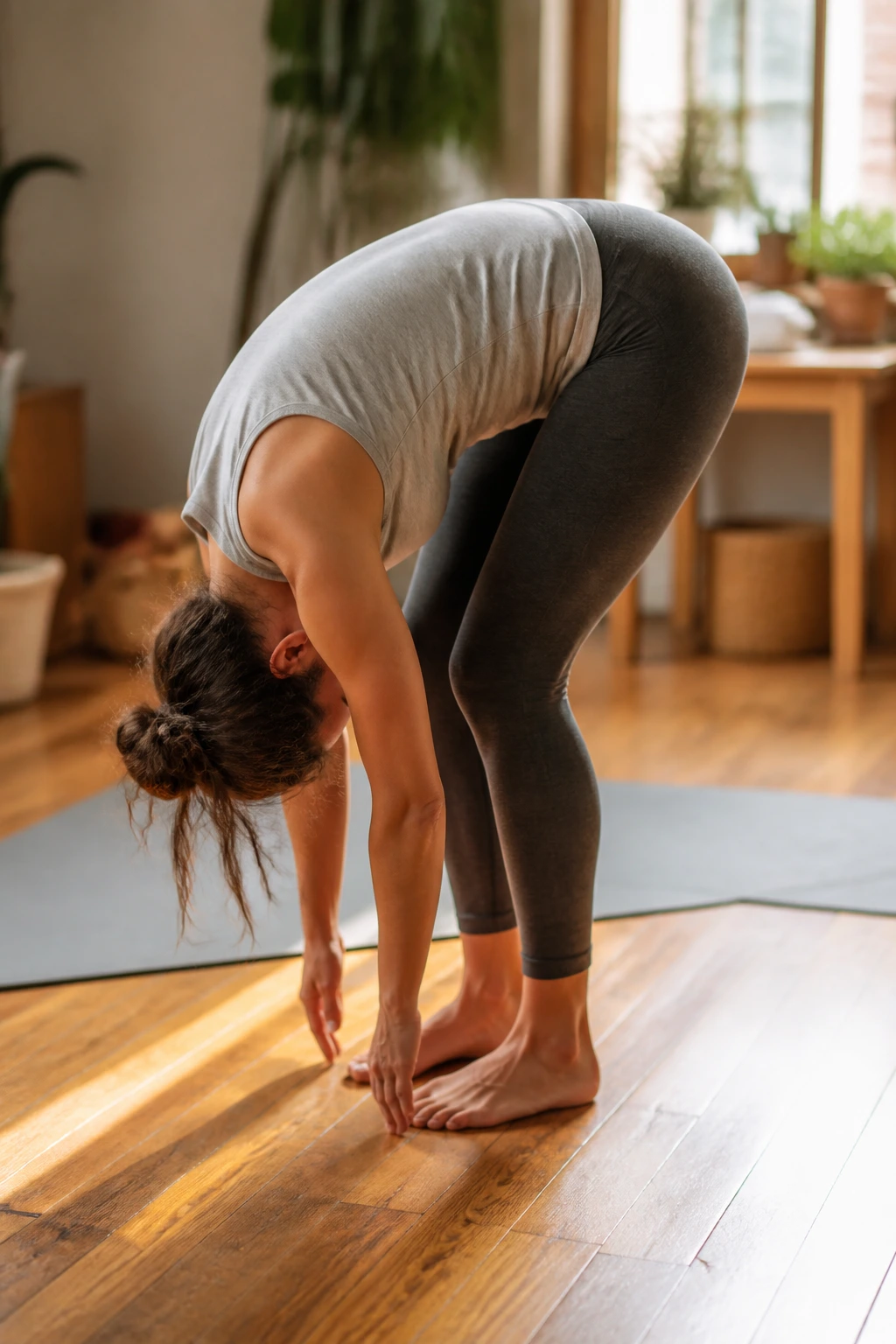
If your hamstrings feel like piano wire in the morning, do not insult them with a straight-legged fold.
Stand with your feet about hip-width apart, bend your knees generously, and let your torso drape over your thighs. Hold opposite elbows if that feels nice. Let the head hang. A little sway from side to side can help the low back and the backs of the legs stop guarding so hard.
The pose works because it removes the usual morning stiffness from the neck and spine in one shot. Gravity does part of the work for you, which is nice. You are not trying to reach the floor. You are trying to release unnecessary tension.
- Keep the knees soft.
- Shift the weight slightly toward the balls of the feet and then back toward the heels until it feels balanced.
- Come up slowly if you feel dizzy.
- Stay for 3 to 5 breaths, then roll up one vertebra at a time.
Easy does it. The best morning folds are the ones that do not make you brace.
9. Downward-Facing Dog That Doesn’t Feel Like a Punishment
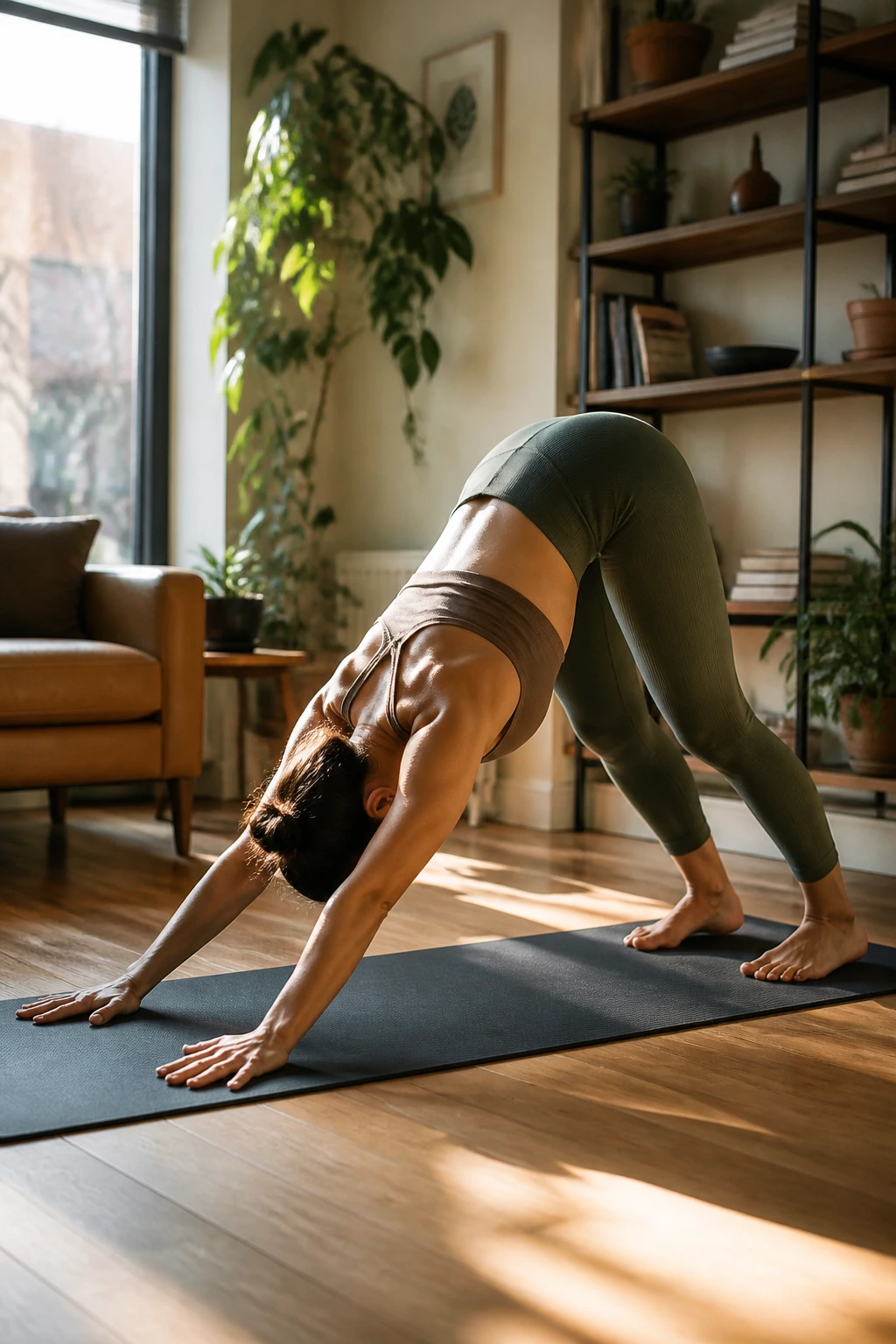
Why does downward dog feel awful for so many people at daybreak? Usually because they try to force a textbook shape before their body is ready.
How to Soft-Start It
Set your hands shoulder-width apart, spread your fingers, and step your feet back just enough to make an inverted V. Bend your knees deeply. Lift your sitting bones high. Pedal the feet one at a time if the calves are tight. If your heels stay lifted, that is fine. If your spine wants to round, that is fine too.
The point is not straight legs and heels on the floor. The point is length through the back body, a little blood flow, and a wake-up for the shoulders.
What to Notice
- Hands should feel evenly weighted.
- Neck should stay loose.
- Breath should stay smooth, not strained.
- Hold for 3 to 5 breaths, then come down before the pose turns into a fight.
If down dog makes your wrists or shoulders unhappy, skip it and come back another day. There are plenty of other morning yoga poses. No need to argue with the mat.
10. Cobra Pose for a Wake-Up Stretch
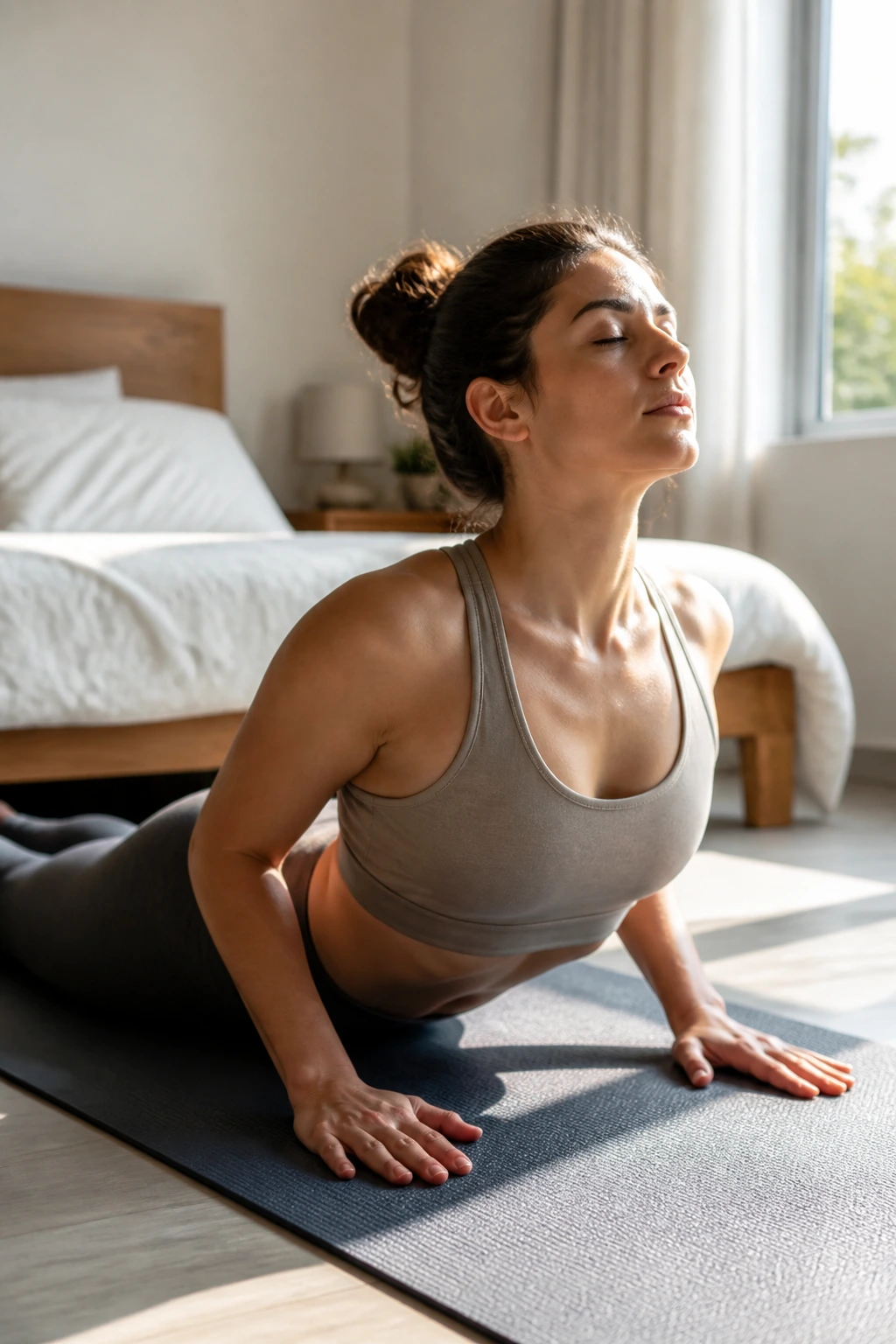
Cobra is a smaller pose than people think it is.
Lie on your stomach, place your hands under your shoulders, and press the chest forward and slightly up. Keep the elbows bent. Keep the lower ribs heavy. The lift should feel like a smooth glide, not a push-up with a yoga name. If you start to feel a pinch in the low back, lower the chest and make the lift smaller.
The best cobras feel bright in the front body and quiet in the back. Your collarbones widen. Your shoulders move away from your ears. Your neck stays long enough that you could glance a few feet ahead without crunching anything.
A few slow rounds work well here. Lift, breathe for two or three counts, lower. Lift again. That rhythm makes it more wake-up than workout.
Do not force the highest version you have ever seen on a poster. That shape belongs to somebody else’s spine.
11. Bird Dog for the Sleepy Core
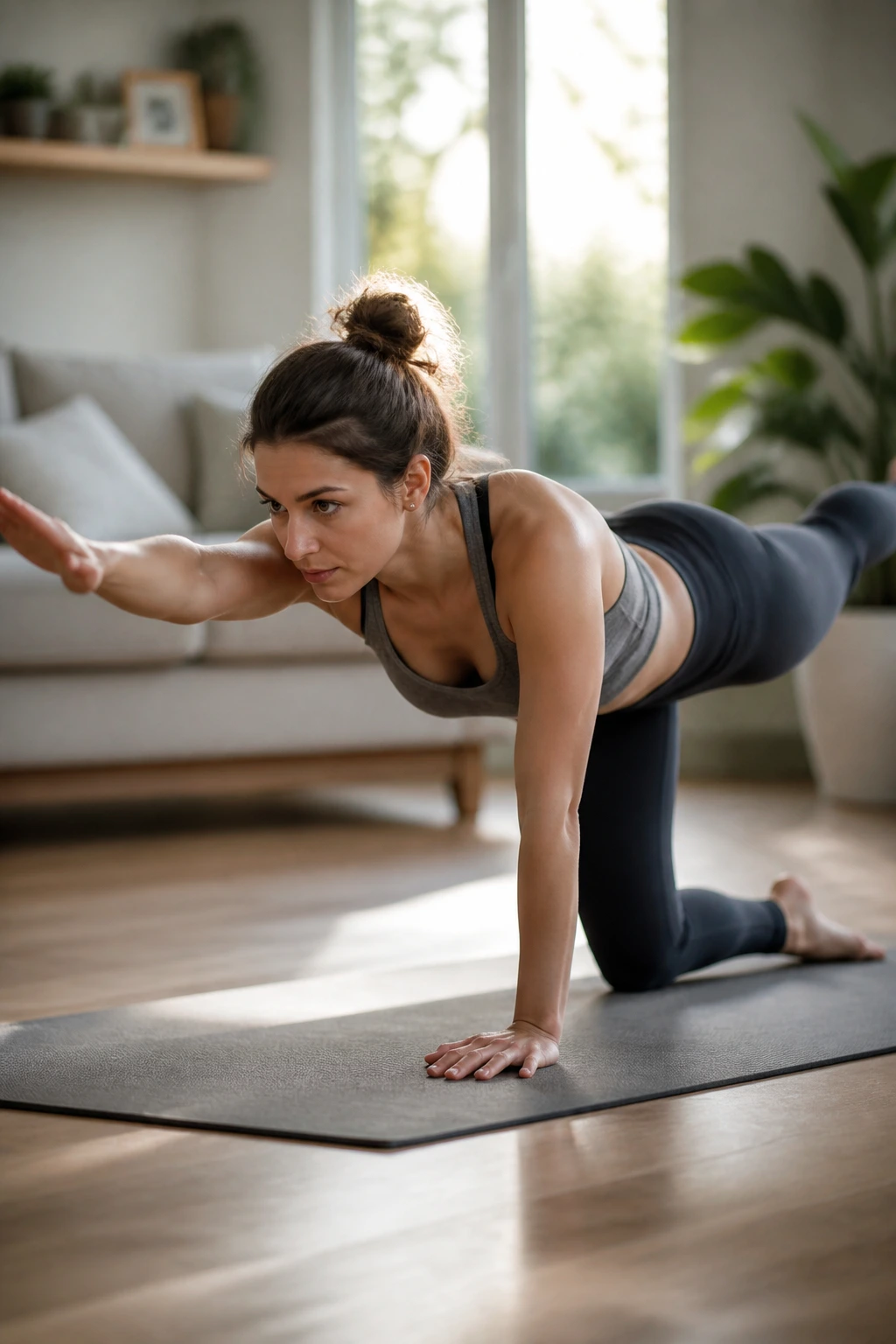
Bird dog wakes up the middle of the body without making you sweaty. That alone earns it a spot.
Start on hands and knees. Reach your right leg back and your left arm forward at the same time, keeping the hips level and the ribs quiet. Hold for one or two breaths, lower, then switch sides. If that feels too wobbly first thing, lift only the leg, then only the arm, then try both together.
What makes bird dog useful in the morning is the slow control. You have to stay steady while one side of the body reaches away. That kind of work turns on the deep trunk muscles without smashing the joints.
- Keep the gaze on the floor.
- Reach long, not high.
- Think “level table,” not “big pose.”
- Do 4 to 5 rounds on each side.
If your wrists complain, drop to forearms or place your hands on blocks. A little adjustment can save the whole pose.
12. Crescent Lunge With Slow Arm Reach
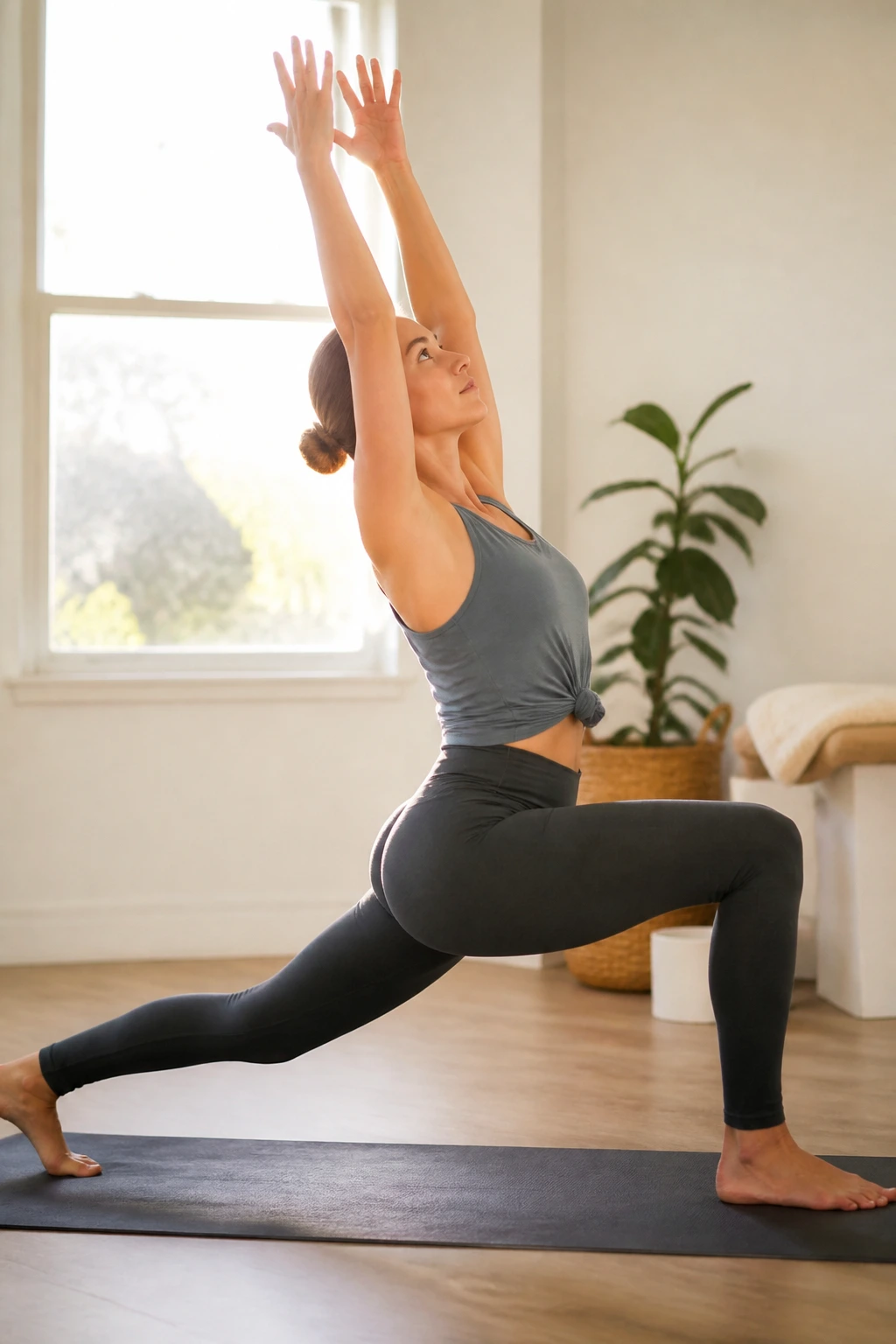
Crescent lunge is the more awake cousin of low lunge.
Step one foot forward, lift the back knee, and bring your torso upright. Reach the arms overhead only if that feels steady. If your balance is still blurry, keep the hands on the front thigh or on blocks. The front knee bends, the back leg reaches long, and the whole shape starts to feel like forward motion instead of static stretching.
This one works well when your body wants a bit more heat. Not a huge amount. Just enough to remind the legs they are part of the day.
The most useful cue is boring and important: keep the front knee tracking over the middle toes. If the knee caves in, shorten the stance a little. If the lower back arches hard, soften the ribs and lower the arms.
Hold for 3 breaths on each side. That is enough to make your pulse notice without making you feel like you need to lie back down.
13. Chair Pose for the “I Need Coffee” Crowd
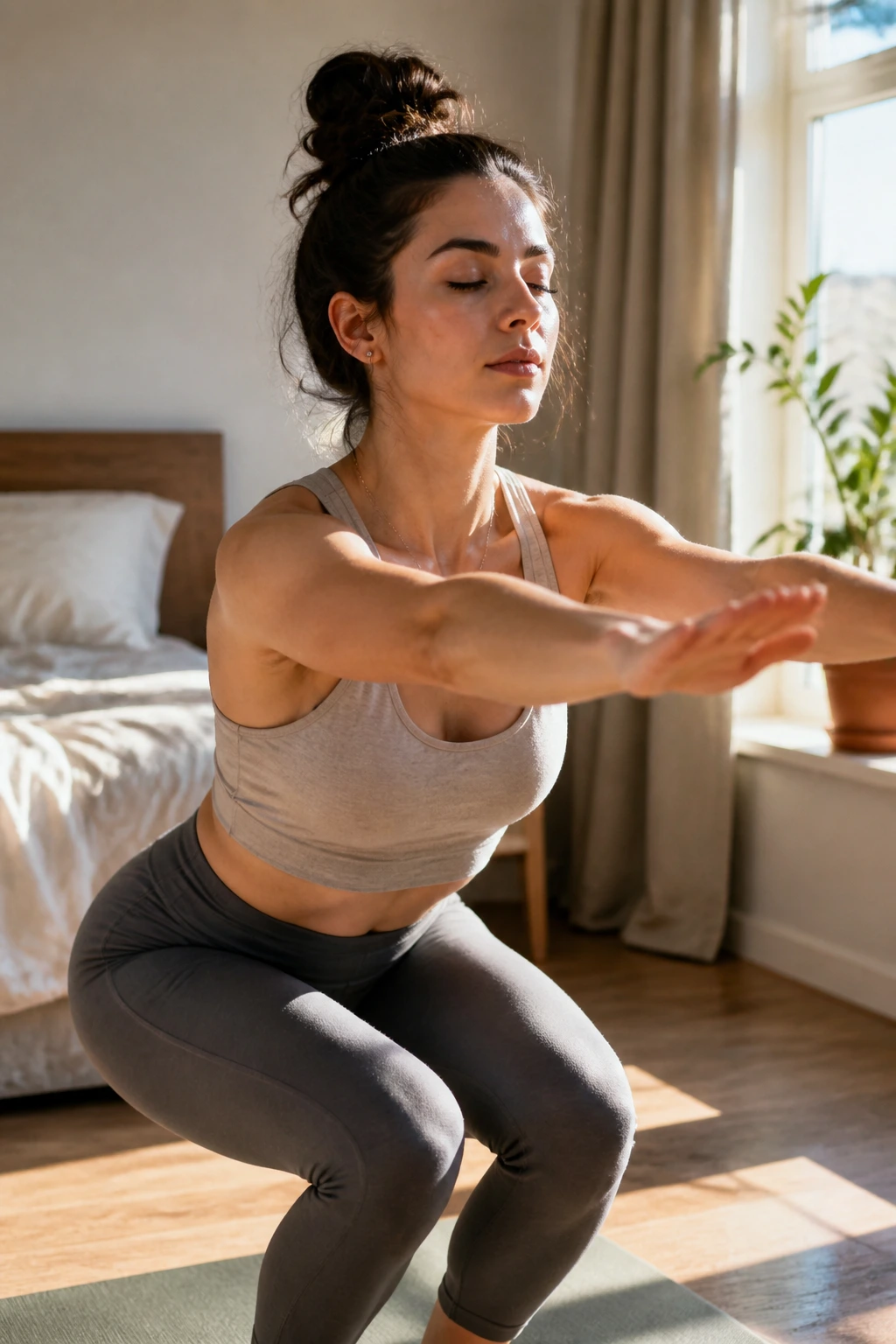
Chair pose is the one that makes you earn your breakfast a little bit.
Why It Earns a Place
Sit your hips back like you’re reaching for a chair that’s farther away than expected. Keep your weight in the heels, bend the knees, and lift the chest. Arms can reach forward or overhead. A small chair pose is usually better than a heroic one at sunrise.
The shape wakes up the thighs, glutes, and upper back at the same time. It also asks you to pay attention, which can be handy when your brain is still scattered in five directions.
Keep It Clean
- Knees should stay in line with the toes.
- Ribs should not flare wildly.
- Neck should stay easy.
- Hold for 2 to 4 breaths, then stand up and shake out the legs.
If the ankles feel stiff, stand with your feet a little wider. If your lower back complains, sit a little less deeply. The goal is alertness, not a drama scene.
14. Warrior I to Wake Up the Legs
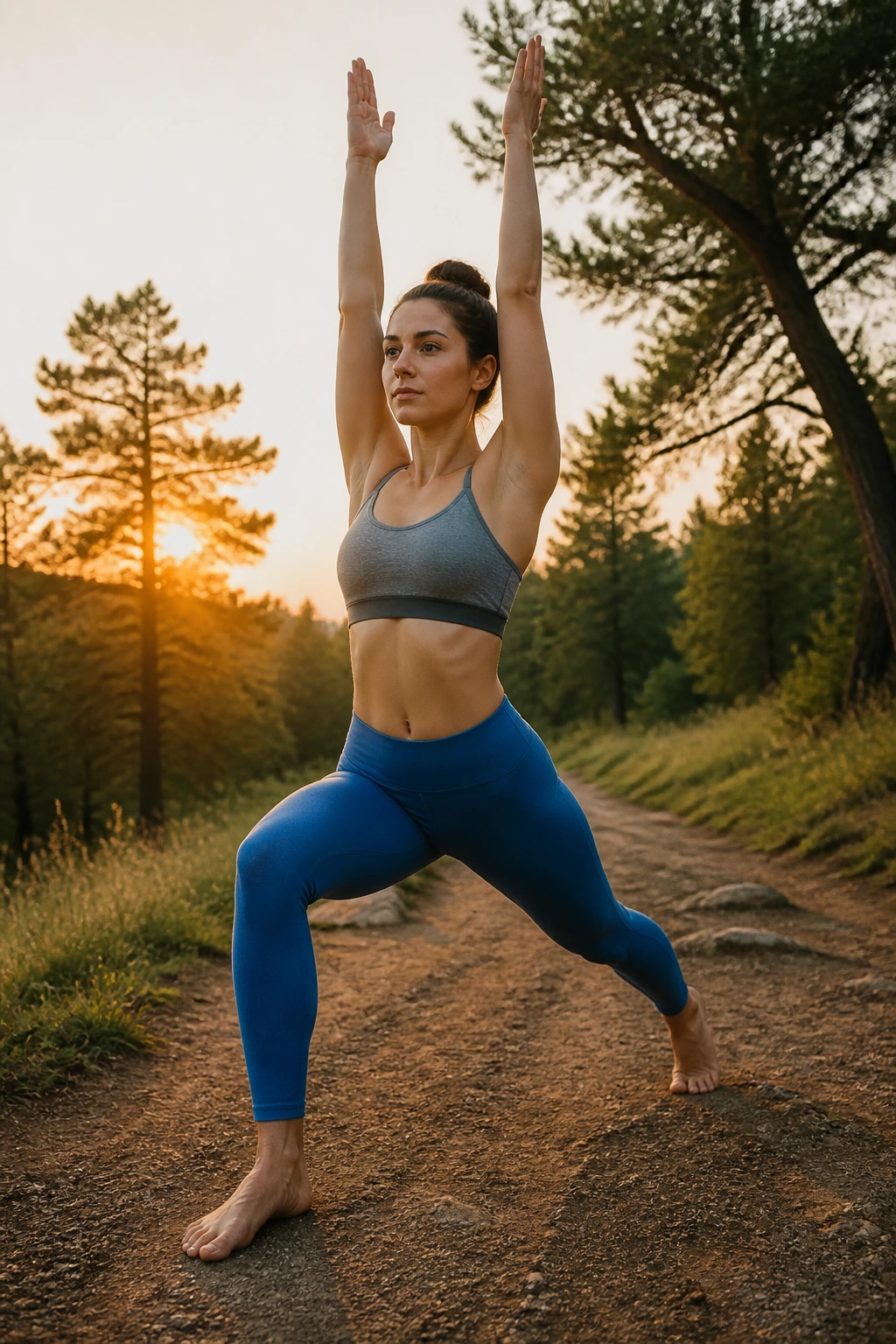
Warrior I gives the morning some shape.
Step one foot forward, ground the back heel at a slight angle, and bring the torso to face the front. The stance does not need to be huge. In fact, a shorter stance usually feels better first thing because the hips are less likely to fight you. Reach the arms up if that feels fine, or keep them lower if your shoulders are still sleepy.
This pose does a neat thing: it creates firmness in the legs while keeping the upper body lifted. That contrast tends to feel good when you are mentally dragging but need to be upright anyway.
A lot of people over-square the hips and make the pose feel like a wrestling match. Don’t. Let the back hip stay a little open if that’s where your body wants to live. The point is steadiness, not a photo finish.
Hold for 3 to 5 breaths, then switch sides.
15. Warrior II for a Bigger Breathing Pattern
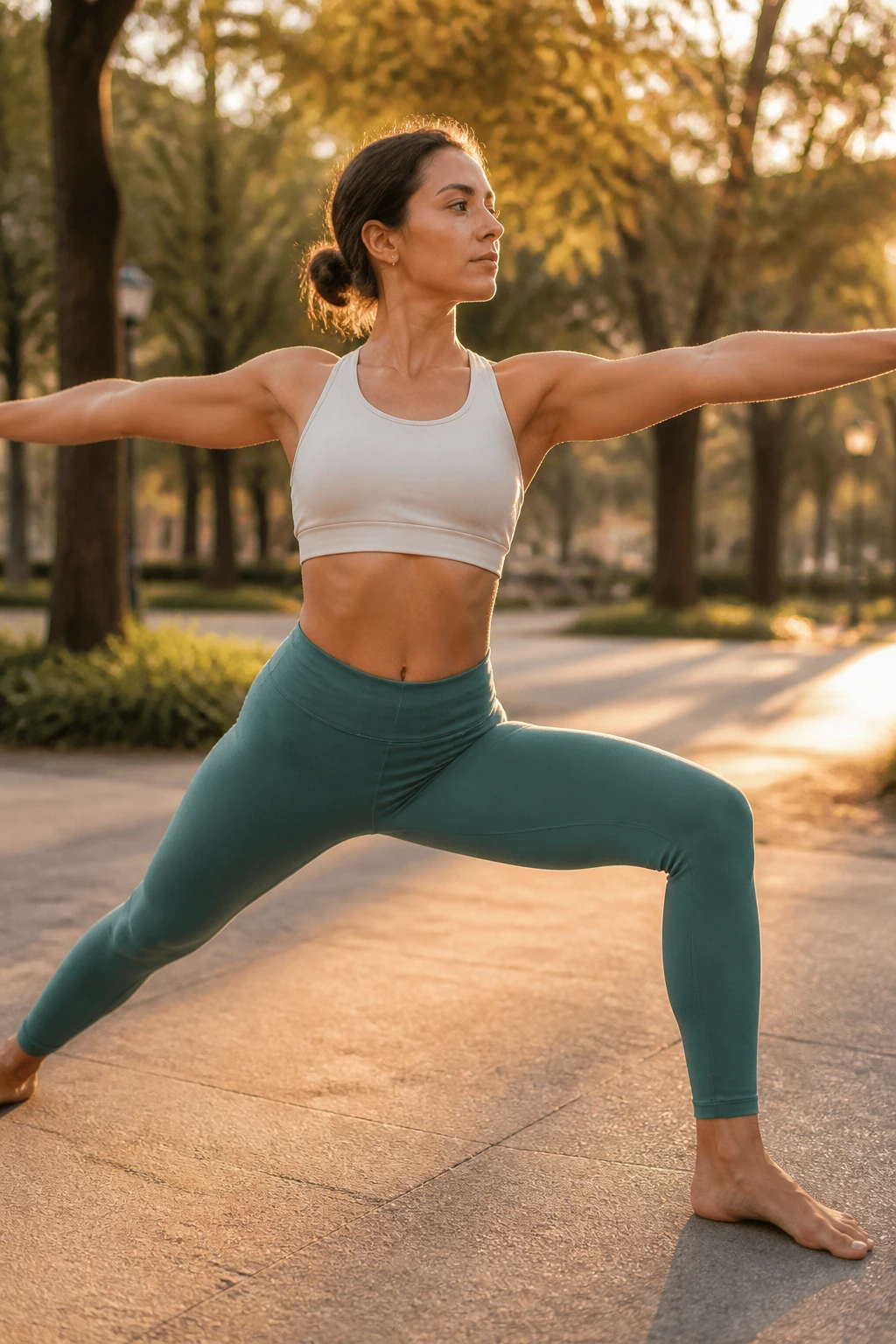
Does warrior II count as a wake-up pose if you still feel half asleep? Absolutely.
Open the body to the side, bend the front knee, and stretch the arms long in opposite directions. Gaze over the front hand if the neck likes it, or look straight ahead if that feels better. The wide stance gives your legs work to do, but the open chest and long arms change the way the breath moves. It gets broader. Less cramped.
What to Watch For
- Front knee tracks over the second or third toe.
- Back foot presses down firmly.
- Shoulders stay away from the ears.
- Lower the front thigh only as far as you can keep the breath smooth.
I like warrior II for mornings when I need more than stretching. It feels decisive. Not aggressive. Just clear. Hold for 4 breaths on each side, and let the legs do the heavy lifting while the breath keeps the pose from turning stiff.
16. Gate Pose for Side Body Space
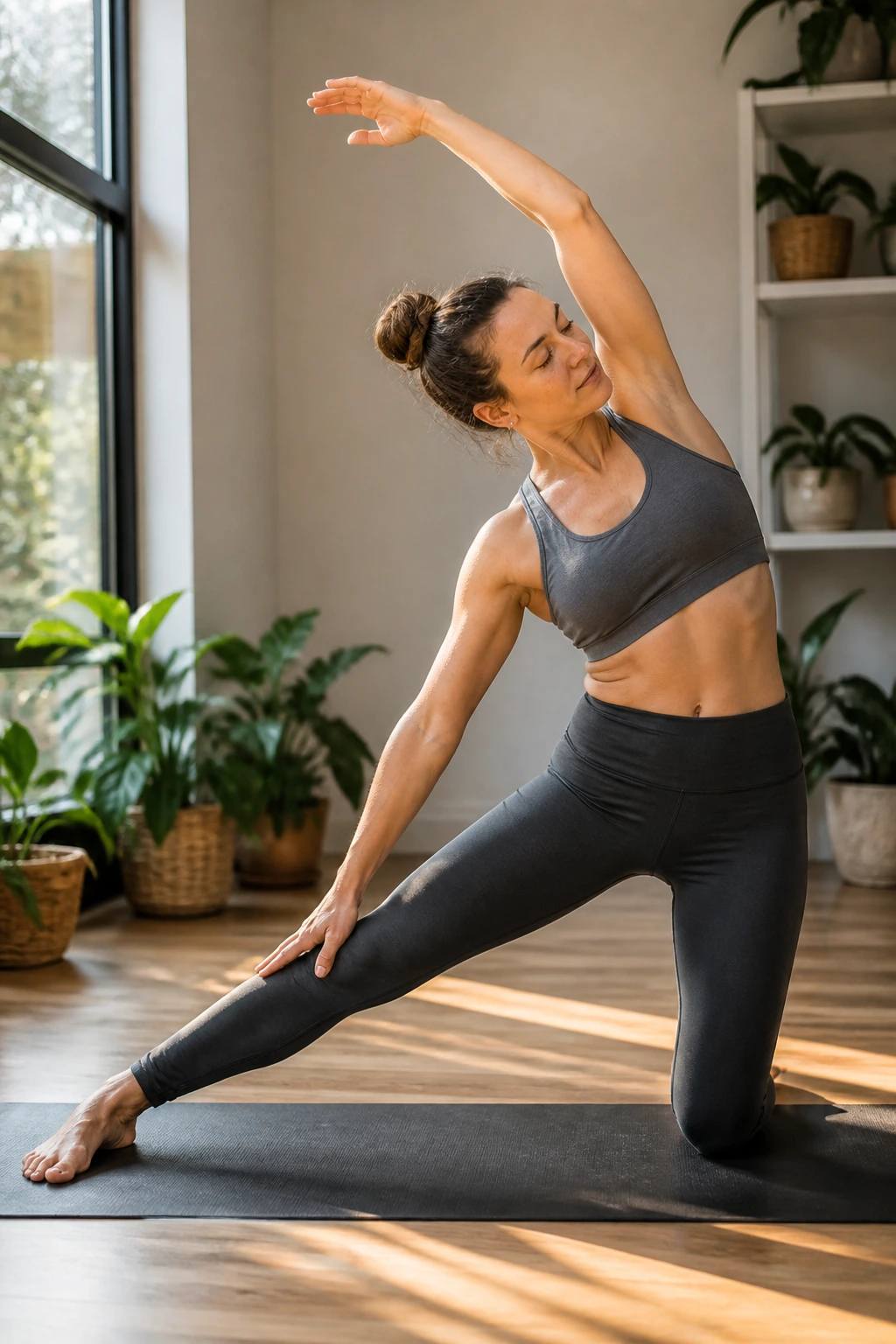
Gate pose is what your ribs ask for after a night spent curled up.
Kneel on the floor, extend one leg out to the side, and keep the opposite knee down. Slide one hand down the extended leg and reach the other arm overhead. The upper side body opens from the hip all the way up to the fingertips, which is a lovely thing when everything feels compressed from sleep.
Your ribs will notice.
If the pose feels wobbly, keep the bottom hand on the hip or thigh instead of reaching fully overhead. If the kneeling knee wants padding, give it padding. A folded blanket under the knee changes the whole experience.
This is one of those shapes that looks like a side stretch but feels like a full-body sigh. Breathe into the side of the torso, not just the belly. That detail matters. The space you make there tends to show up in the shoulders too.
17. Happy Baby for a Better Mood Start
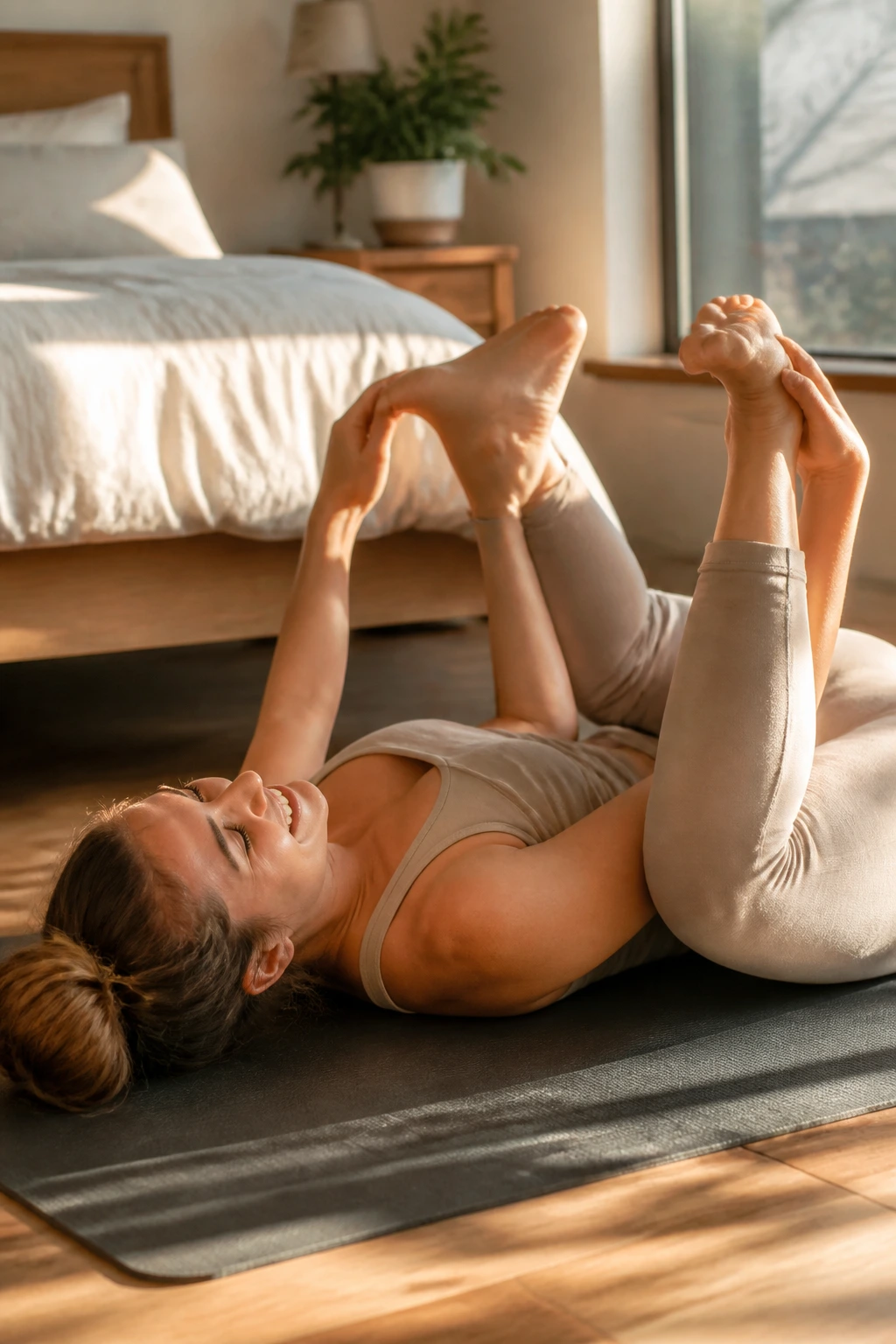
Happy baby has no business being this useful before coffee. Yet here we are.
Lie on your back, bend your knees toward your chest, and hold the outer edges of your feet or the backs of your thighs if the feet are out of reach. Let the knees drift toward the armpits, then gently rock side to side. Keep the sacrum heavy on the floor. No yanking. No forcing the knees down like you are trying to impress somebody.
This one hits the hips, groin, and low back in a way that feels strangely cheerful. The rocking helps if you wake up feeling tight in a very specific, stubborn way.
If your neck cramps, keep the head down. If your feet are unreachable, the thighs are fine. Use the version you can stay in for 3 to 5 breaths without gripping your jaw.
It is a little playful. That’s part of why it works.
18. Supine Twist Before You Hit the Floor
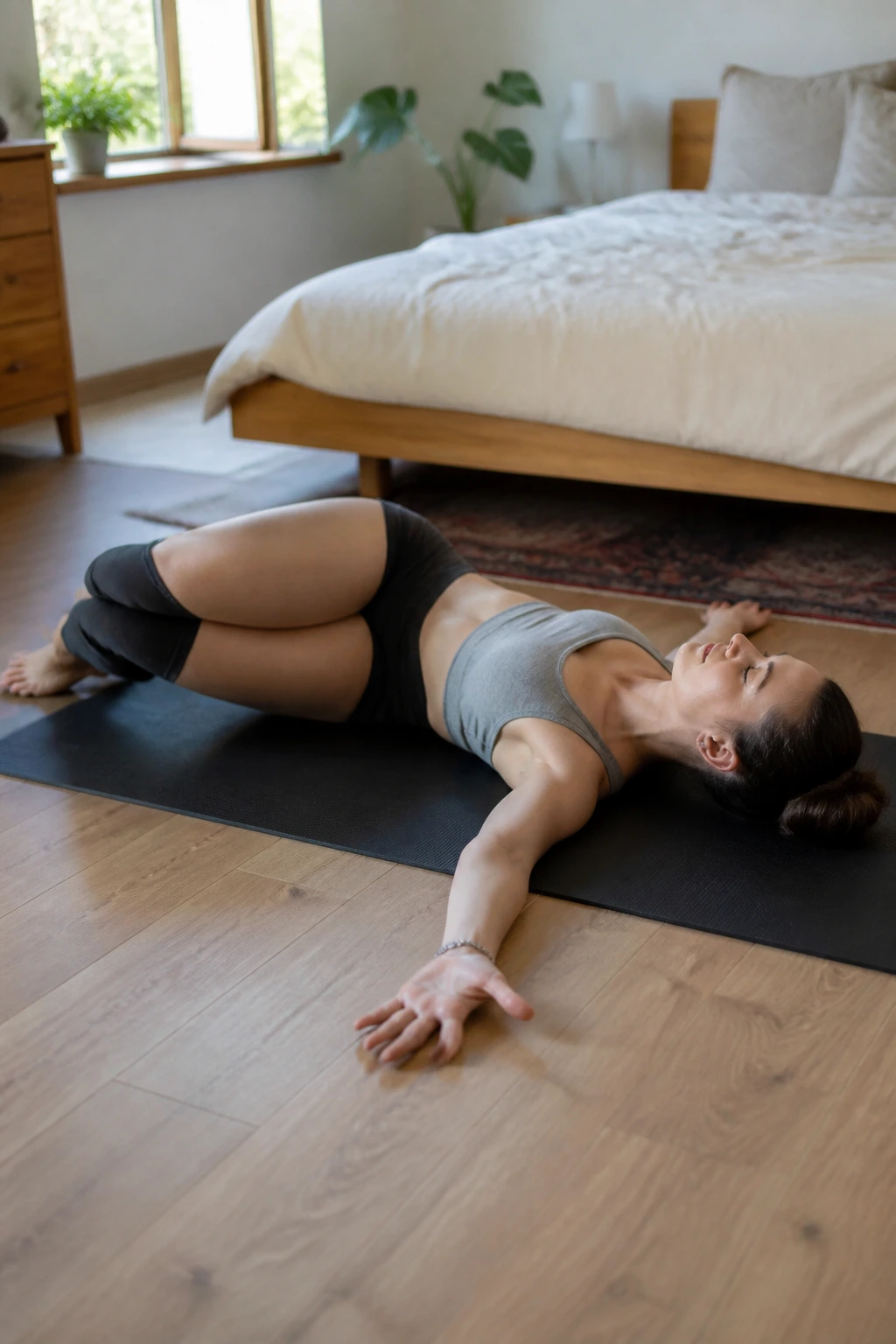
Supine twist is the better choice when upright twists feel too bossy.
Lie on your back, draw the knees in, then let them drop to one side while your arms open into a T. Keep both shoulders as close to the floor as possible. If your knees hover high off the mat, place a pillow or folded blanket under them. That tiny support can make the pose feel twice as kind.
The appeal is simple: gravity does more of the work, so you do less. That matters in the morning, when your body is not exactly keen on being manipulated into shape.
This is a good place to soften the breath and let the low back unwind after chair pose, warriors, or even a bad night’s sleep. Stay for 4 to 6 breaths on each side. If the twist ever feels sharp at the knee or lower back, back out of it. Easy twists should feel like release, not leverage.
19. Bridge Pose to Turn On the Glutes
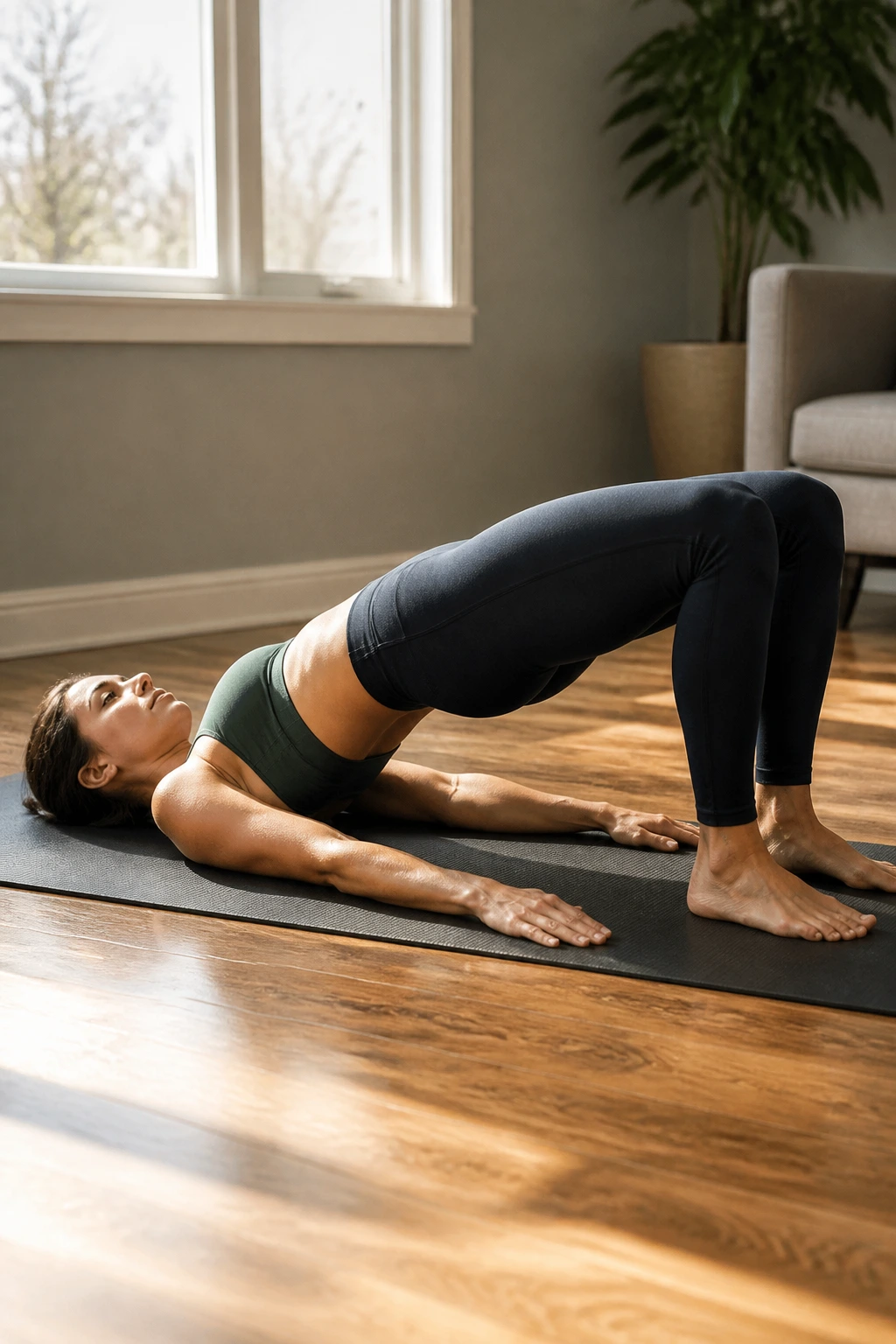
Bridge pose turns on the back side of the body without demanding much from the mind.
The Small Lift That Does a Lot
Lie on your back with your feet hip-width apart and close enough to touch your heels with your fingertips. Press through the feet, lift the hips a few inches, and keep the knees pointing forward. The lift can stay modest. It does not have to become a huge arch. In fact, the smaller version often feels better first thing.
What It Wakes Up
- Glutes.
- Hamstrings.
- Front of the hips.
- A little bit of courage, if mornings are rough.
Hold for 3 breaths, lower slowly, and repeat 2 or 3 times. Keep the ribs from flaring and avoid squeezing the neck. If your back feels better when the feet are a little farther away, adjust. That is normal.
Bridge is a sneaky pose. It looks plain and delivers more than expected.
20. Legs Up the Wall, the Morning Yoga Pose That Slows Everything Down
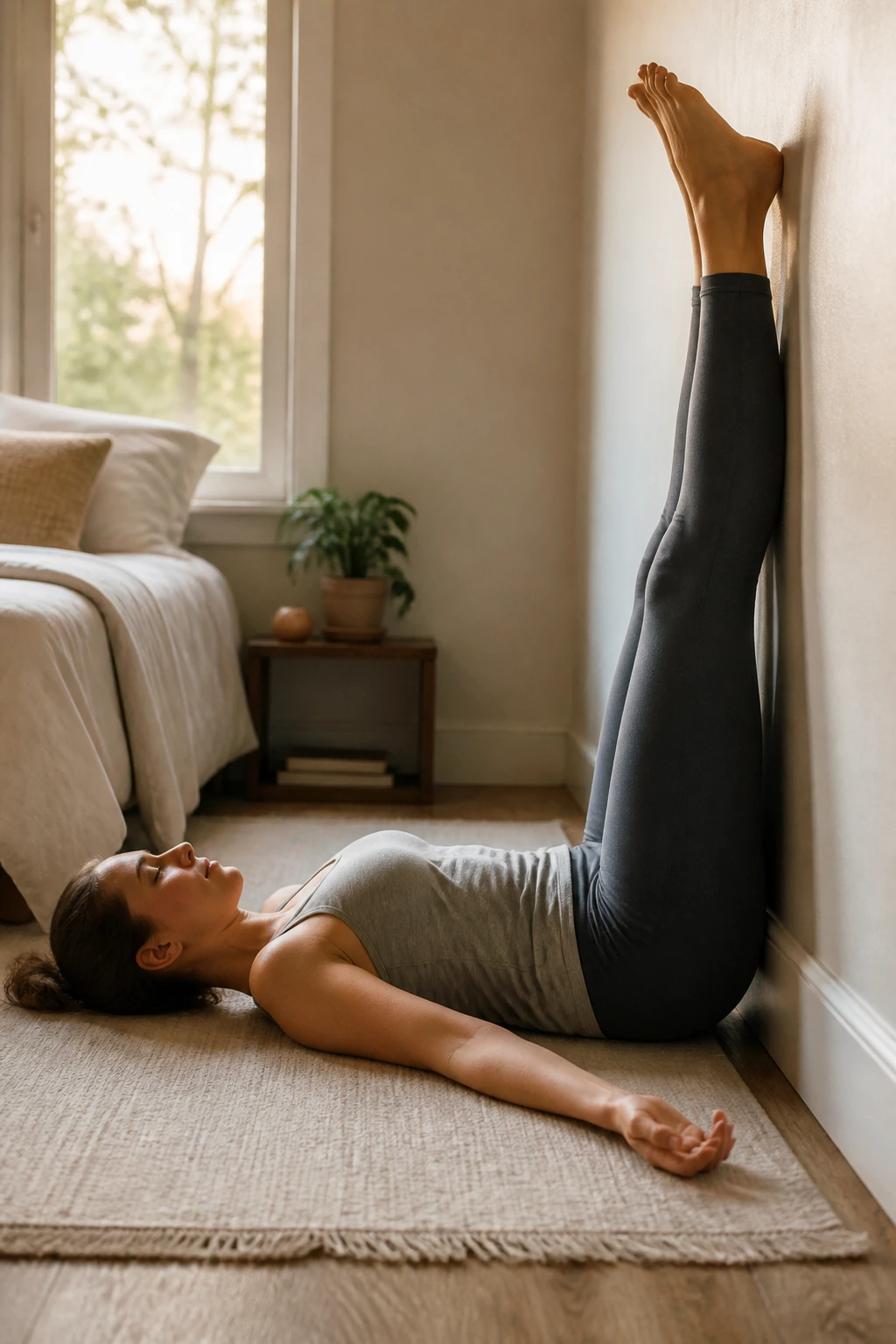
If you wake up with a racing brain, this is the pose that tells the day to wait its turn.
Sit sideways next to a wall, roll onto your back, and swing your legs up so they rest against the wall. Your hips can stay a few inches away from the baseboard; they do not need to be jammed tight to the wall. Let your arms rest wherever they stop fighting. Breathe for 1 to 3 minutes, or longer if you have time and the room is quiet enough.
The pose feels almost too easy, which is exactly why it belongs here. It lets the legs rest, eases the lower back, and gives your nervous system a minute to stop acting like a fire alarm. Some people like it before standing back up; others like it as the final note after a more active flow.
If your hamstrings are cranky, move a little farther from the wall. If your low back wants a small bend in the knees, allow that too. No prizes for forcing the shape.
21. Seated Forward Fold for Hamstrings That Hate Mornings
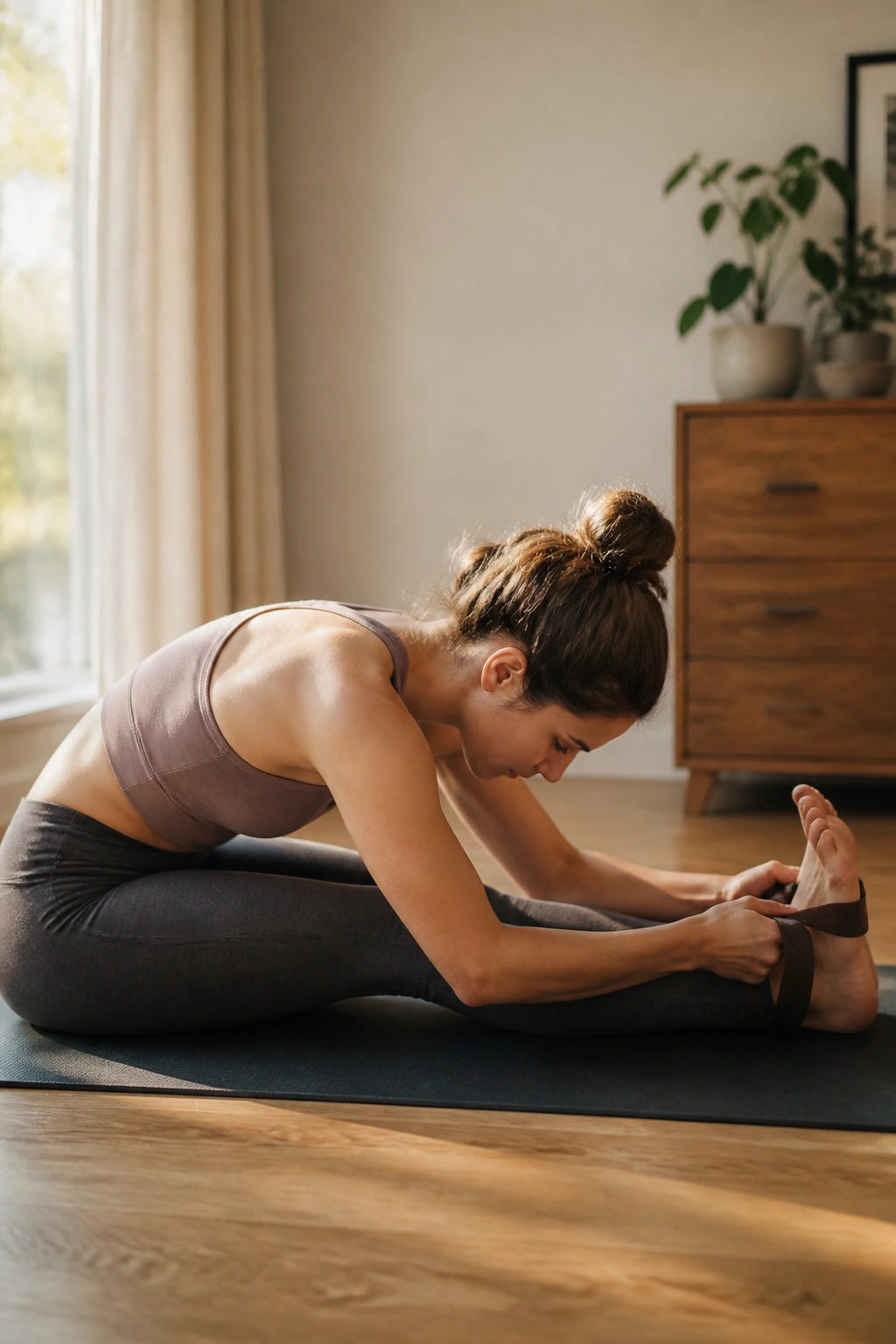
Why do hamstrings feel shorter before coffee? Because they usually are, at least in the way they behave.
Sit with your legs extended, bend your knees a little, and hinge forward from the hips before letting the spine soften. Hold your shins, ankles, or feet—wherever you can stay relaxed. A strap around the feet can help if reaching feels like too much. The key is to avoid yanking yourself deeper than the body wants.
How to Keep It Gentle
- Start with bent knees.
- Lengthen the spine before folding.
- Keep the breath steady.
- Stop as soon as the back rounds hard or the pull gets sharp.
This is not the pose for chasing depth. It is the pose for teaching the back of the body that the morning is not a threat. Stay for 4 to 5 breaths, and if the hamstrings are still resisting, that is fine. Give them another day, not a battle.
22. Savasana That Actually Helps You Get Out of Bed
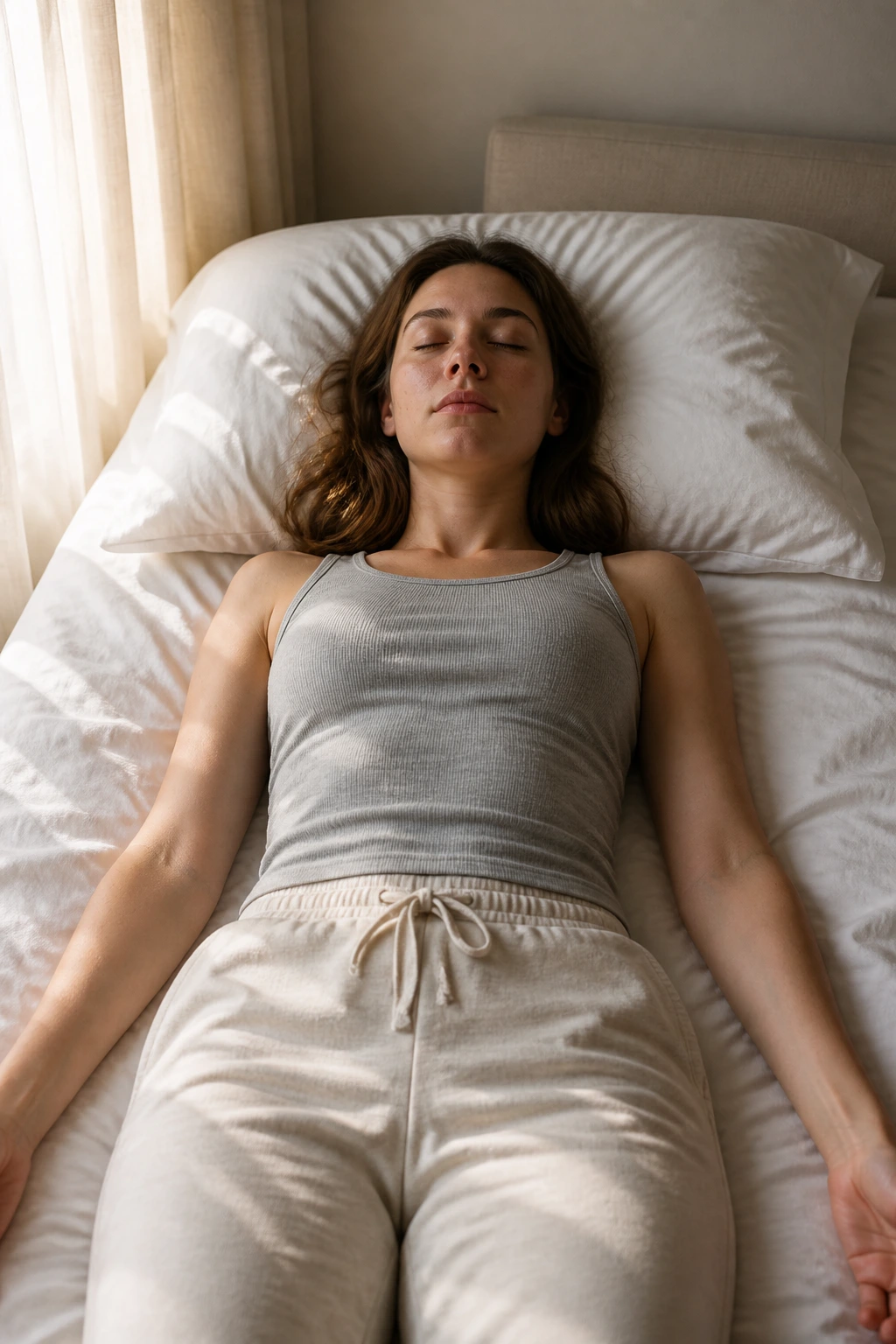
A lot of people skip savasana in the morning because they think it belongs only at the end of a long class. That’s a mistake.
Lie flat on your back, let the feet fall open, and place one hand on the belly if that helps you settle. Close the eyes or soften the gaze. Stay for 30 seconds, a minute, or a little longer if you are not racing out the door. The point is not to knock yourself back to sleep. The point is to let the body absorb the work before you stand up and start answering messages.
This is where the whole practice stops being “exercise” and starts feeling like a reset. The breath slows. The face softens. The jaw unclenches. Even if the rest of the sequence was tiny, this pause gives it shape.
If you hate mornings, you do not need to love them. You just need to stop fighting them for a few minutes. A floor, a breath, and a handful of honest poses can do more than a frantic stretch-and-rush routine ever will. And on the days when all you can manage is three or four of these, that still counts.
