



Your body can feel tired and wound up at the same time. That odd mix shows up everywhere: a jaw that won’t unclench, shoulders riding high, hips that feel jammed from sitting, and a lower back that makes a quiet complaint every time you lie down. A short set of evening stretches can take the edge off that whole mess before it turns into another restless night.
The trick is not to chase deep flexibility after dark. That usually backfires. The smarter move is to choose slow, gentle positions that soften the places most people carry tension — hips, hamstrings, chest, neck, and the muscles that cling to stress like it owes them money.
A good bedtime stretch routine should feel easy enough that you do not need to psych yourself up for it. Ten minutes is plenty. A little longer is fine too, but the point is to lower the noise in your body, not win a contest with your hamstrings.
If a stretch creates sharp pain, numbness, or a pinch that makes you hold your breath, back off. The rule at night is calm, not intensity. Start with the first one below, move slowly, and let the sequence do its job.
1. Child’s Pose for a Quiet Reset
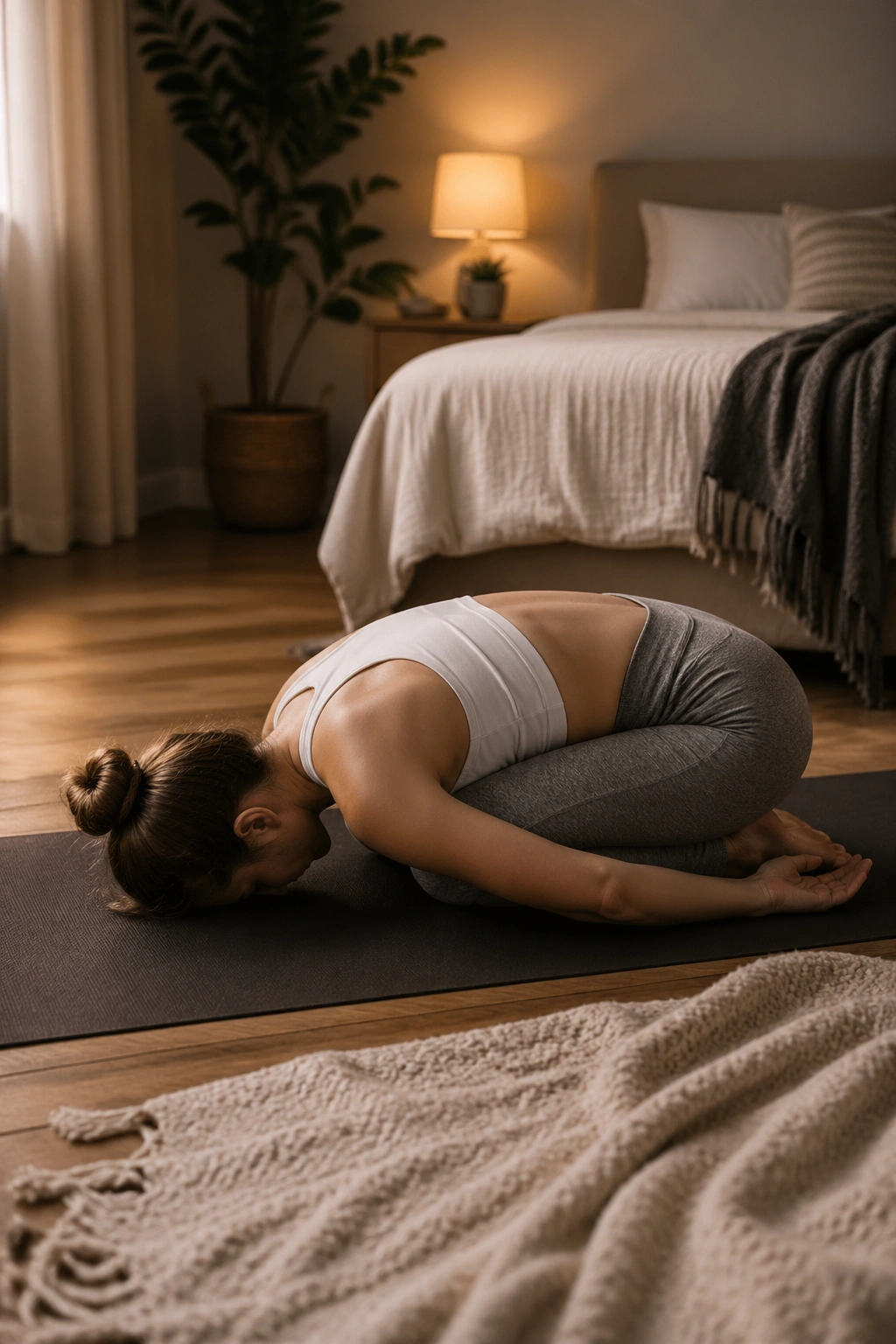
Child’s pose is one of those shapes that looks almost too simple to matter, and then your back exhales and you remember why people keep coming back to it. It gives the spine a break, stretches the sides of the torso, and lets the shoulders settle instead of hovering around your ears.
Why it works before bed
The beauty of child’s pose is the lack of effort. You kneel, fold forward, and stop trying to hold yourself together for a minute. That matters at night, because the nervous system tends to respond better to less input, not more.
If your hips are tight, widen your knees a little and let your belly hang between your thighs. If your lower back feels cranky, place a folded blanket under your hips or chest so the fold is softer. You should feel length, not strain.
How to make it cozier
- Place a pillow under your chest if your forehead does not reach the floor comfortably.
- Keep your arms long, or stack your fists and rest your forehead there.
- Breathe in for 4 counts, out for 6 counts, for 5 or 6 breaths.
- If your knees dislike floor pressure, put a folded towel under them.
I like this one first because it asks for almost nothing. That matters when you’re already tired.
2. Cat-Cow to Unclench the Spine
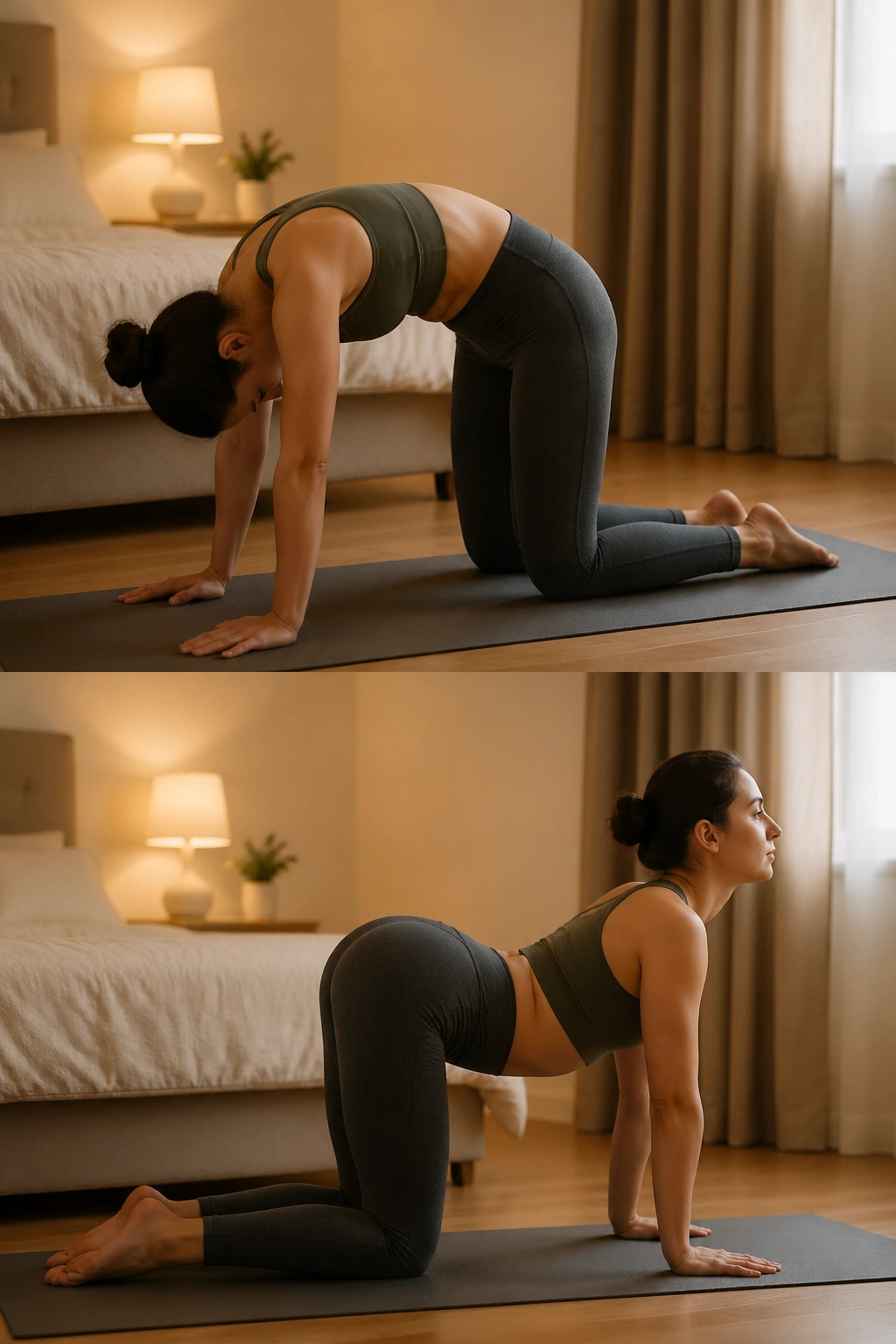
Your spine may not need a dramatic stretch at night. It may need a little movement and a reminder that it does not have to stay braced.
Cat-cow is the easiest way I know to warm up a stiff back without turning bedtime into a workout. Start on hands and knees, press the floor away as you round your back, then let the belly soften and the chest open as you arch gently the other way. Keep the movement small. Big spinal circles are unnecessary here.
The rhythm that calms things down
Move with your breath, not against it. Inhale as the belly drops, exhale as the spine rounds. Six to eight slow rounds are enough for most people, and you do not need to chase a huge range.
The common mistake is cranking the low back hard in the cow position. Don’t. The goal is smooth motion, not a deep backbend. Keep the neck long, let the shoulders stay relaxed, and imagine the movement spreading evenly through the whole spine.
Good cues to watch for
- Hands under shoulders, knees under hips.
- Elbows soft, not locked.
- Jaw loose.
- Eyes looking down or slightly forward, never jammed upward.
- Movement should feel like a wave, not a snap.
If your wrists are sensitive, drop to forearms or place your hands on the edge of the bed instead of the floor. Simple fix. Works well.
3. Seated Forward Fold for Tight Hamstrings
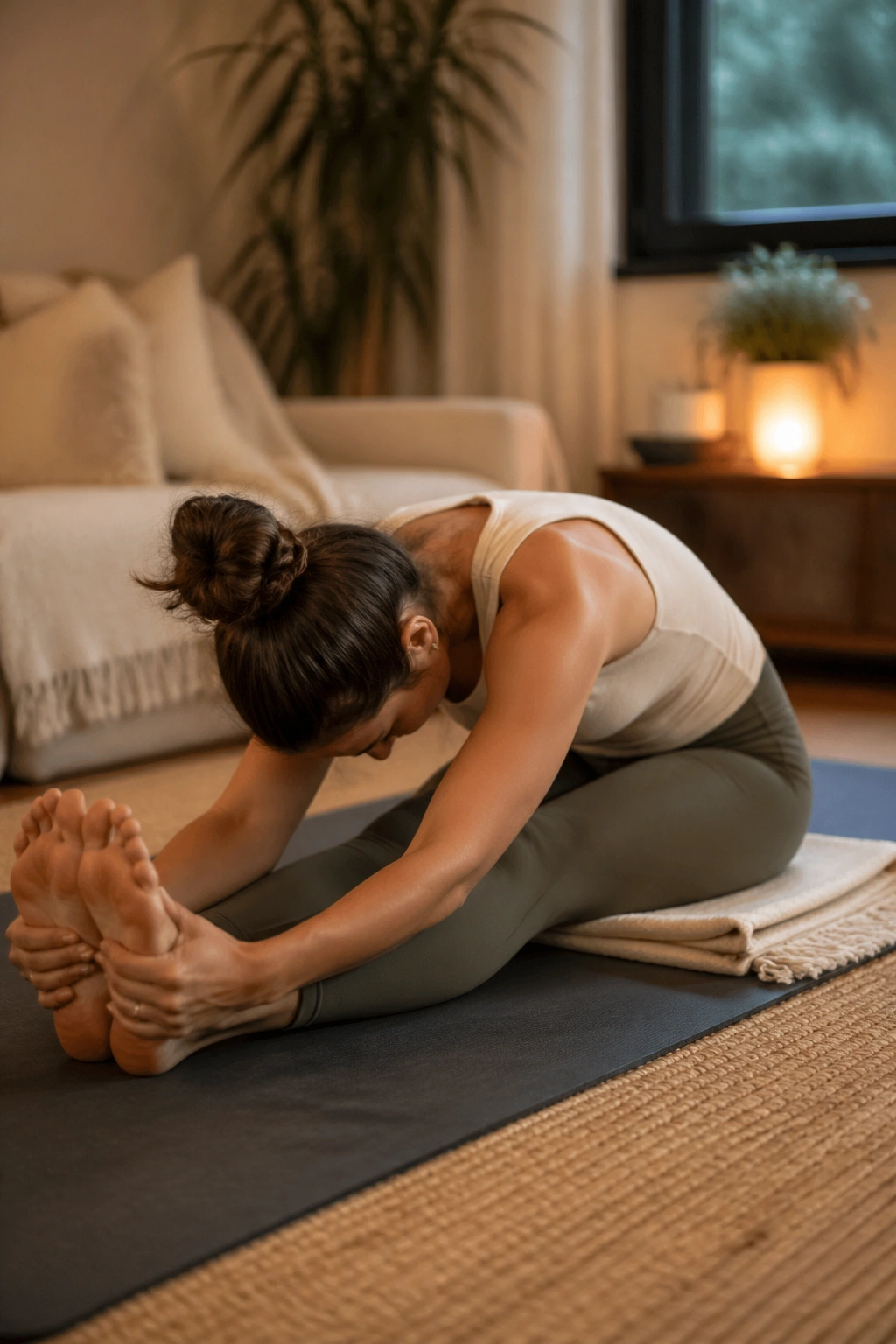
Tight hamstrings are sneaky at night. They tug on the pelvis, pull on the lower back, and make it harder to get comfortable once you finally lie down. A seated forward fold can ease that chain, but only if you keep it gentle.
Sit on the floor with your legs straight in front of you, or bend your knees a little if that feels better. Tip your torso forward from the hips instead of rounding hard through the back. Reach toward your shins, ankles, or feet — wherever your body lets you arrive without gripping your jaw.
How to keep it useful, not aggressive
A folded blanket under your sit bones can make this stretch much friendlier. It tilts the pelvis forward, which often gives the hamstrings a break. You may notice that a tiny bend in the knees suddenly lets the whole pose settle. That is not cheating. That is smart.
Hold for 20 to 45 seconds and breathe evenly. Do not yank yourself deeper with your hands. If the back of the legs feels like a clean, warm stretch, you’re in the right zone. If your lower back starts to complain, come up a little.
Small modifications that help
- Sit on a firm pillow if your hamstrings pull you backward.
- Keep the feet flexed if that feels steadier.
- Rest your hands on blocks, books, or your shins.
- Stop before the stretch turns into a wrestle.
This one rewards patience. Force makes it worse.
4. Supine Figure Four to Open the Hips
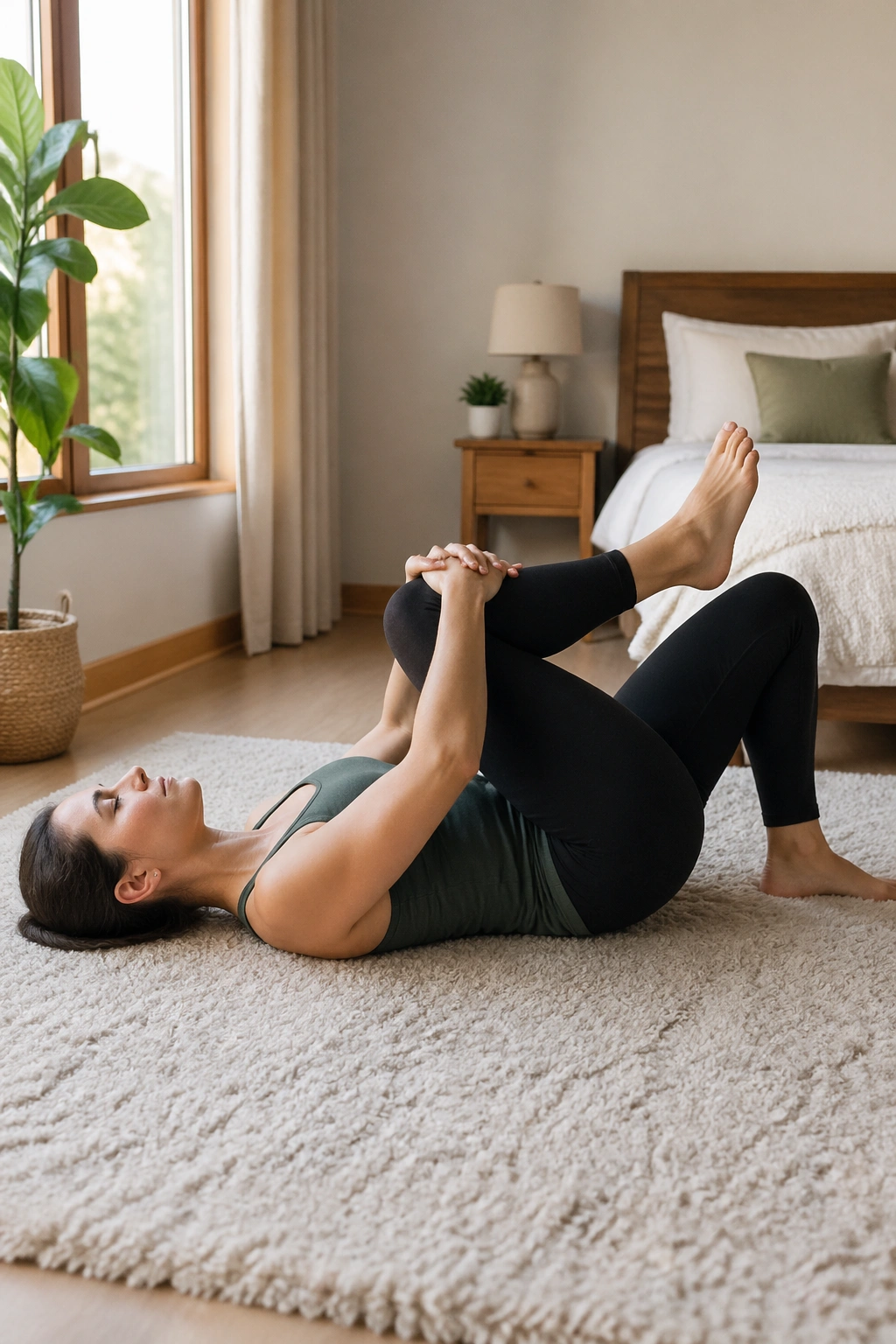
If your hips feel like they’ve been folded into a desk chair all day, supine figure four is a gift. It targets the outer hip and glute area, which often gets tight from walking, sitting, lifting, or simply carrying stress around like a full-time job.
Lie on your back with both knees bent. Cross your right ankle over your left thigh, just above the knee, then reach behind the left thigh and pull the legs toward you. You should feel the stretch in the right hip and glute, not in the knee.
That knee detail matters. If the crossed leg’s knee feels pinchy, flex the foot of the top leg and back off a little. The stretch belongs in the hip, not the joint.
A lot of people tense up here because it feels unusual at first. Slow your breathing, let the shoulders stay heavy, and hold for 30 to 60 seconds on each side. It is one of the nicer stretches to do right before sleep because your whole body is already supported by the floor.
5. Knees-to-Chest Rock to Soothe the Lower Back
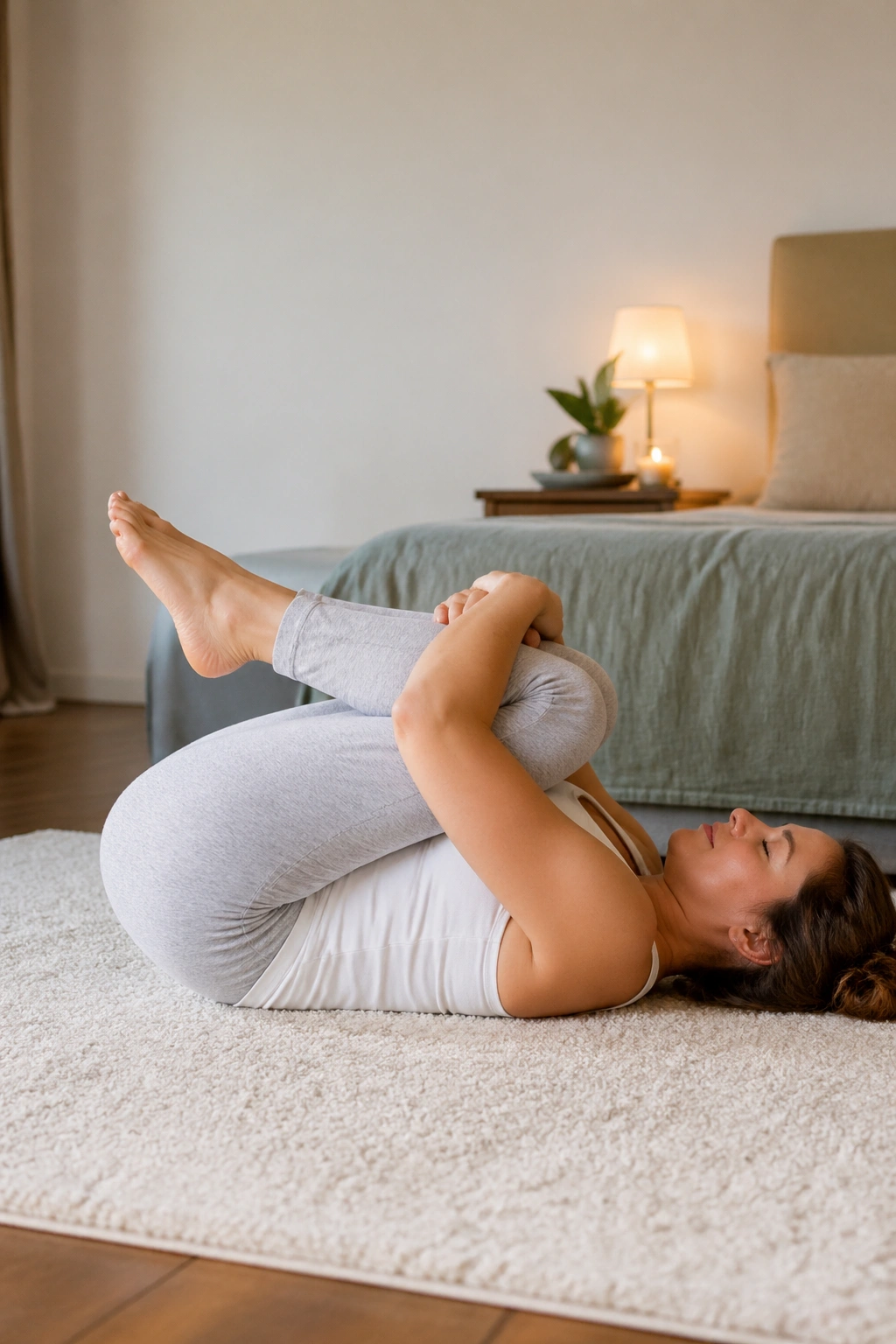
Some stretches earn their keep by being almost boring. Knees-to-chest rock is one of them.
Lie on your back, draw both knees toward your chest, and wrap your arms around your shins or just below the knees. Then make a tiny rock from side to side. Not a big roll. Just enough movement to massage the lower back against the floor.
Why this feels good so fast
The lower back often likes gentle unloading more than anything fancy. This position shortens the distance between the pelvis and rib cage a little, which can feel like a sigh if your back has been arching all day.
Keep the tailbone heavy and the neck relaxed. If both knees to chest feels too strong, hold one knee at a time. That version is quieter and often better for people with a sensitive low back or a belly that doesn’t love compression at night.
Skip the rock if it makes your breathing shallow. The whole point is to make space, not squeeze things.
A few slow breaths here can be enough to change the tone of the whole routine. It is simple. That is the point.
6. Thread the Needle for the Upper Back
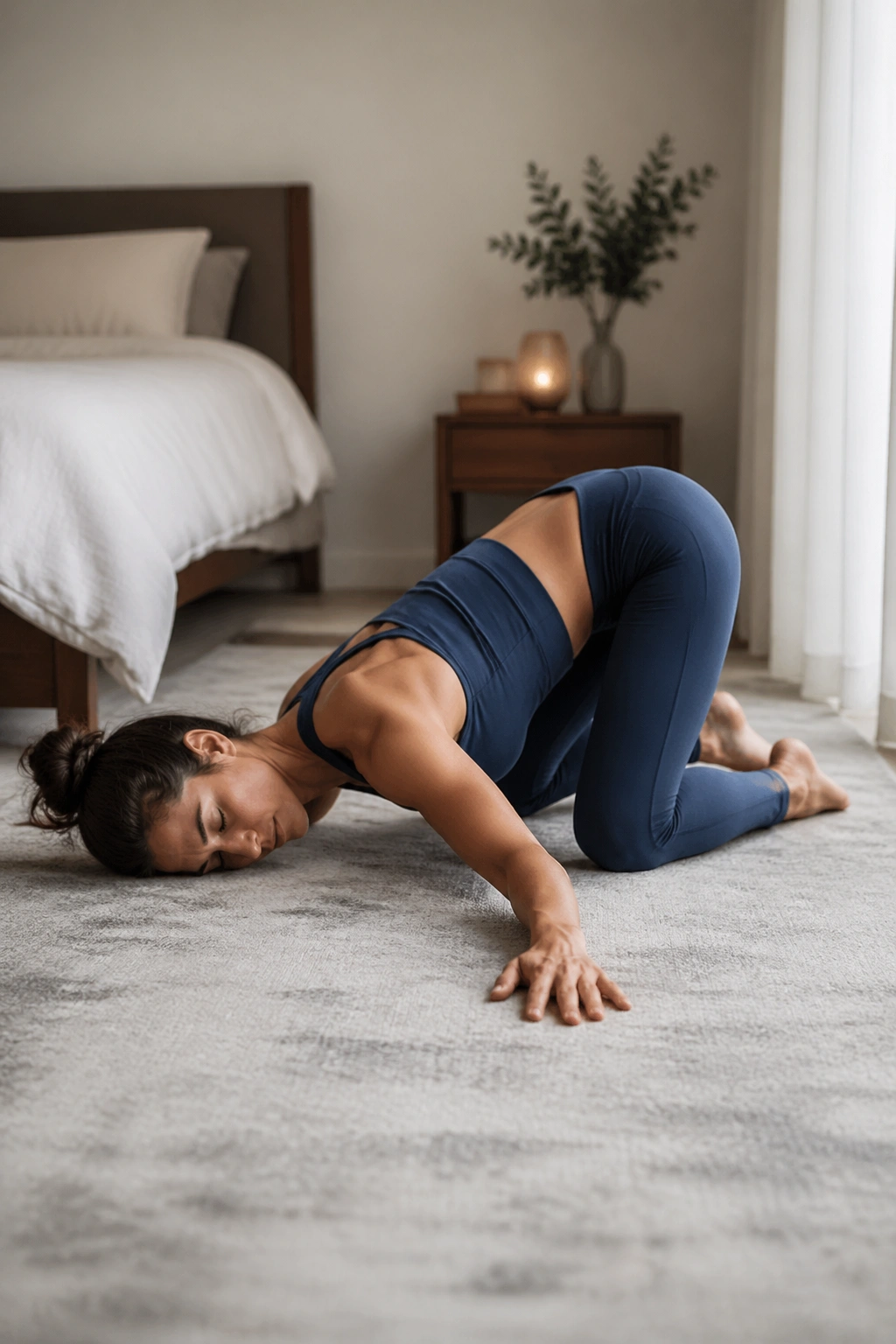
Typing, driving, scrolling, carrying bags — all of it leaves the upper back and shoulders in a slightly clenched state. Thread the needle opens that area without asking your body to do anything dramatic.
Start on hands and knees. Slide your right arm under your left arm, palm up, and lower your right shoulder and cheek to the floor or mat. Keep your hips stacked over your knees if you can, because that keeps the stretch focused where it belongs.
What to watch for
A lot of people shift too much weight into the front shoulder and lose the stretch. Instead, let the torso twist just enough that the shoulder blades spread apart. You may feel it through the back of the shoulder, across the upper back, or even into the side of the neck.
Hold for 20 to 40 seconds, then switch sides. If the floor feels too far away, place a pillow under the head or rest the forearm on a cushion. No part of this should feel like a strain contest.
A good setup
- Knees hip-width apart.
- Hips over knees.
- Breath slow and steady.
- Keep the free arm active enough that you do not collapse.
This is one of my favorite stretches before bed because it clears out desk posture without being fussy.
7. Reclined Twist to Let the Day Drop Away
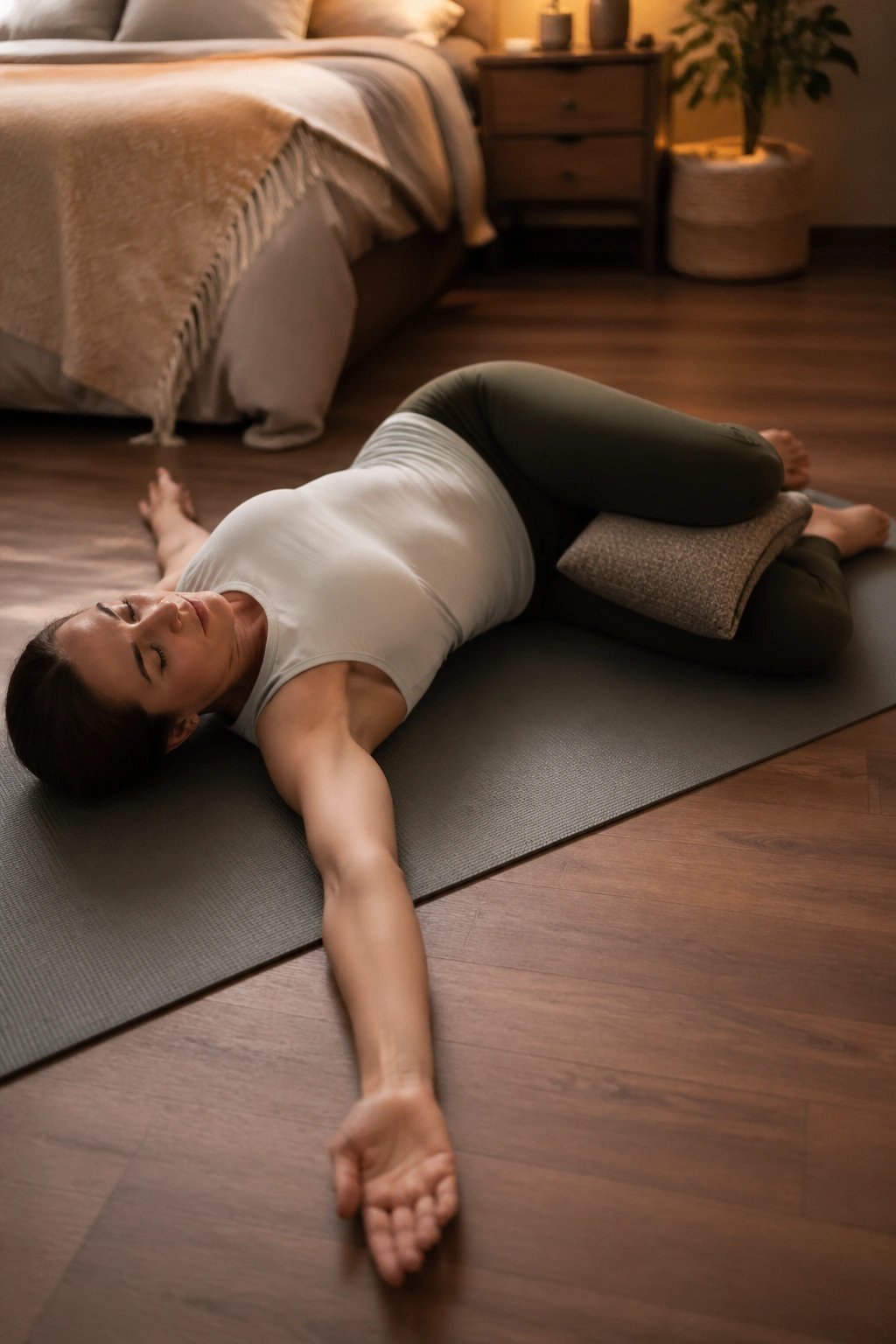
Twists are easy to overdo, and bedtime is not the place for a hard twist. A reclined version gives you the shape without the effort.
Lie on your back, bring both knees toward your chest, then lower them to one side while keeping your shoulders relaxed against the floor. Stretch your arms out like a T if that feels good. If the top knee floats too far from the floor, place a pillow or bolster between the knees.
Why the supported version wins at night
You want the twist to feel like a soft wringing out, not a wrench. A cushion under the knees can make the pose calmer and easier on the low back. The breath helps too — try lengthening the exhale a little and notice whether your rib cage softens.
If your lower back is sensitive, keep the twist shallow. The knees do not need to touch the floor. They only need to lean in that direction.
The neck should stay easy. If turning the head makes it feel sharper, look straight up instead. Twists work better when you can keep the shoulders heavy.
I would pick this one after a long day on your feet or after a lot of sitting. It has that loose, settling feel that bedtime likes.
8. Standing Forward Hang for a Quick Release
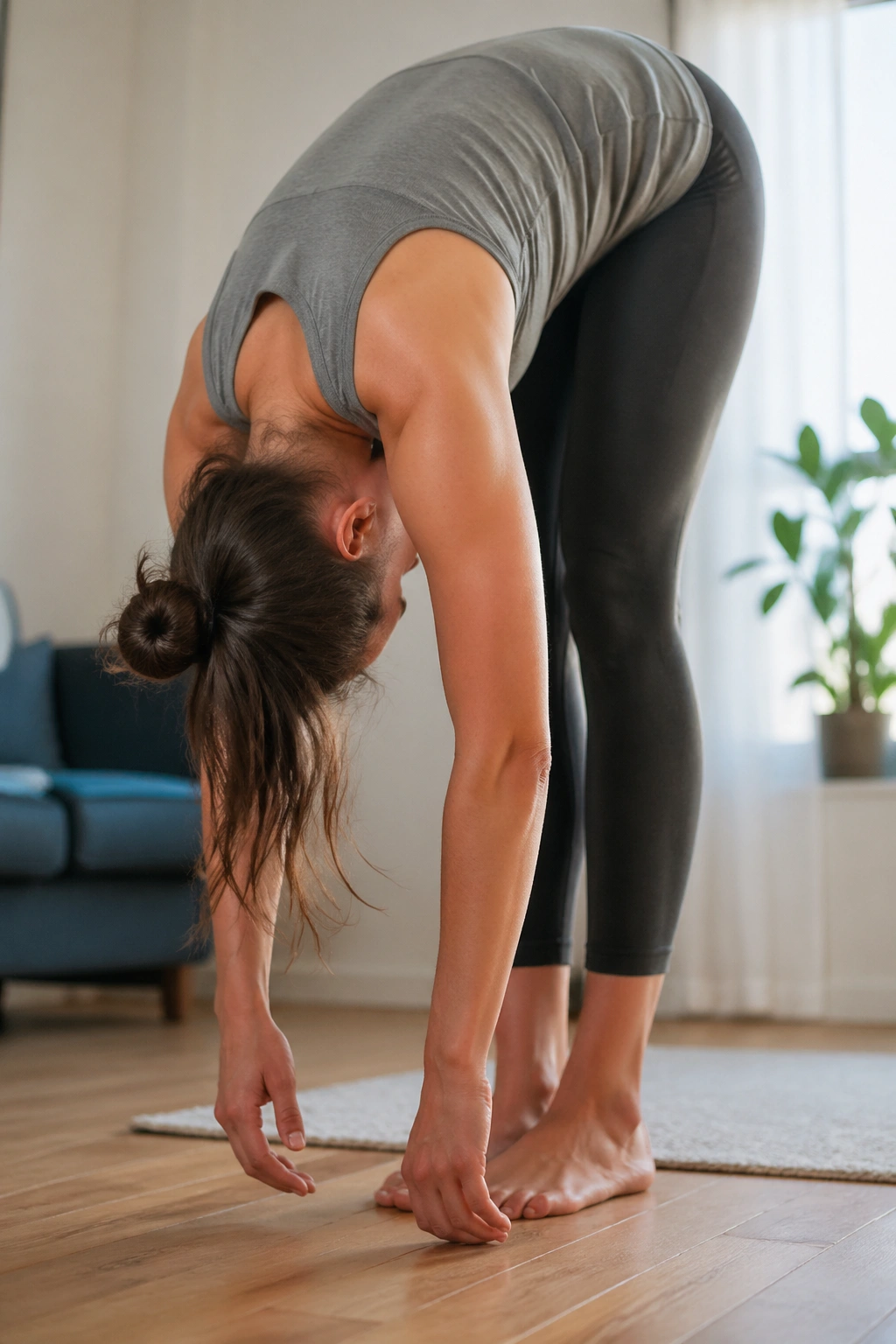
Not everyone wants to get down on the floor at night. Fair enough. A standing forward hang is the sleeper hit of a bedtime stretch routine because it asks for almost no setup and gives the back, hamstrings, and neck a decent break.
Stand with your feet hip-width apart, soften your knees, and fold forward from the hips. Let your arms dangle toward the floor, or cross them at the elbows and hold opposite elbows. If your lower back feels grumpy, bend your knees more. A lot more, if needed.
The hang should feel like gravity is doing the work while you stop helping. That is the whole point. Let the head be heavy, let the shoulders melt, and sway a little if that feels natural.
Best uses for this one
- Good if your mat is already put away.
- Good if you want a quick reset after brushing your teeth.
- Good if your hamstrings are stiff but not angry.
A standing fold can also be a nice transition from activity to rest because it changes your body position without making you think too hard. If your blood pressure runs low or you get dizzy when folding, rise slowly and skip this one.
9. Low Lunge for Tight Hip Flexors
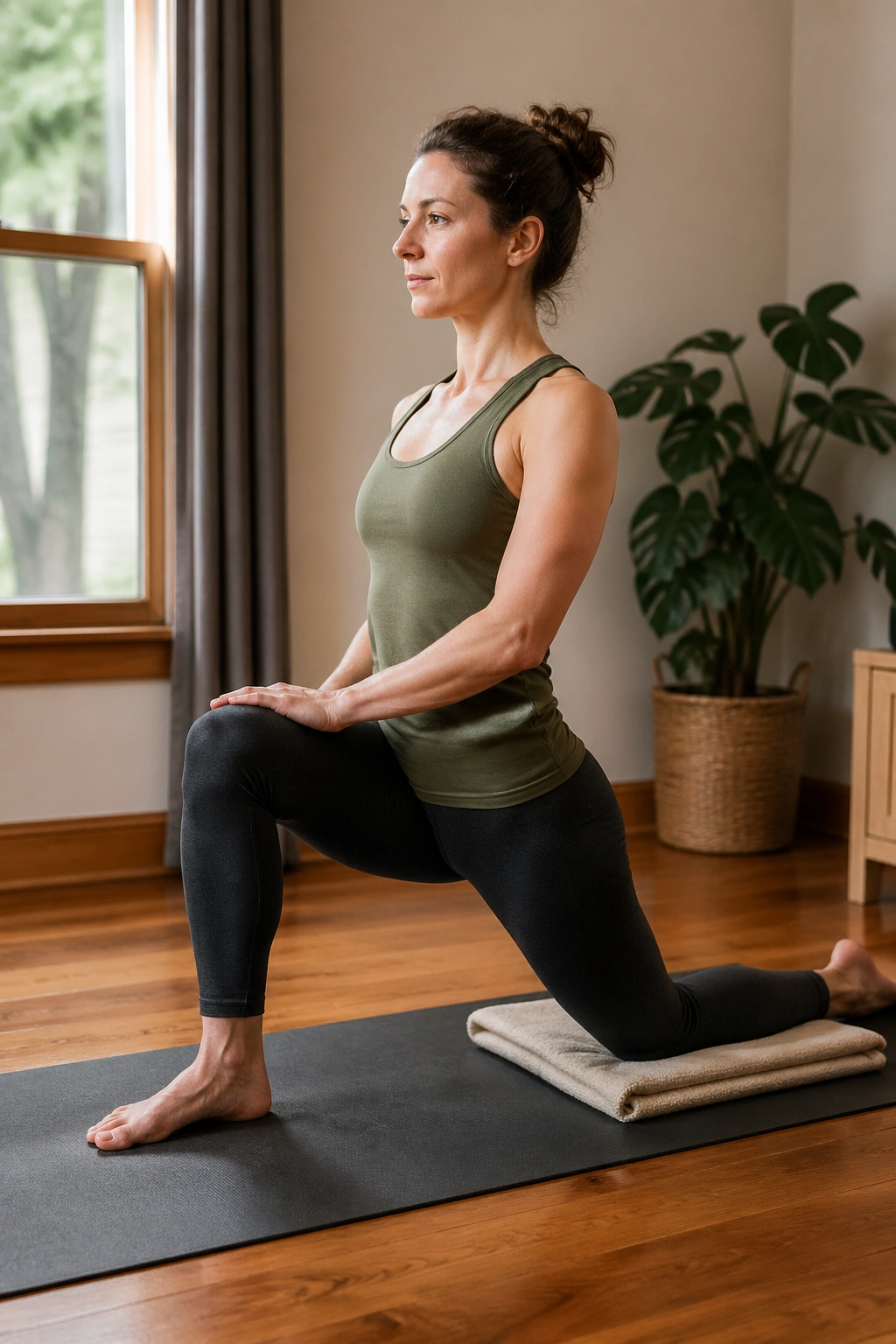
Hip flexors take a beating from sitting. They shorten, cling, and then make the front of the hip feel like it is being pulled forward. A low lunge targets that area directly.
Kneel with your right foot forward and your left knee on the floor, ideally on a folded blanket. Keep your torso upright, then gently tuck your pelvis under a little so you feel the stretch at the front of the left hip. That small tuck matters more than people think.
The small detail that changes the stretch
Without that pelvic tuck, the stretch can disappear into the low back. With it, the front of the hip opens in a cleaner way. You can keep your hands on your front thigh or raise the same-side arm overhead if that feels stable.
Hold for 20 to 40 seconds, breathe into the side ribs, then switch. If kneeling bothers your knee, put more padding under it or do the stretch standing with one foot on a low step and the other leg extended behind you.
This stretch can feel strong. It should still feel controlled. If you feel a pinch in the front of the hip, shorten the stance and ease up.
10. Butterfly Stretch for Inner Thighs and Hips
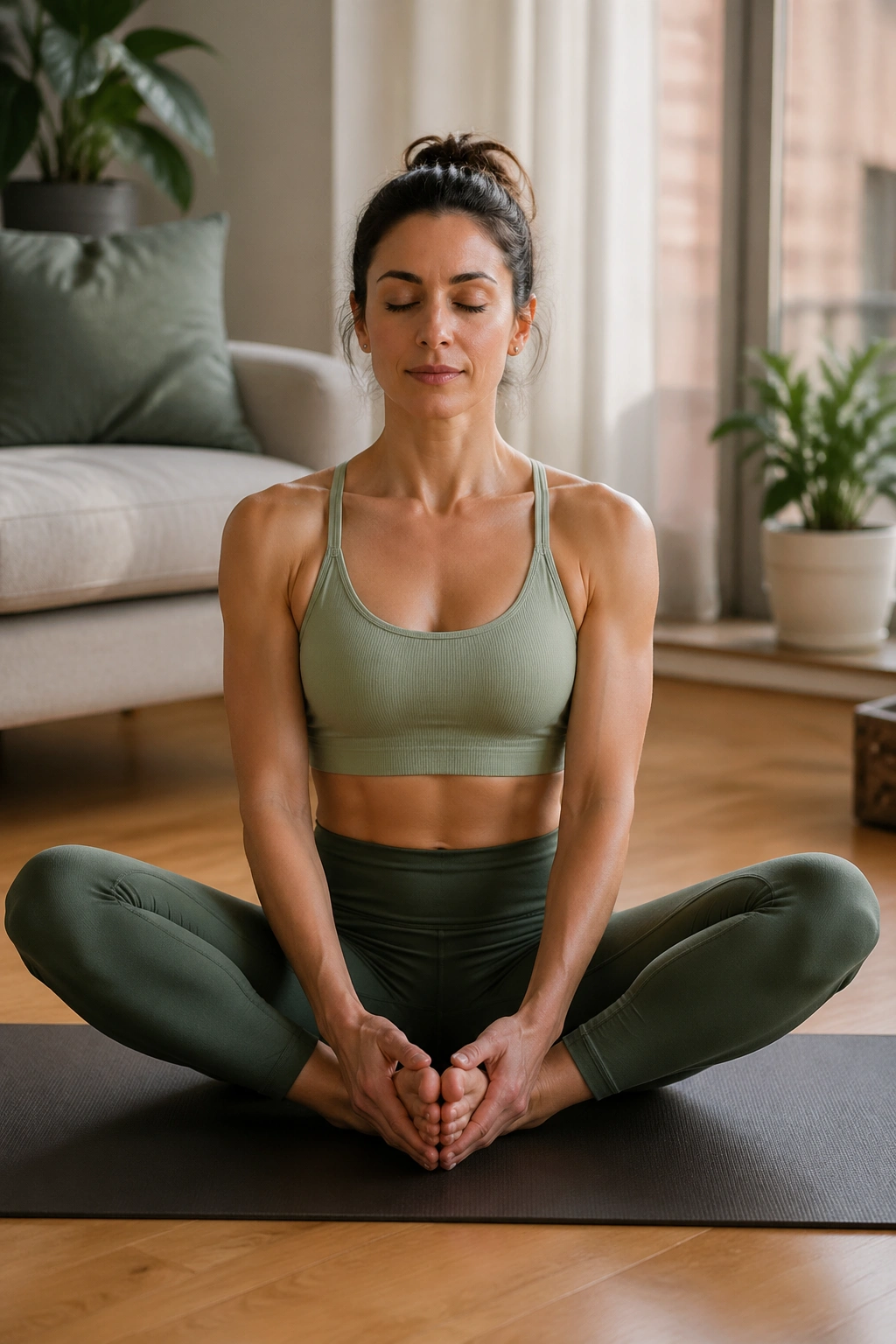
Butterfly pose looks modest, but it can change the feel of your whole pelvis. Sit tall, bring the soles of your feet together, and let your knees fall outward. Hold your feet or ankles lightly, then keep the spine long as long as that feels good.
A lot of people fold forward too fast here. I’d skip that at first. Sit upright and let the inner thighs open on their own for a few breaths before doing anything deeper.
How to make it feel better
If your knees sit high off the floor, place pillows or folded blankets under them. That takes strain off the hips and makes the stretch quieter. You can also scoot your feet farther from your pelvis if the position feels cramped.
Your job is not to push the knees down. Please don’t do that. The stretch should come from the inner thighs and groin relaxing, not from force.
If you want a little more, hinge forward from the hips with a flat back and stop the moment your lower back starts to round hard. Some nights, upright is enough. Some nights, the forward fold feels fine. Let the body decide.
11. Wall Calf Stretch to Ease the Lower Legs
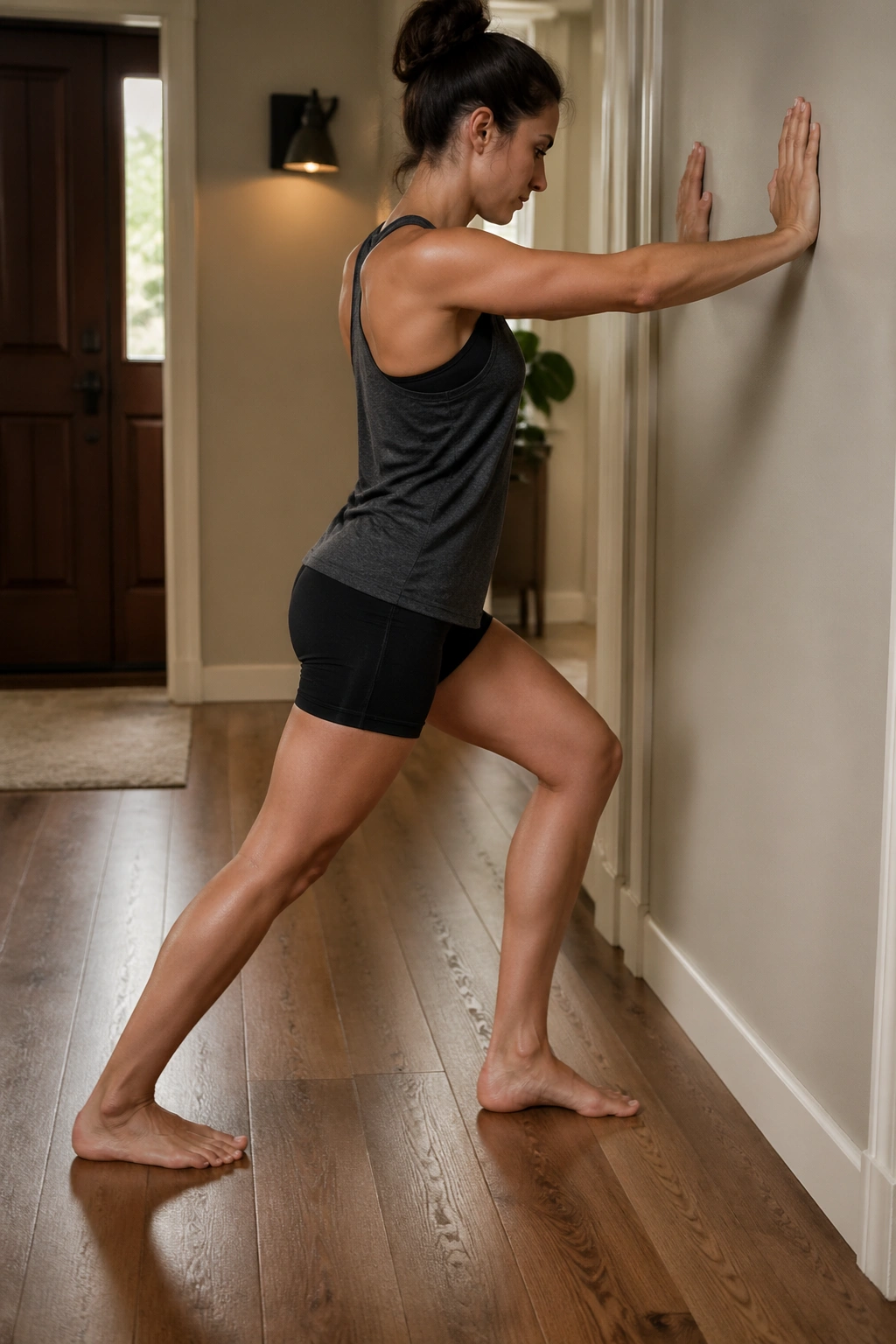
Calves rarely get attention until they start tugging on the ankles, feet, or even the knees. Then suddenly they feel impossible to ignore. A wall calf stretch is clean, simple, and worth the thirty seconds it takes.
Place both hands on a wall, step your right foot back, and keep the back heel on the floor. Straighten the back knee to target the bigger calf muscle, then bend it slightly to catch the deeper soleus muscle lower down. You’ll feel the difference pretty fast.
Why do both versions?
The straight-knee version reaches higher into the calf, while the bent-knee version shifts the stretch lower. If you walk a lot, run, or wear shoes that keep the ankle from moving freely, both angles can help the lower legs settle before bed.
Keep the back foot pointed forward and the front knee tracking over the toes. Hold each position for 20 to 30 seconds, then switch sides. The heel should stay down unless your ankle mobility truly won’t allow it.
A wall stretch is not glamorous. I know. But the whole bedtime routine improves when the lower legs stop shouting in the background.
12. Neck Side Bend and Chin Tuck to Unknot the Top of the Spine

Neck work before bed should be tiny. Big circles tend to feel sloppy and can irritate more than they help.
Sit or stand tall. Gently tip your right ear toward your right shoulder, keeping both shoulders low. Hold for a few breaths, then return to center and lightly draw the chin straight back, like you’re making a small double chin. That chin tuck lengthens the back of the neck without forcing it into a weird angle.
Skip the rolling
Neck rolls often feel like relief in theory and a bad idea in practice. The joints in the neck like controlled movement, not flinging. Side bends and chin tucks are much more predictable, and they’re easy to repeat.
Try 3 to 5 slow breaths on each side. If you want a little more, place your hand over the top of the head for a light assist, but keep the pull tiny. There should be no sharpness, no pinching, and no need to wince.
If screens have been your whole evening, this one can help your head feel less forward-heavy before you lie down. That alone can make the pillow feel better.
13. Eagle Arms to Release the Shoulders
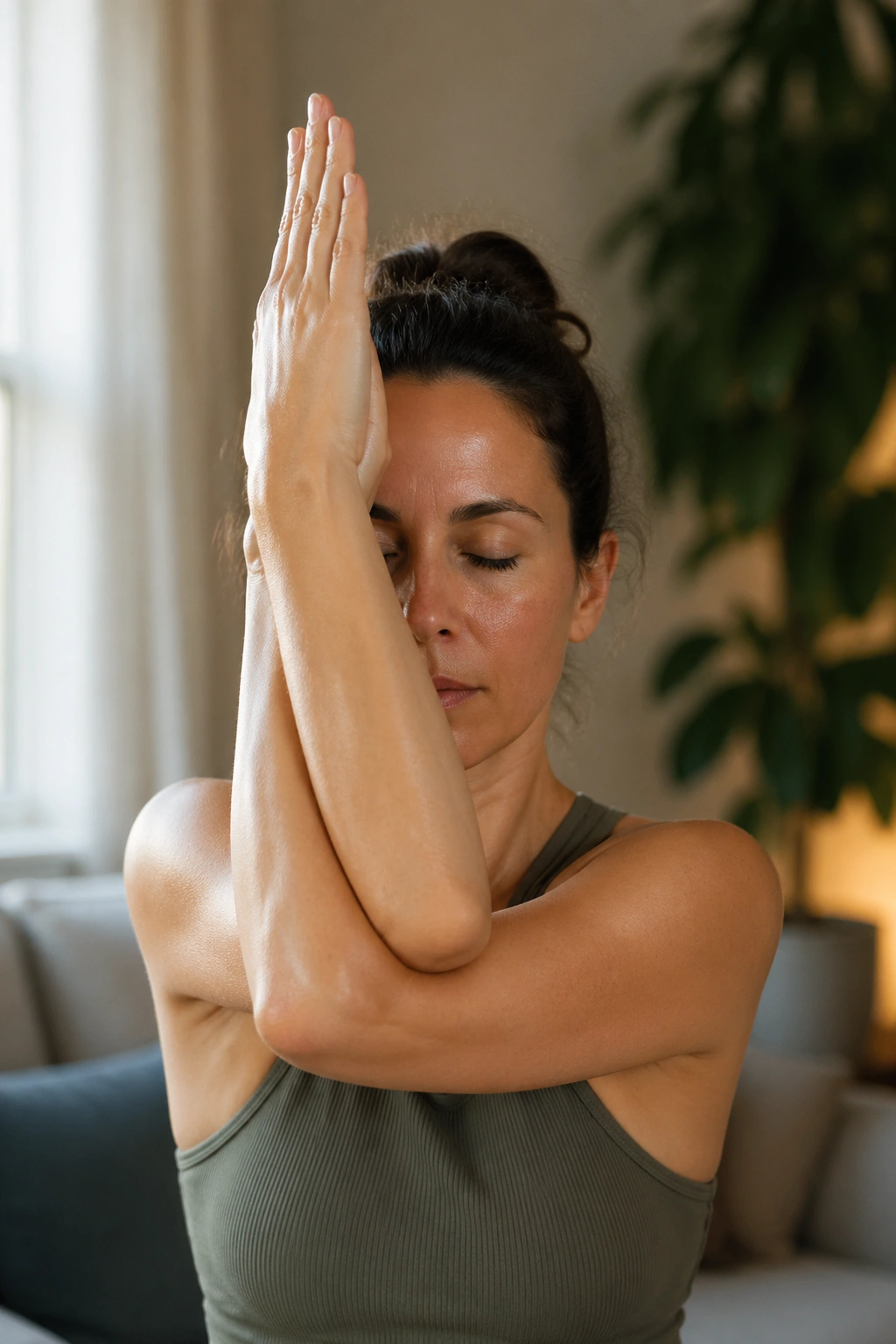
Shoulders spend the day climbing toward the ears. Eagle arms pulls them down and forward in a way that feels oddly satisfying once you stop resisting it.
Cross your right arm under your left arm, bend both elbows, and either wrap the forearms around each other or press the backs of the hands together. Lift the elbows a little, then let the shoulder blades spread apart. Breathe into the back ribs.
The stretch is mostly in the upper back, rear shoulders, and the space between the shoulder blades. If the full wrap is too tight, just hug yourself and keep the elbows lifted. That still gives a useful stretch without fighting with your joints.
What makes it useful at night
- It opens the upper back without floor work.
- It takes very little room.
- It can be done standing while waiting for tea to cool.
- It helps when the neck feels linked to shoulder tension.
Keep the face soft. That sounds obvious, but a lot of people turn this into an effort pose. Don’t. A small lift of the elbows is enough. Hold for 20 to 30 seconds, then switch sides.
This is one of those stretches that looks unremarkable and feels better than it looks.
14. Happy Baby for the Hips and Low Back
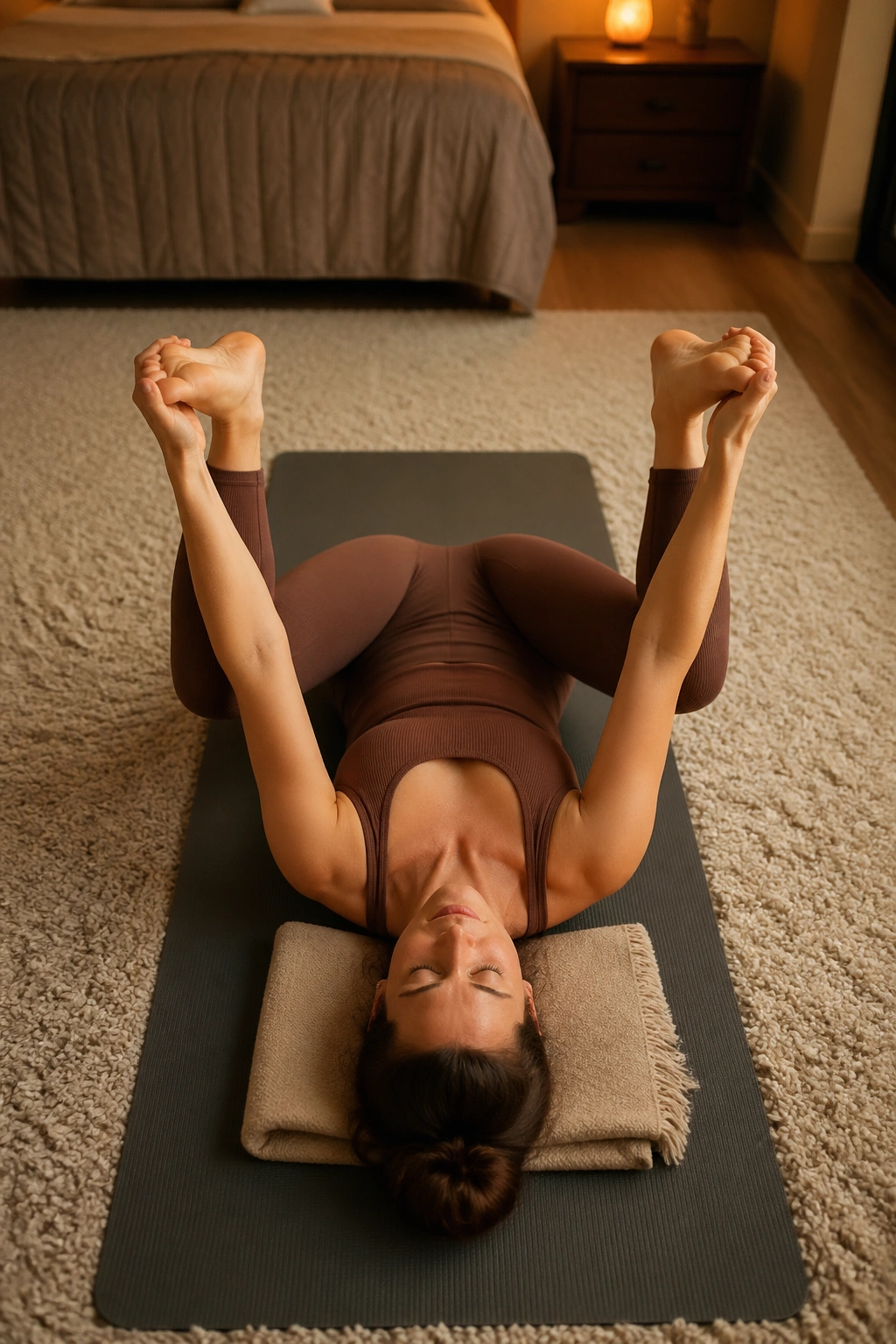
Happy baby is either a lovely finish or a little awkward at first. Both reactions are normal.
Lie on your back, bend your knees toward your chest, and hold the outsides of your feet, ankles, or shins. Let the knees open wider than the torso and keep the tailbone heavy on the floor. If reaching the feet feels like too much, hold behind the thighs and stay there.
A softer version works fine
You do not need to pull your knees to the floor. In fact, please don’t. Let the legs open only as far as your hips and lower back allow. Rocking gently side to side can feel good, but keep it small so the movement stays soothing.
If your neck feels strained, place a folded blanket under the head. If your knees or groin feel cranky, take one leg at a time instead of both. The pose should open the hips, not leave you bracing through the jaw.
Happy baby can feel a little playful, which is part of why it works as a bedtime shape. It breaks the mood of the day without getting loud.
15. Legs-Up-the-Wall to Finish the Night
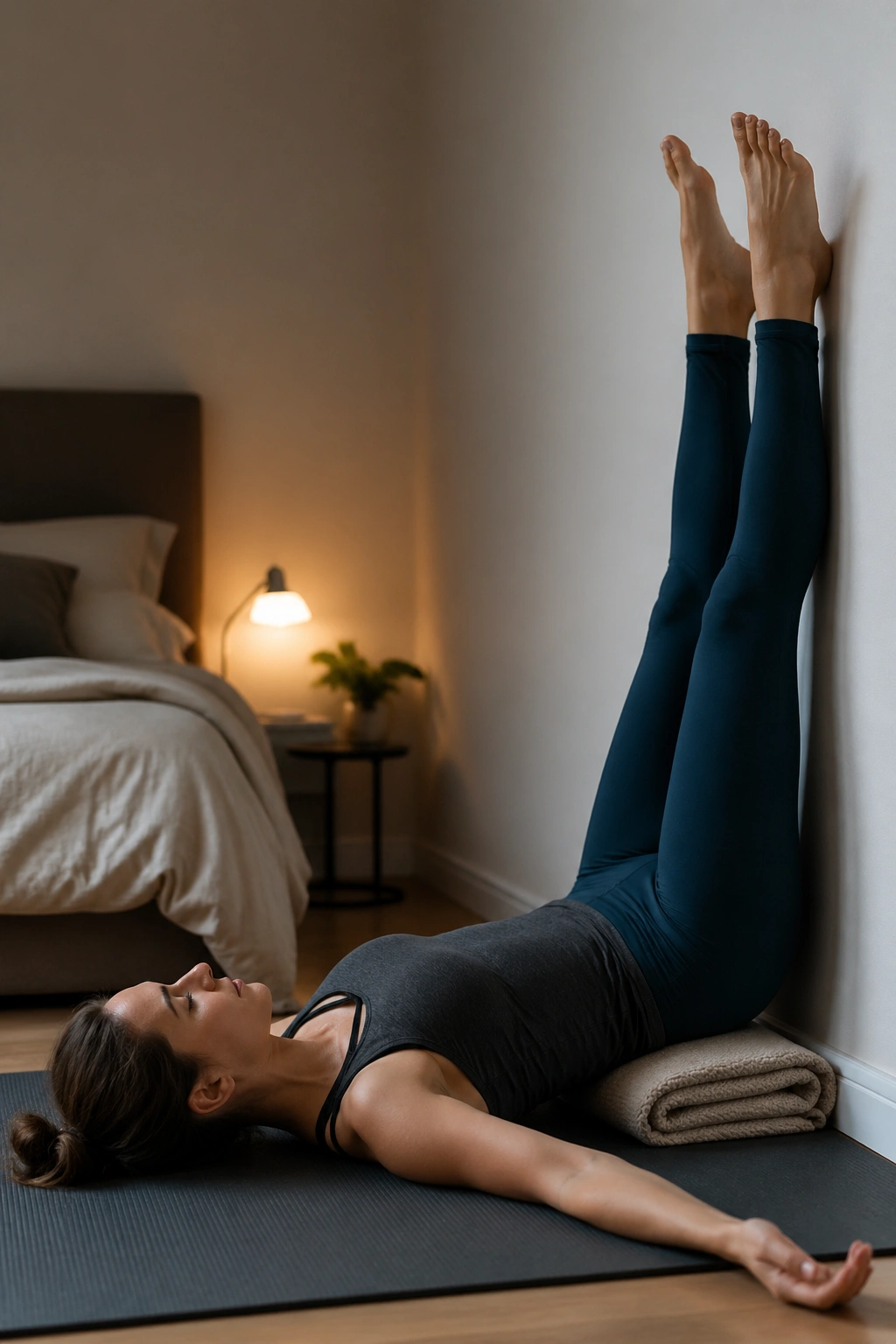
Legs-up-the-wall is the one I’d save for the end. It changes the whole tone of the room. The body gets support, the legs feel light, and the floor does the work while you do almost nothing.
Sit with one hip near a wall, swing the legs up, and lie back so your calves rest on the wall. If that feels too tight behind the legs, scoot a few inches farther away. If it feels too easy, move closer. Small adjustments matter here.
How long to stay
Two to ten minutes is plenty. You can stay shorter if you’re sleepy, or longer if the position feels deeply restful. Place a folded blanket under your hips if that helps, but it is not required.
Keep the arms relaxed by your sides, on your belly, or out in a soft T. Breathe slowly and let the exhale stretch a touch longer than the inhale. If your feet tingle or the low back starts to arch, move farther from the wall.
This pose is especially nice after a day spent standing, walking, or traveling. It is also a clean way to close a short nighttime stretch routine because it does not ask you to get back up and do anything else.
Pick three to five of these on a given night if that feels realistic. You do not need the whole sequence every time, and you definitely do not need to force a deep stretch just because the pose looks familiar. The better routine is the one you’ll actually repeat, even on tired evenings when all you want is a softer landing.
