



High-Intensity Interval Training, or HIIT, has a reputation for being the fastest way to get fit, but it also carries a reputation for being the fastest way to wreck your knees. Most of the popular advice online assumes that “high intensity” is synonymous with “high impact.” You see endless videos of people doing box jumps, plyometric lunges, and frantic burpees. If you are an athlete or a younger person with healthy cartilage, those movements are fine. If you are someone who has dealt with previous injuries, joint pain, or simply wants to maintain longevity, that kind of constant pounding is a recipe for inflammation and long-term joint degradation.
The goal is to get your heart rate into that anaerobic zone—the place where you are breathing hard enough that you cannot hold a conversation—without the repetitive stress of slamming your joints against a hard surface. You can trigger the same metabolic response with smart, low-impact programming. It is about choosing movements that prioritize muscular fatigue and cardiovascular output over gravitational force. When you remove the jump, you lose the shock absorption demand on your ankles, knees, and hips, but you keep the intensity. You can actually work harder and longer if your joints are not sending pain signals to your brain.
This approach requires a shift in how you view “intensity.” It is not about how loud your feet hit the floor. It is about the level of effort you put into each work interval. When you take impact off the table, you have to be more deliberate about your muscle engagement. You cannot rely on momentum or the bounce of the floor to do the work for you. You have to create the tension and the speed yourself. Here are 15 ways to structure that intensity without the wear and tear.
1. Swimming Interval Sprints
Swimming is the gold standard for low-impact conditioning. You have the benefit of total resistance from the water, which works every major muscle group, combined with the fact that water supports your body weight. You cannot pound your knees into the bottom of a pool. It is physically impossible. To turn a swim into a HIIT workout, you need to stop doing laps at a steady, leisurely pace.
How to Structure Your Swim Intervals
- The Work: Sprint at 90-95% maximum effort for 30 to 45 seconds. This should feel like you are racing against someone in the next lane.
- The Rest: Active recovery for 30 seconds. This means slow, easy strokes to keep the water moving around you but let your heart rate drop just enough to prepare for the next round.
- Total Volume: Aim for 10 to 15 rounds of this.
Why This Trumps Land-Based Training
The hydrostatic pressure of water helps with circulation and recovery. While you are working, the water provides constant resistance that you do not get in the air. If you push your hand through the water faster, the resistance increases exponentially. You can modulate the intensity simply by increasing the velocity of your stroke. It is perfect for people who struggle with knee tracking or ankle stability.
2. Stationary Cycling Sprints
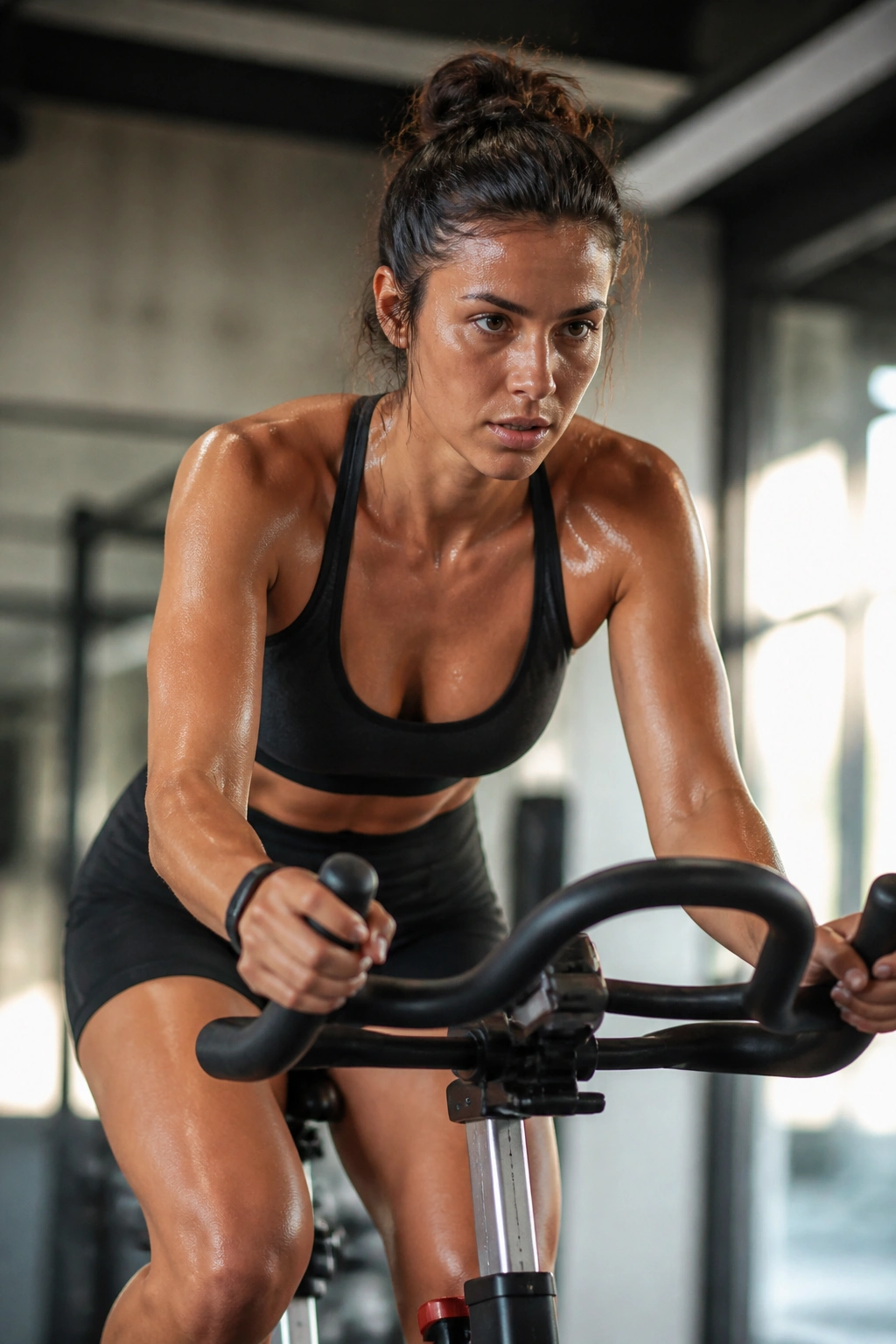
People often view cycling as a slow, steady-state cardio option, but it is one of the most effective tools for interval training. The key is in the resistance knob. If you are just spinning your legs in a circle, you are not doing HIIT. You need to dial up the tension until it feels like you are climbing a steep, grueling hill.
When you crank that resistance, you engage your glutes, quads, and hamstrings without the eccentric load—that’s the “landing” phase—that tears up knee cartilage during running. It is a concentric-focused movement. You are pushing, and the bike responds. You are not crashing down onto the pedals.
Set your bike up so that your seat height allows for a slight bend in the knee at the bottom of the stroke. If the seat is too low, you put undue pressure on your kneecaps. If it is too high, you overextend your hips. Aim for a 90-degree angle when your thigh is parallel to the floor, or check that your heel can just barely reach the pedal at the lowest point with a straight leg. Once that is set, use the intervals to push your heart rate. 30 seconds of high-resistance sprinting followed by 60 seconds of light, recovery spinning is a brutal combination.
3. Low-Impact Shadowboxing

Boxing is a masterclass in full-body coordination and cardiovascular endurance. The common mistake people make is trying to mimic the fancy footwork they see in movies. You do not need to bounce on your toes or pivot like a professional fighter to get the benefits. You can stand firmly on the ground, widen your stance for stability, and focus entirely on the rotational power of your punches.
The Mechanism of Shadowboxing
Every punch should originate from your hips and core. When you throw a straight right, you rotate your right foot and hip. This rotation generates the power. You are not just using your arm muscles; you are using your obliques and back. By planting your feet, you remove the jumping aspect entirely. You can throw hundreds of punches in a minute without your joints ever taking a strike.
A Simple Interval Protocol
- Jab-Cross Combos: 45 seconds of fast, rhythmic punching. Keep your core tight.
- Recovery: 15 seconds of active recovery—slowly circling your arms or shifting your weight side to side.
- Hooks and Uppers: 45 seconds. Focus on the hip rotation.
- Recovery: 15 seconds.
4. Kettlebell Swings

The kettlebell swing is perhaps the most efficient posterior chain exercise in existence. It builds power in the glutes, hamstrings, and lower back, all while elevating your heart rate. Because it is a hinge movement rather than a squat, it is much easier on the knees. You are not bending your knees past a certain point; you are bending at the hips and using your glutes to snap the bell forward.
Proper Form is Non-Negotiable
You must keep your back flat. If you round your back, you are inviting injury. Imagine you are trying to push a door closed with your glutes. That “snap” is where the power comes from. The kettlebell should feel like it is weightless at the top of the swing. If you are using your arms to lift it, you have selected a weight that is too heavy or you are not using enough hip drive.
For HIIT, focus on speed. Try 20 seconds of “all-out” swings—as many reps as you can do with perfect form—followed by 40 seconds of rest. Do this for 10 minutes. By the end, your glutes will be burning, and your lungs will be gasping for air, but your joints will remain undisturbed.
5. Medicine Ball Slams

This is a movement that allows for pure, unadulterated aggression. You take a non-bouncing medicine ball, lift it overhead, and slam it into the floor as hard as you can. Because you are essentially doing a full-body crunch in reverse, you get a massive core workout. And because you are not jumping or running, there is zero impact on your lower body.
Why This Works for HIIT
The slam requires a short burst of maximum explosive power. You are using your lats, abs, and shoulders to drive the ball down. You then have to engage your legs to squat down and pick it up. Since you have to pick the ball up after every slam, you keep moving the entire time.
Keep the ball close to your body when you lift it. If you keep the ball out in front of you, you put unnecessary leverage on your lower back. Bring it up straight overhead, and as you slam it down, exhale forcefully. This bracing technique protects your spine. Do 10 slams in a row as fast as you can, then rest for 30 seconds.
6. Rowing Machine Intervals
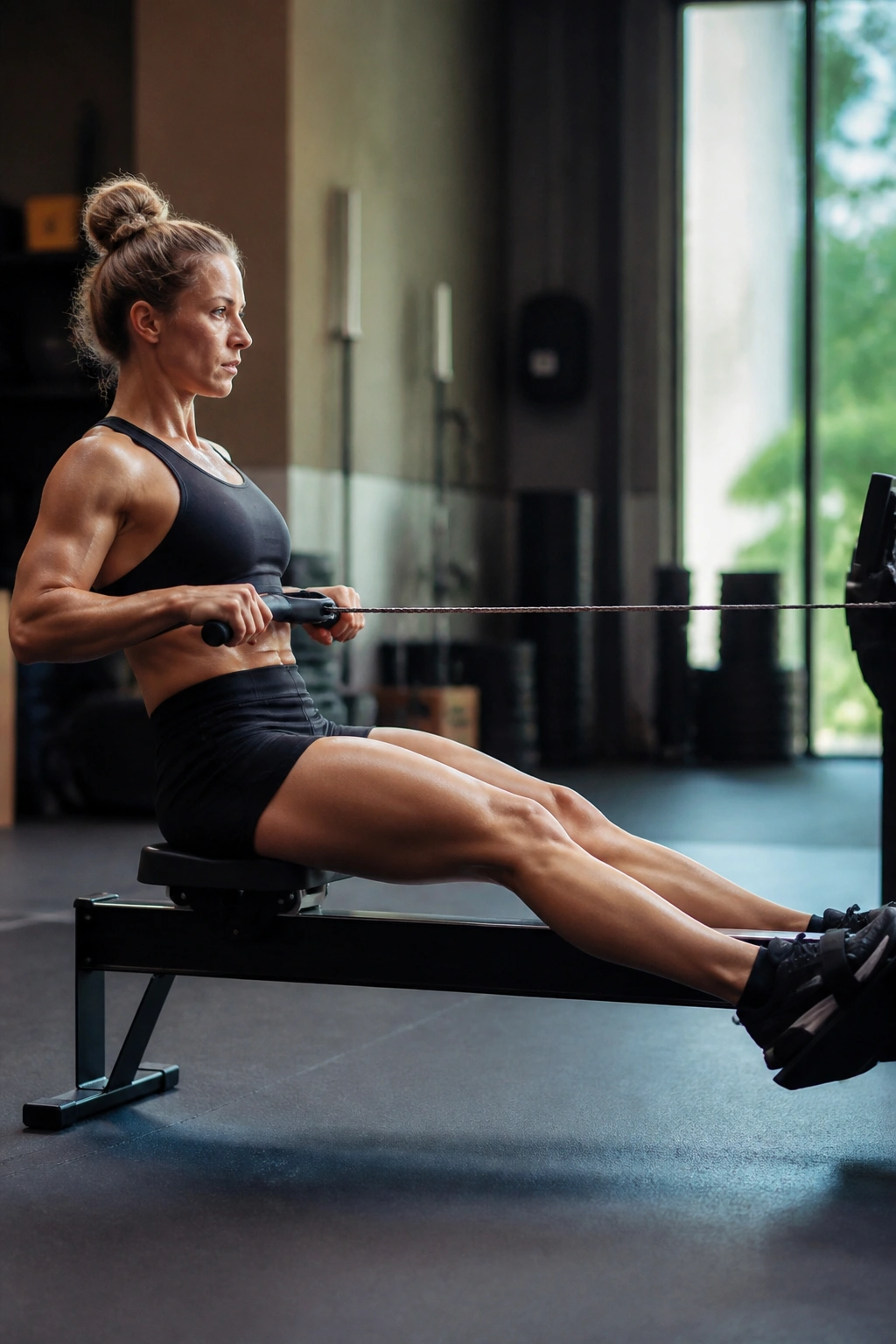
The rowing machine, or ergometer, is a full-body movement. It is often underestimated as a HIIT tool, but it is devastating if used correctly. You use your legs, back, and arms in a single, fluid motion. Unlike running, where your weight is supported by your joints upon impact, rowing distributes the workload across the entire chain of muscles.
The Stroke Sequence
The power comes from the legs. You push with your legs first, then lean back slightly with your core, and finally pull with your arms. The “recovery” phase is the opposite: arms release, torso leans forward, then the legs slide back. The goal is to keep the chain taut. If the chain goes slack, you lose efficiency.
For intervals, monitor your “split time”—the time it takes to row 500 meters. Try to maintain a sprint split for 500 meters, then row very slowly for 250 meters. Repeat this until you hit a specific distance or time goal. The rhythm is hypnotic, but the fatigue is very real.
7. Battle Ropes
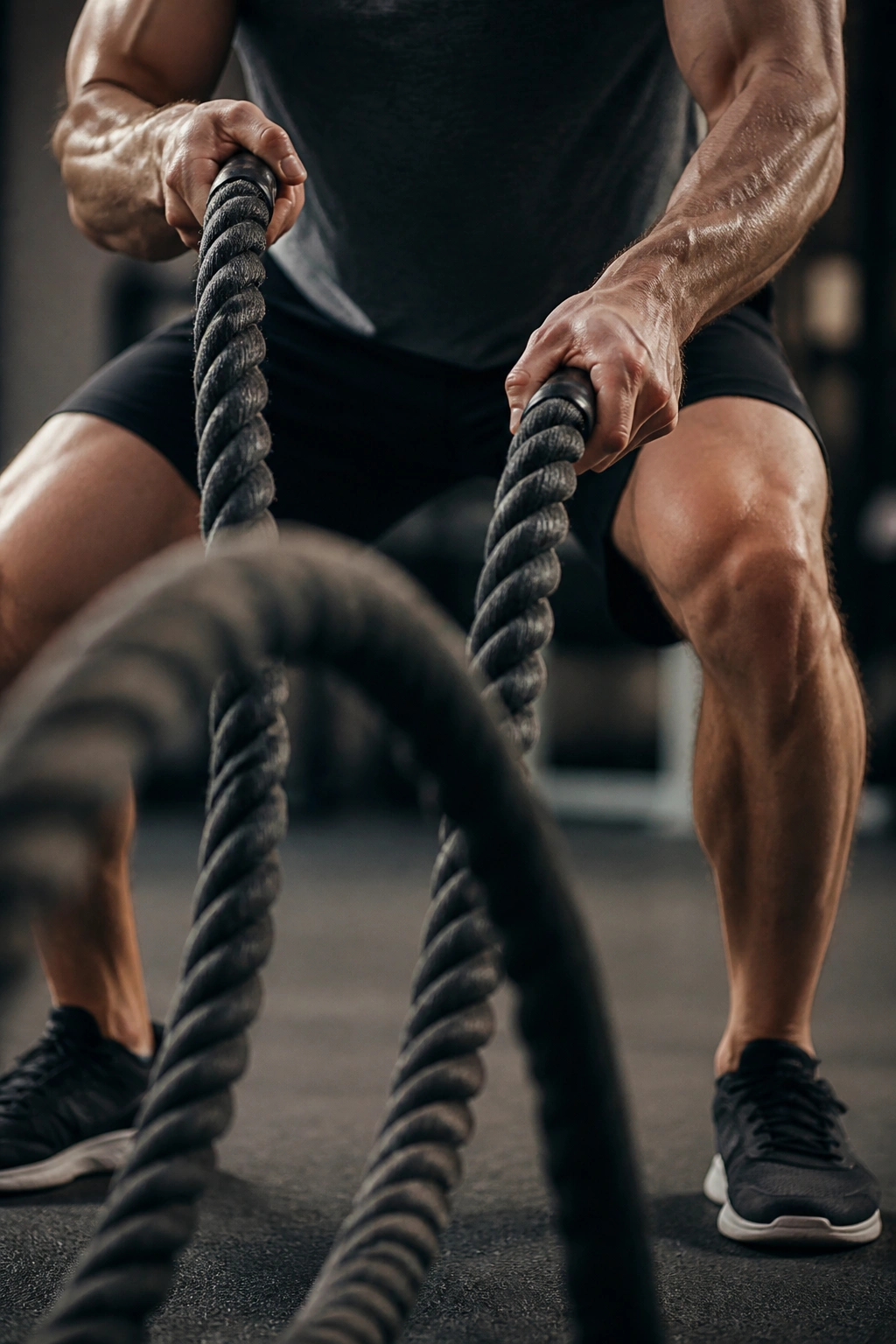
Battle ropes look simple, but they are deceptive. They are essentially a giant rubberized endurance test for your upper body and core. When you grip those ropes and start slamming them in waves, you are not impacting your joints, but you are creating an incredible amount of muscular tension.
Creating High Intensity
The trick is to use your whole body. Do not just move your arms. Get into a quarter-squat position—this is a static hold, not an active jump—and keep your core rock-solid. As you create the waves, feel the contraction in your abs. If you stand too upright, the tension stays in your shoulders, which is a fast track to fatigue rather than a HIIT workout.
Try the “tabata” style with battle ropes. Go for 20 seconds of intense double-wave slams, then rest for 10 seconds. Do that for 8 rounds. You will find that by round 4, your grip strength starts to fail. That is where the real work happens.
8. TRX Suspended Rows and Lunges
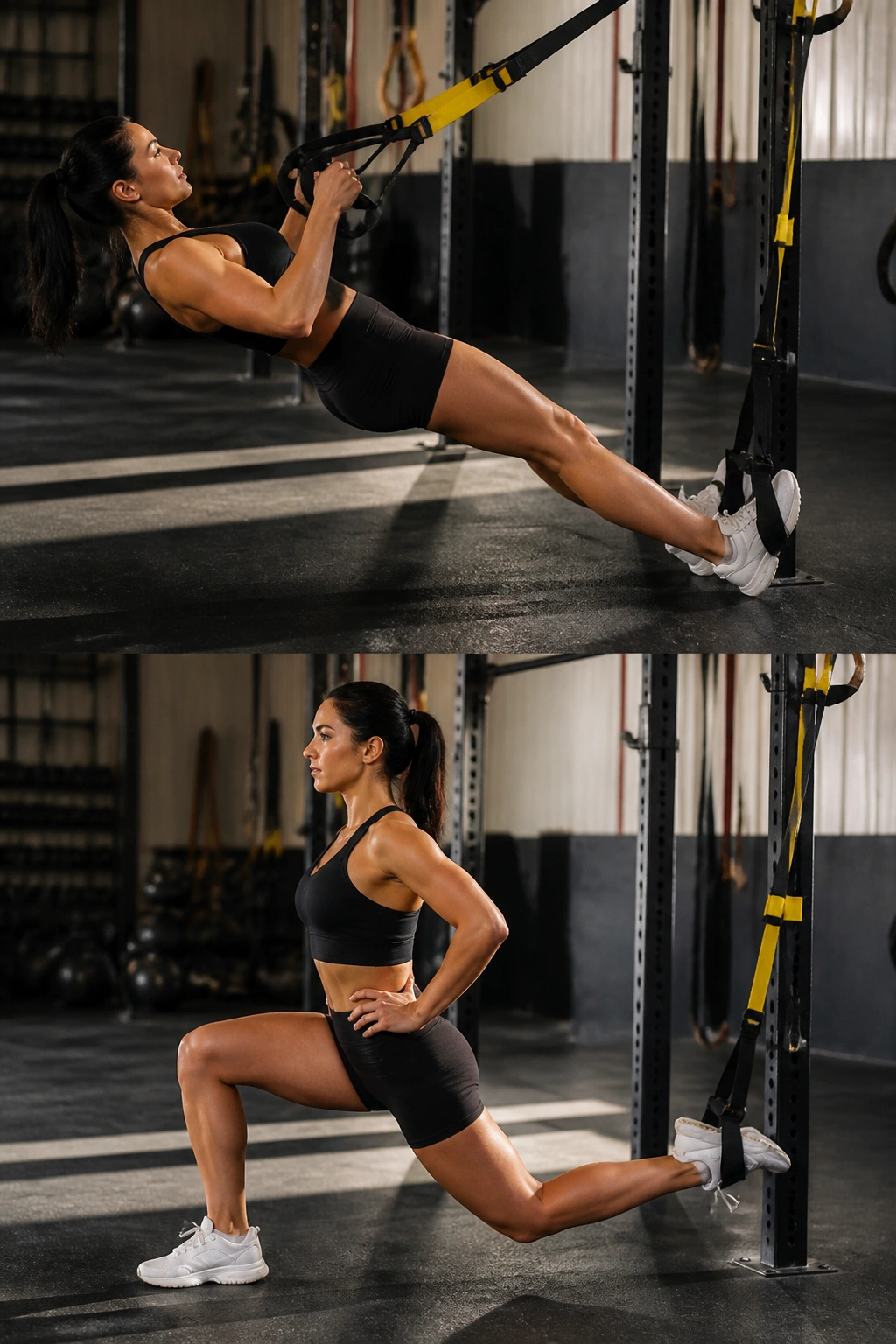
Suspension trainers (like the TRX) use your body weight and gravity. Because the system is suspended, you have to constantly stabilize yourself. This engages deep core muscles that you often ignore during standard weightlifting. For HIIT, you can create a circuit using suspension movements that target different areas.
The “All-Body” Circuit
- Suspended Rows: Focus on pulling your chest through the handles. This builds back strength.
- Reverse Lunges: Since you have the handles, you have something to hold onto. This makes the lunge much more stable and safer for your knees.
- Atomic Push-Ups: Feet in the cradles, knees to chest. This is a high-intensity core move.
Move from one exercise to the next with zero rest. After the full circuit, take 60 seconds. The constant tension of holding your body against the straps keeps your heart rate elevated, and the lack of impact keeps your joints happy.
9. Elliptical Hill Climbs
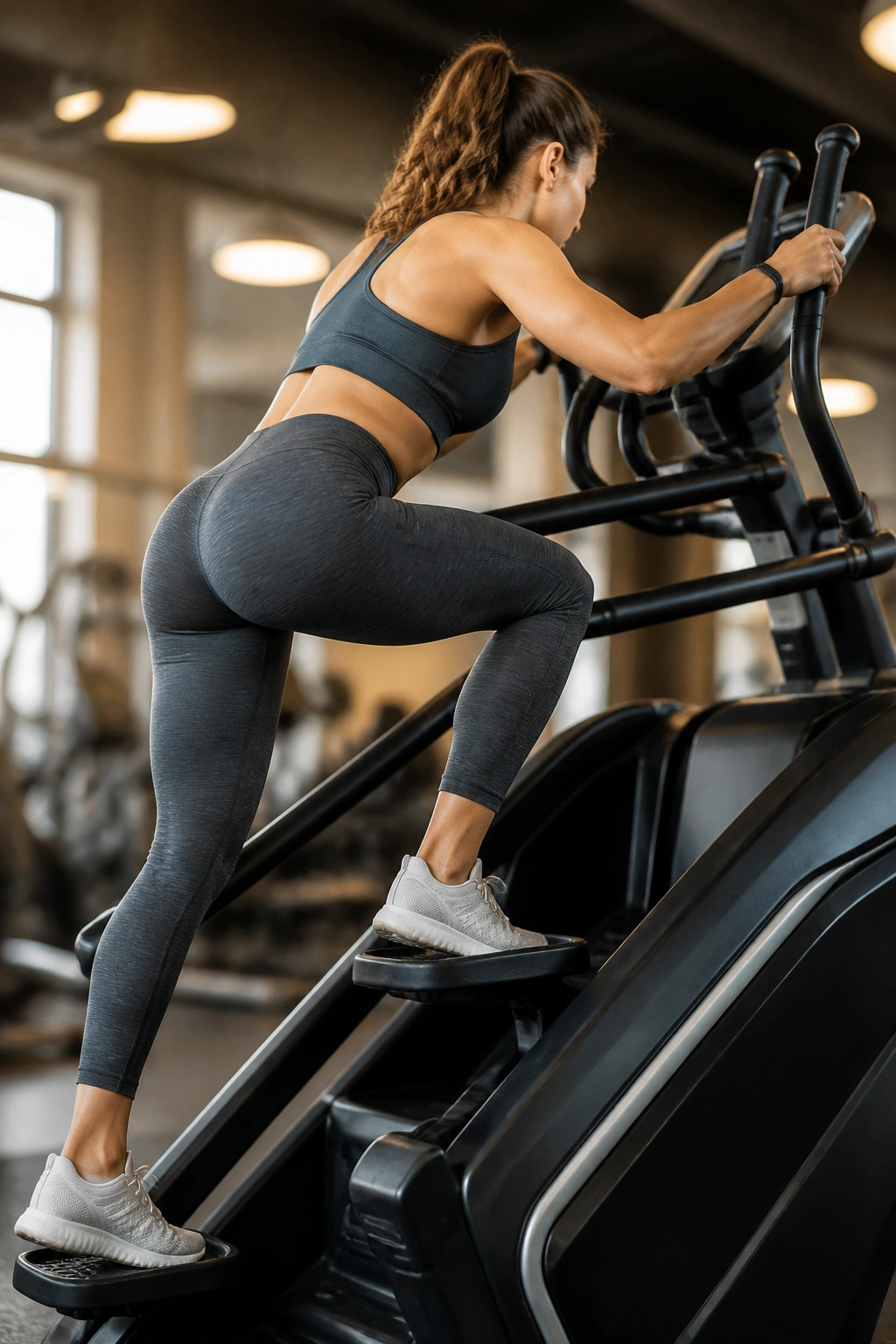
The elliptical often gets a bad rap as a machine for people who don’t want to work hard. That is only true if you don’t know how to use it. If you set the incline to maximum and the resistance to a high level, it simulates climbing a mountain. You can get your heart rate just as high as running up a steep hill, but without the eccentric impact of gravity hitting your skeleton.
Focusing on the Glutes
To maximize this, lean forward slightly and drive through your heels. If you stay upright and push with your toes, you will just work your calves. Driving through the heels engages the glutes and hamstrings. Do 30-second bursts of maximum speed, then 30 seconds of slow, heavy-resistance climbing. It is a grueling, sweat-drenched experience that leaves your knees completely fresh.
10. Resistance Band Sprints
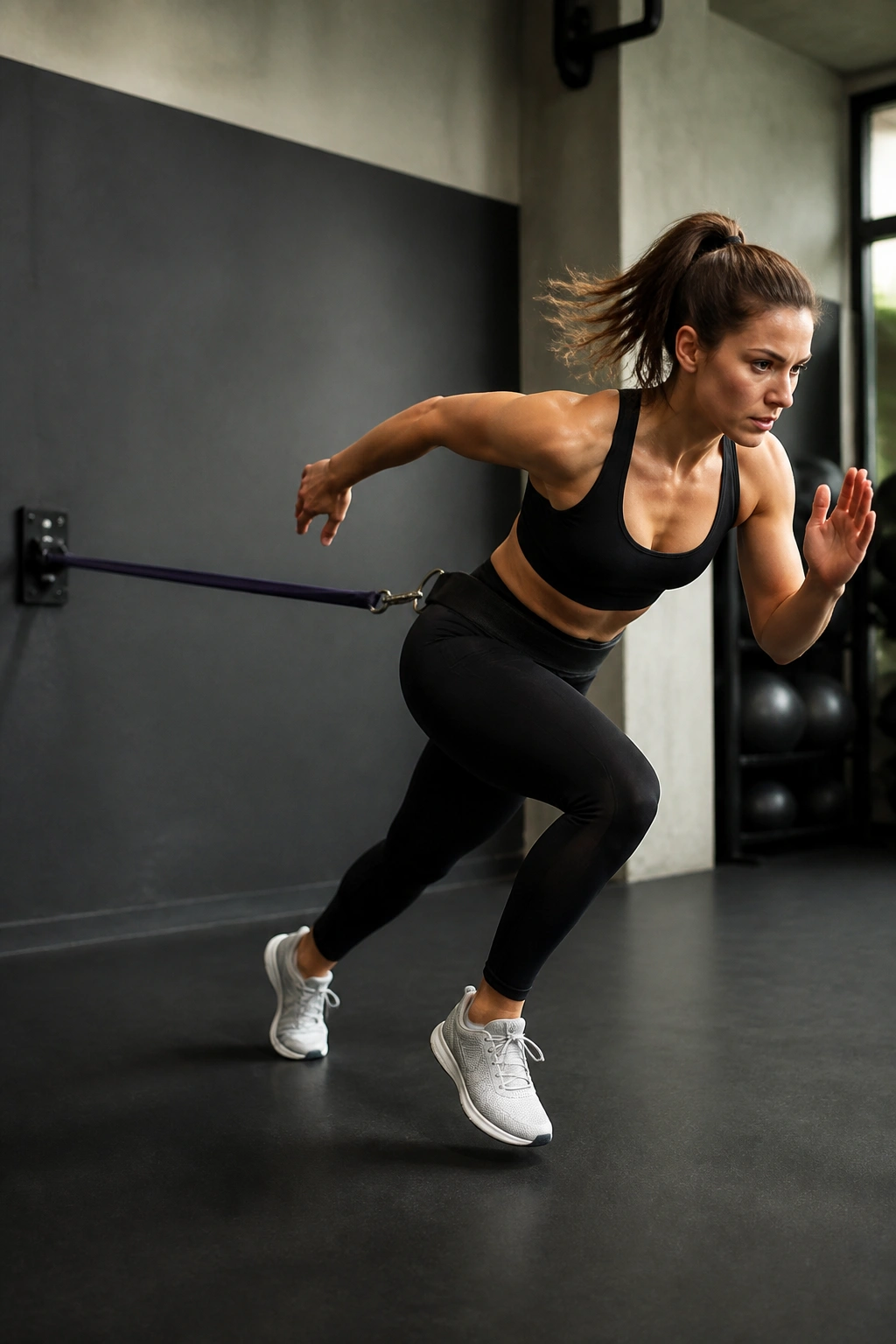
“Sprinting” without moving forward sounds strange, but using heavy resistance bands anchored to a wall or a heavy piece of equipment makes it possible. You wrap the band around your waist, lean forward into a sprint position, and drive your knees forward. The band provides constant tension, forcing you to push harder just to take a step.
Why It’s Safe
Because you are anchored, you are not landing on the ground with full force. You are “running in place” while fighting the resistance of the band. It mimics the mechanics of a track sprint but removes the impact of the road. It forces you to maintain an aggressive forward lean, which is safer for your lower back than standing straight up.
11. Modified Burpees (No Jump)
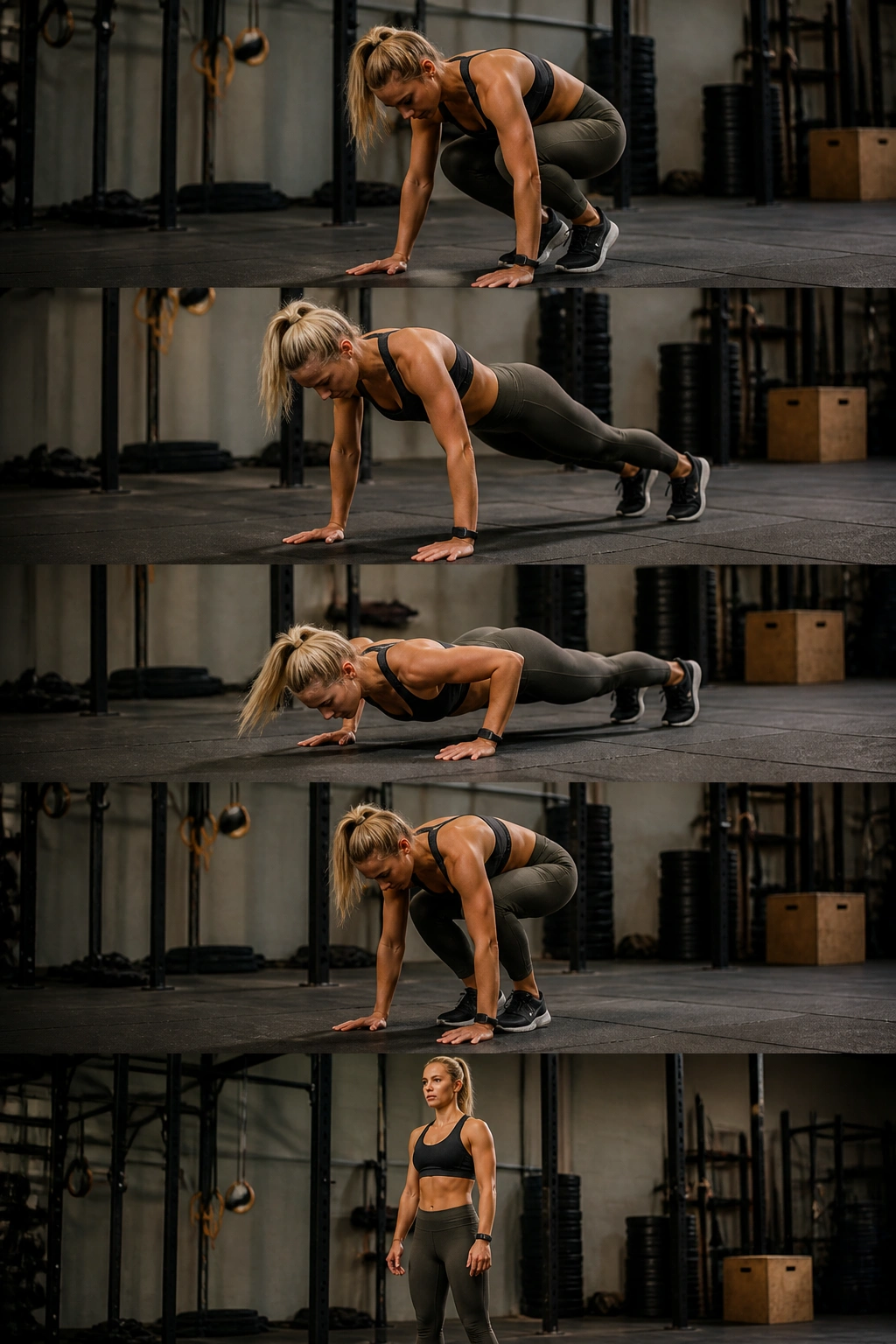
The standard burpee is a staple of HIIT, but the jump at the end is what wrecks people’s knees. You can get the exact same metabolic response by doing a modified version. Drop your hands to the floor, step your feet back into a plank, perform a push-up, step your feet back to your hands, and stand up.
Keep the Pace High
The secret here is speed. Since you aren’t spending time in the air jumping, you can move immediately from the standing position back to the floor. Perform these as quickly as you can, focusing on a flat back during the plank. You will be amazed at how quickly your heart rate spikes when you remove the hesitation of a jump. It is all about continuous, fluid movement.
12. Weighted Step-Ups
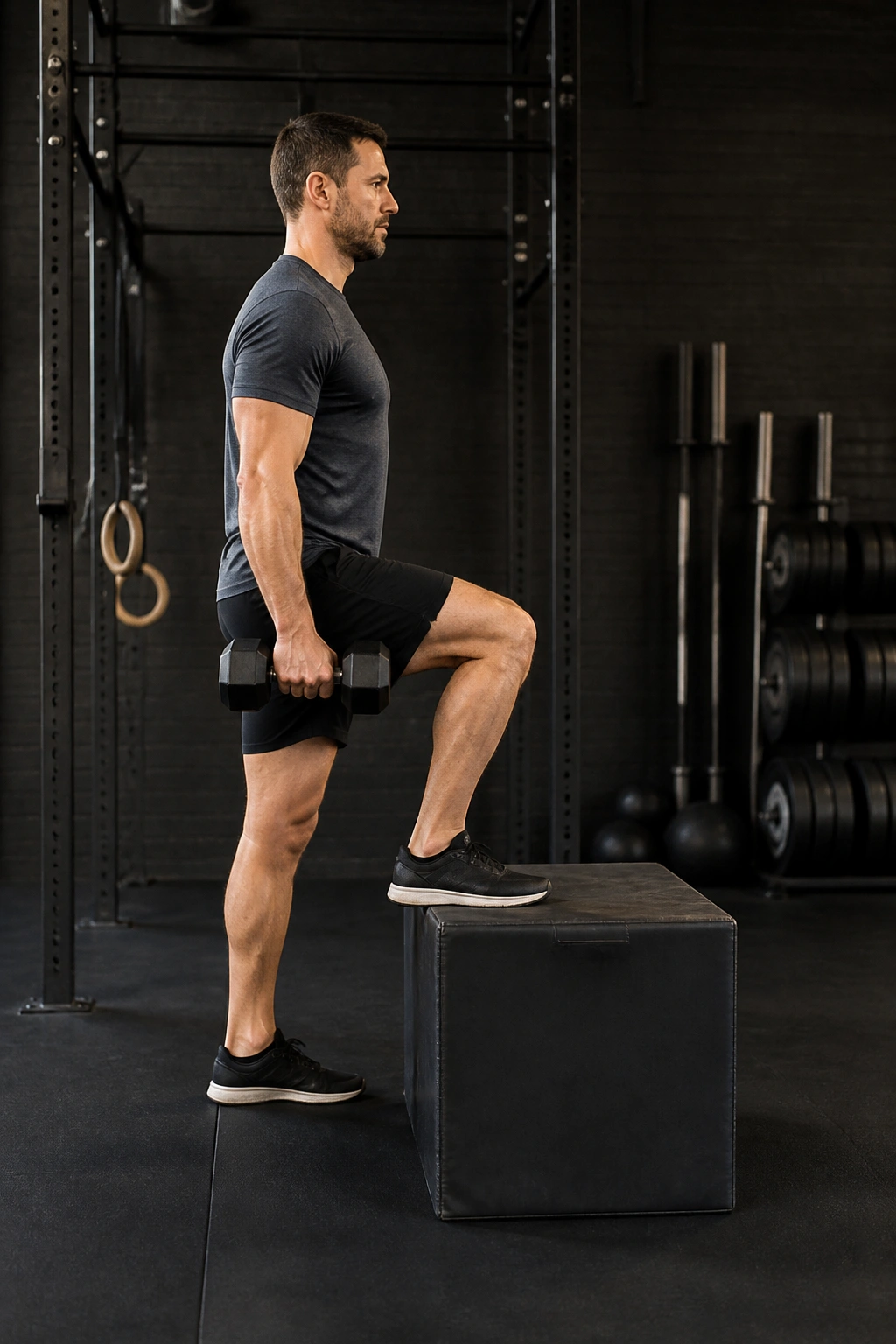
Find a box or a bench that is roughly knee-height. Hold a pair of dumbbells at your sides. Step up onto the box with your right leg, bring your left leg up, and then step down with the left leg first. Alternate leading legs. The weight adds the intensity, and the step-up motion builds leg strength without the impact of a box jump.
The Eccentric Load
The most important part of this exercise is the descent. Do not just drop down from the box. Lower yourself slowly and with control. This eccentric contraction is excellent for building joint stability and tendon strength. If you control the down phase, you protect your knees and get a much better workout for your quads and glutes.
13. High-Resistance Sled Push
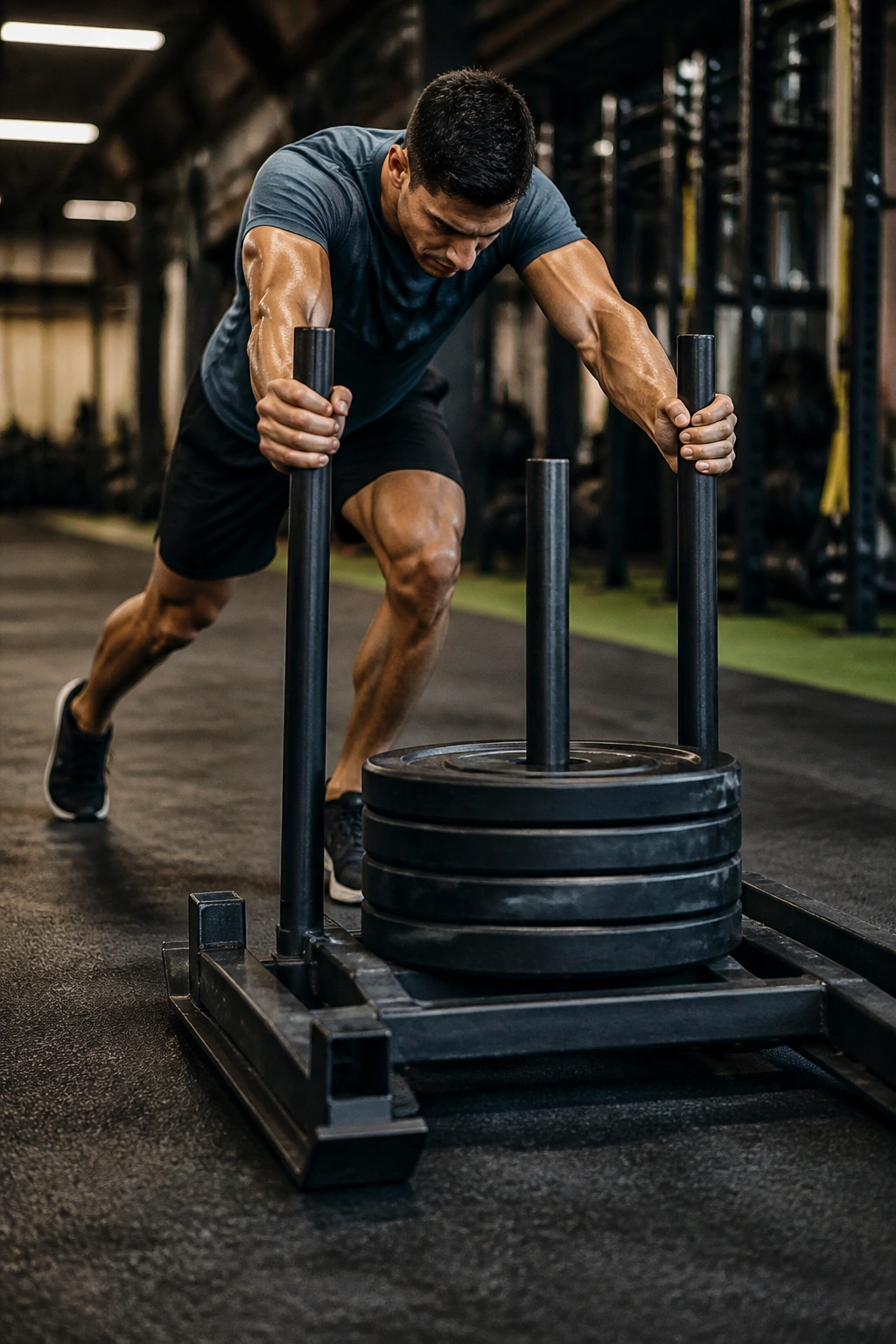
If your gym has a sled, use it. A sled push is arguably the most effective HIIT movement for fat loss and conditioning, and it has absolutely zero eccentric impact. You are pushing weight across the floor. You aren’t stepping down; you are driving forward.
Proper Sled Mechanics
Lean into the sled with your arms straight. If you bend your arms, you are doing a push-up rather than a push. Keep your core tight and drive with your legs. If you find your heels lifting, lower the weight. You should be pushing through your entire foot. It is a brutal test of willpower, but your joints will thank you for the lack of jarring forces.
14. Elevated Mountain Climbers
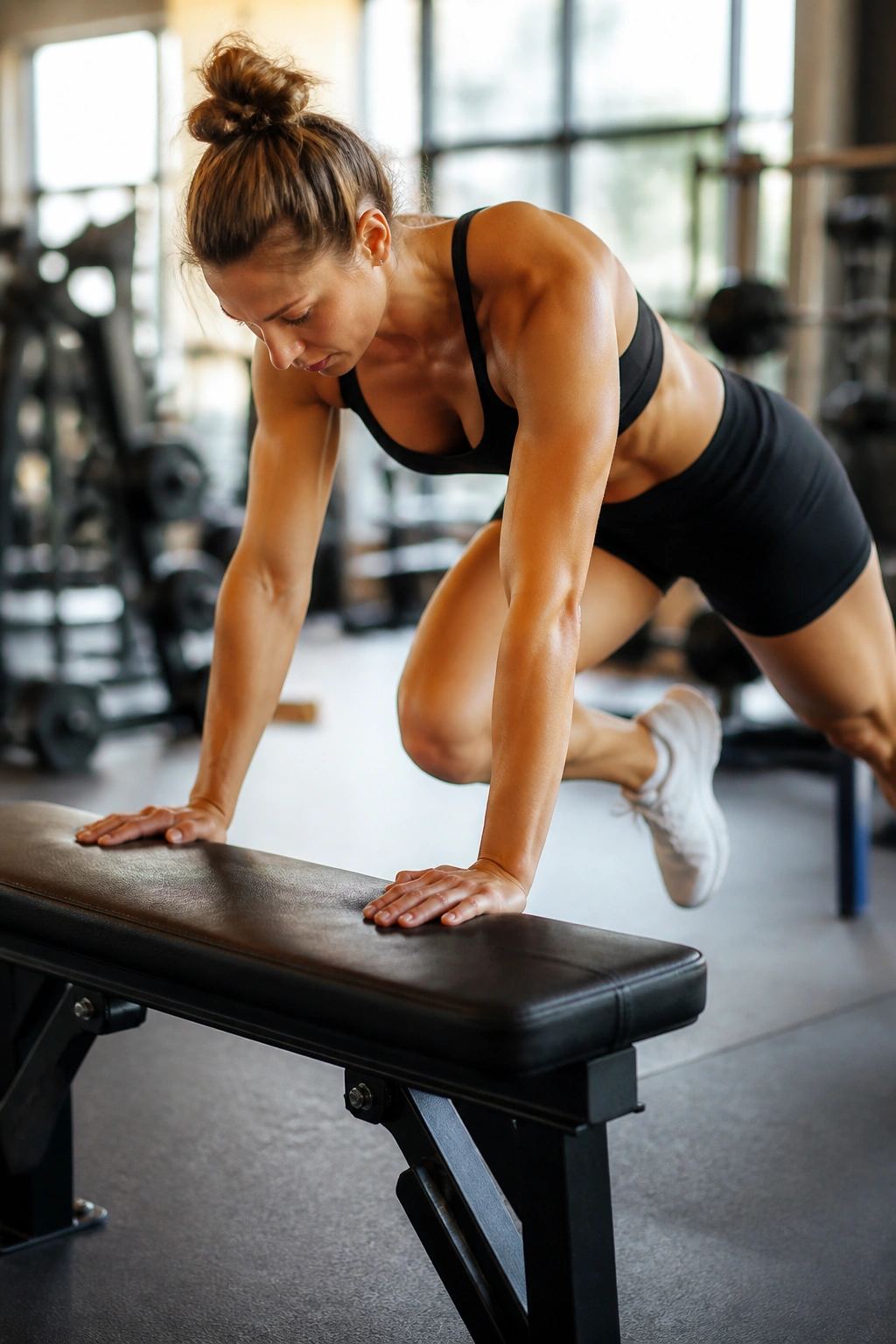
Mountain climbers are usually done on the floor. That puts a lot of pressure on the wrists and forces the hips into a deep flexion that can be uncomfortable. By placing your hands on a bench or a sturdy box, you elevate your torso. This takes the pressure off your wrists and opens up your hips.
Speed vs. Range of Motion
When you are elevated, you can move your legs faster. You can get a rhythm going that is hard to achieve on the floor. Focus on pulling your knees toward your chest rather than just kicking your legs out. The faster you move, the higher your heart rate goes. Because your hands are elevated, you can focus on core bracing and speed.
15. Aqua Jogging Intervals
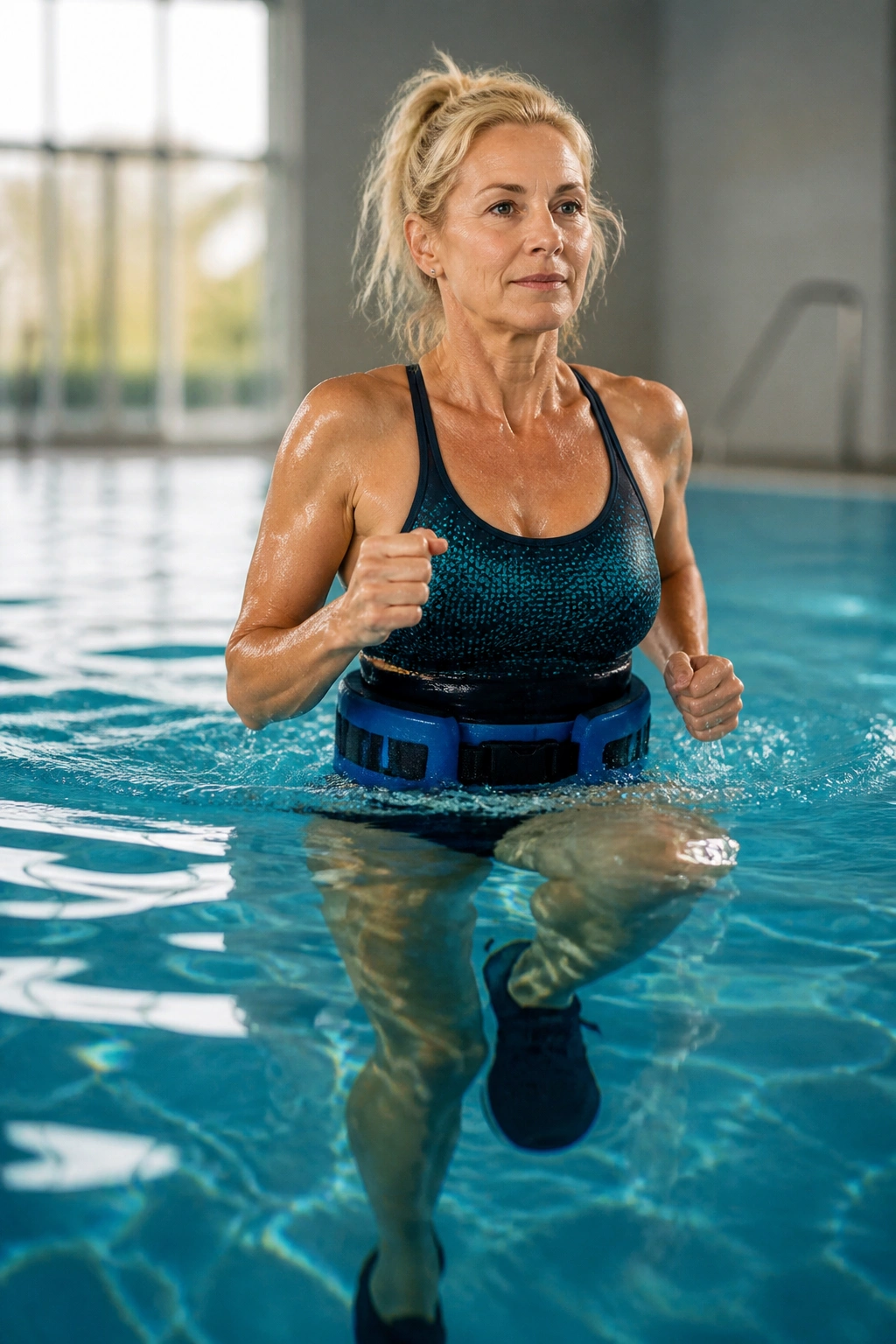
This is often reserved for injured athletes, but it is a valid HIIT workout for everyone. You wear a buoyancy belt in the deep end of a pool and “run” without your feet touching the bottom. You are suspended in the water, working against the drag of the liquid. It is high-intensity, zero-impact, and requires significant core engagement to stay upright.
The Effort Level
It is harder than it looks. Because the water resists every movement, you have to work to keep your pace up. Sprint for 30 seconds—driving your knees up toward your chest—then recover for 30 seconds. By the end of 15 minutes, you will likely be more exhausted than you would be from a 15-minute run on pavement.
Final Thoughts

You do not need to subject your joints to a daily battering to build a high level of cardiovascular fitness. The reality is that the best workout is the one you can sustain consistently without needing a month off for injury recovery. By swapping high-impact plyometrics for these lower-stress, higher-tension movements, you preserve your body’s structural integrity while still pushing your limits.
Focus on the quality of your effort. It is not about how loud your feet hit the floor or how high you jump. It is about how much resistance you can create, how controlled your movements are, and how much oxygen you are demanding from your lungs. If you are gasping for air and your muscles are shaking, you have achieved the goal of intensity. You have simply arrived there on your own terms, without the cost of compromised joints. Keep your form tight, keep the intensity high, and listen to what your body tells you.
