



If your plan for losing belly fat is 200 crunches on the floor, I’d scrap it. The best thirty minute belly fat workouts at home don’t come from hammering your abs until your neck hurts; they come from training big muscle groups, raising your heart rate, and repeating that effort often enough that your body starts using more energy across the whole day.
That matters because belly fat is stubborn in two different ways. There’s the soft layer you can pinch under the skin, and there’s visceral fat, the deeper fat packed around the organs. You cannot peel either one off with spot-reduction tricks. What you can do is stack the kind of training that burns calories, keeps muscle on your frame, and nudges your waistline in the right direction over time.
Thirty minutes is a sweet spot I keep coming back to. Public-health exercise guidance has long pointed adults toward 150 minutes of moderate activity each week, plus muscle work at least twice weekly. Five half-hour sessions gets you there. Even three or four sessions, done hard enough and done with clean form, can change your conditioning fast. And no, you do not need a home gym. A chair, a backpack, a resistance band, a step, or an empty patch of floor will cover most of what matters.
One thing before the workouts: the sessions below include warm-up and cool-down inside the 30 minutes. If a move makes your knees, lower back, wrists, or shoulders bark in the wrong way, swap it. If your breathing never gets heavier than casual conversation, pick a tougher variation. If your form falls apart, slow down. That’s not weakness. That’s training with a brain.
1. Thirty-Minute Belly Fat Workout at Home for Beginners
Start here if you haven’t exercised in a while. This routine is gentle on the joints, easy to follow, and still hard enough to leave you breathing through your mouth by round three.
What makes it work is the mix of lower-body moves, upper-body pushing, and standing core work. You’re not chasing speed yet. You’re building rhythm, teaching your body to move for 30 straight minutes, and getting your heart rate high without the chaos of jumps and burpees.
Why this one works
Beginners often quit because the first workout feels like punishment. This one doesn’t. The work intervals are long enough to feel useful, the rest periods are short enough to keep the pulse up, and the exercise order gives one area a break while another area works.
The 30-minute plan
- 0:00-5:00: March in place, arm circles, hip hinges, bodyweight good mornings, and slow bodyweight squats.
- 5:00-25:00: Do 4 rounds of the following:
- 40 seconds chair squats
- 20 seconds rest
- 40 seconds wall or counter push-ups
- 20 seconds rest
- 40 seconds fast march with arm drive
- 20 seconds rest
- 40 seconds glute bridges
- 20 seconds rest
- 40 seconds standing knee-to-elbow crunches
- 20 seconds rest
- 25:00-30:00: Walk slowly, breathe deep, then stretch calves, chest, quads, and hips.
Best cue: Aim for steady effort, not speed. If you can finish each 40-second block and speak only in short phrases, you’re right where you should be.
2. Fast Bodyweight HIIT Circuit for a Small Living Room
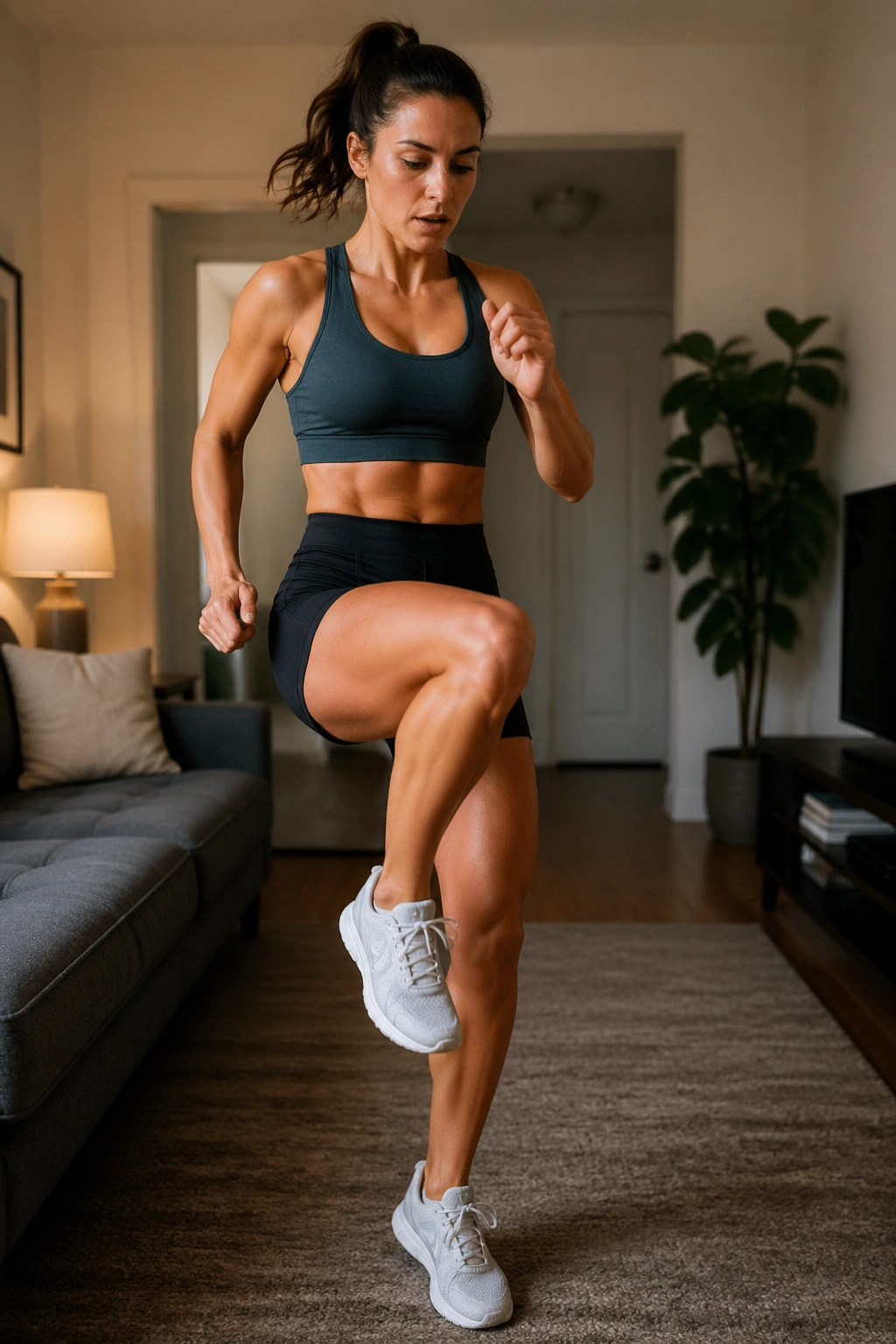
Need a workout that fits between the couch and the coffee table?
This is the one. It uses almost no travel, no equipment, and no wasted motion. You set a timer for 40 seconds of work and 20 seconds of rest, then move through five exercises four times. The whole main set lasts 20 minutes, which is long enough to feel serious and short enough that you won’t spend half the session checking the clock.
Use this order: squat thrusts, alternating reverse lunges, plank shoulder taps, fast feet, push-ups or incline push-ups. Four rounds. Warm up for 5 minutes first with march steps, hip openers, inchworms, and arm swings. Finish with a slow 5-minute walk around the room and a few long exhales.
The beauty of a tight-space HIIT circuit is density. There’s no setup, no loading plates, no walking across a gym floor. You work, breathe, recover a hair, then work again. That compression matters. It keeps your pulse elevated while your legs, chest, shoulders, and trunk keep trading effort.
If the squat thrusts feel rough on your wrists, swap them for bodyweight squats. If push-ups collapse your hips, go to a countertop. The structure still does the job.
3. Shadow Boxing and Sprawl Intervals

Picture minute 14: your shoulders are hot, your shirt is damp, and your abs are bracing every time you throw a punch. That’s what a good boxing session does. It sneaks core work into almost every second.
Why does this help with belly fat? Because shadow boxing is sneaky cardio. Your feet move, your arms stay active, your trunk rotates, and your heart rate climbs faster than most people expect. Add sprawls or squat-thrusts and it stops feeling like air punches and starts feeling like a conditioning session.
How to run it
Use 5 rounds of 4 minutes after a 5-minute warm-up.
- 90 seconds jab-cross-hook-cross
- 30 seconds slips and weaves
- 30 seconds sprawls or squat thrusts
- 60 seconds jab-cross-front knee
- 30 seconds rest
That gives you 20 minutes of work. Spend the last 5 minutes cooling down with slow shoulder rolls, thoracic twists, calf stretches, and easy nasal breathing.
Punch with intent. Snap the hand back to your cheek. Rotate the hip. Keep your knees soft. A lazy boxing workout turns into arm flailing fast, and arm flailing burns far less energy than a tight combo sequence done with force.
4. EMOM Squat-Push-Plank Session
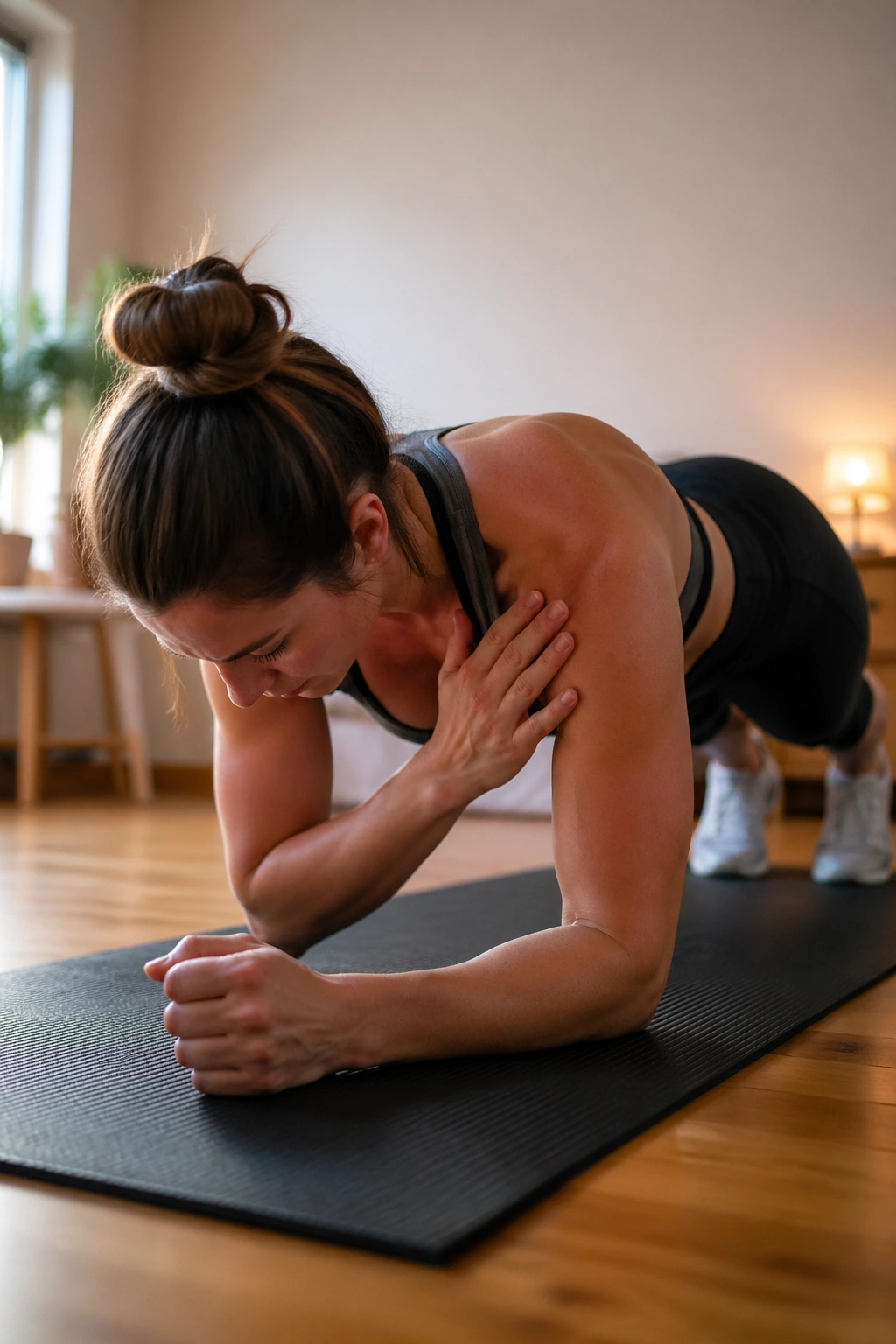
Not every fat-loss workout needs frantic jumping. Sometimes a timer and five hard minutes repeated four times will humble you more than any flashy routine.
An EMOM means “every minute on the minute.” You start a move at the top of the minute, finish the target reps, and rest for whatever time is left. The faster and cleaner you move, the more rest you get. Slack on the reps, and your rest disappears.
I like this format because it keeps people honest. There’s no drifting. No scrolling between sets. The clock is blunt.
- 0:00-5:00 warm-up: marching, inchworms, deep squats with support, shoulder circles
- 5:00-25:00 EMOM: repeat the 5-minute block 4 times
- Minute 1: 15 bodyweight squats
- Minute 2: 10 push-ups or incline push-ups
- Minute 3: 8 reverse lunges per side
- Minute 4: 30-second forearm plank + 10 shoulder taps
- Minute 5: 15 hip hinges with a backpack or bodyweight
- 25:00-30:00 cool-down: slow walking, chest stretch, quad stretch, child’s pose
Finish each minute in 35 to 45 seconds if you can. That’s the sweet spot. If you’re chewing up 58 seconds per minute, cut the reps.
5. Low-Impact March, Lunge, and Reach Cardio Plan
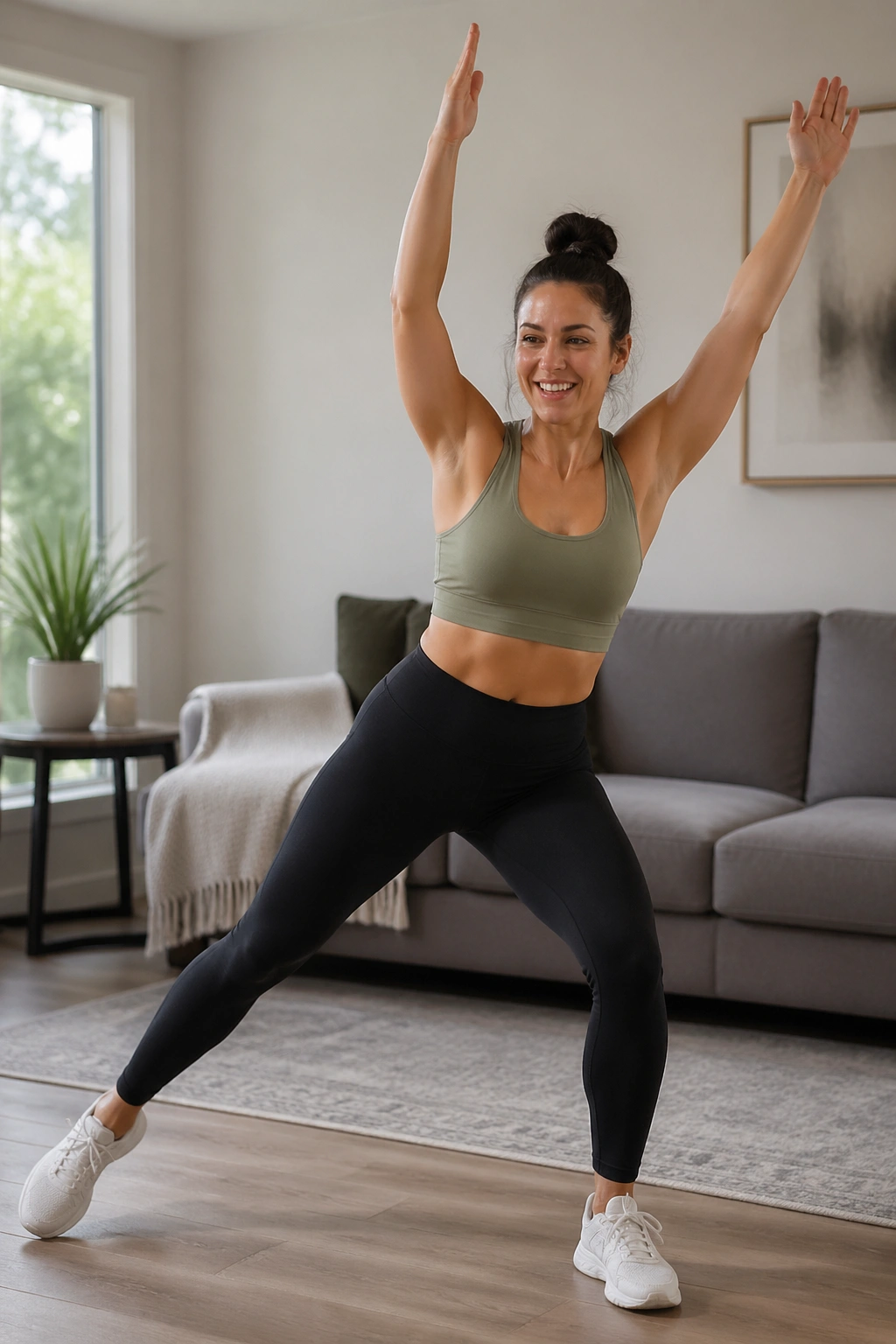
You’ll hear your breathing long before your neighbors hear your footsteps. That alone makes this one worth keeping.
Low-impact does not mean low effort. Done well, this workout lights up the quads, glutes, calves, shoulders, and deep core without the pounding that leaves some people’s knees grumpy for two days. It’s a solid pick for apartment living, postpartum return-to-exercise phases, or anyone carrying extra body weight who wants sweat without joint drama.
Warm up for 5 minutes with side steps, heel digs, shoulder rolls, and slow split squats. Then run 4 rounds of this circuit at 45 seconds on, 15 seconds off: side step with overhead reach, alternating reverse lunge, power march, lateral lunge, standing cross-body knee drive. That adds up to 20 minutes on the nose.
What surprises people is how tough the power march becomes when you pump the arms hard and drive the knees to hip height. The move looks harmless. Five rounds later, it doesn’t.
Use the cool-down to bring the heart rate down slowly. Walk for 2 minutes, then stretch the hip flexors and calves. Rushing from hard work straight to the couch feels lousy.
6. Dumbbell or Backpack Metabolic Strength Circuit
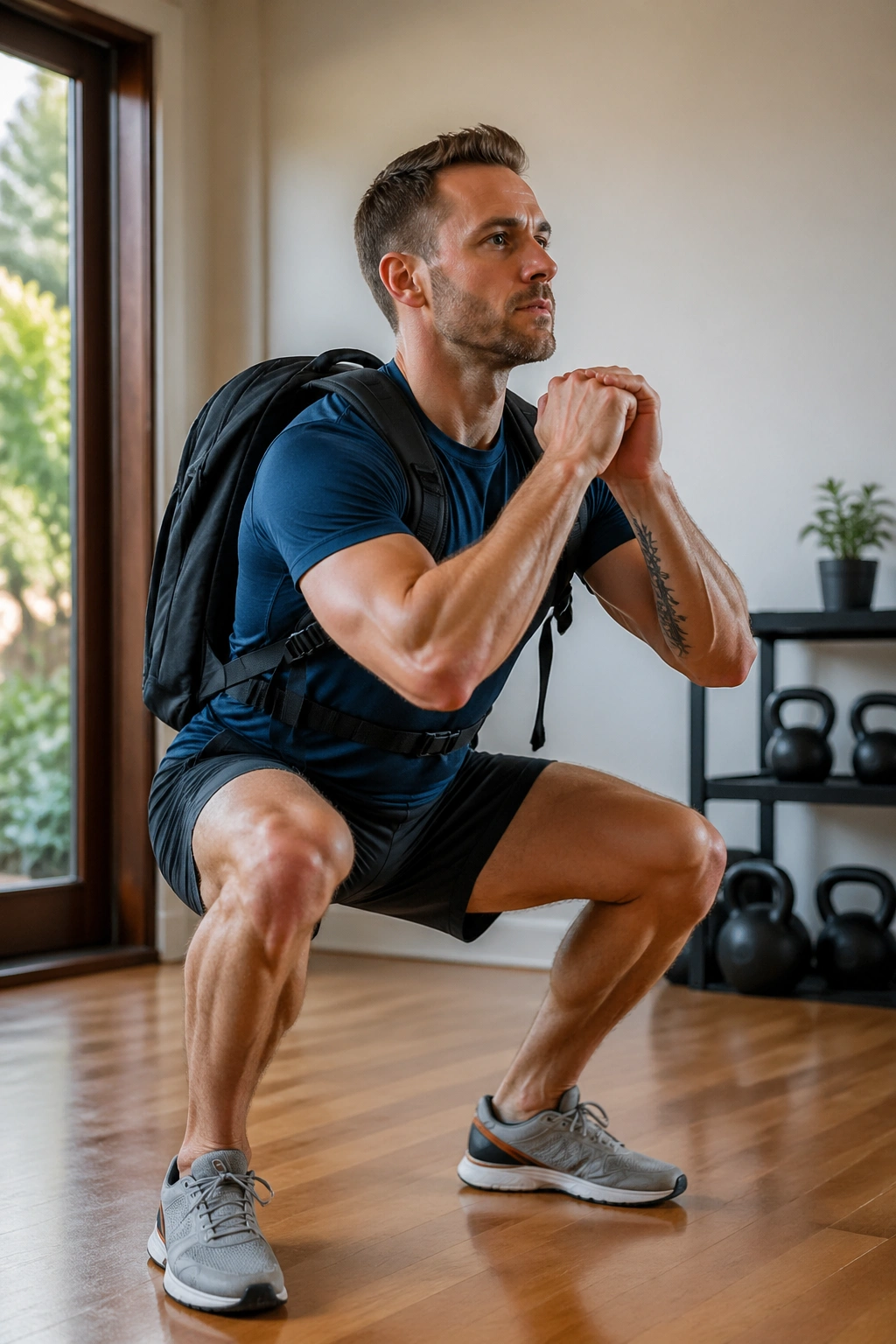
A loaded backpack in the 15- to 25-pound range changes the whole workout. Bodyweight alone can work, no question, but external load gives you a sharper muscle-building signal, and that matters when your goal includes changing body shape rather than only surviving cardio.
Unlike jump-heavy routines, this session leans on strength with short rests. You still breathe hard. You still sweat. The difference is that your legs, back, and shoulders do more of the heavy lifting, which helps preserve muscle while you’re trying to trim body fat.
Use 45 seconds of work and 15 seconds of rest for each move, and repeat the circuit 4 times after a 5-minute warm-up.
- Backpack or dumbbell thrusters
- Bent-over rows
- Reverse lunges
- Romanian deadlifts
- Plank drag-throughs with the bag
That’s 20 minutes of main work, plus the warm-up and a 5-minute cool-down. If you’re deciding between this and a no-weight session, pick this one when you want a little more strength stimulus and don’t mind slower reps. Pick bodyweight HIIT when you want a faster pace.
Who it suits best: people who already own a pair of dumbbells, a kettlebell, or a sturdy backpack and want a tougher training effect without endless jumping.
7. No-Jumping Core and Cardio Ladder
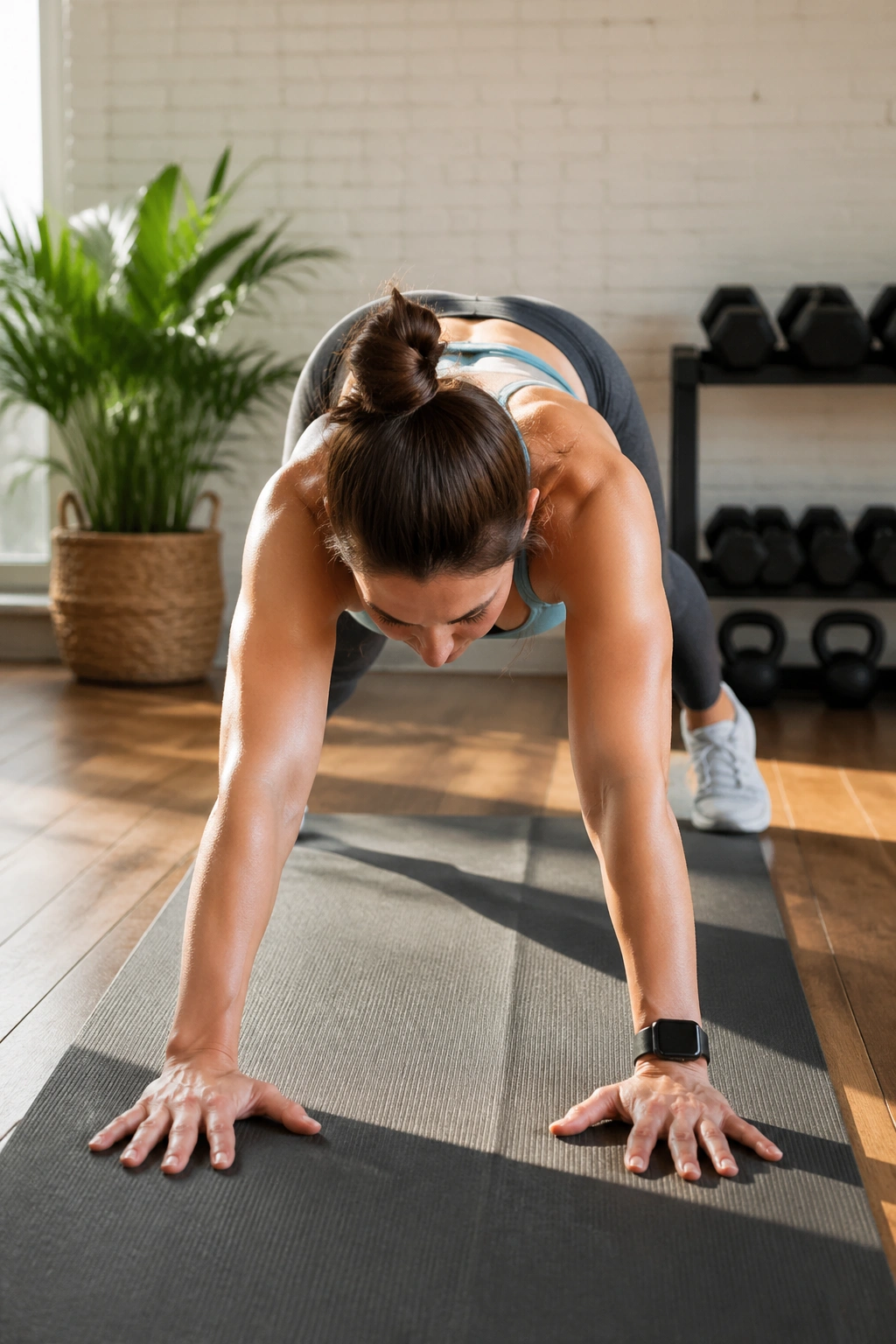
I like this workout on days when my knees feel touchy and my patience for high-impact work is low. It still gets the job done.
A ladder forces you to focus because the reps keep changing. You start high, chip away, and watch the total work shrink while fatigue climbs. That little mental trick helps more than you’d think.
Why the ladder works
Your heart rate rises because you move from one exercise to the next with almost no dead space. Your core gets more honest work because moves like inchworms and dead bugs punish sloppy bracing.
The 30-minute plan
After a 5-minute warm-up, run this descending ladder for 20 minutes:
- 10 reps each move
- then 8 reps each
- then 6
- then 4
- then 2
- repeat from 10 if time remains
Exercises:
- Bodyweight squats
- Inchworm walkouts
- Alternating reverse lunges per side
- Dead bugs per side
- Mountain climbers per side
Use the final 5 minutes to walk around and loosen your hips, wrists, and mid-back.
Best cue: Move steadily. Racing the first set usually means your later sets get sloppy, and the ladder loses its edge.
8. Dance Cardio With Standing Ab Twists
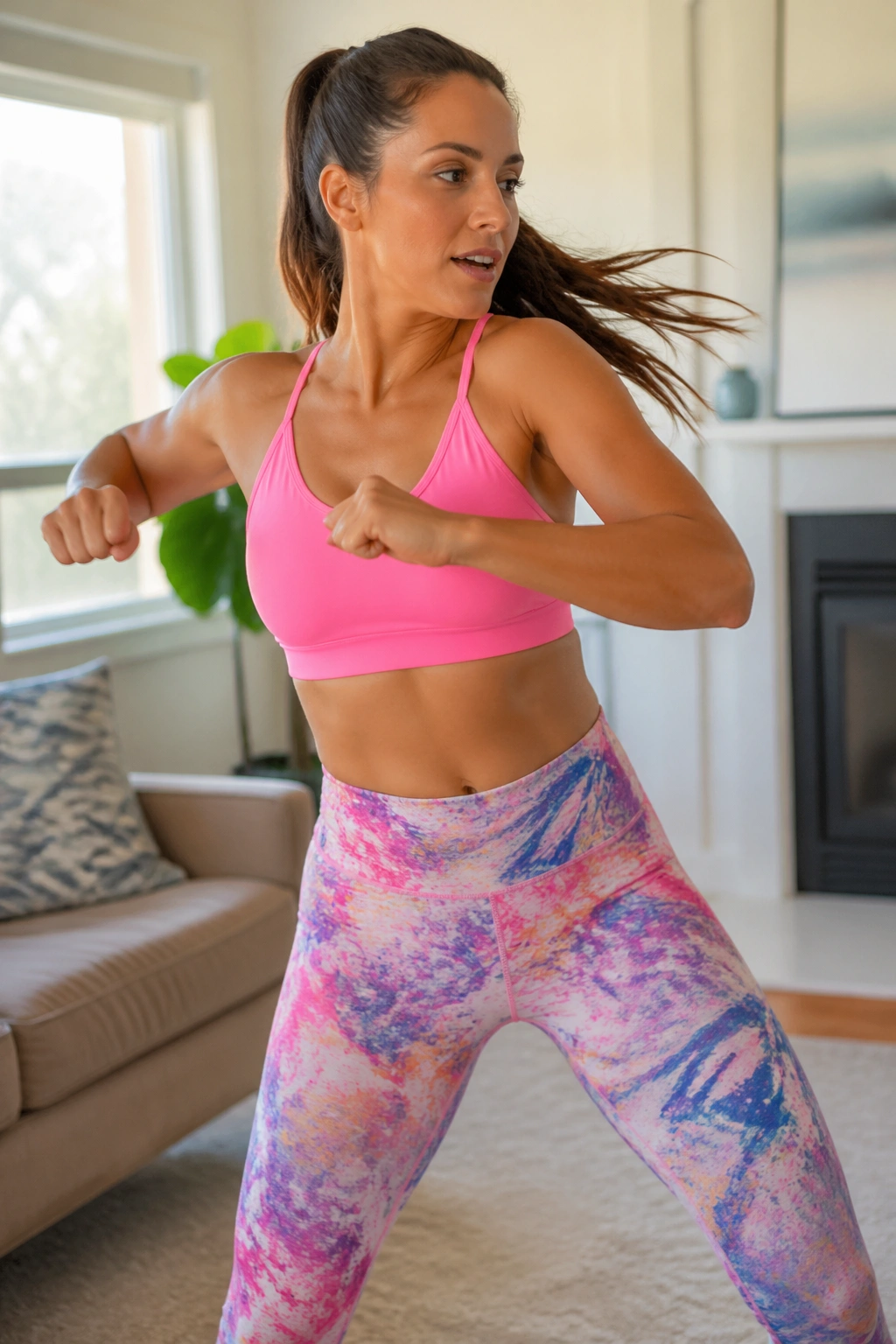
Clear a rectangle of floor about the size of a yoga mat and forget how you look. Smoothness is optional. Effort is the point.
This session works well for people who hate repetitive circuits but can handle rhythm. Put on four songs that each run close to 5 minutes. During each song, cycle through grapevines, squat-and-reach patterns, standing knee-drive twists, boxer shuffles, and side-step jacks without the jump. That’s your 20-minute main block. Warm up for 5 minutes before the music starts and take 5 minutes after to cool down.
The standing twist piece matters here. Rotate from the rib cage, not only the arms, and pull the knee up with intent. Your obliques and deep trunk muscles have to stabilize every turn, which is why dance sessions often leave the midsection feeling worked even when you never lie on the floor.
One warning, though: if the pace gets messy, shorten the move. Fast, small, controlled steps beat giant flailing ones every time. This is cardio, not choreography class.
9. Stair or Step-Up Fat-Burning Session
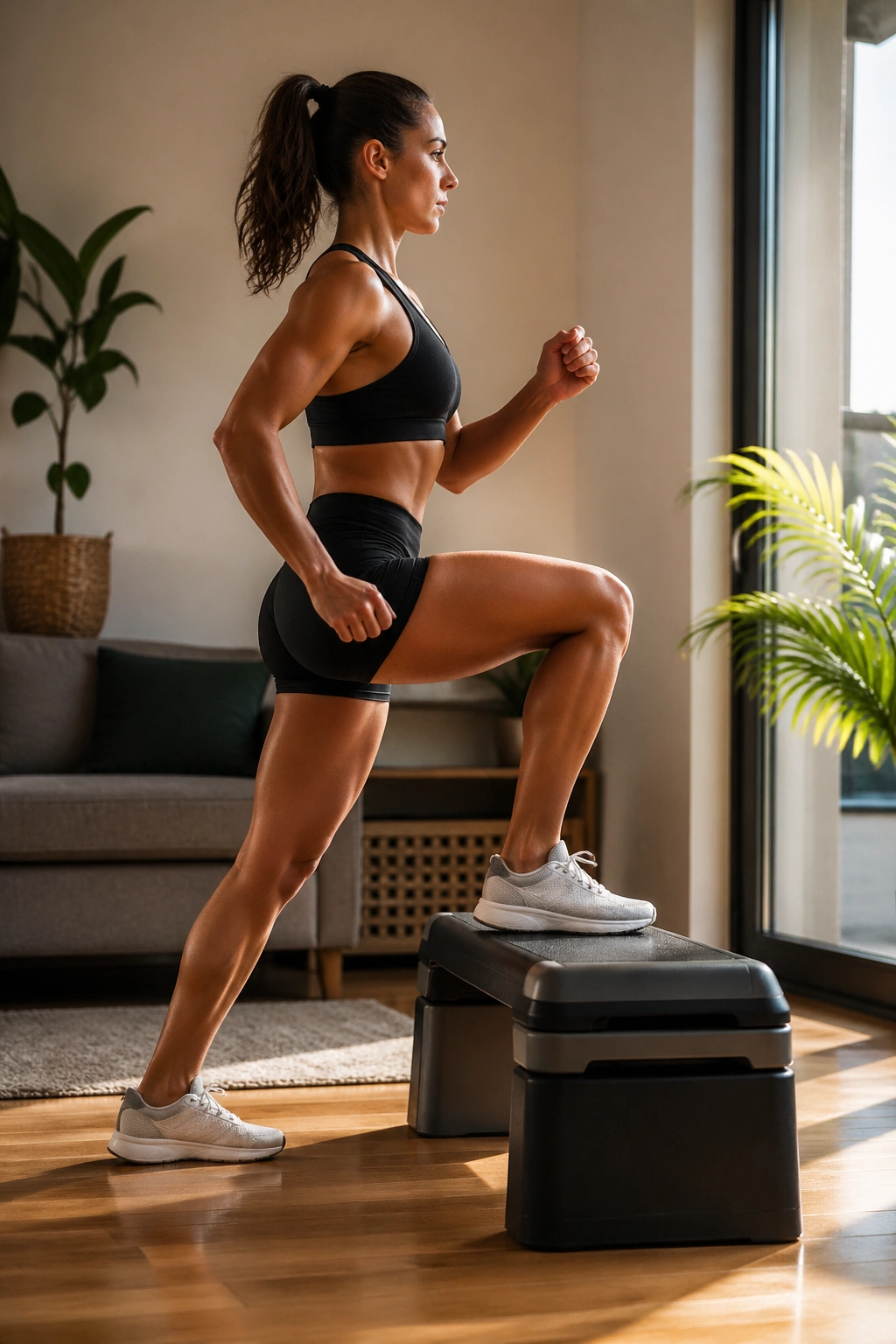
Crunches won’t ask much from your glutes or lungs. Step-ups will.
If you have a bottom stair, an aerobic step, or a sturdy platform about 6 to 12 inches high, you’ve got a strong home tool for calorie-burning work. The step height matters. Too high, and your form goes crooked. Too low, and the move turns sleepy.
How to pace it
Warm up for 5 minutes with ankle circles, slow step taps, hip hinges, and bodyweight squats. Then do 5 rounds of this 4-minute block:
- 60 seconds basic step-ups
- 30 seconds march in place
- 60 seconds alternating lateral step-ups
- 30 seconds incline mountain climbers on the step or stair
- 60 seconds fast step taps
That gives you 20 minutes. Cool down with calf stretches and slow walking for 5 minutes.
Drive through the whole foot on the platform. Don’t launch off the trailing leg each rep. That little cheat robs the working leg and turns the move into a bounce.
10. Resistance Band Row-and-Knee-Drive Routine
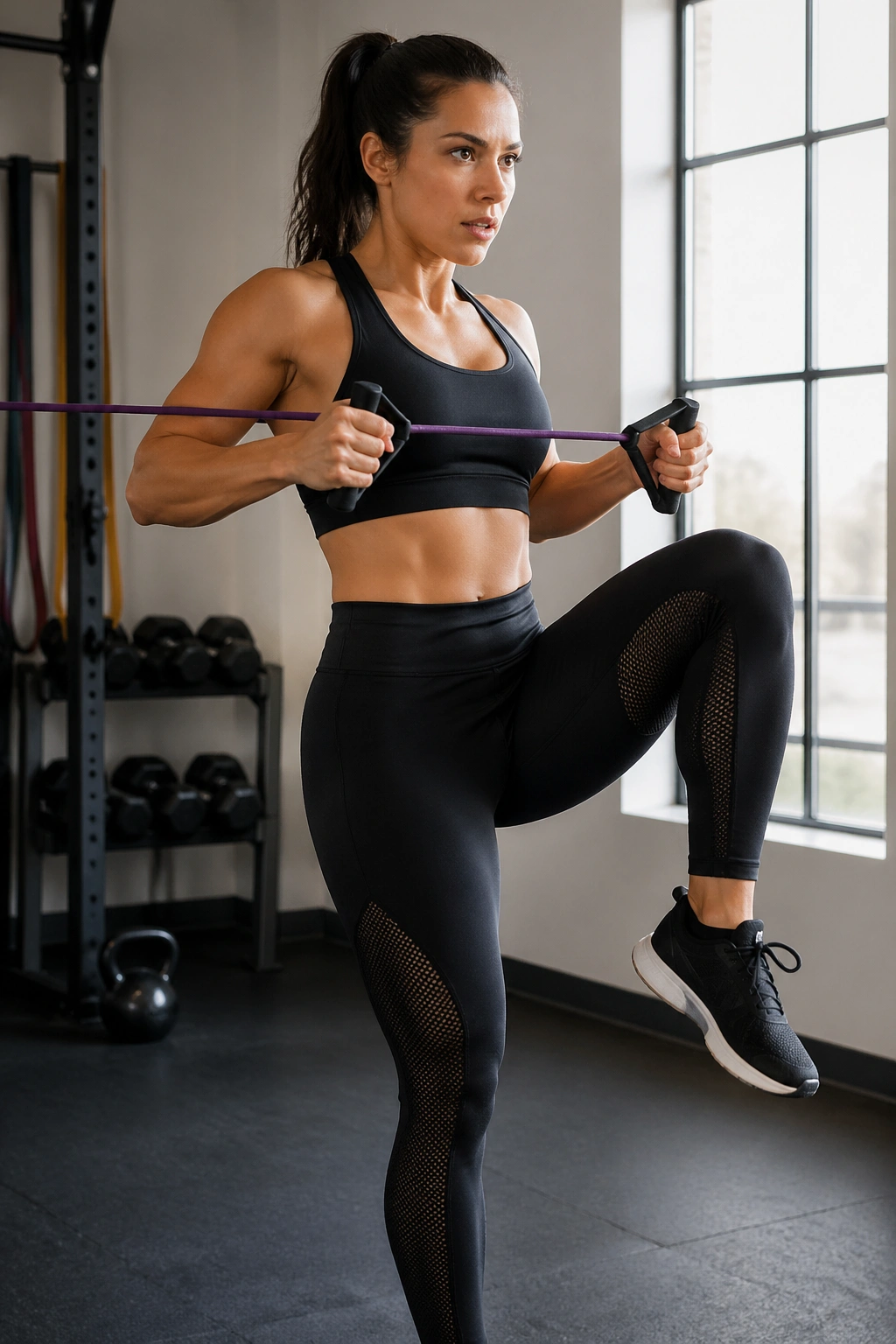
If you’ve got one medium band and a closed door, you can build a workout that feels sharper than most random bodyweight circuits.
Bands shine in home training because they add resistance where bodyweight moves often go soft. Rows challenge the upper back. Presses make the chest work. Rotational pulls force the core to resist twisting instead of only crunching forward.
Use a 45/15 timer for 20 minutes after a 5-minute warm-up. Run the following sequence four times:
- Band rows
- Squat to overhead press
- Alternating knee drives with the band anchored behind you
- Half-kneeling wood chops
- Plank pull-throughs with the band or a light household object
The row-to-knee-drive combo is the star here. It gives you upper-body pulling and a standing core challenge while the heart rate stays up. That mix often feels more athletic than floor-only ab work.
No door anchor? Wrap the band around your feet for rows and presses, then do standing twists holding the stretched band at chest height.
11. Tabata Bursts With Squat Thrusts and High Knees
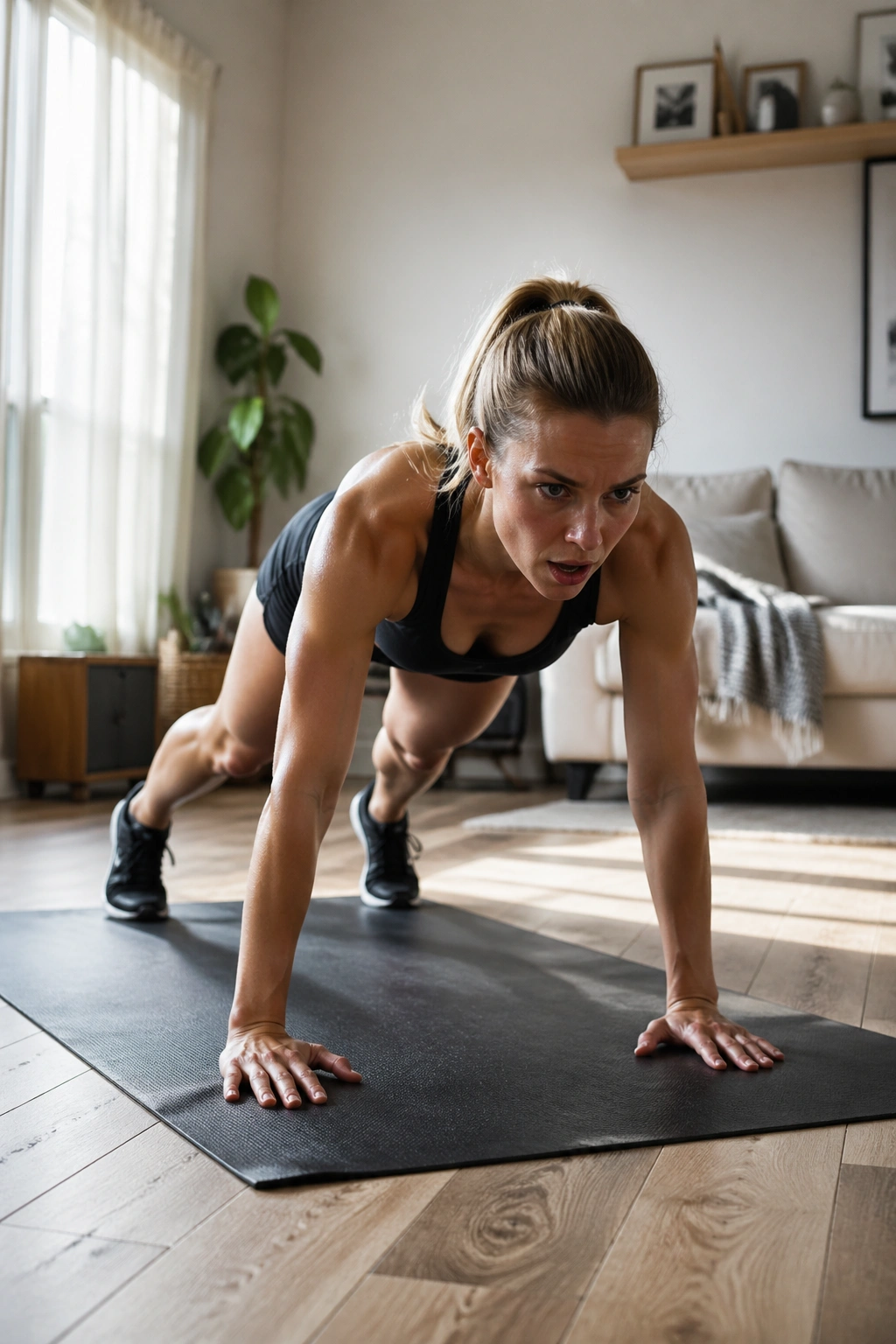
Short intervals can hit hard when the work is honest. Tabata training has a brutal little rhythm: 20 seconds on, 10 seconds off, eight times. Four minutes looks harmless on paper. It isn’t.
Warm up for 5 minutes, then do four 4-minute Tabata blocks with 1 minute of marching recovery between blocks. That totals 20 minutes of main work.
Block one: alternate squat thrusts and high knees every 20-second effort. Block two: speed skaters and plank jacks or step jacks. Block three: jump squats or fast bodyweight squats with mountain climbers. Block four: fast punches and alternating reverse lunges. Cool down for 5 minutes when you’re done.
This workout is rough because there’s nowhere to hide. You don’t need long combos or fancy sequencing. You need crisp effort and fast transitions. If your energy collapses by the second block, cut the jump options and keep the timer. The timing is what gives Tabata its bite.
I would not hand this session to a brand-new exerciser. It’s better once you already know how to brace, squat, and plank without your form turning to mush.
12. Chair-Assisted Home Workout for Heavier Beginners
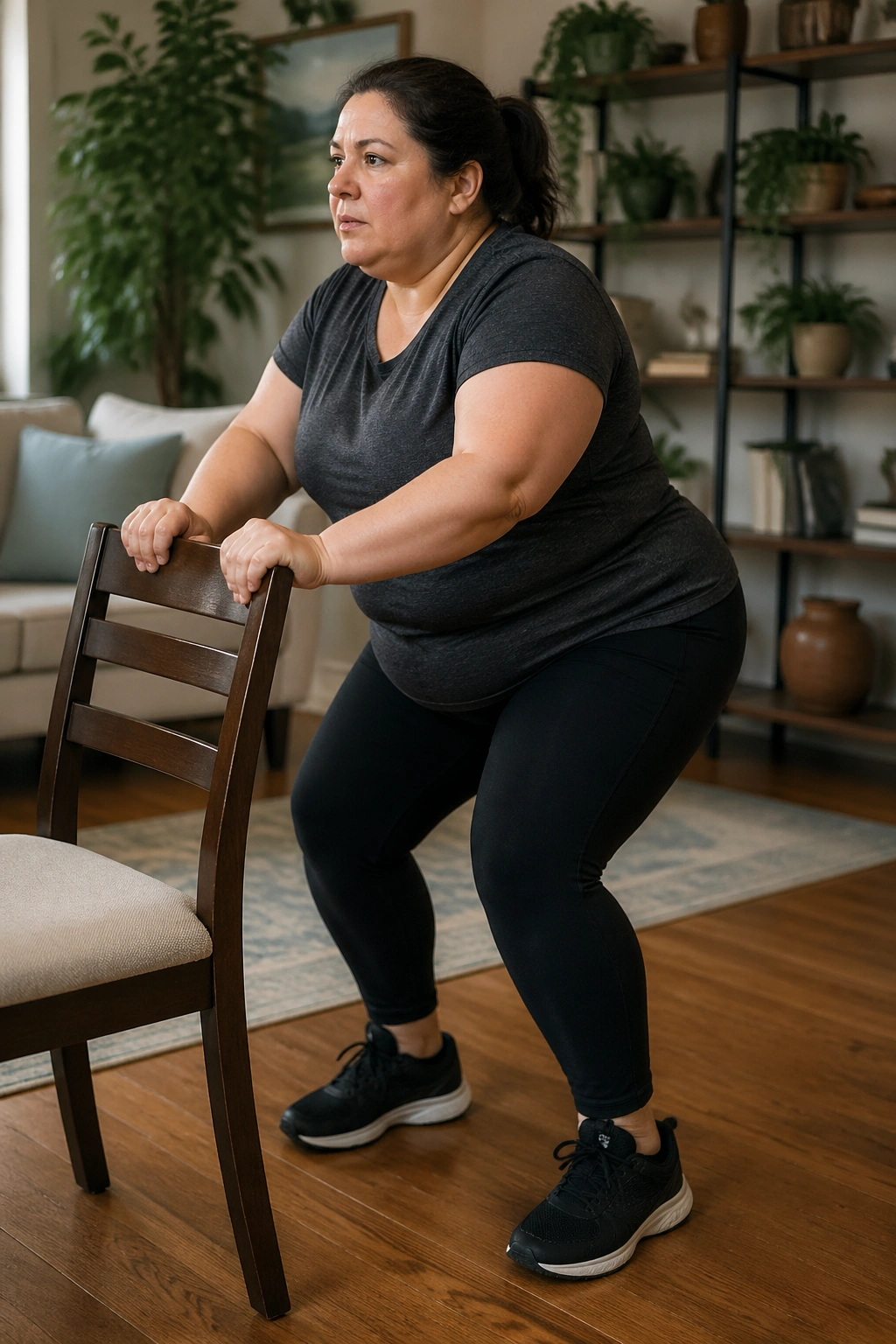
Need something friendlier on the joints without turning the session into rehab? Use a chair.
Compared with floor-heavy plans, chair-assisted training helps heavier beginners get through the full 30 minutes with less dread. You can control range of motion, use the chair for balance, and still work hard enough to feel your breathing pick up.
Start with 5 minutes of seated-to-standing mobility: seated marches, arm circles, ankle rolls, sit-to-stands, and supported calf raises. Then do 4 rounds of this circuit at 40 seconds on, 20 seconds off:
- Sit-to-stands
- Incline push-ups on a counter or sturdy table
- Supported marching
- Chair-assisted split squats
- Seated knee lifts with a braced core
Finish with 5 minutes of slow walking and hip stretching.
This one matters because consistency beats punishment. A session you can repeat three times each week is worth more than a savage workout you avoid for ten days after trying it once.
13. Kettlebell or Backpack Swing-and-Carry Session
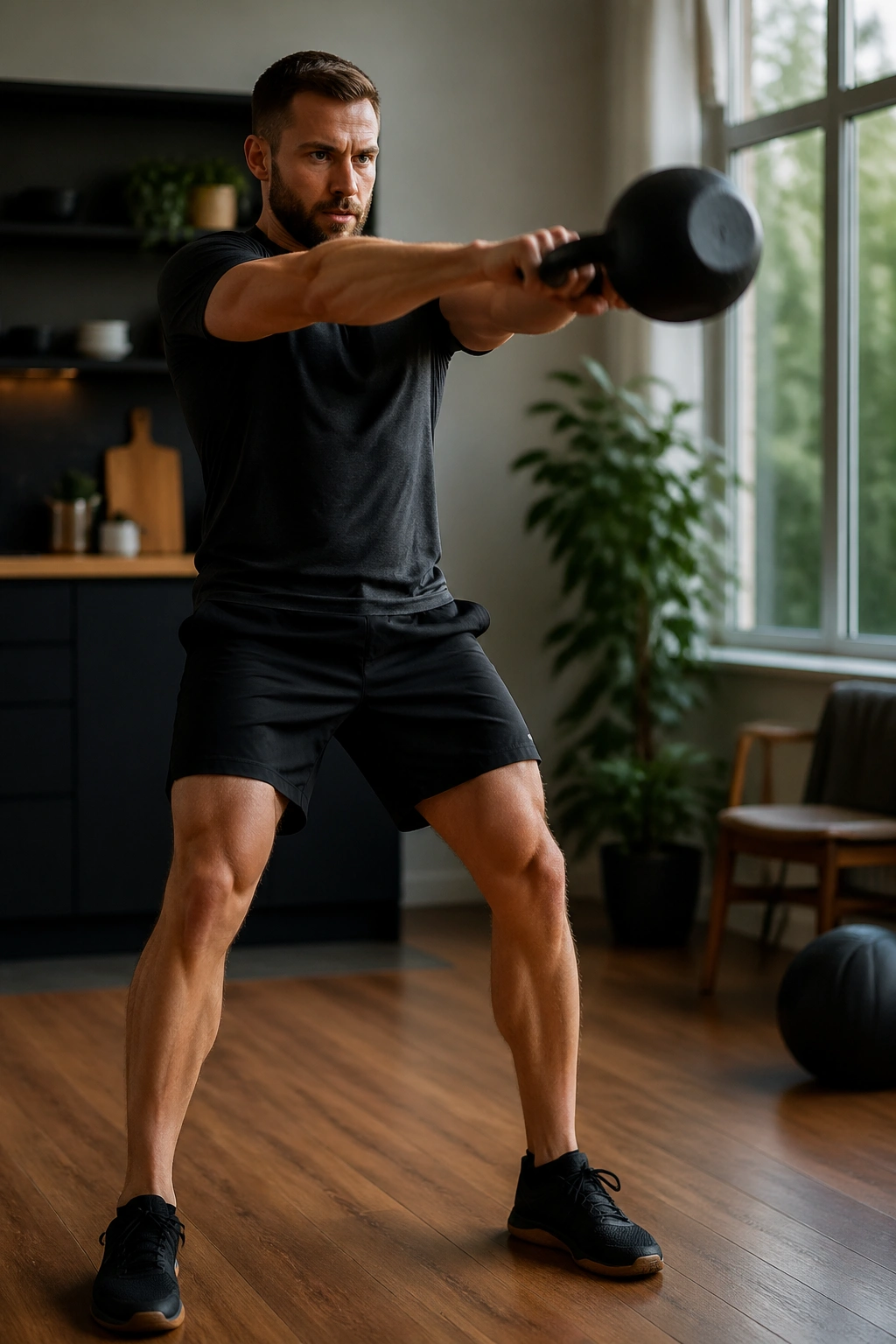
The first round feels manageable. Round three tells the truth.
Swings and carries are old-school for a reason. They train the hips, grip, upper back, and trunk all at once, and they drive the heart rate up fast without turning the workout into a jump-fest. If you own a kettlebell, use it. If not, a snug backpack with books can stand in for most of the work, though the swing pattern is cleaner with an actual bell.
Set it up like this
After a 5-minute warm-up, complete 4 rounds of the block below:
- 15 kettlebell swings or backpack hip-hinge swings
- 30 seconds suitcase carry right side
- 30 seconds suitcase carry left side
- 10 goblet squats
- 30 seconds high plank
- 60 seconds rest or brisk march
Each round takes about 5 minutes. Add the warm-up and cool-down and you land at 30.
Carries are the secret weapon here. Walking while holding weight on one side forces the obliques to brace against tipping, which is the kind of core training many people miss.
Best cue: On swings, hinge at the hips. Do not squat the bell.
14. Pilates-Style Core Burn With Fast Finishers
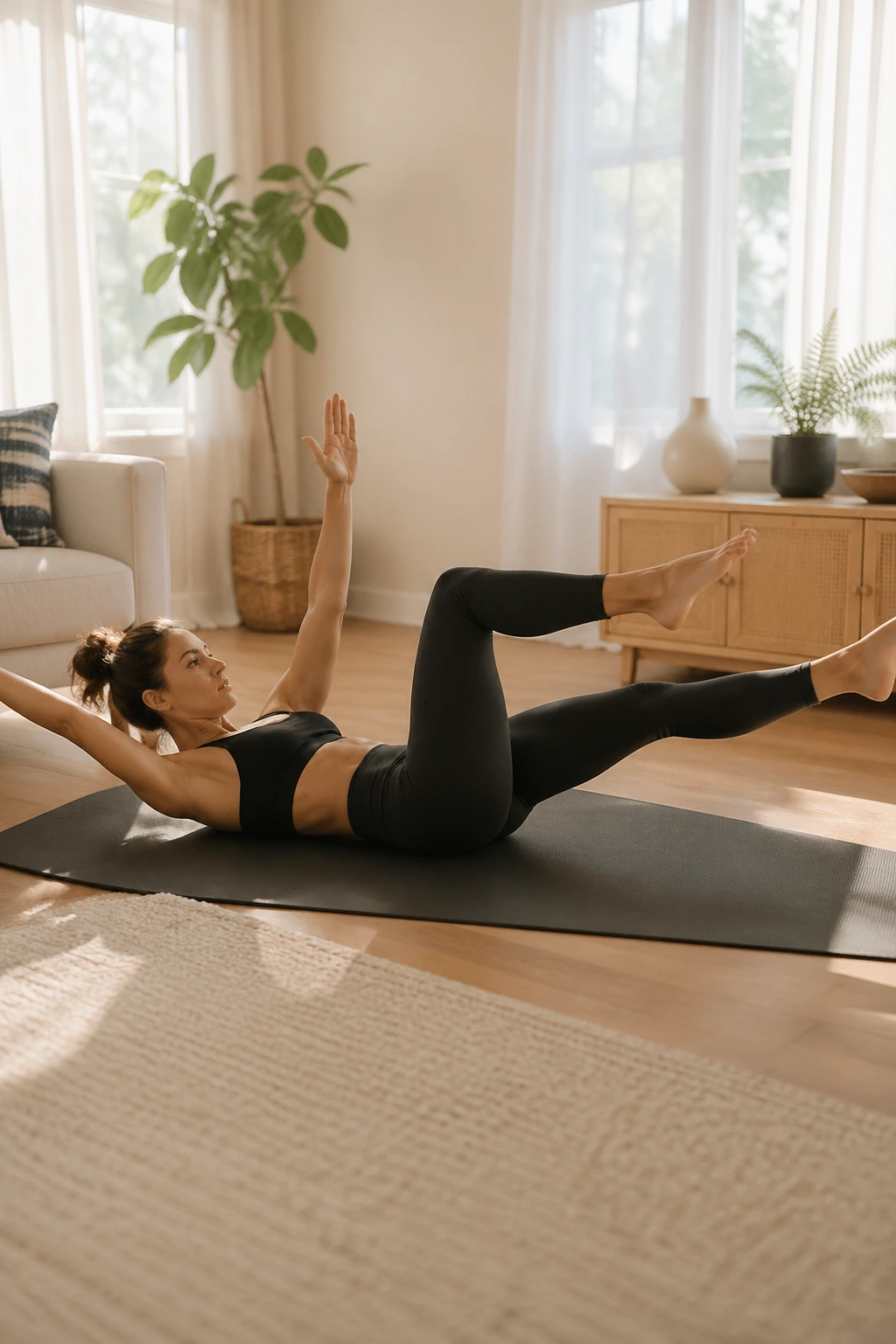
Slow is not easy when your abs stay braced for 40 straight seconds.
This session leans more controlled than chaotic, and that’s the point. Pilates-style work teaches pelvic control, rib position, and breathing under tension. Pair that with short cardio finishers and you get a workout that feels clean rather than frantic, though your abs will disagree by the end.
Warm up for 5 minutes with cat-cow, glute bridges, dead bug practice, and bodyweight squats. Then spend 12 minutes on controlled intervals: dead bugs, toe taps, side planks, glute bridge marches, and bird dogs at 40 seconds on, 20 seconds off. After that, do an 8-minute finisher of fast marches, bodyweight squats, standing twists, and plank shoulder taps. Cool down for 5 minutes.
The advantage here is quality. People who arch their lower back on crunches often do far better with dead bugs and toe taps, where the cue is to keep the ribs down and the lower back heavy on the floor. That kind of precision carries over into stronger planks, better push-ups, and safer lifting.
15. Thirty-Minute No-Jumping Belly Fat Workout at Home
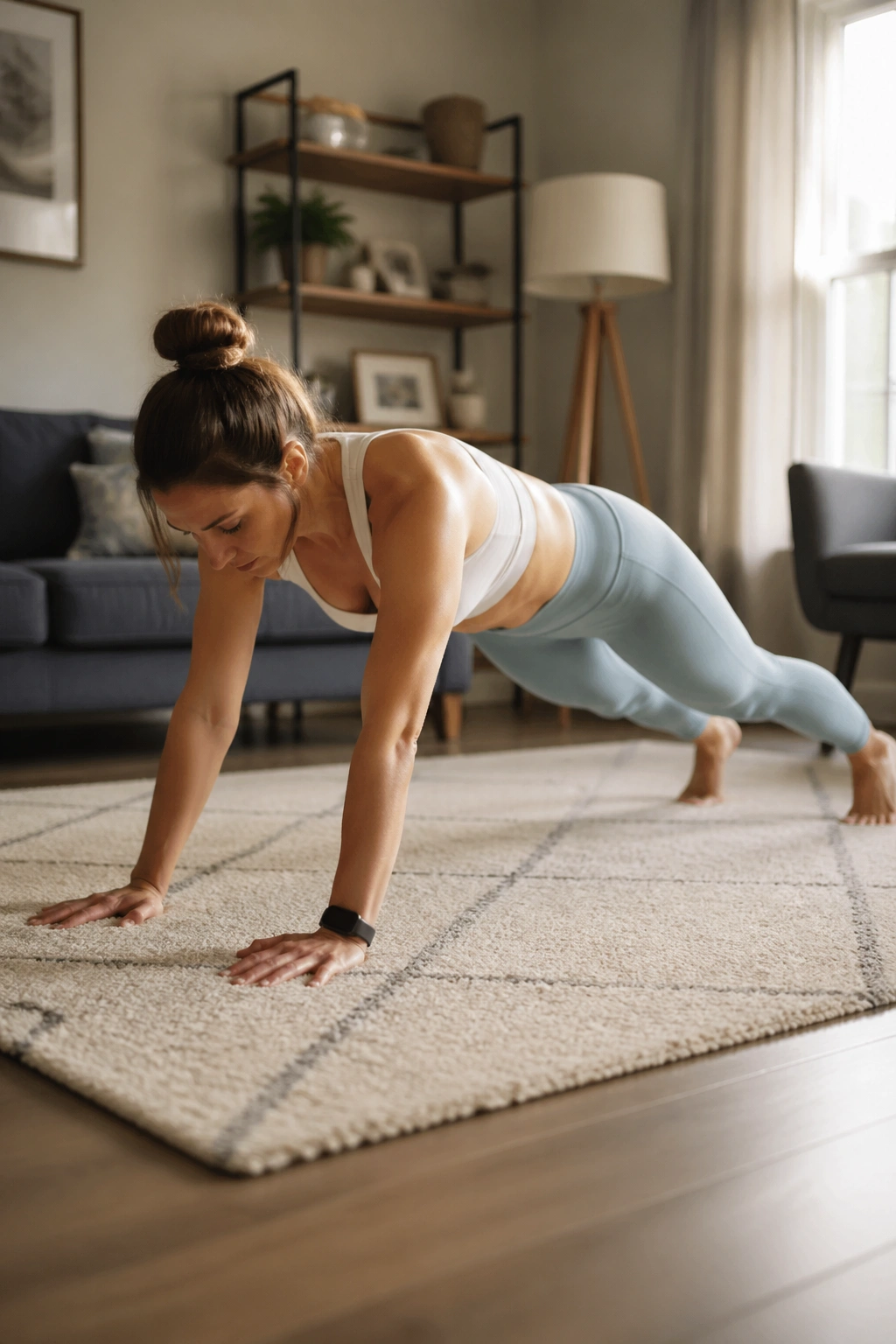
Your shirt gets damp, your legs get heavy, and the floor stays quiet. Good trade.
This is one of the best thirty-minute belly fat workouts at home if you train early in the morning, share walls with neighbors, or hate high-impact drills. You still get a full-body demand. You just create it with tempo, range of motion, and tighter rest.
Run this circuit for 20 minutes
After a 5-minute warm-up, do 4 rounds at 45 seconds on, 15 seconds off:
- Squat to calf raise
- Walkout to plank
- Lateral step and reach
- Glute bridge with march
- Standing cross punches with knee drive
Use the last 5 minutes for a slow cool-down and hip-flexor stretches.
The walkout-to-plank move is the one that sneaks up on people. Your hamstrings stretch, your shoulders load up, and your trunk has to brace each time you reach the floor. Done with control, it’s far tougher than it looks.
If your wrists complain, replace the walkout with an elevated plank on the couch or kitchen counter.
16. Bear Crawl and Mountain Climber Conditioning
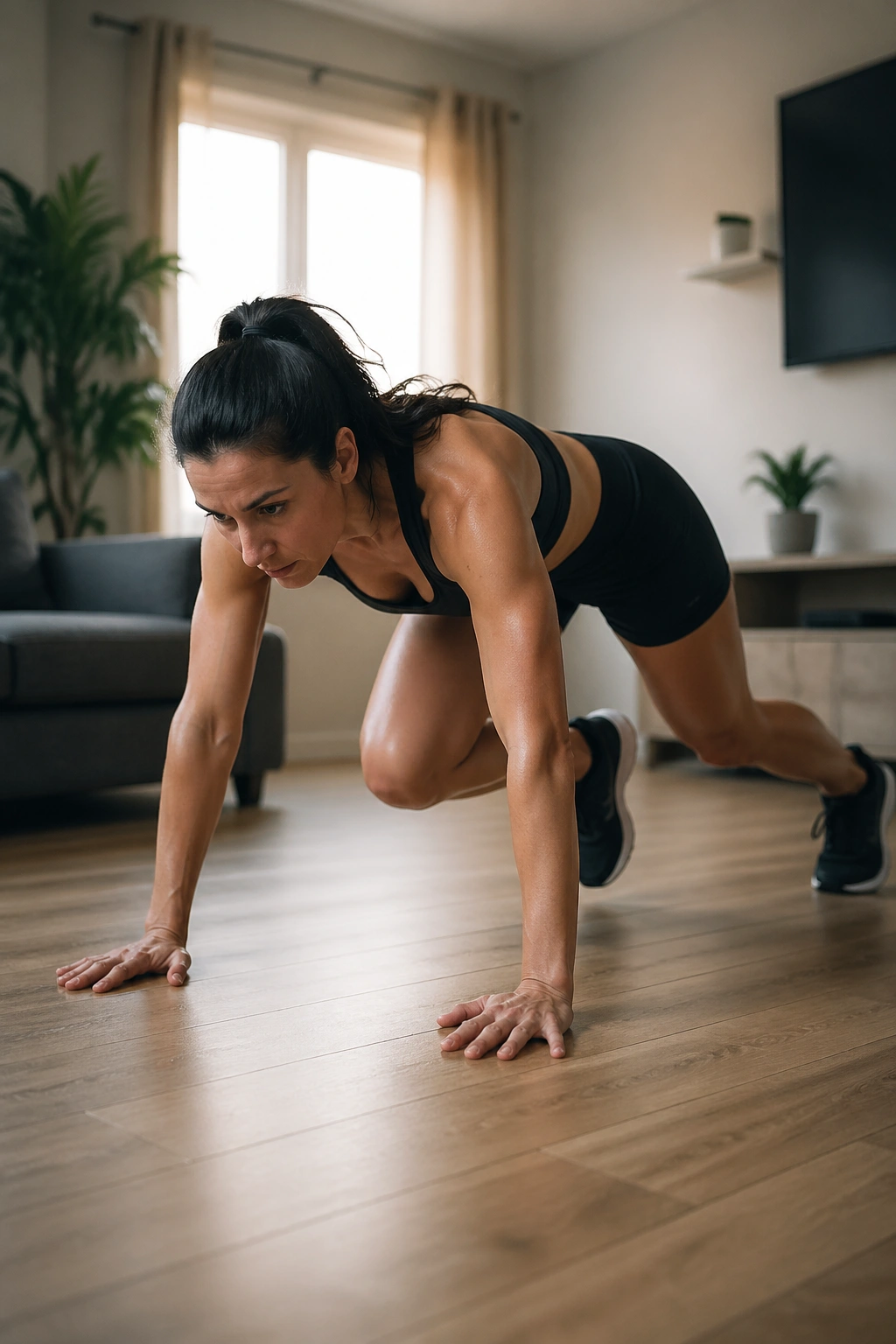
Ten feet of floor is enough for this one. You do not need much space. You do need a willingness to breathe hard and keep your hips from bouncing all over the place.
Bear crawls are nasty in the best way. They train shoulders, quads, core, and coordination at once. Mountain climbers do something similar, then add speed. Put those together and a plain living-room floor starts feeling like serious training ground.
After a 5-minute wrist-and-hip warm-up, do 5 rounds of this 4-minute block:
- 40 seconds bear crawl forward and back
- 20 seconds rest
- 40 seconds mountain climbers
- 20 seconds rest
- 40 seconds lateral crab walks
- 20 seconds rest
- 40 seconds bodyweight squats
- 20 seconds rest
Cool down for 5 minutes with child’s pose, wrist stretches, quad stretches, and slow marching.
A quick form note: on crawls, keep the knees hovering 1 to 2 inches off the floor. Higher than that, and the move gets easier in all the wrong ways.
17. Lower-Body Power Circuit With Reverse Lunges and Glute Bridges
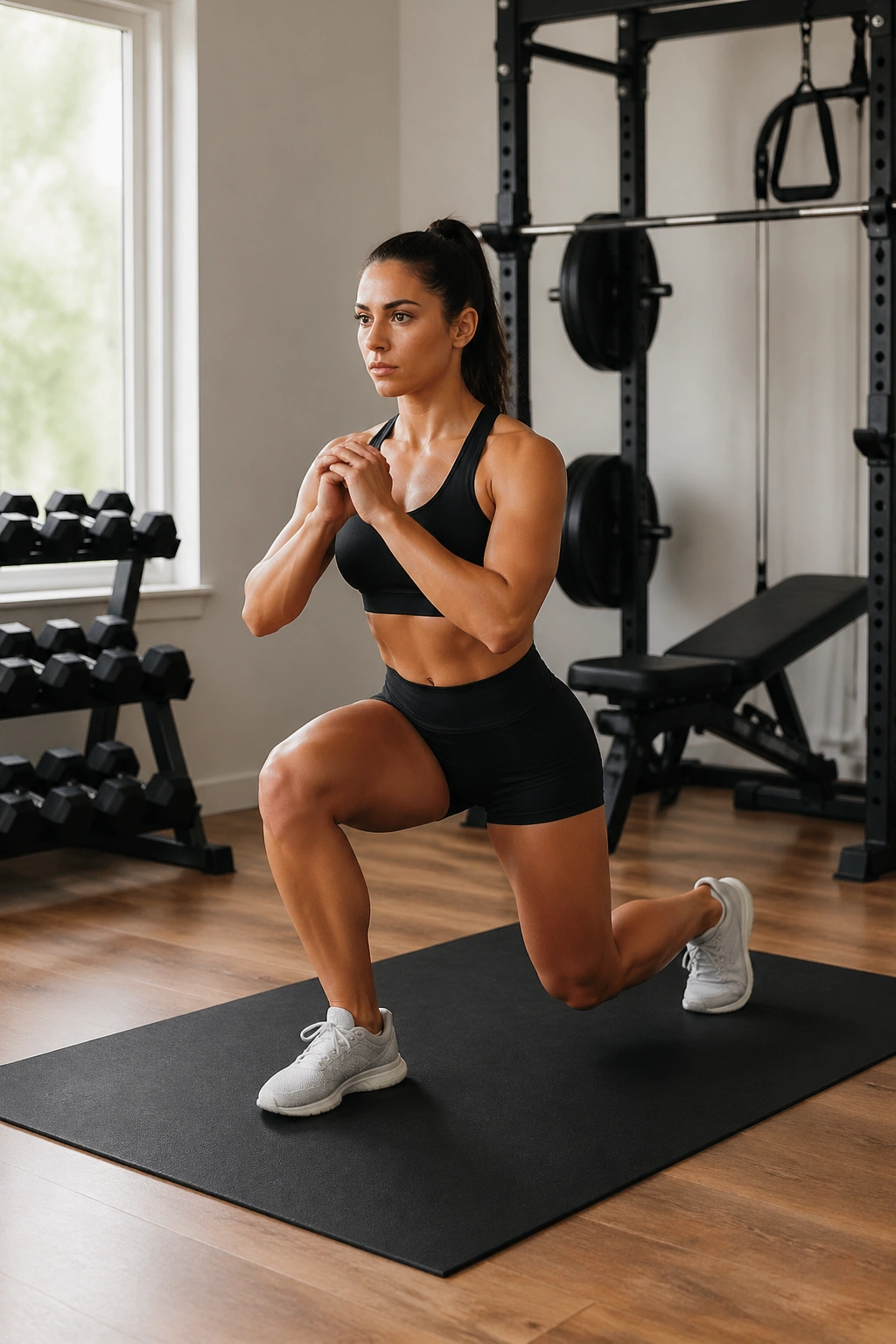
If I need one session that leaves my midsection tight and my legs cooked, I reach for a lower-body circuit. Big leg work drives a huge oxygen demand, which is a polite way of saying it gets you out of breath fast.
That matters for belly-fat training because your quads, glutes, and hamstrings are your largest engines. When they work hard, your heart and lungs have to follow. Add a couple of core moves between sets and the session turns into a full-body effort without needing a single biceps curl.
Warm up for 5 minutes. Then do 4 rounds of this five-move circuit at 50 seconds on, 10 seconds off: reverse lunges, glute bridge marches, squat pulse to stand, forearm plank knee drives, and bodyweight good mornings. That’s 20 minutes of work. Cool down for 5 minutes with long lunge stretches and hamstring folds.
The short rest is the sneaky part. Ten seconds is barely enough to reset, which keeps the pulse high while the exercise selection stays joint-friendly.
18. Invisible Rope and Bodyweight Blast
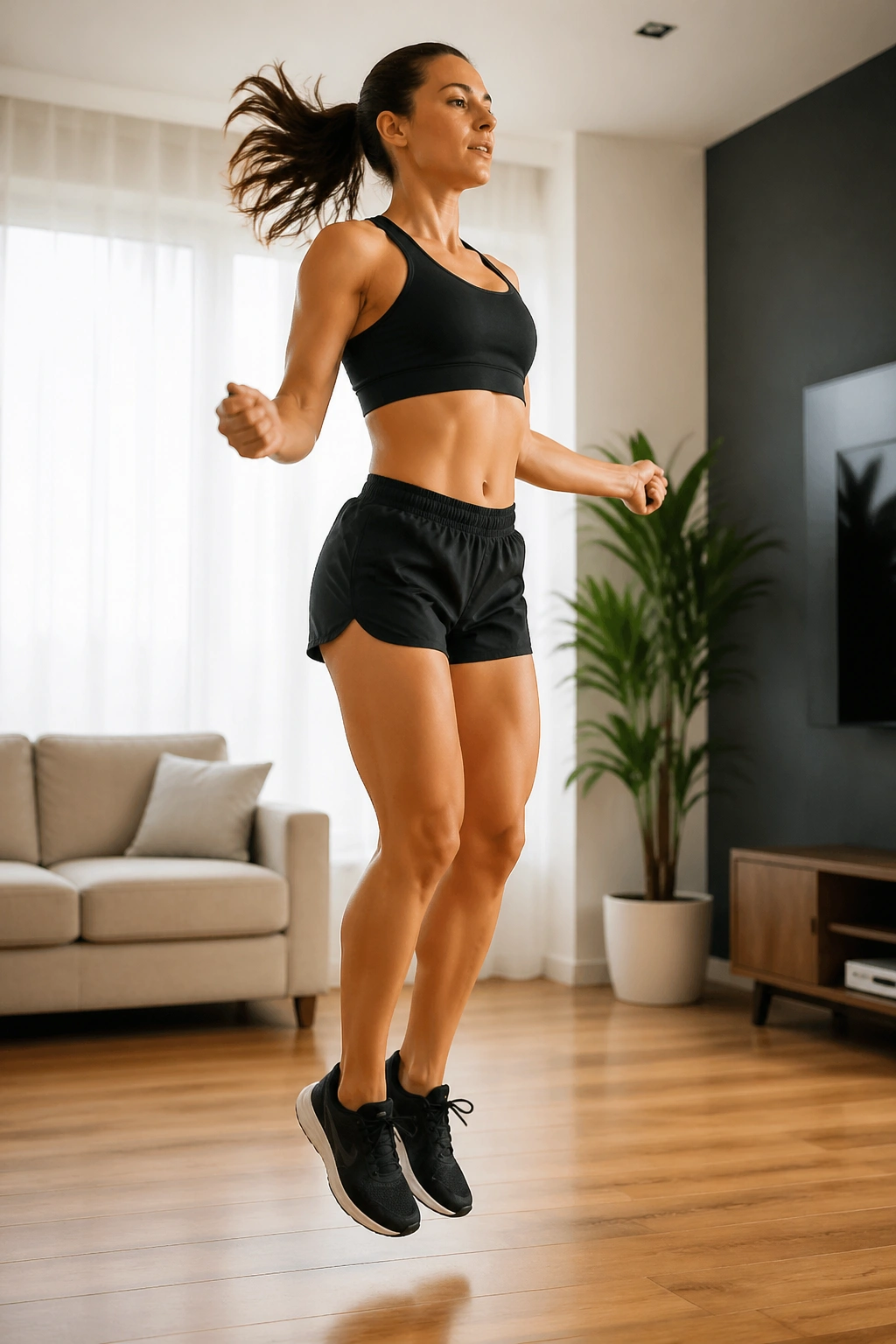
Pretend you’re holding a jump rope even if you don’t own one. It works better than most people think.
Compared with actual rope jumping, the invisible-rope version cuts out missed catches and shin-smashing frustration. You still get the quick ankle bounce, the fast hand rhythm, and the cardio effect. Pair it with bodyweight strength moves and you’ve got a sharp, fast home session.
Try 5 rounds of this 4-minute block after a 5-minute warm-up:
- 60 seconds invisible rope
- 45 seconds bodyweight squats
- 30 seconds push-ups or incline push-ups
- 45 seconds high-knee march or run in place
- 60 seconds rest
That gives you 20 minutes of main work. Cool down for 5 minutes.
Pick the low bounce if your calves tighten up. A rope-style hop that barely leaves the floor is enough. You’re after rhythm and repeated effort, not circus skill.
Who this suits best: people who want a cardio-heavy workout but hate complex dance moves and don’t have much equipment.
19. Full-Body AMRAP With Burpees, Rows, and Dead Bugs
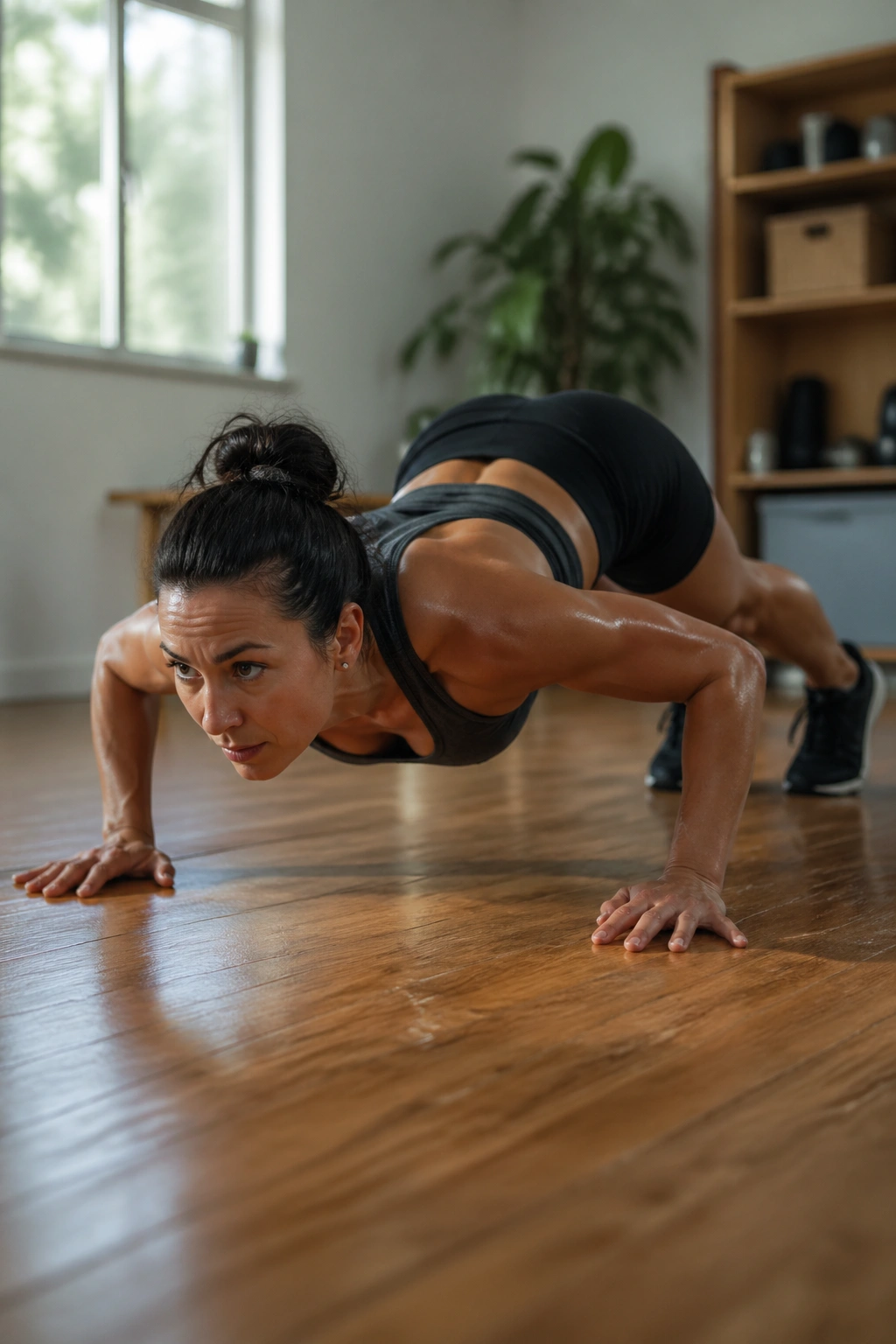
A burpee-heavy session will not melt belly fat off one body part. That old promise was junk the first time it was sold. What a burpee will do is push your heart rate skyward, especially when it sits next to rows, lunges, and core work.
This workout uses the AMRAP format: as many rounds as possible in 20 minutes, moving with control rather than panic. Warm up for 5 minutes first.
The AMRAP
Complete as many rounds as you can in 20 minutes of:
- 8 burpees or squat thrusts
- 12 backpack rows
- 16 alternating reverse lunges
- 20 dead bugs
- 24 high-knee marches
Then spend 5 minutes cooling down.
Write down your rounds. That’s the whole game here. If you get 4 rounds plus 10 rows the first time and 5 clean rounds two weeks later, your conditioning improved. That kind of plain progress matters more than chasing a fresh routine every other day.
20. Thirty-Minute Belly Fat Workout at Home With Mixed Intervals
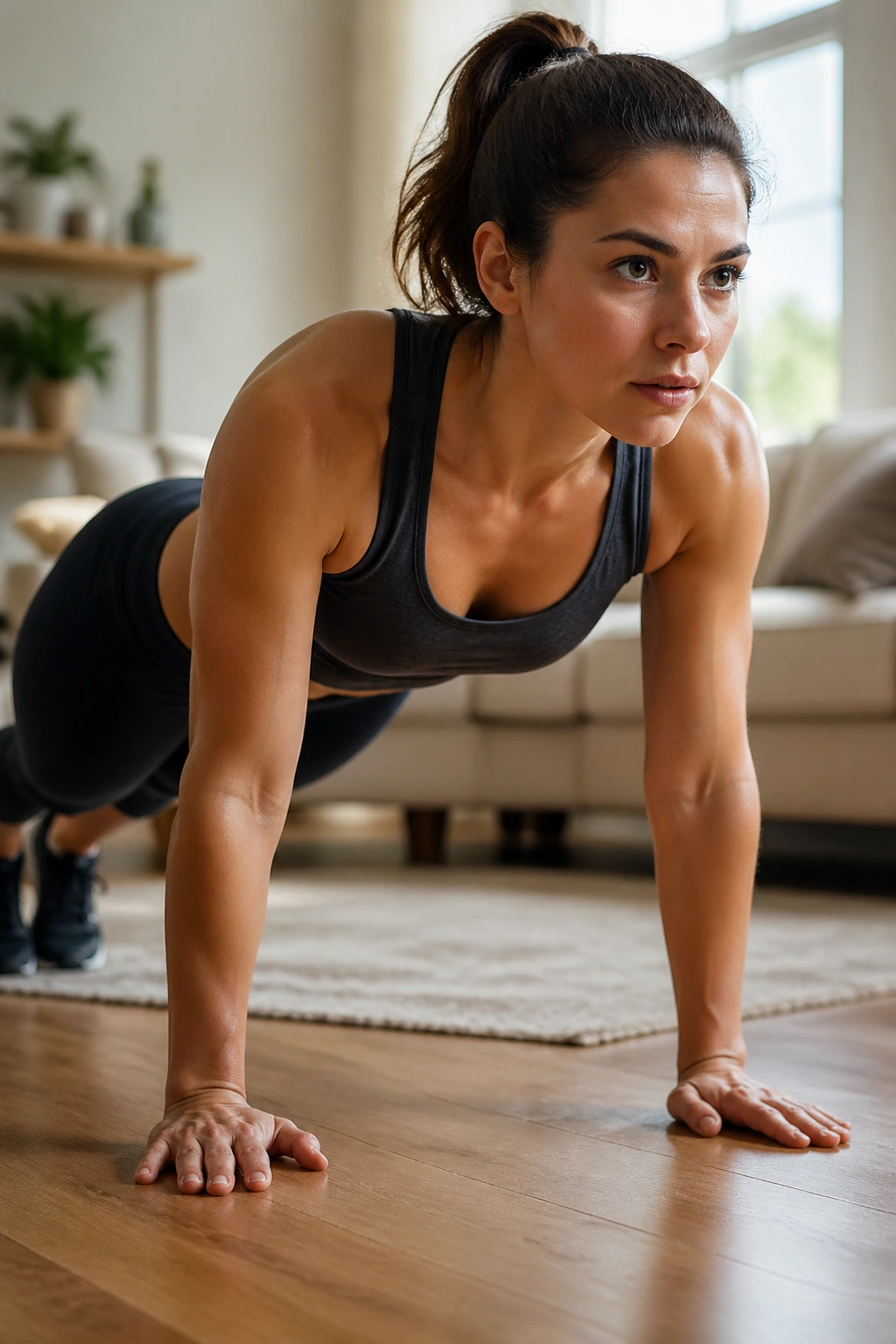
Say you want one session that covers strength, cardio, and core without asking you to remember much. This is the one I’d hand you.
It’s one of the most balanced thirty-minute belly fat workouts at home because it uses three short blocks that each do a different job. The strength block builds tension. The cardio block raises the pulse. The core block makes you hold position while tired, which is where the useful work starts.
Warm up for 5 minutes. Then do:
- 6-minute strength block: 40 seconds squat, 20 seconds rest; 40 seconds push-up, 20 seconds rest; 40 seconds backpack row, 20 seconds rest. Repeat twice.
- 6-minute cardio block: 40 seconds high knees or marches, 20 seconds rest; 40 seconds skater steps, 20 seconds rest; 40 seconds squat thrusts, 20 seconds rest. Repeat twice.
- 6-minute core block: 40 seconds plank, 20 seconds rest; 40 seconds dead bug, 20 seconds rest; 40 seconds standing knee drive, 20 seconds rest. Repeat twice.
- 2-minute finisher: 20 seconds fast punches, 10 seconds rest, repeated four times.
- 5-minute cool-down
It’s clean. It’s hard. It covers the bases.
Final Thoughts
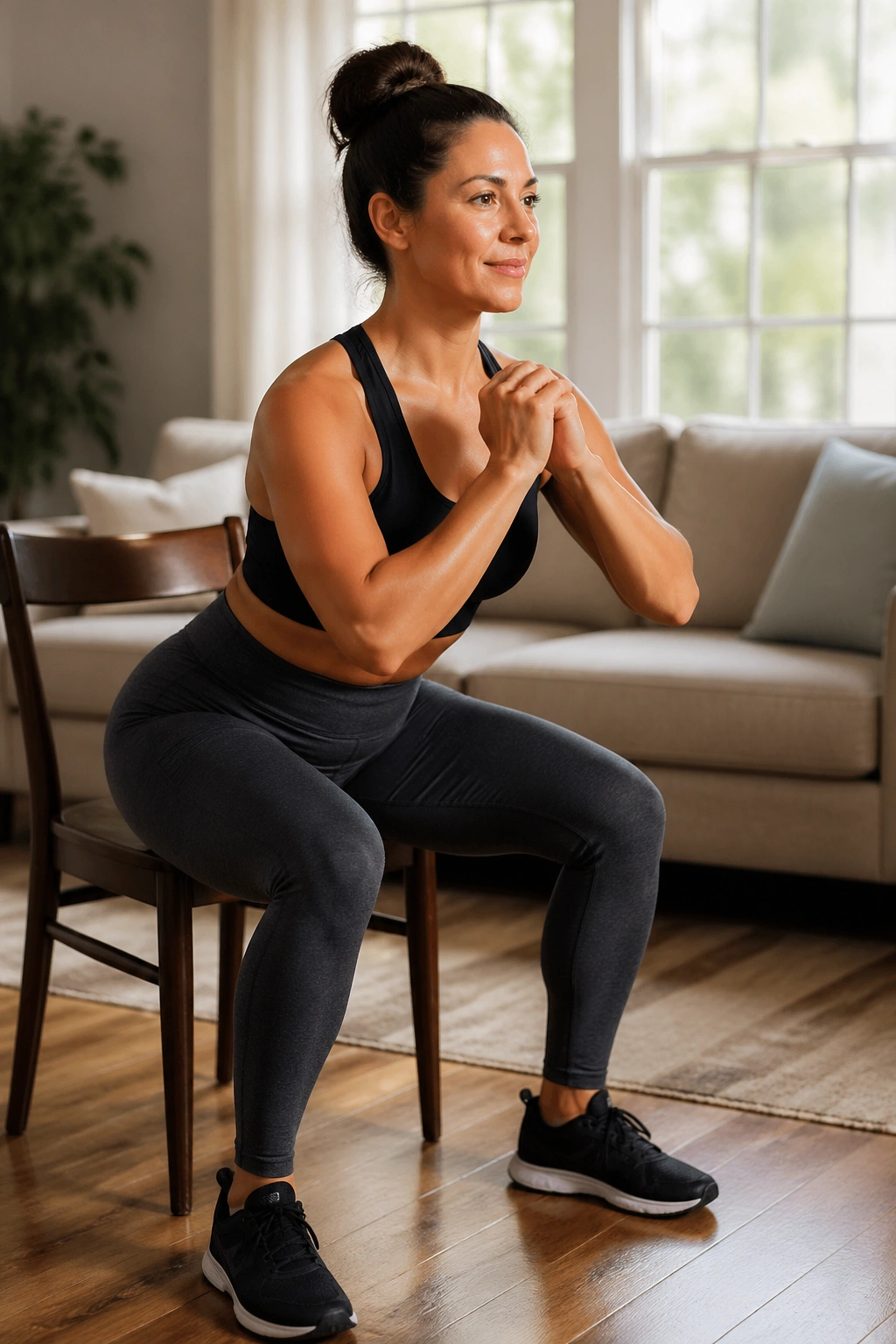
The workouts above work best when you stop treating them like one-off calorie punishments and start treating them like repeatable training. Pick 3 to 5 routines each week, rotate them, and track something small: rounds finished, reps completed, rest shortened, or how quickly your breathing settles after the final set.
Belly fat changes faster when the workouts are paired with boring, unglamorous habits that still matter: enough protein to hold muscle, enough fiber to stay full, enough sleep that your hunger doesn’t go off the rails, and enough daily walking that you’re not trying to cram all movement into one sweaty half hour.
If I had to choose one hill to die on here, it’s this: stop chasing ab burn and start chasing full-body effort. Your waist will care a lot more about that.
