



Pregnancy fitness ideas get overcomplicated fast.
A lot of people picture some dramatic split between “exercise” and “rest,” when the real answer is usually smaller and more practical: a walk that doesn’t flare your back, a strength move that keeps your hips happy, a stretch that lets you breathe without feeling pinched. The best prenatal exercise routines are rarely flashy. They’re repeatable.
The body does change in stages, though. Early on, fatigue and nausea can make everything feel harder than it should. Mid-pregnancy often brings more energy, plus a belly that changes balance in a sneaky way. Later, the question is less “Can I push harder?” and more “Can I move without making myself miserable?” That shift matters, because the same workout can feel perfect in one trimester and annoying in the next.
A sensible target is still a sensible target: moderate movement most days, with strength work, mobility, and enough recovery to keep you feeling steady. If you’ve been cleared for exercise and your care team hasn’t given you restrictions, the ideas below give you a realistic menu for the first, second, and third trimesters. Start with the ones that fit your energy, your joints, and your actual life.
1. Pregnancy Fitness Idea: Ten-Minute Walking Bursts
Walking is boring in the best way. It asks very little from you, which is exactly why it works so well when pregnancy makes your energy swing from “fine” to “done” in the span of an hour.
Ten-minute bursts are easier to keep up with than one heroic 45-minute walk that never happens. A morning loop, a post-lunch lap around the block, and a short evening stroll can add up fast without leaving your legs cooked. During the first trimester, that matters more than pace. Keep it at a level where you can talk in full sentences and your breathing stays calm.
What to Watch For
- Keep your stride natural, not long and reaching.
- Choose flatter routes if your pelvis feels loose or wobbly.
- Wear shoes with a stable heel and enough cushioning to soften the ground.
- Skip the “power walk” nonsense if it makes your lower back tighten.
One good rule: if you feel better at the end than you did at the start, you’ve nailed it.
2. A Chair-and-Wall Strength Circuit That Feels Stable
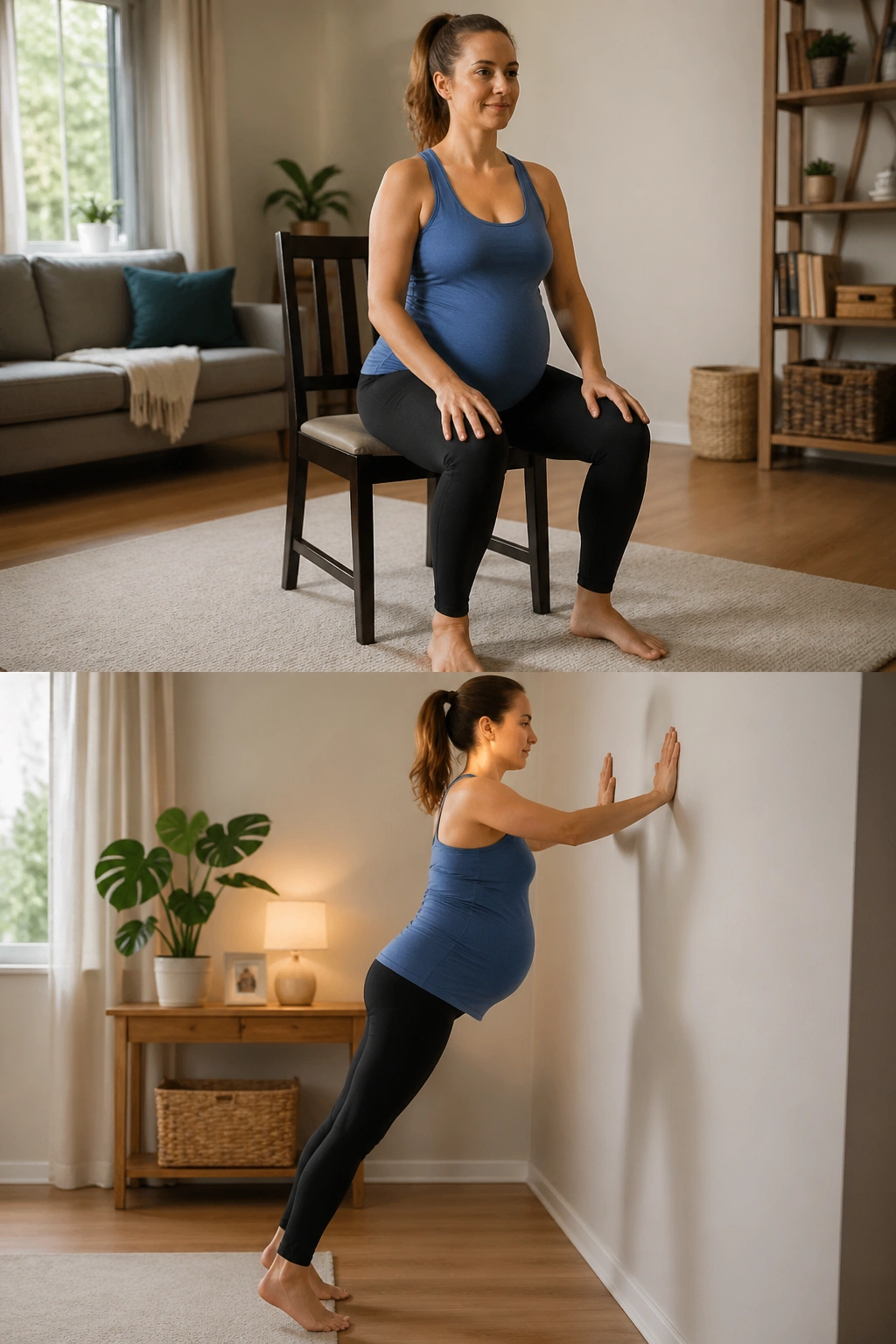
Strength work does not need to be fancy to be useful. In early pregnancy, the goal is usually to keep your legs, back, and upper body working well enough that everyday tasks do not start to feel like gym sets.
A chair-and-wall circuit is a clean, low-drama option. Think sit-to-stands, wall push-ups, supported split squats, and light rows with dumbbells or a resistance band. You get leg strength, push strength, and a little posture work without lying on the floor or chasing balance for sport. That last part matters. A shaky setup is not a badge of honor.
Why It Works
Wall support takes the fear out of loading your legs. A chair gives you a depth target, which keeps squats from turning into awkward half-reps. And because you’re upright, you can breathe normally instead of bracing too hard.
A simple round might look like this:
- 8 to 10 sit-to-stands
- 8 wall push-ups
- 10 band rows
- 6 slow split squats per side
Do 2 rounds. Rest as needed. Exhale on effort, inhale on the way down. No breath-holding.
3. Mobility Moves for Morning Nausea and Tight Hips
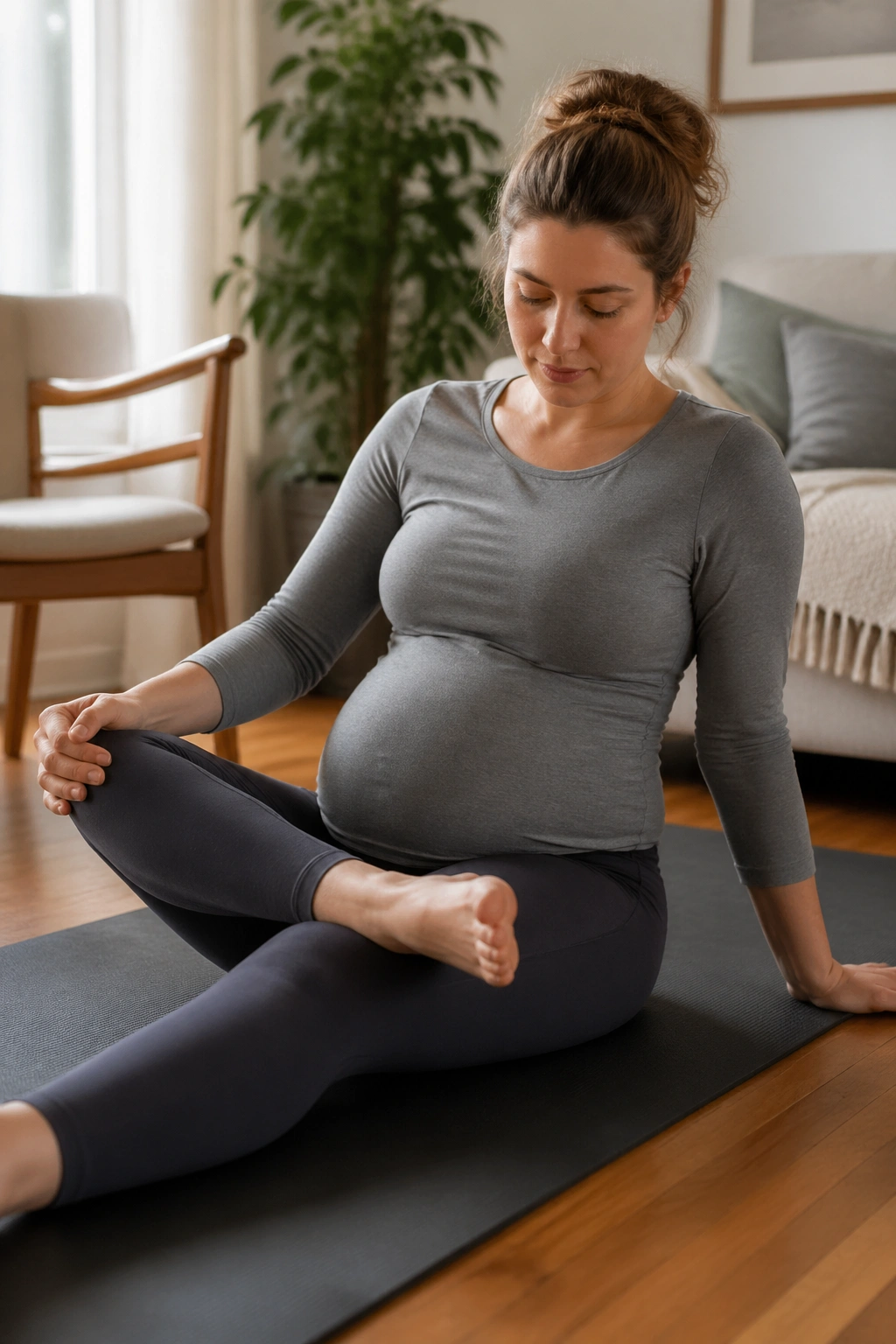
Some days, “workout” is too ambitious a word. Fine. Call it motion.
Gentle mobility is the first-trimester friend that gets ignored because it looks too easy. It isn’t. A slow cat-cow, a seated figure-four stretch, ankle circles, and a few hip rolls can loosen the dull stiffness that creeps in when you’re guarding your stomach or spending too much time on the couch. If nausea is hanging around, keep the pace slow and the room cool. Fast transitions can make you feel worse.
A short sequence is enough. Thirty seconds here, 30 seconds there, and you’re done. You do not need to sweat to get value out of it. Some people feel best doing mobility right after waking up, before the day’s smells and hunger cues start bossing them around.
Tiny Moves That Pay Off
- Cat-cow on hands and knees for 6 to 8 slow rounds
- Ankle circles while seated, 10 each way
- Hip circles standing with one hand on a counter
- Side bends with one arm overhead, 3 breaths per side
The point is not range for its own sake. The point is to stop feeling welded into one position.
4. Pool Walking and Swimming When the Floor Feels Too Hard
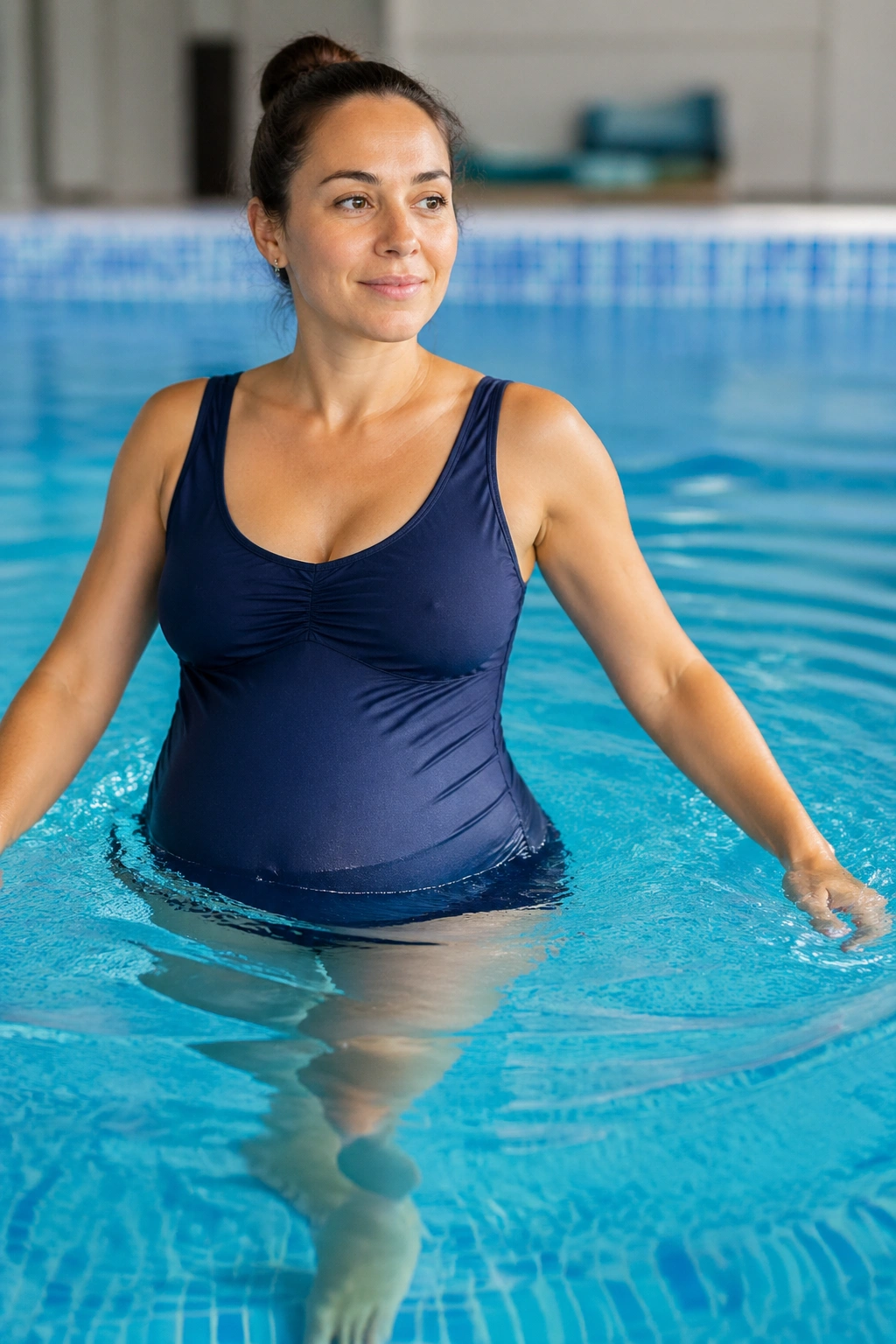
Water changes the game. Your joints get a break, your belly feels lighter, and gravity stops acting like a bully for half an hour.
Pool walking is the underappreciated option here. It is not glamorous. It is also excellent. The water gives gentle resistance in every direction, so even a 20-minute lap around the shallow end can work your legs and core without the pounding that comes with land cardio. Swimming has the same appeal, especially if you already know your way around the pool and can keep your breathing steady.
A lot of people wait until they feel “fit enough” for the pool. That’s backwards. Water is often the place you go when the floor starts feeling annoying.
Best part: if you finish and your legs feel less swollen, you’ll keep coming back.
5. Breathing Practice That Helps Your Core and Pelvic Floor

Breathing sounds too simple to matter. It matters a lot.
Pregnancy changes pressure inside the torso, and that pressure has to go somewhere. Learning how to breathe into your ribs and lower belly can help your core work with you instead of against you. It also makes pelvic floor work less weird, because you’re not trying to clench everything at once. That is a common mistake. Tight does not always mean strong.
How to Do It
Lie on your side, sit tall, or stand with one hand on your ribs. Inhale through your nose for 4 slow counts and feel the ribs widen sideways. Exhale for 5 or 6 counts and let the ribs soften down. Do 5 to 8 rounds.
Then add a gentle pelvic floor lift on the exhale — not a hard squeeze, more like a small elevator going up one floor. Release fully on the inhale. If you’re gripping your butt, jaw, or shoulders, you’re doing too much.
Breathing practice is handy in every trimester, but it gets extra useful later when bracing hard stops feeling comfortable.
6. Talk-Test Cardio You Can Scale Up or Down
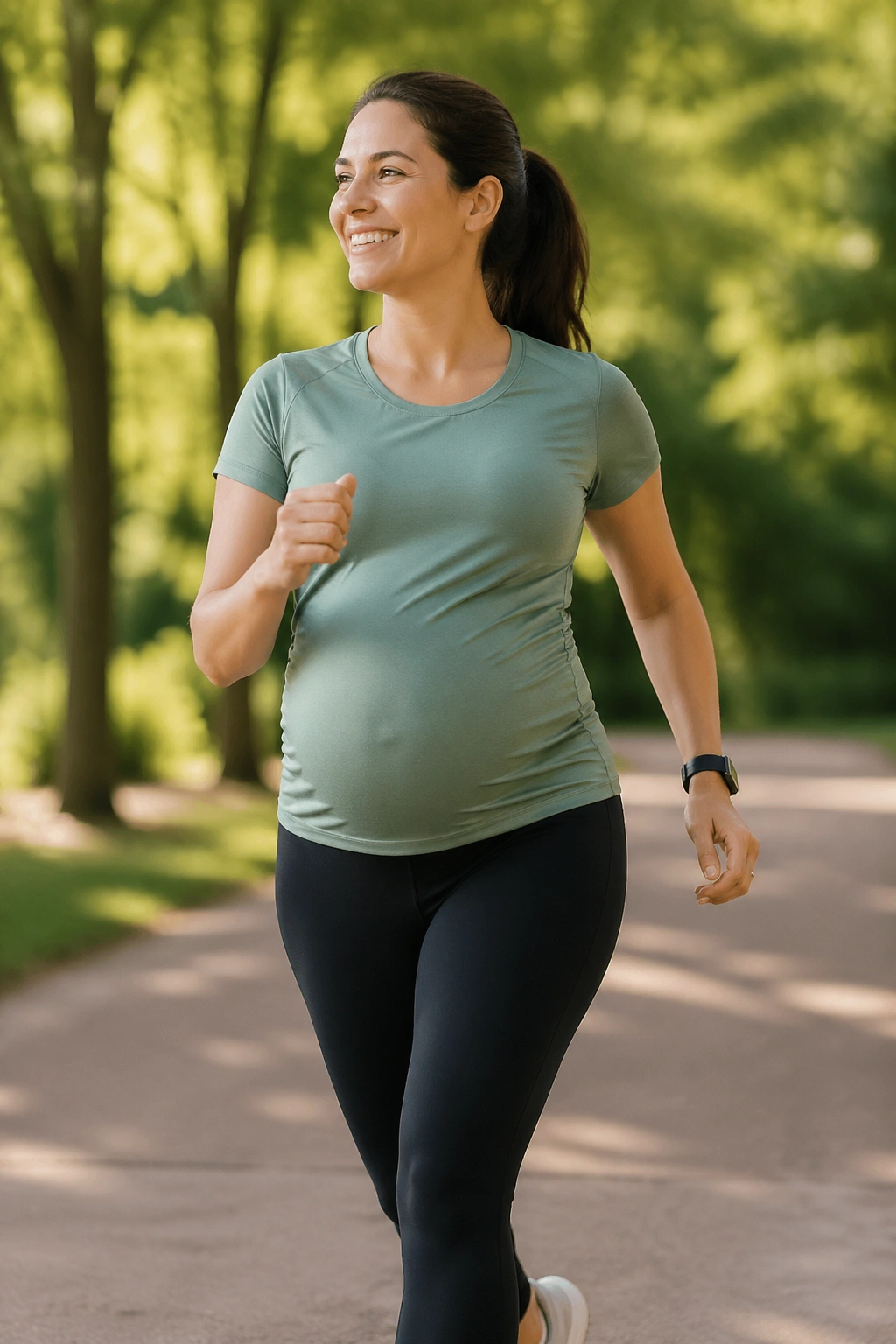
If you can’t talk, it’s too hard. That’s the cleanest cardio test I know.
The talk test is useful because it keeps prenatal exercise in the moderate zone without turning your workout into a science project. You should be able to speak in sentences, maybe not sing, and certainly not gasp your way through a conversation. That makes brisk walking, a recumbent bike, low-step aerobics, or an elliptical session easy to judge in real time.
The nice thing about this kind of cardio is that it adapts fast. Feeling strong? Add 5 minutes. Worn out? Cut it short and still count it. The point is consistency, not proving anything to the treadmill.
A good pregnancy fitness rule is to stop chasing “hard” and start chasing “steady.”
7. Second-Trimester Incline Walking and Gentle Hills
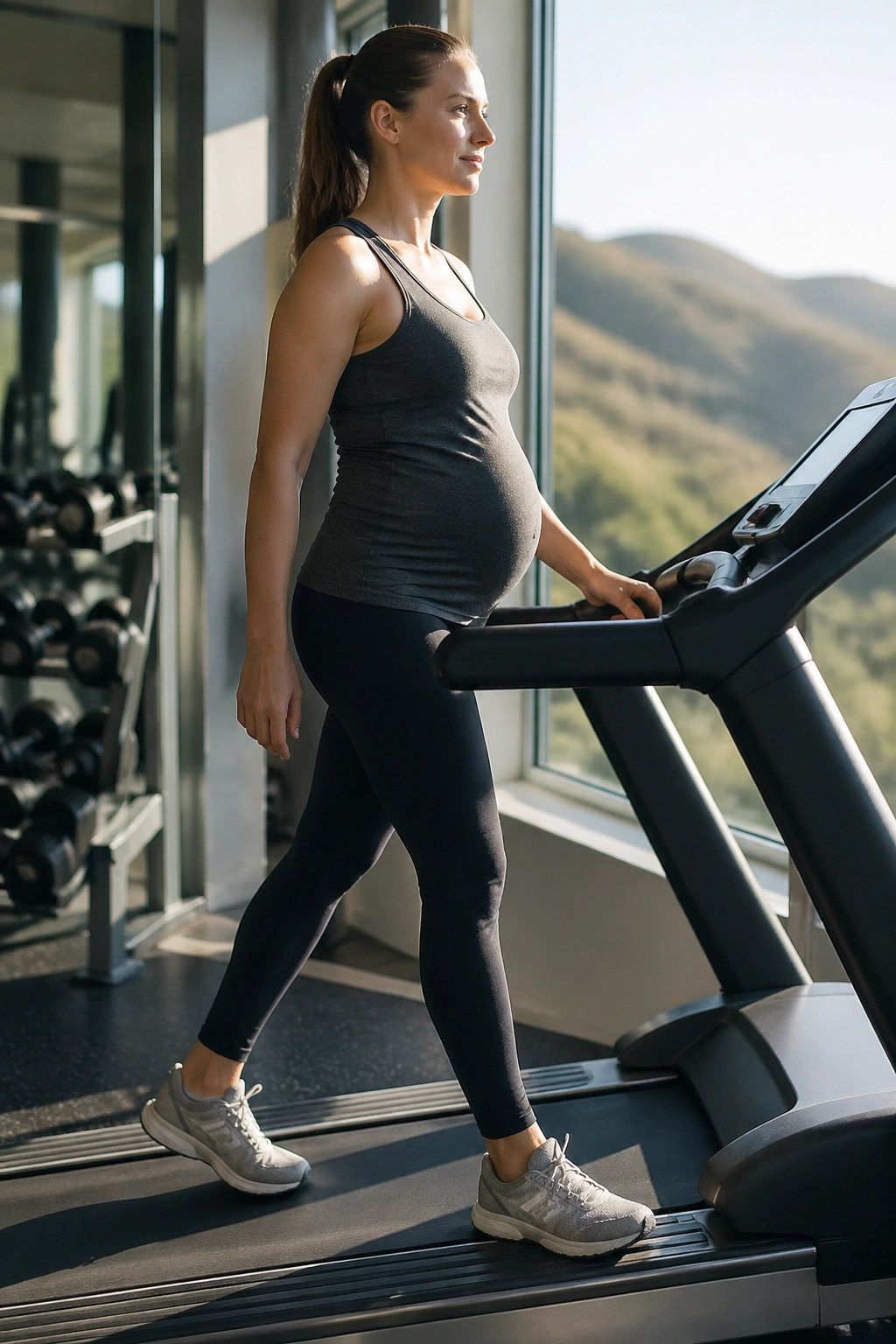
The second trimester is where some people finally feel like themselves again. Others feel fine until the belly starts changing the way their feet land. Hills can help either way.
Incline walking gives you a little more leg work than flat ground without needing speed. Small hills, a treadmill set at 2 to 4 percent incline, or even a bridge path with a mild rise can make the walk feel more purposeful. Your glutes and calves wake up. Your heart rate nudges up. And because you’re not sprinting, the session still feels controlled.
What Makes It Different
A slight incline usually encourages shorter, cleaner steps, which can feel easier on the pelvis than overstriding on flat ground. Keep your torso tall, your ribs stacked over your hips, and your pace honest.
If your balance feels off, slow down before the hill starts, not halfway up it. That’s the mistake that tends to make people sloppy.
Good sign: you finish with warm legs, not a clenched lower back.
8. Dumbbell Rows, Presses, and Carries for Everyday Strength
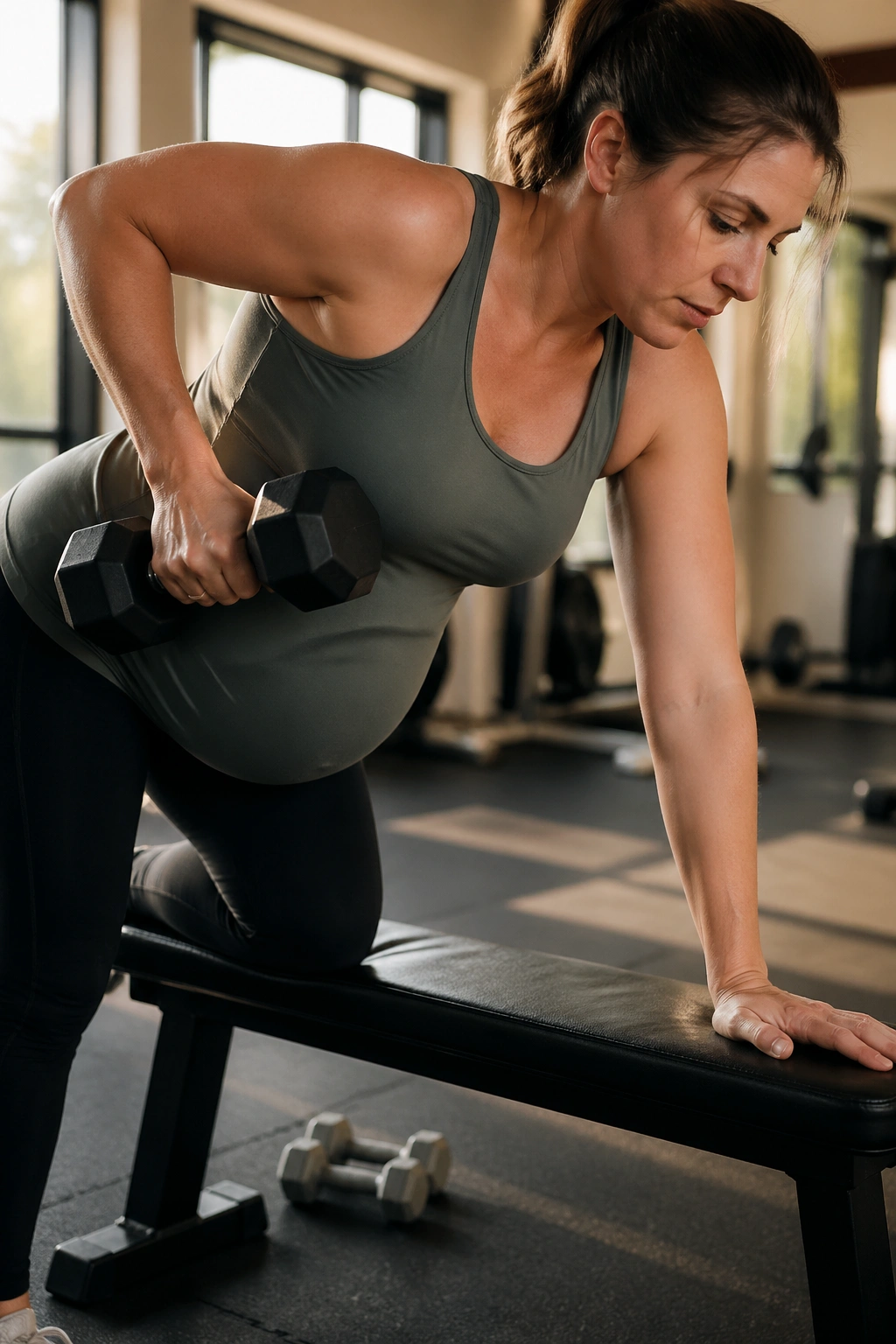
Heavy lifting has a mystique around it that doesn’t help much here. Most pregnant bodies need practical strength more than dramatic numbers.
A small set of dumbbells can do a lot. Rows help when bras, belly weight, and desk time start pulling your shoulders forward. Presses keep your arms useful. Farmer carries — just walking while holding weights at your sides — teach your trunk to stay organized under load. That matters when you’re carrying groceries, laundry, or a child who wants to be held the second you set the bags down.
No one needs max effort. Use a weight that feels challenging by the last 2 reps but doesn’t wreck your form. Two sets of 8 to 12 reps is plenty.
A Smart Combo
- 10 one-arm rows per side
- 8 to 10 overhead presses
- 30 to 45 seconds of carries
- 60 seconds of rest
Keep your ribs from flaring and do not hold your breath on the hard part. That’s the trap.
9. Prenatal Yoga With a Wider Base and Fewer Surprises
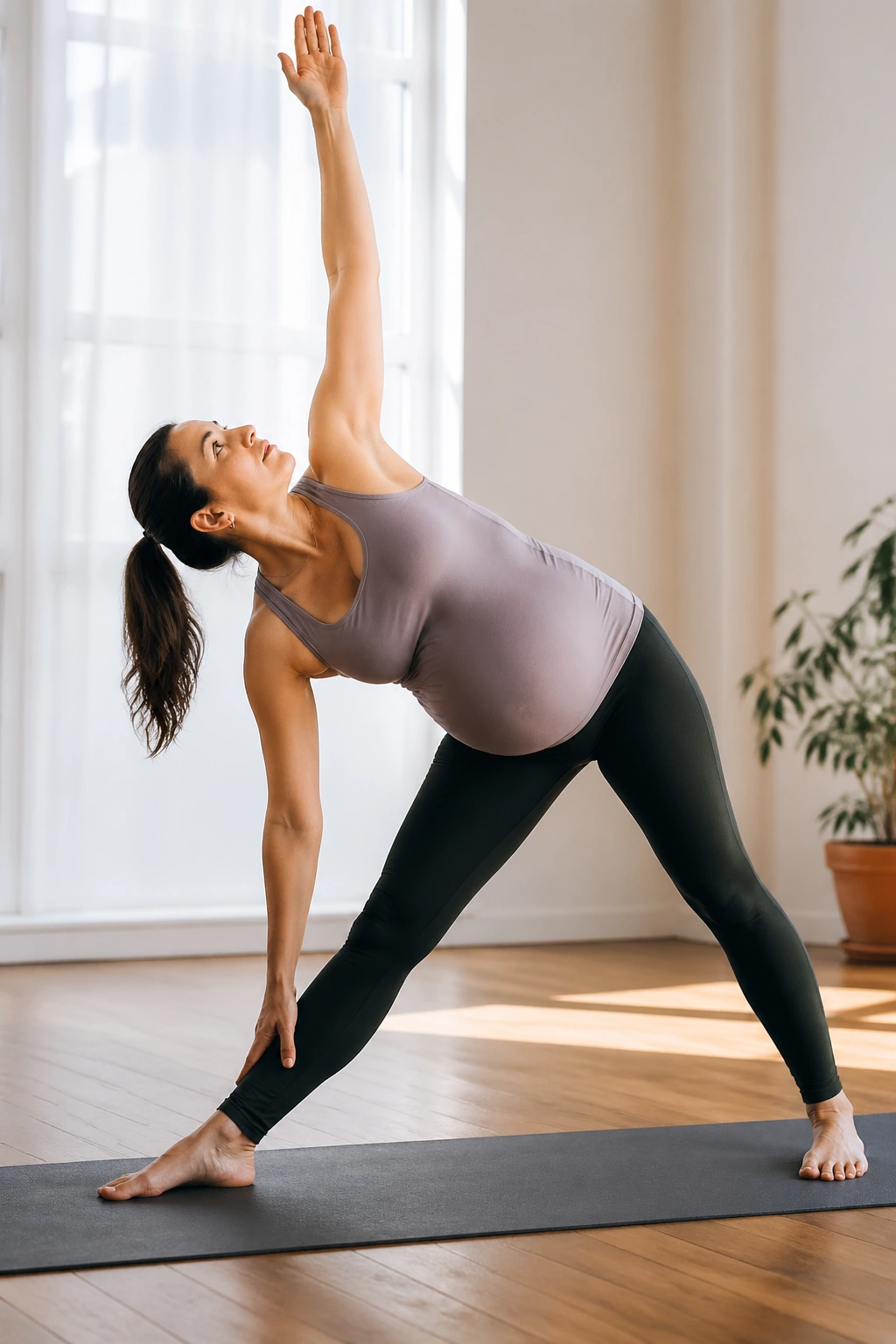
Prenatal yoga earns its place when it stays practical. A lot of the value comes from how it teaches you to slow down and notice where your body is tense for no useful reason.
Wide knees, shorter stances, and fewer deep twists make a big difference. Triangle pose can become a shorter triangle. Warrior poses often feel better with a wider feet position and a hand on a chair or block. Balance work still has a place, but it needs to be kinder. No one needs to wobble for the sake of it.
The best sessions leave you feeling lengthened, not stretched into a complaint. If a pose creates a pulling sensation in the belly, a pinchy feeling in the hips, or pressure in the pubic bone, back out. That’s useful feedback, not weakness.
Poses That Usually Feel Better
- Cat-cow
- Supported side angle
- Seated forward fold with a long spine
- Child’s pose with knees wide
- Standing side stretch with one hand on a wall
10. Water Work for Heavier Legs and Swollen Ankles
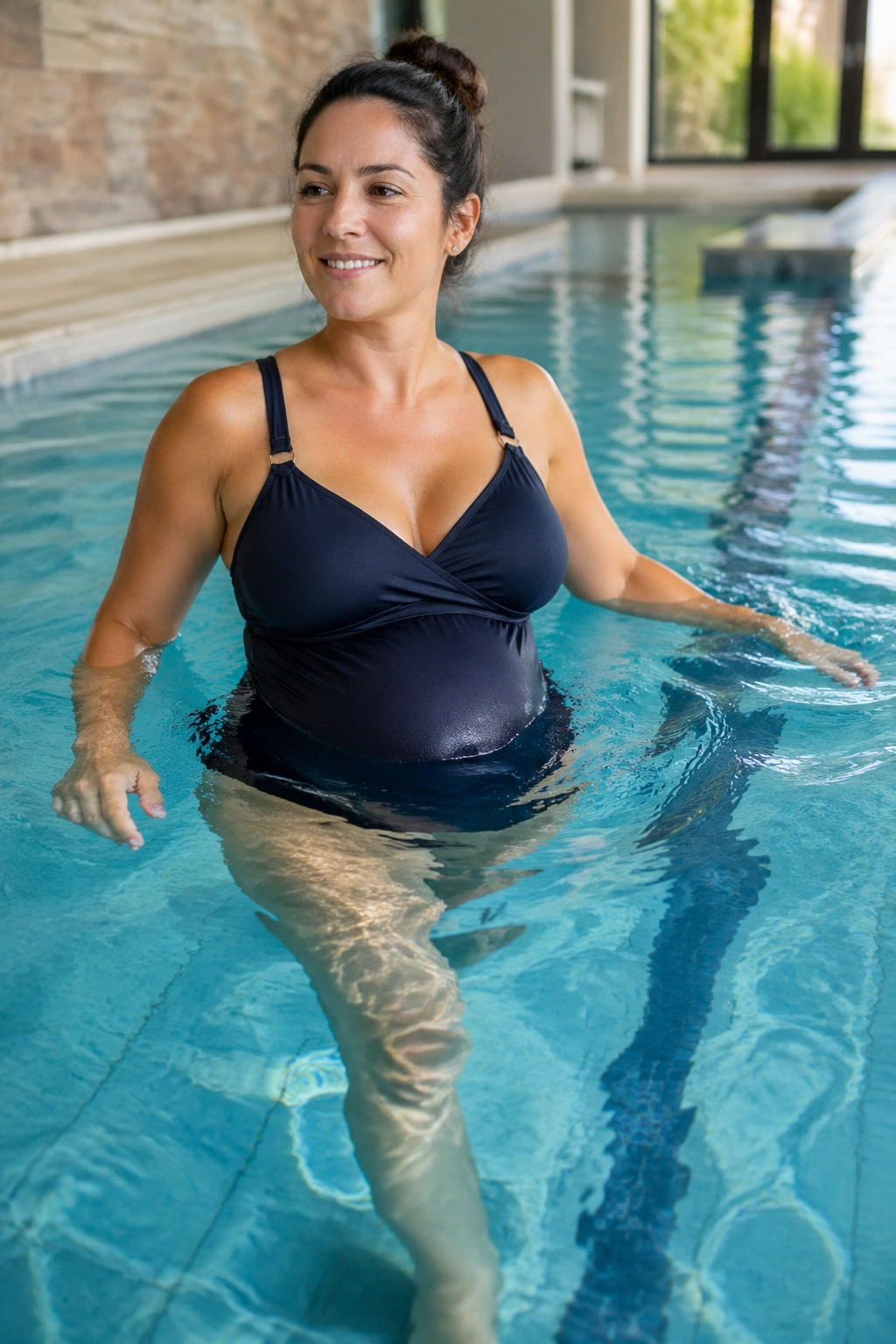
Once your legs start feeling full by midday, water stops being optional in my book.
Water walking, gentle laps, or even side-to-side steps in chest-deep water can take pressure off swollen ankles and a cranky lower back. The hydrostatic pressure from the water gives your legs a little compression, which many people find oddly comforting. You come out feeling lighter. Not every pool session does that, and that’s fine, but enough of them do to make it worth your time.
This is one of the few workouts where you can leave feeling less puffy than when you arrived. That feels almost rude.
If you’re using a pool for the first time in pregnancy, keep the session simple: 5 minutes of walking, 5 minutes of easy laps, 5 minutes of side steps, and 5 minutes of floating or resting at the wall. Then leave before you get chilled.
11. Core Training Without Crunches
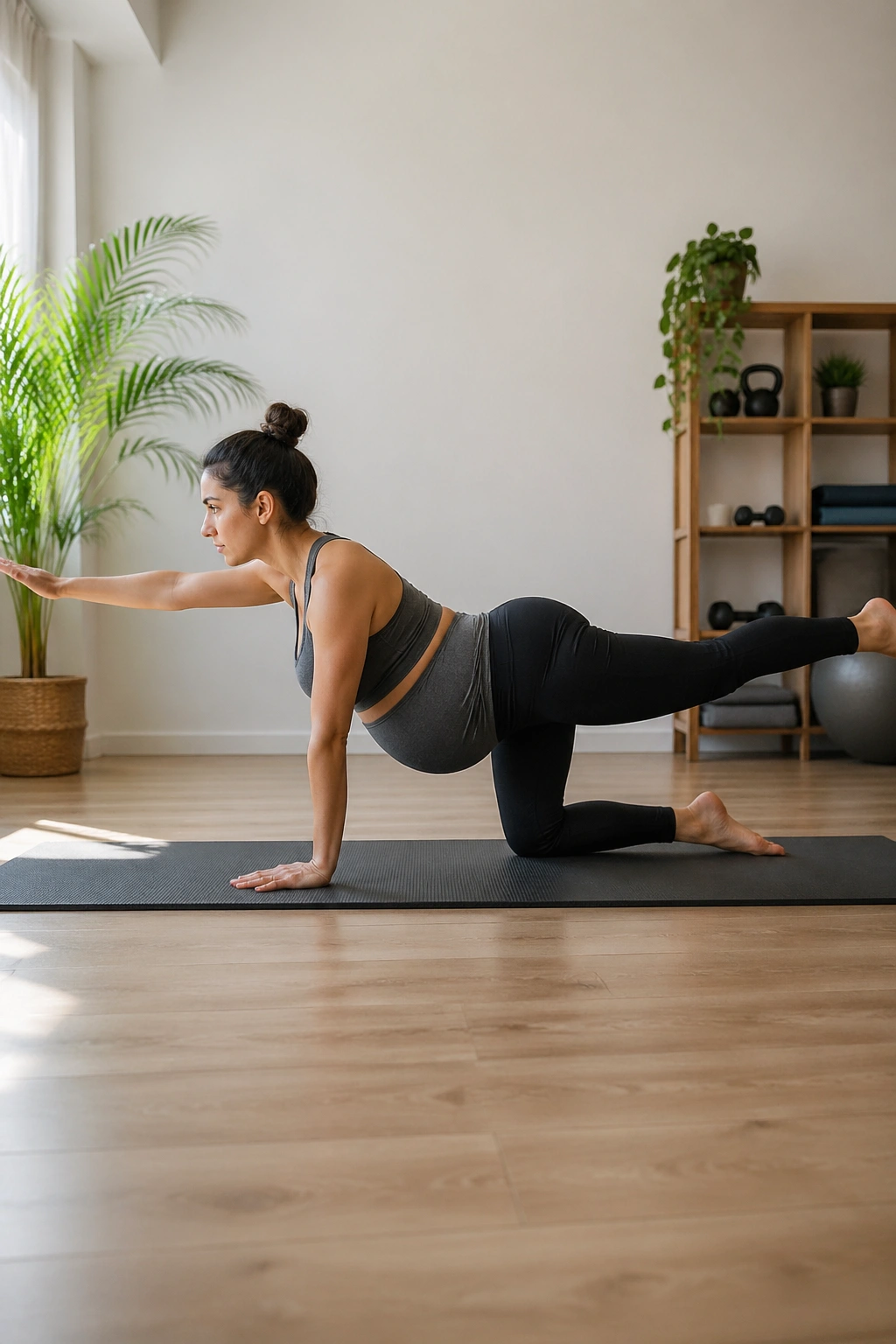
Can you train your core without doing crunches? Absolutely. That’s the version I’d choose anyway.
Pregnancy core work should be about support, not burn. Think dead bugs done in a side-lying variation, bird dog with a hand on a bench, standing Pallof presses with a band, and slow heel slides. These moves teach the deep abdominal muscles to stabilize while your pelvis and spine stay happy. They also keep pressure lower than the old-school ab moves that make some people feel domed or strained.
A Cleaner Way to Think About It
If your belly pushes outward in a sharp cone, the effort is too high. If your ribs flare hard, you’re borrowing from the wrong places. If your lower back takes over, simplify.
A good core session might use 3 rounds of:
- 6 bird dogs per side
- 8 heel slides per side
- 10 band presses per side
- 5 slow breaths between moves
That’s enough. Seriously.
12. Posture Drills for Desk Days and Heavy Bra Days
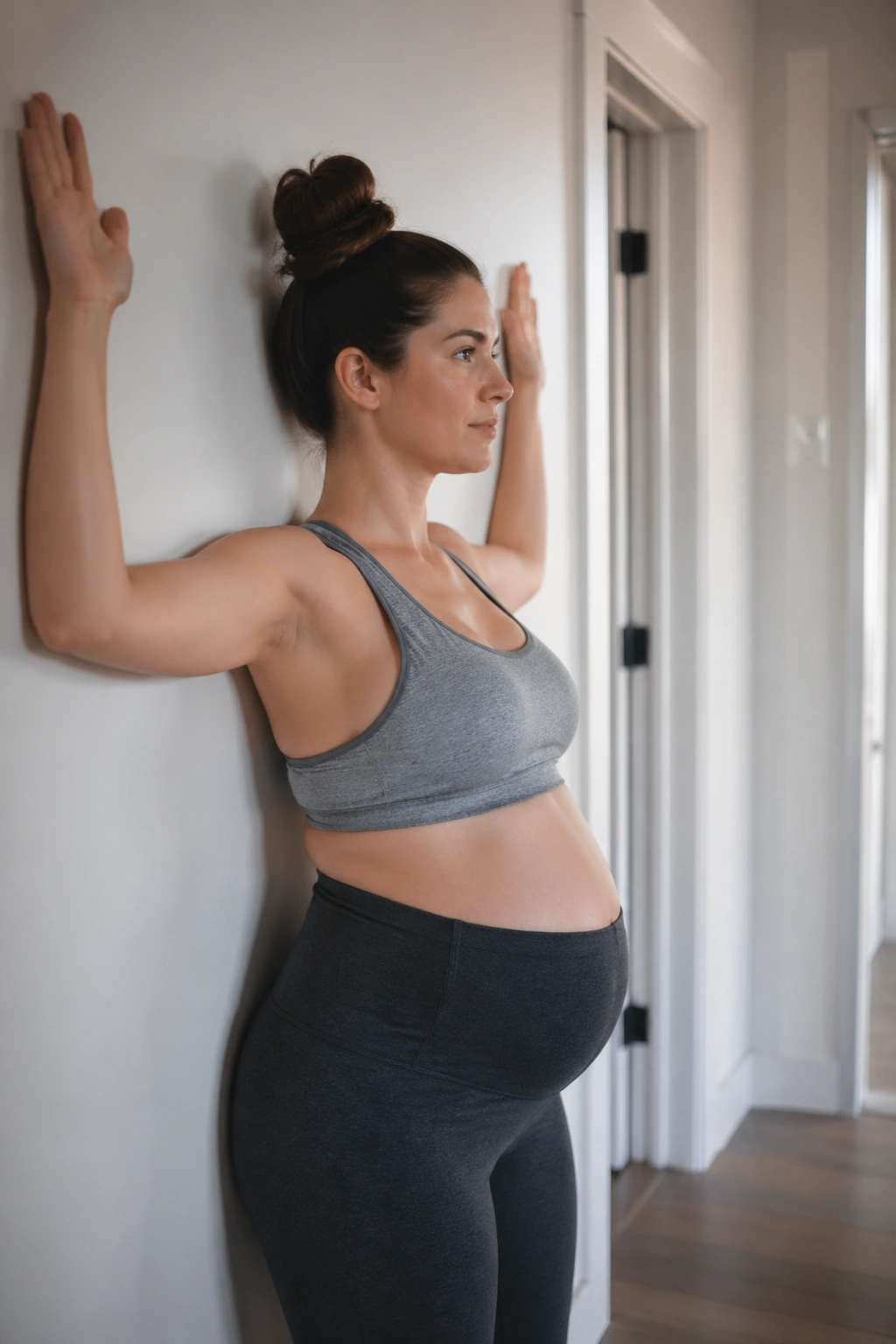
Desk posture is a sneaky thief. It steals your upper back, then your neck, then your mood.
A lot of second-trimester discomfort starts with simple habits: forward head, rounded shoulders, and a rib cage that spends the day slumped over a laptop. Posture drills can help, but not the weird military kind. Think shoulder blade squeezes, wall angels, chin tucks, and a doorway chest stretch that lasts 20 to 30 seconds. Those tiny resets matter when your body is carrying extra front-side weight.
I like these because they can be done in regular clothes, in a hallway, between emails. No mat. No plan. Just stand up and do them.
Mini Reset Sequence
- 5 chin tucks
- 8 wall slides
- 10 shoulder rolls backward
- 20-second chest stretch per side
If your low back starts arching hard to “fix” your posture, stop. Better to stack your ribs over your hips and keep it easy.
13. Chair Squats and Sit-to-Stand Practice for Late Pregnancy
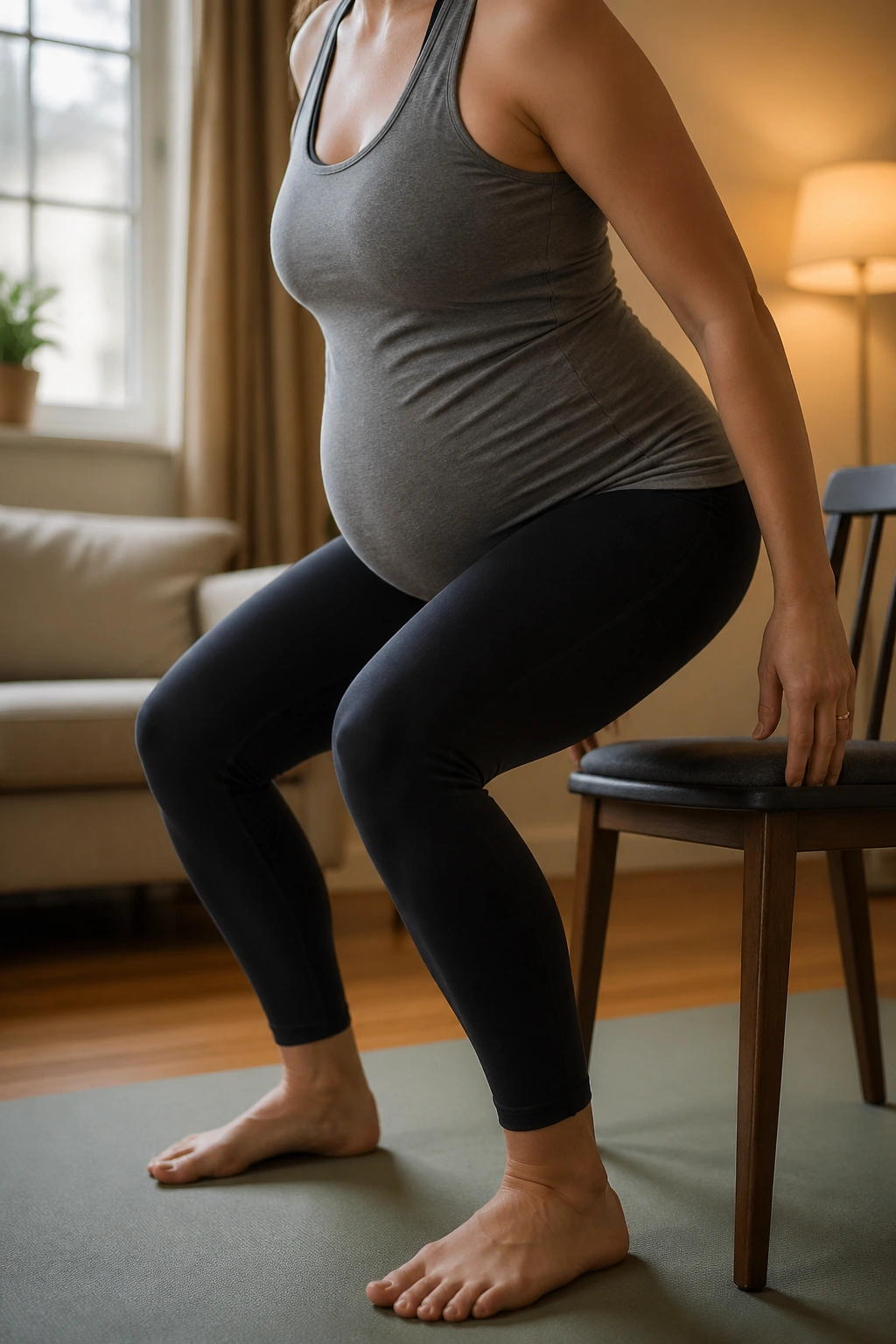
Late pregnancy tends to make the simplest motions feel oddly important. Standing up from a couch counts. A lot.
Chair squats and sit-to-stands build the exact strength you use in daily life, and they’re usually friendlier than deep squats when the belly is in the way. Use a sturdy chair, feet about hip-width apart, and sit back with control. Stand up by driving through your heels and squeezing your glutes lightly at the top. No plopping. No racing. Smooth beats fast every time.
How to Make Them Useful
Try 2 sets of 8 reps, or 3 sets of 5 if you’re tired. Lower the chair with a cushion if you need a higher target. Add a light hold at your chest only if your balance feels solid.
This move helps because it keeps your legs ready for all the times pregnancy asks them to work without warning. Car seats. Bathtubs. Low beds. The world is full of chair squats disguised as errands.
14. Side-Lying Glute Work for Hips That Start Complaining
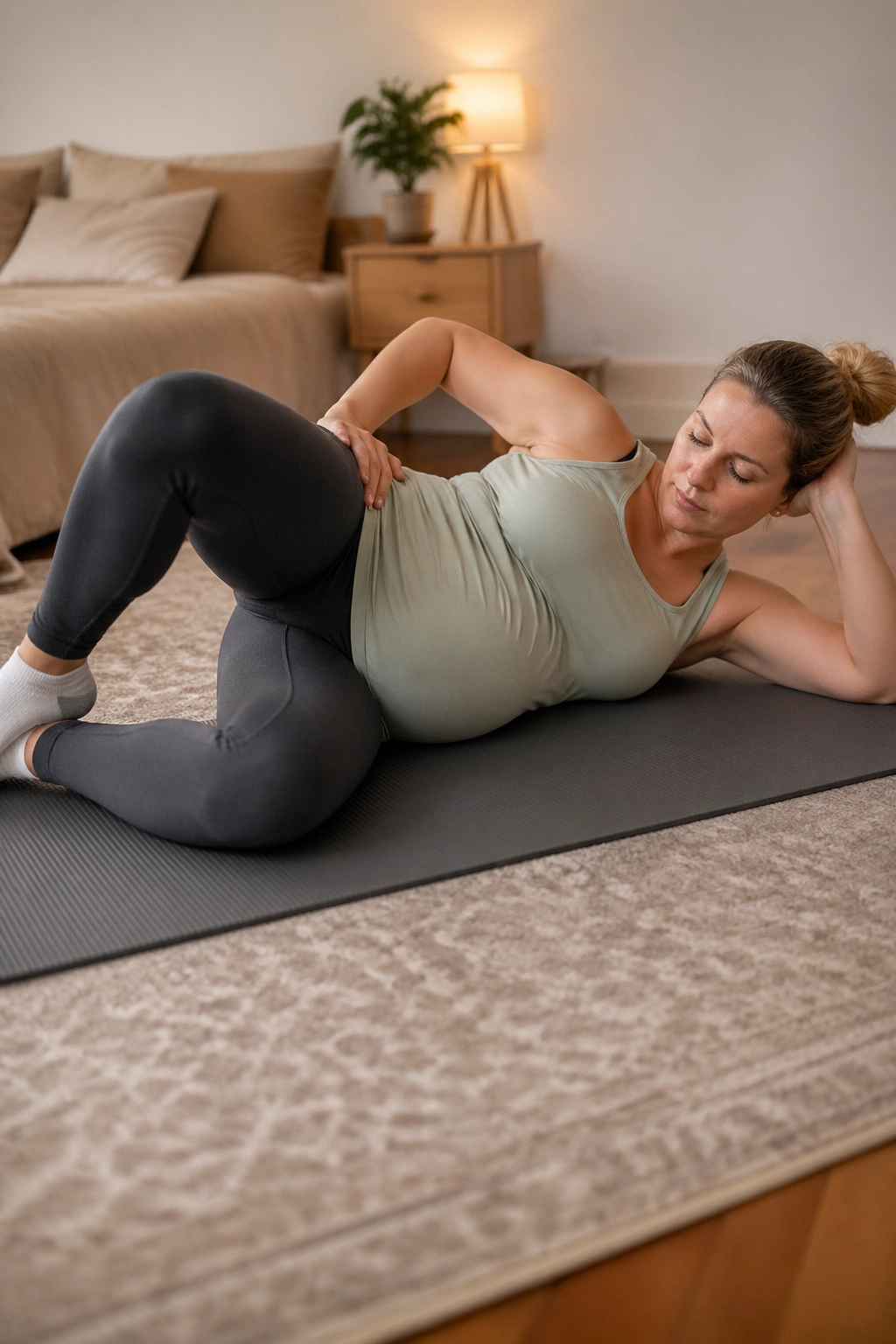
Side-lying work is underrated because it looks too quiet to matter. Your hips would disagree.
Clamshells, side-lying leg lifts, and bent-knee side lifts can help wake up the glute medius, which supports pelvis stability. That’s useful when one side of your pelvis feels like it’s carrying the whole house. These exercises are also nice because they keep pressure off the belly and give you a break from standing all day.
You don’t need a heavy band for this. In fact, a light band or no band at all is often cleaner. Aim for slow reps, 10 to 15 per side, and pause for one second at the top if you can keep the movement crisp.
Why This Helps More Than It Looks Like It Should
Weak or sleepy side glutes often show up as hip pinching, waddling, or that annoying “my pelvis is loose” feeling. Side-lying work won’t fix everything, but it can take the edge off.
Keep the movement small. Bigger is not better here.
15. Birthing Ball Mobility for Hips, Back, and Breathing
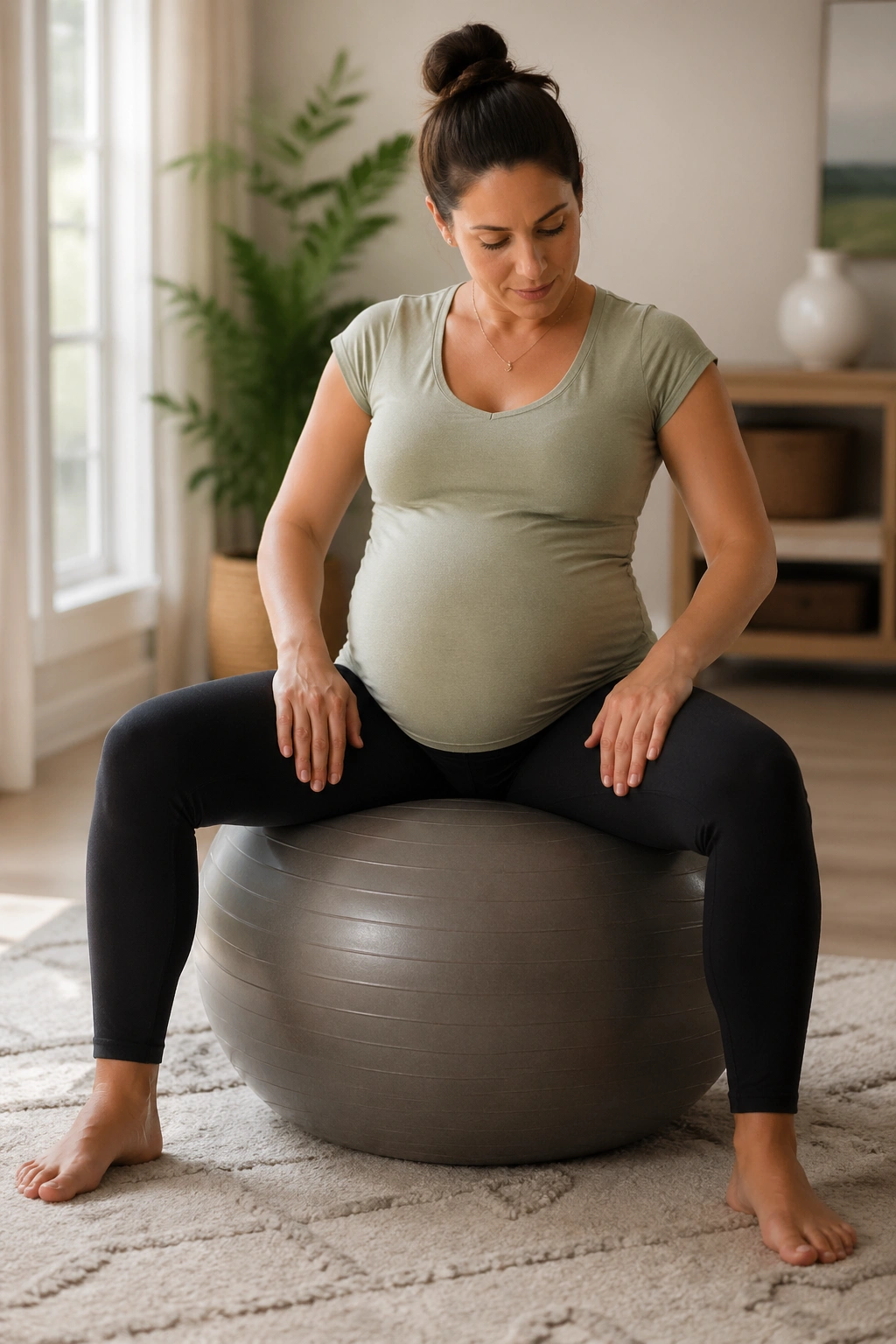
A birthing ball earns space in the room because it lets you move without lying down or standing rigidly in place.
Sitting on the ball and making slow circles with your hips can calm the low back. Gentle bouncing can feel good when the pelvis wants motion but not impact. Forward leans over the ball help a lot of people breathe more freely, especially when the belly starts crowding the ribs. It’s one of the few tools that can feel useful for exercise and comfort in the same five-minute window.
A Simple Ball Routine
- 10 slow hip circles each way
- 20 gentle bounces
- 5 deep breaths while leaning forward
- 5 pelvic tilts with a flat back
Use a ball size that lets your knees sit roughly level with or a bit below your hips. If it feels slippery, put it on a rug or non-slip mat. A ball that skids around is annoying and not worth the trouble.
16. Short Walks With Planned Rest Stops
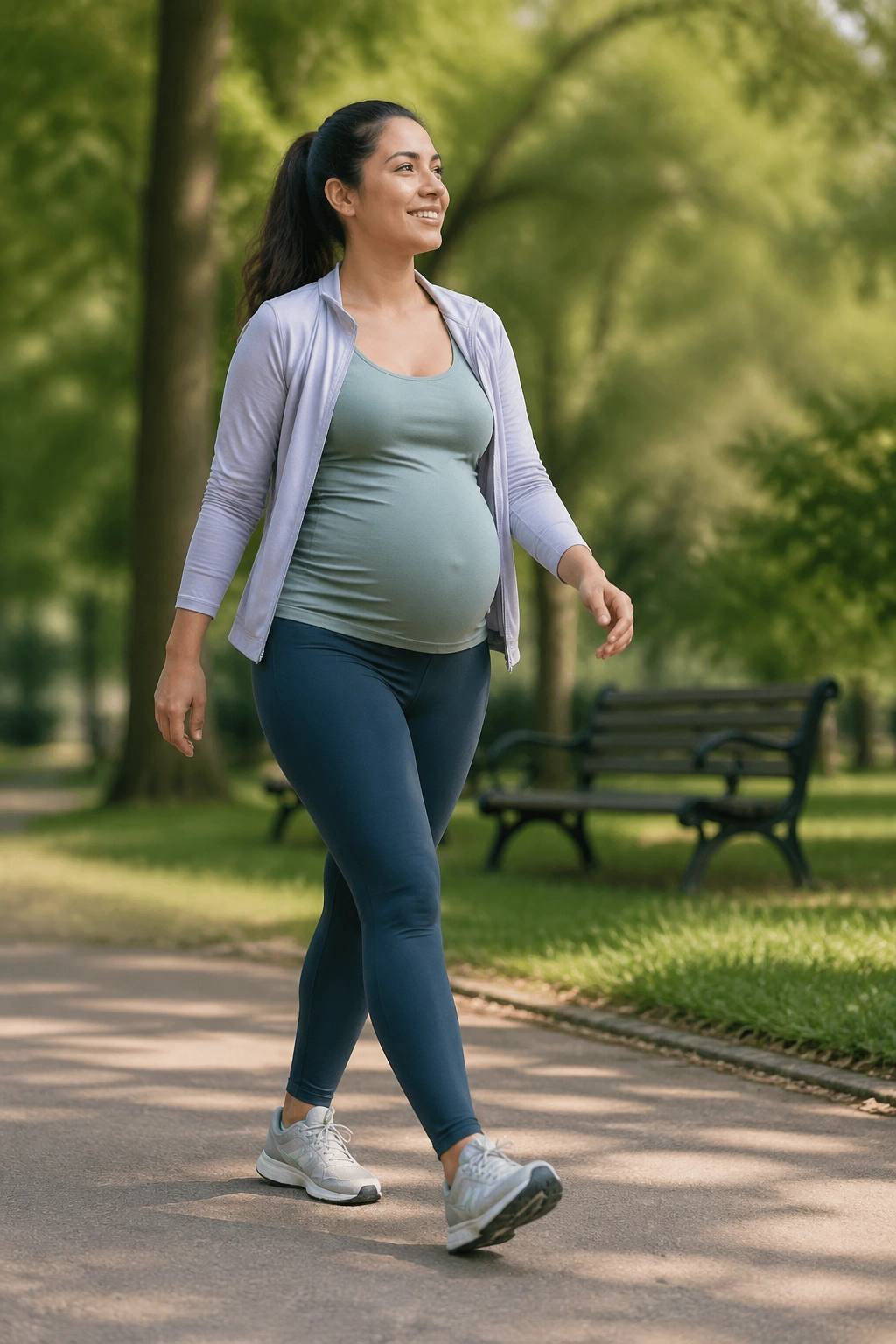
Long walks sound noble. Planned rest stops are smarter.
By the third trimester, the biggest mistake is treating fatigue like a character flaw. It isn’t. You may need to break a 20-minute walk into two 10-minute pieces, or stop halfway to sit on a bench, breathe, and then head home. That still counts. More than counts, actually. It’s often the difference between keeping the habit and quitting because the session got too long.
This approach works especially well if your feet swell, your lower back gets tight, or baby starts pressing in a way that makes upright movement feel heavy. Rest before you’re exhausted. That’s the trick.
A handheld water bottle, a bench route, and a plan for bathroom access can make a walk feel sane instead of stressful.
17. Stretch-and-Breathe Wind-Down for Better Sleep

Evening movement does not need to be intense to be useful. Sometimes the best session of the day is the one that helps you stop clenching.
A stretch-and-breathe wind-down can include seated neck rolls, a supported child’s pose, gentle hamstring stretches with one leg at a time, and 5 slow exhales lying on your side. Keep it soft. Keep it short. Ten minutes is enough when sleep is getting messy and your body feels loud at night.
What Makes It Work
The goal is to reduce muscle tension and give your nervous system a signal that the day is over. If a stretch feels sharp, skip it. If it feels good for the first 10 seconds and then turns grumpy, shorten the hold.
I like this routine because it does not ask for motivation. It asks for a mat, a wall, and a little patience.
18. A Weekly Mix You Can Repeat
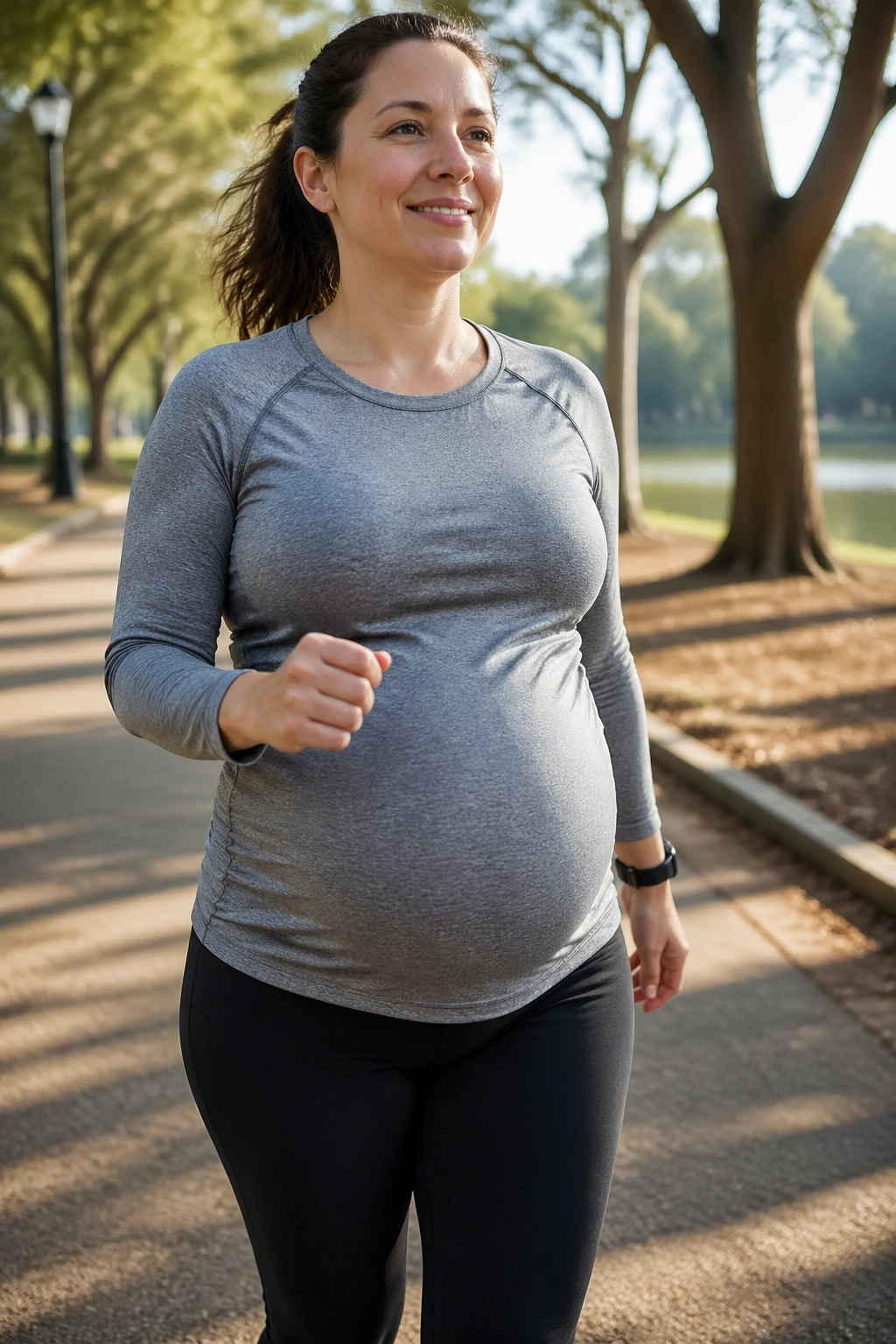
A good pregnancy fitness plan does not need a new personality every Monday.
If you want something practical, build a week around three pieces: one or two cardio days, two strength days, and short mobility or breathing sessions on the in-between days. That mix works across trimesters because you can scale the pieces up or down without changing the whole plan. Walking becomes shorter. Strength work becomes more supported. Mobility gets slower. The structure stays familiar.
A simple week might look like this:
- Monday: 20-minute walk
- Tuesday: chair-and-wall strength circuit
- Wednesday: mobility and breathing
- Thursday: pool time or incline walk
- Friday: dumbbells and posture work
- Saturday: short walk with a rest stop
- Sunday: birthing ball or stretch session
If one day goes sideways, don’t try to “make up” everything the next day. That usually backfires. Just pick up the next session and keep going.
The best prenatal routine is the one that survives tired mornings, weird smells, busy weeks, and the occasional completely unhelpful mood. That’s real life. And real life is where these workouts earn their keep.
