



Compound lifts every woman should try are the ones that pay you back every time you touch the bar, dumbbell, or kettlebell. A well-done squat, deadlift, press, row, or carry trains more than one muscle at once, which is why these movements belong in the same conversation as stronger legs, a sturdier back, better posture, and real-life strength that shows up when a grocery bag is awkward, a suitcase is heavy, or the stairs keep going longer than you expected.
A lot of gym advice still nudges women toward tiny isolation work and endless light circuits, as if strength has to look delicate to count. That’s backwards. If you want muscle that changes shape, bones that get a proper training signal, and a body that feels easier to live in, compound work earns its place fast.
The catch is that compound lifting asks for patience. Form matters. Load matters. So does choosing the version that fits your body and your training history, because the best squat for one person might be a goblet squat before a barbell ever touches her back, while another lifter is ready for a full rack position right away.
Start with the lifts that teach the most and forgive the least mistakes once you know what to feel. The first one is the squat, and it tells you a lot about how your hips, trunk, and legs work together.
1. Back Squat
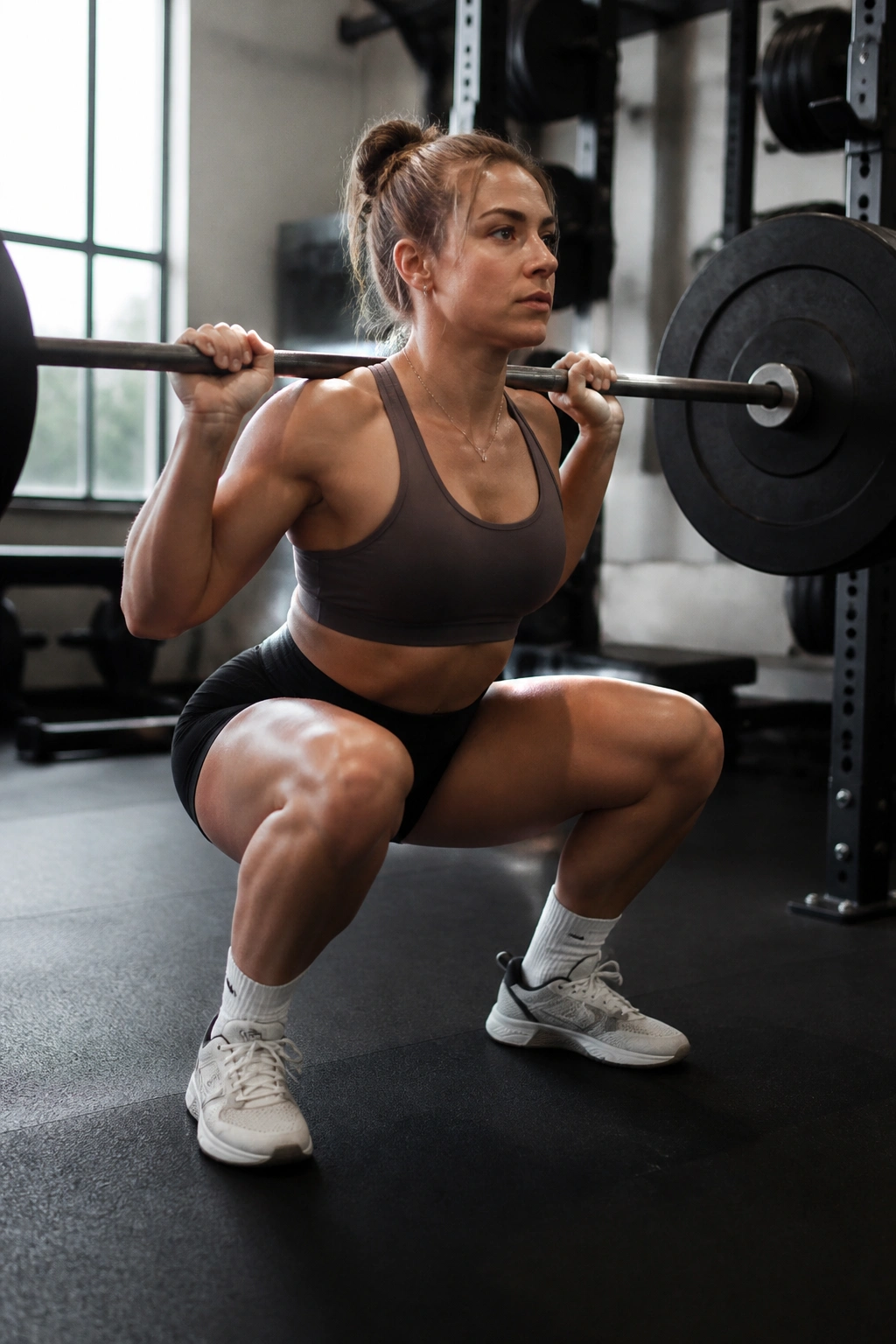
If you want one lower-body lift that teaches bracing, hip drive, and leg strength at the same time, the back squat is hard to beat. It’s one of those exercises that looks simple from a distance and then gets humbling the moment the bar gets real weight on it.
A solid back squat hits the quads, glutes, adductors, and upper back in one shot. That matters more than people think. Your trunk has to stay tight while your knees and hips move, which is why a good squat often carries over to better standing posture and more stable walking under load.
What to feel in the first rep
- Your feet should feel glued down through the mid-foot, not tipped onto the toes.
- Your torso should stay tight enough that taking a hard cough would not change your position much.
- Your knees should track over your toes, not cave inward when the descent gets deep.
- The bar should stay over the middle of the foot on the way down and up.
Best starting point: a high-bar back squat with a moderate stance, because it usually feels friendlier for beginners than a super-wide powerlifting setup.
A lot of women are stronger in the squat pattern than they expect, partly because the legs usually respond well once the technique clicks. Do not rush the load. A clean set of five with controlled depth is worth more than a shaky set of eight that turns into a balance drill.
2. Deadlift
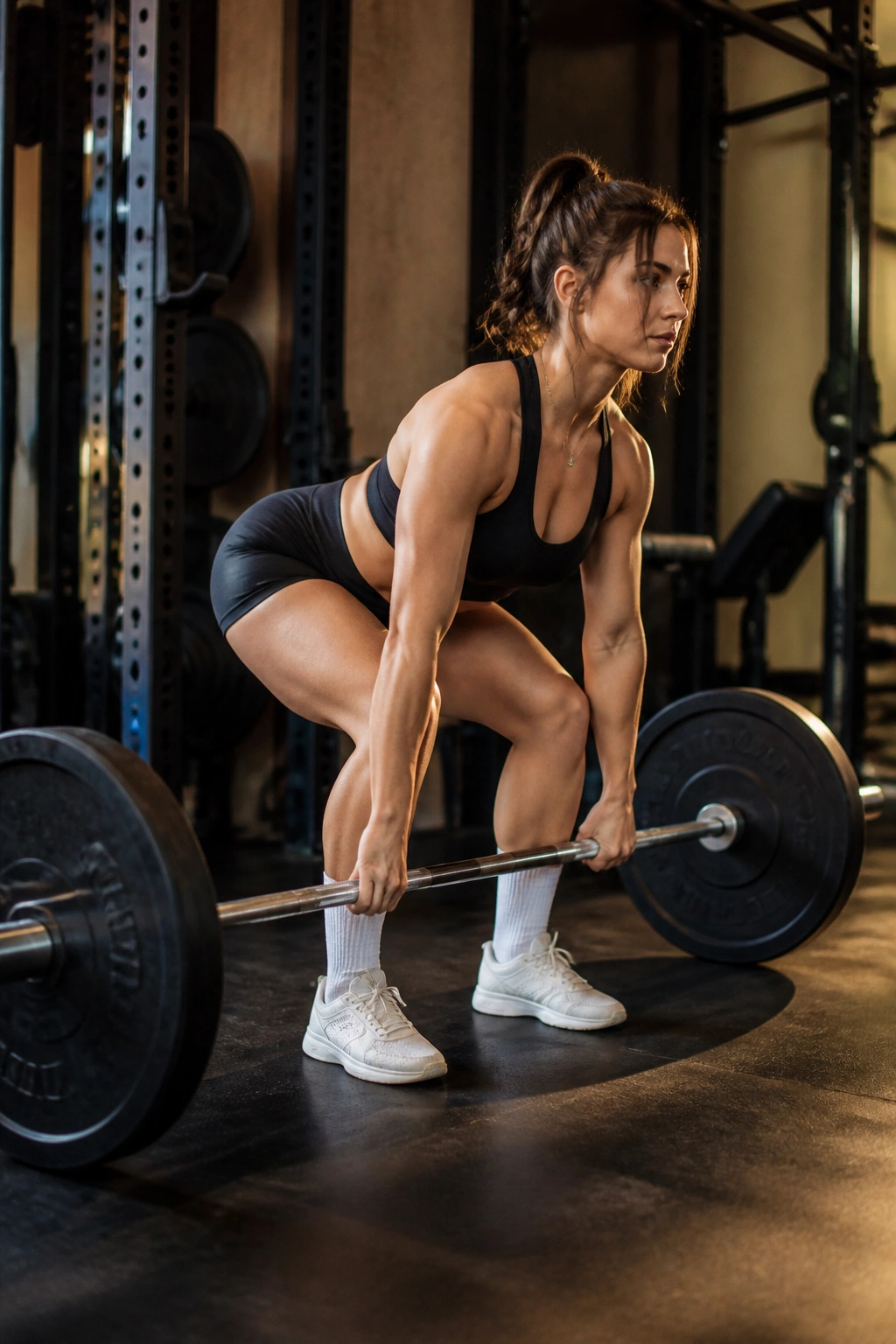
The deadlift is the lift that teaches you to pick weight up from the floor without letting your back do all the work. That sounds obvious, but plenty of people still turn it into a rounded-back yank and hope for the best. Bad idea.
What makes the deadlift so useful is the way it ties the glutes, hamstrings, lats, grip, and trunk into one hard pull. It is one of the clearest ways to build full-body tension, and that tension shows up everywhere else you lift. Your setup matters more than the drama of the pull itself.
I like the deadlift because it is honest. If the bar drifts away from the shins, if the hips shoot up first, or if the chest collapses, the lift tells on you immediately. That feedback can be annoying. It’s also useful.
Start with the bar close, breathe into your belly, and wedge yourself between the floor and the bar before you pull. If a conventional deadlift feels awkward at first, a trap-bar deadlift or kettlebell deadlift is a smarter entry point than forcing a shape that your body does not love yet. A good deadlift should feel like you are pushing the floor away, not muscling the bar up with your lower back.
3. Romanian Deadlift
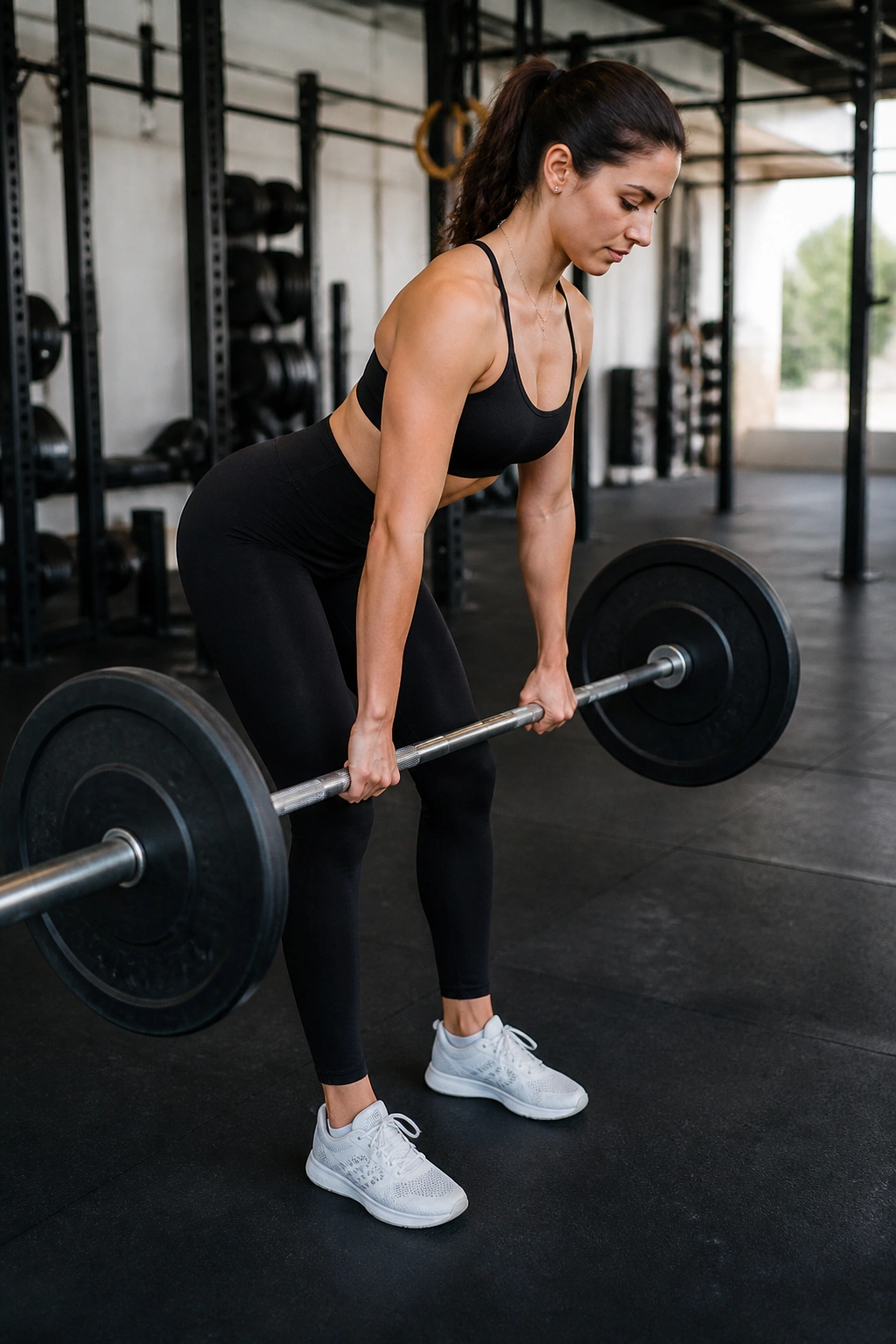
Why does the Romanian deadlift show up on so many serious leg programs? Because it teaches the hinge without the extra chaos of a floor pull, and that makes it one of the cleanest hamstring builders in the room.
The movement loads the hamstrings while they are stretched, which is where they tend to respond well. You keep a soft bend in the knees, send the hips back, and let the torso tip forward just enough to feel tension in the back of the legs. If your lower back is doing the whole job, the load is too heavy or the range is too deep.
How to use it
- Start with a barbell or a pair of dumbbells.
- Keep the knees slightly bent and frozen there.
- Lower until you feel a strong hamstring stretch and the spine wants to stay long.
- Stand up by driving the hips forward, not by pulling with the arms.
The Romanian deadlift is a gift for anyone who wants stronger glutes and hamstrings without having to do a lot of noisy, high-fatigue reps. Three sets of six to eight is a useful place to live for a while. And if you only remember one cue, remember this: the weight follows the hips, not the other way around.
4. Bench Press
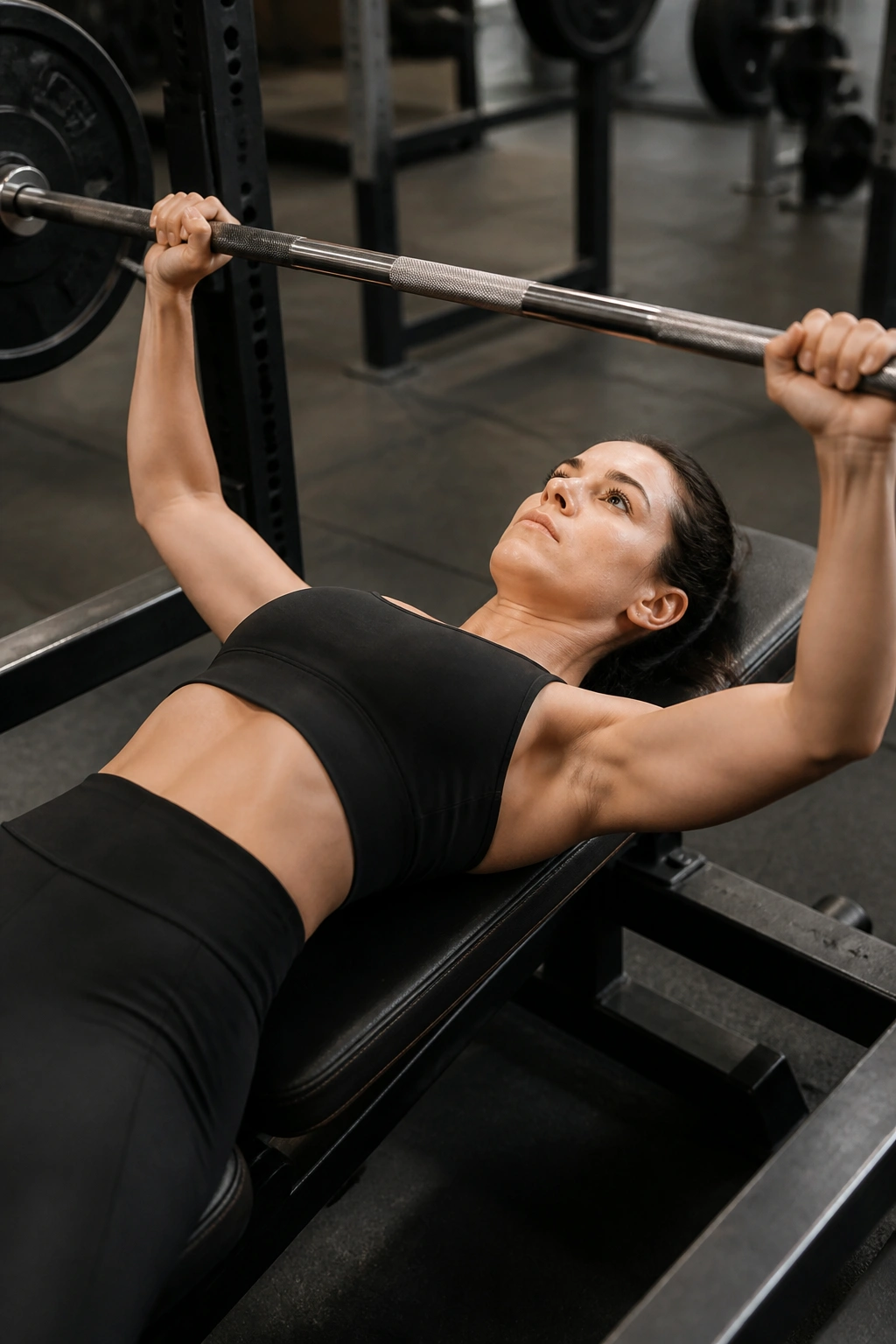
Walk into a busy gym and you’ll see plenty of women skip the bench press because the bar looks awkward, the setup feels technical, and the bench area can be a little weird in general. Shame, because the bench press is one of the best upper-body builders you can learn.
A good bench press trains the chest, triceps, and front shoulders while also asking the upper back to stay organized on the bench. That last part matters. The lift is not just “push the bar away.” It is also a lesson in how to lock your shoulder blades down, keep the chest high, and press without letting your shoulders roll forward under load.
The common mistakes are easy to spot once you know what you’re seeing. Elbows flared too wide. Feet floating around. Bar bouncing off the chest like a dare. None of that helps.
A better setup looks calmer. Shoulder blades tucked back and down. Feet planted. A small arch in the lower back, but not a circus bridge. Touch the bar lightly to the lower chest and press in a slight diagonal back toward the rack. If the bar path looks wild, the setup probably needs work before the weight goes up.
5. Overhead Press
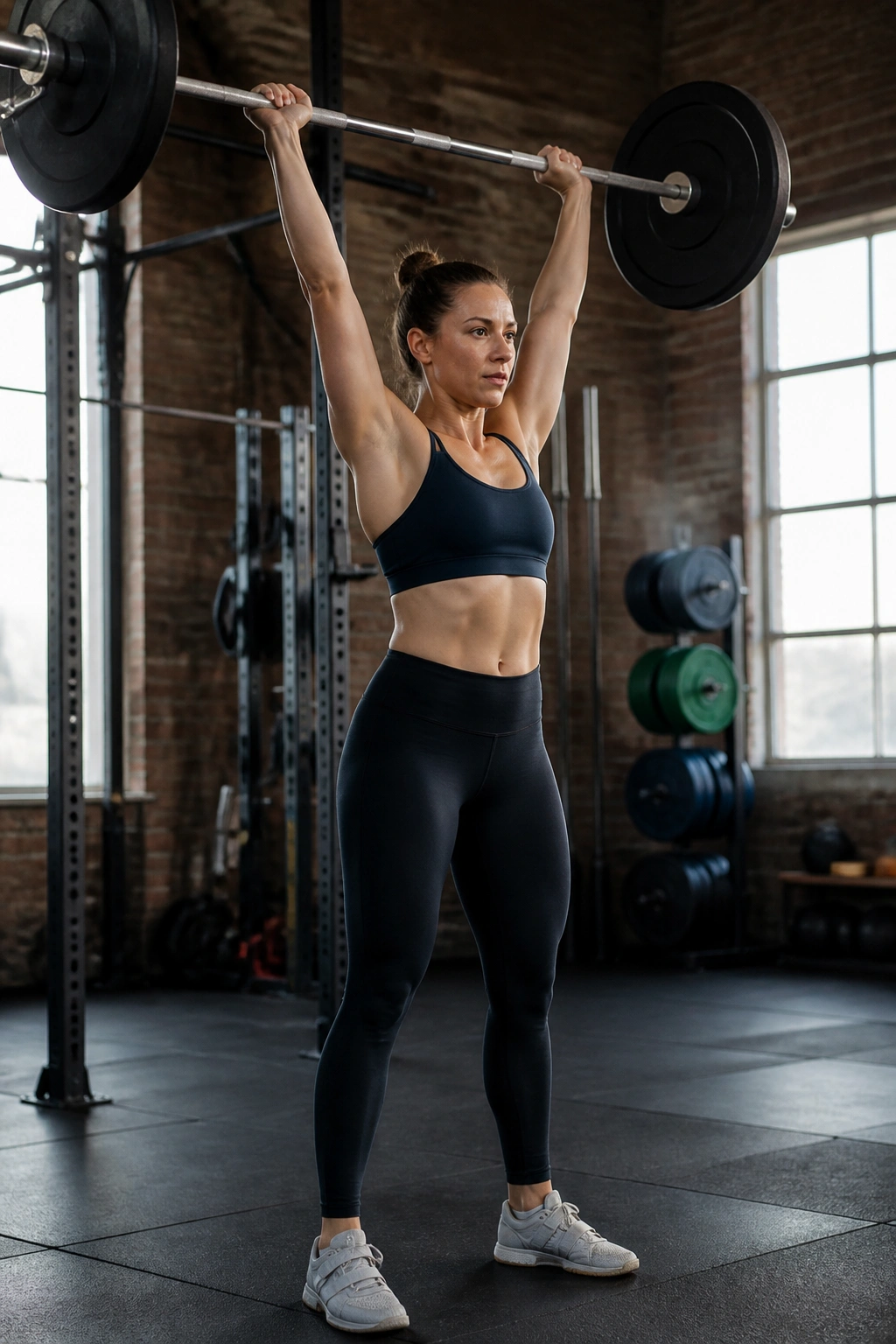
Standing overhead press is one of the cleanest tests of upper-body strength because it does not let your legs quietly help unless you choose the push press variation on purpose. That makes it a little humbling and a little addictive.
The press trains the shoulders, triceps, upper chest, and core, but the part people miss is the whole-body tension. Your glutes should stay tight. Your ribs should stay stacked over your pelvis. Your head moves out of the way at the top, then comes back under the bar as it settles overhead. Easy to describe. Less easy to do well.
I like the standing version more than the seated one for most lifters because it forces you to own the position from the floor up. It also tells you the truth about whether your trunk is doing its job. If your lower back arches hard on every rep, the bar is too heavy or the ribs are flaring. Either way, the press is getting noisy.
A pair of dumbbells is a fine place to start, especially if a barbell bothers your shoulders. The movement should feel controlled, not grindy. Strong overhead pressing is part shoulder strength and part not-falling-apart-under-load. That second part does a lot of work.
6. Barbell Row
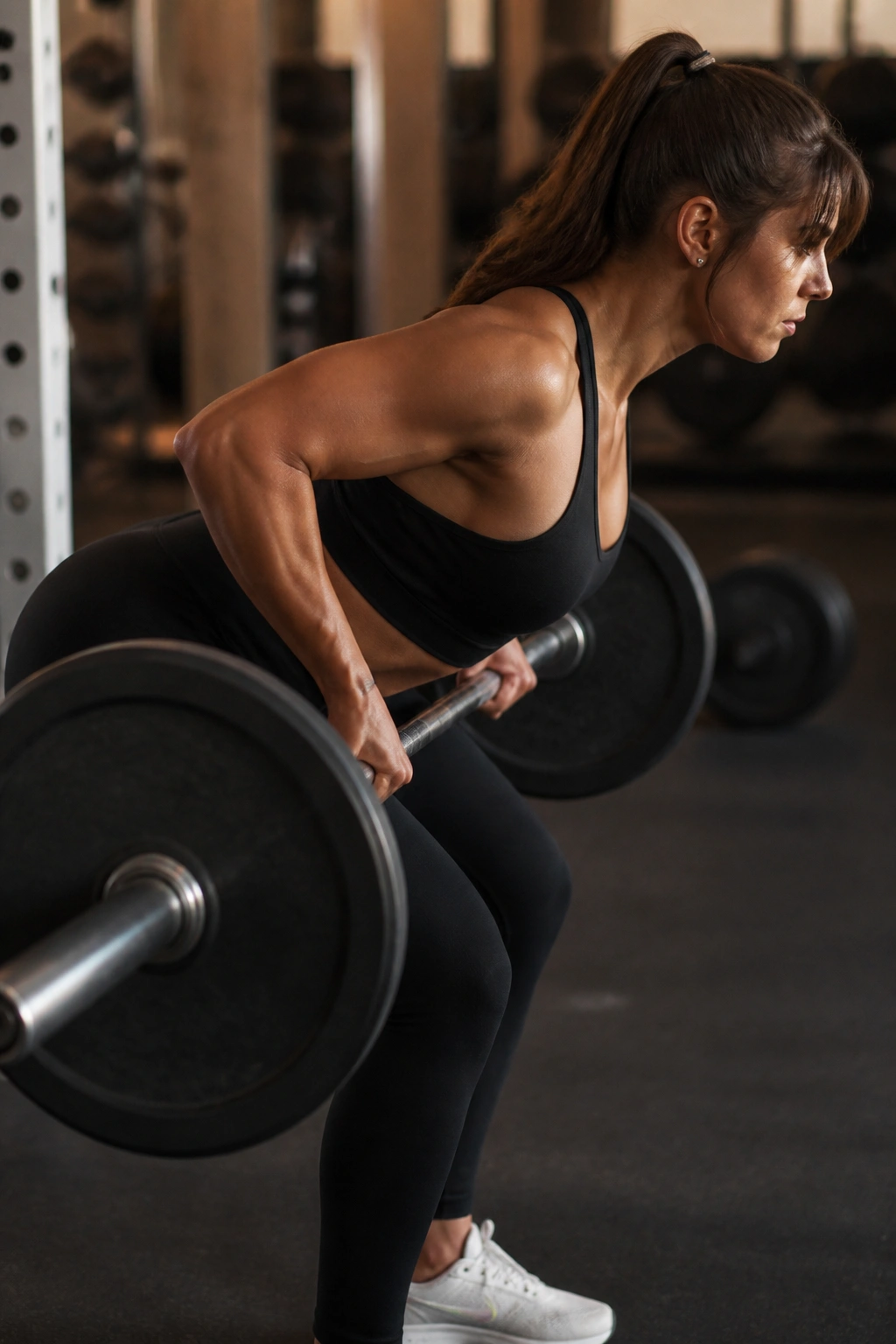
A row is the missing half of a pressing-heavy program, and the bent-over barbell row gives you that work in a form that is direct and a little unforgiving. Good. That honesty is useful.
Unlike a chest-supported row, the barbell row asks your back and trunk to hold position while you pull. That means the lats, rear delts, rhomboids, and spinal erectors all get dragged into the conversation. It is one of the better lifts for building that thick upper-back look people notice even when they don’t know what they’re looking at.
The catch is that it gets sloppy fast. If the torso keeps popping up and down like a piston, the set has turned into a half-deadlift, half-ego lift. Keep the angle of your torso set, pull the bar toward the lower ribs or upper belly, and stop the rep before the shoulders creep forward.
This is a lift I like for women who want stronger pulling power without living on machines. Still, if your lower back is tired from squats or deadlifts, a chest-supported row is a perfectly smart swap. The goal is tension in the back, not a contest to see how much your lower back can tolerate.
7. Pull-Up or Assisted Pull-Up
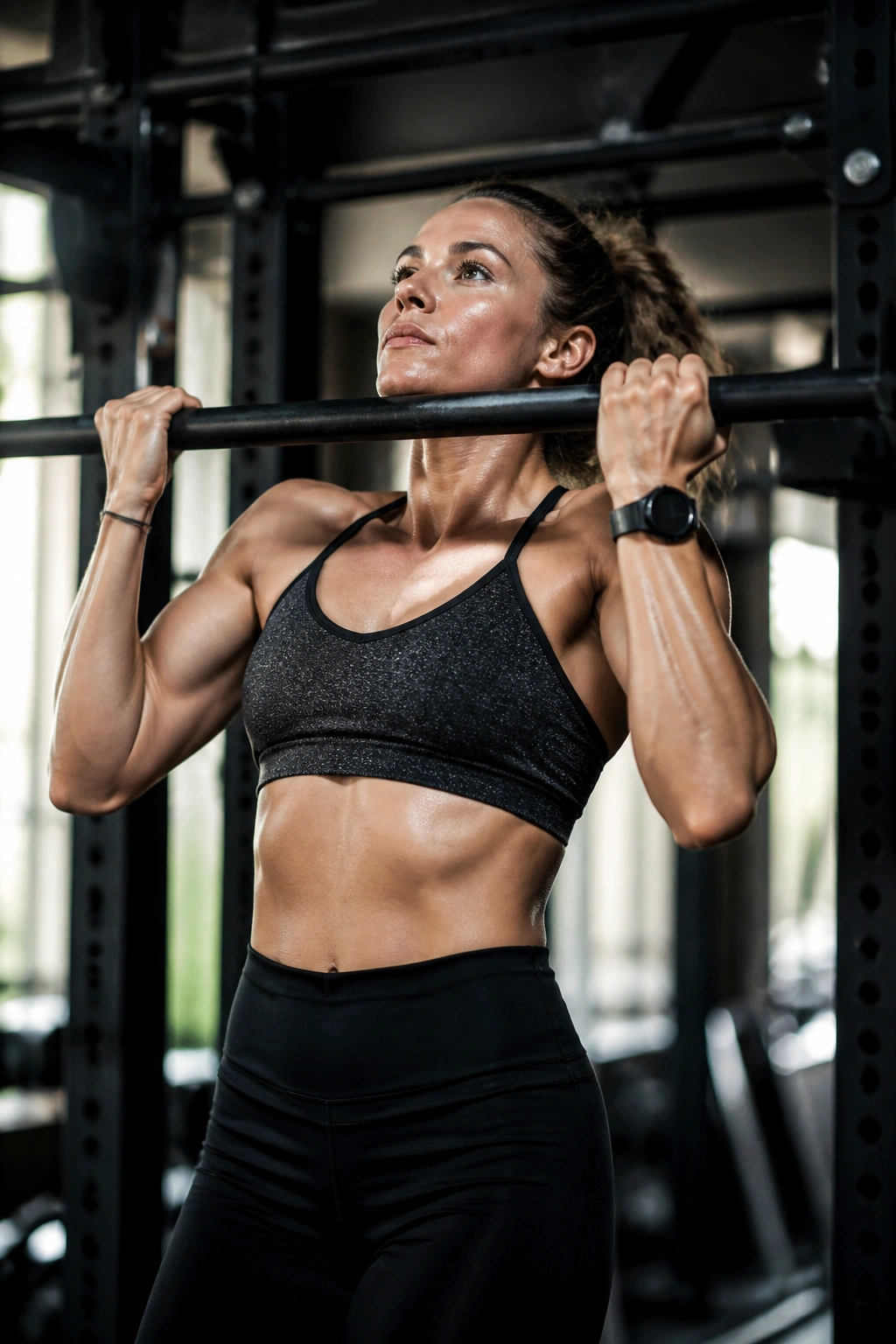
Can every woman do a pull-up? Not on day one, and that does not mean she should skip it. Pull-ups are a skill as much as a strength move, and that skill is worth building.
The pull-up trains vertical pulling, grip, and shoulder control in a way that few other lifts do. Your lats do a lot of the work, but the core has to stay braced and the shoulders have to move without getting sloppy. That full-body demand is why a clean pull-up feels earned.
How to scale it
- Start with dead hangs for 15 to 30 seconds to build grip and shoulder comfort.
- Use an assisted pull-up machine or a resistance band for 3 to 5 controlled reps.
- Add slow negatives, lowering for 3 to 5 seconds on each rep.
- Use lat pulldowns if the bar setup is not available.
A lot of women are surprised by how much the pull-up changes their upper body once it starts moving. The back looks firmer. The grip gets better. Even simple things like carrying a suitcase feel less annoying. One warning, though: do not kip and swing unless you are training that on purpose. Strict reps teach better strength.
8. Hip Thrust
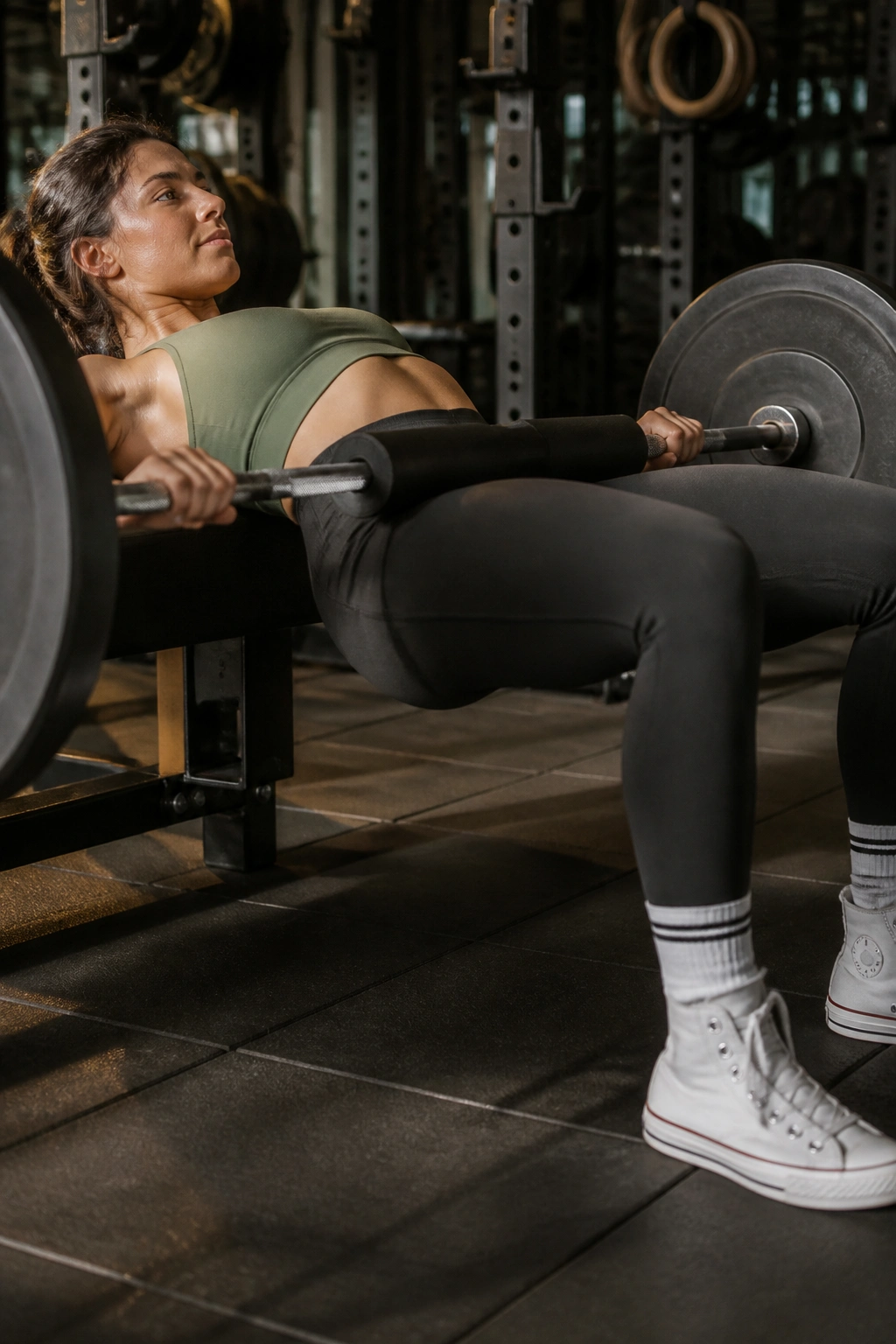
Sit on a bench, load a bar over the hips, and you get one of the cleanest glute-focused compound lifts out there. The hip thrust looks awkward until the top position hits, and then the whole movement makes sense.
What makes it useful is the way it loads the glutes hard in the shortened position. Squats and deadlifts train the glutes too, but the hip thrust gives you a very direct lockout challenge. That can help if you want stronger hips for sprinting, jumping, or simply standing up from low seats without feeling like your legs are made of soup.
Setup matters here. Your upper back rests on the bench edge, the chin stays tucked, and the shins should be close to vertical at the top. If the feet are too far away, you’ll feel hamstrings grab the job. Too close, and your knees can get cranky.
A lot of lifters rush the top and overextend the spine. Don’t. Lock the glutes, not the low back. The finish should feel like a firm squeeze, not a lower-back hinge disguised as a glute exercise.
9. Front Squat
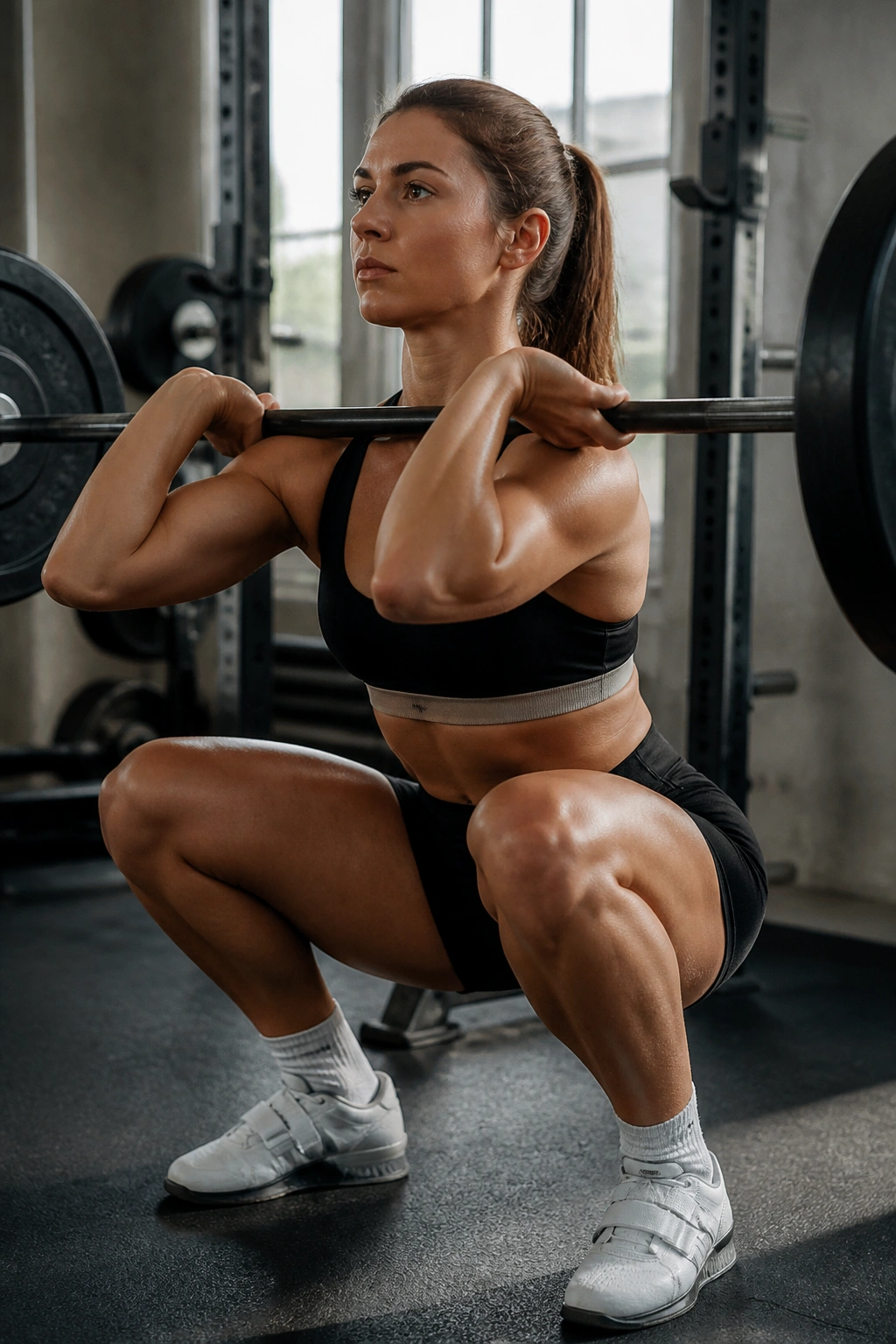
The front squat is the squat that forces honesty. There is nowhere to hide when the bar sits on the front of the shoulders, because your torso has to stay more upright and your core has to keep the rack position alive.
That upright position shifts more work into the quads and upper back than a back squat usually does. It also teaches a cleaner brace. If the chest drops, the bar complains. If the elbows fall, the bar complains again. The lift keeps score fast.
Some lifters love the front rack immediately. Others feel like their wrists are being asked to do a job they never applied for. That’s normal. A crossed-arm grip or straps looped around the bar can make the lift more accessible while you work on mobility. You do not get extra points for suffering through a setup that makes every rep ugly.
I like front squats for women who want a strong squat pattern with a little less spinal loading than a heavy back squat. They’re also useful when the goal is leg strength with a crisp torso position. If your legs are strong but your squat looks folded in half, front squats can clean that up fast.
10. Walking Lunge
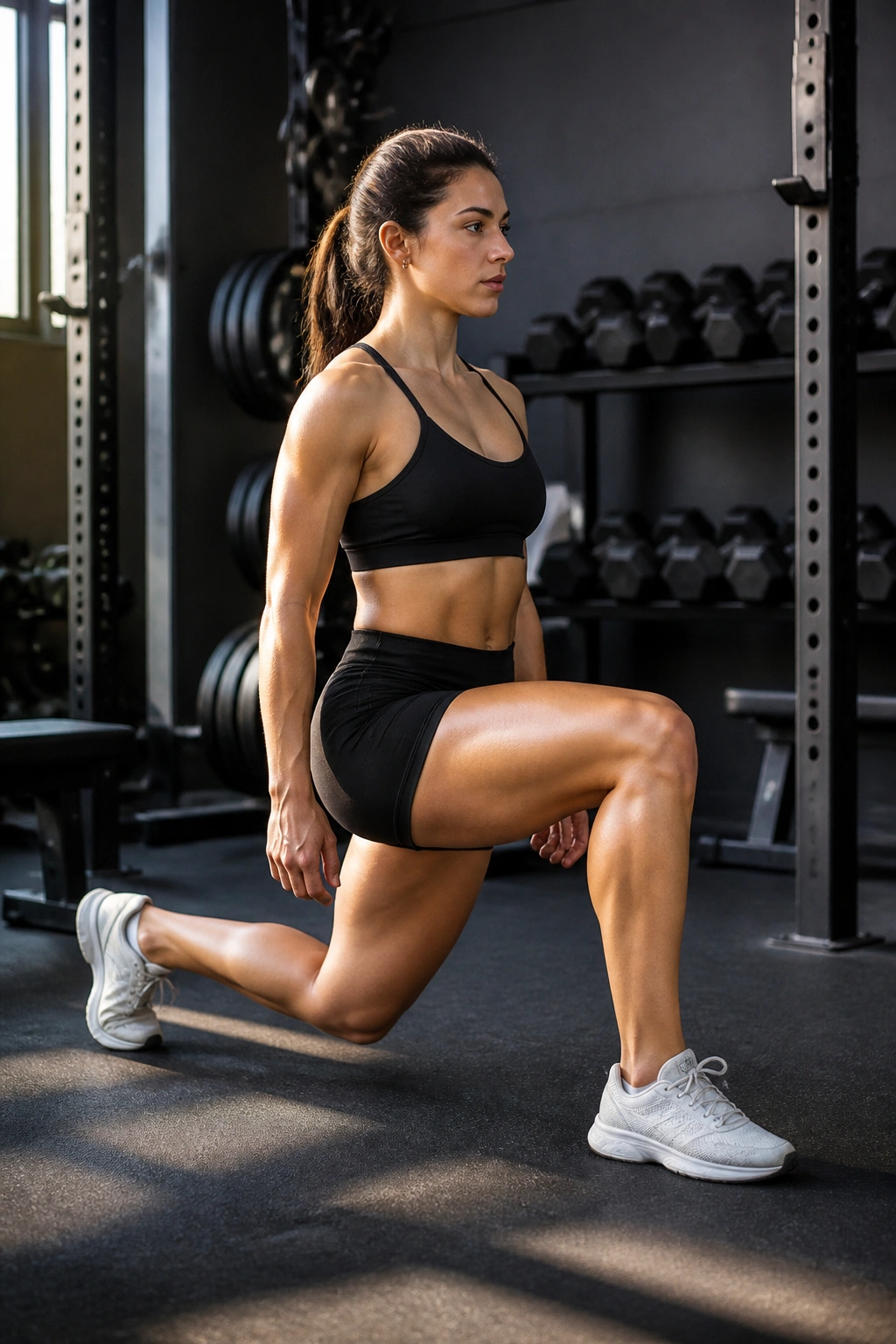
A walking lunge is less stable than a split squat, and that is exactly why it’s useful. The lift makes you balance, step, brace, and drive all at once, which is closer to how bodies actually move than a lot of gym work admits.
Each step loads the quads, glutes, and adductors while asking the pelvis to stay controlled. That single-leg demand helps expose side-to-side differences. If one leg gets sloppy, the lunge shows it. If your stride is too short, the front knee gets grumpy. Too long, and the front glute may not do enough.
I prefer walking lunges when I want a movement that feels athletic without turning into a full gymnastics event. Keep the torso tall, take a long enough step that the front heel stays down, and let the back knee come close to the floor without slamming it. A short pause between steps can help if balance is the issue.
This is one of those lifts that looks ordinary until the last few reps. Then it bites. That bite is the point. It teaches you to keep producing force while moving through space, which is a useful skill whether you lift, run, hike, or just live in a body that has to get around.
11. Bulgarian Split Squat
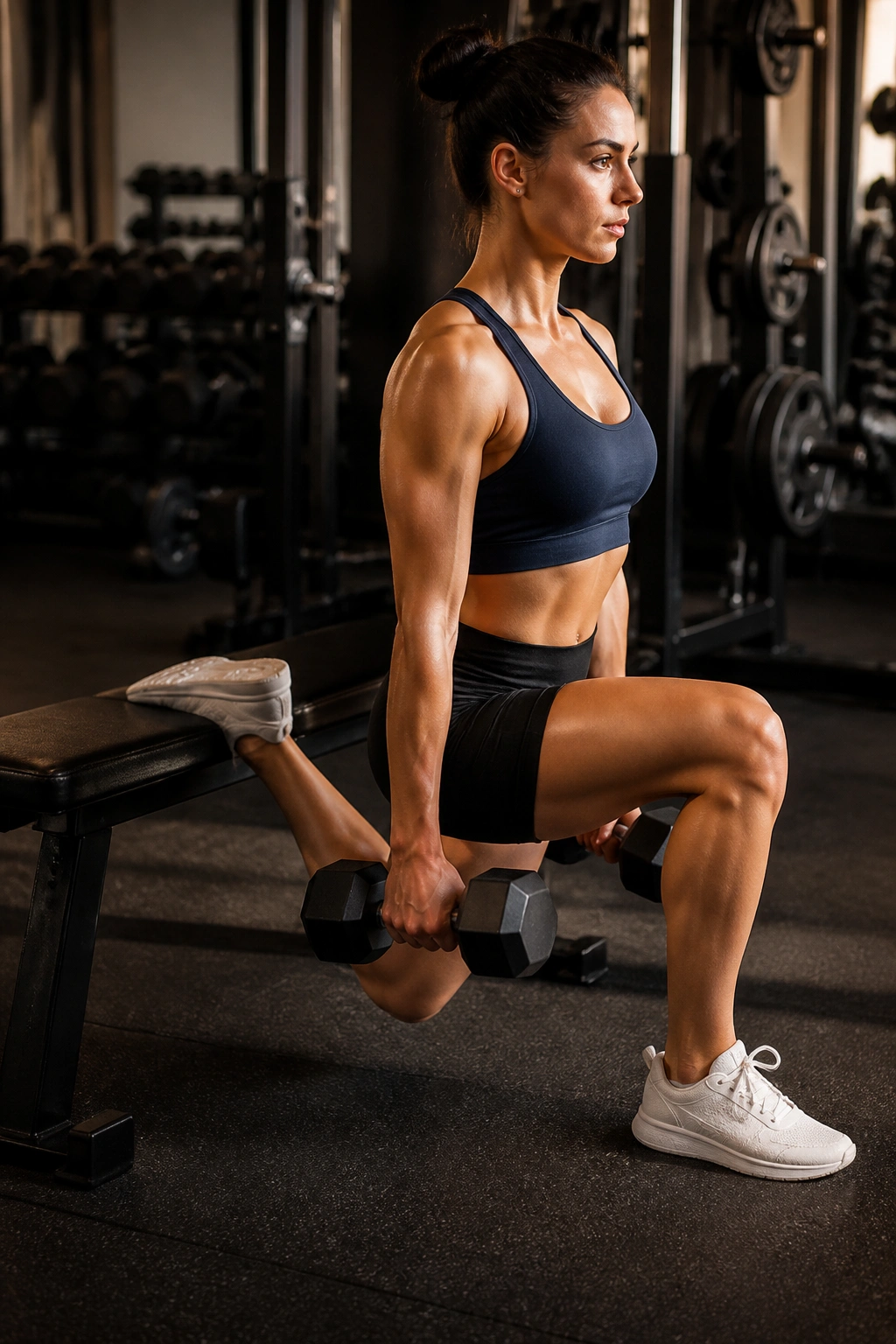
Why do so many strong people complain about Bulgarian split squats? Because the exercise strips away a lot of the cheating you can get away with elsewhere. One leg works. The other one mostly watches. There’s nowhere to hide.
The rear-foot-elevated position lets you load the front leg hard while keeping spinal load lower than a heavy barbell squat. That makes the Bulgarian split squat a sneaky-brutal quad and glute builder. It is also one of the best ways to catch imbalances between sides without a ton of equipment.
How to survive the first set
- Put the back foot on a bench or box that is low enough to feel stable.
- Step the front foot out far enough that your front heel stays flat.
- Drop straight down, not forward onto the knee.
- Start with bodyweight or light dumbbells before chasing load.
A lot of lifters hate this move because they set it up too narrow. Then the front knee gets jammed and the whole thing feels ridiculous. Widen the stance a little and the lift usually becomes much friendlier. Not easy. Friendlier.
If I had to pick one single-leg lift for someone who wants a lot of return without a lot of equipment, this would be near the top. It builds strength where you can actually use it, not just where the bar says you should have it.
12. Incline Dumbbell Press
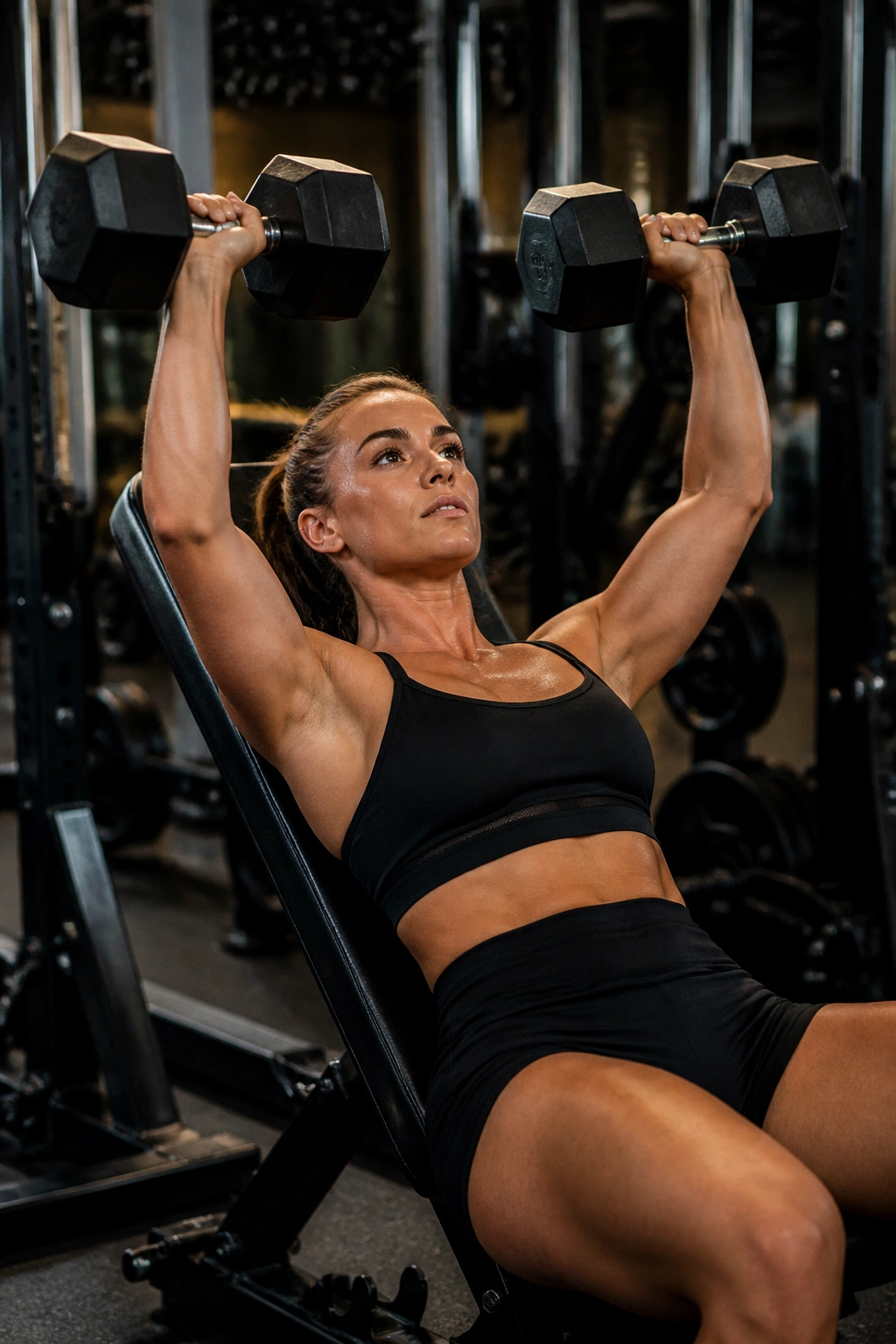
If flat bench feels cranky on your shoulders, incline dumbbell press is the friendlier press many lifters should have started with. The slight incline changes the angle enough to shift work toward the upper chest and front delts while giving your arms a more natural path.
Dumbbells matter here because they let each arm move on its own. That usually feels nicer on the shoulders, and it also exposes side-to-side differences that a barbell can hide. A good incline angle is often somewhere around 20 to 30 degrees. Much steeper than that and the press turns into a shoulder exercise with a chest cameo.
What I like most is the feel of the descent. You can bring the dumbbells down under control, keep the elbows at a comfortable angle, and press in a path that does not fight your joints. If one side drifts, you know it immediately. That kind of feedback is useful.
Three sets of 8 to 12 works well for most lifters here. Slow down the lowering phase a little and don’t chase a super-steep bench angle just because it looks intense. A modest incline is usually the sweet spot. Too high, and you lose the chest. Too low, and you are back near flat bench territory.
13. Kettlebell Swing
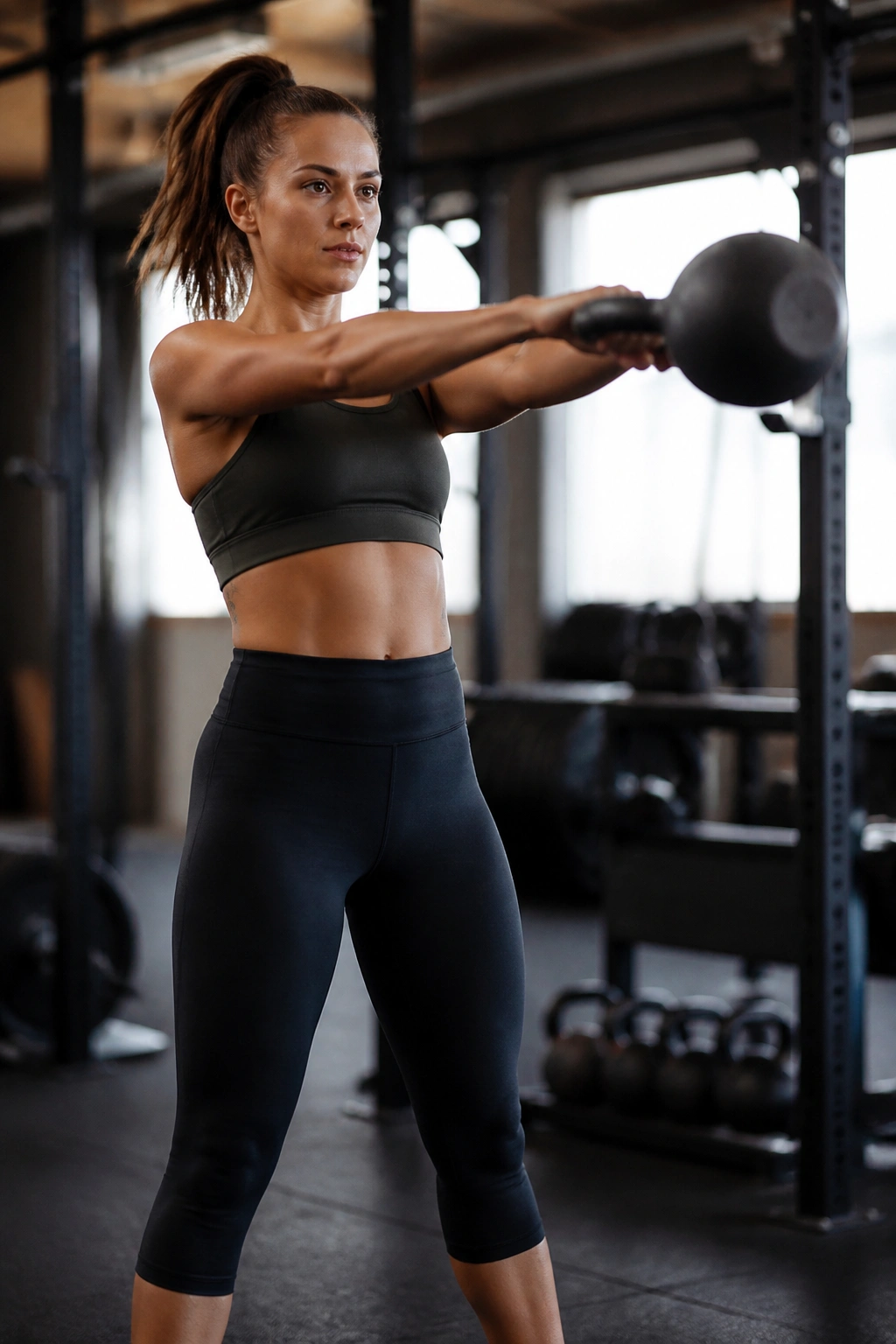
The first time a kettlebell swing clicks, the bell almost snaps itself forward. That feeling is the hip hinge waking up. It’s fast, loud, and a little addictive when it’s done well.
The swing is a power move, not a squat and not an arm raise. Your hips hinge back, then snap forward hard enough to float the bell. The glutes, hamstrings, and trunk do most of the work, while the shoulders stay packed and the arms act like ropes. When people muscle the bell with their shoulders, the swing gets ugly fast.
Key details worth watching
- Hike the kettlebell back between the thighs before the first rep.
- Keep the shins close to vertical.
- Snap the hips forward and let the bell float to chest height.
- Stop the set when the lower back starts doing the work instead of the hips.
I like swings for women who want a compound movement that also adds some conditioning without turning the session into a marathon. They’re efficient. They’re honest. And they teach hip power in a way that carries over well to running, jumping, and general explosiveness.
The one warning is simple: if your hinge is weak, learn it first on deadlifts or Romanian deadlifts. A swing rewards speed only after the shape is solid.
14. Push Press
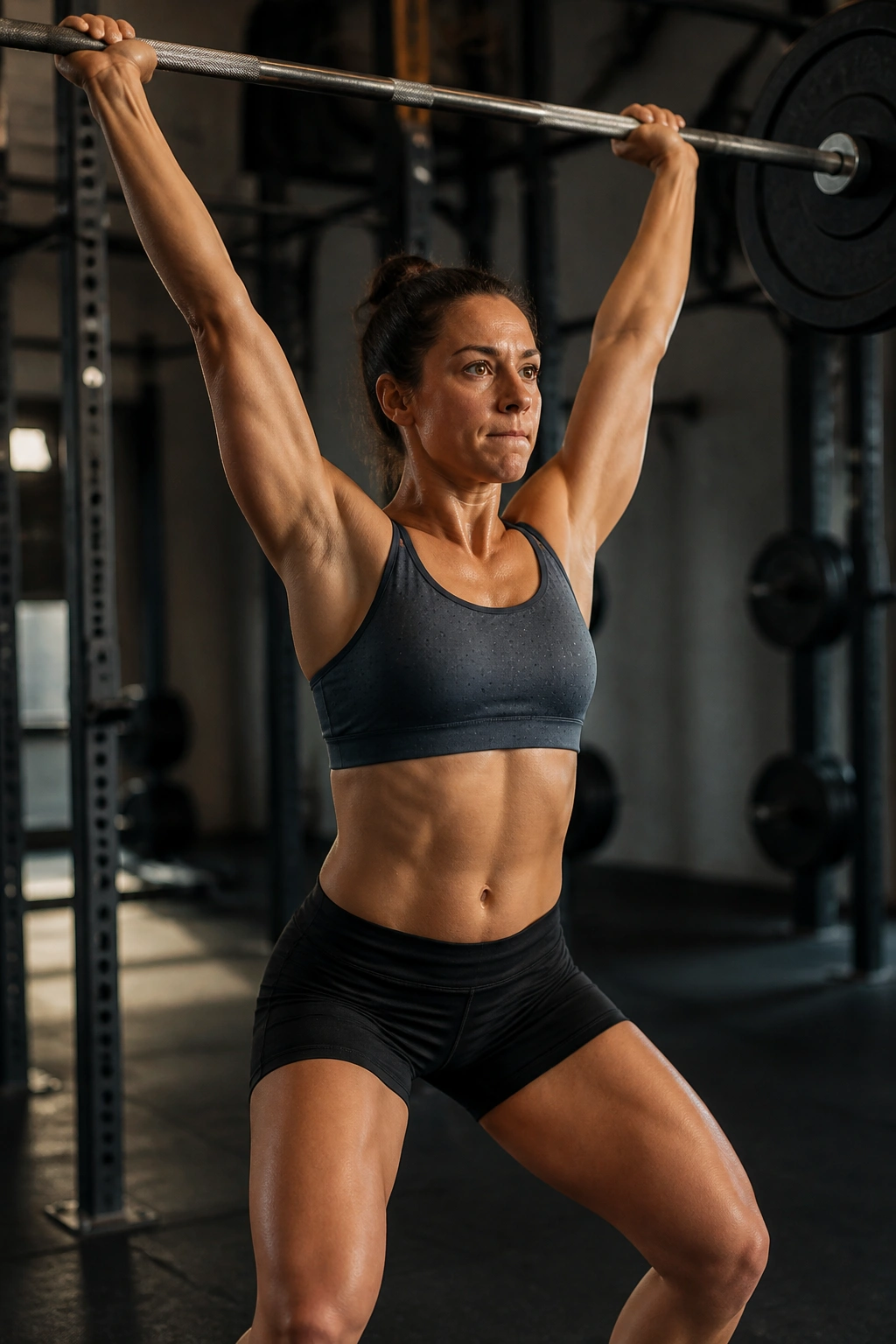
Strict pressing builds strength; push press teaches you to use the legs without turning the bar into a mess. That little bit of knee bend changes the game, because you can drive more load overhead than a strict press would allow.
The push press starts like a standing press, then adds a short, sharp dip and drive from the legs. The torso stays tall, the dip stays straight down, and the bar gets launched by the whole body working together. Done right, it feels crisp. Done wrong, it turns into a sloppy knee bounce with a bar overhead. There’s a difference.
What the legs are doing
The dip is tiny. Think inches, not a squat. You bend the knees just enough to load the quads, then drive up hard and transfer that force into the bar. The arms finish the press, but they do not do all of it.
That makes the push press useful for lifters who want to overload the overhead pattern, build power, and practice getting something heavy above the head without grinding forever. It’s also a nice bridge from the strict press to heavier barbell work.
If the bar path feels messy, lighten the load and shorten the dip. This lift should feel explosive, not chaotic. If it feels chaotic, the timing needs work before the weight does.
15. Farmer’s Carry
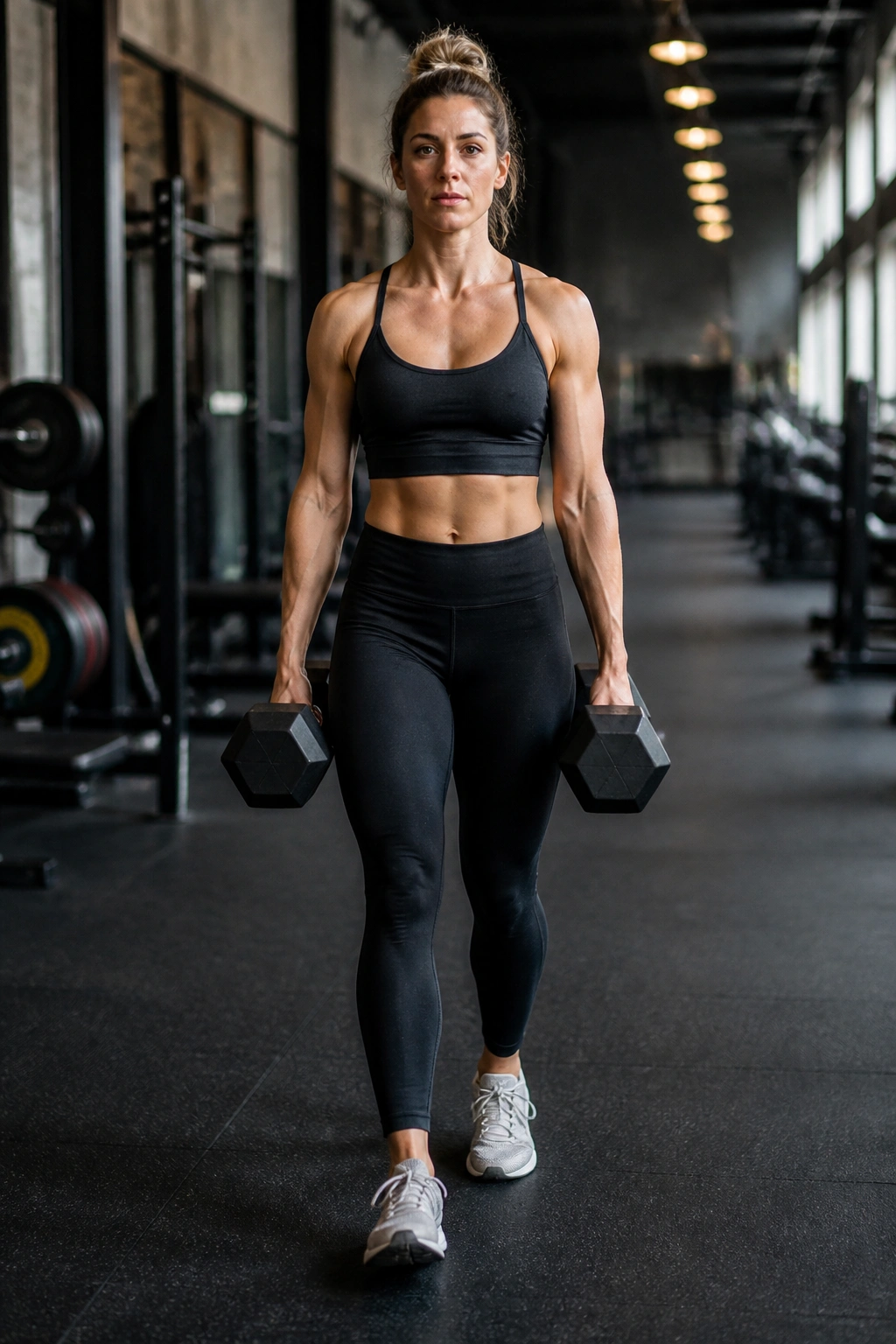
Strictly speaking, this is a loaded carry rather than a lift, but I’m including it because any honest strength list should. Farmer’s carries are plain-looking and brutally useful, which is usually a good sign.
A heavy carry trains grip, trunk stiffness, posture, and gait all at once. Your shoulders have to stay packed, your ribs have to stay stacked, and your body has to keep moving without twisting apart. That kind of tension is hard to fake, and it shows up in real life faster than people expect. Heavy groceries. Moving boxes. A child on one hip and a bag in the other hand. Same lesson.
I like carries for women who want more than mirror muscles. They build the sort of strength that makes everything else feel cleaner. Squats get steadier. Deadlifts feel less loose at the top. Even your breathing under load improves because the trunk learns to hold shape while you walk.
A simple way to program them is 3 to 5 carries of 20 to 40 meters with a weight that makes your posture work but does not destroy it. Use dumbbells, kettlebells, or a trap bar. Walk tall, don’t lean, and let your hands tell you when the set is getting honest. If your torso can stay calm while your hands are full, a lot of other training problems get smaller.
