



A 45-minute strength session can turn into an hour and a half of wandering if every set needs a long break, a different rack, and a small pep talk. Circuit workouts fix that, but only when the exercise order makes sense. Pair a squat with a press, a hinge with a row, or a carry with core work, and the clock starts working for you instead of against you.
A bad circuit is just cardio with dumbbells. A good one still lets you brace hard, move cleanly, and use enough load that the last reps matter.
That’s the line worth guarding. Keep it, and a shorter session can still feel like real strength training — not a watered-down compromise, not a random sweat fest, just a tighter way to get useful work done.
The trick is choosing movements that do not trip over each other. The first few workouts below lean on that idea in different ways, and the differences matter more than people think.
1. Dumbbell Push-Pull Circuit
This is the easiest place to start if you want a faster strength session without getting cute. Dumbbells move fast, setup is simple, and you can pair muscle groups that recover while the other side works. That’s the whole game.
A clean version looks like this: goblet squat, dumbbell floor press, one-arm row, and Romanian deadlift. Run 3 to 4 rounds, do 8 reps on the squat and press, 10 reps per side on the row, and 8 reps on the hinge. Rest 45 to 60 seconds after each round. Keep the dumbbells close together. Walking across the room for another pair wastes more time than people admit.
Why it works so well
The push-pull pattern keeps your heart rate up without turning the session sloppy. Your chest is working while your back gets a short break, then your legs take over while your upper body recovers. The result feels busy, but not chaotic.
I like the floor press here because it trims the range of motion just enough to save time and keep the shoulders honest. No deep shoulder strain, no bench setup. Nice. The row and hinge bring the session back toward strength instead of random movement.
Best use: a full-body day when the gym is packed, or when you only have one pair of dumbbells and about half an hour.
One rule: choose a load that makes the last two reps slow, not ugly. Sloppy dumbbell circuits age badly.
2. Barbell Complex Circuit

Barbell complexes are brutally efficient. One bar, one load, no setting down between lifts, and no excuse to drift into five-minute phone breaks. If you like the feel of iron in your hands, this one scratches the itch.
A simple complex might be deadlift, bent-over row, hang clean, front squat, and push press. Use 4 to 6 reps for each move, keep the bar weight modest, and rest 90 seconds after the full sequence. The bar should move smoothly from one lift to the next. If you need to reset every time, the load is too heavy.
The sneaky part is that the weakest lift sets the limit. If your push press is the ugly cousin in the group, the whole complex gets dragged down. That’s why barbell complexes work best with medium loads, crisp technique, and a little humility.
A good target is a weight you could row for several clean reps after a hard warm-up set. Not max effort. Not ego weight. You want enough resistance to make the legs and trunk work, but not so much that the hang clean turns into a shrug-and-pray event.
Use this when: you want a strength session that feels dense and demanding without bouncing between machines or stations.
Watch the bar path. Once the bar starts drifting away from your body, the whole point of the circuit slips out of your hands.
3. Bodyweight Tempo Circuit

Need a strength session without waiting on equipment? Bodyweight circuits can still be hard work if you stop rushing through them. Tempo is the part people skip, and it’s the part that makes the difference.
Try push-ups with a 3-second lower, split squats with a 2-second pause at the bottom, inverted rows, and a 20-second hollow hold. Do 3 to 5 rounds. Aim for 8 to 12 push-ups, 8 reps per leg on the split squat, 10 rows, and a hold that leaves your midsection trembling a little, not collapsing.
How to make bodyweight work hard
Slow the lowering phase. That alone changes the workout. A push-up done with control is a different animal from a quick bounce off the floor. Same with split squats. A brief pause kills the rebound and forces the working leg to earn every inch.
Add range before you add speed. Chest to floor if the shoulder position stays clean. Back knee close to the floor if your balance holds. If form falls apart, the circuit is too ambitious for the current day.
Good tempo tools
- 3 seconds down on push-ups or squats
- 1-second pause in the hardest part of the rep
- Full lockout at the top before the next rep
- Short rest, around 30 to 45 seconds, only if the form stays sharp
The lesson is plain: bodyweight is not automatically easy. It only becomes easy when you rush it.
4. Kettlebell Swing and Squat Circuit
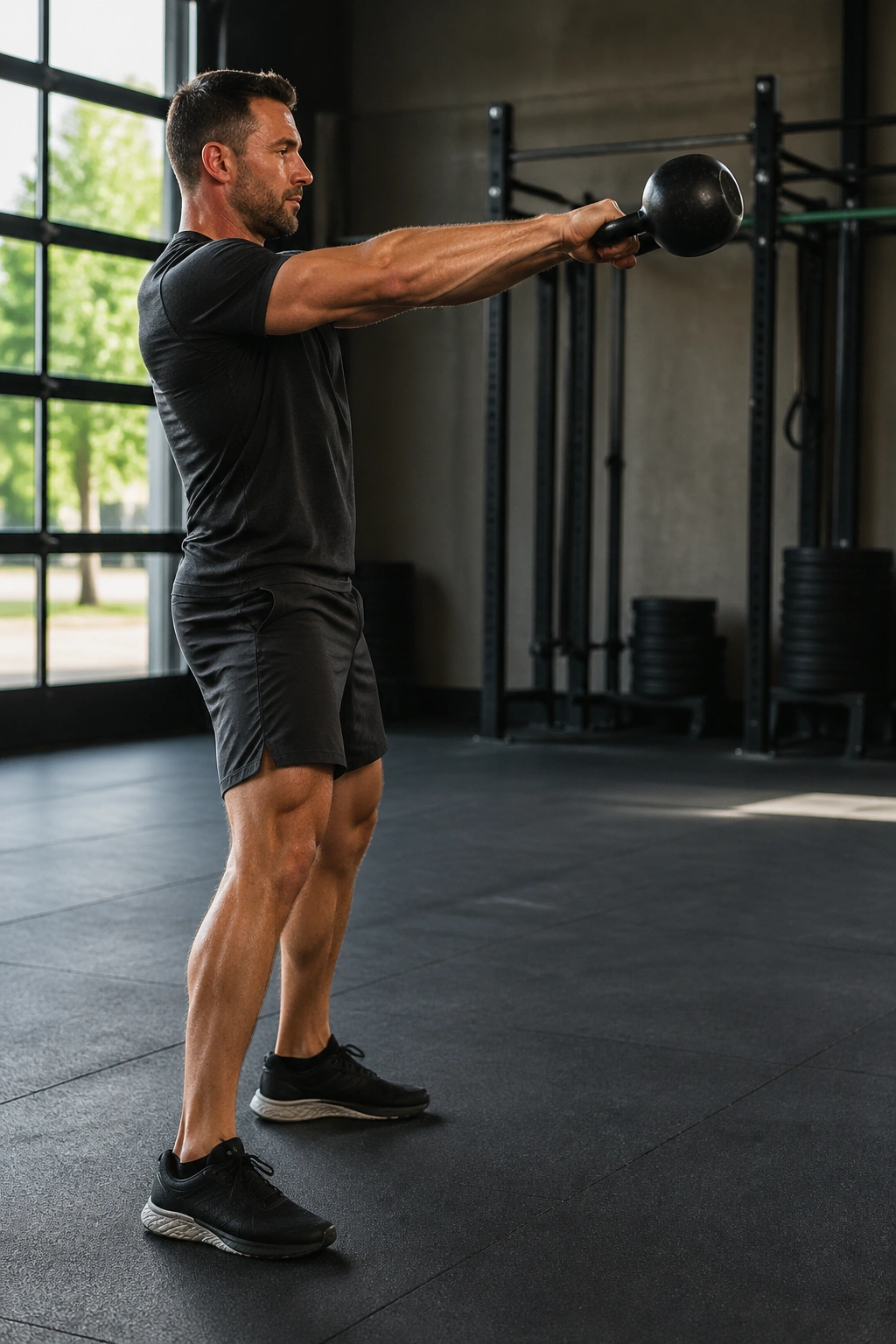
Picture one kettlebell, a small patch of floor, and zero patience for wasted motion. That’s where this circuit shines. It feels compact and slightly aggressive, which is exactly why it works.
Run 15 kettlebell swings, 6 goblet squats, 6 clean-and-press reps per side, and a 30-meter suitcase carry per side. Do 3 or 4 rounds with 45 to 60 seconds of rest between rounds. Pick a bell that lets the swing snap from the hips instead of turning into a squat. That distinction matters.
The hinge is doing most of the heavy lifting here. Swings load the posterior chain fast, the goblet squat brings in the legs, the press adds upper-body work, and the suitcase carry makes your trunk stop cheating. It’s a tidy mix. No fluff.
A lot of people swing too low and squat too much. That usually means the bell is too light, or the hips are not doing their job. You want the kettlebell to float because of force from the hips, not because you yanked it with your arms.
Best for: lifters who want a strength circuit that still has a hard breathing element.
One useful cue: the swing should feel like a sharp snap, not a slow grind.
5. Upper-Body Antagonist Circuit

Push and pull pairings are boring in the best way. They save time, protect your shoulders from too much consecutive pressing, and let you keep a real training load on the bar or dumbbells.
A clean upper-body circuit pairs bench press with a chest-supported row, overhead press with a lat pulldown or pull-up, and incline dumbbell press with face pulls. Do 3 rounds of each pair, usually 6 to 8 reps per movement, with 20 to 30 seconds between the two exercises and 60 seconds after the pair.
That alternating pattern is the reason this works. Your pressing muscles get a short breather while your upper back does its job, and then the upper back gets a break while you press again. It feels balanced, which is rare enough to appreciate.
Shoulders tend to get cranky when pressing volume outpaces pulling volume. This setup fixes that without turning the session into rehab. Face pulls at the end are not glamorous, and I’m fine with that. They keep the shoulder blades moving well and help the whole session land better.
Keep the bench and row station close together if you can. A circuit that looks efficient on paper can turn into a long walk through the gym if the equipment is scattered.
6. Lower-Body Split-Stance Circuit
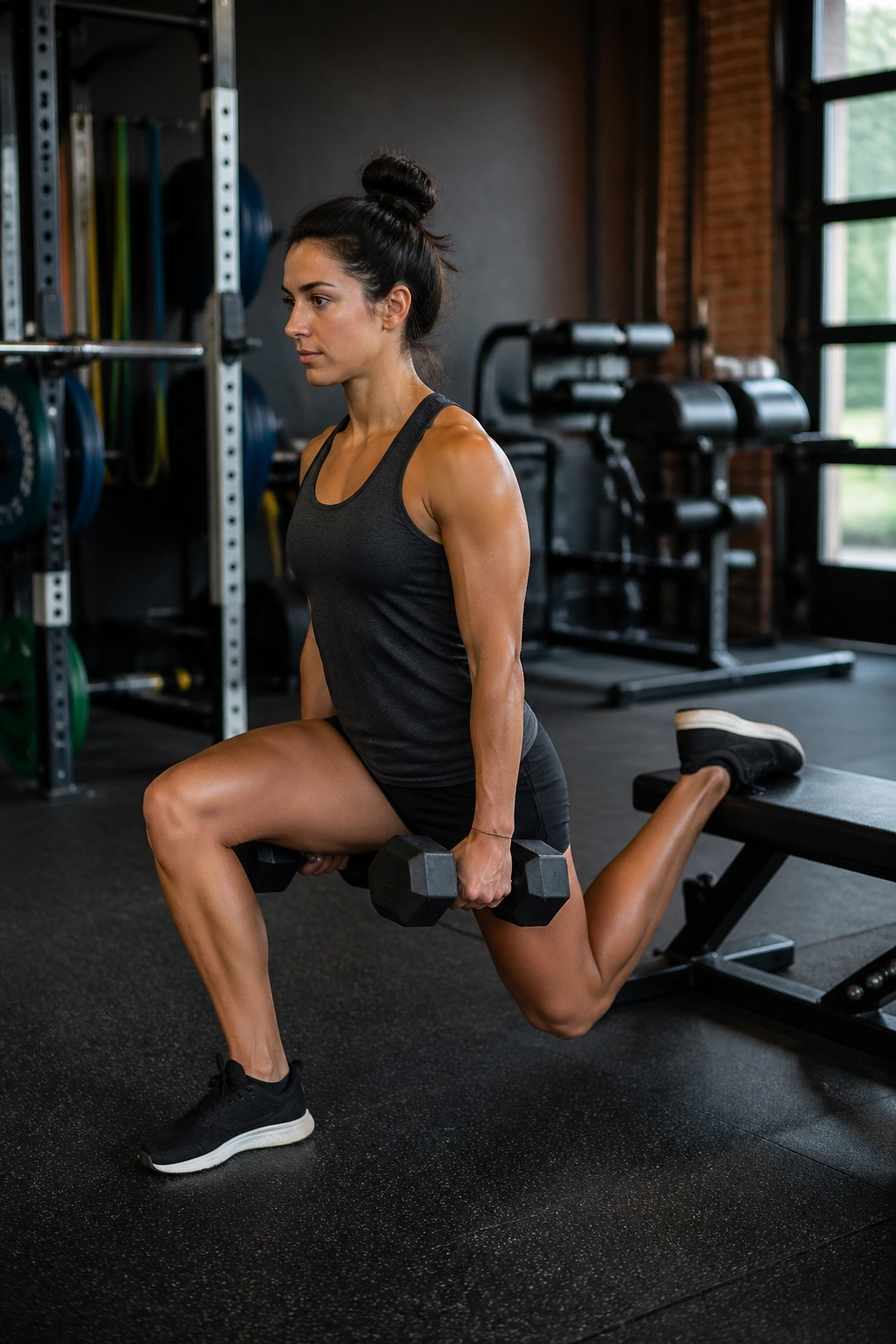
Unlike a squat-only circuit, this one shows you the side-to-side weak spots fast. Split stance work is less forgiving, and that’s a good thing. Your hips, glutes, and ankles cannot hide as easily.
Build the circuit around rear-foot elevated split squats, single-leg Romanian deadlifts, lateral lunges, standing calf raises, and hip thrusts. A useful setup is 8 reps per side on the split squat and RDL, 6 to 8 reps per side on the lateral lunge, 15 calf raises, and 10 to 12 hip thrusts. Rest 45 seconds between rounds.
This is the version I reach for when someone wants stronger legs but doesn’t have time for a long barbell day. It’s also a sneaky good choice for runners and field athletes, because each leg has to stabilize on its own. The circuit feels controlled, then suddenly your glutes light up in ways you did not ask for.
Start with bodyweight or a light front rack hold if balance is the limiting factor. There is no medal for wobbling under too much load.
Who it suits: people who need leg strength, better single-leg control, and less time under a barbell.
What to expect: the first round feels manageable. The second one tells the truth.
7. EMOM Strength Circuit

An EMOM is one of the cleanest ways to keep a short session honest. Every minute, you do the work, then you rest for whatever time is left. That built-in clock stops the drift. No wandering. No endless setup.
A solid 12-minute EMOM could look like this:
A sample 12-minute EMOM
- Minute 1: 5 deadlifts
- Minute 2: 8 push-ups
- Minute 3: 8 goblet squats
- Minute 4: 10 dumbbell rows
- Repeat the four-minute block 3 times
The loads should leave you with about 15 to 25 seconds of rest inside each minute. If you finish in five seconds, the exercise is too light. If you finish in 55 seconds and stare at the timer like it betrayed you, the load is too heavy.
EMOMs work because they keep the pace steady without forcing you to sprint. That makes them useful for strength sessions where you still want a little conditioning, but you do not want the whole workout to turn into a race.
Use this on days when time is tight. It’s tidy, measurable, and hard to fool.
One warning: do not turn an EMOM into a max-effort test. The whole point is repeated quality, not surviving minute four like it’s a bar fight.
8. Suspension Trainer Circuit

Straps expose sloppy reps fast. If your core sags, your shoulders shrug, or your hips leak out of position, the straps tell on you immediately. That makes suspension work useful for a faster strength session, even though it looks light from across the room.
A good circuit is suspension rows, suspension push-ups, fallouts, assisted split squats, and face pulls. Try 8 to 12 reps on the rows and push-ups, 6 to 8 fallouts, and 8 reps per side on the split squat. Three rounds is enough for most people. Rest 30 to 45 seconds between moves if the pace is brisk, or longer if form starts to wobble.
The real value here is angle control. A small change in foot position or body angle changes the load fast. That lets you make the circuit harder without adding plates, loading pins, or extra setup. In a small gym, that’s gold.
I like straps for travel days too. You can get a serious upper-back and core session out of a corner and a door anchor. No drama. Just make sure the anchor is secure and the setup is rated for bodyweight.
Best for: people who want body tension, shoulder stability, and a session that moves quickly.
Small but useful detail: if your wrists complain during push-ups, the handles help more than most people expect.
9. Core and Carry Circuit

Want a session that makes your trunk work without endless crunches? Carries do that job with less nonsense. They train bracing, posture, grip, and breathing under load. That sounds plain. It works.
Try farmer carries, suitcase carries, front rack carries, Pallof presses, and plank drags. A good round might be 30 meters of farmer carry, 30 meters each side of suitcase carry, 20 meters of front rack carry, 10 Pallof presses per side, and 10 plank drags. Keep the whole circuit to 3 rounds.
How to load the carry
Use a weight that makes you stay tall. If your ribs flare or your shoulders climb toward your ears, the load is too heavy. A good carry challenges posture first, grip second, and lungs third. That order matters.
Carries also fit well between bigger lifts. You can slide them into the end of a lower-body day or use them as the main event when your legs are cooked. The walk itself is not flashy, which is part of the appeal. It gives you hard work without another complicated machine or a setup that eats time.
Pallof presses bring a different flavor. They train your trunk to resist rotation, which makes the whole circuit feel more useful than a string of random ab moves. I’d take that over fifty sloppy sit-ups any day.
Most useful cue: keep your zipper line straight and your steps slow.
10. Incline Treadmill and Dumbbell Circuit

Some circuits need a little conditioning built into the structure. This is one of them. The incline adds a grind to the legs, and the dumbbells keep the strength work honest.
Run 2 minutes on an incline treadmill at a brisk walk, usually around 8 to 12 percent incline, then step off and do 8 dumbbell presses, 8 dumbbell rows, and 8 reverse lunges per leg. Rest 30 to 45 seconds, then repeat for 4 rounds. Keep the treadmill pace fast enough that you’re breathing harder, but not so fast that you lose the ability to lift well after.
This setup works because the treadmill does not need much setup, and the dumbbells are simple enough to grab and go. You move from lower-body conditioning to upper-body strength, then back again, without a long dead zone in the middle.
What to watch for
- Keep the incline walk brisk, not frantic
- Use dumbbells you can row without twisting your torso
- Land the reverse lunge softly and under control
- Step off the treadmill before grabbing weights — no rushing while the belt is still moving
This is a good choice when you want a strength session that leaves you sweaty without losing the feel of actual lifting. That balance is harder than it sounds.
11. Machine Circuit for Busy Gyms
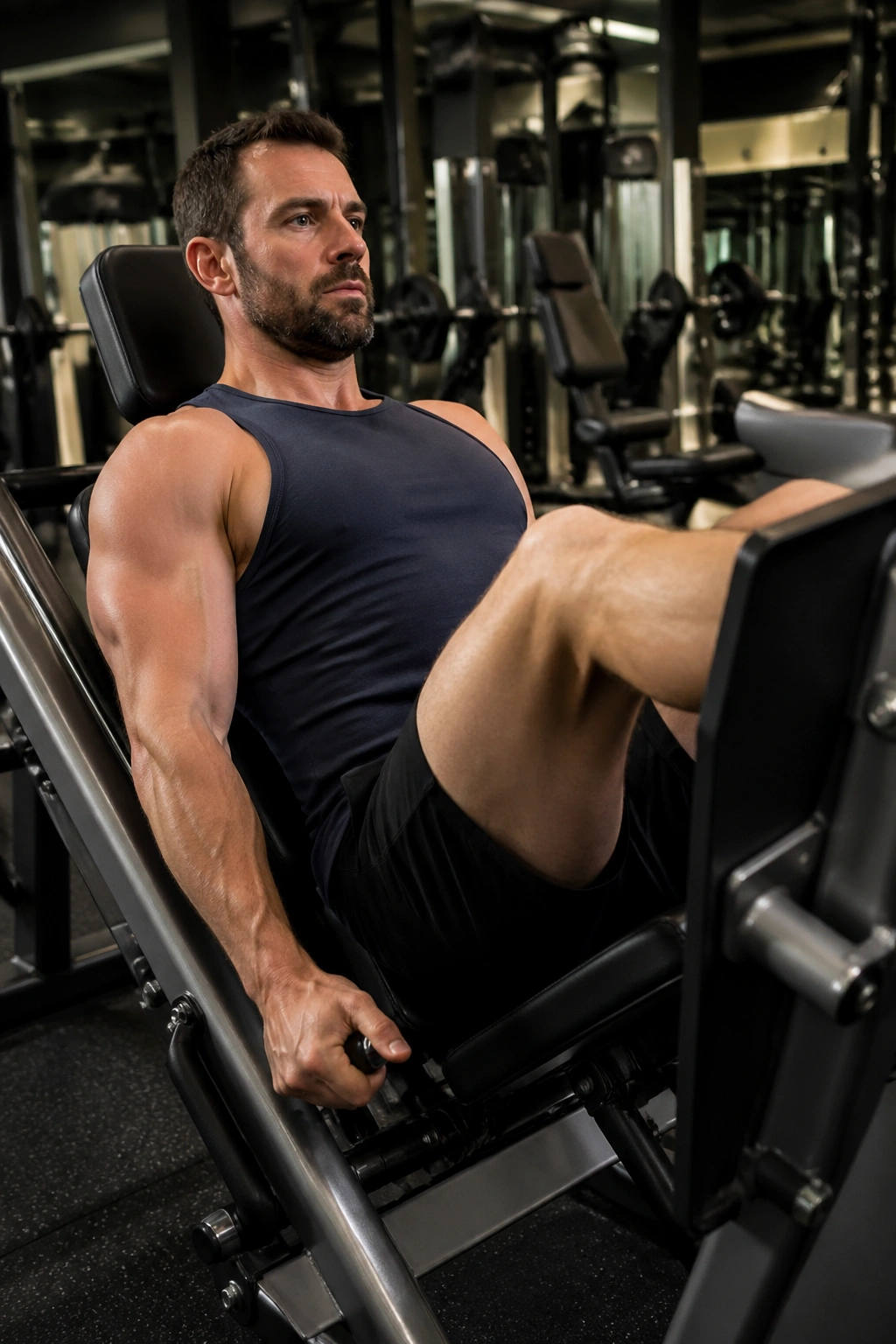
Free weights get all the romance. Machines get the job done when the gym is crowded and you do not want to fight for a rack.
A practical machine circuit might use leg press, seated chest press, seated row, hamstring curl, and cable chop. Do 10 to 12 reps on the presses and row, 12 reps on the leg press and hamstring curl, and 10 reps per side on the cable chop. Run 3 rounds with 30 to 45 seconds between stations.
The payoff here is speed. Machine settings stay put once you adjust the seat and pin stack, which means less downtime between exercises. You also get a little less balance demand, so the muscles can take more of the load. That can be useful on a tired day, or when joints want a break from free-weight instability.
Machines are not a downgrade. They are a tool. A decent circuit with controlled reps can absolutely be a strength session, especially if you push close to failure on the final round and keep the rest short.
Best use: crowded commercial gyms, recovery days, or times when setup speed matters more than barbell skill.
One blunt note: don’t slam the weight stack. Controlled reps beat noisy ones.
12. Power-to-Strength Contrast Circuit

Not every fast circuit should feel like a burn. Some should feel like a sharp contrast between heavy work and explosive work. That’s what makes this one interesting.
Pair 3 deadlifts with 5 box jumps, 4 front squats with 6 medicine ball slams, and 5 push presses with 8 kettlebell swings. Do 3 rounds, resting 90 seconds between pairs if needed. The heavy move primes the nervous system, and the explosive move asks you to move faster while you’re still warm.
This is a stronger choice for lifters who already know their movement patterns. You need enough control to keep the jumps low and crisp, and enough discipline not to turn the heavy lifts into a grinder. Heavy plus fast is the point. Slow plus sloppy is not.
The contrast effect is what makes the session feel efficient. You get strength stimulus from the loaded lift, then you get speed and power practice right after. The combination is tidy, and frankly, fun if you like seeing a clean line of effort rather than a long cardio haze.
Keep the box jump height modest. A low box with clean landings beats a high box and a sketchy takeoff every time.
13. Glute-Focused Circuit
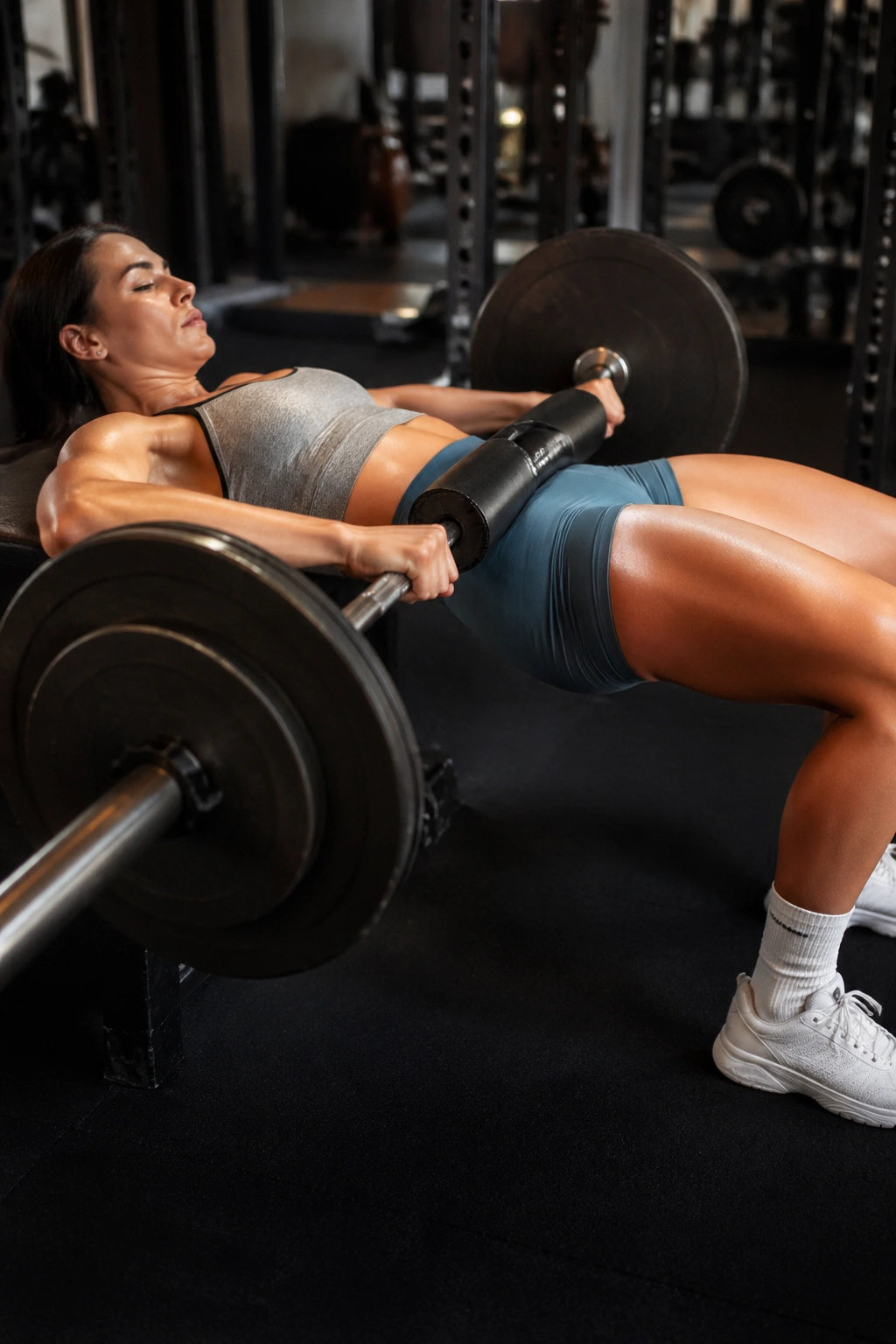
Glute work gets a bad reputation from people who only know high-rep burnouts. That’s lazy programming. A good glute circuit can be tight, heavy enough to matter, and fast enough to fit into a short strength session.
Build around hip thrusts, Romanian deadlifts, step-ups, frog pumps, and banded abductions. A strong setup is 10 hip thrusts, 8 RDLs, 8 step-ups per leg, 20 frog pumps, and 15 banded abductions. Do 3 rounds and rest 45 to 60 seconds between rounds.
What to load
Start the hip thrust heavier than the rest. That move usually tolerates the most load and gives the biggest payoff. Keep the RDL moderate, because the hamstrings and lower back will already be under work from the thrusts. Step-ups stay controlled. No bouncing off the back leg.
What to skip
Skip the endless tiny pulses if your goal is strength. They have a place, but not as the whole session. Also skip a bench height that forces your lower back to take over on thrusts. If your ribs flare and your low back arches hard, the setup is wrong.
This circuit is great for people who sit a lot, because the glutes tend to go sleepy and the hips get sticky. You feel that quickly here. Maybe too quickly.
14. Minimal-Equipment Travel Circuit
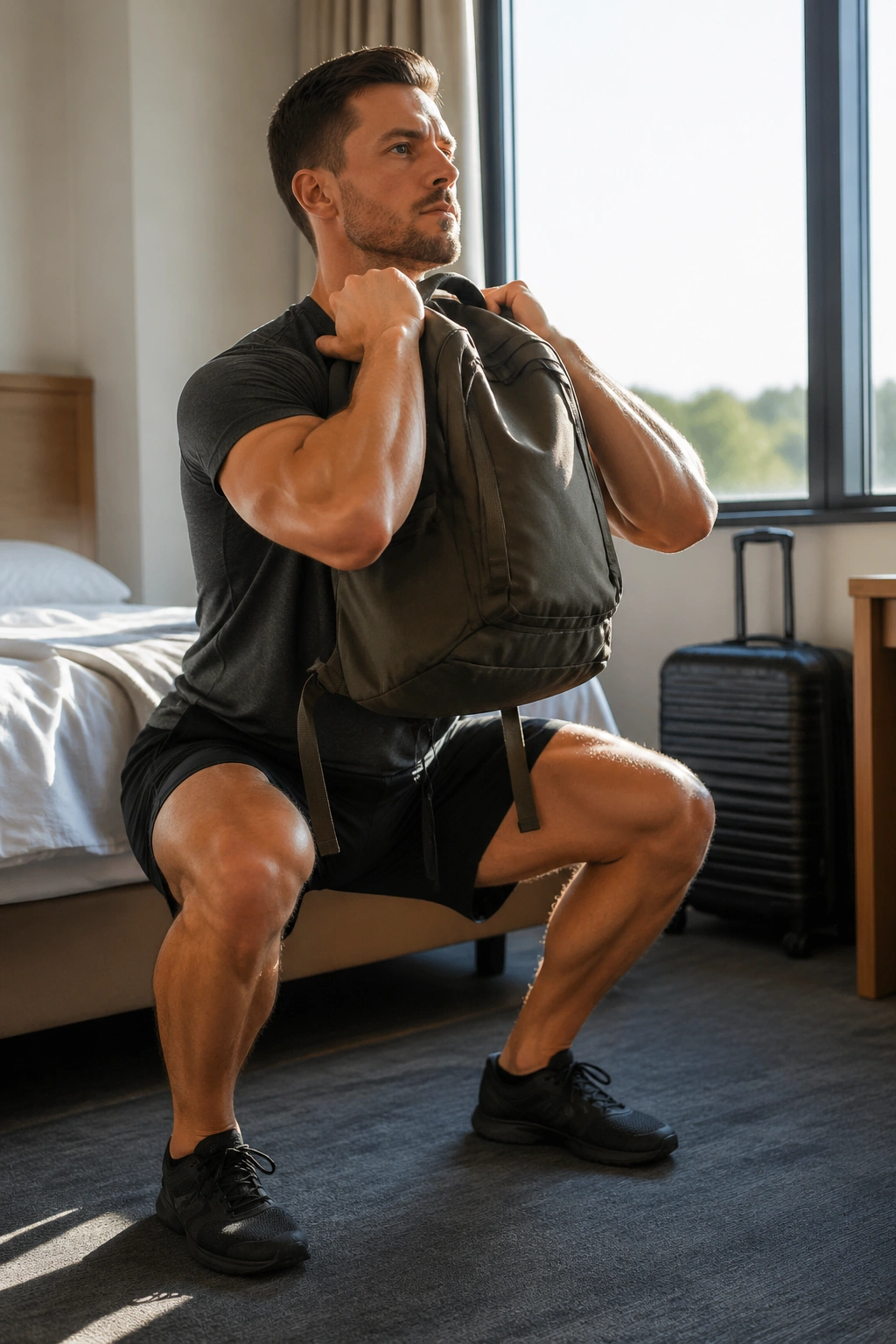
If you only have a backpack, a band, and a small patch of floor, you can still train hard enough to keep strength from sliding. Travel sessions work best when they stay simple and repeatable.
Try backpack front squats, band rows, push-ups with hands elevated on a bed or desk, glute bridges, and dead bugs. Do 4 rounds of 12 squats, 15 rows, 8 to 15 push-ups, 15 glute bridges, and 10 dead bugs per side. Rest 30 to 40 seconds between rounds.
The backpack matters more than people think. A loaded backpack filled with books or water bottles gives you a real front-loaded squat and a decent hinge challenge if you hold it carefully. Band rows make up for the lack of a cable machine. Elevated push-ups keep the shoulder angle friendly when the floor is too low or your wrists are tired.
A few room-friendly swaps
- Use a sturdy suitcase instead of a backpack if the load shifts too much
- Anchor the band around a closed, solid post — not a flimsy door handle
- Swap push-ups for slow close-grip incline push-ups if you need less range
- Use a rolled towel under the low back on dead bugs if the floor is unforgiving
The point is not perfection. The point is keeping the session alive when normal equipment is missing.
15. Full-Body Finisher Circuit

A finisher circuit should feel like the last honest push of the day, not a random punishment. Use it after your main lift when you still have enough gas to keep form clean, but not enough to waste time.
One strong option is dumbbell thrusters, alternating reverse lunges, renegade rows, and a loaded carry or mountain climber interval. Try 6 thrusters, 8 lunges per leg, 8 renegade rows per side, and 20 to 30 seconds of carry or climbers. Run 3 rounds with 60 seconds of rest. Keep the dumbbells light enough that the thruster stays smooth. If your squat and press turn into two separate events, the load is too heavy.
This circuit works well because it touches the legs, shoulders, back, and trunk in a tight window. The breathing cost is there, but the movement pattern still looks like strength training. That is the sweet spot. You leave tired, yet the session still feels organized.
Use this one after squat day, upper-body day, or a mixed full-body session. I would not put it before a heavy max-effort lift. That’s backwards.
Finish clean. If your form starts to fray, cut the round short and call it. A fast strength session should leave you sharper, not wrecked for the next two days.
