



A jump rope can turn a quiet room into a hard cardio session in under 10 minutes. That’s the appeal of jump rope workouts at home: one rope, a few square feet of floor, and a timer that doesn’t care how busy you are.
The catch is that rope work is honest. If the rope is too long, you’ll hear it slap the floor like a bad drum line. If your jumps get too high, your calves will light up before your lungs do. And if you try to muscle the rope with your shoulders, the whole thing falls apart fast.
Small details matter here. Keep your elbows tucked close, turn the rope with your wrists, and jump only high enough for the cord to clear your shoes. That tiny hop is the difference between a smooth rhythm and a messy, noisy grind.
These 15 workouts cover the full range: easy starters, sharp intervals, sneaky leg burners, and a few brutal little finishers. Some are good when you have 5 minutes. Some are better when you want to sweat for 15. All of them can be done at home, with room for your feet and not much else.
1. Jump Rope Workouts Start With the Basic Bounce
Start boring on purpose. The basic bounce is the move that makes every other jump rope workout work better, because it teaches timing before speed. If your rhythm is off, the fancy stuff falls apart. If your rhythm is clean, even a simple round can get your heart rate up fast.
A clean basic bounce looks tiny. Your feet leave the floor just enough for the rope to pass, and that’s it. No big jumps. No hard landings. Your wrists do the work, your shoulders stay relaxed, and your ankles stay springy instead of stiff.
What It Should Feel Like
The rope should skim the floor with a steady hiss. Your breath will pick up, but the movement itself should feel almost calm. That calm matters. It lets you stay in motion for longer without turning every rep into a fight.
Try 40 seconds on, 20 seconds off for 10 rounds. If that feels too aggressive, use 20/40 instead and keep your jumps low. A smooth, almost quiet landing tells you the pattern is right.
- Feet land on the balls of the feet, not the heels.
- Elbows stay near your ribs.
- The rope turns from the wrists.
- Jumps stay under 1 inch.
- Eyes look forward, not down at your shoes.
Best tip: if the rope keeps clipping your toes, shorten the rope before you blame your conditioning.
2. The 30-Second Sprint, 30-Second Reset
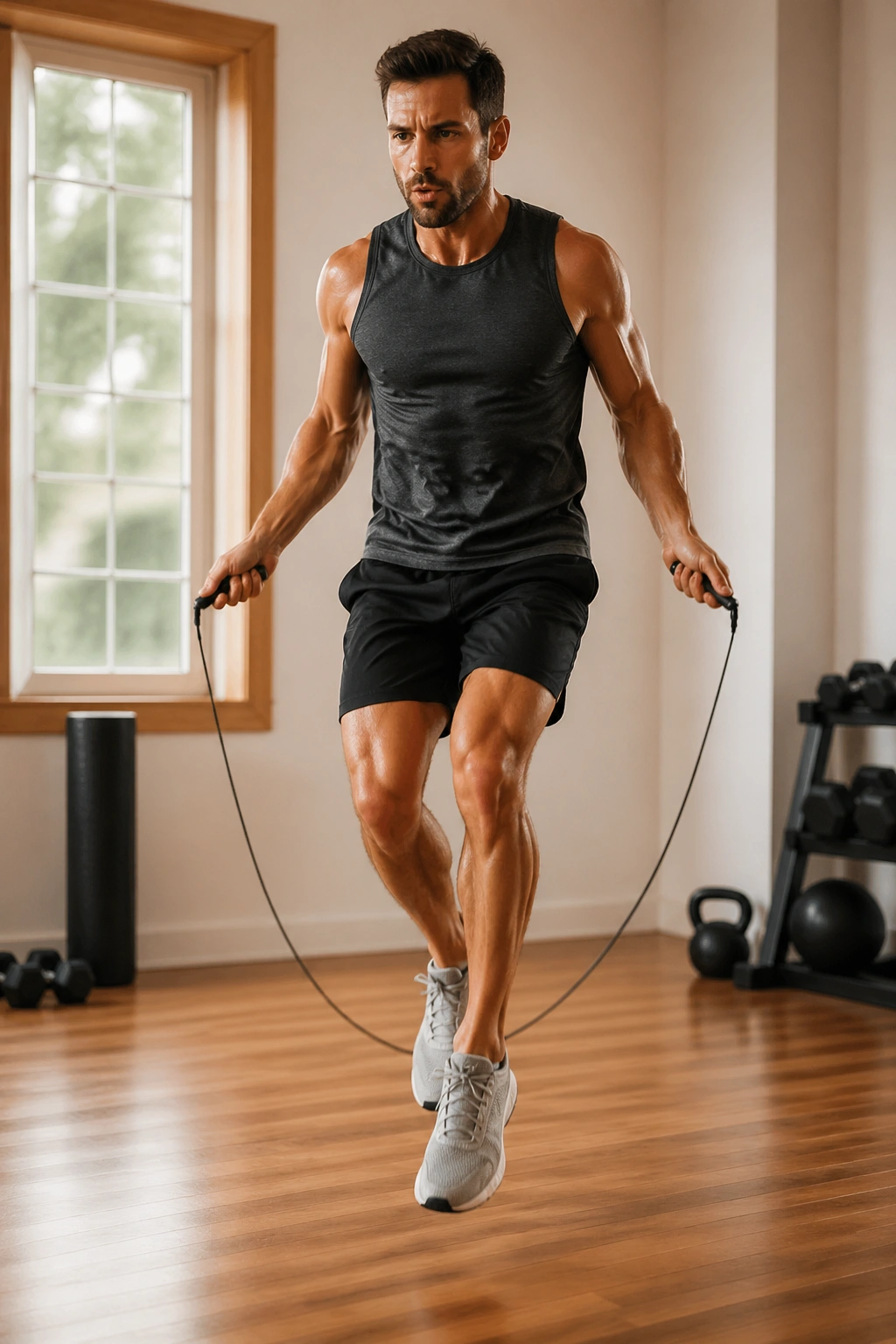
Thirty seconds is plenty. People underestimate it because it sounds short, then round four arrives and the room gets very honest. This is one of the easiest ways to turn a rope into quick cardio at home without overcomplicating the session.
Use 30 seconds of fast single unders followed by 30 seconds of easy standing rest or a light march. Repeat for 10 to 15 rounds. The fast part should feel sharp, not sloppy. If your feet start slamming, you’re moving faster than your form can hold.
How to Pace It
For the sprint portion, think quick wrists and light feet. Don’t reach for huge speed by jumping higher. That’s a trap. More height just means more impact and a slower rope rhythm.
The reset matters almost as much as the work. Stand tall, shake out your hands, and let your breathing come back under control before the next round. That reset is what keeps the workout repeatable instead of chaotic.
If you’re newer to rope training, use 20 seconds on and 40 seconds off for the first few sessions. Once you can finish every round without tripping in the last five seconds, move back up.
3. Boxer Step Rounds That Save Your Calves
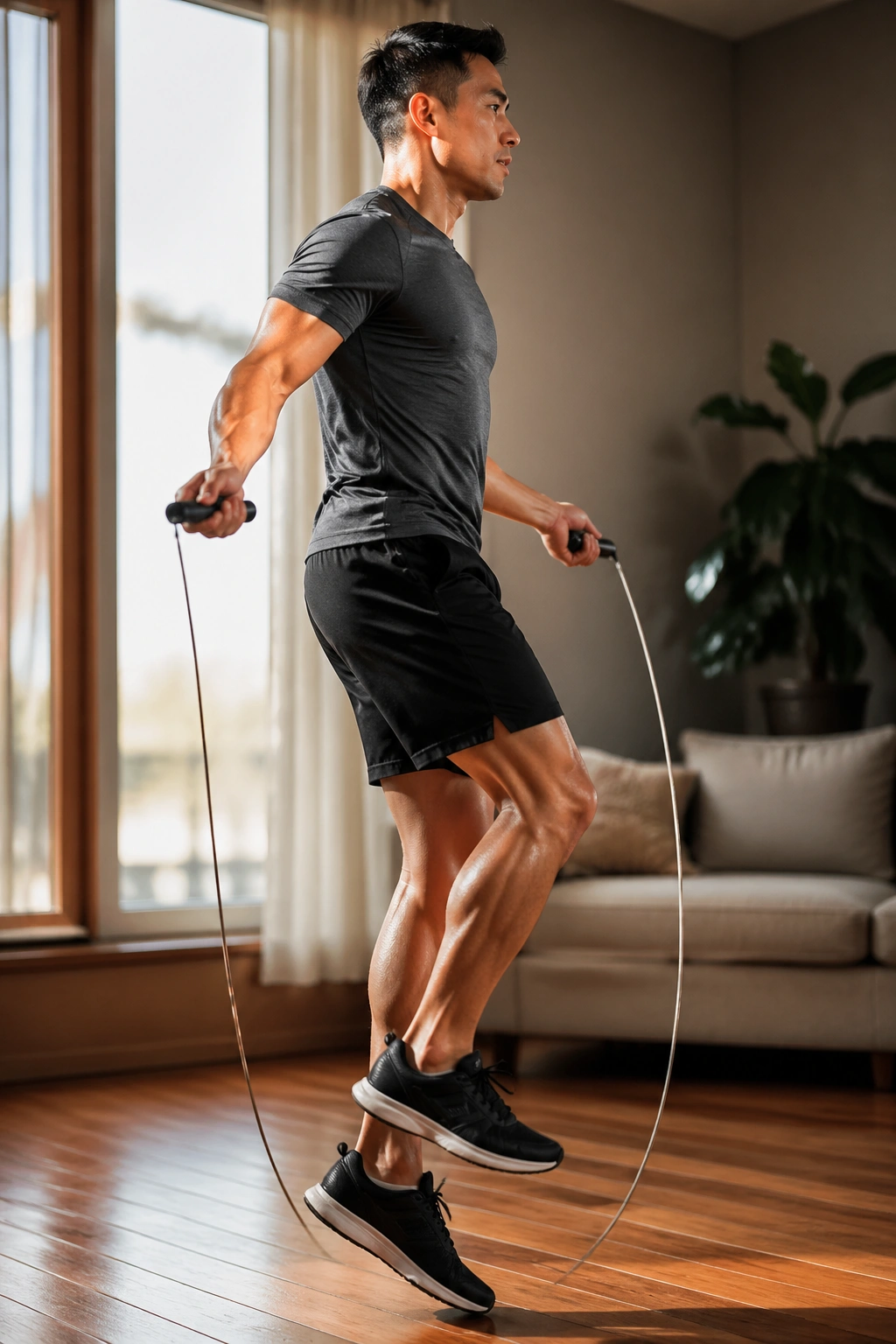
Unlike two-foot hops, the boxer step gives one leg a tiny break while the other takes the landing. That’s why boxers use it so much, and why home cardio sessions feel easier to sustain when you build around it. It’s still work. It just spreads the load out.
Shift your weight from side to side in a gentle rhythm, almost like you’re jogging in place with a rope under you. One foot lands lightly while the other floats an inch or two off the floor. Keep the hops small. If you turn it into a side-to-side stomp, you lose the whole point.
A good round here is 45 seconds on, 15 seconds off, repeated for 8 to 12 rounds. The pace should feel smooth enough that you can keep talking in short phrases, but not hold a full conversation. That’s a nice middle ground for cardio that doesn’t chew up your legs.
The boxer step is also a good save when your shins are feeling touchy. It gives you movement without the pounding of bigger jumps. And it’s one of the few rope patterns you can keep going with when fatigue starts making everything clumsy.
4. High-Knee Bursts for a Harder Heart Rate
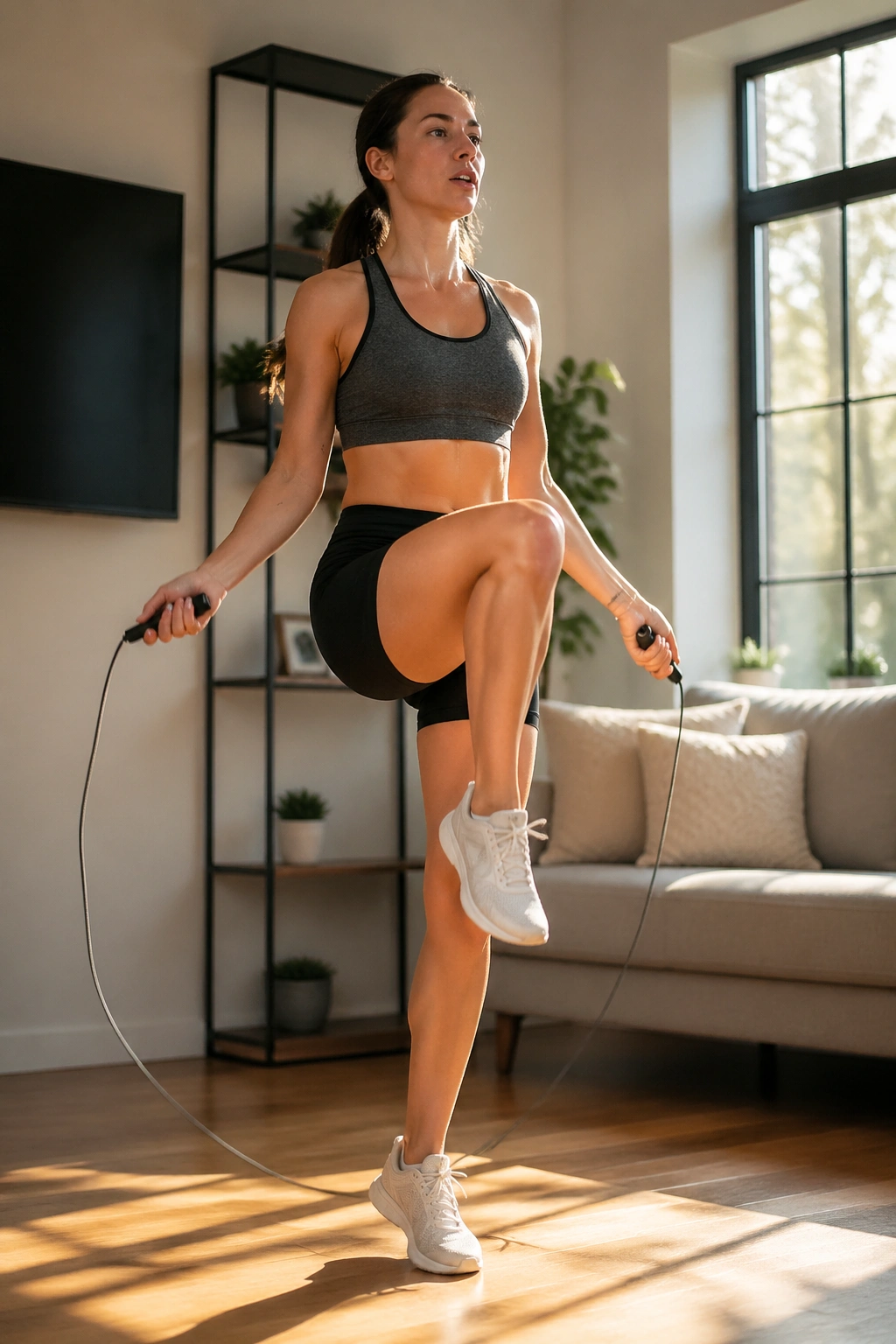
The rope starts whispering and your breathing gets loud fast. That’s the appeal here. High-knee rope bursts push the heart rate up without needing a complicated pattern, which makes them excellent when you want a short, sharp session that doesn’t waste time.
Bring each knee up only as high as you can control. You are not doing a dramatic drill-team leap. You’re just lifting the knees enough to make the rope path a little more demanding. Keep your torso tall and your landing soft. If your chest folds forward, slow down.
What to Watch For
- The rope should clear cleanly on each turn.
- Your knees should rise under control, not fling up.
- Your hips stay level instead of rocking side to side.
- Your feet land under you, not in front of you.
Use 20-second bursts with 40 seconds of easy rope or rest for 8 to 10 rounds. Short bursts are plenty here. If you chase speed for too long, your form gets wild and your shoulders start doing work they never asked for.
This one feels especially good when you want a workout that ends before you can talk yourself out of it.
5. Side-to-Side Ski Steps for Faster Feet
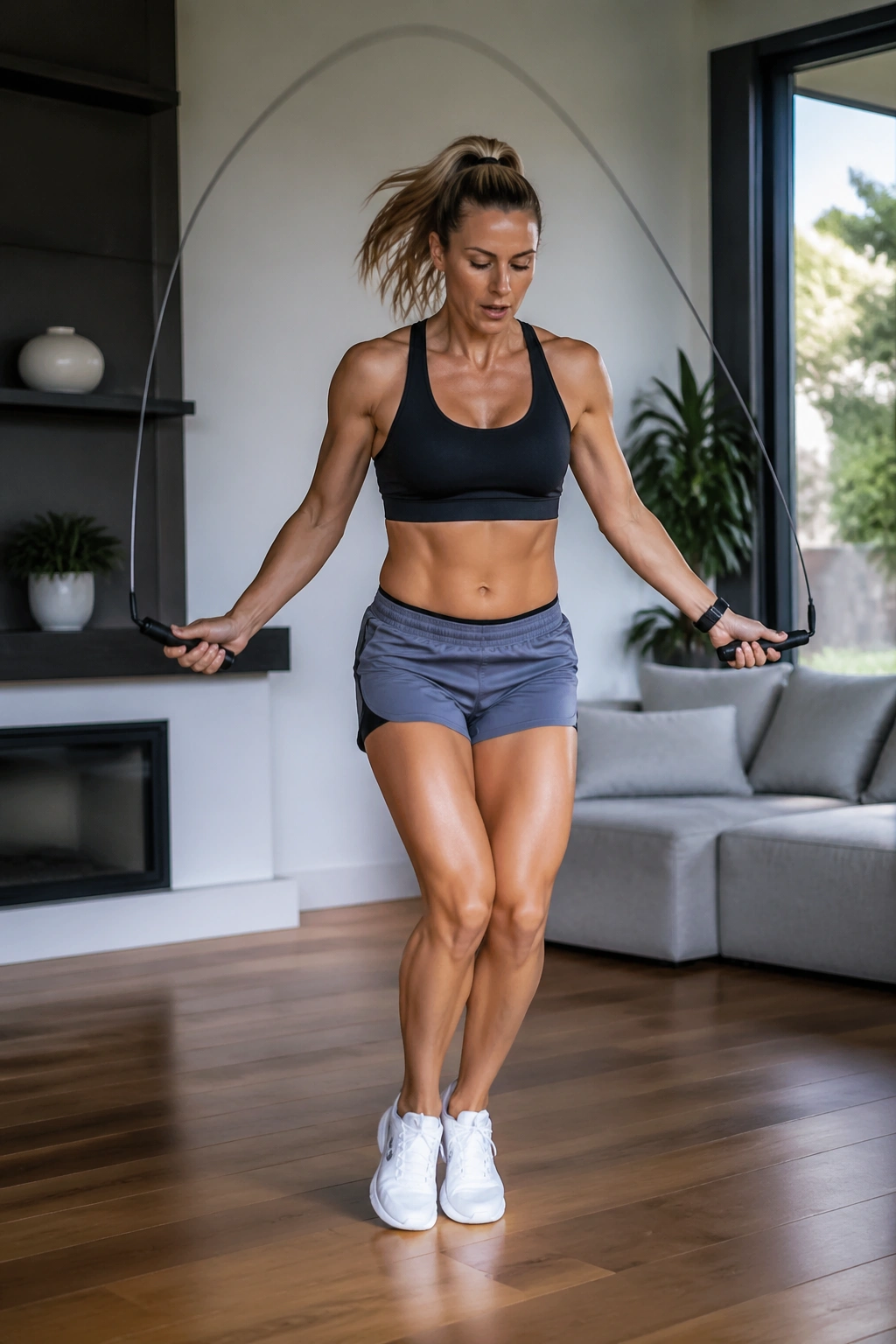
A small jump from left to right can wake up your feet faster than a hard straight bounce. Side-to-side ski steps ask your ankles to stabilize in a narrow lane, and that keeps the workout lively without needing much space. It also feels different enough to break up the monotony of standard singles.
Picture the movement as a tiny hop over an invisible line on the floor. Both feet leave the ground together, then land a few inches to the left or right, and the next hop crosses back. Stay light. Stay narrow. Big lateral jumps are noisy, and noisy usually means wasteful.
I like this pattern for 30 to 45 seconds on with 15 to 20 seconds off. It’s a nice middle option when you want something more athletic than basic bounce but less punishing than high knees.
Quick Cues
- Land softly on the balls of your feet.
- Keep the rope speed steady.
- Move only 2 to 4 inches side to side.
- Relax the jaw and shoulders.
- Shorten the rope if the arc feels awkward.
The surprise with ski steps is how much they tax the feet without feeling like a sprint. They’re sneaky that way.
6. The 20-40-60 Pyramid Ladder
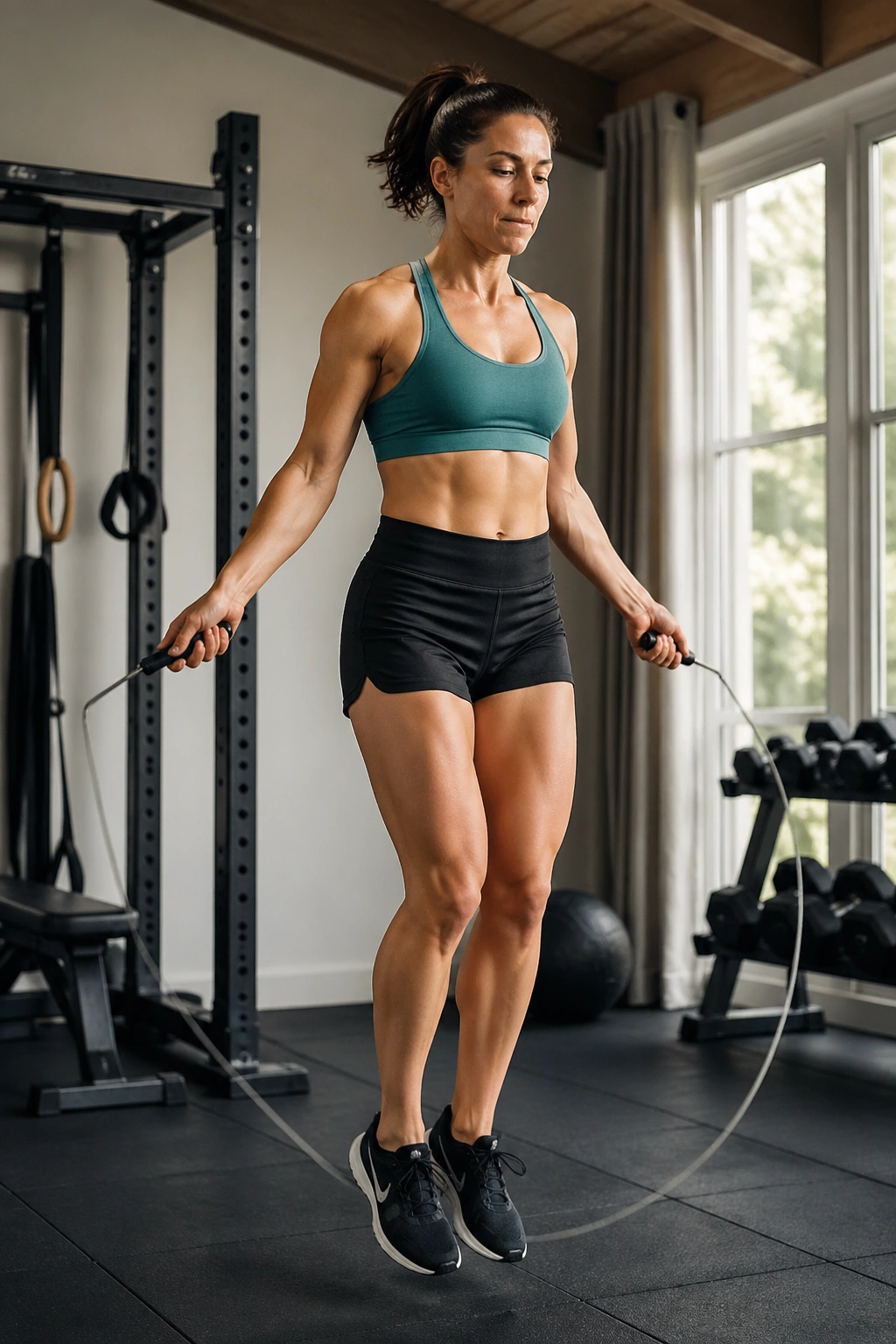
Longer sets are easier when the timer climbs in small steps. That’s why pyramid ladders work so well for jump rope conditioning. They give you a little confidence before the hardest minute arrives, then back you down before your technique turns ragged.
Try 20 seconds, 40 seconds, 60 seconds, 40 seconds, 20 seconds with 20 to 30 seconds of rest between each round. That’s one pyramid. You can repeat the whole thing once if you want a longer session, but one round is enough to make a point.
The first 20 seconds should feel almost too easy. Good. Save your legs. By the 60-second round, you’ll need to settle into a rhythm instead of chasing speed. That’s where the workout gets useful, because you have to manage effort instead of just reacting to the clock.
Why It Works
The short early reps wake up coordination. The middle reps build stamina. The final shorter rounds let you recover while still moving, which feels better than dropping the rope and standing around.
A ladder like this is also good for people who get bored by flat intervals. The changing countdown keeps your attention on the next target, not the discomfort in your calves.
7. Double-Under Practice Sets
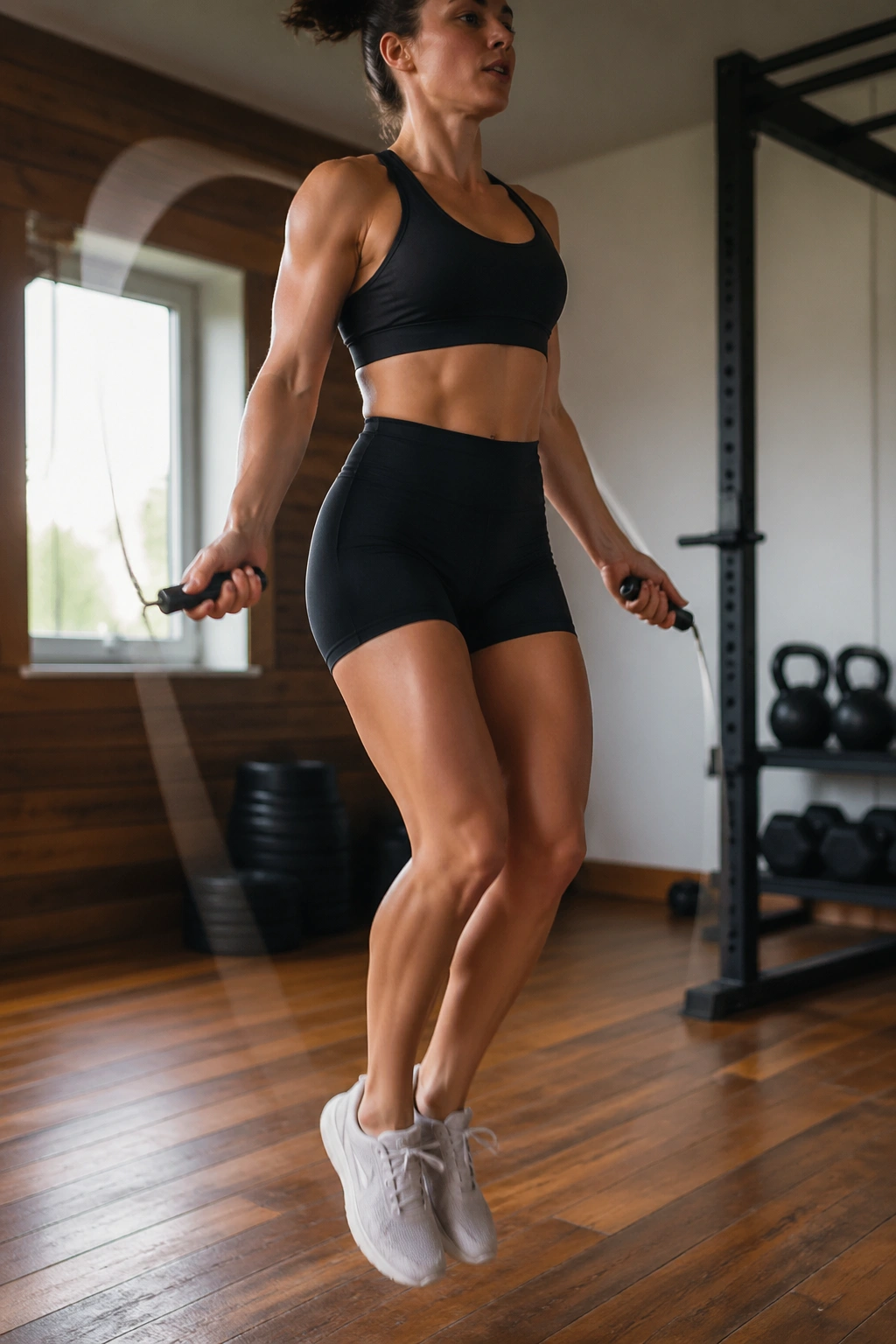
This is not a cardio workout first. It becomes one anyway. Double-unders demand timing, a fast wrist turn, and a rope that clears the floor twice per jump. That means your lungs and calves get pulled into the lesson whether they want to or not.
A smart practice set is 10 attempts per round, then 45 to 60 seconds of rest. If you can’t string together clean doubles yet, use single-single-double or just quick singles until the motion starts to make sense. There’s no prize for flailing through bad reps.
The mistake people make is trying to jump higher and swing harder. That usually backfires. The best doubles come from a crisp, compact jump and a faster wrist turnover, not from leaping like you’re trying to clear a curb.
How to Get the Most From It
- Keep your elbows close.
- Turn the rope with your wrists, not your whole arms.
- Land softly and reset fast.
- Treat misses as part of the set, not a disaster.
Double-under work is rough in the best possible way. You get coordination, timing, and a sharp heart-rate spike all at once. Just don’t turn it into a shoulder workout. That’s wasted energy.
8. Jump Rope Workouts for Quiet Apartments
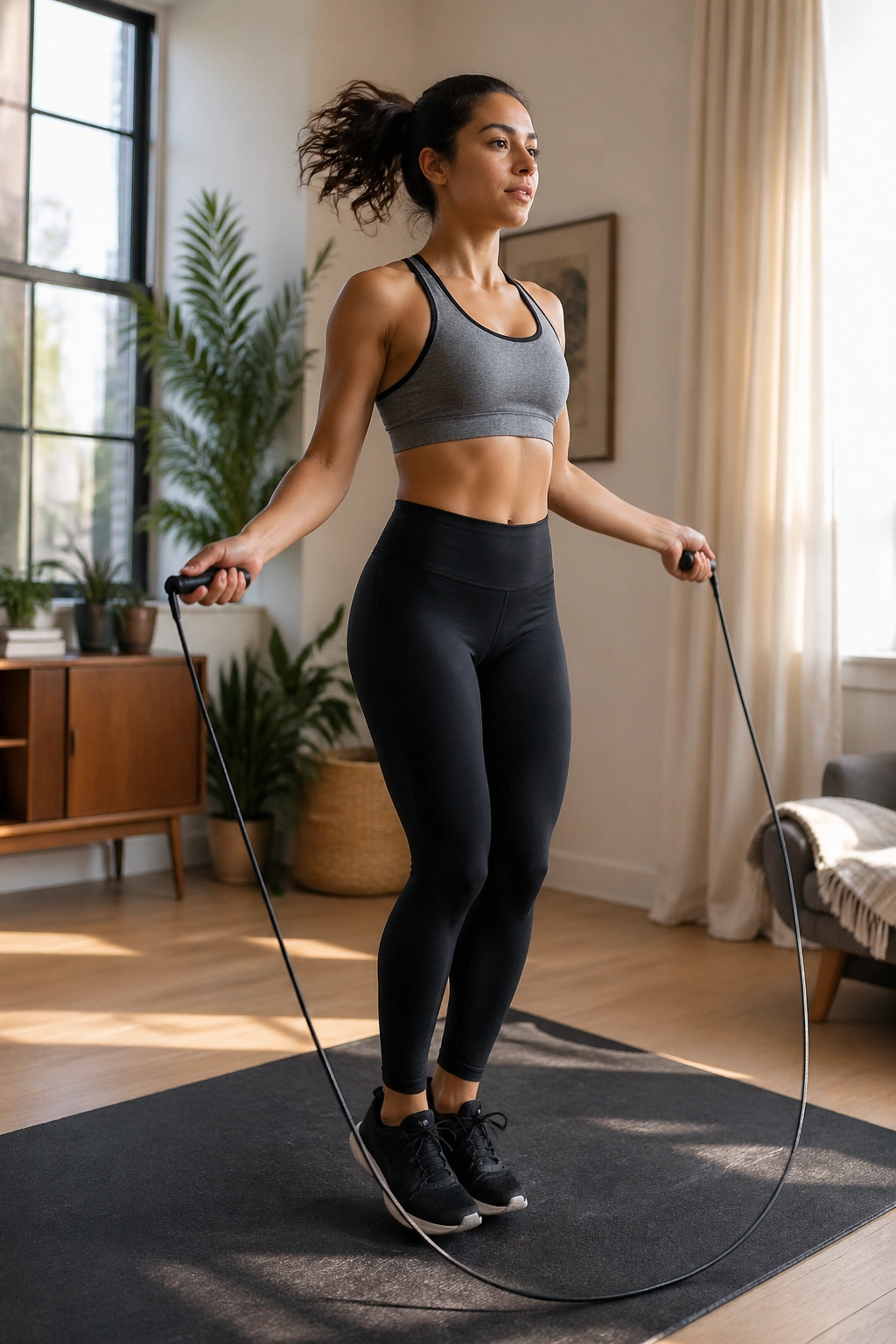
A noisy floor can ruin a workout. So can a rope that slaps the boards like a jump scare. If you share walls, live upstairs, or just don’t enjoy the sound of repeated impact, this quiet version keeps the cardio going without announcing every rep to the whole building.
Use a soft mat, cushioned shoes, and a low marching bounce instead of bigger jumps. Think of it as stepping around the rope with tiny, controlled lifts. One foot rises, the rope passes, the other foot rises. The movement stays close to the floor, and that’s the point.
The Quiet Version
- March in place for 30 seconds.
- Add a tiny rope turn for 30 seconds.
- Switch to boxer step for 30 seconds.
- Finish with 30 seconds of easy singles if the floor allows it.
The best part of this setup is consistency. You can do it early, late, or between work calls without making your floor sound like a construction site. It’s not the most explosive version of rope training, but it’s the one that gets used often, and that matters more.
If you need cardio at home and you want neighbors to stay friendly, this is the routine to save.
9. EMOM Rounds That Keep You Honest

The timer does the thinking here. EMOM means “every minute on the minute,” and it works well with jump rope because it removes the mental drag of deciding when to rest. You start when the minute begins, work for a set block, then recover with whatever time is left.
A simple setup is 40 seconds of rope work and 20 seconds of rest for 10 minutes total. If that feels like too much, drop to 30/30. If it feels too easy, push to 45/15. The structure is the same; only the density changes.
What makes EMOM work so well is the clean finish. You know exactly when the work stops, which means you can push a little harder without wondering whether you’re overdoing it. That makes the session feel tighter and more controlled than a free-form “do some skips until tired” plan.
Best Use Case
EMOM rounds are perfect on days when you want order. There’s no guessing, no wandering, no endless clock watching. Just start, move, breathe, repeat.
And if you miss the minute boundary by a few seconds, shorten the next work block rather than letting the whole session drift. A sloppy EMOM is just a messy interval workout with a fancy name.
10. AMRAP Rope-and-Squat Circuits

Pairing rope with squats looks simple, but it keeps the heart rate from settling down. That’s why this mixed circuit hits harder than a plain rope session. The legs keep working after the rope stops, and that little transition is where the fatigue sneaks in.
Use an AMRAP format — as many rounds as possible in a set time — with something like 50 single unders, 10 air squats, and 6 push-ups for 12 minutes. If push-ups are too much in the middle, swap in a plank hold for 20 seconds. Keep the numbers modest. The goal is movement quality, not a sloppy race.
The nice thing about this format is that it feels like a workout, not just cardio. You’re getting rope rhythm, leg strength, and a touch of upper-body work without setting up a whole gym. That’s a win on days when you want one session to cover more ground.
What Makes It Different
The rope is the engine, but the bodyweight moves keep the pace from getting stale. If your squats are slow and your rope is fast, the contrast keeps things honest. And if your rope starts falling apart after the squats, that’s useful information too.
Don’t chase rounds if the transitions get messy. Clean reps beat fast nonsense.
11. Forward-and-Backward Turn Mix
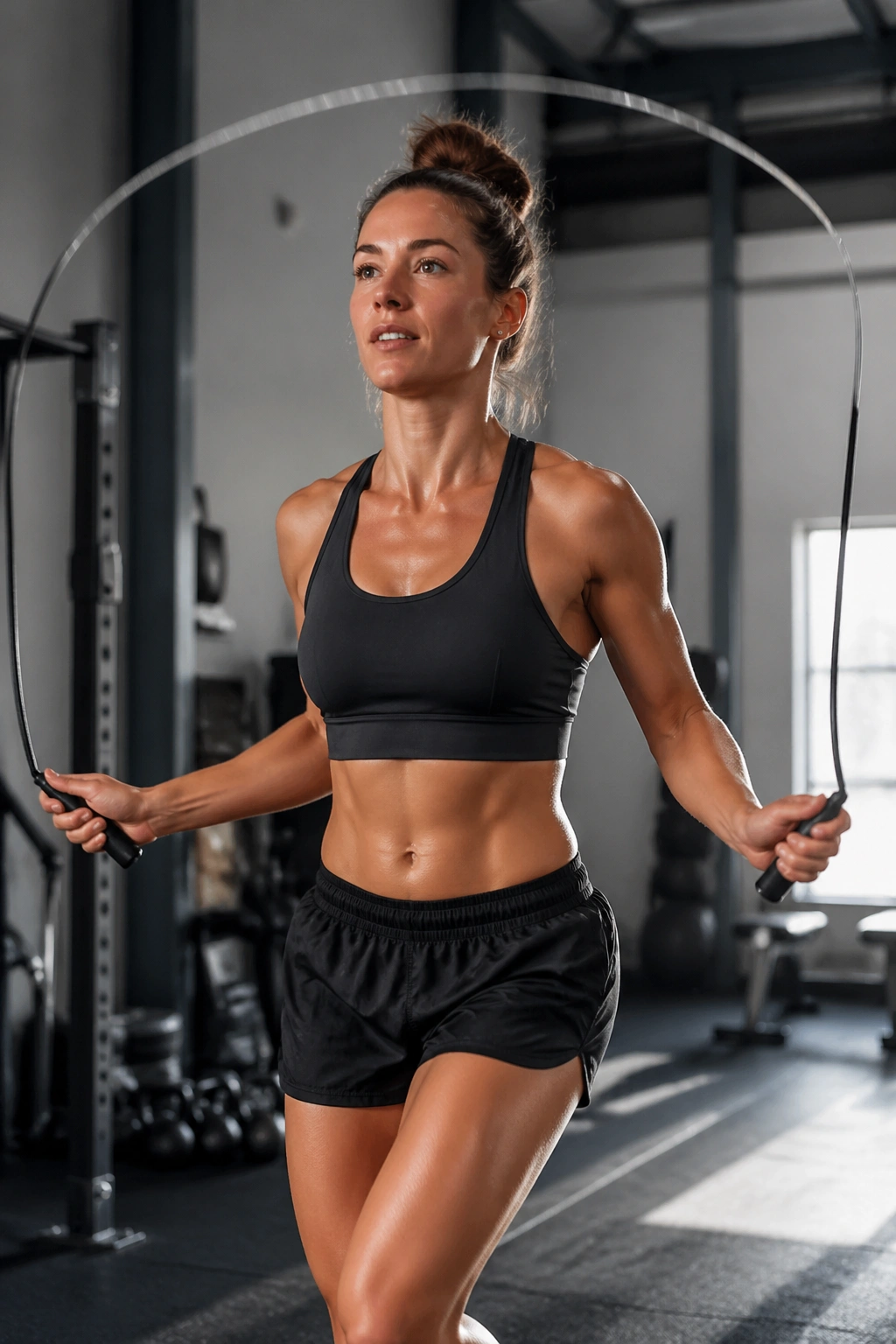
Backward turning feels awkward for the first 20 seconds. Then it starts to click. That awkwardness is part of the value, because backward turns challenge coordination in a way forward singles never do. They also light up the calves in a different pattern, which keeps the workout from going stale.
Try 20 seconds forward, 20 seconds backward, 20 seconds boxer step, then repeat that sequence for 8 to 10 rounds. The backward section should be slower than the forward one. If you try to match your forward speed, the rope will probably catch and your shoulders will tense up.
How It Changes the Feel
Backward turns force you to pay attention to the rope path. You can’t coast. Your wrists have to stay precise, and your feet need to stay light. That extra attention makes the session feel more technical, which is a nice break from raw speed work.
This is a good choice if you get bored fast. It also works as a reset day between harder intervals, because the change in direction keeps the mind busy without requiring max effort.
Keep the turns small, especially in the backward portion. Huge jumps make the rhythm harder, and there’s no reason to make it harder than it already is.
12. Tabata Rounds for Short, Sharp Cardio

Twenty seconds is short until you are on round six. That’s Tabata in a nutshell. The format is simple — 20 seconds hard, 10 seconds rest, repeated 8 times — but it’s one of the cleanest ways to get a hard cardio hit without a long session.
For jump rope, “hard” should mean quick and controlled, not wild. Use single unders, boxer step, or high-knee bursts. Keep the rope low and the jumps tiny. If your form breaks before the round ends, slow down the rope instead of trying to save the set with bigger jumps.
The reason Tabata works so well at home is that it strips away the extra noise. There’s no complicated counting, no equipment changes, no waiting around. Just work and rest, back to back, until the timer is done.
A lot of people go out too fast on the first two rounds. Don’t. Leave a little in the tank. You want to finish the last 10 seconds with effort still under control, not with your feet doing random things and your rope somewhere near your ankles.
13. Rope Intervals Between Strength Sets

After a set of squats or push-ups, a minute of rope can feel like a rude little joke. It’s also a smart way to keep a home workout moving. Instead of sitting down between strength sets, you keep the blood flowing and the heart rate elevated.
A simple structure looks like this: 12 squats, 40 rope skips, 8 push-ups, 40 rope skips, 20 lunges, 40 rope skips. You can swap the strength moves to fit what you have on hand. Dumbbells, kettlebells, or bodyweight all work. The rope ties the whole thing together.
Why This Combo Works
The strength work taxes the legs and trunk. The rope forces recovery to happen while you’re still moving. That’s a more demanding kind of rest than standing around, and it makes the session feel denser without needing extra time.
It’s also handy if you get bored with straight rope intervals. The movement changes give your mind a small reset, and that helps you keep going longer than you would with a single pattern.
Keep the rope portions moderate. If you go all-out after heavy squats, your footwork gets sloppy and your landings get loud. Smooth wins here.
14. The Endurance Ladder
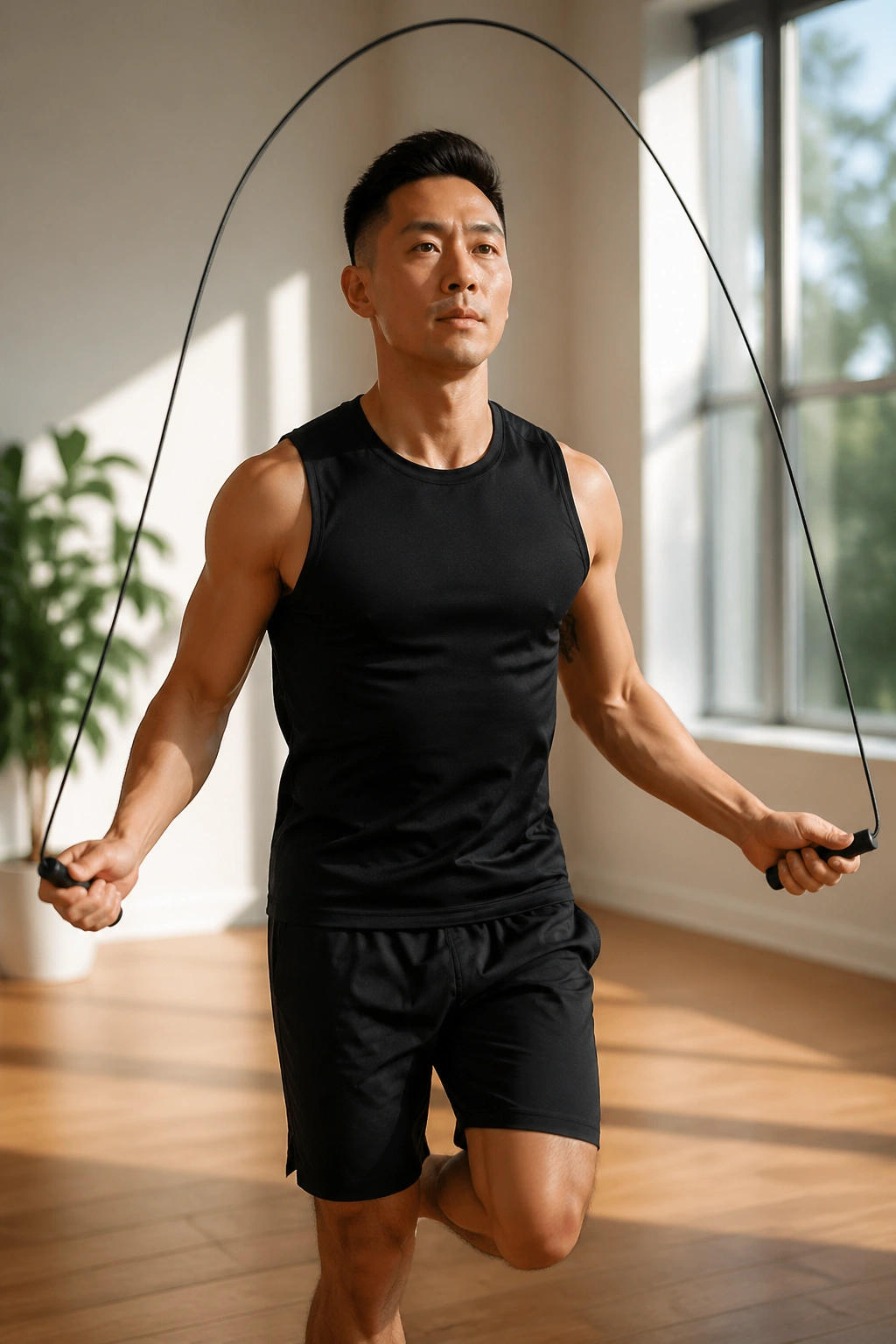
Some workouts punish speed. This one asks for patience. The endurance ladder builds a longer cardio block by stacking ascending and descending minutes, which makes it good for people who want a steady session without staring at the same interval for too long.
Use 1 minute, 2 minutes, 3 minutes, 4 minutes, 3 minutes, 2 minutes, 1 minute with 30 to 45 seconds of rest between each rung. The early minutes should feel controlled. The 4-minute top rung is where you settle in and keep your form clean instead of chasing a sprint.
How to Pace Each Rung
- Minute 1: basic bounce.
- Minute 2: boxer step.
- Minute 3: mix boxer step with single unders.
- Minute 4: slow the pace slightly and protect the rhythm.
That mix keeps the ladder from getting monotonous. It also gives you a chance to recover without stopping completely, which is useful when you want a longer session that still feels organized.
The mistake here is going too hard on the first minute because it feels easy. It is easy. Use that. Save the aggressive pacing for the middle of the ladder, where it actually helps.
15. Five-Minute Finisher That Still Counts

Five minutes at the end of a workout feels tiny on paper. In practice, it can leave your legs buzzing and your breathing messy if you use it well. That’s why finishers matter: they squeeze a useful amount of work into a very short window.
Try this: 1 minute basic bounce, 1 minute boxer step, 1 minute fast singles, 1 minute ski steps, 1 minute easy rope march. Or, if you want a cleaner punch, do 45 seconds work and 15 seconds rest for five rounds, switching patterns each round. The point is to keep moving while the clock runs down.
This is the routine to use when you’re short on time or when you want one last hard block after strength work. It’s also a nice way to build consistency, because a five-minute finisher feels doable even on a messy day.
Best Way to Use It
Start with the movement you trust most, not the flashiest one. That keeps the first round smooth and gives you a better chance of finishing strong. If your form starts falling apart, drop back to boxer step and keep the rope turning.
Short sessions can still be real sessions. Don’t sell them short just because the clock is unkind.
Final Thoughts
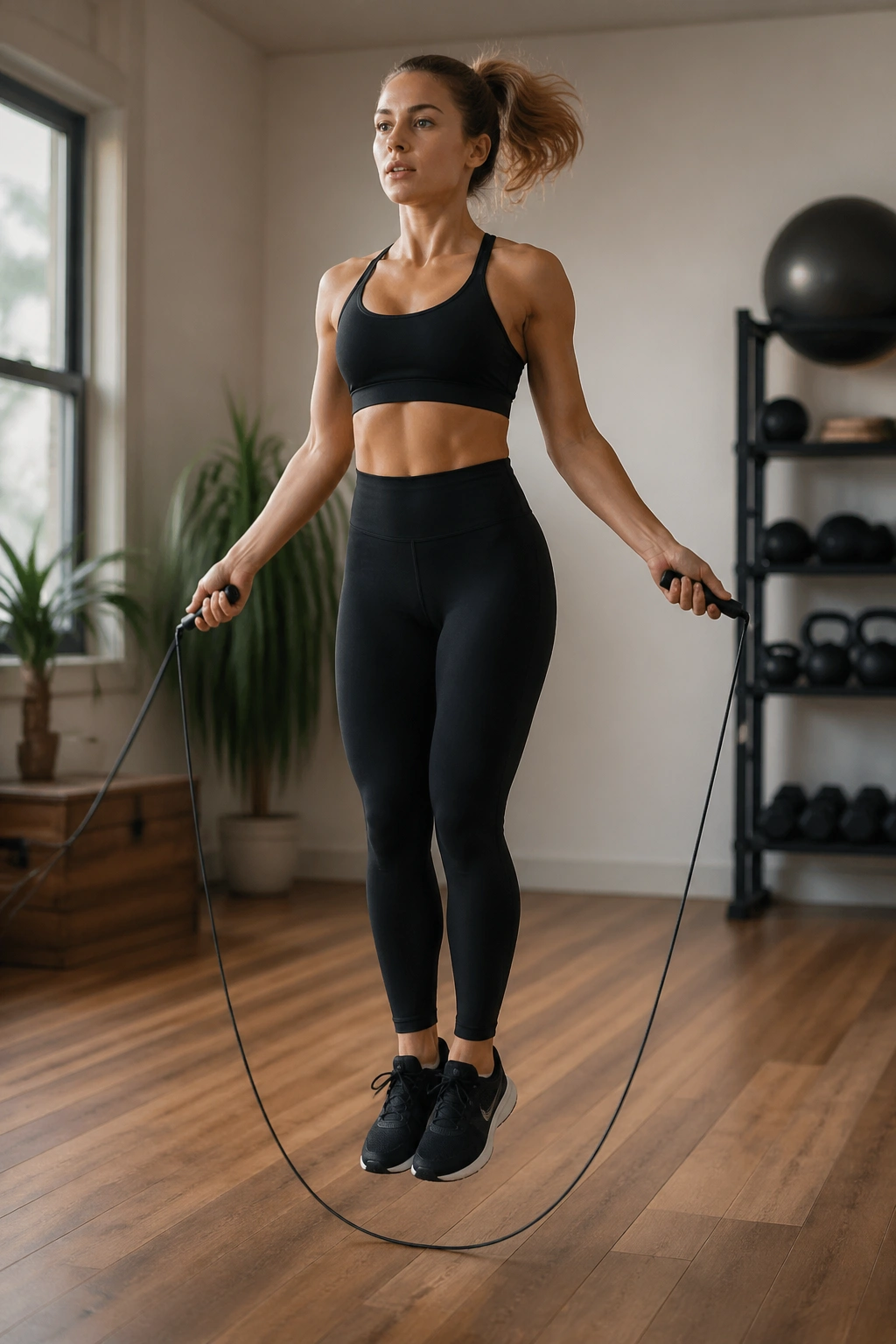
Jump rope training works because it doesn’t give you much room to fake effort. The rope is either turning or it isn’t, and your feet are either in rhythm or they’re not. That honesty is part of the appeal. It’s also why these workouts feel so useful at home.
The best version is usually the one you’ll repeat. For some people, that’s the basic bounce and a timer. For others, it’s Tabata, pyramids, or a mixed rope-and-strength circuit. Pick the one that fits your space, your joints, and your patience on that day.
And keep the jumps small. Seriously. That one fix solves more bad rope sessions than any fancy trick ever will.
