



Weighted core workouts do more than chase a burn. They teach your torso to stay organized when the load gets ugly — under a barbell, in a suitcase carry, or halfway through a press that wants to twist you open.
A lot of people live on endless crunches and planks. Fine, but incomplete. Once resistance enters the picture, you start training spinal flexion, anti-extension, anti-rotation, side-bending, and carries in a way bodyweight reps usually can’t match.
Short version: the trunk should transmit force, not leak it.
That is the lens I’d use for every movement below. Some are old-school, some are a little awkward, and a few will humble you fast. Good. That means they’re doing real work.
1. Cable Crunches for Loaded Flexion
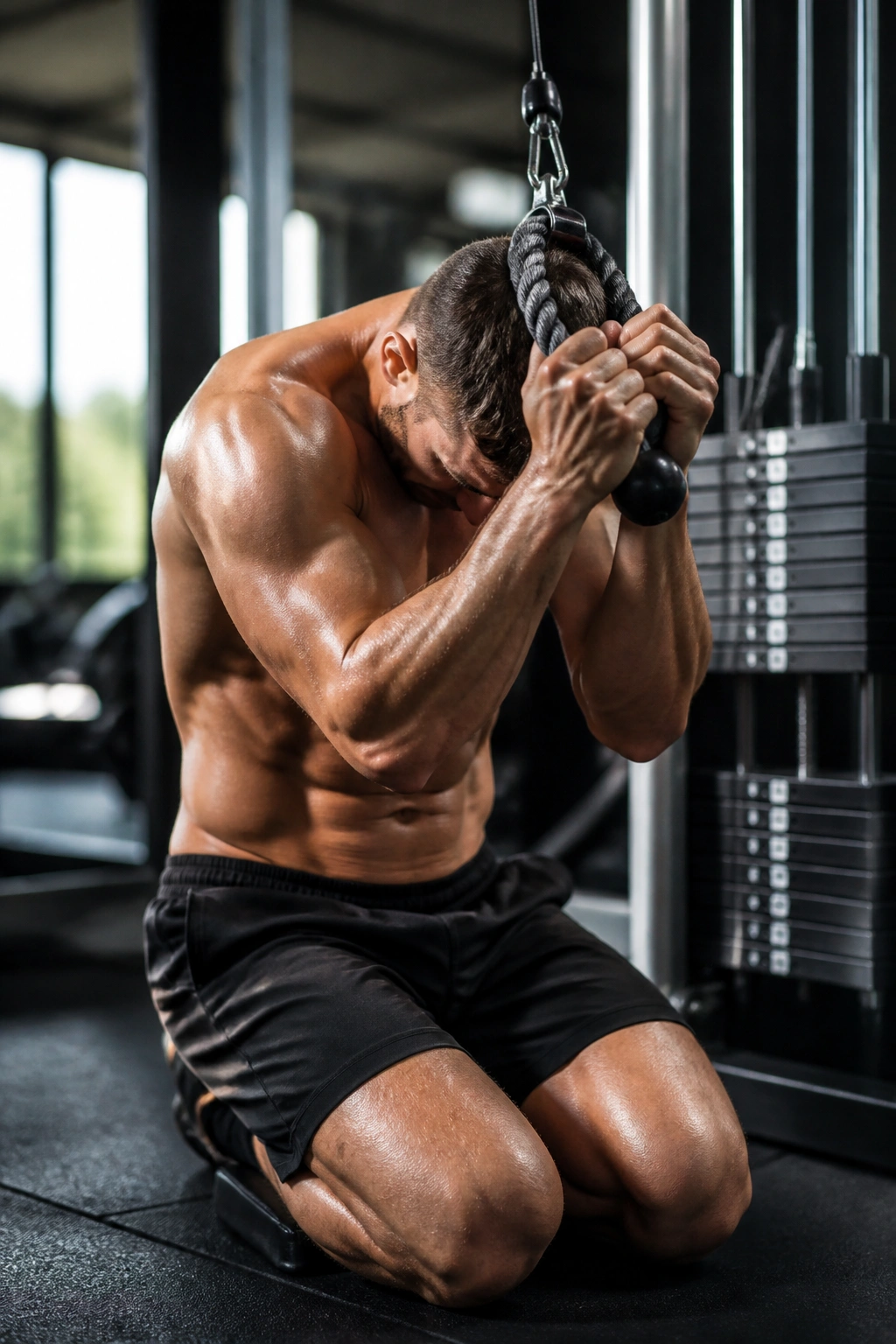
Cable crunches are the cleanest place to start if you want direct, measurable abdominal loading. I like them because the stack gives you a smooth line of resistance, and that makes it easier to feel whether your abs are doing the work or your hips are cheating.
Why They Work
A cable crunch loads spinal flexion without turning the movement into a full-body heave. You kneel, fix your lower body, and curl your ribs toward your pelvis. That makes the abs shorten under tension, which is the part most people skip when they only do planks and carries.
Start with 3 to 4 sets of 8 to 15 reps and use a load that lets you pause for one beat at the bottom. If you have to yank with your arms or pull your hips back, the stack is too heavy.
- Kneel 1 to 2 feet from the cable stack.
- Keep your hips mostly still.
- Exhale as you curl down.
- Stop when your spine rounds a little and your abs feel fully contracted.
Pro tip: let the return happen slowly. The lowering phase is where a lot of the useful work lives.
2. Weighted Plank Holds with a Plate or Vest
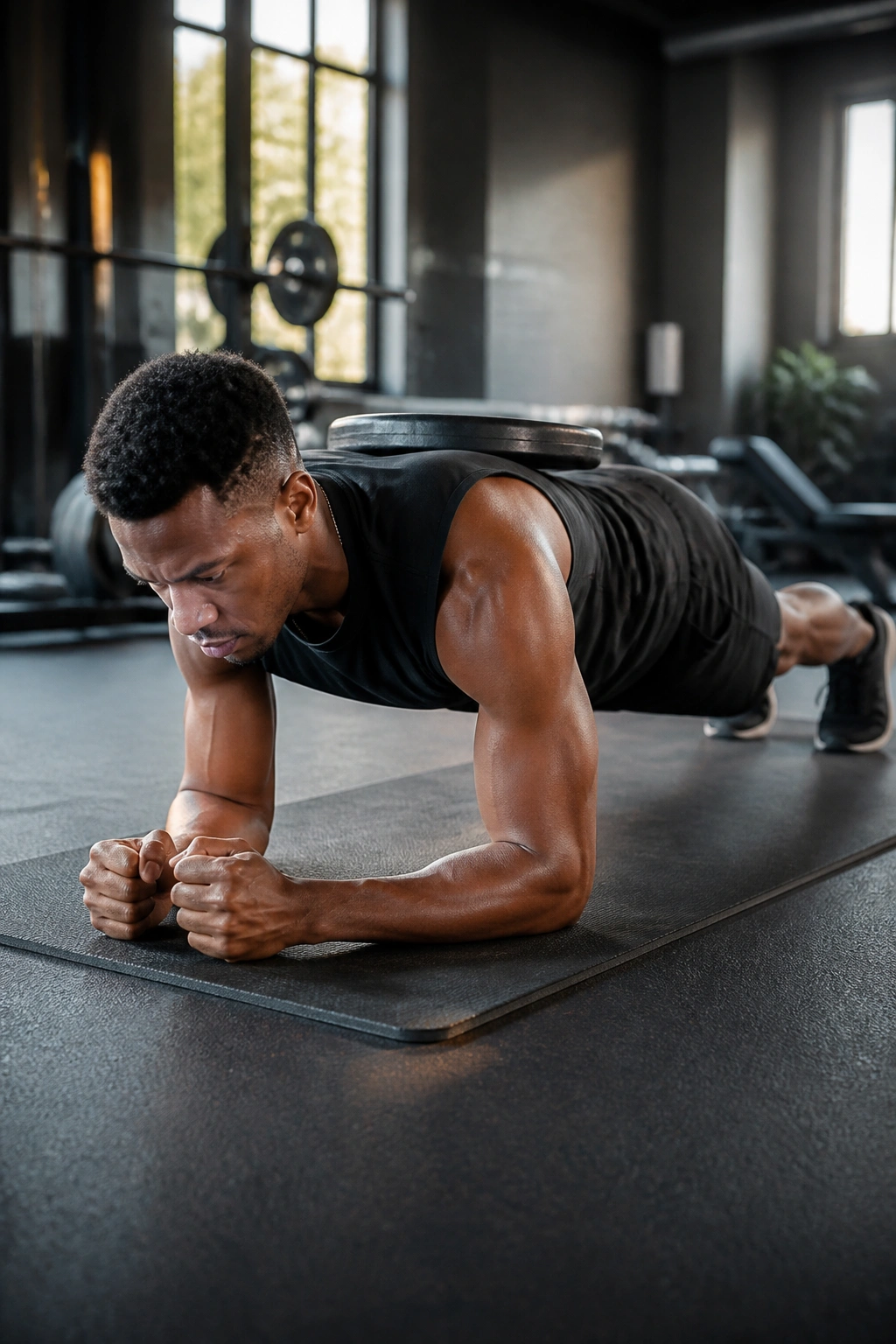
A weighted plank should feel like a fight against sagging, not a test of how long you can suffer. That sounds picky, but the difference matters. Once you add a plate or vest, the plank becomes a real anti-extension drill, which means your ribs, pelvis, and glutes have to stay stacked.
Put a 10 to 25 lb plate on your upper back, or wear a vest that sits tight and doesn’t bounce. Hold for 20 to 45 seconds and stop the set the moment your low back starts to dip or your shoulders shrug up toward your ears. A clean 25-second plank beats a sloppy 60-second one every time.
The point is not to stare at the clock. The point is to keep the body from folding. If your elbows slide out, your glutes shut off, or your breathing turns frantic, the set is already over.
I prefer these after squats or presses, when the trunk is already warmed up and the brace has to happen under fatigue. That is where they teach something useful.
3. Dumbbell Dead Bugs for Anti-Extension
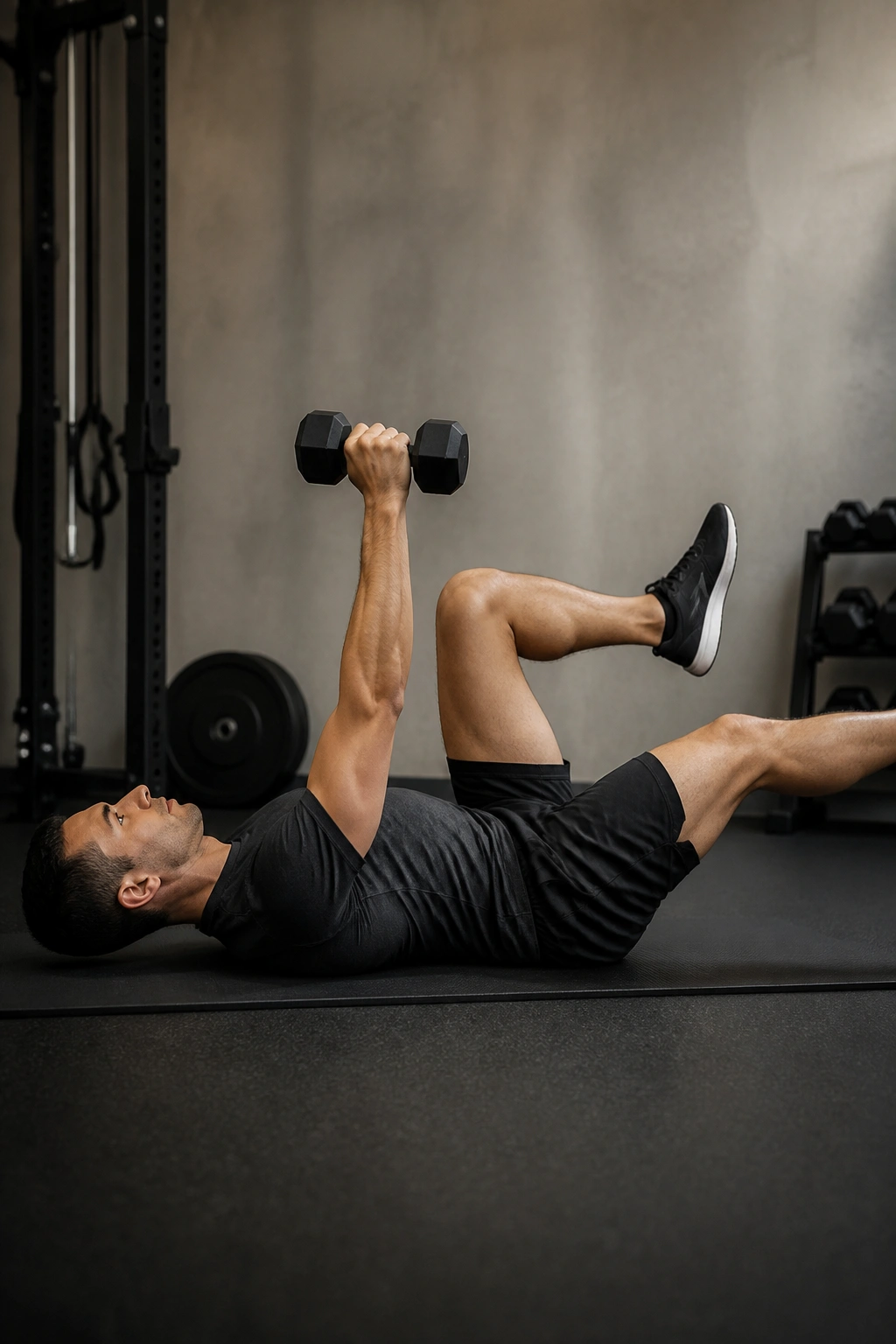
Why bother putting weight into a dead bug at all? Because the weight gives your arms something to stabilize while your legs move, and that makes anti-extension strength show up fast. A bodyweight dead bug can get easy enough that people rush it. Add a light load, and the cheat reps start disappearing.
How to Keep Your Low Back Quiet
Hold one 5 to 20 lb dumbbell straight above your chest with both hands, or press a light kettlebell skyward. Then extend one leg at a time while keeping your low back pressed into the floor. If your ribs pop up, the weight is too much or the leg is moving too far.
Use 6 to 10 reps per side and move slowly. One clean rep matters more than five fast ones. A tiny pause at full extension helps a lot, because it forces you to own the position instead of sliding through it.
- Exhale before the leg lowers.
- Keep the dumbbell still.
- Stop the motion before the back arches.
- Reset if your neck starts helping.
This one looks simple. It isn’t, at least not when you do it right.
4. Pallof Press Holds for Anti-Rotation
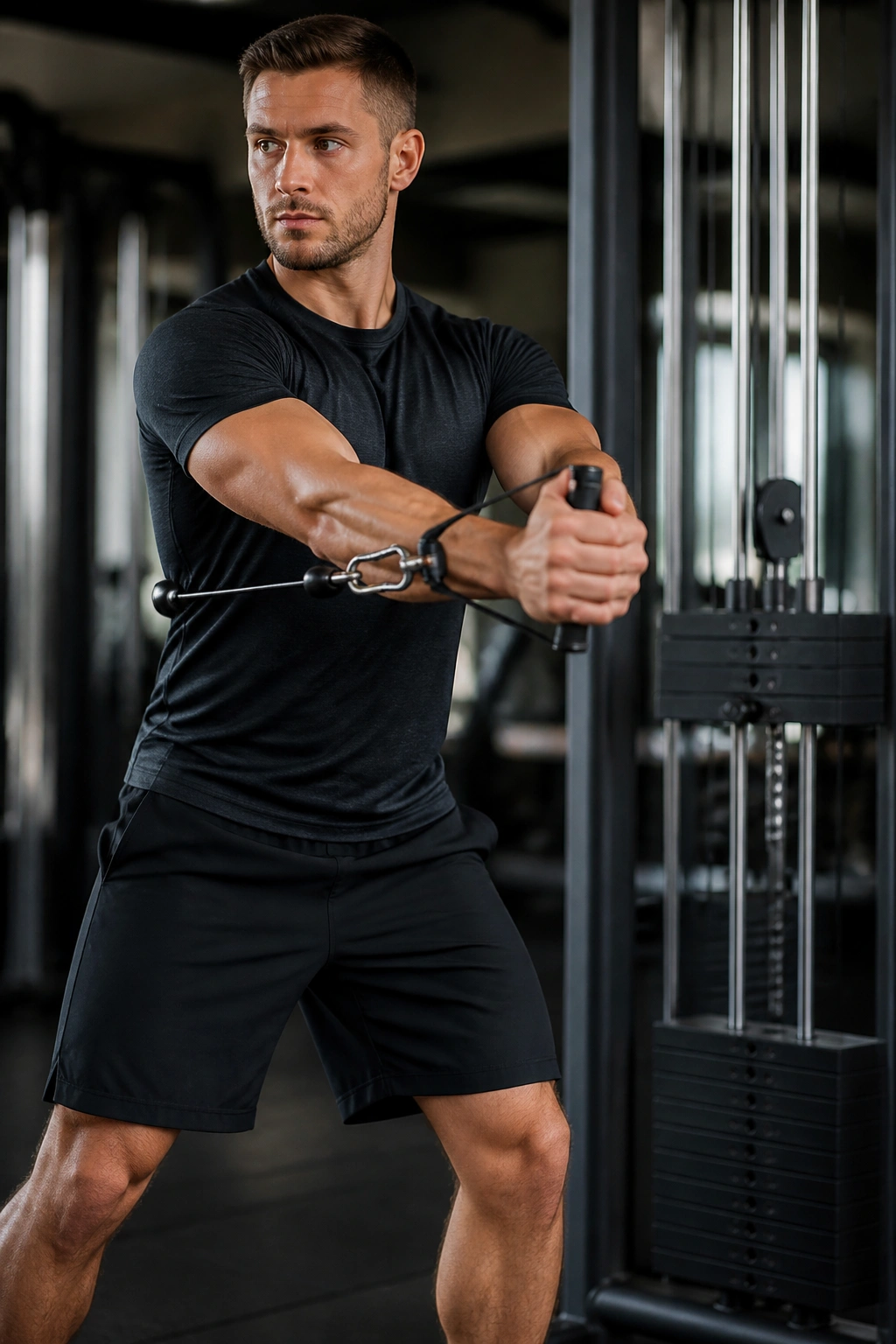
A cable stack and one handle can wake up your midsection faster than a floor mat ever will. The Pallof press is a straight-up anti-rotation drill: the weight wants to twist you, and your core has to refuse.
Stand sideways to the stack, step out until the cable gets honest, and press the handle away from your chest. Hold the arms straight for 2 to 5 seconds, then bring the handle back under control. Three sets of 8 to 12 presses per side is plenty if the resistance is real.
What Makes the Setup Work
Keep your feet shoulder-width apart and your knees soft. If your torso turns toward the machine, the load is too heavy or your stance is too narrow. I like a slight bend in the knees because it makes it easier to feel the ribs stay stacked over the pelvis.
- Press straight out, not upward.
- Keep the shoulders level.
- Breathe behind the brace.
- Use a load that makes you slow down.
The beauty here is that the movement stays small while the demand stays high. That’s a good trade.
5. Decline Sit-Ups with a Plate on the Chest
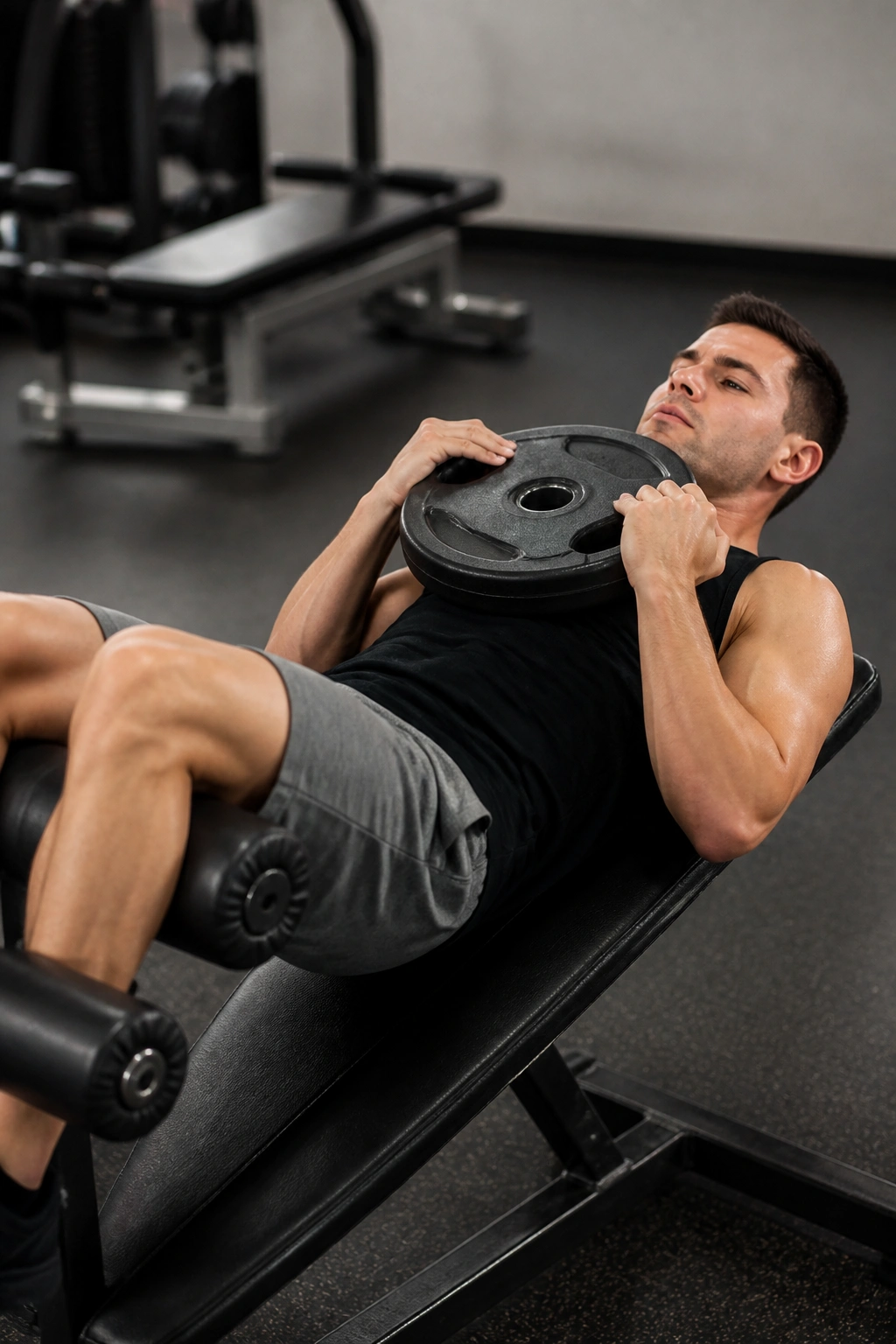
Decline sit-ups have been around forever because they work. No mystery there. Add a plate to the chest, and you get a very plain, very effective loaded core exercise that punishes sloppy range and rewards control.
A 5 to 25 lb plate is enough for most people. Anchor your feet lightly, not like your life depends on it, because the hips can turn the movement into a hip-flexor tug-of-war if you lock down too hard. Lower under control until your back is just past parallel, then curl up by driving the ribs toward the pelvis.
What I like here is the honest feedback. If you jerk your neck, the neck complains. If you flare the ribs, the low back complains. If you use too much weight, the rep turns into a bounce. There is no hiding.
Keep the set in the 8 to 12 rep range and make the last two reps look the same as the first two. If they don’t, the plate is too ambitious.
6. Suitcase Carries for Side-Bending Control

Unlike crunches, suitcase carries care about what your spine does while you’re walking. That is the whole point. One heavy dumbbell at your side turns every step into a test of anti-lateral flexion, which is a polite way of saying your torso has to resist leaning.
Pick a weight that feels heavy in one hand but still lets you walk tall for 20 to 40 meters. Switch sides before you get fancy. If one hip shoots out or your shoulders tilt, cut the load down and clean up the posture first.
The carry should feel like a quiet grind. Feet under hips. Eyes forward. No side shuffle. No shrugging. I like these because they carry over to real life in a way a machine never will — groceries, bags, awkward boxes, all of it.
A nice benchmark is 3 to 5 trips per side with a short walk back between sets. You want your obliques and quadratus lumborum working, not your grip collapsing on minute one.
7. Hanging Knee Raises with Added Load
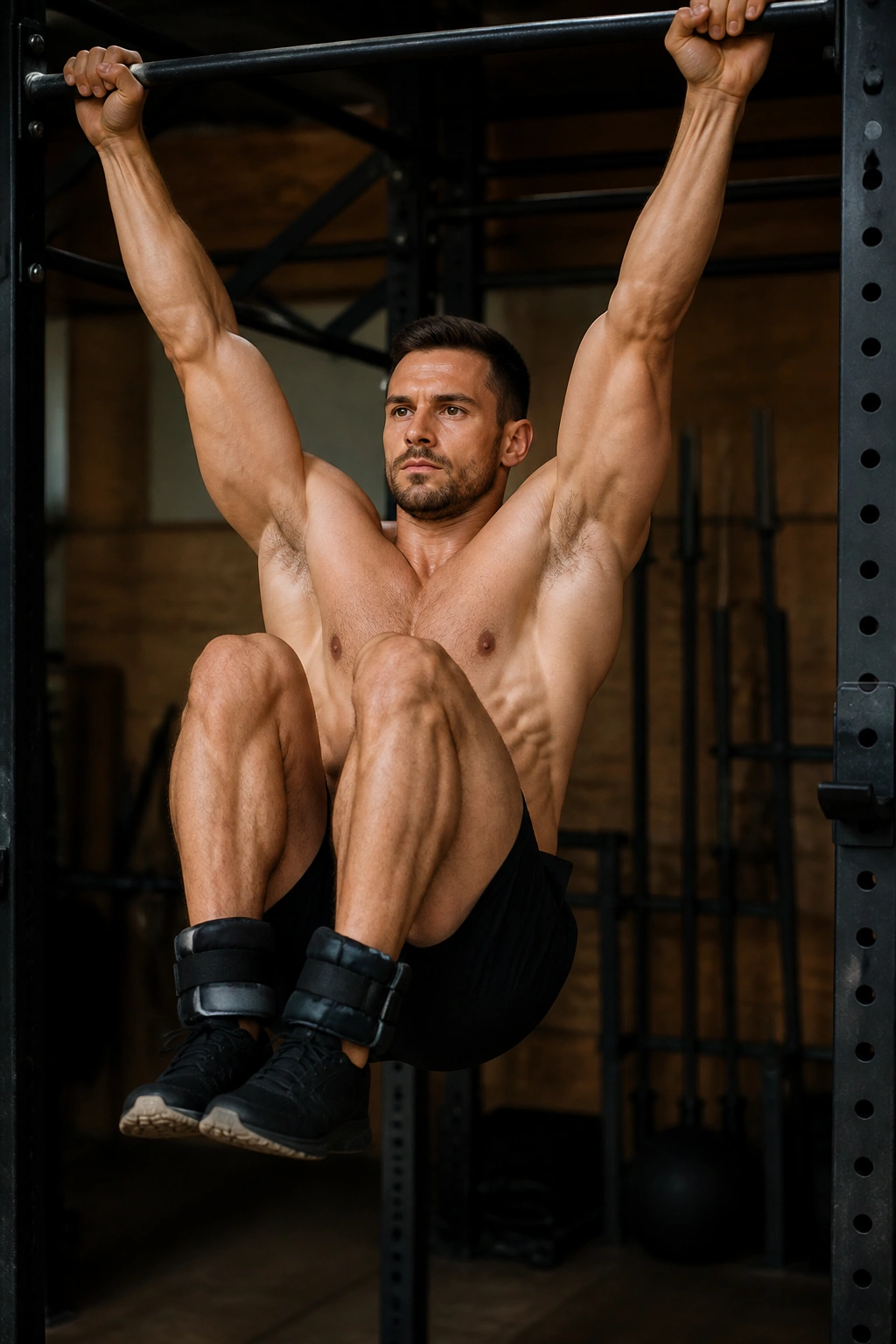
Watch someone swing through hanging knee raises and you can tell in two reps whether their abs are doing the work. Add a little load, and the cheating gets louder. That’s useful, because the exercise becomes much more honest.
You can wear ankle weights or hold a very light dumbbell between the feet if you have enough control to keep it secure. I prefer ankle weights for most people. Pull the knees up by curling the pelvis, not by kicking the legs forward and hoping momentum carries the day.
The Part Most Lifters Miss
The top of the rep should feel like a crunch in the lower abs, not just a hip fold. If your shoulders are swinging, slow the descent and pause between reps. 6 to 10 slow reps is usually enough.
- Start from a dead hang.
- Keep the rib cage down.
- Curl the pelvis up at the top.
- Lower until the body is still again.
This is one of those exercises that gets better when the tempo gets slower. Faster is usually worse.
8. Barbell Rollouts from the Knees
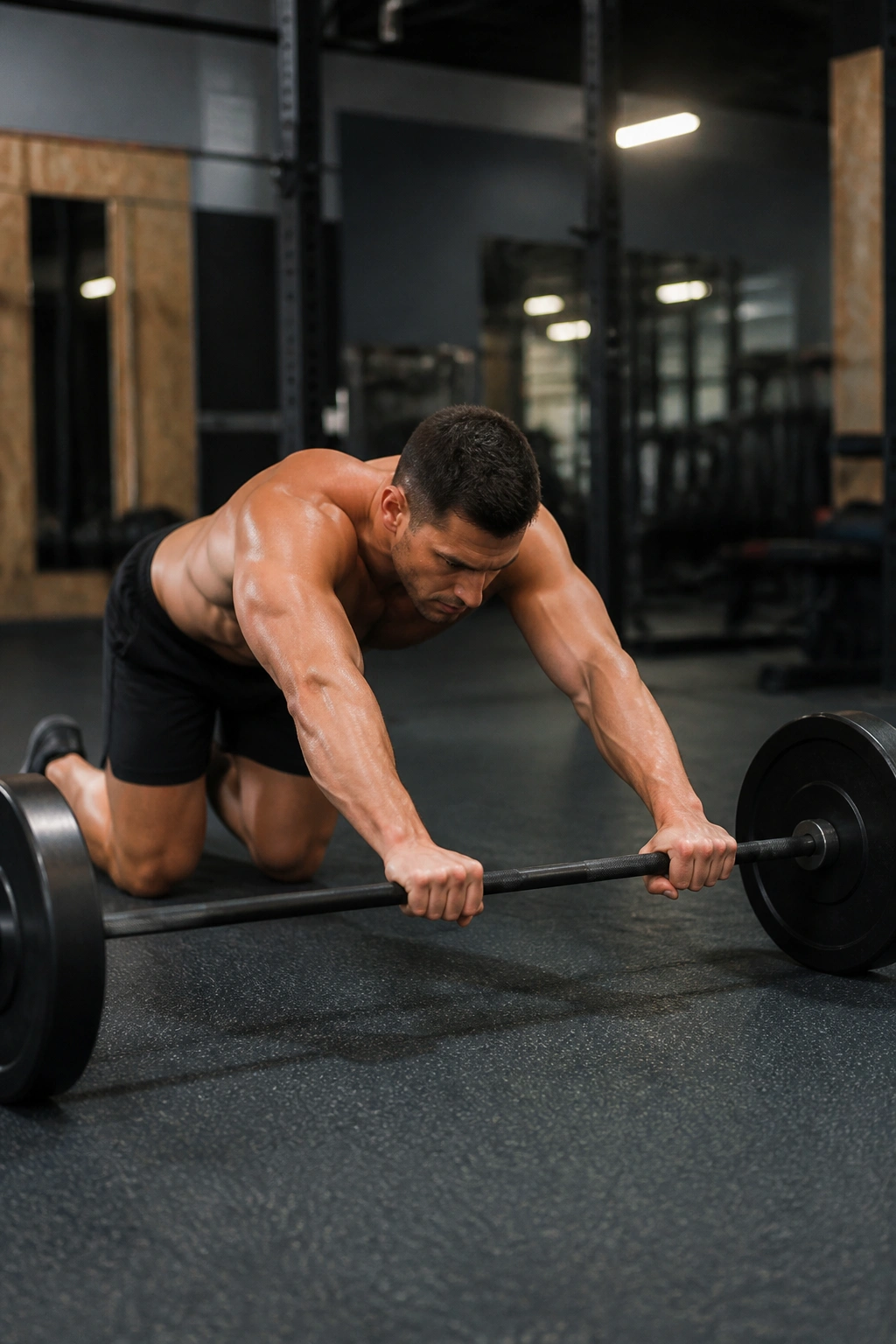
Barbell rollouts are not a beginner move, and pretending otherwise is how people end up arching their backs like a bridge. Done right, they train anti-extension strength hard, and they do it with a piece of equipment most lifters already have.
Start from the knees, load a barbell with smooth plates, and roll forward only as far as you can keep the ribs tucked and the glutes tight. If the low back sags, stop there. The return should be driven by the abs, not by a shrugging yank from the arms.
A short range is fine. Really. You do not need to reach the floor on day one. A controlled 6 to 8 rep set with a half-range rollout often beats a big, messy version that dumps you into lumbar extension.
I like to think of these as a litmus test. If your brace is sloppy, the floor tells on you. If it is solid, the movement feels almost stubborn.
9. Russian Twists with a Medicine Ball
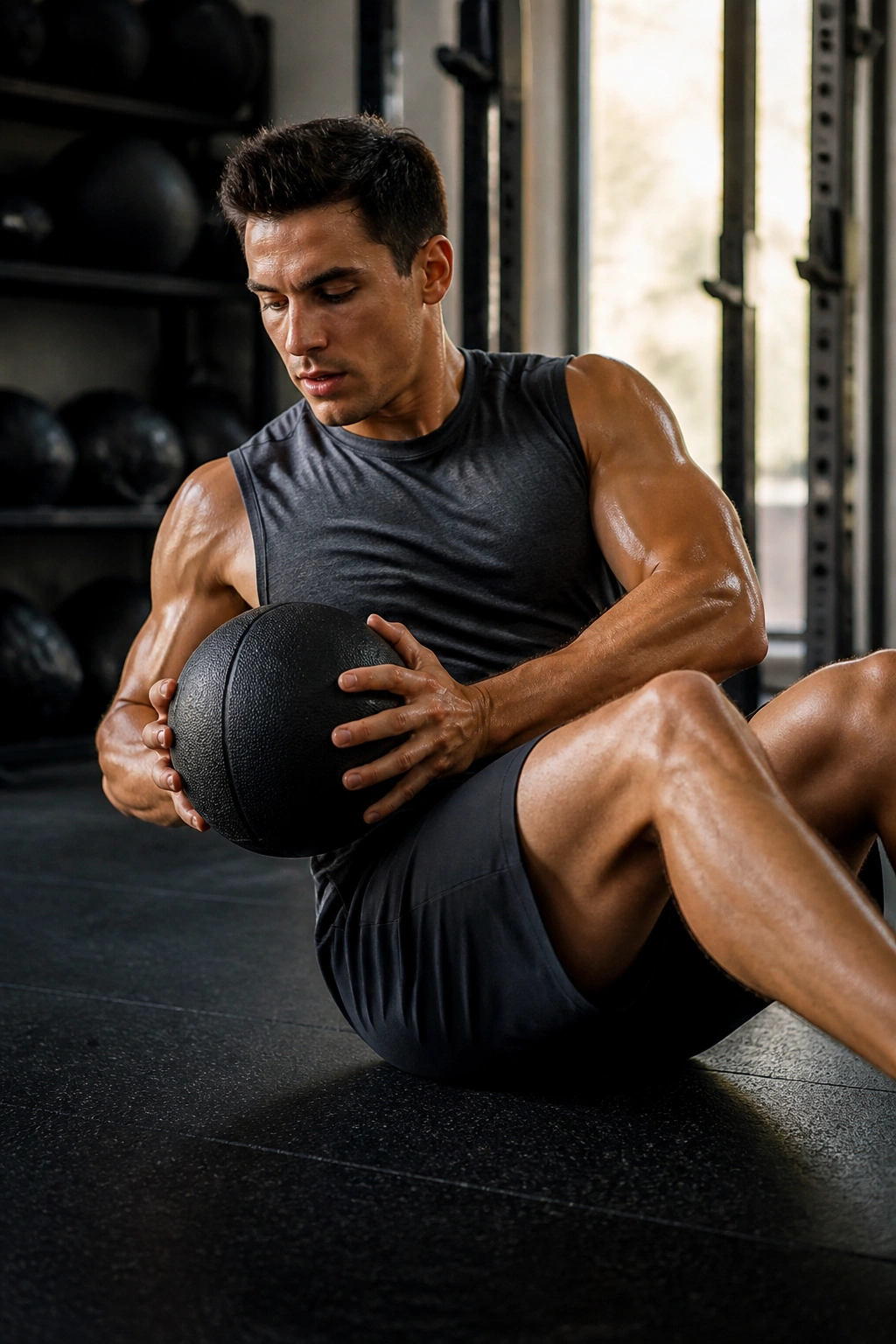
Russian twists only earn their keep when the turn is controlled. Fast, flailing twists are mostly noise. Slow, loaded twists teach the trunk to rotate without turning the whole body into a pretzel.
Sit with your feet down if you need help staying honest. Hold a 6 to 20 lb medicine ball and rotate the rib cage from side to side while the hips stay mostly quiet. You should feel the obliques catching the turn, not the shoulders tossing the ball around.
What to Watch For
Keep the spine tall at the start. If you round hard from the first rep, the movement turns into a sloppy crunch-and-swing combo. I’d rather see 10 to 16 total touches done with control than a marathon of rushed reps.
- Move the ball in a smooth arc.
- Tap lightly near the hip.
- Breathe out on each turn.
- Stop if the low back starts pinching.
This is not the best drill for everyone, and that is fine. But if you want rotational strength, the twist belongs in the mix.
10. Half-Kneeling Landmine Rotations
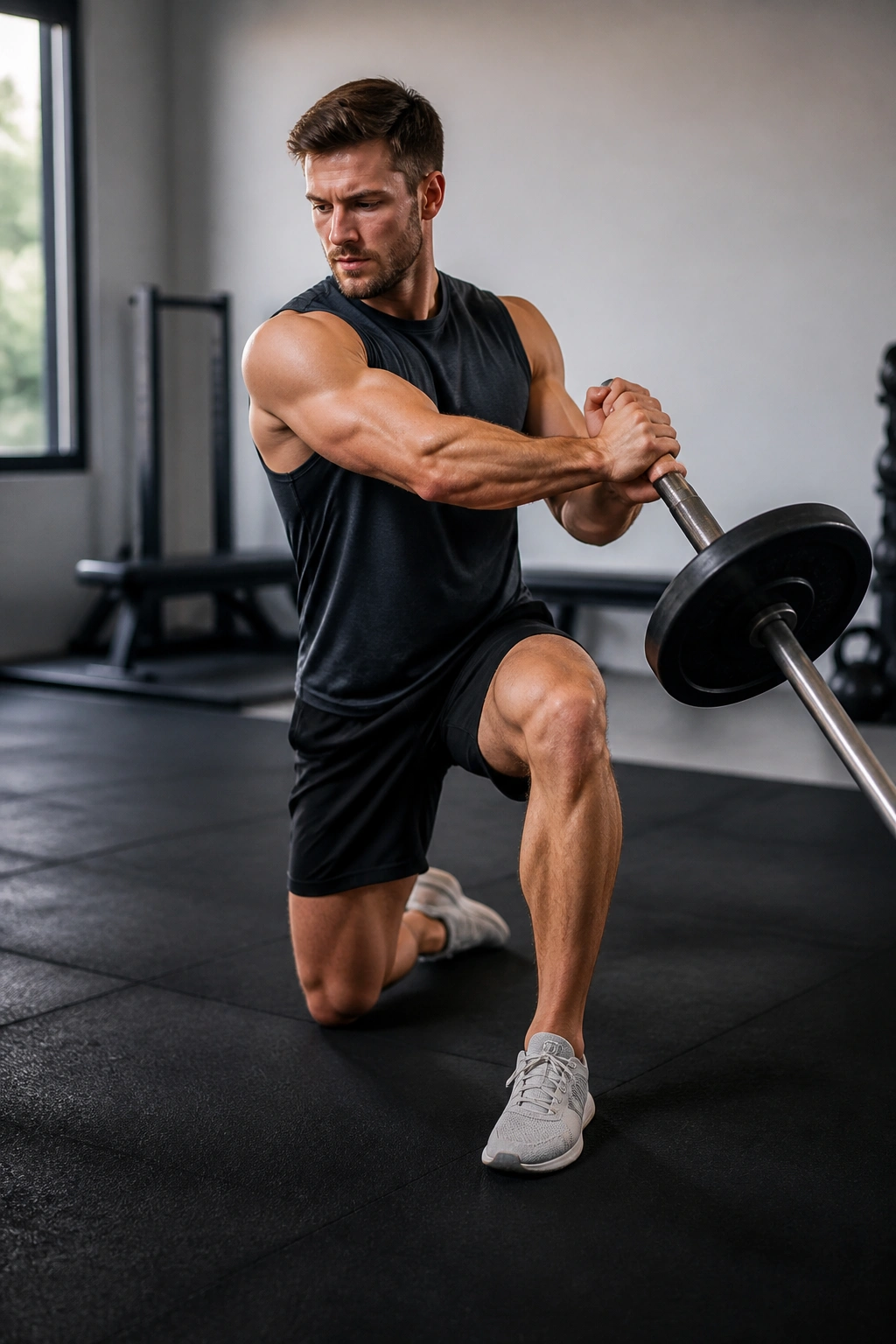
A half-kneeling landmine rotation feels like turning a heavy door with your ribs locked down. That image isn’t fancy, but it fits. One knee on the floor removes a lot of lower-body cheating, which makes the trunk do the real work.
Hold the bar in the landmine sleeve with both hands or one hand, depending on the variation you use. Rotate the bar through a controlled arc while keeping the hips square and the front knee quiet. The goal is not to whip the weight around. The goal is to control the path.
Keep the Path Clean
Use a light-to-moderate load first. Landmine work can fool people because the arc feels friendly until the set gets heavy, and then the torso starts heaving. 8 to 10 reps per side is enough to make the point.
- Front foot flat.
- Back knee down.
- Ribs stacked over pelvis.
- Turn through the upper torso, not the lower back.
I like this drill because it sits between pure strength and athletic rotation. It has a place on both days.
11. Dumbbell Side Bends Done Slowly
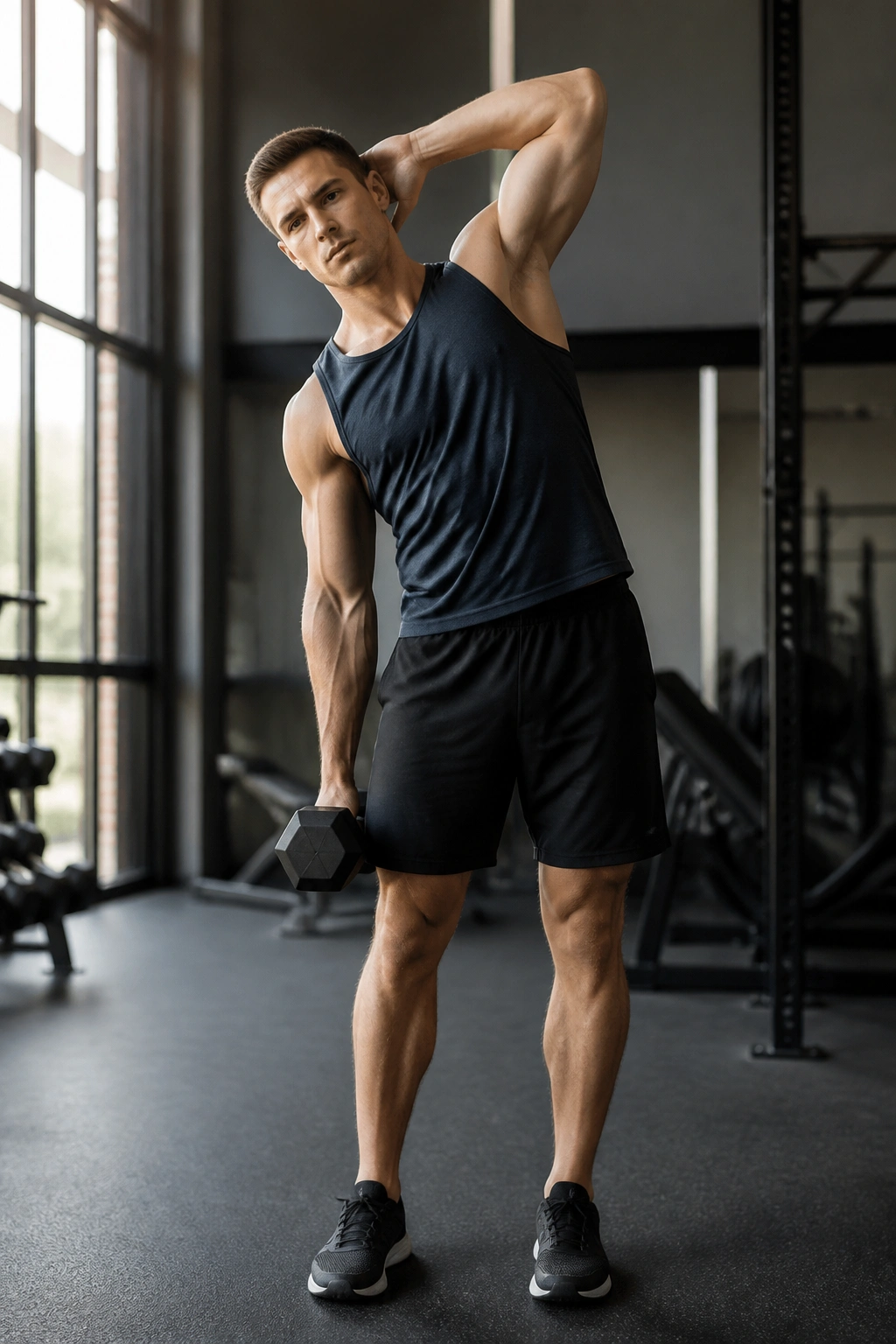
Do dumbbell side bends deserve the bad reputation they get? Sometimes yes. Often no. The movement goes sideways when people load it too heavy, swing through the bottom, and call that core training.
Use one 15 to 50 lb dumbbell in one hand, stand tall, and slide the weight down toward the outside of the knee under control. Come back up by shortening the opposite side of the waist, not by jerking the shoulder. 8 to 12 reps per side is enough if the tempo is slow.
What matters here is range. You want a little lateral bend, not a collapse. The obliques should light up, and the hips should stay mostly level. If the dumbbell is so heavy that you hitch at the top, the load is too much.
I actually like these for people who live too long in anti-rotation work and never train side flexion at all. Balance matters.
12. Overhead Carries for Rib Control
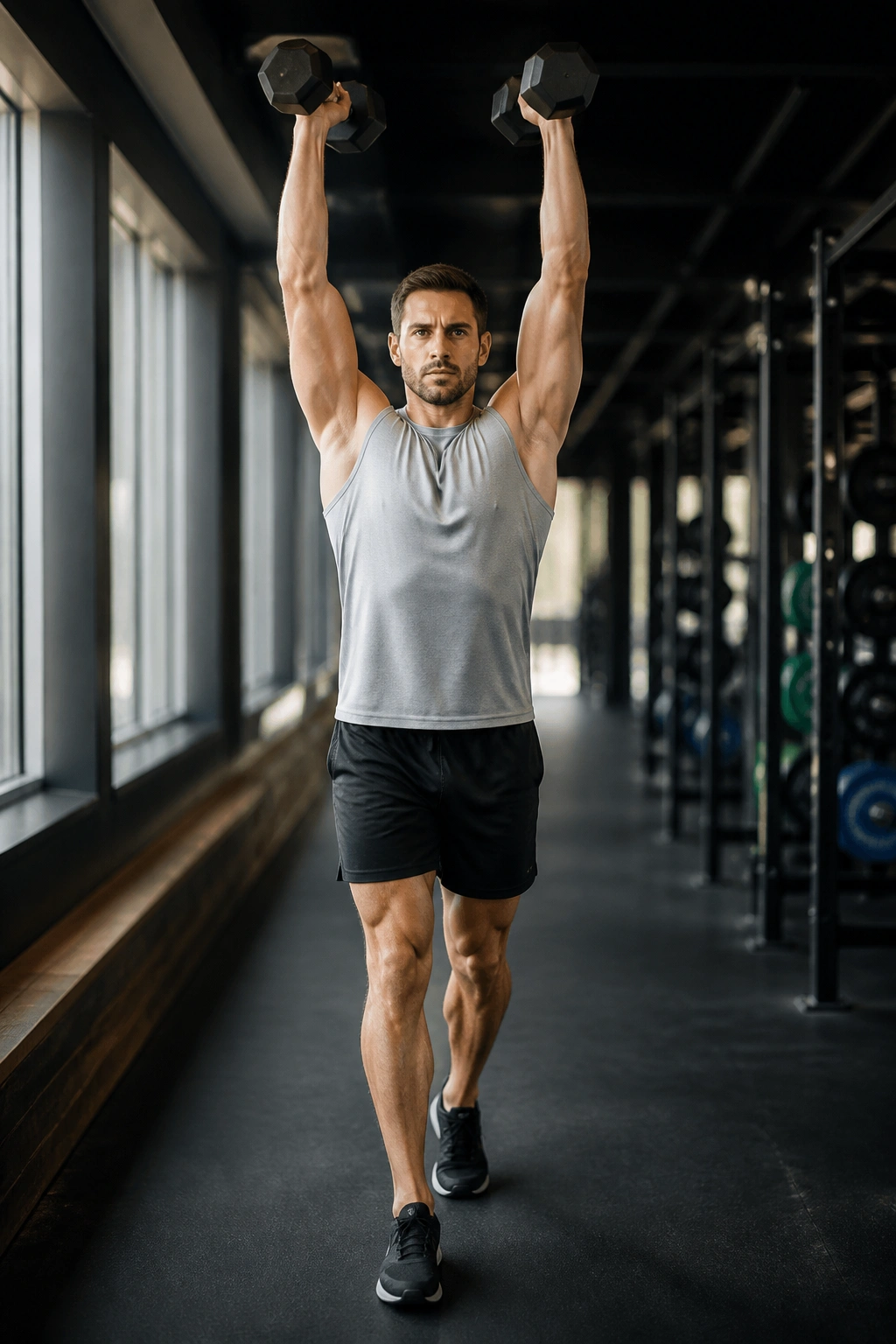
Overhead carries feel simple until your ribs start drifting and your shoulders burn. Then the whole thing turns into a posture exam. That is why I keep them in a loaded core menu. They teach rib control under load, which pays off everywhere from pressing to overhead sports.
Hold one or two dumbbells or kettlebells overhead and walk for 15 to 30 meters. The arms should stay stacked over the shoulders, and the lower ribs should stay quiet. If you feel the lower back arching, bring the load down and tighten the stance.
I prefer a moderate load that lets you breathe without wobbling. Heavy is fine, but only if the line from wrist to elbow to shoulder stays clean. A carry like this also makes the mid-back work harder than people expect.
Keep the steps small and steady. No rushing. If the bell drifts behind your ear, reset before the set gets ugly.
13. Turkish Get-Ups with a Kettlebell
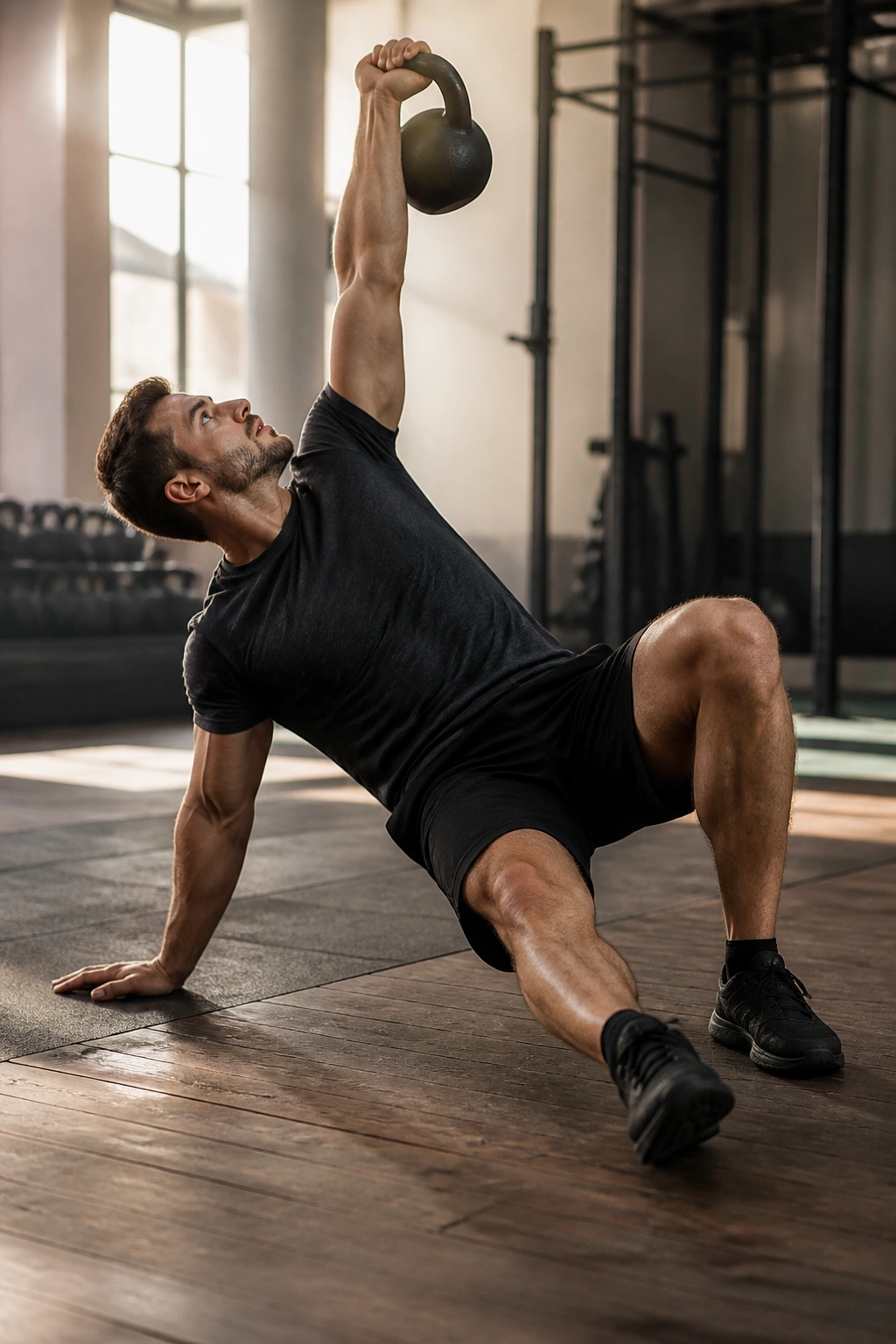
The Turkish get-up is the one movement that makes people respect the floor. It looks theatrical, and then you try it with a real kettlebell and realize that every tiny transition demands focus. That’s why it belongs in a list of weighted core workouts.
Start with a light to moderate kettlebell and treat each rep like a sequence: roll to elbow, post to hand, bridge, sweep the leg, kneel tall, stand, then reverse the path. The core has to keep the bell stacked and the torso from folding as the positions change. One rep each side can be enough.
The Useful Part Isn’t the Stand
The transition from lying down to kneeling is where the trunk learns to organize itself. That’s the money zone. A lot of people rush the middle and miss the real work.
- Keep eyes on the bell.
- Move slowly through each phase.
- Breathe at the pauses.
- Stop if the shoulder loses its stack.
If you only do one full-body core exercise, this is a strong candidate. It is awkward, which is exactly why it works.
14. Reverse Crunches with Ankle Weights
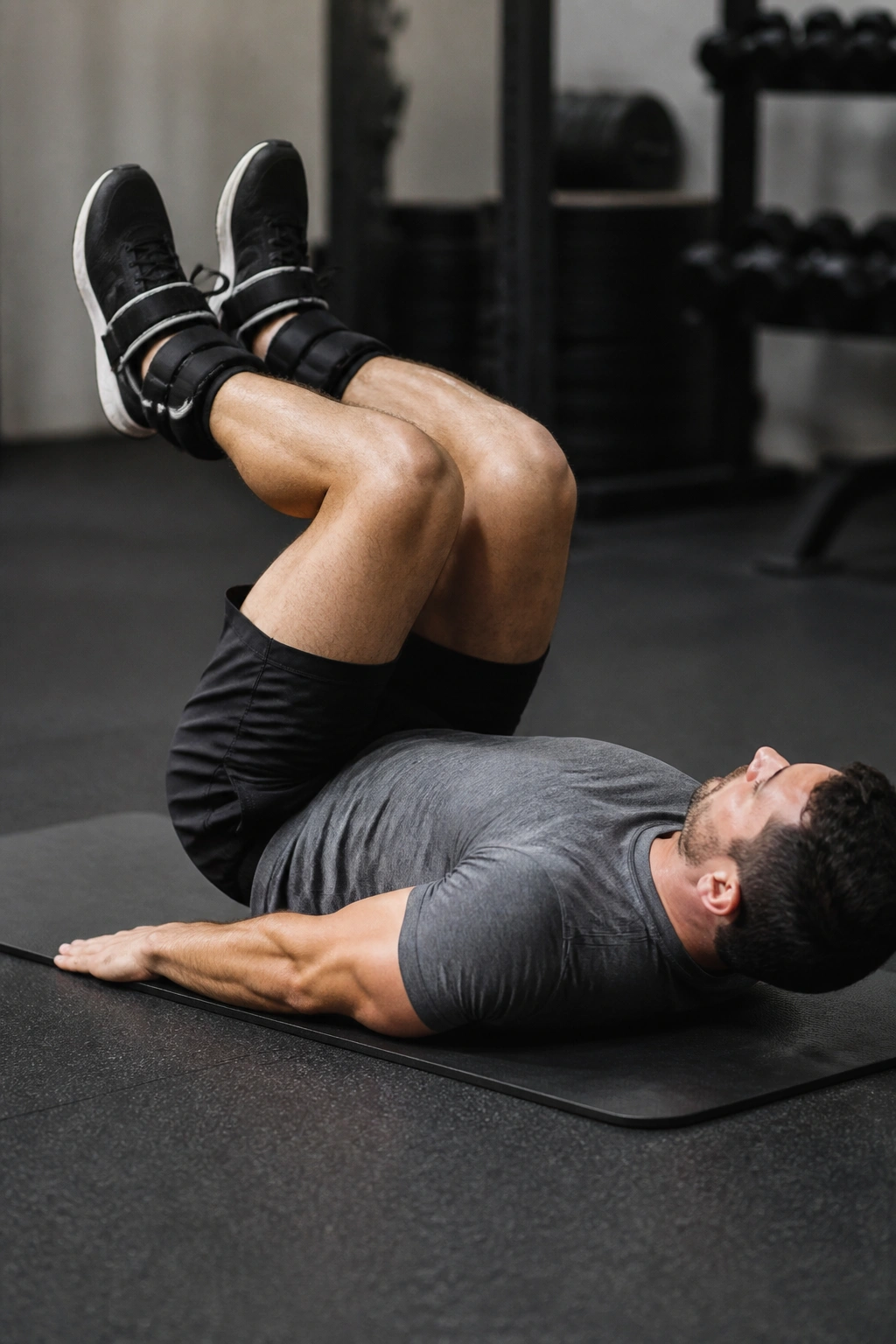
If your reverse crunch turns into a leg swing, the load is too heavy. That rule saves a lot of bad reps. A properly done reverse crunch curls the pelvis off the floor and keeps the motion anchored in the lower abs.
Ankle weights are the simplest way to add resistance. Start light — 2 to 5 lb per ankle is plenty for most people — and keep the knees bent enough that the movement stays honest. Lift the hips a few inches, pause, then lower slowly until the low back settles back down.
What I like here is the finish position. You should feel the pelvis tuck, almost like the tailbone is reaching toward the ceiling. If the legs are swinging forward, the abs have already lost the set.
This one pairs well with cable crunches because it loads the same area from a slightly different angle. That sounds small. It isn’t.
15. Cable Woodchops for Diagonal Strength
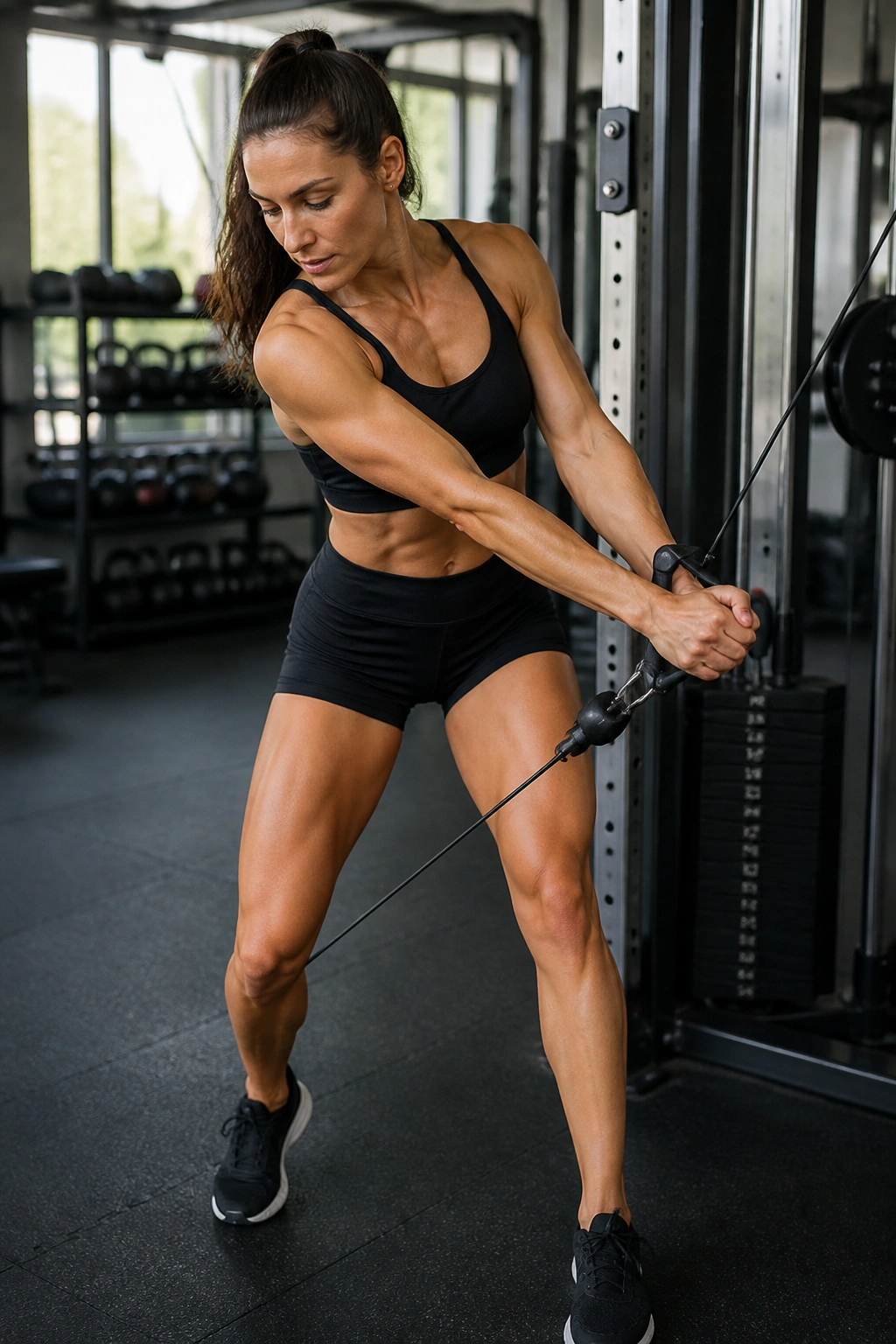
Cable woodchops give you a cleaner arc than most medicine ball twists because the stack keeps tension on the line the whole time. That makes them useful for the diagonal sling from shoulder to opposite hip, which is exactly where a lot of trunk power lives.
Use a high-to-low chop or a low-to-high version. Either one works, but keep the arms as hooks and let the torso rotate under control. The movement should look smooth, not explosive and wild. I’d rather see 8 to 12 controlled reps per side than a fast blur.
High-to-Low vs Low-to-High
High-to-low tends to feel a little more natural for most people because it follows the path of a chopping motion. Low-to-high asks more from the obliques and hips on the way up. Try both, then keep the one that lets you stay stacked.
- Start with the cable set tight.
- Rotate through the torso.
- Keep the knees soft.
- Finish without leaning back.
Woodchops are one of those drills that seems flashy from a distance and fairly strict once you actually do them well.
16. Farmer’s Carries with Heavy Dumbbells
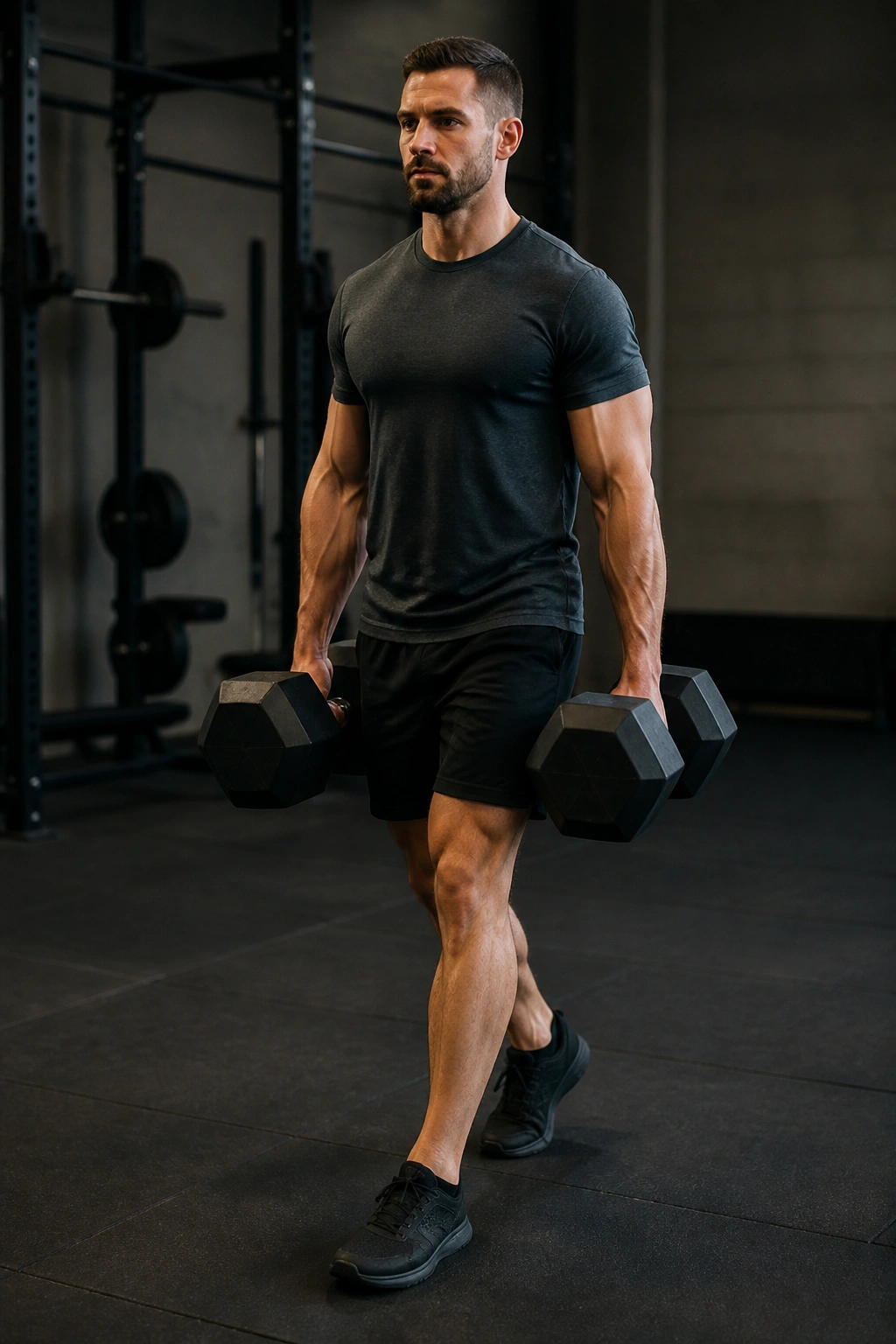
Farmer’s carries look plain and still roast your trunk. Heavy dumbbells in both hands create a full-body brace that shows up in the abs, the grip, the upper back, and the feet. It is one of the easiest ways to load the core without a lot of setup drama.
Walk for 20 to 40 meters with enough weight to make you pay attention, but not so much that your stride turns ugly after five steps. Shoulders stay level. Ribs stay down. The torso should feel tall, not stiff in a fake military way.
The carry gets better when you stop thinking about squeezing the dumbbells and start thinking about keeping the whole body quiet. That is the trick. If your elbows bend, your trap tension jumps, or you start swaying side to side, the load is chasing you instead of helping you.
I like these as a finisher because they are brutally honest and easy to measure. Distance, load, posture. Done.
17. Front Rack Marches for Core Stiffness
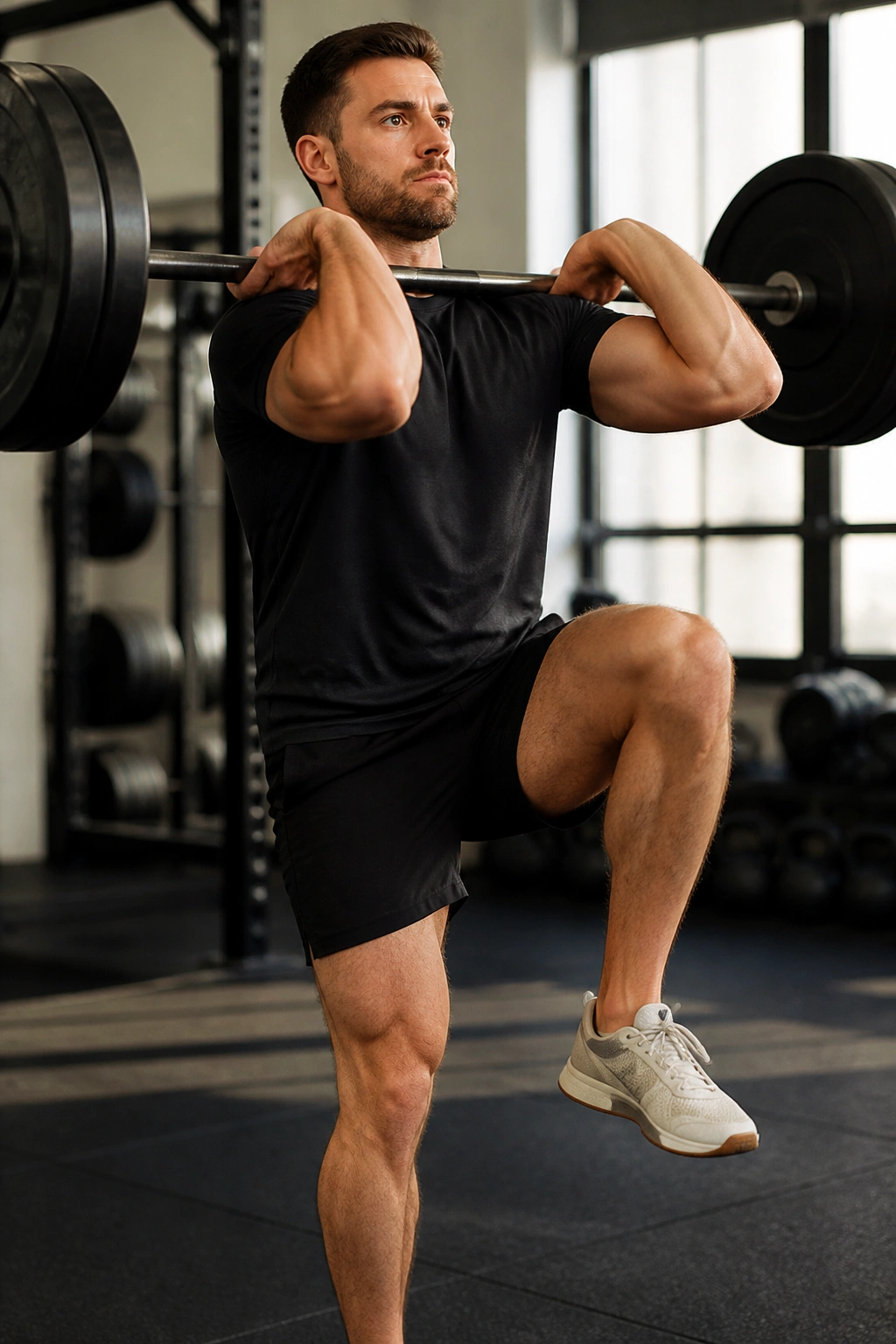
Why march in place with weights at the front rack? Because the rack position pushes the ribs and upper back into a job they cannot fake. Dumbbells or kettlebells held at the shoulders make the trunk resist extension while the legs move one at a time.
Stand tall, bring the bells to the front rack, and march slowly for 20 to 30 steps. The hips should stay level. The low back should not arch. If the torso leans back to keep the weights up, the load needs to come down.
This is a sneaky good drill after squats or cleans because it ties breathing, posture, and hip control together. You feel the abs working, but the real win is how steady the whole body stays.
A clean front rack march should look almost boring from the outside. Inside, though, it is busy.
18. Sandbag Bear-Hug Carries
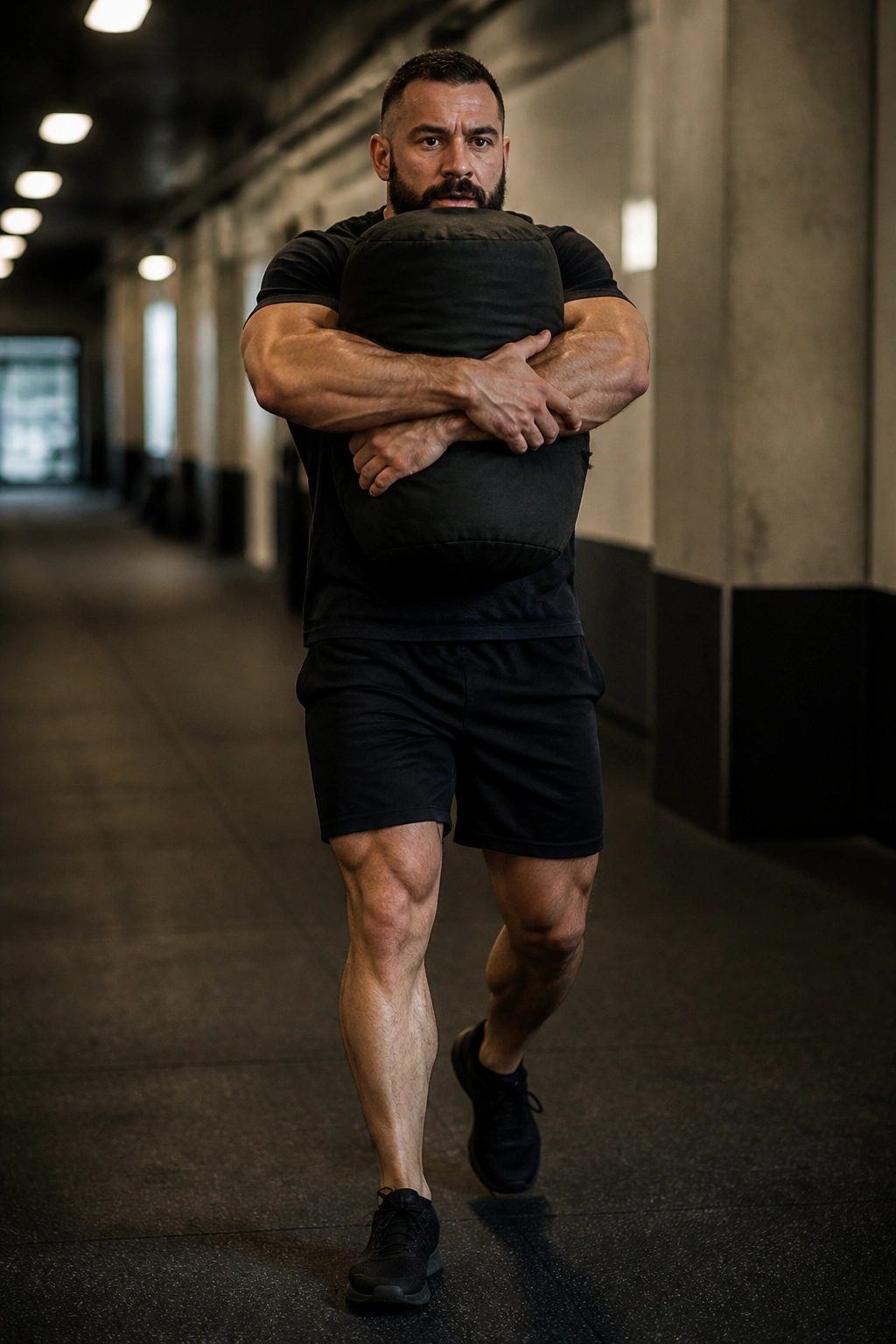
A sandbag bear-hug carry feels awkward on the first step and honest on the tenth. That awkwardness is the point. The bag sits high against the chest, crushes the upper torso a little, and forces the abs to lock in while you move.
Pick a sandbag you can hold for 20 to 60 meters without hunching over. Hug it tight enough that the shoulders don’t shrug and the ribs don’t pop open. The breathing gets a little labored here, which is normal, because the bag fights the chest from the inside.
Why It Feels So Different
Unlike a dumbbell carry, the sandbag shifts slightly. That tiny shift forces the trunk to keep adjusting. The result is a very different kind of core demand, one that feels close to moving a heavy object through real space.
- Keep the bag high on the torso.
- Take short, clean steps.
- Exhale through the brace.
- Reset if the lower back starts doing the holding.
This one belongs in a lot more programs than it gets. It’s ugly in the best way.
19. Half-Kneeling Landmine Presses
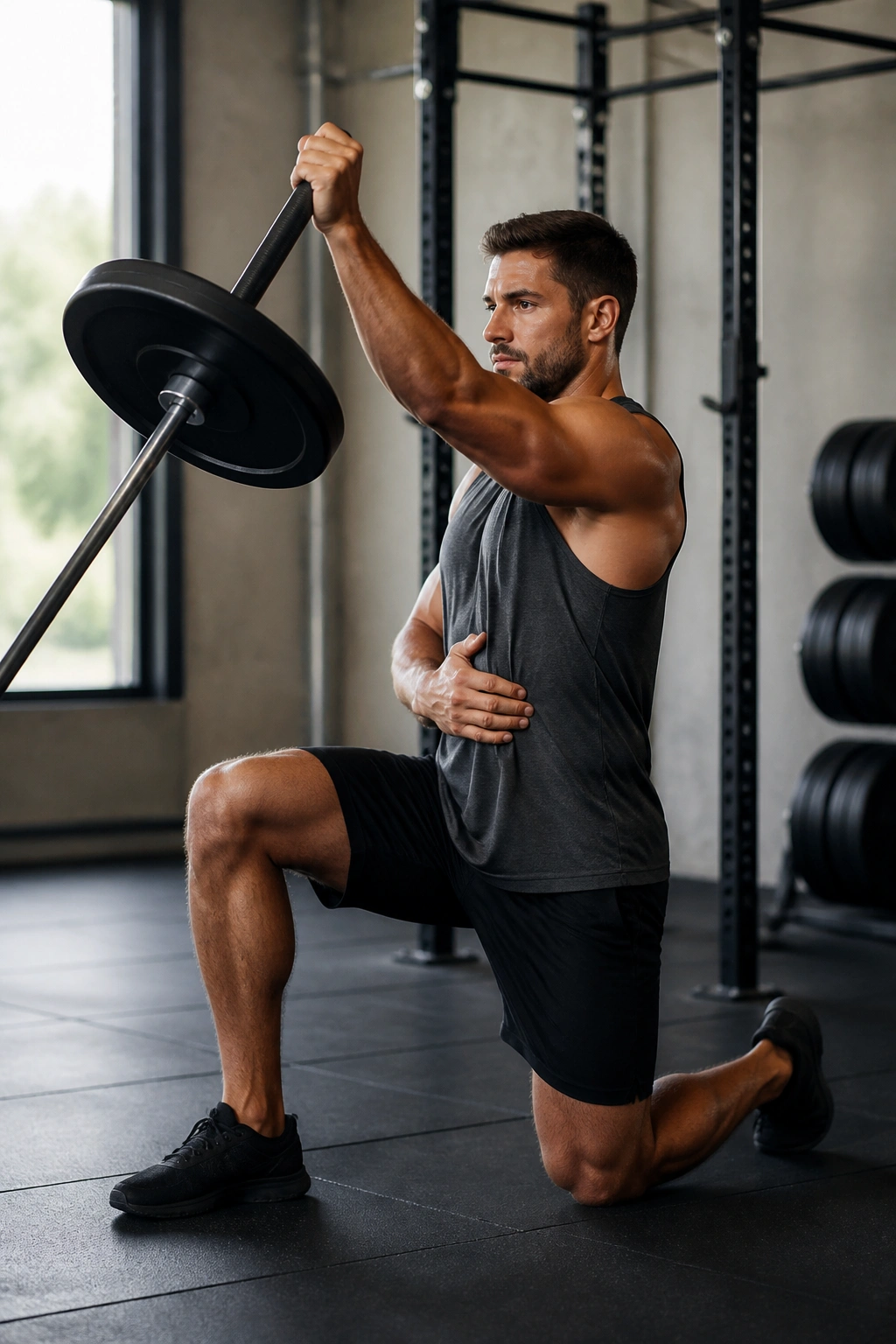
Half-kneeling landmine presses are shoulder work with a core tax built in. The press itself is obvious. The part people miss is how hard the trunk has to resist twisting and extending while one knee stays down.
Set one knee on the floor, plant the opposite foot, and press the bar up and slightly forward in the landmine arc. The front knee stays quiet, the ribs stay down, and the pelvis stays square. If the lower back arches on every rep, lighten the bar and shorten the range.
I like 6 to 10 reps per side with a pause near the top. The pause makes the bracing more obvious and keeps the movement from turning into a sloppy incline press. It also exposes side-to-side differences fast, which is useful if one side cheats more than the other.
This is one of those exercises that does not look like an ab drill until you try to keep it strict. Then it absolutely is.
20. Loaded Core Finisher Circuit
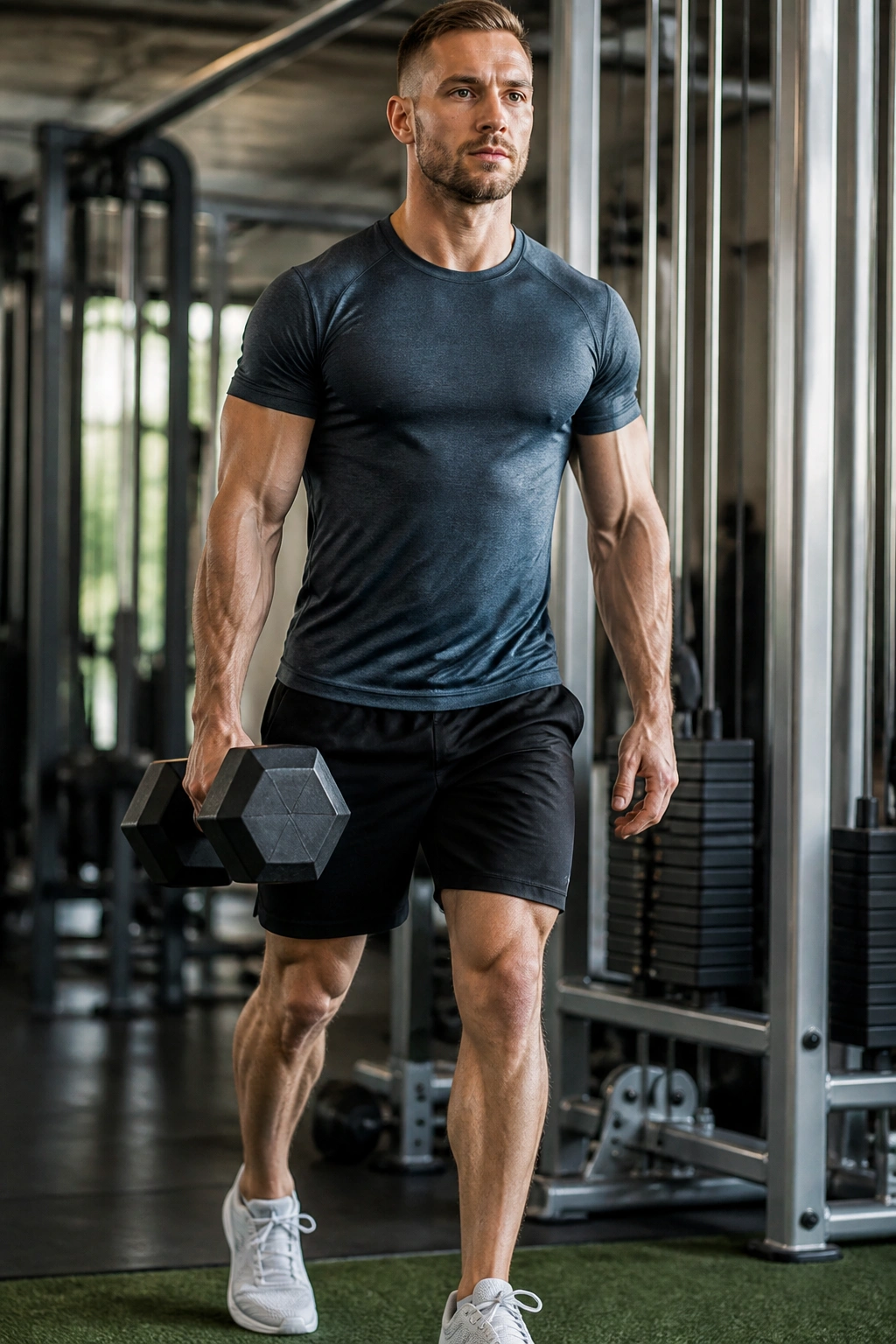
A good finisher should leave your trunk tired and your low back quiet. That’s the standard I’d use. If you want a simple way to rotate through weighted core workouts without overthinking it, pair one flexion move, one carry, and one anti-rotation drill.
Try this as a circuit:
- Cable crunches — 10 reps
- Suitcase carry — 20 meters per side
- Pallof press hold — 10 seconds per side
Run 2 to 4 rounds with enough rest to keep the form crisp. If the lower back gets cranky, drop the load and keep the positions cleaner. If the grip fails first, that tells you something too, especially on the carries.
The bigger lesson is simple. You do not need to do all 20 of these in one week, and you definitely do not need them all in one session. Pick one move that bends the trunk, one that resists twist, and one that forces you to walk tall. That combination covers a lot more ground than endless random ab work ever will.
