



A toned upper body usually comes from exercises that make your arms shake and your midsection brace hard at the same time. That is why the best arms and abs workouts don’t feel like random curls on one day and a few tired crunches on another. They ask your body to hold a line, move under control, and keep the ribs from flaring when the load gets annoying.
No one gets a sharper-looking torso by chasing one muscle in isolation.
The old spot-reduction story dies fast in a real gym. You can train your abs until they burn, but definition still depends on overall body fat, muscle size, and how well you keep your trunk tight when your arms are working overhead, in front of you, or out to the side. That part matters more than people admit. If your lower back arches on presses or your shoulders shrug up on planks, the rep looks busy but does little for the shape you want.
My bias is pretty simple: pick moves that force your torso to stay calm while your arms do the work. Push, pull, press, brace, carry, repeat. A pair of dumbbells, a resistance band, a mat, and maybe a bench are enough for most of these. If you only have the floor, you can still get a lot done.
1. Arms and Abs Workout: Push-Up to Shoulder Tap
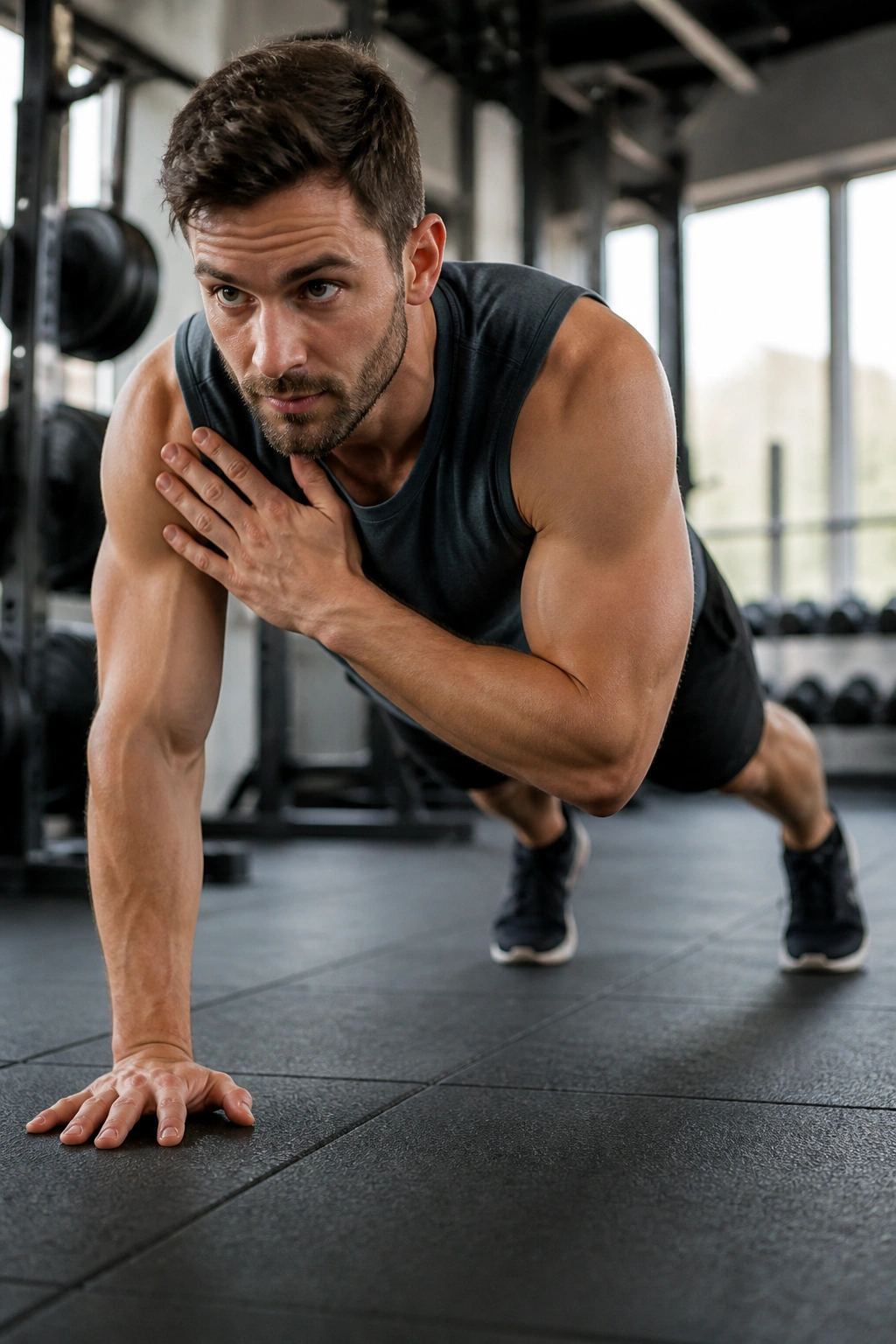
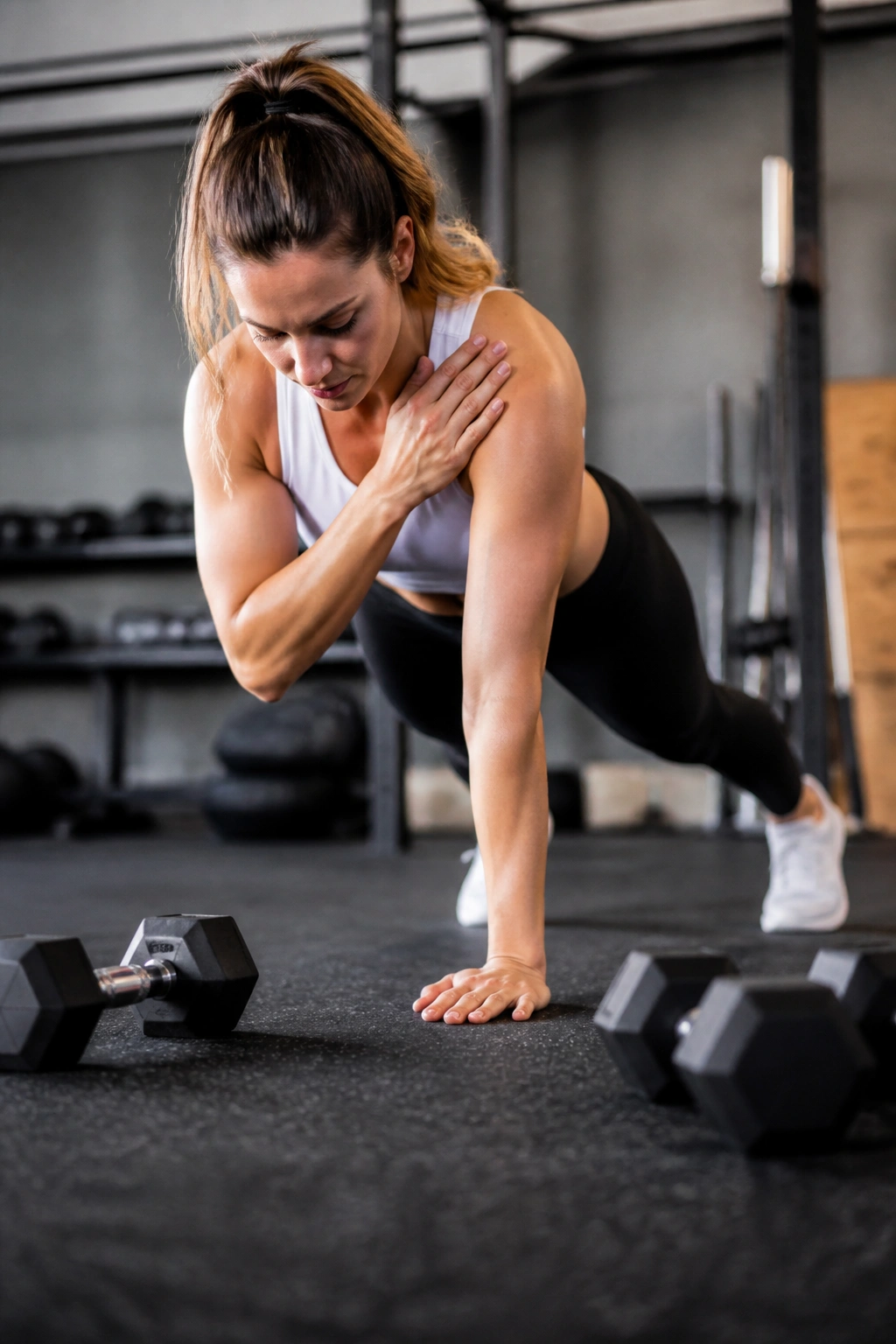
A push-up already asks a lot from the chest, triceps, and shoulders. Add a shoulder tap at the top, and your core has to stop your body from twisting like a cheap folding chair. That little tap is where the abs earn their keep.
How to do it
Start in a high plank with your hands under your shoulders and your feet a little wider than hip-width. Lower into a push-up, press back up, then tap your left shoulder with your right hand, place it down, and tap the other side. Keep your hips as still as you can.
- Aim for 6 to 12 clean reps.
- Spread your feet wider if you sway.
- Drop to your knees only if your hips start spinning.
- Do not rush the tap — the anti-rotation work is the point.
A slow rep beats a sloppy ten. Every time.
2. Dumbbell Curl to Overhead Press
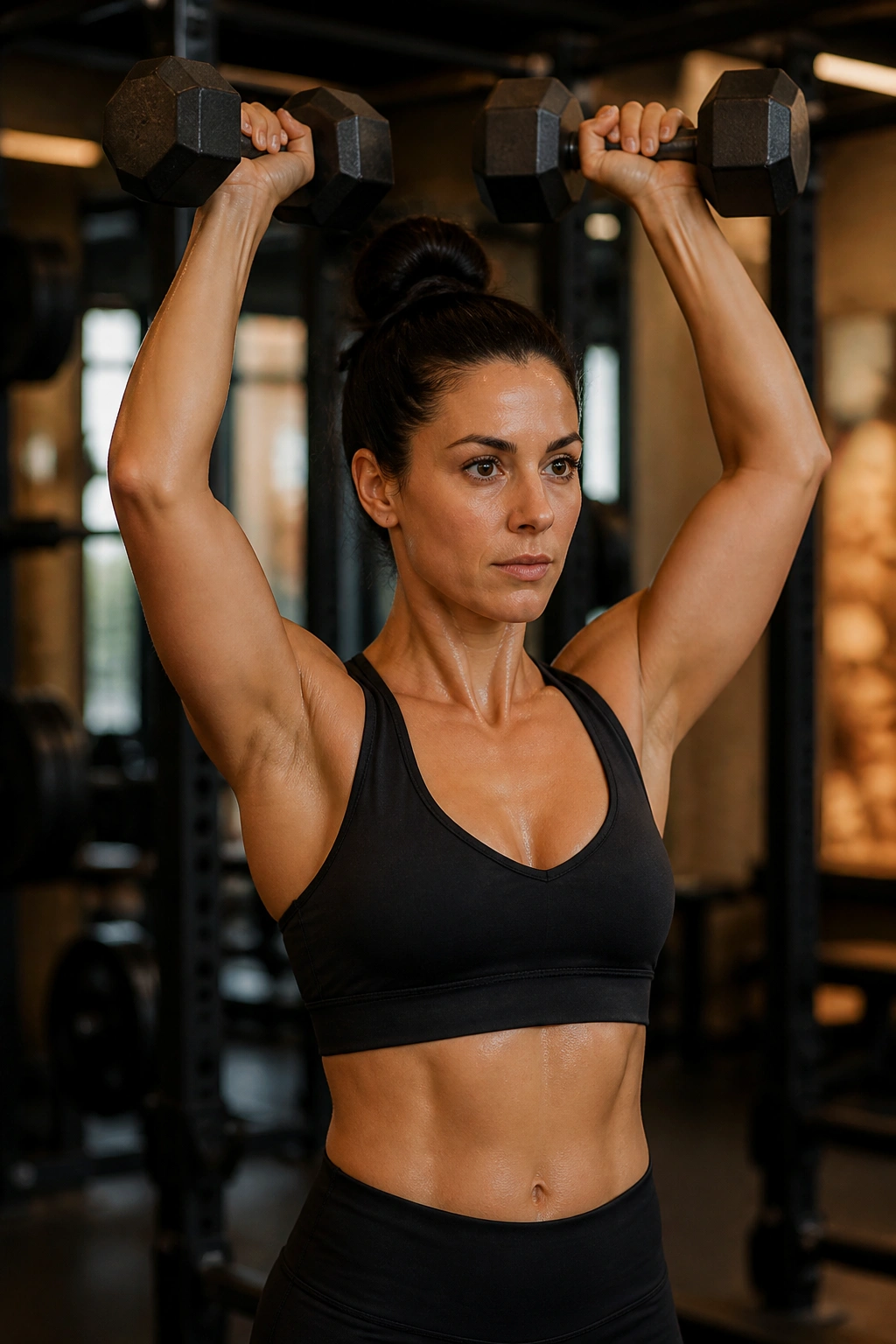
This one looks plain until the last few reps, when your biceps are warm and your core has to keep your ribs from popping forward. Curling and pressing in the same sequence links the arms to the shoulders and makes the torso do a little quiet work in the background.
I like this move because it exposes cheating fast. If you lean back on the press, the dumbbells get heavier in a hurry and your lower back starts doing a job it never asked for. Keep your glutes tight, keep your elbows close on the curl, and press the weights overhead with the biceps finishing near the ears, not drifting behind them.
Three sets of 8 to 10 reps works well for most people. Use a load you can control without bouncing through the curl. If the last two reps look ugly, the weight is too heavy.
3. Renegade Row
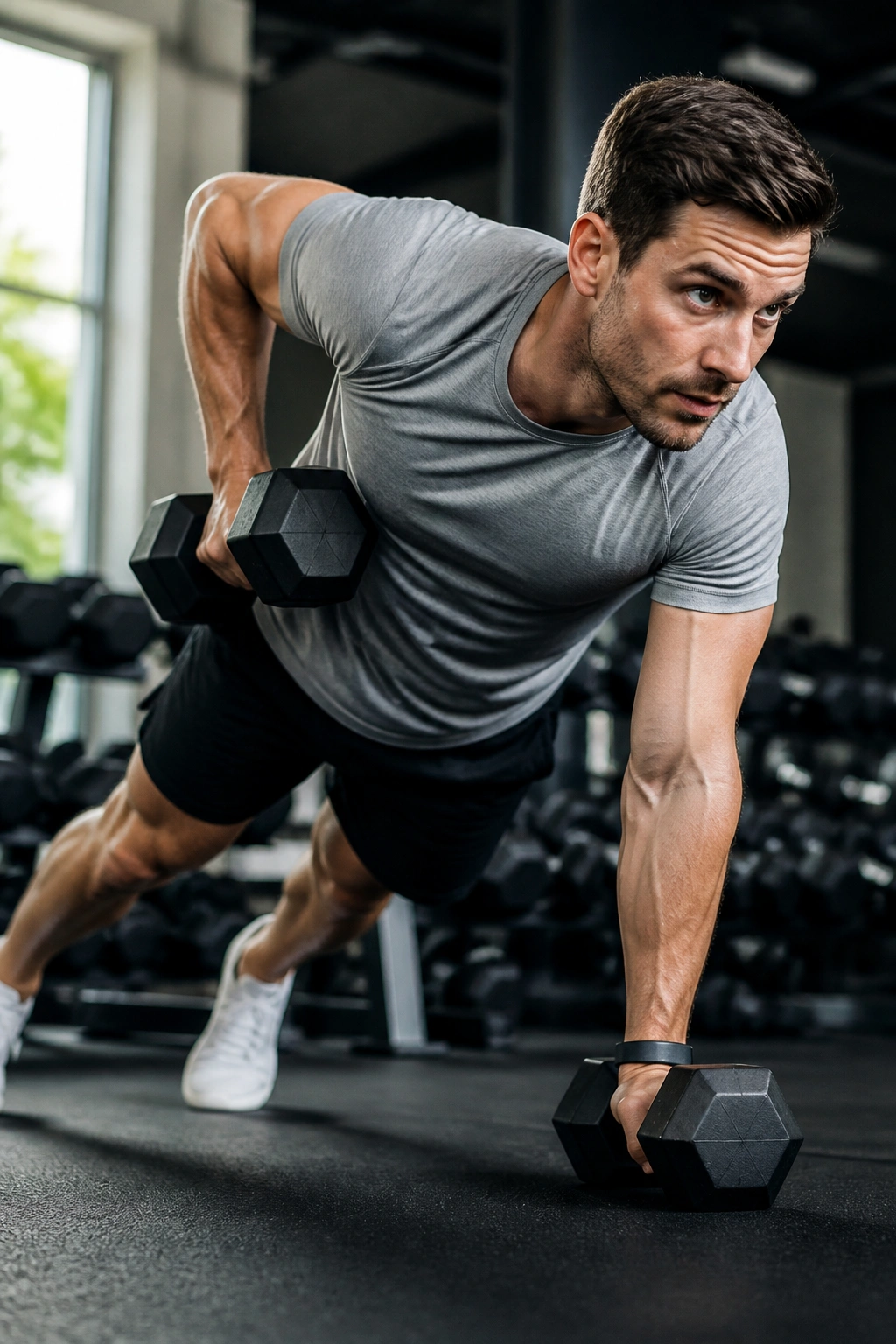
Why does this one feel tougher than a simple row? Because the floor tells the truth. The renegade row asks your lats to pull while your abs and obliques stop your hips from turning every time one hand leaves the ground.
What makes it different
Unlike a bent-over row, this one demands a plank first and a pull second. That means your body has to hold tension from your shoulders through your heels while one dumbbell travels toward your hip. The result is less cheating, more bracing, and a much louder core.
How to scale it
- Use dumbbells with flat sides so they don’t roll.
- Widen your feet for more balance.
- Keep the row short and tight.
- Rest one hand on a bench if you need a gentler version.
I’d rather see 6 crisp rows than 12 wobbly ones. The wobbly version feeds the ego and misses the point.
4. Dead Bug Pullover
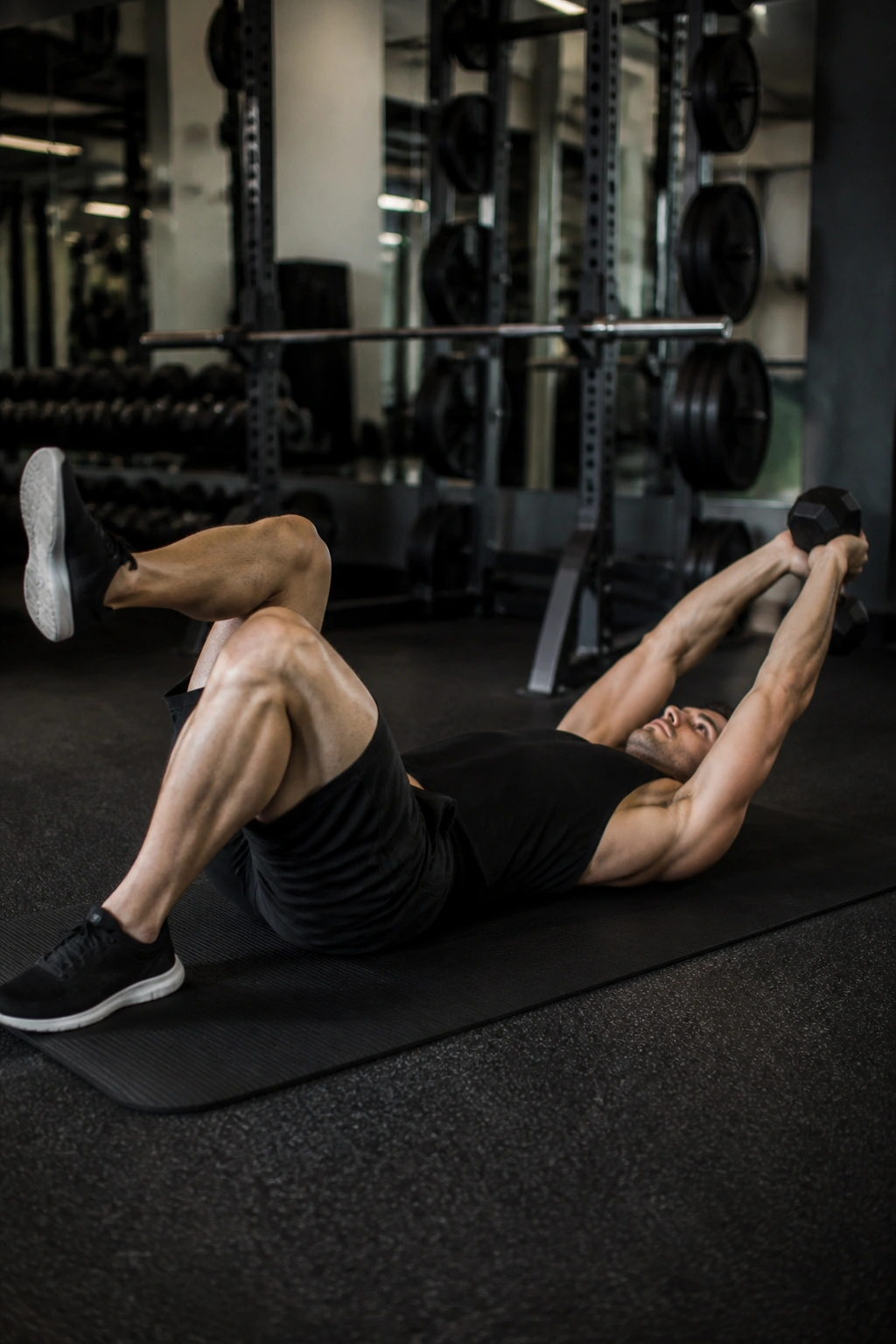
If crunches irritate your neck or leave your hip flexors cramping, the dead bug pullover is a cleaner bet. Your arms move overhead with a dumbbell while your lower back stays glued to the floor, which is a sneaky good way to train the abs without yanking on your spine.
The magic is in the contrast. Your arms want to reach, your legs want to extend, and your core has to keep the whole thing from turning into a low-back arch. Start with a light weight — one dumbbell is plenty — and move slowly enough that you can keep your ribs down the whole time.
I like 6 to 8 reps per side, or 10 total alternating reps if you’re learning the pattern. If your back pops off the floor, shorten the range before you add load.
5. Close-Grip Push-Up
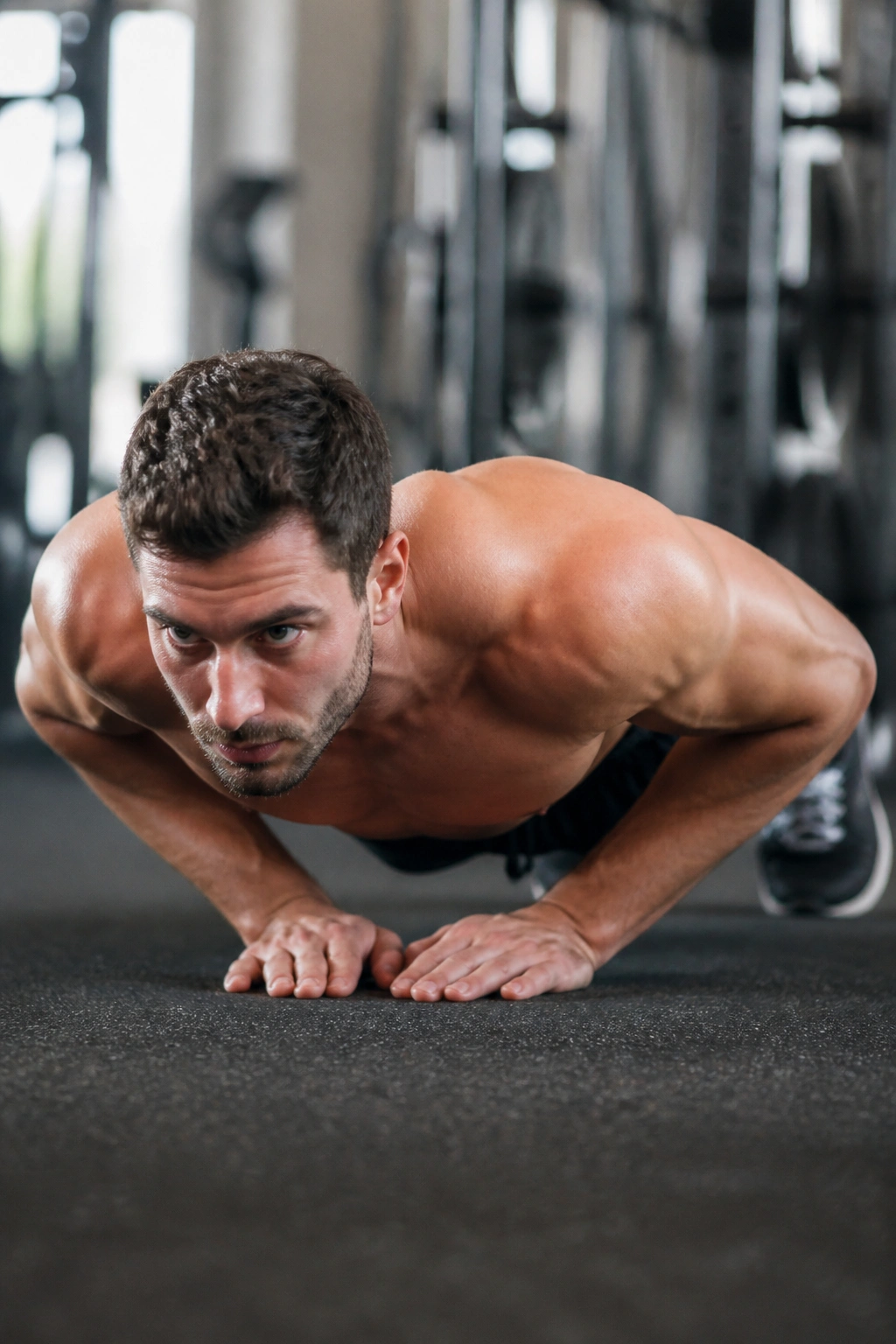
Skip the fancy setup. Close-grip push-ups hit the triceps hard, light up the front of the shoulders, and still ask the abs to keep your body from sagging in the middle. They’re one of those exercises that looks ordinary until you do them with real control.
Hands should sit just inside shoulder width, not jammed together like a diamond if that bothers your wrists. Keep your elbows tucked at about a 30- to 45-degree angle from your torso. Lower until your chest hovers just above the floor, then press up without letting your hips drift.
Use a box or bench if the floor version is too steep. That’s not cheating. That’s smart scaling. Form beats pride every time, especially with push-ups, because a shallow, clean set does more for your arms and abs than a half-baked grinder.
6. Side Plank Hip Dip
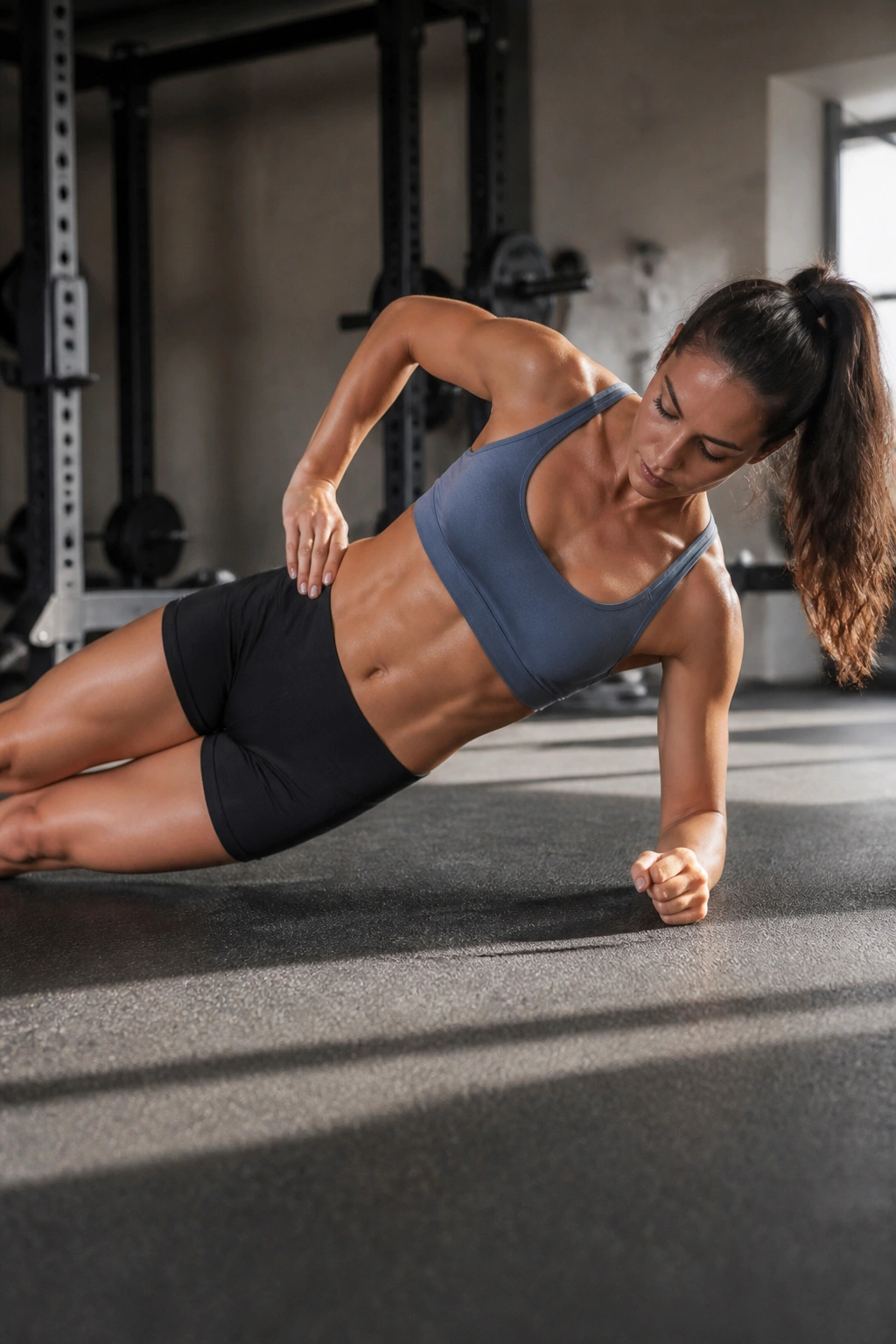
If your obliques feel sleepy, side plank hip dips wake them up fast. The movement is small, but the burn shows up in places people forget to train until they try to hold a side plank for thirty seconds and start bargaining with the floor.
Lie on your side, prop yourself up on one forearm, and stack your feet. Lower your hips a few inches toward the floor, then lift them back to a straight line. Don’t chase a huge range. A small dip with a steady shoulder is enough.
- Keep the elbow under the shoulder.
- Open the chest instead of collapsing forward.
- Exhale as you lift.
- Stop if the shoulder starts shrugging.
This is one of those moves that rewards patience. Tiny, strict reps matter more than a fast set that turns into a side-lying wobble.
7. Hammer Curl and March
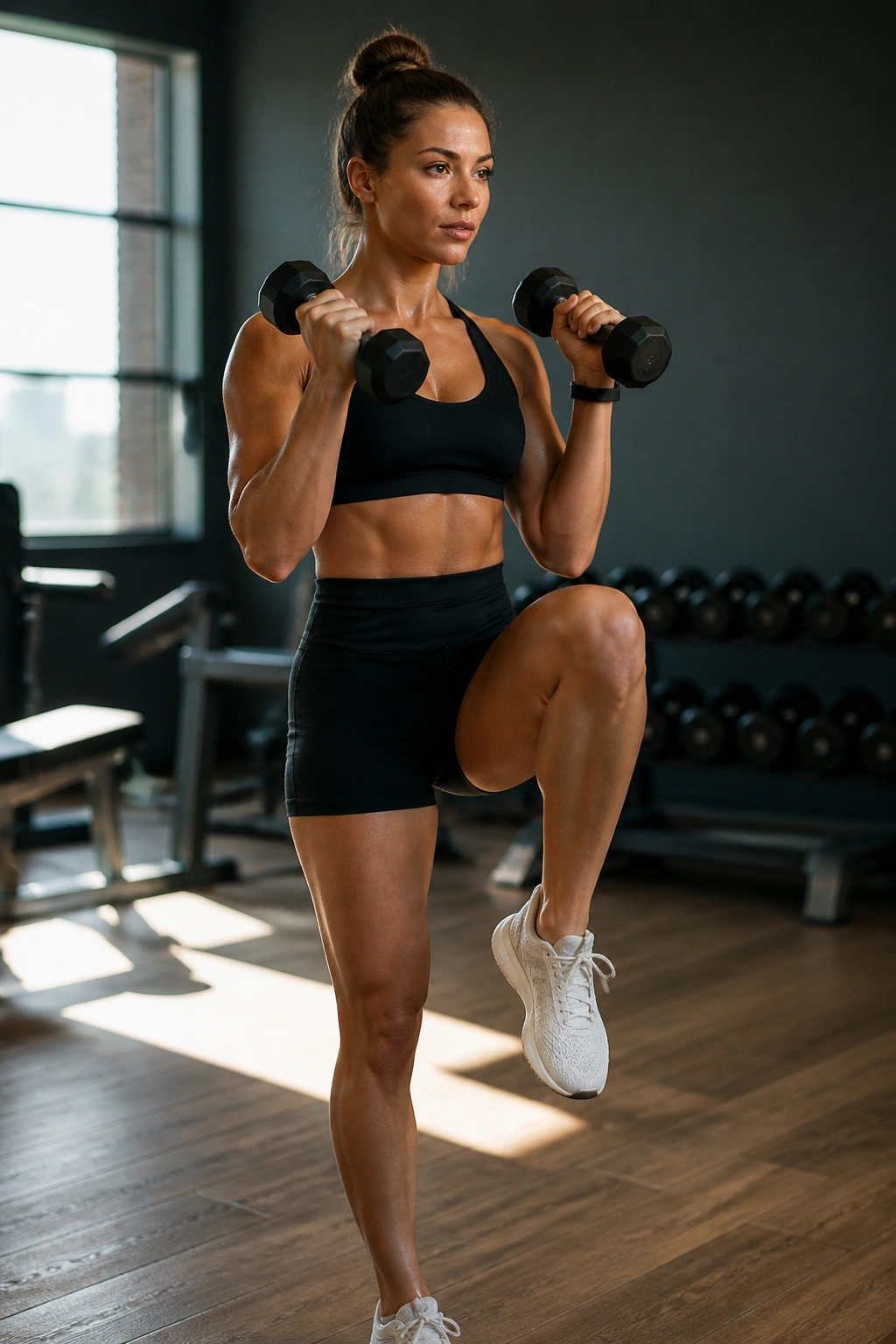
A standing hammer curl with a marching step is one of my favorite ways to make the core join a basic arm move. The curl handles the biceps and forearms; the march keeps your trunk from leaning and your hips from swaying around like a loose shopping cart.
Use moderate dumbbells and stand tall before the first rep. Curl both weights, then march one knee up at a time without rocking your shoulders. If you go too heavy, the march disappears and the body starts stealing momentum. That’s the line to watch.
What to feel
You should feel your abs firing to keep the ribs stacked over the pelvis. The arms will still get a solid hit, but the work spreads out in a way that feels more athletic than a plain curl.
Try 30 to 40 seconds of work, then rest 30 to 45 seconds. If the dumbbells swing, lower the weight before you lower the standard.
8. Plank Dumbbell Drag
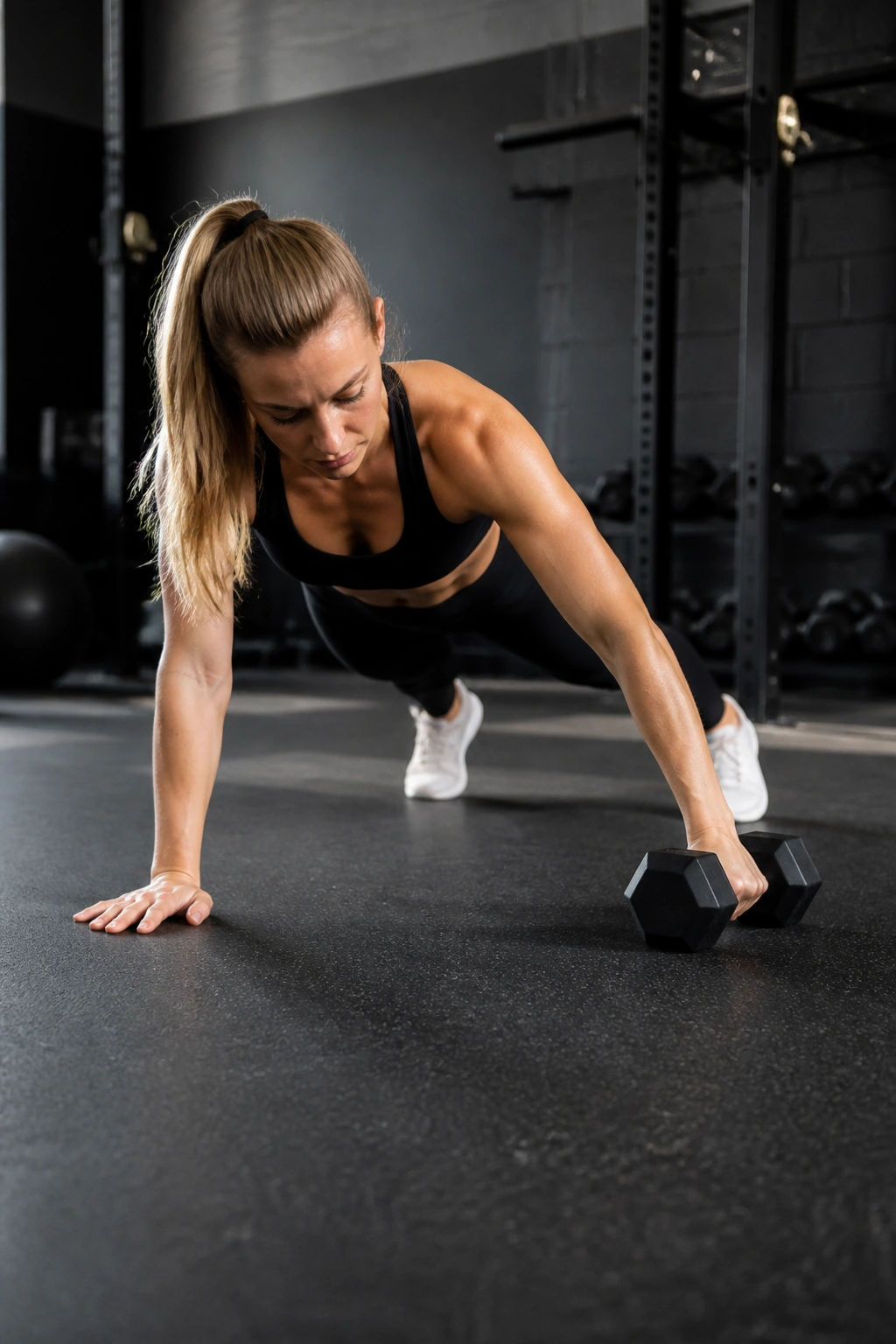
What makes a drag harder than a row? The answer is simple: one hand has to stay planted while the other moves a weight across the floor, and your torso has to resist the twist that follows.
Start in a high plank with a dumbbell just outside one hand. Reach across with the opposite hand, drag the dumbbell under your body, then set it down outside the other hand. The hips should stay close to level. If they sway, slow down and widen your feet.
How to get the most from it
- Use a lighter dumbbell than you think you need.
- Keep your gaze a few inches in front of your hands.
- Move the weight in a straight line.
- Pause for one beat before each drag.
The drag is one of the cleaner anti-rotation exercises you can do at home. It teaches the abs to stay quiet while the shoulders and arms keep working.
9. Overhead Triceps Extension and Hollow Hold
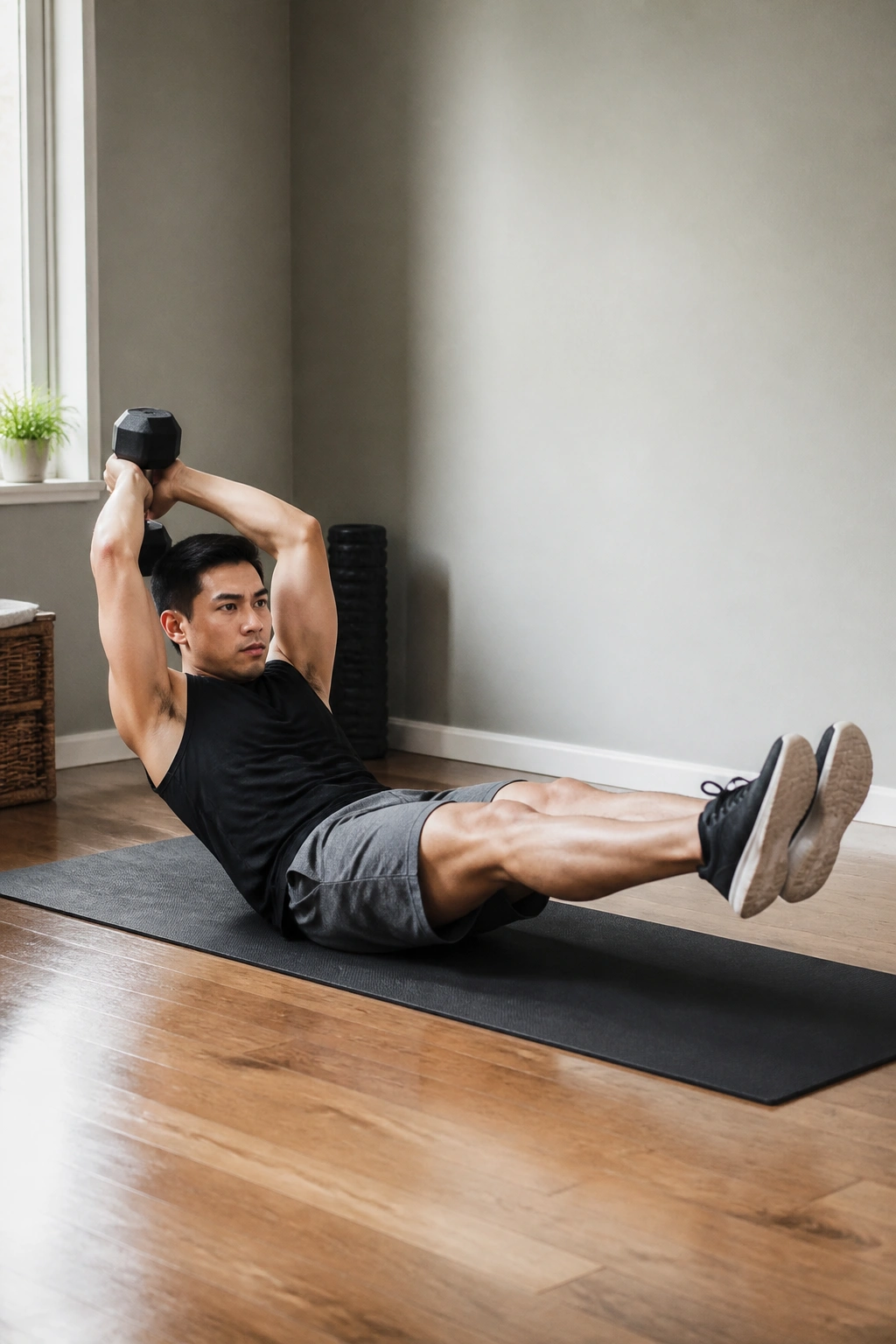
This pairing is a little sneaky. The triceps extension trains the back of the arms, and the hollow hold forces your midsection to stay tight while your arms are working overhead or held in a fixed position. The two together make a strong case for a flat, braced torso.
Hold one dumbbell with both hands, lower it behind your head under control, then press it back up without flaring your ribs. Between sets, or even between reps if you want to make it spicy, settle into a hollow hold: low back pressed down, legs extended or bent, arms reaching overhead.
The extension should feel smooth, not jerky. The hollow hold should feel honest. If your lower back peels off the mat, bend your knees and keep the shape. The point is tension, not drama.
This combo works well for home training because it needs one dumbbell and a floor. That’s it.
10. Bicycle Crunch with Reach
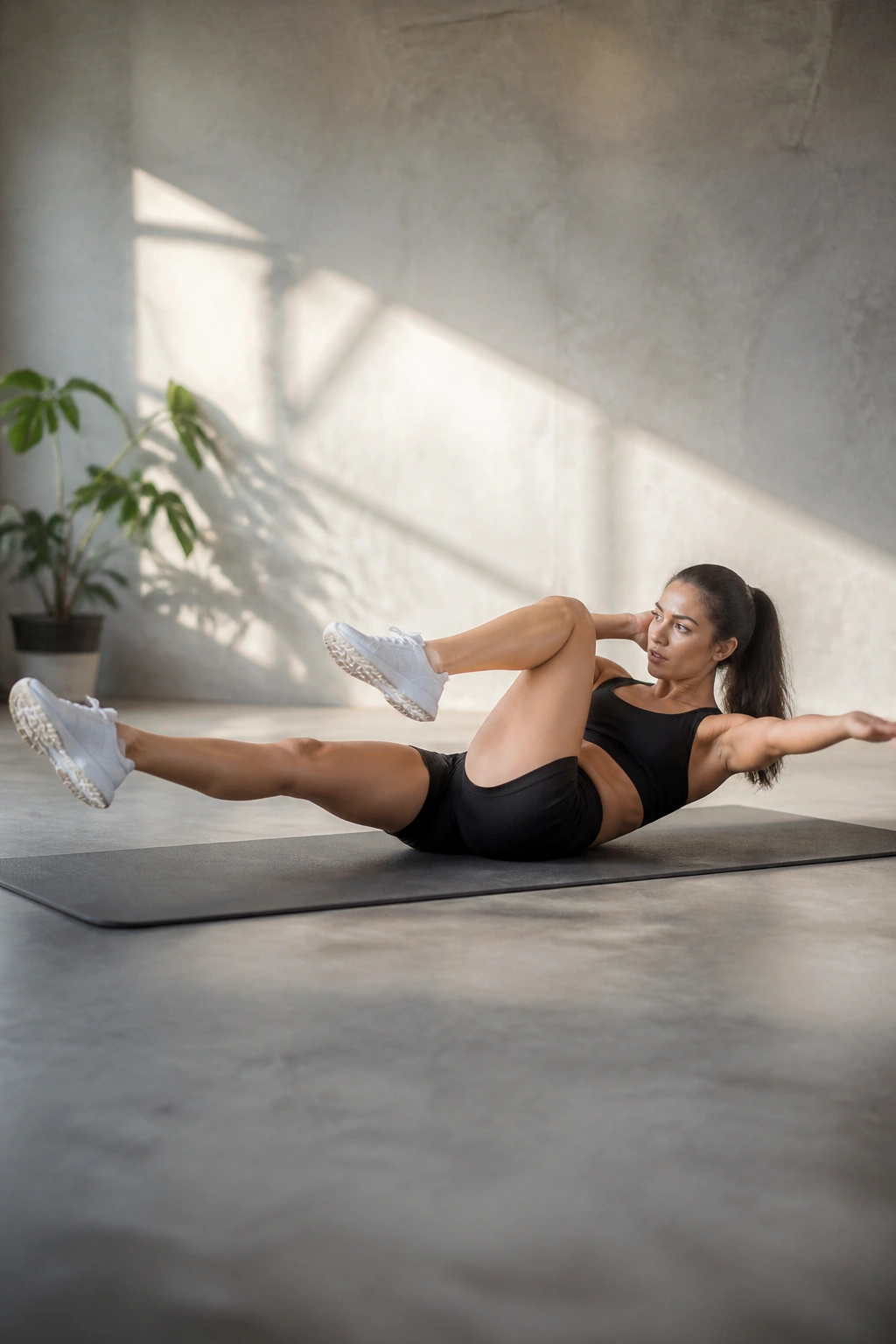
Fast bicycle crunches tend to turn into neck-pulling nonsense. Slow them down and add a full reach, and the exercise gets smarter. The obliques have to rotate the torso, the rectus abdominis has to hold the curl, and the arms help create a longer line through the body.
Lie on your back, hands lightly behind your head, and lift your shoulder blades off the floor. As one knee drives in, rotate the opposite elbow toward it, then extend the other leg long. Reach through the elbow instead of slamming it across the body.
A slower tempo makes this move far better. Think three seconds across, one second back, then switch sides. If your head is doing the work, your abs have already checked out.
Best part? You can do this one almost anywhere, which makes it easy to slot into the end of an upper-body day.
11. Arms and Abs Workout: Standing Band Punch-Out
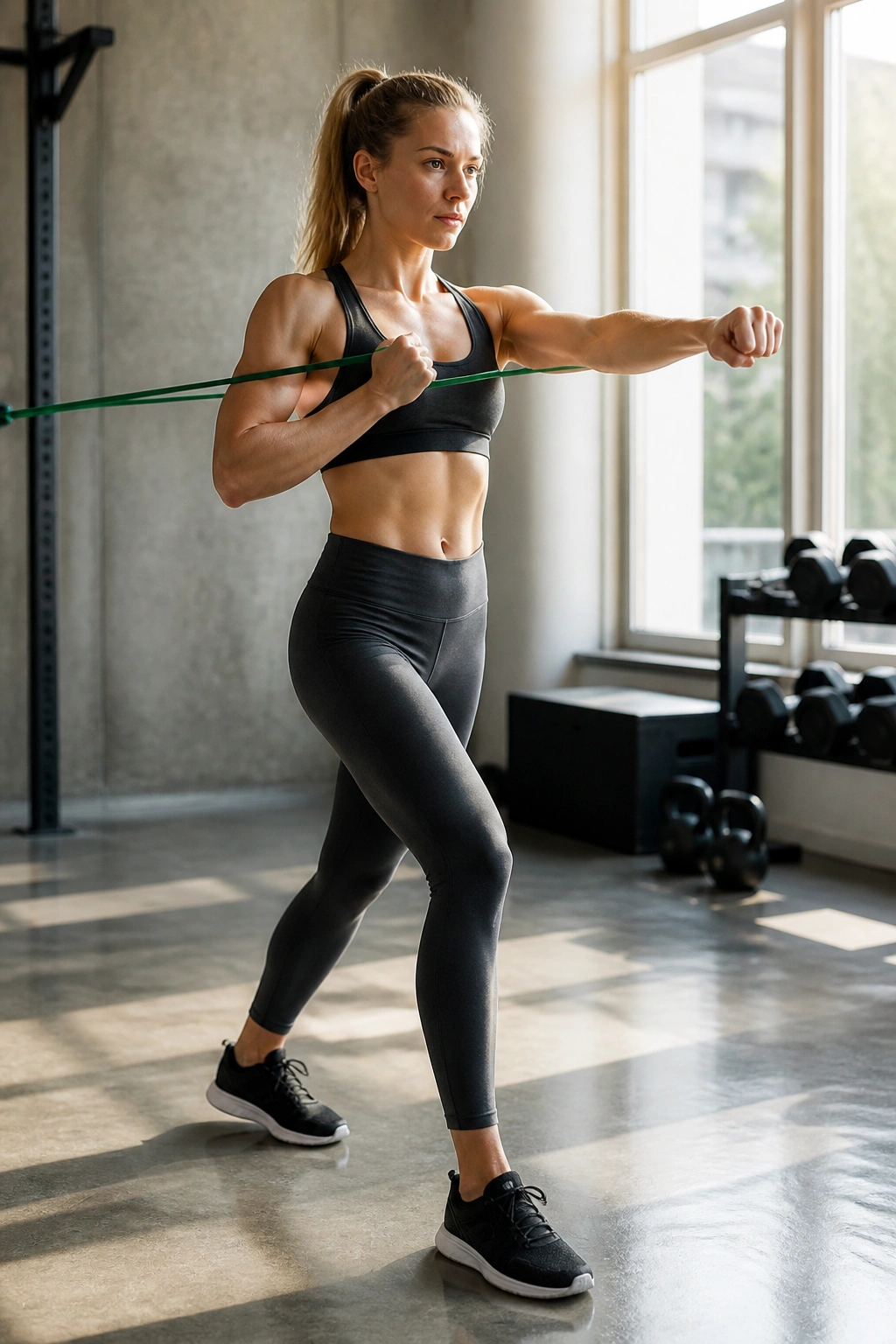
Band punch-outs feel a bit like shadowboxing with a purpose. The resistance band keeps the arms busy, but the real test is whether your torso can stay stacked while the punches fire in front of you. That makes this a nice blend of shoulder endurance, triceps work, and core control.
Loop a band behind you or anchor it at chest height. Step into a staggered stance, brace your abs, and punch one arm at a time straight out from the chest. Keep the shoulders down. If they creep up toward your ears, the band is too heavy.
- Work for 30 to 45 seconds.
- Keep the ribs from flaring.
- Rotate the stance every set.
- Punch straight, not wild.
This is a sharp finisher when you want your arms to light up without wrecking your joints. It also pairs well with boxing-style conditioning if you like short, sweaty sessions.
12. TRX Row to Knee Drive
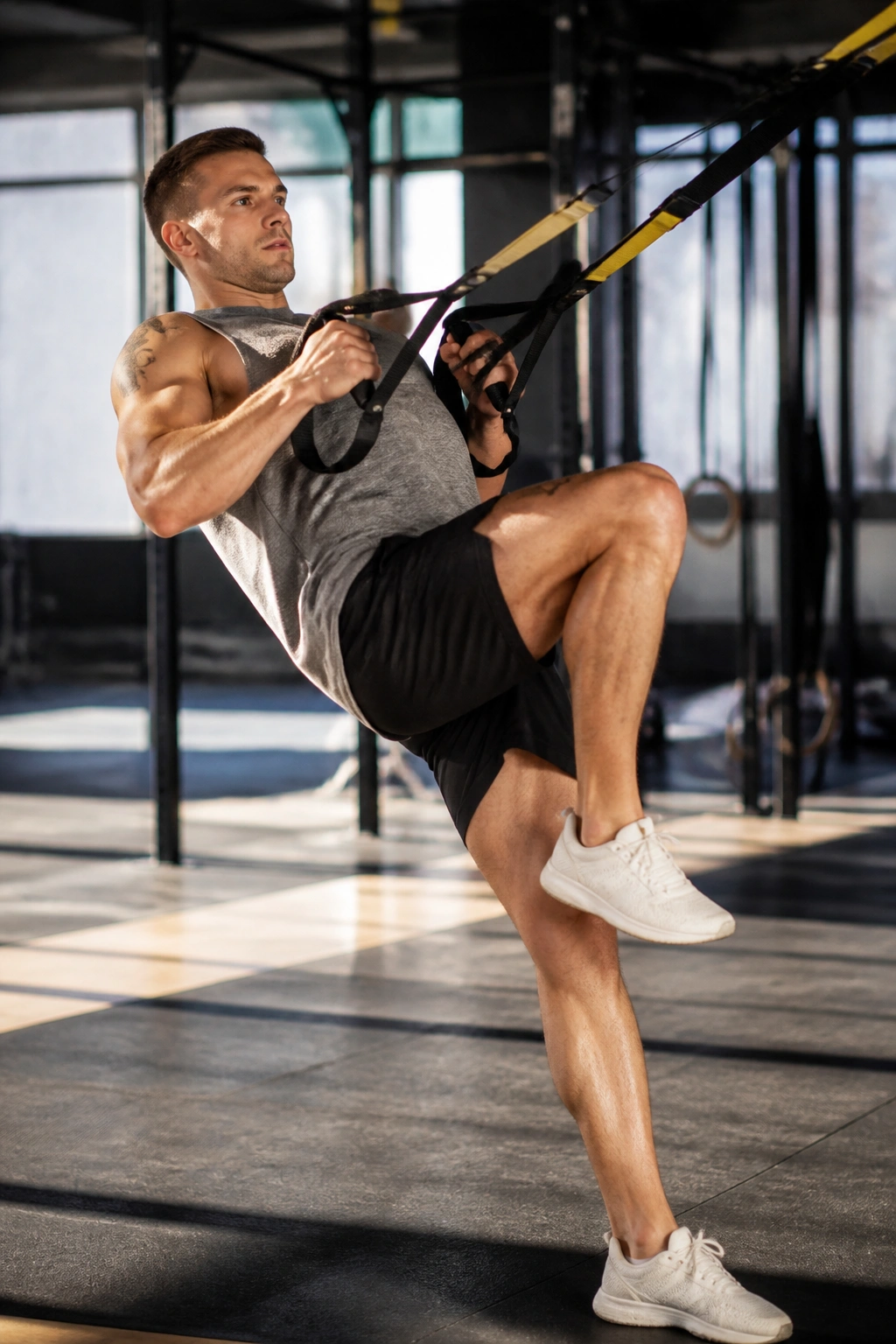
A suspension trainer row already pulls on the upper back and biceps. Add a knee drive at the top, and the abs have to lock in before the leg moves. That small pause makes the whole thing feel much more connected.
Set the straps short enough that your body starts at an angle you can control. Row your chest toward the handles, then bring one knee up toward your torso as you hold the top position. Alternate sides or finish all the rows first, then all the knee drives.
What changes the exercise
The row becomes less about pulling alone and more about pulling without losing your shape. The knee drive adds a brief balance challenge that makes your trunk work harder than a regular row.
If you don’t have a suspension trainer, a one-arm row with a march gives a similar feel. Not identical, but close enough to matter.
13. Medicine Ball Slams
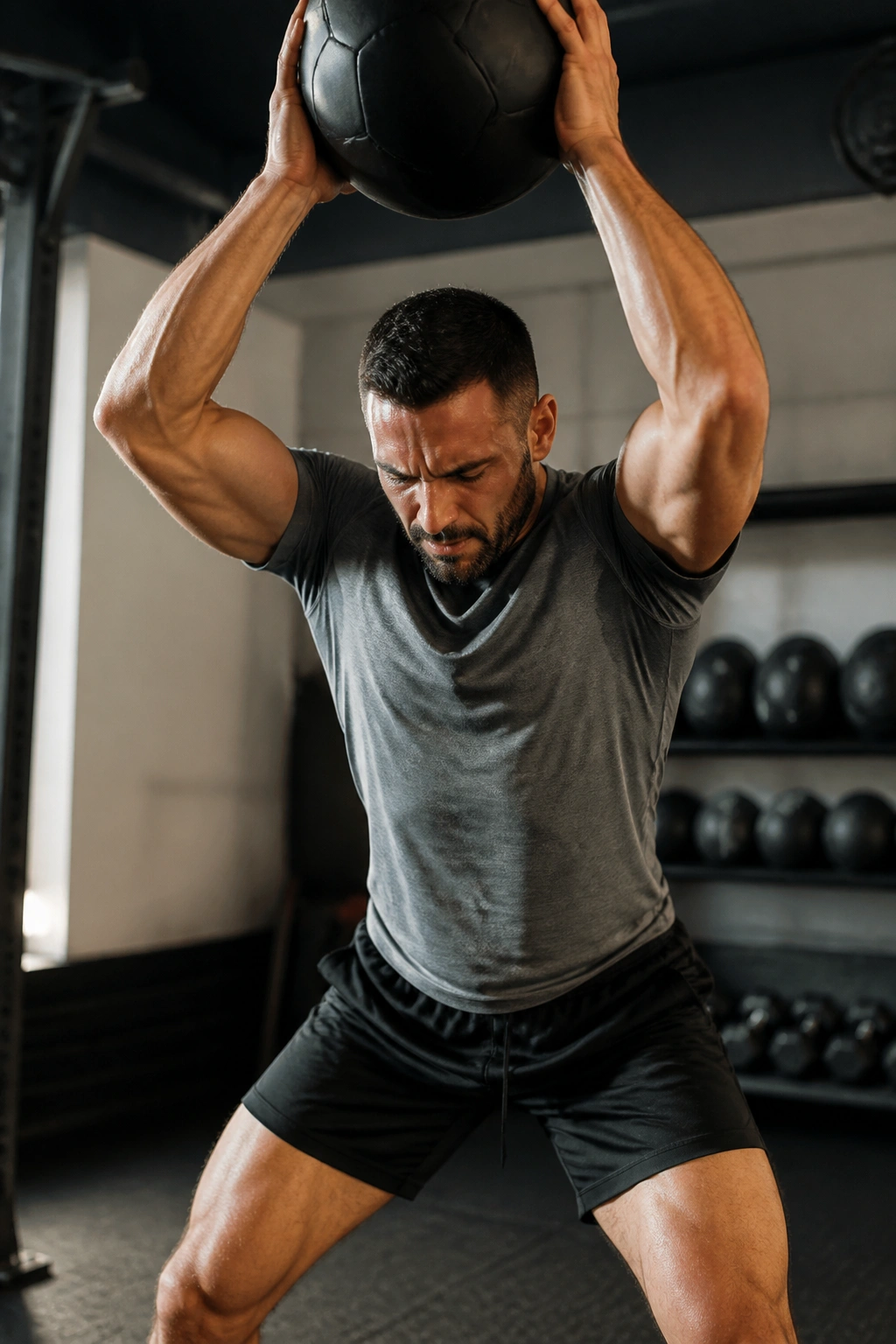
Some moves are plain violent in the best way. Medicine ball slams let the arms drive overhead, the abs snap down through the middle, and the whole body dump energy into the floor. If your workouts need a louder finish, this one earns its place.
Pick a ball with enough weight to feel real, but not so heavy that your shoulders get sloppy. Reach overhead, brace your core, and slam the ball down with force. Catch it on the rebound if the ball and floor allow it, then reset. The motion should feel athletic, not careless.
The nice thing about slams is the honest feedback. If you are moving well, they feel powerful and crisp. If your form breaks down, the ball slows down fast. That’s a useful signal.
Three sets of 8 to 12 reps is usually enough. You do not need a marathon here. You need clean force.
14. Reverse Plank Leg Lift
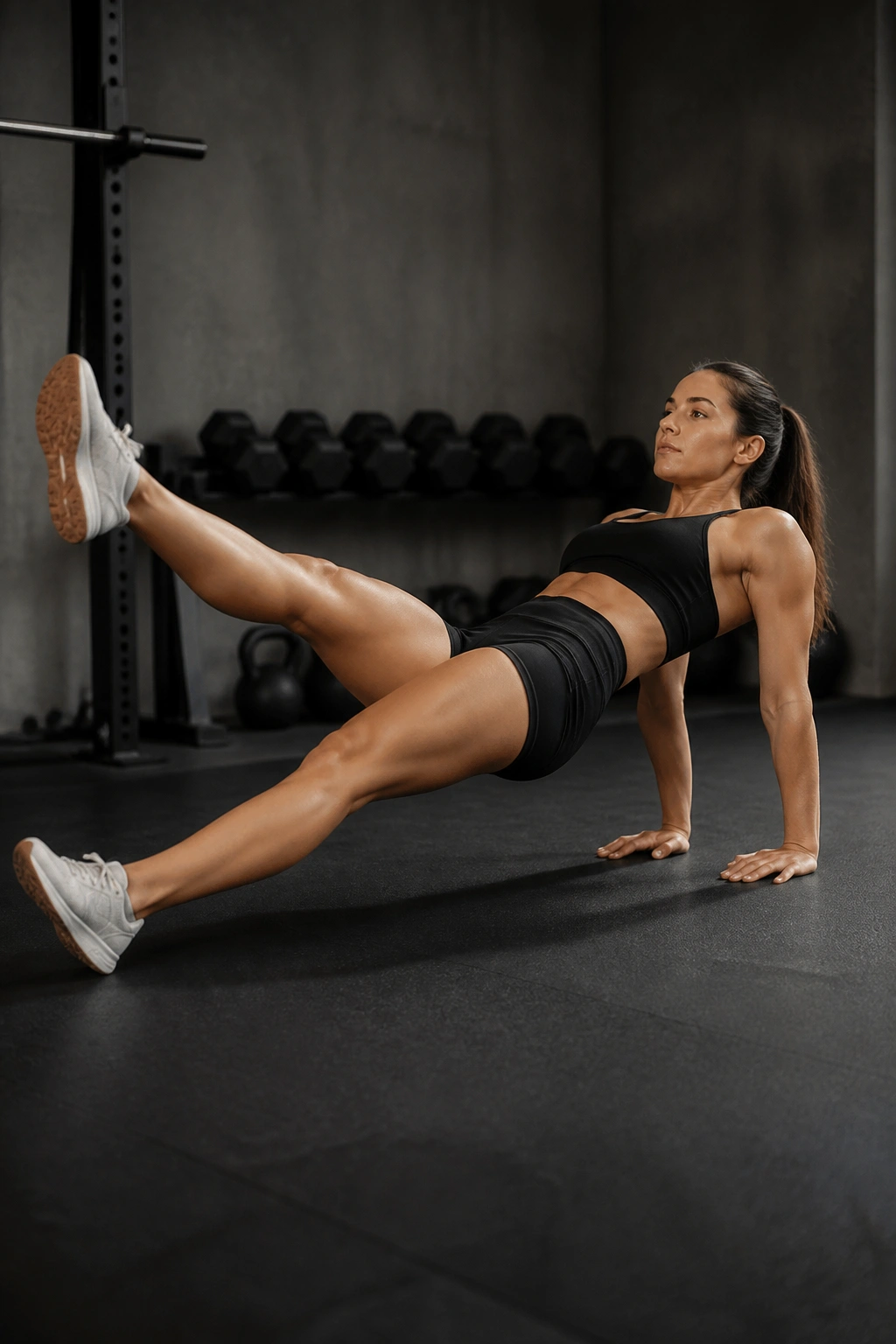
Can a plank face up still train the abs? Yes, if you hold it right. The reverse plank leg lift asks the back of the shoulders, triceps, glutes, and deep core muscles to work together while one leg lifts and the pelvis tries to stay square.
Sit on the floor with your hands behind you, fingers pointed out or slightly to the side if your wrists like that better. Lift into a straight line from shoulders to heels, then raise one leg a few inches without letting your hips drop. Hold for a beat, switch sides, and keep breathing.
What to feel
You should feel the back of your body wake up first, then the abs take over as the leg lifts. If the neck feels jammed or the hips sag, shorten the hold.
This move is underrated because it trains posture as much as strength. A lot of upper-body work happens in front of the body; this gives the back side some love.
15. Spider-Man Push-Up
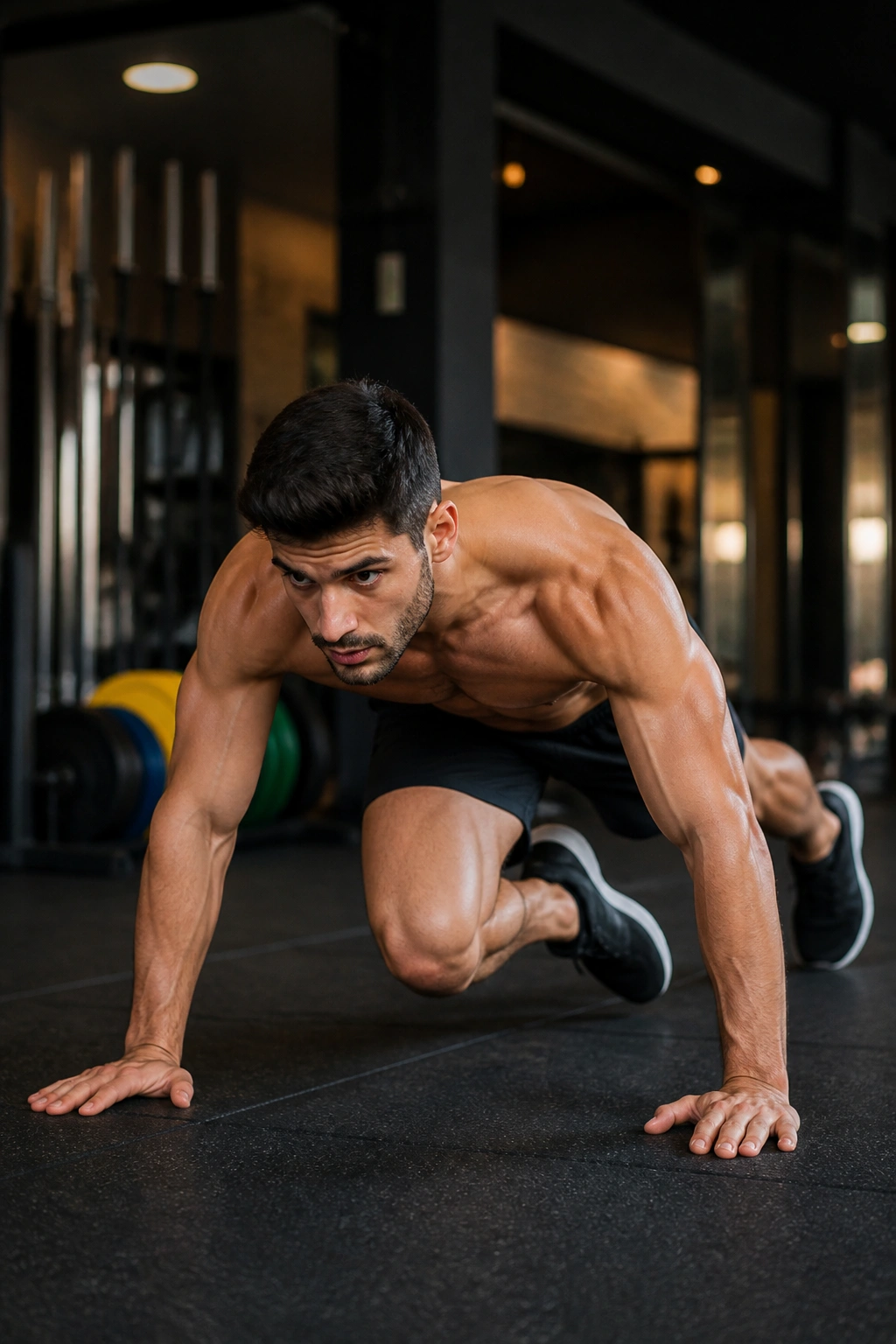
One push-up, one knee drive, and suddenly your obliques have to clock in. Spider-Man push-ups keep the chest and triceps involved, but the knee-to-elbow move adds a strong core and hip flexor challenge that regular push-ups never quite deliver.
Lower into the push-up, then as you come up, bring one knee toward the outside of the same-side elbow. Return the foot to the floor and switch sides on the next rep. Keep the chest low and avoid turning the rep into a mountain climber with a push-up attached to it.
A lot of people rush this one and lose the clean line. Don’t. The slower version feels much harder because the torso can’t hide from the movement.
- Keep the hips near level.
- Move the knee outside the elbow.
- Use a raised surface if needed.
- Stay smooth through the transition.
16. Alternating V-Up
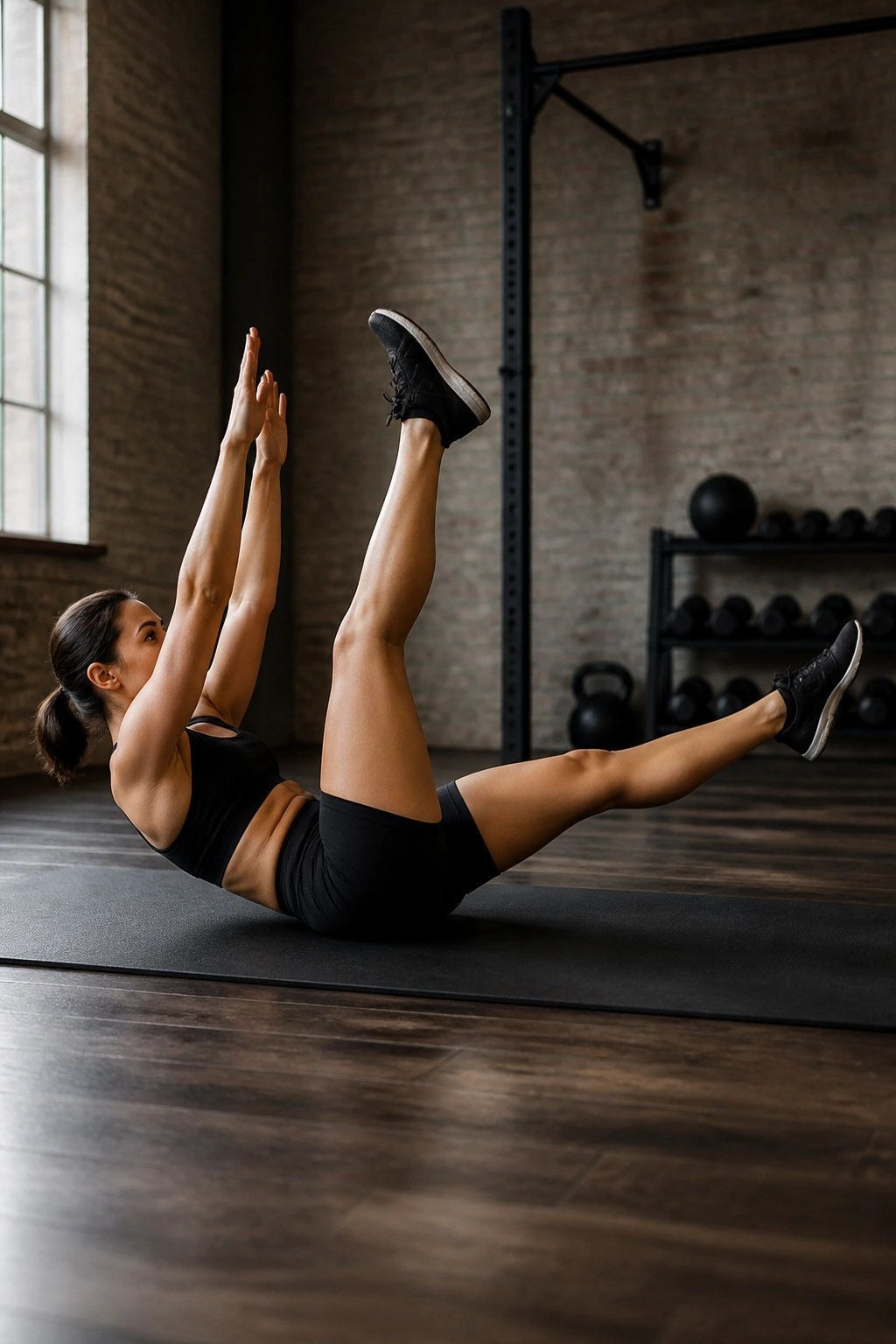
The alternating V-up looks simple from a distance. On the floor, it gets stingy fast. You’re lifting the torso and one leg together, reaching with the arms, and keeping the midsection from folding into a sloppy crunch.
Lie flat, extend your arms overhead, then lift one leg and the opposite hand toward each other. Lower with control and switch sides. The movement should feel long, not rushed. A short, fast rep usually means the hip flexors are doing the loudest work and the abs are along for the ride.
I prefer this exercise when I want direct front-of-core work without equipment. It’s still demanding, though. If your lower back starts peeling off the floor, reduce the height of the lift and slow the tempo.
You’ll get more from 8 controlled reps than from 20 frantic ones. That pattern shows up everywhere.
17. Bear Crawl
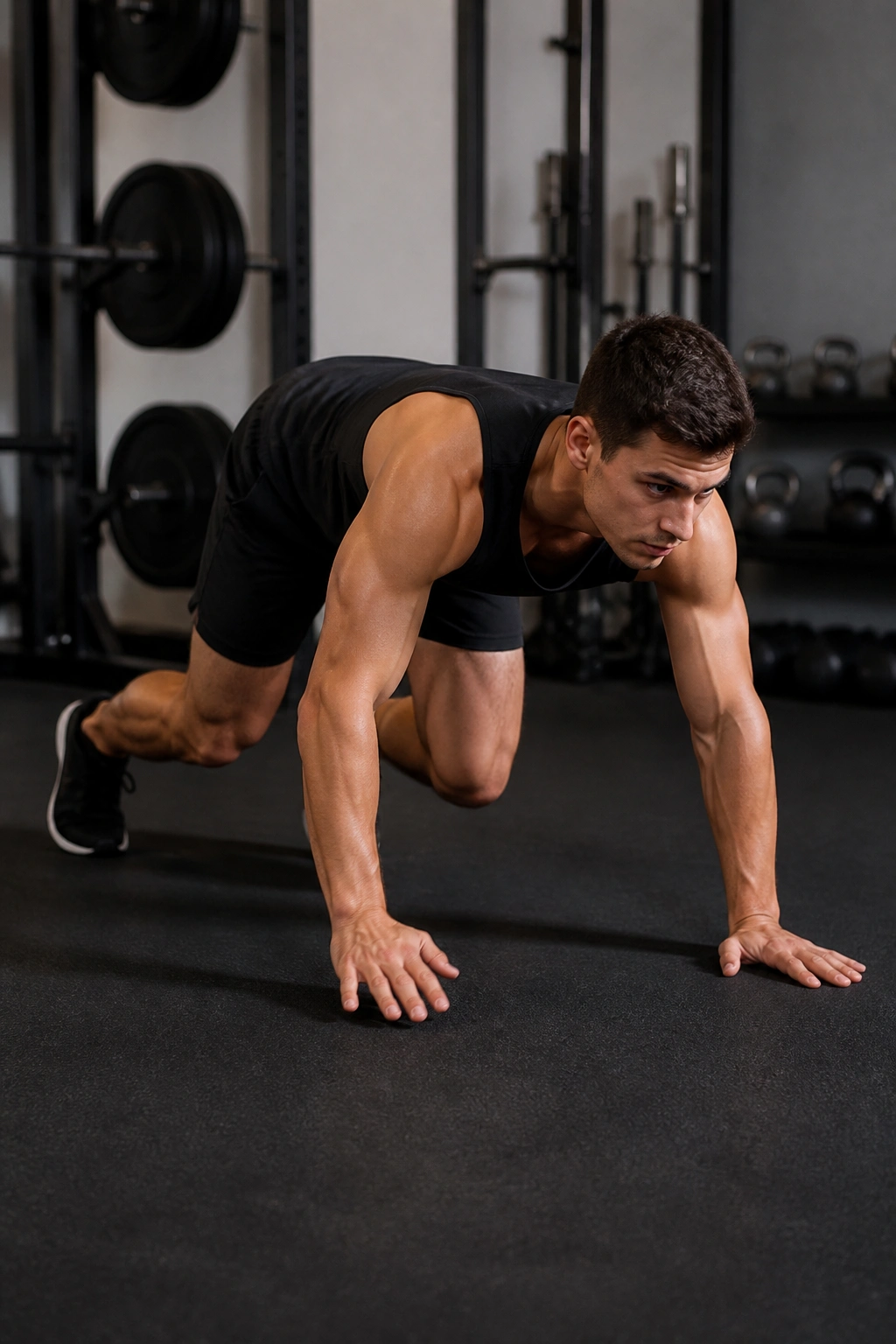
Bear crawls look a little silly until you do them for more than twenty seconds. Then the shoulders, abs, and hips all stop laughing. The position demands a stable trunk, quiet knees, and active hands, which is a nice change from exercises that only work in place.
Start on all fours, lift your knees an inch off the floor, and move opposite hand and foot together while keeping the back flat. Crawl forward for a few steps, then backward if your space allows it. The goal is not speed. The goal is control.
Quick setup
- Keep the knees low, not floating high.
- Press the floor away through the hands.
- Take short steps.
- Stop before the lower back starts dipping.
Bear crawls work well in small spaces and do not need much equipment. They also make a good warm-up before heavier upper-body work.
18. Cable Chop
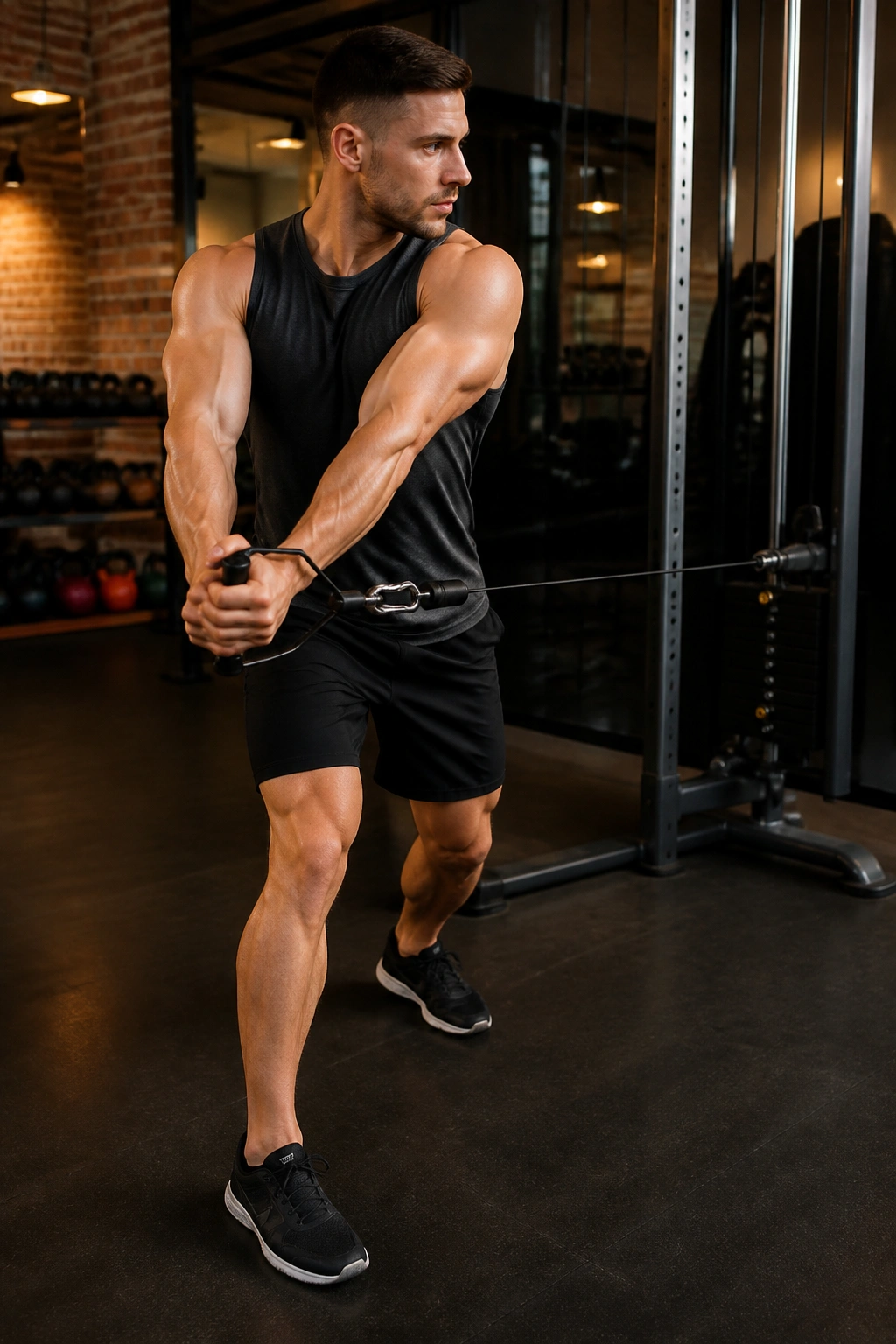
A cable chop is one of the best ways to train the torso to move and resist movement at the same time. The arms guide the cable, but the abs and obliques decide whether the rep looks crisp or sloppy. That mix makes it useful for anyone who wants a stronger-looking waist and better trunk control.
Set the cable high for a high-to-low chop or low for a low-to-high version. Rotate through the torso, keep the hips mostly stable, and finish with the hands outside the opposite hip or shoulder. Don’t yank the weight across the body. Let the core and shoulders share the job.
Best use
This is a good gym-day move after pressing or rowing work. It won’t flood the arms the way curls do, but it teaches the torso to transfer force, which matters more than people think.
If the cable stack is too heavy, the movement turns into a shoulder tug. Lighten it and move with purpose.
19. Floor Press with Leg Extension
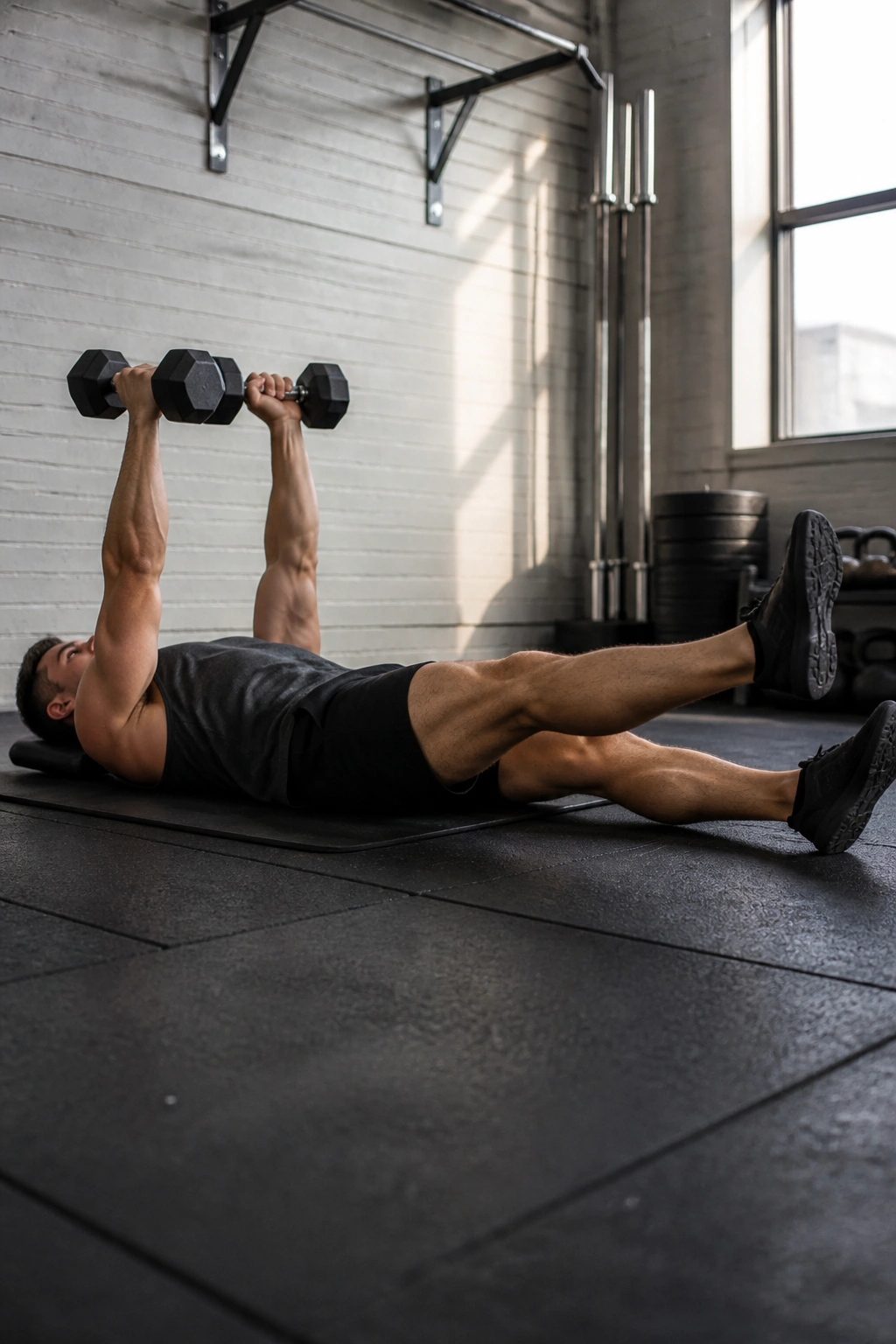
A floor press limits how far the elbows drop, which is nice for the shoulders and even nicer for keeping the rep honest. Add a leg extension, and the abs have to keep the low back from arching while the chest and triceps drive the press.
Lie on your back with dumbbells above your chest. Lower until the triceps touch the floor, press back up, then extend one leg a few inches off the ground before the next rep or at the top of each rep. The leg work makes the core stay awake.
I like this one because it feels strong without being fussy. There’s no bench setup, no complicated angle, and no reason to rush. If your ribs pop up or your back arches, cut the load and shorten the leg lift.
It’s a clean upper-body strength move with a built-in core check.
20. Plank Saw
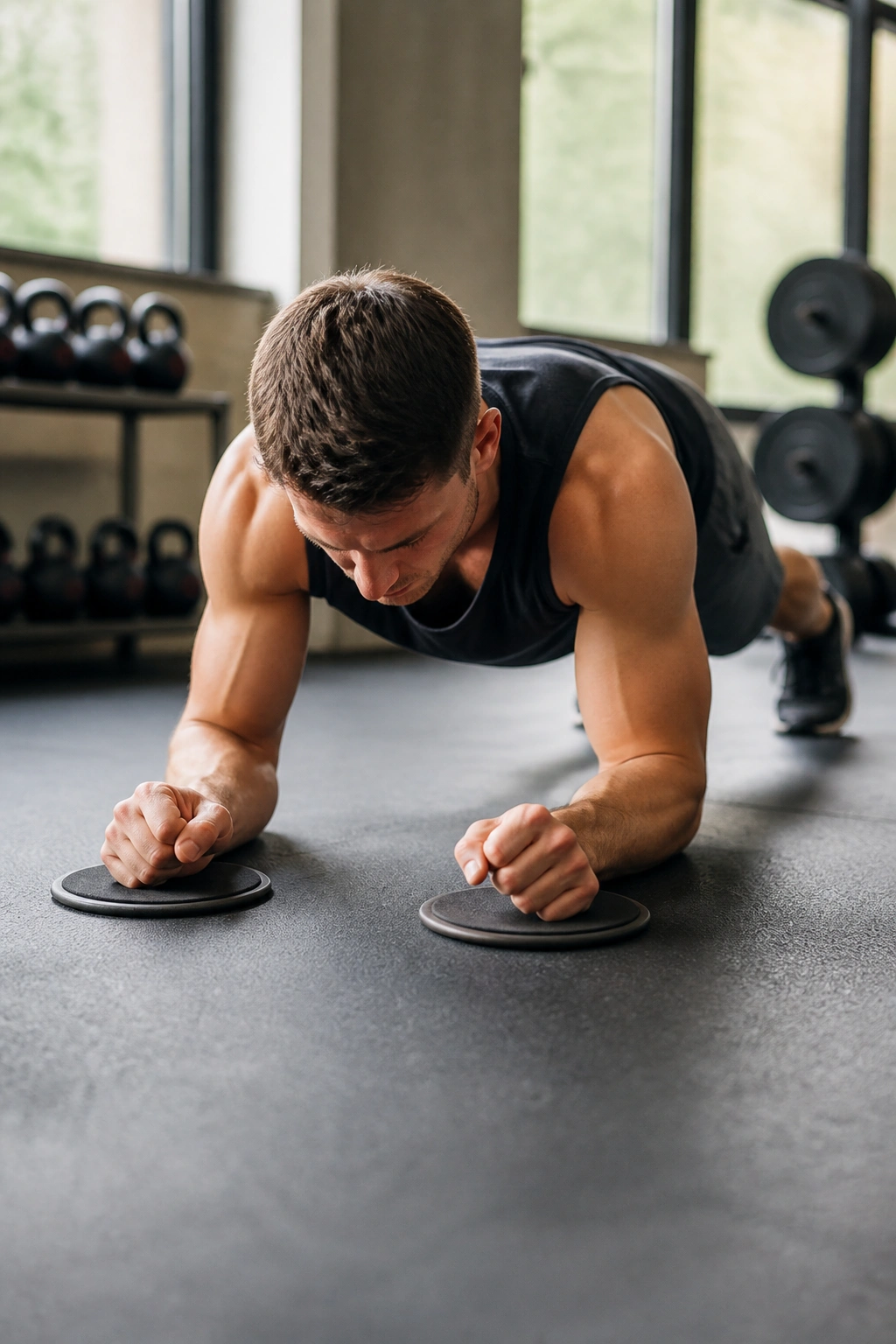
What happens when a plank starts sliding? The abs have to work harder to stop the body from drifting. That’s the whole point of the plank saw. It is a small motion with a big payoff, especially for anyone who wants more front-core endurance.
Set your forearms on sliders, towels, or smooth socks on a floor that allows movement. Start in a forearm plank, then glide your body backward a few inches and pull it forward again. Keep the hips level and the shoulders packed.
How to keep it clean
- Start with a short range.
- Keep the glutes lightly squeezed.
- Breathe behind the brace.
- Stop if the lower back starts arching.
This one burns fast, so resist the urge to make it dramatic. Short, steady reps beat a long, sloppy glide every time.
21. One-Arm Suitcase Carry
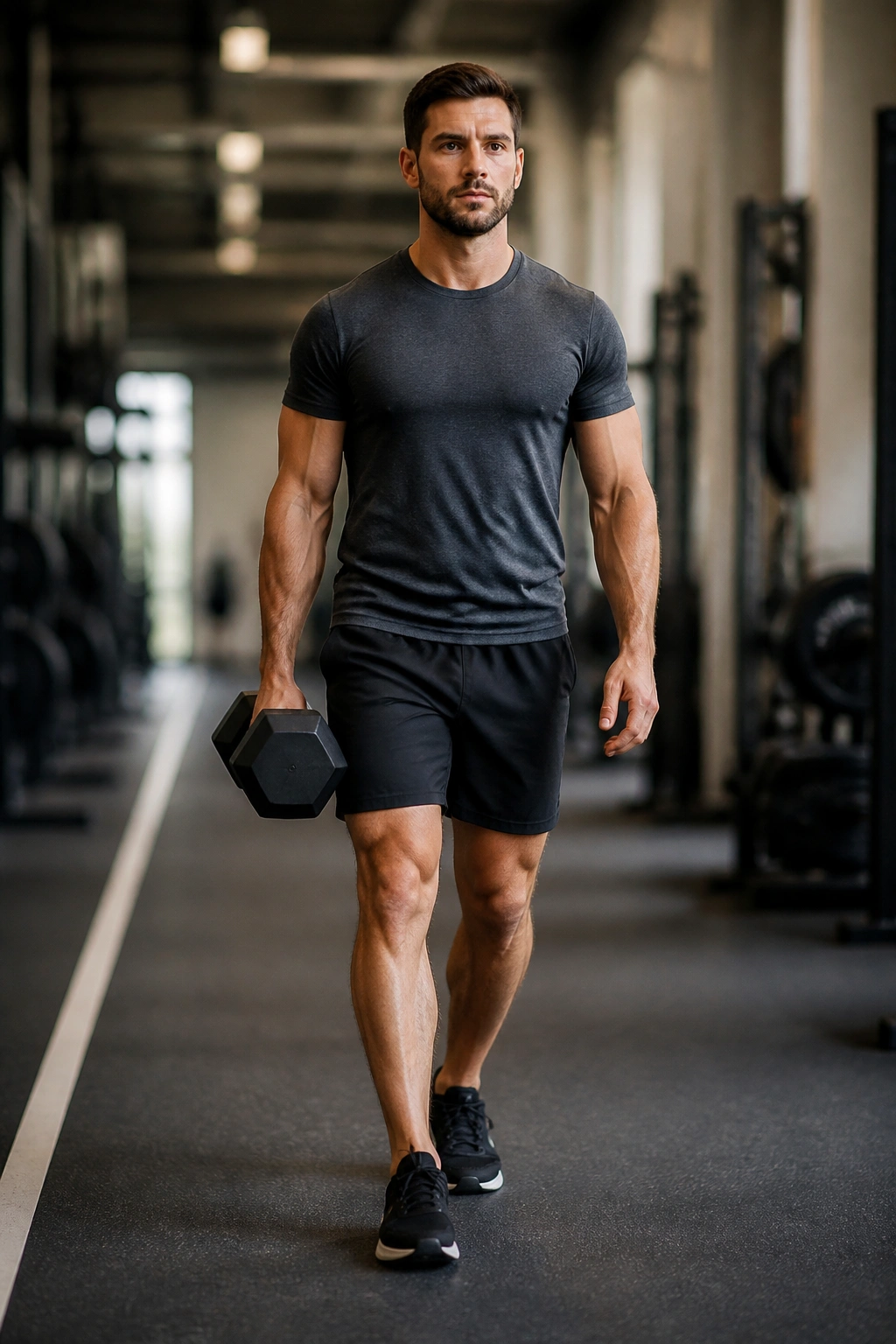
A heavy carry on one side is one of the simplest ways to make the obliques, grip, and shoulder stabilizers work together. It looks almost boring, which is probably why people skip it. Their mistake.
Pick up one kettlebell or dumbbell and walk tall without leaning toward or away from the weight. The body wants to tip. Don’t let it. Keep the ribs stacked, the shoulder down, and the steps slow enough that you can feel each foot hit the floor.
Quick setup
- Choose a weight that challenges your posture for 20 to 40 seconds.
- Walk in a straight line if possible.
- Switch sides every set.
- Do not shrug the loaded shoulder.
This carry is gold for a toned upper body because it builds real-world bracing strength. It helps the torso stay firm while the arm on the loaded side works overtime to hold the weight.
22. Arms and Abs Workout Finisher: 10-Minute Ladder
If you only have a short block of time, use this as a finisher and call it a win. It pulls together a push, a pull, a brace, and a carry pattern, which is a decent spread for the upper body without turning the workout into a long event.
Do 10 reps of push-up to shoulder tap, 10 dumbbell curls, 10 plank dumbbell drags total, and 10 suitcase carry steps per side. Rest 30 seconds, then cut the reps to 8, then 6, then 4. If you move well, the whole thing takes about 10 minutes and leaves your arms full of blood and your abs tighter than they were when you started.
A ladder like this works because fatigue builds in a straight line. Each round strips away a little more reserve, and you have to keep your shape anyway. That’s the test.
Use this on a day when you want a compact arms and abs workout without a lot of setup. No fancy plan. Just enough work to make the upper body feel honest, and maybe a little stubborn on the way out.
