



A single kettlebell can carry a full-body workout farther than most people expect. One bell, one timer, a little floor space, and you can hit the hips, legs, back, shoulders, grip, and core without fussing over a long setup or a crowded gym floor.
That’s why kettlebell workouts keep showing up in real training plans. They’re compact. They’re honest. And when you pick the right sequence, they make you work from head to toe in a way that feels efficient instead of random.
The catch is that a quick session can go sideways fast if you chase speed before control. A kettlebell swing with a sloppy hinge is just a low-back tax. A press that turns into a standing shrug is not helping anybody. The sweet spot is a bell that feels challenging on the second round, but still lets you keep clean reps when your breathing gets loud.
Simple rule. If you can’t keep your ribs down, lower the weight.
1. The Swing Ladder Kettlebell Workout
The swing ladder is the closest thing I know to a full-body wake-up call in under 10 minutes. It looks almost too plain to count as a workout, which is part of the reason it works so well. You hinge, you snap, you breathe, and you repeat until your legs start talking back.
Why It Works
The swing gives you a big dose of posterior-chain work without a long setup. Glutes, hamstrings, upper back, and grip all get pulled into the same pattern, and the heart rate climbs fast if you keep your rest honest. That makes it a strong pick when time is short and you want the session to feel complete, not half-done.
Run it like this: 10 swings, rest 20 seconds; 15 swings, rest 20 seconds; 20 swings, rest 40 seconds. Repeat the ladder for 2 to 4 rounds. If your hinge breaks down before the last round, stop there. That’s the right stop point.
- Use a bell you can snap cleanly for 20 reps.
- Keep the bell close to your body on the backswing.
- Stop each set when your breathing gets messy.
- Rest long enough to keep the next set crisp.
Best tip: if the kettlebell is drifting above chest height, the bell is probably too light or you’re muscling it with your arms.
2. Goblet Squat to Press Ladder
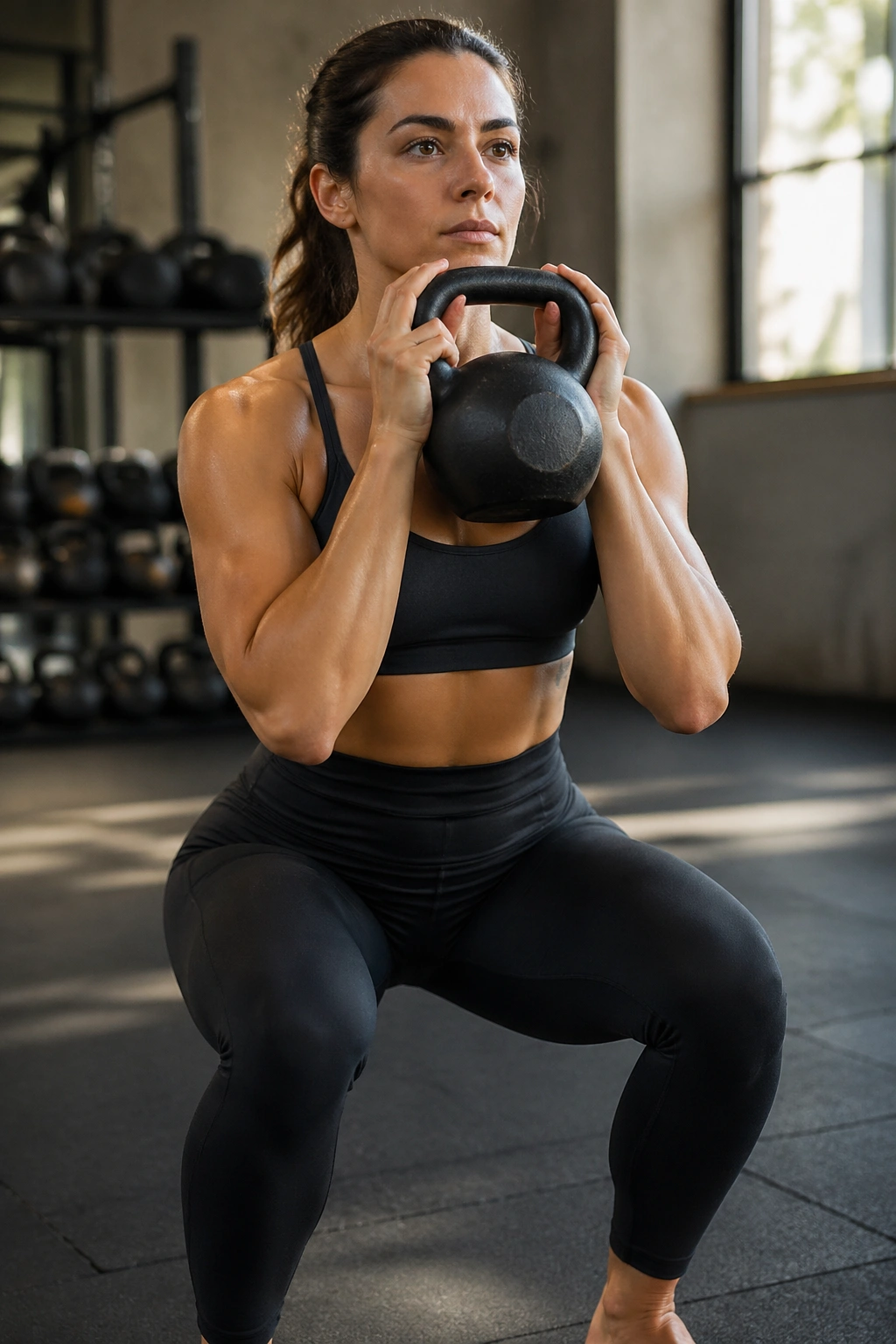
This one looks simple on paper. Then your legs and shoulders start arguing with each other.
A goblet squat to press ladder is one of my favorite kettlebell workouts for people who want a fast full-body session without too much choreography. The squat taxes the lower body, the press lights up the shoulders and upper back, and the front-loaded hold keeps your core honest the whole way through. It’s a neat little package.
Try 5 goblet squats followed by 5 presses on the right, then 5 on the left. Rest 30 to 45 seconds. Do 3 to 5 rounds. If you want more leg work, add a second squat between each press set. If your shoulders are the weak link, keep the squat count steady and shorten the press reps to 3 or 4 per side.
The trick is to keep the bell high and tight in the goblet position. Don’t let your elbows drift so low that your chest collapses forward. That’s where the squat gets ugly and the press loses power.
One more thing. Pressing after squatting is harder than pressing fresh. That’s fine. That’s the point.
3. Clean, Squat, Press Complex
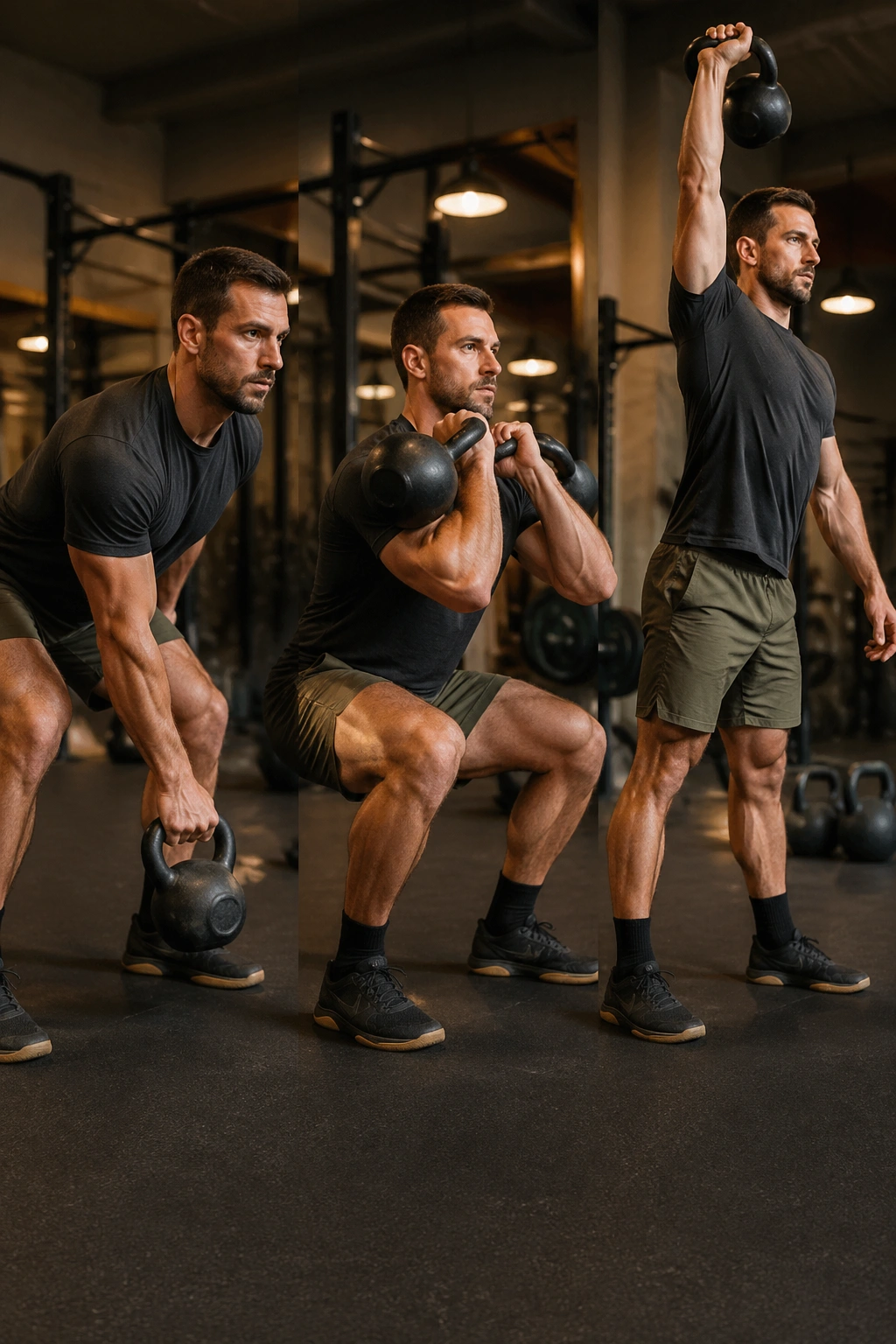
A complex is the kind of session that looks like a small pile of movements and feels like a proper workout five minutes later. Clean, squat, press. Three moves, one bell, not much downtime.
You start in the hinge, pop the bell into the rack, squat, then press from the rack position. That sequence hits the hips, quads, glutes, core, shoulders, and even the forearms because the rack hold forces you to stay organized under fatigue. It’s a good full-body option when you want strength and conditioning in the same short block.
How I’d Program It
- 3 cleans per side
- 3 front squats per side
- 3 presses per side
- Rest 45 to 60 seconds
- Repeat for 3 to 5 rounds
Keep the clean quiet. If it slaps your forearm, the bell is looping too far around the hand. And keep the squat smooth. The point is not to bounce out of the hole like a jackrabbit; it’s to sit down under control and stand back up with force.
Use a lighter bell than you think. Complexes punish sloppy positions fast, and a too-heavy bell turns the press into a grind that ruins the rest of the session.
4. Reverse Lunge and Rack Hold Circuit
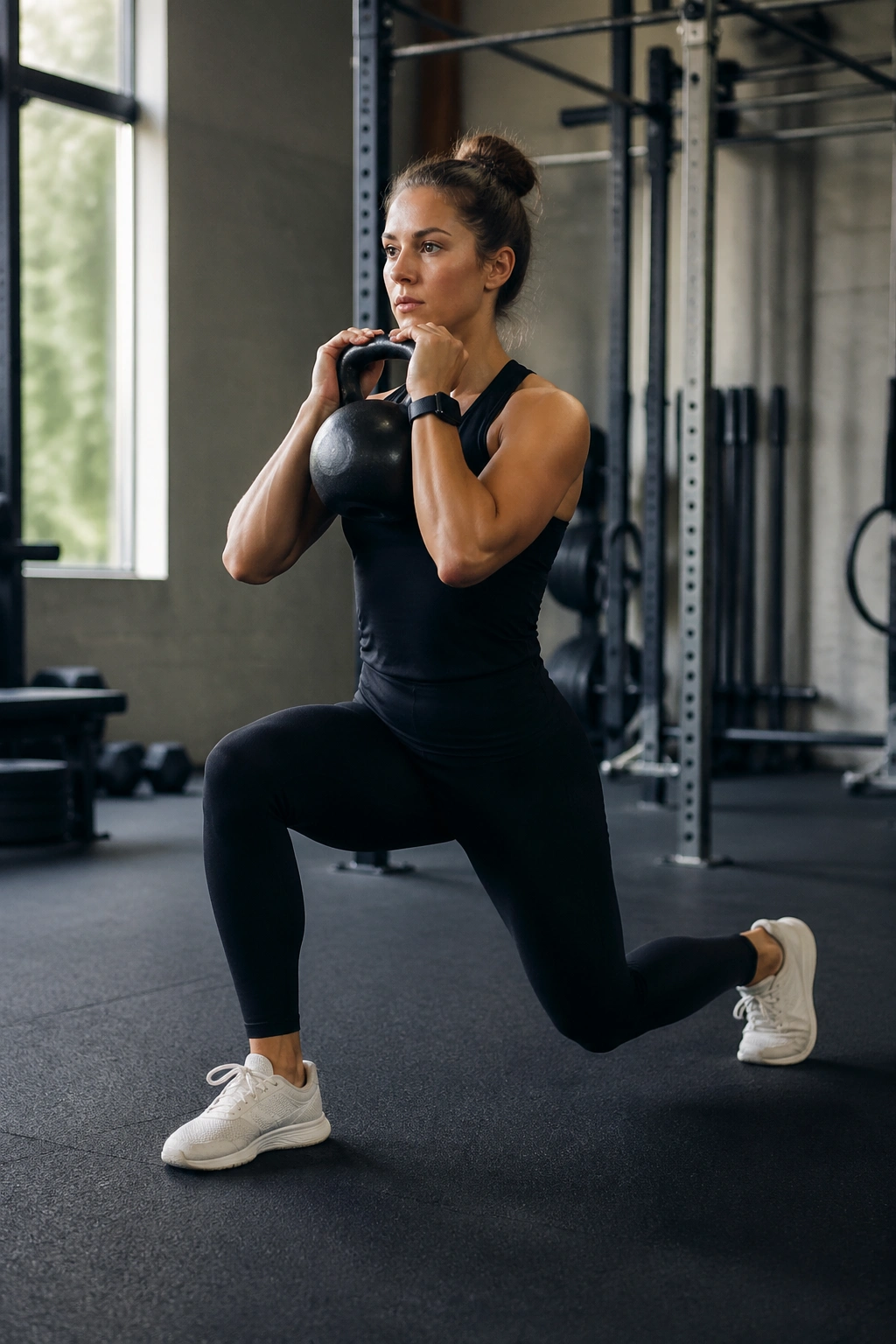
Why do so many people skip lunges in kettlebell sessions? Probably because lunges are honest, and honesty is annoying when you’re tired.
A reverse lunge with a front rack hold is one of the cleanest ways to train each leg without needing a lot of room. The reverse step is kinder on the knee than a long forward stride, and the rack position makes your trunk work harder than a bodyweight lunge ever will. You end up with legs, glutes, balance, and core all pulling their weight.
How to Use It
Do 6 reverse lunges per side while holding the bell in the right rack position, then switch sides and repeat. Rest 30 to 45 seconds. Run 3 to 4 rounds.
- Keep the front foot flat.
- Step back far enough that the front shin stays fairly vertical.
- Hold the bell tight against your chest.
- Don’t wobble at the bottom just to chase depth.
If the rack hold feels easy, march in place for 10 steps after each round. That tiny addition makes your trunk brace harder, and it’s a sneaky way to turn a good workout into a nasty one.
The best part is how little setup it needs. One bell. One lane. That’s it.
5. Turkish Get-Up and Swing Pair
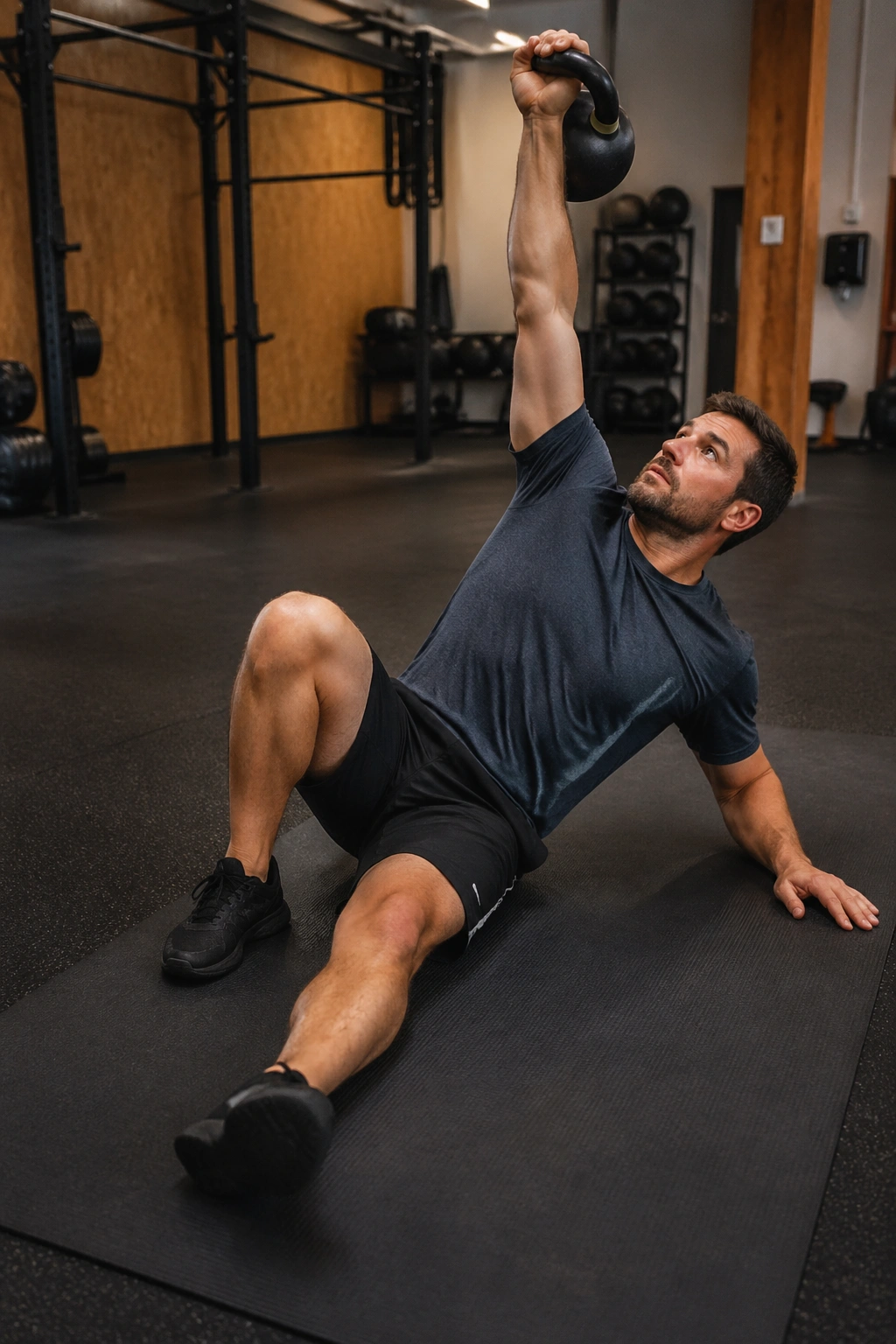
The Turkish get-up is slow, and that’s exactly why it belongs in a quick full-body session. It teaches your body to organize itself under load, one step at a time, which sounds boring until you notice how much control you actually need to finish it well.
Pair it with swings and the whole workout changes shape. The get-up gives you shoulder stability, trunk tension, and hip control. The swing gives you power. Together, they cover a lot of ground without turning the session into a circus.
Do 1 get-up per side, then 15 swings. Rest about 60 seconds. Repeat for 4 to 6 rounds. If the get-up is still new to you, break it into pieces: roll to elbow, post to hand, bridge, sweep, tall sit, then stand. That’s enough.
A lot of people rush the get-up because it looks like a transition drill. It isn’t. Each position matters. If the arm drifts off vertical or the shoulder caves in, the movement stops being useful pretty quickly.
This pairing works well on days when you want to feel strong, not smashed. Different flavor. Same bell.
6. Single-Arm Row and Carry Triad
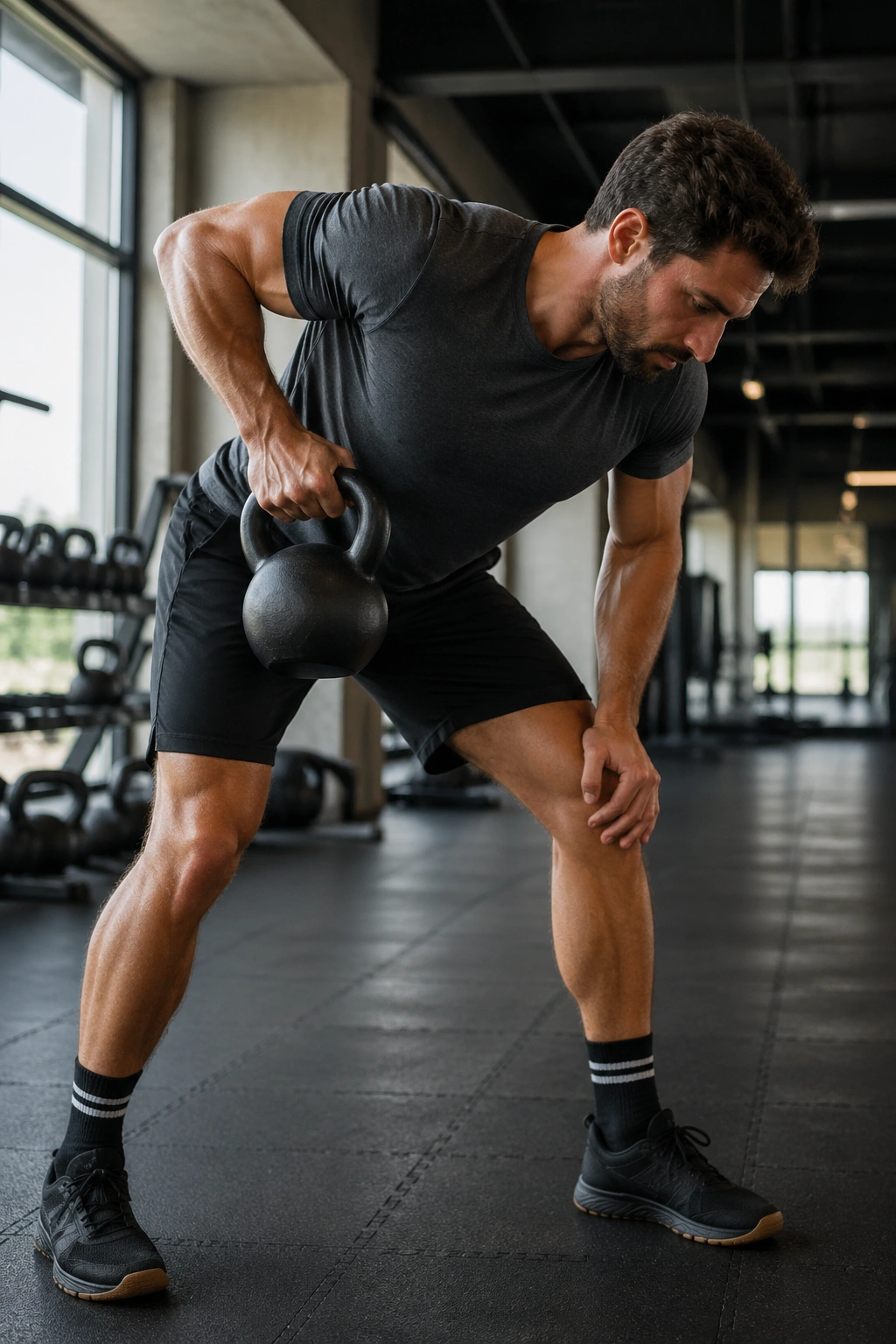
There’s a reason rows and carries get a place in real programs, even though they don’t look dramatic. They fix the weak stuff. Posture, grip, shoulder packing, anti-rotation strength. All of it.
A single-arm row, then a suitcase carry, then a front rack carry gives you three different demands in one neat cycle. Unlike machine-based pulling, this keeps the torso honest the whole way through. You’re not pinned to a pad. You’re standing, bracing, walking, and trying not to lean like a crooked fence post.
I like 8 rows per side, 20 meters of suitcase carry per side, then 20 meters of front rack carry per side. Rest 45 seconds. Do 3 to 4 rounds. The row should be smooth and the carry should look boring, which is a compliment.
This is the workout I’d hand to someone who wants a quick session but spends too much time sitting. It opens the back, wakes up the obliques, and reminds the shoulders where they belong.
Pick a weight that makes the last 5 meters of the carry feel a little smug. Not impossible. Just firm.
7. Snatch Interval Blasts
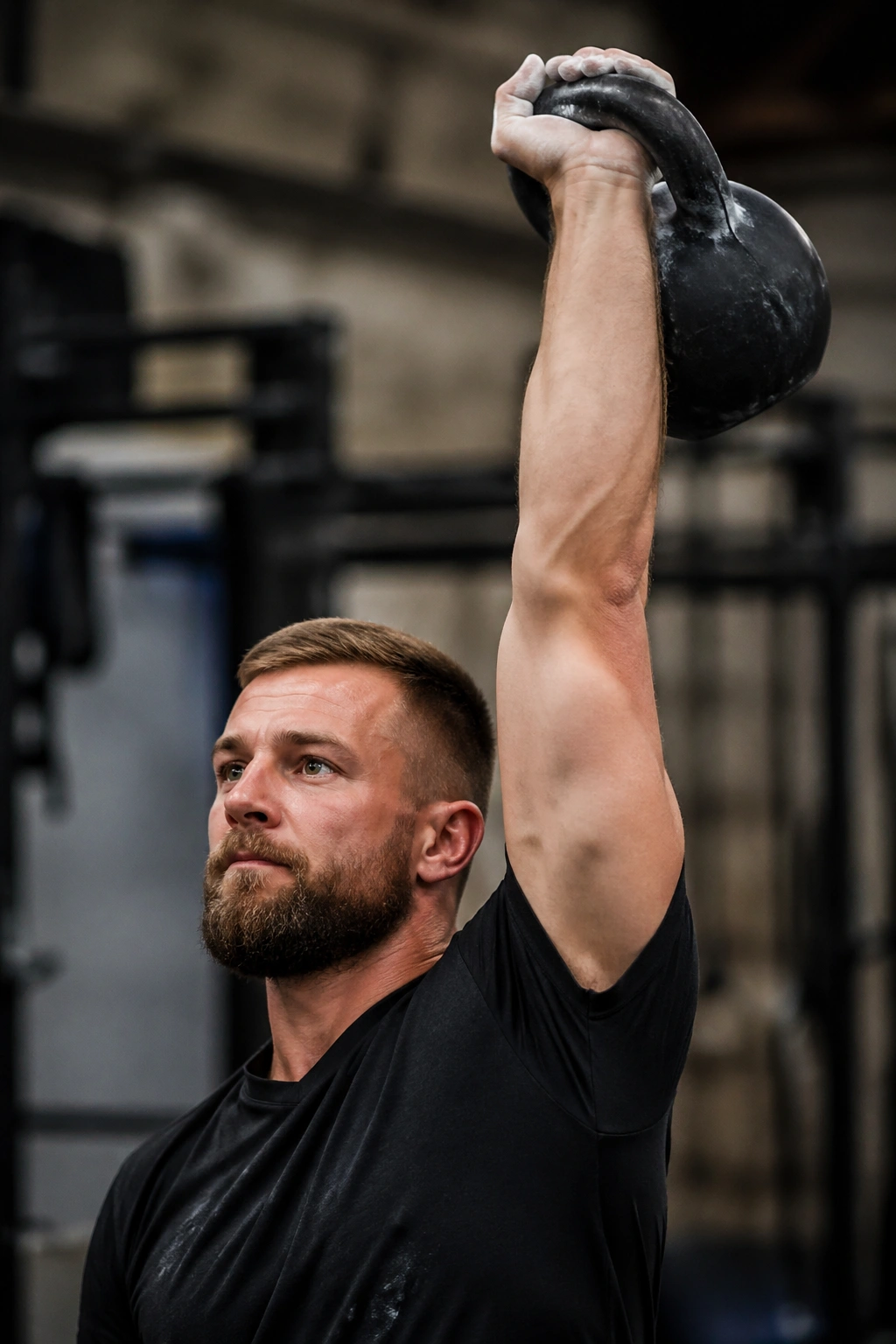
Snatches are not the move I’d put first for a beginner, and I’m not going to pretend otherwise. But if your technique is there, snatch intervals can pack an ugly amount of work into a very short window.
The overhead finish makes this one feel different from swings. You get hip power, shoulder stability, and cardio stress at the same time. That overhead position also exposes bad timing fast, which is useful if you like feedback and don’t mind a little humility.
A clean format is 20 seconds of right-arm snatches, 20 seconds of left-arm snatches, then 20 seconds of rest. Repeat for 6 to 10 rounds. Keep the reps low enough that each one snaps into place. If the bell is crashing onto your forearm, slow down and fix the path.
- Use chalk if your grip gets sweaty.
- Keep the wrist neutral at the top.
- Finish with the biceps near the ear.
- Stop before your shoulder starts creeping up.
A snatch workout should feel sharp, not flailed. If it gets noisy and ugly, the volume is too high.
8. Thruster Density Test
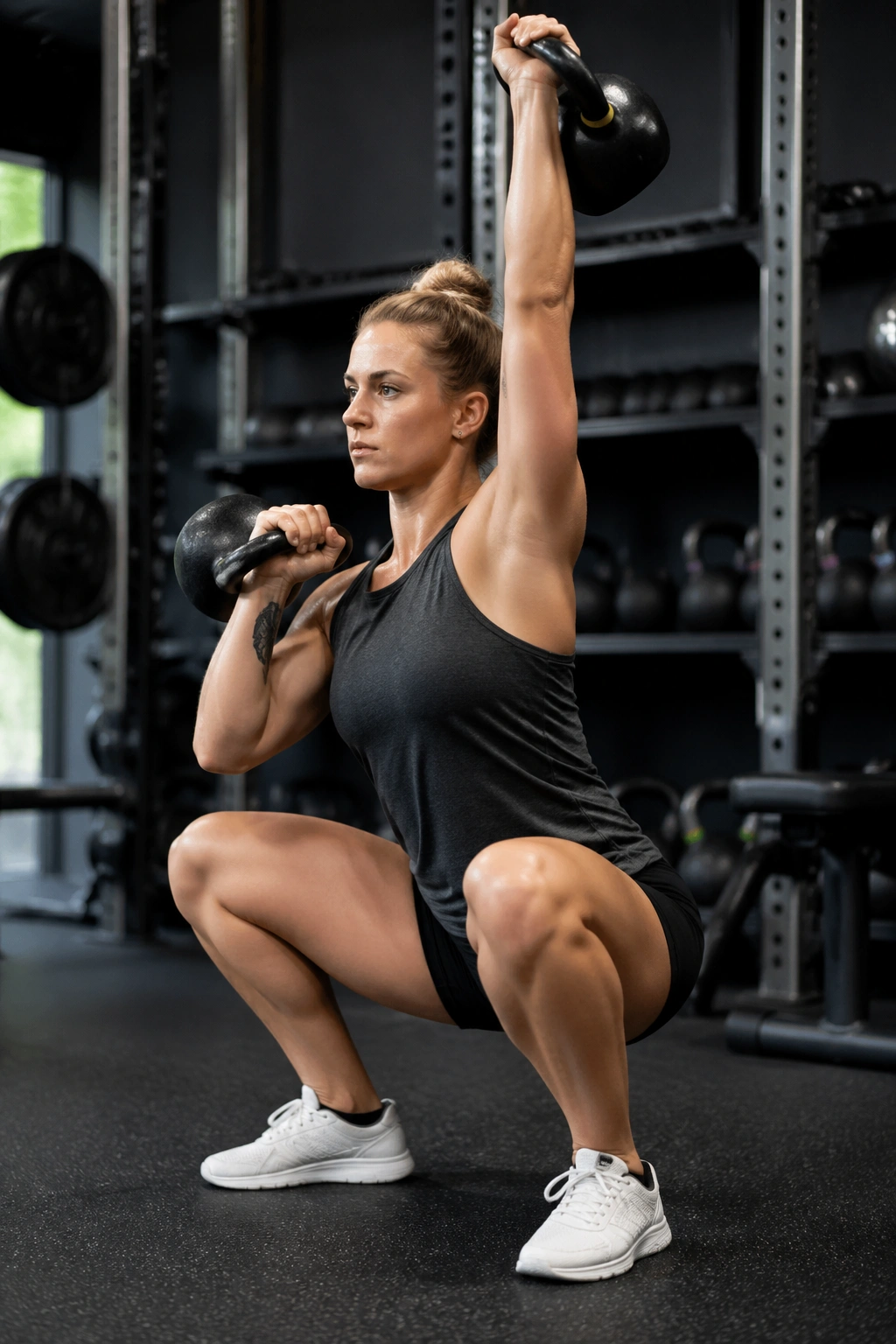
What makes a thruster so effective? It’s the fact that the legs never get a real break.
A kettlebell thruster combines a squat and a press into one continuous motion, which means your quads, glutes, core, and shoulders all get dragged into the same set. That makes it a brutal little density test when time is tight and you want a workout that leaves no muscle group pretending to be innocent.
Try 6 thrusters per side every minute on the minute for 10 minutes. If that’s too much, cut it to 4 per side. If it’s too easy, keep the same reps and shorten the rest inside the minute. The goal is clean output, not chaos.
What to Watch For
If your press turns into a half-rep because the squat smoked you, lower the bell. If your lower back arches at the top, your rib cage is flaring and the load is probably too heavy for this pace.
Thrusters are not subtle. They’re a useful mess.
9. Halo, Deadlift, and Row Reset
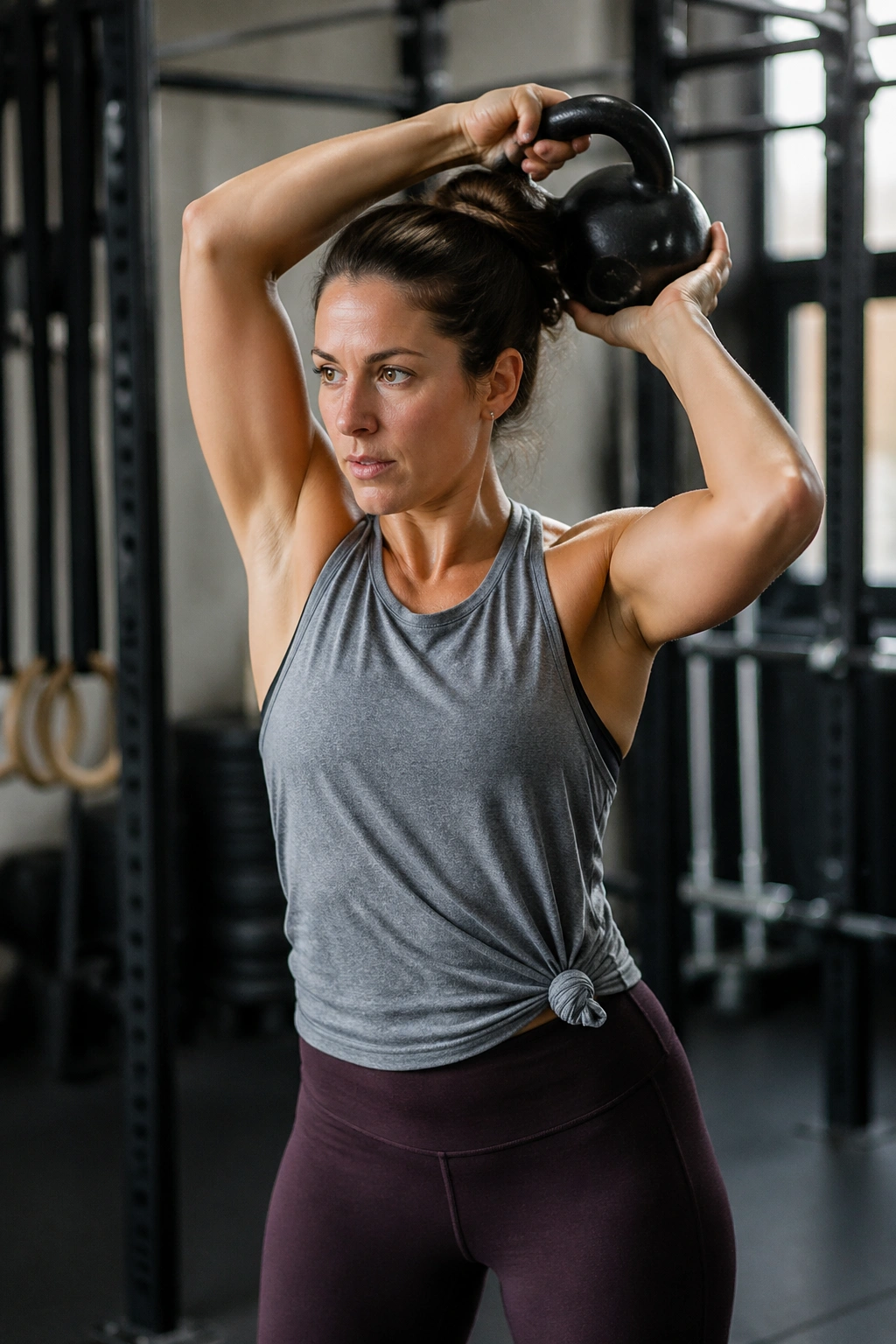
Sometimes the best quick workout starts with a movement that does not look hard at all. The halo is one of those moves. It opens the shoulders, makes you control the bell near your head, and buys you a little rhythm before the harder work starts.
After that, the deadlift and row combo takes over. The deadlift anchors the hips and hamstrings. The row pulls the upper back into the game. Together, they make a tidy full-body circuit that feels less frantic than swings or snatches, but still earns its place.
A solid sequence is 6 halos in each direction, 8 deadlifts, 8 rows per side, then rest 45 seconds. Repeat 3 to 4 rounds. Keep the halo slow enough that the bell never bangs your head. That’s not a good look, and it’s not a useful rep.
This is the session I reach for when the body feels stiff and I still want real work. The halo smooths things out. The pull patterns do the rest. Simple enough. And surprisingly effective when you keep the pace moving.
10. Alternating Clean and Push Press EMOM
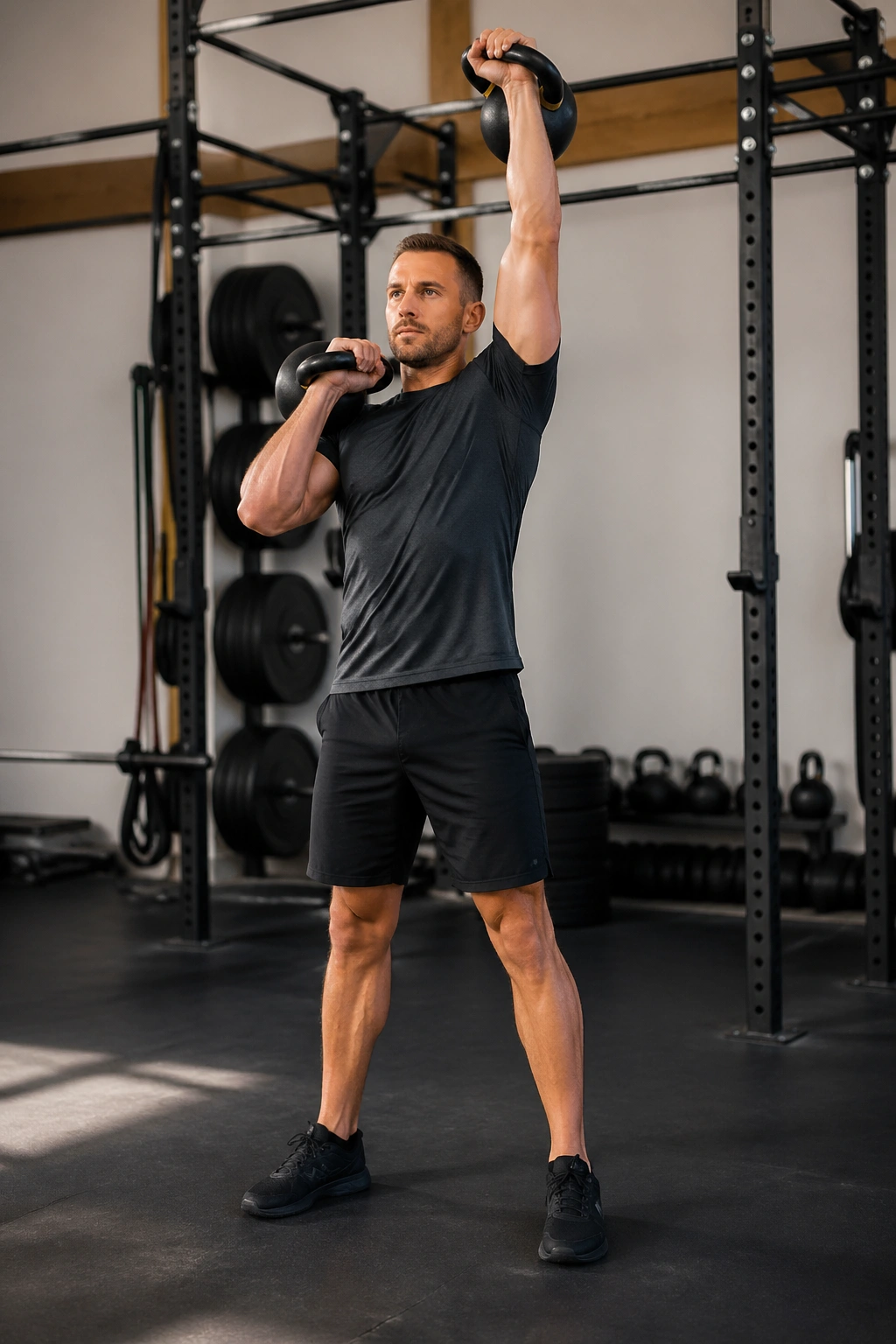
An EMOM is one of the cleanest ways to keep a kettlebell session short. Every minute starts fresh, which means you can keep the work sharp without guessing how long to rest.
Alternating clean and push press is a nice middle ground between straight strength and straight conditioning. The clean gets the bell to the rack efficiently. The push press lets you use a small knee dip to drive the bell overhead. That tiny dip matters more than people think because it lets you move more load without turning the press into a sloppy grind.
Use 5 minutes on the right side, 5 on the left. In each minute, do 3 cleans and 3 push presses. Rest for the remainder of the minute. If you finish in 25 seconds, you’ve got a useful 35-second pause before the next round starts.
One-sentence rule: Keep every rep identical.
That’s harder than it sounds, especially on minute 8 or 9 when the shoulder starts to feel a little hot. But the clean rhythm makes the whole thing better.
11. Front Rack March and Split Squat Combo
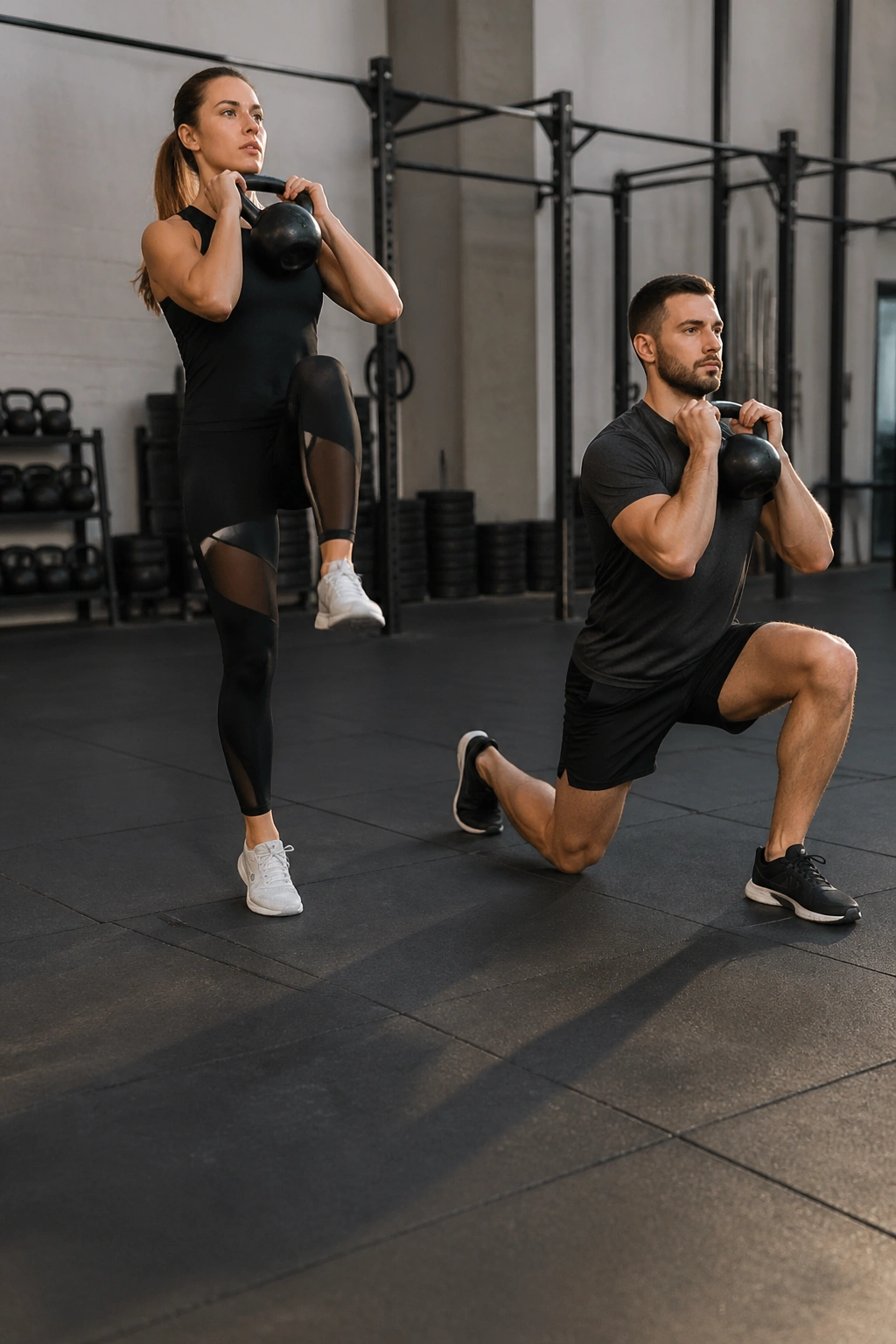
If you want a kettlebell workout that feels steadier than a swing session but still makes your whole body work, this is a smart pick. It’s also a nice contrast to fast hinge work. The march trains bracing; the split squat trains balance and leg strength; the rack position ties them together.
Do 20 steps of front rack marching per side, then 6 split squats per side, then switch bells and repeat. Rest 30 to 45 seconds. Three rounds is enough for most people, though stronger lifters can push to 4.
The front rack march is sneaky. Every step asks your obliques to stop the torso from tipping, and every breath asks your core to stay planted. The split squat follows that with a slower, tougher leg pattern that catches side-to-side imbalances.
Best for: people who want a controlled full-body session without jumping or fast overhead work.
Best not to rush: the last three marching steps on each side. That’s usually where the posture starts to wobble. If you watch anything, watch the chest and the hip line.
12. Bottoms-Up Carry and Press Primer
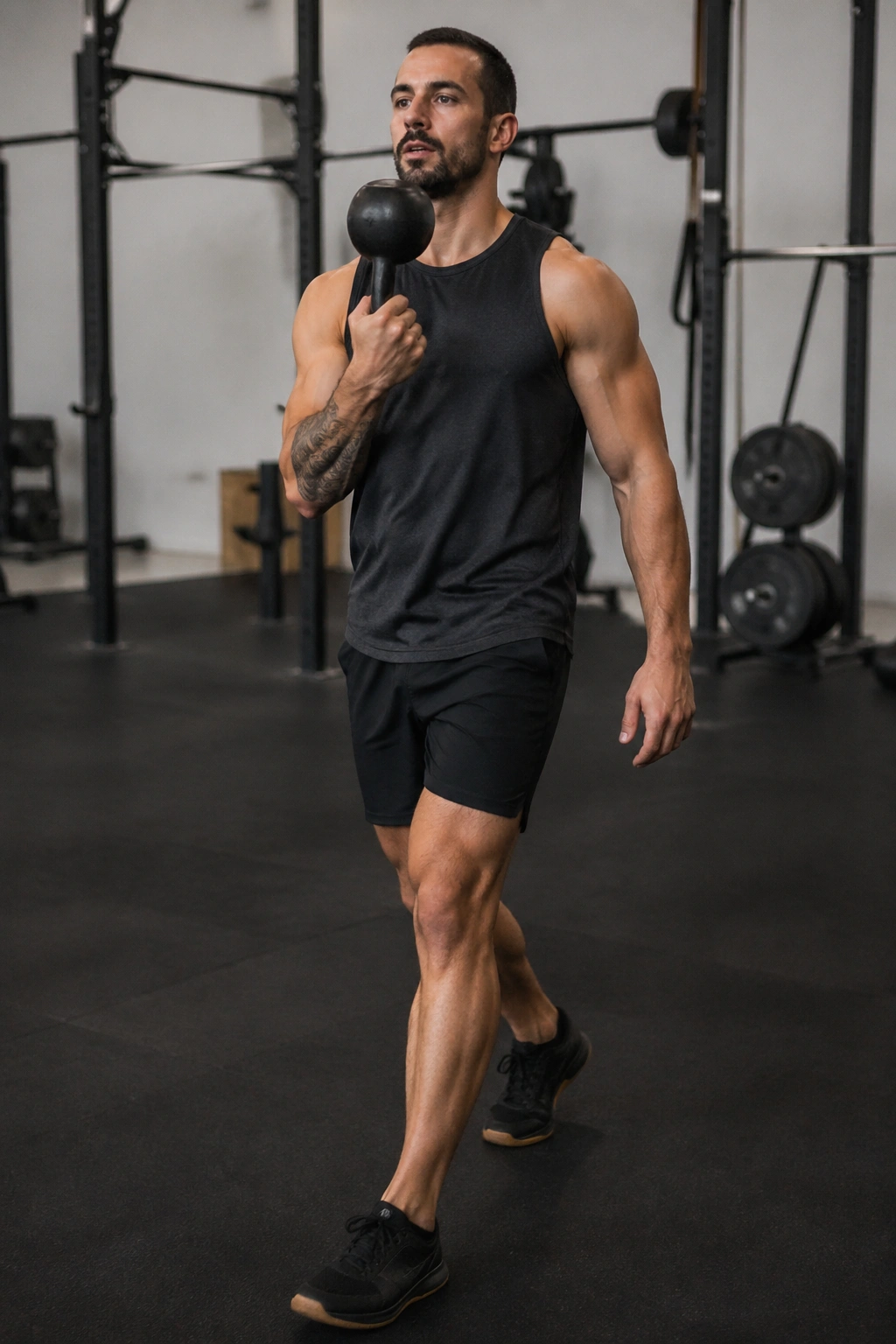
A bottoms-up kettlebell is not a magic trick. It’s just a very honest way to find out whether your wrist, elbow, and shoulder are working together.
The grip demand is the whole point. Because the bell is upside down, you have to stabilize it hard, which wakes up the forearm and shoulder faster than a normal press. Pair that with a carry and you get a short workout that feels tiny at the start and oddly serious by the end.
Try 3 bottoms-up presses per side, then 20 meters of bottoms-up carry per side. Rest about 45 seconds. Do 3 to 5 rounds. Use a lighter bell than you’d use for a regular press, because this variation punishes sloppy alignment fast.
Warning: if your wrist bends back and the bell starts to drift, stop the set. That’s not a toughness issue. That’s a mechanics issue.
This workout is great on days when you want shoulder work without endless reps. It’s also useful as a primer before heavier pressing sessions.
13. The 12-Minute AMRAP Circuit
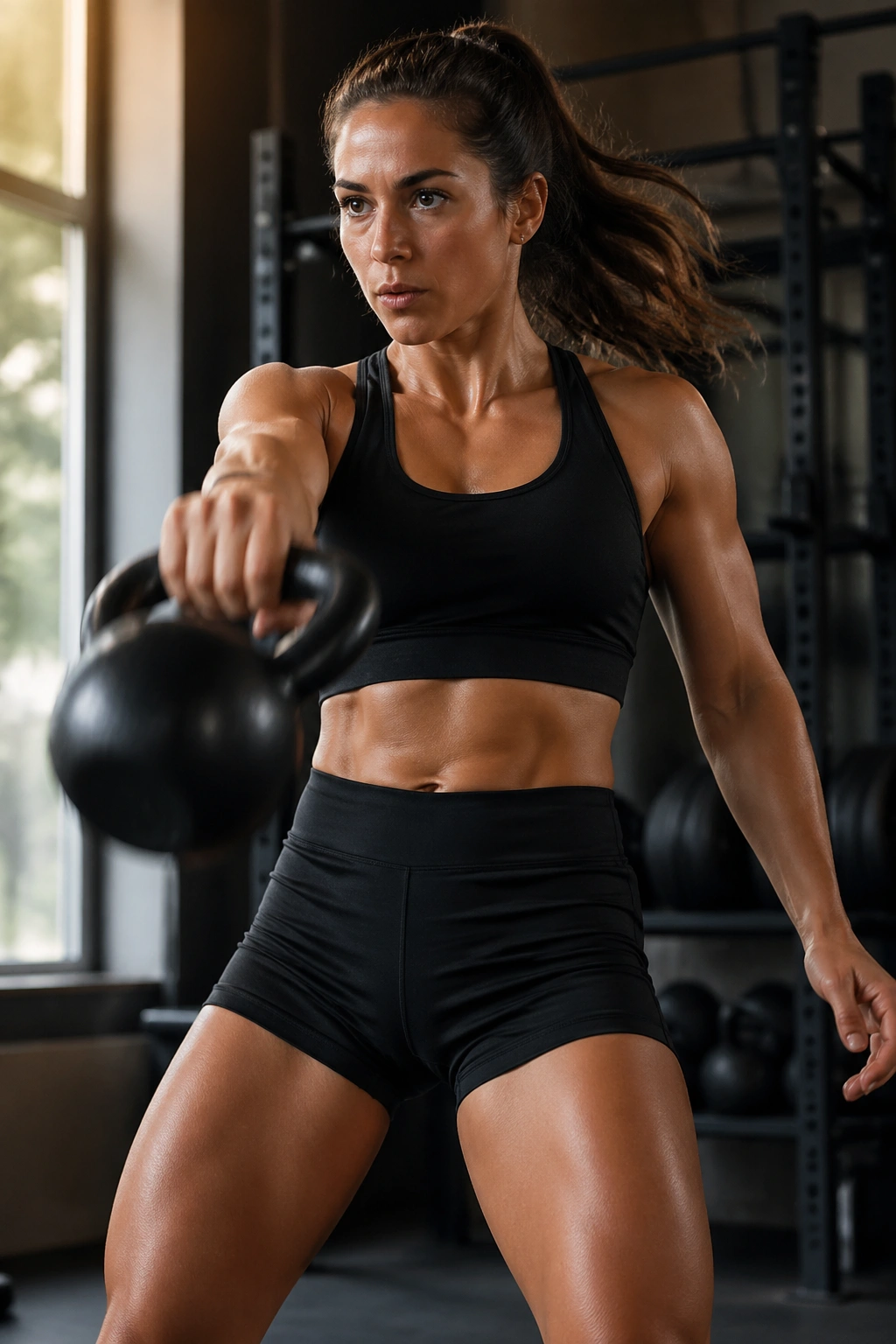
Can a short AMRAP really count as a full-body kettlebell session? Yes, if the exercise mix is tight and the pace stays controlled.
AMRAP means as many rounds as possible, but I like to think of it as “as many good rounds as possible.” That distinction matters. The second the form starts to drift, the workout stops being useful. A strong 12-minute setup is 10 swings, 6 goblet squats, 6 single-arm rows per side, and 5 push presses per side.
How to Pace It
Start at a speed you can keep for the full 12 minutes. That means no racing the first round like you’re trying to win a parking spot. Breathing should be loud, but not out of control. If you need a checkpoint, the row and press should still look tidy at minute 9.
- 10 kettlebell swings
- 6 goblet squats
- 6 rows per side
- 5 push presses per side
A timer helps more than willpower here. Stop at 12 minutes, record the rounds, and try to beat them next time without making the reps ugly. That’s how this one stays useful instead of turning into a mess.
14. Single-Side Full-Body Ladder
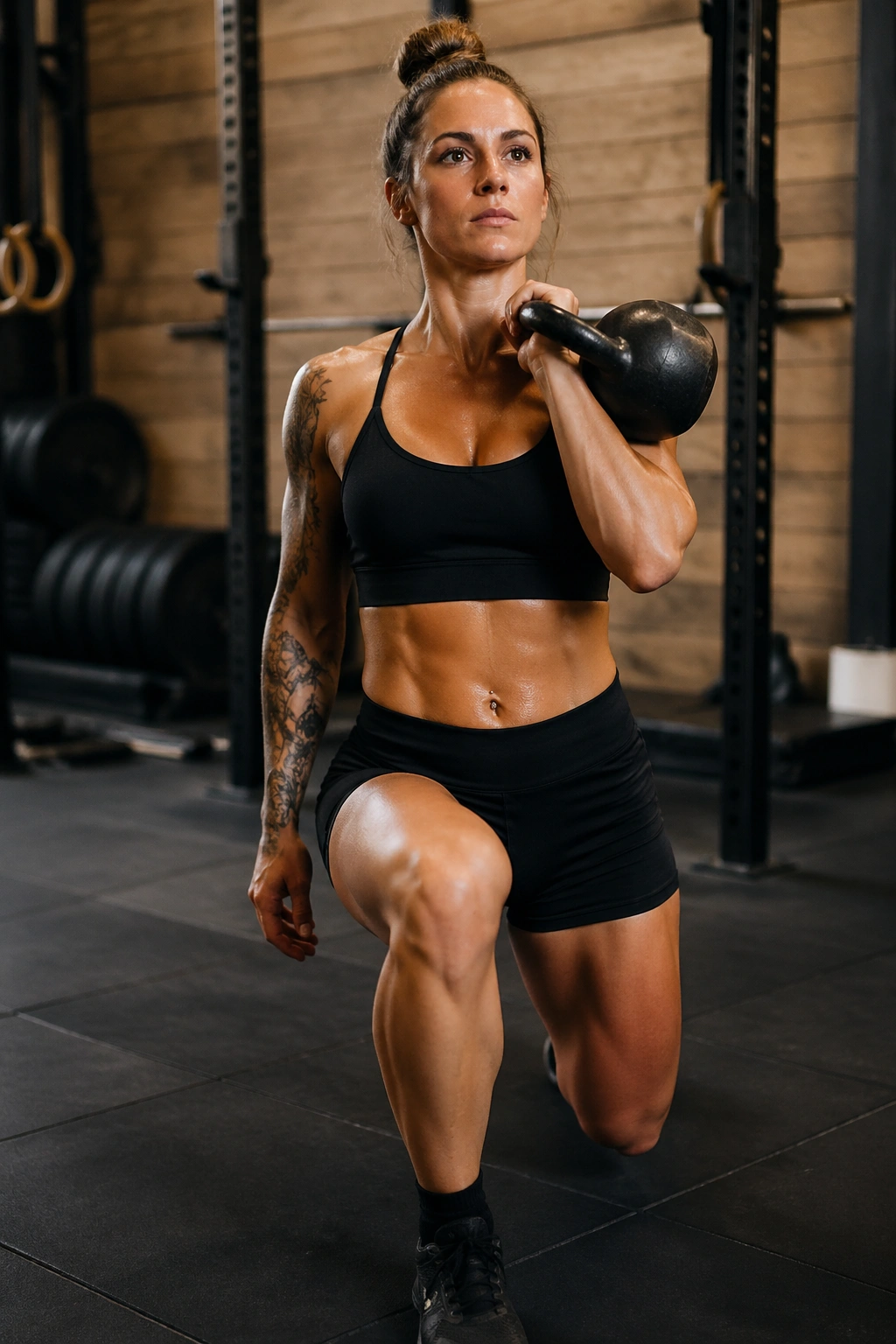
One-side loading is where kettlebells earn their keep. You have to resist rotation, keep the torso stacked, and make each rep count because the weight is hanging off one side of your body instead of sitting nicely in the middle.
A single-side ladder can run like this: 1 clean, 1 front squat, 1 press, 1 reverse lunge, then 2 of each, then 3 of each. Rest 45 to 60 seconds between sides. That structure gives you a full-body hit without needing lots of sets or a second bell.
The reason I like this better than a random circuit is simple. The ladder builds fatigue in a neat order. You’re not bouncing around from movement to movement just to stay busy. You’re stacking the same pattern and making the body hold shape while the reps climb.
If your grip starts to slide, keep the rack position tighter and shorten the carryover between reps. If your breathing gets ragged, pause at the top for 2 seconds before the next rep. Small fixes. Big difference.
This is one of the better kettlebell workouts for a quick session when you want strength, balance, and a little grit all in the same block.
15. The 12-Minute No-Waste Finisher
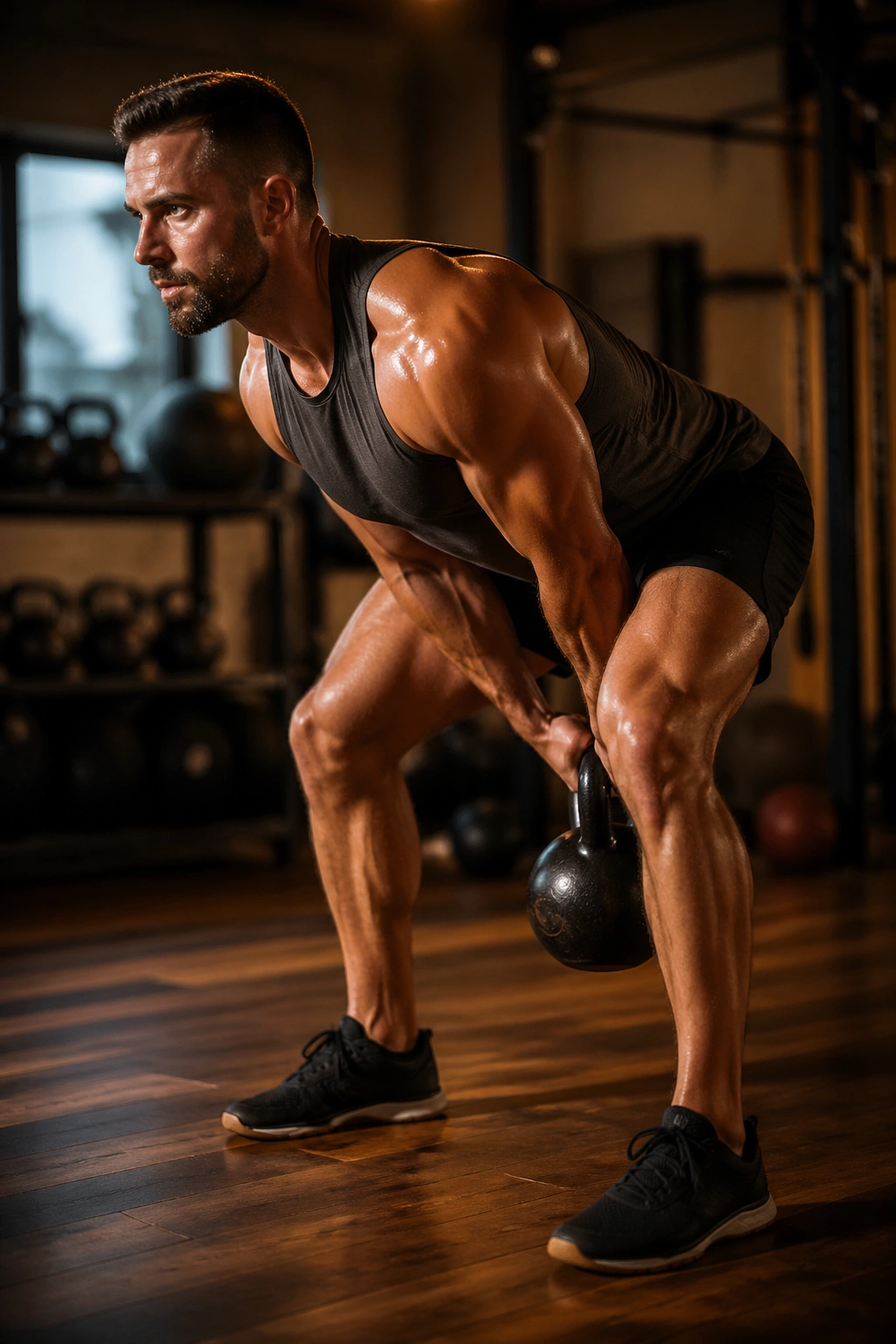
A good finisher should feel like the last honest mile of a run. Not flashy. Not complicated. Just enough work to make the whole session land.
Use 30 seconds on, 15 seconds off, and rotate through four moves: swings, goblet squats, single-arm presses, and suitcase carries in place. Do 3 rounds for a 12-minute block. Keep the transitions short and the reps clean. If a round falls apart, lower the bell or cut the press volume before you turn the whole thing into noise.
This one is perfect when you want a session that leaves your breathing up, your legs warm, and your shoulders awake without needing a long recovery window. It also works well after a strength day because the carry and press keep the core active while the swing and squat bring the lower body back into it.
Small tip: keep a towel nearby. Once the sweat starts, the handles get slick faster than people expect.
No drama here. Just a bell, a timer, and enough work to make your body know it trained.
