



Most bicep workouts go wrong the same way: too much swinging, too little stretch, and a load that turns the shoulders into the main event. If you want arms that look thicker in a short sleeve, you need more than a half-hearted curl to eye level.
The biceps do one job most people know — elbow flexion — but the arm that looks thick from the front also depends on the brachialis and brachioradialis. That is why hammer curls, reverse curls, and chin-ups matter even when the word biceps is in the title. Two heads at the top, a thicker muscle sitting underneath, and a forearm muscle that helps the whole upper arm look denser. That’s the real picture.
A smarter approach is a mix of heavy work, long-length work, neutral-grip work, and one or two strict finishers. If you already row and chin-up, you probably need fewer curls than you think. If your elbows complain, the fix is often not less effort; it’s a cleaner line of pull and a better exercise choice.
You do not need all 15 in one day. That would be a mess. Start with the first one, keep the reps honest, and build the arm from more than one angle.
1. Standing Barbell Curls for Heavier Bicep Workouts
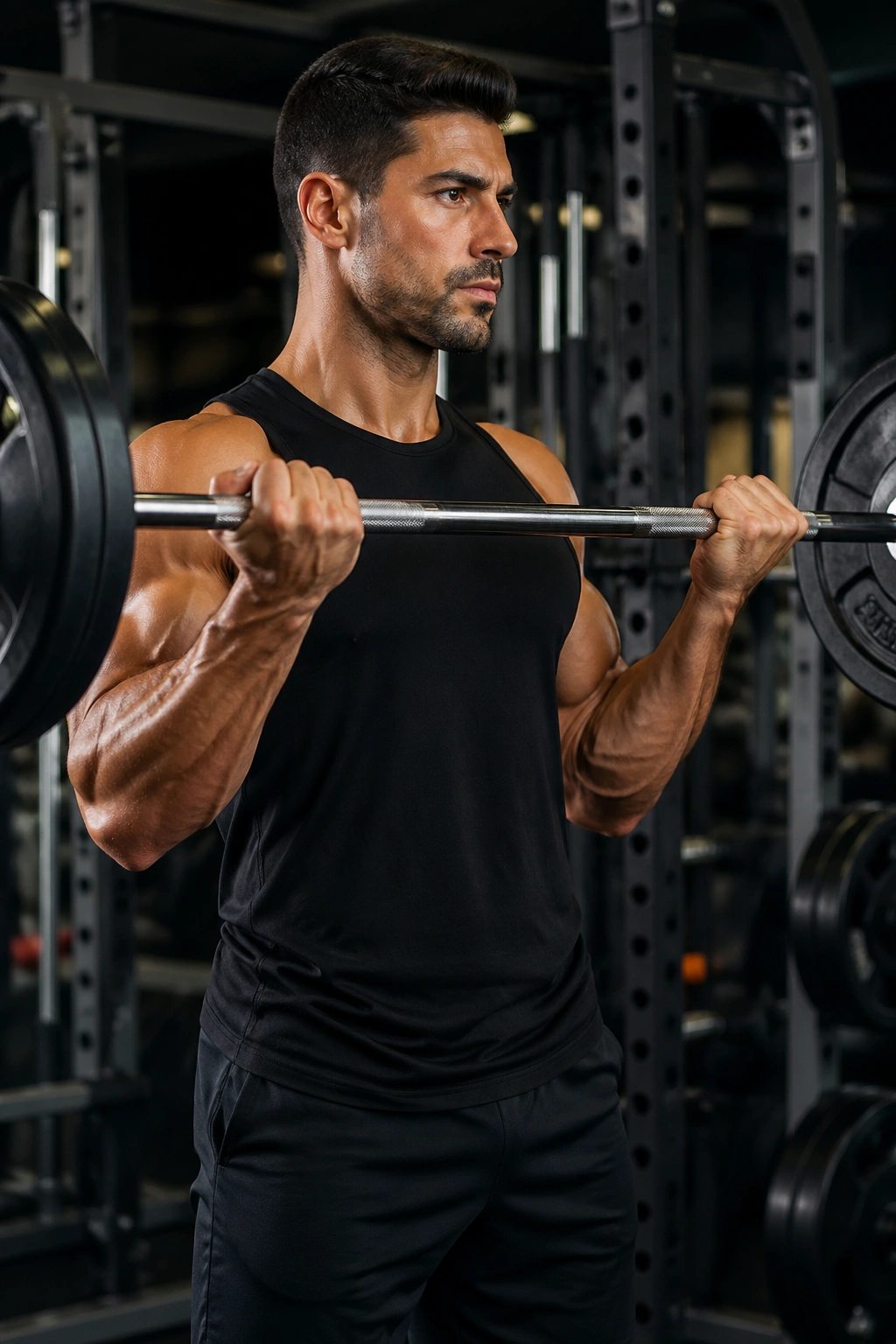
If you want one movement that lets you load the biceps hard without a lot of setup, this is the one. Standing barbell curls have been around forever because they do something useful: they make progressive overload easy to track. Add 5 pounds, keep the form clean, and you know exactly what changed.
Why It Works
A barbell keeps both arms working together, which makes it simple to push the load upward over time. That matters more than people like to admit. The biceps respond well to tension they can’t cheat around, and a standing curl forces you to own the whole rep instead of hiding behind momentum.
It also teaches discipline. No drifting elbows. No giant hip drive. No half-reps that only look hard. If the set turns into a back extension, the biceps have already stopped doing the job.
Technique Cues
- Stand with your feet about hip-width apart.
- Grip the bar just outside shoulder width.
- Keep your elbows close to your ribs, not drifting behind your torso.
- Curl up in a smooth line, then lower for 2 to 3 seconds.
- Stop the set when your lower back wants to help.
3 to 4 sets of 6 to 10 reps is a good place to live here. Use an EZ-bar if a straight bar bothers your wrists. That small swap saves a lot of grumbling.
One sentence matters more than the rest: if your torso starts to lean back, the bar is too heavy.
2. Alternating Dumbbell Curls for Cleaner Arm Symmetry
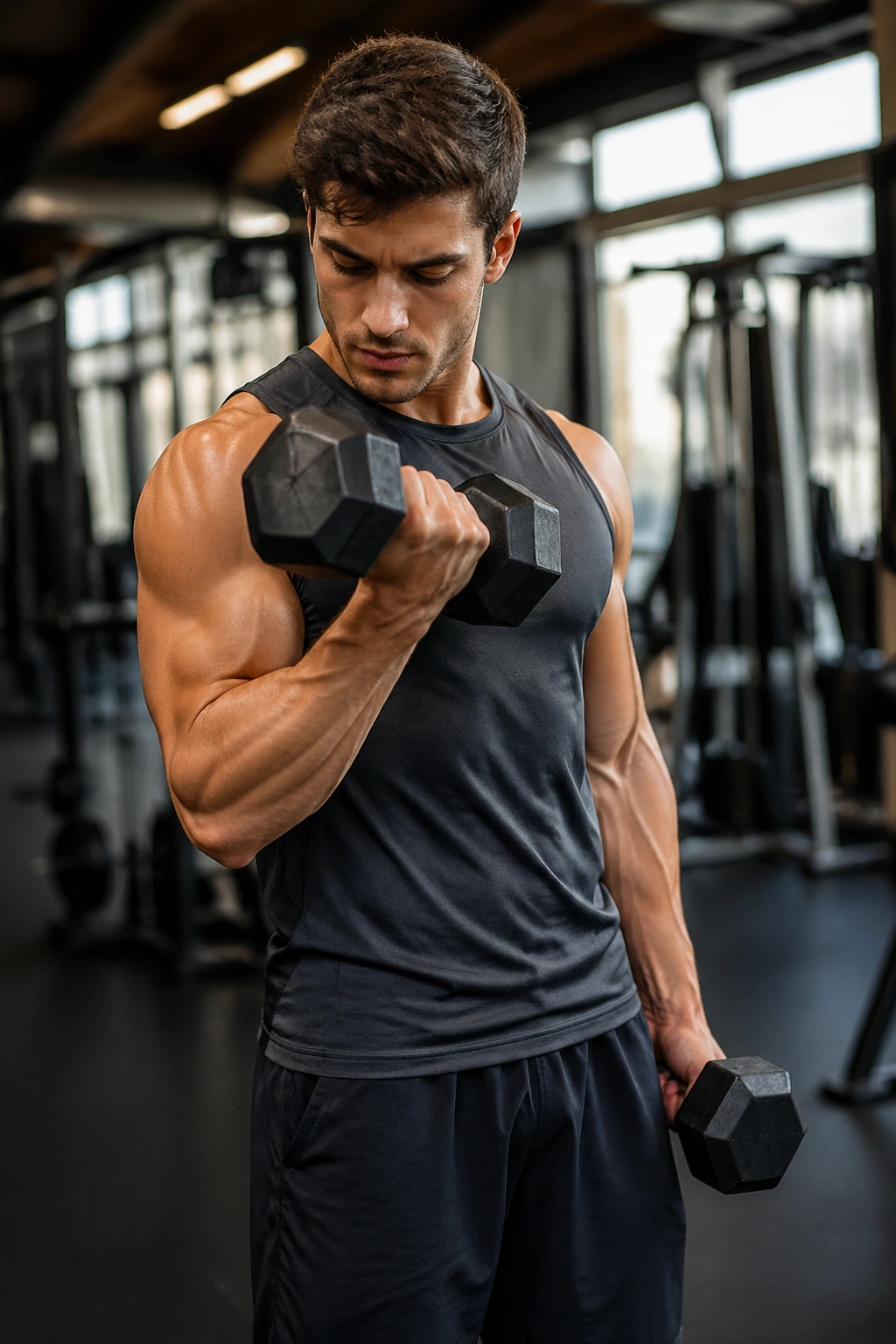
Why do dumbbells matter when a barbell is heavier? Because each arm has to earn its own rep. That sounds simple, and it is, but simple is usually where the good stuff lives.
Alternating curls let you notice side-to-side differences fast. If your right arm always finishes first, you’ll see it. If your left side loses control near the bottom, you’ll feel that too. A bar can hide those little leaks. Dumbbells do not.
A clean alternating curl also gives you a better chance to turn the palm fully up at the top. That supination matters. The biceps are not only elbow flexors; they also help rotate the forearm. If you twist the pinky slightly toward the shoulder at the top, the arm feels shorter and tighter in a good way. Not dramatic. Just honest.
Start with your weaker side and match reps with the stronger one. Do 8 to 12 reps per arm and keep the lowering phase slow enough that you can feel where the weight is, not just where it lands. If one wrist is fussy, the dumbbell version usually feels friendlier than a straight bar.
3. Incline Dumbbell Curls for the Long Head Stretch
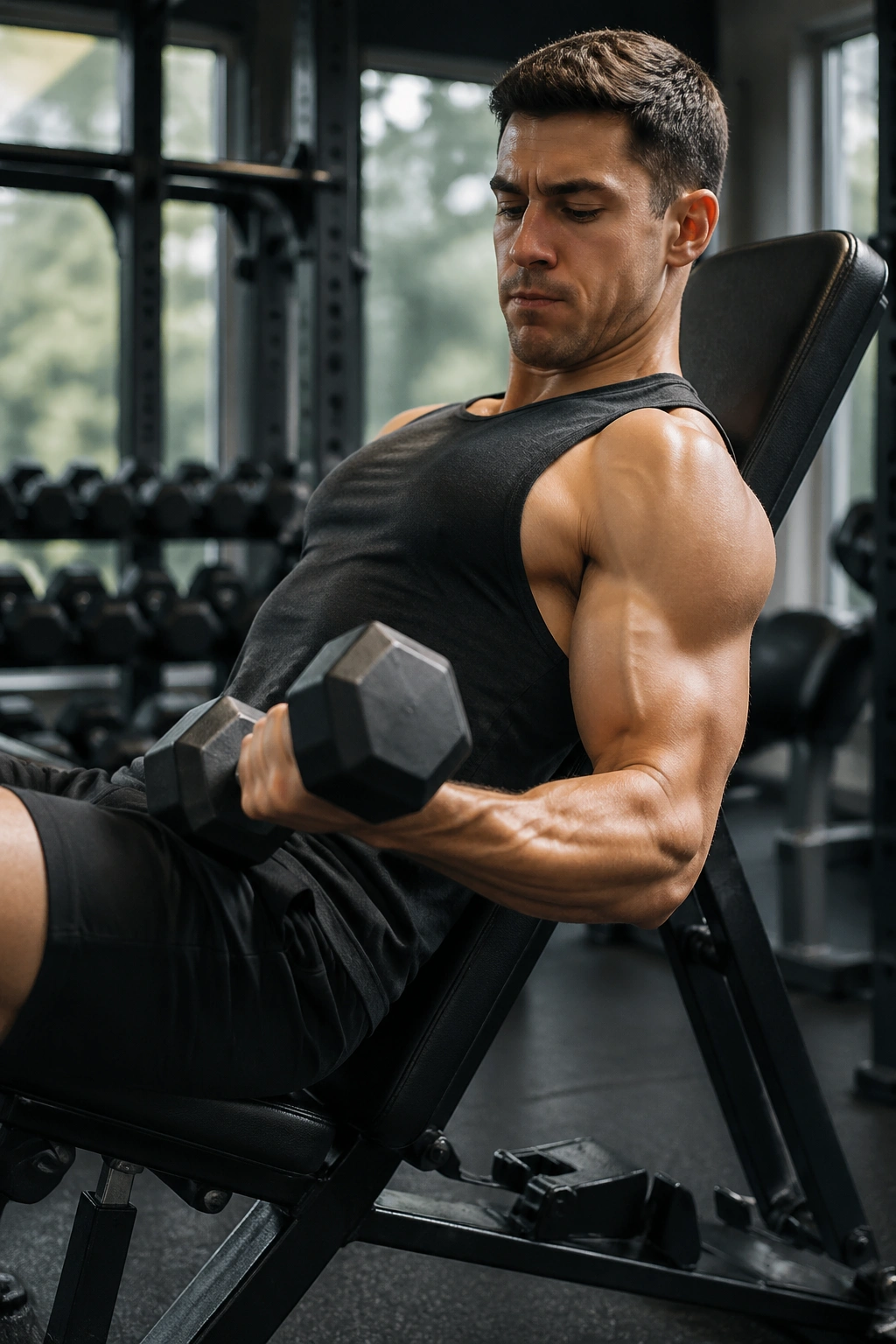
This is where a lot of the visible change comes from. Set a bench to about 45 to 60 degrees, lean back, and let the arms hang behind your torso. That stretched position changes the whole feel of the rep. It also changes which part of the biceps has to work hardest near the bottom.
How to Use It
The long head of the biceps is the part most people talk about when they mention the outside edge of the arm. Incline curls put it on notice because the shoulder is extended and the arm starts from a longer position. You feel the stretch before the weight even moves. Good. That stretch is part of the point.
Use lighter dumbbells than you expect. Seriously. The position is humbling. If you load it like a standing curl, you’ll lose the shoulder position and turn the rep into a shrug-and-swing mess. Keep the upper arms quiet, curl up, and lower until the elbow is close to straight without slamming into a hard lockout.
2 to 4 sets of 10 to 15 reps works well here. Put this near the middle or end of a session, when you can focus on position instead of chasing numbers.
Small detail, big payoff: don’t let the shoulders roll forward at the bottom.
4. Hammer Curls for More Upper-Arm Thickness
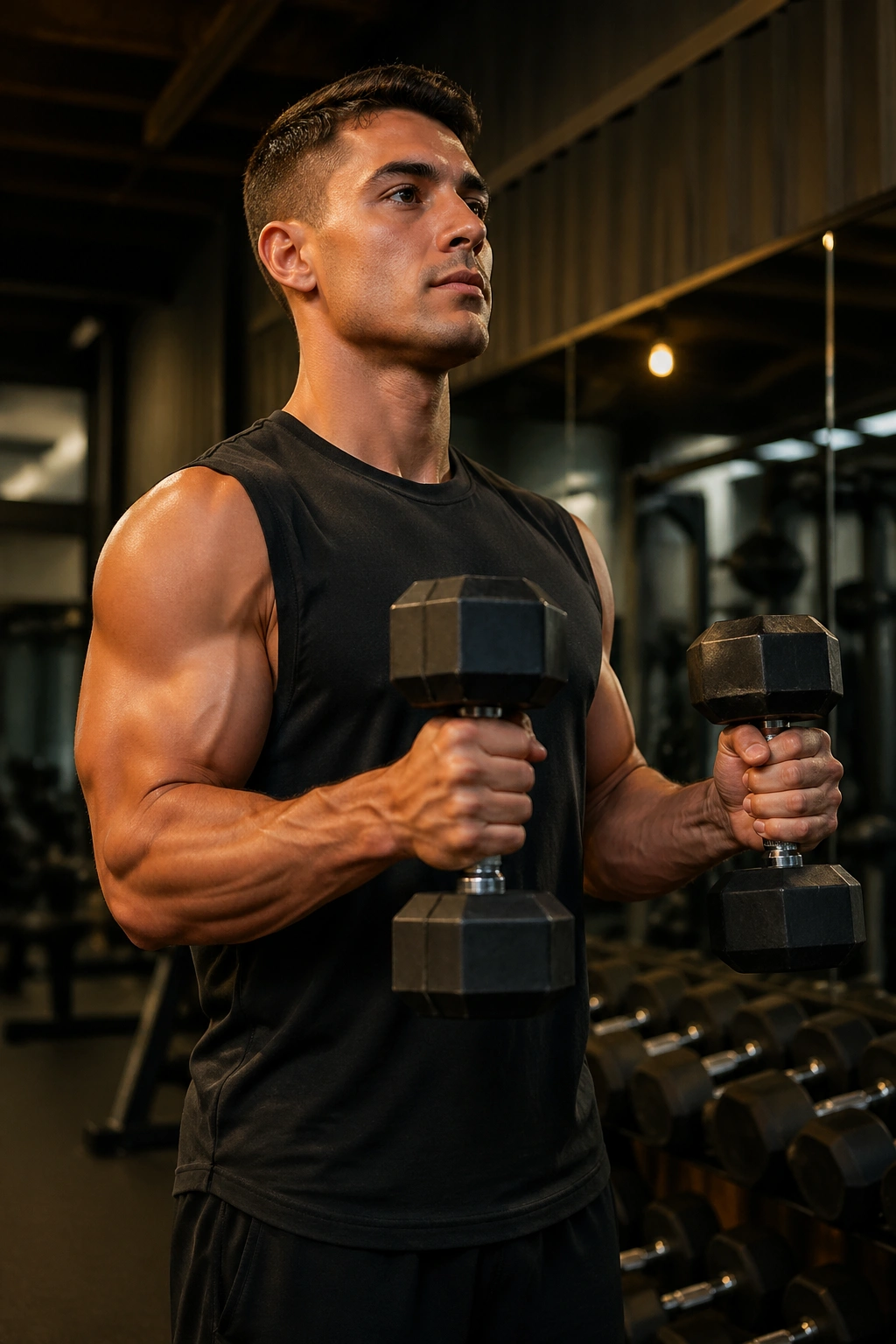
If your arms look narrow even when they flex, hammer curls are probably missing. Neutral grip work hits the brachialis hard, and that muscle sits underneath the biceps. Push it, and the whole upper arm tends to look thicker from the front and side.
That’s the part too many curl plans skip. They chase the biceps peak and ignore the muscle that actually helps fill out the sleeve.
Quick Facts That Matter
- Grip: thumbs up, palms facing in.
- Best tools: dumbbells or a rope on a cable stack.
- Good rep range: 8 to 12 reps.
- Best cue: keep the wrist stacked, not bent back.
- Useful bonus: the forearms get dragged into the work too.
I like hammer curls after a heavier curl or a chin-up session because they don’t beat up the elbows the way some supinated curls can. That neutral grip keeps things calmer for many lifters. If you want a small change that carries a lot of visual payoff, this is it.
No drama. Just thickness.
5. Preacher Curls for Strict Elbow Control
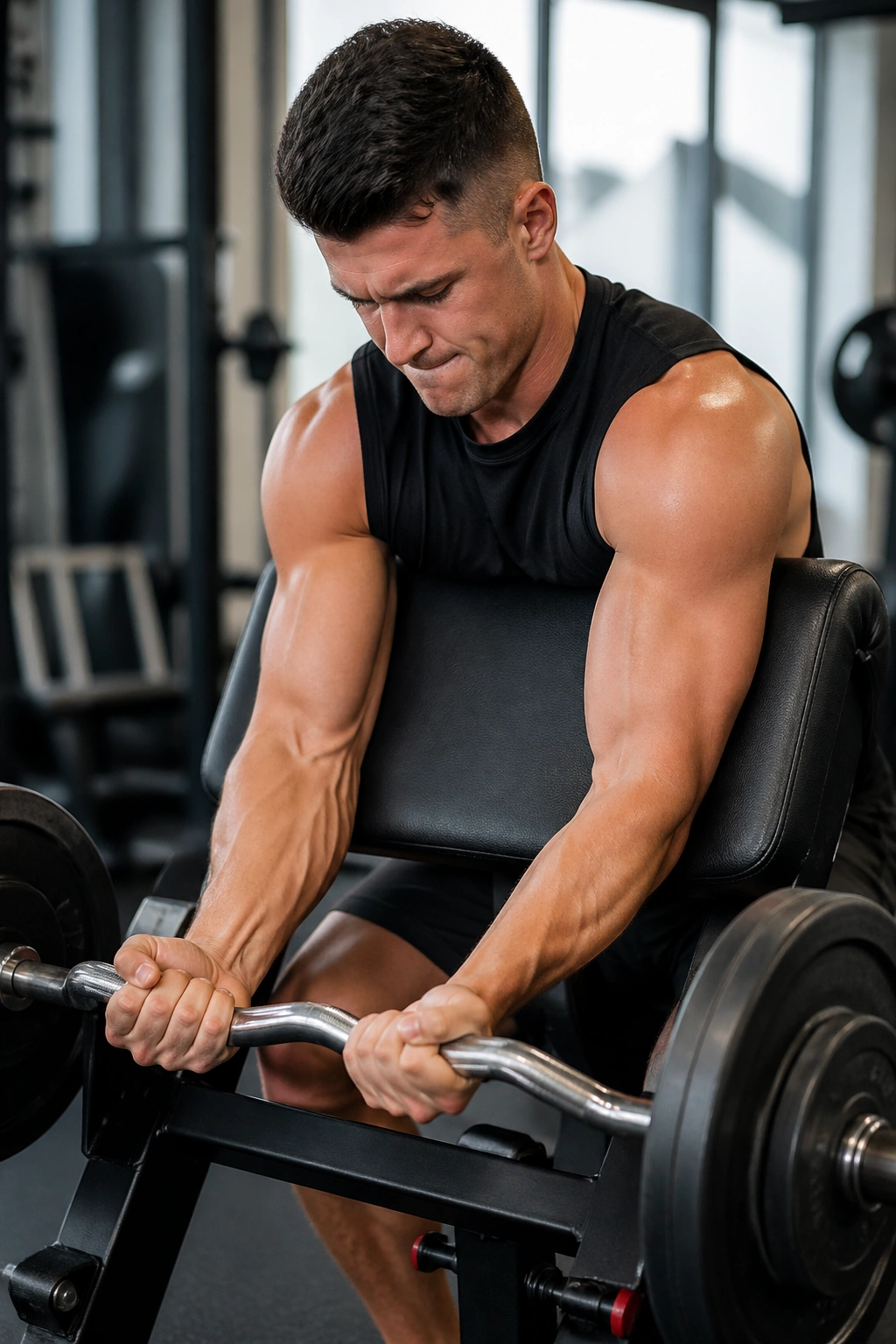
Preacher curls are boring in the best possible way. The pad locks your upper arm in place, which means the set gets stripped down to the part that actually matters: elbow flexion. There’s nowhere to hide. That can feel harsh, and that’s exactly why it works.
A preacher bench also changes the cheating pattern. Standing curls invite hip drive, shoulder roll, and a little front-delt bailout near the top. Preacher curls make that much harder. The biceps have to finish the set without much help from the rest of you.
The catch is the bottom position. If you crash into full extension with a heavy bar, your elbows may hate you. Use a controlled descent and stop just short of a hard, dead stop if the joint gets cranky. An EZ-bar usually feels better than a straight bar for most people. Dumbbells can be even kinder because each arm can find its own groove.
Use 8 to 12 reps with a clean squeeze at the top. Think of the preacher curl as a scalpel, not a hammer. It’s not flashy. It just removes excuses.
6. Cable Curls for Constant Bicep Workouts Tension
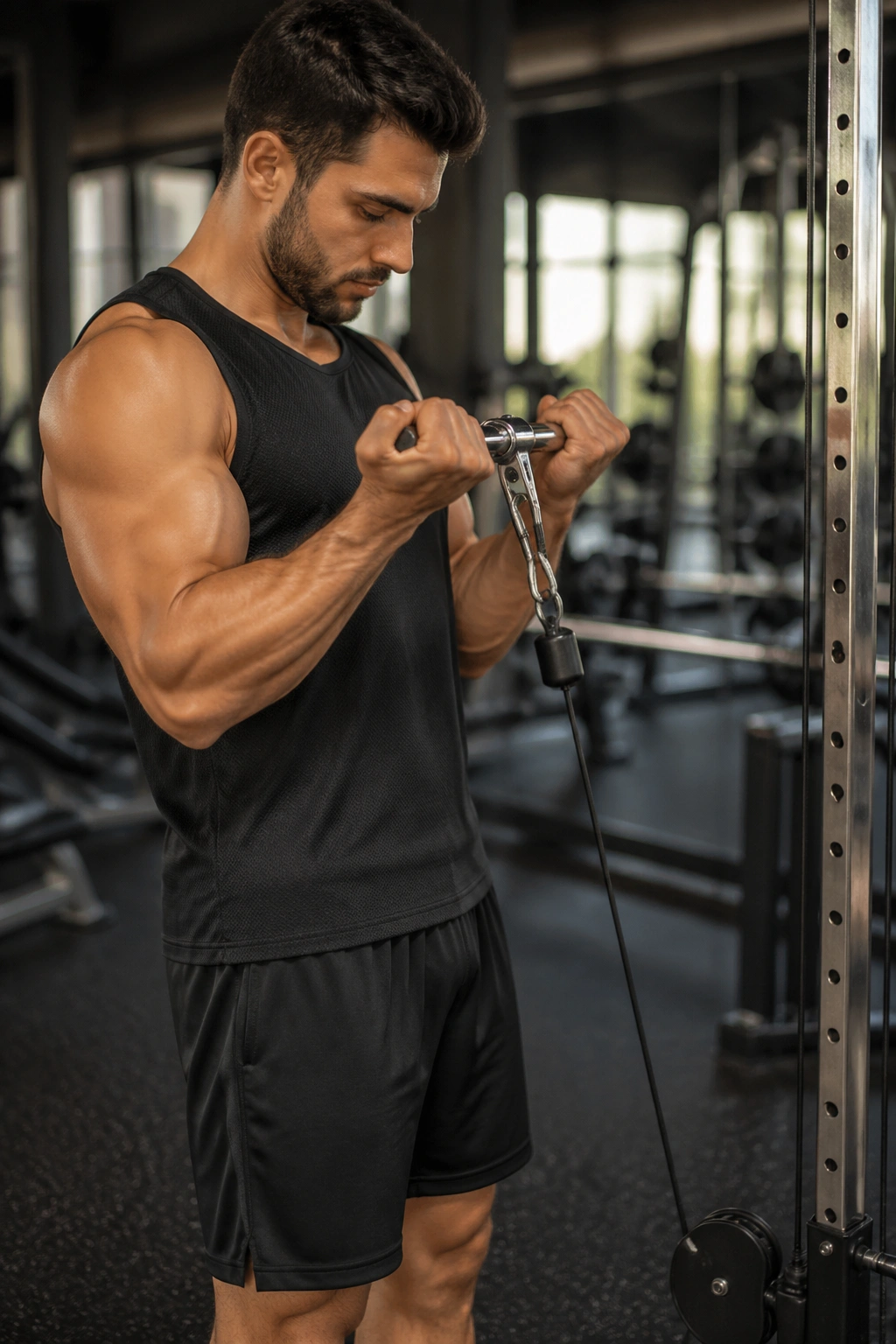
Cable curls feel different because the stack does not give you a free break at the bottom. That alone makes them worth keeping around. With dumbbells, the resistance shifts as the arm moves. With cables, the line of pull stays alive through most of the rep, and the biceps never get to coast.
A low pulley with a straight bar or rope works well. Step a foot or two away from the stack so the weight never fully rests between reps. Keep your chest tall, shoulders down, and elbows pinned in place. If your shoulders drift forward, the cable stops being a curl and becomes a sloppy front raise with a bent elbow.
This is one of my favorite finishers after chin-ups or heavy barbell curls. It gives you the burn without needing scary loads. The motion is smooth, the contraction is obvious, and the pump arrives fast.
3 sets of 12 to 15 reps is plenty here. If you want a slower rep, pause for 1 second at the top and let the cable pull the arms long on the way down. That little pause is rude. It also works.
7. Bayesian Cable Curls for the Long Head
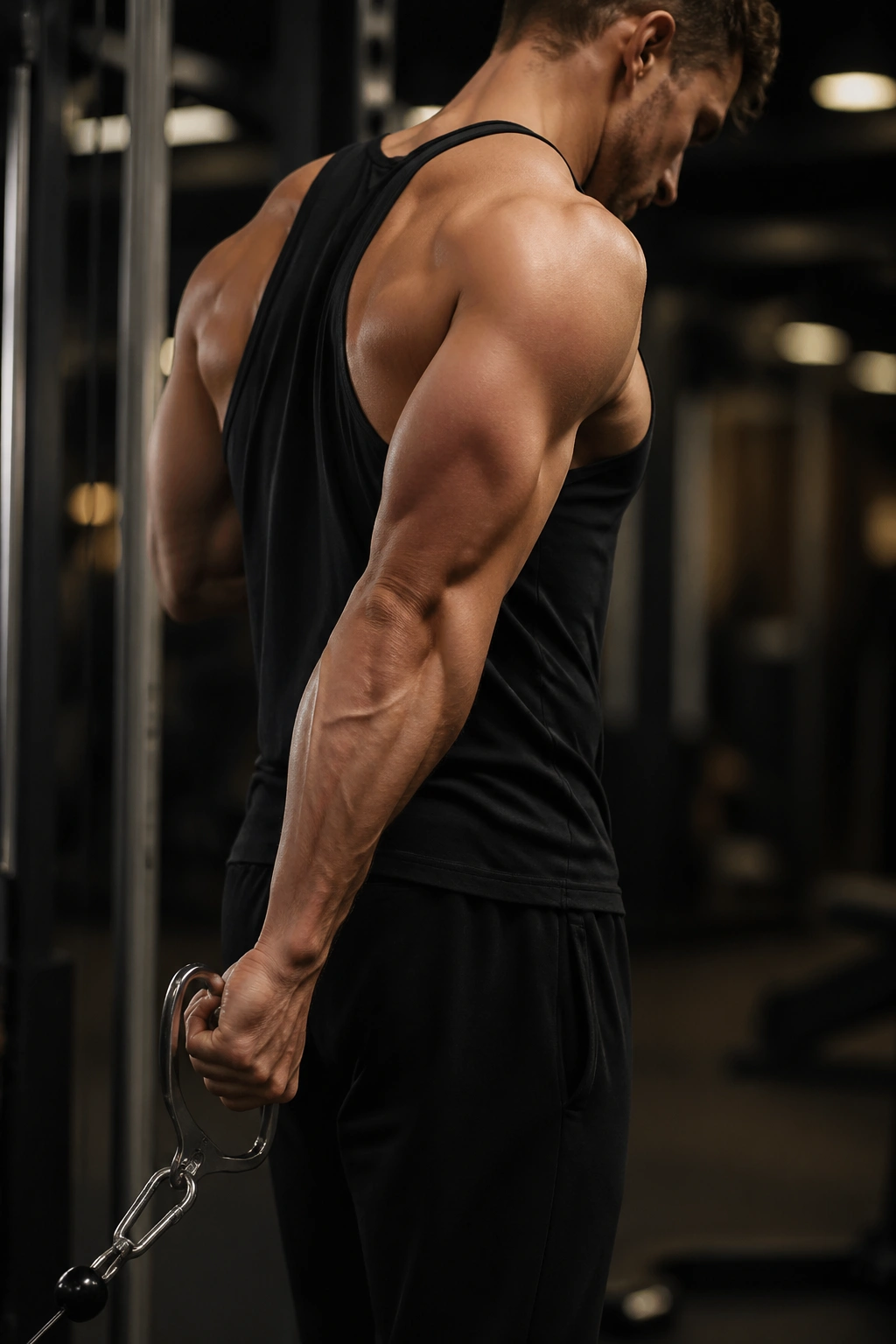
Why does this version feel so different from regular cable curls? Because your arm starts behind your torso, not in front of it. That small change shifts the stress into a stretched position, which is one reason the movement gets a lot of love from lifters who want more shape up top.
How to Use It
Set a low pulley with a single handle. Stand a step or two in front of the stack, then turn so the working arm sits slightly behind your body at the start. The elbow should stay back. The shoulder should stay quiet. Curl without letting the upper arm drift forward to steal the load.
That behind-the-body setup is what makes the rep sting in a useful way. You feel the long head under tension early, not just at the top. Use 10 to 15 reps per arm, and keep the negative slow enough that the cable does not yank you out of position.
This one is great if you want a curl that feels clean but still aggressive. It also pairs well with a more stable movement like a preacher curl or standing barbell curl. Heavy first, stretched work second, pump work last. That order makes sense.
And yes, the name sounds odd. The exercise does not.
8. Chin-Ups for Building Biceps With Your Bodyweight
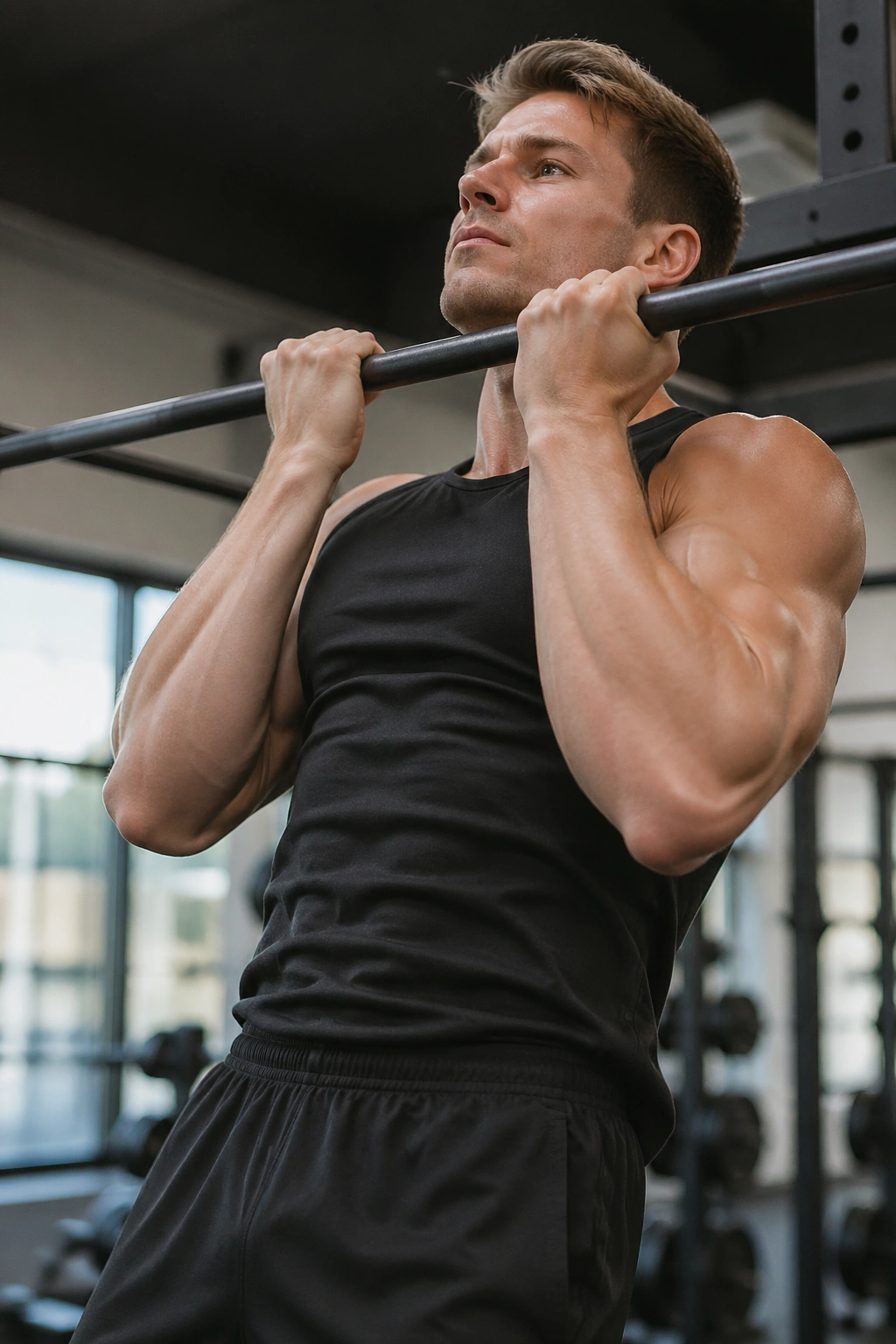
You can build real biceps without touching a curl handle. Chin-ups prove it every time.
Underhand grip chin-ups load the elbow flexors hard, especially if you keep the grip around shoulder width and avoid turning the move into a tiny half-rep from a dead hang. The lats do plenty of work too, which is why this movement earns a place on any upper-body plan that wants arms and back to grow together.
A few cues matter here:
- Use a supinated grip with the palms facing you.
- Start from a controlled dead hang or active hang.
- Drive the elbows down, not the chin forward.
- Keep the ribs from flaring like crazy.
- Add weight once 8 clean reps feel manageable.
That last point matters. Chin-ups are not only for beginners or only for advanced lifters. They scale. Use assistance if needed. Add a belt when bodyweight gets easy. The range stays the same; the load changes.
If I had to keep one compound pull for arm size and upper-back strength, chin-ups would be near the top of the list. They’re brutally efficient. No fluff. No wasted motion.
9. Drag Curls for Strict Heavy Reps
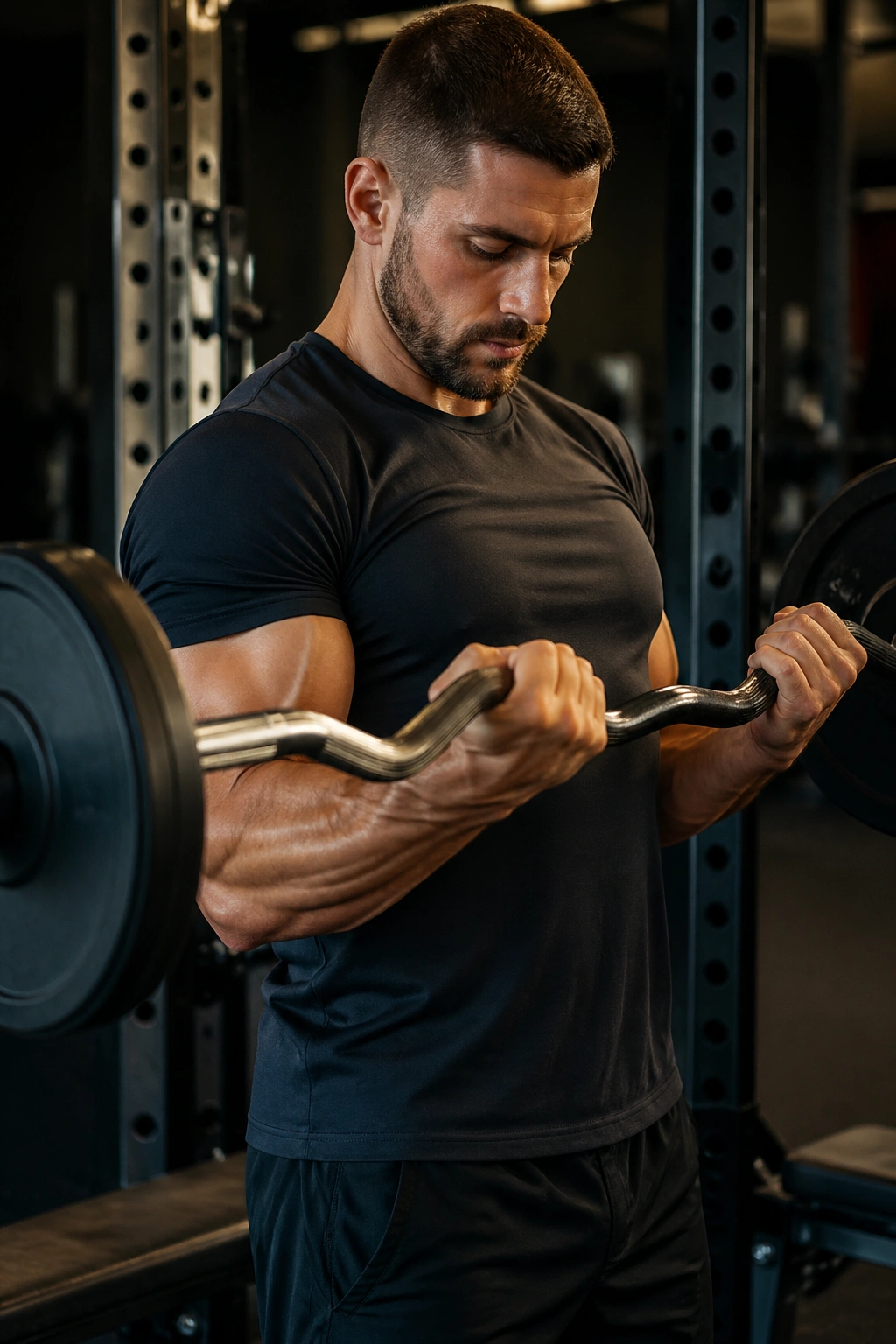
If regular curls turn into a hip-thrust contest, drag curls solve the problem fast. The bar stays close to your torso and travels upward by dragging along the shirt line instead of swinging out in front of you. That changes the leverage and cuts down the cheating.
The elbows drift slightly back, which sounds small, but it matters a lot. You lose the big forward arc that lets the front delts and lower back help too much. The biceps stay under a more direct line of pull, and the rep feels tighter from the first inch to the last.
I like drag curls with an EZ-bar because the wrist angle is friendlier, but a straight bar works if your elbows and wrists tolerate it. Use 8 to 12 reps and keep the bar path close. If the plates start swinging away from your body, the set is already off track.
This is a smart move for lifters who are strong enough to cheat but wise enough to know that cheating is usually stealing from the biceps. Strict doesn’t have to mean tiny. It just means honest.
10. Concentration Curls for Hard Top-End Squeezes
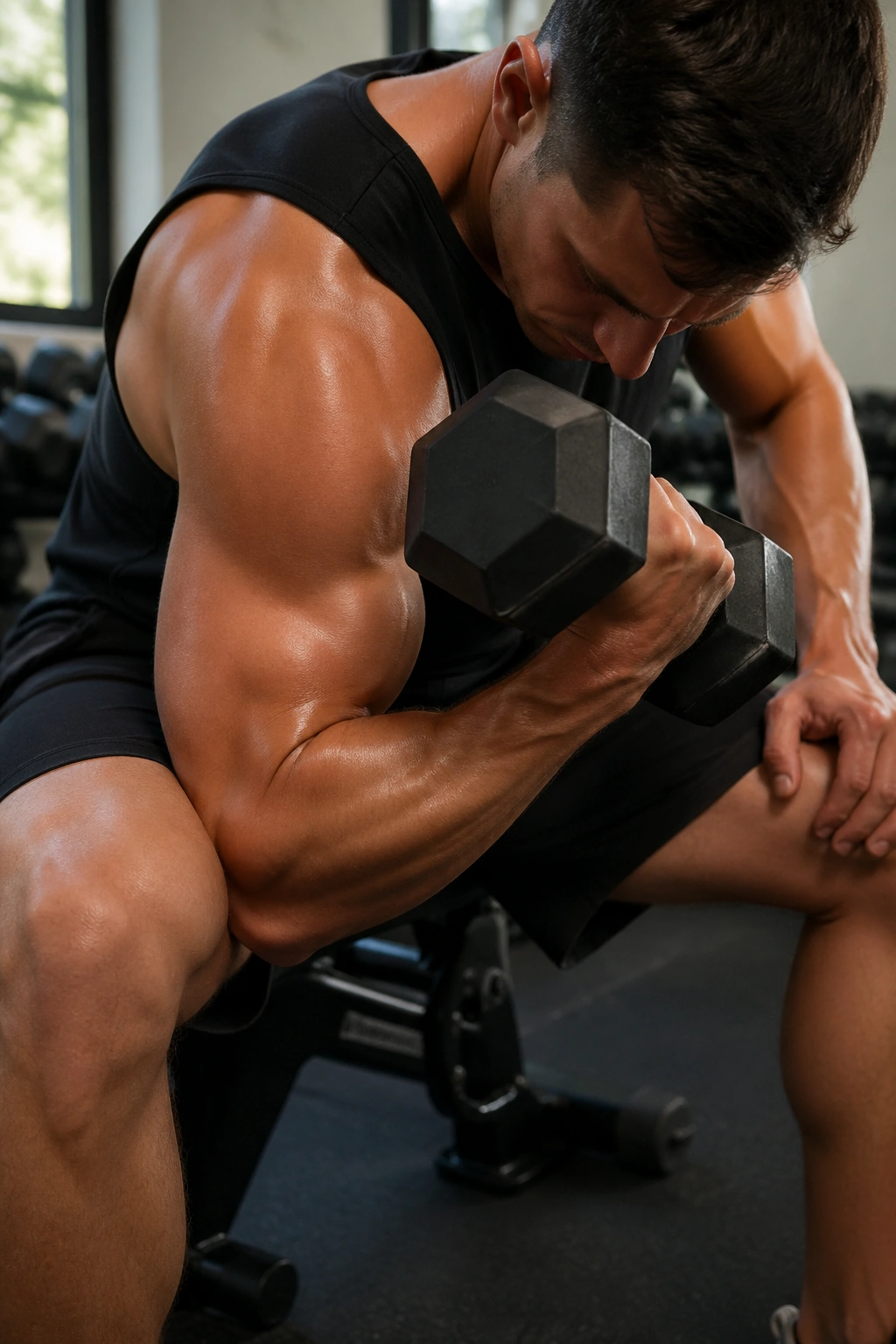
Concentration curls are the quiet little cousin in the family, and they deserve more credit than they get. Sit down, brace the elbow against the inner thigh, and curl without any whole-body drama. That setup strips the movement down to a clean squeeze and a slow lower.
The big value here is awareness. You feel the biceps shorten hard at the top, and if you rush the rep, the exercise gets ugly fast. That’s useful feedback. It teaches you what a controlled curl should feel like when the rest of the body isn’t helping.
No, concentration curls do not magically carve a brand-new peak. Anatomy still matters. But they do a fine job of teaching control, and they’re excellent late in a workout when your bigger lifts are done and you want to finish with something strict.
Use 10 to 15 reps and keep the lowering phase around 3 seconds. One hard squeeze at the top is enough. Don’t bounce the elbow off the thigh. Don’t rush the last five reps. That’s where the set starts to matter.
11. Spider Curls for Chest-Supported Bicep Isolation
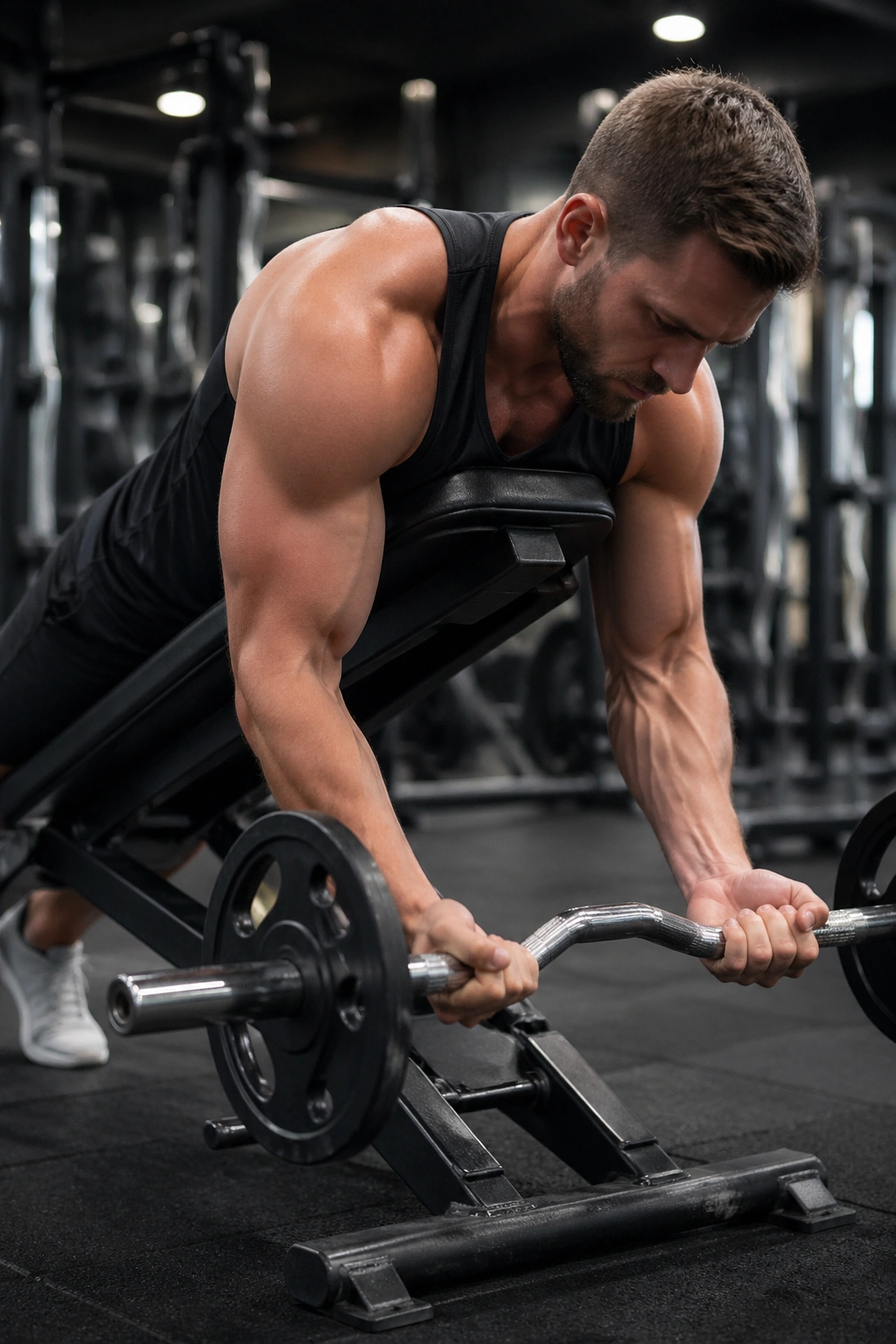
Want strict reps without the preacher bench? Spider curls are the cleaner answer. Set an incline bench to about 30 to 45 degrees, lie chest-down on it, and let the arms hang straight toward the floor. Gravity does the policing for you. It is hard to cheat when your chest is glued to the pad.
Best Setup
- Use an EZ-bar if your wrists prefer it.
- Keep the chest pressed into the bench the whole time.
- Curl until the forearms are nearly vertical.
- Lower under control and avoid shrugging.
- Aim for 10 to 15 reps with a clean squeeze.
What I like about spider curls is the lack of nonsense. There’s no easy way to turn the rep into a standing heave. The movement stays tight, and the biceps do the work from start to finish. That makes them a strong choice when you’re tired, because form tends to hold up better than it does in a standing curl.
They’re also a nice change of pace from preacher curls. Same strict idea, different angle. Small detail. Big difference in feel.
12. Cross-Body Hammer Curls for Bigger Brachialis Muscles
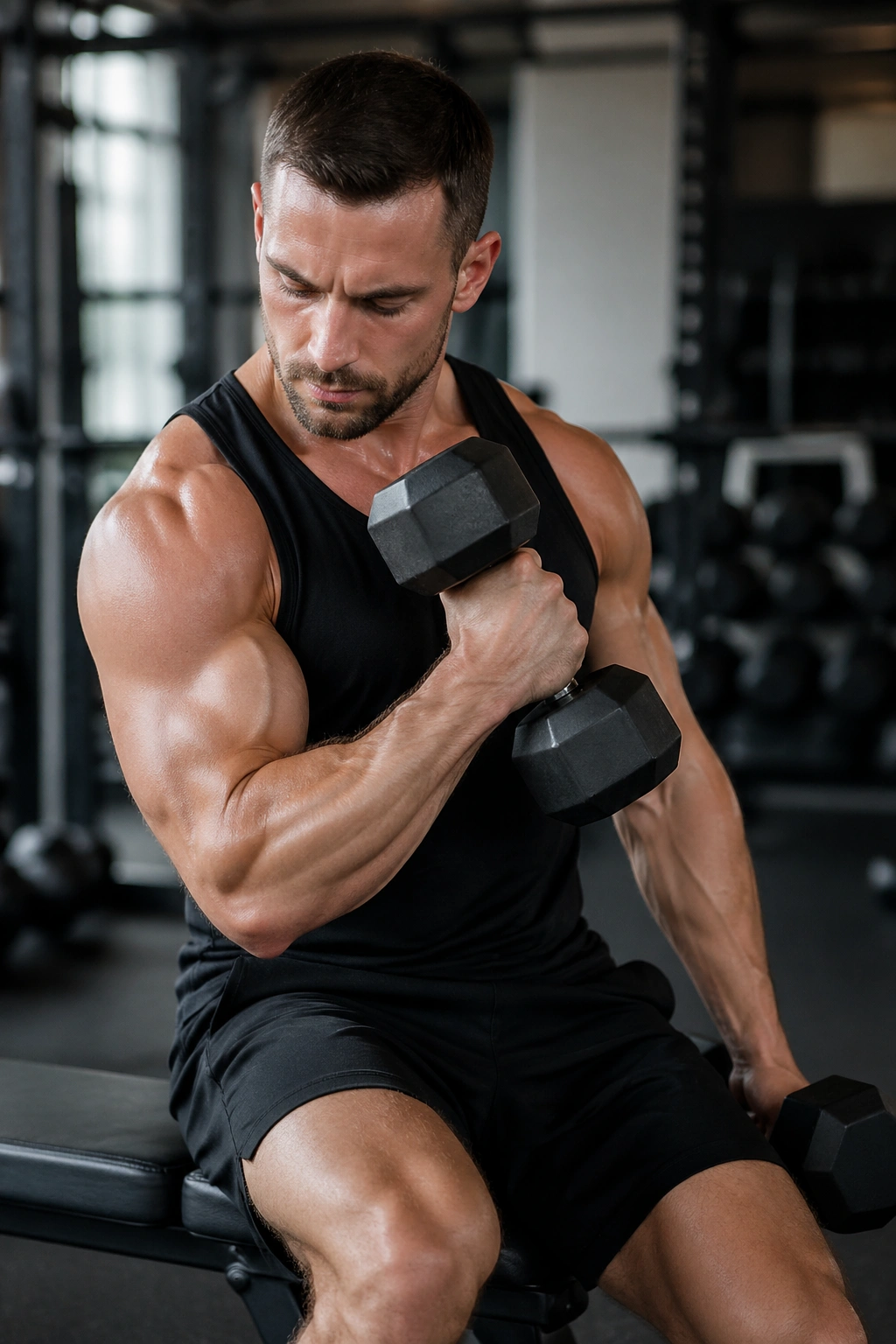
Unlike the regular hammer curl, this version sends the dumbbell across the body toward the opposite shoulder or upper chest. That diagonal path sounds cosmetic, but it changes how the forearm and upper-arm muscles work together. The brachialis gets a lot of attention, and the lift stays friendly to most elbows.
The trick is not to twist your torso to fake the rep. Keep the ribs stacked, the shoulder down, and the wrist neutral. The dumbbell should move under control, not in a little arc that turns into a shoulder shrug halfway up.
This is one of those moves that looks small on paper and feels productive in real life. It’s especially useful if straight curls irritate your wrists or if you want another neutral-grip option after rows, chins, or pressing. The arm gets trained from a slightly different line, which helps round out the look.
Use 3 sets of 10 to 12 reps per arm. Slow the lowering phase a bit and let the forearm settle before the next rep. The burn comes on fast. Good. That means it’s doing its job.
13. Reverse Curls for Biceps and Forearm Strength
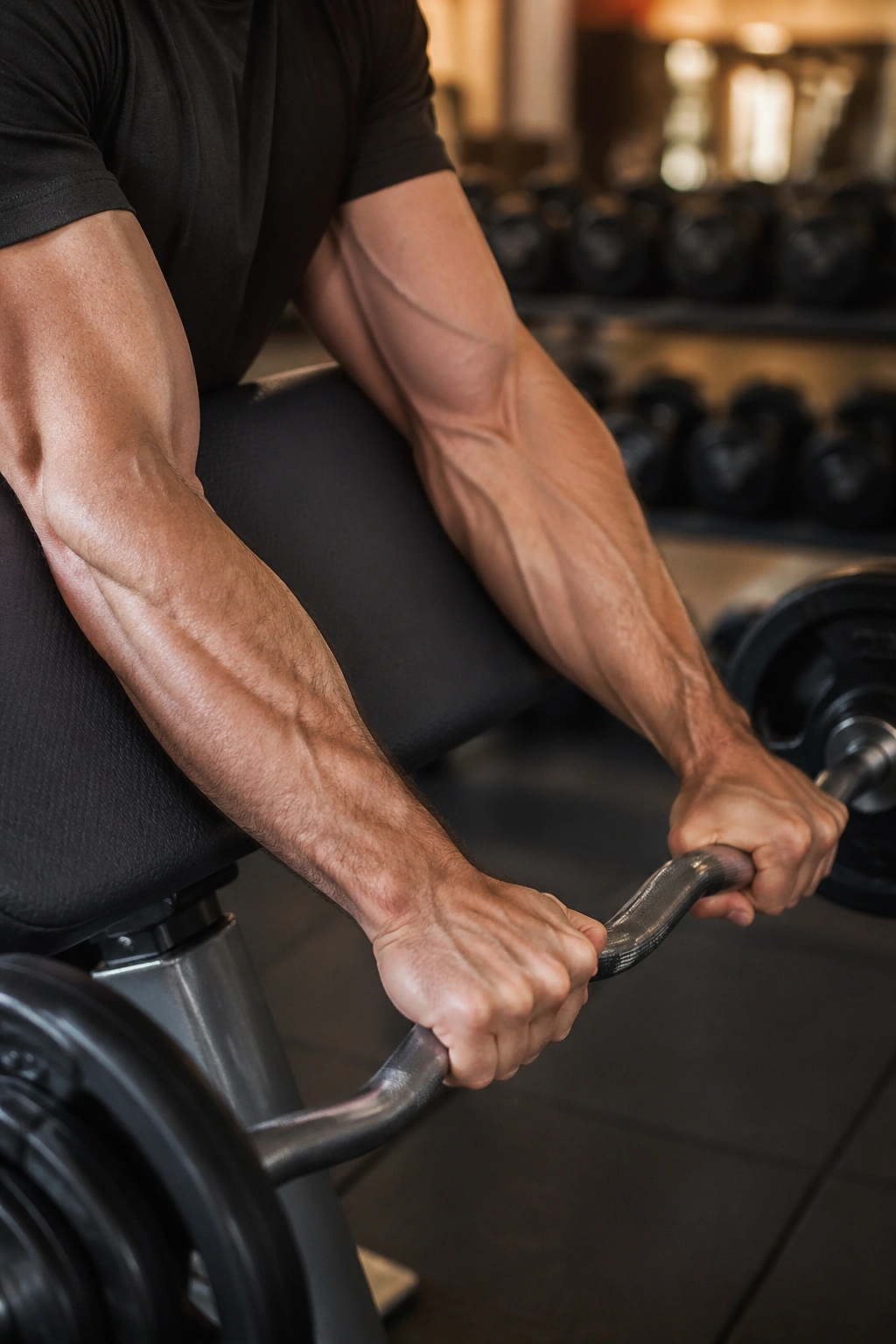
Reverse curls are humbling. That’s part of their charm.
The overhand grip shifts more of the work onto the brachioradialis and brachialis, while the biceps still chip in. That makes the movement a smart choice when you want thicker-looking forearms and more elbow strength, not just a prettier flex in the mirror. People who ignore reverse curls often end up with arms that look strong from one angle and thin from another.
What to Watch For
- Use an EZ-bar if wrist comfort matters.
- Keep the wrists stacked; do not let them fold back.
- Choose lighter weight than your regular curls.
- Move the bar with the elbows, not with a shoulder swing.
- Lower slowly so the forearms stay loaded.
That lighter-weight part matters more than most lifters expect. Reverse curls punish ego fast. The grip weakens before the biceps do, and that’s fine. The whole point is to train the arm in a way the normal curl misses.
If your forearms look underdeveloped beside your upper arms, this is one of the fastest fixes. Not glamorous. Effective.
14. Zottman Curls for Curling and Lowering in One Move
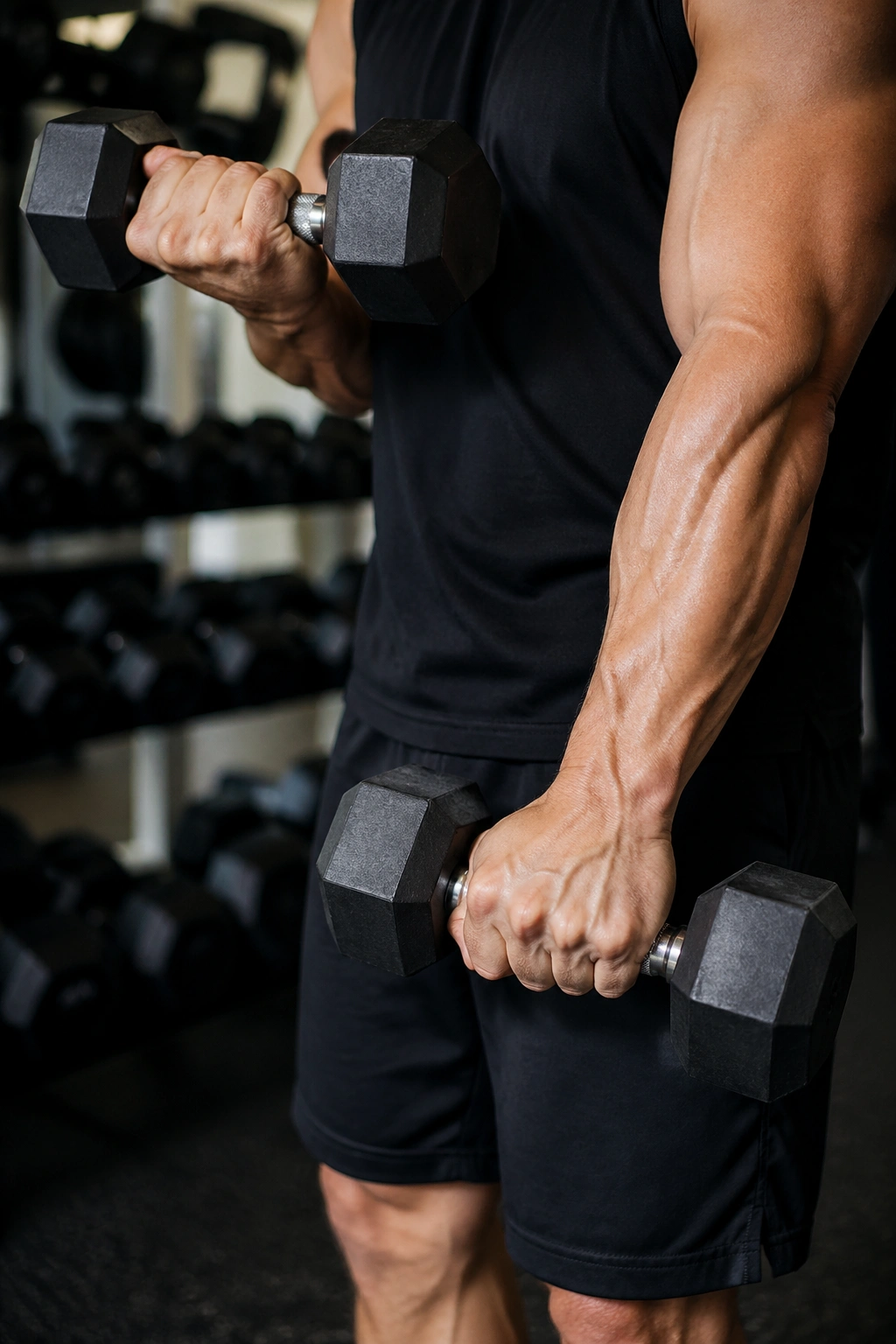
Old-school lifters used this one for a reason: it works on the way up and the way down. Curl the dumbbells with a supinated grip, rotate at the top, then lower with the palms facing down. That eccentric pronated lowering is where the forearms start to complain.
And that complaint is useful.
Zottman curls are basically a two-for-one deal. The biceps take the concentric half, the forearms get hammered on the eccentric half, and the whole movement teaches you to control the wrist instead of letting it flop around. Use a lighter pair than you would for a plain dumbbell curl. If the dumbbells are too heavy, the rotation gets sloppy and the lowering phase turns into a drop.
A smooth version looks like this: curl up for 1 to 2 seconds, rotate at the top, then lower for 2 to 3 seconds. That’s enough. You do not need to race. In fact, racing usually ruins the point.
Use 8 to 12 reps and give yourself a minute if the forearms are talking back. This one feels old-fashioned because it is. That does not make it outdated.
15. Resistance Band Curls for Home Bicep Workouts
Bands are not flashy, and that’s fine. They’re useful in a way that matters more than looks. Resistance rises as the band stretches, so the top of the curl gets harder instead of easier. That’s the opposite of what happens with many free-weight curls, and it gives the biceps a different kind of challenge.
Set a band under your feet or anchor it low to a door. Curl with the elbows tucked, then squeeze hard for 2 seconds at the top. High reps work well here — 15 to 25 reps is a smart range — because the band is easier to control with a little more volume. If you want a fast finisher, do two rounds with almost no rest. You’ll feel it.
Bands are also a good option when your elbows are irritated from heavier curls or chin-ups. The resistance curve feels smoother, and the joints usually get less bark from the movement. They’re not a replacement for heavier work if size is the only goal, but they’re a smart way to keep training when you need a lighter touch.
Use them for travel, for a home setup, or for the last piece of a session when the room is quiet and your arms are already cooked. Simple. Honest. Hard enough to matter.
