



Forward shoulders show up fast. Spend enough hours sitting, pressing, carrying bags, or staring at a screen, and the upper back starts to feel lazy. Dumbbell back workouts for posture and strength are the kind of training I keep coming back to because they do two jobs at once: they build the lats, rhomboids, rear delts, and traps, and they teach your shoulder blades to move with control instead of pinching, shrugging, or drifting forward.
That matters more than people think. Posture is not about standing stiff like a statue. It’s about having enough strength and control to sit, hinge, reach, row, and carry without your neck doing the work your back should be doing. A good dumbbell row should leave your upper back tired. It should not turn into a low-back survival drill.
The nice part is that dumbbells give you options. You can train one side at a time, support your chest, change your grip, slow the lowering phase, or load carries that make your trunk work hard without needing a machine. If a movement feels sloppy, the fix is usually simple — reduce the weight, clean up the setup, and make the reps honest.
And that’s the real theme here. Heavy isn’t always better. Controlled is better.
1. Bent-Over Dumbbell Row for a Stronger Upper Back
This is the classic for a reason. A well-done bent-over dumbbell row hits the lats, rhomboids, mid traps, and rear delts in one shot, and it teaches your torso to stay braced while your arms pull. If your upper back is weak, this is one of the first places I’d start.
What to Watch For
Your torso should hinge forward until it’s roughly 30 to 45 degrees above parallel, not folded like a lawn chair. Keep a soft bend in the knees, brace your abs, and row the dumbbells toward your hip line rather than straight up toward your shoulders. That little angle matters. It keeps the lats involved instead of turning the movement into a shrug.
- Use 3 to 4 sets of 6 to 10 reps.
- Lower each rep for 2 to 3 seconds.
- Pause for 1 count at the top.
- Stop the set when your neck starts craning forward.
One clean row beats three messy ones.
If the lower back burns out first, the dumbbells are too heavy or your rib cage is flaring. Drop the weight, reset your brace, and think about pulling your elbows back rather than yanking with your hands.
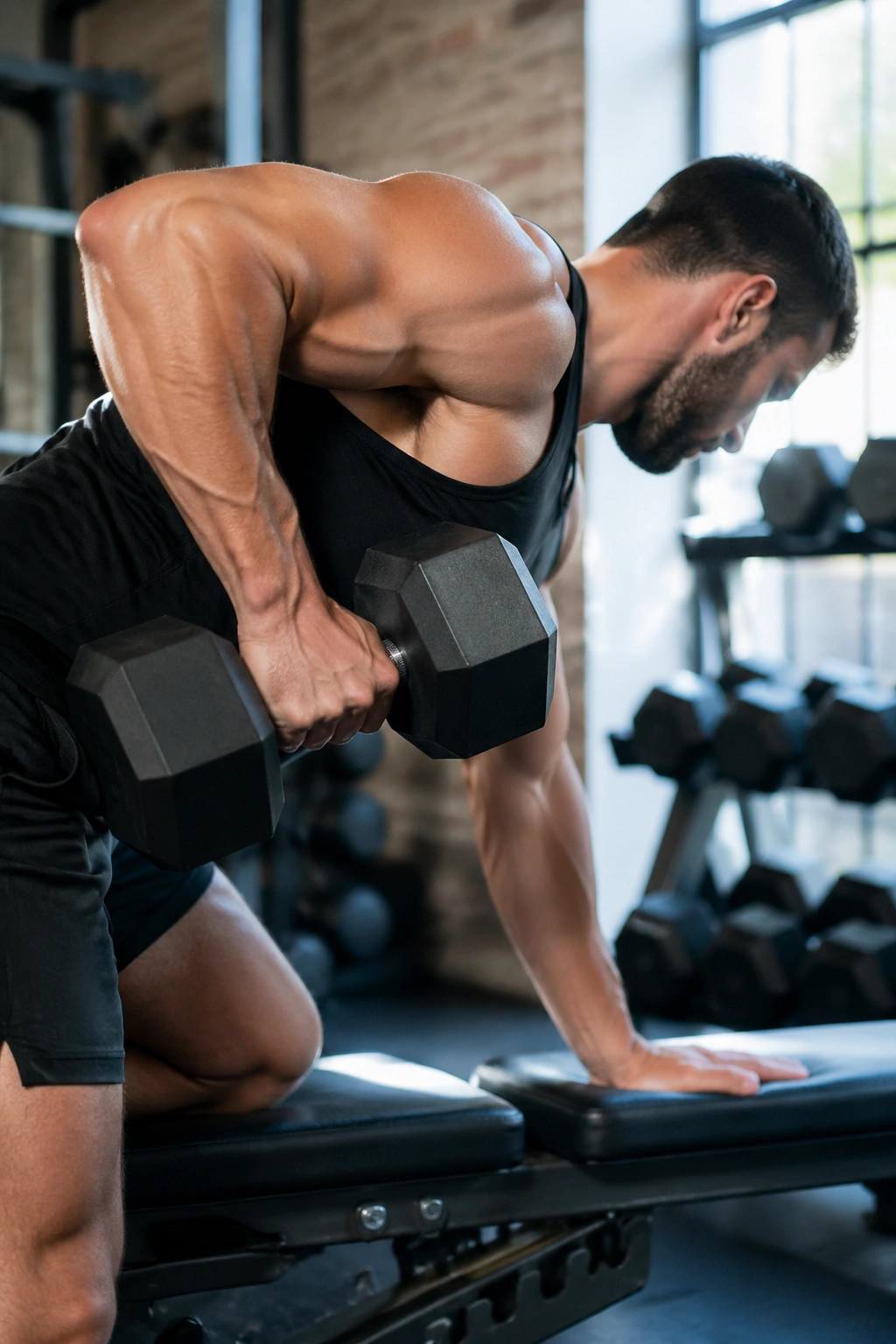
2. Single-Arm Dumbbell Row to Clean Up Left-Right Imbalances
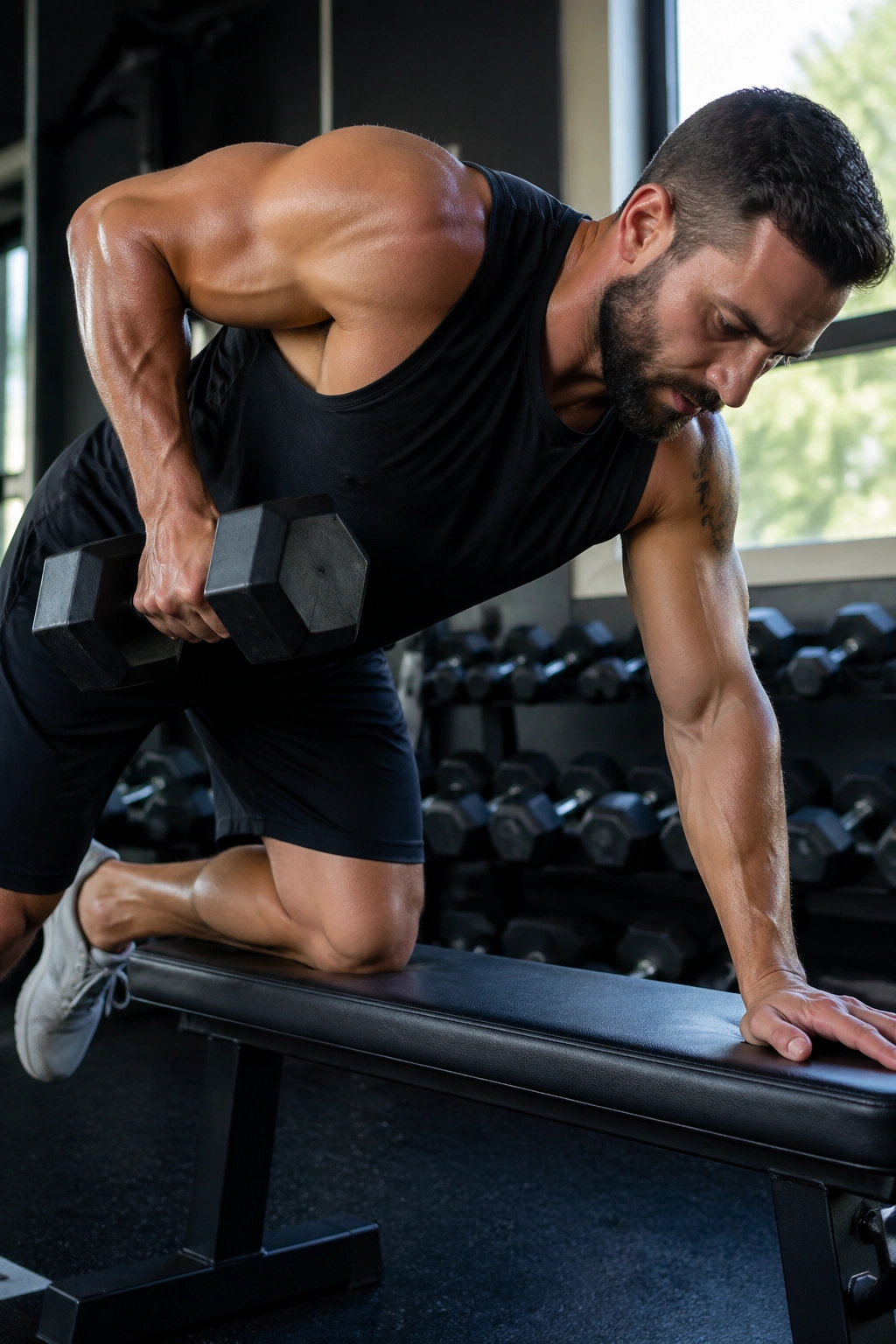
A one-arm row is brutally useful. It lets you feel the working side without the other arm stealing the rep, and it gives your torso a chance to stay square instead of twisting through every pull. That makes it a quiet little posture fix.
The setup is easy: brace one hand on a bench, plant the opposite foot on the floor, and let the dumbbell hang straight down. Pull the elbow toward your back pocket, not up toward your ear. That path recruits the lat and lower lat fibers better, which is one reason this move carries over so well to both strength and shoulder position.
Why It Tends to Feel Cleaner
A single-arm row removes a lot of cheating. You can’t hide a weak side behind a stronger one, and you can’t lean into the rep as easily. The result is a tighter pull and a better sense of how your shoulder blade should travel.
- Try 8 to 12 reps per side.
- Keep the free shoulder from collapsing forward.
- Let the weight hang for half a second at the bottom.
- Match the reps side to side, even if one side feels easy.
This one is especially good if one shoulder sits a little higher than the other. That’s common. Fixing it takes time, but the one-arm row is one of the better places to start.
3. Chest-Supported Dumbbell Row When the Lower Back Gets Tired
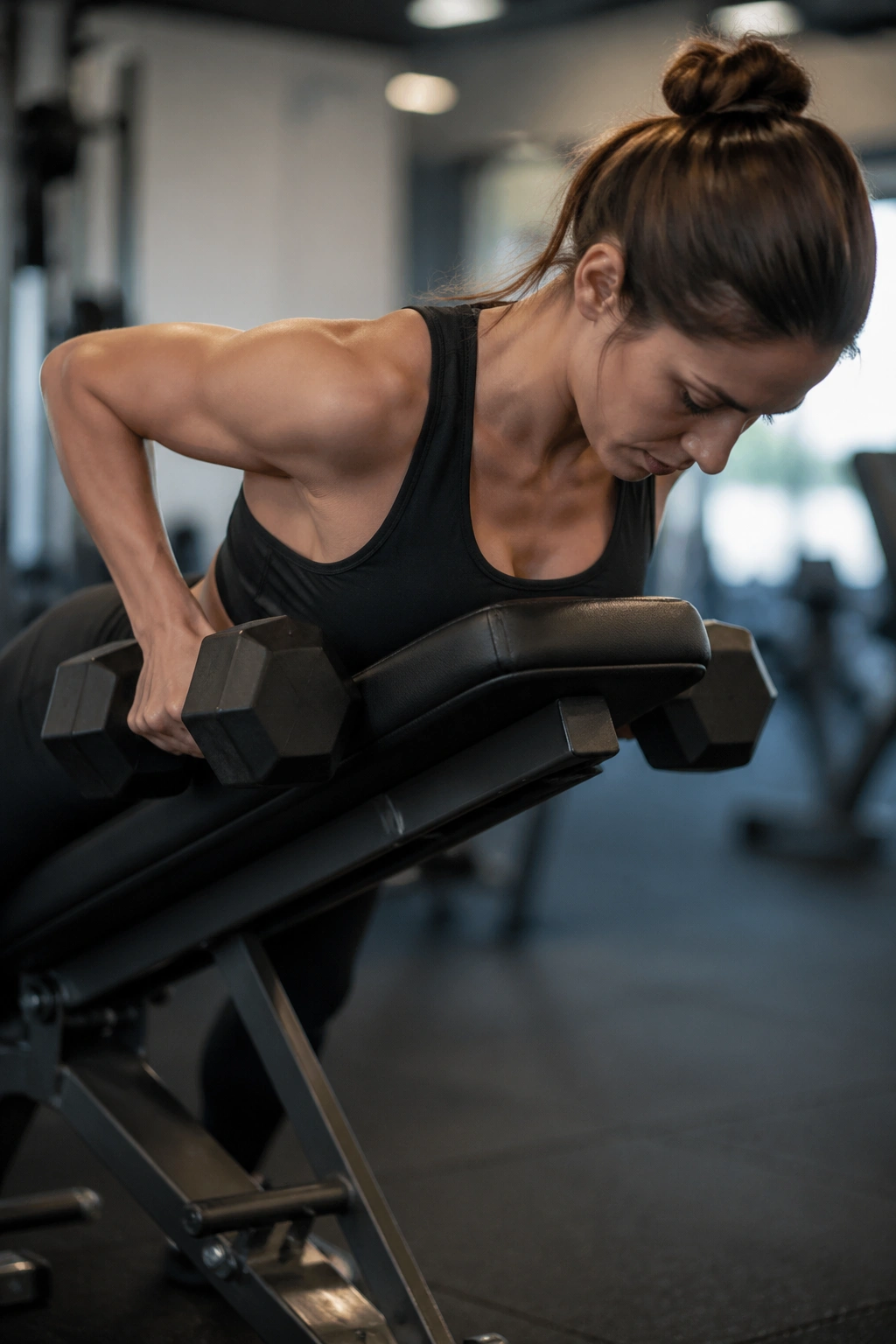
Why do chest-supported rows feel so good? Because they take the lower back out of the argument and let the upper back do the work it was supposed to do in the first place. That makes them a gift for anyone whose hinge gets shaky when fatigue sets in.
Set an adjustable bench to about 30 to 45 degrees, lie face down on it, and let the dumbbells hang. Pull the elbows back until the weights reach the line of your ribs. Your chest stays glued to the pad, which means you can focus on squeezing the shoulder blades together without trying to balance the whole body at the same time.
How to Use It
This is one of the best row variations for higher reps. The support lets you keep the motion clean even when the set gets uncomfortable, and that matters if you’re chasing posture work instead of just moving weight around.
- Use 3 sets of 10 to 15 reps.
- Keep the chin slightly tucked.
- Use a neutral grip or a slightly angled grip.
- Stop just short of shrugging at the top.
If your gym has a pad that’s too low, stack a plate or set the bench a little steeper. Tiny setup changes make a big difference here. And if your lower back has been complaining, this is one of the first back moves I’d put on the menu.
4. Dumbbell Reverse Fly for Rear Delts That Support Better Posture

People swing reverse flies like they’re trying to start a lawnmower. That’s not how they work. The move is small, controlled, and lighter than most lifters want it to be. The target is the rear delt and the upper back around the shoulder blades, not momentum.
A reverse fly works best when the torso is stable and the arms move on a wide arc. Hinge at the hips or use a chest-supported bench, soften the elbows, and raise the dumbbells out to the side until your hands are about in line with your shoulders. Stop before you shrug.
The feeling should be more “upper back squeeze” than “big lift.” That’s the point. Rear delts help keep the shoulders from drifting forward, and they get ignored all the time because people use too much weight and turn every rep into a fling.
- Use 12 to 20 reps with light dumbbells.
- Keep a soft bend in the elbows.
- Move slowly on the lowering phase.
- Think about spreading your shoulder blades, not pinching them hard.
If the dumbbells need a big swing to move, they’re too heavy. No drama. Go lighter and make the reps clean.
5. Dumbbell Romanian Deadlift for the Whole Posterior Chain
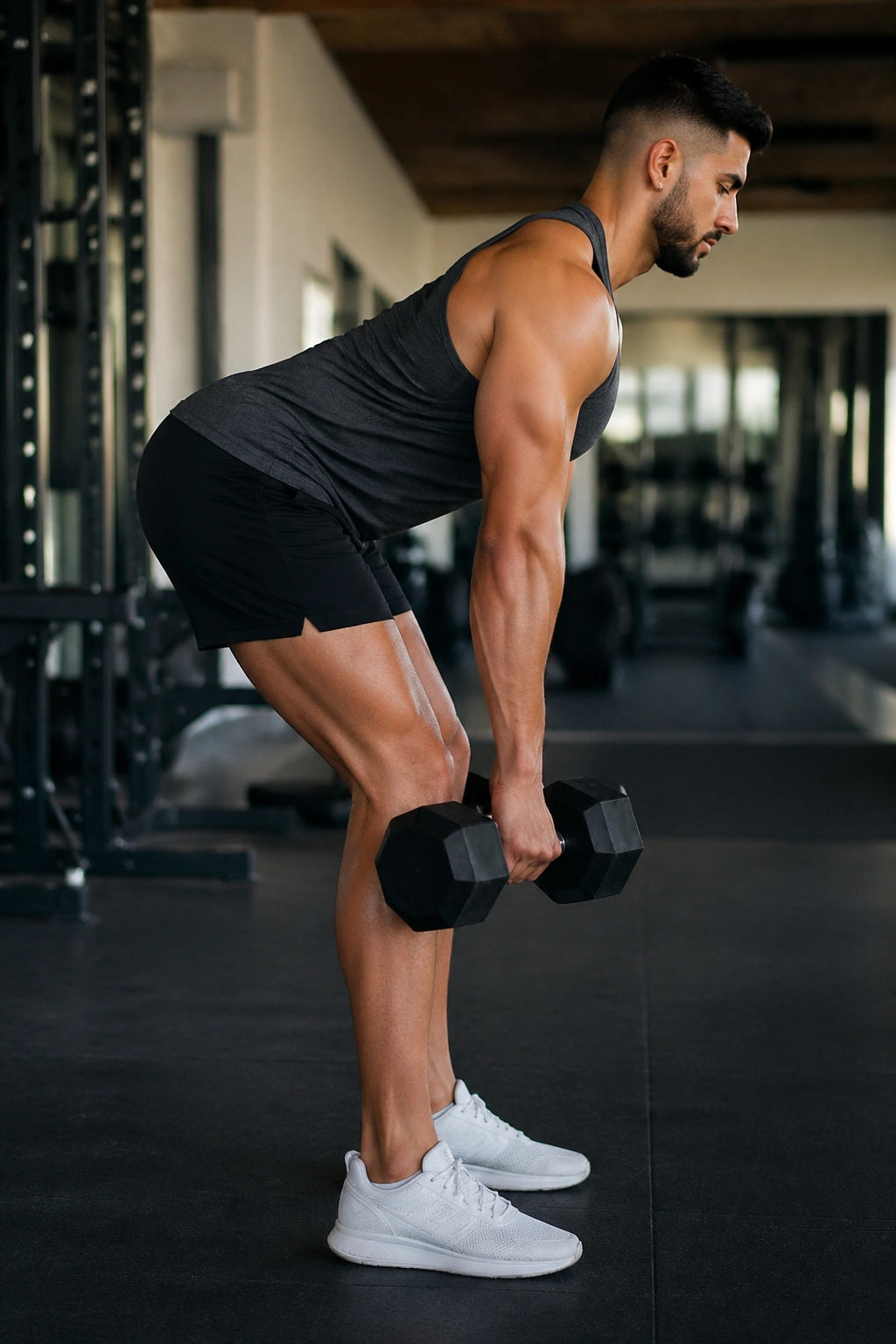
This one is not just a leg move. A dumbbell Romanian deadlift trains the spinal erectors, lats, glutes, hamstrings, and the whole trunk brace that keeps your spine stacked when you move under load. For posture and strength, that combination matters.
Stand tall with the dumbbells in front of your thighs. Unlock the knees a little, then push the hips back as if you’re closing a car door with your backside. The weights should slide down the legs, not drift away from them. When the hamstrings stretch and your torso reaches its lowest controlled point, stop. Then stand back up by driving the hips forward.
One sentence is worth repeating here: do not chase depth at the expense of shape.
A lot of people think the RDL is about touching the floor. It isn’t. It’s about loading the hinge while the spine stays long and the ribs stay down. If the lower back rounds, you’ve gone too far. If the dumbbells drift out in front, you’ve turned the lift into a lever fight.
Use 6 to 10 reps for strength, or 8 to 12 if you want a little more control and muscle fatigue. Either way, the descent should feel deliberate. That’s where the value is.
6. Dumbbell Pullover for Lats and Ribcage Control
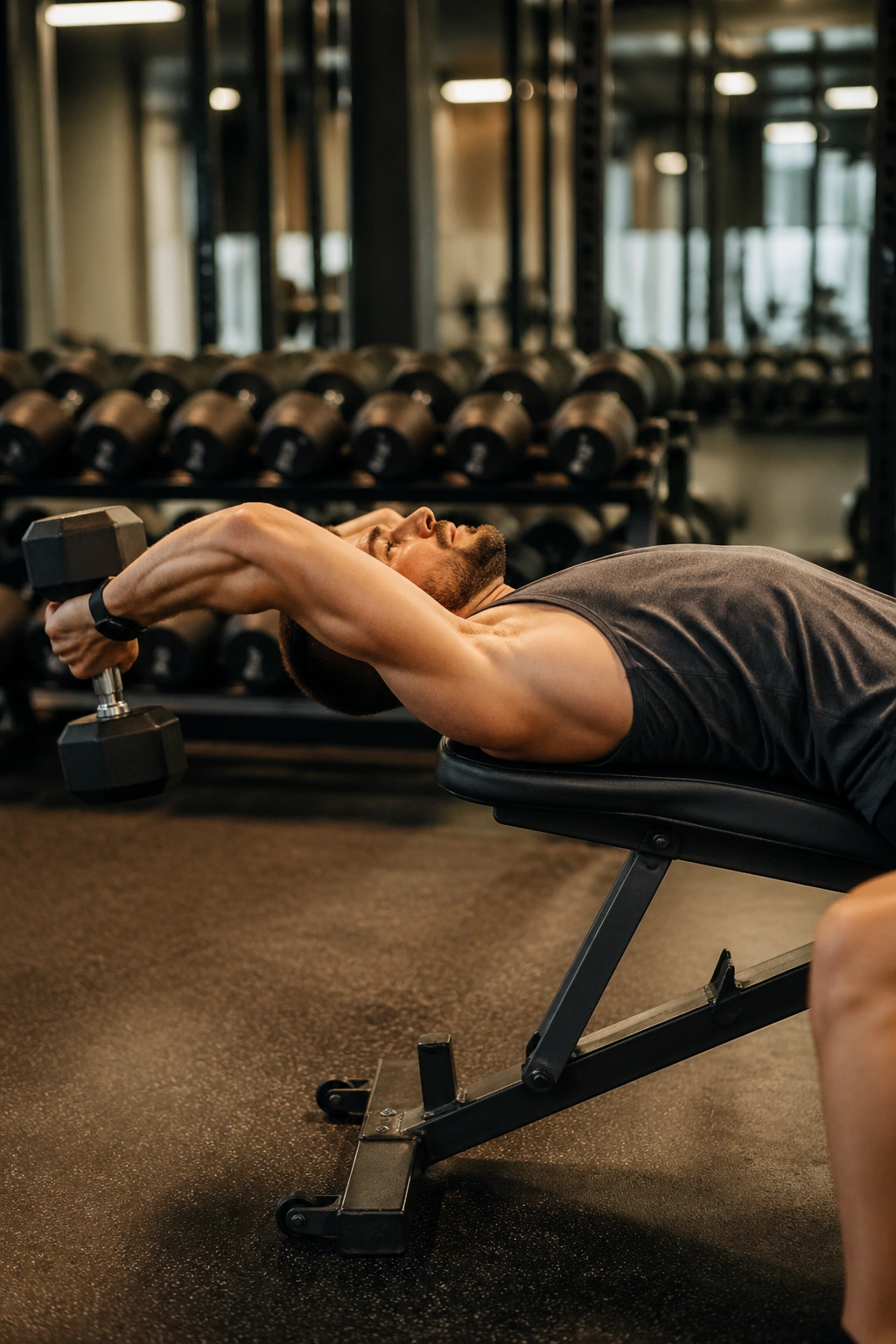
Compared with a row, the pullover changes the line of pull in a useful way. The dumbbell moves overhead and behind you, which puts the lats under a different kind of stretch and teaches your ribs not to flare every time your arms go up. That’s a sneaky-posture benefit people miss.
Lie across a bench with your upper back supported, hold one dumbbell with both hands, and lower it behind your head in a smooth arc. Keep the elbows slightly bent. The movement should stop when your shoulders feel stretched but not jammed. Pull the weight back over the chest by using the lats, not by arching the low back.
Best Use
I like this move for people who feel all their back work in their arms. The pullover forces a cleaner connection from the torso to the arms, and it can help build better overhead control too.
- Use 8 to 12 reps.
- Pick a dumbbell you can lower slowly for 2 to 3 seconds.
- Keep your ribs from popping up.
- Stop short of any sharp shoulder pinch.
The range matters. Go too deep and the shoulder joint starts to complain. Go too shallow and the lats never really lengthen. Find the middle ground and keep it smooth.
7. Renegade Row for Anti-Rotation Strength

Why does this one light up your core so fast? Because the row itself is only half the job. The other half is refusing to twist while you do it. That anti-rotation demand is what makes renegade rows so good for trunk strength and posture under pressure.
Set two dumbbells on the floor under your shoulders, get into a plank, and plant your feet a little wider than hip-width. Row one dumbbell without letting your hips swing open. Put it back down under control. Then switch sides. If your feet are too close together, the whole thing turns into a balancing act, and the back never gets to do its job.
How to Keep Your Hips Quiet
The lower body should stay boring. That’s the goal. You’re training the shoulder, lat, and core to work together while the torso stays square.
- Use 6 to 10 reps per side.
- Widen the stance if the hips rock.
- Squeeze the glutes hard.
- Keep the neck long and the eyes on the floor.
This is not the place for ego loading. A pair of moderate dumbbells done with a still torso will do more for your upper-body control than heavier weights with sloppy hip swing. Clean reps win here.
8. Gorilla Row for Heavy Pulling Without a Bench
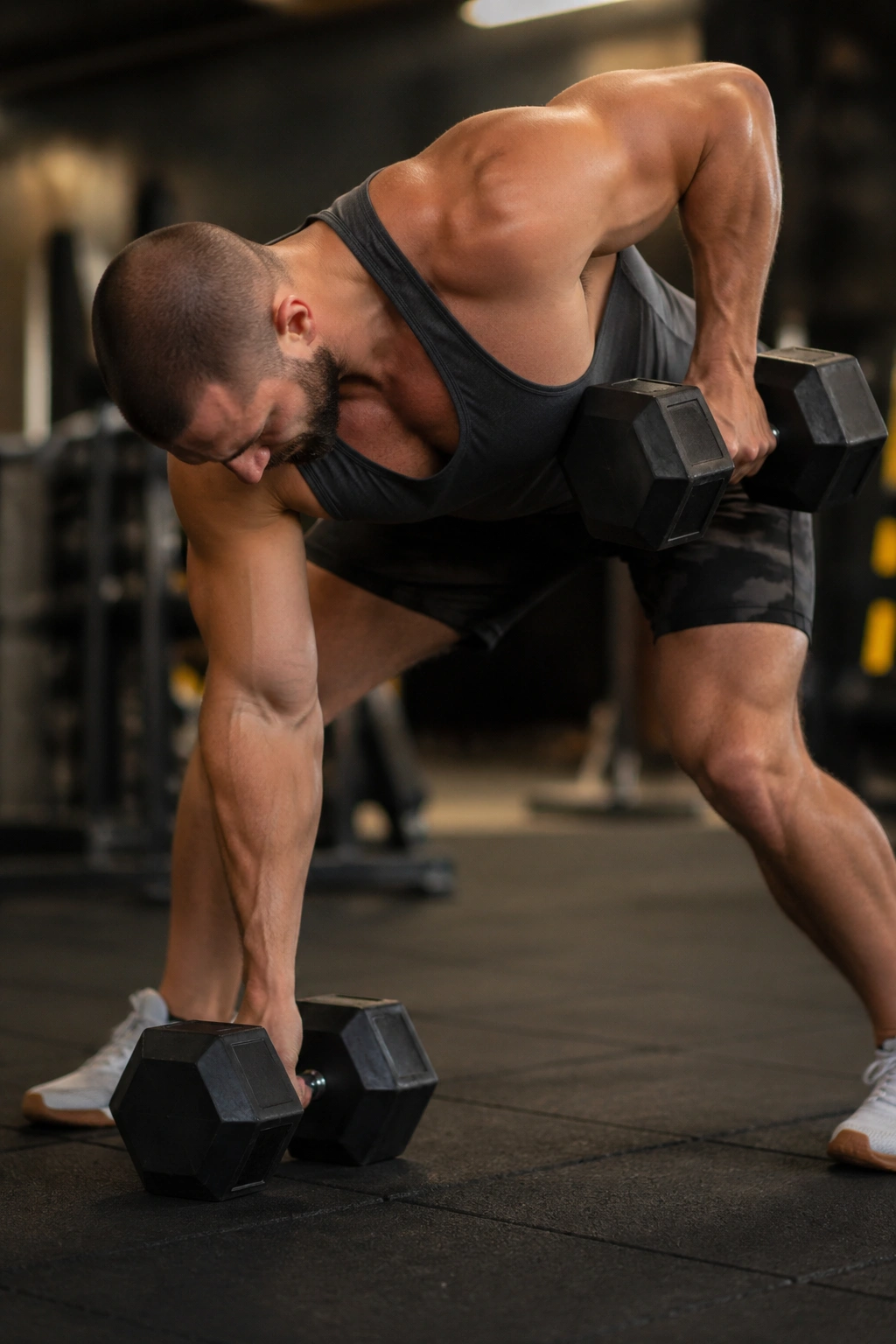
Gorilla rows are one of those movements that look simple until you try to keep them honest. You hinge over two dumbbells on the floor, row one while the other stays planted, then switch sides without losing your brace. The stance is wide, the torso is steady, and the back gets hammered in a good way.
What makes it different from a standard bent-over row is the constant offset load. One arm is pulling while the other side is still carrying weight, which forces the trunk and upper back to stay tight. There’s a bit of rhythm to it, too. The dumbbells live between your feet, and the switch feels almost like a pendulum if you keep it smooth.
This is a nice option when you want a strong row without a bench and without the wobble of a renegade setup. You’ll feel the lats, traps, and rhomboids, but you’ll also feel your whole midsection working to keep the torso from drifting.
Use 8 to 12 reps per side. Keep the shoulders away from your ears, and don’t let the torso bounce every time you switch hands. If the weights are banging into your shins, you’re rushing. Slow down. The movement should look controlled, not frantic.
9. Dumbbell Shrug for Trap Strength and Neck Support
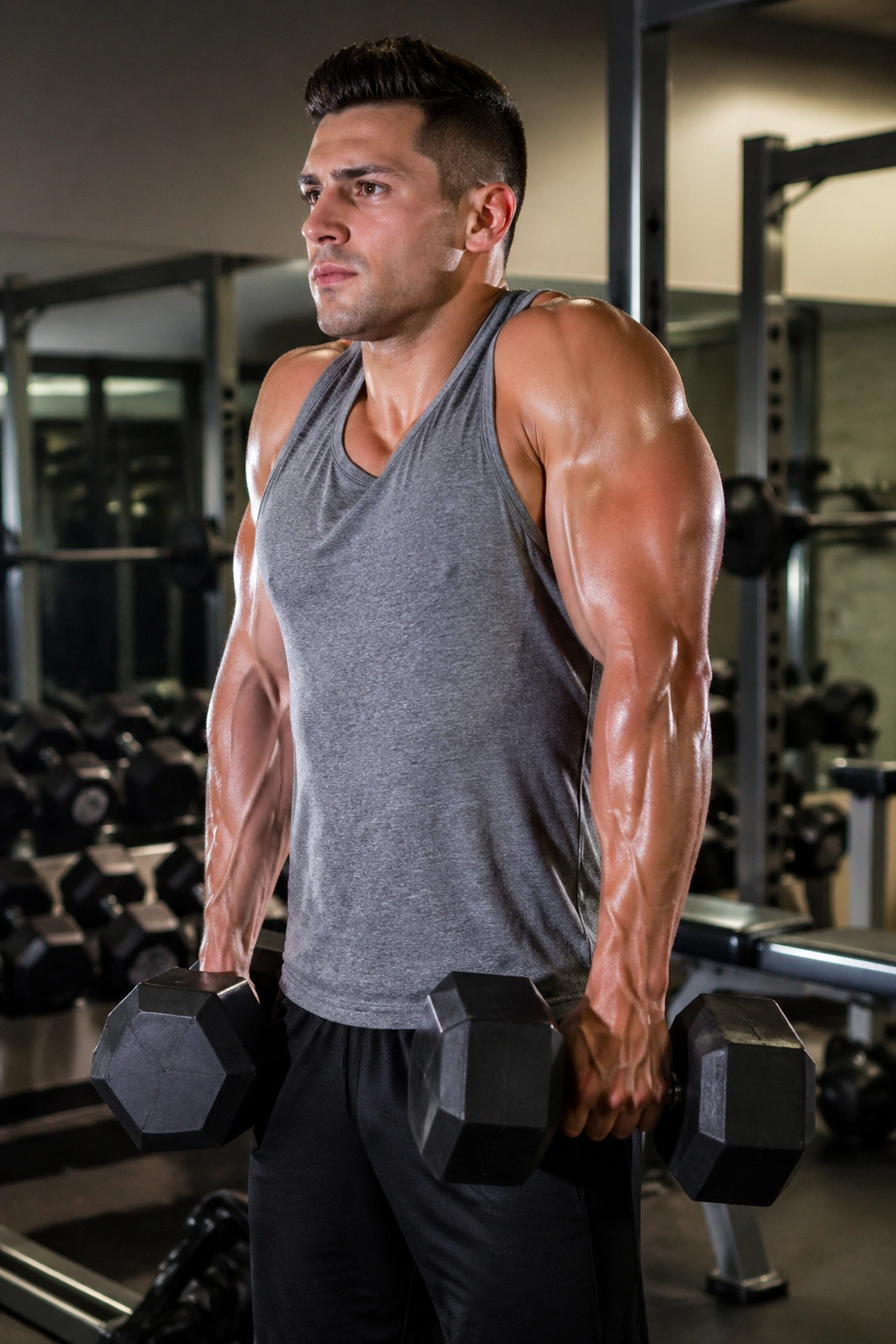
A shrug gets dismissed because it looks too easy, and that’s a mistake. Done well, it builds the upper traps, which matter for holding the shoulders in a better place under load. Done badly, it turns into a neck roll with dumbbells. Rolling is the problem. Lifting straight up is the fix.
Stand tall with the dumbbells at your sides. Keep the arms straight and raise the shoulders toward the ears as high as you can without bending the elbows or leaning back. Hold the top for a second, then lower the weights fully. That bottom stretch matters more than most people think. Traps need a full range, not a half rep.
What Makes It Work
The shrug should feel vertical. No circling. No bouncing. No head jutting forward to help the movement along.
- Use 10 to 15 reps.
- Pause 1 to 2 seconds at the top.
- Lower until the shoulders feel long again.
- Keep the chin neutral, not tucked hard.
A lot of lifters stop too early on the descent. That shortens the trap work and makes the neck feel tight. Give the shoulders room to drop, then drive them up again. Simple. Honest. Very effective.
10. Incline Y-Raise for Lower Traps
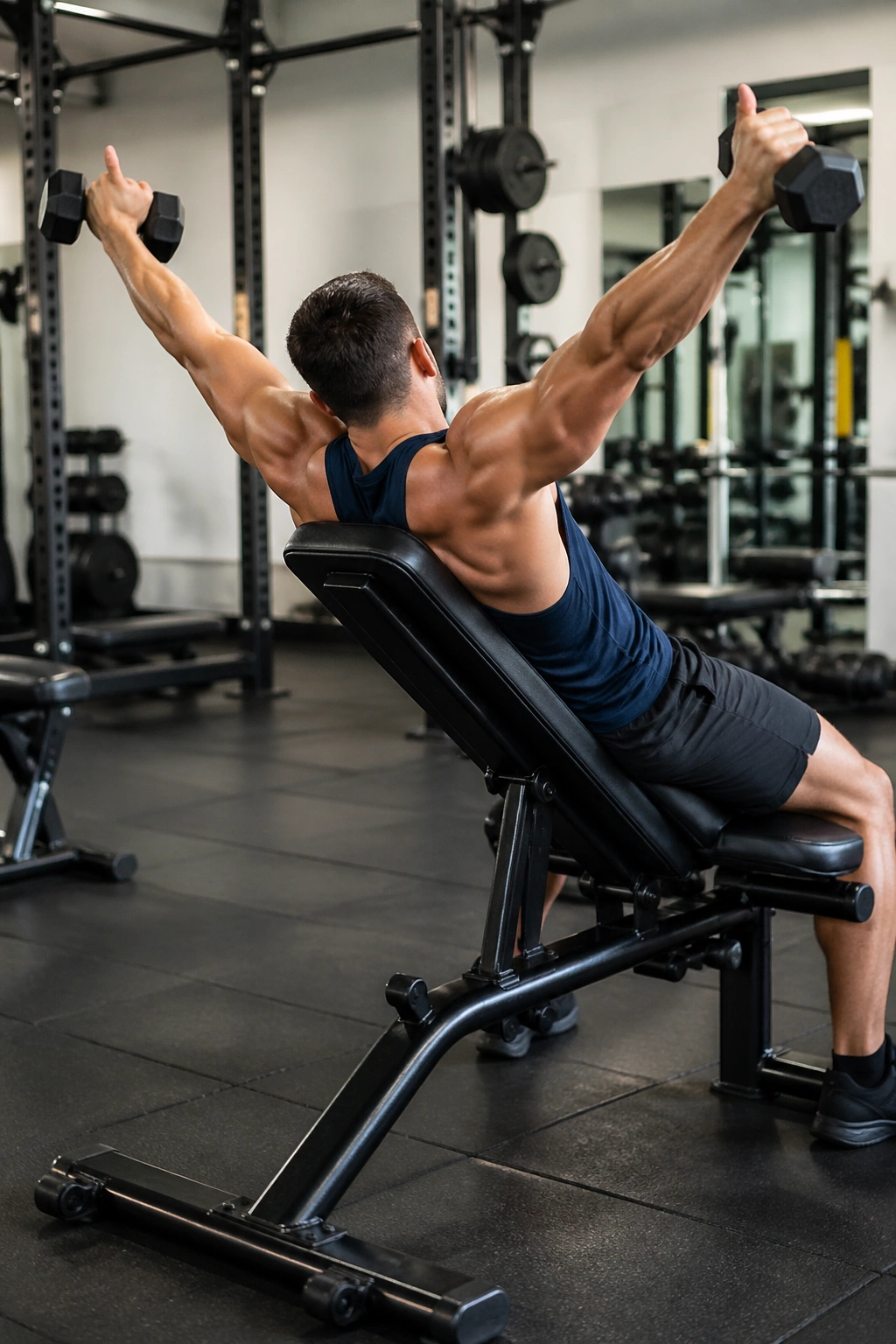
The incline Y-raise is tiny work with big payoff. It targets the lower traps and the muscles that help the shoulder blade rotate upward and sit in a better position. That’s gold for posture, especially if your shoulders tend to round forward after pressing or desk work.
Lie chest-down on an incline bench with very light dumbbells or even no weight at first. Reach your arms into a Y shape, thumbs pointing up, and raise them only until they line up with your body. The lift is small. That’s fine. Bigger is not better here.
The lower traps don’t need drama. They need control. If you’re swinging or shrugging, the weight is too heavy. And if your elbows bend a lot, you’ve changed the exercise into something else entirely.
Use 12 to 15 reps with light dumbbells. Hold the top for 1 second. Keep the neck relaxed and the shoulders away from the ears. The burn shows up fast, usually much faster than people expect, and that’s normal. Don’t chase load. Chase the shape.
A Y-raise is the kind of move that feels almost too small to matter until your upper back starts staying open during rows and carries.
11. Incline W-Raise for Shoulder Blade Control
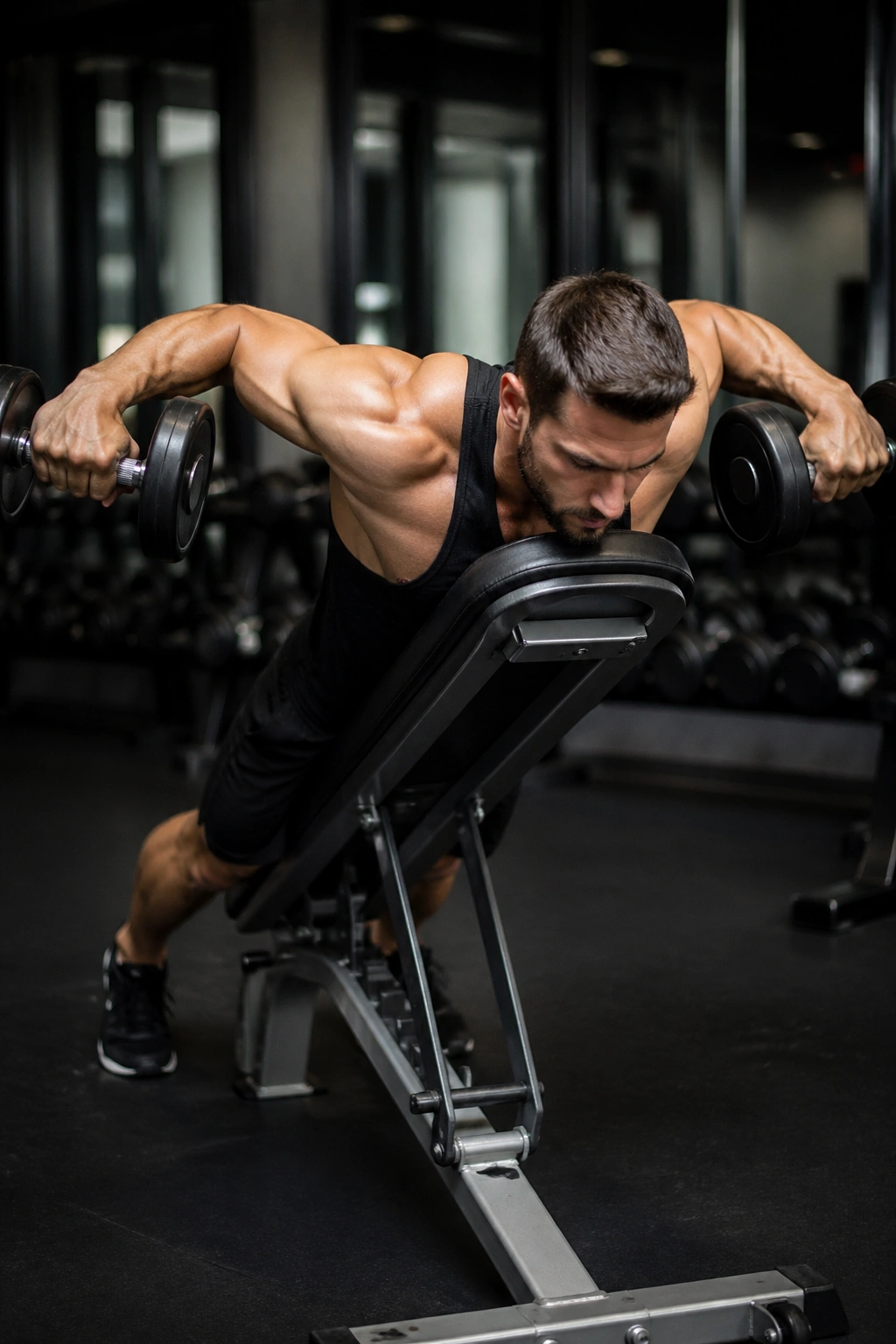
The W-raise lives in the same family as the Y-raise, but it asks for a little more external rotation and a little more control around the back of the shoulders. That makes it a neat partner exercise if you want posture work without just repeating the same pattern.
Lie chest-down on an incline bench, bend the elbows, and form a rough W with your arms. From there, lift the dumbbells slightly while keeping the elbows bent and the shoulders packed down. The movement is subtle. The rear delts, mid traps, and smaller stabilizers around the shoulder blade do the heavy lifting.
Why It’s Different
A Y-raise asks more from the lower traps. A W-raise brings in the rear delts and the muscles that help keep the shoulder from rolling forward under pressure. They overlap, but they don’t feel the same.
- Try 10 to 14 reps.
- Use very light weights.
- Keep the chest planted on the pad.
- Stop before the shoulders shrug up.
This is a good choice for lifters who press a lot and need some balance work that doesn’t wreck recovery. It’s not flashy. It does not need to be. Small stabilizer work pays off when you stack it across weeks.
12. Dead-Stop Dumbbell Row for Honest Strength
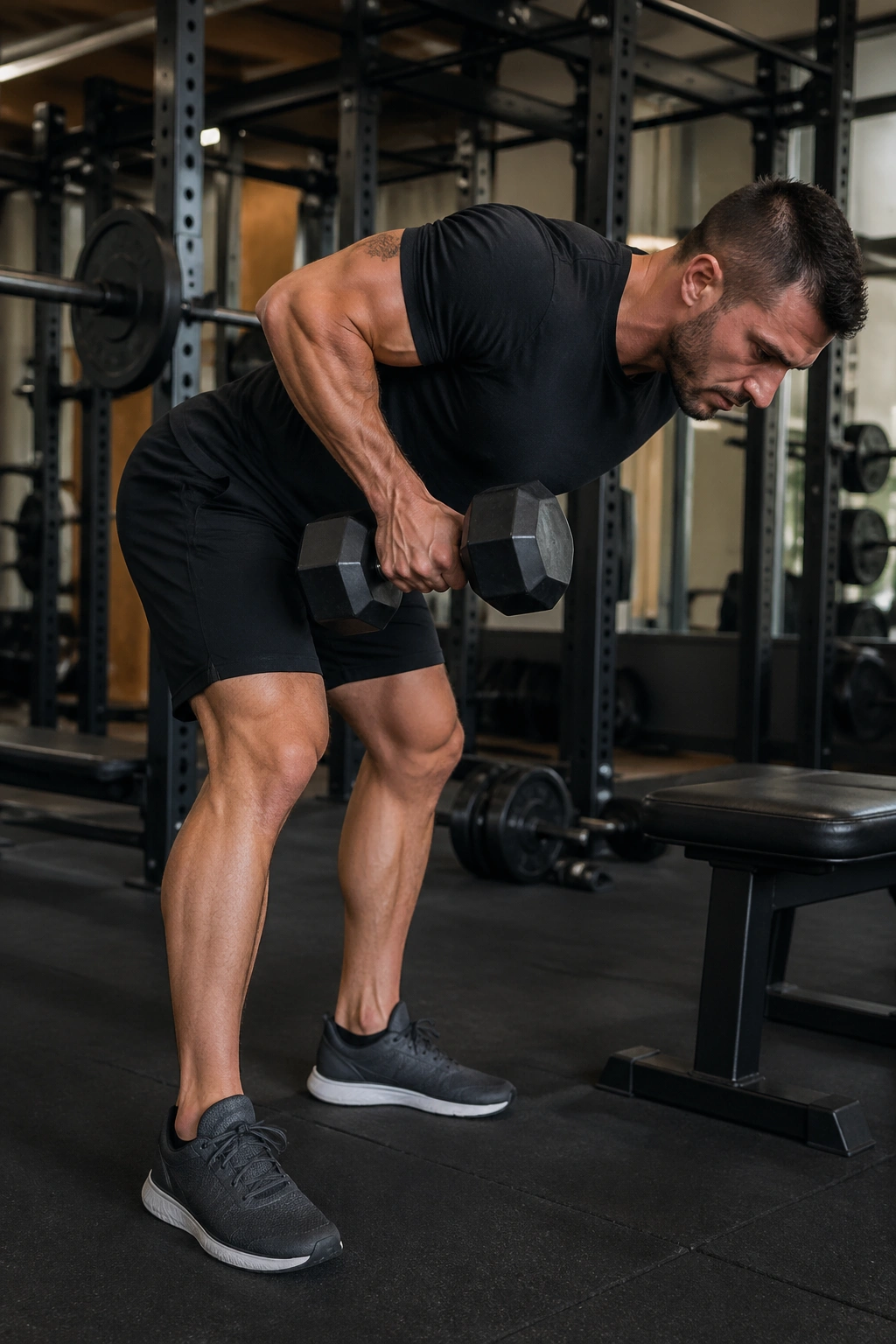
A dead-stop row removes momentum, and that changes everything. Every rep starts from a complete pause — usually with the dumbbells resting on the floor or bench support — so you can’t bounce the weight or use the stretch reflex to sneak through the hard part.
That makes the lift harder, yes. It also makes it cleaner. The lats, mid back, and grip have to restart every time, which is a good test of real strength instead of sloppy endurance.
The setup can be a little different depending on the bench or floor position, but the idea stays the same: row, lower, settle fully, then row again. No touch-and-go nonsense. If the dumbbell is still moving when you begin the next rep, it isn’t dead-stop.
What to Watch For
The pause should be long enough for the weight to settle. A split second is enough if you’re disciplined, but most people need a clear stop to keep the movement honest.
- Use 5 to 8 reps.
- Keep the back angle fixed.
- Pull to the hip or lower ribs.
- Reset your breath before each rep.
This is one of my favorite strength builders because it strips away cheating. You learn fast whether your row is actually strong or just fast.
13. Wide-Elbow Dumbbell Row for the Upper Back
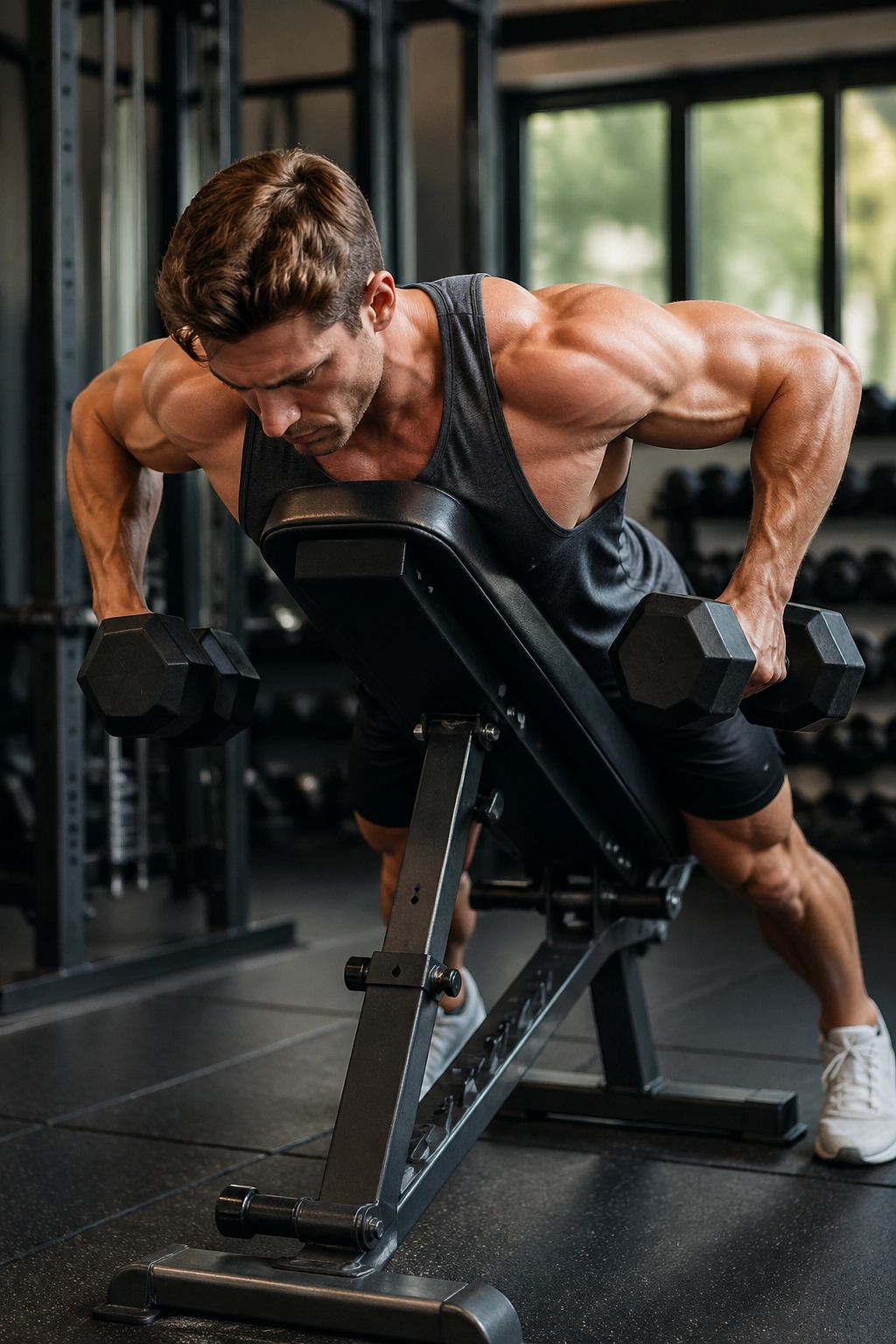
Why row with the elbows flared? Because it shifts some of the load away from the lats and toward the rear delts, rhomboids, and upper back muscles that help the shoulder blades sit where they should. That’s a useful change if your back work has become all lat and no upper-back detail.
Set up in a hinge or on a chest-supported bench and row with the elbows out at about a 45 to 70 degree angle from the body. Don’t turn it into a high shrug. The dumbbells should travel a little higher than they do in a tucked-elbow row, but not so high that the shoulders crawl toward your ears.
The feel is different. More upper back. More rear shoulder. Less lower-lat bias. That makes it a nice complement to heavier rows and hinges, not a replacement for them.
How to Use It
- Use 8 to 12 reps.
- Control the top position for 1 second.
- Keep the chest open, not overarched.
- Stop if the neck starts taking over.
This is the row I’d use when someone wants posture help but has already been hammering low rows for months. The line of pull is the point. Change that line, and the muscle emphasis changes too.
14. Suitcase Carry for Side-to-Side Stability

Carry one heavy dumbbell on one side and walk. That’s it. And it’s sneaky hard. A suitcase carry teaches your torso not to bend toward the weight, which hits the obliques, quadratus lumborum, traps, and grip in a way rows can’t quite copy.
The trick is to stay tall without tilting. Ribs stacked over pelvis. Shoulder down and back, but not pinched. Take slow, even steps for 20 to 40 meters, then switch sides. If you lean away from the dumbbell, the weight is too heavy or you’re rushing.
This move has real posture value because it forces your body to resist a side bend while carrying load. That is a useful skill outside the gym, too. Groceries, luggage, kids, work bags — all of it.
- Walk with short, controlled steps.
- Keep the free hand relaxed.
- Brace lightly through the midsection.
- Use a load that makes the last few meters hard, not ugly.
A suitcase carry looks plain. That’s fine. Plain often works. The people who skip it usually miss how much it tightens up the midsection and the upper back at the same time.
15. Farmer’s Carry for Full-Body Posture Under Load

Farmer’s carries are the louder cousin of the suitcase carry. Two dumbbells. Both sides loaded. The whole upper body has to stay organized while you walk, breathe, and resist the urge to slump.
Hold a heavy pair of dumbbells at your sides and walk for 20 to 60 meters. Keep the chest tall, the chin level, and the shoulder blades set naturally — not jammed down, not shrugged up. Your grip will start to complain first. Then your traps. Then your breathing will feel shorter. Good. That’s normal.
Why It’s Worth the Space
Farmer’s carries train the traps, grip, trunk, and hip stabilizers all at once. They’re one of the easiest ways to build useful upper-body strength without a barbell, and they’re especially nice if you want a finish that leaves you standing taller afterward.
- Use a load you can carry without swaying.
- Walk with a steady pace, not a stomp.
- Stop when the posture starts to fall apart.
- Rest for 60 to 90 seconds before another carry.
If you only have time for one loaded carry, make it this one. It’s straightforward, hard to fake, and useful in a way that fancy movements often aren’t. A heavy walk can teach more body control than a messy pile of machine work.
Final Thoughts
The best dumbbell back workouts for posture and strength do not all look the same, and that’s the point. Rows build thickness. Rear-delt work cleans up the shoulder line. Hinge work gives the spine and hips something real to brace against. Carries make the whole system hold together when the load leaves the floor.
If your back training has been stuck on one row for months, start mixing in a chest-supported pull, one rear-delt drill, and a carry. That combination usually does more for posture than another random high-rep set to nowhere.
Pick a few, train them with clean reps, and make the weight earn its place. That’s how the back starts doing more of the work — in the gym and out of it.
