



A belly can feel swollen, tight, and stubborn for reasons that have nothing to do with fat. Salt, constipation, stress, shallow breathing, and too much sitting can all make the middle look and feel thicker by the end of the day, which is why so many people search for belly fat massages at home.
That search makes sense. Massage won’t melt fat off the abdomen, and anyone promising that is selling fantasy. What it can do is help you relax the area, ease that clenched feeling in your stomach, and sometimes make bloating, cramping, or post-meal heaviness feel less dramatic.
The trick is matching the touch to the problem. A tense, braced belly wants something different from a puffy one. A sore waist wants something different from a sluggish, gassy one. And if your stomach feels sharp, hard, or unusually painful, stop fiddling with it and get medical advice instead.
1. Clockwise Belly Circles
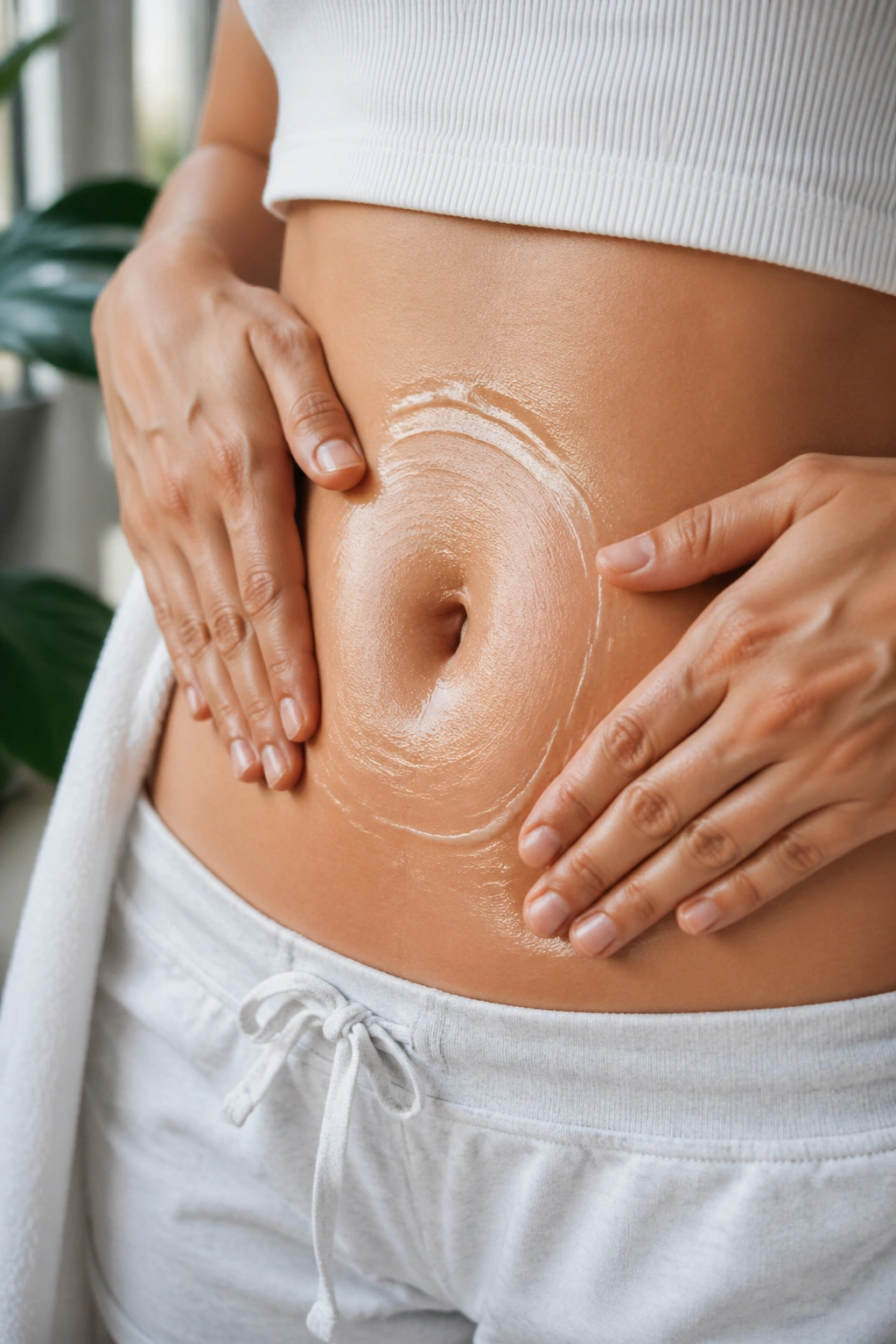
Flat palms. Gentle pressure. Slow circles around the navel. That’s the basic move, and it works well because it’s easy to control, easy to repeat, and hard to overthink.
The direction matters more than people realize. A clockwise motion follows the path many massage therapists use for abdominal comfort, and it tends to feel more natural when you’re working on bloating or a cramped, guarded belly. Think of it as warming the skin and easing the muscles, not “breaking up fat.” That part is a myth. Fat tissue does not disappear because you rubbed it in a circle.
Why It’s a Smart Starting Point
This is the massage I’d hand to a beginner first. It needs no tool, no special oil, and no fancy technique. A dab of lotion or a few drops of unscented oil helps your hands glide instead of dragging.
- Pressure: 1 to 3 out of 10
- Time: 60 to 90 seconds per round
- Best timing: after you’ve been sitting a long time or feel mild bloating
- Skip it if: the area is tender, bruised, or painful to touch
Tip: Keep your fingers soft and your shoulders loose. If your hands feel stiff, your belly will feel stiff too.
2. Diaphragmatic Belly Glide
This one does more than a rubbing motion ever will. If your stomach stays clenched all day, a breathing-based belly glide can make the whole area feel less armored almost immediately.
Here’s why it works. Your diaphragm moves with each breath, and when you breathe deeply into the belly instead of lifting only the chest, the abdominal wall gets a gentle internal massage from the inside out. That sounds fancy, but the feeling is simple: the stomach rises on the inhale, softens on the exhale, and the hands just follow that motion.
Place both hands below the ribcage. Inhale through the nose for a count of four, letting the belly expand into your palms. Exhale for a count of six and let your hands slide a little downward with the softening of the abdomen. Five breaths is enough to notice a shift. Ten is better if you’ve had a long, tense day.
Do not force a big belly push. If you’re straining, you’re doing too much. The goal is a slow, easy rise and fall — almost boring, honestly — and that is part of what makes it useful.
3. Lymphatic Drainage Sweep
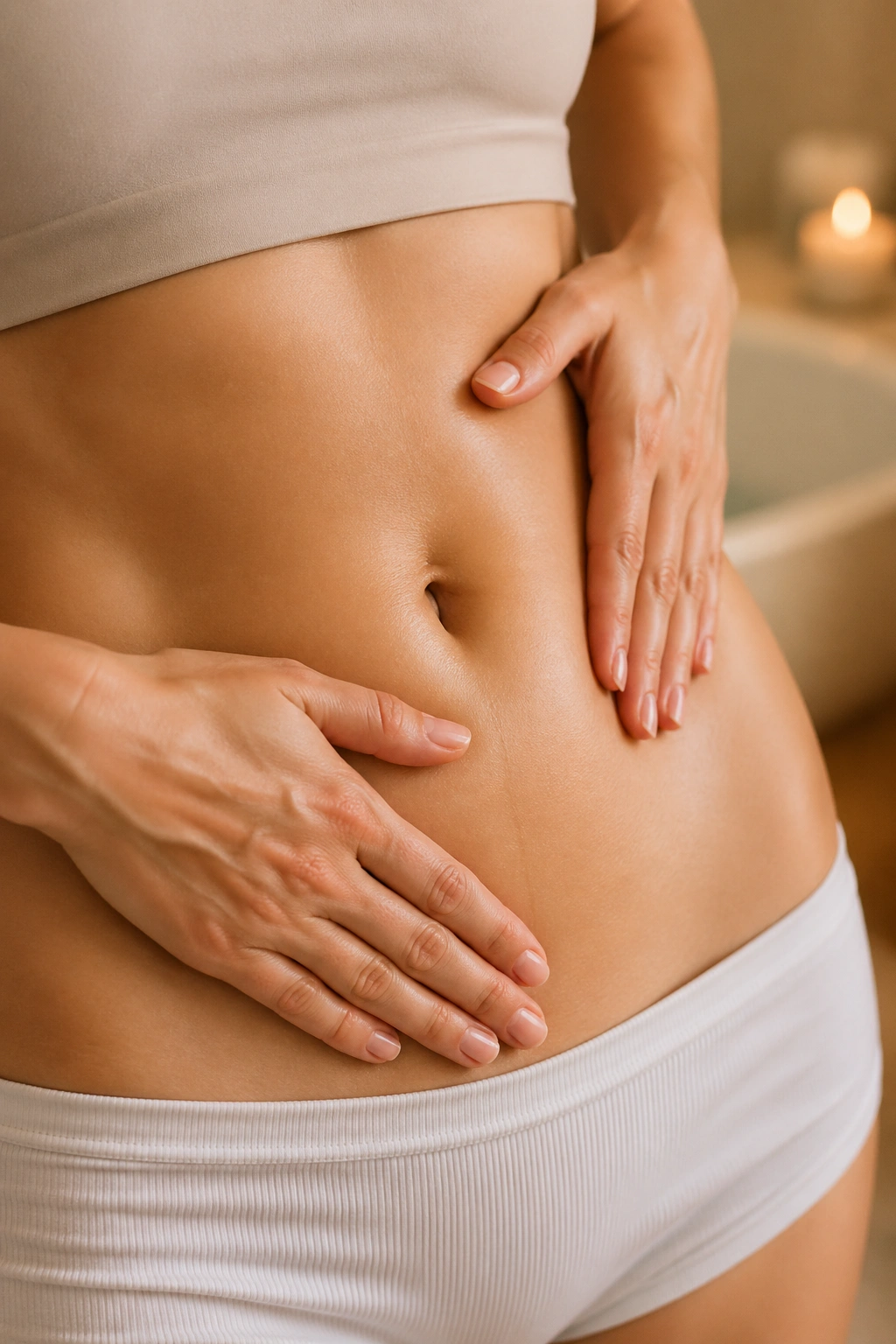
Why are the strokes so light? Because the lymphatic vessels near the skin respond better to feather-soft pressure than to a hard knead.
That’s the whole point of this massage. You’re not trying to dig into muscle. You’re encouraging fluid to move toward the drainage pathways, which is one reason this method is often used when the belly feels puffy or sluggish after a salty meal, travel, or too much sitting. It can make the abdomen feel less swollen, though it will not strip away body fat. Different job.
How to Use It
Use the flats of your fingers, not your knuckles. Start low on the abdomen and sweep upward and outward with almost no pressure at all, then finish with a gentle glide toward the groin crease or the sides of the hips. The motion should feel more like brushing water than pushing tissue.
- Do 5 to 10 sweeps per side
- Keep the pressure so light the skin barely moves
- Breathe slowly while you work
- Stop if the skin turns red, hot, or irritated
A lot of people press too hard here. That misses the point completely. Light touch is the feature, not the weakness.
4. Warm Oil Palm Press
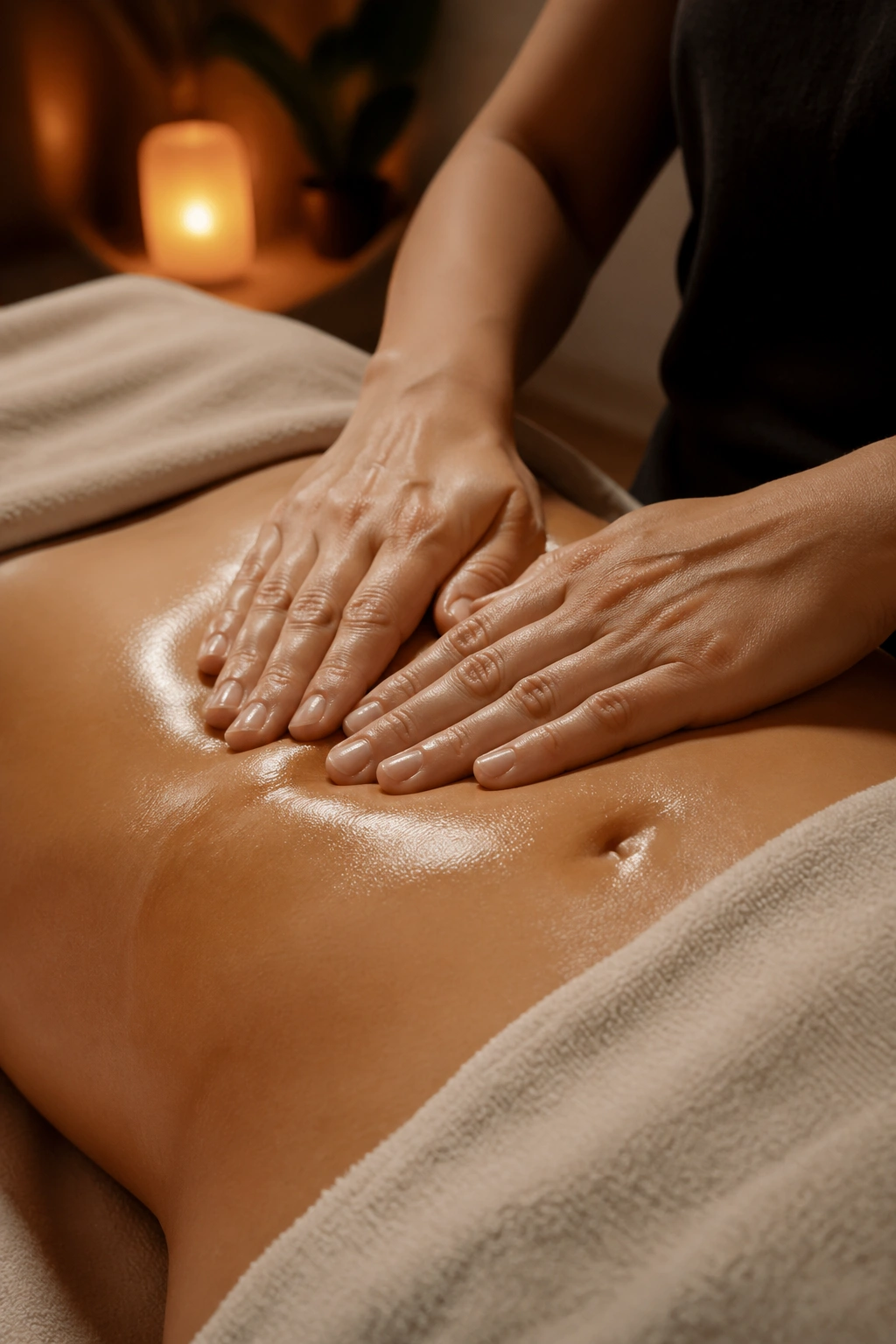
A warm belly responds differently than a cold one. The skin loosens, the hands slide better, and the whole thing feels less clinical.
Picture this: end of a long desk day, waistband digging in a little, stomach held tight without you even noticing. A warm oil palm press is a nice reset for that exact feeling. Unscented lotion works fine, though a small amount of jojoba oil or fractionated coconut oil gives a smoother glide if you prefer oil.
Press both palms flat against the abdomen and hold for five seconds. Release. Shift a little higher, then lower, then out toward the sides. The pressure should be firm enough to feel contact, never hard enough to make you tense up. If your breath catches, lighten off.
A few practical details matter:
- Warm your hands first by rubbing them together
- Use only 1 teaspoon or so of oil to start
- Work for 2 to 4 minutes
- Avoid right after a very large meal
The appeal here is simple. It makes the belly feel cared for, not attacked. That difference counts.
5. Pinch-and-Roll Along the Waistline
This is the one people either love or hate. There isn’t much middle ground.
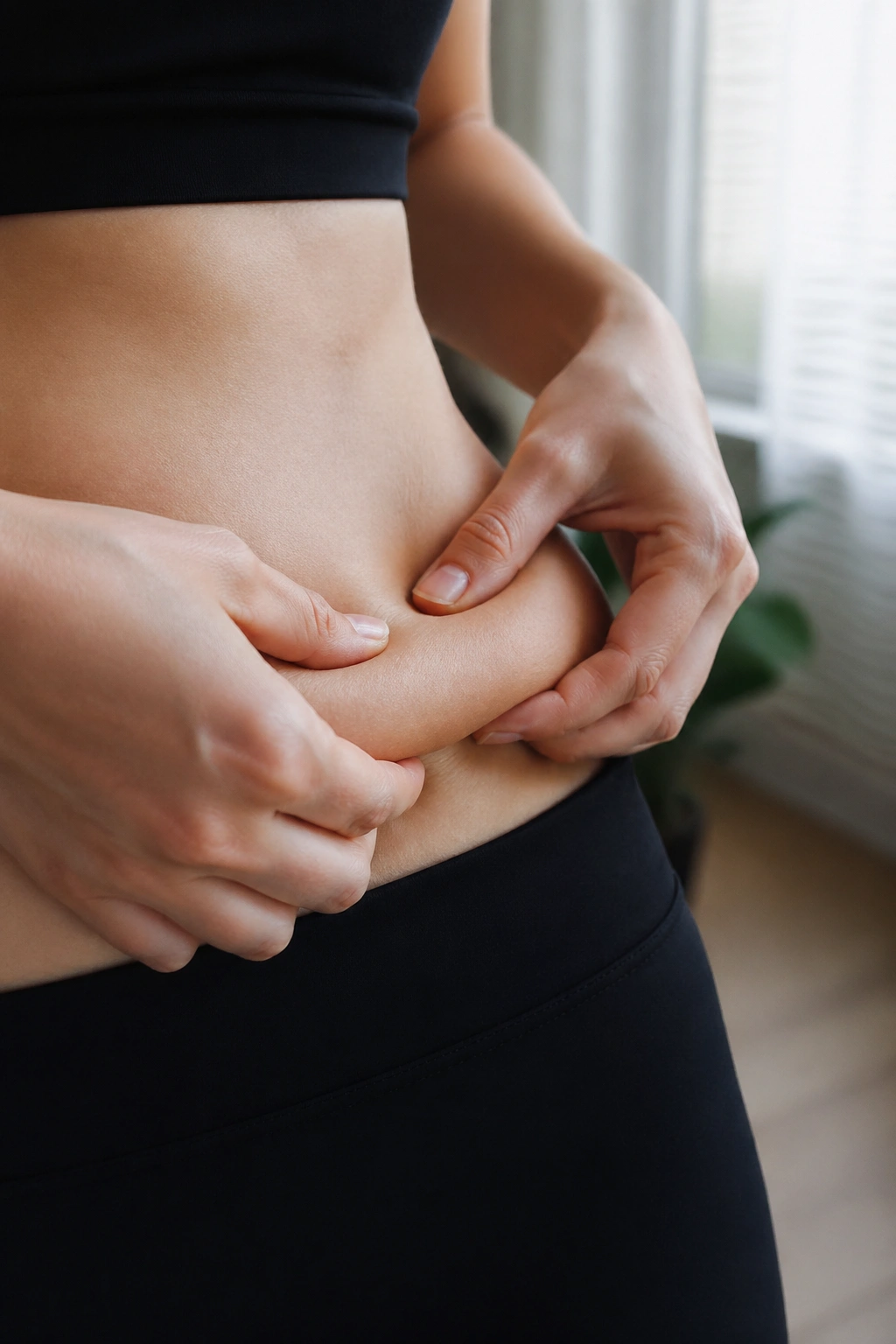
Pinch-and-roll massage works on the soft tissue around the waist, especially the sides where people often hold tension from long hours of sitting. You lift a small fold of skin and subcutaneous tissue between your thumb and fingers, then roll it gently as you move along the waistline. Not hard. Not dramatic. Just enough to mobilize the surface layer.
A lot of guides oversell this move as a fat-burner. It isn’t. What it can do is bring awareness to spots that stay ignored for most of the day, especially the side belly and the area above the hips. That awareness alone changes how people stand and breathe. You stop bracing. You stop sucking in. The belly relaxes.
Don’t grab a big handful. Small folds are better. Too much pressure can leave the skin sore or bruised, especially if you have sensitive skin or visible stretch marks. One pass on each side is enough to start with, and two passes is plenty if the area feels comfortable.
It’s a little awkward at first. Then it becomes one of those oddly useful routines you keep coming back to.
6. Navel-to-Ribcage Kneading
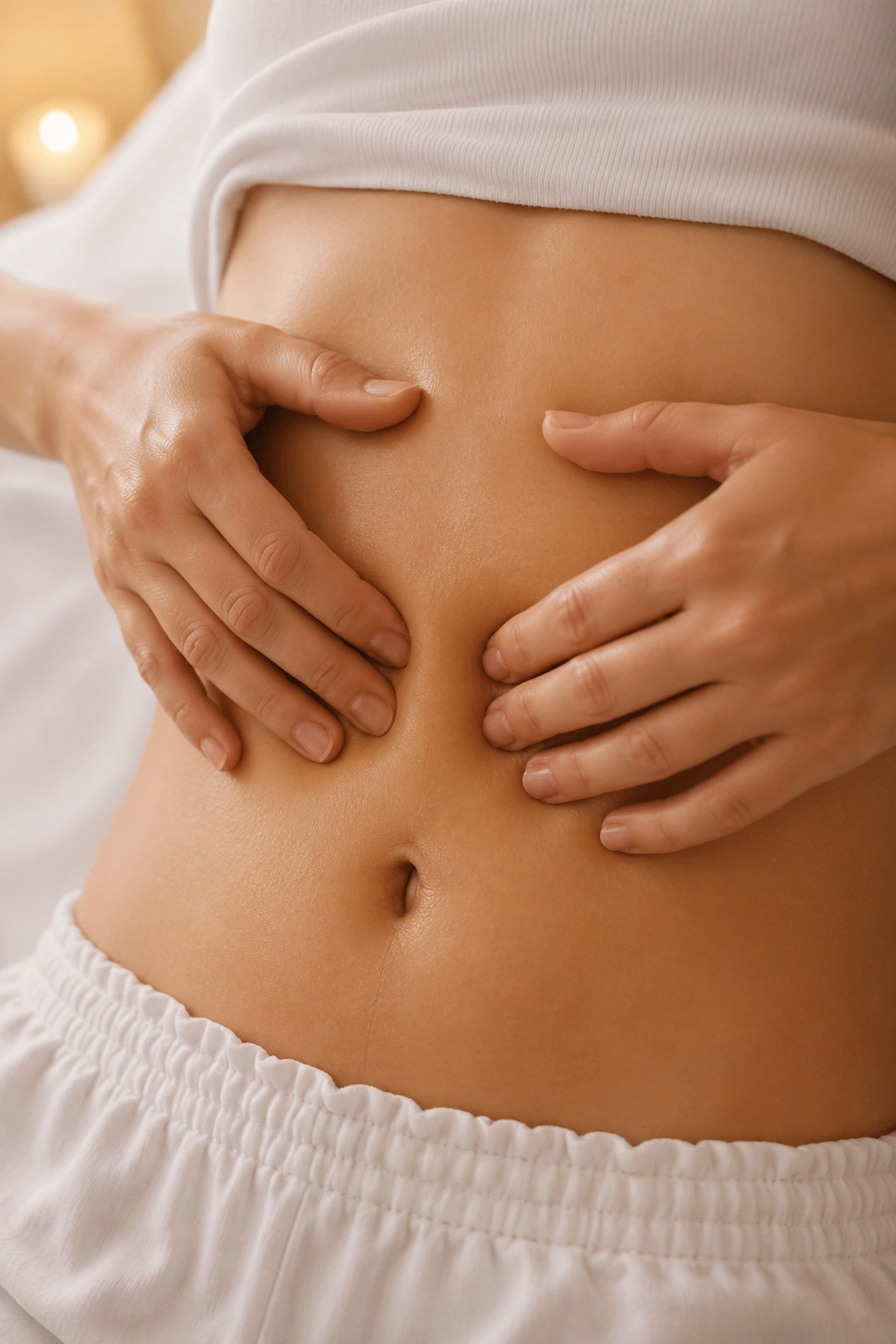
Unlike the soft circle work, this one goes a little more vertical and a little more targeted. It’s a good choice when the upper abdomen feels compressed from slouching, tight bras, long drives, or that classic “I’ve been hunched over a laptop for hours” posture.
Use your fingertips or the pads of your thumbs to knead gently between the navel and the lower ribs. The motion is small. Press, lift, release. Then move a finger-width over and repeat. You’re not trying to mash the area flat. You’re trying to wake up tissue that has been held in the same position too long.
The upper belly often gets ignored because people focus on the lower stomach when they talk about belly fat. That’s a mistake. The upper abdomen can hold plenty of tension, and once it loosens, the whole midsection often looks and feels a little less compressed.
A few rules keep this safe:
- Stay off the rib tips
- Don’t jab inward
- Keep the pressure at a mild, comfortable level
- Use it for 30 to 60 seconds per zone
If the area feels sore instead of tight, leave it alone. Soreness is not a signal to push harder.
7. Castor Oil Pack Massage
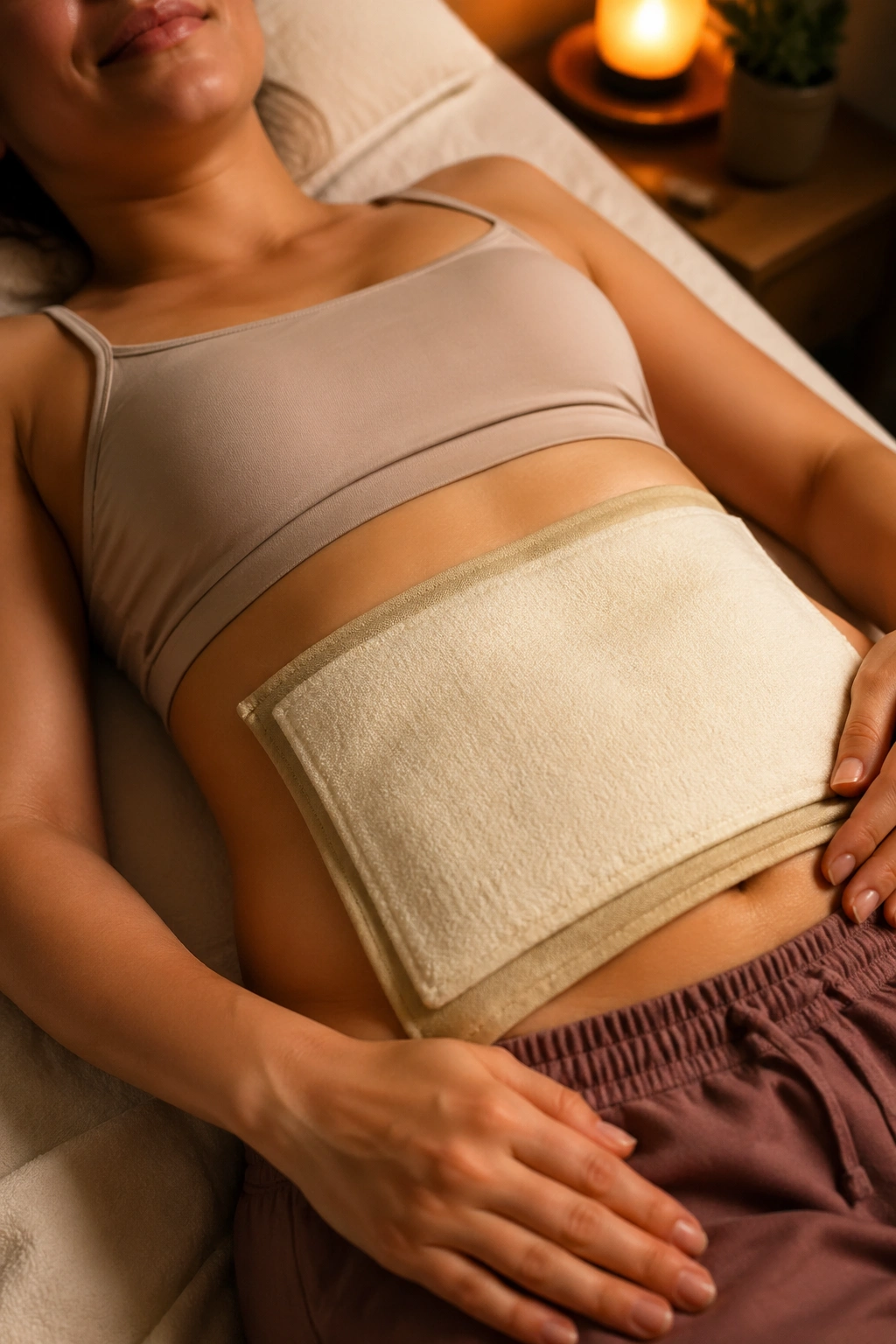
Does a castor oil pack burn belly fat? No. It does not.
What it can do is create a warm, slow, calming routine that many people like for abdominal comfort. The pack itself adds heat and moisture, and the light massage that usually comes with it helps the belly relax even more. That combination is often soothing when the midsection feels crampy, dry, or tense from stress.
How to Use It
Soak a small piece of clean flannel or cotton in castor oil, place it over the abdomen, and cover it with an old towel or wrap to keep the mess down. A warm heating pad on top for 15 to 20 minutes is plenty. Afterward, wipe the skin clean and do a few gentle circular strokes with your fingertips.
Castor oil is sticky. That’s the annoying part. It stains fabric and clings to skin, so use old clothes and old towels. A thin layer goes farther than people think.
This is a better fit for a quiet evening than for a quick lunch break. If you like ritual and don’t mind cleanup, it can become a calming part of your routine. If you hate fuss, skip it.
8. Dry Brushing Before a Shower
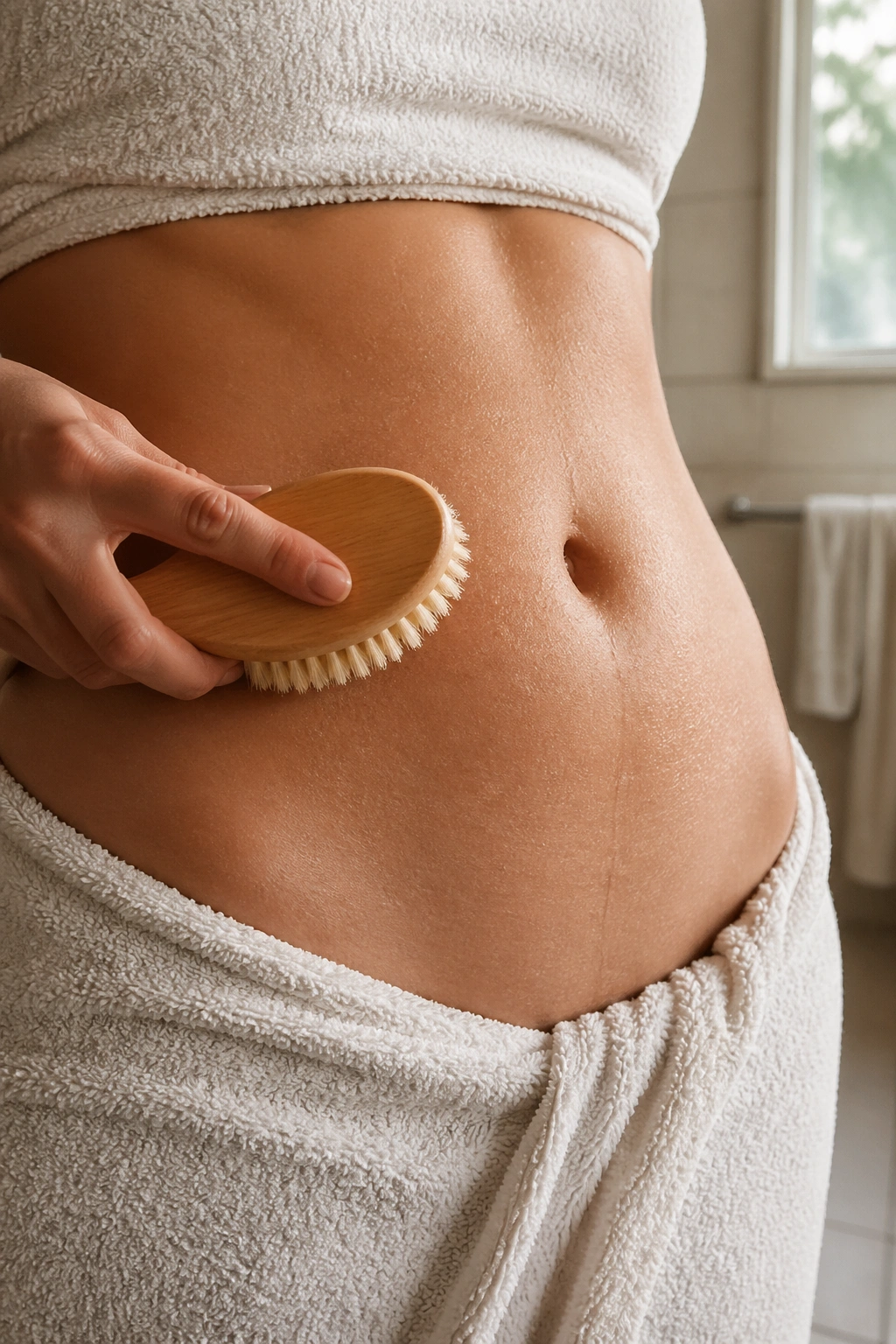
Dry brushing is not a fat-loss trick. It’s a sensation trick, and that’s a different thing.
A soft-bristled brush dragged lightly over dry skin can wake up the surface, make the belly feel more alive, and give you a clearer sense of the area before you shower. That may sound small. It is small. Still, small things add up when you’re trying to notice tension before it settles in for the day.
Use a brush with soft or medium-soft bristles. Start with very light clockwise strokes over the abdomen, then move outward toward the sides. Ten passes is enough. More is not better here, and pressing hard can leave the skin red or irritated.
This one is best for people who like a brisk, clean feeling. It’s less cozy than oil massage and less meditative than breathing work. Different mood. Different result.
Skip dry brushing if you have eczema, active rashes, broken skin, or anything that already feels inflamed. The brush should wake the skin up, not make it angry.
9. Side-to-Center Contour Strokes
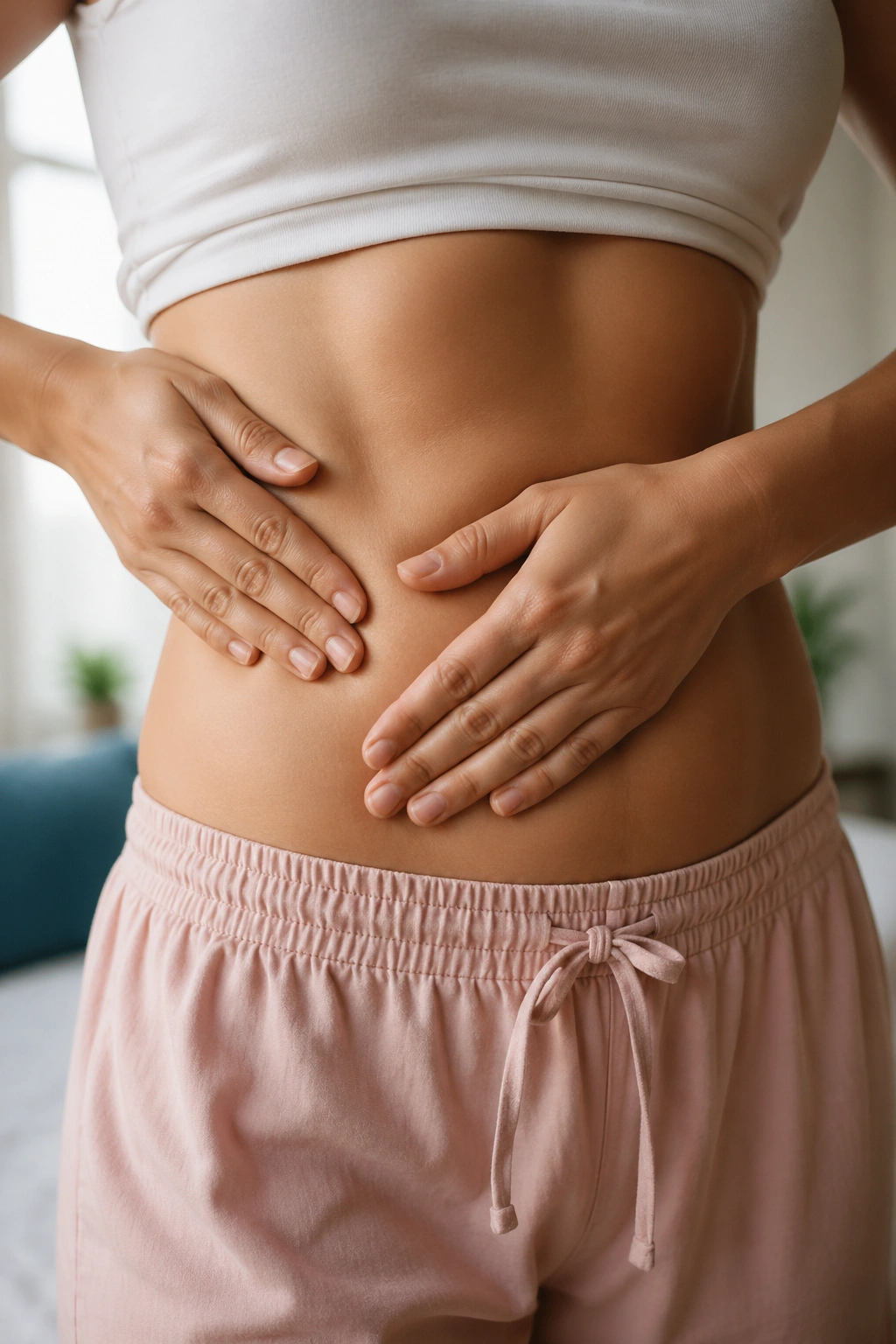
The sides matter. People talk about the front of the belly, but the flanks and side waist often hold a lot of the tension that makes the whole midsection feel thick.
With both hands, start near the outer waist and glide inward toward the navel. The motion is slow and broad, almost like you’re smoothing fabric toward the center. That simple inward stroke can help the area feel less stuck, especially after a long sitting stretch or a heavy meal.
What I like about this massage is the shape of it. It makes you work the full ring of the waist instead of poking at one little patch. That tends to feel more balanced and less fussy.
Quick Details That Matter
- Use lotion or oil so your hands don’t tug
- Make 5 slow passes per side
- Keep the pressure medium-light
- Work around the side ribs, not directly on them
If you’re prone to bloating, this can feel especially nice in the late afternoon when your waistband starts to tighten for no obvious reason. It won’t change body fat. It may change how trapped the area feels.
10. Gentle Gua Sha Sweep
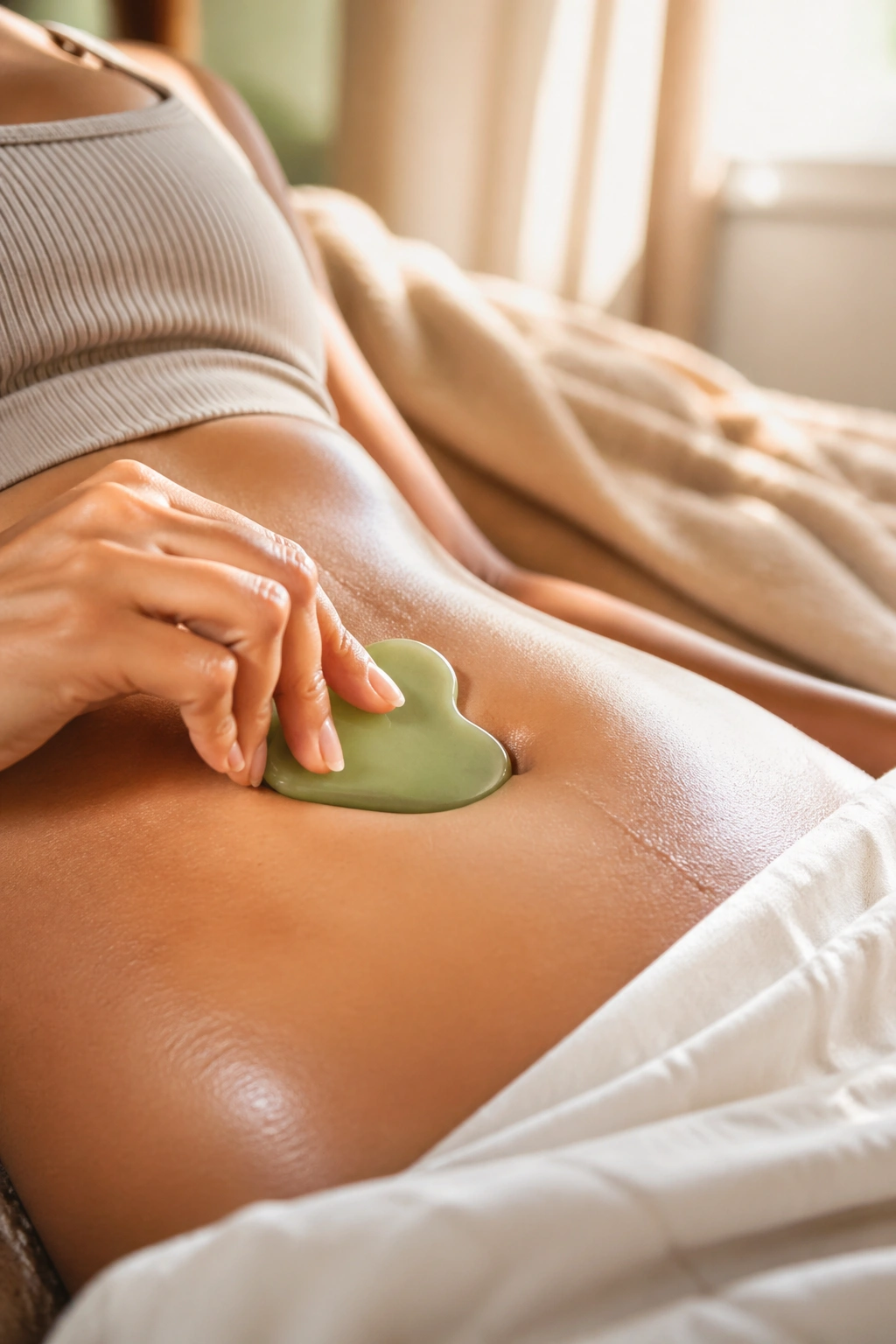
Gua sha on the abdomen needs a soft touch and a smooth tool. No aggressive scraping, no red marks, no “no pain, no gain” nonsense.
Use a rounded gua sha tool or another smooth edge made for skin, and coat the belly with oil first. Sweep in short, light passes across the lower abdomen and toward the sides. The tool should glide. If it catches, you need more oil or less pressure. Easy fix.
This is not the same as facial gua sha, and it should never feel sharp or harsh. The belly has more give than the face, but it is also a place where people overdo pressure because they think deeper means better. It doesn’t. Deeper usually means more irritation.
Best use: when you want a more structured massage than using your hands.
Worst use: on bruised skin, after shaving, over varicose veins, or anywhere tender.
A few gentle sweeps can be enough. The goal is smooth motion and a calmer stomach, not a scraped-up abdomen.
11. Acupressure Around the Abdomen
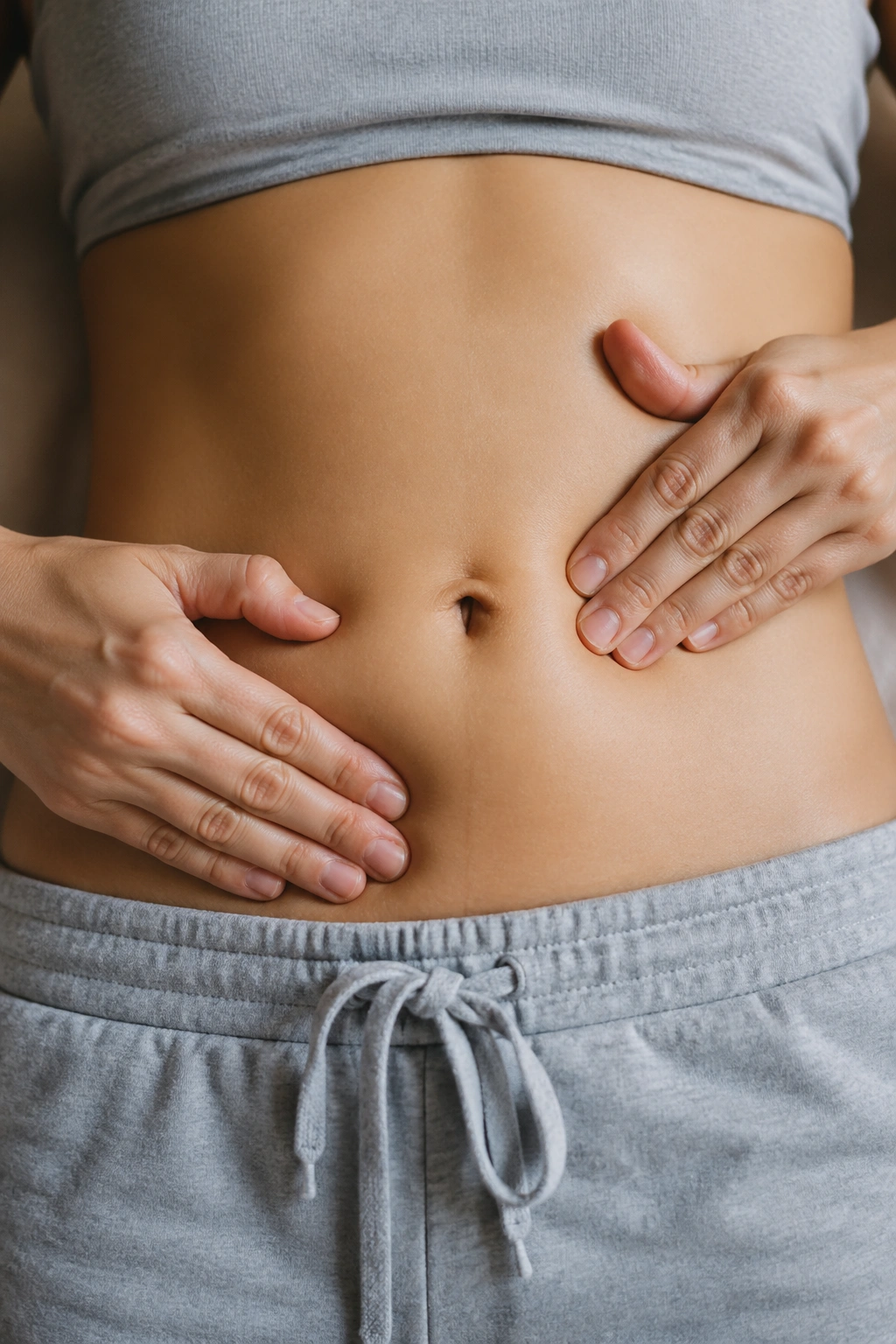
Can a few finger presses around the belly do anything useful? Sometimes, yes — especially if what you feel is tension, cramping, or a kind of stuck, guarded sensation.
Acupressure works differently from rubbing. You place the fingertips on a point, apply steady pressure, breathe, then release. No sliding around. No kneading. The stillness matters. People who like this style usually prefer a calmer, more deliberate routine.
Work in the area around the navel, a little below the ribs, and slightly out toward the sides. Hold each point for about 5 to 10 seconds, then move on. The pressure should feel noticeable but never sharp. If you have to grit your teeth, it’s too much.
What to Watch For
- Breathe out while pressing
- Keep the pressure symmetrical when possible
- Stop immediately if you feel nausea, pain, or dizziness
- Do not press deeply if you’re pregnant or have abdominal concerns
Some readers love this approach because it feels precise. Others find it too fussy. Fair enough. It’s not the easiest technique, but it can be one of the most calming when your belly feels wound up.
12. Handheld Vibration Massage on Low Setting
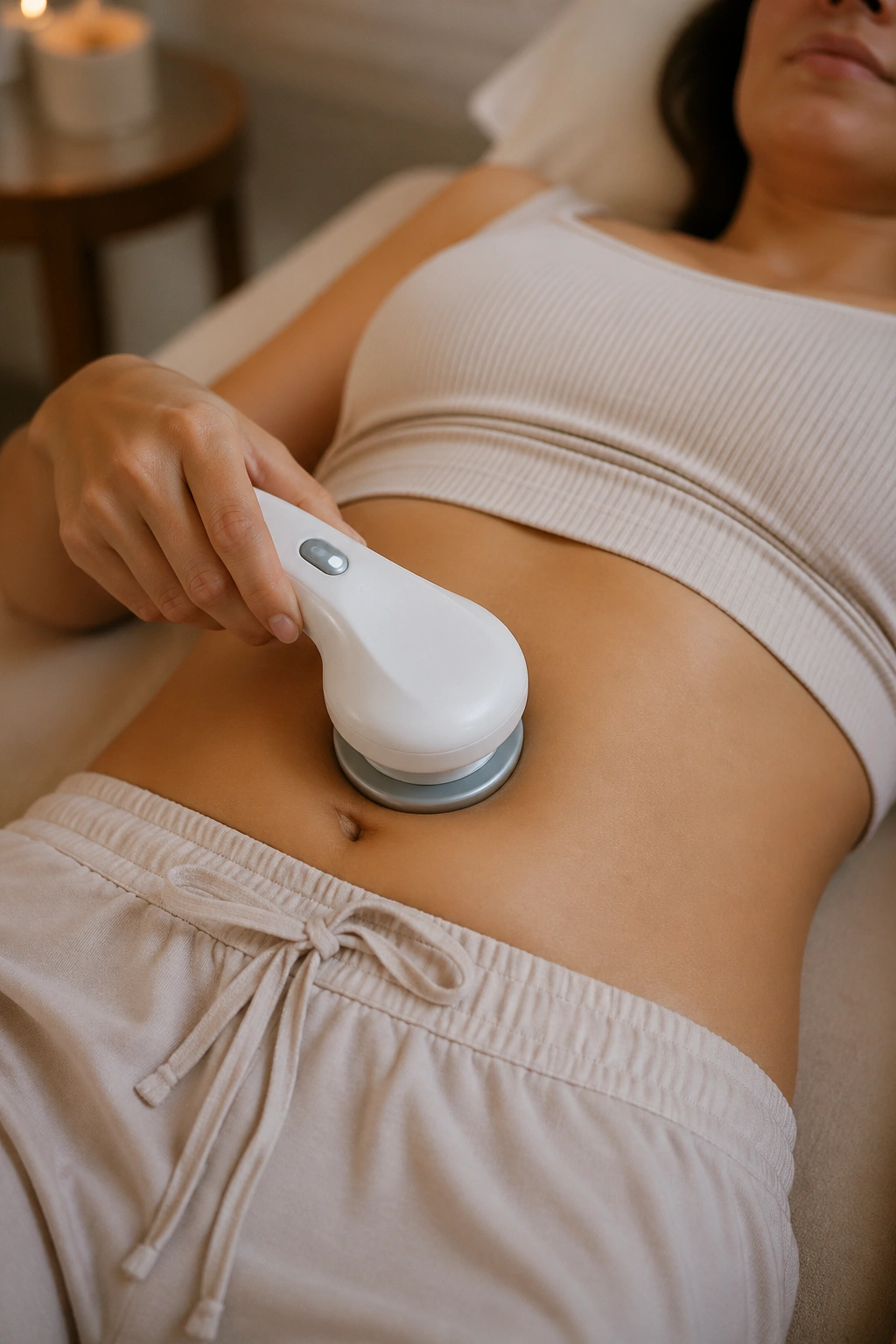
A handheld vibrating massager can do the job when your hands get tired or you want the same motion over and over without thinking about it.
Use the lowest setting. Higher settings can make the belly recoil, especially if you’re already bloated or sensitive. You want a soft buzz, not a jackhammer. A thin shirt or towel between the device and your skin can help if direct contact feels too intense.
Move slowly across the abdomen for 20 to 30 seconds per area, then stop and check in with your body. The sensation should feel warm and mildly loosening. If it feels harsh, jumpy, or oddly nauseating, the setting is wrong or the technique is wrong.
This method is useful for people who brace their stomachs a lot without noticing. The vibration interrupts that pattern. It can also be a nice option after a workout when your hands are already tired from training, carrying groceries, or working all day.
Do not use it over a painful belly, fresh scar tissue, or anywhere that feels inflamed. Convenience is nice. Blind force is not.
13. Post-Meal Soothing Circle
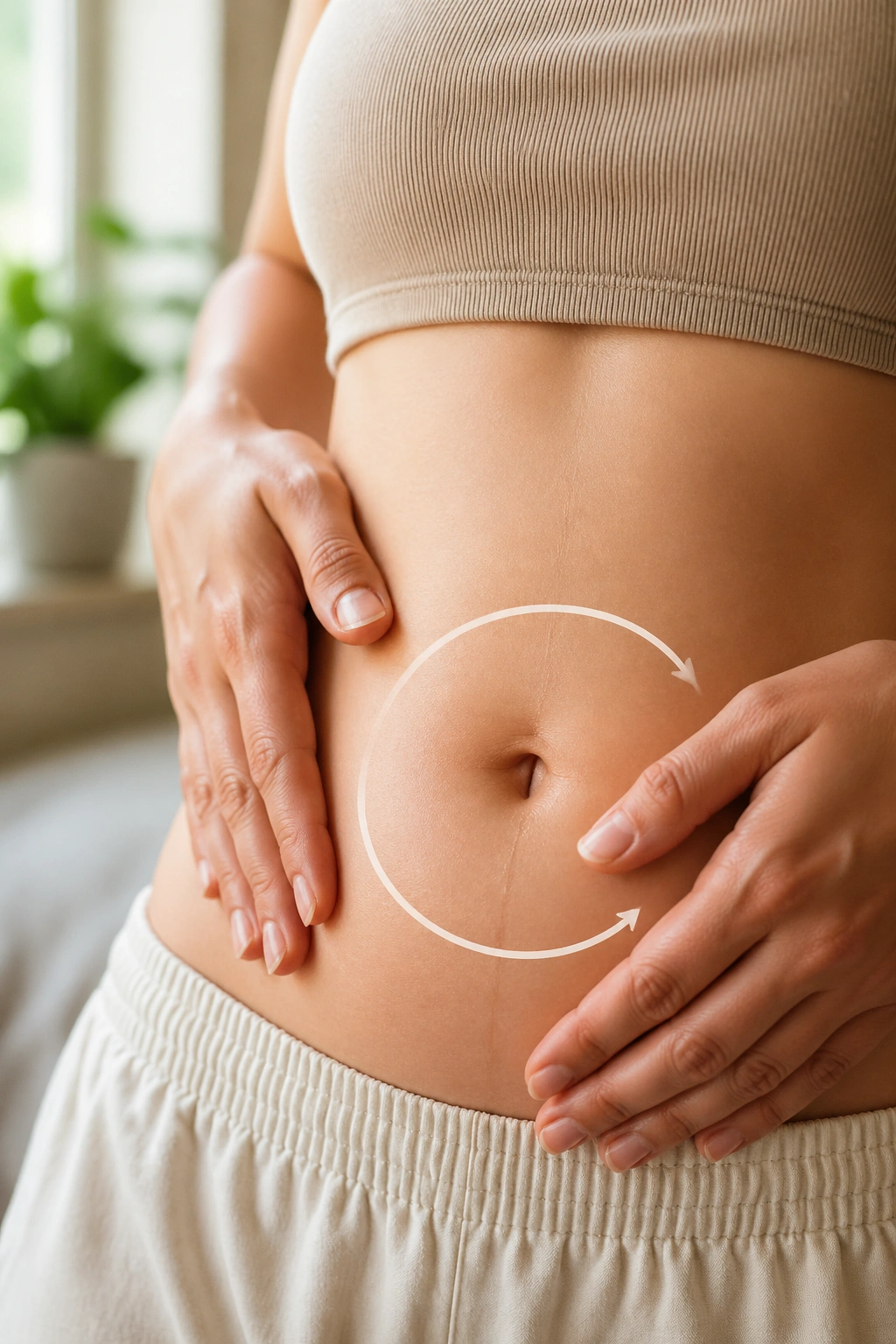
Timing matters more than pressure here.
A gentle massage after eating can help some people feel less bloated and less stiff, but only if they wait long enough for the meal to settle. Rush it, and you may feel worse. I usually think in terms of a light touch after 30 to 60 minutes, not immediately after you put the fork down.
Use the same clockwise motion from the first massage, but make it even softer. The skin should move a little under your palms; the belly itself should not feel pushed around. This is a comfort massage, not an ab workout, and not a digestive punishment for having lunch.
This technique is especially handy after a salty meal, a big restaurant dinner, or one of those days when your body feels like it’s holding on to every sip of water. It can’t erase the meal. It can make the aftermath feel less annoying.
If you get reflux, sharp cramps, or nausea after eating, skip it. Those are not signals to rub harder. They are signals to pay attention.
14. Waist-and-Back Bridge Massage
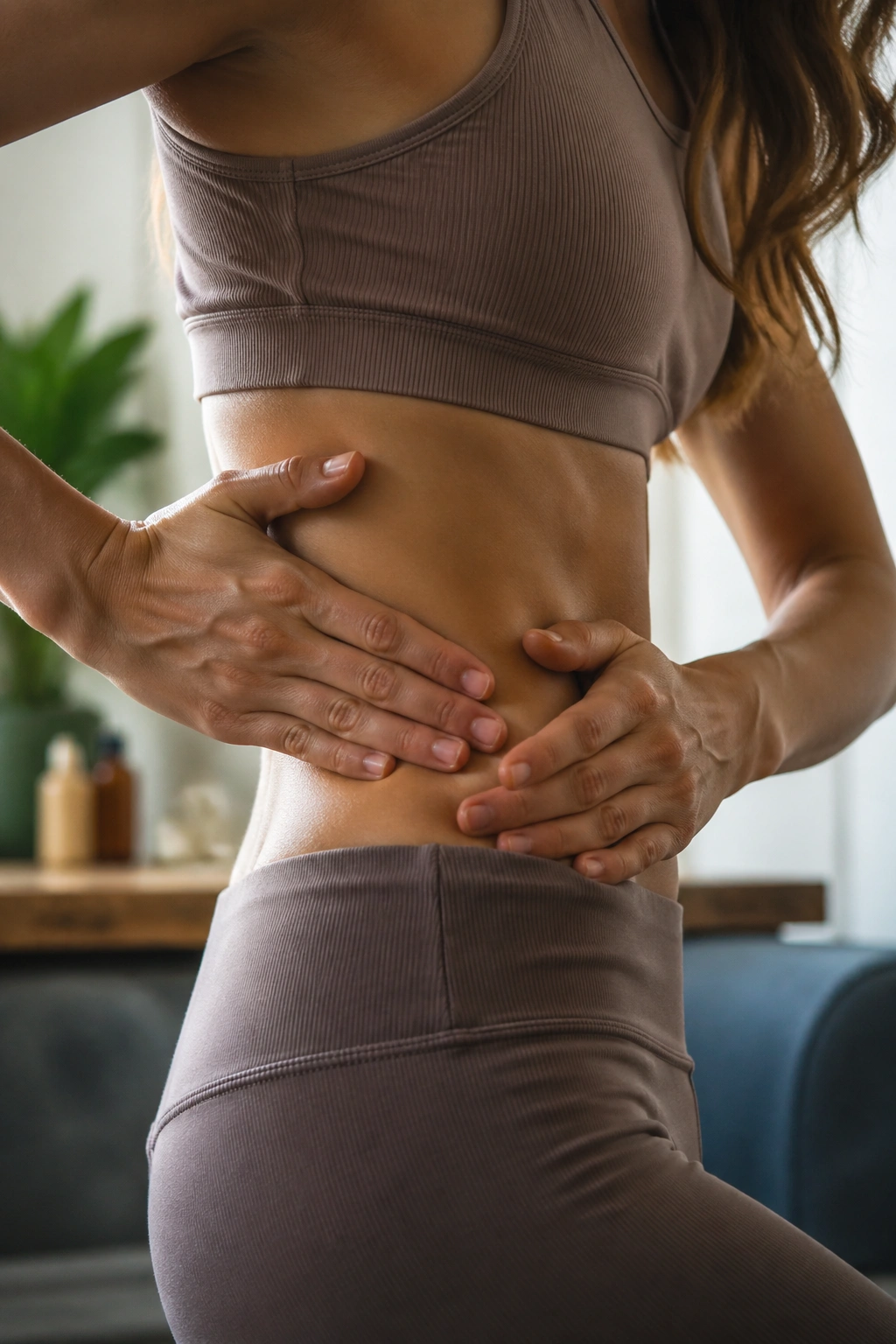
Most people stay glued to the front of the body when they think about belly work. That misses a lot.
The low back, the sides of the waist, and the muscles around the ribcage all affect how the abdomen looks and feels. When those areas are tense, the belly often sticks forward more. Not because of fat alone. Because posture changes the shape of the whole trunk.
Lean slightly forward over a counter or sit on the edge of a chair. Reach around to the sides of your waist and use your palms or knuckles to make slow, broad circles into the soft tissue beside the spine and over the flank. Keep it gentle near the ribs and a little firmer on the fleshy side waist if that feels good.
This one tends to surprise people. They expect a front-belly massage to solve a front-belly issue, then discover that their back was doing half the troublemaking all along.
A minute on each side is enough. More than that can get irritating if you’re not used to it. The sweet spot is loose, not bruised.
15. The Two-Minute Full-Belly Reset
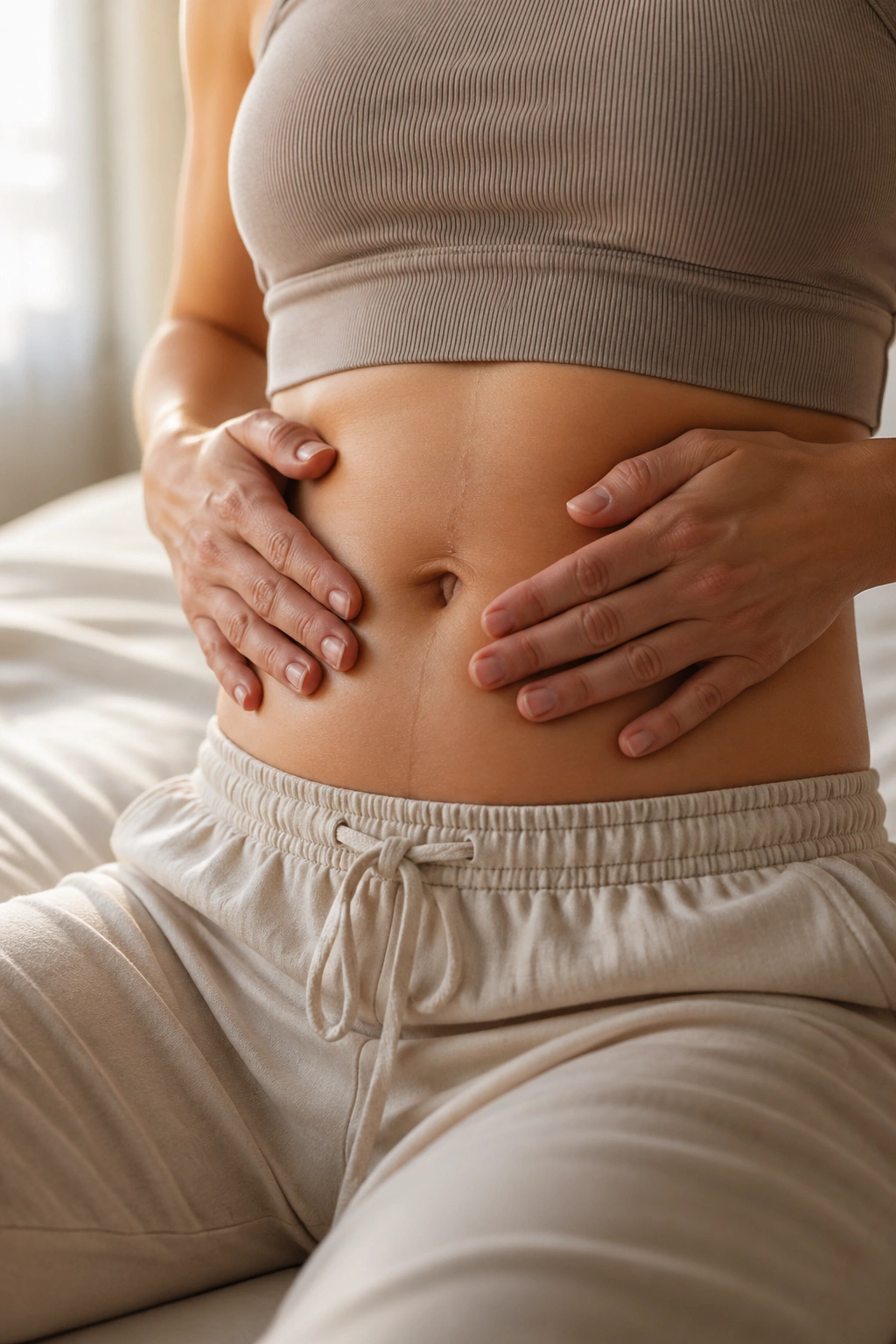
If you want one routine that ties the whole thing together, this is the one I’d keep.
Start with three slow belly breaths. Put warm hands over the navel, inhale so the belly rises into your palms, then exhale and let the hands soften downward. Move into a few clockwise circles, sweep lightly out toward the sides, and finish with one calm palm press over the whole abdomen. Two minutes. Maybe three if you’re enjoying it.
The value here is not in any single move. It’s in the sequence. Breath first. Then gentle motion. Then stillness. That pattern nudges the body out of clenched mode and into something closer to rest. When people do belly work consistently, this is often what they’re chasing: less tension, less puffiness, less of that hard, braced feeling that makes the waist look bigger than it needs to.
And no, this still won’t replace actual fat-loss habits. If the real goal is a smaller waist over time, the heavy lifters are still walking, strength training, sensible eating, sleep, and stress control. Massage just makes the process easier to live with.
The best use of all these techniques is simple: pick one or two that feel good, use them often, and stop chasing pain as proof. Soft tissue responds to repetition, not punishment. That’s the part people usually get wrong.
