



A good outfit does not hide a tummy. It gives the middle somewhere to rest.
That’s the part so many style tips miss. Women with tummies do not need a wardrobe full of baggy clothes, and they definitely do not need every hemline, waistband, and dart fighting for attention at the same spot. What usually looks flattering is a cleaner line, a little structure, and fabric that moves instead of clinging. Once you start looking for that, dressing gets easier fast.
I’ve always thought the best outfits are the ones that seem calm on the body. A blouse that skims, trousers that rise to the right spot, a dress that bends at the waist instead of cutting it in half — those details matter more than chasing some vague “slimming” trick. They also make getting dressed less annoying, which is underrated. If something pinches when you sit down, it will look pinched too.
The list below leans hard on shape, proportion, and drape. That’s where the magic lives. And the first formula is a classic for a reason.
1. High-Rise Wide-Leg Trousers and a Tucked Blouse
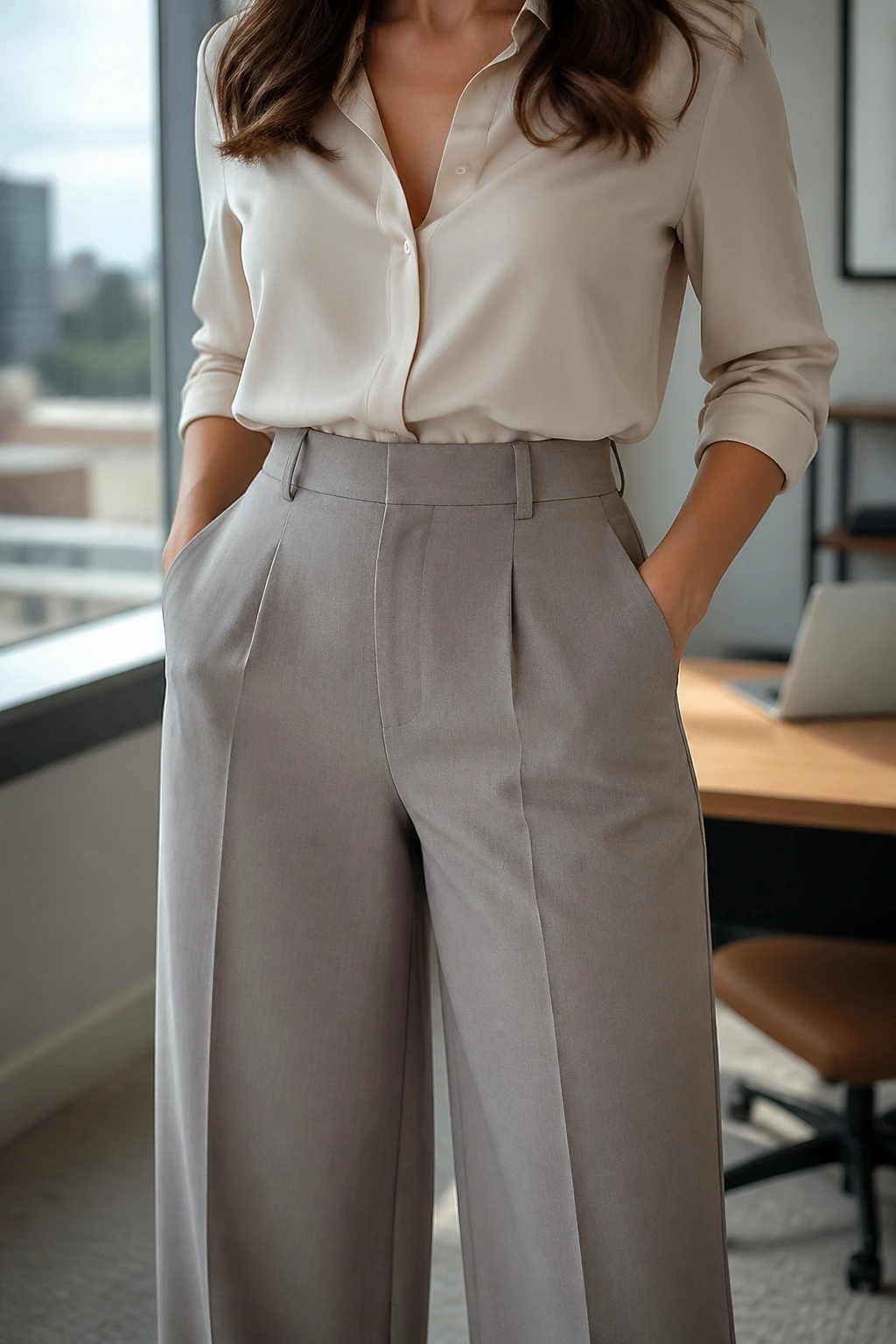
High-rise wide-leg trousers are one of the easiest outfits that flatter women with tummies because they give the waist a clear starting point and then let the fabric fall away from the midsection. That wide leg does a lot of quiet work. It balances the torso, lengthens the line, and keeps the eye moving instead of stopping at the belly.
The blouse matters almost as much as the trousers. Choose something fluid — silk, viscose, soft cotton, or a drapey rayon blend — and tuck it in with a little looseness at the top. A full tuck can work, but I usually like a neat front tuck because it keeps the waist visible without making the stomach feel boxed in.
What to Look For
- A waistband that sits at your natural waist, not low on the hip.
- A rise that feels secure when you sit down; no digging, no rolling.
- A flat front and a clean side seam.
- A blouse with a bit of movement, not stiff poplin that sticks out.
Try this: add a pointed flat or a low heel. Even half an inch of lift helps the trouser leg fall in a straighter line.
2. Wrap Dress
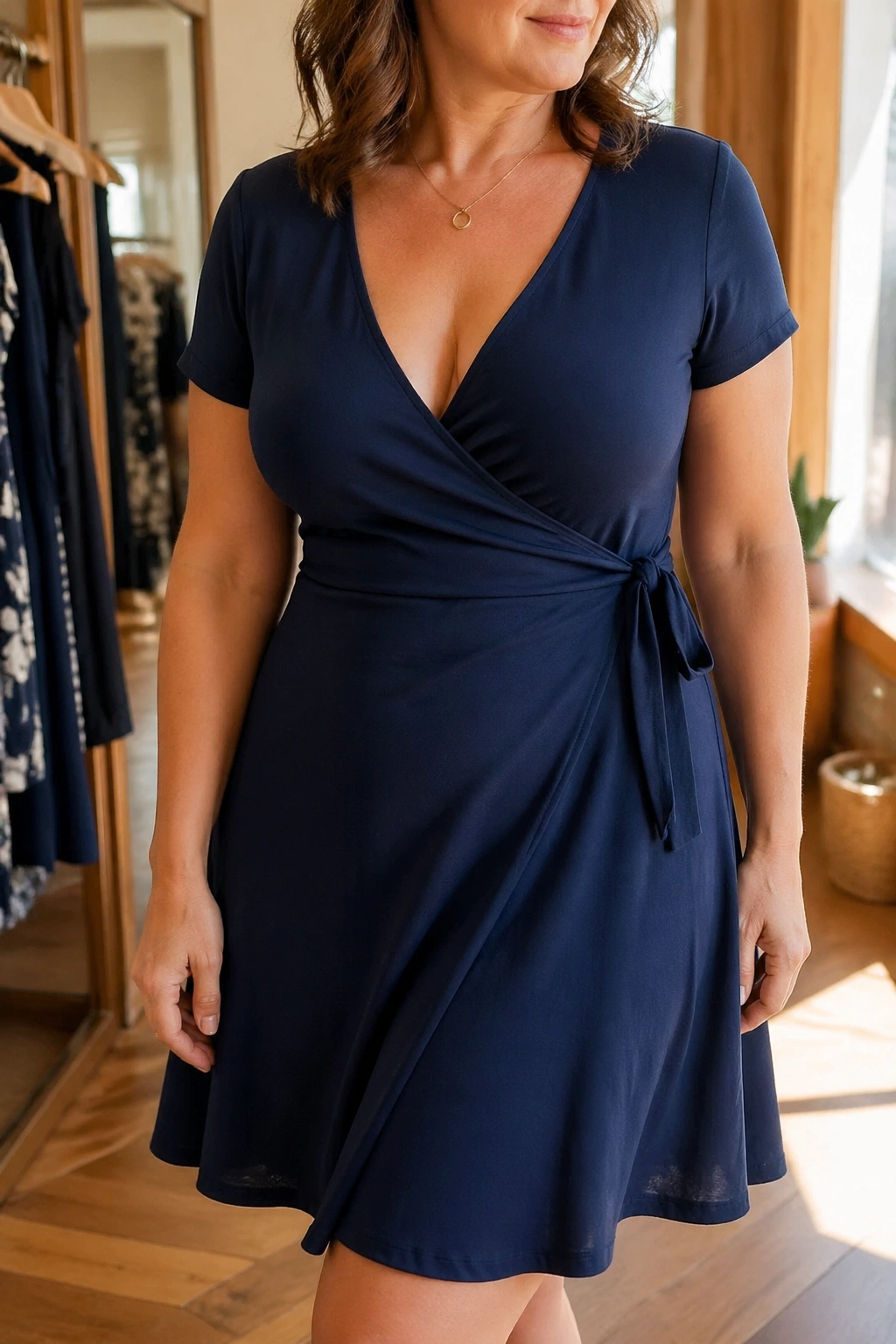
A wrap dress does one job better than almost anything else: it creates a waist where you want one without squeezing the middle. The V-neck opens the upper body, while the tied waist lets you adjust the fit. That adjustability is the whole point. You are not forcing your body into the dress; the dress is adjusting to you.
What I like most is how forgiving the skirt can be. A wrap skirt that starts at the waist and falls in a soft A-shape gives room over the tummy and hips, which keeps the whole look clean. Matte jersey, crepe, and soft woven fabrics usually behave better than clingy, shiny knits that grab every curve.
If you carry fullness through the center, keep the wrap point secure. A little snap at the neckline helps, and so does a dress that is lined through the skirt. Nothing ruins a wrap faster than constant adjusting. You want ease, not a tug-of-war.
3. A-Line Midi Skirt with a Fitted Knit Top
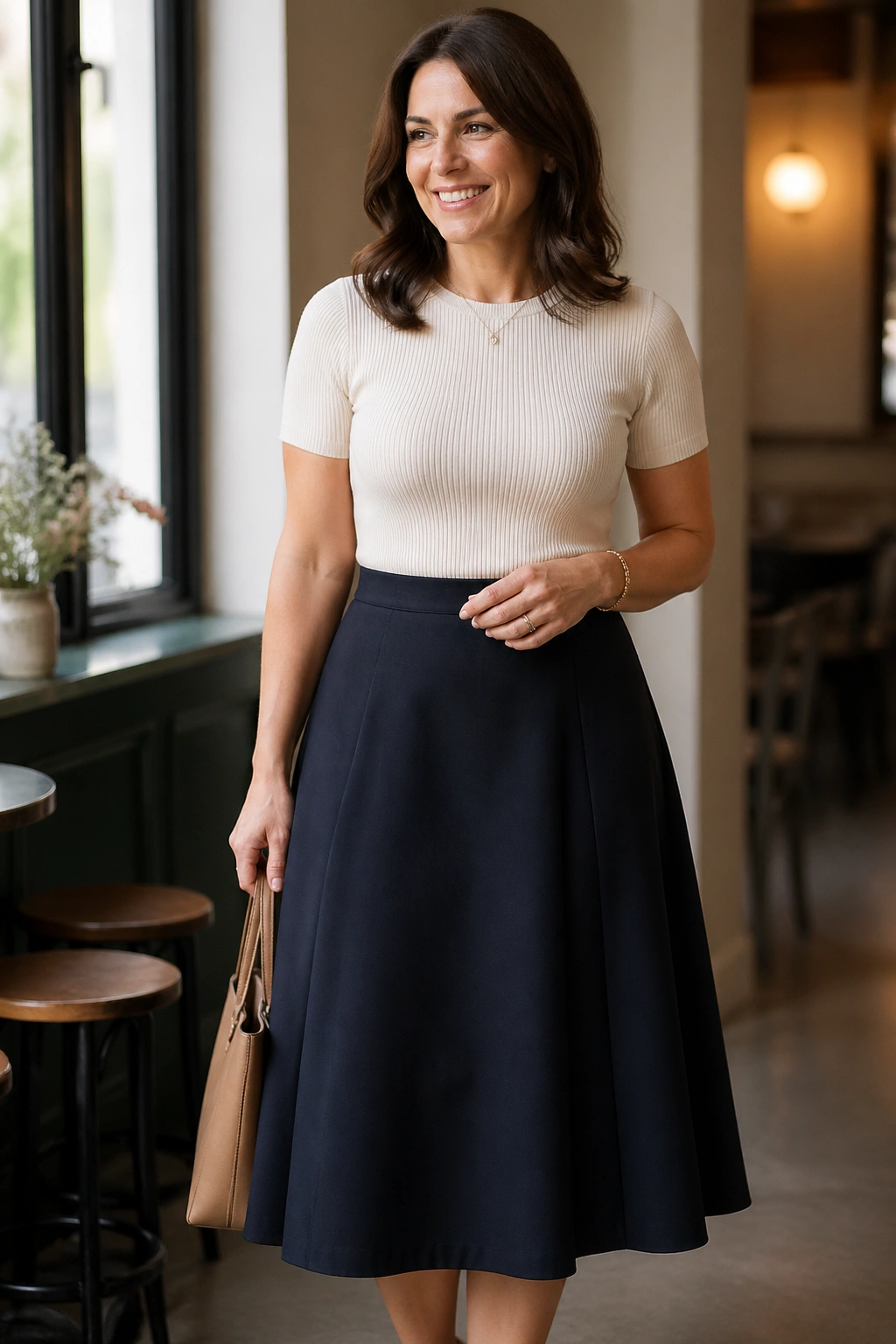
There’s a reason this outfit keeps coming back. It works. A-line skirts flare gently from the waist, so the fabric doesn’t sit tight against the lower tummy. Pair that with a fitted knit top, and you get shape up top without extra bulk around the middle.
This combo is especially good when you want something polished but not fussy. A ribbed knit or fine-gauge sweater in a smooth color does the trick. Keep the top close to the body, but not skin-tight. A sleeve that ends near the wrist or elbow gives the outfit a little structure, which helps more than people expect.
For the skirt, think mid-calf or just below the knee. That length keeps the line elegant and gives the lower half enough weight. Too short can feel abrupt; too long can drag the look down. The sweet spot is where the hem moves when you walk.
4. Empire-Waist Dress
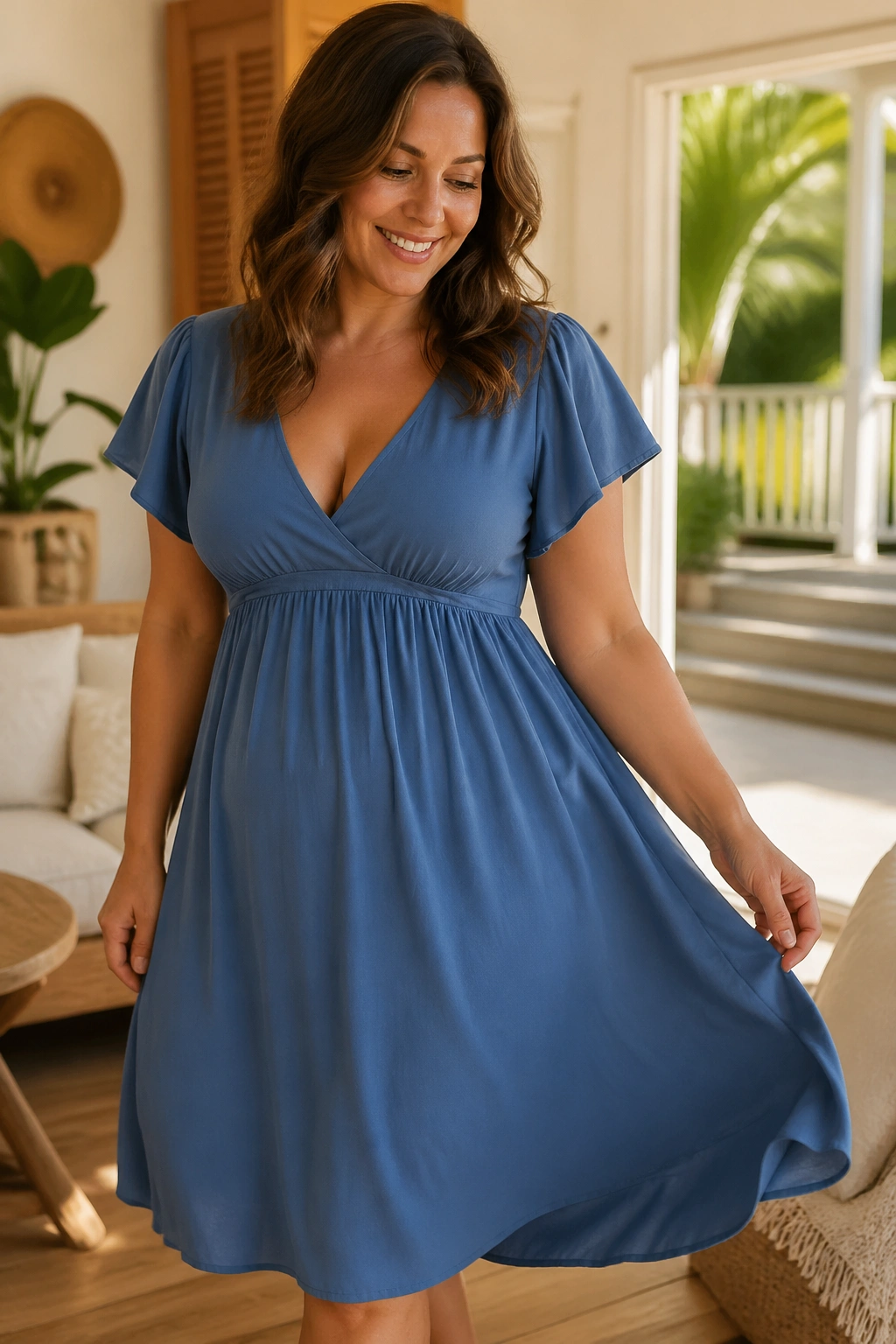
Can an empire waist work on a fuller middle? Absolutely — if the proportions are right. The seam should sit just under the bust, where it defines the upper body and then lets the skirt fall free. That placement keeps fabric off the tummy, which is exactly why this silhouette can feel so easy.
The trick is choosing one with some shape in the bodice. If the top is too loose, the dress looks maternity-like in the wrong way. If it is too stiff, it can bunch under the bust. A lightly structured bodice, thicker straps, or a soft square neckline usually works better than a flimsy neckline that slides around.
How to Wear It
Choose a skirt with movement but not too much volume.
Pick a hem that lands near the knee or mid-calf.
Skip tiny prints that blur the shape; medium-scale prints usually read cleaner.
A short jacket can work, but only if it stops above the empire seam.
That little seam placement changes everything.
5. Tailored Blazer over a Column Dress
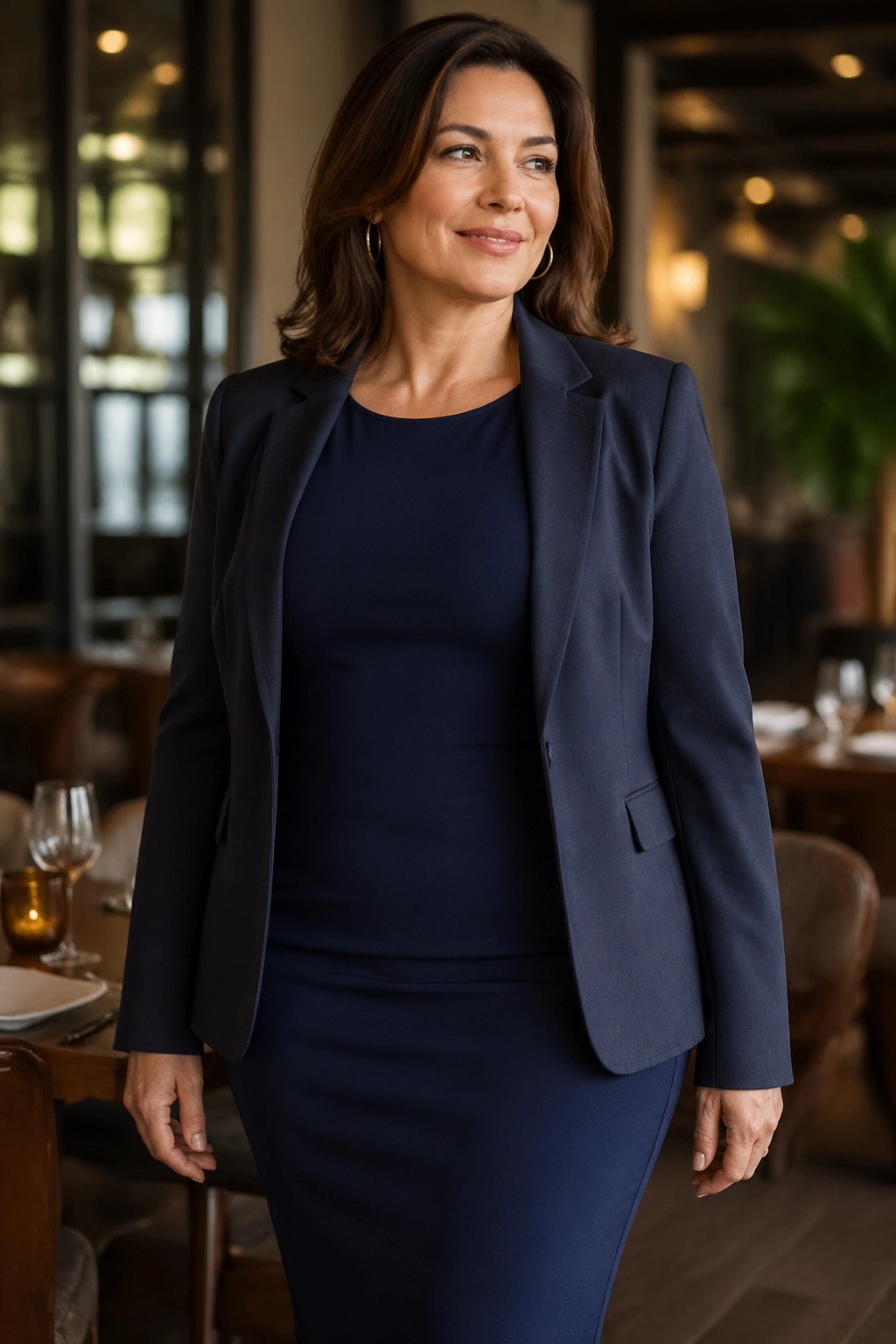
A tailored blazer can be the difference between “my dress is fine” and “this outfit has shape.” When it is cut close through the shoulders and nips a little at the waist, it creates a vertical frame around the body. That frame is flattering because it gives the eye lines to follow instead of one broad block across the middle.
A column dress underneath keeps the base simple. Think sleeveless or short-sleeve, in a smooth knit or woven fabric that falls straight. The blazer should not end right at the widest part of the tummy; that’s the old mistake. A slightly longer blazer, worn open, does more for proportion than a stiff cropped jacket that lands in the wrong place.
This outfit is strong for dinners, work settings, and events where you want polish without fuss. If you like structure, this is your lane. If you hate feeling pinned in, choose a blazer with a touch of stretch in the back panel.
6. Peplum Top and Straight Jeans
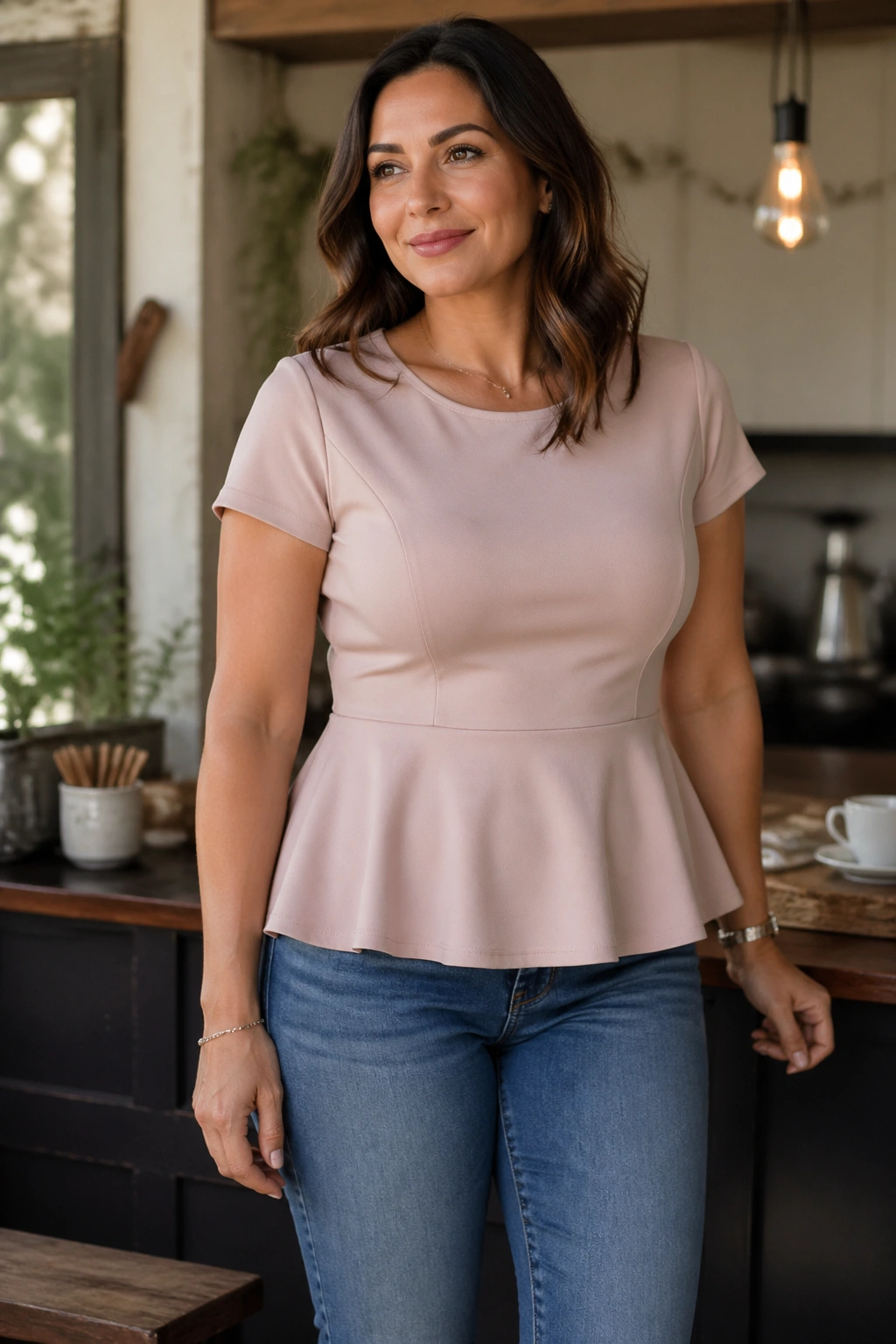
Peplum gets a bad reputation because people remember the overblown versions from years ago. The newer, subtler shape is different. A controlled peplum starts close to the waist and flares just enough to skim over the tummy, which gives you shape without cling.
Straight-leg jeans keep the lower half grounded. Skinny jeans can pull too much attention to the center if the top is also fitted. Straight legs look calmer. They balance the slight flare at the top and keep the whole outfit from feeling top-heavy.
I like this pairing for lunch, errands, or casual office days. The top should have enough structure to hold its shape — ponte, double-knit, or a heavier jersey all work. A very thin peplum just floats oddly. A better one feels almost architectural, but not stiff. That’s the difference between a flattering shape and a cheap one.
7. Shirt Dress with a Defined Waist
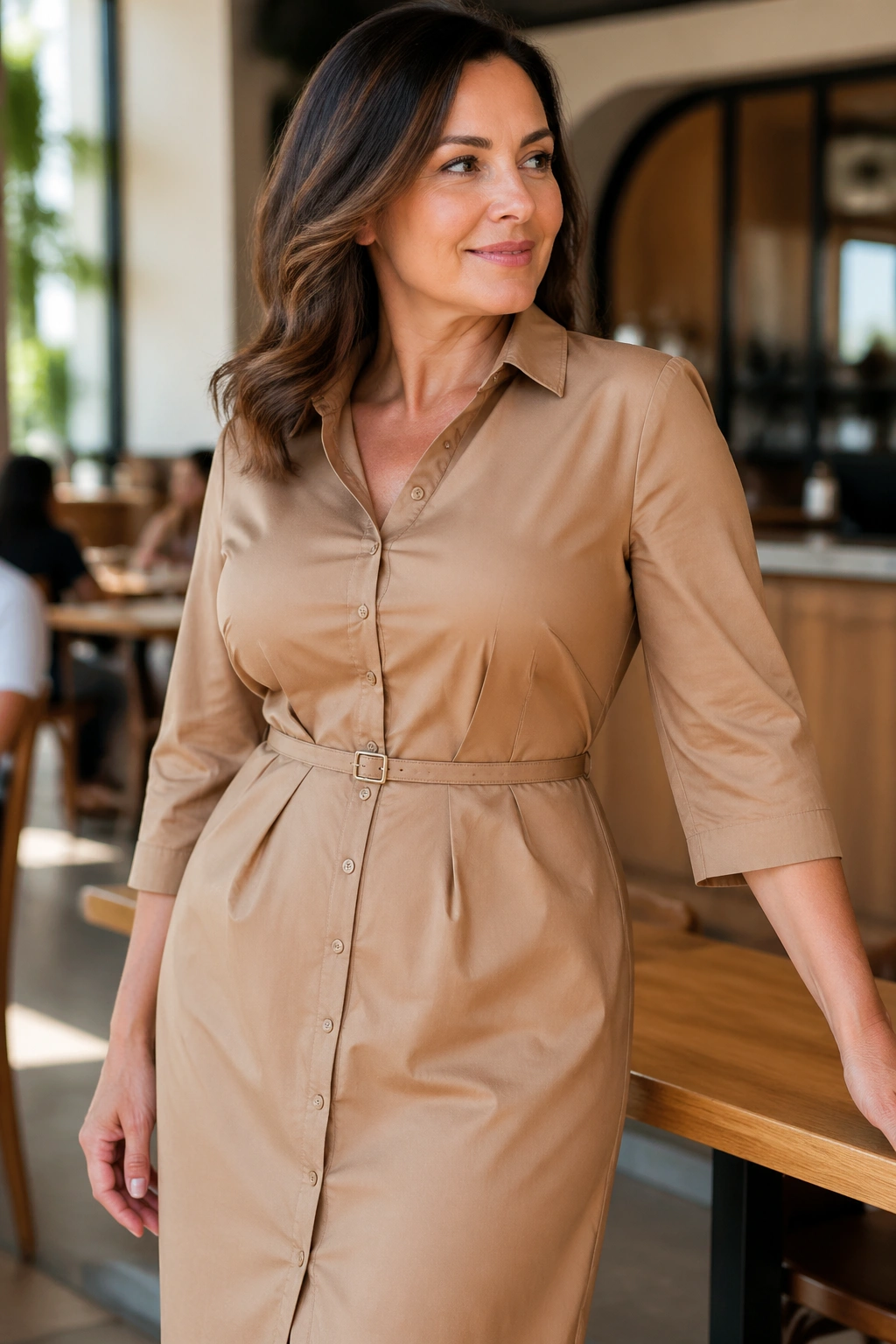
A shirt dress can be one of the most useful pieces in a closet, provided it has a real waist and not just a belt thrown on as an afterthought. The best versions have darts, a gentle cinch, or an elastic back that helps the dress follow your shape instead of hanging straight from shoulder to hem.
Button fronts can be tricky if the fabric pulls across the stomach, so check the fit at the bust and the waist separately. If the buttons gape, size up and have the waist taken in. That sounds boring, but it is often the fix that makes the dress look expensive.
Small Details That Help
- A midi hem with a little movement.
- Sleeves that can be rolled or pushed up.
- A belt in the same fabric or a narrow leather belt.
- A cotton poplin, linen blend, or Tencel weave that holds shape.
One more thing: if the skirt is slightly A-line, it will skim instead of cling. That’s the whole game.
8. Monochrome Column Outfit
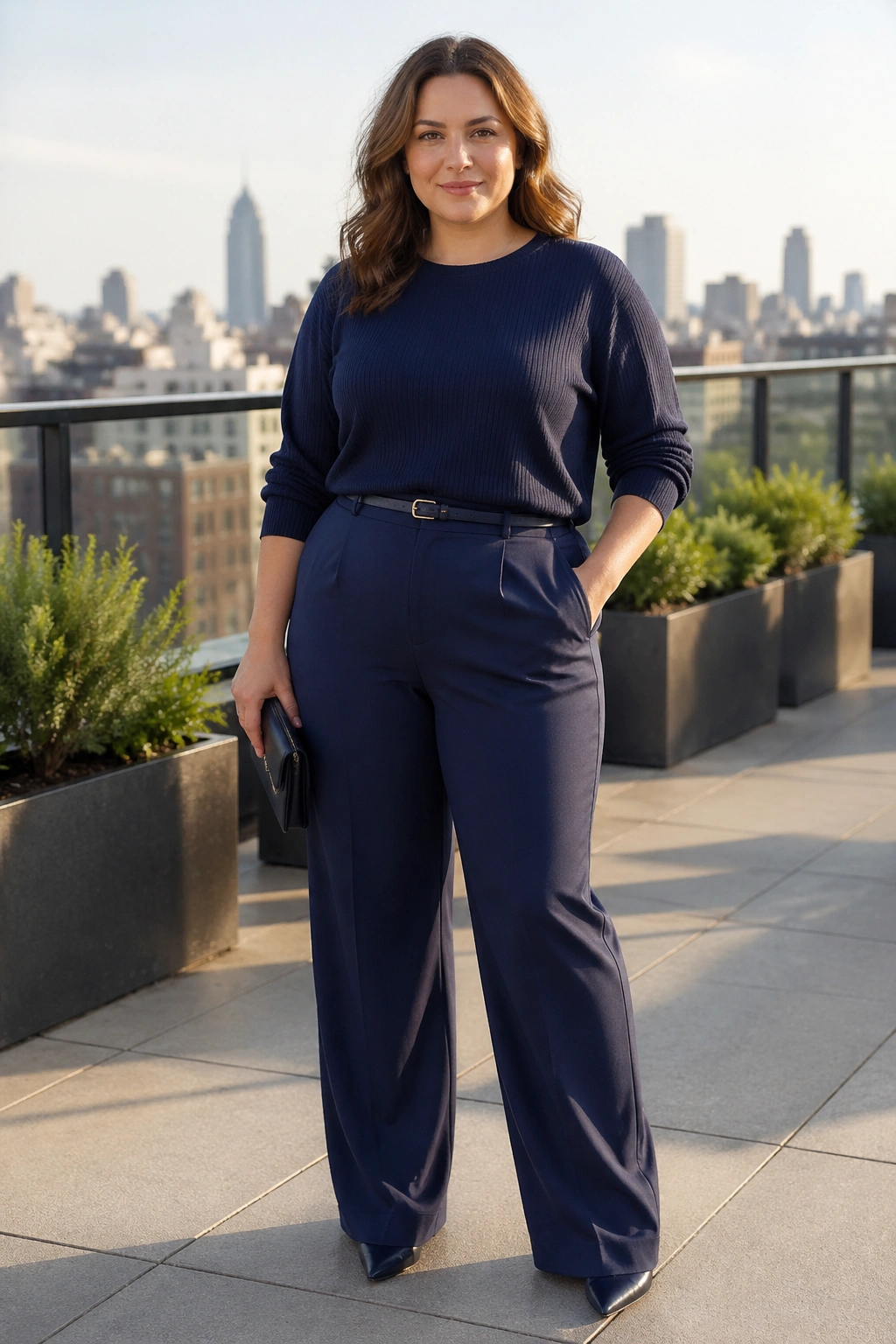
Wearing one color from top to bottom creates a long, clean line. That alone can make a tummy feel less central because there is no sharp break in the middle for the eye to lock onto. Black gets all the attention, but navy, chocolate, olive, charcoal, and cream can look softer and more interesting.
The best monochrome outfits are not flat. Mix textures so the look has depth: a soft knit top with tailored pants, a satin blouse with matte trousers, a ribbed tank under a long cardigan. The color stays the same, but the surfaces do the work. That’s what keeps the outfit from looking plain.
A belt can still fit into a monochrome look if it matches the outfit closely. Or skip the belt and let the seam lines do the shaping. Either way, the point is a smooth vertical story. It feels polished fast, and it is much less fussy than constantly trying to “balance” different colors around the middle.
9. Dark-Wash Straight Jeans, a Longline Cardigan, and a Camisole
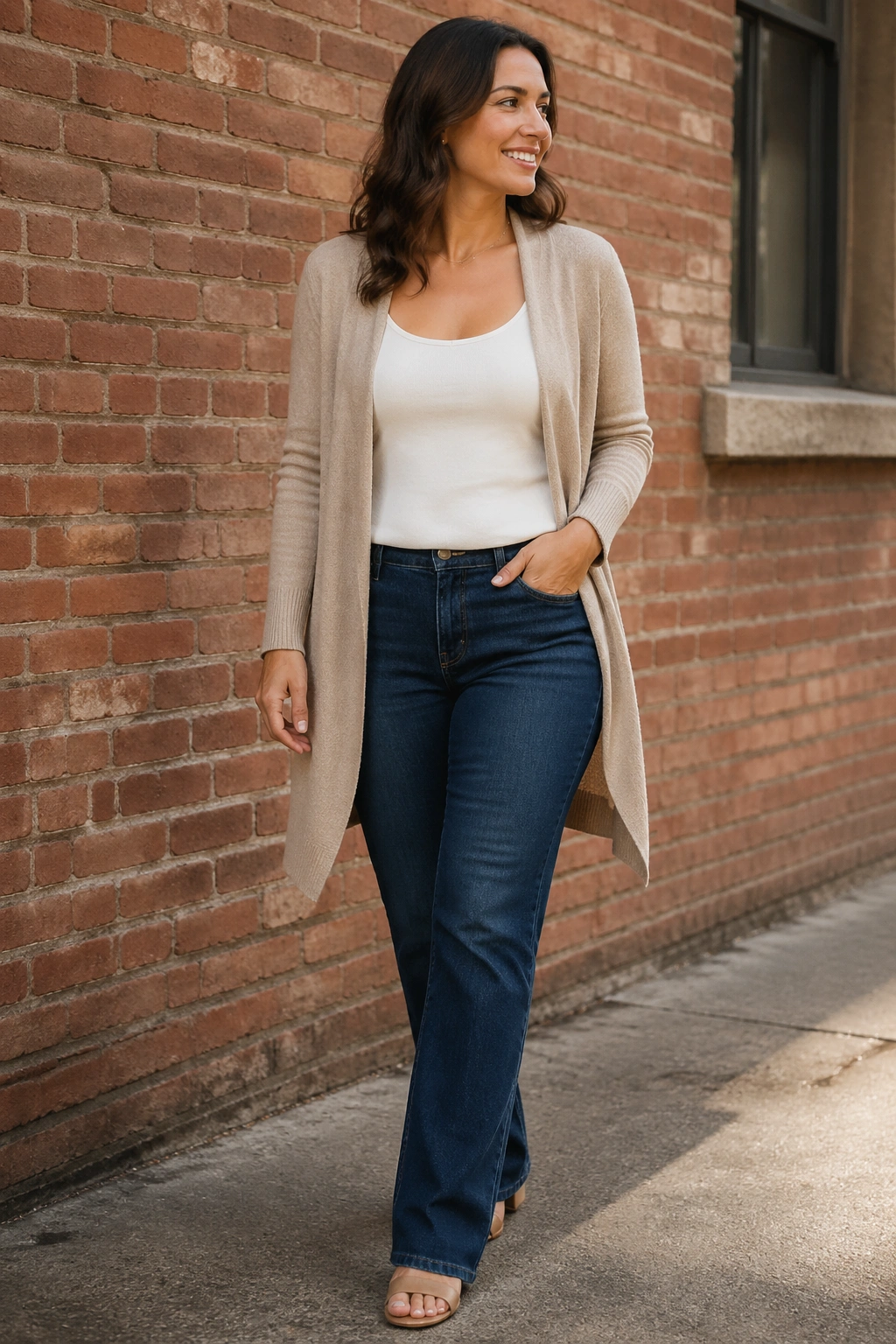
This is the outfit I reach for when I want to look pulled together without thinking too hard. Dark-wash straight jeans give a clean base, the camisole stays neat under the cardigan, and the longline layer creates a vertical panel down the front. That open line is flattering because it lengthens the torso without adding bulk.
The cardigan should skim past the hip, ideally ending around mid-thigh. Too short and it cuts the body in the wrong place. Too bulky and it adds weight where you do not want it. A lighter knit with some drape works better than a thick, chunky one that stands away from the body.
Leave the cardigan open. That’s the whole point. A closed cardigan can bunch at the middle and turn into a box. Open, it becomes a frame. Pair it with ankle boots, loafers, or low-profile sneakers, and the outfit stays easy.
10. Palazzo Pants and a Drapey Top
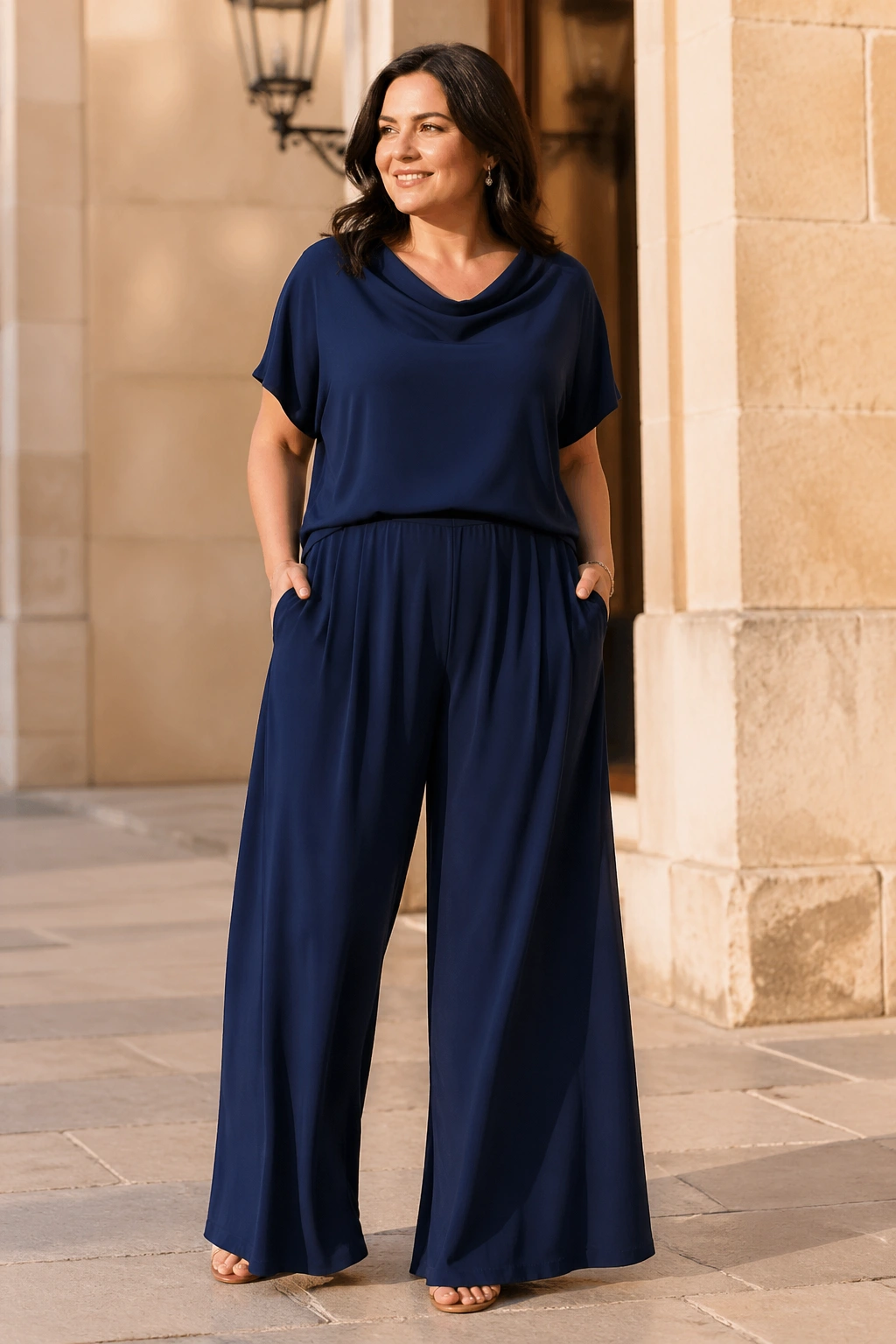
Why do palazzo pants flatter so many women with tummies? Because they give the lower body room to breathe. The width of the leg balances the torso, and the loose shape keeps the eye moving straight down instead of stopping at the waistline. It’s a nice trick, but not a gimmick.
The top should have a little softness too. A blouse that skims the stomach and hangs cleanly over the waistband works better than a stiff shirt that pokes out. Viscose, crepe, and fluid satin are good bets. If the fabric wrinkles badly when you sit, skip it. Nobody needs to spend dinner smoothing their shirt.
How to make it work
- Choose a waistband that sits flat and smooth.
- Keep the hem of the top near the hip bone.
- Pick pants that pool slightly over the shoe, not drag on the floor.
- Use a heel or a pointed flat if you want extra length.
This outfit can look dramatic in a good way. It has presence. And it is kinder to the middle than most slim-cut options.
11. Fit-and-Flare Dress
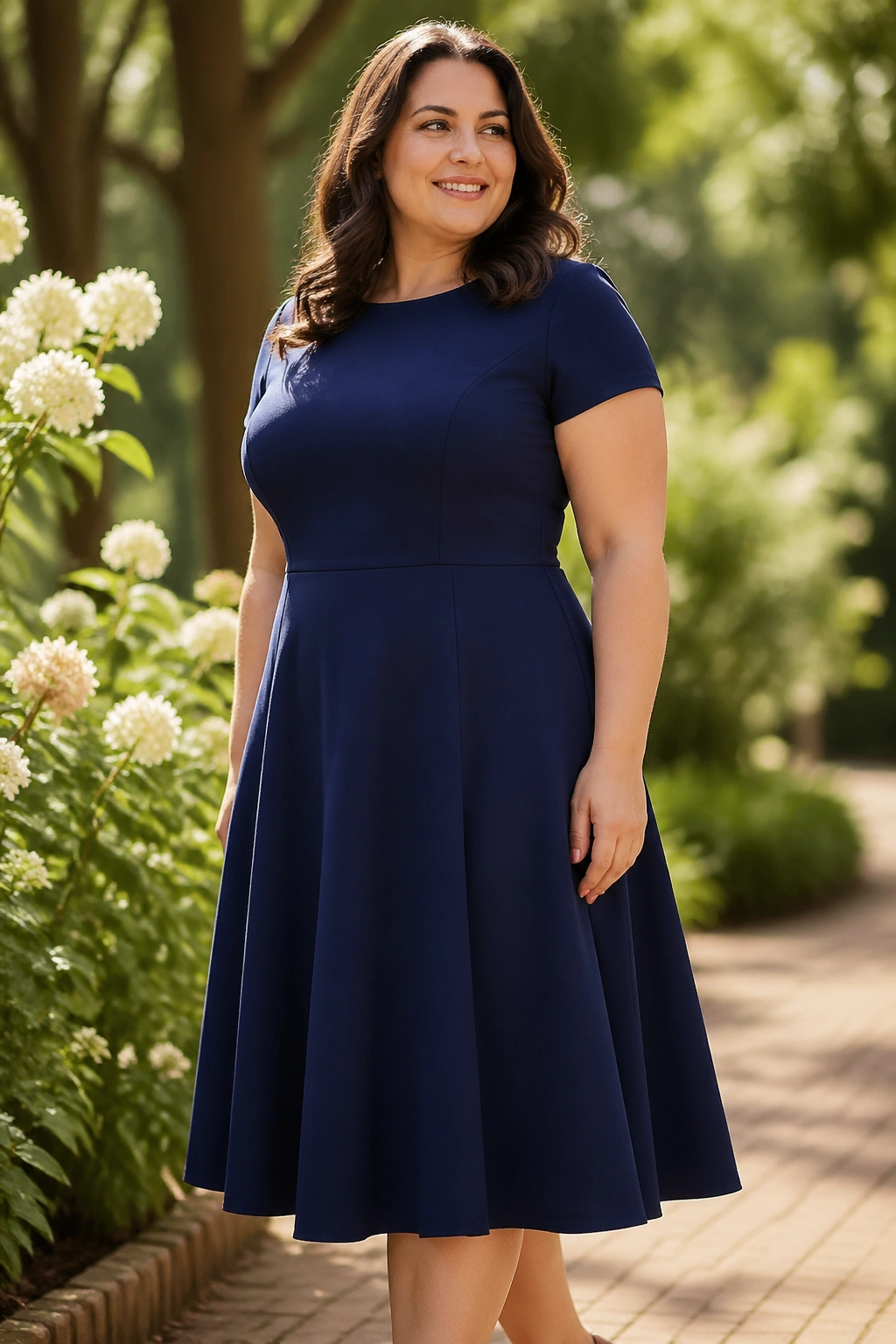
A fit-and-flare dress earns its place because it follows the body where shape is helpful and lets go where you want ease. The bodice defines the upper half, then the skirt opens away from the tummy and hips. That simple shift makes a huge difference when you want to feel dressed, not squeezed.
I prefer fit-and-flare dresses with a waist seam that sits at the natural waist rather than too low. A lower seam can make the torso look longer in a clumsy way. The higher placement gives the illusion of legs for days, and I know that sounds like a styling cliché, but the proportion really does matter.
This silhouette works for day events, office wear, and anything where you want movement. Choose a fabric with enough body to hold the flare — cotton sateen, ponte, or a structured crepe are solid options. If the skirt is so full it swishes like curtains, it starts to fight the body instead of flattering it.
12. Cropped Jacket and High-Waist Skirt
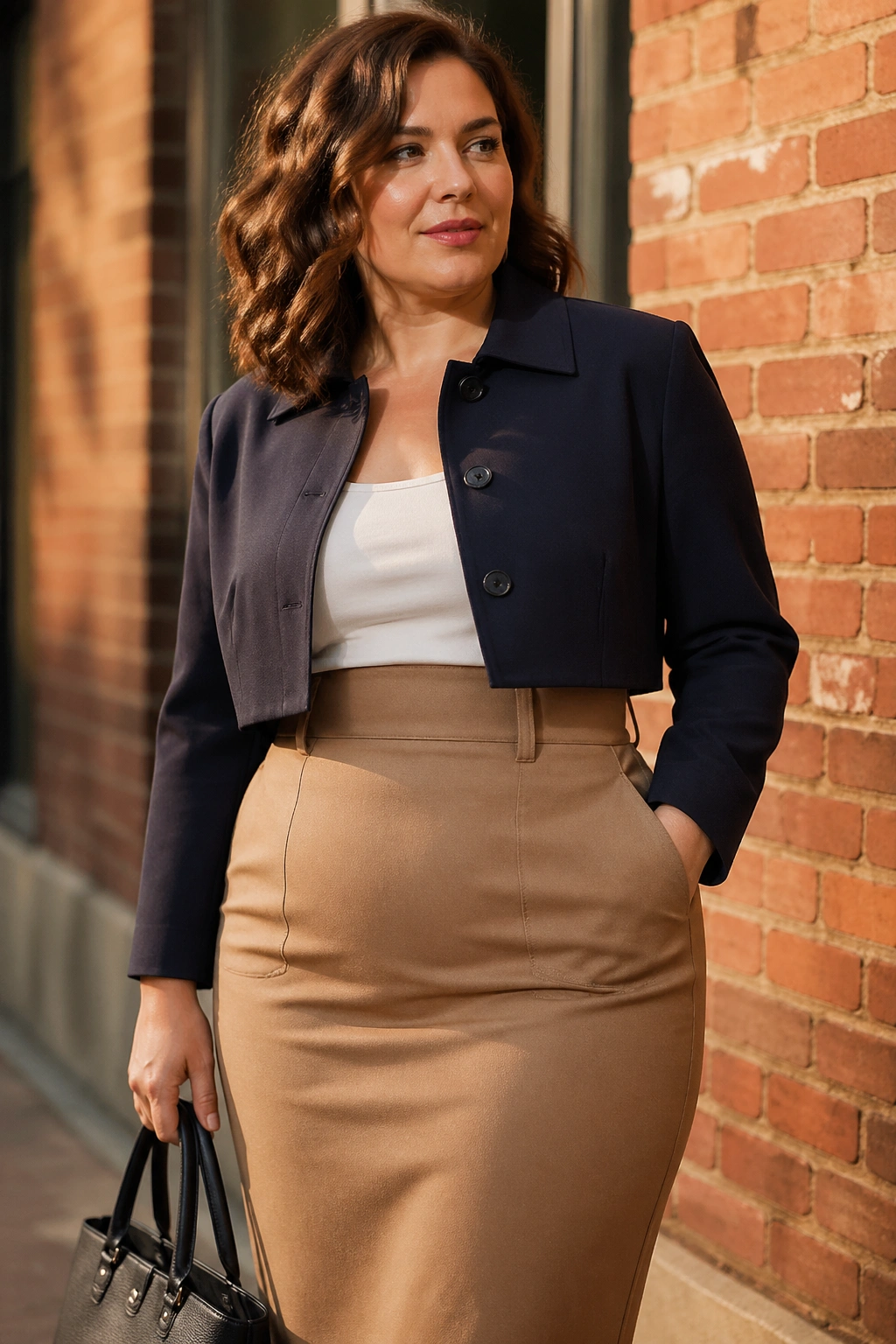
A cropped jacket can be excellent for a tummy, but only when it ends at the right place. You want the hem to stop above the fullest part of the midsection, usually near the top of the hip bone. That creates a shorter upper block and makes the skirt start cleanly below it.
Pair it with a high-waist skirt, ideally in an A-line or pencil shape with some structure. The skirt takes over where the jacket stops, and the waistline stays visible. This is one of those outfits that looks simple until you notice how carefully the proportions are doing their job.
The jacket itself should have a strong shoulder and a neat front. A sloppy cropped jacket just looks accidental. A good one feels crisp. Wear it over a simple shell or fitted knit, and keep the skirt smooth through the front so the whole outfit reads as one line, not two competing pieces.
13. Longline Tunic and Slim Pants
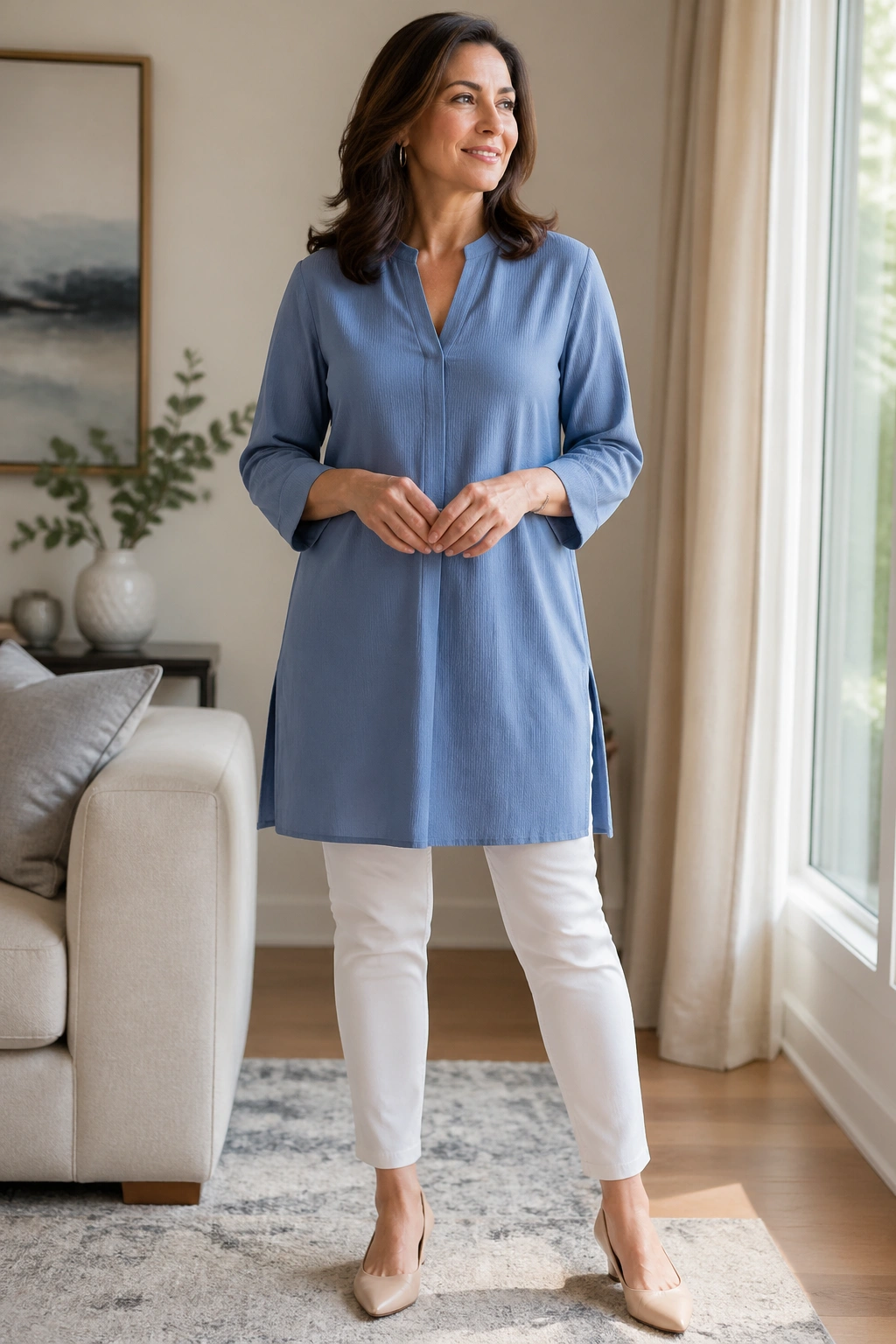
Can a tunic still work? Yes — if it has shape and length. The problem with bad tunics is that they hang straight from shoulder to thigh and make the body look wider than it is. A good one has side slits, a clean neckline, and enough structure to fall instead of float.
Pair it with slim ankle pants or straight pants that stay close to the leg. That contrast matters. The tunic supplies coverage, while the slimmer bottom keeps the outfit from feeling heavy. A V-neck or a shallow notch collar helps open the top, which is especially useful if you want the eye moving upward.
Avoid tissue-thin jersey. It clings in a way that shows every fold underneath, and nobody needs that headache. Better fabrics are cotton poplin, linen blends, or a slightly crisp rayon that holds a line. If you like tunics, this is the version that actually earns its keep.
14. V-Neck Top and Tailored Trousers
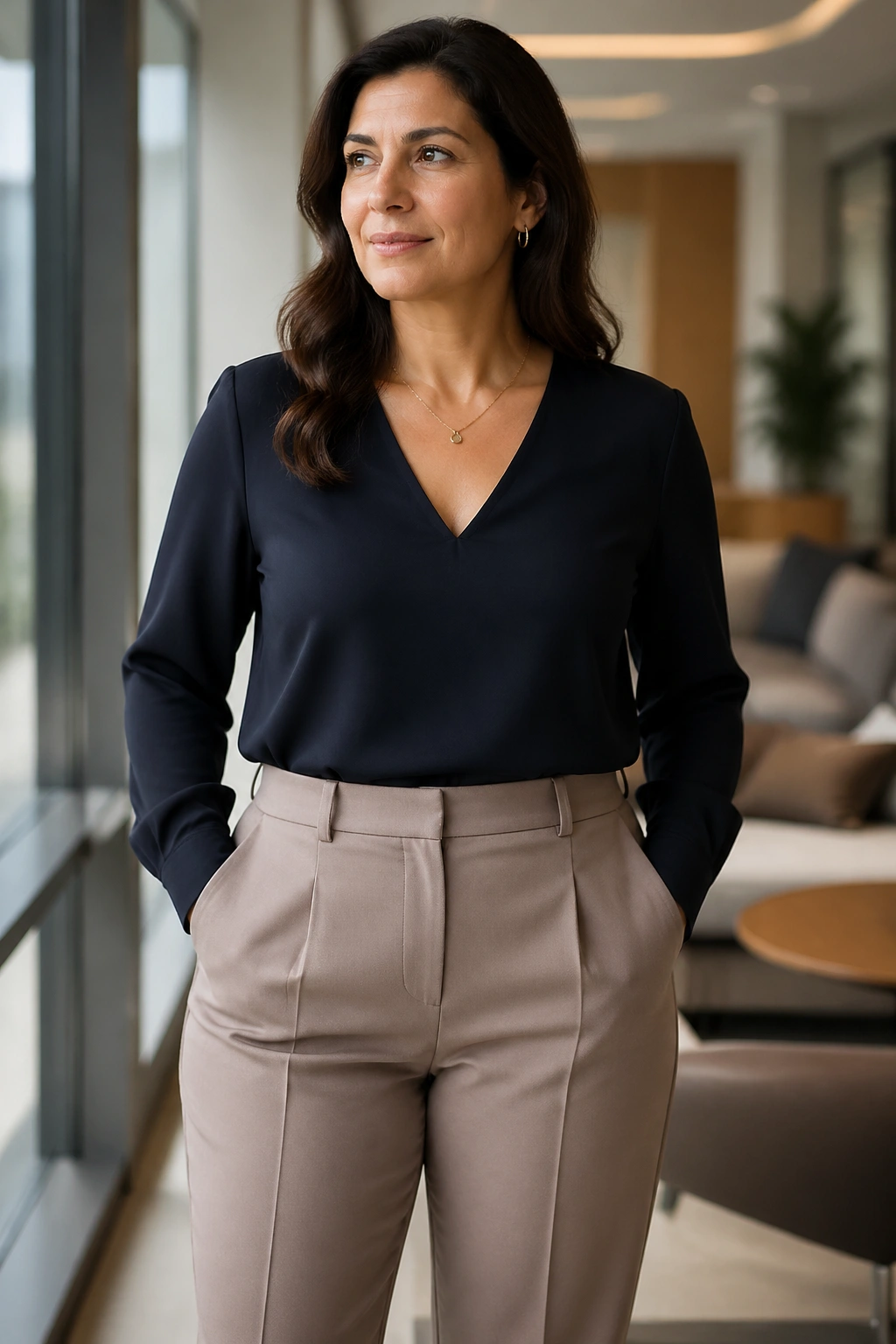
A V-neck does half the styling work for you. It opens the chest, lengthens the neck, and pulls attention upward before the eye ever reaches the tummy. That makes it a smart choice when you want the outfit to feel balanced rather than centered on the waist.
Tailored trousers finish the job. A clean front, a medium-to-high rise, and a leg that falls straight or slightly tapered all help create a strong lower line. I like this with a blouse that has soft drape or a knit top that follows the body without clinging. A necklace can help too, but keep it simple. A long pendant or short chain usually looks better than a heavy, crowded stack.
This outfit works because it is calm. Nothing yells. The neckline opens, the pant line drops, and the tummy becomes part of the whole picture instead of the star of the show.
15. Bias-Cut Skirt and Fine-Knit Sweater
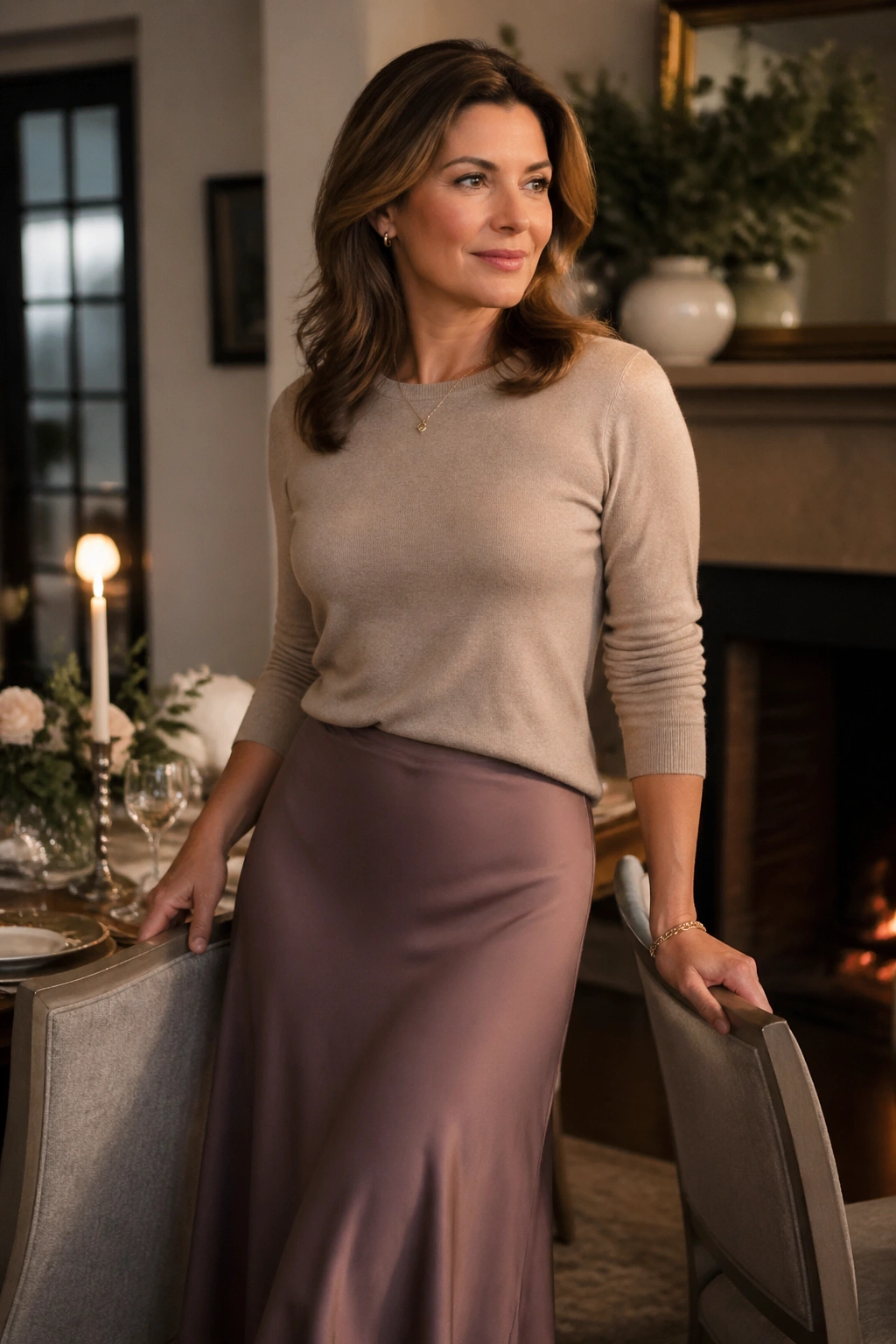
Bias-cut skirts have a lovely way of moving around the body rather than sitting on top of it. Cut on the bias, the fabric drapes diagonally, which lets it skim the hips and lower tummy without grabbing in a harsh line. It feels feminine without being fussy, and that is a combination I never get bored of.
Pair it with a fine-knit sweater that ends near the waistband or tucks in softly at the front. Chunky sweaters can overwhelm the skirt and add too much weight. A lighter knit keeps the outfit sleek. If you want a little more definition, a narrow belt can work, but only if it stays flat.
This is a good dinner outfit, a good date outfit, and a good “I want to look like I thought about this” outfit. The skirt should not cling at the hem. If it does, size up or choose a slightly heavier fabric so it falls in a smoother line.
16. Jumpsuit with a Defined Waist
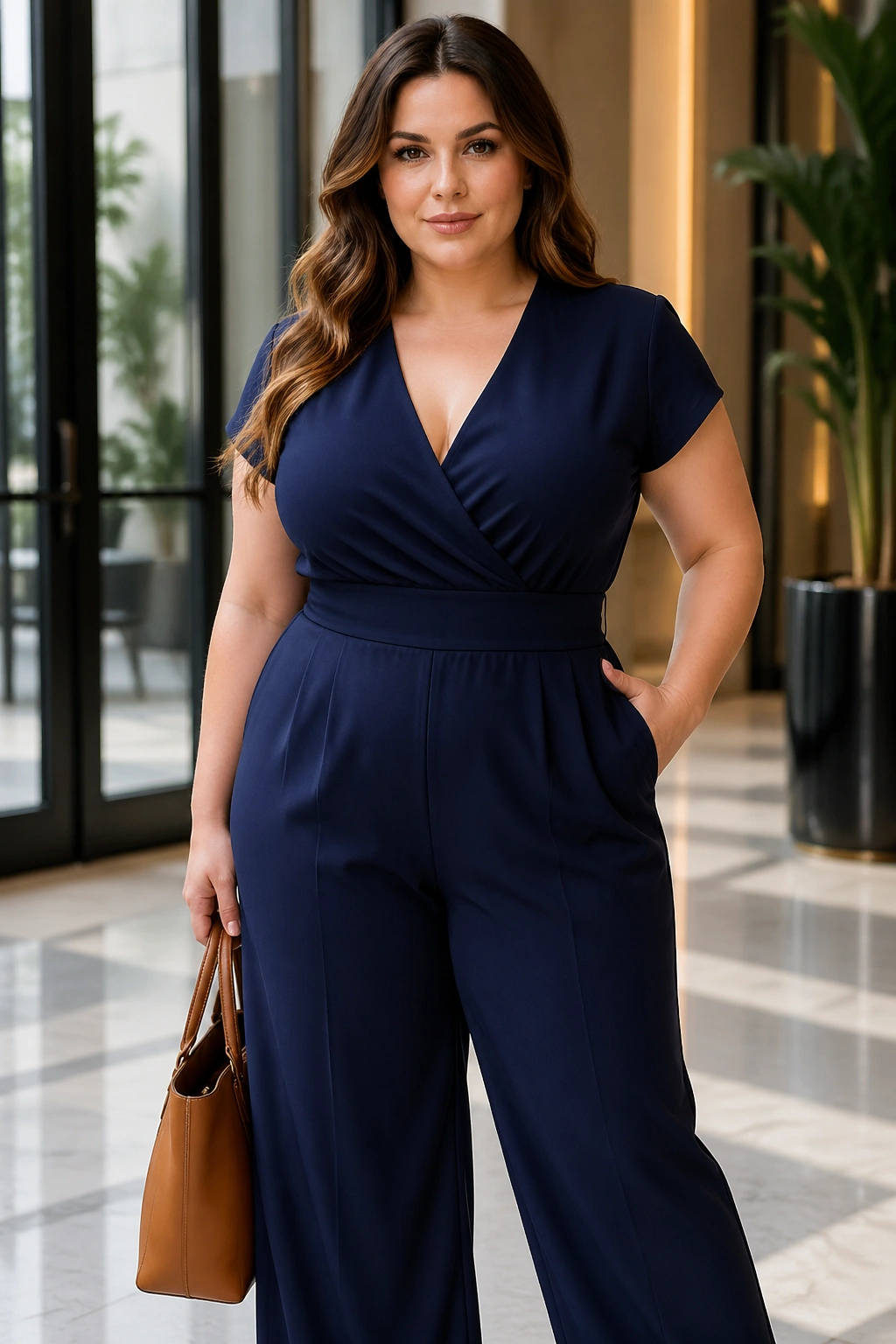
A jumpsuit is one of those pieces that sounds risky until you find the right one. Then it becomes easy. The best versions for women with tummies have a real waist seam, a wrap front or V-neck, and enough room through the torso so the crotch does not pull. That last part matters more than people admit.
Wide or straight legs work better than skinny ones. They keep the bottom half balanced and make the waist look smaller by comparison. A jumpsuit with a self-belt can be useful, but only if the fabric has enough body to support it. A limp tie on slippery fabric tends to slide around and annoy you all night.
The fit should feel smooth when you sit, bend, and reach. If the fabric tugs across the tummy or pulls at the shoulders, it is not the right cut. The right jumpsuit looks effortless because the structure is hidden in the pattern.
17. Belted Trench over a Midi Dress
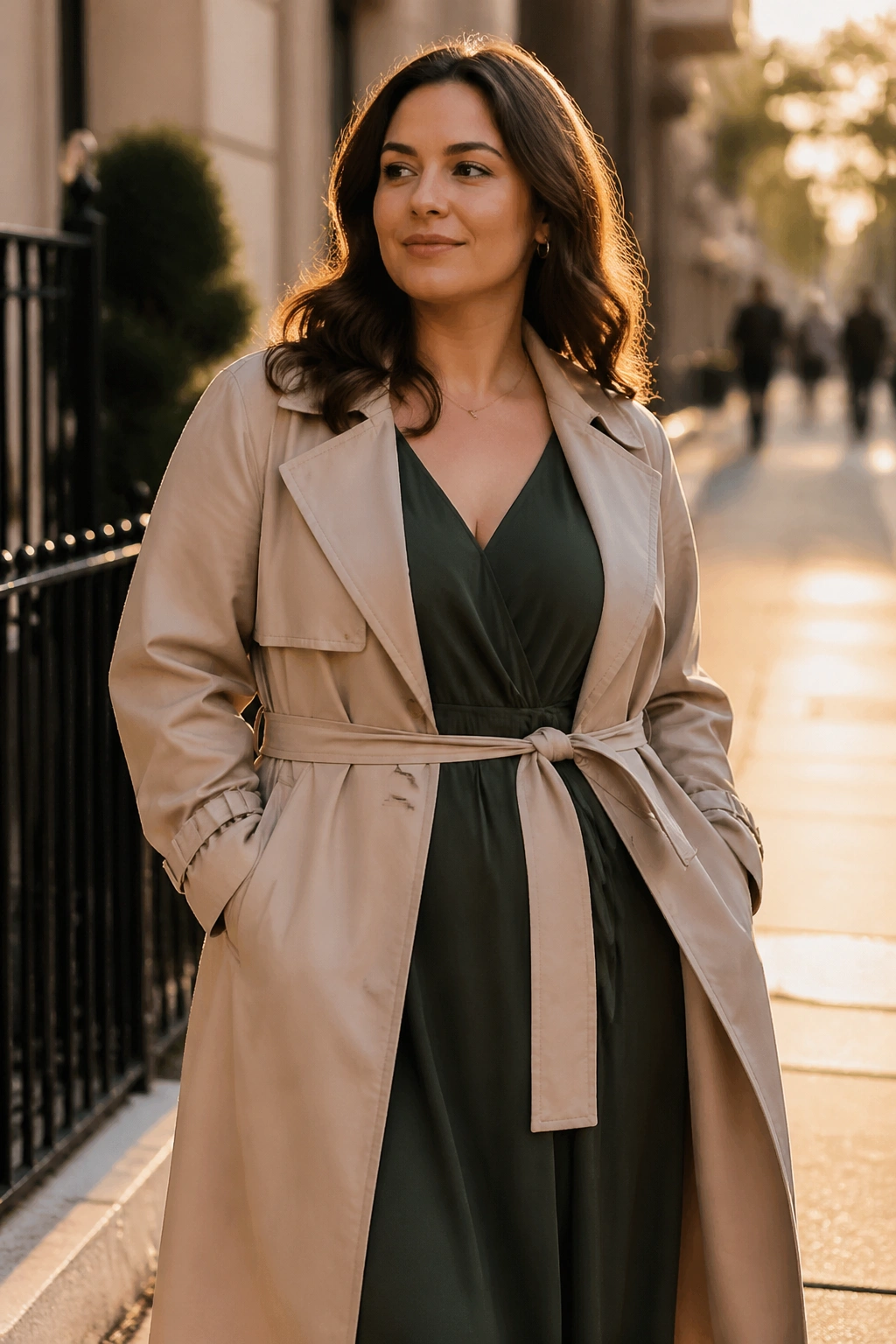
A belted trench brings shape to a look without making the outfit feel dressed-up in a stiff way. The lapels create vertical lines, the belt defines the waist, and the longer coat length gives the body one continuous frame. That makes it useful over a midi dress, especially when you want coverage through the middle and a little polish at the same time.
I like the trench worn open, then loosely tied rather than cinched so tightly that it bunches. A stiff belt pulled flat across the belly usually looks less flattering than a softer knot or a relaxed tie. The dress underneath should stay simple — a column dress, a slip dress with structure, or a soft knit midi all work.
This outfit is especially good when the weather asks for layers. The trench adds shape; the dress adds ease. If the hem of the coat and the hem of the dress are too close in length, make sure the dress still moves. A little swing keeps the whole look alive.
18. Structured Blazer and Pencil Skirt
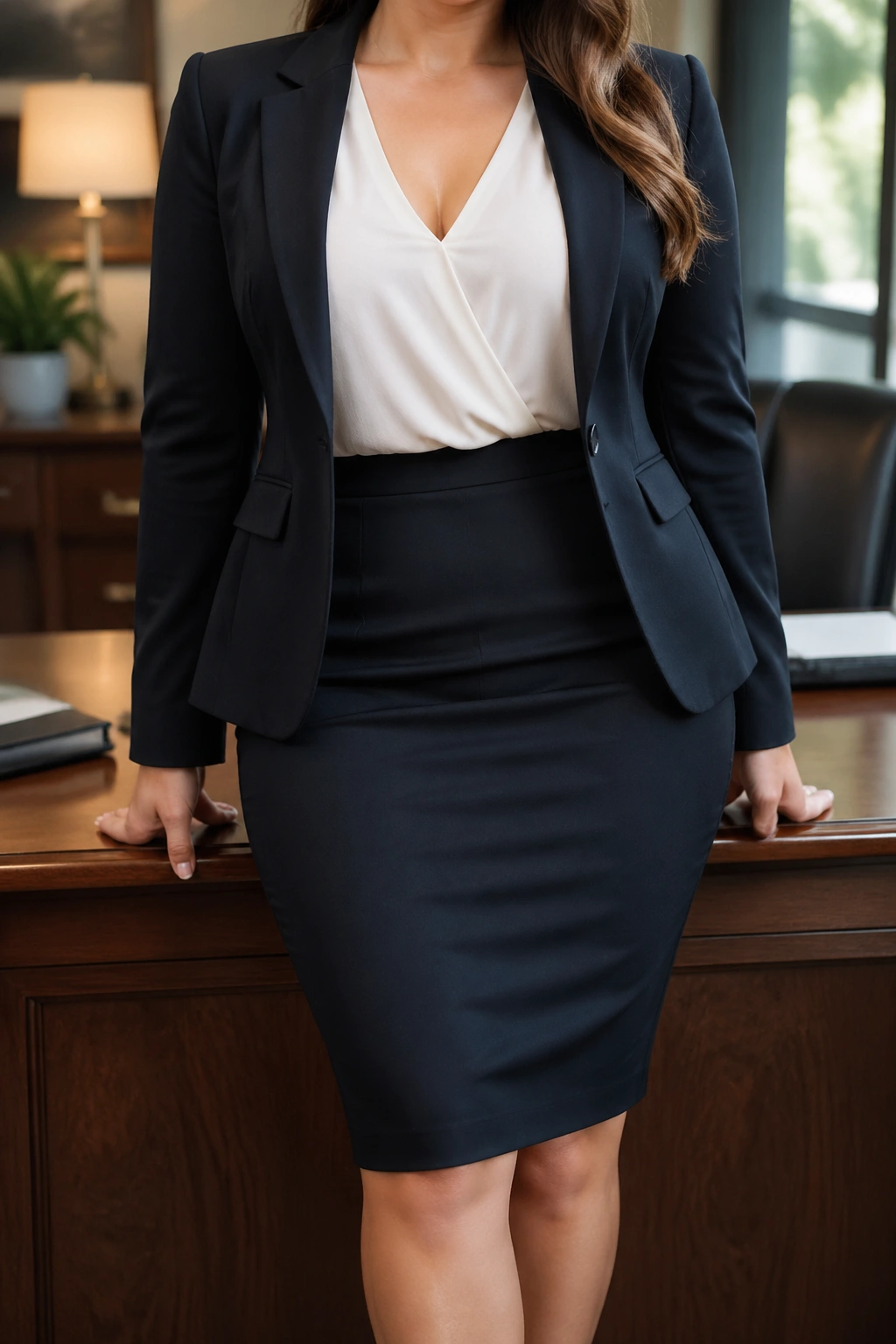
A structured blazer can change how the whole body reads. Strong shoulders, a nipped waist, and clean lapels create a frame that draws attention up and out, which is useful when you want the middle to feel less central. With a pencil skirt, that shape becomes sharp and polished.
The skirt needs to fit, not fight. A high-rise pencil skirt with a back vent and a waistband that stays flat is a better choice than a clingy knit version that hugs every line. If you sit in it for ten minutes and immediately want to unbutton something, that is not your skirt. A little stretch is fine. Too much stretch often looks cheap.
This is a strong office or event outfit. It feels confident without leaning on tricks. Keep the top simple under the blazer — a shell, a fine knit, or a softly draped blouse. Anything bulky under a structured jacket ruins the clean line.
19. Relaxed Button-Down, Half-Tuck, and Straight Jeans
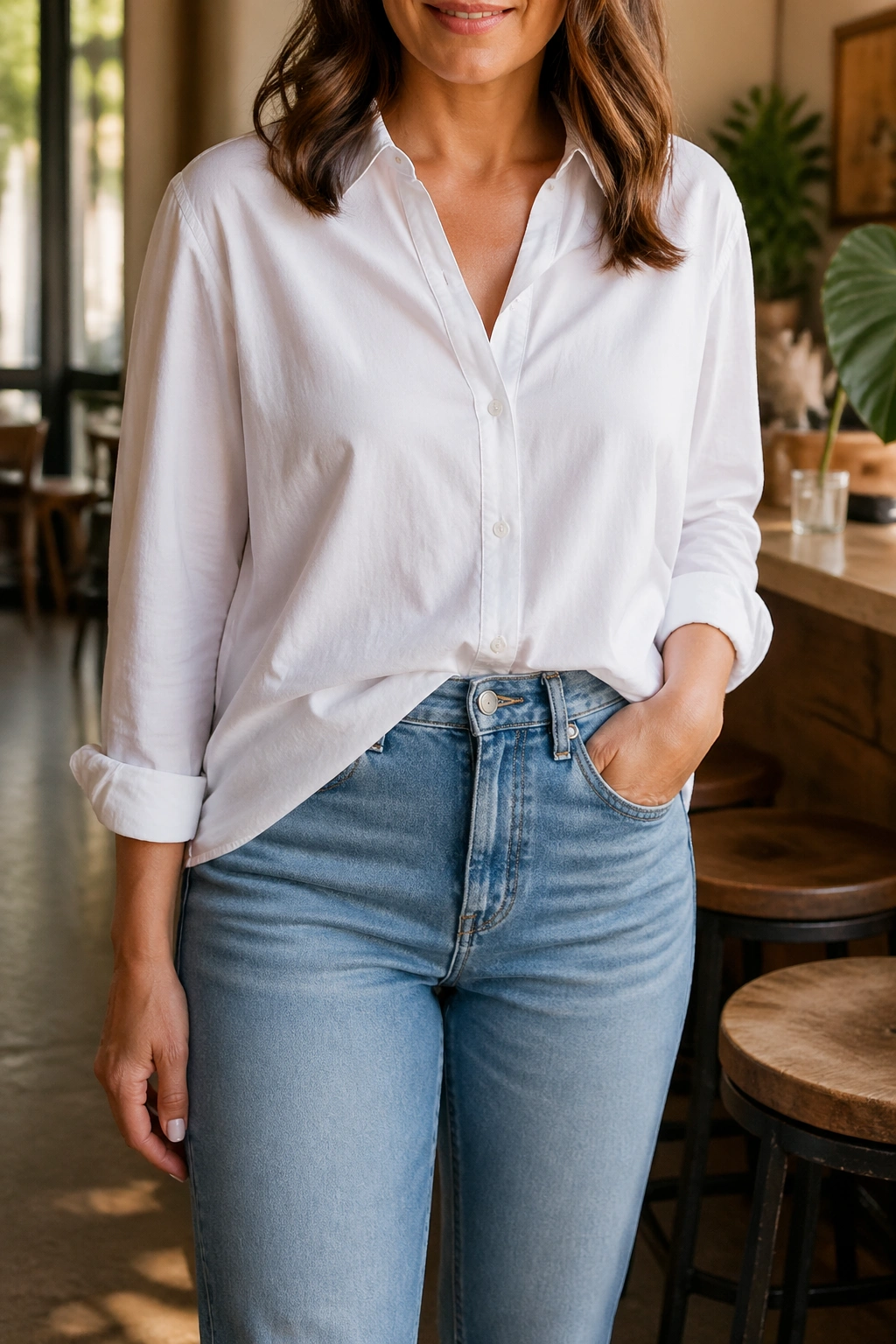
A relaxed button-down shirt can be a small miracle when it is styled properly. The half-tuck keeps the front from hanging straight over the tummy, which helps show the waist without making a big statement about it. Straight jeans keep the lower half from looking squeezed into the top half.
Fabric makes all the difference here. Cotton poplin gives a crisp line, while a linen blend feels softer and more casual. I would skip shirts that are too shiny or too oversized, because both can make the middle look wider. You want enough room to move, but not so much that the shirt becomes a tent.
Leave one or two buttons open at the collar. That little V draws the eye upward and makes the neck look longer. If the shirt hem is too long, shorten it or have it tailored. The line matters. A good shirt is one of the easiest things to wear well, and one of the easiest to get wrong.
20. Caftan-Style Maxi Dress with Shape
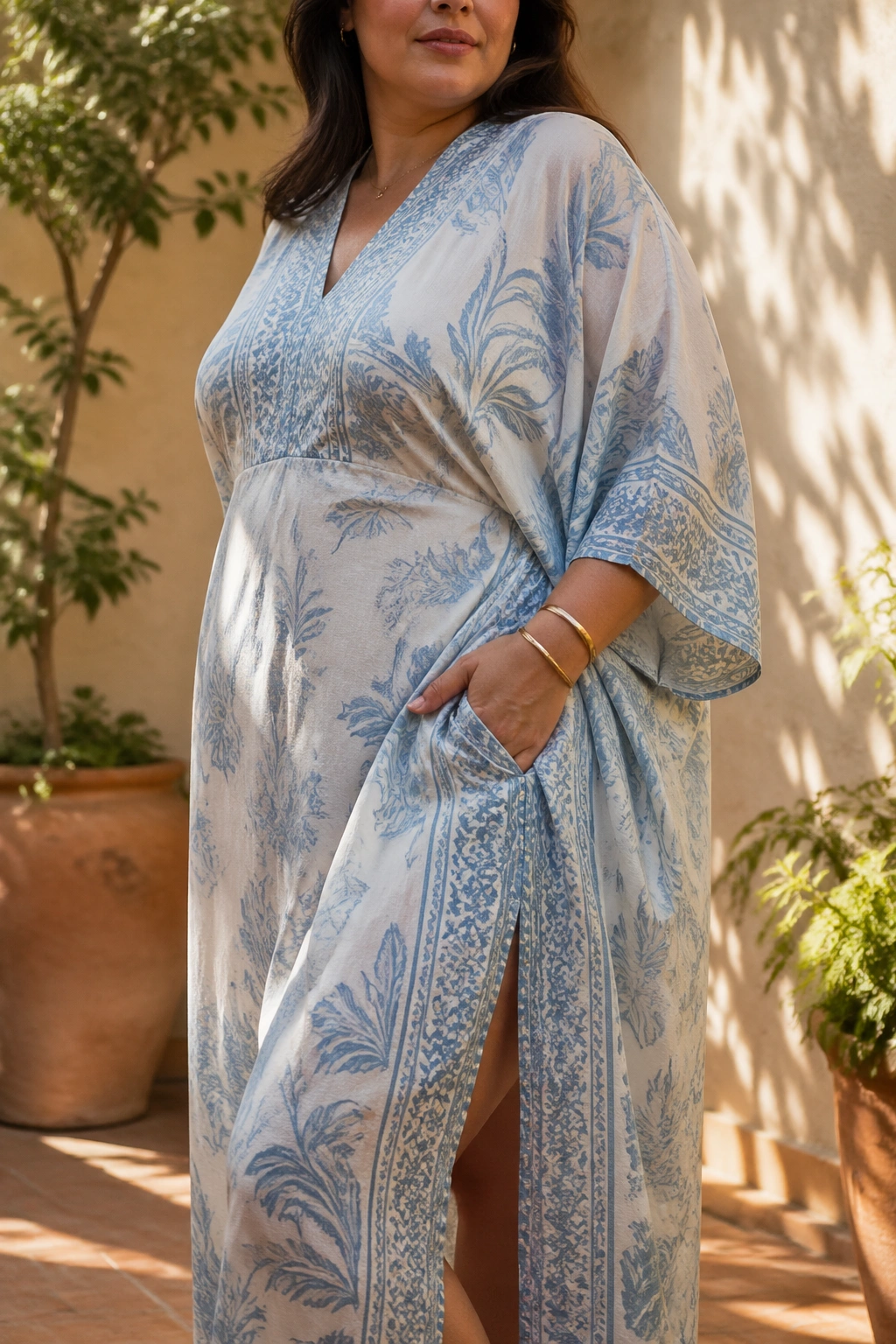
Caftan-style dresses get dismissed too quickly. A bad one can drown the body, yes. A good one has side slits, a little shaping at the bust or waist, and enough drape to move instead of hang. That combination can be lovely on women with tummies because it gives room without flattening the figure.
The sleeves should not be so wide that they turn into wings. And the fabric should have weight — not heavy, just enough to fall cleanly. Rayon blends, soft crepe, and fluid cottons are better than sheer synthetics that cling underneath and balloon on top. If there is a print, look for vertical placement or a pattern that has breathing room around the center.
Keep an eye on these details
- A neckline that opens the upper body.
- Side slits that start below the hip.
- A hem that hits the ankle or just above.
- A belt only if it sits softly, not like a strap wrapped around a parcel.
A caftan-style dress can feel generous in the best way. It should look like a choice, not a cover-up.
21. Off-the-Shoulder Top and Wide-Leg Cropped Pants
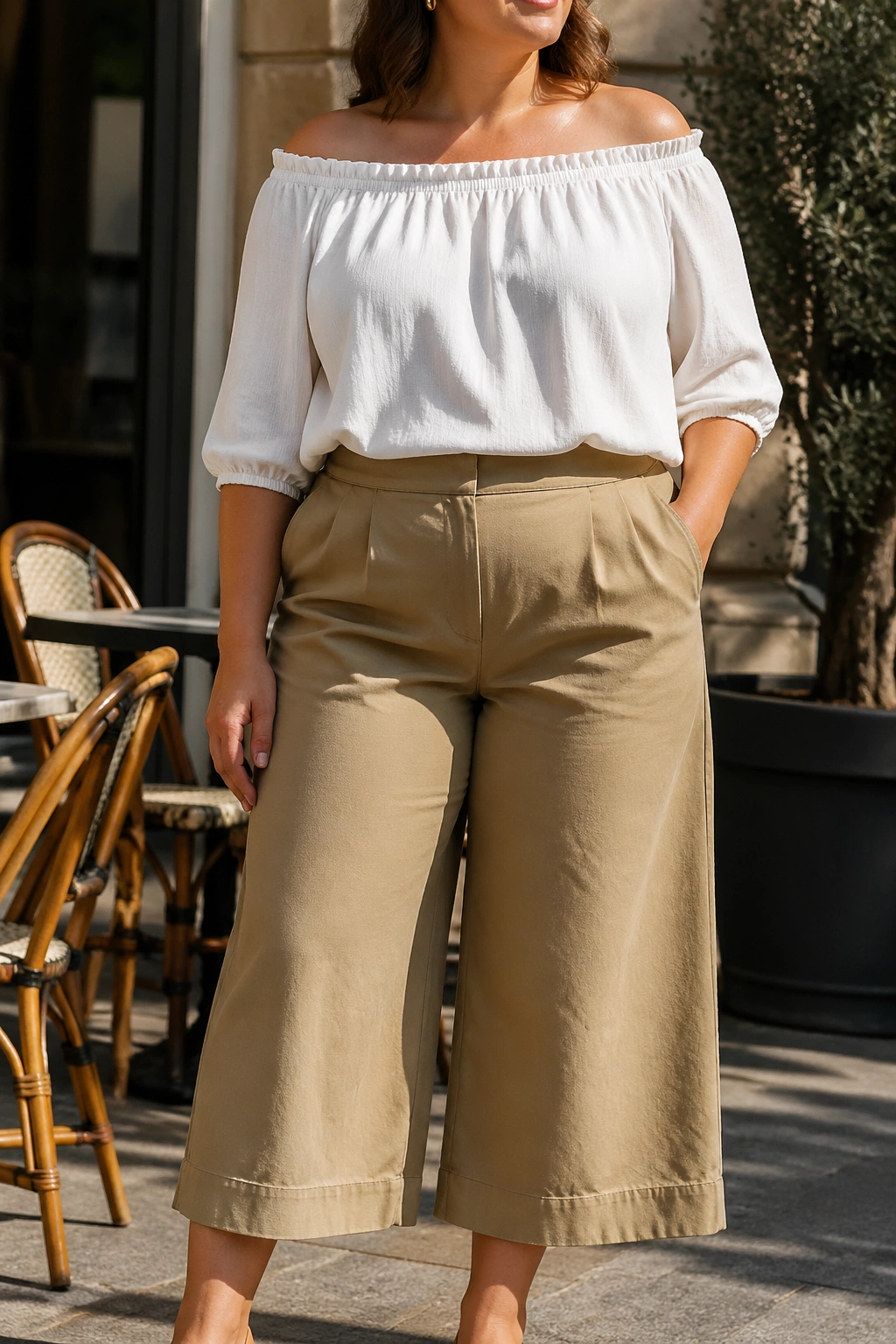
Off-the-shoulder tops are useful because they move attention to the collarbone and shoulders. That upper-frame emphasis can make the tummy feel less prominent, especially when the bottom half is calm and structured. Wide-leg cropped pants do that job well. They give the lower body shape without clinging.
This outfit works best when the top stays put. If you are forever tugging at the neckline, it stops being flattering and starts being annoying. Look for elastic that feels secure but not harsh, or a cut with a fold-over neckline that holds its shape. A bra with clear straps or a strapless option may help, depending on the top.
The pants should end at a flattering point on the calf or just above the ankle. Too long and the crop looks accidental. Too short and the balance gets strange. When the proportions land right, the whole look feels airy and deliberate.
22. Sweater Set with a High-Rise Skirt
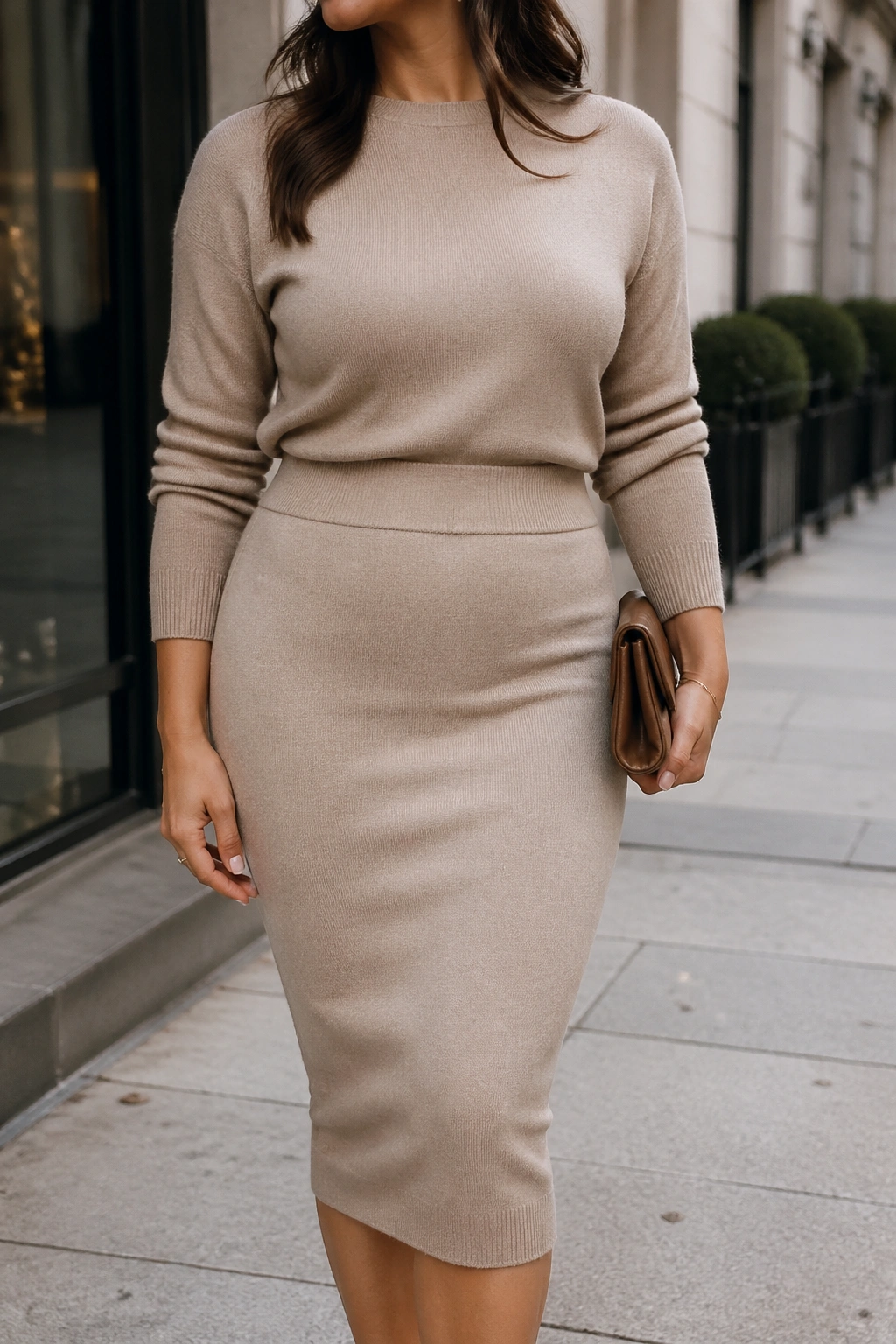
A sweater set can be one of the easiest ways to dress a midsection because the matching color creates a single vertical story. A high-rise skirt keeps the waistband smooth, while the sweater top can skim the body instead of sticking to it. The result is neat, which is half the battle.
The knit needs to be dense enough to hold shape. Thin ribbing can cling at the tummy and show more than most people want. A fine but substantial knit works better, especially in a matte finish. If the set has a little texture, even better. Texture softens the look without adding bulk.
I like this with boots in colder weather or with simple sandals when it is warm. The trick is to keep the waist clean and the top slightly bloused. A cropped sweater top can work too, as long as the skirt rise is high enough to cover the middle comfortably.
23. Cropped Sweater and High-Waist Wide-Leg Pants
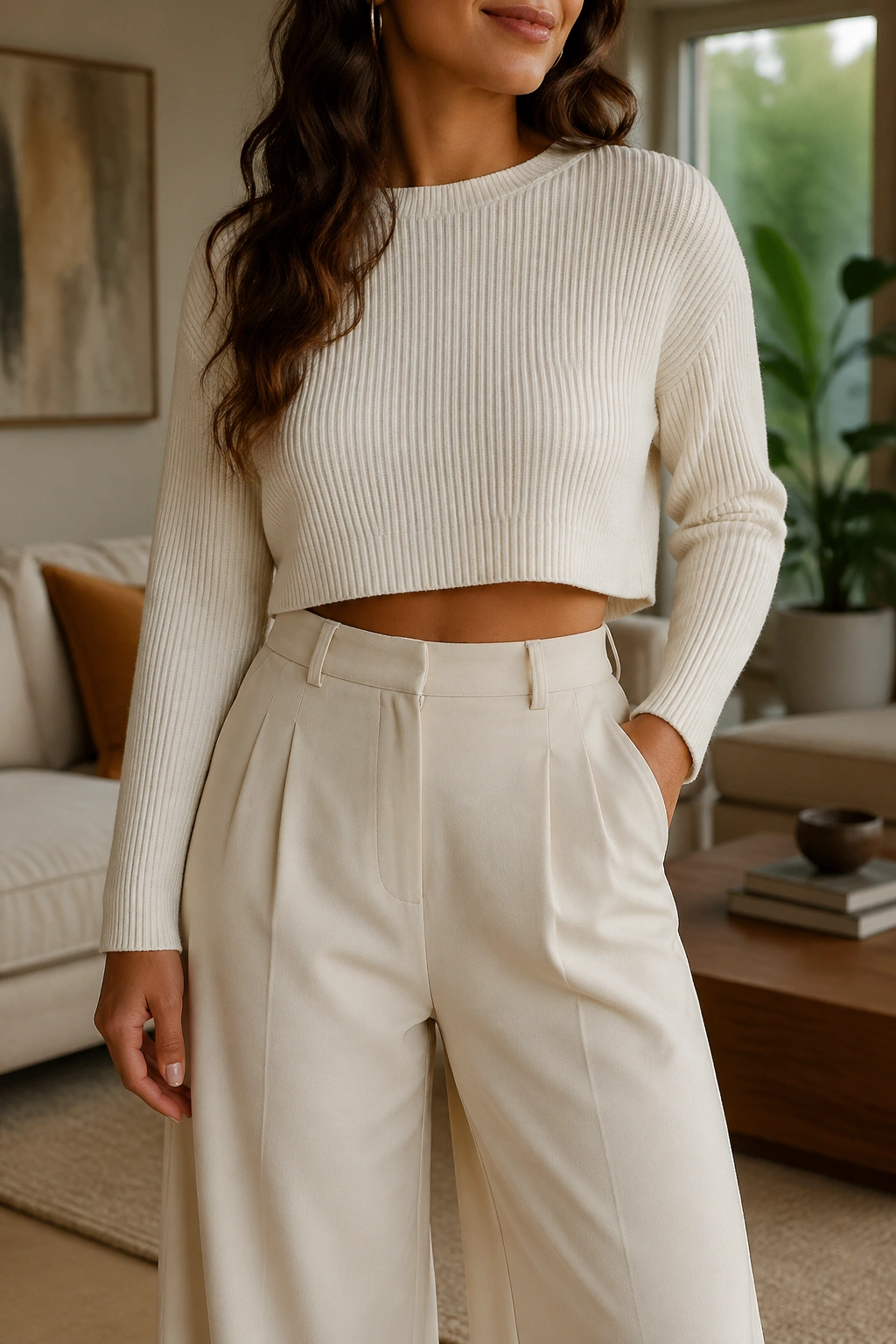
A cropped sweater sounds like a risky choice for women with tummies, but the right version can be excellent. The key is where the crop lands. It should meet the waistband, not float above it. That creates a clean break and avoids the awkward strip of visible midriff that nobody asked for.
Wide-leg pants underneath keep the shape balanced. The sweater gives a shorter upper block, the pants give length below, and the waistband sits at the natural waist. That proportion is what makes the outfit work. Boxy crops often look better than clingy ones because they keep the torso neat without emphasizing every curve.
If you want extra polish, choose a sweater with a slightly structured shoulder or a clean crew neck. Soft neutrals are easy, but saturated colors can look sharper. The outfit lands best when the sweater looks intentional, not like it shrank in the wash.
24. Knit Dress with Side Ruching
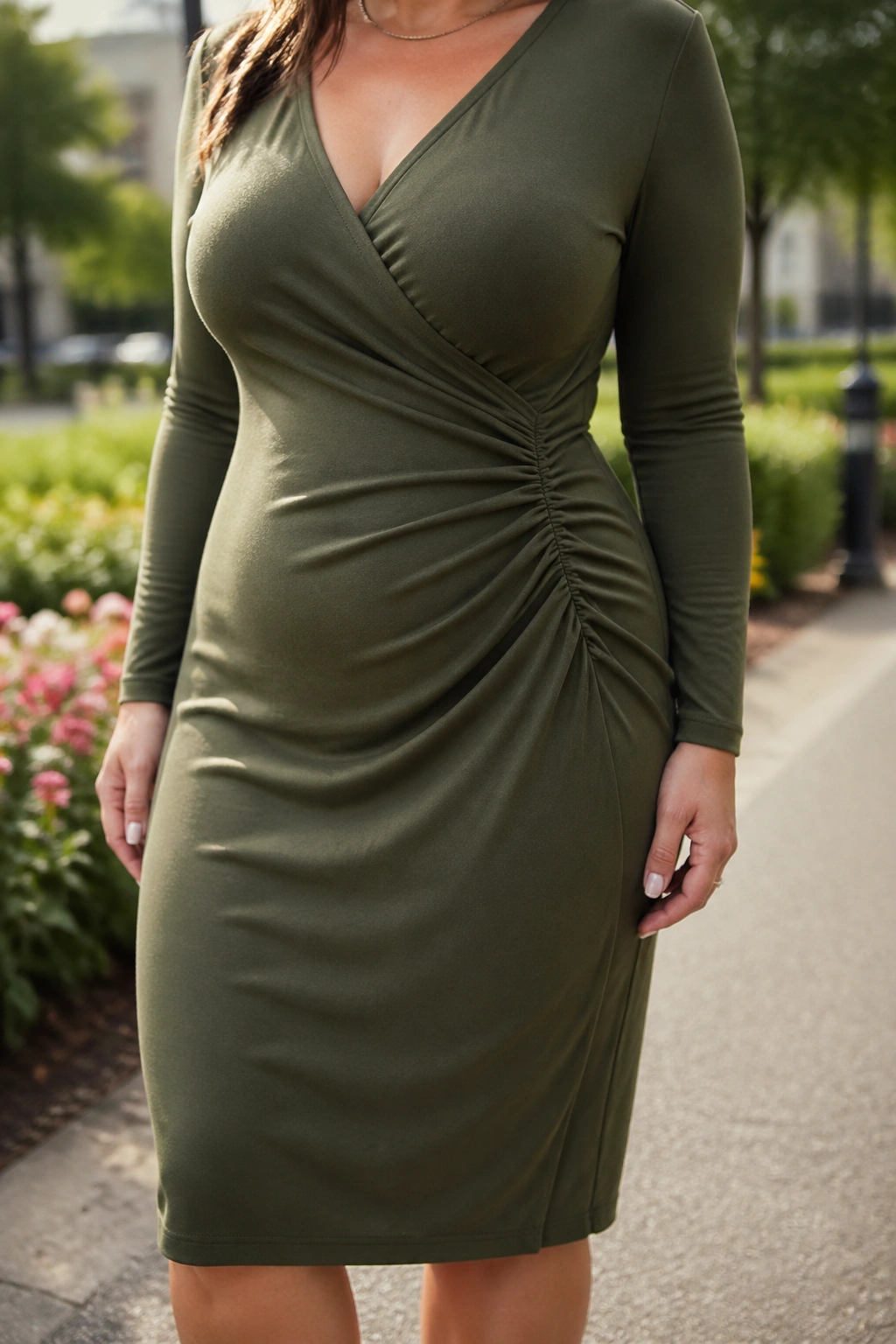
Can a knit dress flatter a tummy? Yes, if it has side ruching and enough fabric weight to skim rather than hug. Ruching gathers the material so it sits close without laying flat across the center, which softens the line around the midsection. It is one of those details that earns its keep.
The neckline matters here too. A V-neck or scoop neck opens the top, while a higher neck can make the dress feel heavy unless the rest of the silhouette is very clean. Keep the hem at the knee or below for a smoother look. If the dress is too short, the eye gets too much information in one place.
How to choose the right one
- Pick a knit with body, not sheer jersey.
- Look for ruching that starts near the waist or hip.
- Make sure the seams lie flat across the back.
- Check the dress while sitting, because bad ruching will bunch there first.
This is the kind of dress that looks easy because the work is hidden in the cut.
25. Coordinated Set with a Short Jacket and Fluid Pants
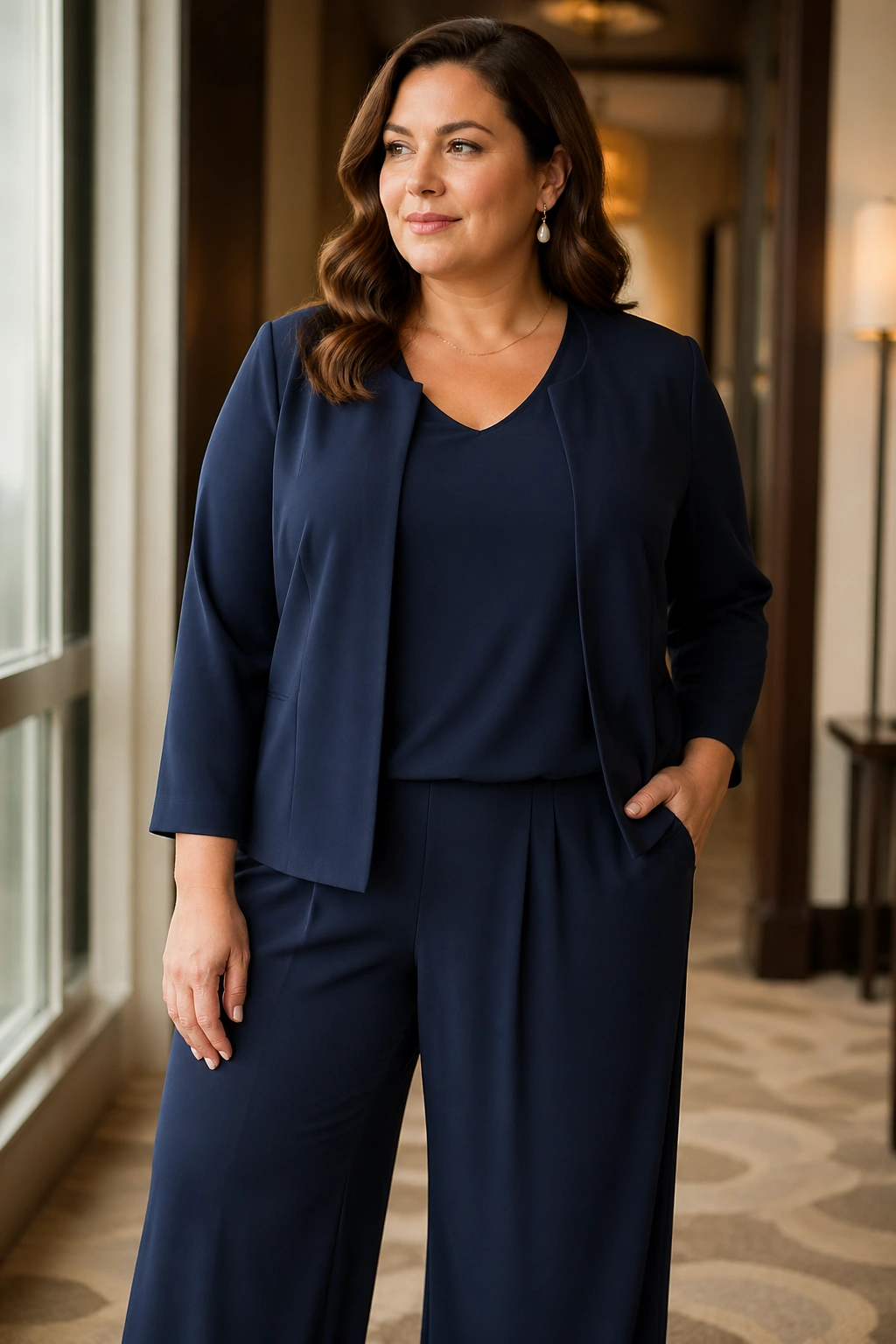
Coordinated sets have a real advantage: they create one long color story, which naturally smooths the middle. When the set includes a short jacket and fluid pants, the effect gets even better. The jacket defines the upper body, and the pants carry the line downward without interruption.
I like sets made from crepe, ponte, soft twill, or a polished knit. Those fabrics hold shape while still moving a little. The jacket should end near the top of the hip, not smack in the middle of the tummy, and the pants should fall straight or wide. A set that fits in both pieces is worth more than one that is only halfway right.
This is a smart choice for travel, dinners, and events where you want to look put together quickly. Wear the jacket open if you want a softer line. Button it if the waist seam sits exactly where it should. The whole point is to make the body look long and calm, not busy.
Final Thoughts
The most flattering outfits for a tummy are rarely the most complicated ones. They use good proportion, the right waist placement, and fabric that falls instead of fighting. That combination does more than any trendy styling trick ever will.
If you remember one practical thing, make it this: start with the waistband, the hemline, and the neckline before you start blaming your body. Those three details can change an outfit fast. A better rise or a cleaner drape often fixes what a bigger size never would.
And that’s the part I like best. Once the fit is right, you stop thinking about the middle and start enjoying the clothes.
