



A good beginner LISS workout at home should feel almost boring while you’re doing it. That is the point.
Low-intensity steady-state cardio works best when you can keep going without dread, without jumping, and without turning your living room into a gym floor covered in gadgets. The simplest check is the talk test: you should be able to speak in short sentences, but you probably would not want to sing.
That matters because LISS is one of the easiest ways to build a real habit. You do not need to arrive in perfect shape first. You need a pace that feels repeatable, a little bit sweaty, and not punishing. Public-health guidance often points to about 150 minutes of moderate aerobic activity each week, and steady home sessions are a clean way to get there without negotiating with the weather, traffic, or a crowded class schedule.
Some of these workouts need nothing more than floor space. Others use a bike, treadmill, or rower if you already own one. Either way, the sweet spot is the same — warm, controlled movement that leaves you able to do it again tomorrow.
1. Walking Loops Through Your Home
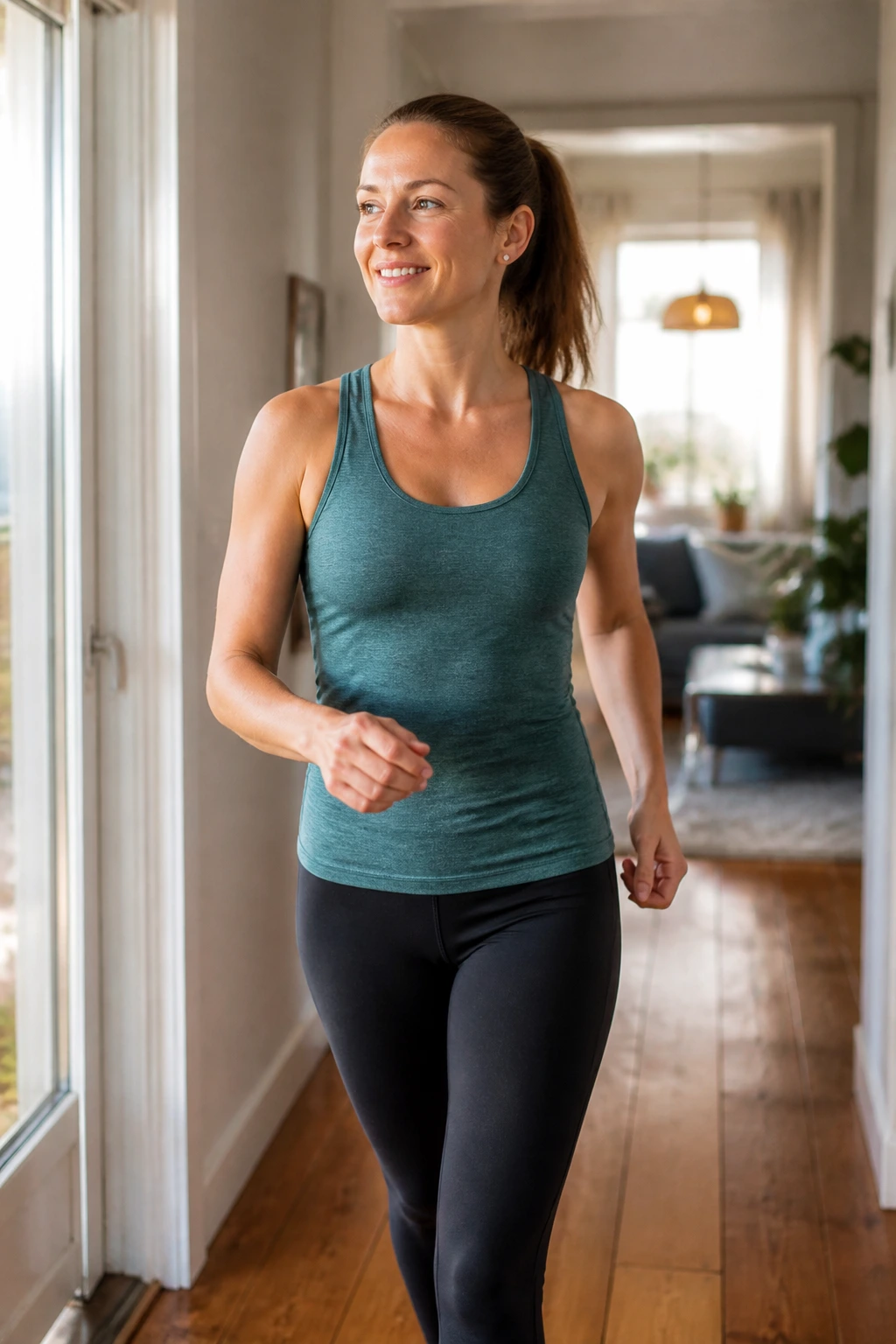
Walking loops are the plainest option, and I mean that as a compliment. Walk from the bedroom to the kitchen, turn, head down the hallway, circle the coffee table, and keep the pace easy enough that your breathing stays even.
How to set the loop
A loop should take about 30 to 90 seconds so you are always in motion without staring at the clock every five seconds. If your home is small, make the turns part of the workout; if it is bigger, use longer passes and keep your stride relaxed.
- Keep your shoulders loose and your hands unclenched.
- Wear shoes if your floor is slick or your arches need support.
- Use a timer for 5-minute blocks so you do not wander off and forget you are exercising.
- Aim for a pace that feels like 3 to 4 out of 10 on effort.
That sounds almost too easy. It is not.
Best tip: if you keep stopping to “start over,” the workout loses its rhythm. Treat every turn like a lap, not like a reset button.
2. Marching in Place With Arm Swings
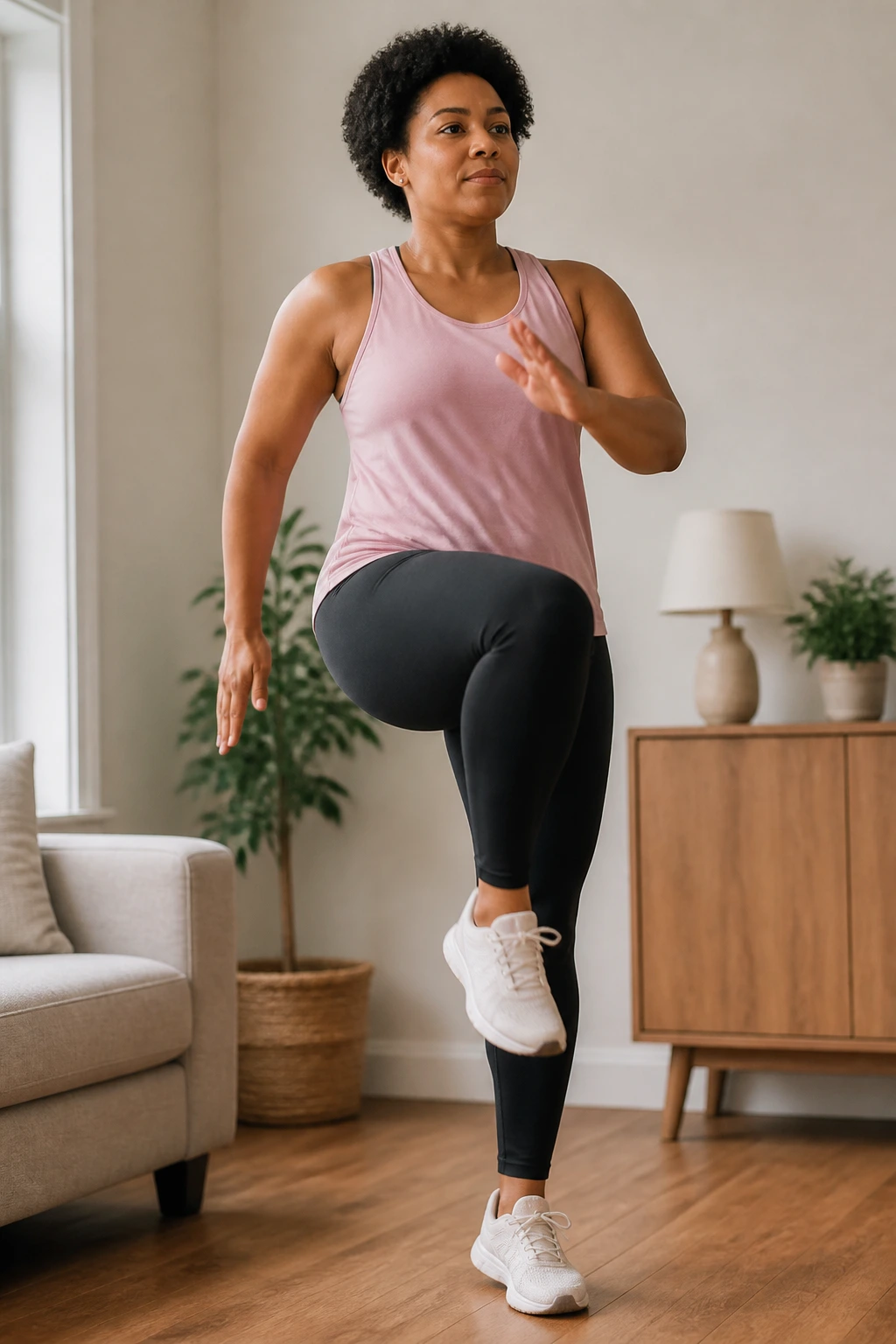
Marching in place looks almost too simple, which is exactly why it works for beginners. You can do it in socks, shoes, or barefoot on a mat, and you do not need much room at all.
Lift one knee a few inches, then the other, and let your arms swing naturally from hip height to around chest height. Keep the impact soft. You are not stomping. If your knees are cranky, shorten the lift and keep the motion smaller; if you feel fine, let the march settle into a steady, light rhythm for 10 to 20 minutes.
The nice part is how easy it is to scale. Ten minutes can be enough on a tired day. Twenty or thirty minutes works when you want a longer session without getting tangled in choreography. A lot of beginners go wrong by trying to “make it harder” with giant knee lifts right away. Don’t.
Keep the motion smooth. Keep the pace talkable. And if your shoulders start creeping up toward your ears, shake them out and reset.
No fancy choreography. Just marching.
3. Step-Touch Dance to a Low-Key Playlist
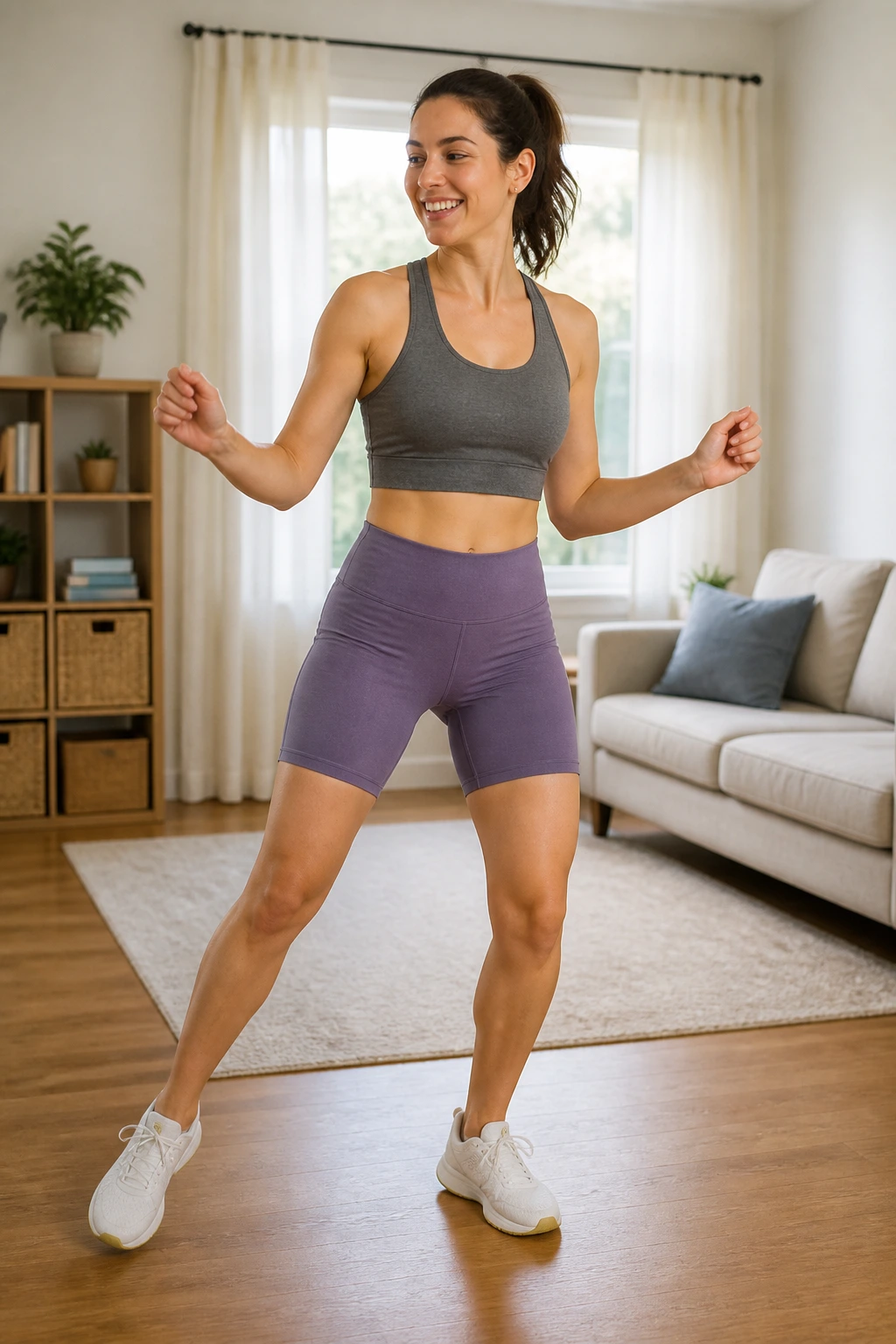
Why does a step-touch work so well? Because it keeps your feet moving while giving your brain enough variety to stay awake.
Stand tall, step to the right, bring the left foot in, then repeat to the left. That single pattern can carry a whole workout if you layer in arm swings, gentle reaches, and the occasional knee lift. You do not need a dance background. You need a playlist that lasts 8 to 12 songs and a willingness to move without turning it into a sprint.
How to keep it low-intensity
Use moves that feel smooth instead of sharp. Step-touch, grapevine, heel dig, low knee lift, side reach. That is the whole game.
- Keep the bounce small.
- Avoid jumps and fast pivots.
- Let the arms do some work, but do not throw them around.
- If you can sing, speed up a little; if you cannot speak, slow down.
This is one of those workouts that sneaks up on you because it feels friendly. Friendly is good. Friendly is sustainable.
4. Stair Walking One Flight at a Time
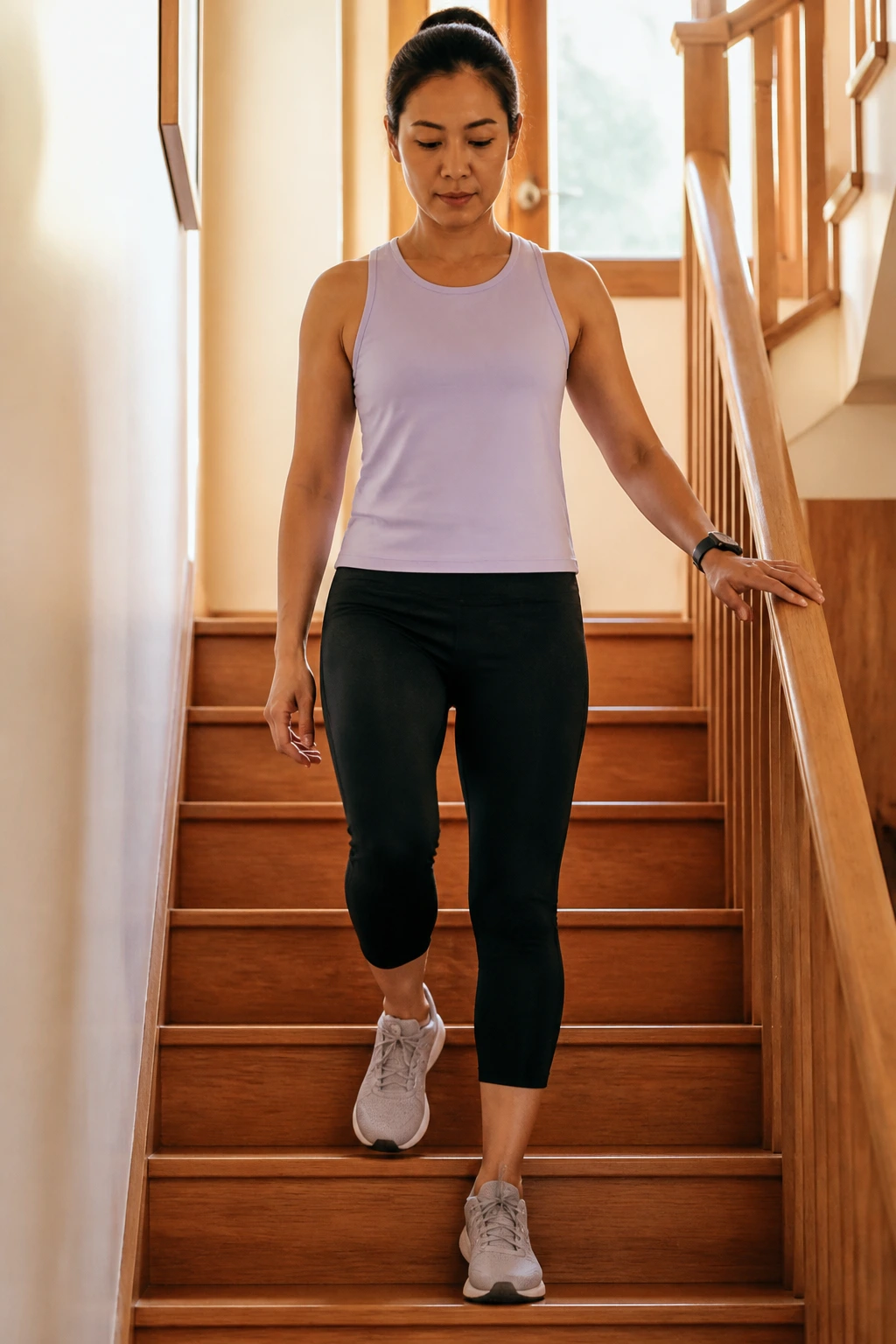
If you have stairs, you already own a cardio machine. That sounds dramatic, but it is true enough.
Walk up one flight at a steady pace, turn around, and walk back down with control. The climb raises your heart rate; the descent teaches balance and keeps the session honest. Hold the railing lightly if you need it. That is not cheating. It is smart. For a beginner, 30 seconds up, easy walk down, repeat for 10 to 15 minutes can be plenty.
The key is not racing the stairs. Fast stair work turns into a different kind of workout, and not always a friendly one for knees or calves. Keep the steps smooth, land softly, and avoid leaning forward too far. Your torso should stay tall enough that you could hold a conversation without sounding winded.
- Use the rail, but don’t hang on.
- Shorten your stride if you feel wobbly.
- Stop if you get sharp knee pain on the way down.
- Wear shoes with decent grip.
The climb does the work. The descent keeps you honest.
5. Low Step-Ups on the Bottom Stair
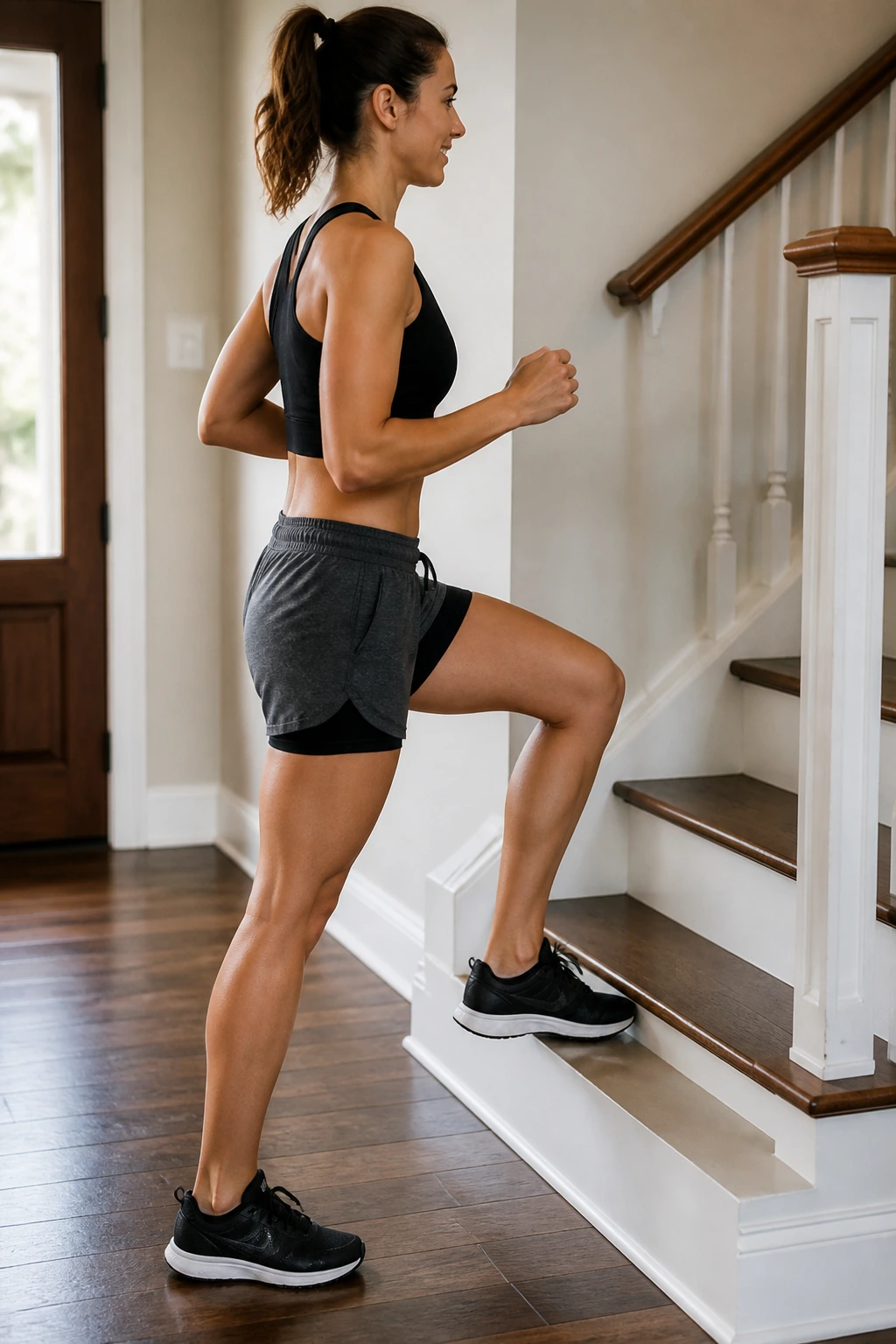
The bottom stair is enough. You do not need a tall box, a fancy aerobic step, or a complicated routine to make step-ups count.
Use the first stair in your house, or a low sturdy step that feels stable under both feet. Step up with the right foot, bring the left foot up, then step back down in the same order. Keep the pace calm and repeat for 1 to 3 minutes per leg before switching sides, or alternate legs every rep if that feels smoother. The whole move should feel rhythmic, not jerky.
The real win here is control. A lower step gives you enough range to raise your heart rate without forcing your knees into a big bend. That matters if you are just getting back into movement, if your balance is a little rusty, or if you know your joints complain when you go too big too fast.
Keep your chest open and your foot fully planted on the step. If only your toes land on the surface, the movement gets sketchy fast. Bigger is not better here. Smooth is better. Stable is better.
And yes, a low stair can make your legs warm faster than you expect.
6. LISS Treadmill Incline Walks
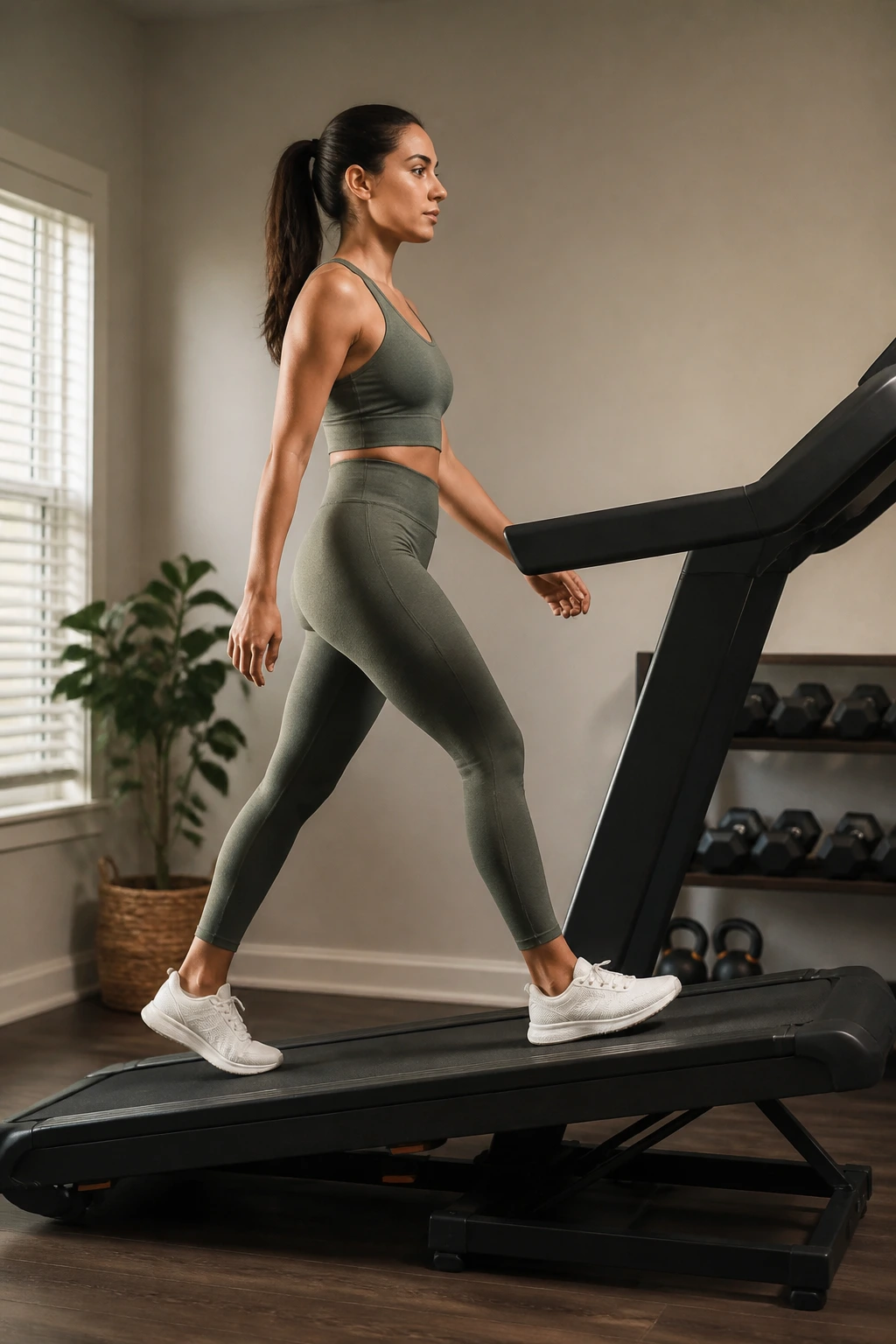
Compared with jogging, a treadmill incline walk keeps impact down while still giving you a real heart-rate bump. That is why it is such a solid beginner LISS choice if you already have the machine at home.
Start with a flat walk at about 2.0 to 3.0 mph. Then add a small incline, usually 1% to 4%, and see how your breathing changes. The incline does more of the work than speed does, which is handy if you want to avoid that frantic, bouncy feeling that comes with running.
A little caution goes a long way here. Too much incline too soon makes people lean forward, grab the rails, and hunch their shoulders. That is not the look you want, and it changes the work in a bad way. If you feel your calves burning or your lower back tightening, flatten the belt out and bring the pace down a notch.
This one is best for people who like predictable numbers. Time, speed, incline. Nice and clean.
7. Walking Pad Sessions While You Listen
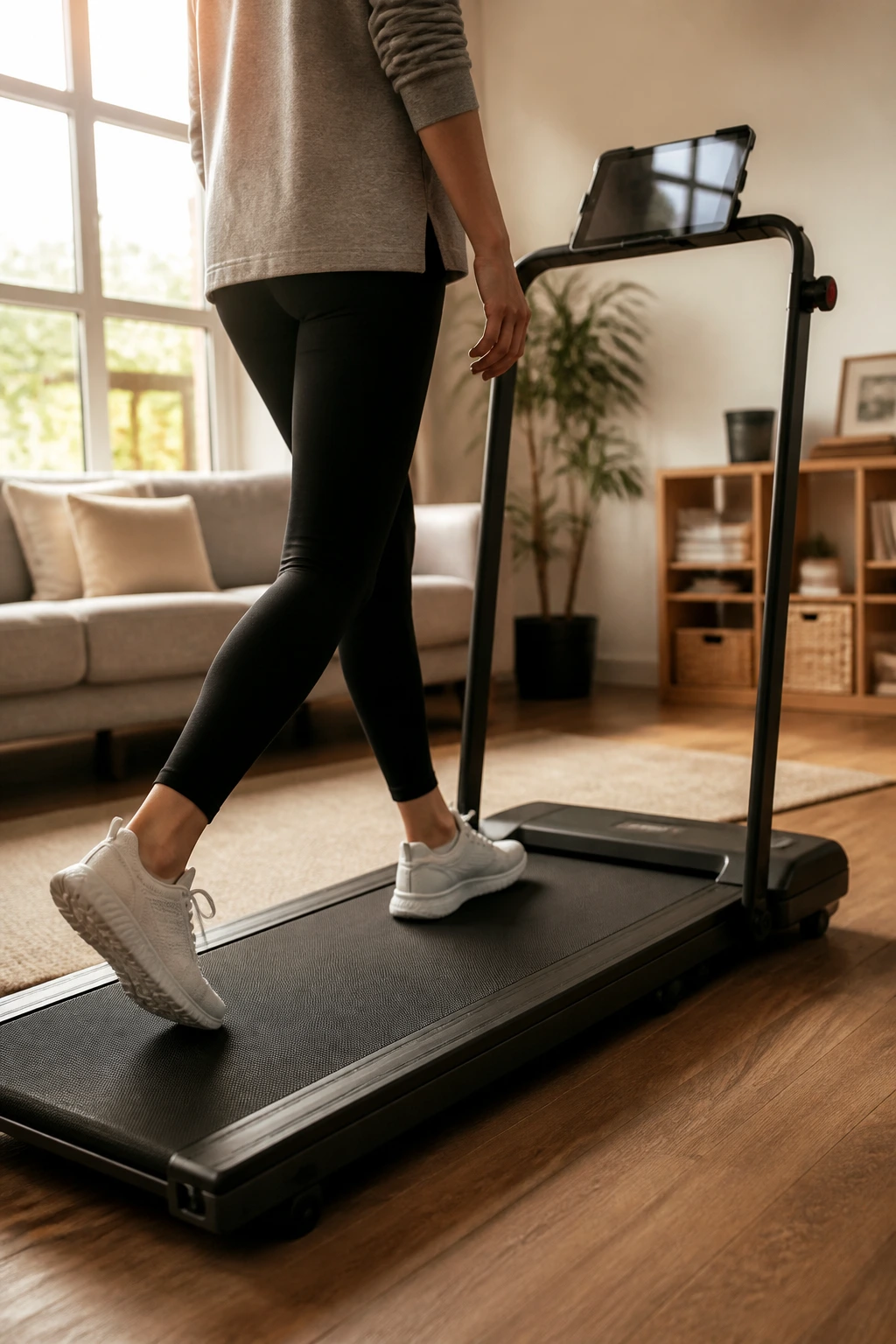
A walking pad can rescue a day that would otherwise disappear into sitting. That is its whole charm.
Set it to a slow pace — usually around 1.5 to 2.5 mph for a beginner — and use it while listening to an audiobook, taking a phone call, or watching something you do not have to stare at. The stride should stay short and relaxed. If you start overreaching with your feet, the movement gets sloppy fast.
What keeps it feeling easy instead of awkward
A walking pad works best when you keep the setup simple.
- Use a clear floor area around it.
- Keep your screen at eye level if you are watching something.
- Do not multitask with food in your hands.
- Break it into 10-minute blocks if that helps your focus.
Some people underestimate this one because it looks plain. That is fine. Plain is useful. If your job or home life keeps you seated too much, a walking pad gives you a way to keep moving without changing clothes or leaving the house.
Small setup. Big payoff.
8. Easy Spinning on a Stationary Bike
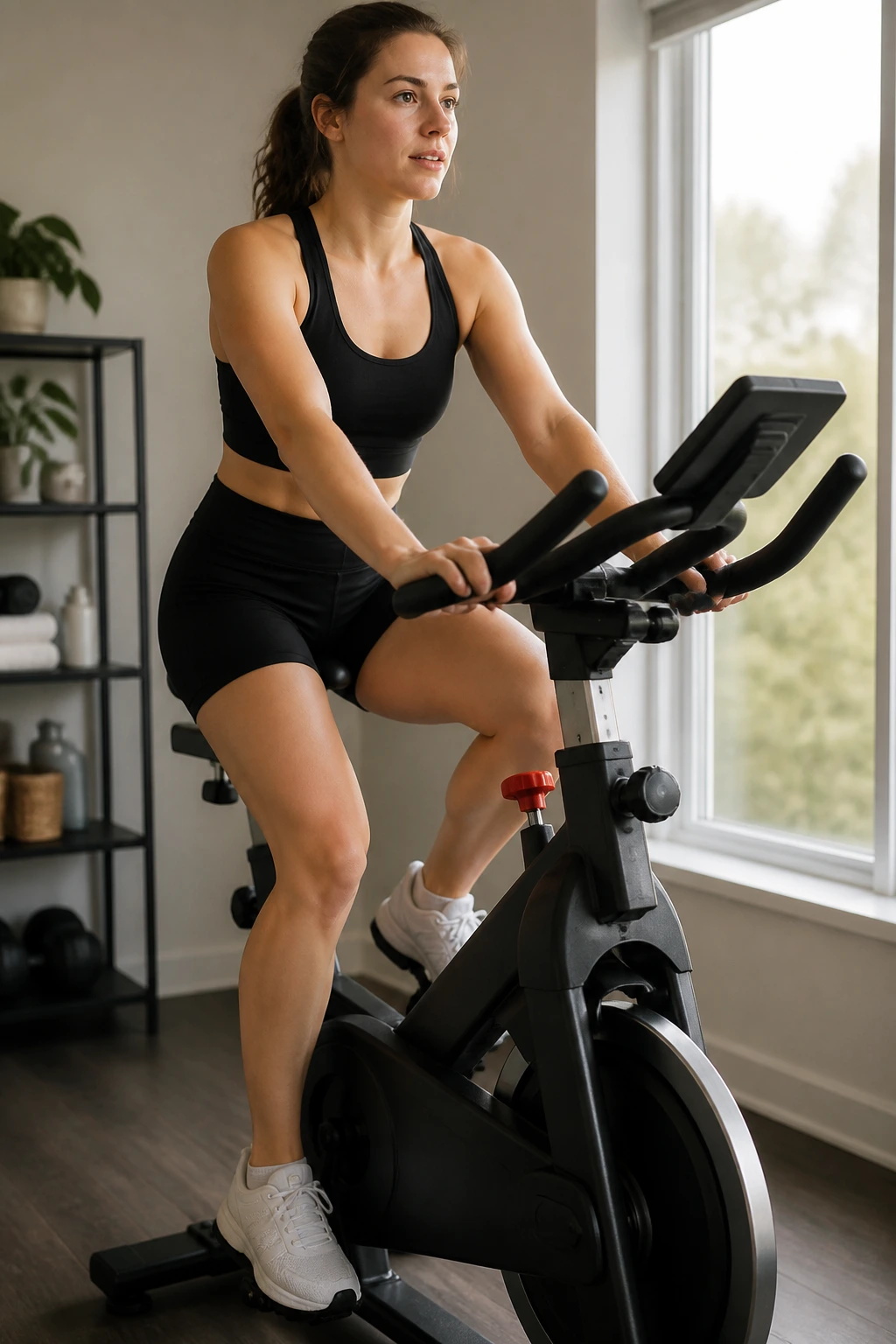
A beginner bike session should feel almost too easy. If you are grinding the pedals like you are climbing a mountain in your basement, the resistance is too high.
Keep the resistance low and aim for a steady cadence, somewhere around 60 to 80 revolutions per minute if the bike display shows it. Your legs should feel like they are turning over, not stomping. Sit tall, keep your shoulders down, and let your knees track straight ahead rather than flaring out.
Seat height matters more than most people think. At the bottom of the pedal stroke, your knee should still have a soft bend. If your hips rock side to side, the seat is probably too low. If you have to reach hard for the pedals, it may be too high. Little adjustments make the whole ride feel better.
This is one of the easiest workouts to extend to 20, 30, or even 45 minutes without feeling trapped in place. And if the first five minutes feel awkward, that usually passes once your body settles into the rhythm.
9. Recumbent Bike Cruises for Sore Joints
If upright bikes make your lower back complain, the recumbent bike is the obvious fix. The seat gives you more support, your hands can stay relaxed, and the whole thing feels less twitchy than balancing on a narrow saddle.
That does mean the workout feels a little less athletic. Fine. Not every session needs to feel dramatic. Set the seat so your legs still have a soft bend at the bottom of the pedal stroke, then keep the resistance light enough that you can chat without huffing. Twenty to 35 minutes is a comfortable range for most beginners.
A recumbent bike is especially useful when you are coming back from a long stretch of sitting, or when standing cardio makes your feet, knees, or wrists irritated. You stay supported while your legs keep working. That combination is underrated.
Use gentle pressure through the pedals, not a hard shove. And if you find yourself slouching into the seat, sit back up and reset your posture. A small change there can make the ride feel far smoother.
It is not flashy. It works.
10. Elliptical Glides at a Conversation Pace
Does an elliptical count if it barely feels like exercise? Yes, if you keep the motion steady and the effort low.
The beauty of the machine is the lack of foot strike. Your feet stay connected to the pedals, which cuts down on impact while still making your legs and lungs work. Begin with low resistance, an easy stride, and a hand position that lets your shoulders stay relaxed. If the machine has movable arms, use them lightly. Do not death-grip the handles.
How to make the glide smooth
The elliptical gets awkward when people try to muscle it.
- Keep your weight centered instead of hanging on the bars.
- Push through the whole foot, not just the toes.
- Lower the resistance if your stride gets choppy.
- Aim for 15 to 30 minutes at a pace where talking still feels natural.
If the motion feels strange at first, that is normal. The machine asks your body to move in a way most people do not use in daily life. Give it a few minutes. Then settle in.
When it works, it feels almost quiet — long, easy, and a little hypnotic.
11. Gentle Rowing Machine Sessions
Rowing is one of the best workouts on this list — and one of the easiest to mess up.
The trick is the sequence: legs first, then a small hip hinge, then the arms. On the way back, arms extend, the torso folds forward a bit, and the legs bend last. If you yank with your arms first, the machine turns into a shoulder shrugging contest. It should not feel like that. Keep the stroke smooth and sit at about 18 to 22 strokes per minute for a beginner LISS pace.
A lower damper setting is usually friendlier too. You want enough resistance to feel the handle, but not so much that every pull feels like a deadlift. If your lower back rounds hard at the catch position, shorten the range and slow down. That matters more than trying to row longer.
Two mistakes to avoid
- Pulling early with the arms.
- Racing the stroke rate until it turns into interval work.
A rower can give you a full-body session without pounding your joints. Keep it calm, and it becomes a very good tool.
12. Shadow Boxing Without the Power Shots
On days when I want movement without noise, shadow boxing is the one I reach for. No equipment, no impact, no jumping. Just a little space and a timer.
Stand in a loose boxing stance, hands up around cheek height, and throw light punches into the air. Jab, cross, jab-cross. Keep your feet moving in tiny steps, or plant them and work only your upper body if balance is shaky. The goal is not to hit hard. The goal is to stay moving for 2 to 3 minute rounds at a steady pace.
You can make it as simple as you want. A jab-cross combo repeated for a minute is enough to start. Add a hook, then a step to the side. Keep the punches crisp but not forceful. If your shoulders creep up, shake them out. If your wrists feel bent back, slow down and clean up the form.
Shadow boxing has a funny advantage: it wakes up your whole body without feeling repetitive. That keeps beginners from zoning out.
You are shadow-boxing. Not hunting for a knockout.
13. Standing Kick-and-Reach Drills
This looks soft. It is not lazy.
Kick-and-reach drills mix balance, coordination, and a little bit of heart-rate work in a way that suits beginners well. Stand near a wall or chair if you need support. Kick one leg forward at a low height — shin level is plenty — then reach both arms overhead or out to the side. Switch sides and keep the flow slow enough that you can own every rep.
The movement should feel controlled, almost graceful, but not in a fussy way. You are not trying to balance on one leg for ages. You are trying to move continuously without jarring the joints. That makes this a nice choice for people who want something lower-key than marching or stairs but still need more than stretching.
How to keep it smooth
- Keep the kicks low.
- Use the wall if your ankle wobbles.
- Breathe out on the kick or the reach.
- Repeat for 8 to 12 minutes without hurrying.
This is a good one on days when your hips feel stiff and your brain wants movement that feels a little kinder than a traditional cardio session.
14. Seated Cardio Circuits in a Chair
Can seated exercise count as LISS? Absolutely, if it is continuous and intentional.
Use a sturdy chair without wheels, sit tall near the front edge, and cycle through movements that keep your muscles active: seated marches, toe taps, alternating punches, overhead reaches, and small knee lifts. The effort should stay around 3 out of 10 — enough to warm you up, nowhere near strain.
A simple chair loop
Try this sequence and repeat it for 10 to 20 minutes:
- 30 seconds seated march
- 30 seconds alternating punches
- 30 seconds toe taps
- 30 seconds overhead reaches
That is one loop. Keep it flowing, and do not sit back and rest between moves unless you need to.
Chair cardio is useful when standing for long periods feels bad, when you are easing back into movement, or when your balance is not where you want it yet. It also works on days when you need a workout that is easy on the joints but still feels like a workout.
The big mistake is slumping. Stay tall, keep the ribs stacked over the hips, and let the arms and legs do the work.
15. Low-Impact LISS Aerobics With No Jumps
Low-impact aerobics is the old reliable of home cardio. The good version is steady, rhythmic, and kind to your joints. The bad version turns into a weird half-sprint with too many pauses.
Keep the moves simple: step touch, knee lift, hamstring curl, side tap, low knee raise, light arm reach. You want a sequence that flows from one move to the next without leaving you breathless. If a move asks for a jump, skip it. If a move feels too bouncy, take the bounce out.
A lot of beginners like this style because it feels familiar. You can follow a video, or you can build your own loop from four or five basic steps and repeat it for 20 to 30 minutes. The rhythm matters more than the choreography. If you stop to think about each move, the intensity falls apart.
One useful trick: keep the music at a steady, moderate beat and stay slightly below the urge to rush. That keeps the session in the right zone.
The whole point is movement that feels sustainable, not showy.
16. Slow Yoga Flows That Keep You Moving
Yoga only counts as LISS if you keep the flow moving. Long holds are fine on other days, but here you want a sequence that raises your temperature a little and keeps the body in motion.
Think cat-cow, downward dog, low lunge, half lift, chair pose, standing fold, and repeat. Two breaths per shape is enough for many beginners. If you can move from one pose to the next without stopping every ten seconds, you are on the right track. The effort should feel light, steady, and controlled — more like active mobility with a pulse than a sweaty power class.
This is a useful option when your body feels stiff but you still want to move enough to count. It can also work well as a recovery day session. The caveat is simple: if you start spending a long time sinking into poses and holding your breath, the workout shifts away from LISS and toward stretching.
Keep the transitions clean. Keep your breathing smooth. And if a pose makes your face tense up, back out of it.
Gentle does not mean pointless.
17. Beginner Pilates Circuits on a Mat
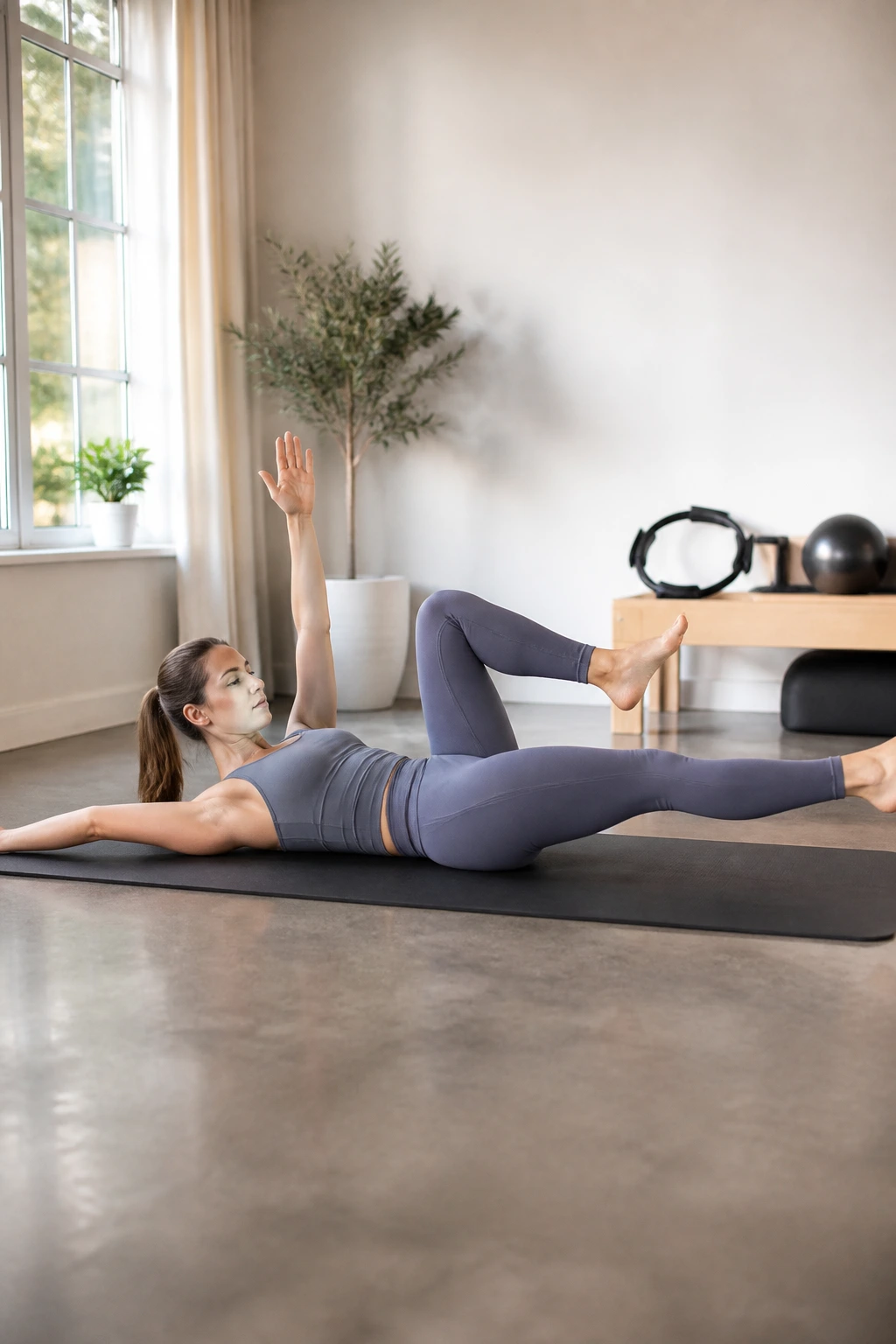
Pilates can feel sneaky-hard without feeling loud. That makes it a nice fit for beginner home cardio when you keep the circuit moving.
The trick is to choose a few simple mat moves and flow through them with short rests or none at all. Dead bugs, toe taps, glute bridges, bird dogs, and modified hundreds are all fair game. Use 6 to 12 reps per move, then move on before the session turns into a long break between exercises. You are building steady work, not chasing a burn in one tiny muscle group.
A lot of people think Pilates has to be slow to the point of stillness. It doesn’t. The beginner version can keep your heart rate gently elevated if you connect the movements and move with purpose. Exhale on the effort, keep your neck relaxed, and stop before your lower back starts arching off the mat.
This is a better pick than people expect on days when standing cardio feels stale. It asks for control, but not impact.
And control, honestly, is underrated.
18. Mini-Trampoline Marching and Bounce Work
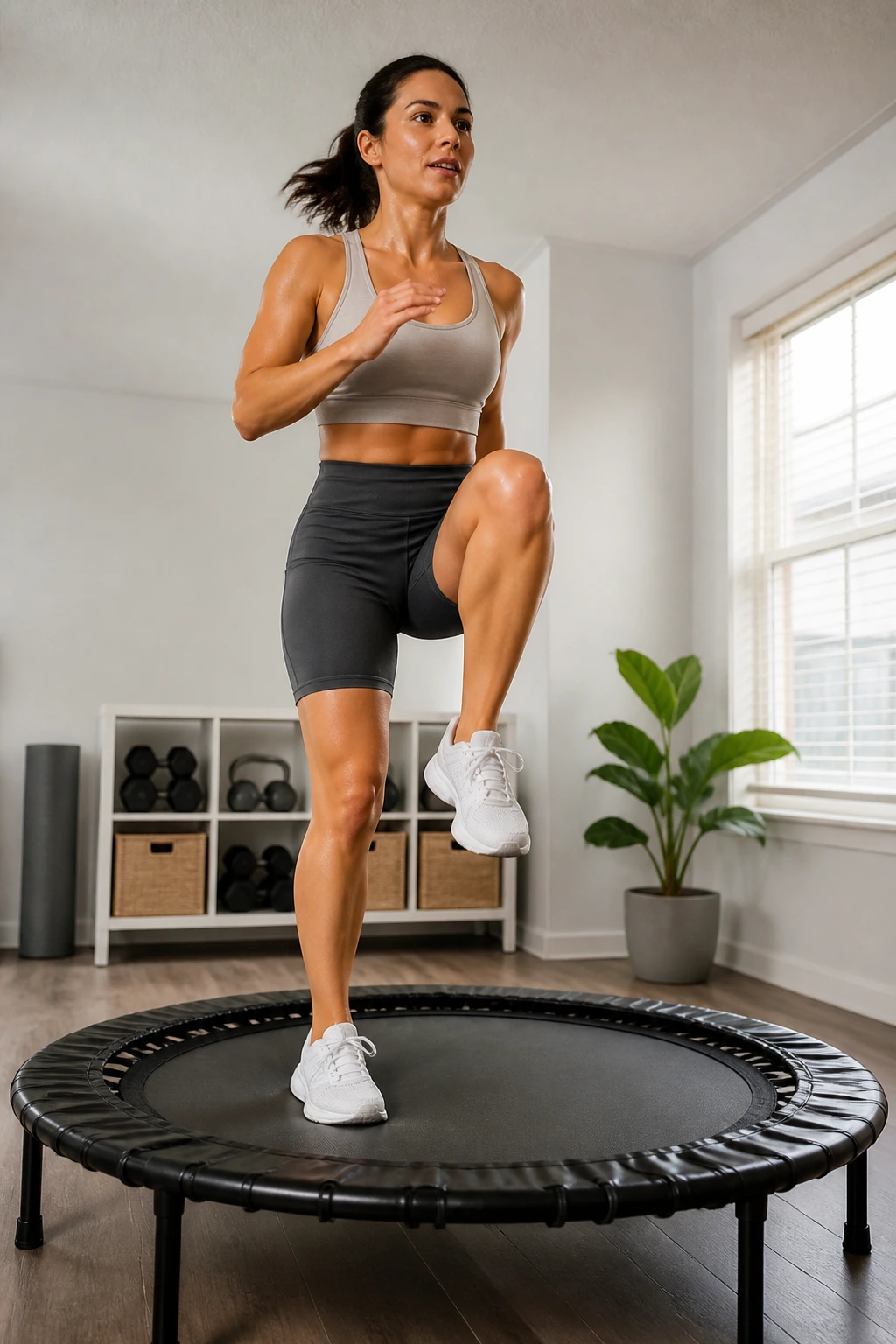
If you own a mini-trampoline, or rebounder, it can be a very friendly beginner LISS tool. The surface gives a bit underfoot, so the workout feels lighter than floor walking while still making your legs work.
Start with marching in place on the mat. Once that feels stable, let the feet leave the surface by an inch or two — not a big bounce, just a soft lift and landing. Keep your knees soft and your torso tall. A handlebar helps if your balance is still wobbly. That is a good use of the equipment, not a weakness.
Safety details that matter
- Use a stable bar if you need one.
- Keep the bounce small.
- Wear grippy shoes if the mat feels slippery.
- Check that the ceiling fan is not in your way.
The rebounder is a nice option for people who get bored walking in straight lines. It changes the sensation enough to feel fresh, but not so much that it becomes a circus act.
Small bounce. Calm breathing. That is the right lane.
19. Figure-Eight Walks Around Furniture
Boredom is the enemy here.
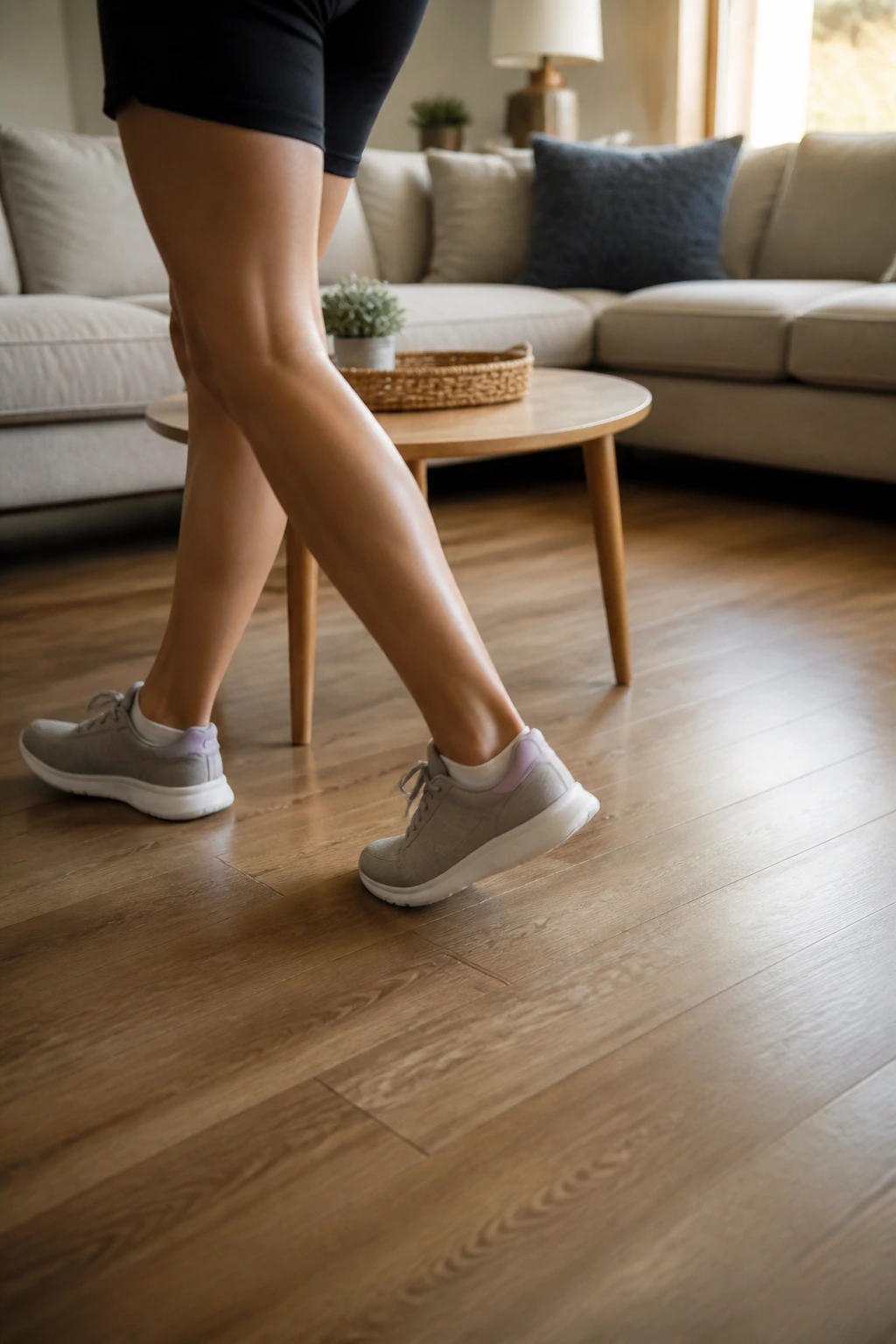
Instead of walking a straight hallway loop, walk in figure-eights around a coffee table, two chairs, or the corners of your living room. The turns keep your attention awake, and the pattern makes a small room feel bigger than it is. If you live in tight quarters, this is one of the easiest ways to make a home workout feel less repetitive.
The movement itself is simple. Walk at a conversation pace, circle one object, cut across, circle the other, then repeat. Because you are turning more often, your hips and ankles get a little more to do than they would in a straight line. That can be nice if plain walking starts to feel stale.
A timer helps here too. Try 10-minute blocks and keep the route clear so you are not dodging shoes, toys, or stray laundry piles every twenty seconds. If you want extra variety, change directions halfway through.
It is not glamorous. It is practical. And practical workouts are the ones people actually keep doing.
20. Cleaning Circuits That Keep You Moving
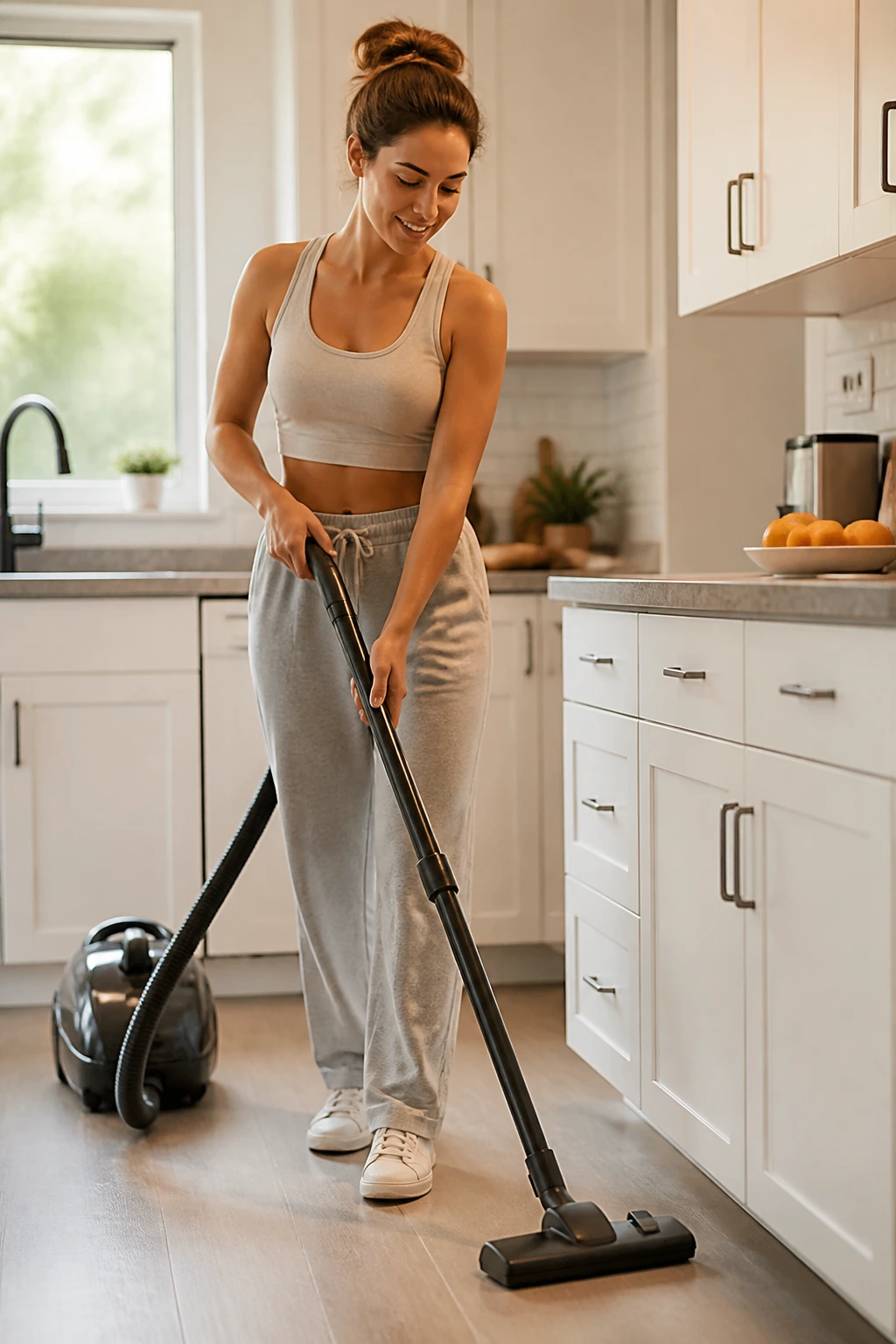
Cleaning only counts when it stays intentional. Random tidying with long breaks in between does not do much. A cleaning circuit does.
Pick a room and work in timed blocks: vacuum for 5 minutes, march in place for 1 minute, wipe counters for 3 minutes, carry laundry to another room, then move on. Keep the pace steady enough that your breathing stays a little elevated the whole time. The effort should sit in that friendly middle zone where you are active, but not rushing around like the house is on fire.
A simple 20-minute home circuit
- 5 minutes vacuuming
- 2 minutes marching in place
- 5 minutes wiping surfaces
- 2 minutes carrying laundry or bins
- 6 minutes tidying while walking between rooms
The nice part is that this one fits real life. You do not need a special mood. You do not need special clothes. You already have the tasks, and you only need to keep the pace moving.
One warning: don’t lean on cleaning as your only cardio forever unless you truly enjoy it. It is a fine tool, not a personality.
Final Thoughts
The best beginner LISS workouts at home are the ones you can do without a little argument in your head before each session. That usually means walking, marching, biking, or another steady move that feels comfortable enough to repeat.
If you want a simple rule, use the talk test and pick a pace that lands around 3 to 4 out of 10. You should finish warm, not wrecked. You should feel like you could do a bit more, but do not need to prove anything.
Start small if that is what keeps you moving. Ten minutes counts. Fifteen counts. The session that gets repeated three times is worth more than the heroic one you never want to touch again.
