



A living-room floor can do more than collect dust and dog hair. A well-built at-home workout challenge turns that spare patch of space into a place where you actually sweat, breathe hard, and finish something before dinner. The appeal is not fancy. It is the lack of friction: no commute, no locker room, no waiting for a rack, no wondering whether you packed the right shoes. You grab a timer, a chair, maybe a yoga mat, and get to work.
A lot of people quit home fitness because they try to improvise every session. That gets old fast. Structure helps, and a challenge gives the structure a spine: a clear finish line, a repeatable format, and a little pressure to show up even when motivation is being lazy. The good ones are not all brutal, either. Some build confidence. Some build lungs. Some make your legs feel like wet sand for a day or two.
I’ve always liked home workouts that respect the room they happen in. A hallway can handle shuttle steps. A staircase can turn into a leg drill. Two water bottles can stand in for light weights. None of that is glamorous. It works, though, and that’s the part people remember after the first week.
The best part is how fast the right setup can go from boring to a little brutal. A timer, a handful of bodyweight moves, and one honest rule can do more than a cluttered corner full of gear you never touch.
1. The 10-Minute Streak
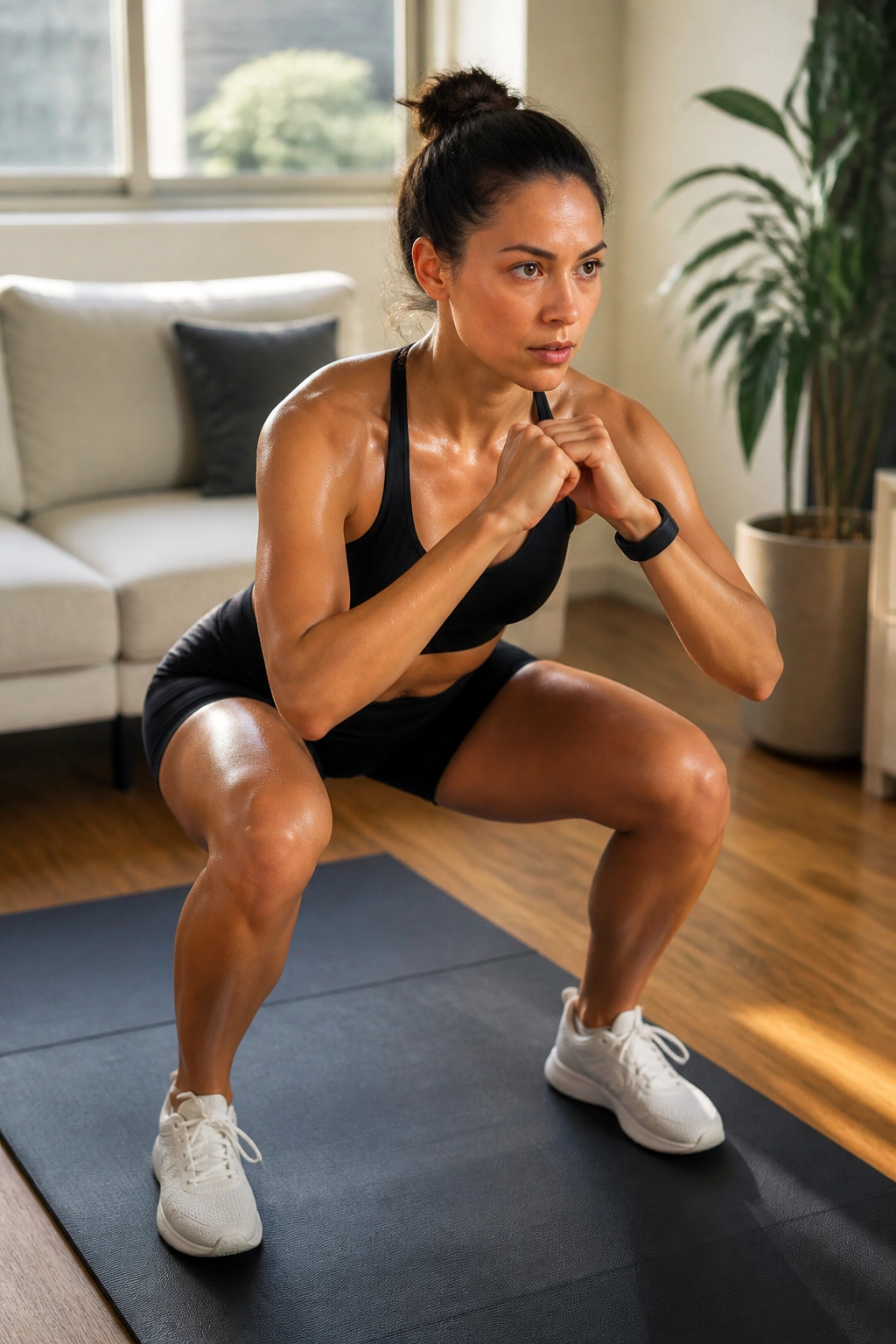
Ten minutes is not a joke.
That’s the point of this first at home workout challenge. It looks small enough to skip, which is exactly why it works so well. When you commit to 10 minutes a day for 7, 14, or 30 days, you stop negotiating with yourself before every session. You’re not chasing exhaustion. You’re building a habit that survives busy mornings, tired evenings, and the weird little excuses that show up around laundry, work calls, and dinner.
Use a simple circuit: 30 seconds of squats, 30 seconds of incline push-ups on a counter, 30 seconds of marching planks or dead bugs, then 30 seconds of fast step touches. Repeat until the timer hits 10 minutes. On the first day, that may feel too easy. Good. The challenge is consistency, not drama.
How to keep the streak honest
- Pick 4 moves and keep them the same for the whole stretch.
- Set a 10-minute timer and stop when it ends.
- Use a minimum effort rule on rough days: one round still counts.
- Keep a simple log on paper or in your phone.
- If you miss a day, do not stack two workouts the next day. Just resume.
A streak works because it lowers the barrier until your brain stops treating exercise like a big event. Once that happens, adding harder work gets easier. Funny how that goes.
2. The Bodyweight Ladder

What happens when you climb instead of race?
A bodyweight ladder challenge gives you a clear ramp: 1 rep, then 2, then 3, and so on up to 10, or 12 if you want a longer session. After the top rung, you come back down. It feels almost playful on paper. In practice, it sneaks up on you because the early rounds feel light and the middle rounds start asking questions. By the time you reach the top, your pacing matters more than your ego.
Choose 3 moves that play nicely together. Squats, push-ups, and reverse lunges are a strong trio. So are glute bridges, incline push-ups, and mountain climbers. Beginners can stop at 6 or 8 reps on the way up. More experienced people can add a fourth move or extend the top rung to 12.
A sample ladder
- 1 squat
- 1 push-up
- 1 reverse lunge per side
- 2 squats
- 2 push-ups
- 2 reverse lunges per side
- Keep climbing until 10
The reason this challenge feels so satisfying is simple: it gives you visible progress inside the workout itself. You can feel the climb. And when the last descending rung gets easier than the peak, you know your pacing was smart.
3. The EMOM That Keeps You Honest
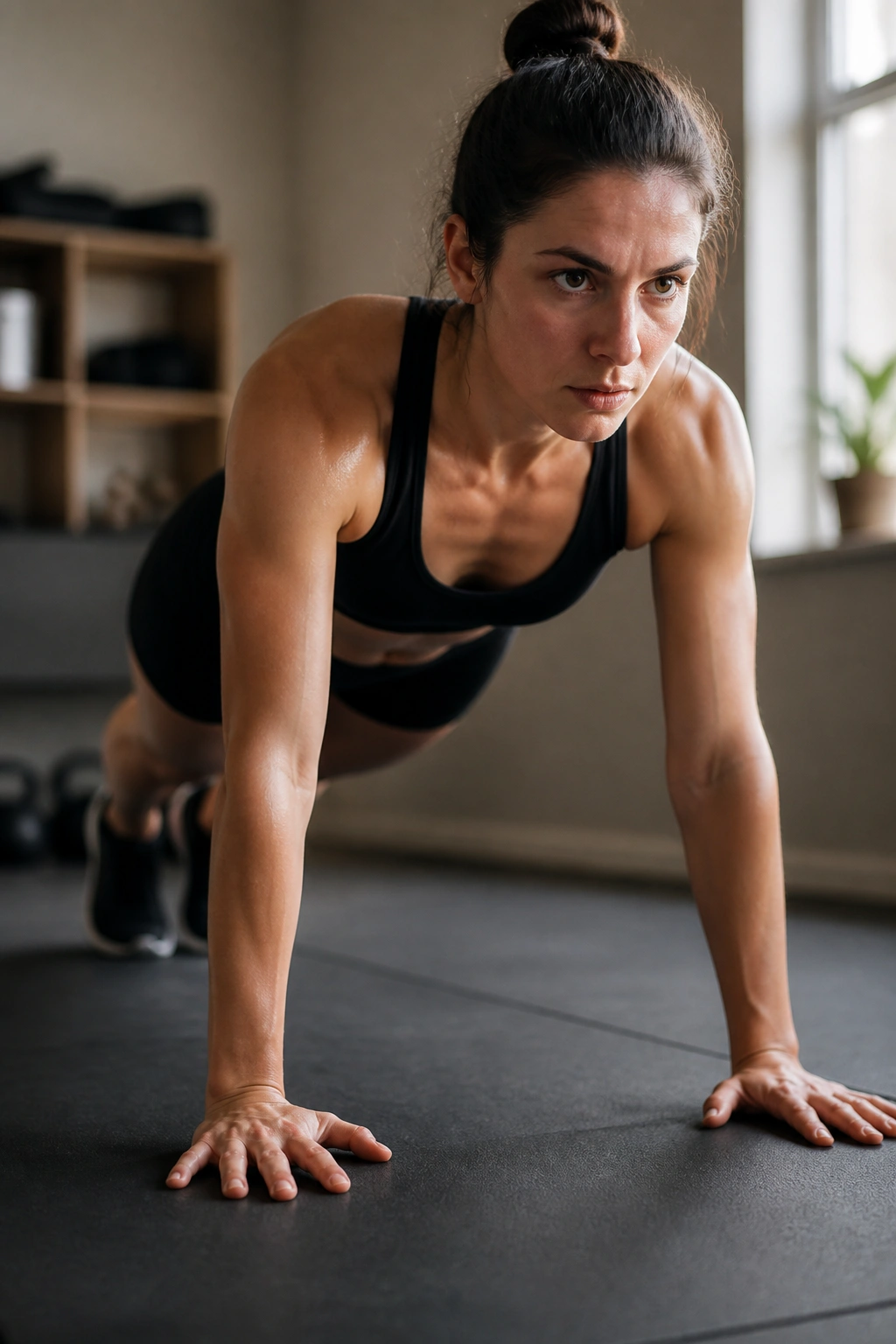
EMOMs punish sloppy pacing.
That’s the charm. Every minute on the minute, you do a set amount of work, then rest with whatever time is left. If you finish in 20 seconds, you get 40 seconds of rest. If you drag on past 50 seconds, the workout starts collecting interest. It forces efficiency without needing fancy equipment.
A clean starting point is 12 minutes total. Minute 1: 10 air squats. Minute 2: 6 push-ups. Minute 3: 20 high knees per side. Minute 4: 8 glute bridges. Repeat the cycle three times. Beginners can cut the reps in half. Advanced movers can add a jump squat or shoulder tap set, but only if the reps still fit inside 40 seconds.
The trick is not to race the first two rounds. That’s where people get greedy, then spend the last half of the workout staring at the clock. Keep your breathing under control. You want solid reps, not chaos.
What makes EMOMs useful
- They train pacing, not just effort.
- They show you exactly where your form breaks.
- They fit neatly into 10, 12, 15, or 20 minutes.
- They’re easy to scale by changing reps, not the whole workout.
Short, sharp, and unforgiving. That’s usually a good sign.
4. The No-Repeat Circuit
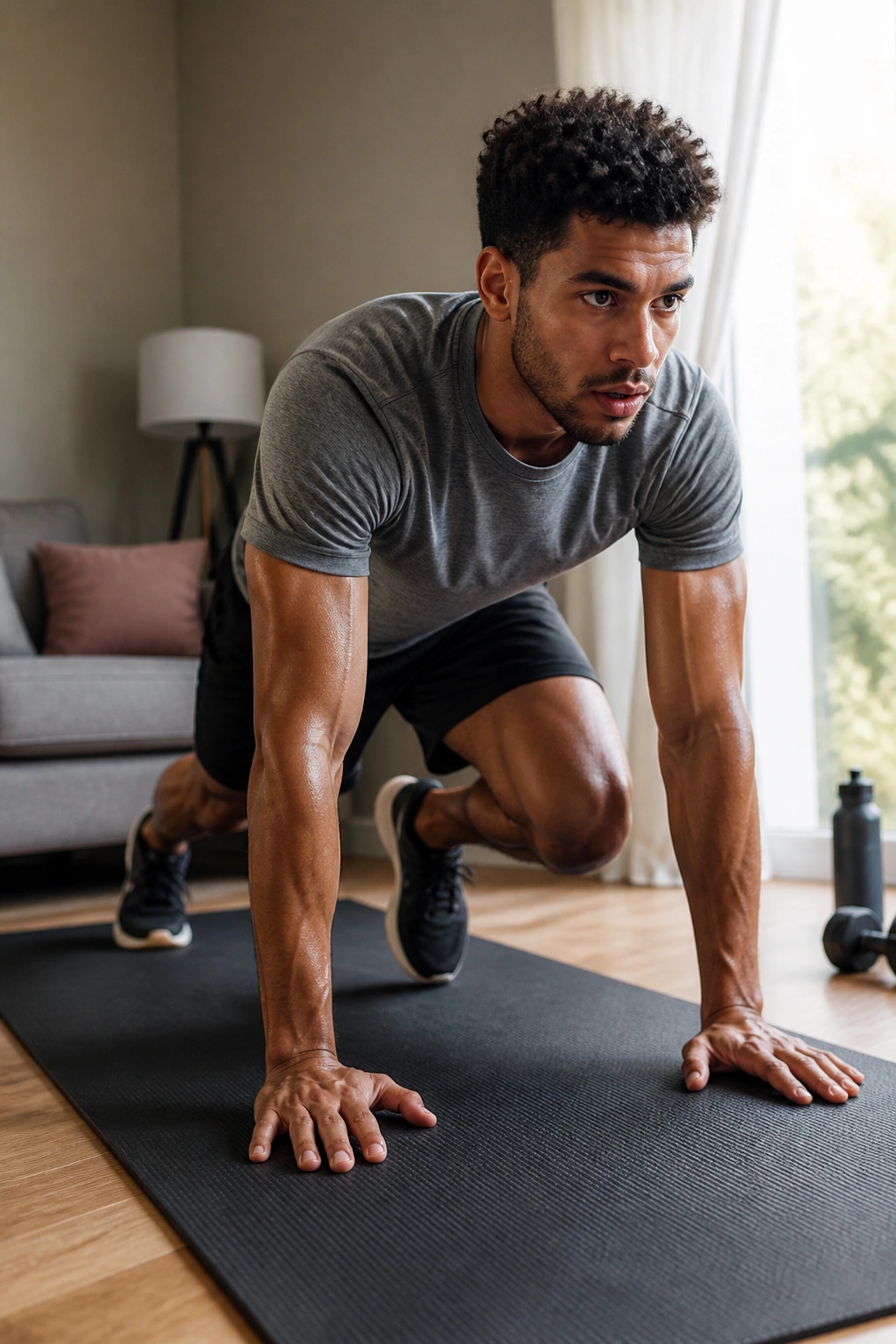
By the third round, your legs know something’s up.
A no-repeat circuit means you never hit the same movement twice in a row. That sounds simple, but it does a sneaky little thing to your head: it keeps you from settling into autopilot. You might go from squats to mountain climbers to plank shoulder taps to split squats, and the constant change forces your body to stay alert. It’s one of my favorite at home workout challenges for people who get bored fast.
Build a 6-move loop and run it for 3 to 5 rounds. Keep each station between 30 and 45 seconds. Use one lower-body move, one push move, one core move, one cardio move, then repeat with different patterns. A chair, a wall, and a mat are enough.
A sample no-repeat loop
- Squats
- Incline push-ups
- Plank shoulder taps
- Reverse lunges
- Fast march in place
- Dead bugs
The best part is the rhythm shift. Some moves burn. Some calm things down just enough to let your breathing reset. That little ebb and flow keeps the workout from feeling like one long uphill fight, which is usually why people stick with this style longer than they expect.
5. The Staircase Power Challenge

Stairs feel honest.
There’s no pretending when you’re climbing them. One flight can light up your calves, glutes, and lungs faster than a lot of people expect, especially if you keep the work intervals tight and the descent controlled. If you live in a building with stairs, or have a sturdy step at home, this challenge gives you a hard cardio dose without needing any jump-heavy moves.
Try 30 seconds up, walk down, repeat for 10 to 15 minutes. Beginners can walk every step. Intermediate movers can go two steps at a time if the staircase is safe and the railing is there. If your knees dislike impact, keep it slow, keep one hand on the rail, and focus on smooth foot placement. No lunging across the steps like a movie stunt. That’s a bad trade.
A good stair session has a sneaky side benefit: it teaches you to recover on the move. Your heart rate comes down a little during the walk back, then climbs again on the next ascent. That wave matters. It builds work capacity without needing a treadmill or a pile of gear.
Watch for these details
- Put your whole foot on each step.
- Keep your chest tall instead of folding forward.
- Step down with control.
- Stop if the staircase feels slippery or crowded.
Simple. Hard enough. That balance is the whole point.
6. The Core Stability Challenge
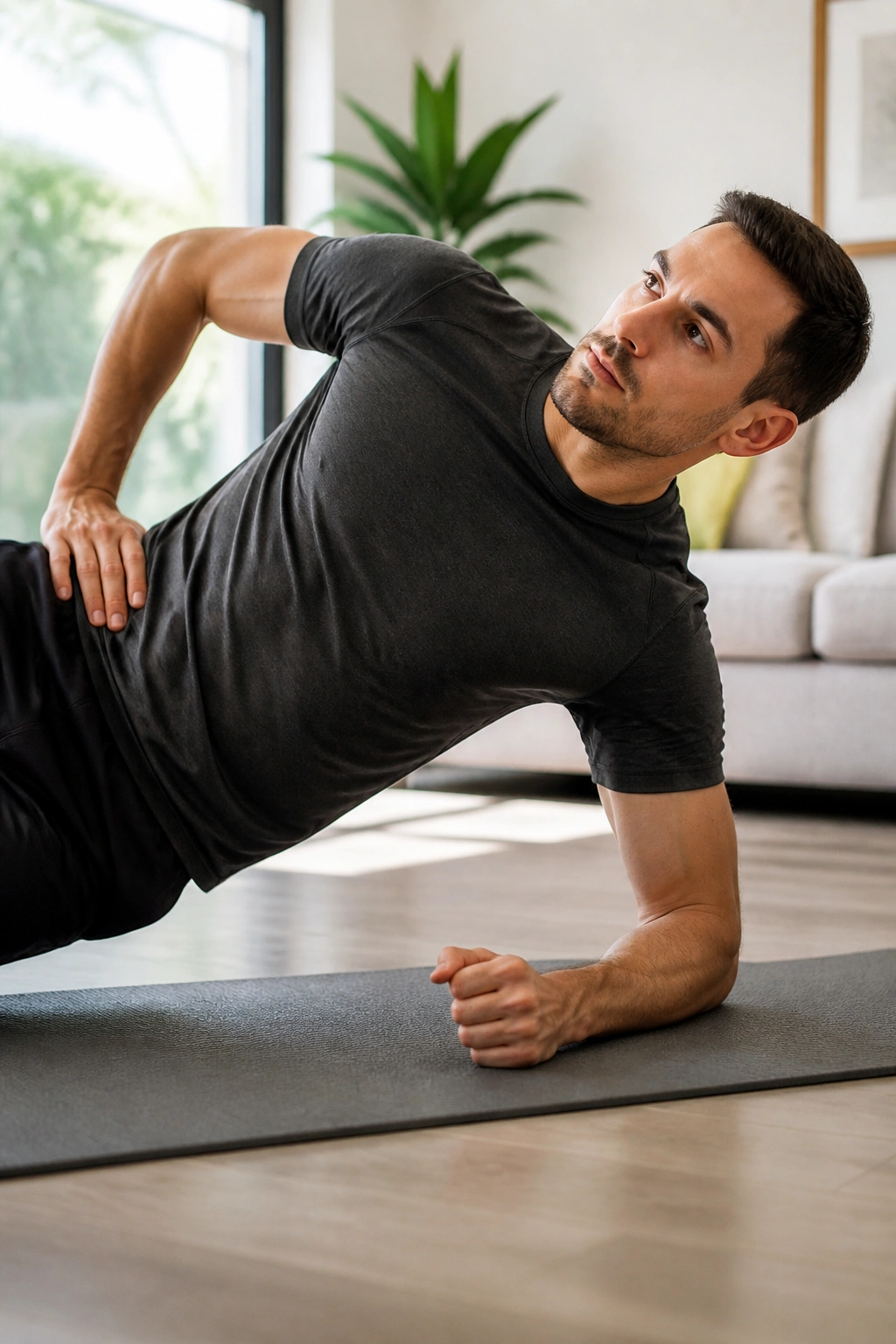
Can you train your core without doing crunches for ages?
Yes, and your lower back may thank you for it. A core stability challenge focuses on resisting movement instead of just bending and twisting through reps. That means planks, dead bugs, bird dogs, side planks, and slow mountain climbers. These moves teach your trunk to stay steady while your arms and legs do the work, which matters more than people think when you’re carrying groceries, climbing steps, or just trying not to collapse halfway through a squat.
Use a 12-minute block. Hold a plank for 20 to 40 seconds, then do 8 dead bugs per side, 20 seconds of side plank per side, and 8 bird dogs per side. Beginners can keep the holds shorter and rest longer. Advanced movers can add shoulder taps or hollow body holds if their backs stay flat.
The moves that matter
- Dead bug: keep your lower back pressed down.
- Bird dog: move slow, no hip wobble.
- Side plank: keep the bottom shoulder stacked.
- Plank: ribs down, glutes tight, neck long.
The real win here is control. You should feel stable, not wrecked. If your back arches or your hips sag, scale it back a notch and clean up the position first.
7. The Upper-Body Push Challenge
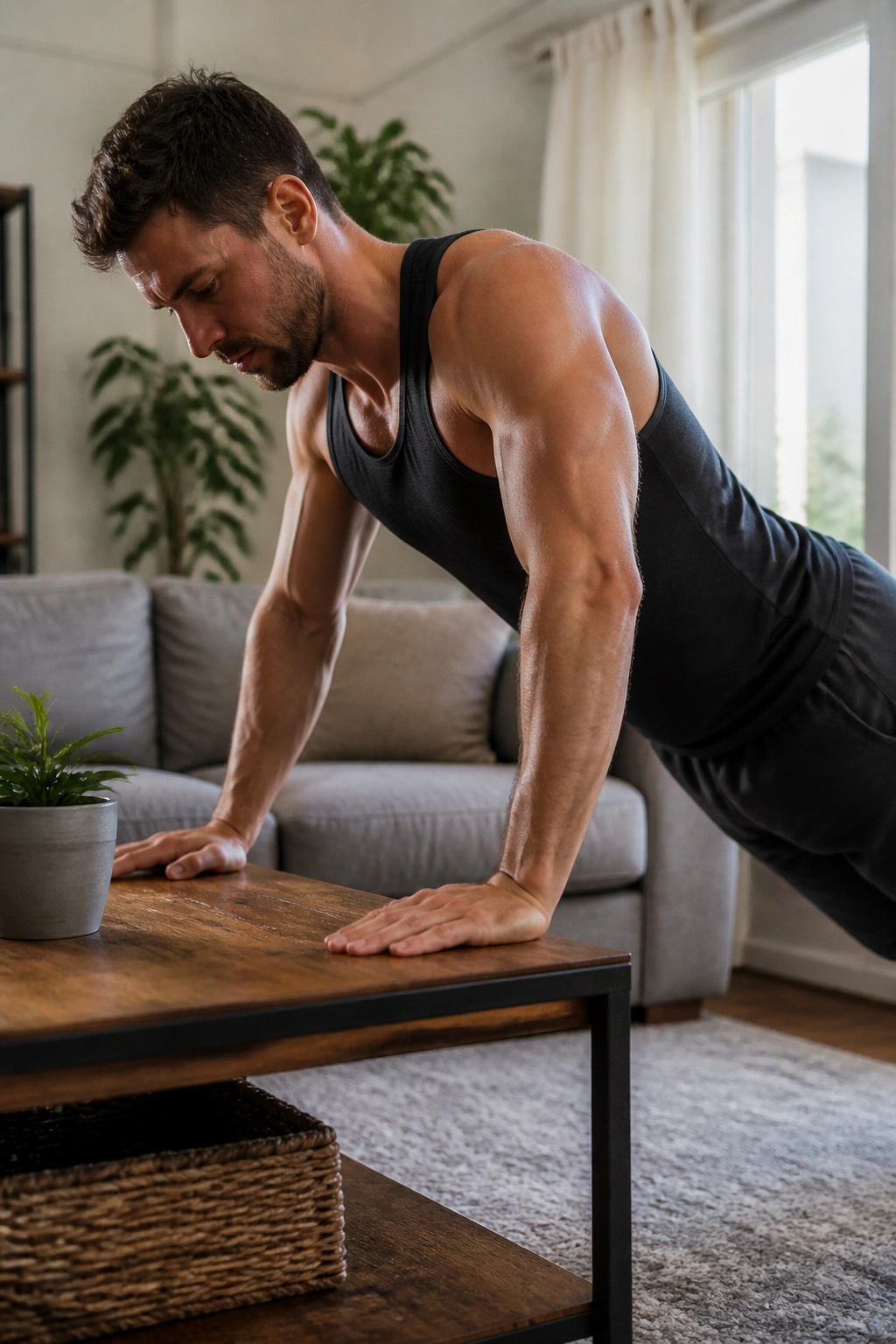
Push-ups are not the whole story.
They’re a great piece of the puzzle, though. A strong upper-body challenge at home should hit your chest, shoulders, triceps, and upper back enough to keep things balanced, and it needs a few versions that let different levels work side by side. A wall push-up can be a real workout for a beginner. A decline push-up can humble an experienced one. That range is what makes this challenge useful.
Run 4 rounds of 8 to 15 reps per move: incline push-ups, pike push-ups, chair dips, and towel rows under a sturdy table or doorway setup if you know what you’re doing and the surface is safe. If rows aren’t practical, swap in isometric wall holds or prone “W” raises on the floor. Shoulders should feel worked, not pinched.
A sensible progression
- Beginner: wall push-ups, chair-supported pike holds
- Intermediate: incline push-ups, chair dips, pike push-ups
- Advanced: floor push-ups, decline push-ups, slow negatives
The trap is chasing depth before control. A cleaner half-range rep beats a messy full one, and your elbows will usually tell you when you’re cheating. Listen to them.
8. The Lower-Body Burn Challenge
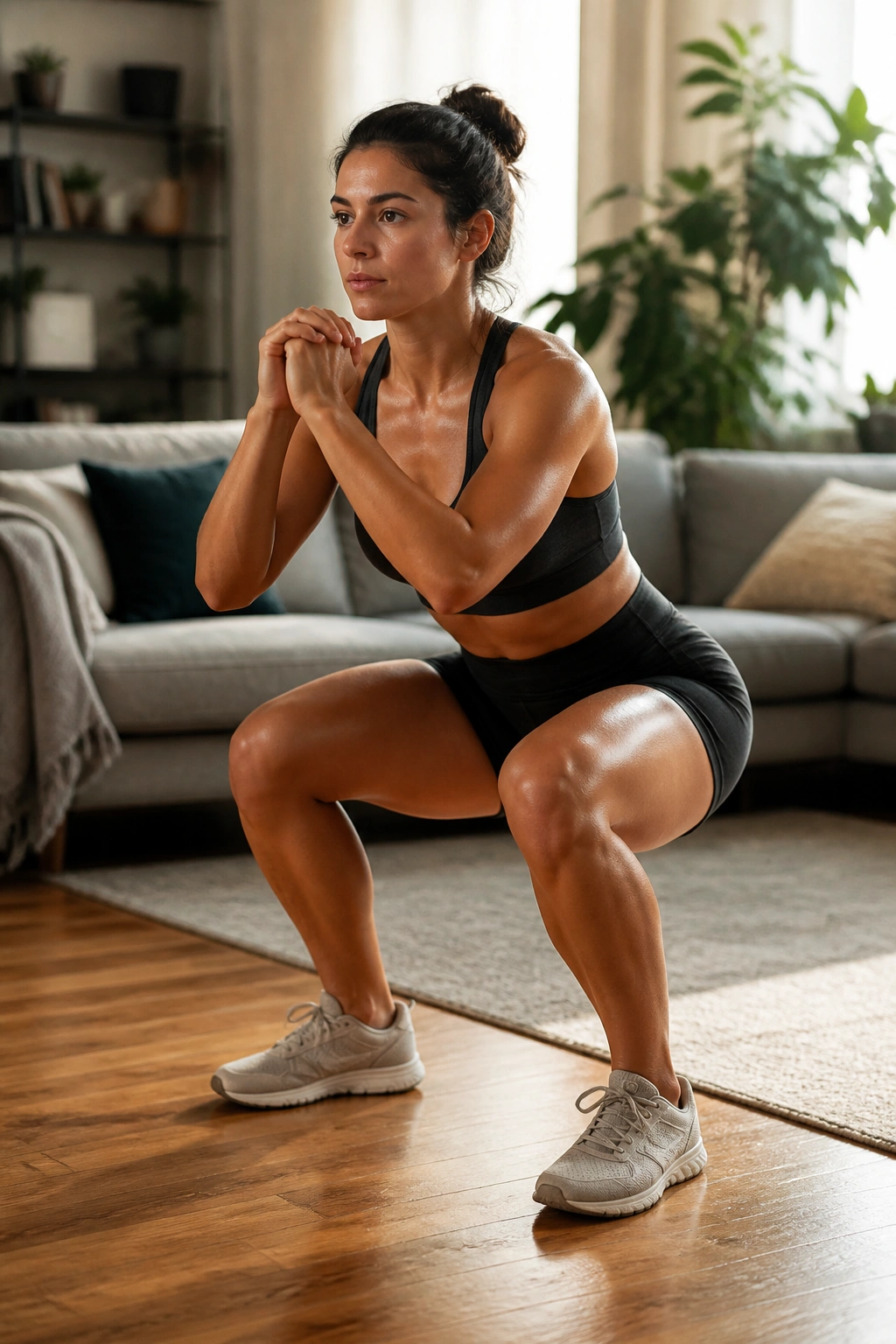
Your thighs heat up fast when you slow a squat down.
That’s the whole appeal here. Lower-body work at home does not need to be flashy to be hard. Squats, split squats, glute bridges, and wall sits can chew through your legs if you use tempo and holds instead of rushing through sloppy reps. You feel it in the quads, yes, but also in the glutes and the hips, which is where a lot of people are undertrained.
Try 3 rounds of this: 12 slow squats with a 3-second lower, 10 reverse lunges per side, 15 glute bridges with a 2-second squeeze at the top, and a 30- to 45-second wall sit. That’s enough to make the room feel smaller. Beginners can cut the reps and shorten the wall sit. More advanced people can add a pause at the bottom of each squat.
Tempo changes everything
A fast squat can hide weak spots. A slow one shows them.
That’s useful. It teaches you whether your knees cave in, whether your heels lift, and whether your hips shift side to side when the work gets real. If the movement gets sloppy before the timer ends, shorten the set and clean up the form. Your legs will still get the message.
9. The Low-Impact Cardio Challenge
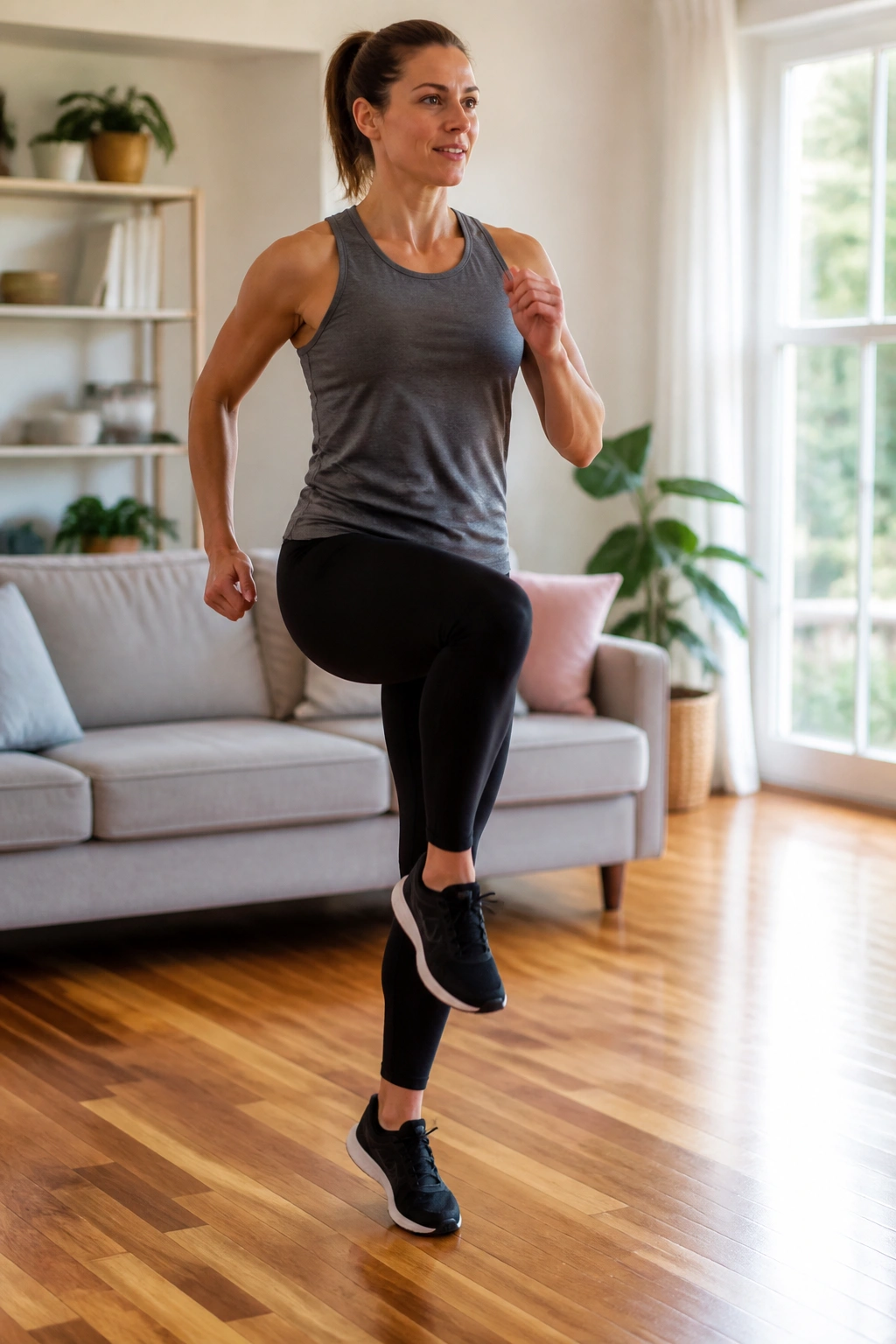
You do not need jumping jacks to sweat.
That sounds obvious, but people forget it the second they start shopping for home cardio ideas. Low-impact work can raise your heart rate, improve stamina, and spare your joints and neighbors at the same time. Marching, shadowboxing, step touches, knee lifts, fast feet without leaving the floor, and skater steps without the hop all count. If you’ve got a creaky floor or a cranky knee, this challenge is a gift.
Build a 20-minute flow: 40 seconds on, 20 seconds off. Rotate through marching with arm drives, shadowboxing, side steps with reach, standing knee lifts, and power walks in place. Beginners can keep both feet close to the floor. More advanced movers can push the pace and add sharper arm work so the whole body has something to do.
A lot of people underestimate how hard boxing combinations feel when you keep them going for a full minute. Try 1-2 punches, hook-cross-hook, then a quick reset. Suddenly the shoulders are talking.
This style works well on days when you want movement more than punishment. That matters more often than people admit.
10. The Mobility Reset Challenge
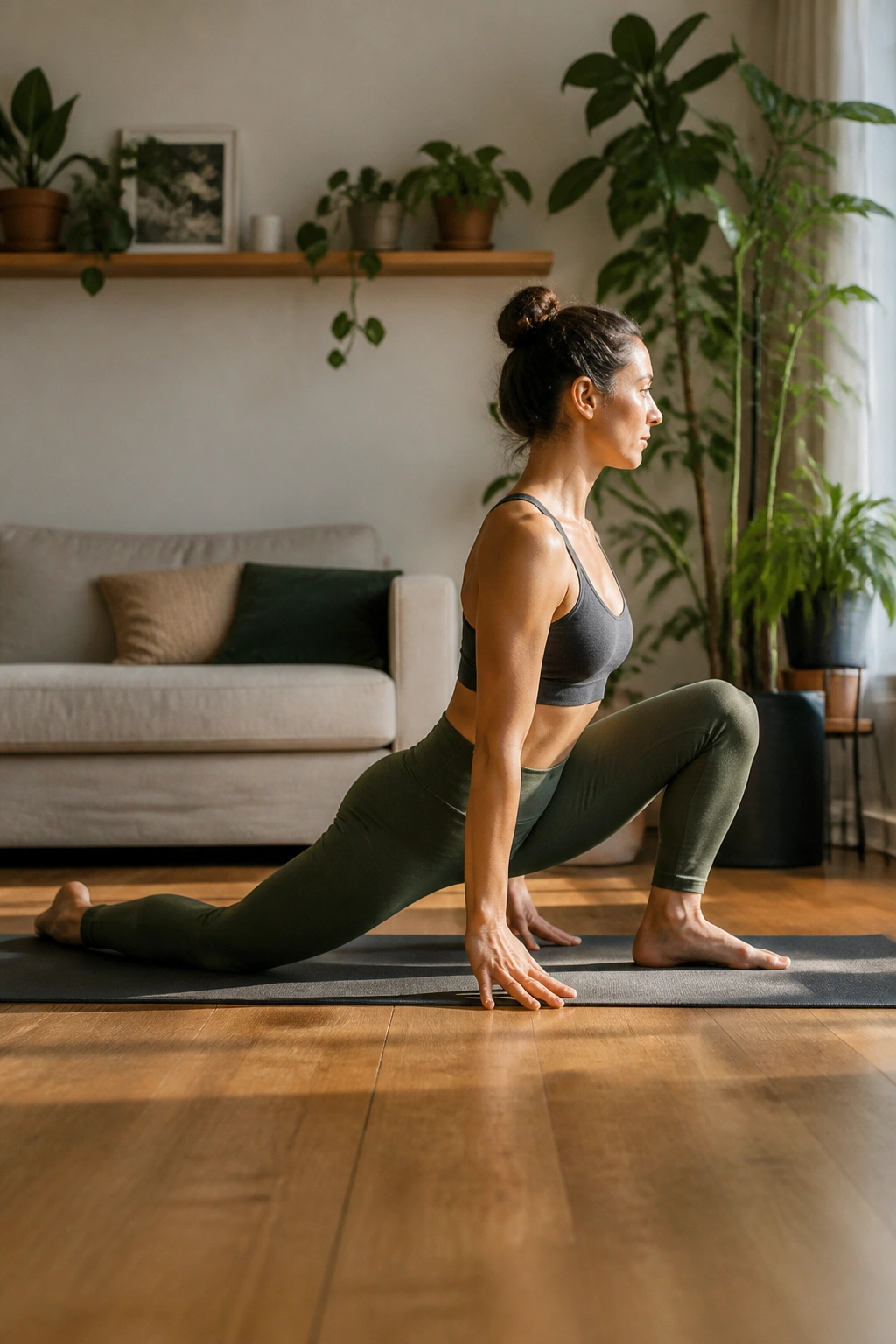
A stiff back after a desk day usually needs movement, not more sitting.
That’s why a mobility challenge belongs on this list. It is not a lazy version of exercise. It is exercise with a different job: move the hips, wake up the spine, open the shoulders, and get the ankles working again. Ten to fifteen minutes is enough if you stay honest about the ranges and don’t rush through them like you’re trying to get it over with.
Focus areas
Hips
Spend time on hip circles, 90/90 switches, and low lunges with a gentle reach overhead. Hips like motion in more than one direction.
Spine
Use cat-cow, thoracic rotations on all fours, and thread-the-needle stretches. Your mid-back tends to get stiff before you notice it.
Shoulders and ankles
Wall slides, arm circles, calf rocks, and ankle rolls help if your overhead reach feels stuck or your heels pop up in squats.
A good mobility challenge should leave you looser, not drained. If you’re sweating buckets, you probably turned it into cardio by accident. Fine, but that was not the assignment.
11. The Tempo Strength Challenge
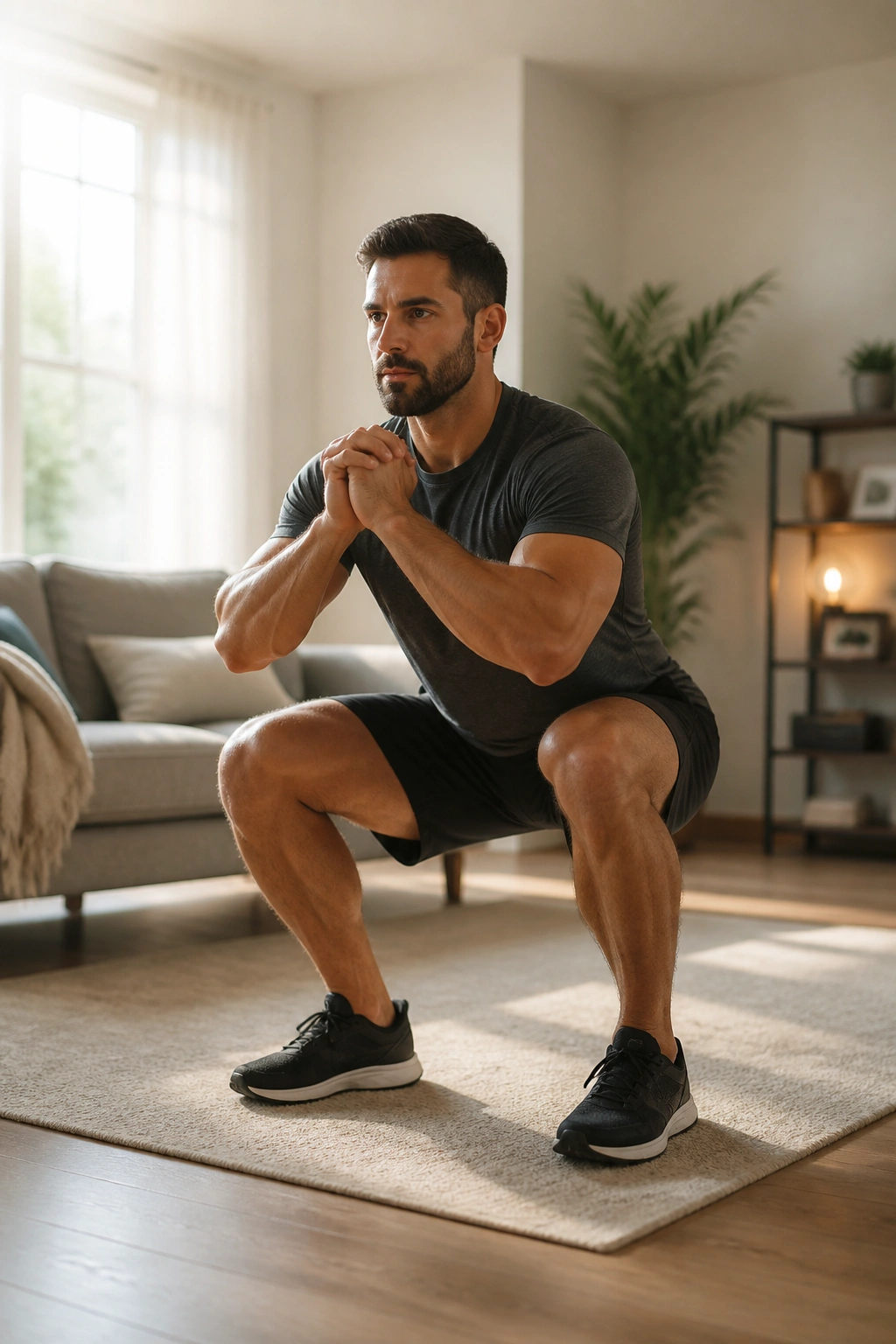
A squat taken down for three counts feels completely different.
So does a push-up with a slow lower, or a lunge with a pause at the bottom. Tempo work is one of the smartest at home workout challenges because it makes light resistance feel heavy without needing dumbbells. The muscles stay under tension longer, the movement gets cleaner, and you learn patience in places where people usually rush.
Use a 3-1-1 count: 3 seconds down, 1 second pause, 1 second up. Try it with squats, push-ups, split squats, and glute bridges. Three rounds of 6 to 10 reps per move is enough for most people. If you lose control halfway through the set, the reps are too high or the pace is too slow for your current strength.
The odd thing about tempo work is that it looks easier than it feels. That’s a trap. A slow push-up can light up your triceps faster than a sloppy set of 20 fast reps, and the pause at the bottom will expose every shortcut you’ve been taking.
A simple tempo rule
- Lower in 3 seconds
- Hold for 1 second
- Lift in 1 second
- Rest 45 to 75 seconds between sets
If you want more challenge, do not add speed. Add control. That’s where the work lives.
12. The Unilateral Balance Challenge
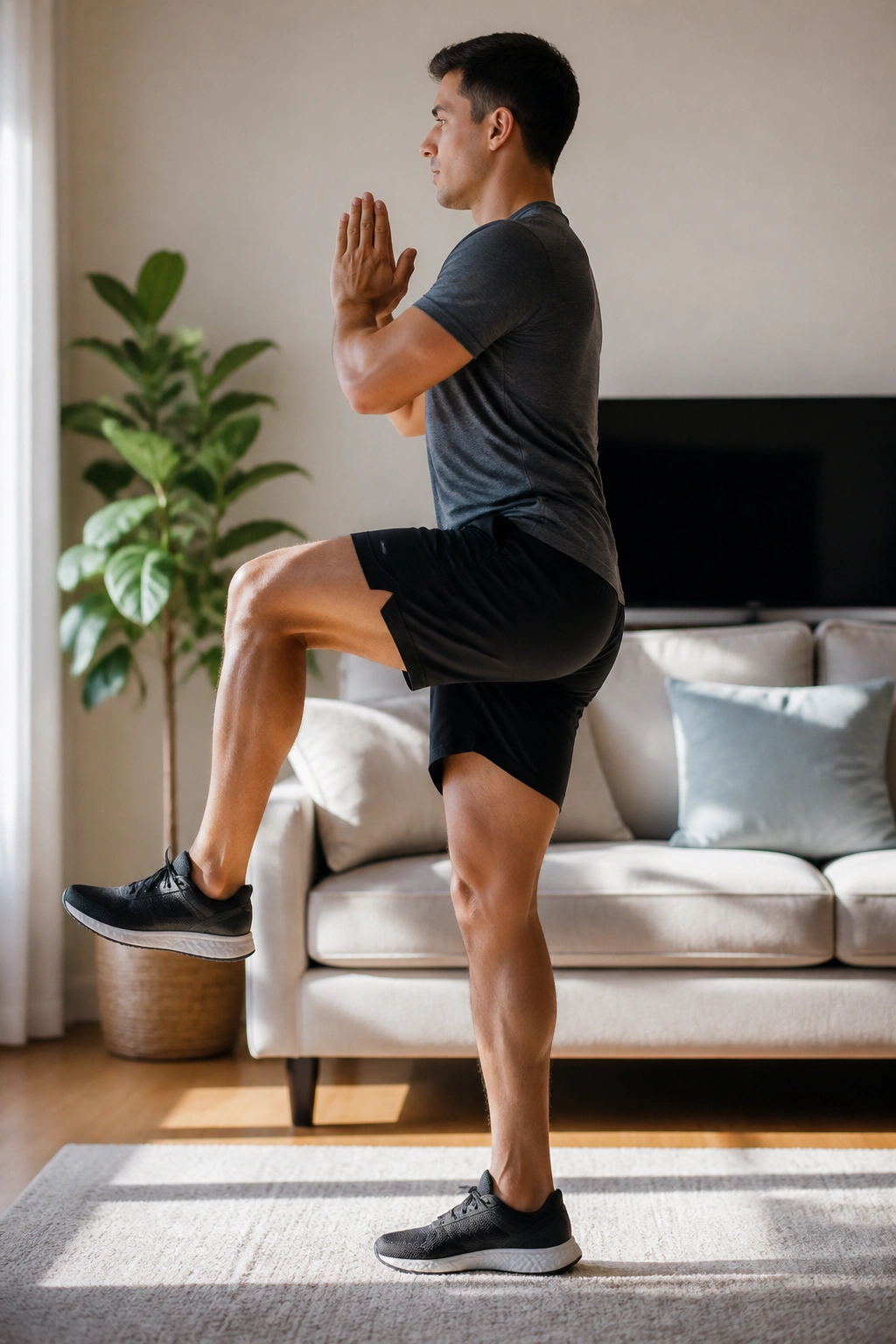
Two legs can hide a lot of weak spots.
That is exactly why single-side training belongs in home workouts. Split squats, single-leg glute bridges, single-arm carries with a backpack or water jug, and single-leg RDLs teach balance, stability, and strength one side at a time. A lot of people discover their right side is calmer, their left side is shakier, or one hip simply does more of the work. That’s useful information, not a failure.
Try 3 rounds of 8 to 10 reps per side for split squats and single-leg glute bridges. Add 30-second carries per side if you have room to walk. Beginners can keep one hand on a wall or chair for support during the balance work. Advanced movers can slow the lowering phase and pause for a second in the bottom position.
The challenge here is not to wobble your way through and call it good. The challenge is to keep the knee tracking straight and the pelvis steady while the supporting leg works hard. That takes more attention than most people expect, which is why it pays off.
13. The AMRAP Ladder

AMRAPs get messy if you don’t set one rule first.
That rule is pacing. AMRAP means as many rounds as possible in a fixed time, usually 8, 10, 12, or 15 minutes. A ladder AMRAP keeps the rep scheme climbing in small steps, which gives structure to the chaos. You might start with 2 squats, 4 push-ups, 6 reverse lunges, then 8 mountain climbers, and repeat while the reps climb by two each round. It’s a tidy way to turn a small room into a demanding workout.
This format suits people who like to track progress. Write down how many rounds you finish, or where you get stuck when the timer ends. That number becomes a target next time. The challenge is part cardio, part mental grit, and part humility. If you blow through the first round, the later rounds will punish you.
How to score it
- Pick 4 moves
- Set a timer for 10 to 12 minutes
- Start with low reps, then add 2 reps per round
- Record the last full round you completed
A good AMRAP leaves you breathing hard but still in control of form. Once your reps turn into slop, the score stops meaning much.
14. The Rest-Pause Challenge
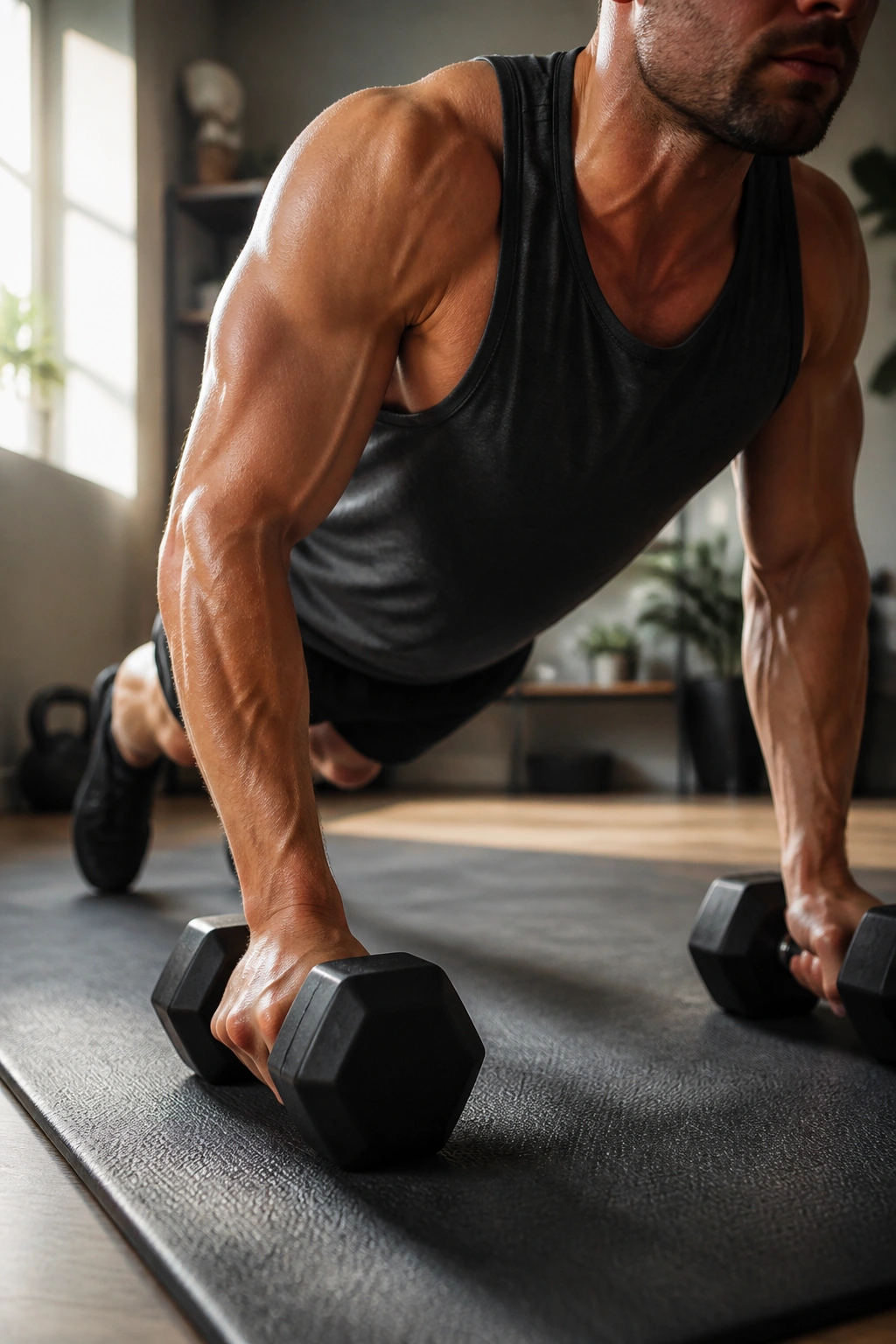
What if short rests help more than long suffering?
They often do. Rest-pause training breaks a set into smaller chunks with brief breaks in between, which lets you squeeze more quality work into a home session. Instead of grinding through 20 shaky squats, you might do 8 reps, rest 15 seconds, do 4 more, rest again, then finish with 3. The muscle stays loaded, but the form stays cleaner than it would in one endless set.
This challenge works well for push-ups, squats, glute bridges, and chair dips. Use one move per block and keep the whole session around 12 to 18 minutes. Beginners can use very short sets, like 5 reps, while advanced movers can push closer to near-failure before each pause. The important part is that the rests stay short and honest. If your break stretches into a full minute every time, you’ve wandered off the plan.
A lot of people like this style because it feels productive without being reckless. You get the burn. You get the pause. Then you get back in.
A simple rest-pause block
- 8 push-ups
- Rest 15 seconds
- 4 push-ups
- Rest 15 seconds
- 3 push-ups
- Rest 30 seconds
- Repeat for 3 rounds
Keep the reps crisp. Messy reps are not a badge.
15. The 30-Day Self-Competition Challenge
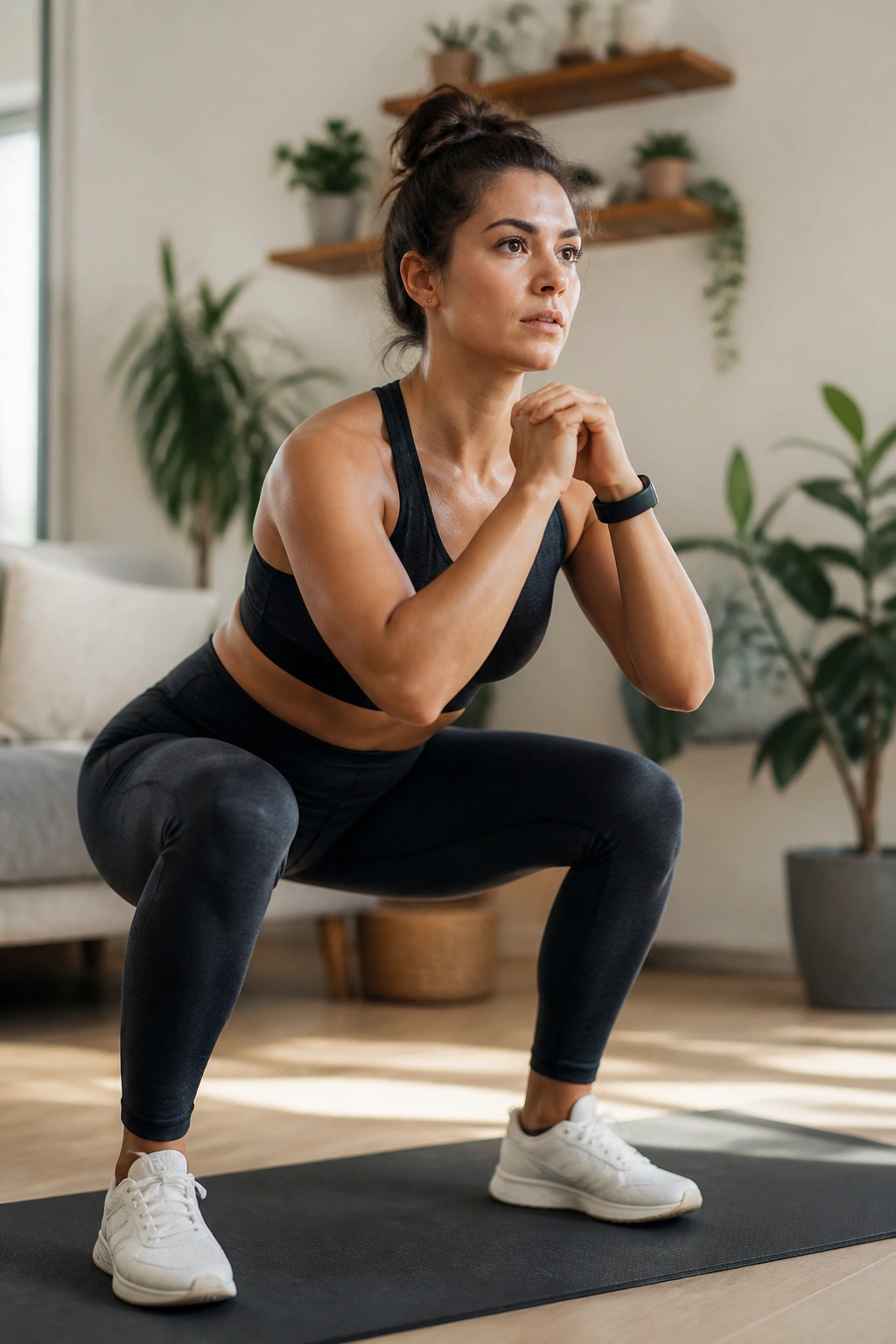
The best home workouts are the ones you can repeat.
That is why a self-competition challenge sits at the end of the list. Instead of chasing someone else’s pace, you pick a few tests, write them down, and try to beat your own numbers over time. It could be max push-ups in 60 seconds, a plank hold, 1-minute squat reps, or a 10-minute step-up count. Three tests is enough. Four is fine if you enjoy data. More than that starts to feel like homework.
Pick three tests
- Push-ups in 60 seconds
- Plank hold for time
- Squats in 60 seconds
- Step-ups in 2 minutes
- Mountain climbers for 45 seconds
Test on day one, then retest every 7 days under the same conditions. Same shoes. Same surface. Same rest beforehand. If you change too many variables, the numbers stop meaning much. Record everything in the same note so you can spot small gains, not just the obvious ones.
This challenge works because it turns home fitness into a conversation with your own habits. Some weeks you gain reps. Some weeks you hold steady and feel better. Both count. The room may stay the same size, but your options inside it get bigger when you keep showing up and keep the rules simple.
