



Pairing chest and back workouts in the same session looks simple on paper. In practice, it changes the whole feel of an upper-body day. The pressing work wakes up your chest, the pulling work keeps your shoulders honest, and the back-and-forth rhythm cuts down on the dead time that makes so many workouts drag.
There’s another reason this style works so well: the body likes balance. If you spend months pressing without enough rowing, your shoulders tend to drift forward and your upper back starts doing less than it should. If you only pull and never press, you end up strong in one direction and flat in another. Push-pull training fixes that problem without turning your session into a marathon.
And “tone” is worth clarifying. It’s not a magic rep range. It’s the look that comes from building actual muscle in the chest, lats, upper back, and rear shoulder area, then keeping body fat low enough for that shape to show through. A set of 15 sloppy reps with tiny pink dumbbells won’t do much. A clean, hard set of 8 to 12 reps with enough load to make the last few reps matter? Much better.
The workouts below are built for that kind of training. Some are heavy. Some are joint-friendly. Some work beautifully in a crowded gym when every bench is taken. All of them are aimed at a stronger, firmer-looking upper body that moves better, too.
1. Flat Dumbbell Bench Press and One-Arm Row
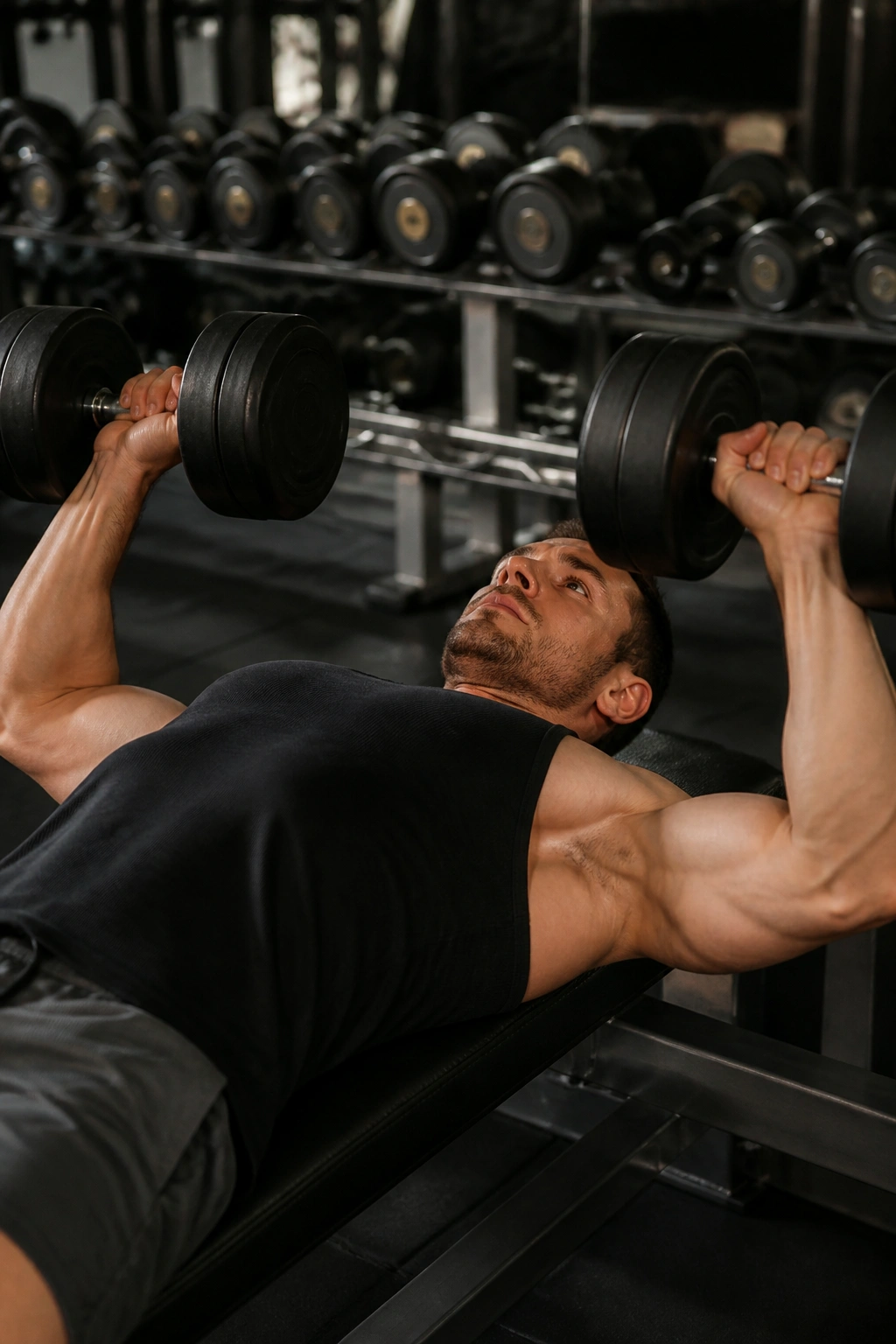
This is the pairing I reach for when I want a straightforward chest-and-back session that still feels balanced. The dumbbell bench press gives you a solid horizontal press, while the one-arm row lets each side of your back work without the other side cheating. It’s simple. It works.
Do 4 rounds of 8 to 10 reps on the bench press, then 8 to 10 rows per side. Rest about 45 seconds between exercises and 90 seconds after each round. Keep your shoulder blades set on the bench during the press, then let them move naturally on the row. That small difference matters.
Why it feels so effective
- The press loads the pecs, front delts, and triceps without locking you into a fixed bar path.
- The row gives your lats and mid-back enough work to keep your posture from slumping.
- The alternating flow keeps your heart rate up without turning the workout into cardio.
Tip: On the row, pull the elbow toward your back pocket, not straight up toward your ribs. That usually keeps the lat doing the work instead of the biceps taking over.
2. Incline Dumbbell Press and Chest-Supported Row

This is the chest and back workout I like when shoulders feel a little cranky but I still want a training day that has some bite. The incline press shifts a bit more work to the upper chest, and the chest-supported row takes lower-back fatigue out of the picture. That makes it easier to stay honest on both movements.
Use a bench set to about 20 to 30 degrees. Do 3 to 4 sets of 10 to 12 reps on each exercise, with 60 to 75 seconds of rest between rounds. The incline should not be steep. If it looks like a seated shoulder press, the angle is too high.
The chest-supported row is the quiet hero here. No torso cheating. No heaving the weight up with your hips. Just a clean pull that leaves your upper back feeling thick and warm by the last set.
I like this pairing for lifters who want upper-body tone without beating up their lower back. It’s also a good choice if you train after a long day of sitting. Your posture gets a little reminder that it’s still supposed to know how to open up.
3. Push-Up and Inverted Row Ladder

What if you only have a bar, a rack, and floor space? Then this is the workout I’d pick before I’d bother with anything flashy. Push-ups and inverted rows are old-school, but old-school works when you do it with enough effort and enough control.
How to use it
Start with 10 push-ups and 8 inverted rows. Rest 30 to 45 seconds, then repeat for 5 rounds. If that feels too easy, elevate your feet on the push-ups or move your body lower under the bar for the rows. If it feels too hard, shorten the range a little and keep the reps clean.
The best part is the rhythm. You press the floor away, then pull your chest toward the bar. That back-and-forth keeps the shoulders moving in both directions, which is a nice break from the usual bench-and-cable pattern.
What to watch for: your hips. If they sag on push-ups or pop up on rows, the set is getting sloppy and probably too long for the load you’re using.
4. Cable Fly and Seated Cable Row
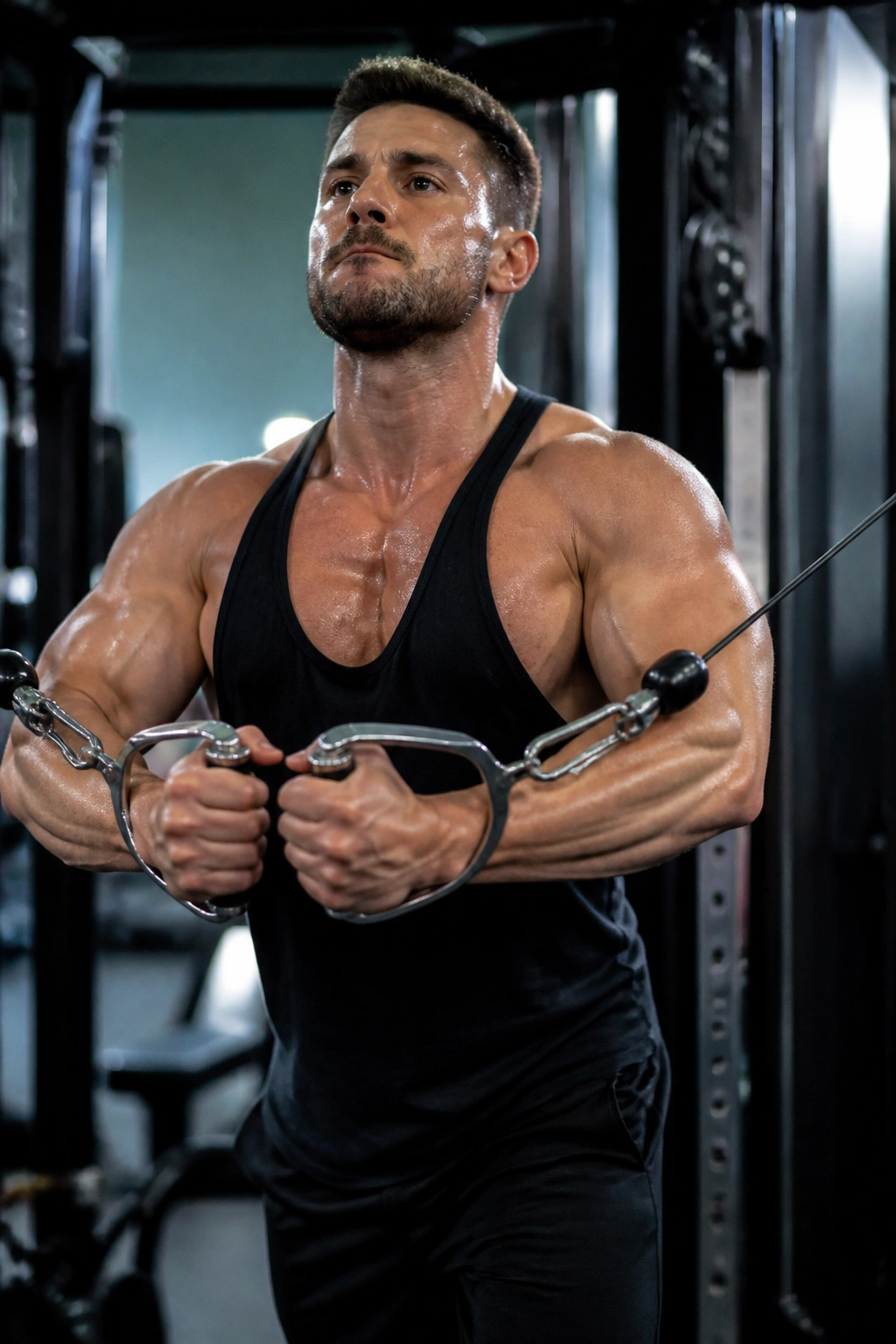
Cables are sneaky. They do not look scary, but they can make a workout feel a lot harder than a machine or barbell setup. The constant tension is the reason. There’s no easy rest point at the top or bottom, so the pecs and upper back stay under load longer.
Do 3 to 4 sets of 12 to 15 reps on the cable fly, then 12 to 15 reps on the seated cable row. Keep the rest short—about 45 seconds between exercises. Choose a fly handle height that lines up with the middle of your chest, then stop the fly when your elbows come just shy of locking out behind you. Overstretching here is usually a bad trade.
Why cables earn their spot
- They keep tension on the muscle through the whole rep.
- They make lighter loads feel meaningful.
- They’re easier on the joints than forcing heavy barbell work on tired days.
Pro tip: Pause for one full second when the handles meet on the fly. That tiny squeeze is where a lot of people accidentally cheat themselves.
5. Barbell Bench Press and Bent-Over Row
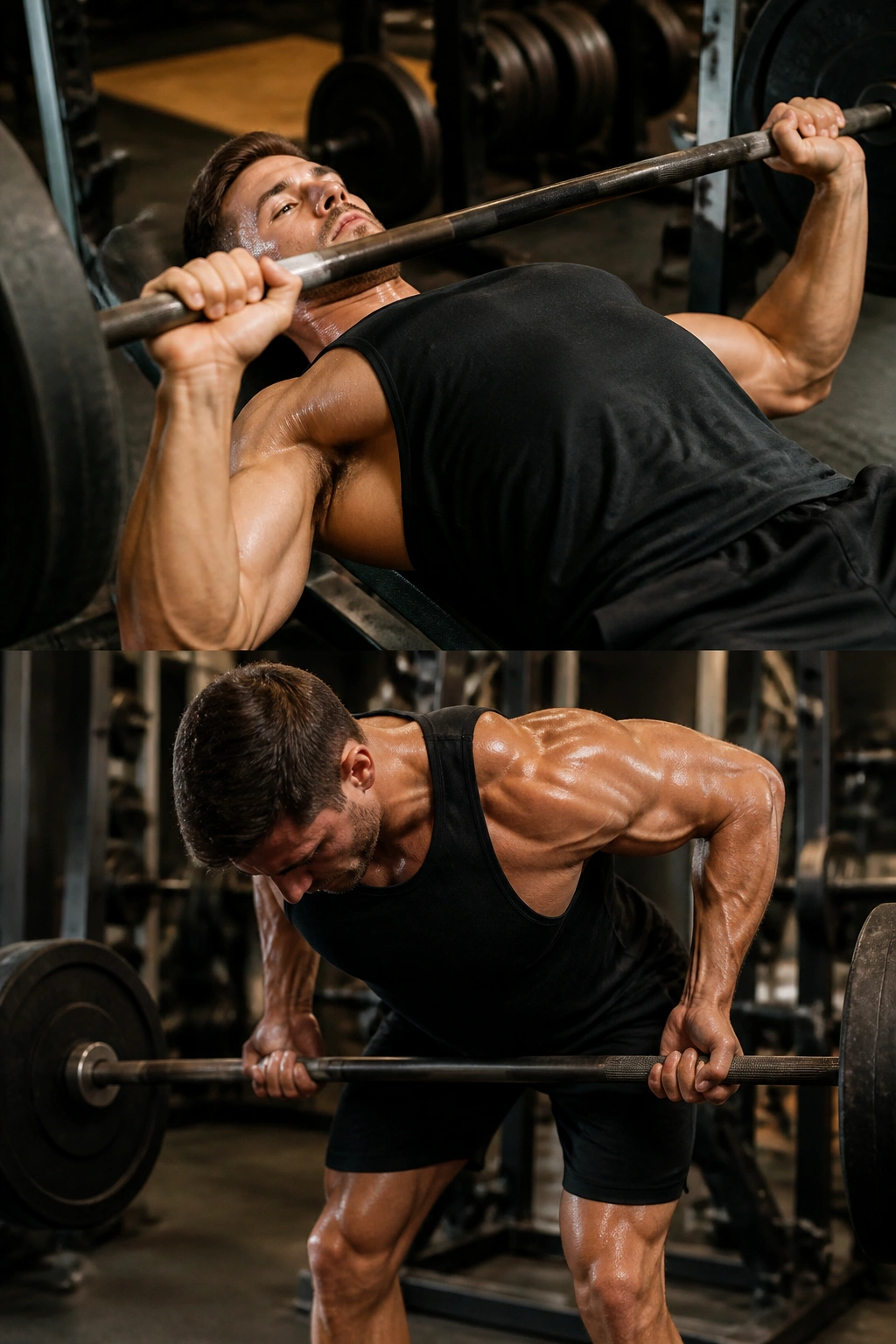
Heavy, basic, and a little unforgiving. I mean that in a good way. If you want a chest and back session that feels like work instead of a polished little fitness routine, this pairing delivers. The barbell bench press asks for bracing and discipline. The bent-over row asks for the same thing, just in a different direction.
Use 5 sets of 5 reps on the bench press, then 5 sets of 8 reps on the barbell row. Rest 90 seconds to 2 minutes between sets. Keep your feet planted hard on the floor, and keep your ribs from flaring on the press. On rows, hinge until your torso is about 30 to 45 degrees above parallel and hold that angle. If your back rounds, the set has gone on too long.
This is not the most shoulder-friendly option for everyone, and I would not pretend otherwise. But if your form is solid and your body likes barbell work, the payoff is easy to feel. You walk away with that deep, heavy upper-back fatigue that makes your shirt sit differently on your frame.
And yes, your grip will probably notice this one too.
6. Close-Grip Dumbbell Press and Neutral-Grip Lat Pulldown
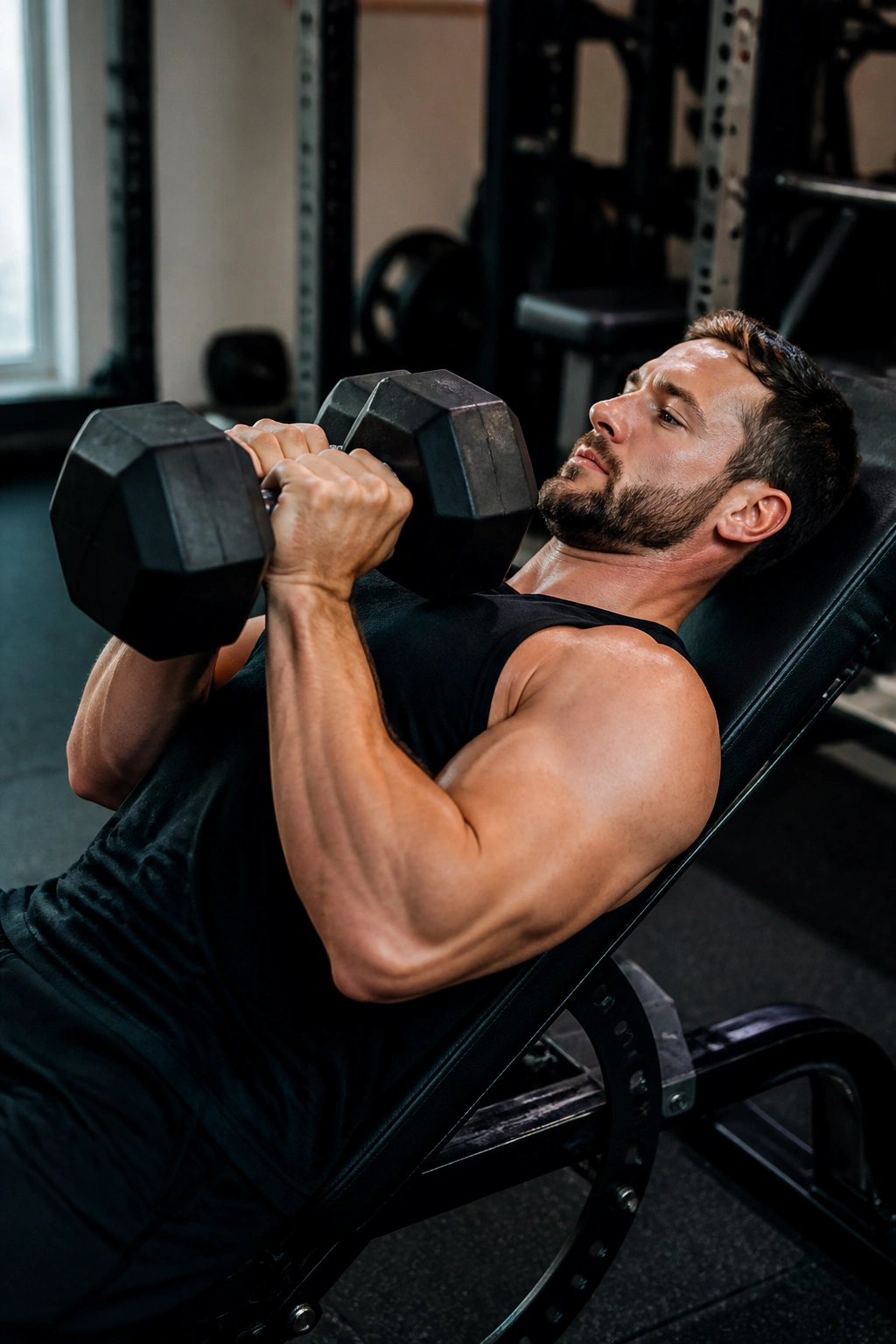
Unlike a wide-grip chest day, this one feels a little tighter and more controlled. The close-grip dumbbell press keeps your elbows tucked enough to spare your shoulders, while the neutral-grip lat pulldown lets your lats work hard without forcing a strained shoulder angle.
Do 3 to 4 rounds of 10 to 12 reps for each movement. Use a grip where the dumbbells sit just outside your torso on the press, not way out near your shoulders. On the pulldown, pull the handles to the top of your chest and stop before your upper back starts heaving backward.
Best for
- Lifters who want a press that feels smoother on the shoulders
- People who want a lat movement that doesn’t irritate the elbows
- Anyone who likes a more compact, no-drama session
The nice thing here is how steady the workout feels. Nothing has to be explosive. Nothing has to be flashy. You press, you pull, you breathe, and the muscles do what they’re supposed to do.
One small rule: if your elbows drift too far out on the press, the movement stops feeling close-grip and starts feeling cranky.
7. Machine Chest Press and Wide-Grip Lat Pulldown
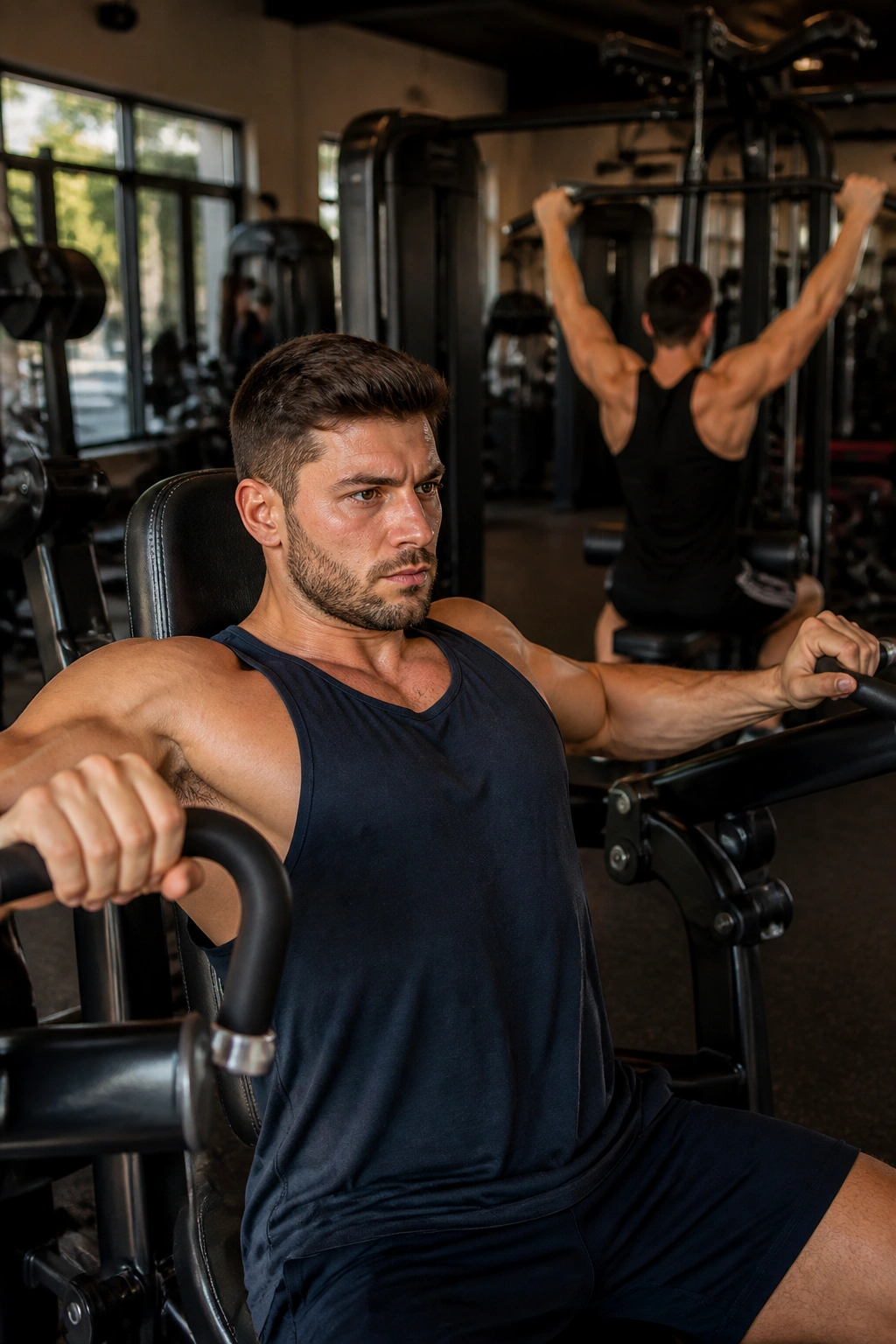
Crowded gym? Perfect. This pairing is built for the corner where the benches are taken and the dumbbells are scattered in all the wrong places. Machines let you get through a chest and back workout without wasting energy on setup, and that matters more than people like to admit.
Do 4 sets of 10 to 12 reps on the machine chest press, then 4 sets of 10 to 12 reps on the wide-grip pulldown. Keep rest to about 60 seconds. Let the machine path guide you, but don’t become passive. Press hard enough that the chest tightens near the midpoint of each rep, and pull the bar down with the lats instead of yanking with the hands.
The best machine sessions leave you feeling worked, not wrecked. That’s a useful distinction. If your goal is upper body tone and repeatable training, a machine can be a very smart choice because it removes a lot of the little distractions that come with free weights.
And no, that does not make it lazy. It makes it efficient.
8. Decline Push-Up and TRX Row
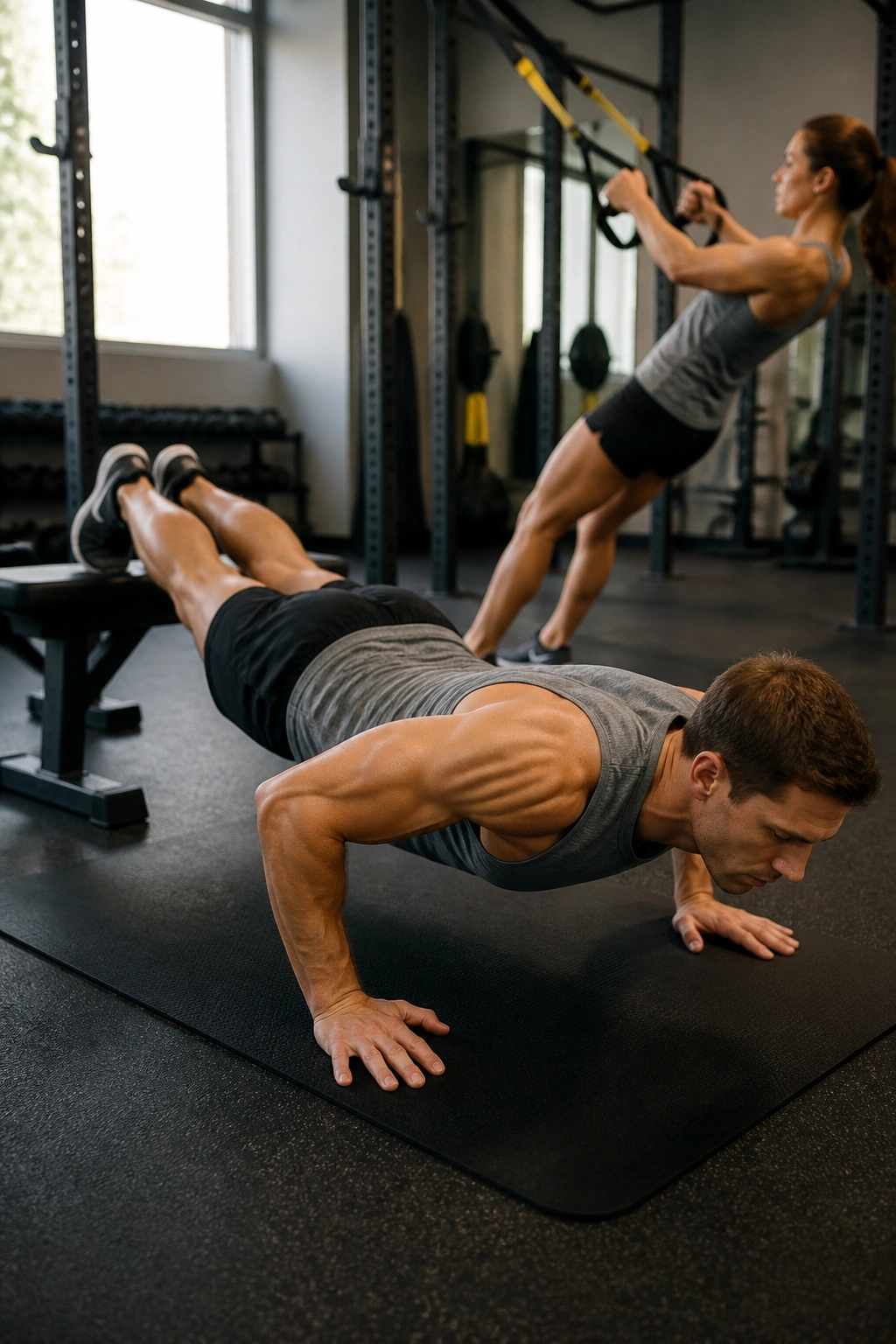
This one feels rougher than it looks. Decline push-ups raise the load on the upper chest and shoulders, while TRX rows make your back work against body angle instead of an easy stack of plates. Together, they create a session that looks simple and ends with your arms shaking a bit.
Try 4 rounds of 8 to 15 decline push-ups and 10 to 12 TRX rows. The exact rep range depends on where your feet are and how steep the row angle is. Feet on a bench makes the push-ups harder. Walking your feet forward makes the rows easier. Tiny adjustments, big difference.
I like this workout for home gyms and smaller training spaces. There’s less equipment, sure, but also less temptation to overthink things. Put your hands where they need to be. Keep your body in a straight line. Move with control.
The rows should feel like your shoulder blades are sliding together first, then your elbows are driving back. If all you feel is your biceps, shorten the rep and slow down.
9. Dumbbell Pullover and Squeeze Press
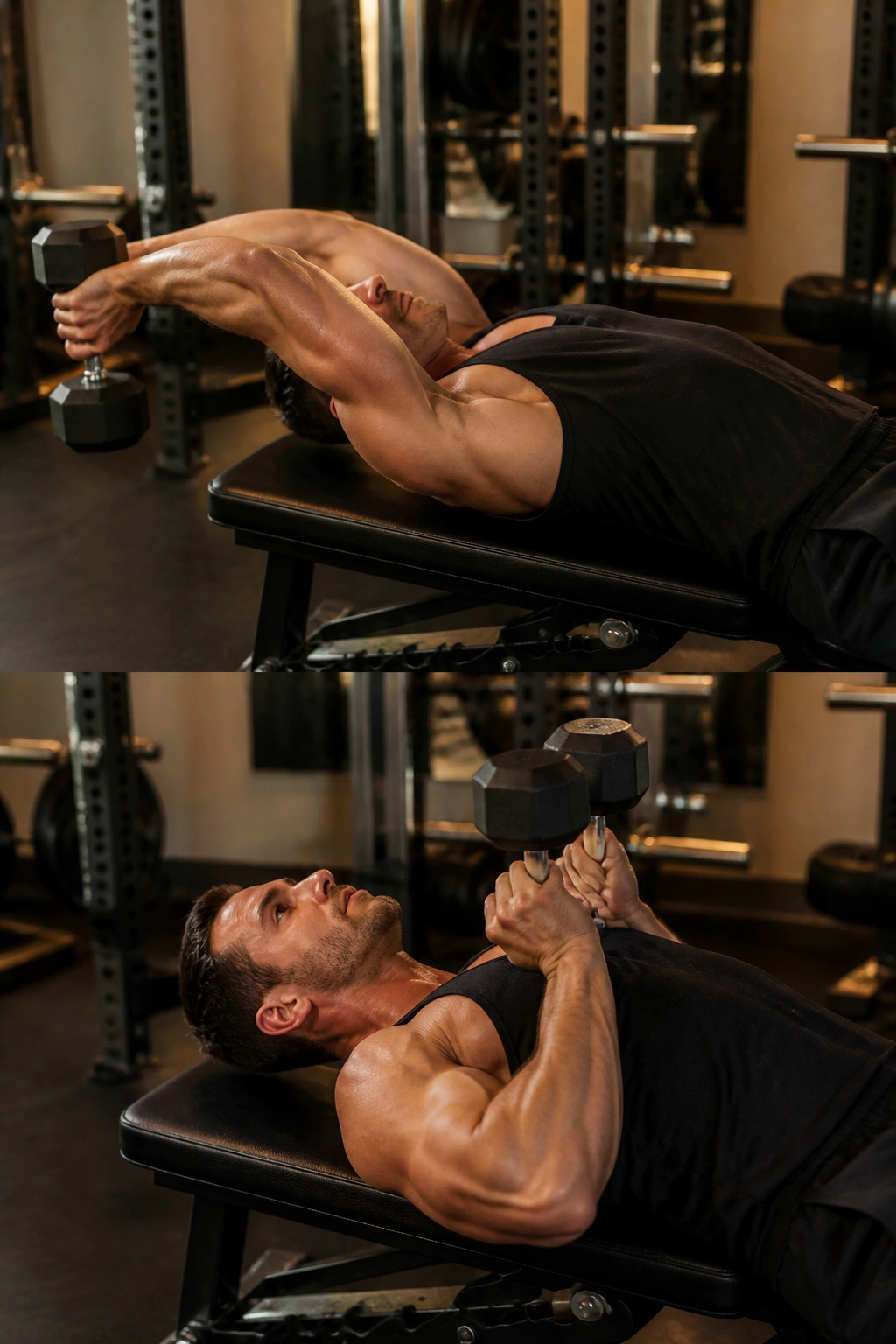
This combo does a nice job of hitting the chest from two different angles without turning the workout into an ego contest. The dumbbell pullover stretches the ribcage and lats in a controlled arc, while the squeeze press keeps constant tension across the inner chest. It’s a clever pairing, and yes, I think it deserves more attention than it usually gets.
Do 3 sets of 10 to 12 pullovers and 3 sets of 12 to 15 squeeze presses. Use one dumbbell for the pullover and two dumbbells pressed tightly together for the squeeze press. The weights should be moderate, not brutal. If you turn either movement into a sloppy heave, the point gets lost.
The pullover should feel like a long, smooth reach behind your head, then a deliberate pull back over the chest. Stop if your shoulders feel pinchy. That’s a warning, not a challenge.
The squeeze press is the opposite: short range, hard contraction, and a chest squeeze that gets more annoying with each rep. Annoying in the best possible way.
10. Pec Deck and Straight-Arm Pulldown
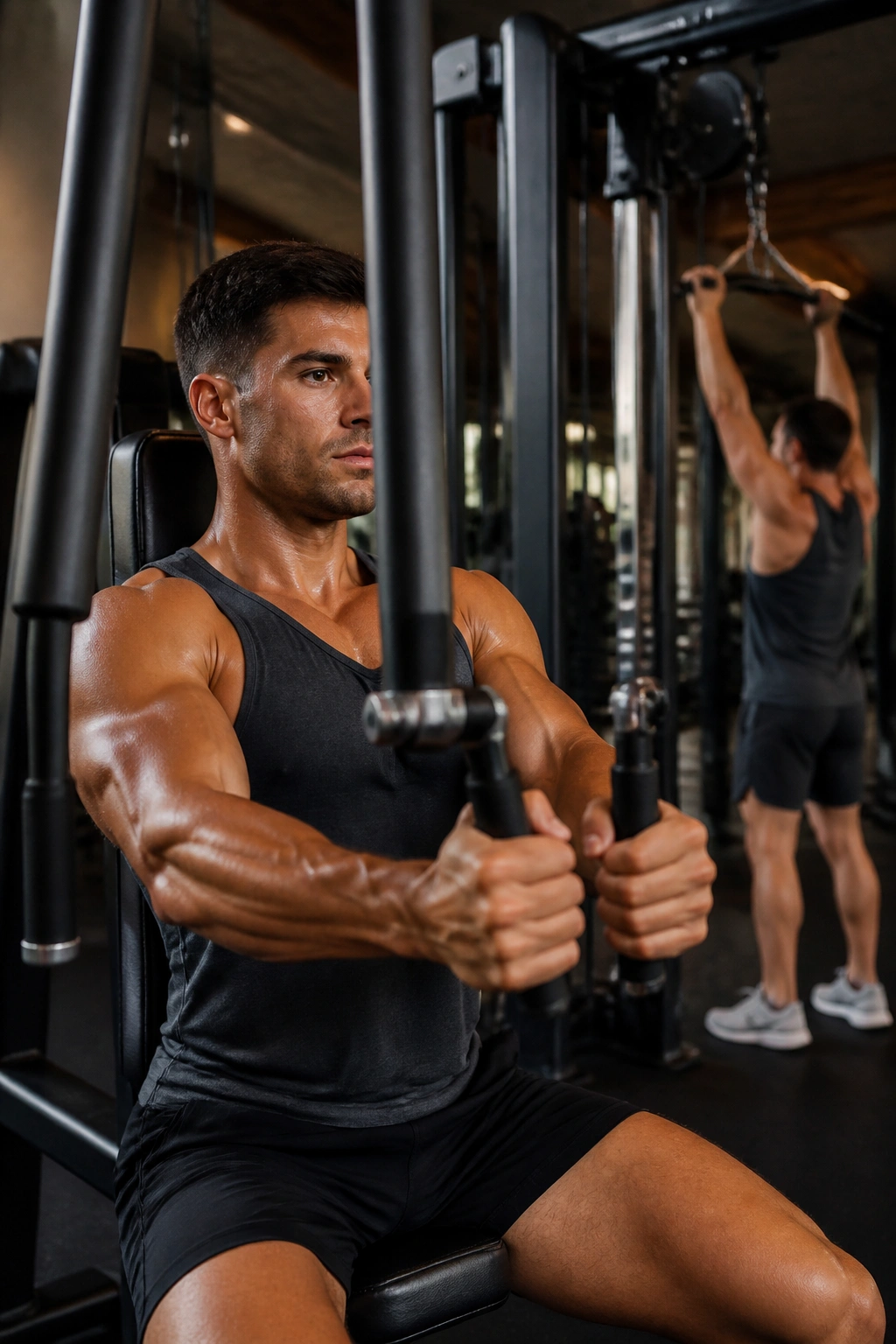
Why do these two work so well together? Because they isolate the exact muscles most people want to feel when they train chest and back. The pec deck takes the shoulders out of the equation enough to let the pecs do their job. The straight-arm pulldown does the same thing for the lats.
How to get the most from it
Do 3 to 4 sets of 12 to 15 reps on each exercise. Keep the pace slow enough that you can feel the working muscle stretch and contract on every rep. On the pec deck, stop when your forearms come close to meeting in front of your chest. On the pulldown, think about driving your upper arms to your pockets instead of bending the elbows early.
This is one of those sessions that sounds too easy until you finish it. Then your chest feels pumped and your lats feel wide and thick, and the “easy” label disappears fast.
It’s also useful for lifters who want a joint-friendlier day after heavier pressing or rowing. Not every workout needs to be loud. Some of the best ones are the quiet, controlled kind.
11. Incline Push-Up and Renegade Row

This is the workout I hand to people who want to train at home, don’t have much gear, and still want to feel like they earned the session. The incline push-up reduces the pressure on the shoulders and wrists, while the renegade row adds anti-rotation work that your core will notice immediately.
Use 3 rounds of 10 to 15 incline push-ups and 8 rows per side. Put your hands on a bench, box, or sturdy countertop for the push-up. For the row, keep your feet a little wider than shoulder width so your hips don’t swing wildly when you pull the dumbbell.
What makes it different
- The push-up builds pressing endurance without needing a bench.
- The row forces your trunk to stay square.
- The core work shows up fast if you rush the reps.
Small warning: don’t chase heavy dumbbells on the renegade row. A weight you can control cleanly for 8 reps is far better than a dumbbell that turns the set into a wobbly mess.
12. Barbell Floor Press and Underhand Barbell Row
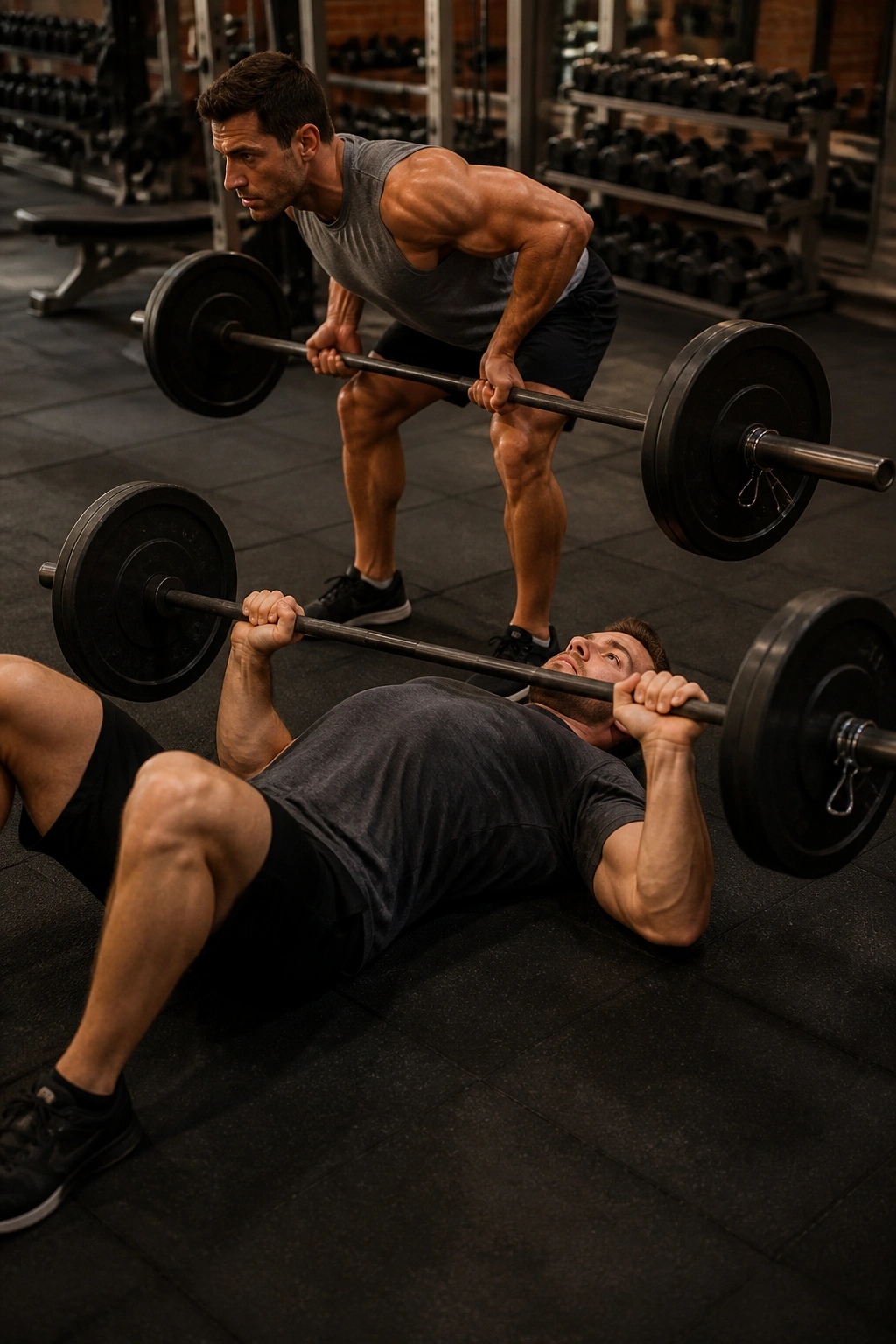
The floor press is a good answer for anyone who wants pressing work without the deep shoulder stretch of a full bench press. The underhand row, sometimes called a supinated row, gives the lats and lower traps a strong pull while also asking the biceps to help. Unlike a standard overhand row, this version feels a little more compact and a little more direct.
Do 4 sets of 6 to 8 reps on each lift. Rest 90 seconds between sets. Lower the bar on the floor press until your upper arms touch the ground, pause for a split second, and drive back up. On the row, keep the torso fixed and pull to the lower ribs.
This pairing is good for intermediate lifters who want to handle a bit more load but don’t want the shoulders taking a beating. It also works well on days when the bench setup is busy and the floor feels like the only sane place to train.
Short range. Heavy tension. No nonsense.
13. Landmine Press and Landmine Row
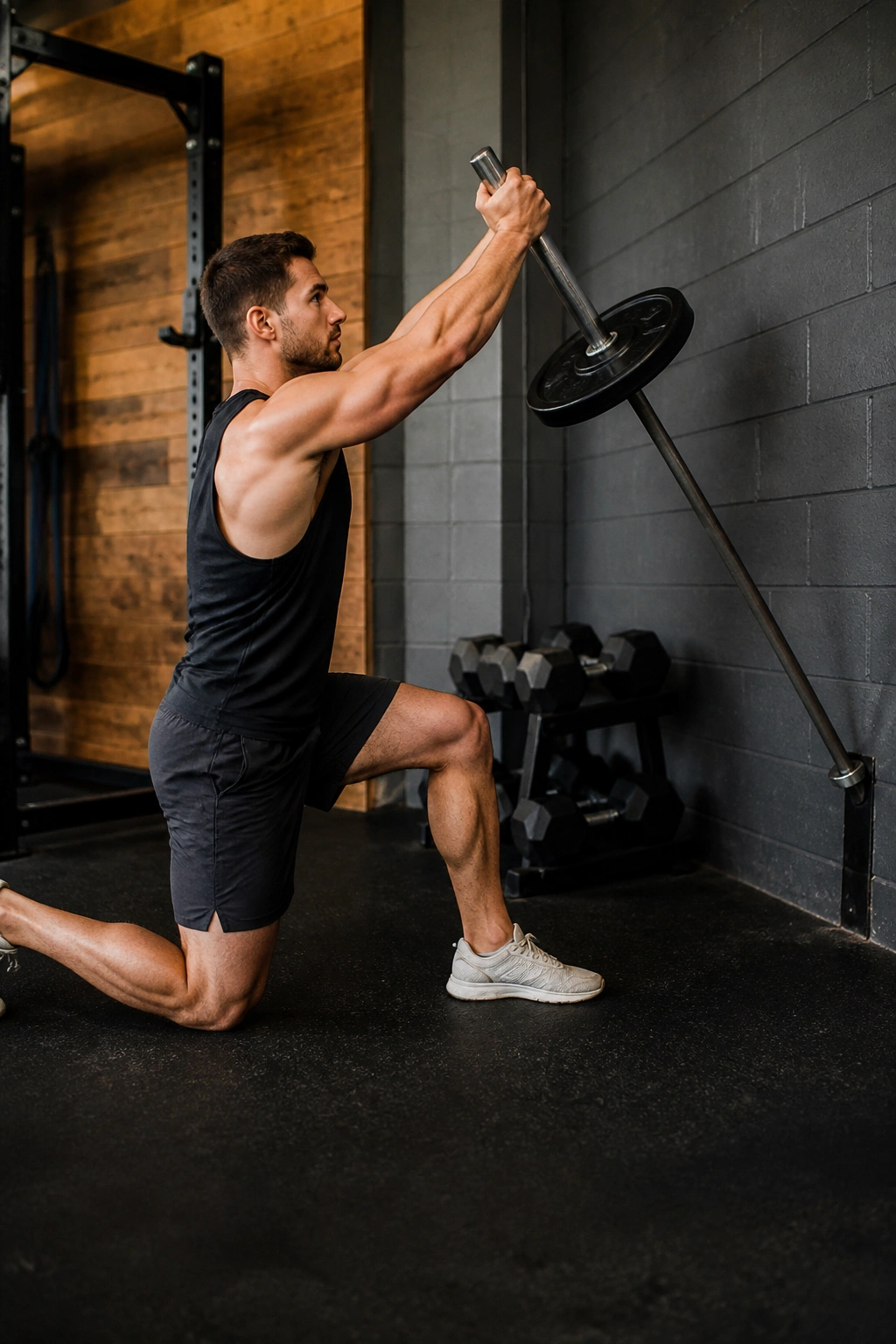
There’s something nice about the landmine setup. One corner of the gym, one barbell end jammed into place, and suddenly you’ve got a workout that feels smooth instead of awkward. The angled path is kinder to the shoulders than a strict overhead line, and the row is easy to load without fighting balance.
Use 3 to 5 sets of 8 to 10 reps on each movement. A staggered stance helps a lot. On the press, drive the bar up and slightly forward. On the row, keep your chest over the bar and pull toward the lower ribs with a hard squeeze at the top.
Why I keep coming back to this pair
The angle feels natural. The loading is straightforward. And the workout is tough without feeling clumsy. That last part matters more than it sounds. A lot of upper-body work gets messy because the setup is annoying, and annoying setups usually lead to half-effort sets.
If you want a chest and back workout that’s practical, joint-friendly, and a little different from the usual bench-and-row script, this is one to keep around.
14. Low Cable Crossover and Chest-Supported Machine Row

Low cable crossovers hit the chest from a slightly upward angle, which gives the lower and middle pec fibers a different kind of tension than a flat fly. Pair that with a chest-supported machine row and you get a session that feels smooth, deliberate, and surprisingly demanding by the third set.
Do 3 to 4 sets of 12 to 15 reps on each movement. Start the crossover with your hands low and out to the sides, then bring them up and together in a gentle arc. Don’t yank the handles. Think “hug a tree,” not “drag the cables across the room.” On the row, keep your chest glued to the pad and squeeze the shoulder blades back for a second at the top.
A couple of setup details matter here:
- Use a light to moderate load on the fly.
- Keep your elbows soft, not locked.
- Adjust the row pad so you can breathe without lifting your chest off it.
This is a good “finisher” style workout, but it also stands on its own if you want a more controlled session.
15. Isometric Push-Up Hold and Band Pull-Apart
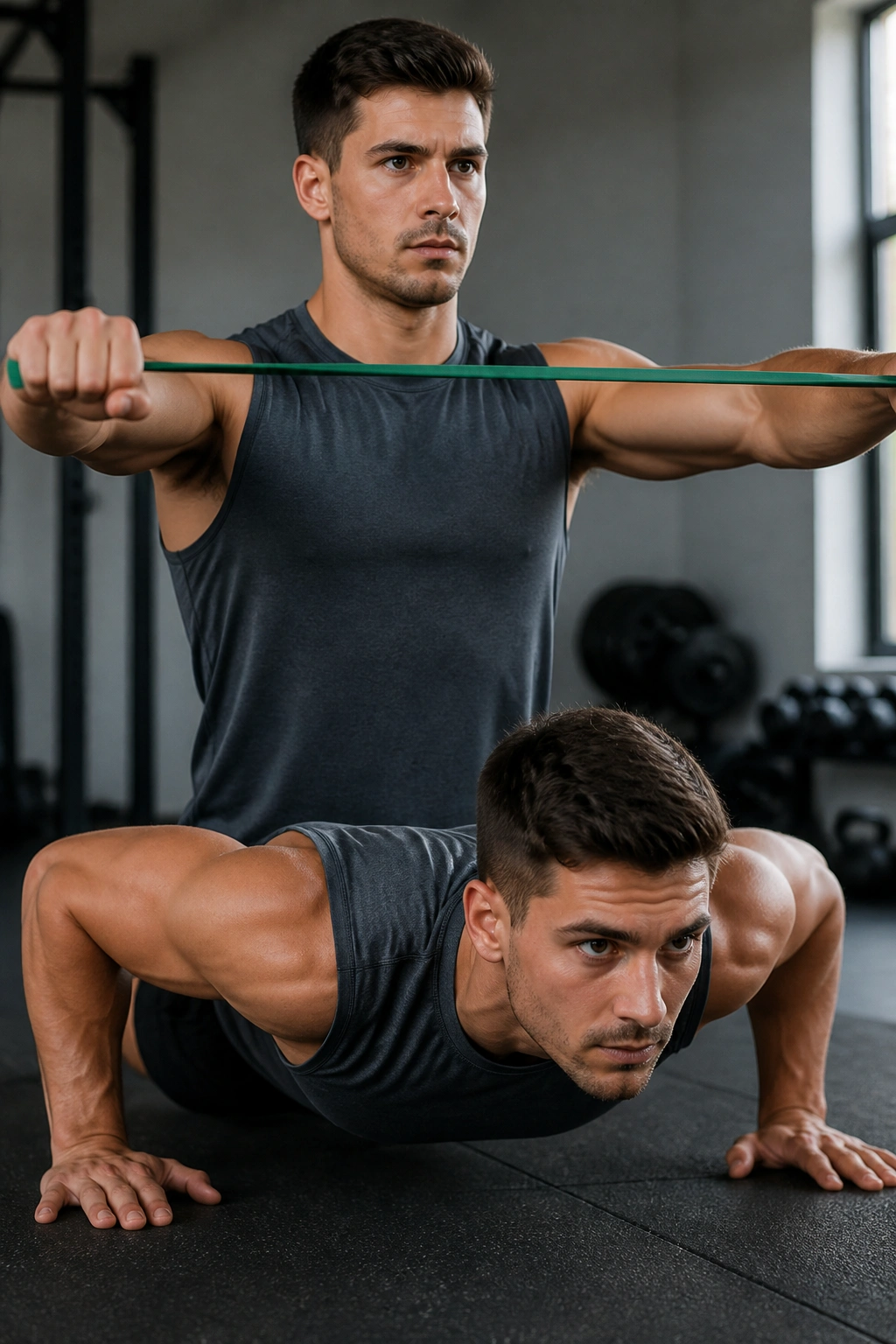
Light work can smoke you. That’s the part people forget. A long push-up hold and a clean band pull-apart set can light up the chest, shoulders, and upper back without a single heavy dumbbell in sight.
Start with a 20 to 30 second isometric push-up hold near the bottom of the rep, then do 15 to 25 band pull-aparts. Repeat for 4 to 6 rounds. Keep the push-up hold low enough that your chest is working, but not so low that your lower back caves in. On the band pull-apart, pull the band apart to chest height and stop once your arms line up with your shoulders.
This pairing is especially nice on days when your joints need a break from heavier pressing. It also makes a good reset between harder upper-body sessions because it reminds the shoulder blades how to move without a bunch of load hanging off them.
The burn comes on fast. So do not rush it. That little pause at the bottom of the push-up hold is where the set gets honest.
16. Medicine Ball Push-Up and Suspension Row Circuit
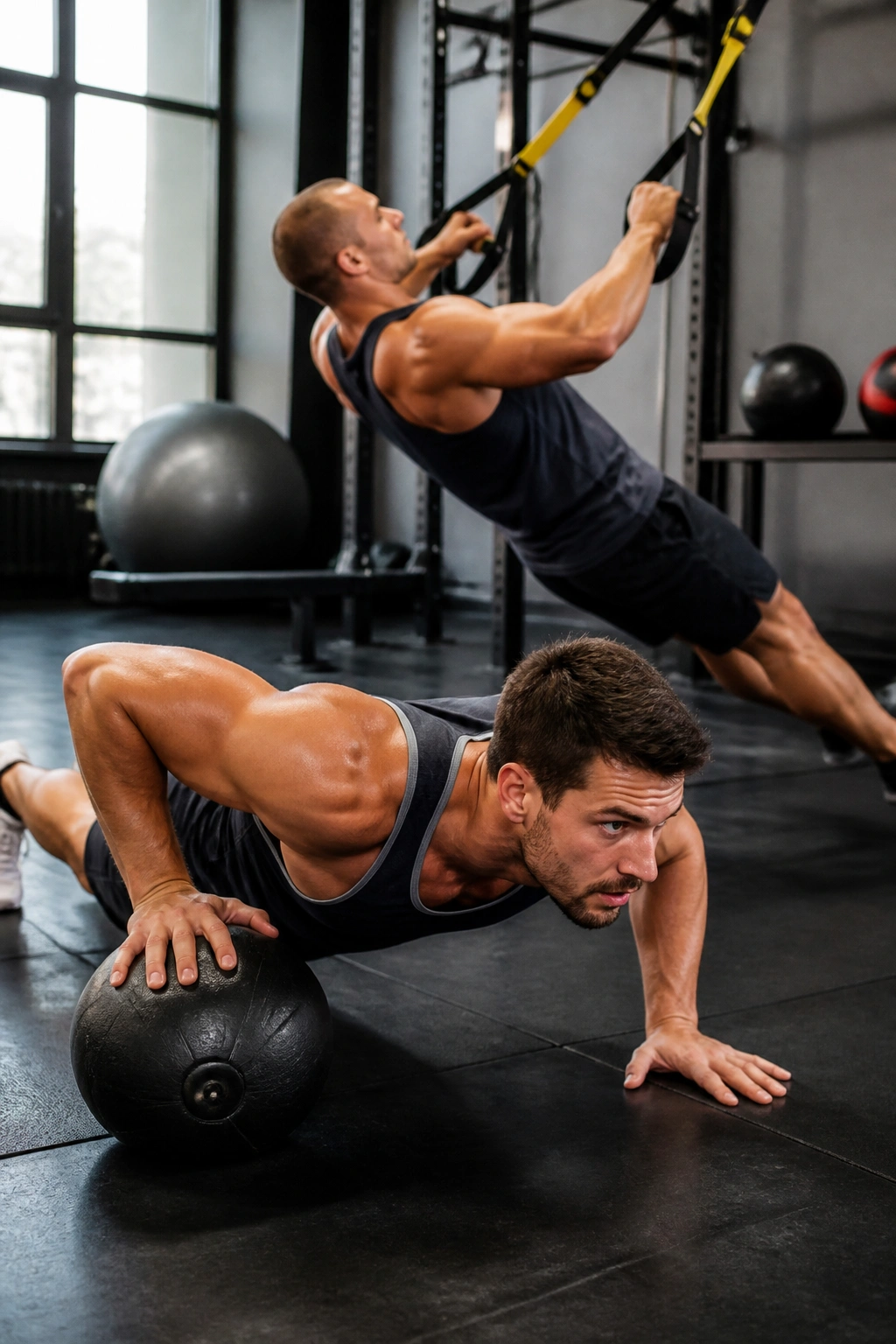
This one has a little chaos in it, which I mean in a useful way. A medicine ball under one hand on a push-up shifts your weight from side to side, and suspension rows force your back to stabilize while you pull. The result is a chest and back workout that feels athletic without needing a giant setup.
Do 3 to 4 circuits of 8 medicine ball push-ups per side and 10 to 12 suspension rows. If the medicine ball feels unstable, use a sturdy platform or do regular push-ups with hands on the floor. For the row, keep your body in one line and pull your chest toward the handles without shrugging.
The unstable surface makes the chest work harder to control each rep. The row asks the lats and mid-back to stay steady while the core keeps your body from twisting. It’s a lot of small jobs happening at once.
I like this one for people who get bored fast. There’s enough movement variation to stay interesting, but the rules are still simple. Clean reps. Controlled pace. No flinging.
17. Four-Move Giant Set for Chest and Back Workouts
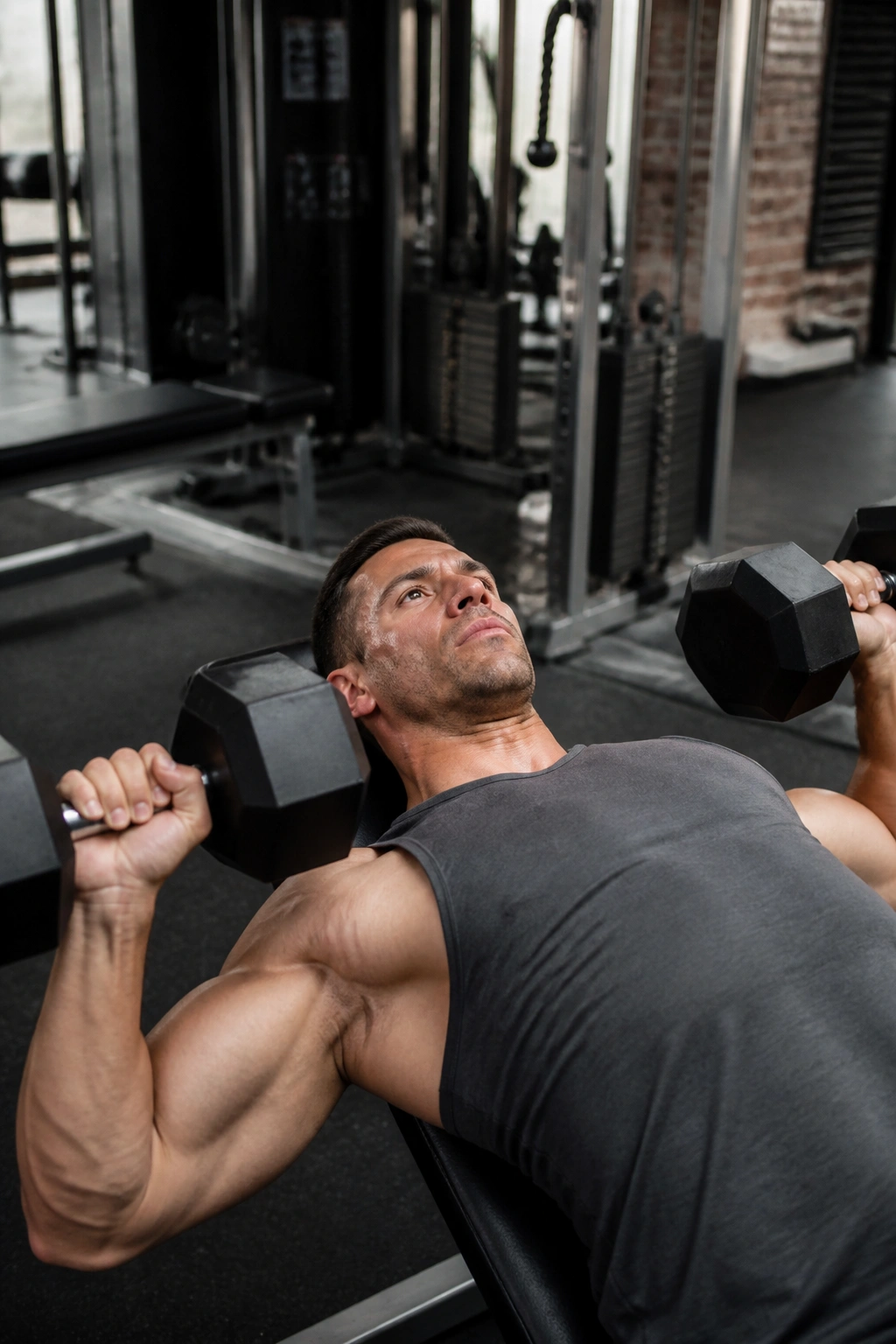
This is the kind of chest and back workout that fills a whole room in your body by the end. A giant set means you move through several exercises with very little rest, and that creates a dense, sweaty session without needing marathon volume. It’s not subtle. It does not need to be.
Try this sequence for 3 rounds: 10 dumbbell bench presses, 12 seated cable rows, 12 cable flys, and 10 lat pulldowns. Rest 90 seconds after each full round. Keep the weights moderate enough that your form stays sharp on the final two exercises. If your shoulders start to creep up near your ears, the load is too high or the rest is too short.
What to keep in mind
- Press first, row second, fly third, pull down last.
- Choose loads you can control for all 3 rounds.
- Keep transitions quick so the set keeps its density.
This is a smart workout when time is short and you still want a full upper-body hit. It gives you the chest pump people chase, but it also leaves the back doing enough work to keep the session balanced.
18. Push-Pull Density Ladder

End with a ladder if you want a workout that feels like it keeps climbing even when your lungs start complaining. Density ladders are straightforward: you do a small number of reps, then add reps each round while keeping the rest short. For chest and back, that structure is gold.
Set a timer for 12 minutes. Start with 2 push-ups and 2 dumbbell rows per side, then go to 4, then 6, then 8, then back down if you still have time and form in the tank. Use a weight for the rows that stays clean for every round. If your torso twists, the ladder has already gotten too steep.
This one is best for lifters who want an upper-body finish that feels earned, not random. It also works well after a heavier session because it adds blood flow and fatigue without needing maximal loading.
The rule is simple: stop the set when your reps start getting ugly. A density ladder should feel hard, but not sloppy. Sloppy reps just teach bad habits and give you a sore lower back for no good reason.
If you keep coming back to this style of training, the pattern gets obvious fast: chest and back workouts work best when the pressing and pulling are treated like partners. Not rivals. Partners. That balance is what keeps the upper body looking filled out from the front and stable from the side, and it’s why these pairings hold up so well over time.
