



Your jeans can start arguing with you long before the scale does. Belly fat in women over 50 has a sneaky way of showing up as a tighter waistband, a firmer upper abdomen, or that strange moment when your weight looks stable but your shape does not. And no, it is not vanity to notice the change. Fat that settles around the middle—especially visceral fat, the kind that sits deeper around the organs—has stronger ties to insulin resistance, fatty liver, and heart trouble than fat stored elsewhere.
What makes this stretch of life so frustrating is that the old math often stops matching your body. The eating pattern that held your weight steady at 42 can leave you softer at 56. A few rough nights can show up around your waist faster than they used to. Even your daily movement can slide without much warning: fewer stairs, shorter errands, more sitting, less unconscious pacing around the house.
There is also a detail that gets brushed aside in casual weight-loss talk. Women can gain inches around the abdomen while scale weight barely moves because muscle tissue shrinks while abdominal fat rises. Imaging studies that separate lean mass from fat keep finding the same pattern after menopause: body composition shifts, and the waist tells that story early.
Once you see the forces behind midlife abdominal weight gain, the pattern starts to look less random—and a lot less like a personal failure.
1. Falling Estrogen Shifts Fat Storage Toward the Abdomen
Menopause changes where fat goes, not only how much you carry. When estrogen drops, the body often stops favoring the hips and thighs and starts storing more fat around the waist. That shift can happen even if your food intake has not changed much.
This is one reason menopause belly fat feels so unfair. You may not be eating more than you did a decade earlier, yet your lower stomach looks fuller and your upper abdomen feels thicker. The body is responding to a different hormonal environment, and estrogen plays a large role in how fat cells behave.
Why the Waist Changes First
Lower estrogen tends to push more fat toward the visceral area, which sits deeper inside the abdomen. Visceral fat is not the same as the pinchable layer under the skin. It is more metabolically active, and it is tied more strongly to blood sugar trouble, higher triglycerides, and rising waist size.
A few signs often show up together:
- Your waist measurement rises by 1 to 2 inches while body weight stays nearly the same.
- Pants get tighter through the middle even though your hips or thighs do not look larger.
- The belly feels firmer or more “inside” the abdomen rather than soft and easy to pinch.
That shift matters.
2. Age-Related Muscle Loss Lowers Your Daily Calorie Burn

Why can two women weigh the same, eat a similar dinner, and still carry that weight in very different ways? A big part of the answer is muscle mass.
Muscle is expensive tissue. It costs energy for your body to keep it around, even when you are sitting still. Over the years, adults who do not challenge their muscles tend to lose about 3% to 8% of muscle per decade, and the pace often picks up later. That means your resting calorie burn can fall without any dramatic change in your routine.
Here is the part people hate hearing because it sounds dull, and dull things are less fun than blaming hormones alone: if you lose 5 to 8 pounds of muscle and replace it with fat, your body composition changes even if the scale barely budges. You can weigh the same and look softer through the waist, arms, back, and thighs.
Strength training helps, yes. Protein matters too, and I will come back to that. But the cause worth naming here is sarcopenia, the gradual loss of muscle with age. It is one of the quiet drivers behind abdominal fat gain in women over 50 because it lowers energy use all day long, not only during a workout.
Your muscles are expensive tissue. Lose them, and your body gets cheaper to run.
3. Less Daily Movement Shrinks the “Background Burn”

Picture a day that feels normal: you answer messages, drive instead of walk, order groceries once a week, watch two episodes after dinner, and spend half the afternoon in a chair. Nothing in that day screams “weight gain.” Stack that pattern across months, though, and it adds up.
This is where NEAT comes in—non-exercise activity thermogenesis. That is the energy you burn through ordinary movement: walking to the mailbox, standing while folding laundry, taking stairs, carrying bags, pacing during phone calls, gardening, cleaning, fidgeting. It is not formal exercise, but it counts more than most people realize.
A drop of 2,000 to 3,000 steps a day can wipe out roughly 80 to 150 calories, sometimes more depending on body size and pace. That may not sound dramatic. Across a week, it becomes a measurable gap. Across a year, it can reshape a waistline.
Small leaks add up.
Here are a few hidden ways daily movement falls after 50:
- Leaving an active job for a desk-based role or retirement can cut hours of standing and walking.
- Joint pain in the knees, hips, or feet often trims movement before it changes appetite.
- Caregiving can be exhausting while still being surprisingly sedentary—lots of sitting, driving, waiting, paperwork.
- Streaming time after dinner can replace the evening walk you used to do without thinking about it.
When women say, “I still work out, but I’m gaining belly fat anyway,” this is one of the first places I look.
4. Broken Sleep Pushes Hunger, Cravings, and Abdominal Fat Up

Six hours in bed is not the same as six hours of sleep. Waking at 3 a.m., lying there until dawn, or getting up twice to use the bathroom counts against you even if the fitness watch says you were “resting.”
Poor sleep changes appetite in plain, physical ways. Ghrelin, a hormone tied to hunger, tends to rise when sleep drops. Leptin, which helps signal fullness, can fall. Add a tired brain that wants easy comfort food, and breakfast pastries or late-night crackers start to sound like a plan rather than a slip.
Sleep loss also hurts insulin sensitivity. One short night will not create belly fat by itself, but short sleep repeated night after night nudges the body toward higher cravings, worse blood sugar control, less movement the next day, and more fat storage around the middle.
Clues Your Sleep May Be Part of the Problem
- You need sugar, bread, or caffeine to get moving in the morning.
- You wake hungry late at night or start prowling the kitchen after 9 p.m.
- You snore, wake with a dry mouth, or feel tired after what looked like enough sleep.
- Your waist has been growing during the same stretch that your sleep has been getting lighter.
That last bullet deserves attention because sleep apnea becomes more likely after menopause, even in women who never had it earlier. If the belly fat came with loud snoring, headaches on waking, or daytime sleepiness, this is medical territory, not a motivation problem.
5. Chronic Stress Changes Where and How You Eat

Stress has a physical pattern—because it is physical. When stress stays high for weeks or months, cortisol can stay elevated more often, and that affects appetite, blood sugar, sleep, and where fat tends to collect.
Cortisol is not magic belly-fat dust. It does not break the laws of energy balance. What it does do is make high-calorie food more appealing, lower your odds of sleeping well, and push the body toward a more insulin-resistant state. That combination is tailor-made for abdominal gain.
Midlife stress has its own flavor. Aging parents. Adult children who still need money. Work strain. Divorce. Grief. A body that hurts in places it did not hurt before. Chronic stress eating is not always dramatic, either. It can look like nibbling cheese while making dinner, finishing the grandkids’ fries, or pouring a second glass of wine because the house is finally quiet.
And stress changes timing. Women under steady strain often eat less early in the day, then overeat late when restraint is lowest and fatigue is highest. That late-day pattern tends to lean toward chips, crackers, ice cream, toast, cereal—foods that take no effort and hit the reward system fast.
You can feel that shift in your body before you see it in photos.
6. Insulin Resistance Makes Belly Fat Easier to Gain and Harder to Lose

Why does the same bowl of cereal feel different at 55 than it did at 35? One answer is insulin resistance.
When your cells stop responding well to insulin, your body has to release more of it to keep blood sugar in range. Higher insulin levels make fat storage easier, and the belly is often where that shows up first. Abdominal fat then worsens insulin resistance, which turns the whole thing into a loop.
This pattern does not always announce itself with diabetes. It can show up earlier as a soft waist, afternoon crashes, stronger carb cravings, and a need to snack every few hours because meals do not hold you. Some women describe it as never feeling settled after eating unless the meal is heavy.
Clues Pointing in This Direction
- You get sleepy after carb-heavy meals.
- You feel hungry again 90 minutes to 2 hours after breakfast.
- Your fasting glucose is “not terrible,” yet your waist keeps expanding.
- Triglycerides are creeping up while HDL is drifting down.
A waist above 35 inches (88 cm) is one of the cutoffs often used to flag higher metabolic risk in women. It is not the only number that matters, but it is a useful clue. If belly fat is rising along with blood sugar, blood pressure, or fatty liver markers, insulin resistance deserves a hard look.
7. Protein Intake Stays Too Low to Protect Muscle and Appetite

Toast and fruit can be a light breakfast. It can also be the reason you are hungry by 10:30.
A lot of women over 50 eat less protein than they think they do. Not because they are careless. Breakfast is often coffee and something quick. Lunch might be soup, salad, or crackers at the desk. Dinner carries most of the day’s protein, and by then appetite control has already been shaky for hours.
That pattern matters for two reasons. First, protein helps preserve muscle, and muscle loss feeds belly fat. Second, protein keeps you full longer than a carb-heavy meal of the same size. If breakfast is mostly starch, you are more likely to get the blood sugar rise-and-fall that sends you hunting for snacks.
A More Useful Meal Target
A practical range for many women over 50 is about 25 to 30 grams of protein per meal. Not as a rigid law. As a working target.
That can look like:
- 2 eggs plus ¾ cup Greek yogurt, which lands close to 25 grams.
- A chicken-and-bean salad with 4 ounces of chicken and ½ cup beans, often around 30 grams.
- 1 cup cottage cheese with berries and chopped walnuts for a fast lunch.
- A tofu scramble with edamame on the side if you prefer plant-based meals.
This is one of those causes that sounds small until you fix it. Then the late-morning cravings often tell on themselves.
8. Fiber-Poor Meals Leave You Hungry Again Too Fast

Fiber is the quiet brake pedal.
Women over 50 often fall short here, especially if meals lean on white bread, crackers, sweetened yogurt, protein bars, juice, or takeout that looks healthy but comes with only a few bites of vegetables. A lower-fiber diet can make the stomach empty faster, blunt fullness, and leave you chasing snacks before the next meal.
The formal fiber target for women past 50 sits around 21 grams a day, though many women do well pushing closer to 25 grams if digestion handles it well. Hitting that amount does more than help the bathroom schedule. Fiber slows digestion, steadies blood sugar, feeds gut bacteria, and improves fullness after meals.
A few upgrades make a dent fast:
- ½ cup black beans adds about 7 grams of fiber.
- 1 cup raspberries adds about 8 grams.
- 2 tablespoons chia seeds add close to 10 grams.
- 1 cup cooked broccoli gives you about 5 grams.
- 1 small pear lands around 5 to 6 grams, depending on size.
There is a catch, though. If you jump from 10 grams to 25 grams overnight, your gut may complain. Add fiber gradually, drink enough water, and give your system a week or two to catch up.
9. Ultra-Processed Foods Pack In Calories Without Much Fullness
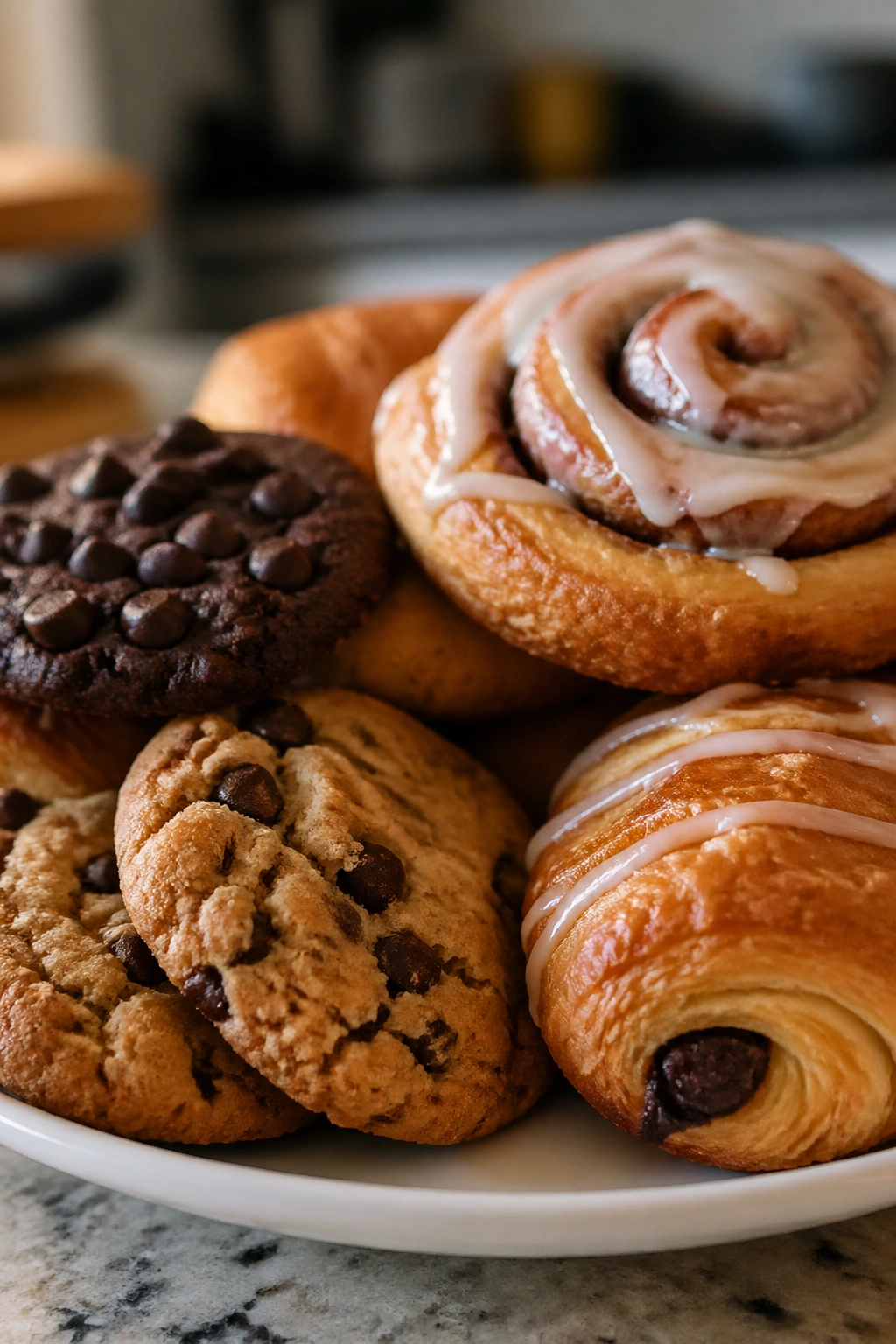
Belly fat rarely comes from one giant holiday meal. More often, it grows from food that is easy to chew, easy to overeat, and gone before your fullness signal catches up.
Ultra-processed foods tend to be soft, salty, sweet, rich, and fast to eat. They are built to go down with very little friction. Chips, crackers, sweet coffee drinks, pastries, fast-food breakfasts, frozen snacks, candy, flavored yogurt, even “health” bars can push calorie intake up without giving you the meal satisfaction that a plate of eggs, beans, potatoes, chicken, vegetables, fruit, or yogurt often does.
Liquid calories make this worse. A bottled smoothie can run 250 to 400 calories and still leave you hungry because chewing matters. Sweet coffee drinks do the same thing. So do juices that strip away the fiber that would have slowed the hit.
Texture matters more than people think. Food that vanishes in six bites is easier to overdo than food that makes you cut, chew, and sit with it for ten minutes. If your diet has drifted toward packaged convenience—even “lighter” convenience—that drift can show up as abdominal fat in a hurry.
Not all processed food is a problem. Frozen vegetables are fine. Canned beans are useful. Plain Greek yogurt is processed and still a smart buy. The trouble starts when most meals are built around foods that bring a lot of calories and very little braking power.
10. Alcohol Makes the Midsection Harder to Manage
Alcohol gets counted after dinner, if it gets counted at all. That is part of why it sneaks past people.
A standard 5-ounce glass of wine often lands around 120 to 130 calories. A heavy home pour can edge higher. Beer ranges widely, and cocktails can get out of hand fast once juice, syrup, tonic, or liqueur enter the picture. Two drinks most nights can add hundreds of calories across a week without ever feeling like “overeating.”
There is more to it than calories, though. When alcohol is in your system, your body tends to burn that first, which means fat burning gets pushed to the back of the line for a while. Add the sleep disruption that often follows evening drinking—worse REM sleep, earlier waking, hotter nights—and you have a clean setup for next-day cravings.
And alcohol lowers the volume on restraint. The snack you might have skipped at 8 p.m. sounds smart after a second drink. Cheese and crackers turn into half a baguette. Ice cream becomes a bowl the size of your head. I am exaggerating a little. Not by much.
If waist gain seems out of proportion to your food, evening drinks deserve an honest count.
11. Repeated Crash Diets Can Make Belly Fat More Stubborn
I think crash dieting is one of the most underappreciated causes here. Women who have spent decades losing 10 pounds, regaining 12, then starting over often end up with a body that protects fat more aggressively and carries less muscle than it used to.
Rapid weight loss rarely comes from fat alone. You lose water. You lose glycogen. You lose lean tissue. If the diet is low in protein and low in resistance training—and most quick diets are—you lose muscle, the tissue you needed to keep your metabolism from sliding.
Then normal eating returns, appetite spikes, and the regained weight often comes back fast. A lot of that regain lands in the abdomen. Over multiple cycles, body composition gets worse even if the scale ends up close to where it started.
Weight cycling also trains habits that backfire after 50. Skipping meals, white-knuckling hunger, using tiny portions all week, then overeating on weekends can leave you with a pattern that feels disciplined but drives cravings straight into the evening.
This one is boring, and I know that. It is still real.
12. Some Medications Quietly Push Weight Toward the Waist
Sometimes the culprit is sitting in the medicine cabinet.
A prescription that helps one problem can nudge appetite, fluid balance, blood sugar, or fat storage in the wrong direction. Belly fat is not always the first side effect people notice, so the connection can get missed for months.
Medication Groups That Can Matter
- Steroids such as prednisone can push fat toward the face, upper back, and abdomen.
- Some antidepressants increase appetite or make fullness harder to feel.
- Certain antipsychotic medicines have a strong link with weight gain and insulin resistance.
- Insulin and some older diabetes drugs can lead to weight gain even while improving blood sugar.
- A few blood pressure or nerve-pain medicines can lower energy or raise appetite enough to matter.
The fix is not stopping a medication on your own. Do not stop a prescribed drug without talking to the clinician who manages it. The right move is a review: when the weight started, how fast it rose, whether the dose changed, and whether an alternative exists that is easier on weight.
A timeline helps here. If your waist started changing within 4 to 12 weeks of a new medication or dose increase, bring that detail to the appointment.
13. Thyroid Problems and Other Medical Issues Can Mimic “Normal” Midlife Weight Gain

Could an underactive thyroid be part of it? Yes. Is it the answer every time a woman gains belly fat after 50? No—and I think this point deserves more honesty than it gets.
Hypothyroidism can lower energy, worsen constipation, increase fluid retention, and make weight control harder. It may also cut down spontaneous movement because you feel tired, cold, and flat. But mild thyroid slowdown does not explain every extra inch at the waist, and blaming the thyroid for all of it can delay fixing the habits and sleep issues that are feeding the problem.
A better clue is the cluster of symptoms around the waist gain: dry skin, hair thinning, feeling cold when others do not, constipation, hoarseness, slower pulse, heavy fatigue. If that list sounds familiar, ask for TSH and free T4 testing rather than guessing.
There are rarer medical causes too. Cushing’s syndrome, tied to excess cortisol, can push fat to the midsection, upper back, and face. It often comes with easy bruising, purple stretch marks, muscle weakness, or rising blood pressure. Sleep apnea, as mentioned earlier, can also drive weight and blood sugar trouble. So can untreated depression, which changes appetite, sleep, and movement all at once.
Fast abdominal weight gain with other body changes is worth a proper workup. Not because disaster is likely. Because guessing is a bad strategy.
14. Emotional Eating and Caregiving Fatigue Add “Invisible” Calories

A woman can spend all day caring for other people and still wonder why the scale climbs on food she barely “ate.” I hear versions of that story all the time.
Emotional eating at this stage of life is often subtle. It is not always a binge. It can be a bite while cooking, a few cookies while driving, finishing leftovers over the sink, or that nightly ritual of crunchy food after everyone else is finally asleep. Those calories are easy to miss because they do not feel like meals.
Caregiving fatigue makes the pattern worse. When your day is packed with medical appointments, work deadlines, family stress, and constant low-level worry, food becomes reward, break, comfort, and sedation. Grief can do the same thing. So can loneliness. So can boredom after retirement if food becomes the day’s main punctuation mark.
The hard part is that these habits often cluster with poor sleep and low movement. You are tired, stressed, under-recovered, and eating standing up. No single snack causes belly fat. The repeated pattern does.
Shame is useless here. Pattern recognition is not.
15. Genetics and Long-Term Body Shape Patterns Stack the Deck

You do not start from a blank page at 50. Genetics influences where you tend to store fat, how hungry you feel after meals, how your body responds to menopause, and whether your shape leans more “apple” or “pear.”
Some women come from families where the waist thickens after menopause almost across the board—mother, sisters, aunts, grandmother. Others keep more weight in the hips and thighs even after their hormones change. Neither pattern says much about discipline. It says a lot about the blueprint you inherited.
This is one reason comparisons are so misleading. Two women can follow the same walking plan, eat similar lunches, and lose weight at the same rate, yet one sees the belly shrink first while the other loses it from the face and arms. Biology is not fair. It is just biology.
Predisposition is not destiny, though. It means the margin for error may be smaller. A woman with a strong genetic pull toward abdominal fat may need tighter attention to protein, sleep, resistance training, alcohol, and daily steps than her friend does to get the same waist result.
That is annoying. It is also useful to know.
Final Thoughts

Most women over 50 do not have one single cause of belly fat. They usually have three to five causes working together: lower estrogen, less muscle, rough sleep, lower daily movement, a bit more alcohol, a bit less protein, maybe a medication on top of it. That layered picture is why the waist can change fast even when life feels only slightly different.
If you want a cleaner read on what is happening, measure your waist at the level of your navel once a month, not every morning. Then look at the drivers that change body composition most strongly: strength training, protein per meal, sleep quality, step count, alcohol, and any new medication. Those clues are more useful than obsessing over a single weigh-in.
One last thing. If your abdomen has enlarged quickly, feels hard, or came with fatigue, swelling, shortness of breath, bowel changes, or unusual bleeding, get checked instead of assuming it is ordinary midlife weight gain. Belly fat can be stubborn, but your body should still make sense.
