



The quest for a toned stomach is often derailed by a fundamental misunderstanding: people treat the abdominal wall like it’s a stubborn lump of clay that can be sculpted simply by doing endless crunches. It’s not. The core is a complex system of muscles—the rectus abdominis, the internal and external obliques, the transverse abdominis, and the spinal erectors. If you only train one of them, you miss the picture. A defined midsection is as much about structural integrity, functional strength, and tension management as it is about lowering body fat.
Most gym-goers walk in, bang out fifty sit-ups with their hands yanking on their necks, and wonder why they have neck pain and zero results. If you want a stomach that actually looks strong and serves as a stable foundation for the rest of your movement, you have to stop thinking about “burn” and start thinking about control. You need to recruit the deep-layer muscles, the ones that wrap around your spine like a corset.
Everything changes when you stop trying to crunch and start trying to brace. Tension is the currency of core development. If you aren’t bracing—squeezing your muscles as if you’re about to take a punch—you’re just going through the motions. Let’s look at the movements that actually force these muscles to work, the ones that don’t rely on momentum or bad form, and how to execute them so they actually make a difference in your training.
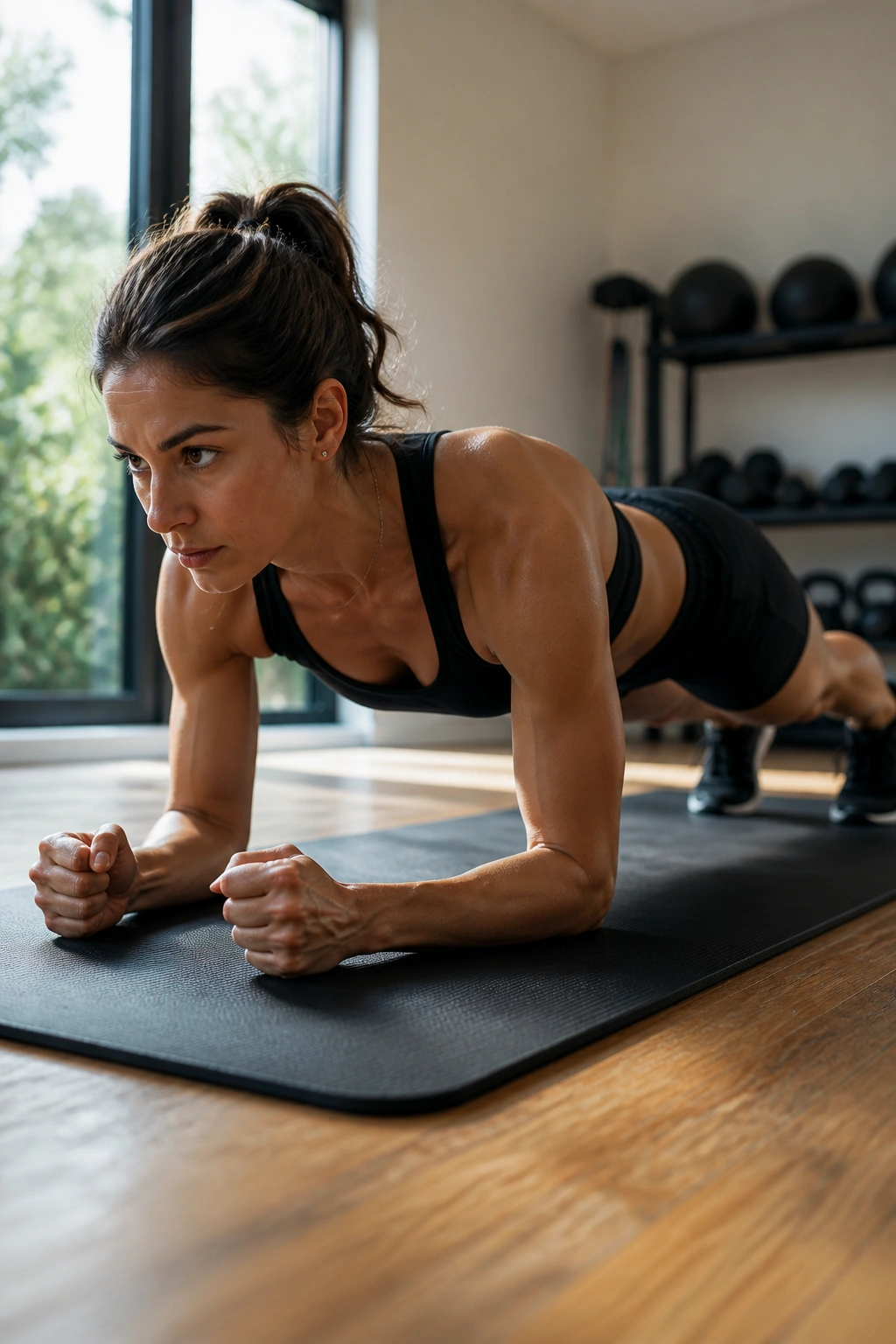
1. The Classic Forearm Plank
The plank is arguably the most disrespected exercise in the weight room. Everyone does it, but almost everyone does it wrong. They let their hips sag or pike them toward the ceiling, turning a full-body stability drill into a lazy hold. When you get into a plank, you are effectively trying to keep your entire body in a rigid line, fighting gravity that wants to pull your spine toward the floor.
How to Master the Tension
It is not about how long you can hold it; it is about how much tension you can generate. When you are on your forearms, push your elbows into the ground away from your body. Squeeze your glutes—hard. If your glutes are relaxed, your pelvis will rotate forward, and your lower back will take the load. Tuck your tailbone slightly.
Common Mistakes
- The Sag: Allowing the lower back to arch. This is dangerous and completely removes the load from the abs.
- The Pike: Raising the hips too high. This makes the exercise exponentially easier and defeats the purpose of core stabilization.
- Holding Your Breath: If you stop breathing, you lose the ability to maintain deep muscular contraction. Keep your breathing steady and rhythmic.
Pro tip: Imagine there is a string pulling the crown of your head forward and your heels backward. You are not holding a position; you are actively pushing the floor away from you.
2. Dead Bugs
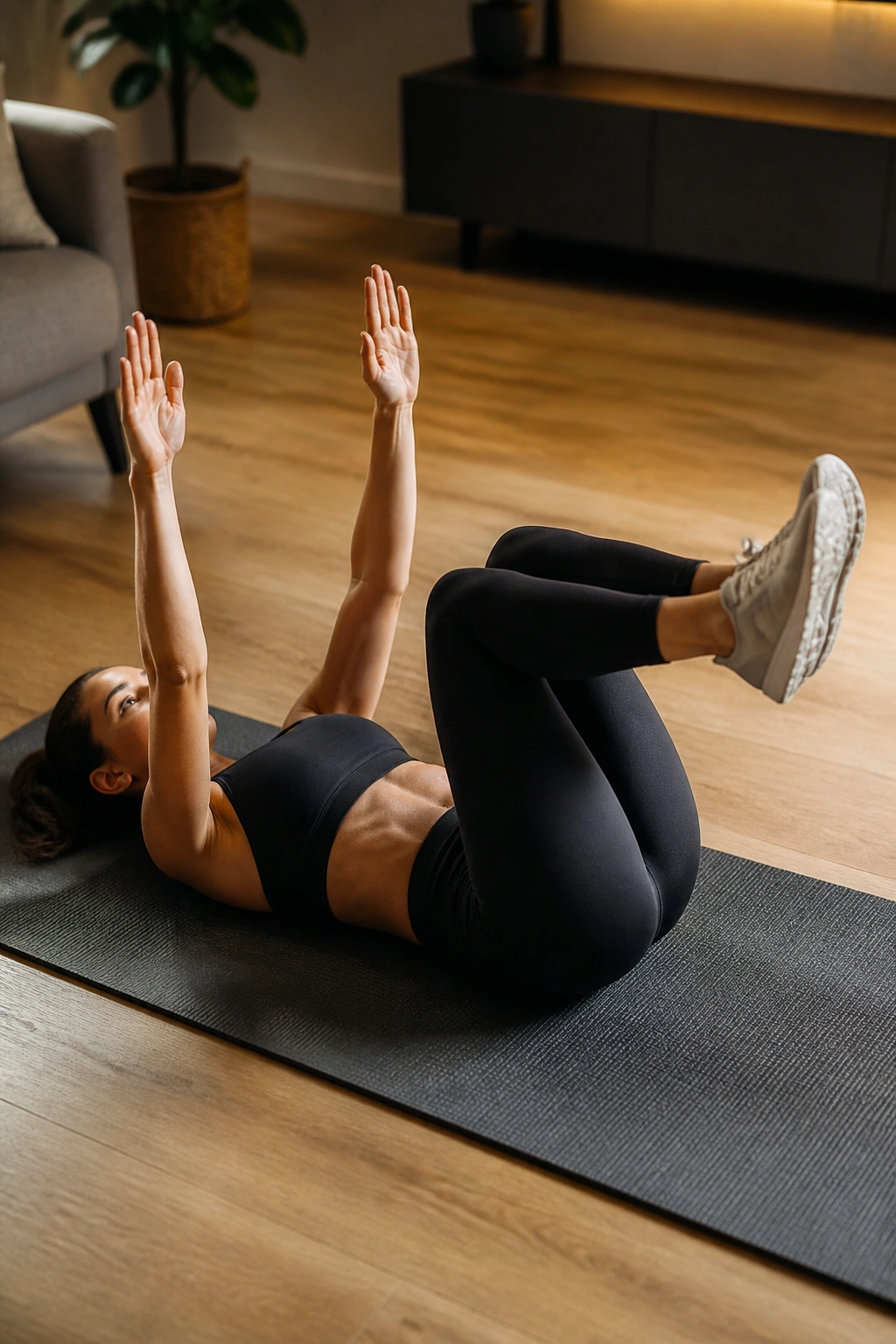
If you have ever suffered from lower back pain during abdominal training, the dead bug is your new best friend. It is a brilliant exercise because it locks your spine into the floor, removing the possibility of cheating with your hip flexors or lower back muscles. It teaches you to move your limbs while keeping your core completely silent and stable.
The Mechanics of the Move
Lie flat on your back. Extend your arms toward the ceiling and bring your legs up into a tabletop position—knees bent at 90 degrees. This is your starting point. The goal is to lower your right arm behind your head and extend your left leg forward, all without letting your lower back lose contact with the mat.
Why It Works
It sounds deceptively simple, but the moment you extend your limbs, your lower back will want to arch off the floor. Your job is to fight that arch with every ounce of strength in your deep core. You should feel a significant tension in the space just below your belly button. Move as slowly as humanly possible. If you are rushing, you are not doing the work.
3. Bird-Dogs
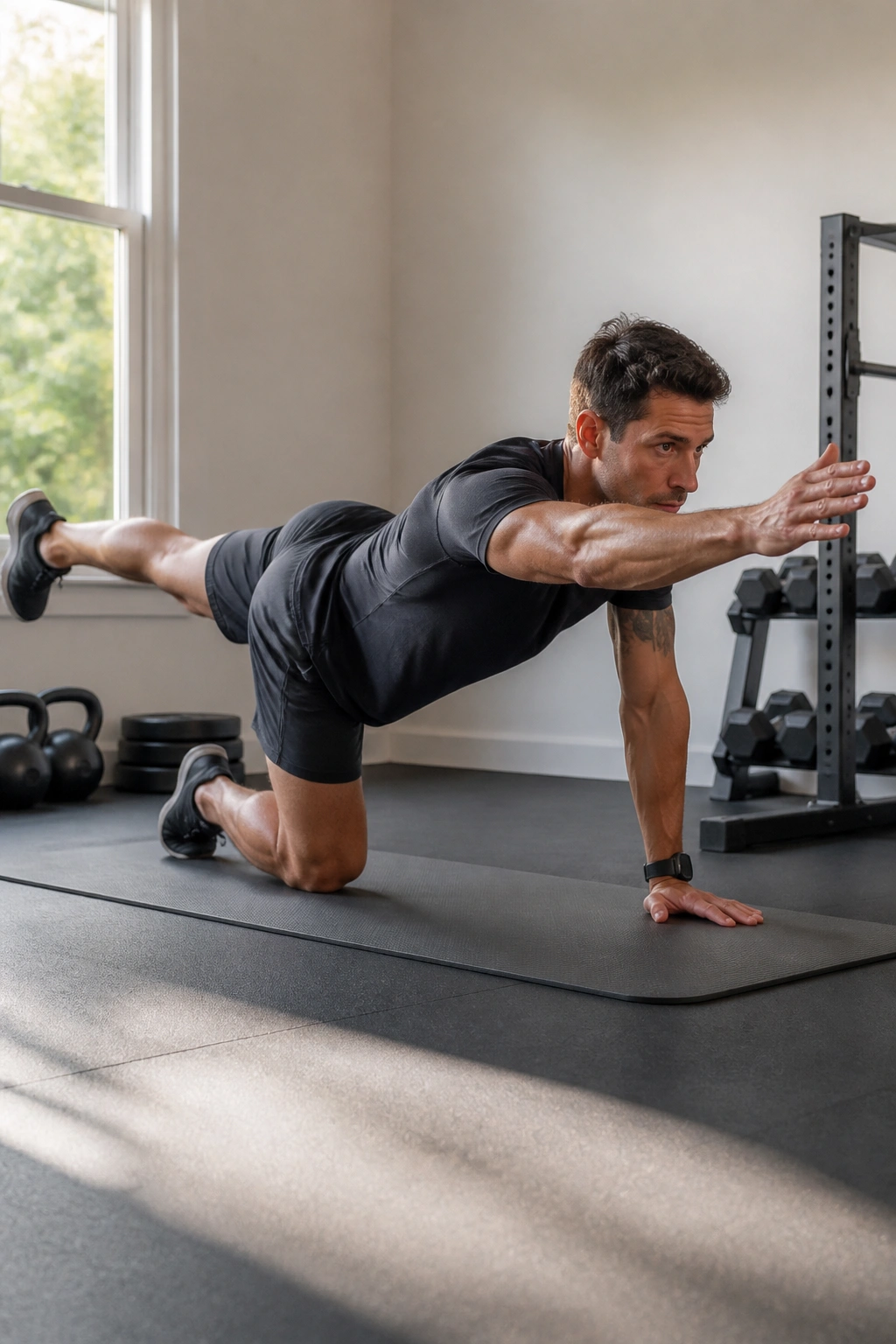
This is a functional movement that crosses the midline of the body, which is essential for true core strength. It isn’t a high-intensity move that leaves you gasping for air, but it will expose your stability weaknesses faster than almost anything else. You start on all fours, hands directly under shoulders, knees under hips.
Execution for Maximum Engagement
Extend your right arm forward and your left leg backward simultaneously. Do not just flail; reach. You want a straight line from your fingertips to your heel. The magic happens in the split second you reach full extension—pause there. Squeeze your core to prevent your torso from rotating or tipping to one side.
Making It Harder
If this feels too easy, you are likely rushing. Try doing it with your eyes closed, which instantly removes your primary sense of balance and forces your core to work overtime to keep you upright. Alternatively, imagine you are balancing a glass of water on your lower back. If it spills, you’ve moved too fast.
4. Bicycle Crunches
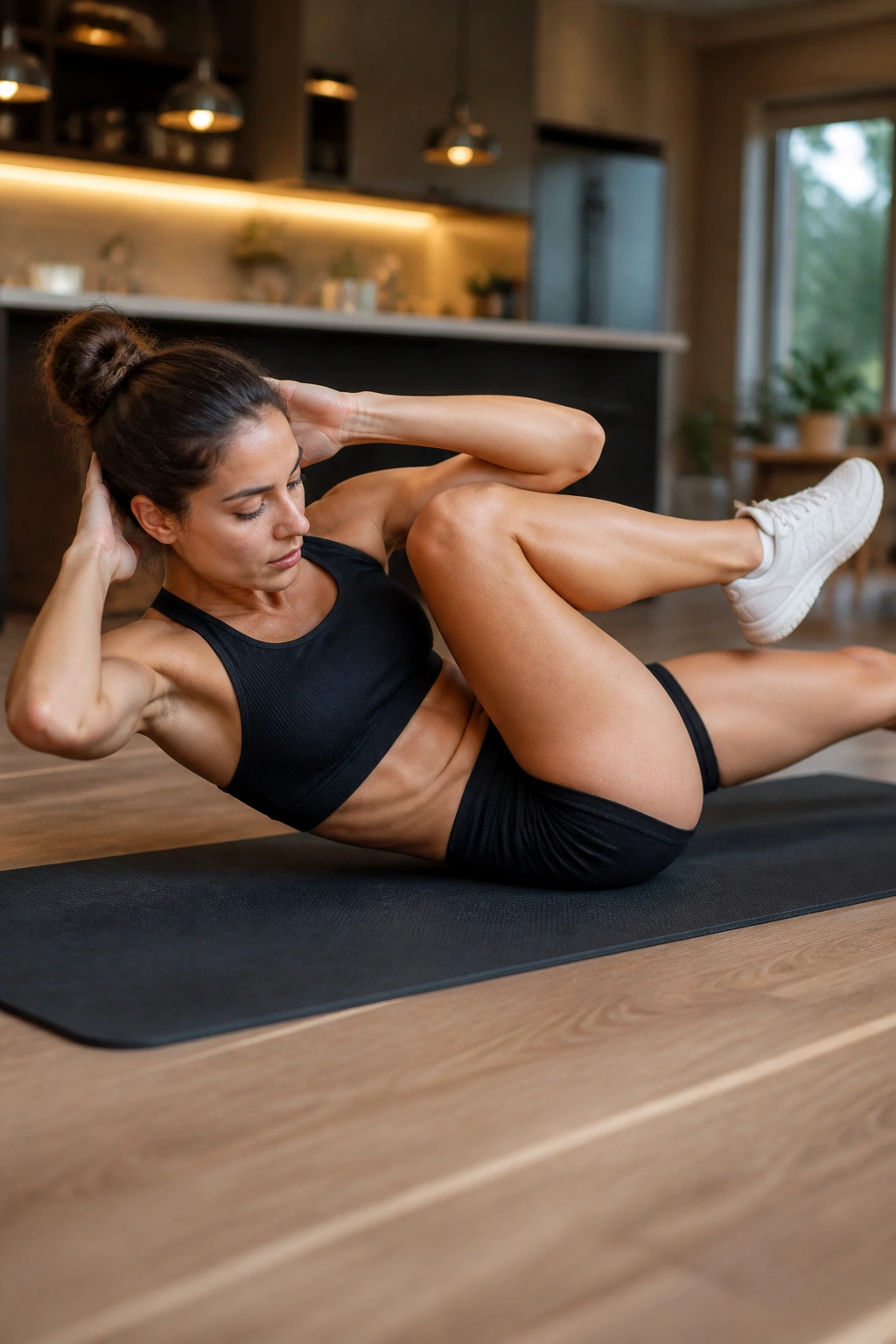
Bicycle crunches are the rare crunch variation that actually produces high levels of muscle activation. The key is in the rotation. Most people treat these like they are trying to pedal a bicycle as fast as possible, turning the move into a sloppy, momentum-based exercise that does almost nothing for the obliques.
Slowing Down the Tempo
Slow it down to the point of absurdity. Bring your opposite elbow to your opposite knee. As you do, think about driving your shoulder toward the knee, not just the elbow. Keep your lower back pressed firmly into the ground the entire time. The leg that is not touching the elbow should extend fully, hovering just an inch or two above the floor.
The Oblique Connection
You are training your obliques to rotate your torso. If you just touch your elbow to your knee, you’re missing the point. You want to feel the twist in your midsection. Focus on the contraction at the moment of peak rotation. If you don’t feel a deep, burning sensation in the sides of your stomach, you need to slow down and twist deeper.
5. Leg Raises
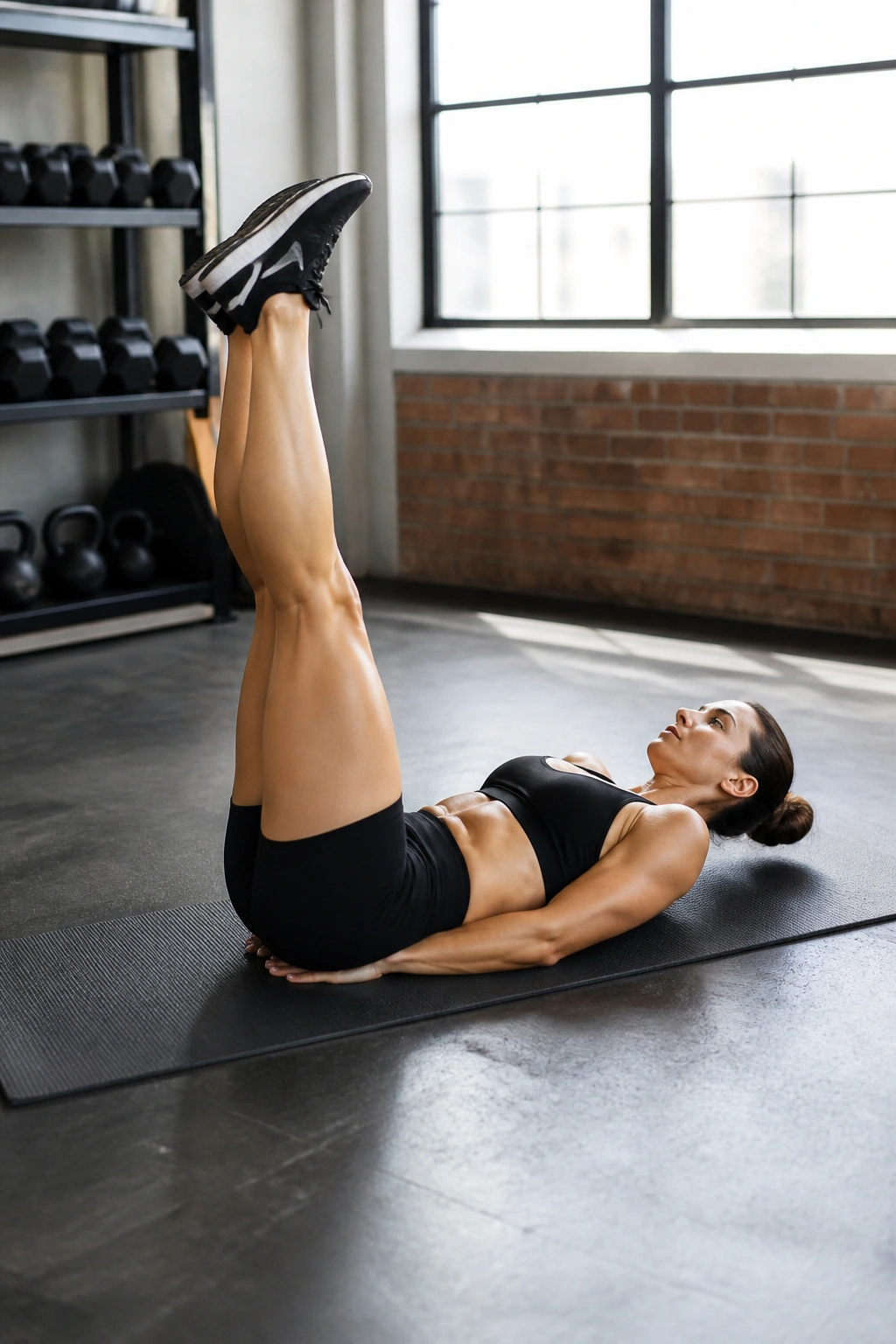
This is the ultimate test for the lower rectus abdominis—the part of the abs that people usually complain about “not being able to hit.” Lying flat on your back with your hands tucked under your glutes for support, you raise your legs until they are perpendicular to the floor, then lower them slowly back down.
The Pelvic Tilt Rule
The biggest mistake people make here is allowing their back to arch when their legs are near the floor. If your lower back comes off the mat, you have gone too low for your current strength level. You must keep your pelvis tilted posteriorly—that means tucking your tailbone under you—so that your spine stays glued to the floor.
Progression Strategies
Start by bending your knees if your back won’t stay flat. It shortens the lever, making the weight of your legs easier to manage. As you get stronger, straighten your legs completely. The straighter the legs, the heavier the load on your core. If you want to increase intensity, hold a light dumbbell between your feet, but ensure your back stays pinned down.
6. Mountain Climbers
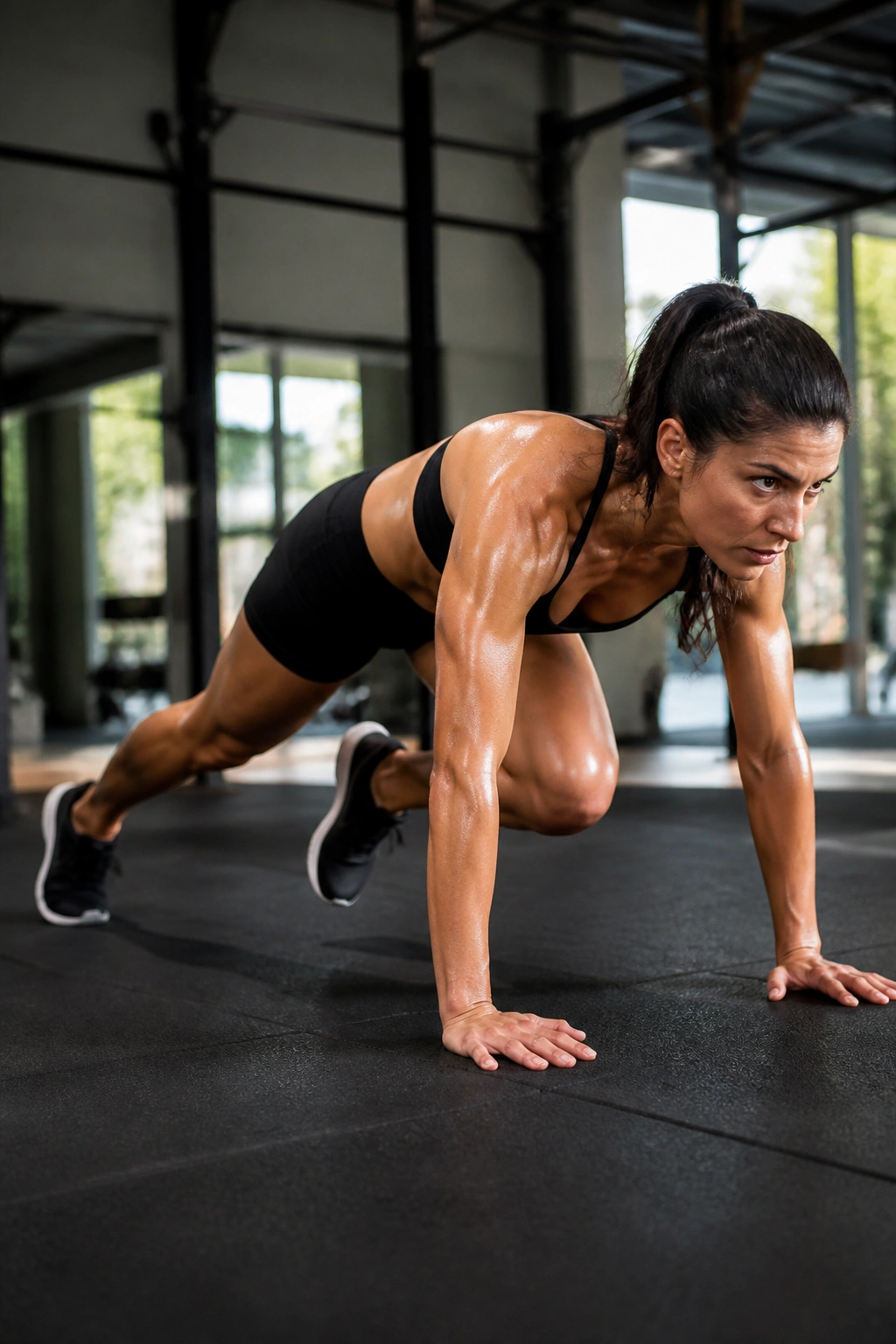
We are moving away from static stability and into dynamic, explosive core work. Mountain climbers are essentially a plank with a high-knee running motion. They elevate your heart rate while forcing your core to resist rotation as your legs move rapidly.
How to Stay Stable
Get into a high plank position. Drive one knee toward your chest, then switch. The key is to keep your hips level. Don’t let your butt bounce up and down in the air. Your shoulders, hips, and ankles should remain in a relatively straight plane throughout the entire movement.
The Pace Factor
You can do these for speed, which targets your cardiovascular system, or you can do them for control, which targets the deep abdominals. For core toning, aim for the middle ground: controlled, deliberate drives. Bring the knee all the way to the elbow on the same side for an extra oblique squeeze.
7. Russian Twists
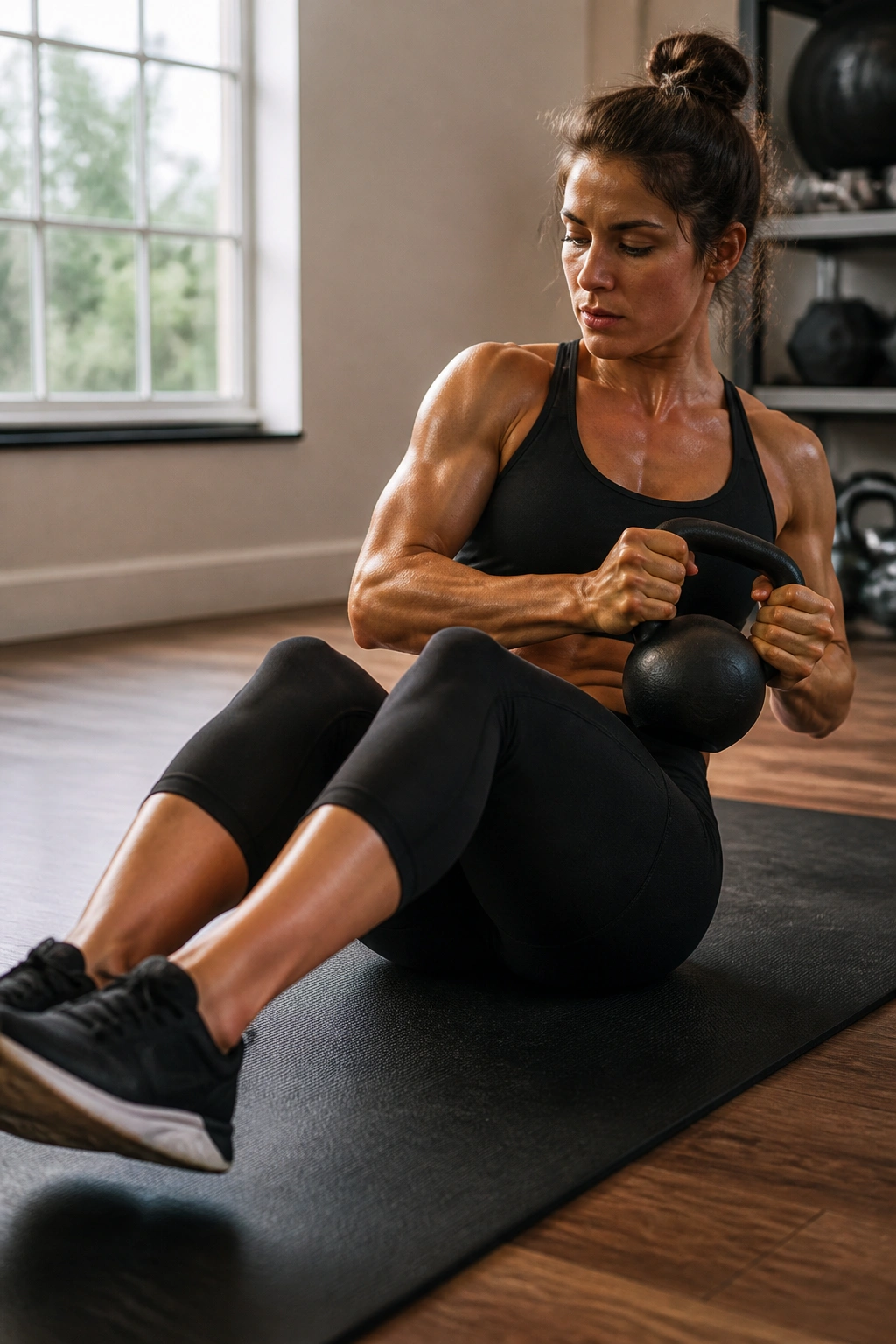
Rotation is a primary function of the core, yet it is rarely trained effectively. The Russian twist requires you to sit on the floor, lean back slightly until you feel your abs engage, and rotate your torso from side to side. It sounds easy, but it is brutal when done with proper intent.
Avoiding the Trap of “Just Moving Arms”
Most people just swing their hands from side to side. That is a waste of time. Your eyes should follow your hands. When you twist to the right, look to the right. This forces your entire thoracic spine to rotate. If your head stays looking forward, you aren’t really twisting your core; you’re just moving your shoulders.
Adding Resistance
Hold a weight—a kettlebell, a dumbbell, or even a water bottle—at chest height. The weight acts as a lever. The further away from your body you hold it, the harder your abs have to work to stop the momentum. Keep your feet hovering off the ground for an added challenge to the lower abs.
8. Hollow Body Holds
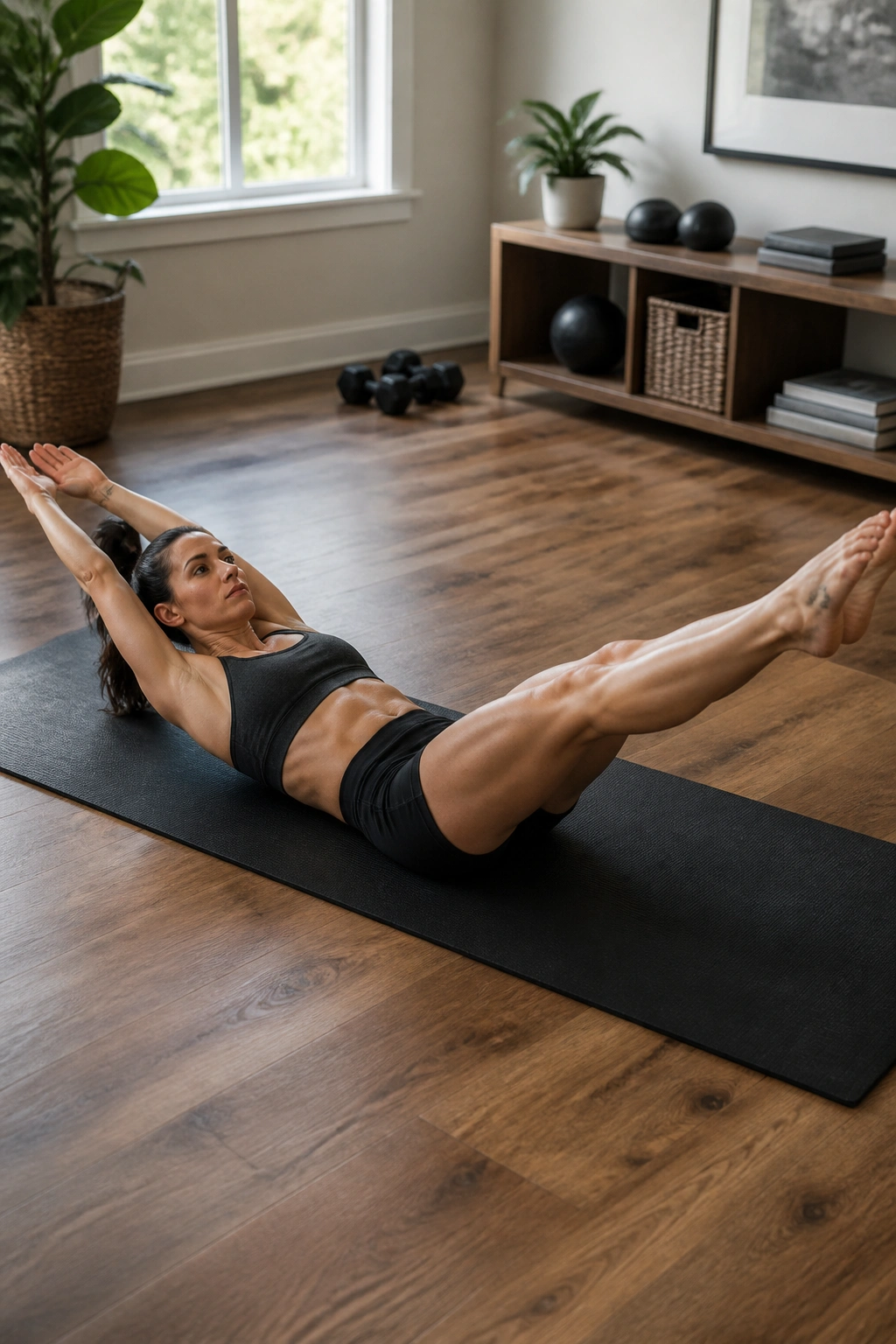
Gymnasts have some of the strongest cores in the world, and this is their bread and butter. The hollow body hold is the ultimate static contraction. Lie on your back, extend your arms over your head, and lift your arms and legs off the floor simultaneously.
The “Banana” Shape
You want to look like a banana. Your lower back must be the only thing touching the floor. Your shoulders should be off the ground, and your legs should be extended. If your lower back lifts, you have lost the integrity of the position. It is incredibly taxing.
Building Time Under Tension
If you can only hold this for five seconds before your back arches, that is fine. Do five seconds, rest for ten, and repeat. Build up to a thirty-second hold. This exercise forces your body to learn how to keep the entire abdominal wall engaged under load, which translates to better posture and a flatter stomach during everyday activities.
9. Bear Crawls
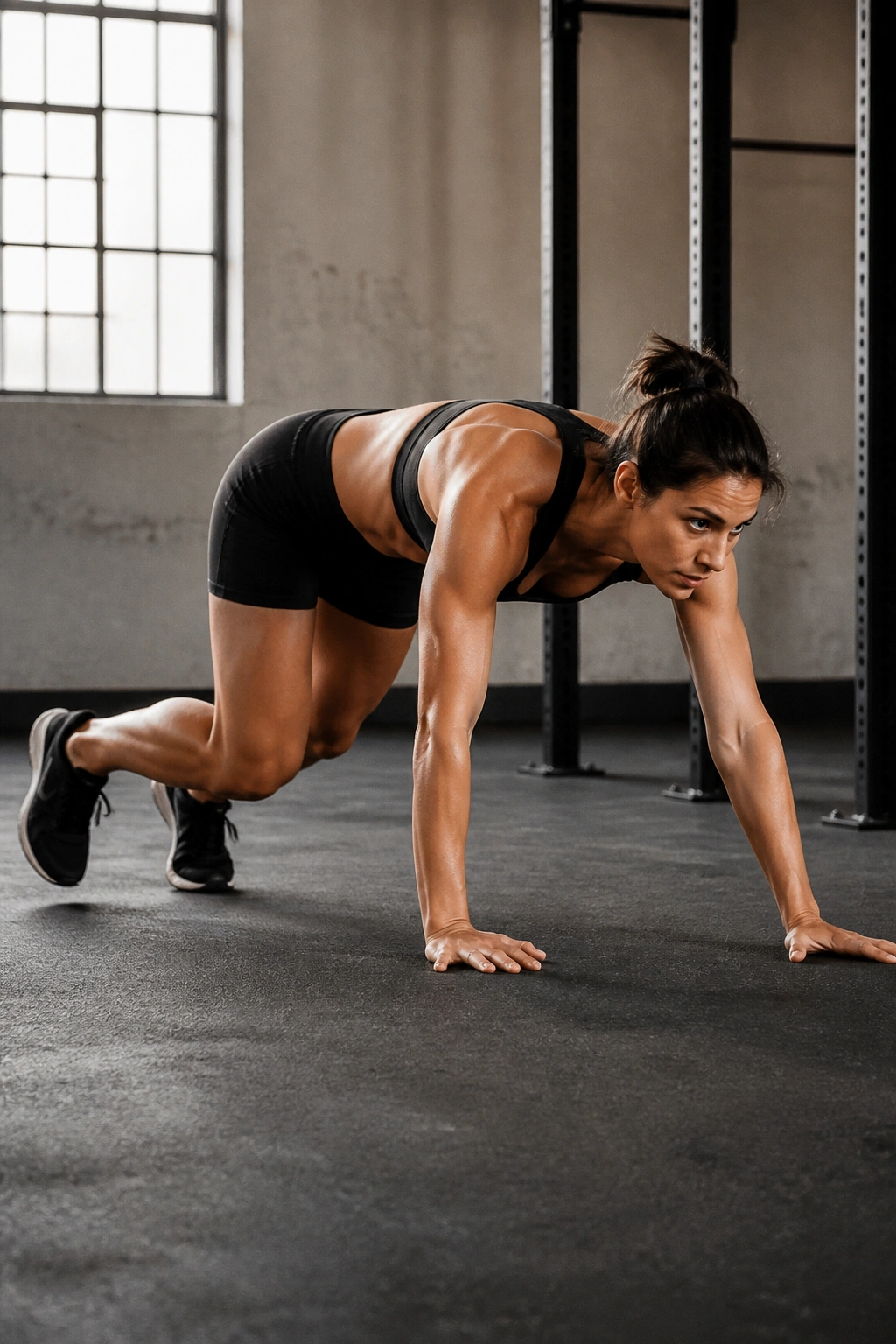
This is a move that makes you feel a bit foolish, but it is one of the most effective ways to build a functional, athletic midsection. You are moving while maintaining a rigid core. It requires coordination, shoulder stability, and immense abdominal endurance.
Maintaining the Low Profile
Get on all fours, but lift your knees just an inch off the ground. Move your opposite hand and opposite foot forward at the same time. Keep your back flat. The moment you start hiking your hips in the air, the exercise loses its effectiveness. Keep your knees glued to that one-inch hover.
Why It Works for the Stomach
It forces your core to stabilize your body against the shifting weight of your limbs. You are essentially doing a plank, but a plank that moves. It challenges your muscles to stay engaged through dynamic movement, which is how we actually use our core in the real world.
10. V-Ups
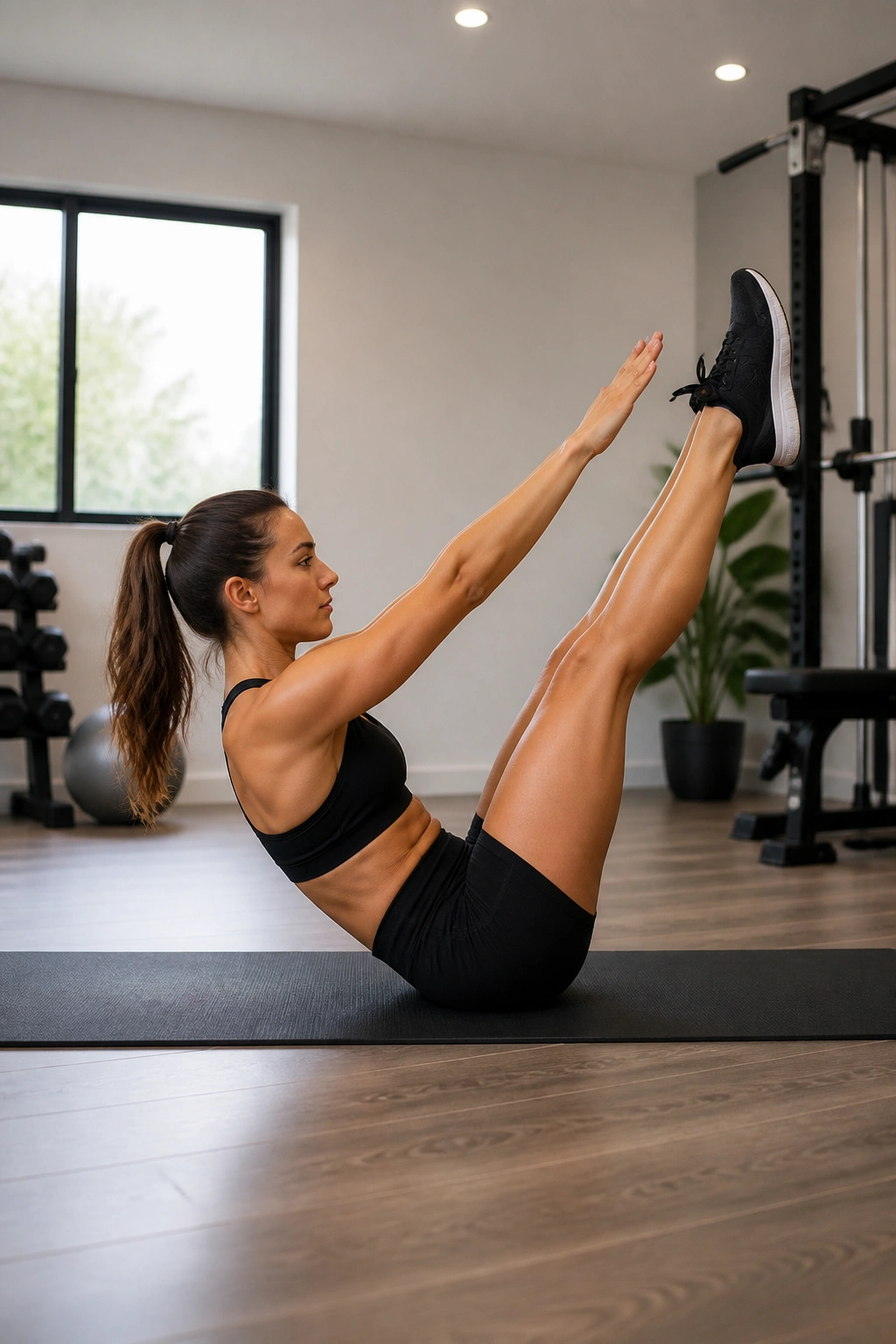
V-ups are for when you are ready to take your abdominal training to the next level. They are an advanced movement that targets the entire rectus abdominis in one go. You start flat on your back, then simultaneously lift your legs and torso to meet in the middle, forming a “V” shape.
The “Reach for the Toes” Cue
Don’t think about just lifting your torso; think about reaching your fingers toward your toes. This helps keep your upper body movement intentional. The hardest part is the descent. Don’t just flop back down. Lower your legs and torso back to the starting position as slowly as possible.
Regressions and Scaling
If you can’t reach your toes with straight legs, bend your knees and perform a “tuck-up” instead. The goal is the same: bringing the chest and knees together. Once you master the tuck-up, gradually straighten the legs until you are doing a full V-up with ease.
11. Stability Ball Pikes
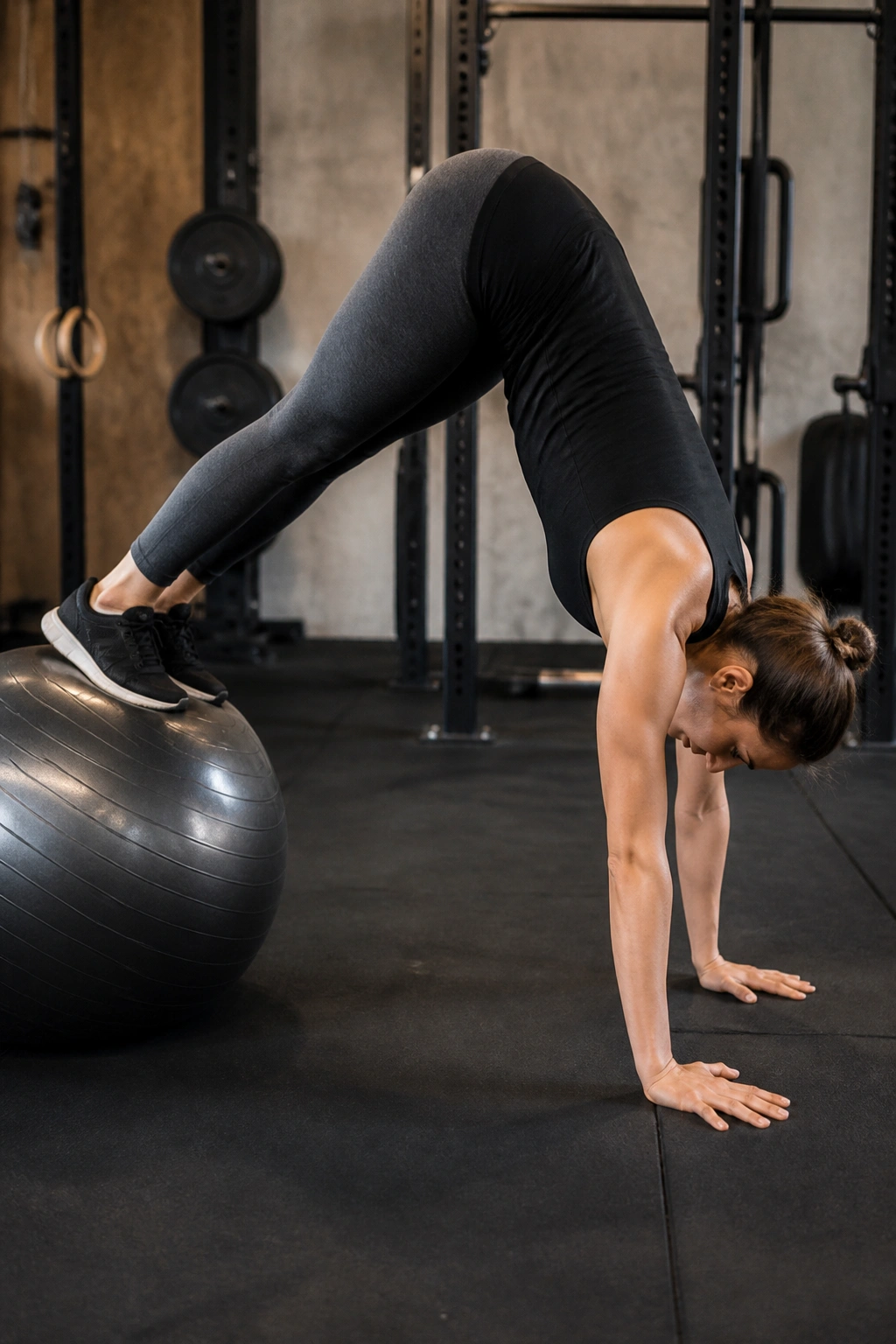
If you have access to a stability ball, this is one of the best tools for deep core engagement. Get into a push-up position with your shins resting on the ball. Using your core, pull your feet toward your hands, causing the ball to roll forward as your hips rise into the air.
The Pyramid Position
At the top of the movement, you should look like an upside-down “V” or a pyramid. Keep your legs straight and your core tight. Your hips should be the highest point of your body. Lower yourself back down with control, ensuring the ball doesn’t roll away from you.
Why This Trumps Floor Work
The instability of the ball forces your stabilizer muscles to fire constantly. You can’t rely on momentum here because the ball will literally roll out from under you. It demands perfect form and precise muscular control, making it an elite movement for developing a strong, toned midsection.
12. Plank Jacks
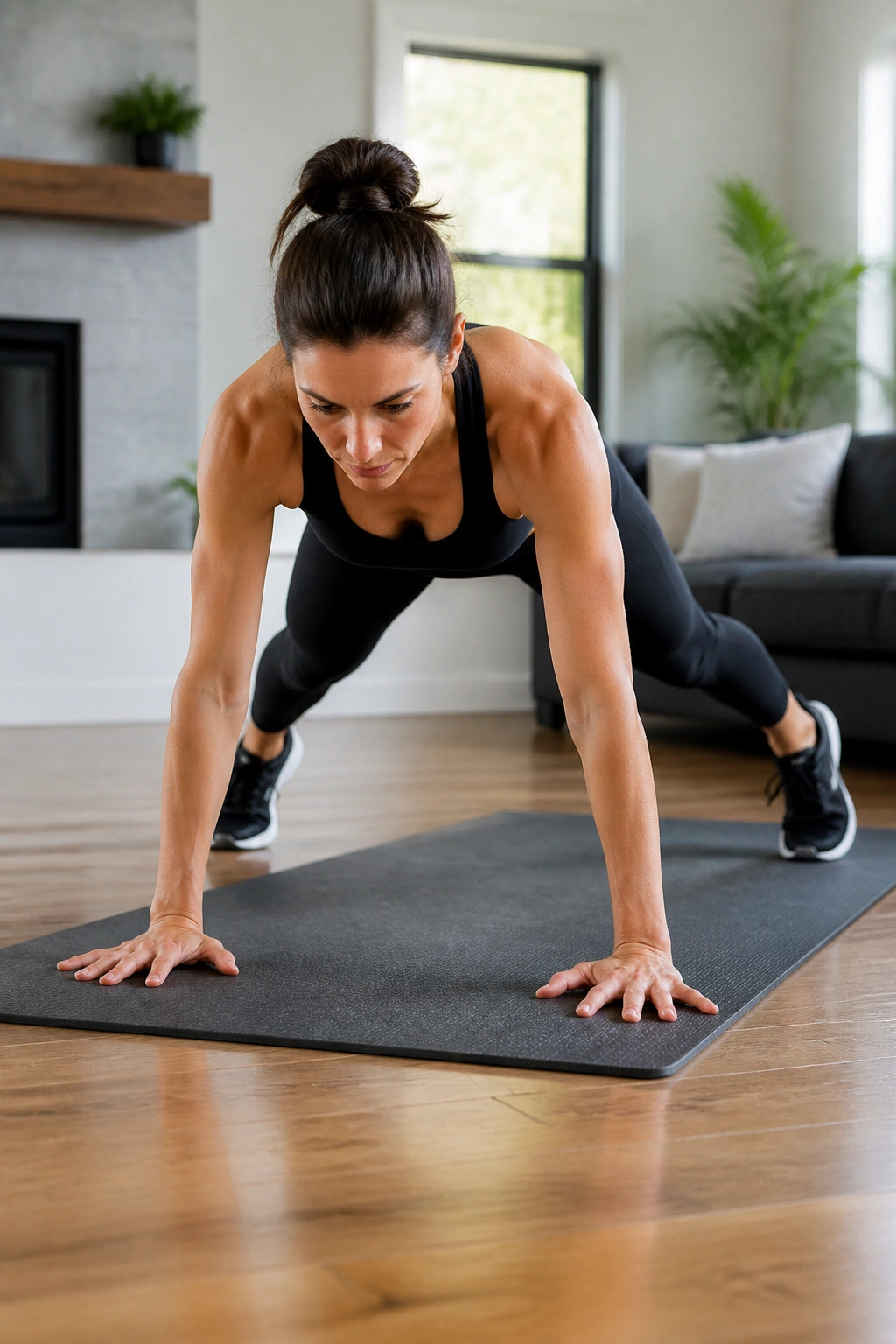
Take the foundation of the plank and add a cardiovascular element that forces your core to work while your lower body moves. Start in a standard plank position. Hop your feet out to the sides, like a jumping jack, and hop them back in.
Maintaining the Core Lock
The temptation is to let your hips bounce up every time your feet jump out. Do not let that happen. Your torso should be completely still, as if you are filmed from the waist up and the video looks static, while your legs are blurry from the movement below.
The Oblique Factor
This movement requires your obliques to fire every single time your feet hit the floor to stabilize your pelvis. If you find your hips sagging, shorten the distance of your jumps. It is better to do smaller, controlled jumps with perfect core posture than wide, sloppy ones that compromise your back.
13. Side Plank Dips

The obliques—the muscles that run along the sides of your stomach—are often neglected in favor of the “six-pack” muscles. Side plank dips are the antidote. Get into a side plank position, supporting yourself on your forearm. Lower your hip until it almost touches the floor, then drive it back up to the starting position.
Squeezing at the Top
The move isn’t finished when your hips are level. The move is finished when you squeeze your bottom oblique to push your hips even higher than the neutral line. That extra inch of height is where the magic happens.
The Alignment Check
Make sure your shoulder is directly above your elbow. If your elbow is too far out, you put unnecessary strain on your shoulder joint. Keep your body in a straight line. If you start to tip forward or backward, reset and focus on keeping your chest open and square.
14. Hanging Knee Raises
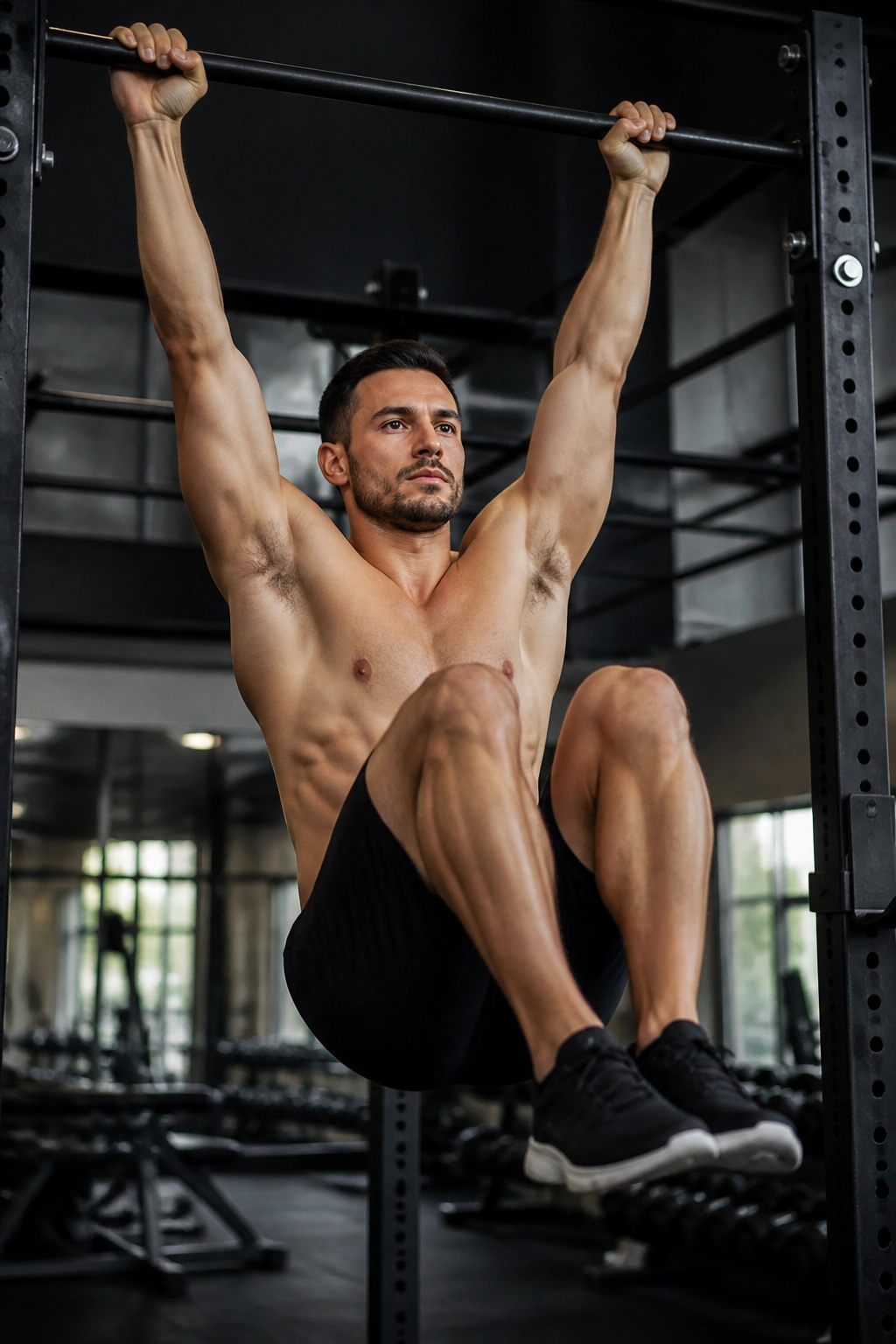
If your gym has a pull-up bar, you have access to the single best lower-ab exercise. Hang from the bar, fully extended. With your core, lift your knees up toward your chest. The key here is to avoid swinging. If you are swinging, you are using momentum, not your abs.
The Posterior Pelvic Tilt
As you lift your knees, try to curl your pelvis upward. Think about bringing your pubic bone toward your sternum. This is the movement that truly hits the lower abs. If you just lift your knees, you are working your hip flexors more than your abdominals.
Advancing to Toes-to-Bar
Once you master knee raises, work on keeping your legs straight and lifting your toes to the bar. This adds a massive amount of lever weight, making the exercise significantly harder. It requires immense grip strength, which is just an added bonus for your overall athleticism.
15. The Vacuum
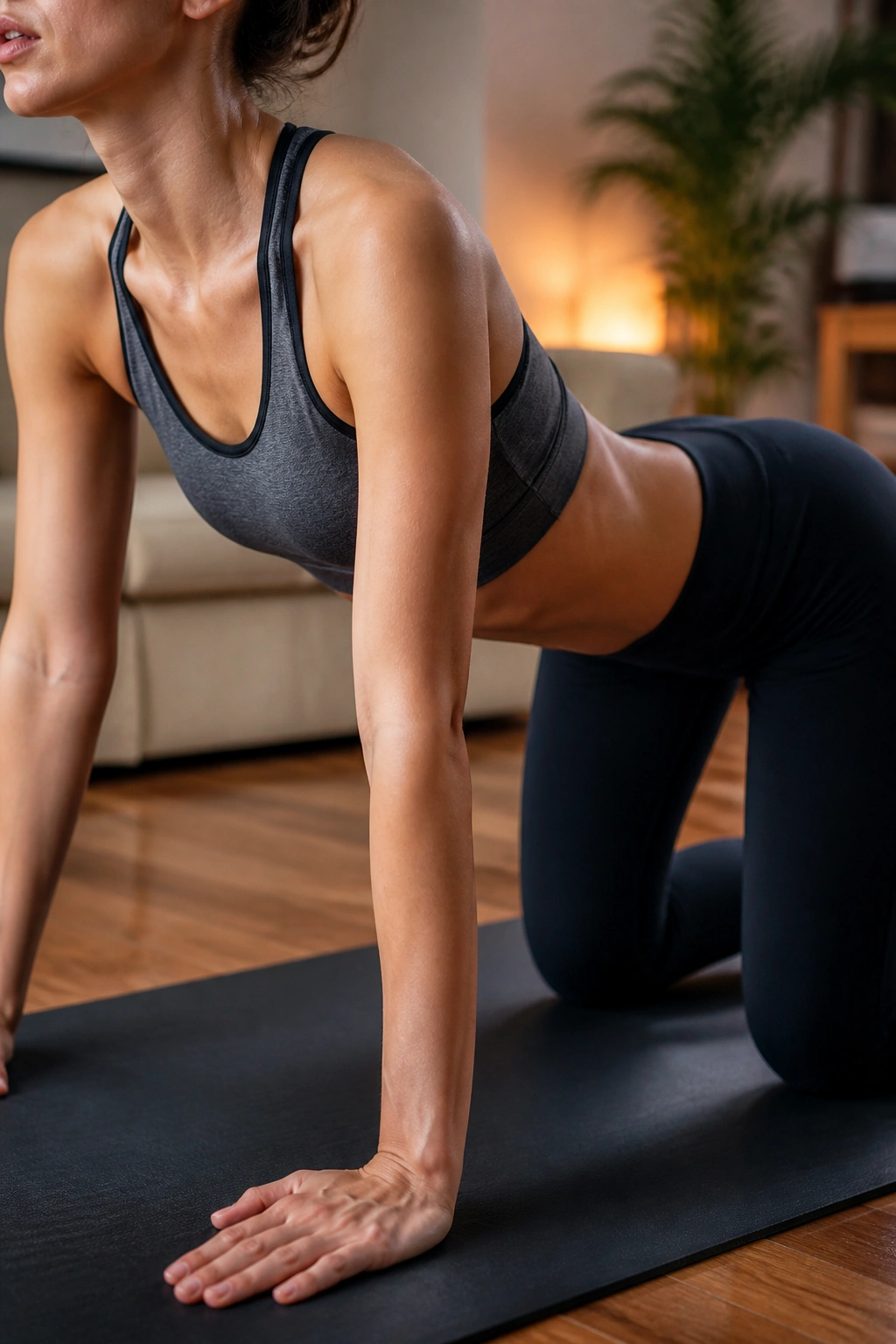
This is an old-school bodybuilding secret that has fallen out of common practice, but it is perhaps the most important exercise for getting a “tight” look to your stomach. The vacuum targets the transverse abdominis—the internal corset muscle that holds your organs in place and keeps your waist tight.
How to Perform It
Get on all fours. Exhale every ounce of air out of your lungs. Once you are completely empty, pull your belly button up toward your spine as hard as you can. Imagine you are trying to touch your navel to your backbone. Hold that contraction for ten to fifteen seconds while you continue to take shallow breaths.
Integrating Into Daily Life
You can do this standing, seated, or lying down. The goal is to train your transverse abdominis to stay slightly contracted even when you are relaxed. It improves your posture and creates a natural “cinching” effect around the waist. It is not a calorie-burning move, but it is a shape-changing move.
Final Thoughts
The reality of a toned stomach is that you cannot out-train a diet that doesn’t support your goals, but you can certainly build a core that is capable, strong, and visually defined. Most people search for the “best” exercise, but the truth is that your core requires variety. It needs stability work like planks, rotational work like Russian twists, and explosive work like mountain climbers.
Stop looking for the magic bullet. A toned stomach is built through consistent tension, a focus on the deep stabilizers rather than just the surface muscles, and the discipline to move slowly and deliberately. Pick three or four of these movements, integrate them into your weekly routine, and prioritize the quality of every single rep. Your core will respond not to the intensity of the workout, but to the precision of the effort you put into it.
