



Crunches alone are a lousy bet if your goal is stubborn belly fat workouts that actually move the tape measure. Fat does not peel off one spot because you worked the muscle underneath it. Your body loses it from all over, and the waist usually hangs on longer than people want.
That is why the smartest approach is not endless ab work. It is training that burns a lot of energy, keeps muscle on your frame, and does not leave you so wrecked that you skip the next session. A sweaty workout is not magic, by the way. A hard workout that you can repeat, week after week, is.
The good news is that you do not need weird gadgets or a two-hour gym ritual. A few of the workouts below are old-school and a little ugly. That is fine. A steep incline walk, a kettlebell swing set, or a brutal rowing interval can do more for your waistline than a hundred lazy crunches, especially when you pair them with decent food and enough sleep.
If the middle feels like the last place to lean out, you are not imagining things. Most people store and lose fat unevenly. The trick is to stop chasing “belly fat burning” as if it were a special effect and start choosing workouts that make your body work hard enough to spend real energy.
1. Sprint Intervals on a Track or Treadmill
Sprint intervals are ugly in the useful way. They ask for a lot in a very short burst, which is exactly why they belong near the top of any list of stubborn belly fat workouts. You are not jogging around pretending to be busy. You are pushing hard, recovering, then doing it again.
The appeal is simple. Sprinting uses a huge amount of muscle in the legs and hips, spikes heart rate fast, and keeps the session short enough that most people can actually finish it with some intensity left. It also tends to preserve muscle better than endless moderate cardio when the rest of your training and food are in line.
How to do it
- Warm up for 5 to 10 minutes with brisk walking, leg swings, and two or three short build-up runs.
- Sprint for 15 to 20 seconds at about 90 to 95 percent effort.
- Walk or easy-jog for 90 to 120 seconds.
- Repeat for 6 to 10 rounds.
- Stop the session if your form gets sloppy or your speed falls off hard.
One sentence of warning: do not treat the first sprint like a race. If you go all-out on round one, round four will be a mess. Start strong, not reckless.
If your knees or hamstrings are touchy, use a bike or rower instead. Same idea. Less pounding.
2. Incline Walking That Actually Makes You Sweat
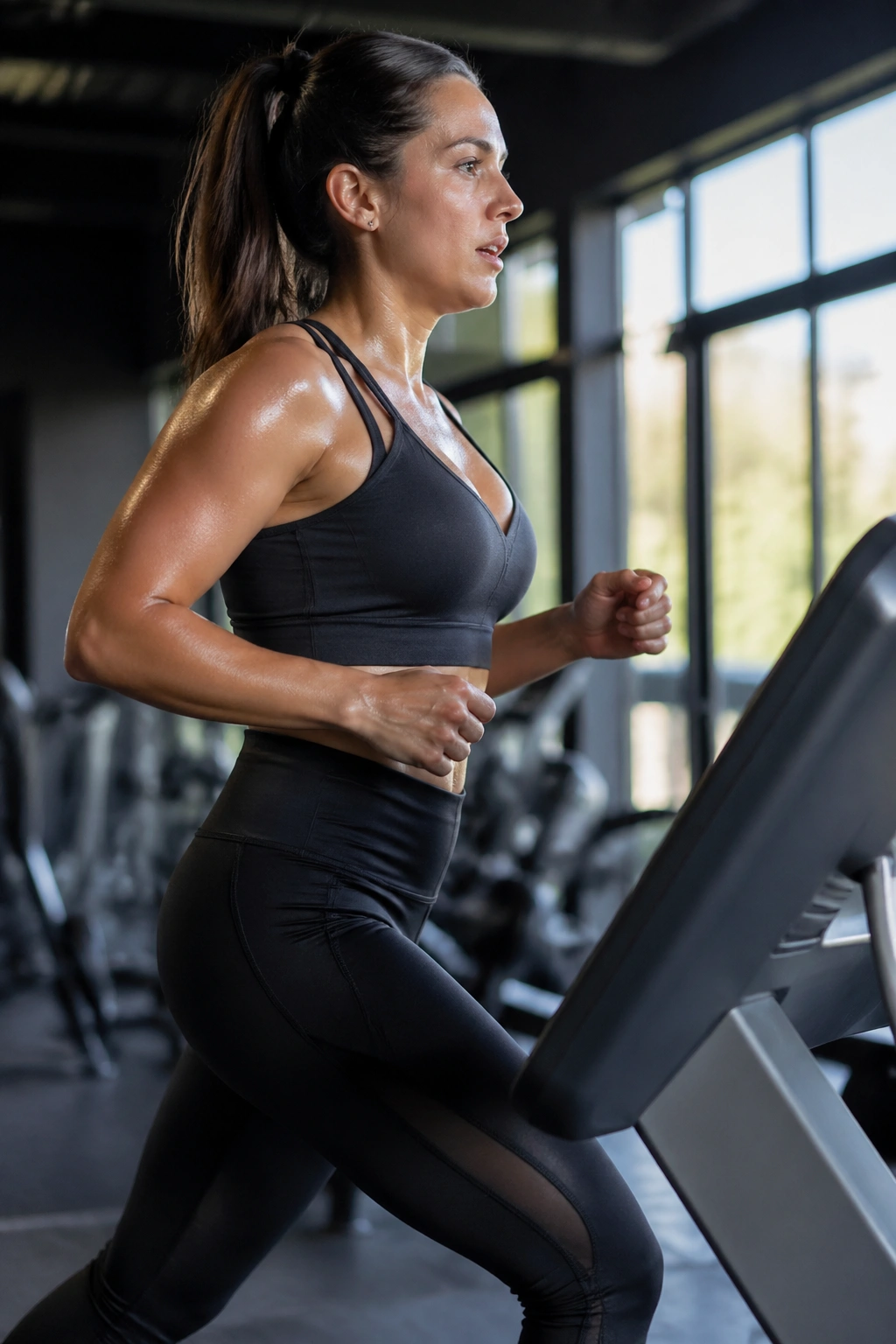
Can a walk help shrink your waist? Yes, if the walk is steep enough, long enough, and done with real intent. A flat stroll with your phone in one hand is nice for your head, but it is not doing much heavy lifting for fat loss.
Incline walking is one of my favorite answers for people who want something sustainable. It burns more calories than flat walking, keeps impact low, and is easy to repeat often. That matters. A workout you can do four times a week without dreading it tends to beat a heroic plan you quit by Thursday.
How to use it
Pick a treadmill incline between 6 and 15 percent. Keep your pace brisk enough that you can talk in short phrases, not full speeches. Most people land somewhere around 3 to 4 miles per hour, but the number matters less than the effort.
- Walk for 20 to 45 minutes.
- Keep your chest tall and your hands off the rails.
- Let your arms swing. That sounds small. It is not.
- Use a slight forward lean from the ankles, not the waist.
If you have hills outside, even better. The incline changes everything. Your glutes wake up, your calves complain, and your heart works harder without the jolt of running.
Short version: boring on paper, excellent in practice.
3. Kettlebell Swings That Turn Your Hips Into a Engine
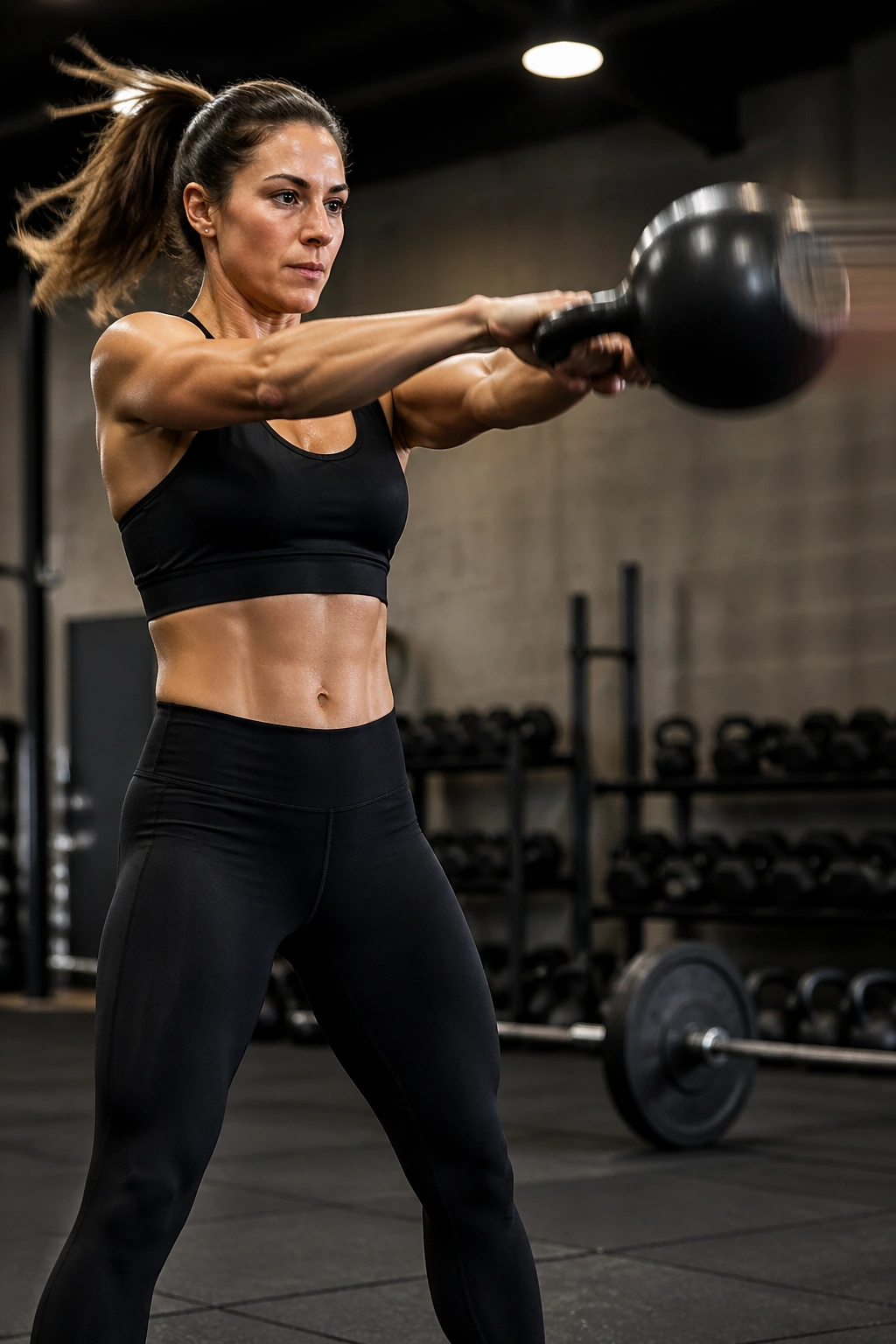
A good kettlebell swing session leaves you breathing hard in about the same time it takes some people to find their gym playlist. That is why swings show up in so many fat-loss plans. They are fast, dense, and brutally honest about whether your hips are doing the work.
The magic is not in “swinging a weight around.” It is in the hinge. Your glutes and hamstrings drive the bell, your core braces hard, and your grip gets taxed while your heart rate climbs. Done well, swings look almost simple. Done badly, they turn into a lower-back tug-of-war.
Use a weight that lets you snap the hips without muscling the bell up with your shoulders. For most people, that means a kettlebell heavy enough to feel real but light enough to stay crisp for multiple rounds. The bell should float. It should not get yanked.
Quick setup
- Do 10 swings every minute on the minute for 10 minutes.
- Or try 15 swings, rest 30 to 45 seconds, repeat for 8 rounds.
- Keep the chest proud, spine neutral, and wrists relaxed.
- The bell should reach about chest height, not shoulder-chasing height.
If you feel it mostly in your back, stop and reset. Hinge first. Lift later.
4. Jump Rope Intervals That Make Small Spaces Work Hard
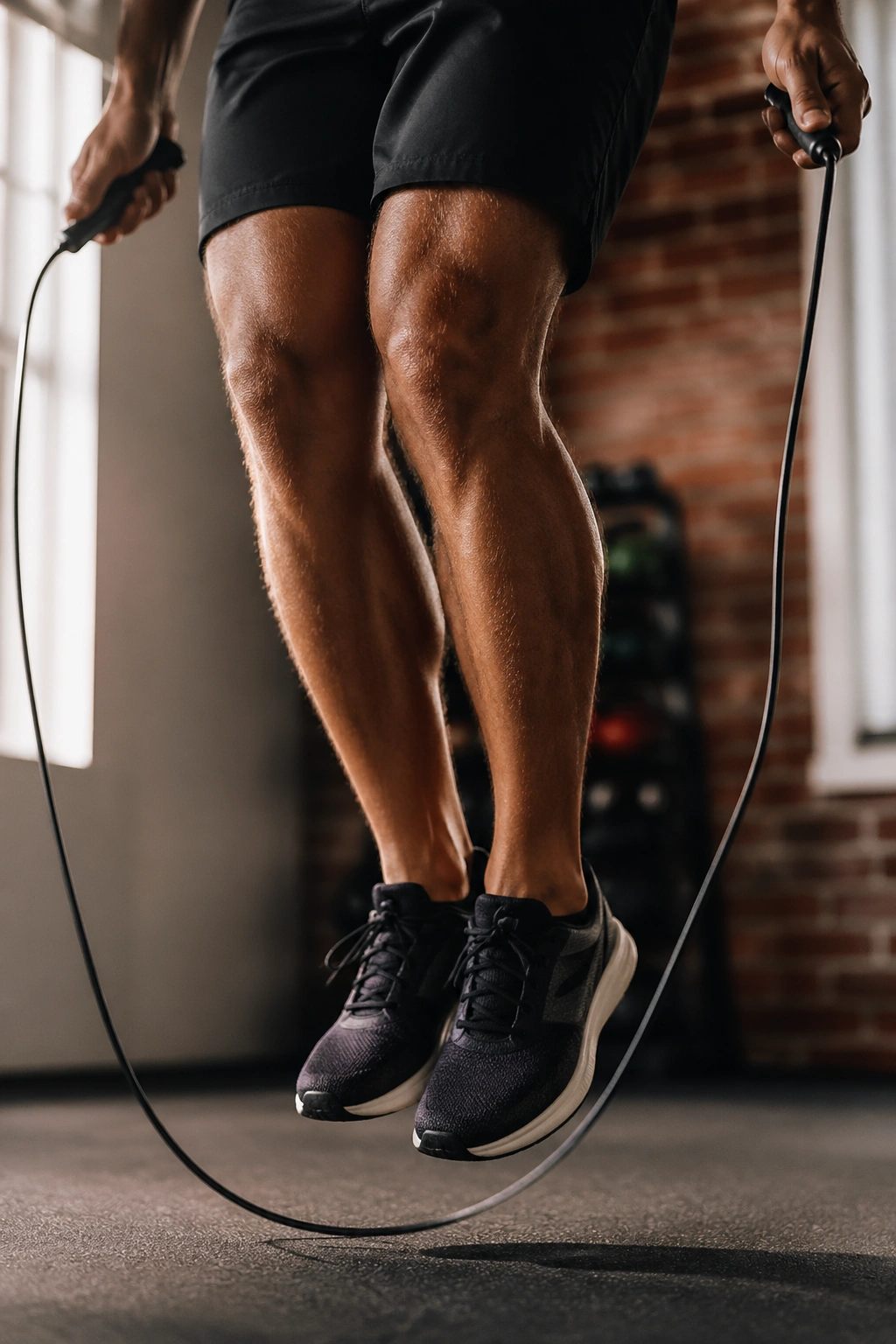
A jump rope looks almost silly until your calves are burning and your breathing gets loud. Then it starts looking serious. It is one of the cheapest cardio tools around, and it can be a monster for energy burn when you keep the rest periods short.
What makes jump rope useful for belly fat loss is the density. You get a lot of work in a small footprint, which makes it easy to stack intervals without a long setup. You also get coordination work for free. That sounds minor, but people who can actually keep rhythm tend to stay moving longer.
The key is not to leap like you are trying to clear a fence. Keep your jumps low, barely off the floor, and let the wrists turn the rope. Big arm circles waste energy fast and make the whole thing feel harder than it needs to.
A simple structure works well: 30 seconds on, 30 seconds off, for 10 to 15 rounds. If that is too sharp, start with 20 seconds on and 40 seconds off. Easy enough to read. Hard enough to matter.
One more thing. Good shoes help. Bare feet on a hard floor is a fast route to regret.
5. Rowing Machine Sprints for Full-Body Burn
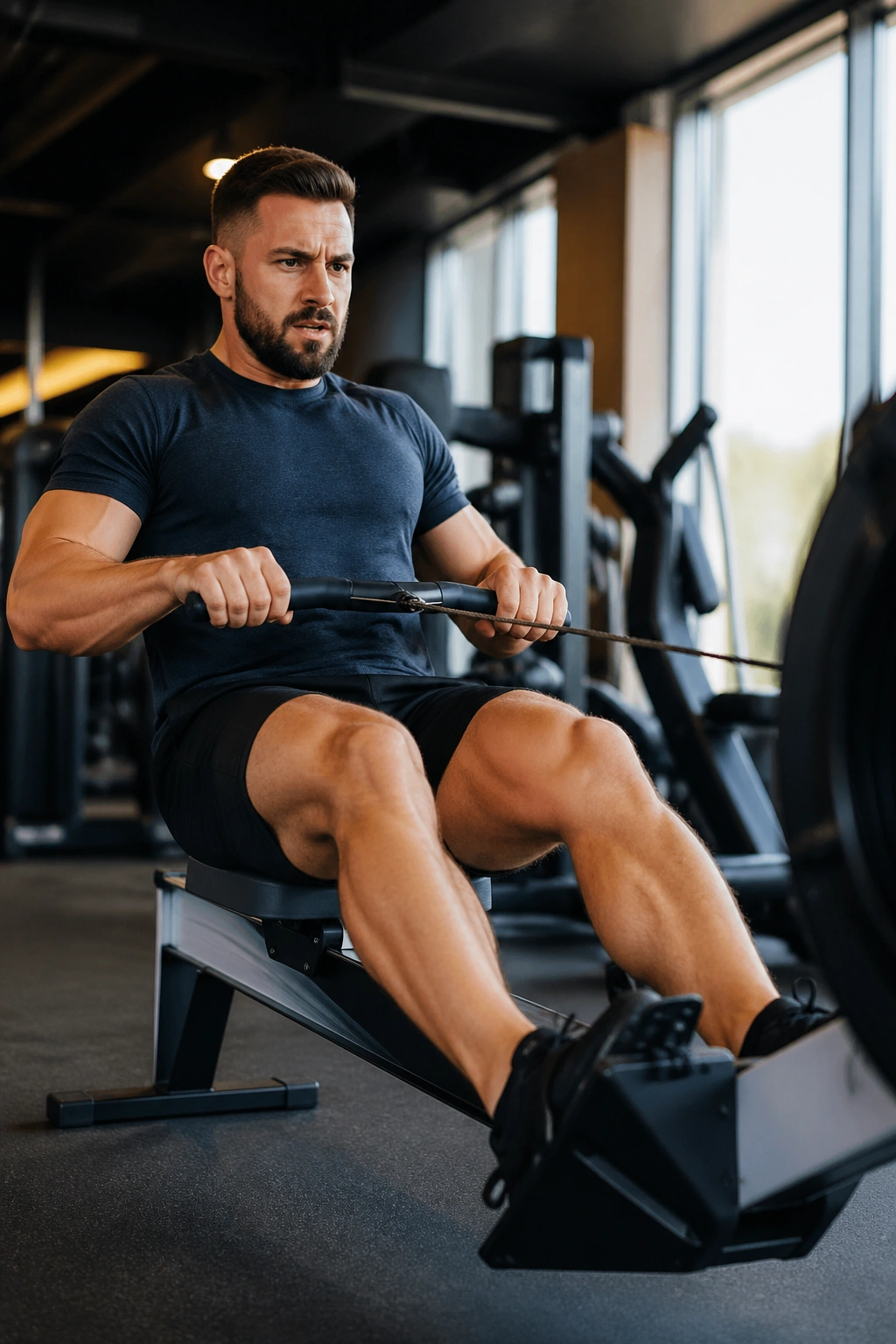
Rowing gets overlooked because it does not look dramatic. No one is bouncing around or throwing weights through the air. Then the monitor lights up, your lungs start barking, and you realize the machine has been quietly using your legs, back, and arms all at once.
Compared with running, rowing is kinder to the joints and a little more even across the body. That is useful if your ankles, shins, or knees do not love impact. It also forces posture and timing. If your stroke is sloppy, the machine punishes you by feeling harder than it should.
What makes it different
The drive starts with the legs, not the arms. Push the footplates, open the hips, then finish with the arms. On the return, the arms go first, then the torso, then the knees. That sequence matters a lot. If you yank with your arms first, you waste power and turn the row into a weird seated curl.
A clean interval plan looks like this:
- 10 rounds of 250 meters hard
- Rest 60 to 90 seconds between rounds
- Or 45 seconds hard / 75 seconds easy for 8 to 12 rounds
Set the damper in the middle range, not all the way up just because it feels tough. A heavy setting is not a medal. It is often just clumsy resistance.
6. Full-Body Dumbbell Circuits That Refuse to Let Your Heart Rate Drop
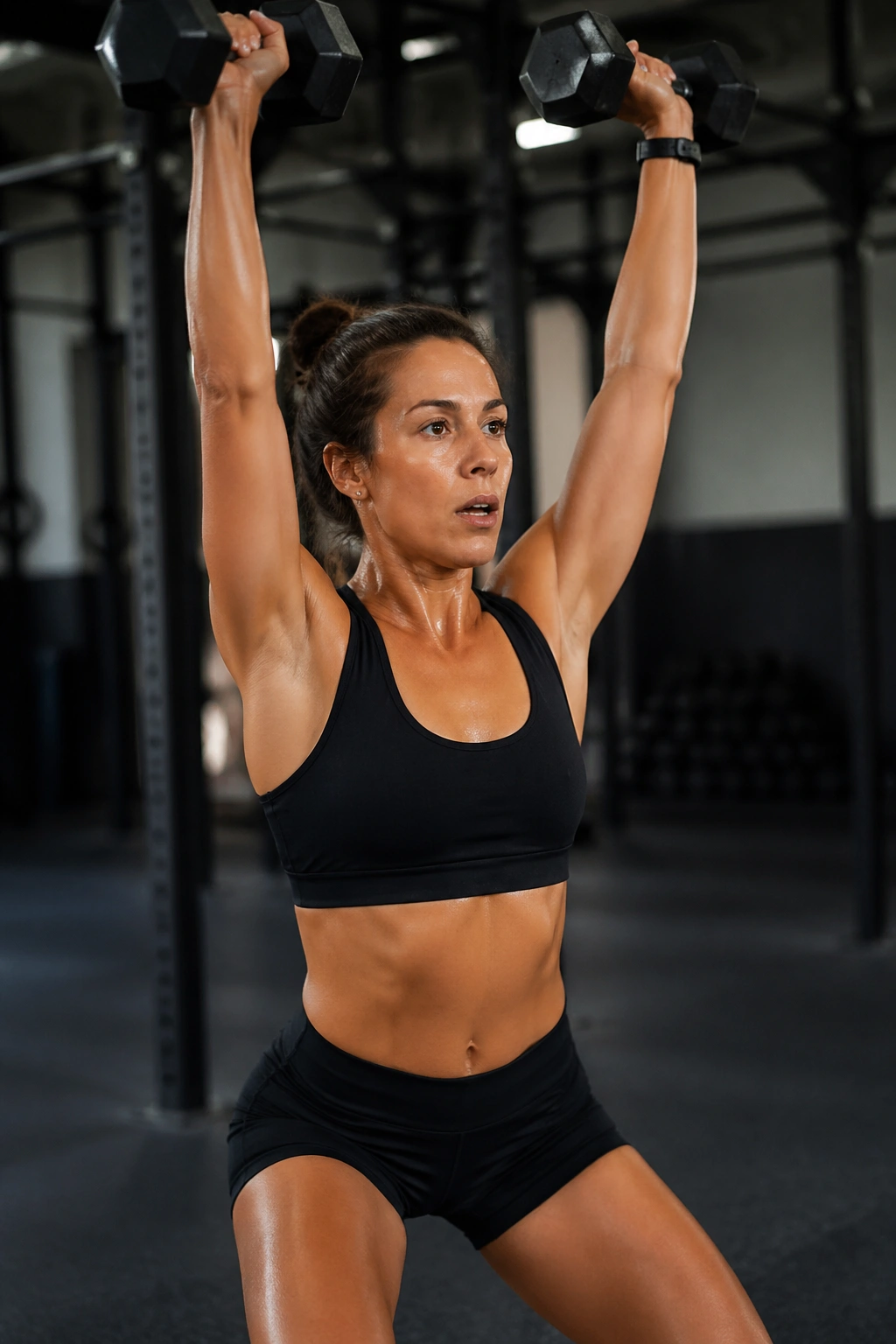
Strength training absolutely belongs in a waist-loss plan, and not just because muscle looks better than soft tissue at the same body weight. A smart dumbbell circuit also burns a pile of calories while you build or keep lean mass. That combination is hard to beat.
This is where stubborn belly fat workouts get practical. You are not doing one set, checking your phone, then wandering around for five minutes. You are moving from one compound exercise to the next with short rests, which keeps the engine running. The weight should challenge you, but not crush your form.
Sample circuit
- Goblet squat — 10 reps
- One-arm dumbbell row — 10 reps each side
- Push press — 8 reps
- Reverse lunge — 8 reps each side
- Dead bug or plank drag — 10 reps each side
Do 3 to 5 rounds with 45 to 60 seconds of rest between rounds.
Here is the catch: if the weights are too light, the workout turns into a warm-up. If they are too heavy, you spend the whole session resetting your stance. Pick a load that makes the last 2 reps of each movement honest. Not ugly. Honest.
A circuit like this is good for people who like structure and hate boredom. Which, frankly, is most of us.
7. Burpee Ladders When You Want a Short, Mean Session
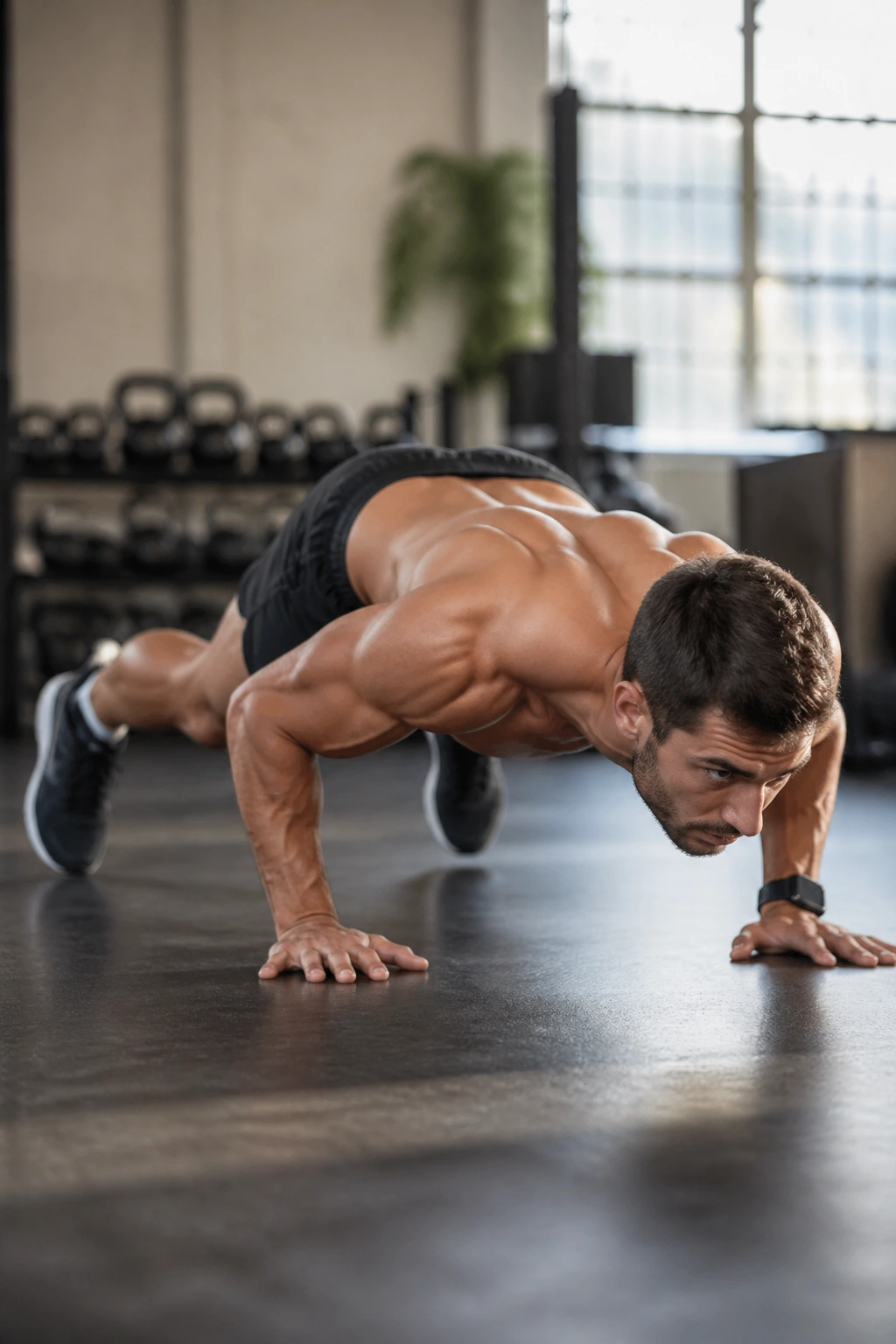
Burpees are not beloved for a reason. They are efficient, they use a lot of muscle at once, and they make it hard to coast. That is exactly why they show up in fat-loss plans. They do not let your body off the hook.
Why does this work so well? Because a burpee combines a squat, a plank, a push-up pattern, and a jump, all in one awkward package. Your heart rate climbs fast, your core has to brace, and your legs never really get comfortable. Ten minutes of this can feel longer than twenty minutes of easier cardio.
A burpee ladder is simple. Start with 2 reps, then 4, then 6, building up until you hit a number you can manage with good form. Some people climb to 10 and then come back down. Others do 30 seconds on, 30 seconds off for 10 rounds. Both work.
How to keep it useful
- Step back instead of jumping if your lower back or knees hate impact.
- Skip the push-up if your chest crashes to the floor and never comes back cleanly.
- Keep the landings soft.
- Stop before the movement turns into flailing.
Burpees are not graceful. Fine. They are not supposed to be.
8. Stair Climbs That Turn Your Building Into a Gym
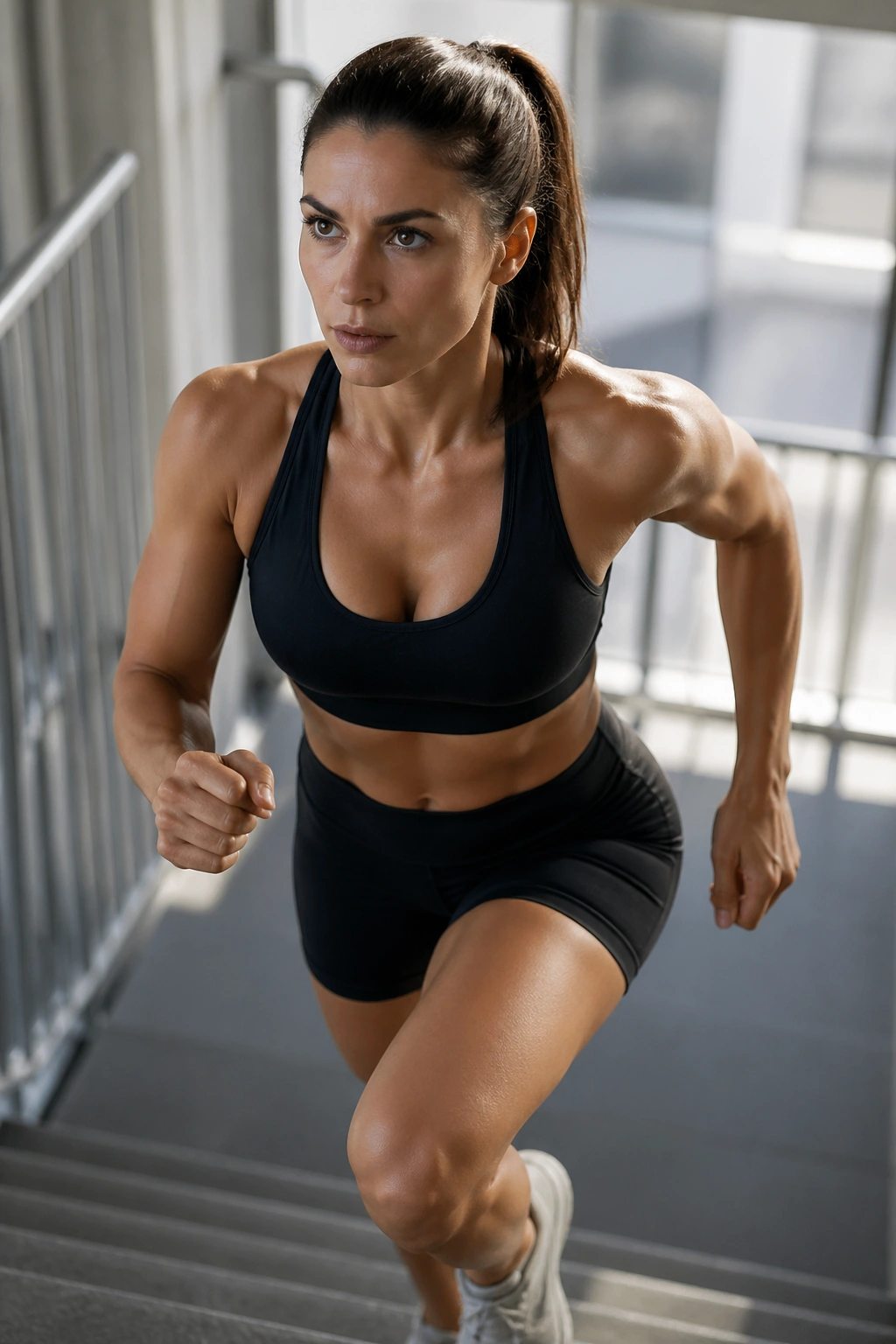
Stairs have a way of stripping away excuses. No equipment setup, no app, no special shoes. Just steps, gravity, and your willingness to keep moving when your thighs start to complain.
The reason stair climbs work is straightforward. Each step asks your glutes, quads, calves, and heart to do a little more than level walking does. That extra demand adds up fast, especially when you repeat it in intervals. It also creates a nice blend of cardio and lower-body strength without needing a barbell.
A basic plan is easy to run. Find a set of stairs or a stair machine and climb hard for 30 to 60 seconds, then recover for 60 to 90 seconds. Repeat for 8 to 12 rounds. If you want to keep it simple, walk down for recovery and keep your body tall on the way up.
Do not lean heavily on the railing unless you need it for safety. That is a common shortcut, and it steals work from the legs. Use the arms for rhythm, not support.
Stairs are old-school. They still hit like they mean it.
9. Battle Rope Rounds That Burn Fast Without Needing a Treadmill
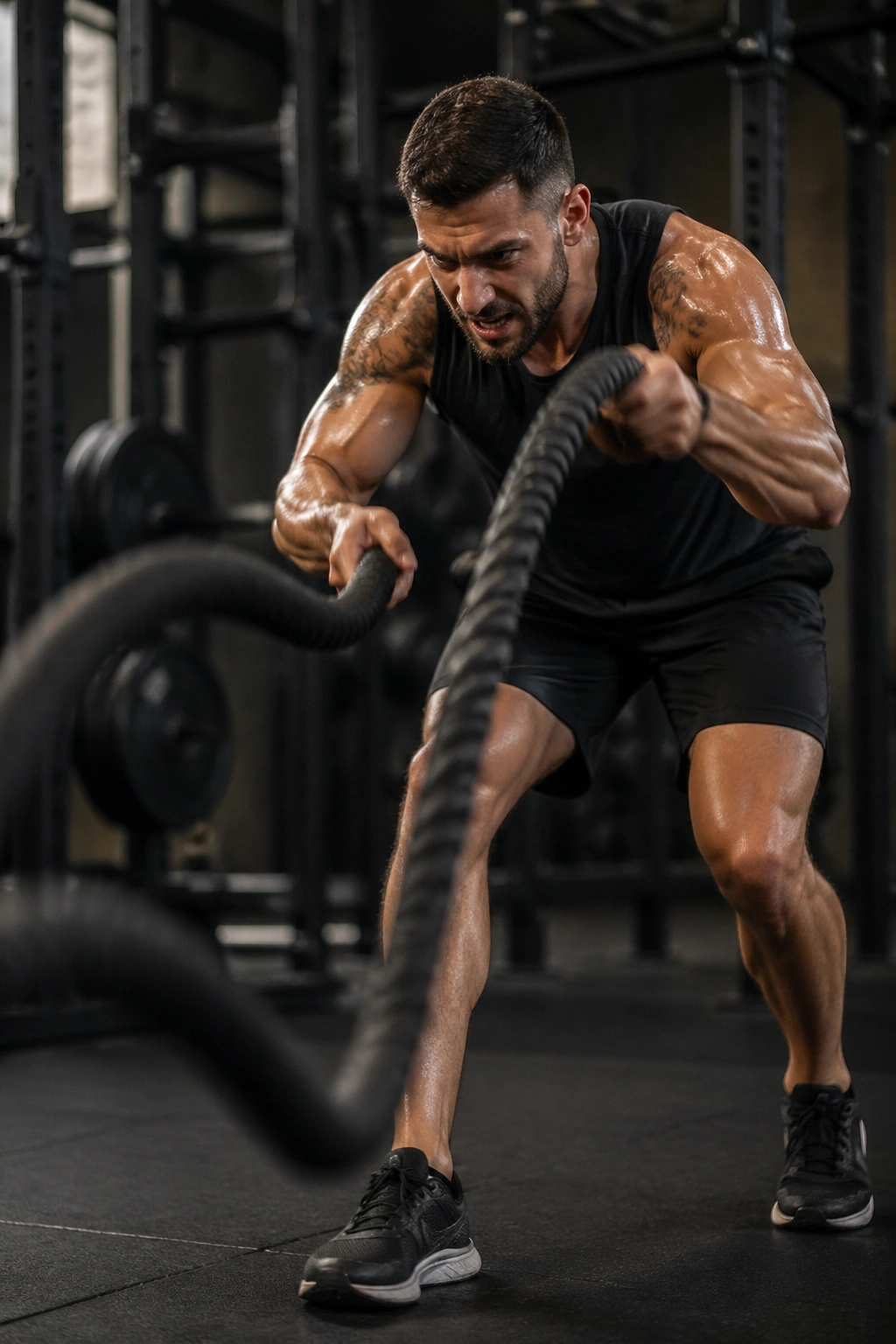
Battle ropes look dramatic, and yes, part of the appeal is that they feel a little ridiculous in a good way. But the real reason they belong here is output. You can go very hard, very fast, and the whole upper body has to stay involved.
The ropes train the shoulders, arms, upper back, and core while the legs stabilize the whole mess. Short bursts are best. If you go too long, the movement gets sloppy and the session turns into a shoulder shrug contest. That is not the point.
A useful setup is 20 seconds hard, 40 seconds easy for 10 to 15 rounds. You can switch between alternating waves, double-arm slams, side-to-side waves, and power slams. The variation keeps the shoulders from going stale and makes the workout feel a little less mechanical.
What to watch for
- Keep your knees soft.
- Brace your midsection before each burst.
- Stay tall through the ribcage.
- Do not let the waves come from wild arm flinging alone.
The ropes are not magical. They are just brutally efficient. That is enough.
10. Dumbbell Complexes That Keep You Working Without Setting the Weights Down
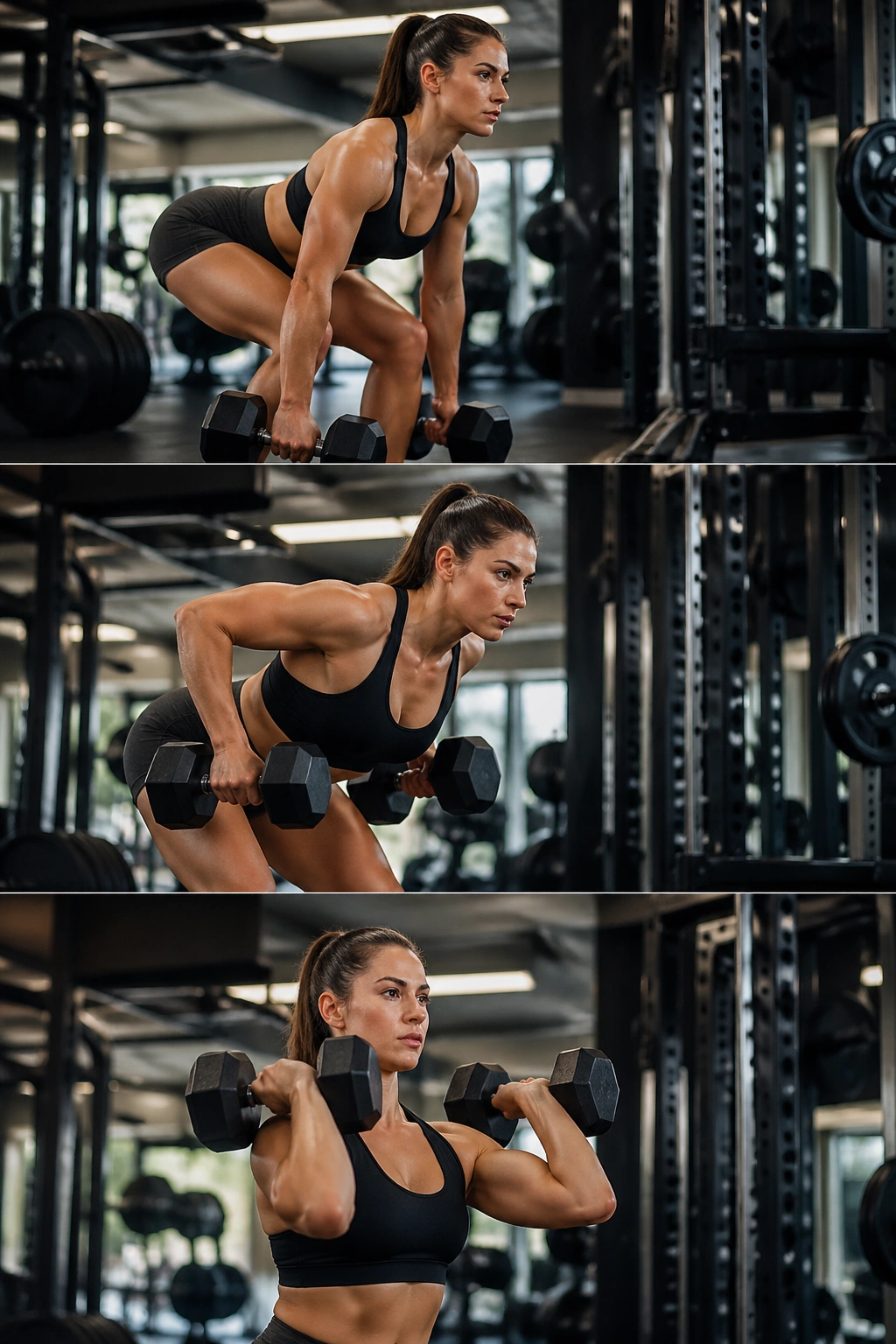
A dumbbell complex is one of the sneakiest fat-loss tools in the gym. You pick up a pair of dumbbells and run through several exercises in a row without putting them down. Same weights. Different moves. Less rest. More work.
Unlike a regular lifting session where you take long breaks between sets, a complex keeps the heart rate high while still giving your muscles something meaningful to do. That matters for body composition. You are not only burning calories during the session; you are also giving your body a reason to keep muscle as the weight comes off.
A clean example:
- Romanian deadlift — 6 reps
- Bent-over row — 6 reps
- Hang clean — 6 reps
- Front squat — 6 reps
- Push press — 6 reps
Rest 90 seconds and repeat for 4 to 6 rounds.
Choose dumbbells light enough to finish all five moves without your form collapsing. Too heavy, and the clean and press turns into a mess. Too light, and the whole thing feels like cardio with handles. The sweet spot sits in the middle.
I like complexes for people who get bored easily. They force focus. There is no drifting off.
11. Cycling Intervals for Low-Impact, High-Effort Work
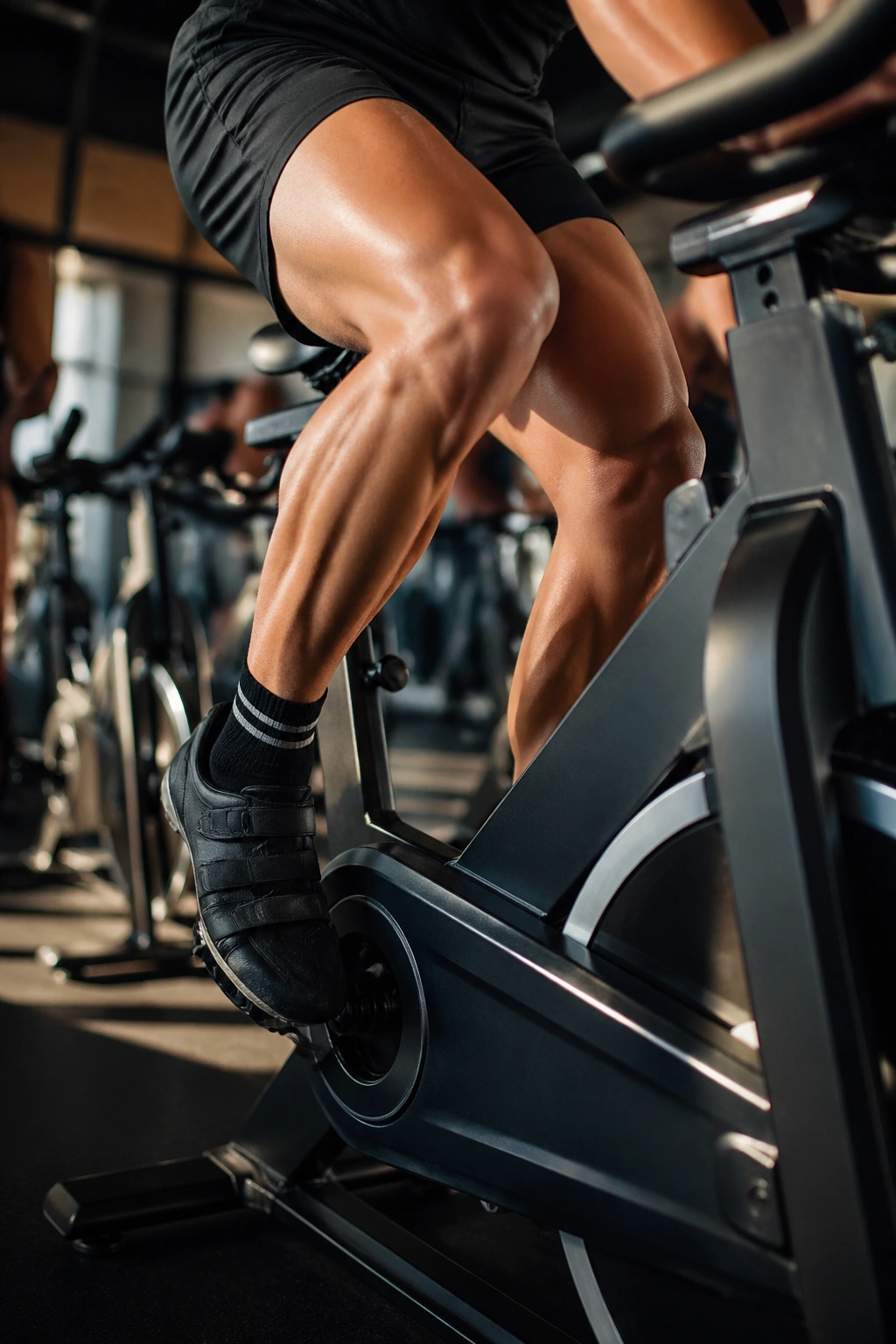
The bike is underrated when people want to lean out but their joints are begging for mercy. You can push hard on a stationary bike without the pounding that comes with running, and the resistance gives you enough control to scale the pain up or down.
Cycling intervals work because they let you stack a lot of effort into a tiny window. Increase resistance for the hard parts, then ease off just enough to catch your breath. If you are doing it right, your legs will feel heavy and your breathing will get ragged without the session beating up your feet.
A strong protocol is 40 seconds hard, 20 seconds easy for 8 to 12 rounds. Another good option is 1 minute hard, 2 minutes easy repeated for 6 to 8 rounds. The first version is sharper. The second gives you more room to keep quality high.
Use cadence and resistance together. Spinning fast with no load is not enough, and grinding a giant gear at a crawl can cook your knees. Aim for a hard but controlled push, with enough resistance that the pedals do not feel weightless.
If you hate running, this is a friend.
12. Shadow Boxing Rounds That Make Cardio Feel Less Miserable

Can punching the air help with fat loss? Yes, if you do it with enough speed and enough volume to matter. Shadow boxing is one of the easiest ways to sneak hard conditioning into a session without needing a ring, bag, or partner.
The nice part is that it keeps your feet moving and your trunk rotating, which means the midsection is always working to stabilize and transfer force. Your shoulders, hips, and core all contribute. It is cardio, but it does not feel like the same plain treadmill grind people dread.
How to structure rounds
- Work 2 to 3 minutes
- Rest 30 to 60 seconds
- Repeat for 6 to 10 rounds
- Use simple combos: jab-cross, jab-cross-hook, jab-slip-cross-hook
Stay light on your feet and keep your hands coming back to guard after each strike. A lot of people punch with their arms and forget the legs entirely. That makes the whole thing weaker and a lot less useful.
This is a good option if you want something with rhythm. Music helps. So does pretending the round matters, because your body responds better when you actually commit.
13. Farmer’s Carries That Train the Waist Without Doing a Single Crunch

Farmer’s carries look almost too simple to matter. Pick up heavy weights. Walk. Breathe. Repeat. Then your grip burns, your midsection tightens, and your posture starts to tell the truth.
They work because your core has to fight rotation and side-bending while the load pulls you down. Your shoulders, traps, forearms, and legs all chip in too. The result is a workout that feels plain and hits hard. No drama. Plenty of value.
Use dumbbells, kettlebells, or loaded trap-bar handles if you have them. Walk for 30 to 60 seconds per set, rest 60 to 90 seconds, and repeat for 6 to 10 rounds. Keep the weight heavy enough that you have to brace, but not so heavy that you tip side to side like a shopping cart with a broken wheel.
Form cues that matter
- Stand tall.
- Ribs stacked over pelvis.
- Shoulders down, not shrugged.
- Walk with short, controlled steps.
One quiet bonus: carries can make the rest of your lifting better. When your brace improves, squats and deadlifts often feel cleaner too.
14. EMOM Circuits That Keep You Honest Minute by Minute
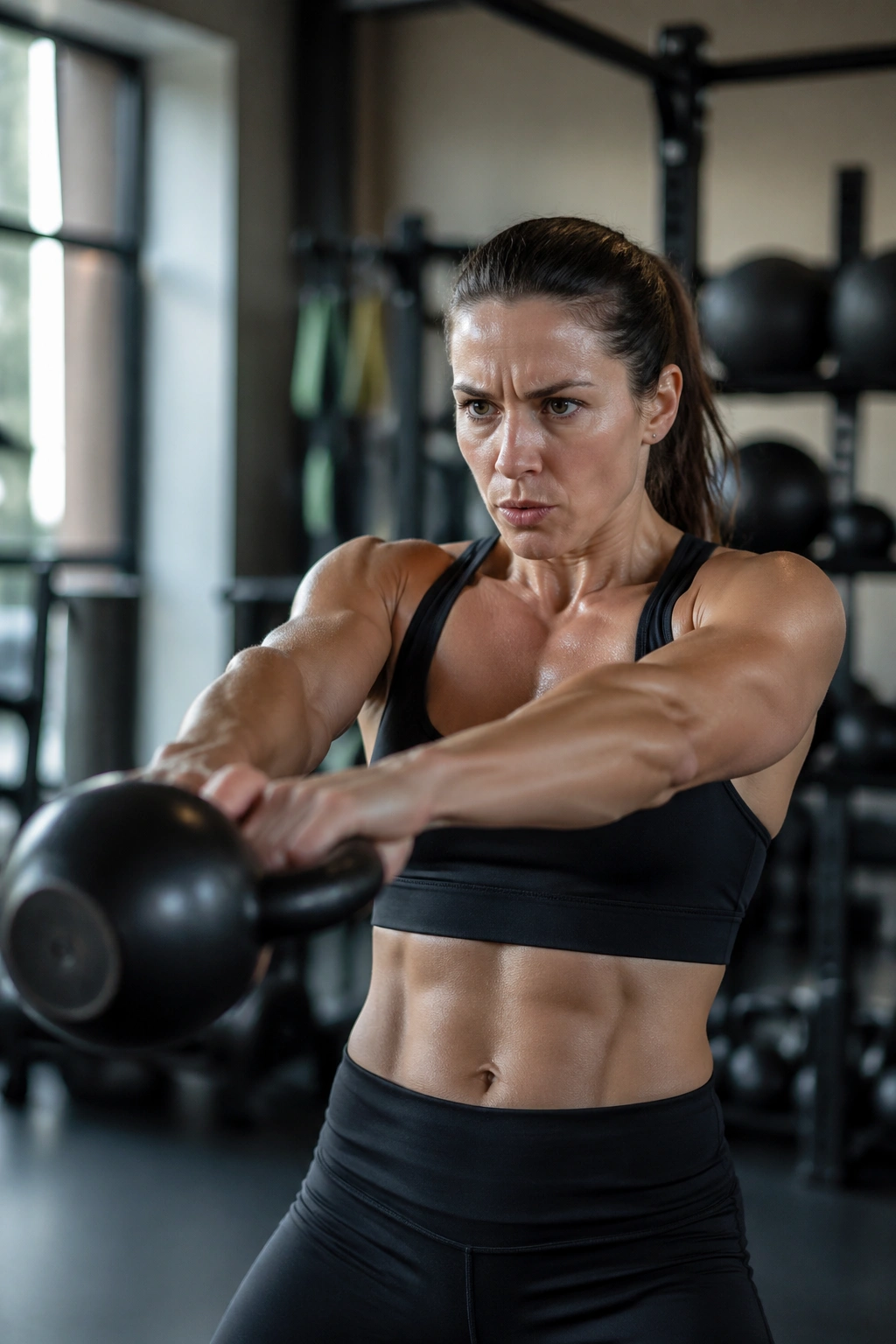
EMOM means “every minute on the minute,” and it is a gift for people who like a clear rule. Start work at the top of the minute, finish the reps, rest with whatever time is left, then start again when the next minute hits. No wandering. No overthinking.
This style works well for fat loss because it keeps the clock in charge. You are not deciding when to rest based on mood. You are earning rest by finishing the work. That sounds harsh. It is also why EMOM sessions can stay surprisingly intense without running long.
A simple 12-minute EMOM might look like this:
- Minute 1: 12 kettlebell swings
- Minute 2: 10 push-ups
- Minute 3: 12 goblet squats
- Minute 4: 30-second plank march
Repeat that block three times.
If the work takes more than 45 seconds, the load is too heavy or the reps are too high. If you finish in 15 seconds and coast, you need more challenge. The whole point is to live in that awkward middle where the work is honest and the rest is short.
EMOMs are especially good on days when motivation is thin. The clock does the nagging for you.
15. Sled Pushes and Drags That Deliver Hard Work Without the Jarring Impact

Sled work is one of the cleanest ways to get a nasty conditioning session without the pounding that comes from running or jump-heavy circuits. Push it, drag it, walk, breathe, repeat. It looks almost too tidy to hurt as much as it does.
Why is it so effective? Because the sled lets you load the legs and lungs at the same time while sparing the eccentric muscle damage that makes people limp for two days. That means you can work hard, recover well, and come back sooner. For waist loss, that matters more than flashy suffering.
A useful setup is 15 to 25 meters per push, followed by a backward drag for the same distance. Rest 60 to 90 seconds and repeat for 6 to 10 rounds. Keep the torso angled forward during pushes, then stay low and braced during drags. If the sled barely moves, add a little weight. If your feet are slipping and your back is turning into the lead mover, take weight off.
No sled? Use a loaded hill walk with a sandbag, or push a prowler on turf if your gym has one. The point is the same: big effort, low impact, repeatable work.
If I had to pick one kind of workout for someone who wants a smaller waist, good recovery, and a plan they can actually stick to, sleds would be near the top. Pair them with one strength day and one lower-impact cardio day each week, and you have something that works without turning your life into punishment.
