



The best post workout stretches are rarely the flashiest ones. They’re the ones you’ll actually hold long enough to matter, while your breathing slows and your shoulders stop riding up around your ears.
After a hard lift, a long run, or a brutal class, your body usually wants two things: a little room and a little calm. Static stretching after exercise tends to make more sense than forcing long holds before training, when muscles are cold and the nervous system is still gearing up. Twenty to thirty seconds per side is a solid default. Two rounds is even better when a spot feels glued down.
I’ve always liked recovery stretches that do one clear job well. Quads after squats. Hip flexors after sitting and sprinting. Chest and lats after pressing and pulling. Small joints matter too, though people forget them all the time, which is how wrists, ankles, and necks get cranky for no good reason.
A good cooldown does not need to be theatrical. It needs to be specific. Start with the places that feel tightest, hold the stretch without bouncing, and breathe like you mean it. The sequence below moves from the big muscle groups to the smaller ones, with a few pauses that help your whole body settle down.
1. Standing Quad Stretch for Post Workout Recovery
Your quads do a lot of work in nearly every lower-body session, and they usually complain first after squats, lunges, hill sprints, or jump training. This stretch is plain, but it works because it puts the front of the thigh on notice without folding your spine into a pretzel.
How to keep it in the thigh, not the knee
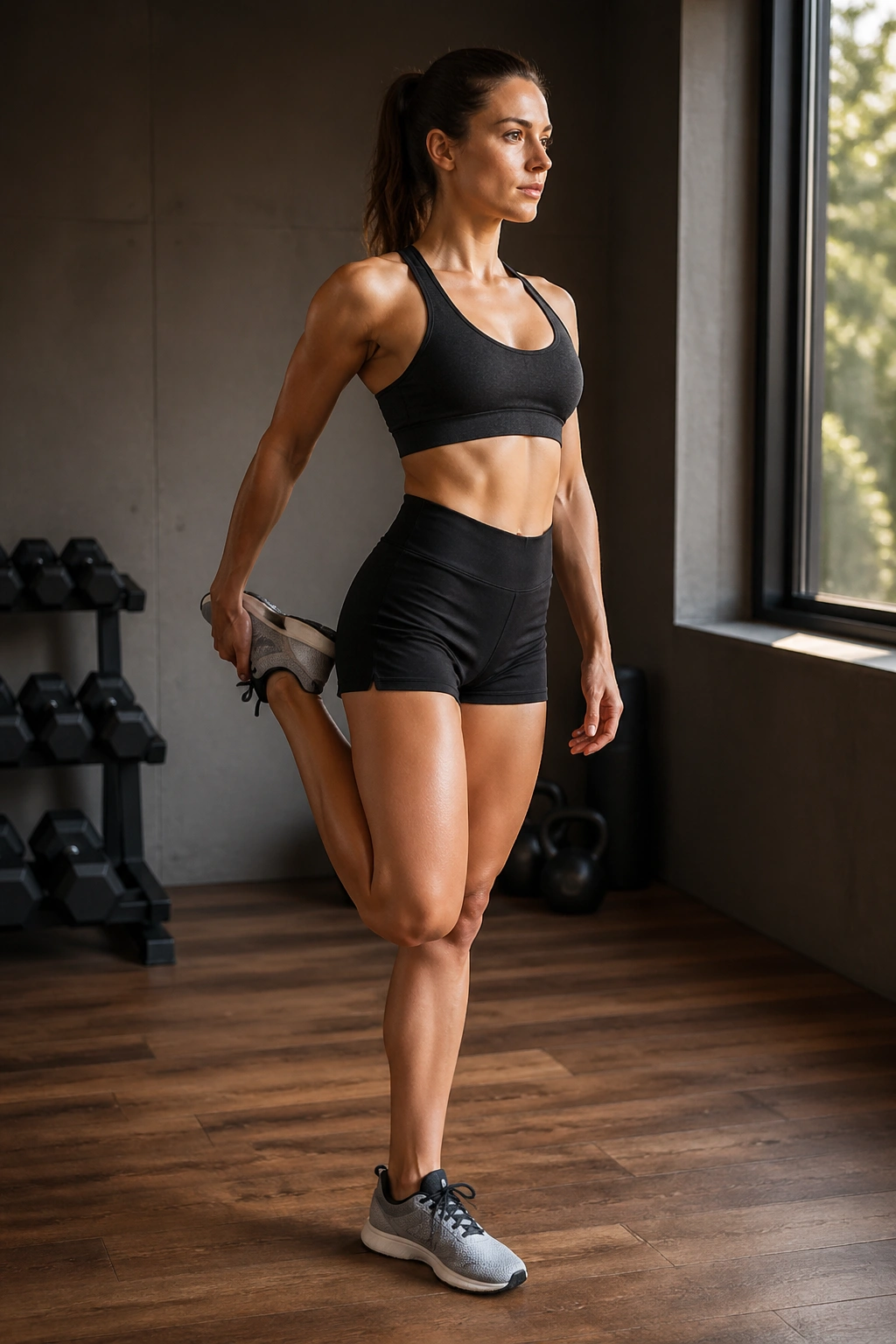
Stand tall, grab one ankle, and bring your heel toward your glute. Keep your knees close together and tuck your pelvis slightly so the low back does not arch. That little squeeze in the standing-side glute matters; it stops the stretch from turning into a lower-back lean.
- Hold each side for 20 to 30 seconds.
- Keep your supporting knee soft, not locked.
- If balance is shaky, place one hand on a wall or rack.
- Stop if the knee feels pinchy. You want a front-of-thigh pull, not joint pain.
Best cue: Think tall torso, short hip flexors. That tiny tuck changes the whole stretch.
2. Half-Kneeling Hip Flexor Stretch
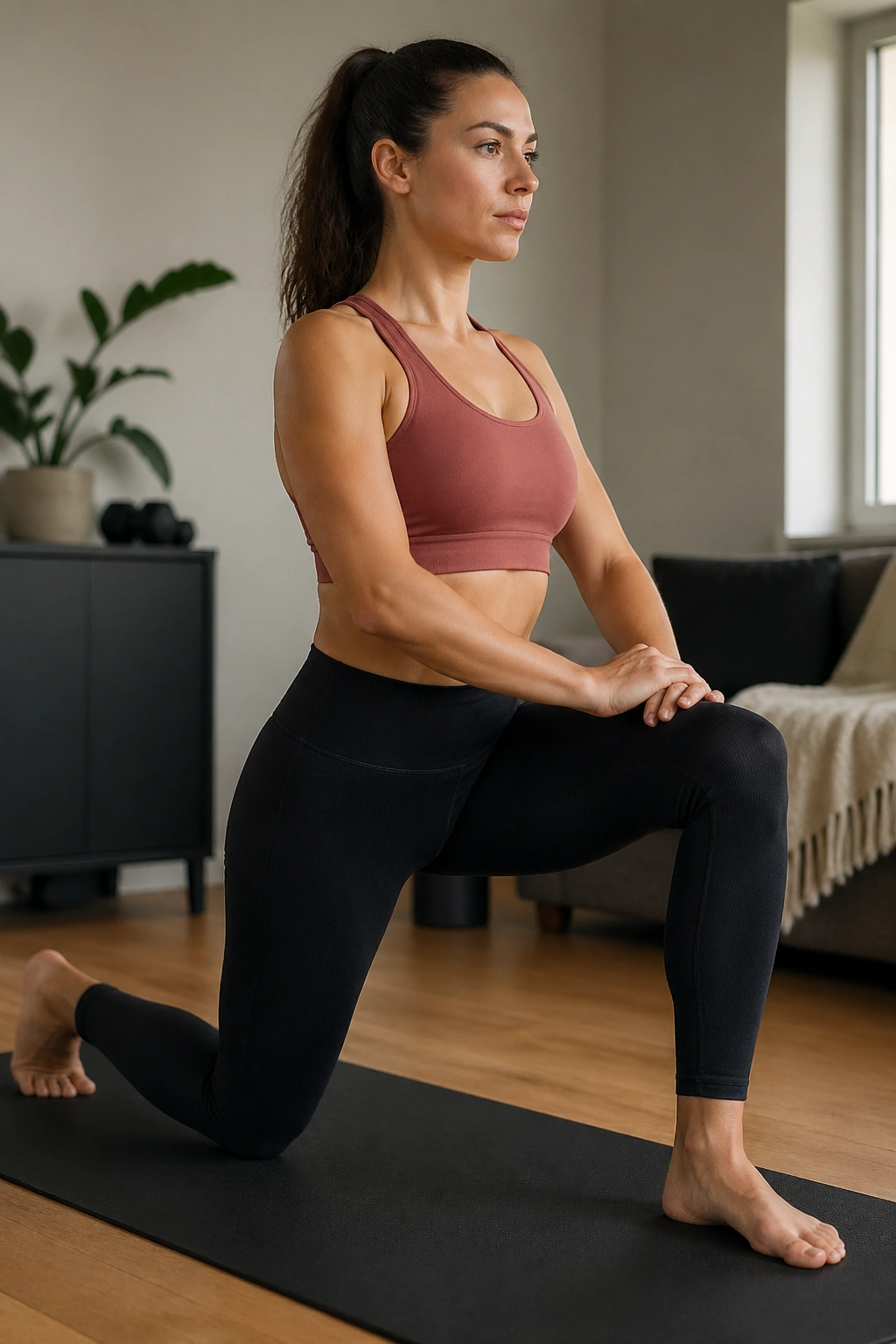
If your lower back feels tight after leg day, the hip flexors are often part of the story. They get short and guarded from sitting, running, cycling, and anything that keeps the hips in one repeated angle.
Start in a half-kneeling position with one knee down and the other foot flat in front. Gently shift your weight forward a few inches, then squeeze the glute of the kneeling-side leg. You should feel the stretch in the front of the hip, not in the low back. That’s the whole trick. Small move. Big difference.
Keep your ribs stacked over your pelvis instead of flaring up. If you arch hard, the stretch gets sloppy and you miss the spot that actually needs opening.
3. Seated Forward Fold
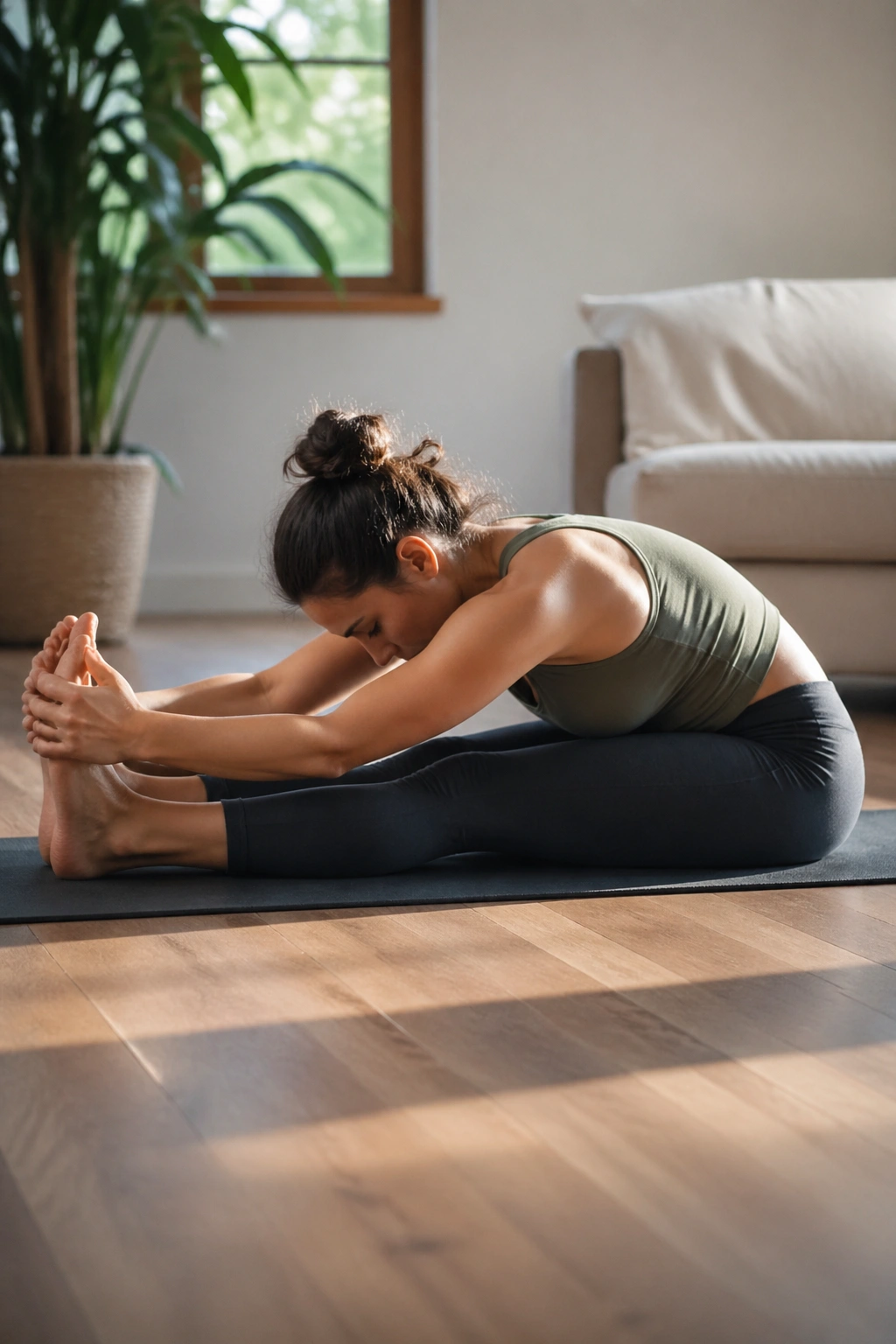
Why does this one feel so different after deadlifts or long runs? Because it catches the back line of the body — hamstrings, calves, and even a bit of the low back — in one simple shape.
Sit on the floor with your legs out in front, then hinge from your hips instead of rounding like a shrimp. A soft bend in the knees is fine. In fact, it’s often smarter. The point is not to touch your toes at any cost. The point is to let the hamstrings lengthen while the spine stays long enough to breathe.
How to use it
If the stretch feels all wrong, sit on a folded towel or yoga block so your pelvis tilts slightly forward. That tiny lift can take a nasty tug out of the lower back and make the whole position feel cleaner.
A deeper exhale usually gives you more room than yanking harder ever will.
4. Figure-Four Glute Stretch
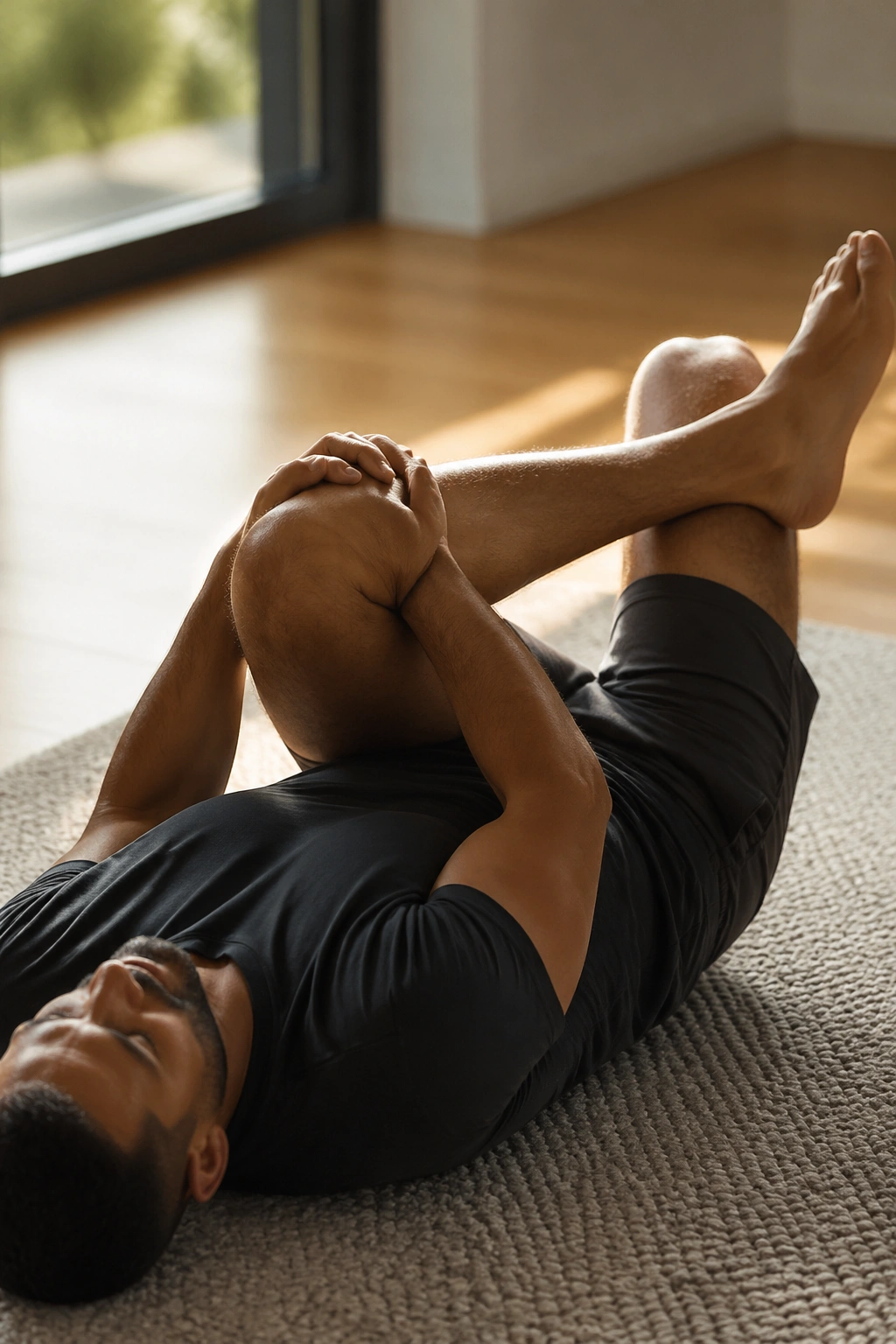
Someone who spends a lot of time running, squatting, or even just sitting in a car for too long usually feels this one fast. The glutes hold tension in a way that’s hard to ignore once you open them.
Lie on your back, cross one ankle over the opposite knee, and draw the supporting thigh toward you. You should feel the stretch in the outer hip and glute of the crossed side. If the knee feels stressed, bring the supporting foot a little farther away from your chest.
- Keep both feet flexed if that helps protect the knees.
- Hold for 20 to 40 seconds per side.
- Don’t force the crossed knee down.
- Use a strap behind the thigh if your grip gets tired.
Small truth: This stretch feels deeper when you relax your jaw. Sounds silly. Works anyway.
5. Kneeling Hamstring Stretch
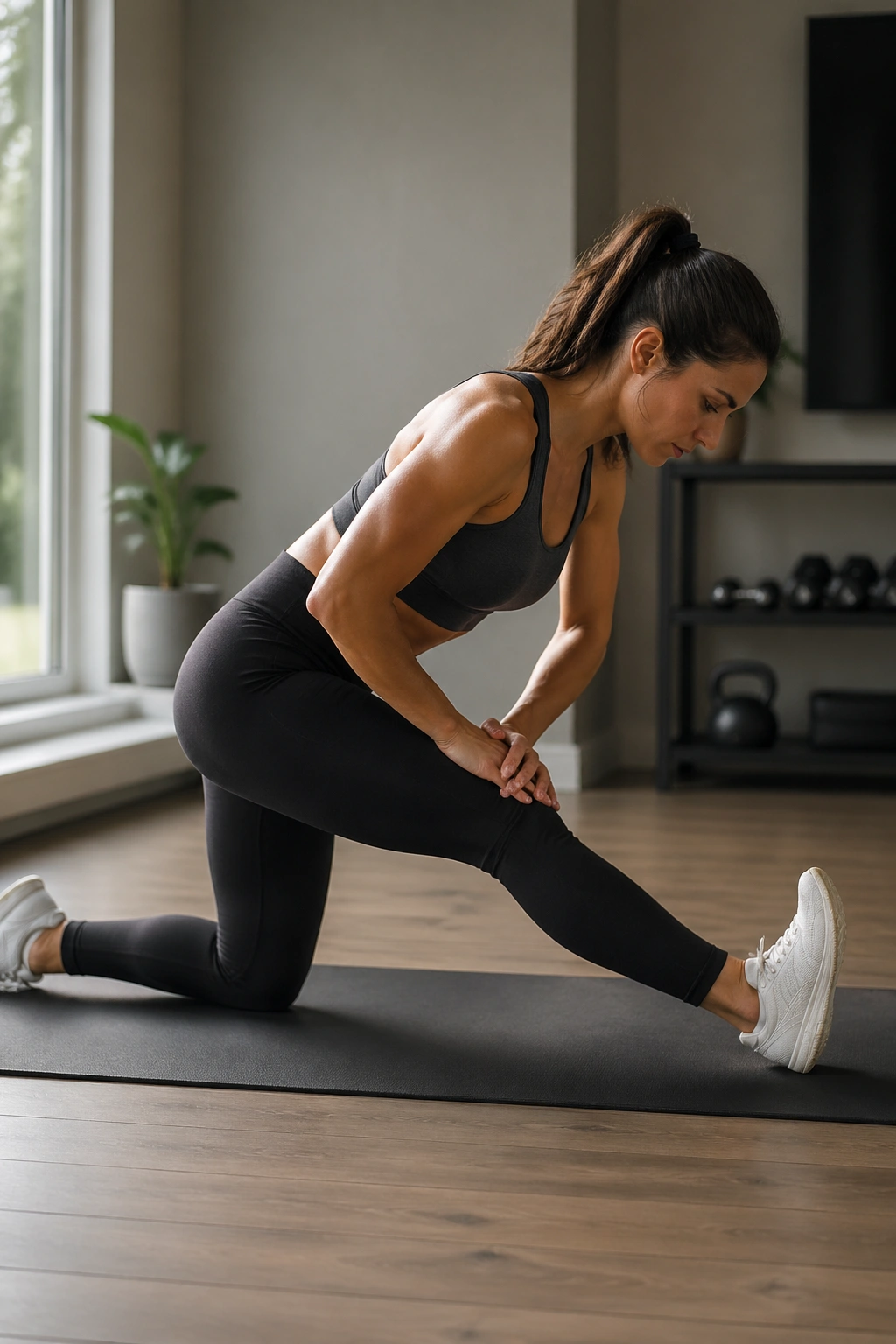
Chasing the floor is the wrong goal here. A good hamstring stretch should feel like a clean line along the back of the thigh, not a sharp tug behind the knee.
Kneel on one knee, place the other heel forward with the toes up, and hinge from the hips while keeping the front leg long. The move is tiny at first. Really tiny. If you round your back and reach with your hands, you’ll usually miss the hamstring and load the spine instead.
The best version leaves the pelvis square and the chest open. When that happens, the stretch feels deeper but calmer. It’s almost boring. That’s a good sign.
Try 15 to 25 seconds per side after heavy leg work, then repeat once if the muscles still feel ropey.
6. Calf Wall Stretch
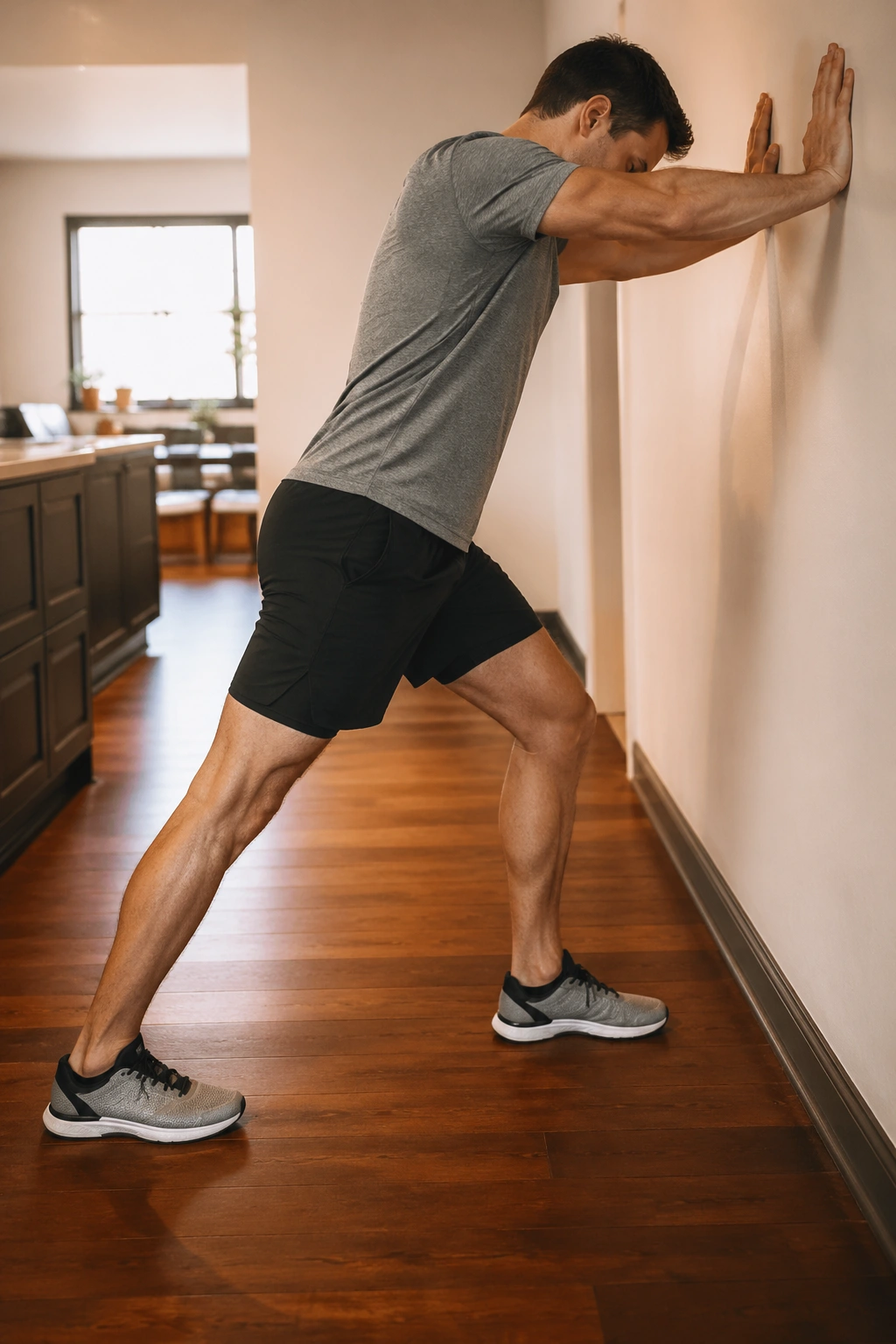
There are two calf muscles doing different jobs, and they do not like being ignored. Straight-knee and bent-knee versions each hit a slightly different area, which is why I always keep both.
Face a wall, step one foot back, and press the back heel into the floor. With the back knee straight, the gastrocnemius takes the stretch. Bend that same knee a little, and the soleus takes more of the load. That distinction matters after running, jumping, or lower-body lifts, because calves can feel tight in one layer and loose in another.
7. Downward Dog Pedal
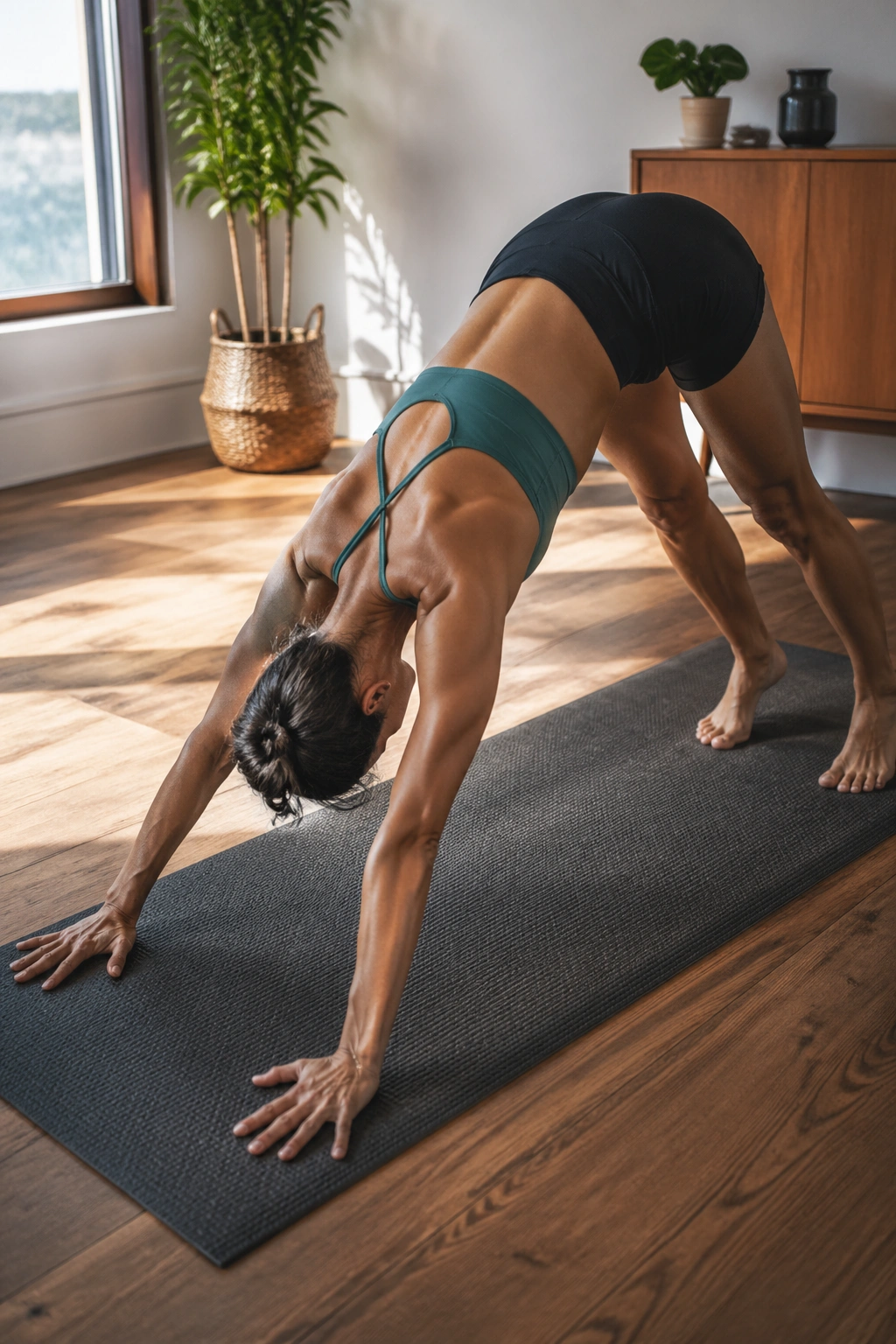
This one lives halfway between a stretch and a reset. It opens the calves, lengthens the hamstrings a bit, and gives the shoulders a chance to settle after pressing or climbing work.
Start in a strong plank shape, then lift the hips high and pedal the heels one at a time. Keep the hands spread wide and press the floor away. If the back rounds a little, that’s fine. If the shoulders collapse, not fine. The point is a long line through the back, not a perfect pose from a poster.
Use it for 20 to 30 slow breaths, especially after circuits or conditioning work. It’s a good one when you feel sticky all over, not just in one place.
8. Child’s Pose with Long Exhale
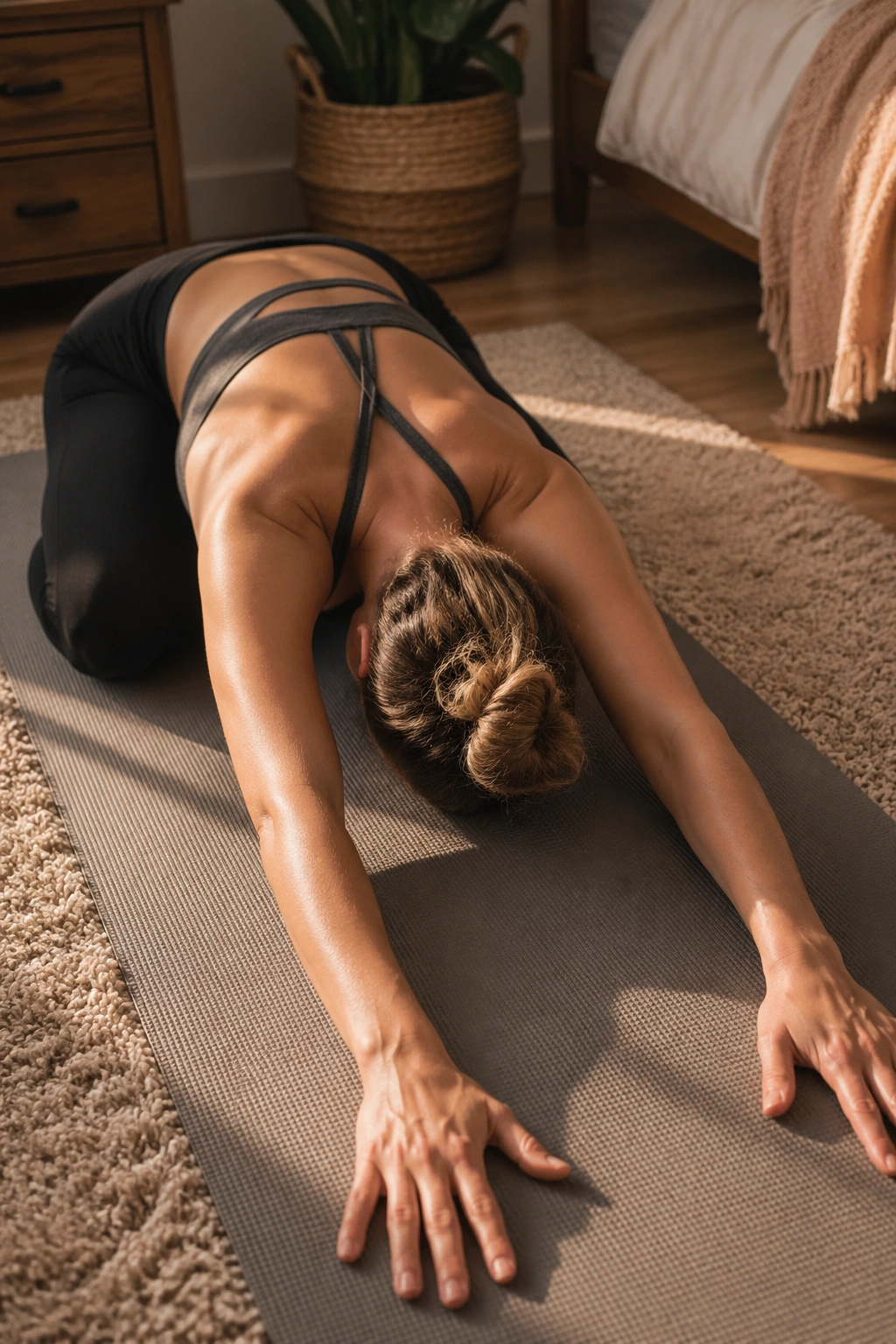
This stretch is gentle enough to feel almost too easy, which is why people underestimate it. It works because it gives the ribs, lats, and lower back a chance to stop bracing.
Kneel, sit the hips back toward the heels, and reach the arms forward. If the shoulders feel crowded, widen the knees a little. If the hips protest, place a folded towel between the thighs and calves. Let the forehead rest down and slow the exhale until the belly softens.
A lot of people rush child’s pose like they’re checking a box. Don’t. Stay for a full minute if your body needs it. That’s where the payoff lives.
9. Thread the Needle
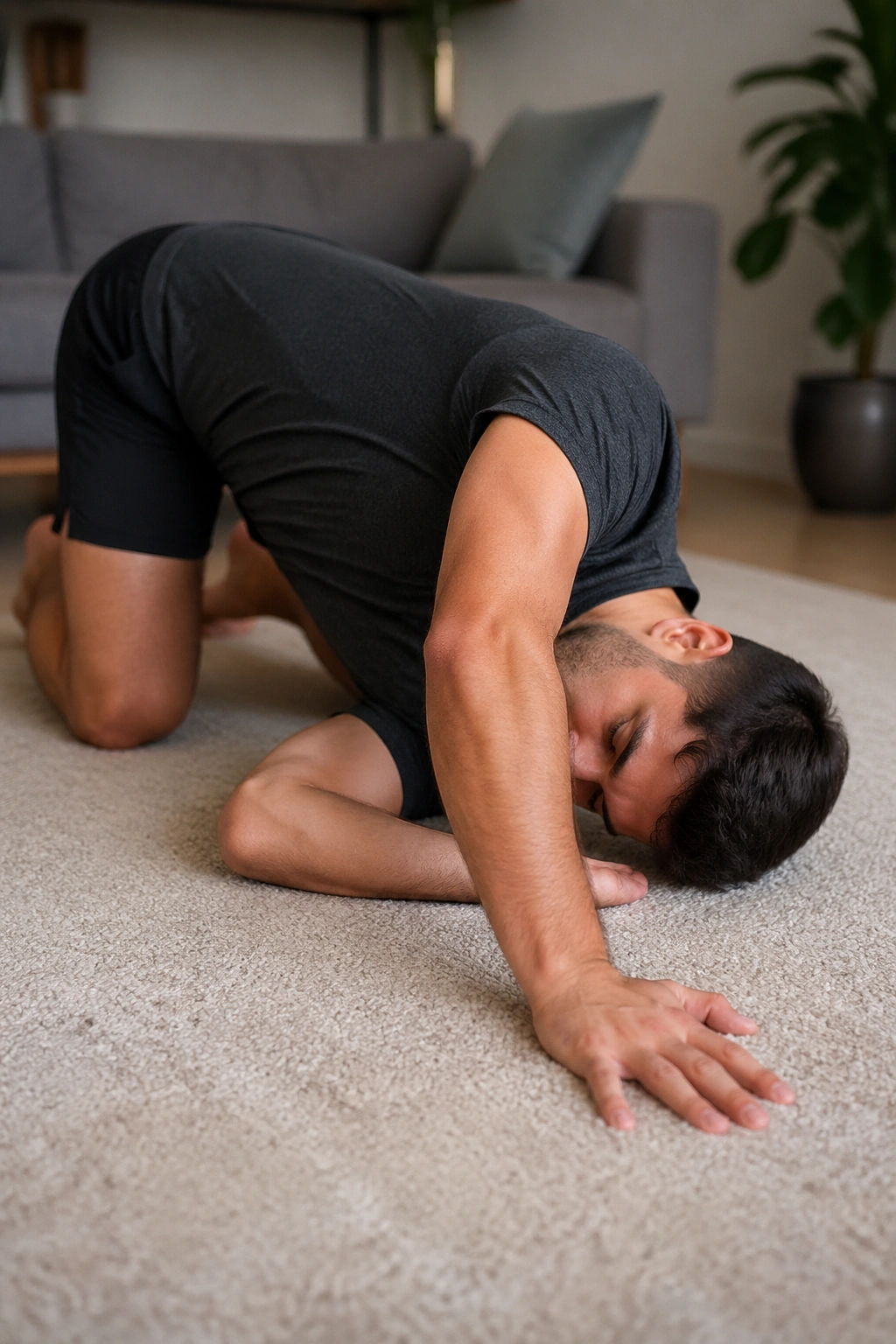
Can’t seem to get your upper back to move after rows, deadlifts, or desk work? This one is sneaky. It opens the thoracic spine and the back of the shoulder without asking the low back to do the heavy lifting.
Start on all fours, slide one arm under the body, and lower the shoulder toward the floor. The opposite hand can stay planted or reach forward for a deeper twist. The sensation should be between the shoulder blade and the ribs, not in the neck.
What to feel
The stretch should feel like a slow unwind, not a wrench. If you twist hard enough to lift a hip or collapse the chest, you’ve gone too far. Back off two inches and breathe into the space you already have.
Hold each side for 20 to 30 seconds, then switch. The upper back often opens after the first few breaths.
10. Supine Spinal Twist
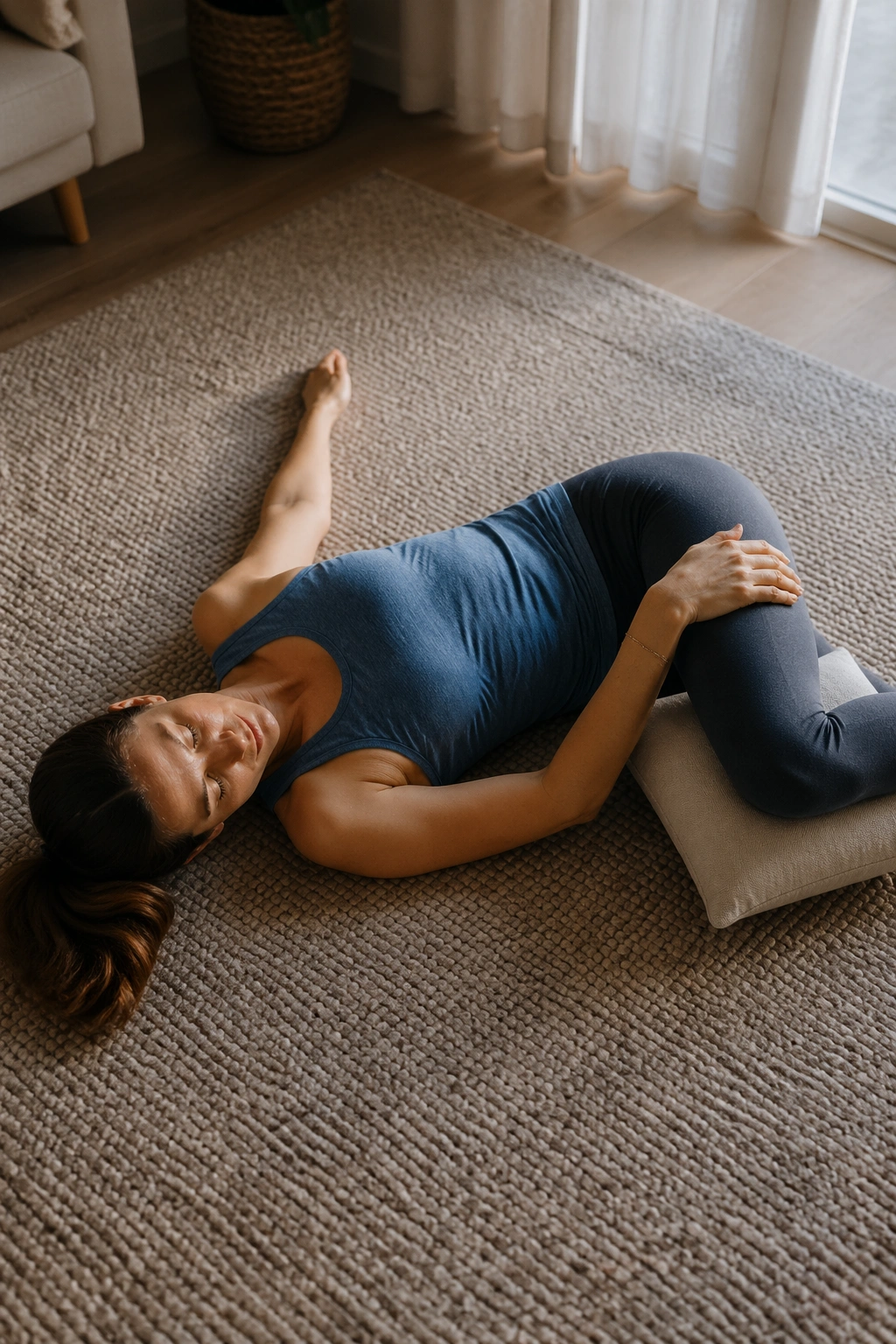
Lying down makes the twist more honest. You can’t cheat as much, and the floor keeps the motion from turning into a full-body fling.
Lie on your back, draw one knee across the body, and let the opposite shoulder stay heavy on the ground. It should create a gentle stretch through the glute, low back, and side of the torso. If the knee floats too far away from the floor, use a pillow under it. No prize for forcing range.
This one is especially nice after leg sessions or longer bouts of standing. It feels like the spine gets a quiet reset, which is maybe why people end a lot of yoga classes with it and call it a day.
11. Overhead Triceps Stretch
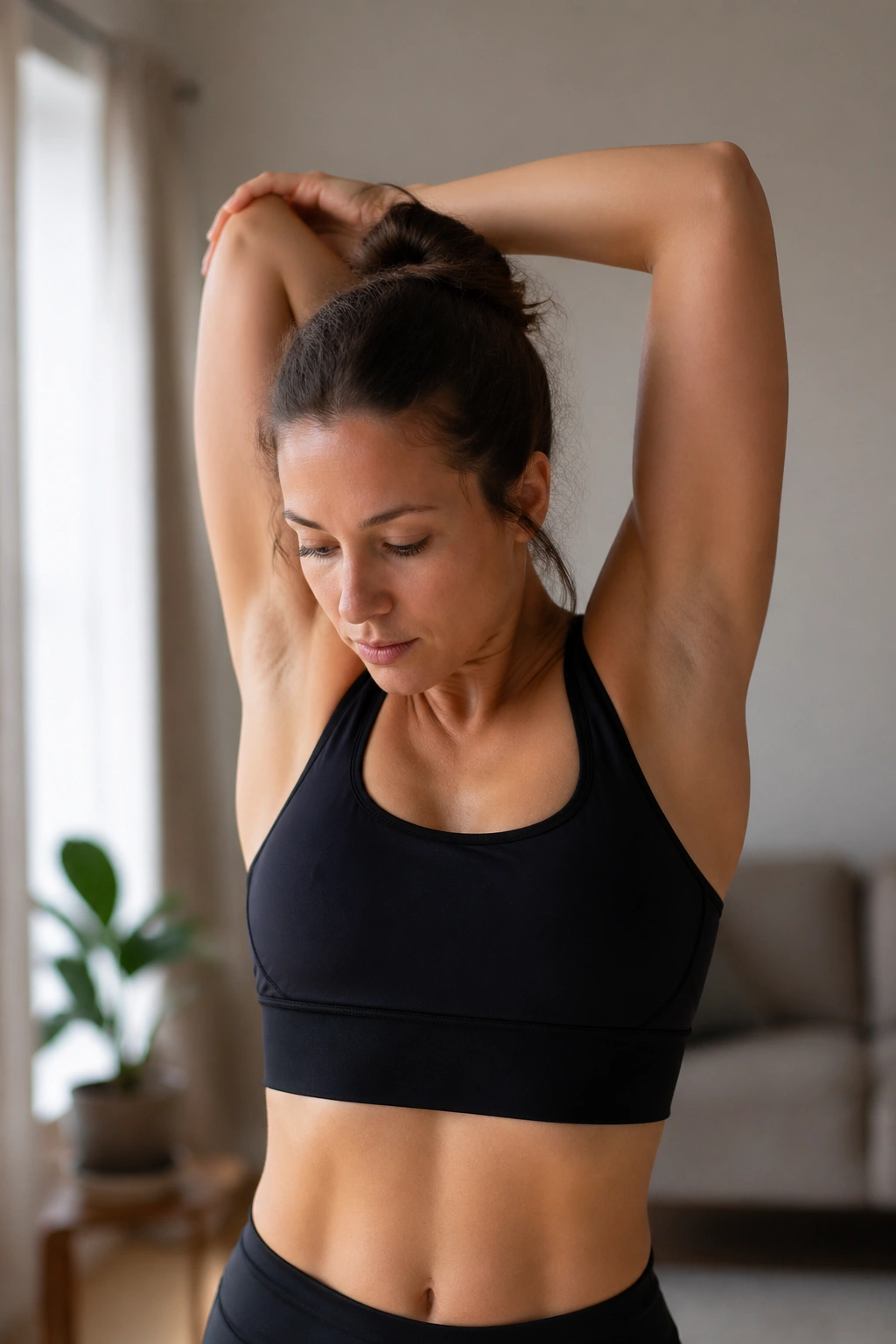
Arms overhead for a lot of training, from swimming to pressing to kettlebell work, can leave the triceps and lats feeling stubborn. This stretch tackles both if you keep the ribs under control.
Raise one arm, bend the elbow, and let the hand slide down the middle of your back. The other hand can help by gently pressing at the elbow. Keep your chin level and avoid tipping the rib cage forward. If you arch your lower back, the stretch disappears into a compensation pattern.
A towel or strap helps if your shoulder is stiff. Better to use a simple prop than yank the elbow and make the whole thing cranky.
12. Cross-Body Shoulder Stretch
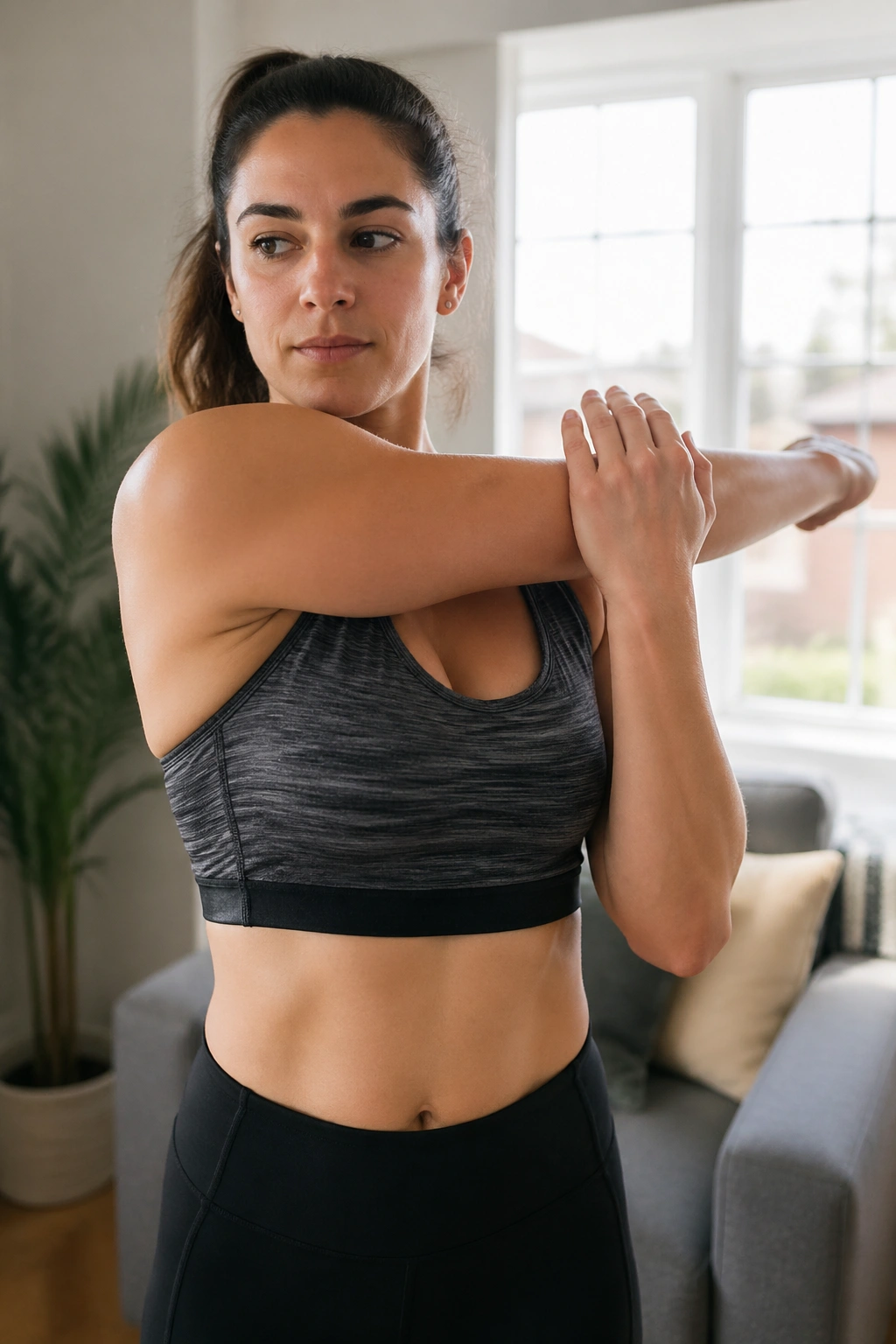
Unlike the overhead triceps stretch, this one aims more at the rear shoulder and the back of the delt. That makes it useful after benching, push-ups, handstands, or any work that leaves the front of the shoulder doing too much.
Bring one arm across your chest and use the other arm to hold it there gently. Keep the shoulder down, not shrugged toward the ear. The pull should sit across the back of the shoulder, not deep inside the joint. If it feels pinchy, lower the arm a little and try again.
This is a small stretch, but it has a useful job. I like it when the shoulder feels “tight” in a vague way and needs something simple, not a heroic pose.
13. Doorway Chest Stretch
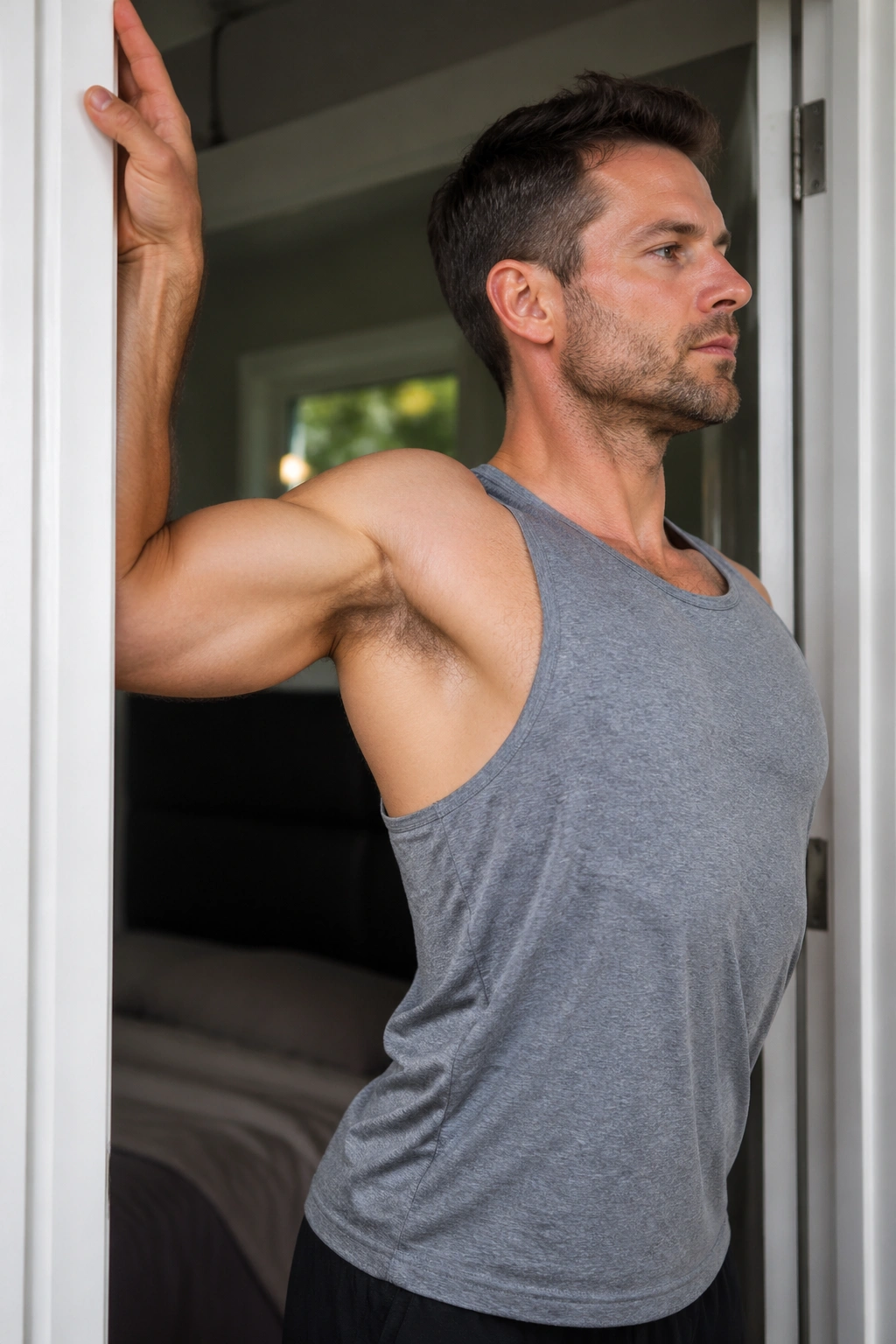
If your upper body trains hard, the chest usually shortens faster than people realize. A doorway stretch gives the pecs a clean opening and helps undo the closed-forward shape that comes after pressing or hunching over a keyboard.
Plant one forearm on a doorframe and step through just enough to feel the front of the chest lengthen. Keep the shoulder blade set down and back a little. If the stretch lands too high, move the arm slightly lower. If it lands too low, move it higher.
How to keep it honest
Don’t twist away from the arm or arch the spine to fake a bigger range. You’ll feel a stronger pull, sure, but it will be the wrong one. Stay stacked and let the chest open where it actually wants to.
A full minute in this stretch can feel surprisingly good after a heavy push day.
14. Lat Prayer Stretch
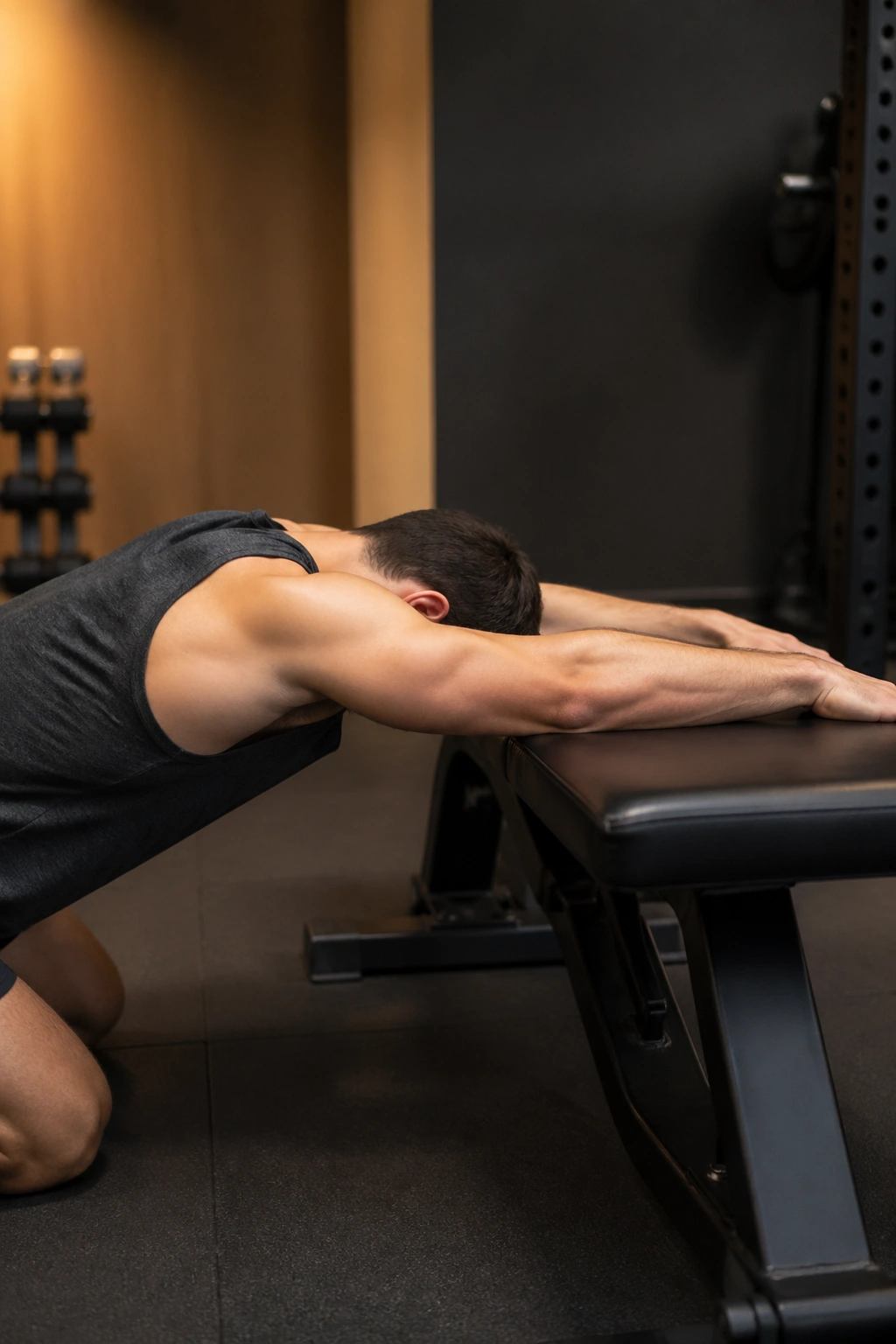
This one gets ignored until pull-ups, rows, climbing, or overhead work start making the sides of the torso feel like cardboard. The lats tie the arms to the ribcage, so when they tighten, they can affect both shoulder motion and posture.
Set your hands on a bench, box, or wall, then sit the hips back as the chest melts down between the arms. Keep the ribs from flaring and let the side body lengthen. The sensation should run from the armpit toward the lower ribs, not into the shoulders.
A lot of people go too deep and lose the stretch in a back bend. Stay patient. A smaller fold with steady breathing usually gets the better result.
15. Frog Stretch
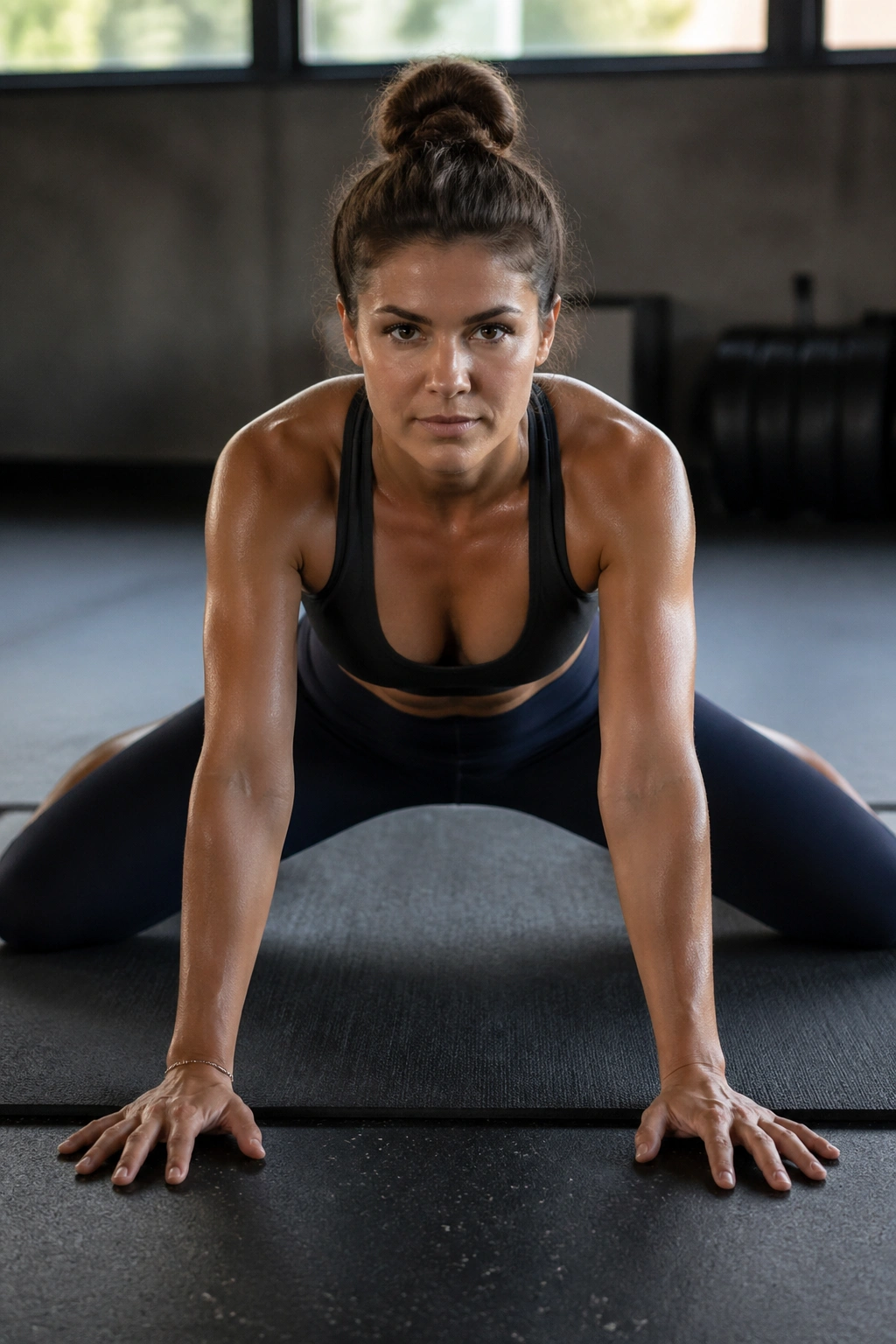
The adductors live on the inside of the thighs, and they can get loud after side lunges, skating drills, wide-stance lifting, or even a lot of walking on hard surfaces. Frog stretch opens them in a way that feels a little odd at first, then very useful.
Come onto hands and knees, slide the knees wide, and angle the shins outward so the inside thighs begin to lengthen. Keep the spine neutral and move slowly. If the knees dislike the position, shorten the width right away. This stretch should feel strong in the groin and inner thighs, not sharp in the knees.
16. Pigeon Pose or Figure-Four Variation
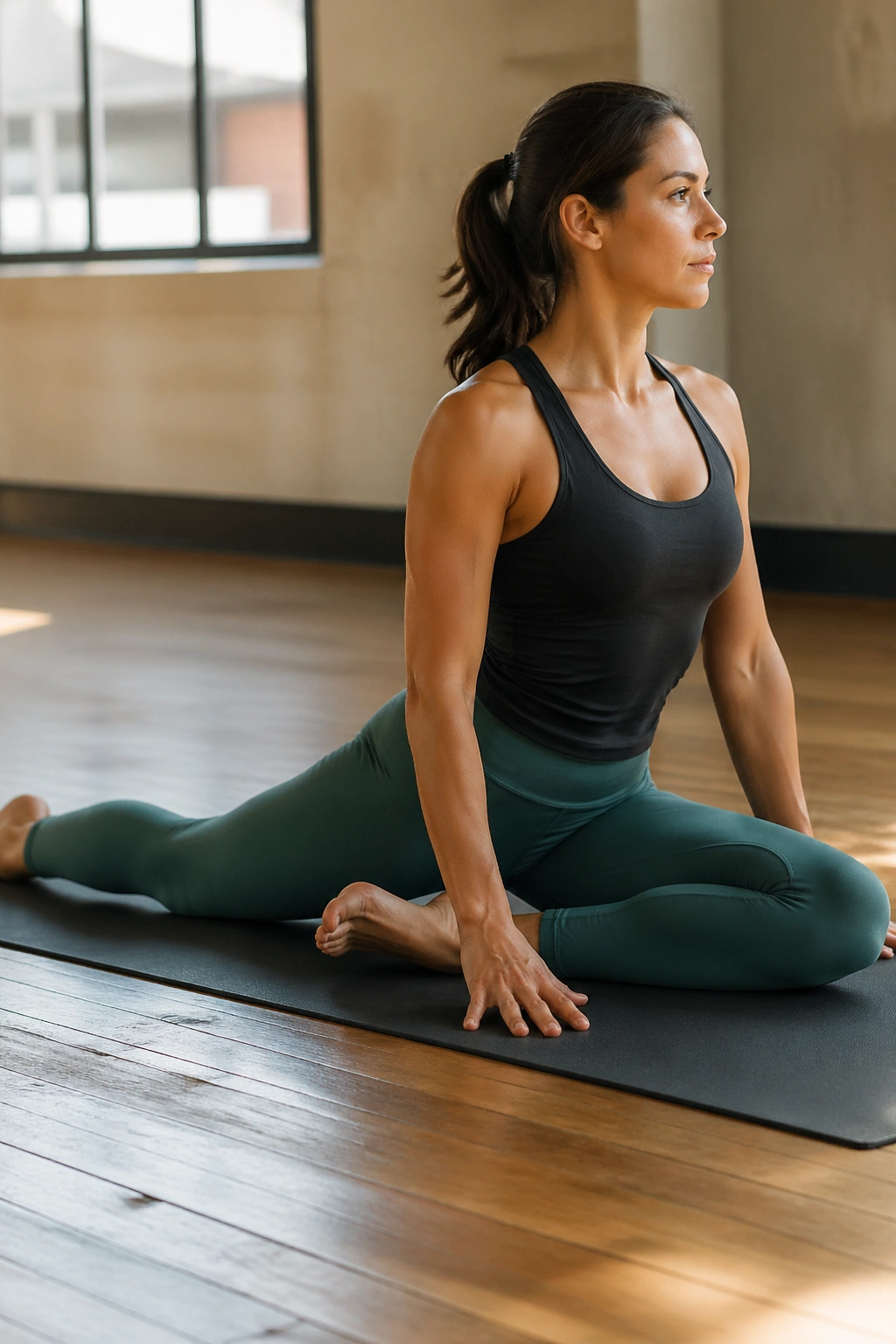
Pigeon is the deeper cousin of the figure-four stretch. The glute and outer hip get hit hard, and the shape can feel heavenly after runs or squat-heavy sessions. It can also be too much if you force it.
Slide one leg forward and let the other extend back, then square the hips as much as you can. Stay on your forearms or upright, whichever keeps the stretch honest and the breath smooth. If the front hip gets jammed, back out. If the knee complains, switch to the figure-four on your back.
That’s the big difference between the two: figure-four is friendlier, pigeon goes deeper. I reach for the friendlier one first more often than not.
17. Ankle Dorsiflexion Wall Stretch
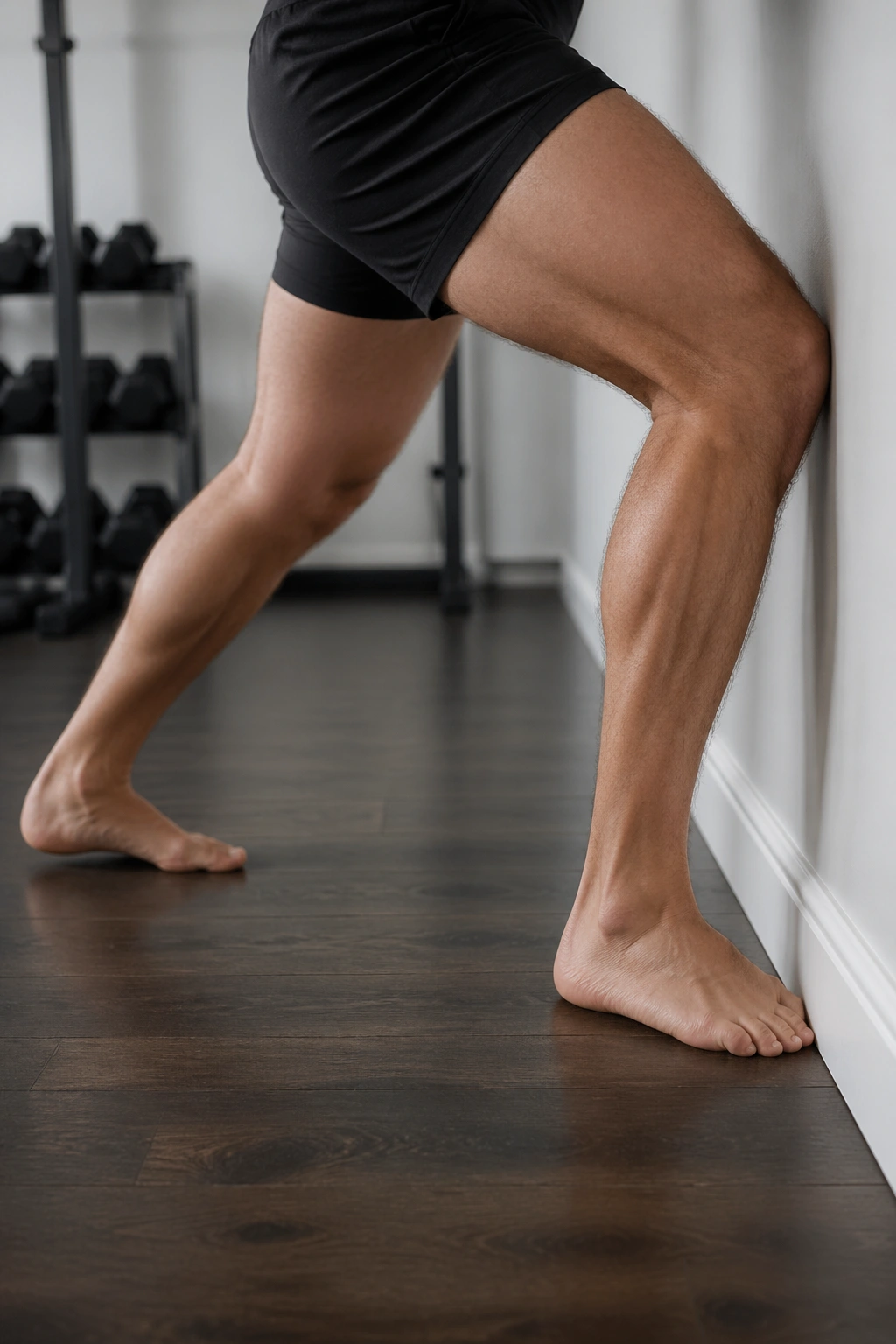
Tiny joint, big payoff. Ankle mobility has a way of sneaking into squats, lunges, stairs, and running stride length, so this stretch is worth the few extra seconds it takes.
Face a wall and place one foot a short distance away. Drive the knee forward toward the wall while keeping the heel down. If the heel pops up, step back a fraction and try again. The goal is clean ankle bend, not a forced lunge. You should feel the front of the ankle and the lower calf wake up.
What to watch for
Track the knee roughly over the second toe instead of letting it cave inward. That keeps the stretch useful for movement, not sloppy for show. Ten slow reps per side can work better than a long static hold if the ankles feel glued.
18. Sphinx Pose
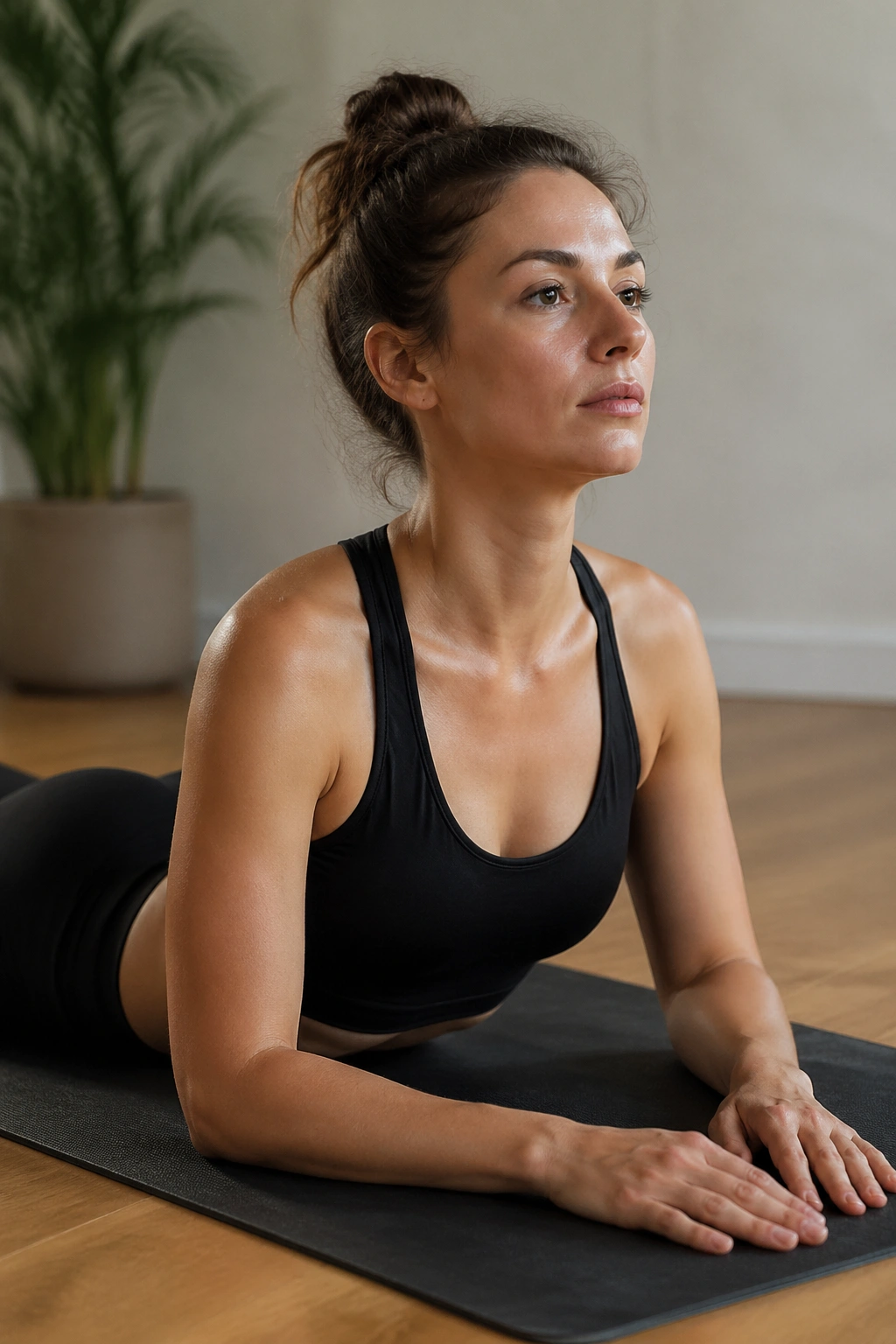
Sphinx is the kind of stretch people skip because it looks too mild. Then they try it after a day of hinging, sitting, or crunching over a desk, and suddenly it makes sense.
Lie on your stomach, place the forearms on the floor, and gently lift the chest. Keep the shoulders away from the ears and let the lower belly stay in contact with the floor. The stretch should live in the front of the hips and low abs, with a little opening through the spine.
If the low back pinches, come down a little. A good backbend is mild and smooth. It should feel like space, not compression.
19. Kneeling Adductor Rock-Back
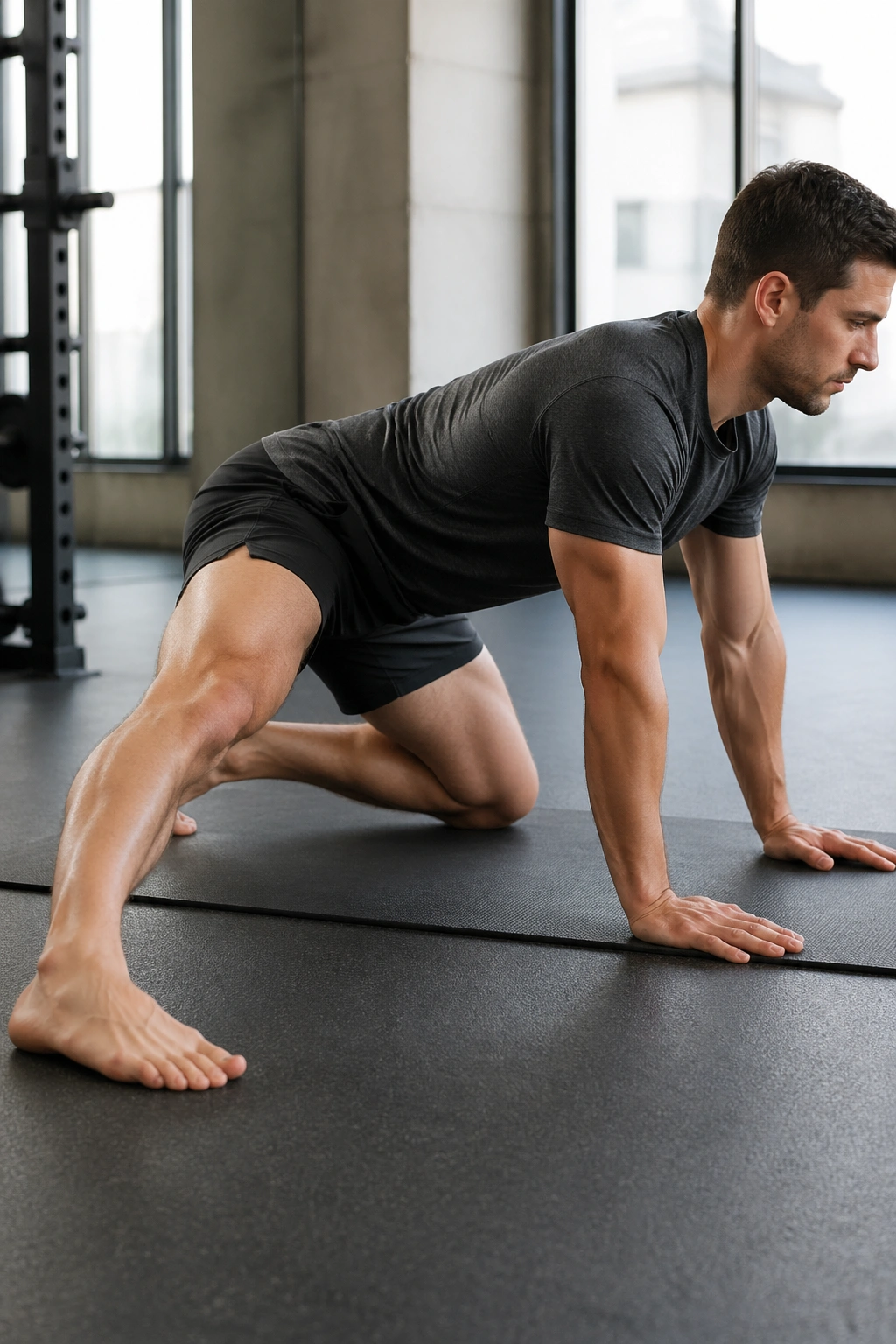
This one looks almost too simple. That’s fine. Simple is often better when the inner thighs and groin are the problem.
Start on all fours, extend one leg out to the side with the foot flat or heel down, then rock your hips back toward the heel of the bent leg. You’ll feel the inner thigh of the straight leg lengthen in a very direct way. Hold the rock for a second, come forward, and repeat if you want a more active version of the stretch.
- Keep the planted foot flat if you can.
- Move slowly through 8 to 10 reps per side.
- Stop short of any groin pinch.
- Use this after side-to-side training or deep squats.
Good cue: The hips move back, not down and twisted.
20. Butterfly Stretch
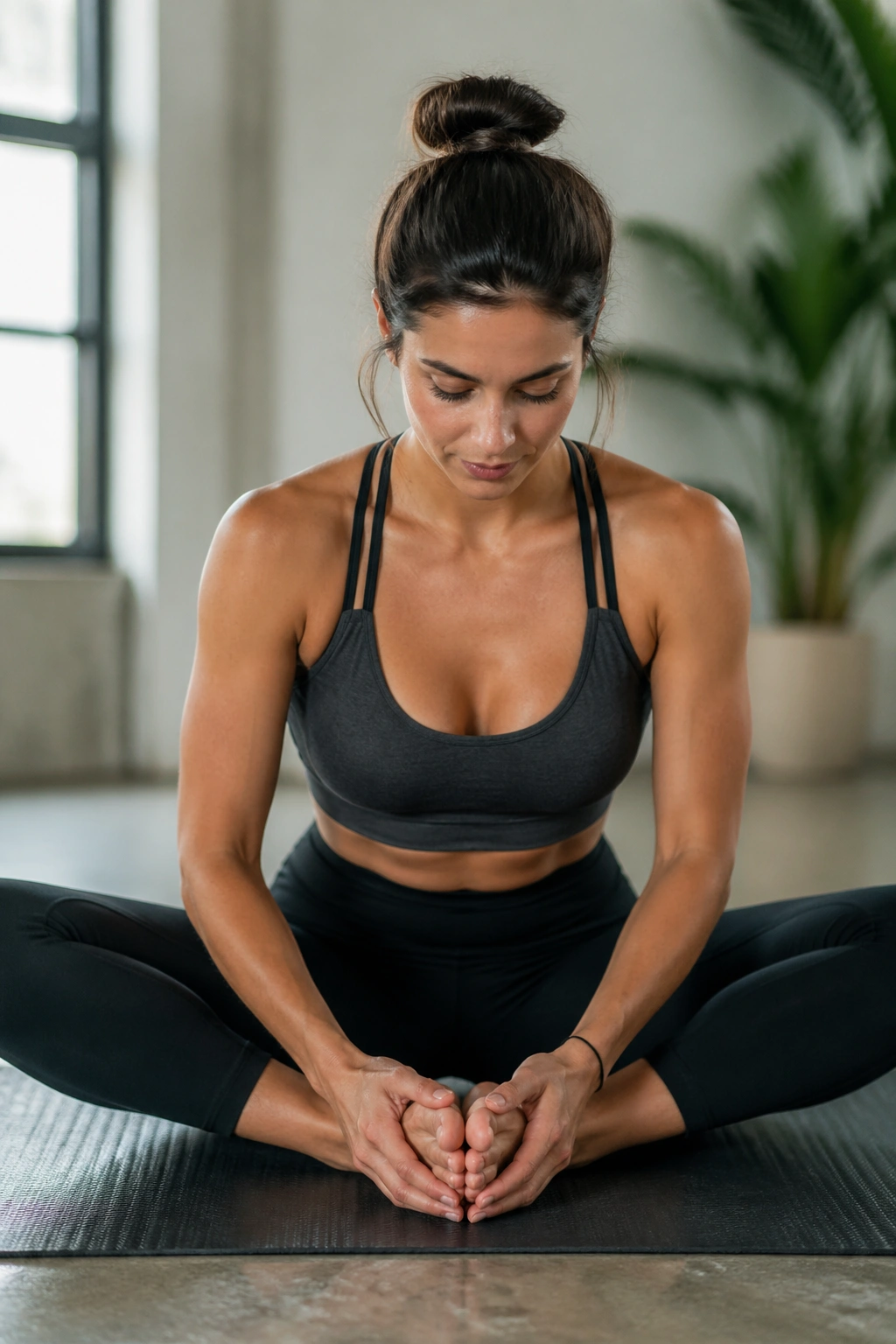
Butterfly stretch is one of those old-school shapes that still earns its place. It opens the inner thighs and adductors while giving the hips a softer, more neutral angle.
Sit tall, bring the soles of the feet together, and let the knees fall outward. Hold the feet or ankles and hinge forward a little from the hips if that feels right. Don’t push the knees down with your hands. That’s a fast way to turn a gentle opener into a cranky groin tug.
The better version starts small and stays calm. The closer your chest gets to your feet, the more you’ll tend to round, so let the hinge be modest. If you sit on a folded towel, the pelvis tips forward and the stretch often feels cleaner.
21. Standing Side Bend with Reach
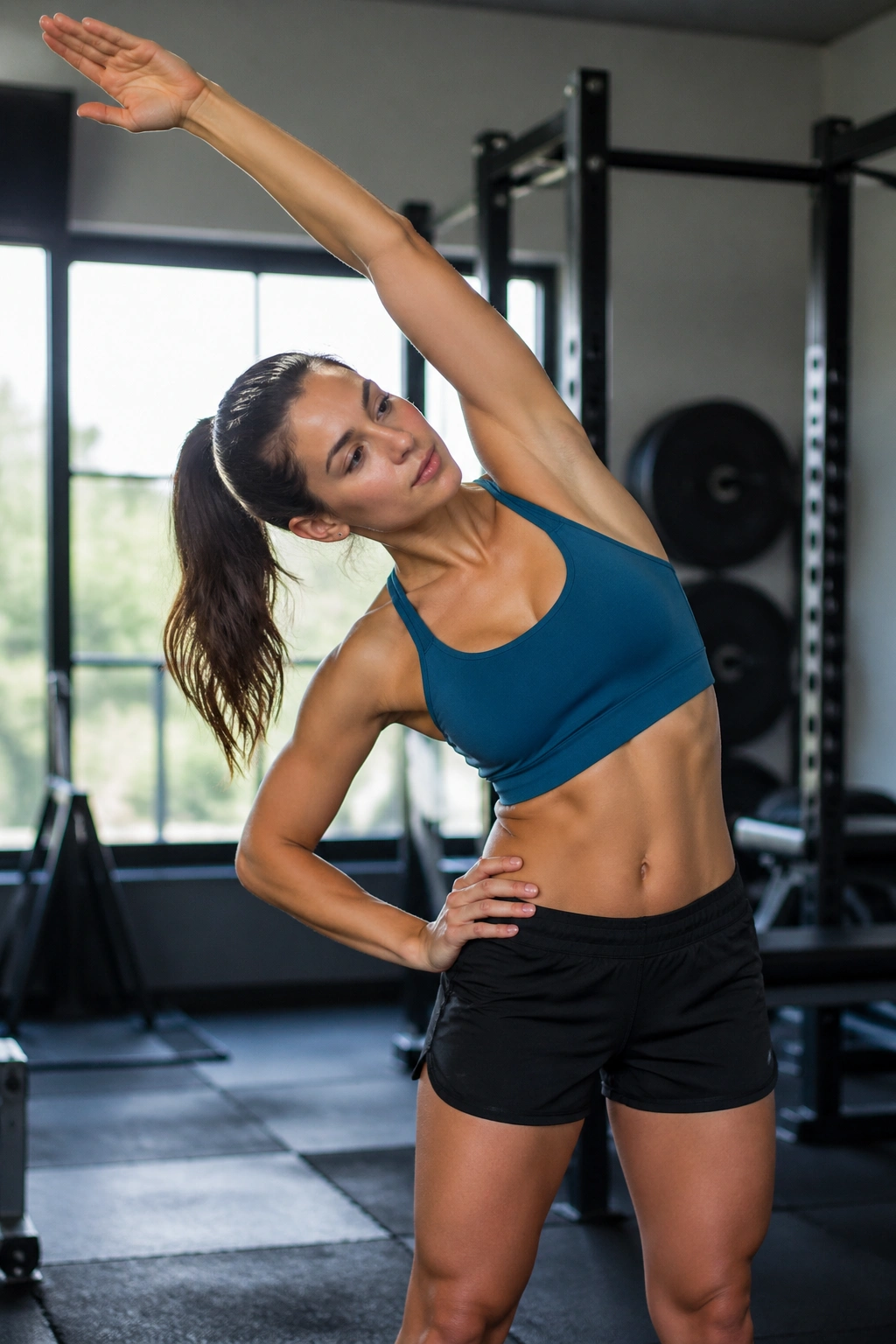
Why bother with a side bend when the legs are already tired? Because the side body does a lot of stabilizing during lifting, running, and overhead work, and it rarely gets a direct stretch.
Stand with both feet grounded, raise one arm overhead, and lean gently to the opposite side. Keep the shoulders stacked rather than spinning open. The stretch should run from the hip crease through the ribs and into the armpit of the lifted side. If you twist instead of bend, you lose the line.
How to get more from it
Reach long first, then lean. That order matters. A short, bent arm makes the whole thing collapse; a long reach creates the space you can actually breathe into.
Hold for 20 seconds per side, and take one slow inhale into the ribs before switching. The side body responds well to that little pause.
22. Seated Neck Stretch
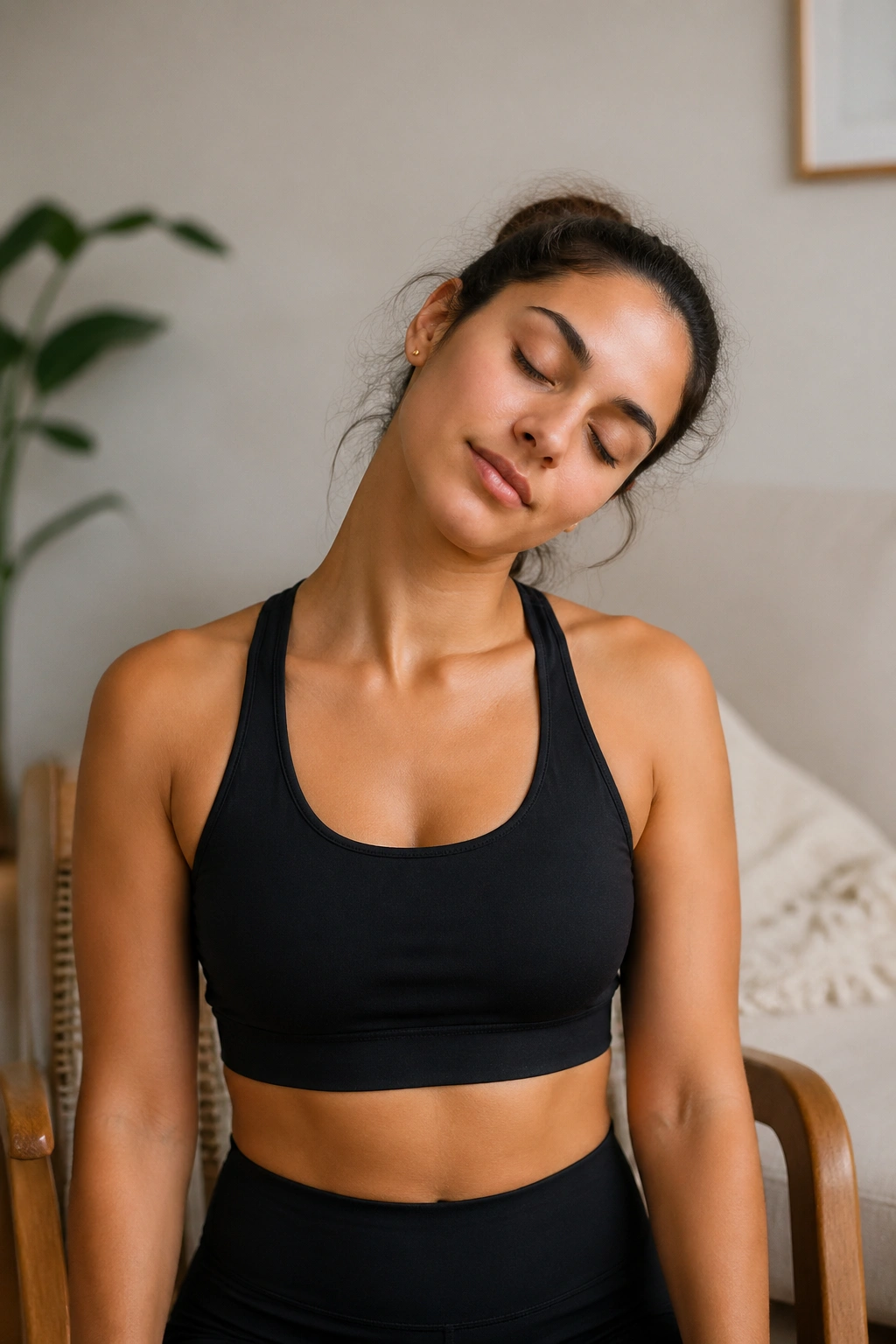
Necks hold tension like they’ve got a grudge. After rowing, cycling, pressing, or a day spent staring down at a screen, a simple side-neck stretch can feel almost startling.
Sit or stand tall, drop one ear toward the shoulder, and let the opposite shoulder stay heavy. If you want a touch more range, reach the hand of the stretched side toward the floor. Keep it gentle. The neck is not the place for bragging rights.
What you’re after is a soft line along the side of the neck and upper trap. If the stretch shoots into a joint or creates numbness, stop. Neck work should feel clean and mild, not dramatic.
23. Wrist Flexor and Extensor Stretch
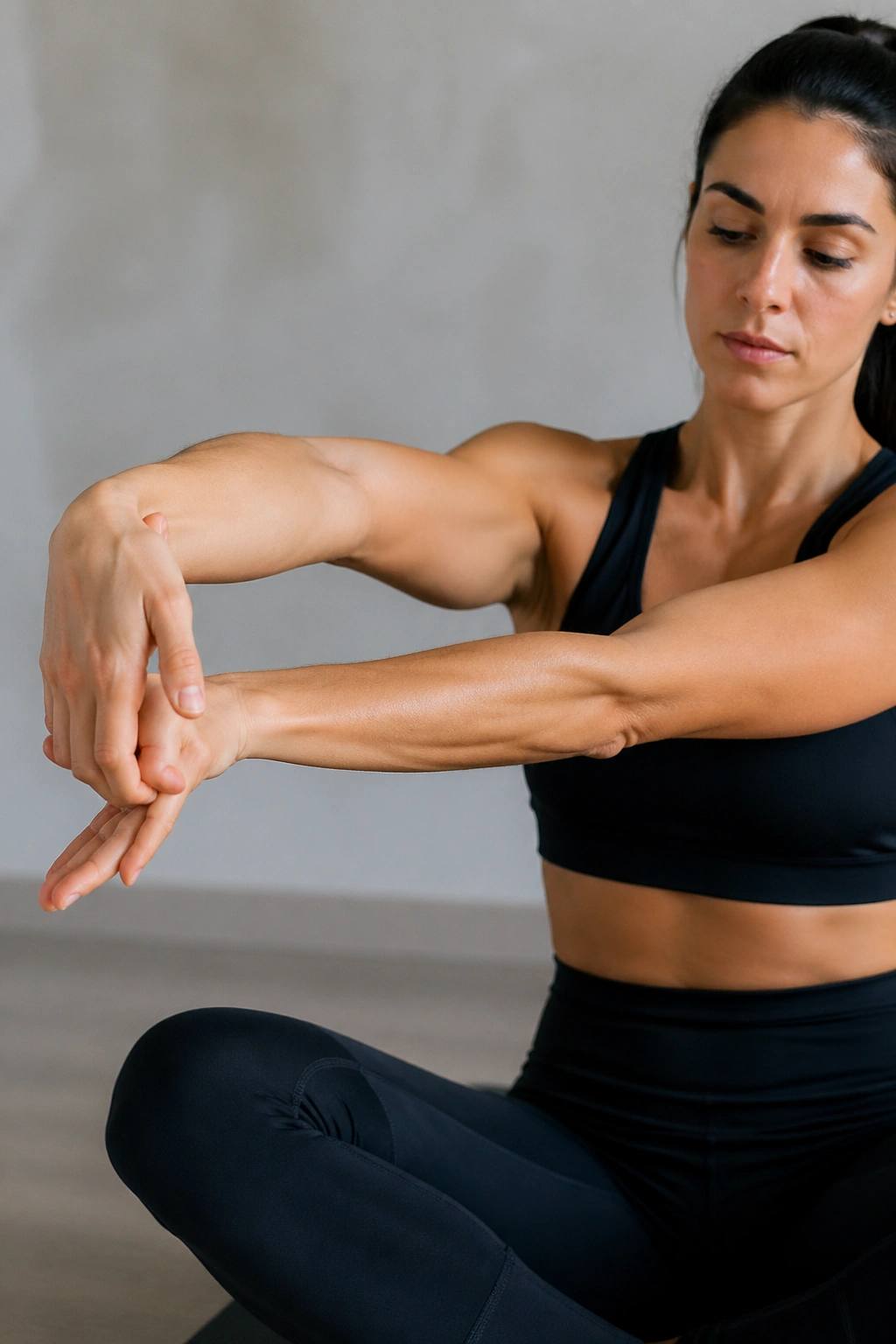
People who lift, climb, do push-ups, or even spend all day typing often underestimate how much the wrists absorb. Then the forearms tighten, and every front rack or plank feels louder than it should.
Hold one arm out with the palm facing down, gently pull the fingers back with the other hand, then switch so the palm faces up and stretch the underside of the forearm. Keep the elbow mostly straight for the cleanest line. Move slowly. The forearm muscles can be sensitive if they’re already loaded from gripping.
These stretches are small, but they matter after barbell work and bodyweight training. I like to do both sides for 15 to 20 seconds each, then shake the hands out once before leaving the floor.
24. Wall Pec Opener with Breath
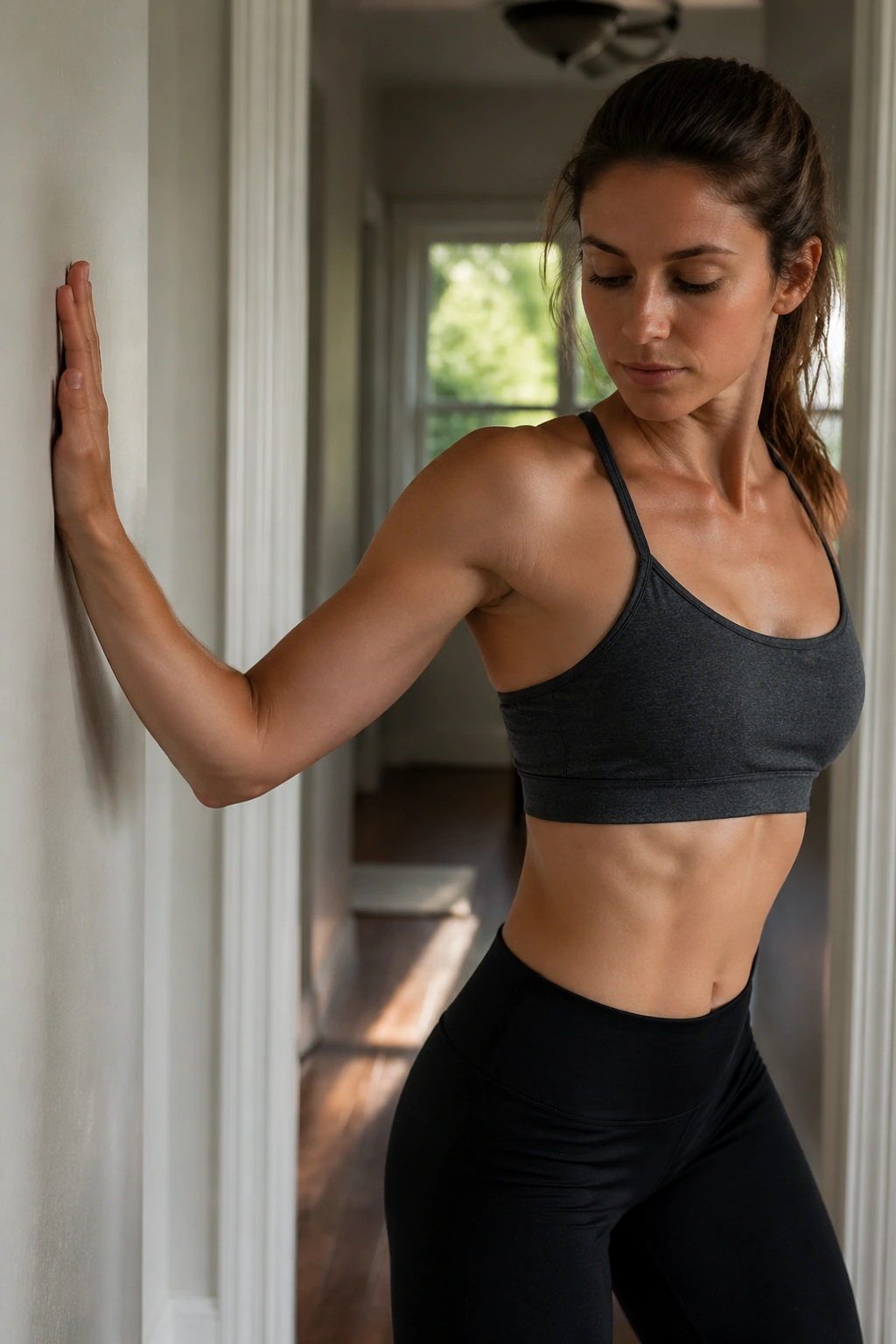
A doorway stretch is useful, but the wall version lets you fine-tune the angle more easily. That matters if one side of the chest is tighter or if the shoulder likes a slightly different arm height.
Place one palm or forearm on a wall and gently turn the body away from it. Move the hand a little higher or lower until the front of the chest and shoulder feel open without strain. Keep the rib cage from flaring. A steady exhale will usually give you more room than trying to yank the arm farther back.
Tiny angle changes matter
A hand placed just a few inches higher can shift the stretch from the mid-pec to the upper pec. Lower it, and the front of the shoulder gets more involved. That’s useful. It means you can match the stretch to the exact tight spot instead of guessing.
25. Legs-Up-the-Wall Recovery Stretch
This is the calmest move on the list, and honestly, it’s the one I’d keep if someone told me I only had five minutes left. It is not dramatic. It’s recovery.
Lie on your back and place your legs up a wall with the hips as close to it as feels comfortable. Let the arms rest out to the sides. The hamstrings get a mild release, the lower back settles, and breathing tends to slow down on its own. If the hamstrings are tight, scoot a little farther from the wall. If the low back wants more support, slide a pillow under the hips.
Stay here for 2 to 5 minutes. Longer if you enjoy it. A lot of people treat the end of training like a race to the locker room, and that’s a shame, because a quiet finish often leaves the whole body feeling less jagged.
A solid cooldown does not need every stretch on the page. If you’re short on time, hit the quads, hip flexors, calves, chest, and lats, then finish with this one. That combination catches most of the usual trouble spots without turning recovery into another workout.
