



A softer waistline after 40 is rarely about one bad habit. It’s usually a messy mix of muscle loss, less daily movement, stress, sleep that feels a little too light, and workouts that punish the body more than they help it.
That’s why so many belly fat workouts for women over 40 need a reset. Crunches alone won’t do the job, and punishing cardio often backfires because it leaves you sore, hungry, and inconsistent. What works better is a smart blend of walking intervals, strength work, core stability, and short bursts that raise your heart rate without wrecking recovery.
Midsection fat can be stubborn during perimenopause and after, especially if strength training has drifted to the side. The answer is not endless ab work. It’s building a body that burns more, carries more, and holds itself together better when you’re carrying groceries, climbing stairs, or chasing a deadline.
Some of the moves below are classic. A few are plain old underrated. All of them can earn a place in a routine if you’re after fat loss, a tighter-feeling middle, and joints that still like you on the other side of the workout.
1. Incline Walking Intervals for Women Over 40
Incline walking is boring in the best possible way. It doesn’t trash your knees, it doesn’t require fancy gear, and it still makes your legs and lungs work.
How to make it count
Set a treadmill incline at 3 to 8 percent and walk briskly for 1 minute, then back off for 1 to 2 minutes. Repeat for 20 to 30 minutes. Outdoors, find a hill and use the same idea: walk hard up, recover on the way down.
- Keep your torso tall, not hunched.
- Let your arms swing naturally.
- Aim for a pace where you can speak in short phrases, not long speeches.
- If your lower back gets cranky, reduce the incline before you reduce the time.
The sweet spot is effort, not exhaustion. You should finish feeling worked, not flattened. That’s the kind of session you can repeat three or four times a week without dreading the next one.
2. Goblet Squats
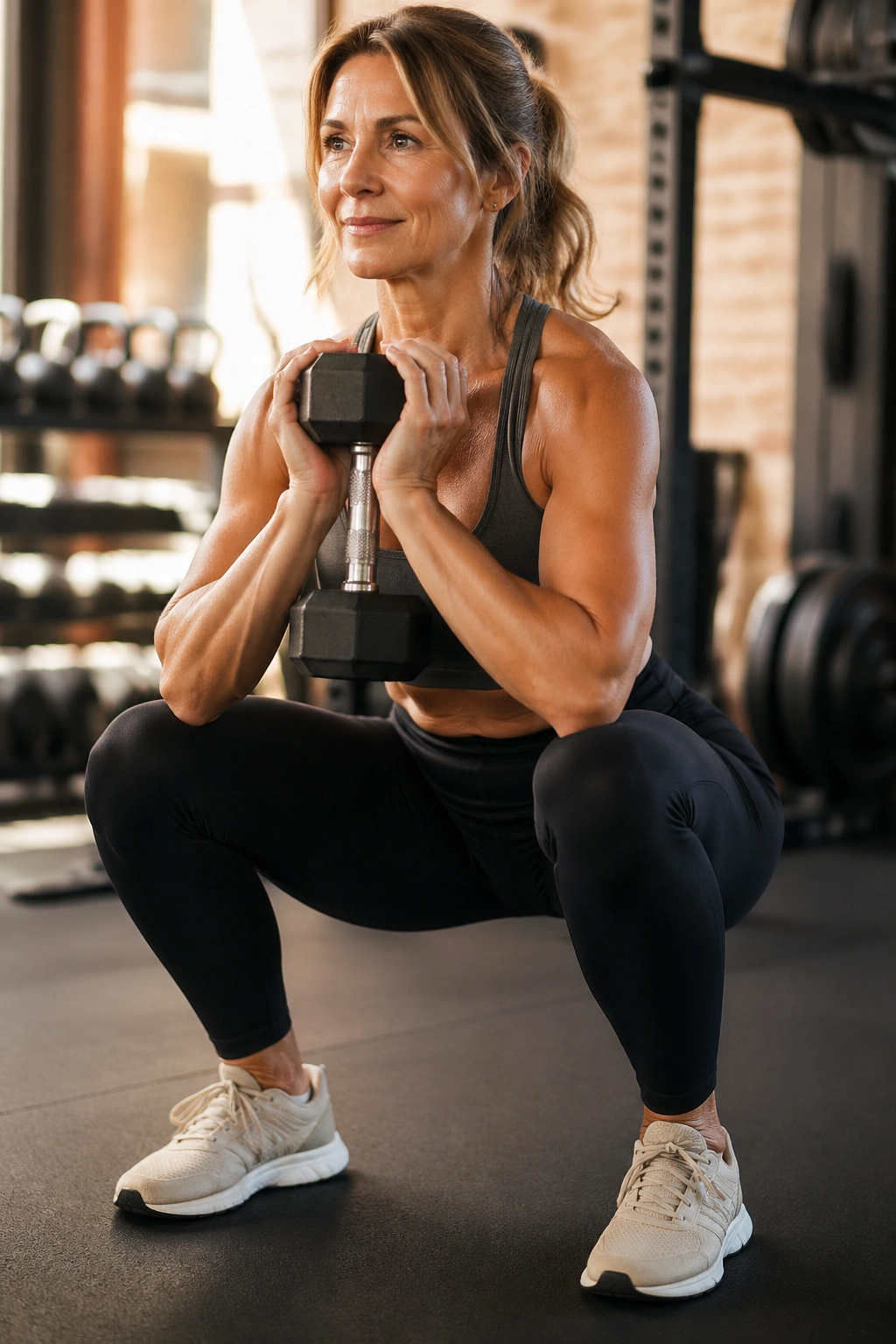
A goblet squat looks simple. Hold a dumbbell or kettlebell at your chest, sit down between your hips, stand back up. Done. But the trick is in how much it asks from your whole body while still feeling friendly on the joints.
Your core has to brace. Your glutes and thighs have to work. Your posture has to stay honest. That matters more than people think, because the more muscle you keep, the better your body tends to handle fat loss without looking flat and drained.
Try 3 sets of 8 to 12 reps with a weight that feels challenging on the last 2 reps. Pause for a beat at the bottom if you want more control. If your heels lift, your stance is probably too narrow or your squat is too deep for your current mobility.
3. Dumbbell Romanian Deadlifts
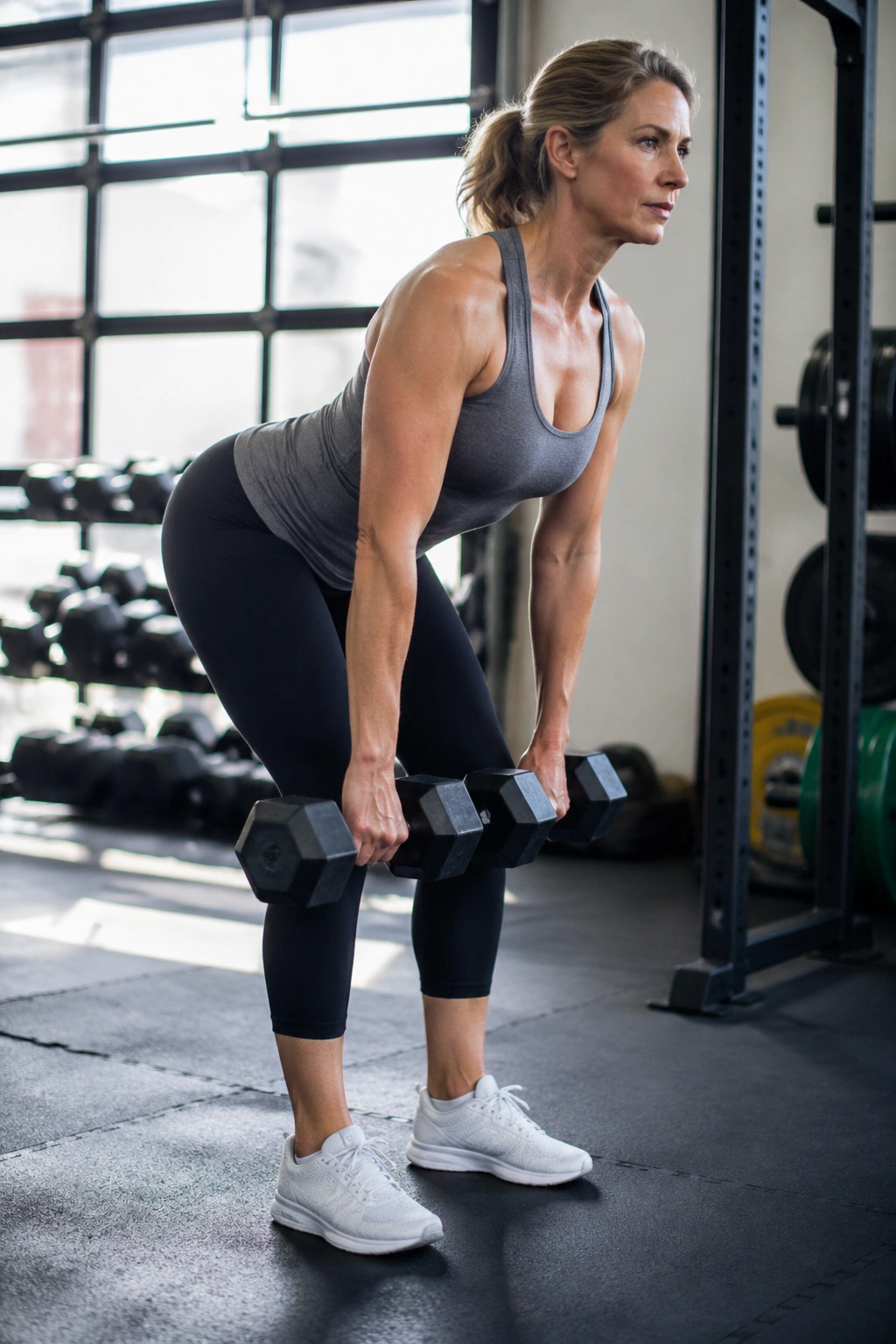
Do not skip the hinge. Women over 40 often spend too much time doing knee-dominant moves and not enough time training the back of the body.
Romanian deadlifts hit the hamstrings, glutes, and lower back in a way that helps your posture and gives your body more muscle to work with. Stand tall with dumbbells in front of your thighs, soften the knees, then push your hips back until you feel a stretch in the hamstrings. Drive the hips forward to stand.
What to watch for
- The weights should stay close to your legs.
- Your back stays long, not rounded.
- The movement should feel like a hinge, not a squat.
- Stop when your torso is about halfway down and the hamstrings feel loaded.
Three sets of 8 to 10 reps is plenty. Heavy enough to matter, light enough to keep clean form. That’s the whole game.
4. Reverse Lunges
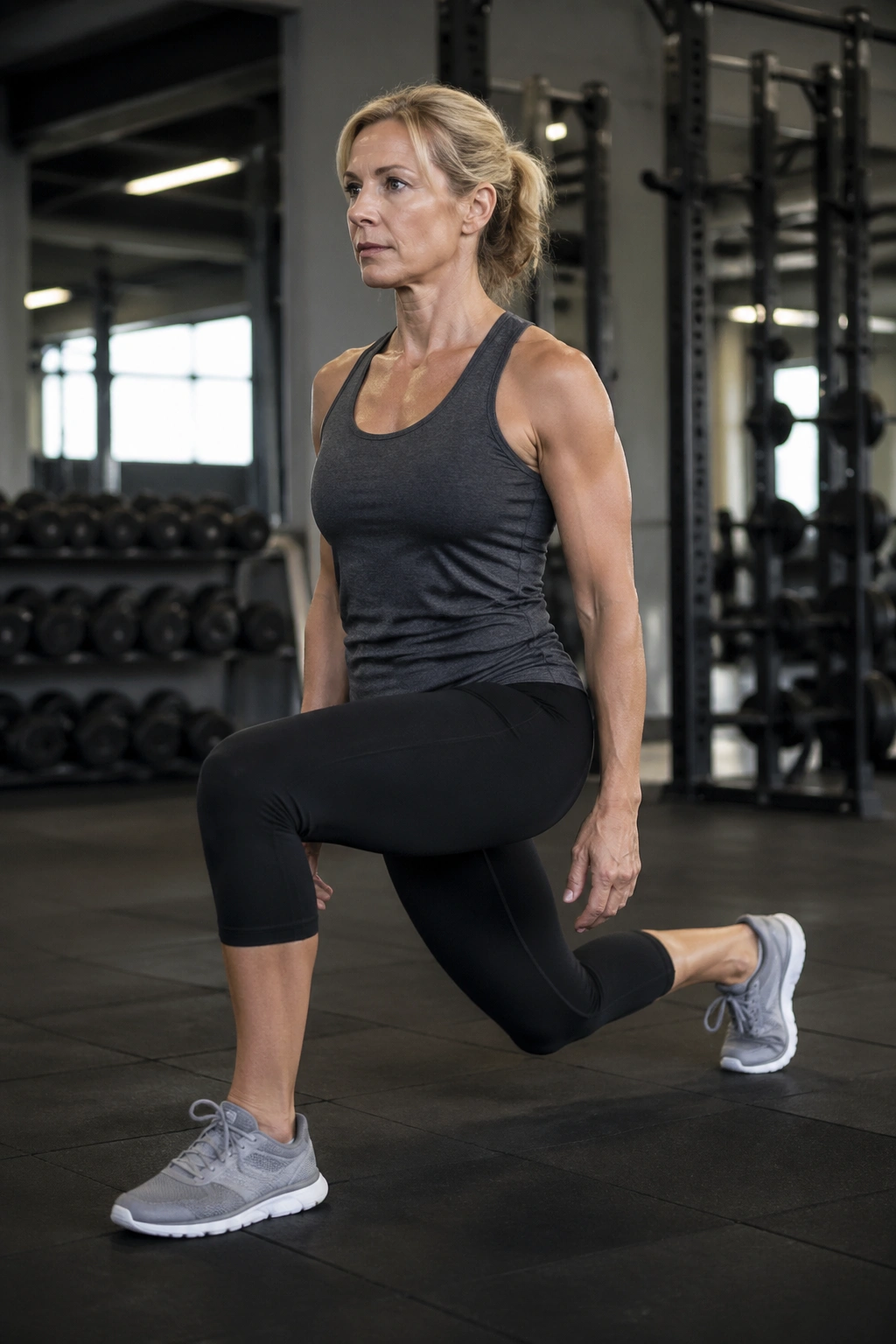
Reverse lunges are kinder than forward lunges, and I mean that in the most practical sense. They usually feel easier on the knees, which makes them a better choice for a lot of women who want a strong lower body without the joint grumbling.
Step one leg back, lower until both knees bend, then push through the front heel to stand. The front leg does most of the work, which is exactly why this move is so useful for toning the legs and tightening the midsection at the same time. Your trunk has to stay steady, or the whole thing falls apart.
Try 2 to 4 sets of 8 reps per side. Hold light dumbbells once bodyweight starts feeling too easy. If balance is the issue, hold onto a wall with one hand. No prize is handed out for wobbling through it.
5. Slow Push-Ups
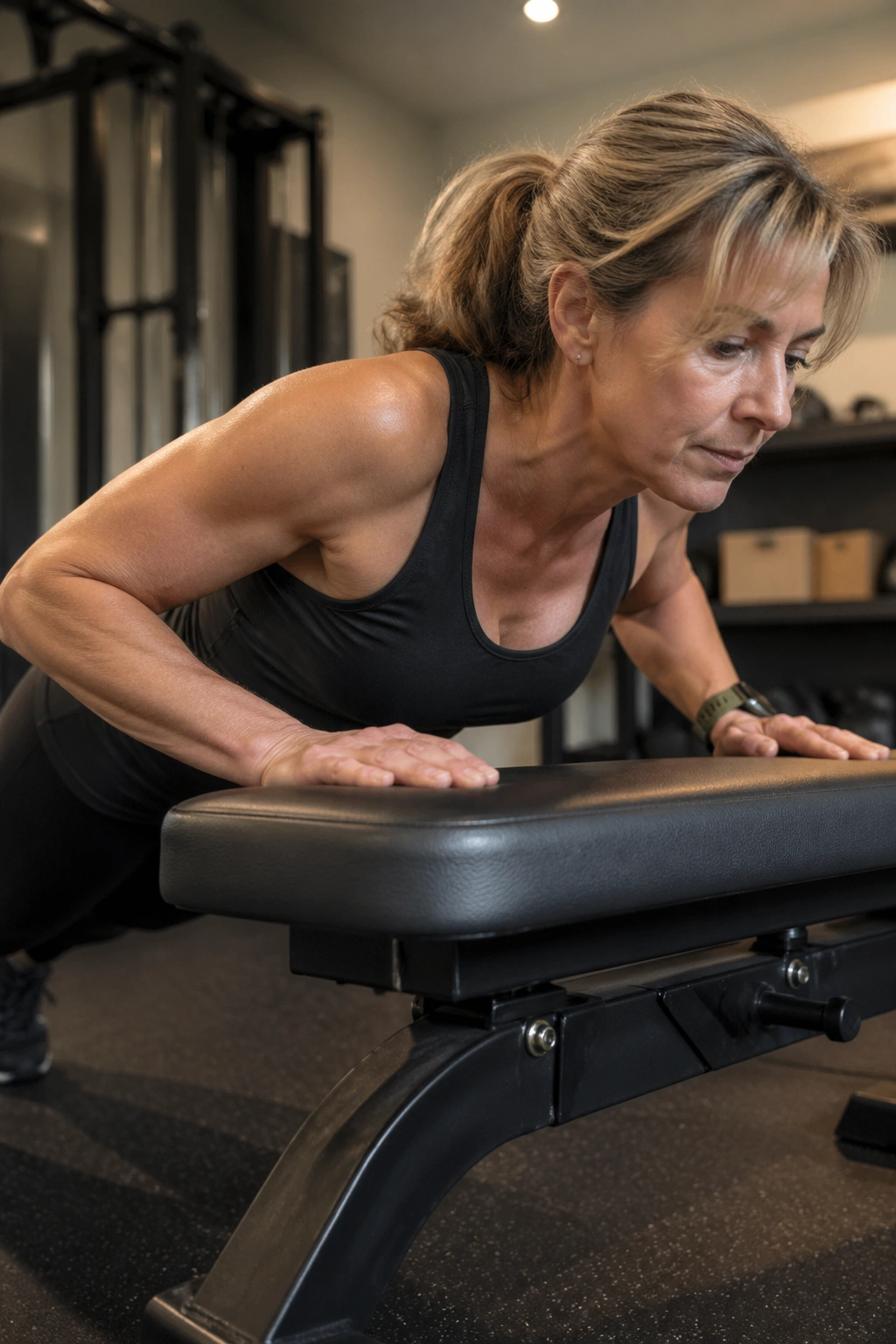
A lot of people treat push-ups like a chest exercise. They’re more than that. Slow push-ups build the shoulders, chest, triceps, and the deep core muscles that keep your ribs from flaring out like a stressed-out accordion.
Start with your hands on a bench, counter, or wall if needed. Lower for 3 counts, pause for 1 count, then press back up. That tempo matters. It strips away momentum and makes the muscles do the work.
If a full floor push-up is out of reach, good. Use the incline. A cleaner incline push-up is worth more than a messy floor rep. Aim for 3 sets of 5 to 10 reps, and stop a rep before form gets sloppy.
6. Dead Bugs
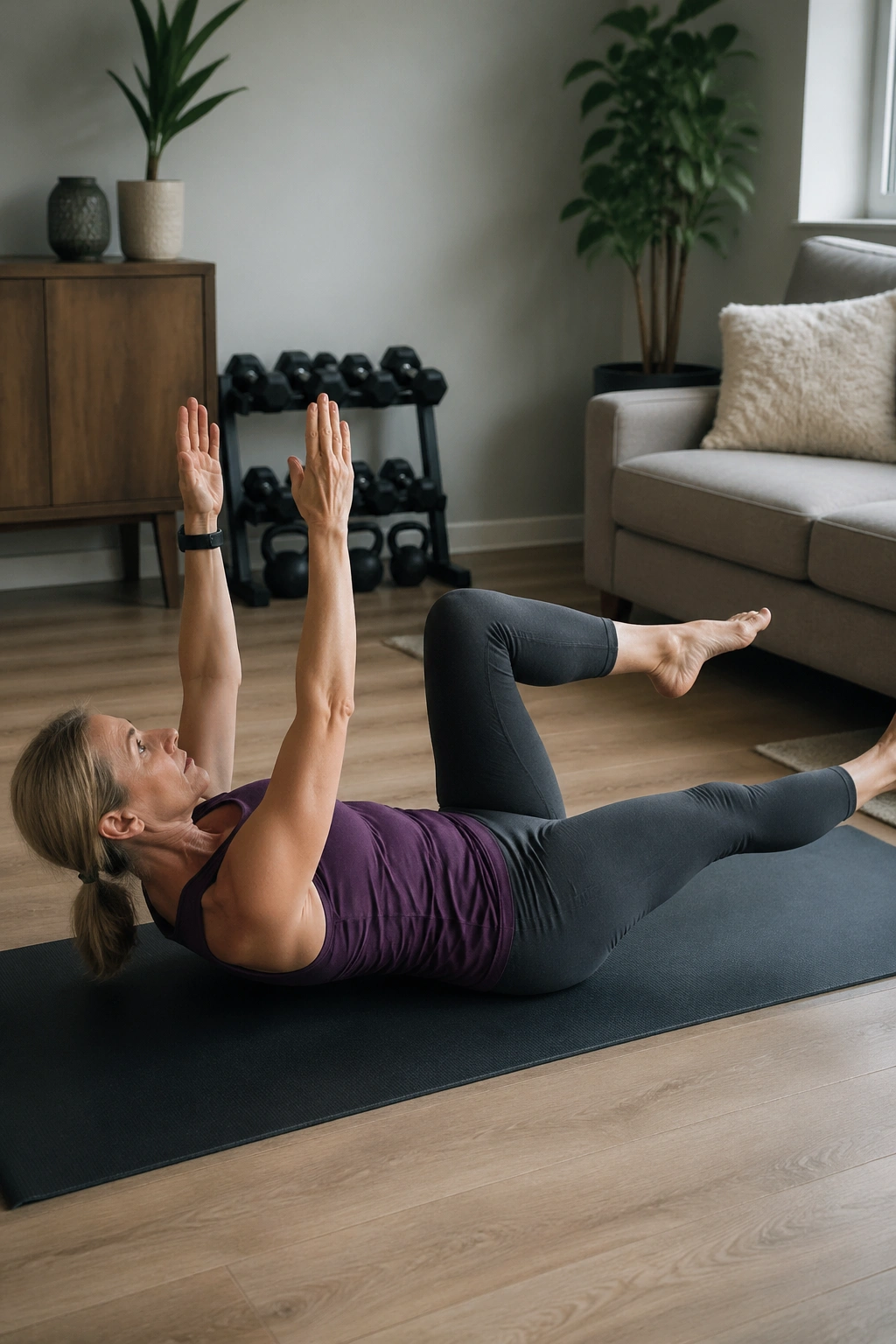
Dead bugs look tiny. They are not easy.
Lie on your back with arms pointed to the ceiling and knees bent over your hips. Lower the opposite arm and leg slowly while your lower back stays glued to the floor, then return and switch sides. The point is not speed. The point is control.
Why they matter
Dead bugs teach your core to resist arching, which is useful if you want a flatter-looking middle and fewer lower back complaints. They also remind you how to brace without holding your breath like you’re lifting a car.
- Move one side at a time.
- Exhale as the arm and leg lower.
- Keep the motion slow.
- Stop if your back pops off the floor.
Do 2 to 3 sets of 6 to 8 reps per side. It’s a small move with a big payoff.
7. Bird Dogs
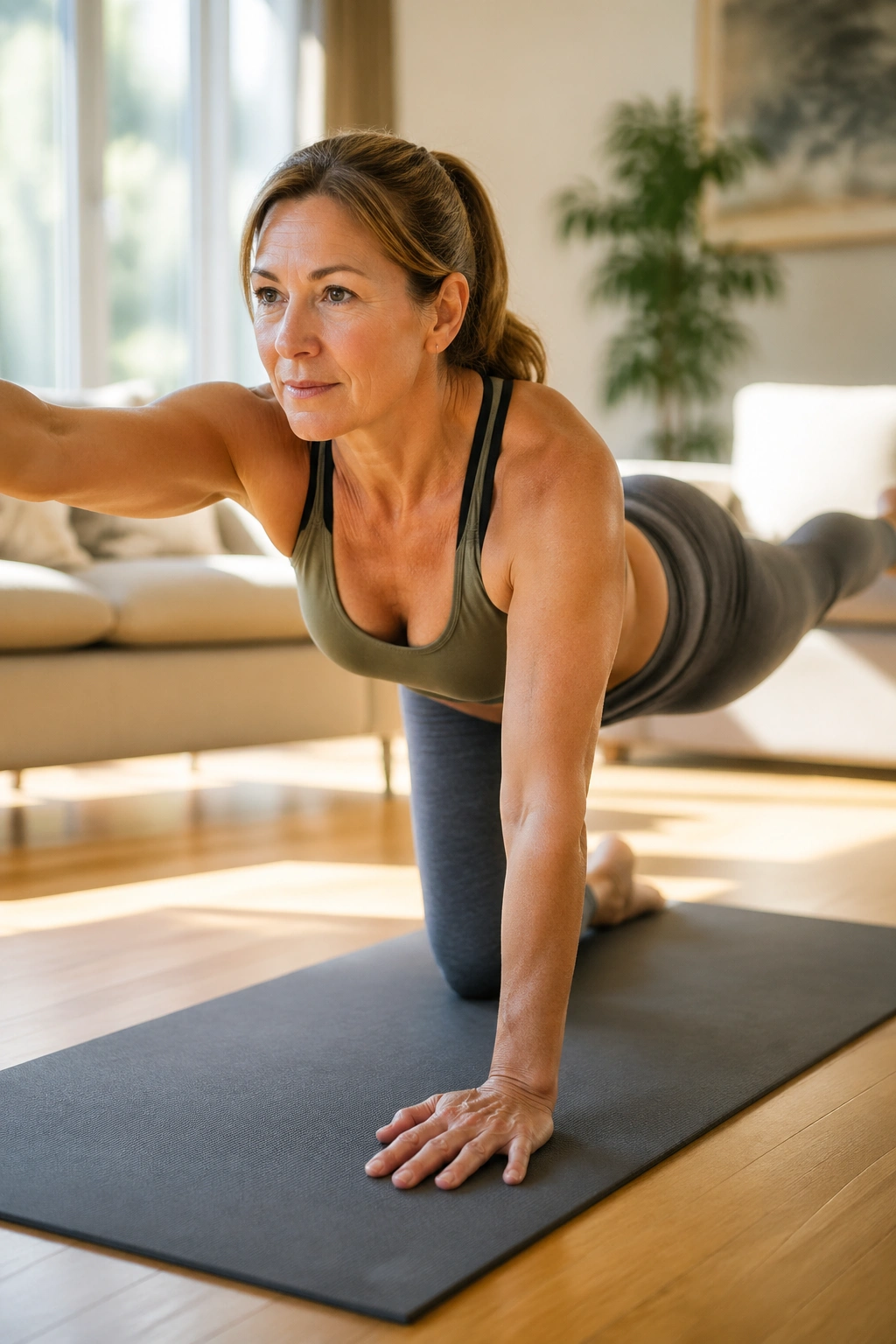
Bird dogs are the quiet hero of core training. No sweat drama. No jumping. No nonsense.
Start on hands and knees, extend one arm forward and the opposite leg back, then hold for a second before returning to center. Your hips should stay level. If they twist, the move gets sloppy fast, and the lower back takes over.
I like bird dogs for women who sit a lot or feel their backs tighten after long days. They wake up the glutes and teach the trunk to stay stable while the limbs move. That skill carries over into almost everything else you do.
Try 2 or 3 sets of 8 reps per side. Move slowly enough that you can keep a glass of water on your lower back and not spill it. Not literally, maybe, but you get the point.
8. Plank Shoulder Taps
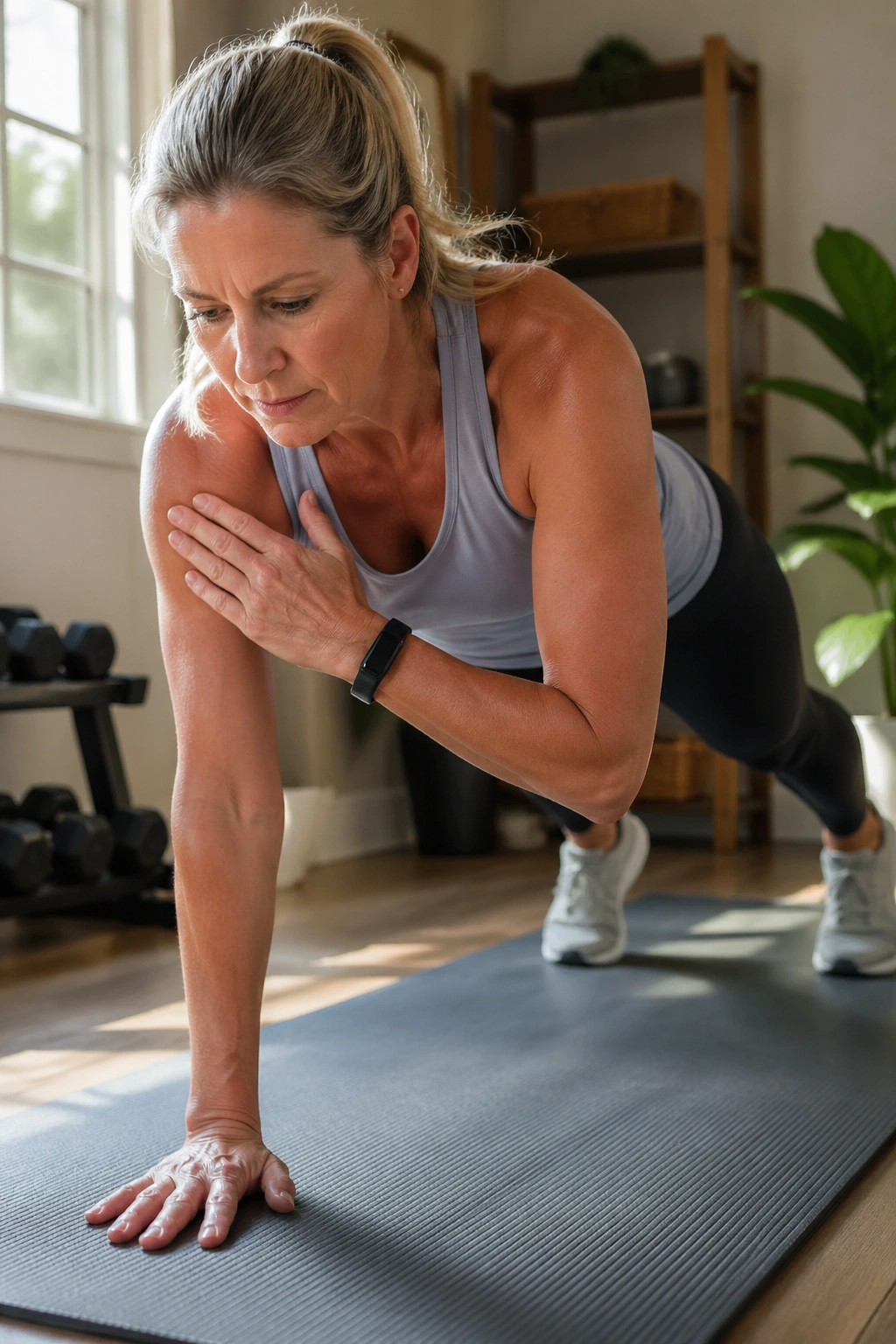
Can you hold a plank without swaying? Good. Now make it harder.
From a high plank, tap one shoulder with the opposite hand, then switch sides. The job here is not to rush. The job is to keep the hips from rocking while the arms move. That anti-rotation work is gold for the waistline because it teaches the midsection to brace in real life, not just on a mat.
How to use it
Start with 10 taps per side and see what your form does. If your hips swing side to side, widen your feet a little. If wrists complain, do the move with hands on dumbbells or a bench.
A few solid sets will light up the abs more than a bunch of sloppy crunches. Strange, but true. And much more useful.
9. Mountain Climbers
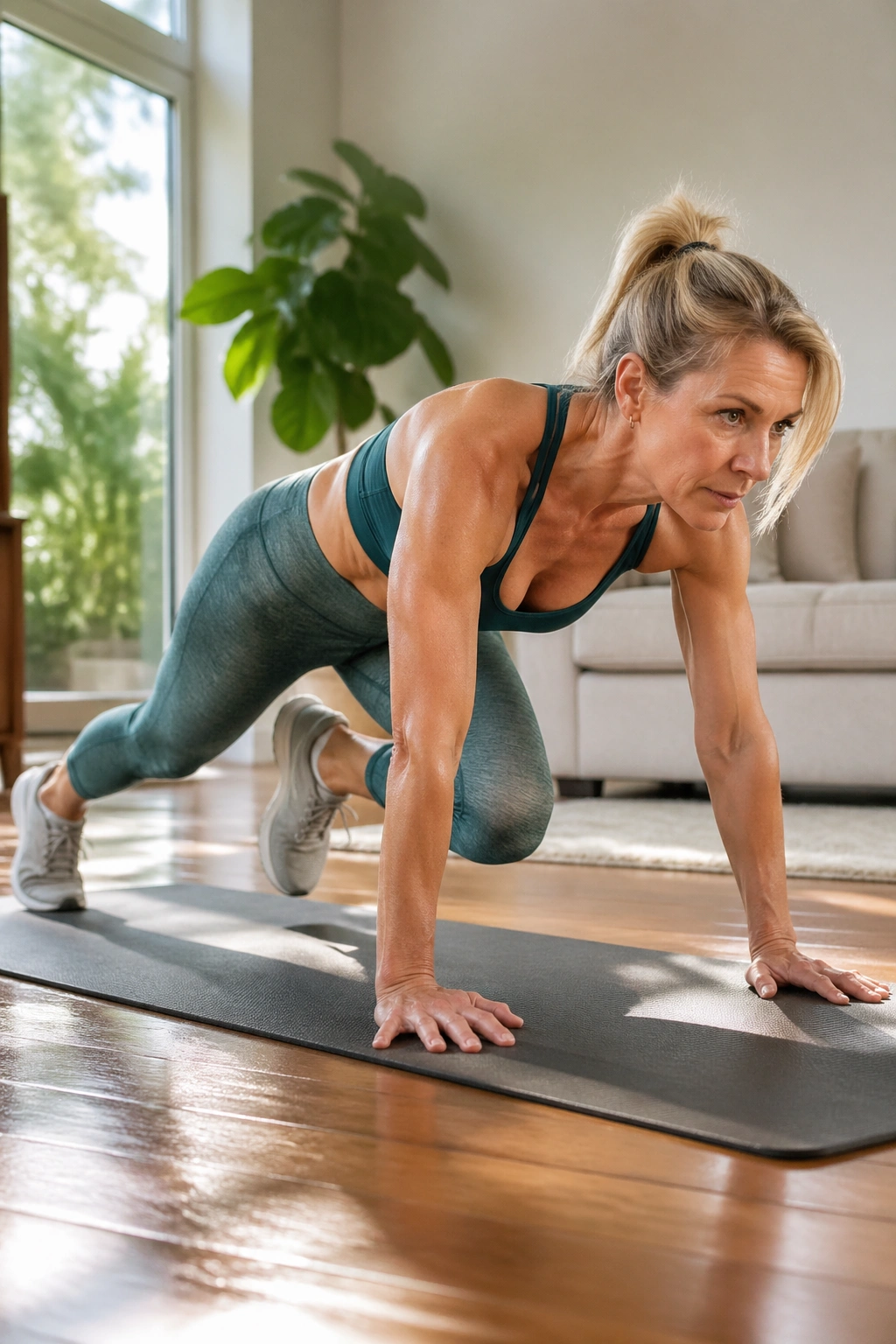
Mountain climbers can be a calorie burner, but only if you do them with intent. Half-speed knee flutters won’t move the needle much.
Bring one knee toward the chest, then switch legs in a steady rhythm. You can go fast for 20 seconds, rest for 40, and repeat for 6 to 10 rounds. Or slow them down and use them as a core drill instead of a cardio sprint.
The low-impact version works fine. Keep your hands on a bench or couch if the floor version feels too harsh. That small change can make the exercise possible again for wrists, shoulders, and people who just don’t want to launch themselves into the floor before coffee.
Quick, simple, sweaty. That’s the appeal.
10. Kettlebell Swings
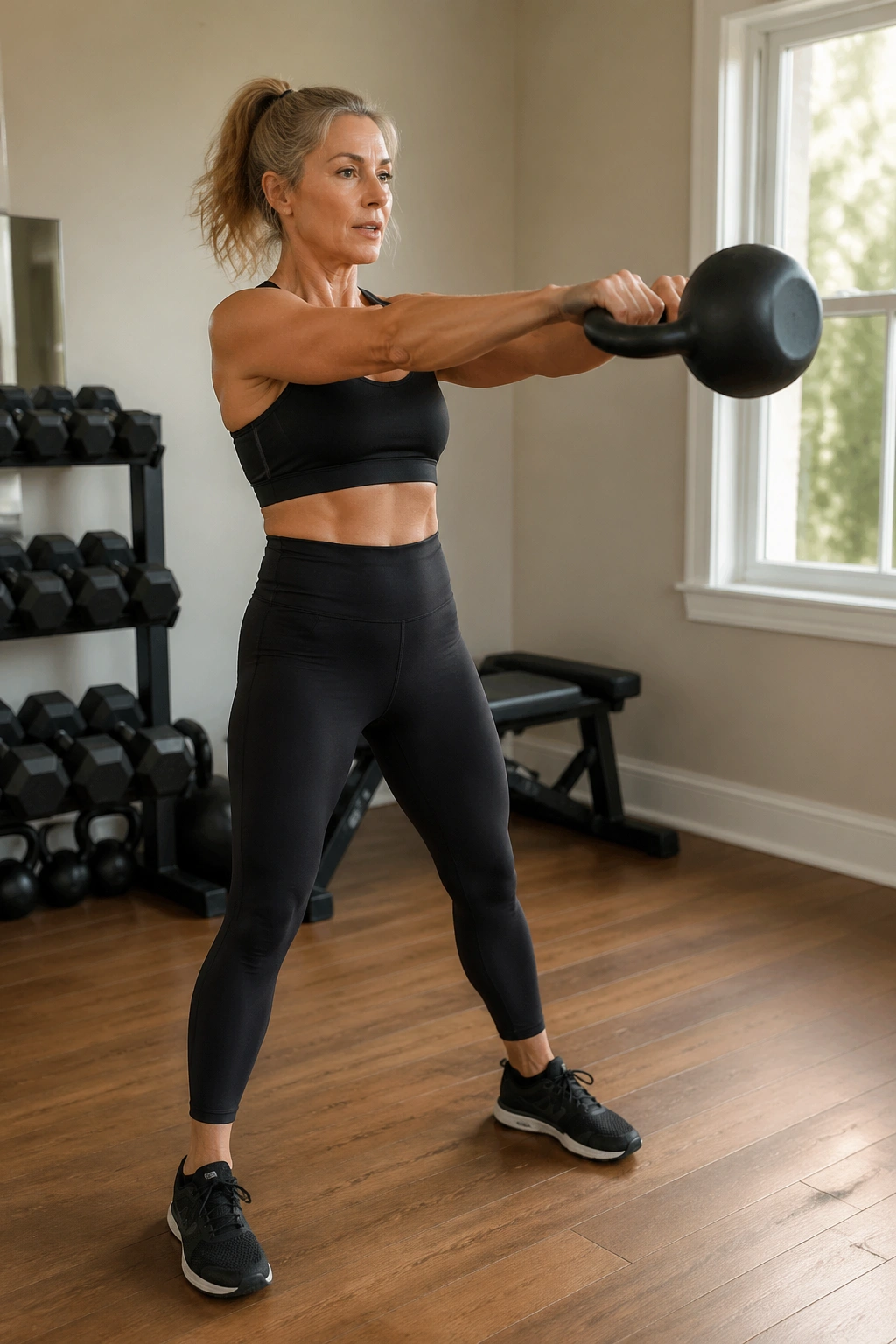
Kettlebell swings are not squats with a fling at the end. They’re a hip snap. Get that wrong, and the move turns into a lower-back complaint.
Stand with the bell a foot or so in front of you, hike it back between the legs, then drive the hips forward hard enough to float the bell to chest height. The arms guide it. The hips create the power. That’s the part most people miss.
Key details
- Use a bell you can control for 10 to 15 crisp swings.
- Keep the neck relaxed.
- Let the bell float; do not lift it with your shoulders.
- Stop the set when the snap gets slow.
Five to 10 rounds of 10 to 15 swings, with 30 to 60 seconds of rest, can be plenty. It’s one of the fastest ways to combine power, cardio, and core work without spending an hour in the gym.
11. Step-Ups
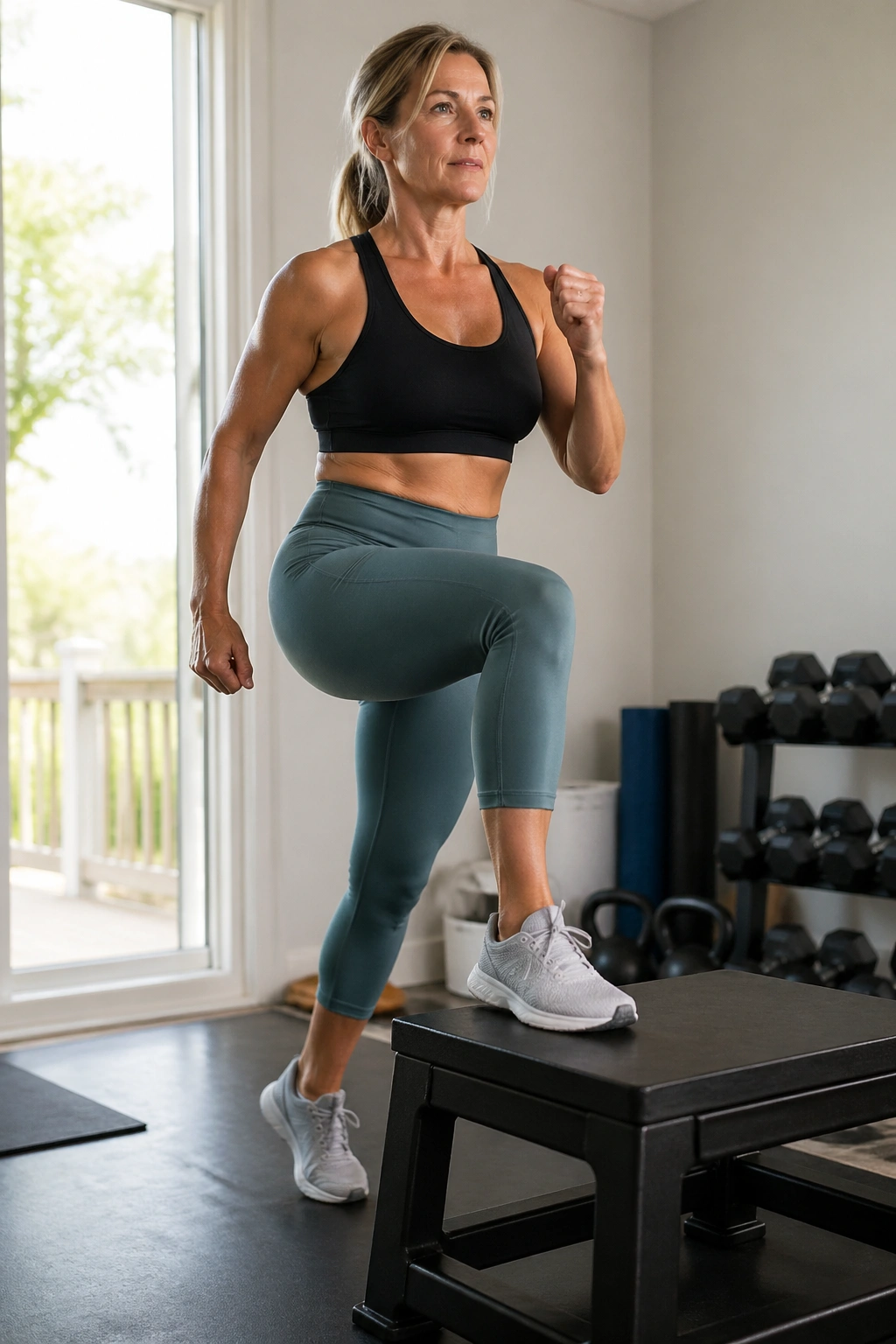
Step-ups are sneaky. They look harmless until your heart rate climbs and your thighs start talking back.
Use a bench, sturdy box, or stair that puts your knee around hip height or lower. Step one foot up, drive through the heel, stand tall, then step down under control. Keep your chest up and avoid pushing off the bottom leg too much, or the working leg never really gets the job.
I like step-ups because they mimic real life. Stairs. Curbs. Getting into a truck. Carrying a bag and still having to move with purpose. That kind of training is a lot more useful than people admit.
Do 2 to 4 sets of 8 to 12 reps per side. Add dumbbells once bodyweight feels too easy. The burn shows up fast.
12. Rowing Machine Intervals
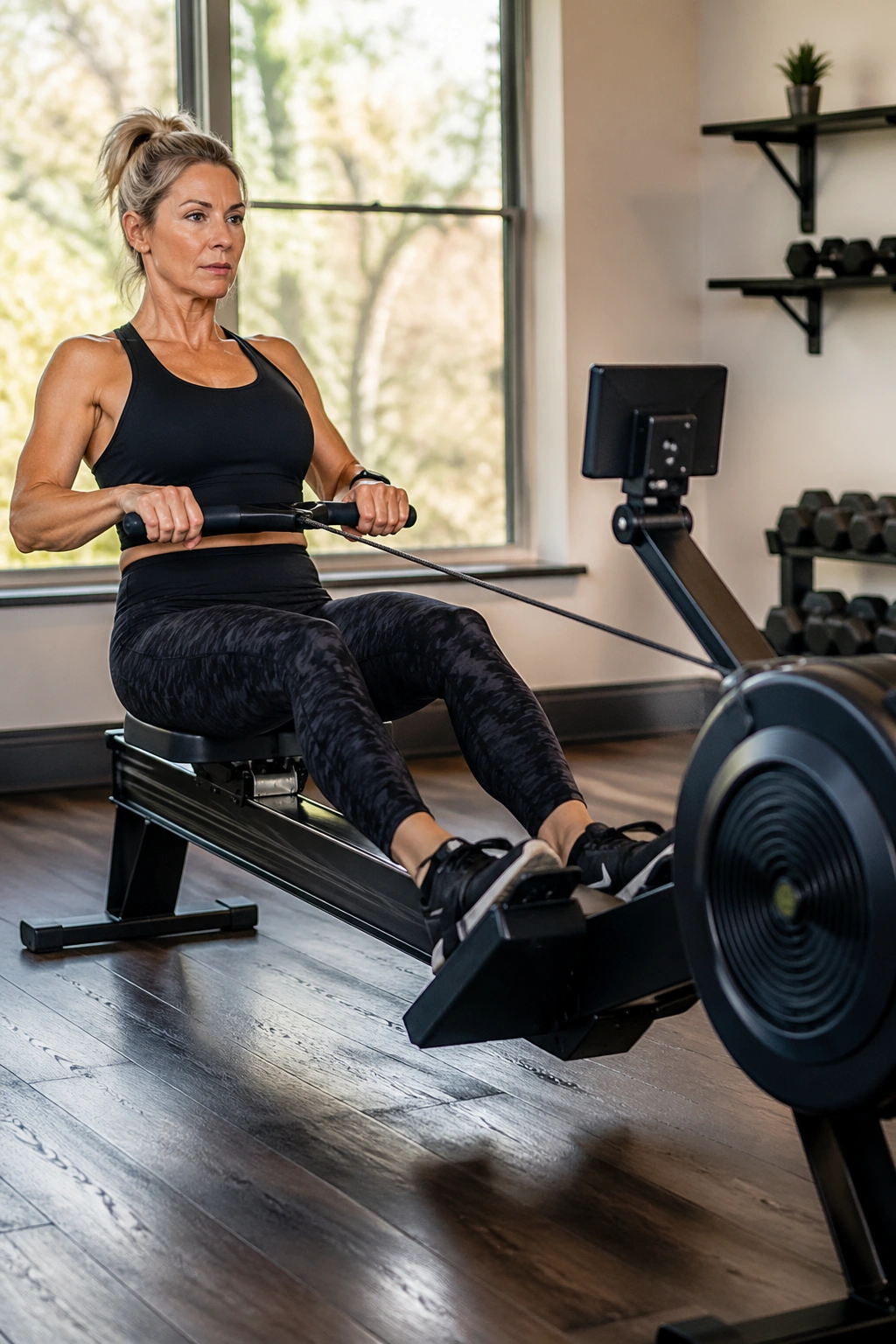
Rowing is one of the few cardio machines that asks for legs, back, arms, and a braced core all at once. It also tends to be kinder than running if your joints complain when you pound the pavement.
Push with the legs first, then swing the body slightly, then pull with the arms. That sequence matters. If you yank with your arms first, you’ll waste half the machine’s value and make your shoulders grumpy.
A simple interval setup
- Row hard for 30 seconds.
- Row easy for 90 seconds.
- Repeat for 8 to 12 rounds.
The hard parts should feel like work. The easy parts should let you breathe. That contrast is where the payoff lives, not in the tiny in-between pace that feels polite and does almost nothing.
13. Farmer’s Carries for Women Over 40
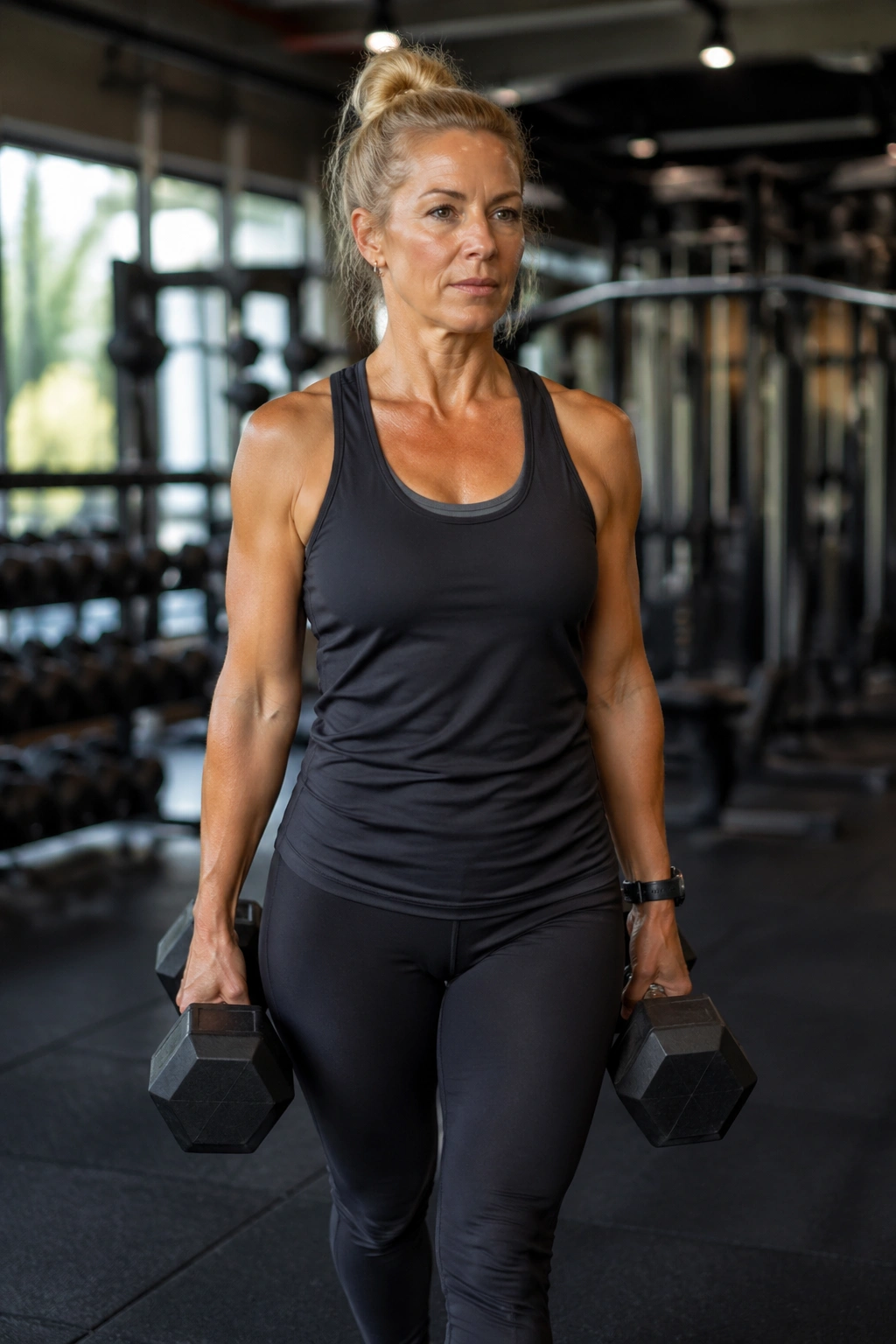
Pick up heavy things and walk. That’s the exercise, and honestly, it deserves more respect than it gets.
Hold a dumbbell or kettlebell in each hand, stand tall, and walk for 20 to 60 seconds without leaning from side to side. Your abs brace, your grip works, your shoulders settle down, and your posture gets a blunt little lesson in honesty. If you want a tighter-looking waist, this is the sort of work that helps because it teaches the middle to hold steady under load.
What to notice
- Ribs stay stacked over the hips.
- Steps stay smooth, not shuffling.
- The weights should feel heavy enough to challenge your grip.
- A shorter, heavier carry beats a long, flimsy one.
Do 4 to 6 carries, resting 45 to 60 seconds between rounds. It’s simple. It hurts in a useful way.
14. Side Planks
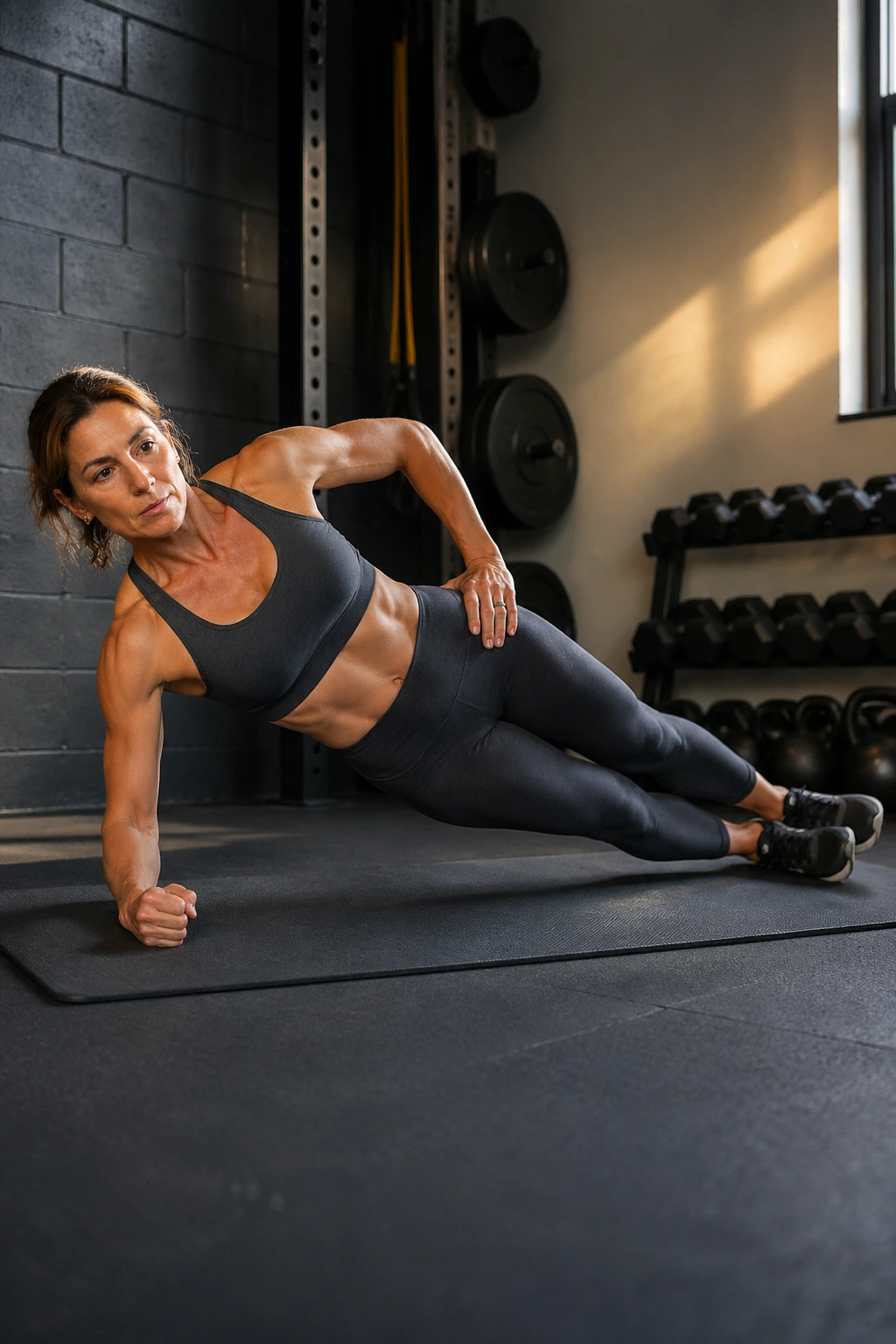
Side planks are where the side body earns its keep. The obliques, glute medius, and shoulder stabilizers all have to cooperate.
Lie on one side, stack the feet or stagger them for more support, and lift the hips so your body forms a long line. Hold for 15 to 30 seconds at first. If that’s too much, drop the bottom knee and keep the upper body honest.
How to get the most from it
- Press the forearm into the floor.
- Keep the top shoulder from rolling forward.
- Squeeze the glutes a little.
- Breathe. People forget that part.
This move is small, but it teaches lateral stability, which matters for a midsection that feels firm instead of loose when you move.
15. Standing Woodchops
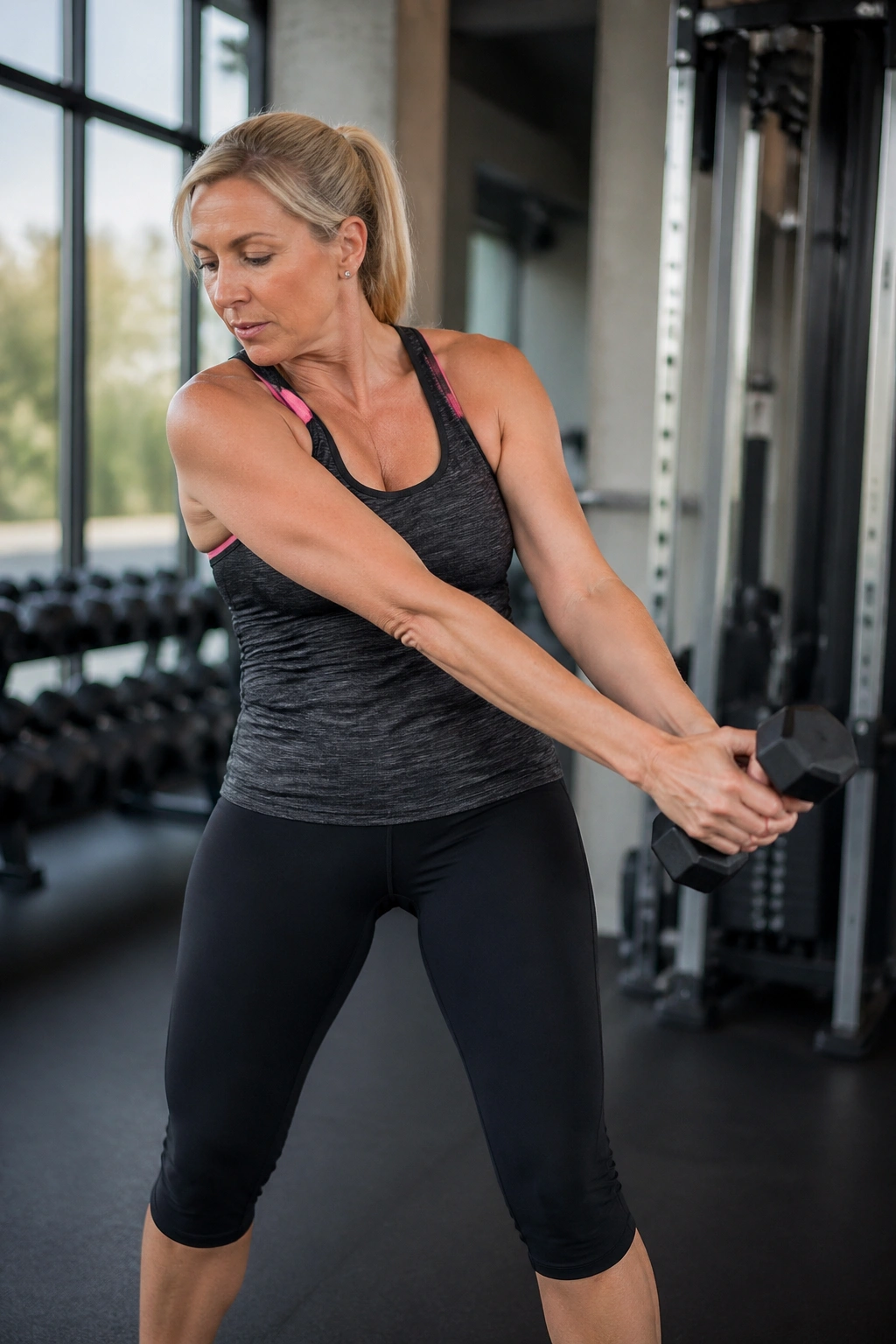
Standing woodchops are one of my favorite core moves because they feel like actual movement, not punishment.
Use a cable, resistance band, or a dumbbell held with both hands. Start high and pull across the body toward the opposite hip, then return with control. The torso rotates, but it should rotate under control, not flop around like wet laundry.
They train the core to manage force from the side, which is useful for carrying, twisting, and all the odd little motions life throws at you. A strong middle is not just about front-facing crunch strength. It’s about staying organized when the body wants to rotate.
Two to 3 sets of 10 to 12 reps per side is plenty. Slow down the lowering part if you want more challenge. That usually does the trick.
16. Cycling Sprints
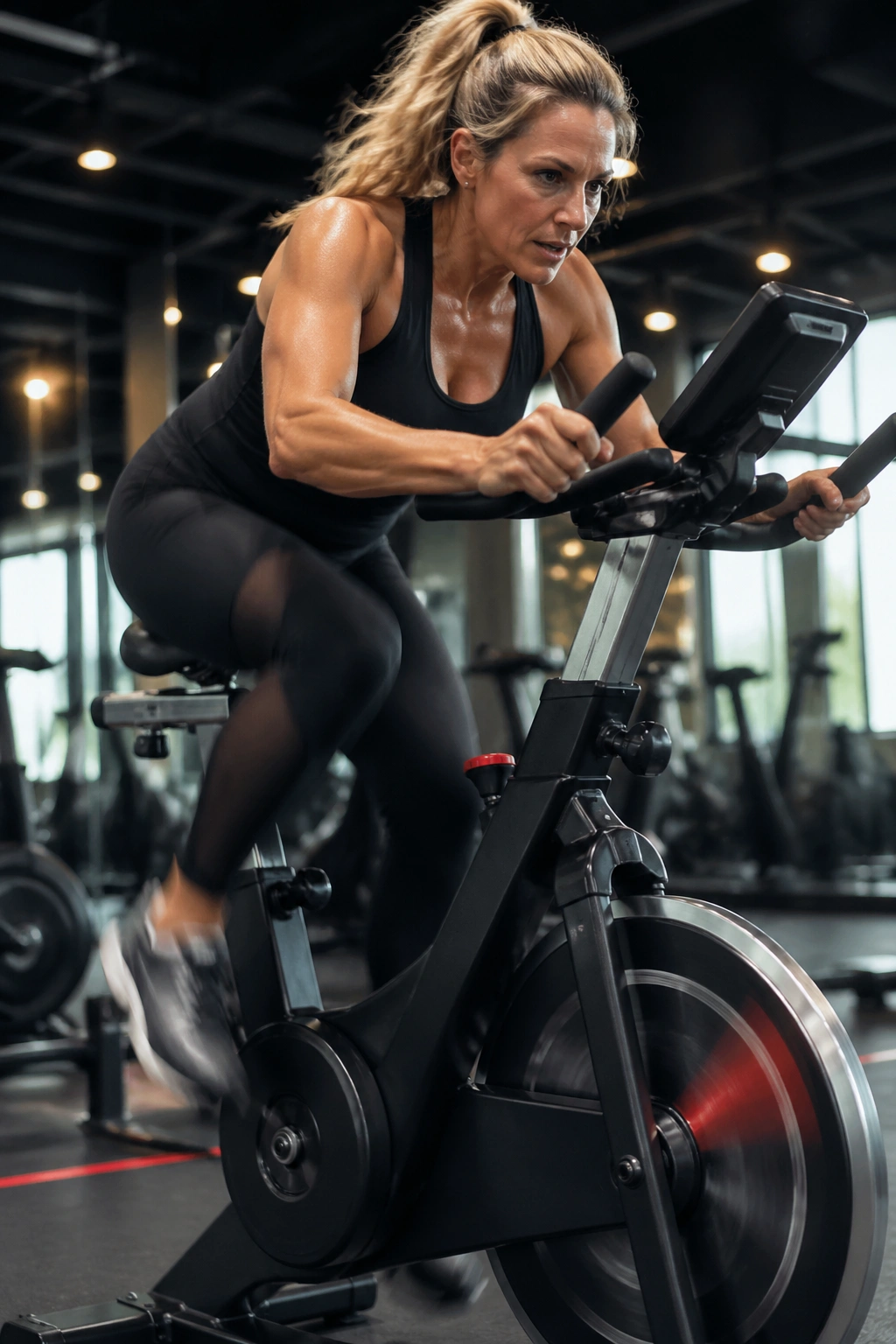
A bike gives you a place to work hard without the pounding that can come with running. That matters when recovery is a little less forgiving than it used to be.
Warm up for 5 minutes, then sprint hard for 15 to 20 seconds and recover for 60 to 90 seconds. Repeat for 6 to 10 rounds. The sprint should feel sharp, almost rude. The recovery should feel generous enough that the next burst is strong again.
What makes it useful
Cycling sprints raise heart rate fast, burn a decent number of calories in a short window, and spare the joints from impact. You still have to earn it, though. A lazy sprint is just a fast ride.
If your knees prefer a seated, steady spin, that’s fine too. The goal is to use the bike in a way that leaves you energized, not beaten up for two days.
17. Glute Bridge March
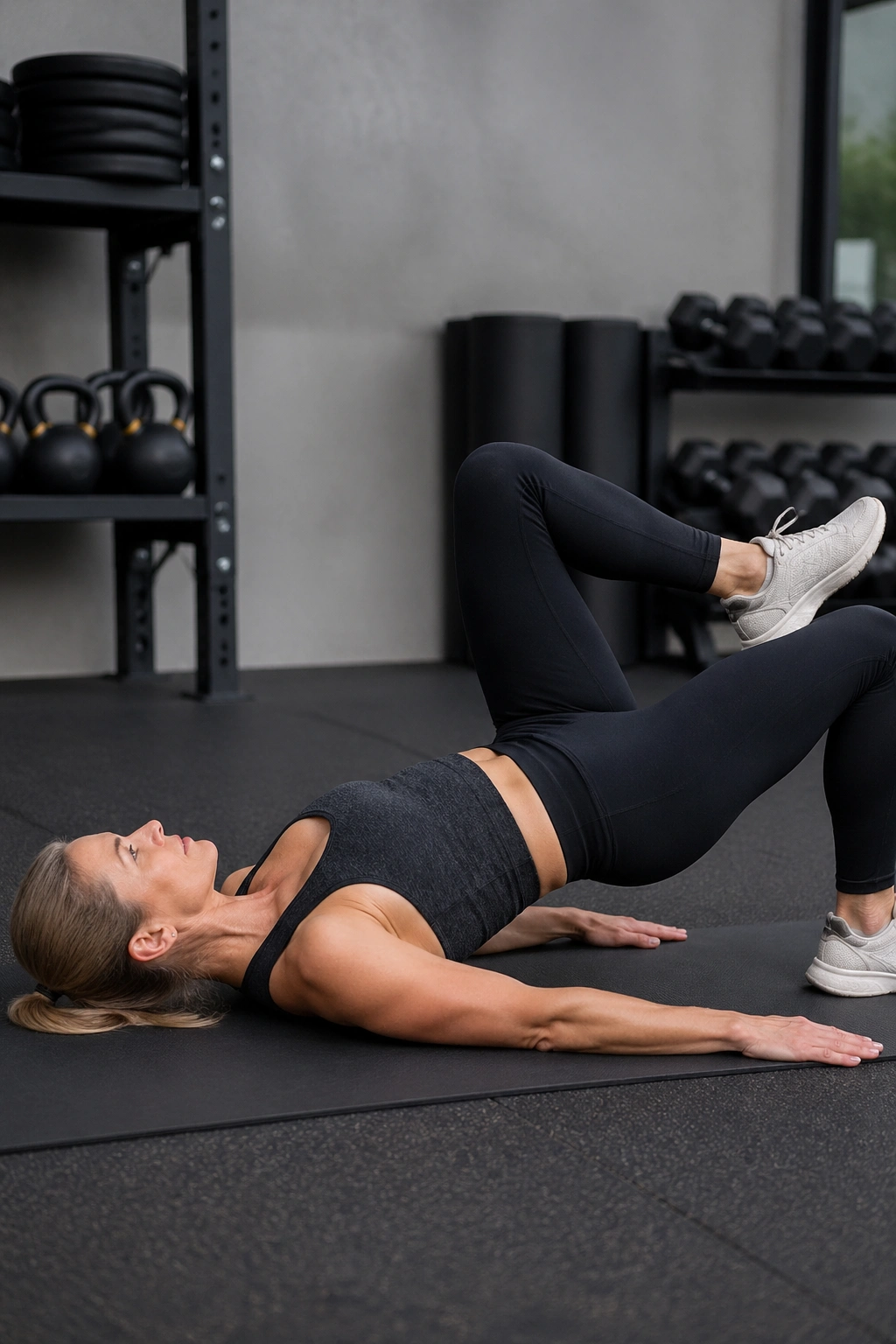
The glute bridge march is one of those moves that looks calm and then quietly smokes your core.
Lie on your back with knees bent, lift into a glute bridge, and keep the hips level as you march one knee up at a time. The bridge position teaches the glutes to work while the abdomen resists wobble. That matters for a flatter-feeling stomach because a lot of midsection training is really about pelvic control.
Do 2 to 4 sets of 8 to 10 marches per side. If your hips drop each time you lift a foot, lower the bridge a little and slow down. Quality beats height. Every time.
18. Shadow Boxing Rounds

Shadow boxing is criminally underrated. It burns energy, improves coordination, and gets your upper body moving without the pounding of jumps.
Stand in a light fighting stance and throw straight punches, hooks, and uppercuts for 1 to 3 minute rounds. Move your feet. Twist your torso. Keep your hands up. The rotation through the trunk works the obliques and keeps your heart rate climbing.
A simple round structure
- 2 minutes of punches.
- 30 seconds of rest.
- Repeat for 6 to 8 rounds.
You can keep it light and quick, or punch harder and move more. Either way, the rhythm makes time pass quickly, which helps more than people admit. Workouts that feel dull are the ones that get skipped.
19. Stair Climbing
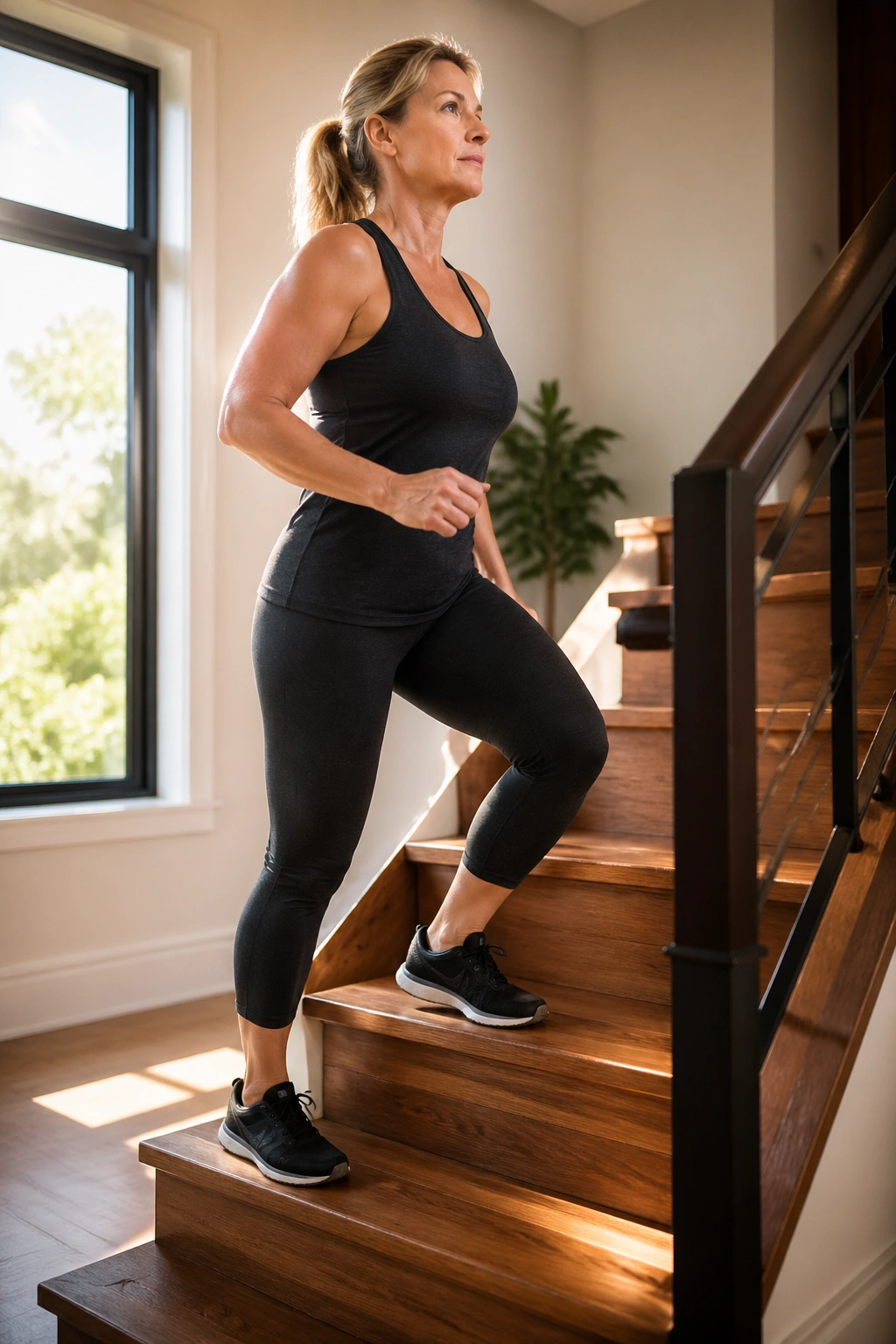
Stairs are honest. They ask for leg power, heart work, and a bit of grit all at once.
You can climb at a steady pace for 10 to 20 minutes, or break it into intervals: 1 minute up hard, 1 minute easy, repeat. Keep your torso tall and use the handrail lightly if needed, not as a crutch.
Here’s why stairs deserve a spot beside the better-known fat-loss workouts: they load the lower body more than flat walking, yet they still feel more natural than all-out sprints. That middle ground is useful for women who want work that is demanding without feeling reckless.
If your knees protest, shorten the stride and slow the speed. A controlled climb beats a frantic one every time.
20. Bodyweight Metabolic Circuit
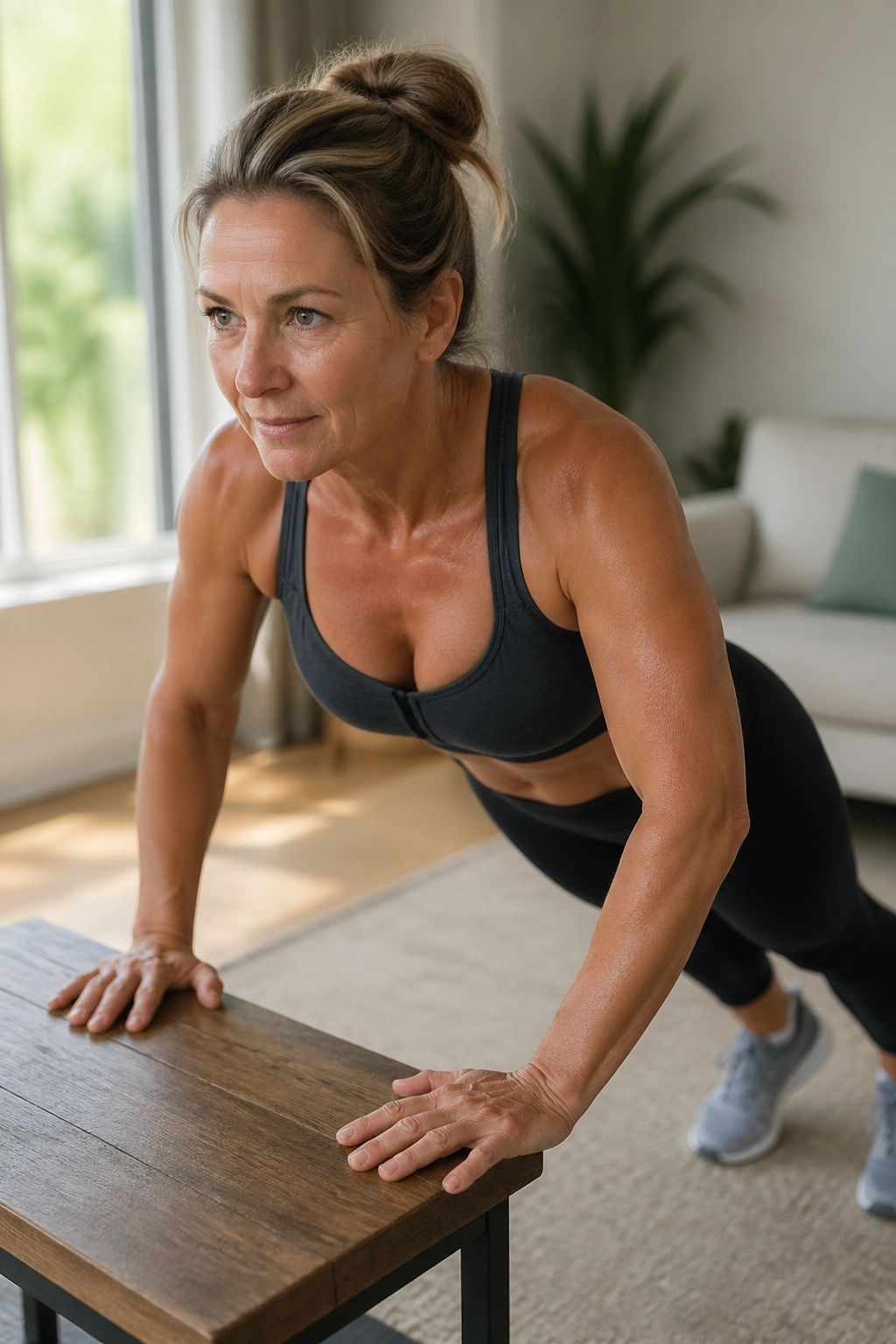
A good bodyweight circuit does not need to be complicated. It needs to be dense, honest, and repeatable.
Try 3 rounds of 30 seconds each: squats, alternating reverse lunges, incline push-ups, and high-knee marches. Rest 60 seconds between rounds. The point is to keep moving long enough to raise your heart rate while touching multiple muscle groups.
Why this format works
It’s flexible. It fits a hotel room, living room, or garage. It also keeps the workout from feeling like one endless grind, which is useful when motivation is low and you still want to show up.
Keep the pace brisk, but don’t rush the form. If the last round falls apart, the circuit is too hard right now. Dial it back and keep going. Consistency wins more often than heroics.
21. Resistance Band Side Steps
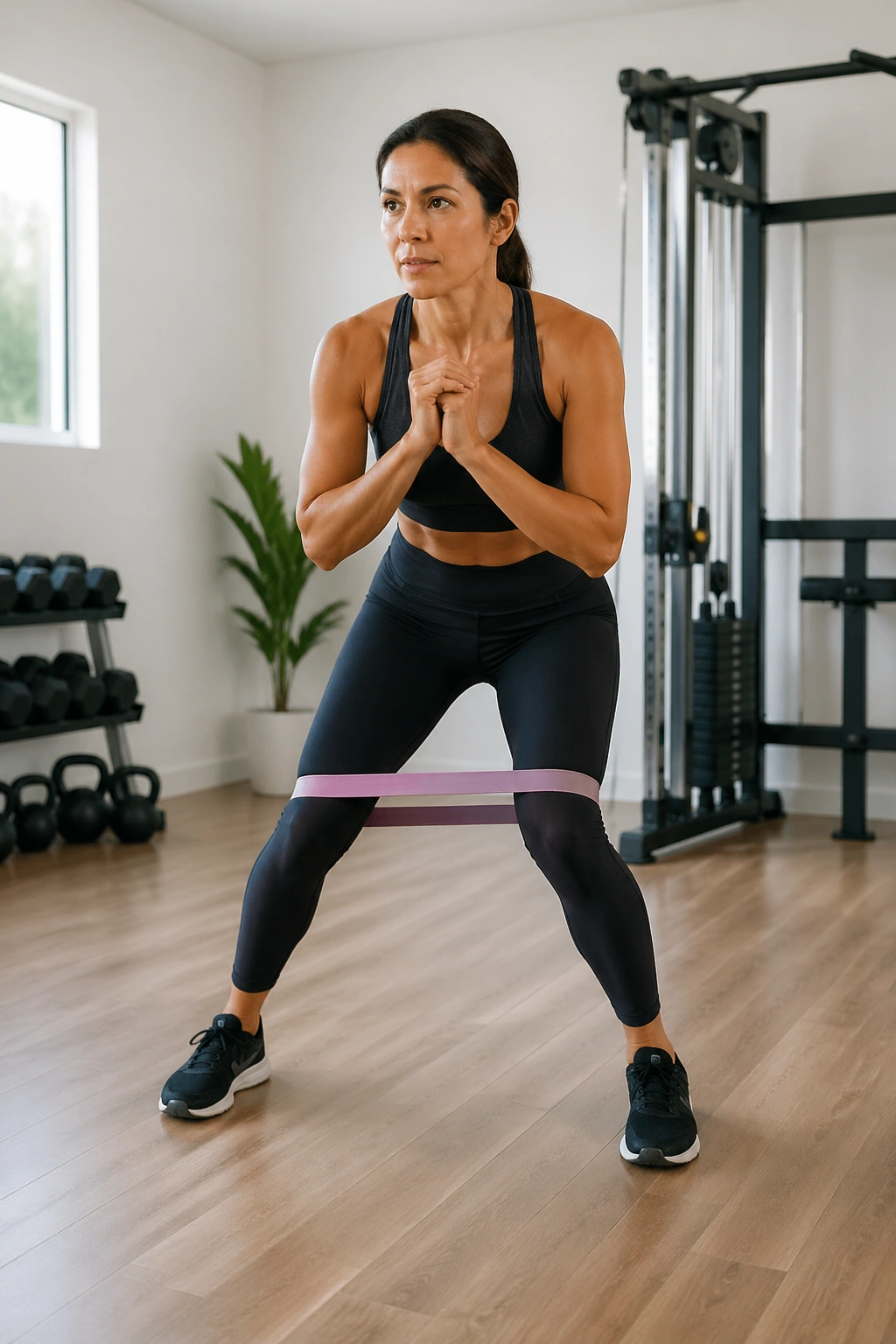
Sometimes the best midsection support comes from the hips. That sounds backward until you feel it.
Place a loop band above the knees or around the ankles, sink into a quarter squat, and step side to side for 10 to 15 steps each direction. The glutes on the side of the hip fire hard, and that helps the pelvis stay stable when you walk, climb, or train.
The move is small, but it cleans up a lot of mechanics that matter later. When the hips stop collapsing inward, squats and lunges usually feel better too. Funny how that works.
Use 2 to 4 rounds as a warm-up or finisher. Keep the tension on the band the whole time. If your feet click together, you’re probably cheating the drill.
22. Sumo Squats to Reach
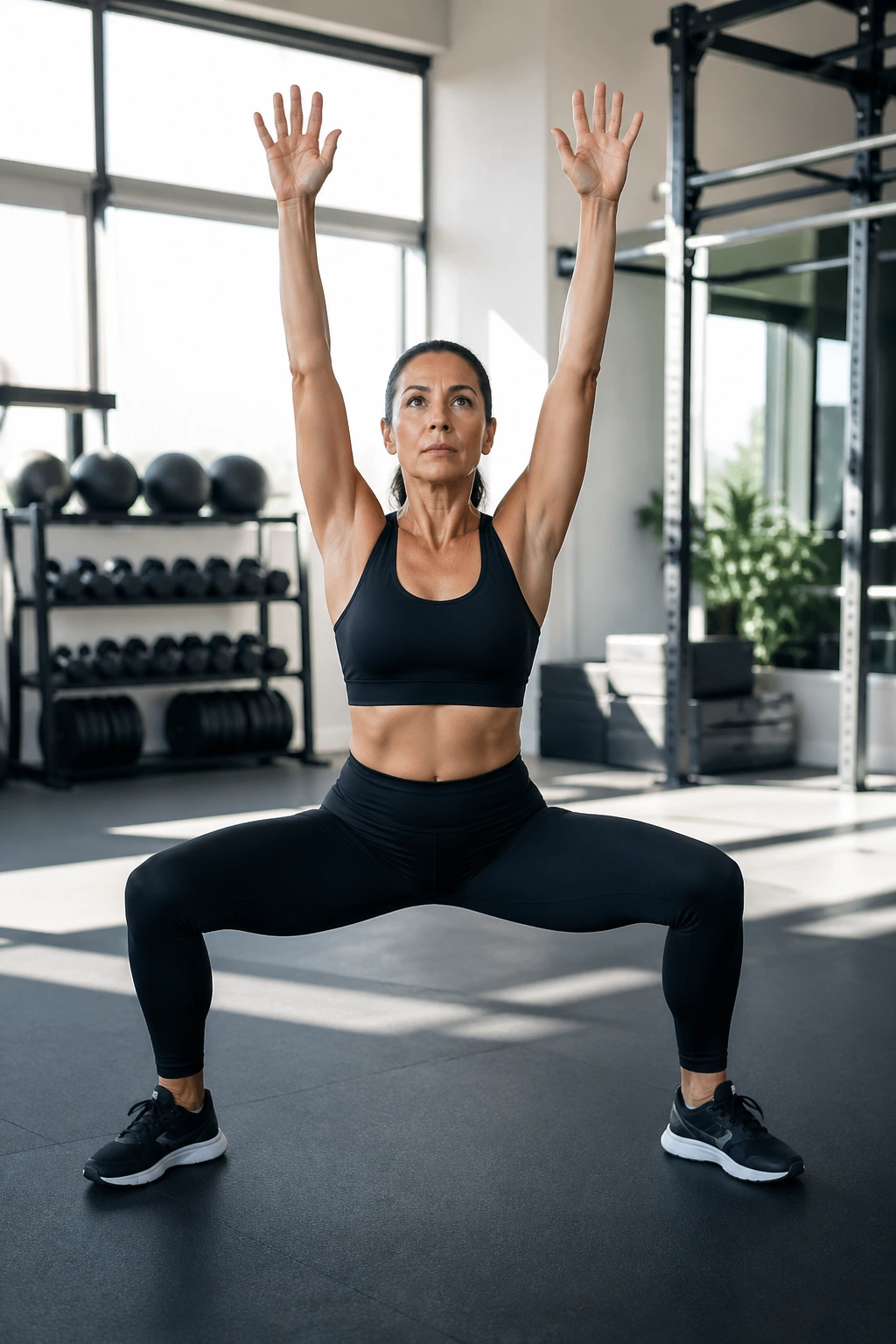
A wide stance changes the feel in a hurry. Sumo squats put more demand on the inner thighs and glutes, and the reach adds a little extra work for the upper body and trunk.
Stand with feet wider than shoulder-width, toes turned out slightly, squat down, then stand and reach overhead. The reach should be smooth, not exaggerated. You want the ribs down and the abs on, not a floppy backbend that steals the point of the exercise.
Use it when
- You want a low-impact move that still raises your heart rate.
- Your hips feel better in a wider stance.
- You need a break from jumping but still want full-body work.
Do 2 to 3 sets of 12 to 15 reps. It’s a useful move on lighter days, and that matters more than people think. Lighter days keep the habit alive.
23. Bear Crawls
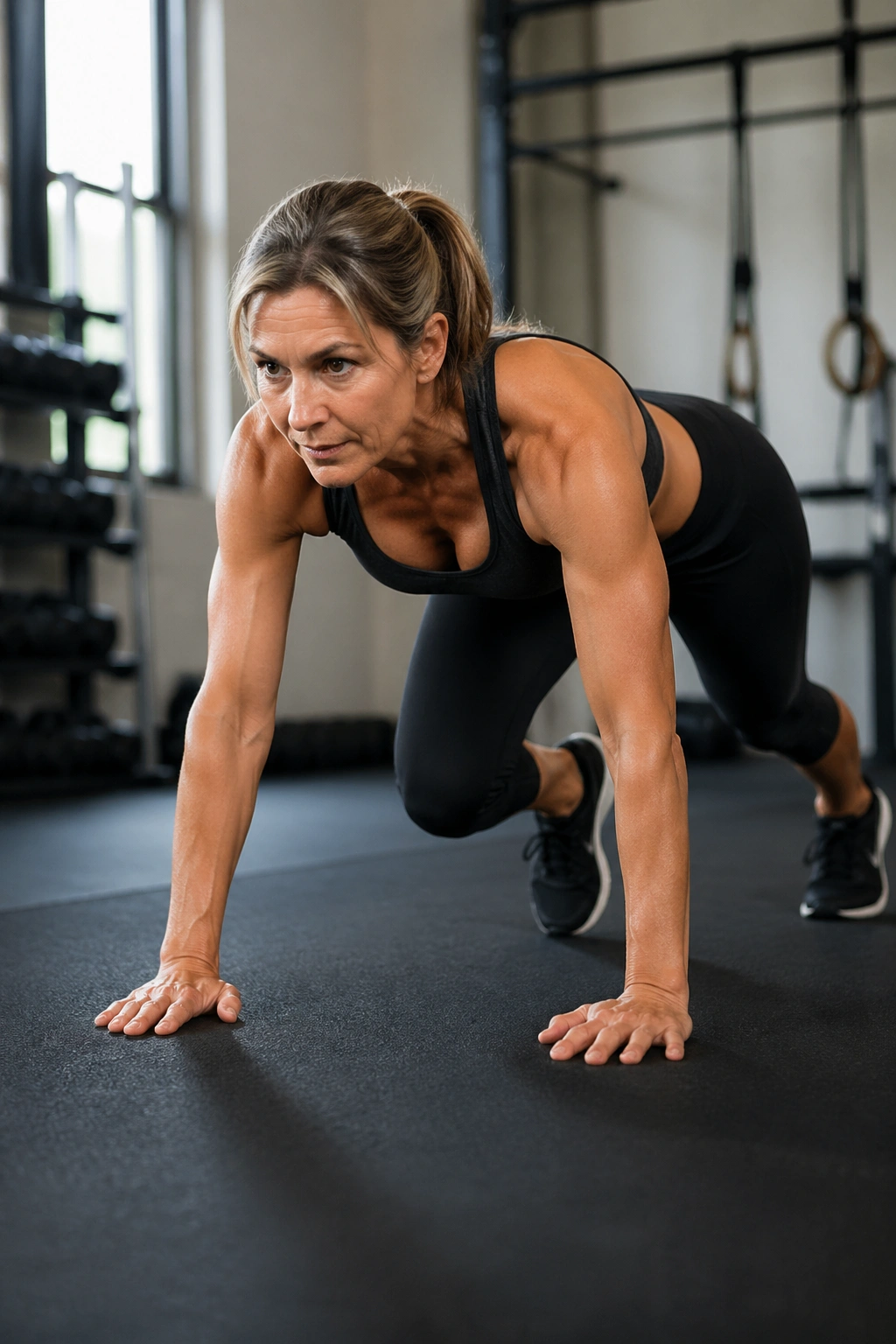
Bear crawls look a little ridiculous. That’s part of the charm.
Start on hands and knees, lift the knees an inch off the floor, and crawl forward with opposite hand and foot moving together. The core has to brace, the shoulders have to stabilize, and the legs work harder than they first seem to. It’s one of the few exercises that makes your body behave like one unit.
If crawling feels too much, hold the bear position without moving. Ten to 20 seconds at a time can still be a serious challenge.
A short crawl of 10 to 20 yards, repeated 4 to 6 times, is enough. Go slow. Keep the back flat. No rush. The slowness is part of what makes it effective.
24. Low-Impact Jump Rope
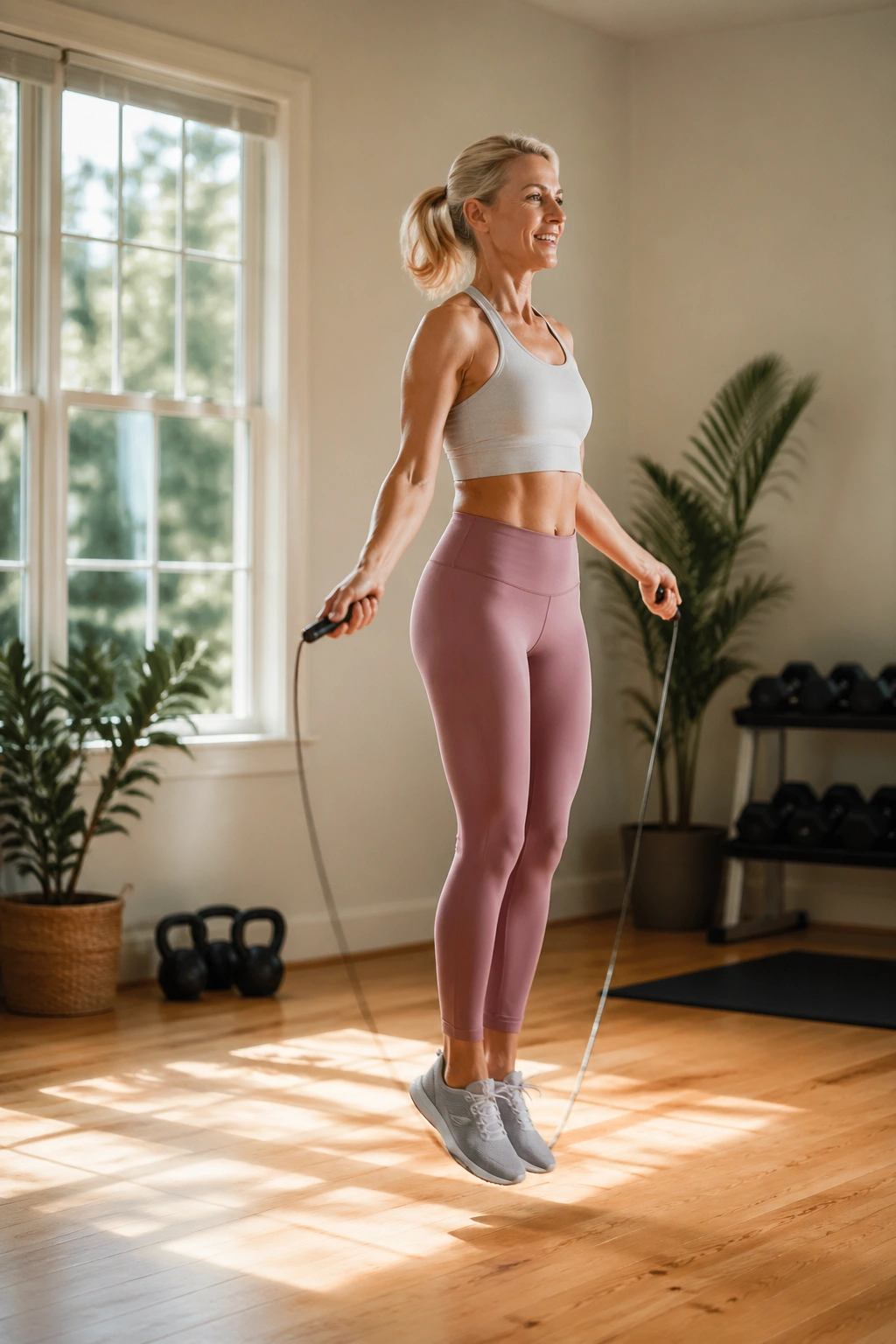
You do not need to jump high. You barely need to leave the floor at all.
With or without a rope, bounce lightly on the balls of your feet, keep the knees soft, and move for 20 to 40 seconds at a time. If your ankles or knees dislike impact, turn it into a simulated rope drill: step side to side and turn the wrists as if a rope is there.
That tiny rhythm can be a strong conditioning tool when done in rounds. It raises heart rate, wakes up the calves, and adds a little spring without the pounding that can come from traditional plyometrics.
Try 8 to 12 rounds with 20 seconds on and 40 seconds off. If the calves cramp, shorten the work interval. Tight calves are a warning sign, not a badge.
25. The Weekly Finish Every Woman Over 40 Can Use
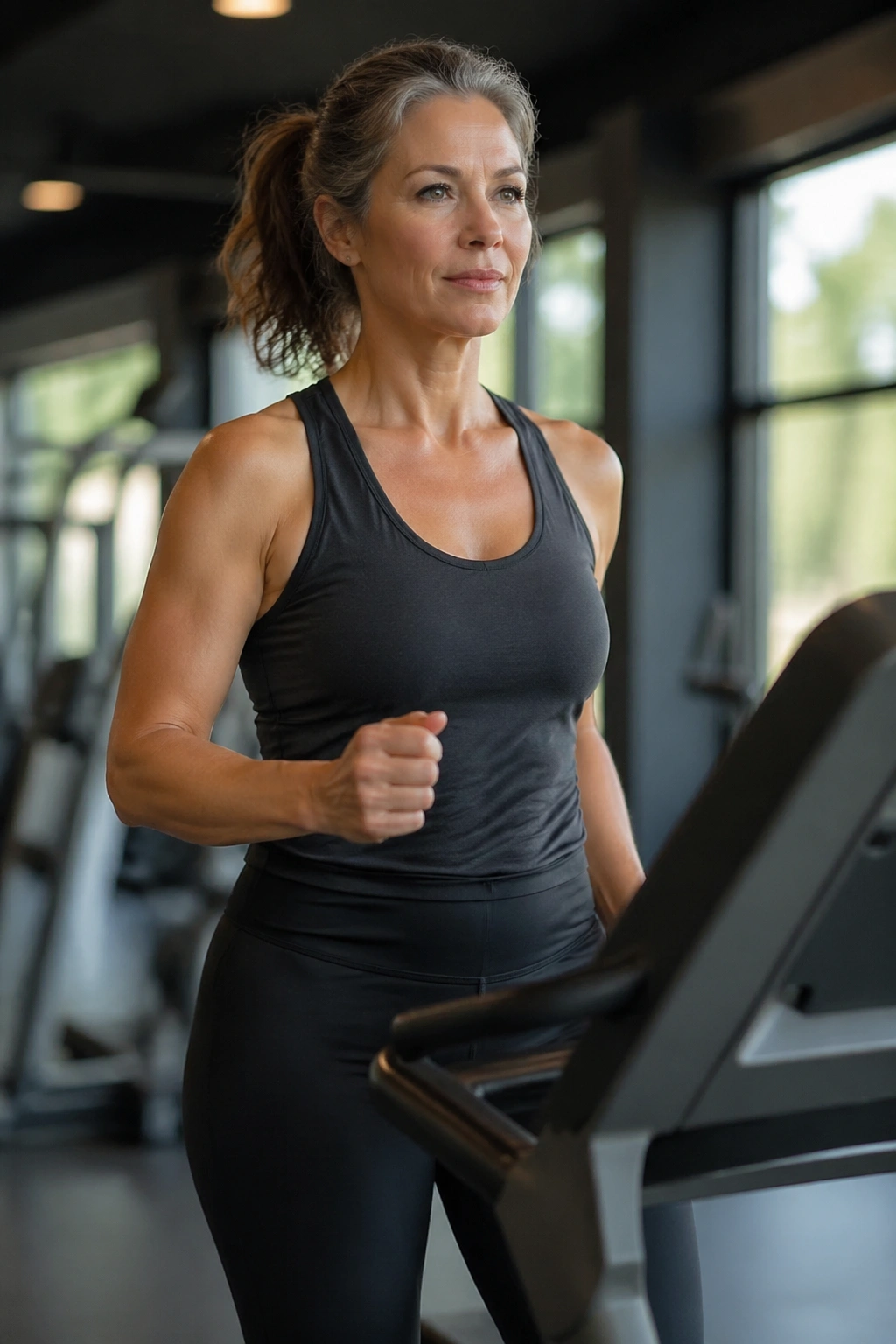
If the week has been chaotic, this is the workout I’d keep. It mixes walking, strength, and core work in one tidy block, and it respects the fact that recovery matters more now than it used to.
Do 5 minutes of brisk walking, 10 goblet squats, 10 dead bugs per side, 20 seconds of plank shoulder taps, and 30 seconds of farmer’s carries. Rest 60 seconds. Repeat for 3 rounds. That is enough to feel productive without turning the session into an ordeal.
Why I like this one
It covers the bases: legs, trunk, posture, and heart rate. It also works on a day when motivation is shaky, which is often the day a workout matters most.
Keep the weights moderate, the walking brisk, and the transitions clean. A session like this won’t feel flashy. It will feel useful. And useful is what sticks.
The women who get the best long-term results usually do not chase punishment. They chase repeatable work, three or four times a week, and they keep going long after the novelty wears off. That’s the part that changes a waistline.
