



There is nothing quite as discouraging as wanting to be active but feeling that familiar, sharp ache in your knees the moment you try to do something meaningful. You might have tried running or high-intensity interval training, only to spend the next two days walking like you’ve aged thirty years overnight. The temptation is to simply stop moving altogether, to protect the joints by staying sedentary. This is a trap.
Resting is useful for acute injuries, but for chronic knee issues, complete inactivity is usually the worst prescription. Joints need movement to circulate synovial fluid—the natural lubricant that keeps everything sliding smoothly. When you stop moving, that fluid stagnates. Your muscles weaken, your tendons tighten, and the joint support structures degrade. The goal isn’t to stop exercising; the goal is to find ways to get your heart rate up without subjecting your patellofemoral joints to the jarring forces of pavement pounding or explosive jumping.
You can absolutely improve your cardiovascular health, burn calories, and build endurance without turning your knees into a point of failure. The secret lies in decoupling the heart-rate-raising intensity from the high-impact movement. You are looking for activities that provide resistance without compression, and support without restriction. This list covers the most effective methods to achieve that balance, keeping your joints safe while your lungs do the work.
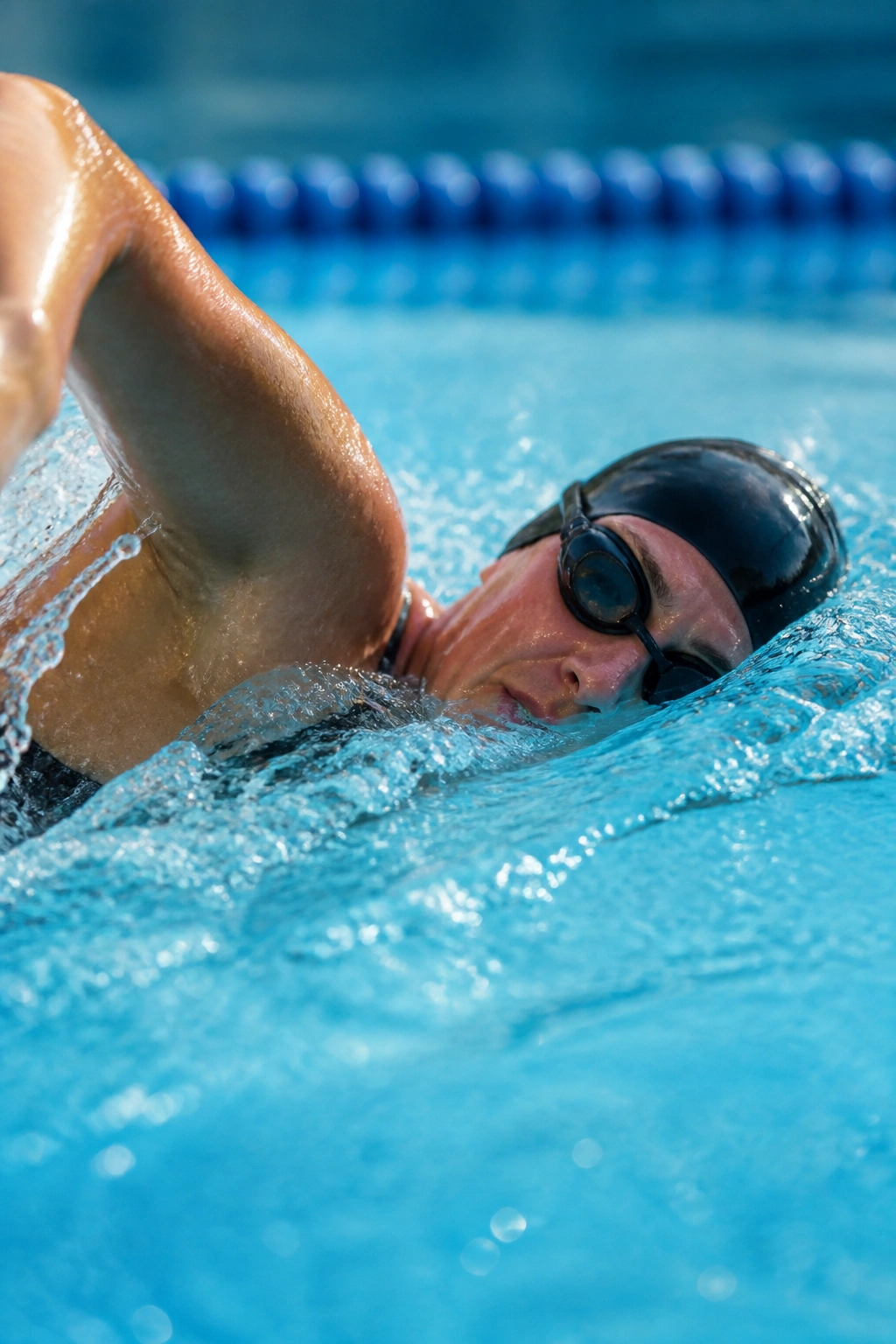
1. Swimming
Swimming is widely considered the gold standard for anyone dealing with joint pain. You are essentially removing gravity from the equation. When you are submerged, the water supports the vast majority of your body weight, which means your knees are effectively floating. There is zero impact, no ground reaction force, and the water provides constant, 360-degree resistance that forces your muscles to work harder than they would on land.
Why It Works for Bad Knees
The beauty of swimming lies in the hydrostatics. The water pressure around your legs can actually help reduce swelling if you have minor inflammation. Unlike land-based cardio where your muscles act as shock absorbers for the bones, the water acts as the shock absorber for you. You can push your cardiovascular system to its limit—sprinting laps, doing intervals, or maintaining a steady, grueling pace—without a single ounce of pressure landing on your meniscus or cartilage.
Technique Tips for Knee Safety
- Use a pull buoy between your legs if you feel your kick puts too much strain on your knees (especially with the frog-like motion of the breaststroke, which can aggravate medial knee pain).
- Focus on your arm pull and core rotation rather than a powerful, aggressive flutter kick.
- Use flippers only if you have healthy ankles, but be cautious, as the extra resistance can sometimes put torque on the knee joint.
2. Water Aerobics
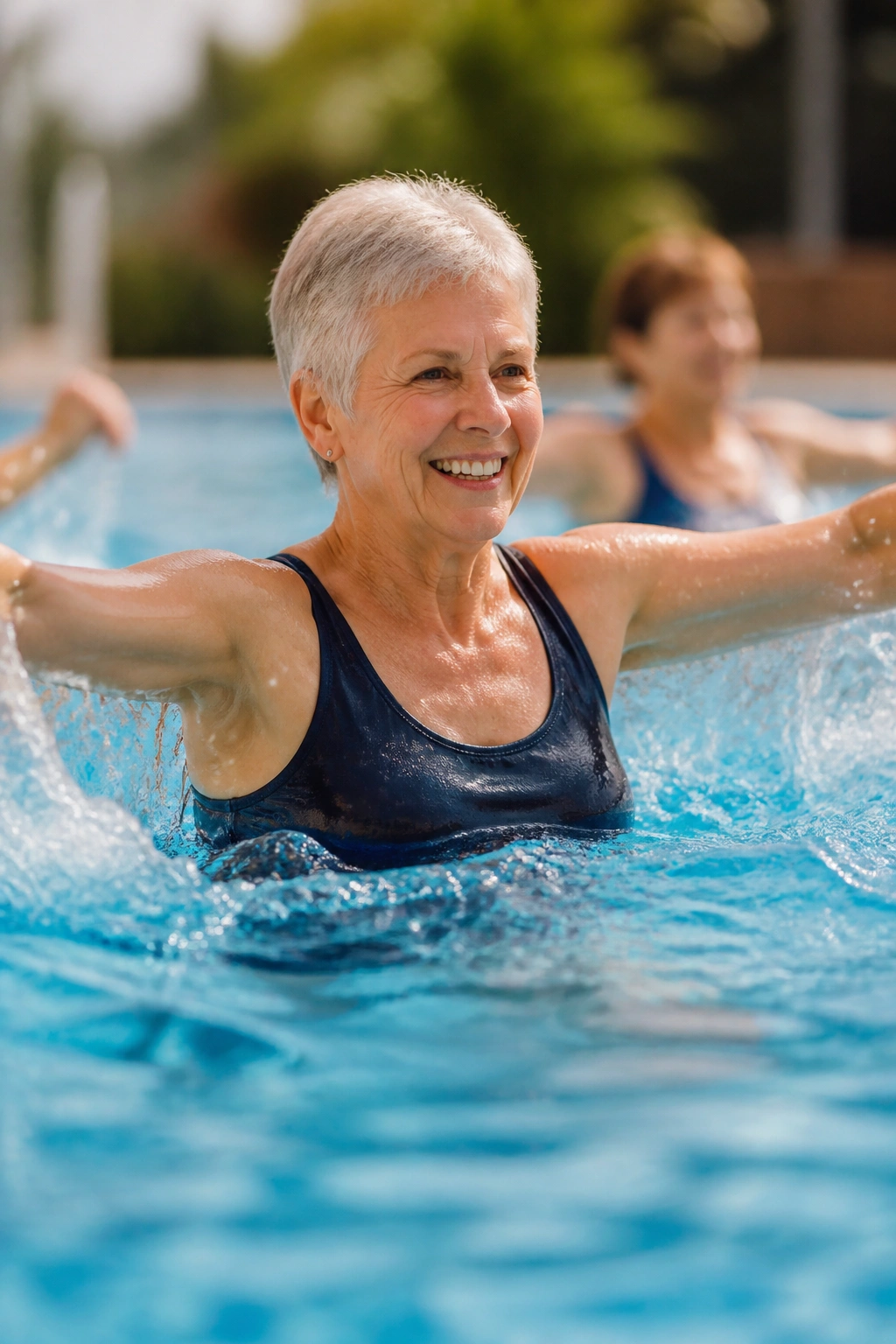
If you aren’t a strong swimmer or if you just find laps tedious, water aerobics classes offer the same weight-neutral benefits. You are standing in shallow water, usually chest-deep, which takes a significant percentage of your weight off your lower body. The water acts as a form of resistance training that works your muscles in every direction.
The Physics of Water Resistance
Because water is denser than air, moving your leg through it requires force. This isn’t just about moving your heart rate up; it’s about slow, controlled muscular engagement. This prevents the “cheating” momentum often found in land-based exercises. You cannot snap your joints into place in water because the fluid resistance forces you to maintain a slow, steady cadence.
Essential Gear
- Water shoes: These provide traction on the pool floor so you aren’t slipping, which can cause twisting motions that are brutal on the knees.
- Foam dumbbells: These allow you to add upper-body resistance, keeping your heart rate high even if you limit your lower-body movement to simple marches or side steps.
3. Stationary Cycling
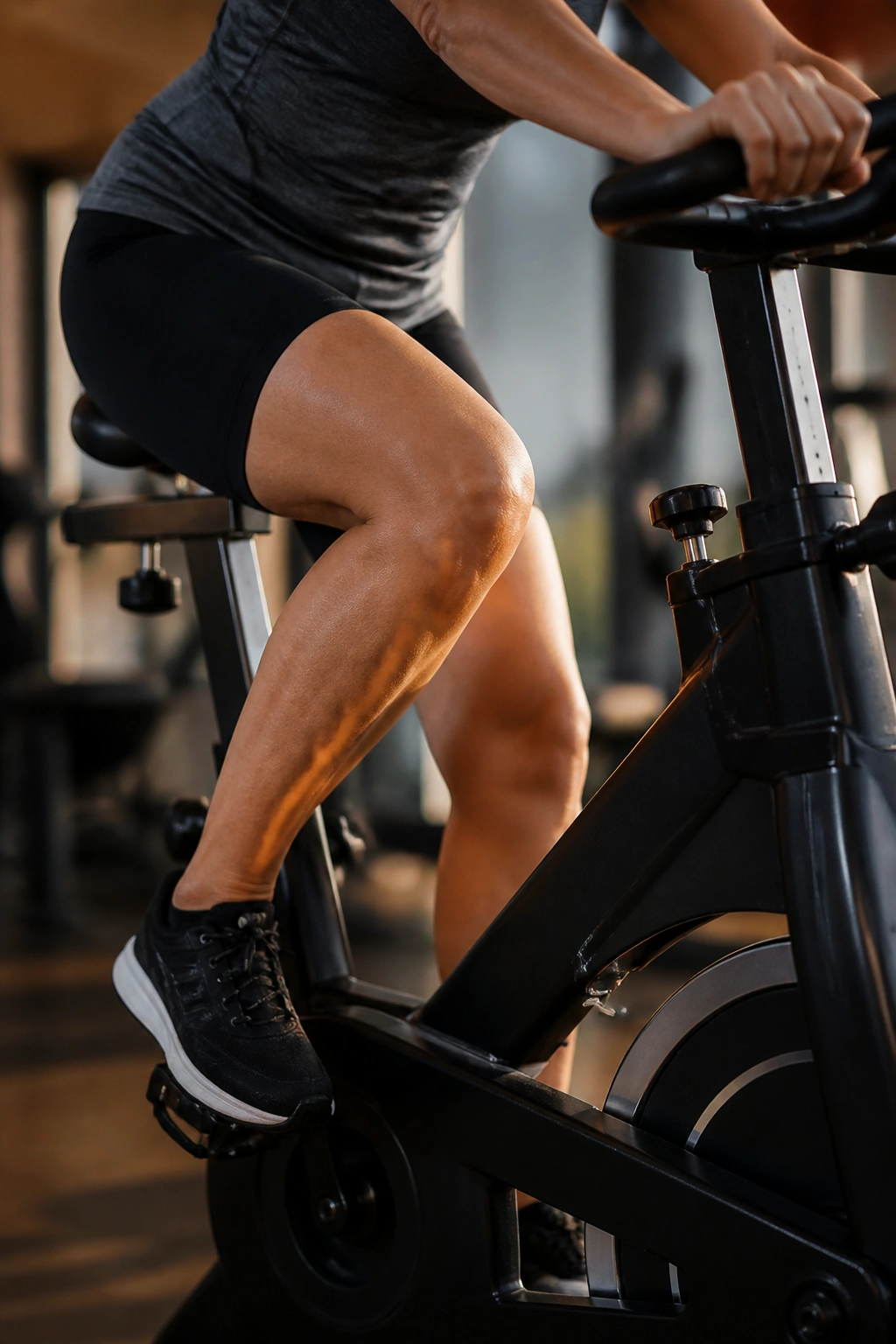
Cycling is often the first recommendation from physical therapists for knee rehabilitation. It is a closed-chain exercise, meaning your feet stay in contact with a platform—in this case, the pedal—which creates stability for the knee joint. It is smooth, rhythmic, and entirely adjustable.
The Importance of Bike Fit
You cannot just hop on a bike and start pedaling; you must dial in your fit. If your seat is too low, you are forcing your knee into deep flexion, which increases the pressure behind the kneecap significantly. If the seat is too high, you overextend, which pulls on the ligaments.
Setting Up for Success
- Seat Height: When you are at the bottom of your pedal stroke, your leg should have a very slight bend, maybe 5 to 10 degrees. You should never be locking your knee out or straining to reach the pedal.
- Fore-Aft Position: Your knee should be roughly over the ball of your foot when the pedals are parallel to the ground. This ensures you are using your glutes and quads effectively rather than grinding on your kneecaps.
- Resistance: Keep the resistance moderate. You want to aim for a higher cadence (spin faster) rather than a low, heavy gear that forces you to mash the pedals with sheer force.
4. Elliptical Trainer
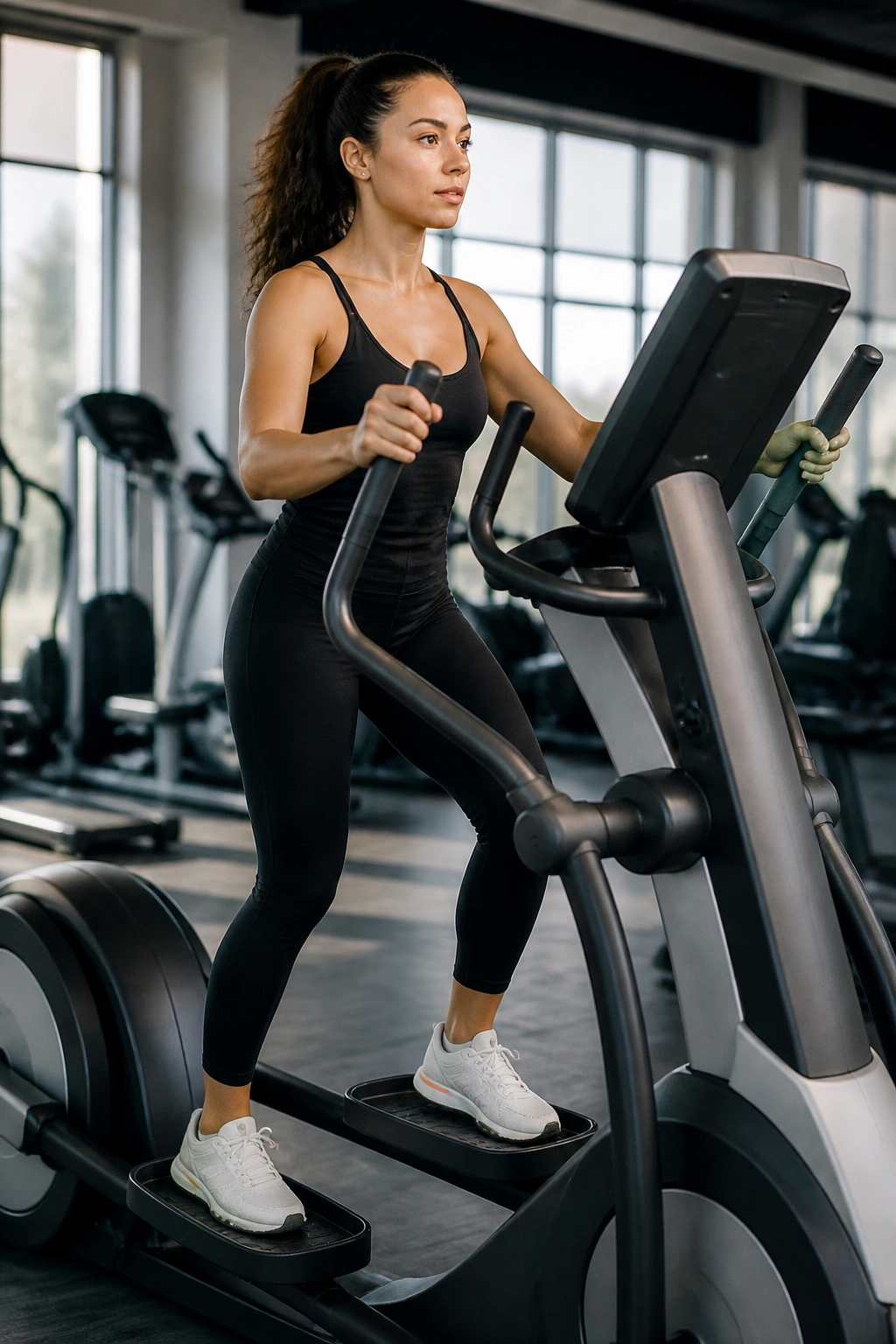
The elliptical machine is a classic for a reason: it mimics the natural gait of running without the heel-strike impact. Because your feet never leave the pedals, there is no jarring force traveling up your tibia into your knee.
The Glide Mechanics
Many people make the mistake of letting their heels lift off the pedals. Keep your entire foot planted firmly. If you only press with your toes, you shift the load forward onto the knee joint. By pushing through your entire foot—specifically focusing on the heel—you engage your hamstrings and glutes, which act as natural braces for your knees.
Finding the Right Stride
- Don’t force yourself into a stride length that feels unnatural. Most modern machines allow you to adjust the ramp angle and stride length.
- A flatter angle usually feels more natural for people with knee issues.
- Keep a slight bend in your knees the entire time; never lock them straight at the top of the pedal cycle.
5. Walking on Soft Surfaces
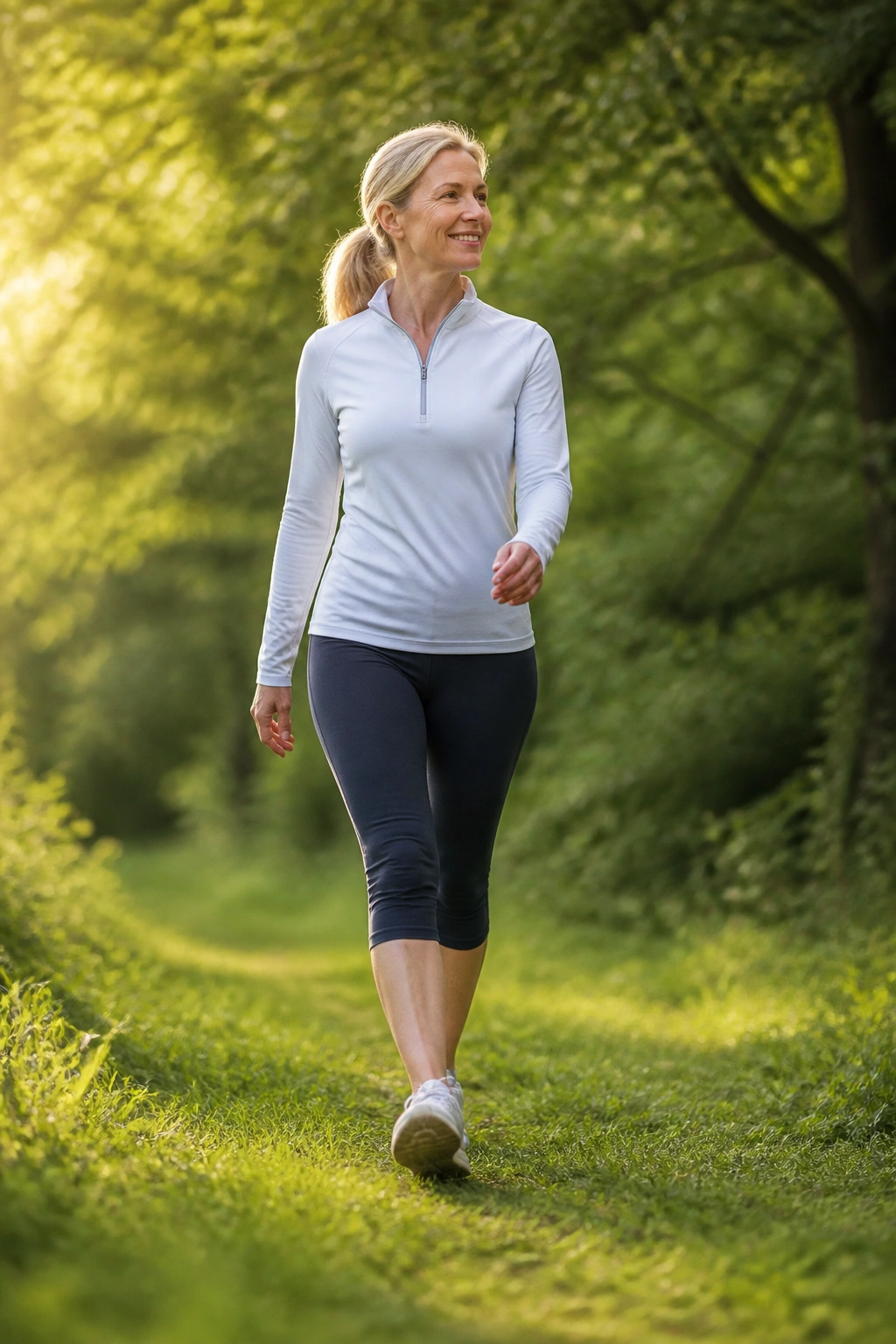
Walking is perhaps the most underrated form of cardio. It is accessible, functional, and requires no equipment. However, the surface matters immensely. Concrete and asphalt are unforgiving. They provide zero energy return, meaning your joints take 100% of the shock.
Where to Walk
- Grass or Dirt Trails: These surfaces are inherently softer than pavement. They provide a tiny bit of give that makes a world of difference over a 30-minute walk.
- Rubberized Tracks: If your local park or school has a track, use it. These are designed specifically to be impact-reducing.
- Treadmills: While they are better than concrete, some older treadmills are quite stiff. If you have to use one, look for models with “deck cushioning” technology.
Form Matters
- Take shorter, quicker steps rather than long strides. Long strides force your lead heel to strike the ground hard, which sends a shockwave directly into your knee.
- Think about rolling from your heel to your toe smoothly, rather than slapping your foot down.
6. Rowing Machine
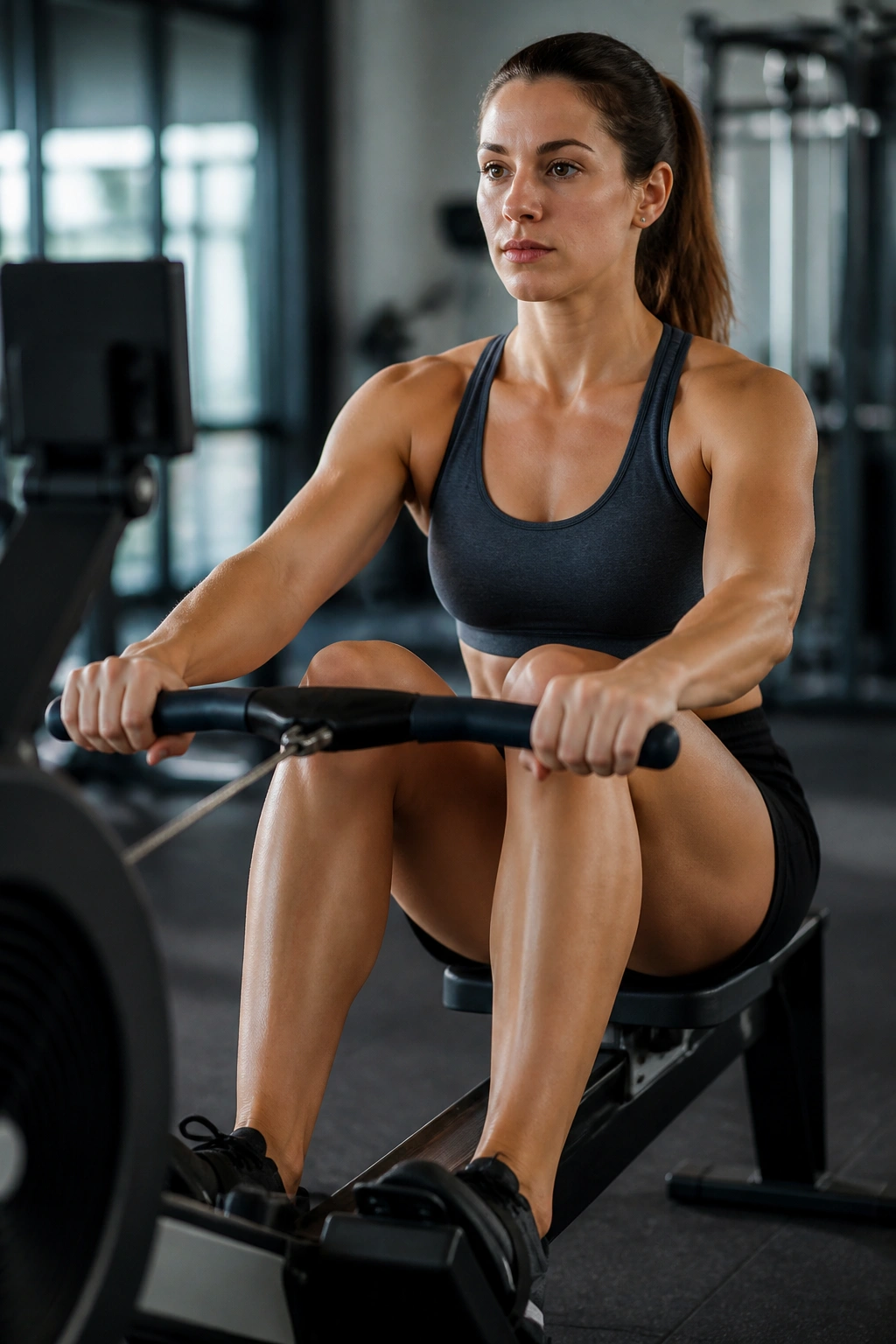
Rowing is a full-body workout that is exceptionally efficient for burning calories, but it is also fantastic for knee health when done with proper form. The key here is the “leg drive.”
The Power of the Hinge
Rowing is primarily a hip-driven movement. You use your legs to push away, but you aren’t doing a deep squat at the start. You are sliding into a controlled compression. If you find your knees ache during the catch (the start of the stroke), it is usually because you are trying to squeeze too much compression into your legs.
Troubleshooting the Stroke
- Don’t pull your knees all the way into your chest. Stop when your shins are vertical. Going past vertical forces the knee into a deep bend that can cause “crepitus” or pain if your patella is already irritated.
- Focus on driving through your heels. The power should originate from your glutes and hamstrings. If you feel it in your quads, you are likely putting too much pressure on the front of the knee.
7. Tai Chi
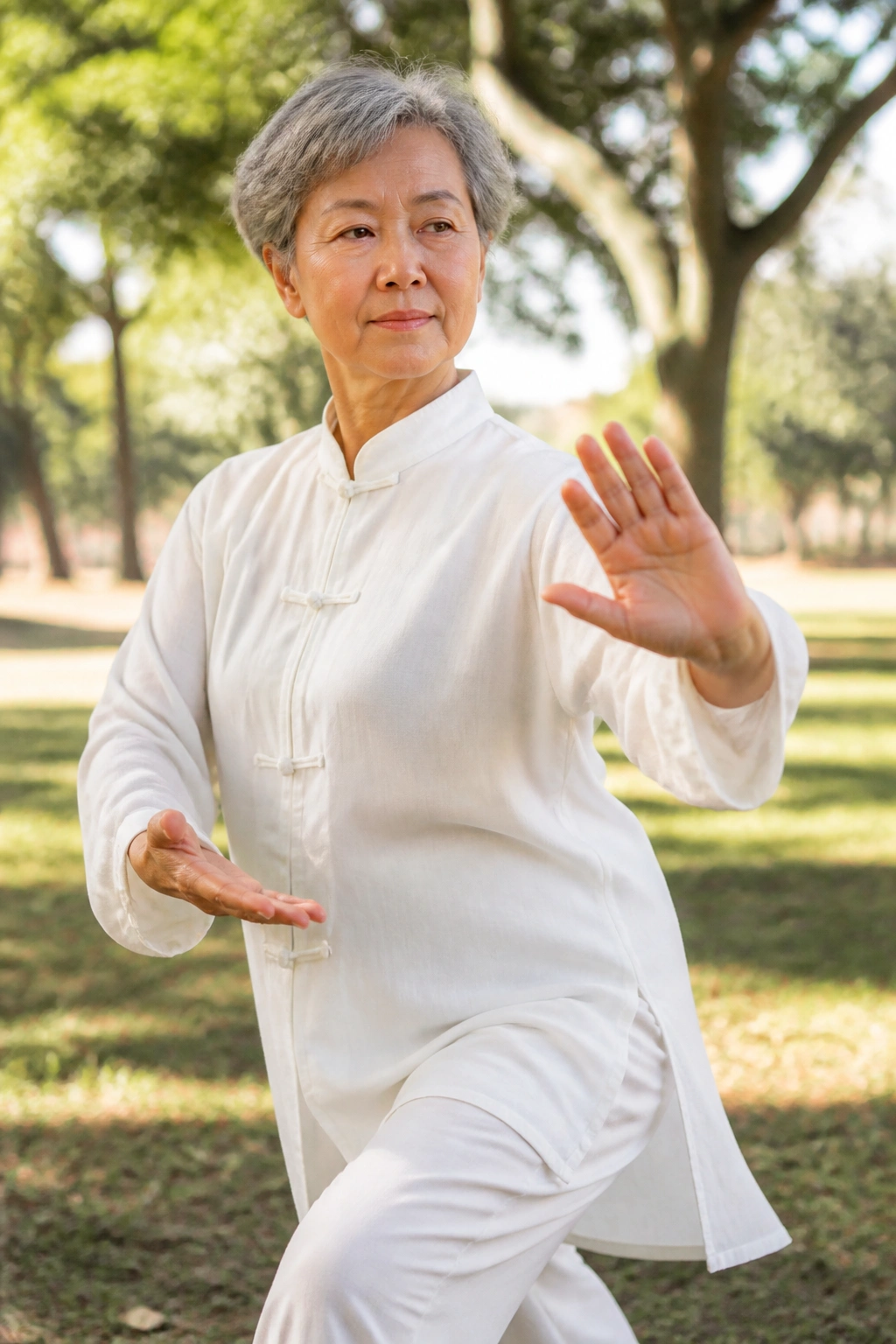
Tai Chi isn’t just for balance; it is a cardiovascular activity if you choose the right style and sustain the movement. It requires constant, slow-motion shifting of weight, which builds incredible stability in the muscles surrounding the knee.
Why It Helps
Most knee pain stems from instability. Your knee is a hinge; it isn’t designed to rotate. If your ankles or hips are weak, your knee compensates by twisting. Tai Chi teaches you to move your entire body as a unit, taking the stress off the knee and placing it on your core and postural muscles. It builds endurance in the quadriceps without the high-speed impact of traditional cardio.
How to Use It
- Look for “Yang style” or “Sun style” routines which are often gentler on the knees.
- Stay in a higher stance. You don’t need to drop into deep lunges to get the benefits; keep your knees slightly bent but soft.
8. Pilates
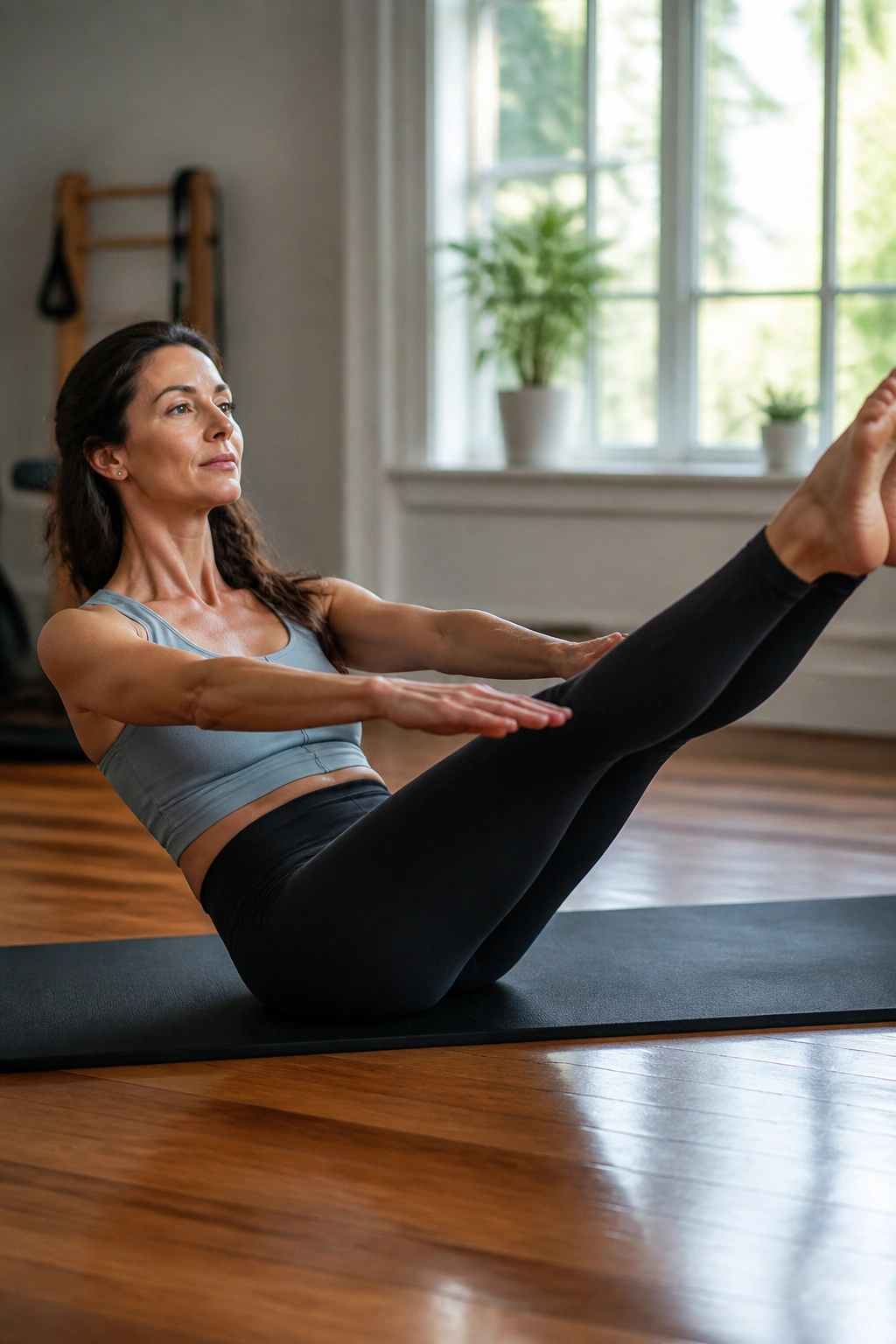
Pilates is often mistaken for a stretching routine, but at the right intensity, it is a demanding cardiovascular and muscular endurance workout. It focuses heavily on the “chain” of muscles—your core, hips, glutes, and feet.
Building Support
When your glutes are weak, your knees take the brunt of every step. Pilates strengthens the muscles that support the knee from above (the hips) and below (the ankles/calves). This creates a more stable foundation for the joint.
Essential Modifications
- Avoid exercises that require “clasping” behind the knees or deep kneeling positions if these cause pain.
- Use props like squishy balls or blocks to ensure your knees are properly aligned during leg work.
- If an exercise calls for a deep lunge or squat, shorten the range of motion. You can still get the muscular engagement without the deep knee flexion.
9. Yoga (Modified)
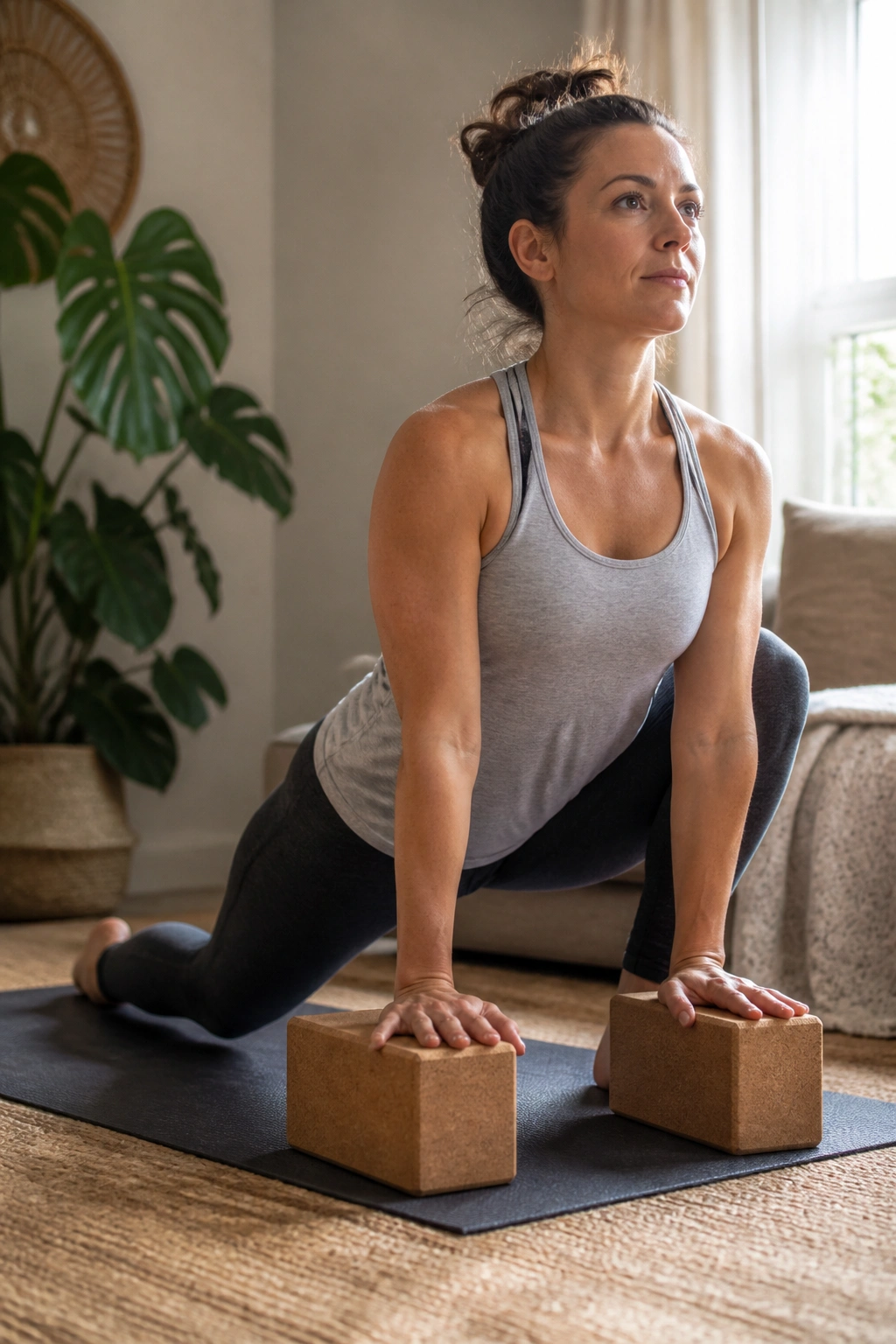
Yoga can be tricky for knees because many poses—like Pigeon, Warrior II, or Virasana (Hero Pose)—put intense torque on the knee joint. However, a flow-based yoga practice (Vinyasa or Power Yoga) can be a great cardiovascular workout if you know how to adapt it.
Protecting the Joint
- Avoid deep external rotation: If you have knee pain, avoid poses that twist the knee while your foot is planted.
- Use blocks: Always place blocks under your hands so you aren’t forcing your body into a position that makes your knees “crunch” to get the floor.
- Flow with speed: If you move through sun salutations at a moderate pace, you will get your heart rate up without needing to jump or pound the floor.
10. Stair Climber
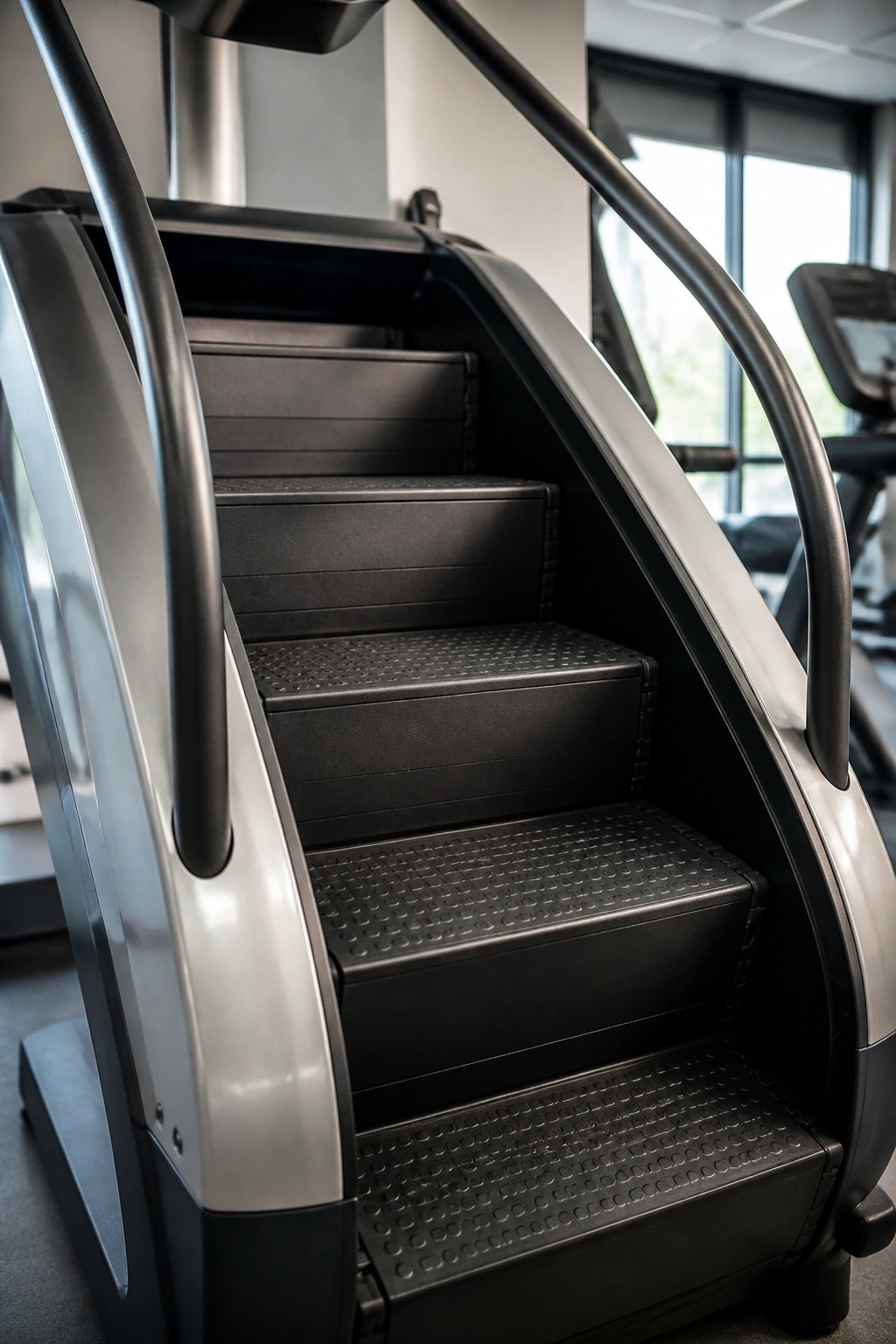
The stair climber is effective, but it is a “proceed with caution” item. It is a fantastic calorie burner, but it does put the knee through repetitive flexion under load. If your knees are acutely inflamed, skip this. If they are just “cranky,” this might be a viable option if you use it correctly.
The Secret to Knee-Safe Stair Climbing
- Do not rest your body weight on the handrails. When you lean heavily on the rails, you hunch over and dump your weight forward, which puts maximum pressure on your kneecaps.
- Stand tall. Use your glutes to push the pedal down.
- Take shorter, faster steps rather than pushing the pedal all the way to the bottom. Shortening the range of motion keeps your knee from going into that deep, painful flexion zone.
11. Shadow Boxing
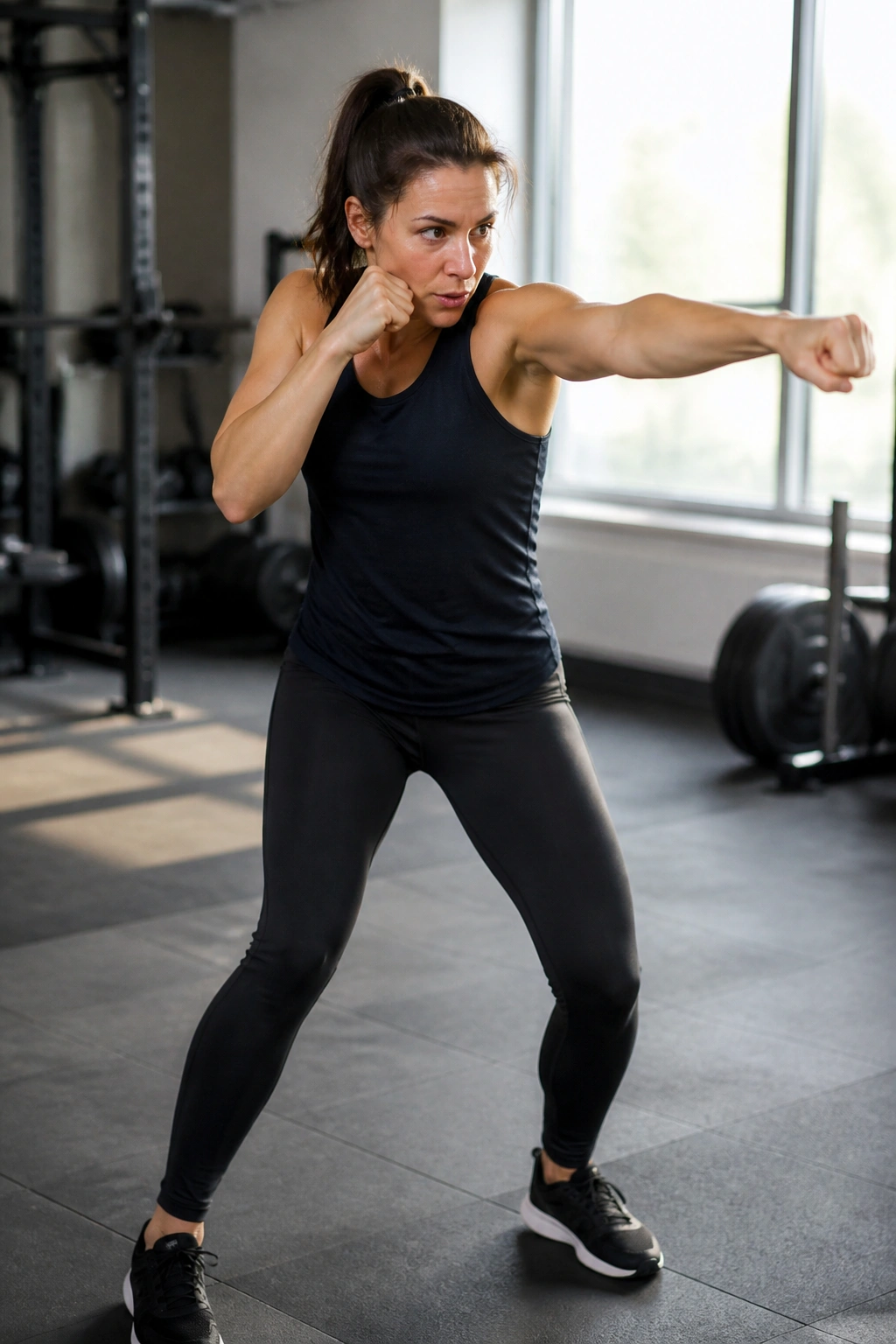
You don’t need a heavy bag to get a cardio workout from boxing. Shadow boxing allows you to move your body, rotate your core, and keep your heart rate high while your feet stay planted (or shuffle lightly).
Why It’s Safe
Unlike running, there is no impact phase where your leg absorbs your body weight. You are generating power from your hips and core and throwing it into the air.
Form Cues
- Keep a soft bend in your knees, but don’t bounce.
- Focus on the rotation. Your knee should follow the direction of your toe. If you rotate your hips but leave your foot planted, you are torquing your knee. Pivot your back foot with the punch to allow the knee to stay safe.
12. Battle Ropes
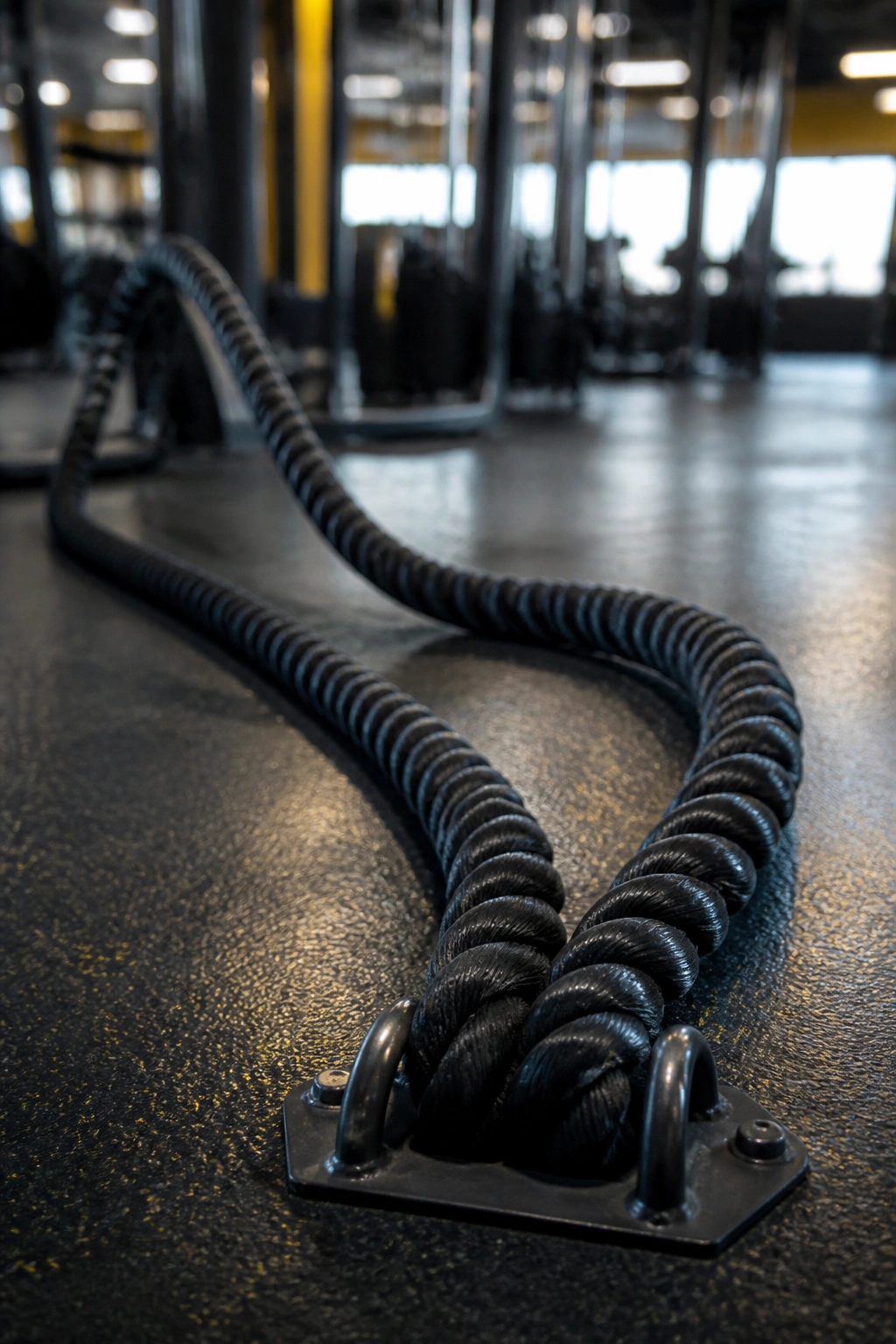
Battle ropes are a phenomenal tool for high-intensity cardio that involves zero impact. You are standing in a quarter-squat position and moving your arms, shoulders, and core, but your legs are essentially static.
Stability Over Mobility
Because you are staying in one place, your knees don’t have to absorb any travel force. The hardest part is maintaining the stance. If holding the squat bothers your knees, just stand a bit taller. You can get an incredible heart rate spike in just 30 seconds of high-intensity waving with the ropes.
Avoiding “The Bounce”
- Resist the urge to bounce your legs to get the ropes moving. That bounce is where the knee stress comes from.
- Keep your knees aligned over your toes. If they start to collapse inward (valgus), stop and reset your stance.
13. Hand-Crank Ergometer (Arm Bike)
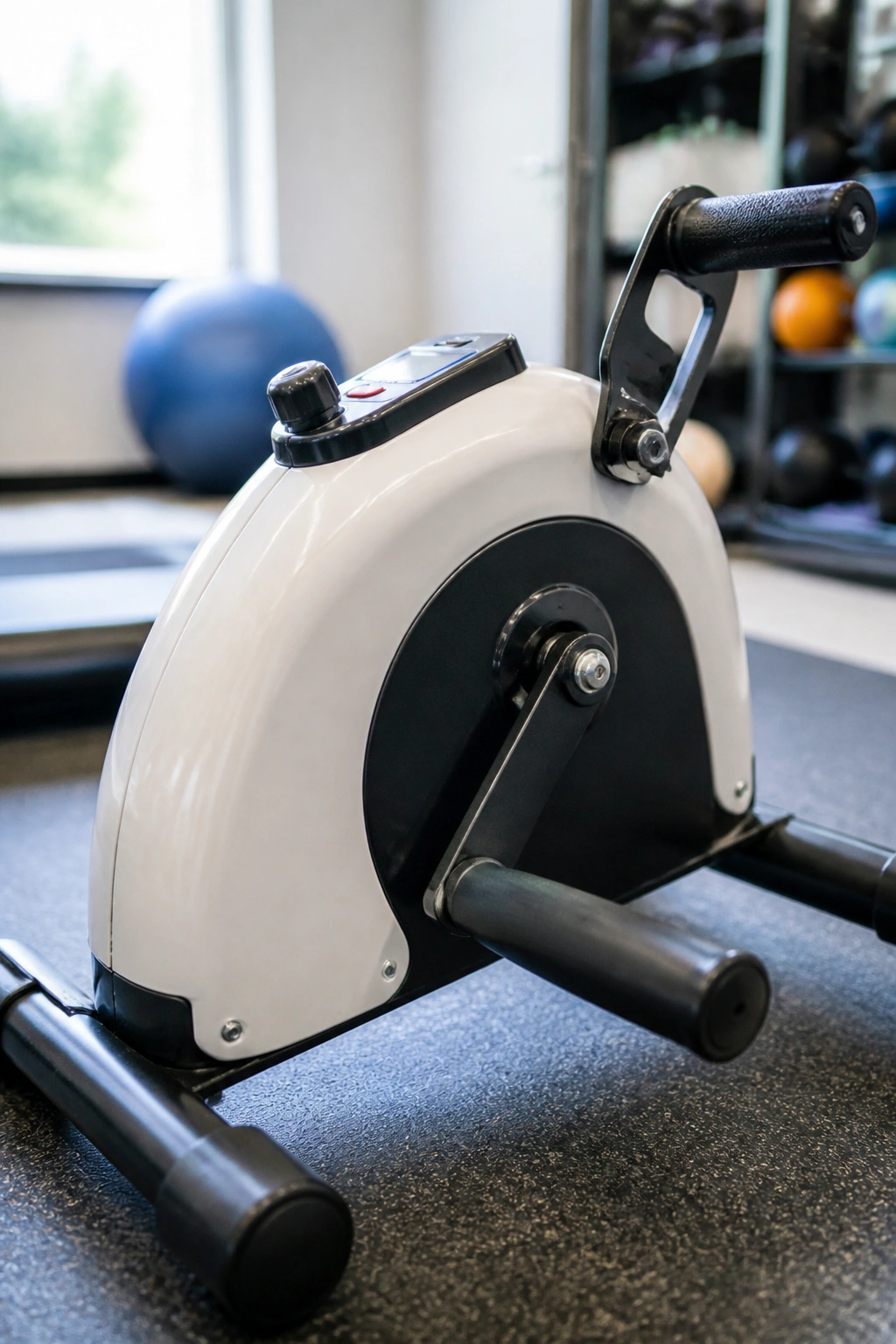
You have likely seen this in physical therapy clinics. It is essentially a bicycle for your arms. It is rare to see these in standard commercial gyms, but if you have access to one, it is a goldmine for knee pain sufferers.
Pure Cardiovascular Bliss
This is 100% upper body cardio. You can go for 20, 30, or 40 minutes, and your knees will never know you exercised. It is excellent for intervals. Crank as hard as you can for 30 seconds, then slow down for 60. You will be sweating within five minutes.
If You Don’t Have Access
- If you can’t find an arm bike, look for a “seated elliptical” or “seated stepper.” These machines allow you to perform a stepping motion while seated, taking the weight off your knees entirely.
14. Rebounding
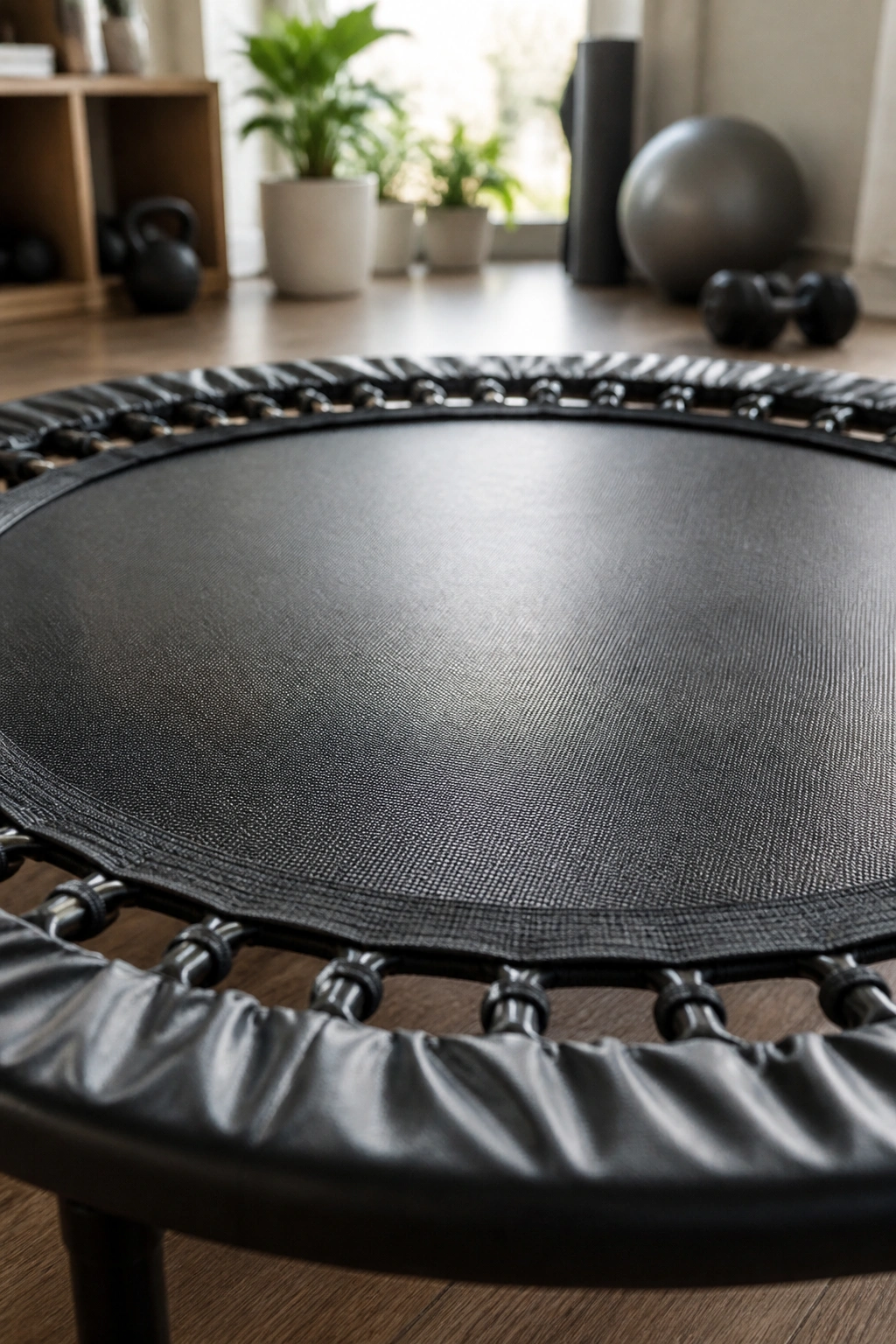
Rebounding is jumping on a mini-trampoline. It sounds counterintuitive—shouldn’t jumping hurt the knees? Interestingly, the mat of a quality rebounder absorbs nearly 80% of the impact force.
The Physics of the Bounce
When you land, the mat stretches and decelerates your body much more slowly than concrete does. This gives your muscles time to react and contract, protecting the joint. It is a very effective way to get lymphatic drainage and a high heart rate.
Starting Out
- Don’t jump for height; jump for speed. Keep your feet close to the mat. This is often called “the health bounce.”
- Use a rebounder with a stabilizing handlebar if you are concerned about balance. This allows you to exert more force while feeling secure.
15. Kettlebell Swings
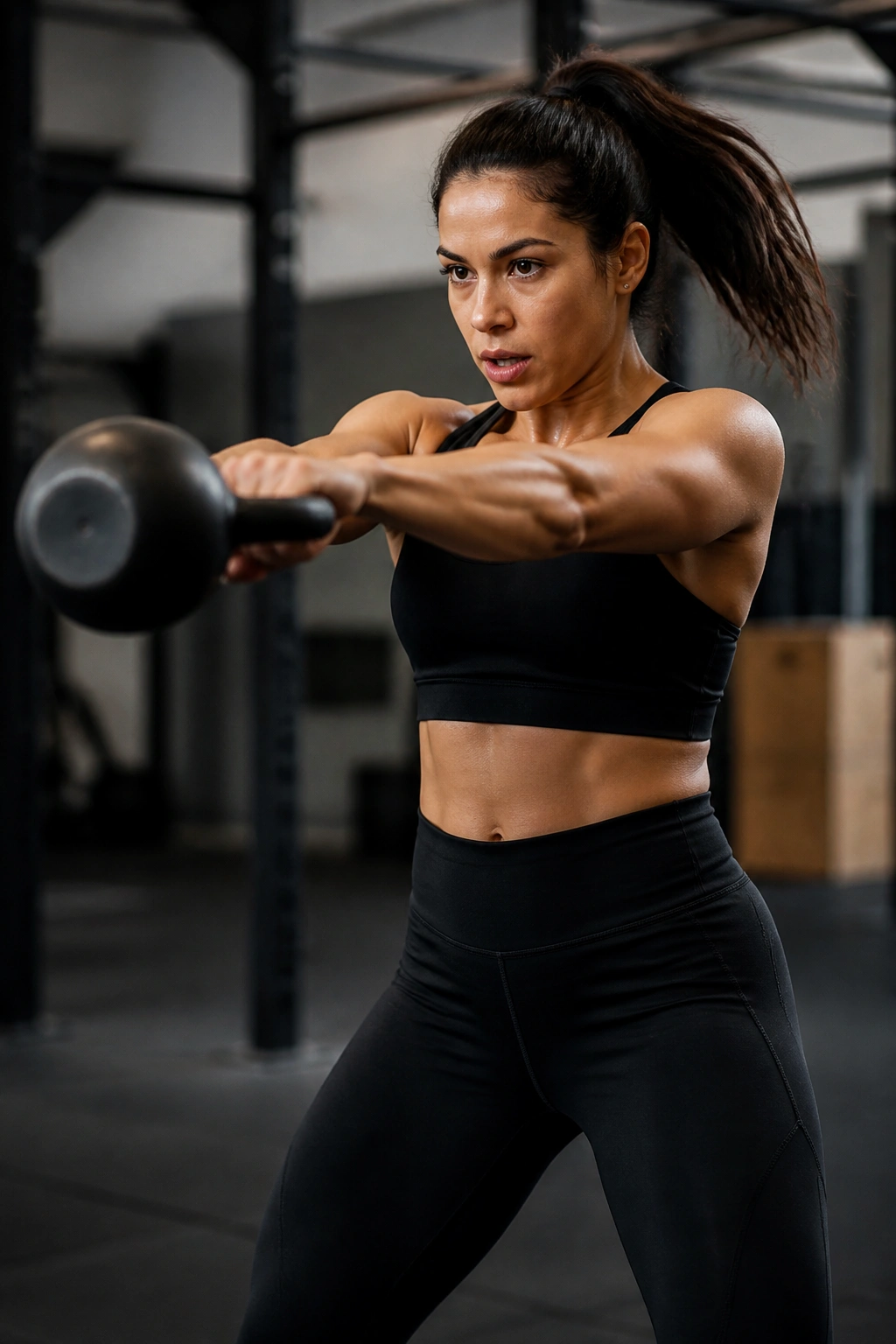
The kettlebell swing is a hinge movement, not a squat. This distinction is critical for knee pain. A squat requires your knees to bend significantly under load. A swing requires your hips to snap back while your knees remain relatively soft and stable.
The Glute Engine
If you perform this correctly, 90% of the effort comes from your glutes and hamstrings. Your knees should hardly move. You are effectively using your legs as sturdy pillars while your hips drive the weight.
The Safety Check
- If you feel this in your lower back or your knees, your form is off.
- Your shins should remain almost vertical throughout the entire movement. If your knees are traveling forward over your toes, you have turned the swing into a squat. Stop, reset, and push your hips further back.
16. Nordic Walking
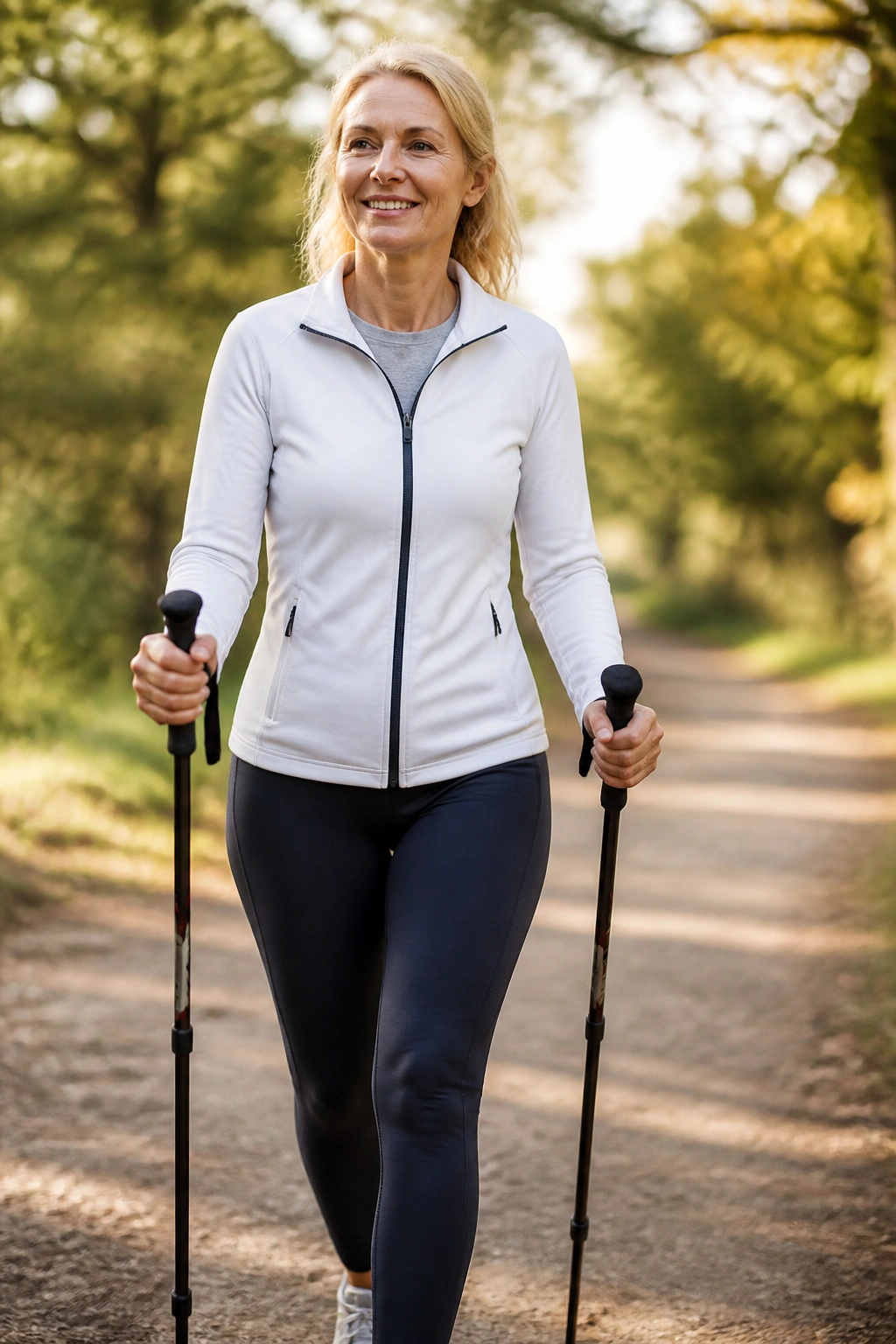
Nordic walking involves using two poles while walking, similar to cross-country skiing. The poles allow you to distribute some of your weight onto your arms.
Pole Physics
By planting the poles and pushing off, you are offloading a percentage of your body weight from your lower extremities. Studies have shown that using poles can reduce the ground reaction force on the knees by a significant margin compared to standard walking.
Why It Works
It turns a walk into a full-body workout. You are engaging your chest, shoulders, and core, which increases the caloric burn without needing to speed up your pace or add more impact. It’s a great way to walk longer distances without the usual knee soreness setting in at the three-mile mark.
17. Water Walking
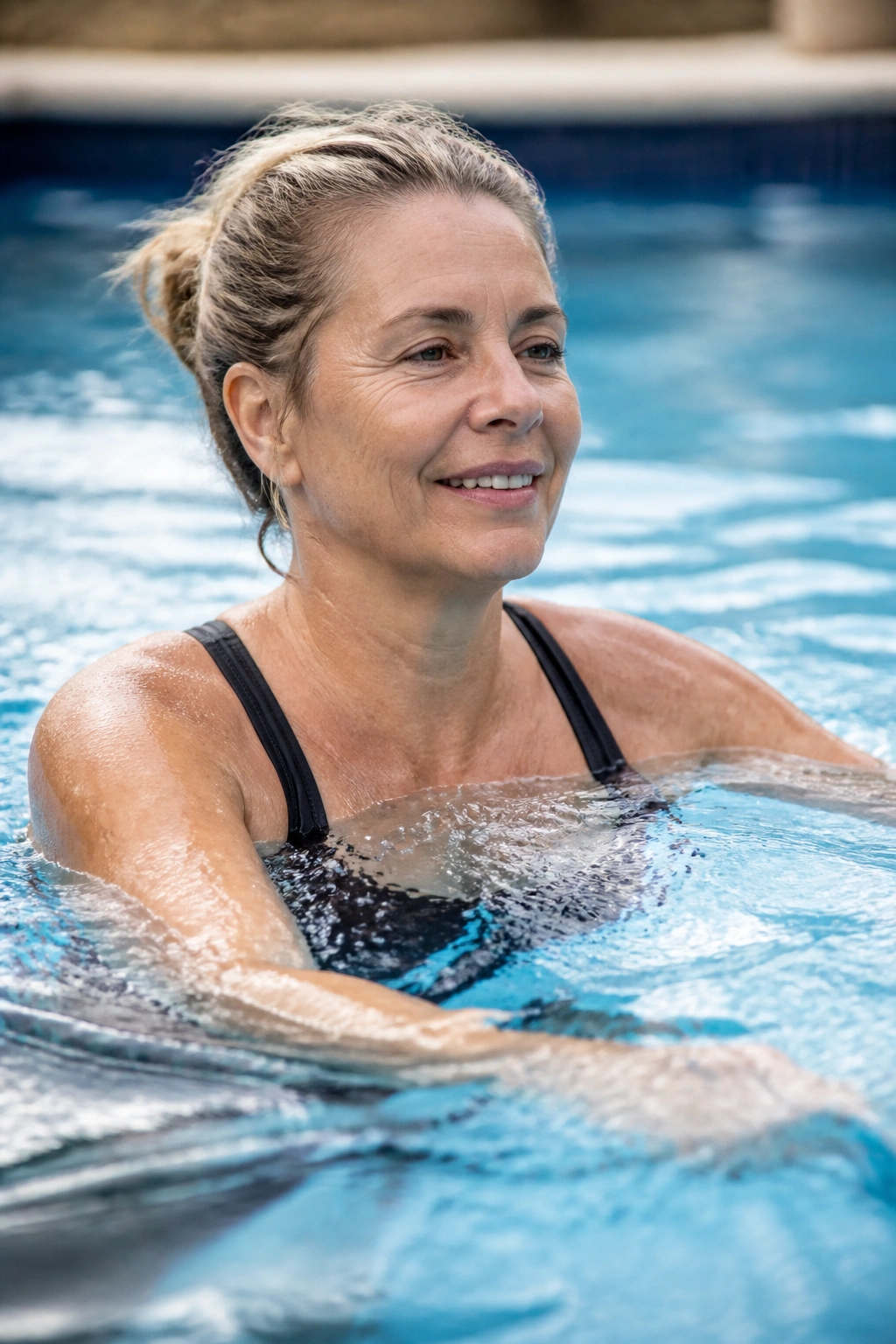
Similar to water aerobics, but focused on forward momentum. Walk across the pool, either with or against the current if your pool has a resistance jet.
Resistance Intensity
You can increase the intensity of this workout simply by changing your speed or wearing water-resistance cuffs on your ankles. Because water is roughly 800 times denser than air, walking briskly through the water is equivalent to jogging on land, but without the joint-jarring impact.
Vary the Direction
- Walk forward, walk backward, and walk sideways (side-stepping). Side-stepping is particularly good for the stabilizing muscles of the hip (the gluteus medius), which are essential for keeping the knee tracking correctly.
18. Recumbent Biking
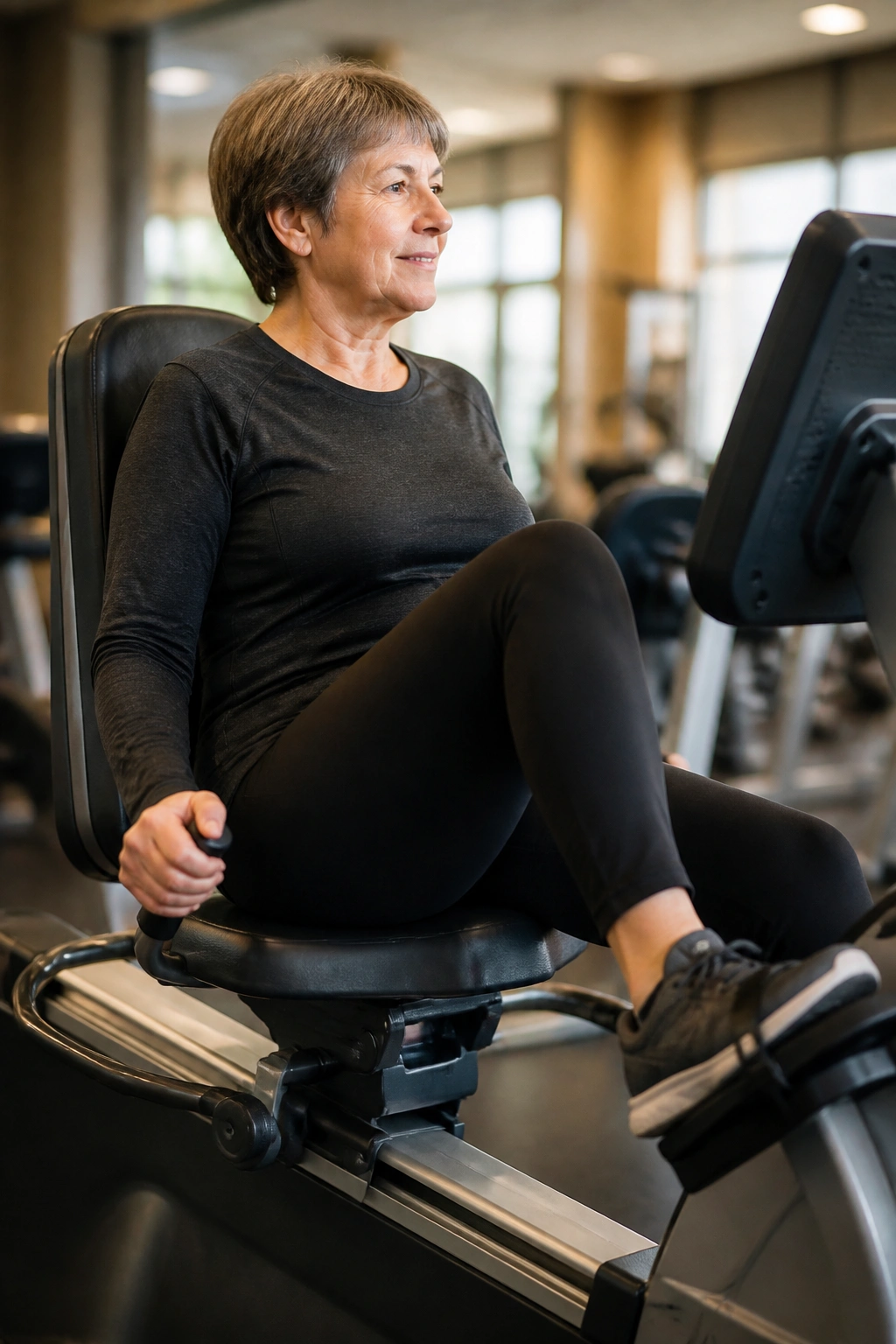
The recumbent bike is the “lazy” cousin of the stationary bike, but it is a powerhouse for knee-pain sufferers. Because you are seated in a reclined position with a backrest, you have full lumbar support.
No Balance Required
You don’t need to balance or stabilize your torso, which means you can direct every ounce of your energy into the pedaling motion. For someone with significant knee issues or balance concerns, this is the most secure way to get cardio.
Correcting the Distance
- The most common mistake on a recumbent bike is sitting too far away. If you have to reach for the pedals, you are overextending your knee.
- Slide the seat forward until your leg is almost straight but still has that critical slight bend at the peak of the stroke. You should feel comfortable, not strained.
Final Thoughts
When you deal with chronic knee pain, exercise becomes an experiment in finding what works for your specific anatomy. There is no magic solution that applies to every single person. What feels soothing for one person—like swimming—might feel awkward or inaccessible for someone else.
The common thread across all these methods is the shift from high-impact, weight-bearing activities to movements that respect your joints. You aren’t giving up on fitness; you are upgrading your toolkit. Start slow. If you decide to try the rower, do five minutes, not thirty. If you try the pool, test your tolerance for ten minutes before committing to an hour.
Your knees will tell you what they like. The burn in your muscles should be intense, but the sensation in your joints should be neutral or pleasant. If you feel sharp, stabbing pain, stop immediately and re-evaluate your form or switch to a different method. Consistency is the goal, and the only way to stay consistent is to find the movements that allow you to show up again tomorrow without dreading the pain.
