



The first gym session is usually the awkward one. You walk in, spot the machines, and suddenly every piece of equipment seems to require a secret handshake.
Beginner gym routines for women work best when they are plain, repeatable, and a little boring. Boring is good here. A routine that asks for five exercises, two sets each, and sixty seconds of rest beats a glamorous plan you abandon after one day.
If a set ends with your form wobbling, the weight is too heavy. If you can chat through every rep, it’s too light for most strength work. The sweet spot sits in the middle: enough challenge to feel it, not enough chaos to make you dread the next visit.
Some sessions lean on machines. Others use dumbbells, cables, or a treadmill incline. A few are made for crowded gyms or days when you want the shortest possible workout and still leave feeling like you did something useful. Start with the one that matches your mood, your equipment, and the amount of patience you have for that day.
1. Full-Body Machine Circuit
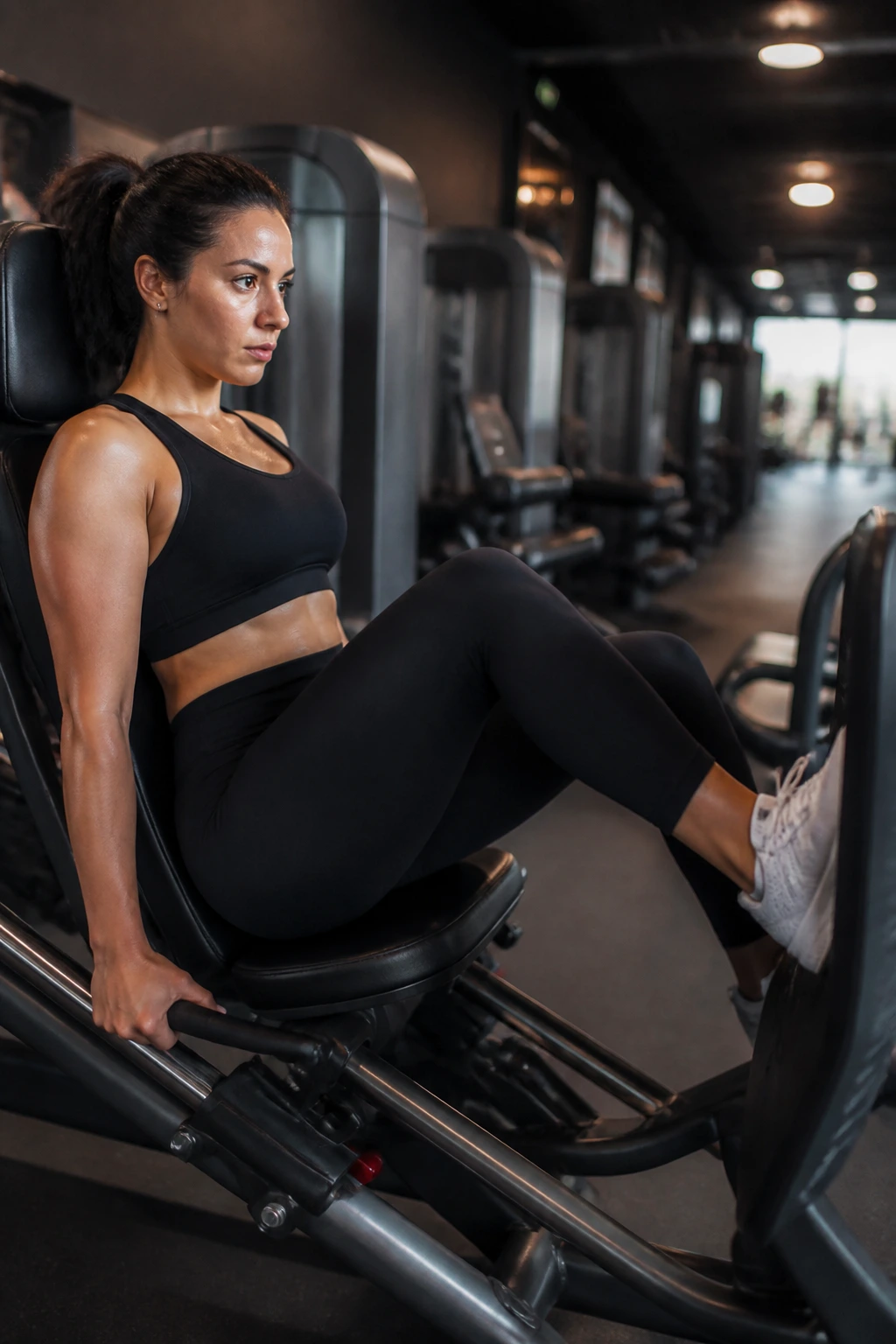
Machines are the easiest way to quiet the noise in your head. You sit down, set the pin, and the path is already there. That matters more than people admit, especially when you’re still learning how a workout is supposed to feel.
Run this as a simple circuit: leg press, chest press, seated row, shoulder press, and lat pulldown. Use 2 sets of 10 reps on each machine, then rest 45 to 60 seconds before the next one. Pick a weight that feels controlled on rep 1 and honest on rep 10.
How to Run It
- Leg press: feet shoulder-width apart, lower until your thighs are close to your chest
- Chest press: keep your shoulders down and your wrists straight
- Seated row: pull to your ribs, not your chin
- Shoulder press: stop if your lower back starts arching
- Lat pulldown: bring the bar to the upper chest, then return slowly
Best for: first-timers who want a clear, low-stress routine with no guesswork.
2. Dumbbell Basics Day
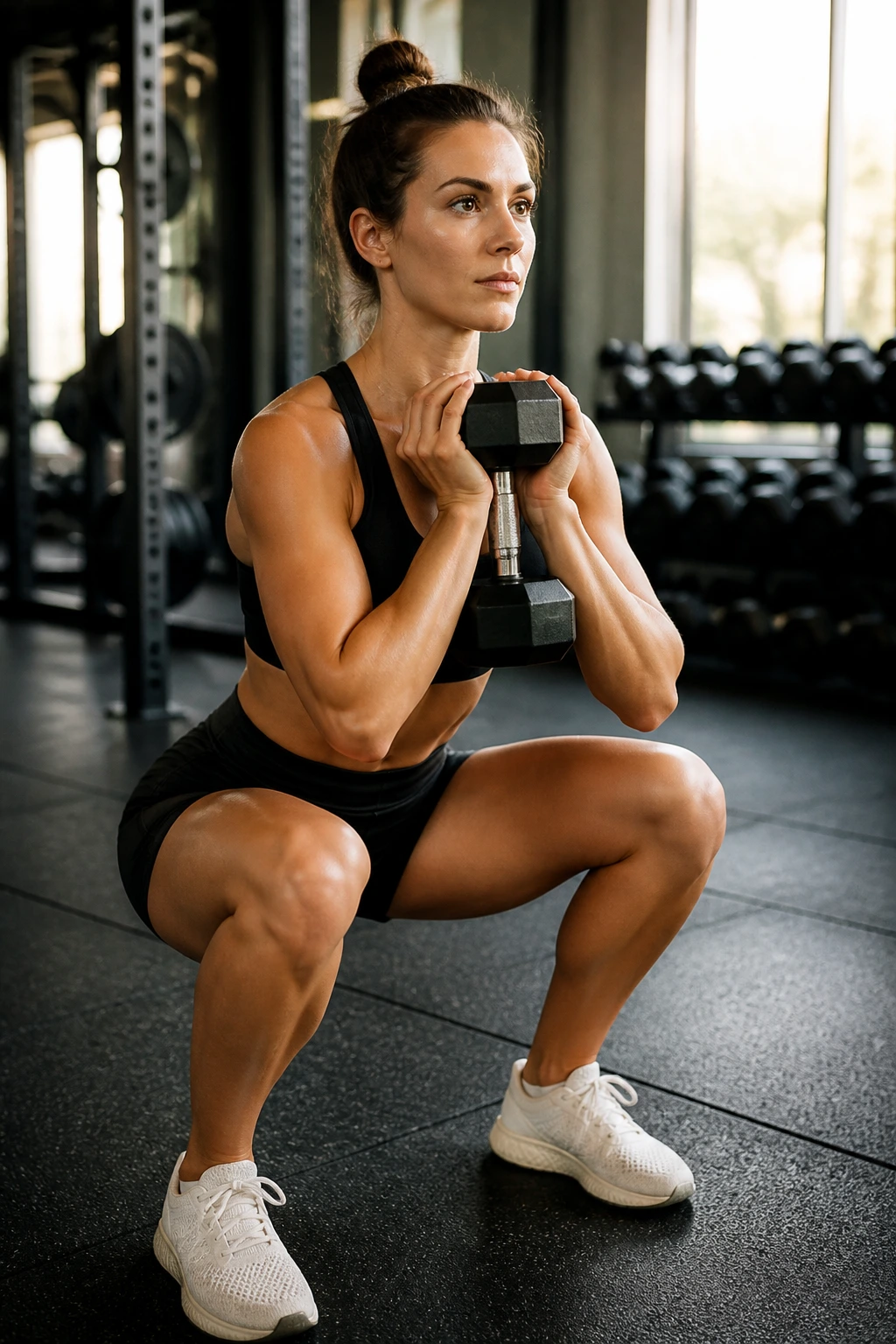
Ever wish a workout would stop trying to be clever? This is that workout. It uses plain dumbbells, a flat bench, and movements that teach the basics without making your brain work overtime.
Do goblet squats, dumbbell Romanian deadlifts, one-arm rows, incline dumbbell presses, and farmer carries. Keep it to 2 rounds the first time through, with 8 to 10 reps per lift and 60 to 90 seconds of rest. The carry can be 20 to 30 seconds per side.
How to Use It
Why It Works
The goblet squat teaches you to sit between your heels. The Romanian deadlift teaches the hip hinge. Rows and presses balance your upper body, which is handy if your shoulders spend half the day rolled forward at a desk.
What to Watch For
- Keep your chest tall on squats
- Let the dumbbells slide close to your legs on deadlifts
- Don’t twist hard during one-arm rows
- On carries, stand tall and walk slowly
A lot of beginners do too much too soon. Don’t. Learn the shapes first.
3. Treadmill Incline and Upper-Body Pairing
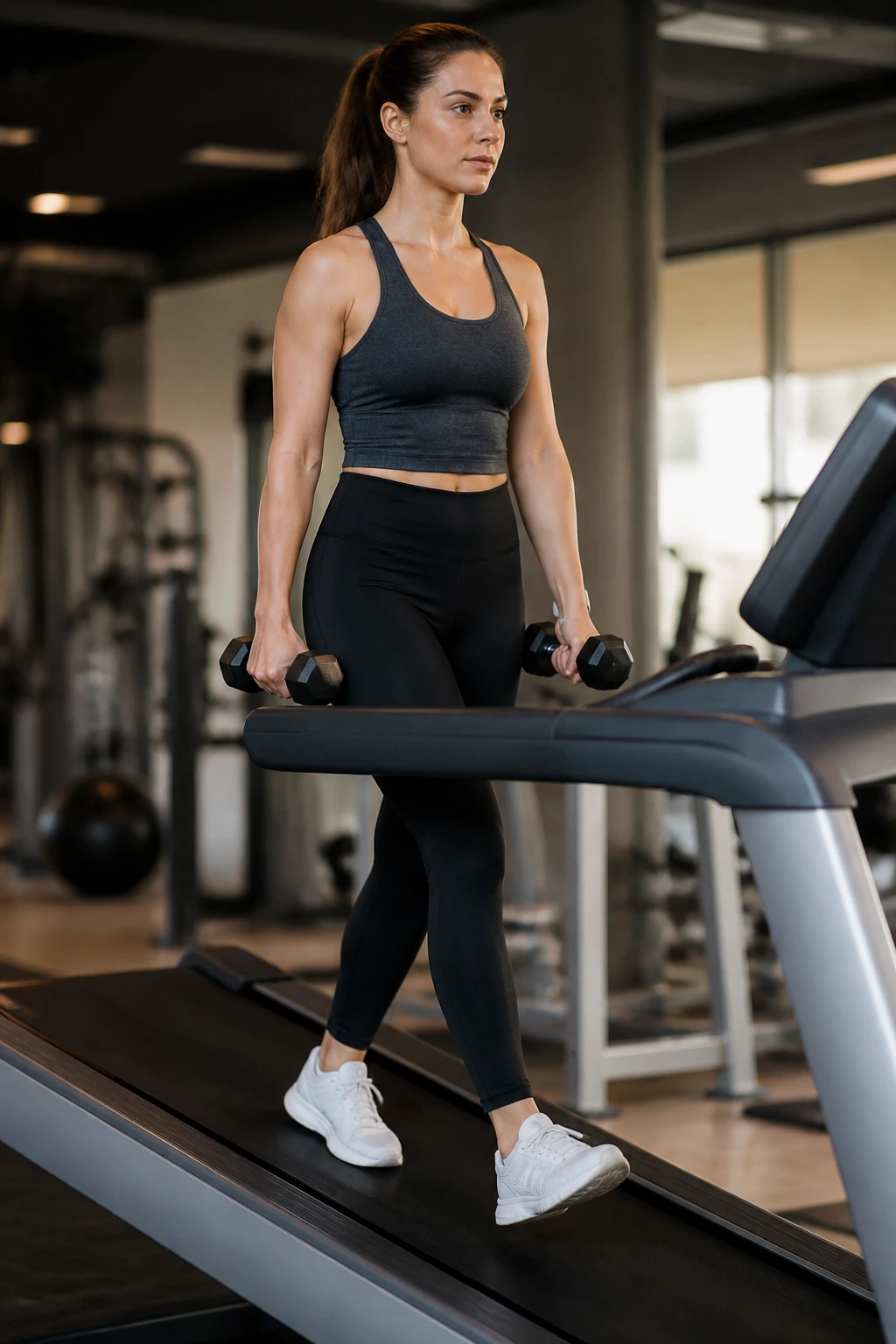
A treadmill does more than burn calories. Put it on a modest incline and it turns into a sneaky leg-and-heart opener that makes the rest of the session feel easier.
Start with 5 minutes at a brisk walk on a 4 to 8 percent incline. Then alternate 8 dumbbell rows, 8 dumbbell presses, and 10 bodyweight squats for 3 rounds. Rest only long enough to catch your breath, about 30 to 45 seconds between moves.
The incline should make you breathe harder, not panic. You should still be able to get out a short sentence. If not, drop the speed before you touch the weights.
This routine is a good fit when the gym feels busy and you want one machine, one pair of dumbbells, and no drama.
4. Smith Machine Lower Body Session
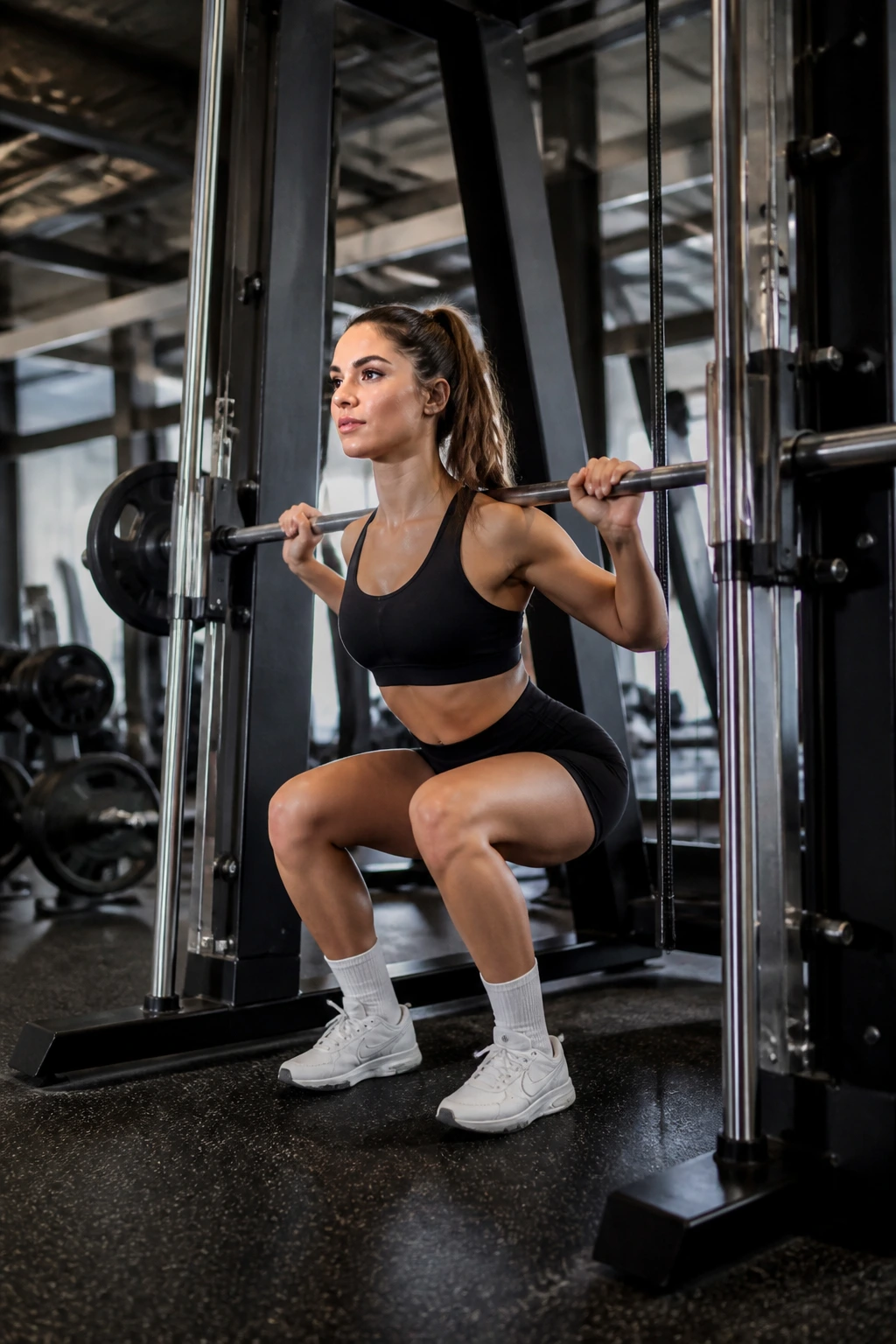
The Smith machine gets weirdly snobby treatment in some gyms. Ignore that. For a beginner, the fixed bar path can make squats and lunges feel much more controlled, which is half the battle.
Try Smith machine squats, reverse lunges, hip thrusts, and standing calf raises. Use 3 sets of 8 reps for the main lifts and 2 sets of 12 to 15 for calves. Keep the descent slow, about 2 to 3 seconds down, so the movement doesn’t turn into a bounce.
Why It Feels Easier
The bar can’t drift forward or backward, so you spend less time fighting balance and more time learning depth and leg drive. That does not make it “easier” in a lazy sense. It makes it cleaner.
Good cue: keep your feet planted and your knees tracking over your toes.
5. Cable Machine Total-Body Flow
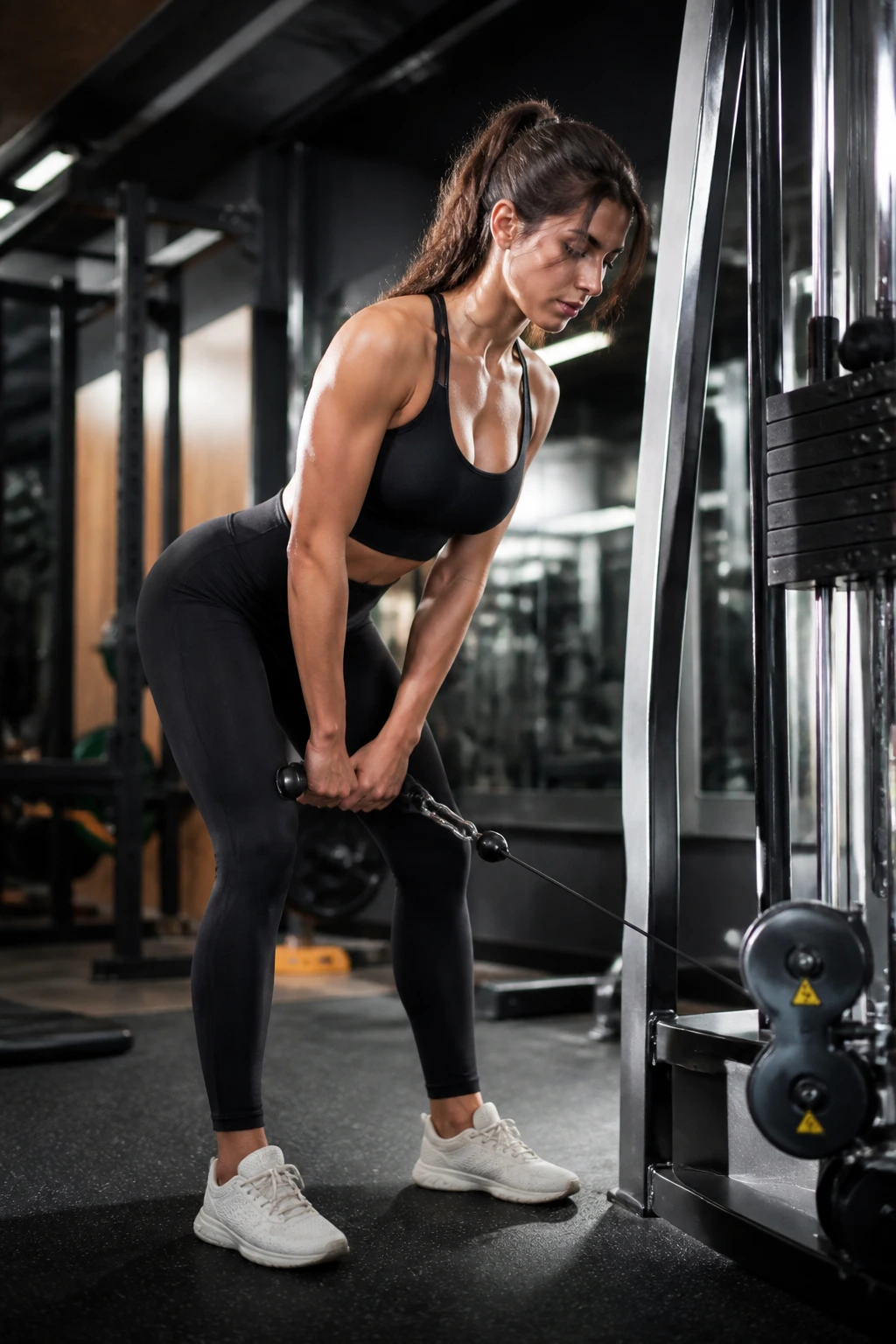
Cables have a smooth pull that feels different from dumbbells. You can feel the resistance the whole way, which is useful when you’re still figuring out where your body is in space.
Do cable squats, rope triceps pressdowns, cable pull-throughs, and face pulls for 2 to 3 rounds. Keep each set at 12 reps. The last few reps should slow down a little, but your posture should stay neat.
What Makes It Different
Cables teach tension. Dumbbells teach balance. Machines teach path. Cables give you a little of both tension and control, which is why they’re a smart bridge between gym-nervous and gym-comfortable.
Use this tip: stand far enough from the stack that the cable stays taut even at the start of the rep. If it goes slack, the exercise gets sloppy fast.
6. Push-Pull Upper Body Starter
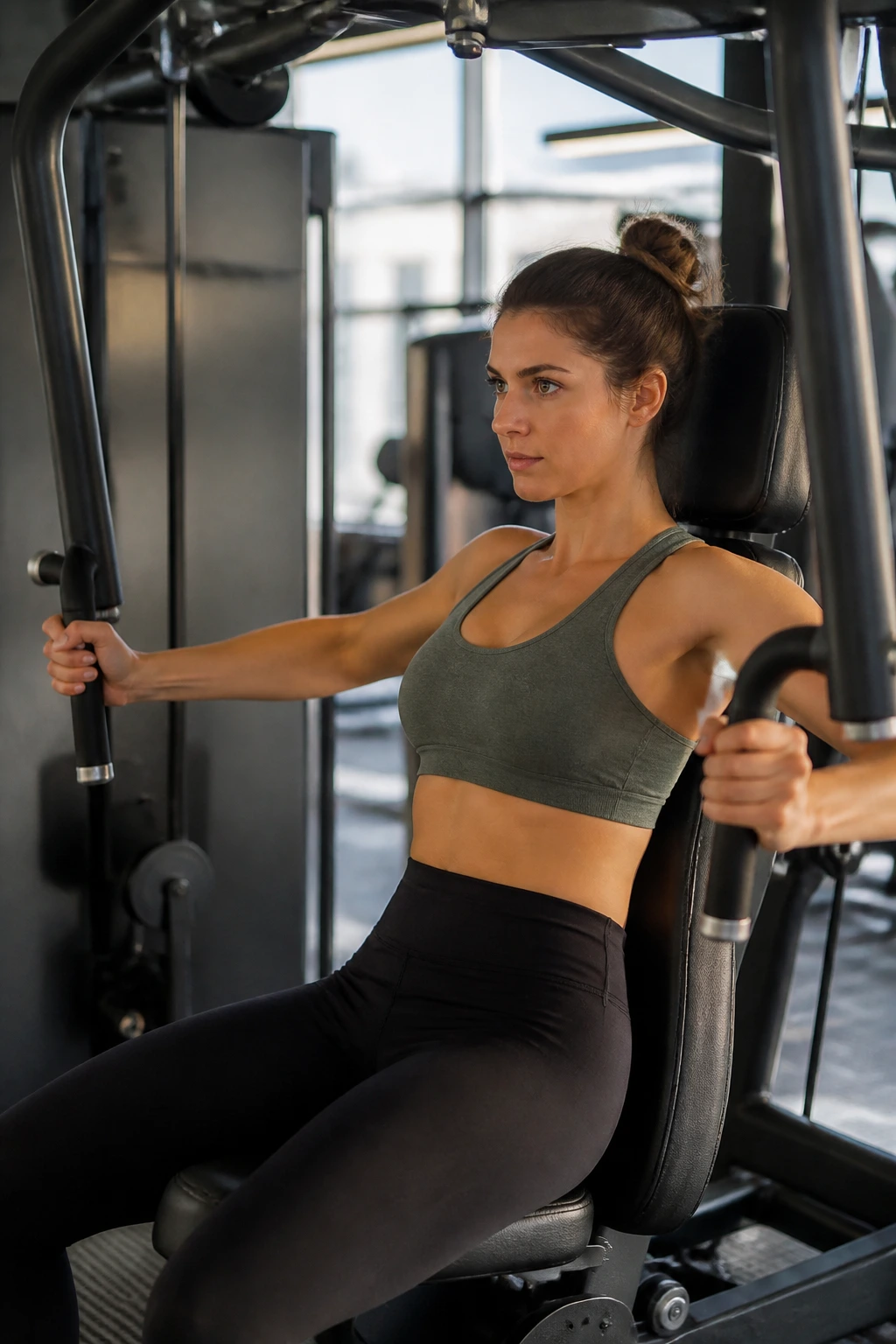
You do not need a separate “arm day” to feel like you trained your upper body. A push-pull pairing does the job better, and it usually feels less awkward than wandering from one machine to the next.
Pair machine chest press with seated row, then dumbbell shoulder press with lat pulldown. Finish with lateral raises and triceps pressdowns. Keep it to 2 sets of 10 to 12 reps each, resting 45 seconds between pairs.
The nice part is balance. Pressing and pulling together keeps your shoulders from getting cranky, and the whole session usually fits inside 35 to 45 minutes.
A small but useful note: if your neck starts doing the work during shoulder presses, the weight is too heavy. Drop it. Your traps do not need a starring role.
7. Glute Bridge and Hamstring Focus
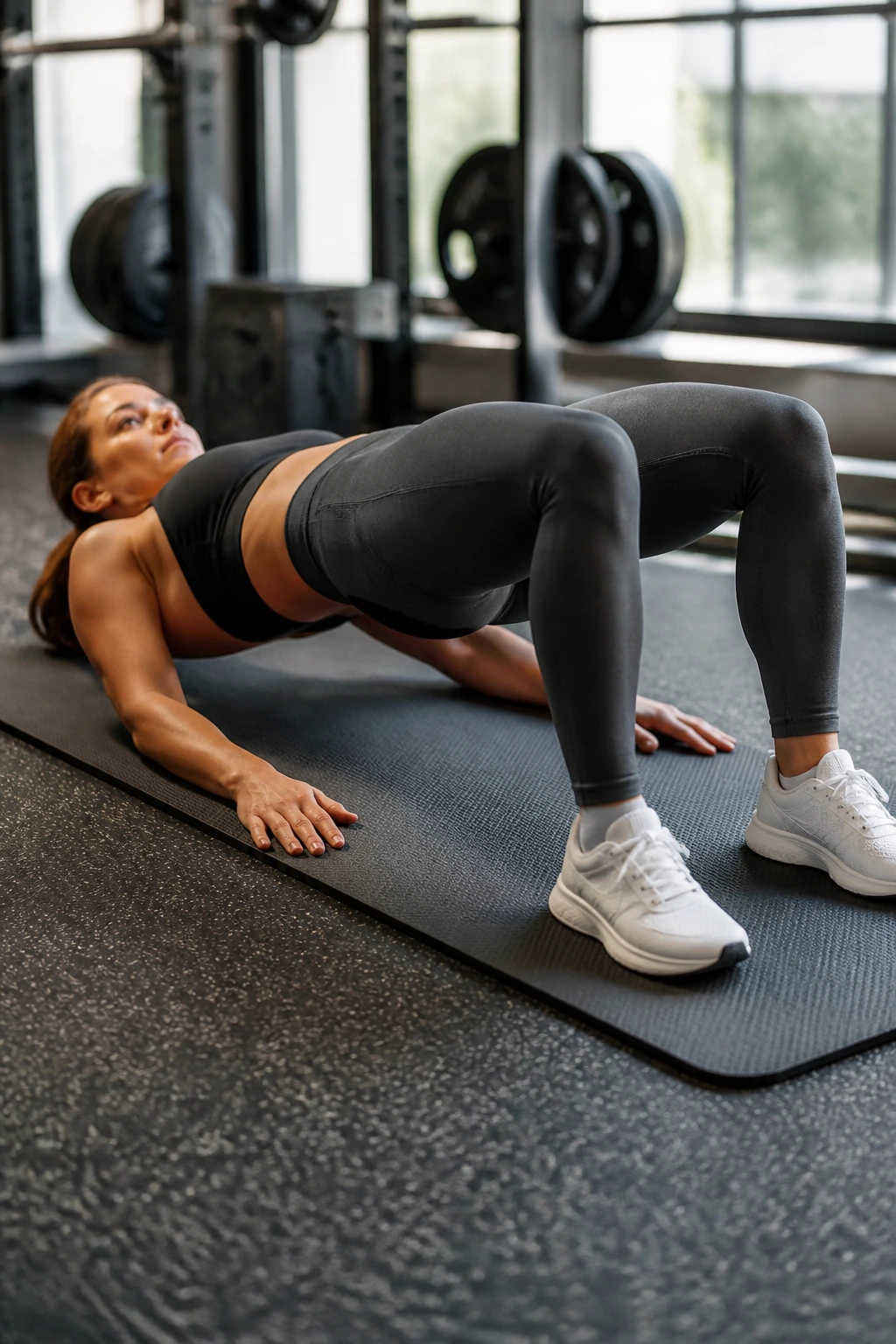
Does your lower body day need a little more backside work? Probably. A glute-and-hamstring session is one of the easiest ways to make a beginner routine feel strong without making it complicated.
Start with glute bridges, then move to seated hamstring curls, Romanian deadlifts, and the abductor machine. Use 3 sets of 10 to 12 reps on the first three moves and 2 sets of 15 on the abductor. Rest 60 seconds between sets.
How to Keep Your Lower Back Happy
Keep your ribs down on bridges. Push through your heels. On Romanian deadlifts, the weight should slide close to your thighs, and your hips should move back like you’re closing a car door with them.
A lot of beginners feel hamstring work in the lower back because they rush the hinge. Slow down. That tiny pause at the bottom is where the shape gets learned.
8. Back and Posture Builder
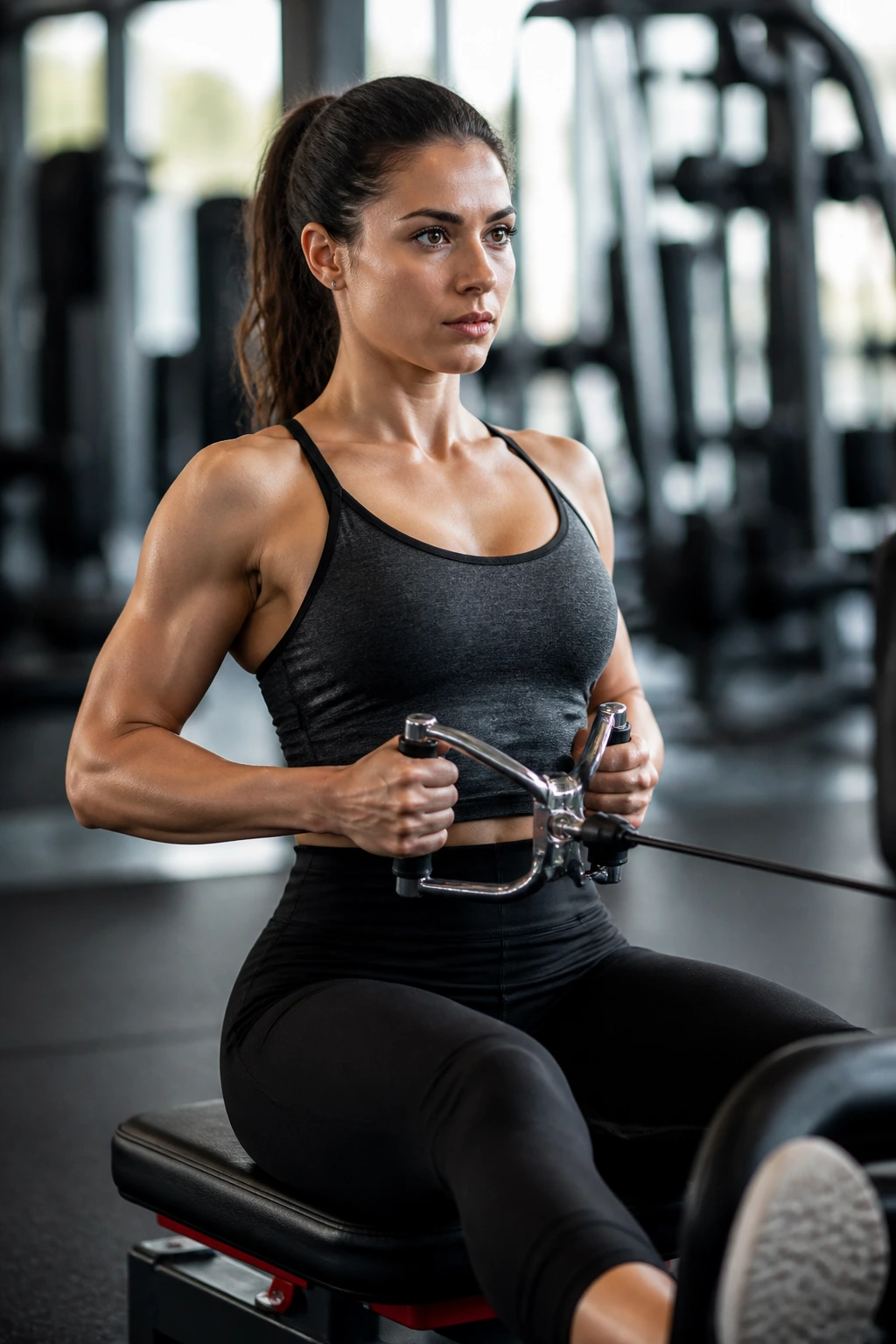
A stronger back makes almost everything else feel better. Not magic. Just mechanics. Rows and pulldowns give your upper body the support it needs, and they can make a huge difference in how sturdy you feel under a bar or a dumbbell.
Use seated rows, reverse flyes, lat pulldowns, and back extensions or bird dogs. Keep the range moderate and the weight modest: 2 to 3 sets of 12 reps works well. If you’re using the back extension bench, stop when your body makes a straight line.
The best cue here is simple: shoulders down, chin neutral, ribs stacked. If you can do that without fighting the movement, you’re in the right place.
This is one of those sessions that feels boring while you’re doing it and useful later when your shoulders stop creeping up toward your ears.
9. Low-Impact Cardio and Core Session
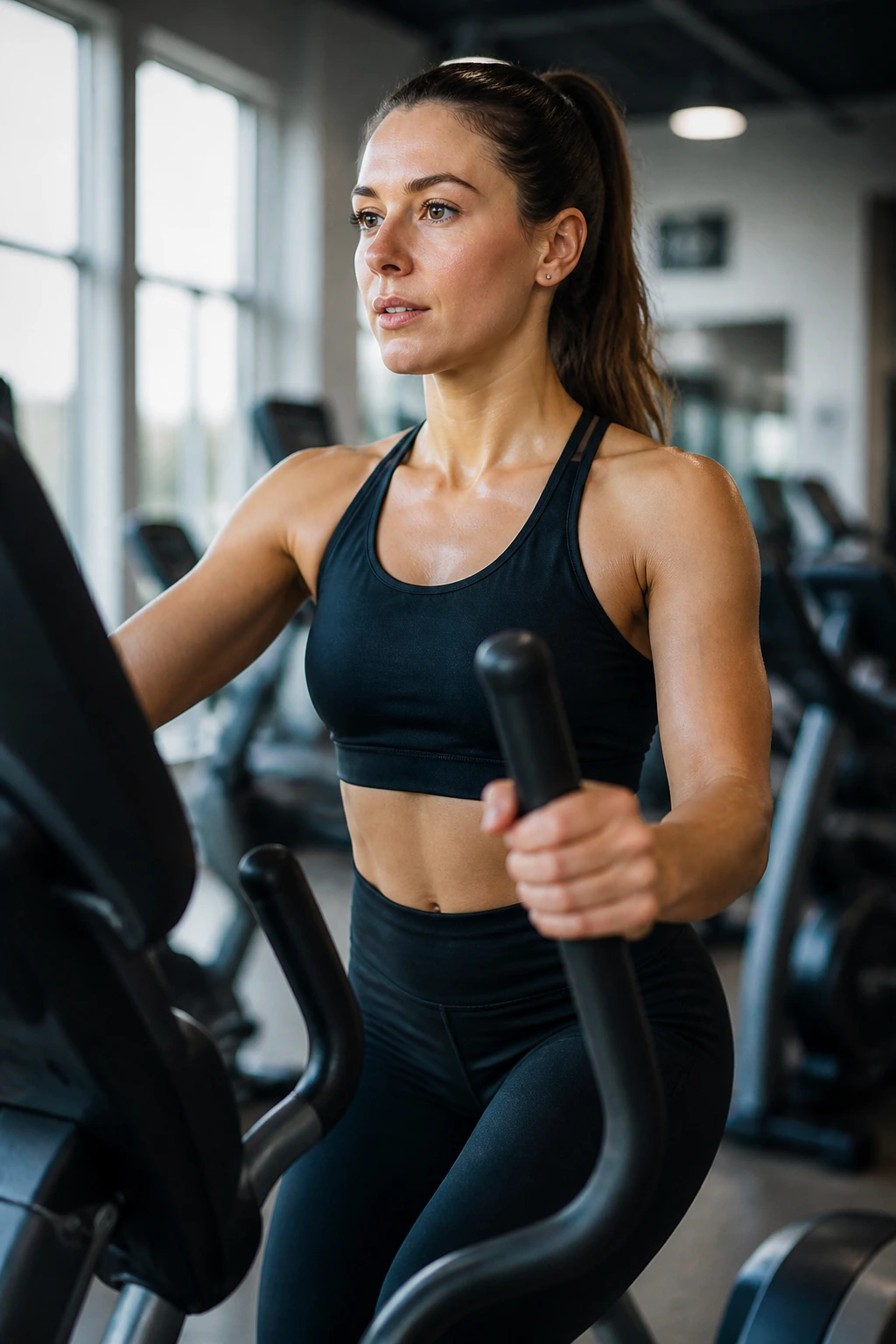
Your knees do not need a pounding to get better at gym work. A low-impact day can still leave you sweaty and trained without the bounce of running or jump-heavy circuits.
Pick the elliptical, stationary bike, or rowing machine and do 10 rounds of 1 minute moderate effort and 1 minute easy effort. After that, move to dead bugs, plank holds on a bench, Pallof presses, and side planks. Stick with 2 rounds of core work.
The cardio section should feel like a firm push, not a sprint. You want your breathing up and your form intact. That’s the line.
This routine is useful on days when your legs feel flat, your shoes are squeaky, or you just want to move without grinding yourself down.
10. Dumbbell Squat-Hinge-Row Circuit
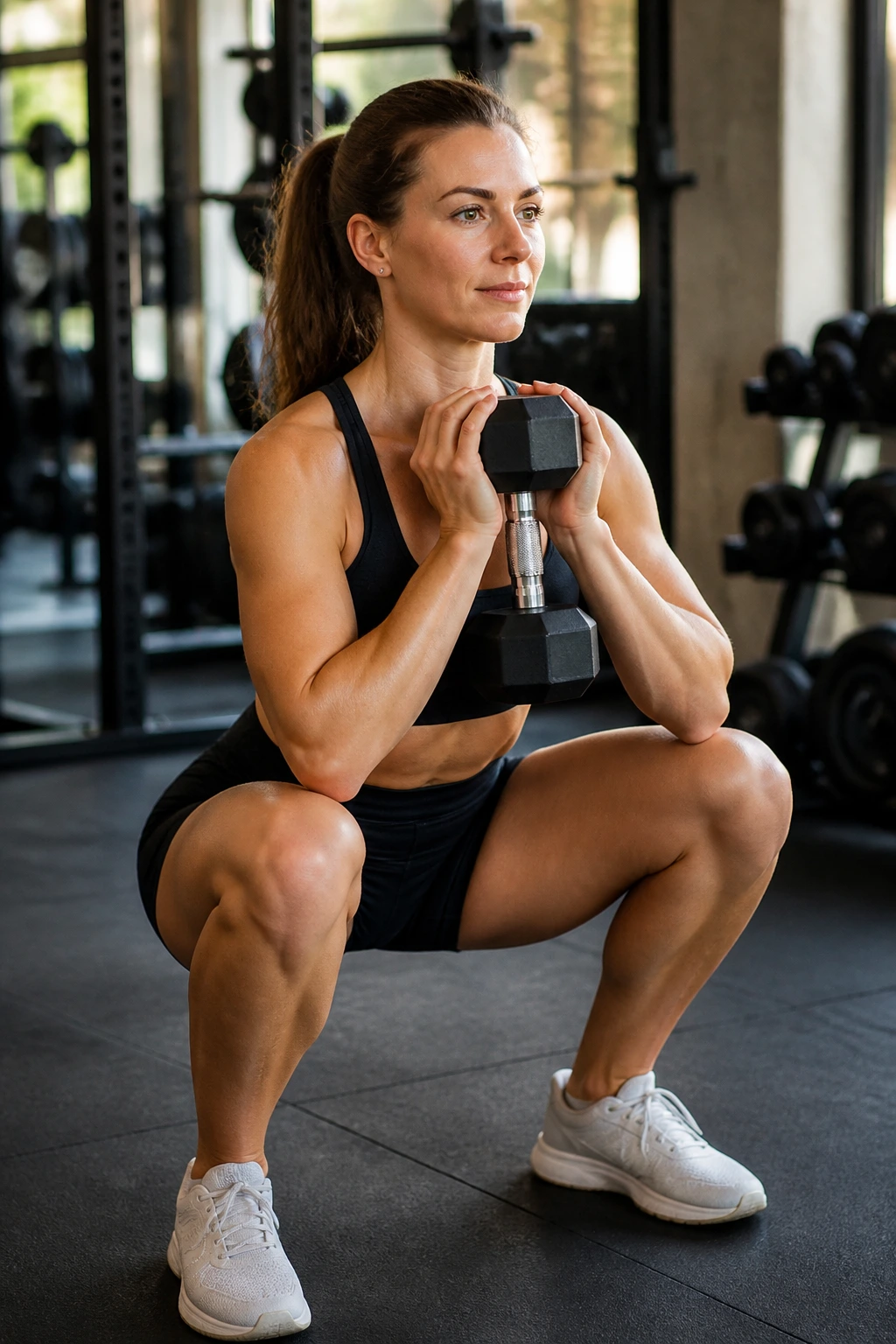
No, you do not need ten exercises to make a beginner workout count. Three or four well-chosen moves can do more than a crowded list that leaves you confused.
Run goblet squats, Romanian deadlifts, bent-over rows, and floor presses in a circuit for 3 rounds. Aim for 8 reps on the lower-body lifts and 10 reps on the rows and presses. Rest 60 to 75 seconds between rounds.
Important: stop a rep before your back starts rounding or your shoulders shrug up. The point is not to survive the set. The point is to repeat the set with good shape.
This one works well if you’re comfortable holding dumbbells but don’t want to wander across the whole gym. Simple, fast, efficient.
11. Leg Press and Calf Day
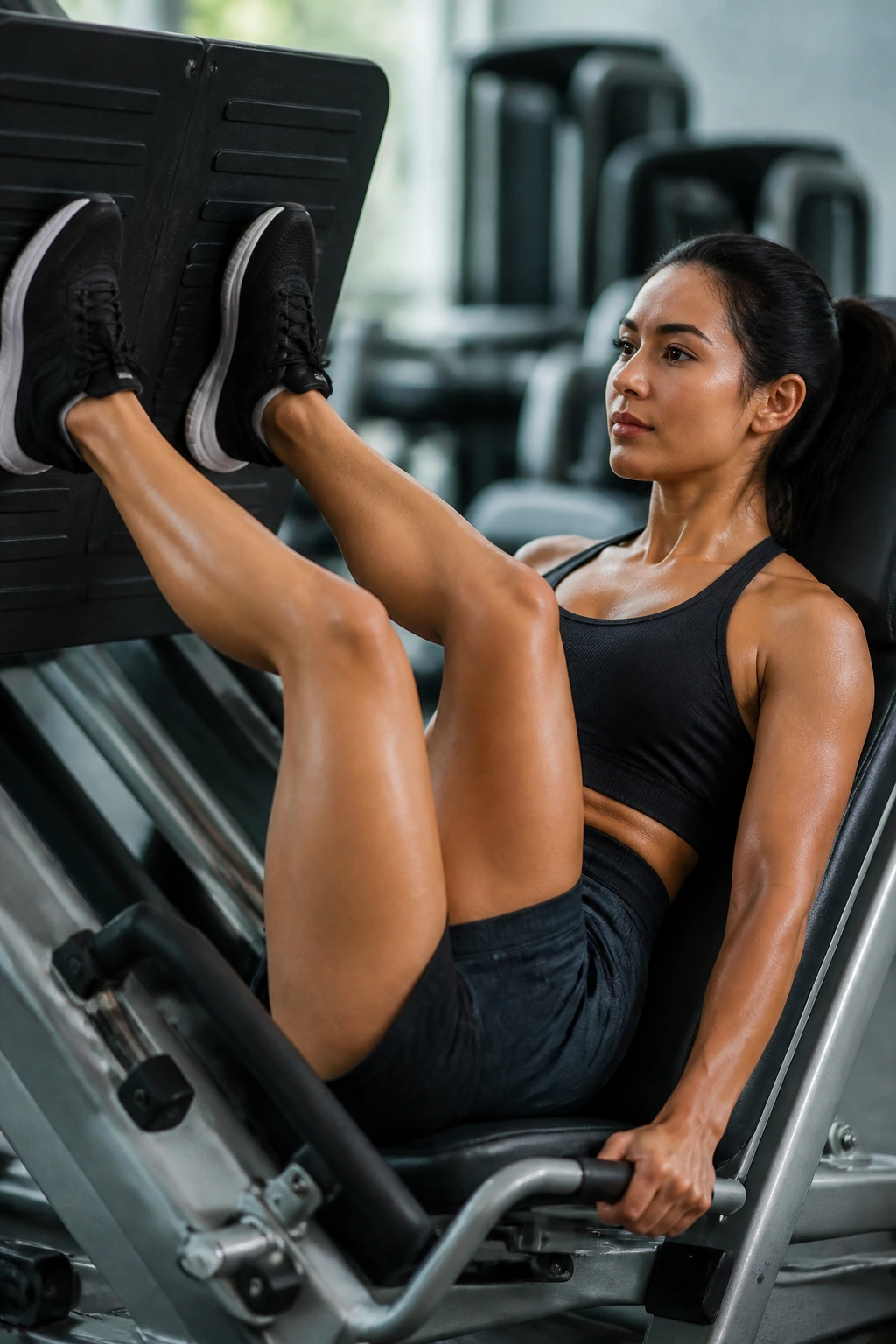
The leg press feels heavy in a way that’s easy to understand. You sit, you press, you know whether the sled moved. That clarity makes it a beginner favorite for good reason.
Pair leg press, split squats, leg extensions, and seated calf raises. Use 3 sets of 10 reps on the leg press, 2 sets of 8 reps per side on split squats, and 2 to 3 sets of 12 reps on the isolation work. Lower the sled slowly for a two-count.
Why This Session Works
The leg press lets you load the legs without worrying about balance. Split squats show you where one side is weaker. Calves get neglected in a lot of beginner routines, and that’s a shame because a few sets go a long way.
A clean leg day should leave your quads warm and your calves a little tight, not your lower back angry. If your back is the thing you feel most, adjust your foot placement.
12. Chest, Shoulders, and Triceps Starter
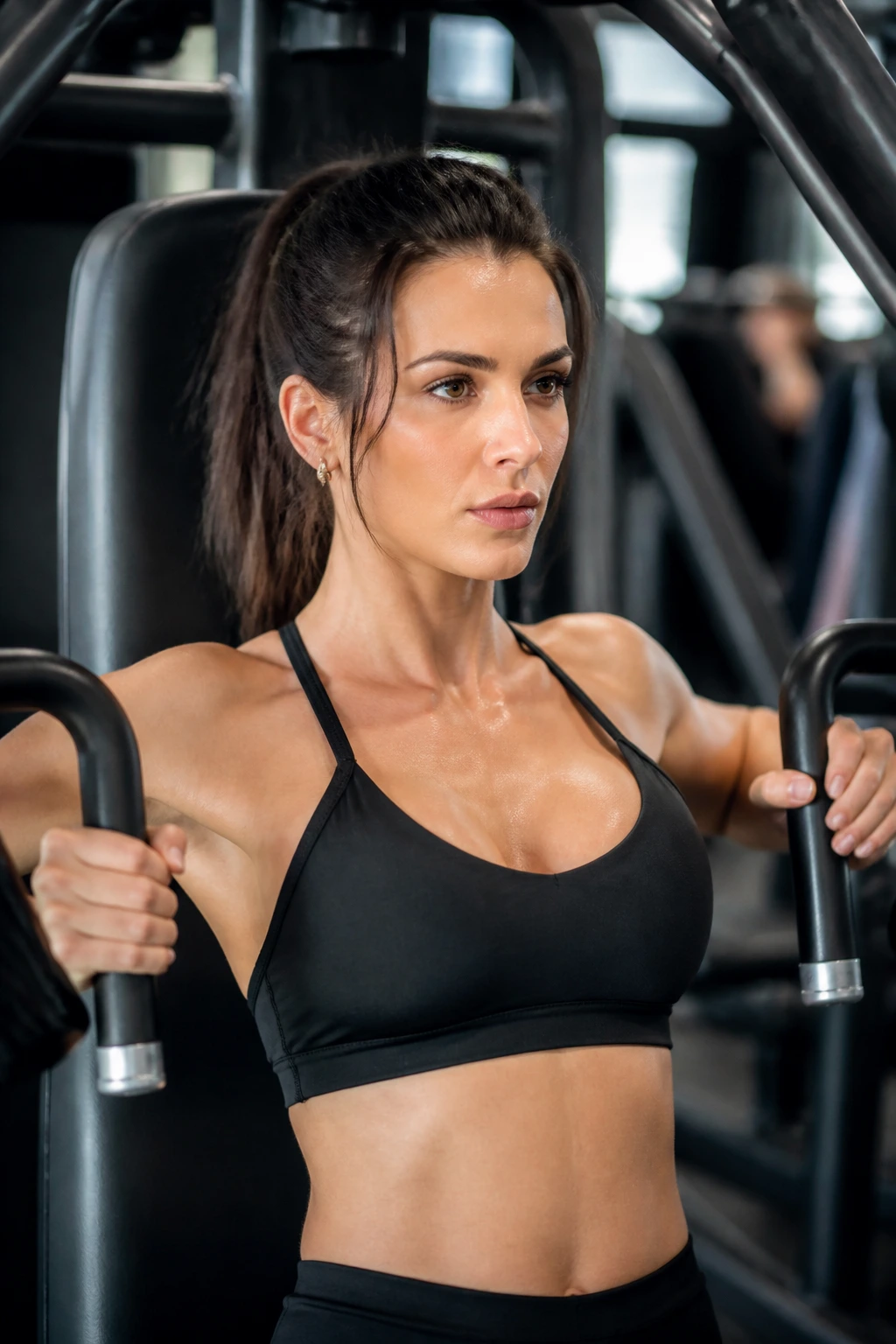
Want an upper-body session that feels clear from the first set? Start with push movements and keep the list short.
Set the Bench First
Use machine chest press, dumbbell shoulder press, cable triceps pressdowns, bench push-ups, and lateral raises. Try 2 sets of 8 to 12 reps for everything except push-ups, which can be done for 6 to 10 clean reps. Rest about 45 seconds between exercises.
What to Notice
- Shoulder blades stay gently back on presses
- Elbows sit slightly below shoulder height on dumbbell press
- Pressdowns end with straight elbows, not a swinging torso
- Push-ups can be done with hands on a bench if the floor version is too much
This workout is short enough to repeat every week and still hard enough to build real strength. That’s a good combination.
13. Kettlebell Beginner Flow
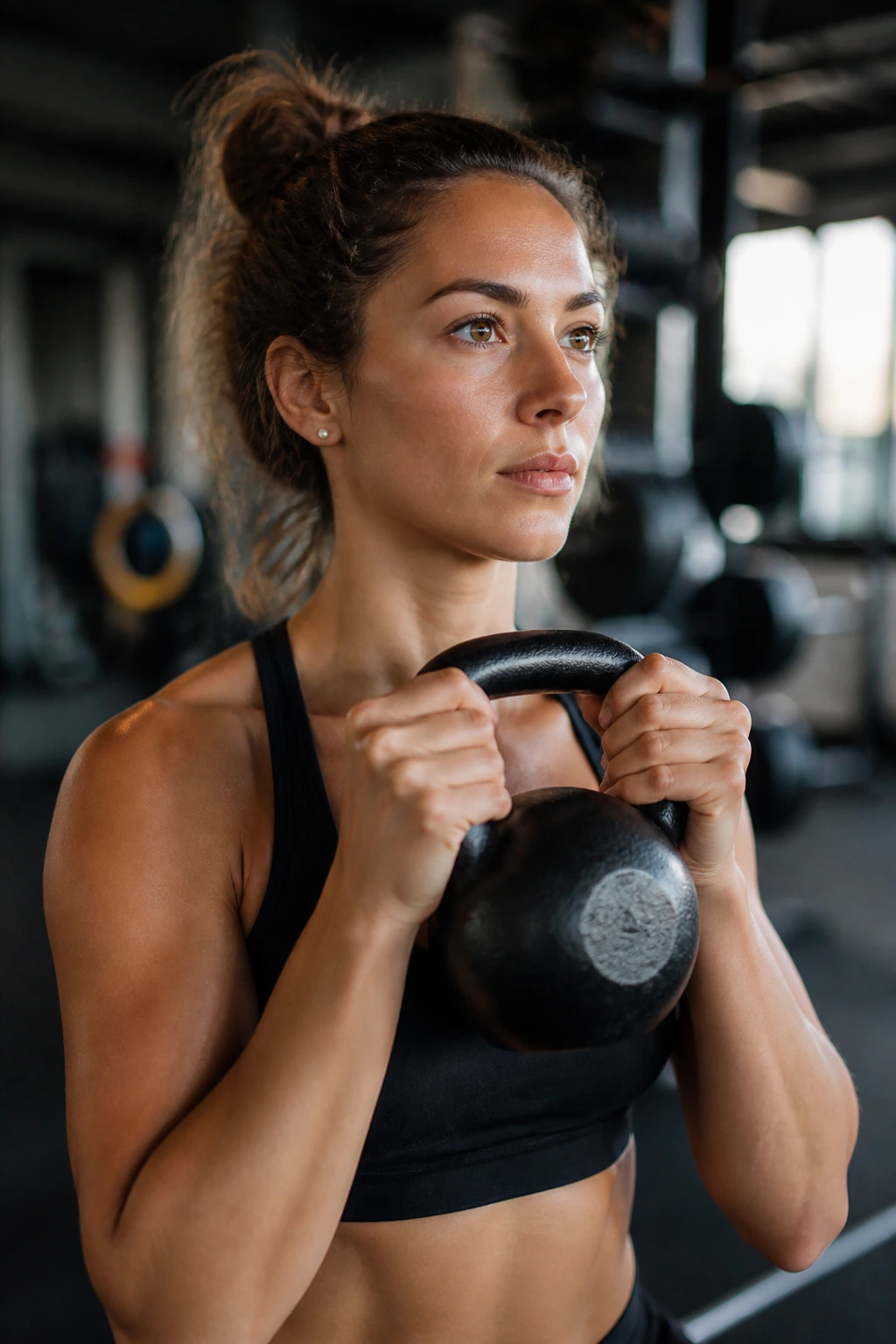
A kettlebell changes the feel of a workout fast. The weight sits off-center, so your grip and posture have to wake up a little more than they do with a dumbbell.
Stick with kettlebell deadlifts, goblet squats, suitcase carries, halos, and rack holds. Use 3 rounds with 8 reps on the deadlift and squat, 20 to 30 seconds on carries, and 5 slow circles in each direction for halos.
Kettlebells are best when you keep the moves crisp. If the swing or clean looks messy, skip it for now. Deadlifts and carries teach the same basics without the noise.
This session is a nice fit for someone who wants variety but not a dozen separate machines. It’s also a good reminder that strength can be quiet and still get the job done.
14. Stair Climber and Strength Mix
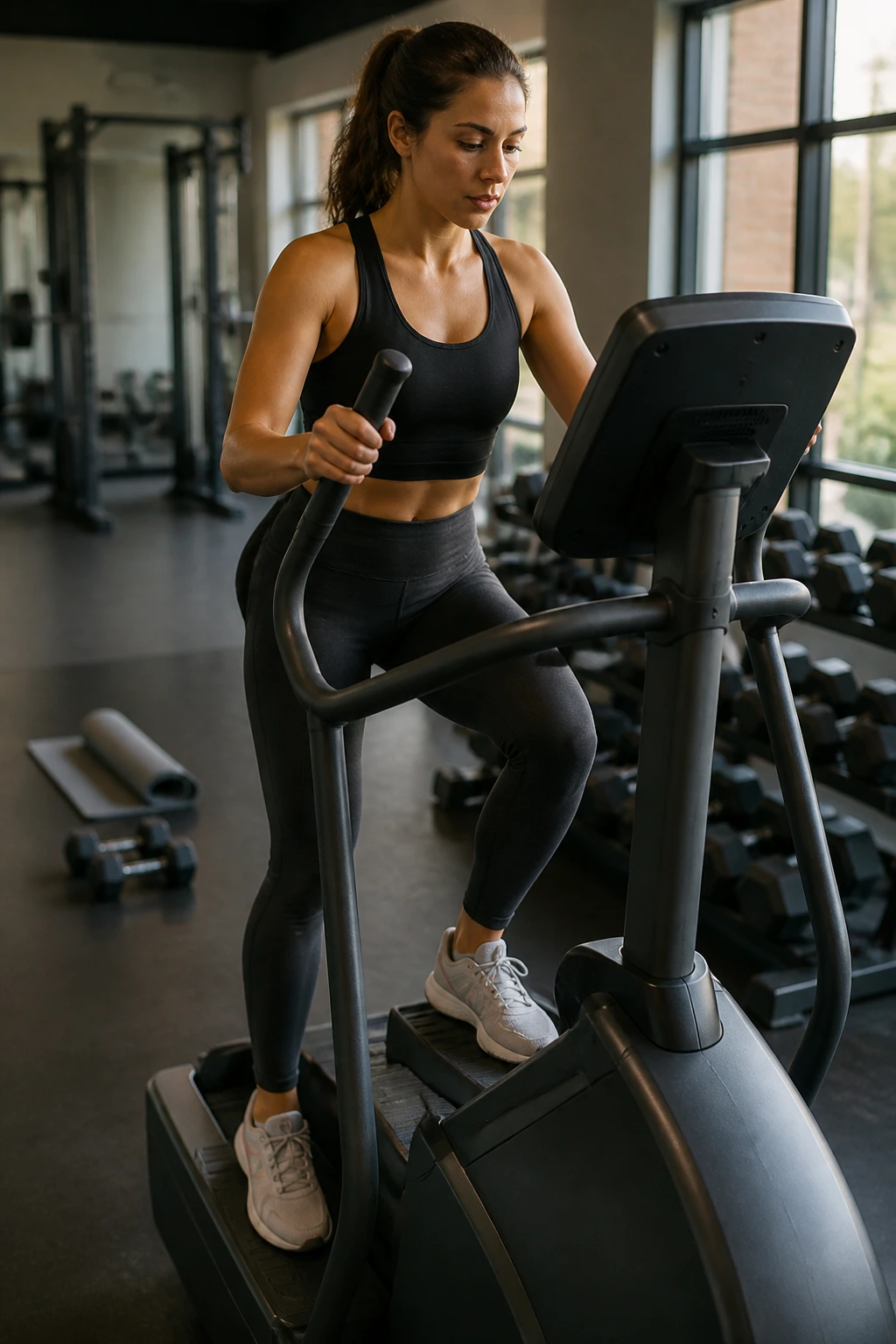
The stair climber has a way of making people regret the first minute and enjoy the fifth. That’s not a bad thing. It’s just honest.
Start with 5 minutes on the stair climber at a pace you can hold without clinging to the rails. Then do walking lunges, dumbbell rows, incline push-ups, and planks for 3 rounds. Keep the lunges to 8 steps per leg and the plank to 20 to 30 seconds.
Your breathing should rise, but your knees should still feel stable. If you’re bouncing from one step to the next, slow the machine down. Faster is not better when your form falls apart.
This routine is great when you want to sweat and still leave with enough energy to function later in the day.
15. Machine-Only Confidence Routine
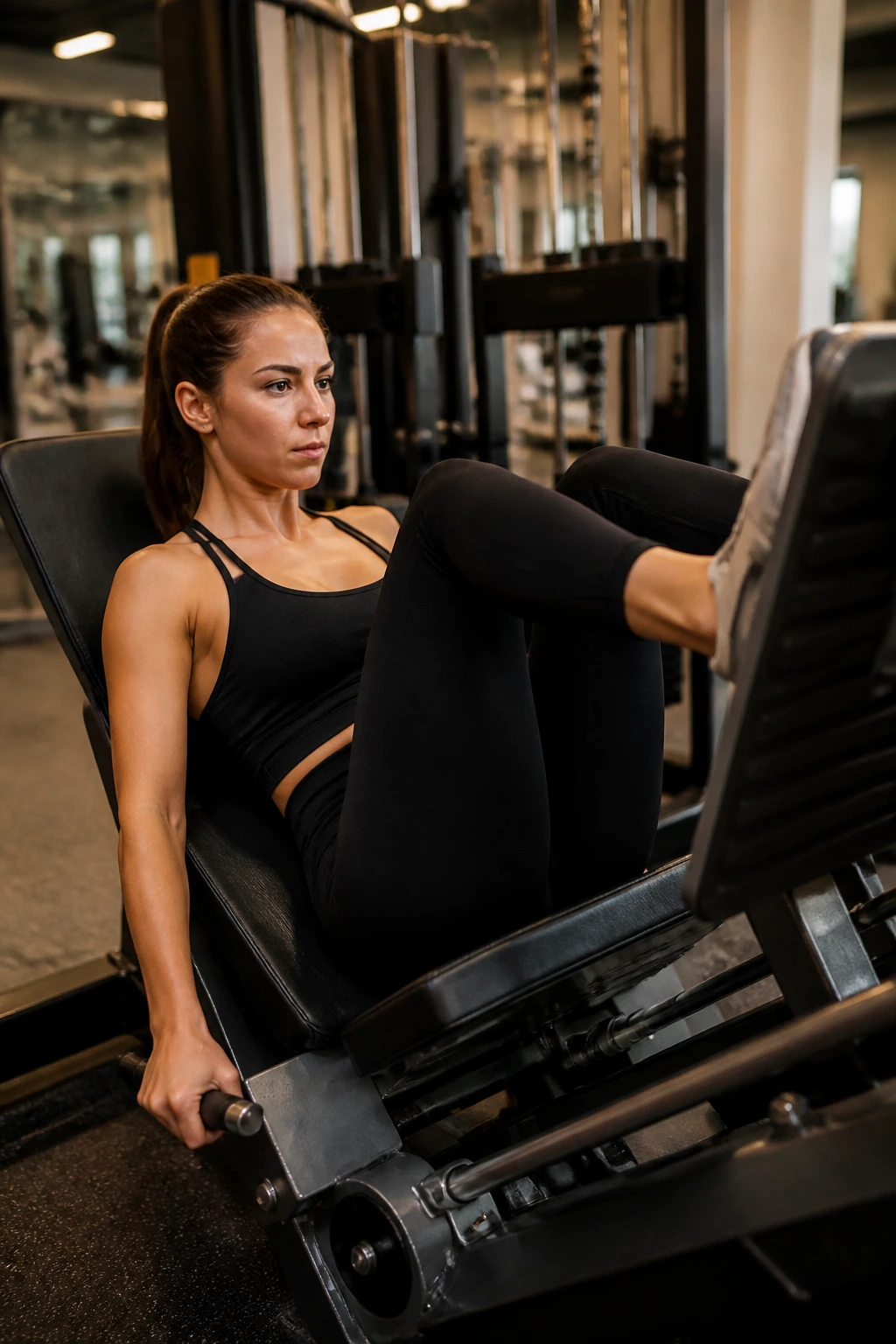
There is nothing second-rate about a machine-only workout. In fact, for a lot of beginners, it’s the smartest way to learn where the muscles are supposed to work before balance becomes part of the picture.
Choose leg press, chest press, seated row, shoulder press, hamstring curl, and lat pulldown. Keep it to 2 sets of 10 reps on each machine. Rest 45 to 60 seconds and move at a steady pace.
What to Remember
- Set the seat height before you start
- Use the handles or pads without shrugging
- Move the weight through a full, controlled range
- Stop if the machine starts slamming the stack
This session is calm, repeatable, and easy to progress. Add a small amount of weight when the last two reps feel smooth instead of messy.
16. Free-Weight First Day
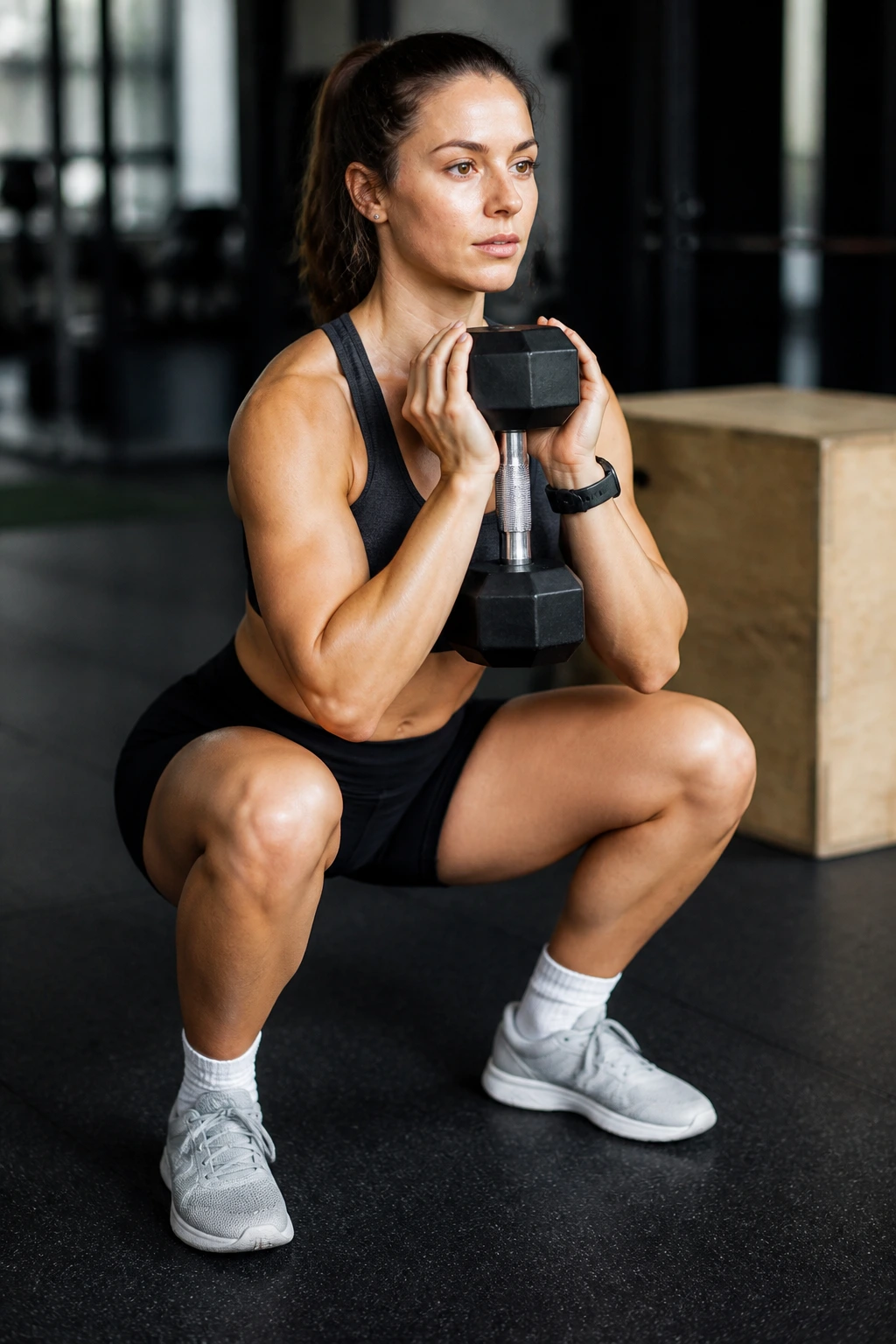
Are dumbbells intimidating? A little. That’s normal. But a first free-weight day does not need to be a circus; it just needs a short list and enough room to learn.
Keep the Exercise List Short
Use dumbbell box squats, Romanian deadlifts, one-arm rows, incline dumbbell presses, and farmer carries. Stay with 2 sets of 6 to 8 reps on the lifts and 2 carries of 20 seconds. Rest 90 seconds if you need it.
The important part is setup. Put the feet down first, then pick up the weights. If you rush, the whole workout feels shakier than it needs to.
This is the session where you practice holding weights without letting your shoulders creep up or your lower back take over. That lesson pays off fast.
17. Glute Medius and Balance Routine
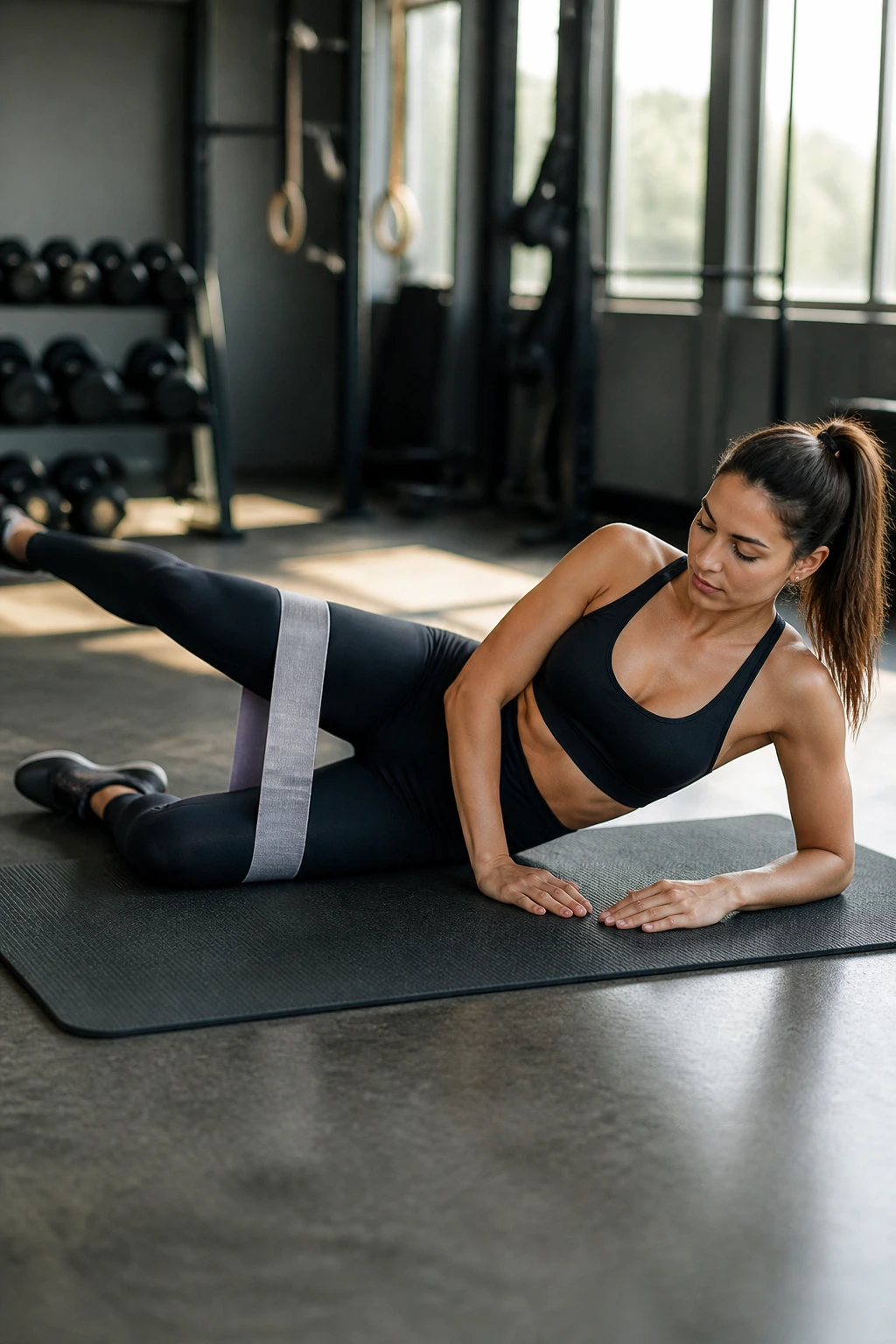
Bigger glutes are nice. Stable hips are better. The glute medius, the side muscle that helps keep your pelvis steady, often gets ignored until single-leg work makes the weakness obvious.
Try lateral band walks, single-leg press, step-ups, cable kickbacks, and side-lying leg lifts. Use 2 to 3 sets of 12 to 15 reps. Keep the weight light enough that you don’t have to rock your torso to finish the set.
The side-to-side burn can feel sneaky. That’s normal. It’s the kind of work that teaches your legs to share the load instead of letting one side boss the other around.
If you have a history of knee wobble or hip drop on stairs, this routine is worth keeping in rotation.
18. 20-Minute Express Gym Session
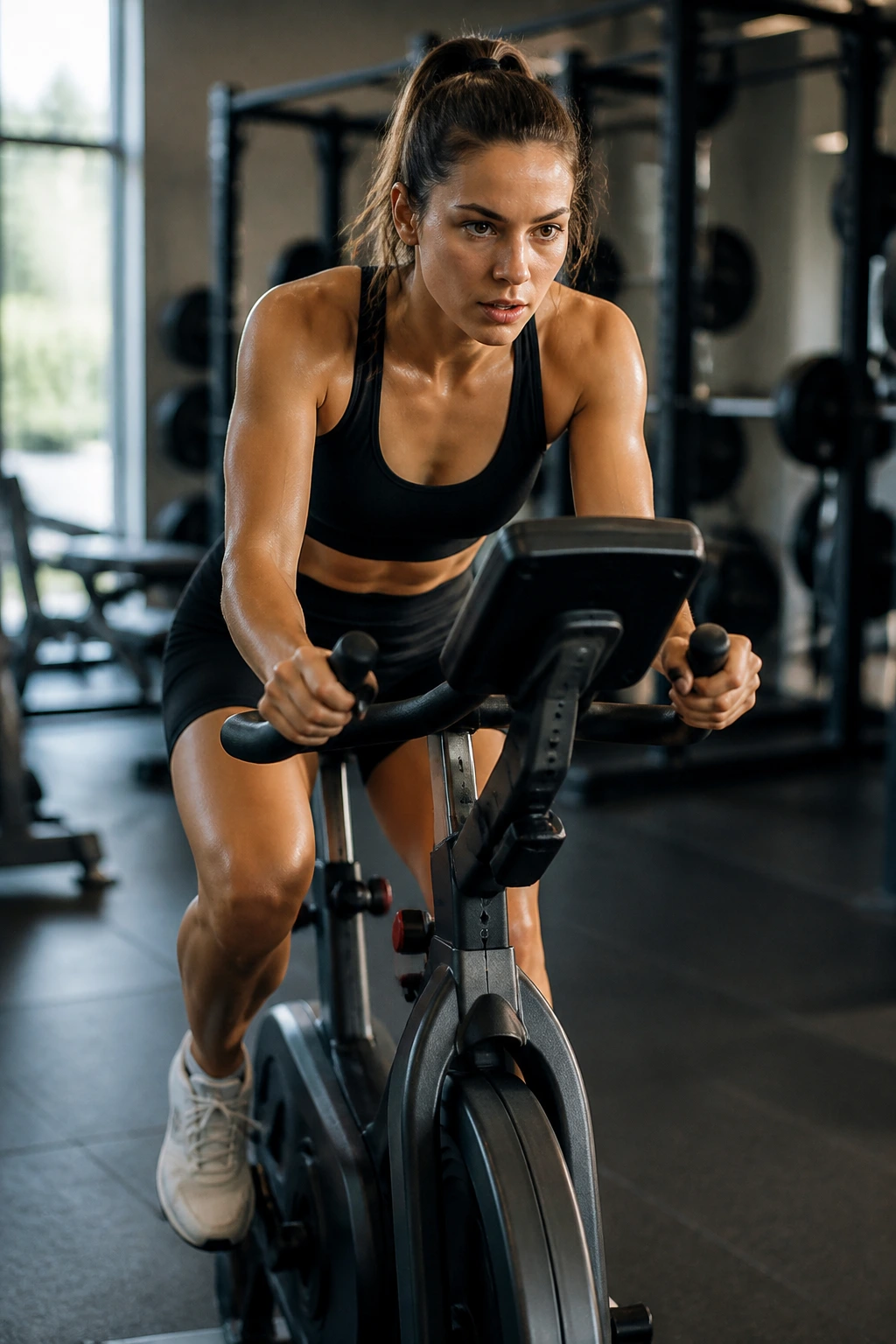
The room gets busy. Your time gets short. You still want to leave having done something real. This is the fix.
Use a four-move circuit: goblet squat, seated row, machine chest press, and bike sprint. Do 40 seconds of work and 20 seconds of rest on each move, then repeat for 4 rounds. The whole thing lands around 20 minutes.
What It Should Feel Like
You should finish warm, a little breathless, and not wrecked. That matters. A tiny workout you can repeat beats a heroic session you can’t recover from.
This one is ideal for days when you have to get in, do the work, and get out before the rest of your life starts yelling at you.
19. Upper Back and Rear Delts Day
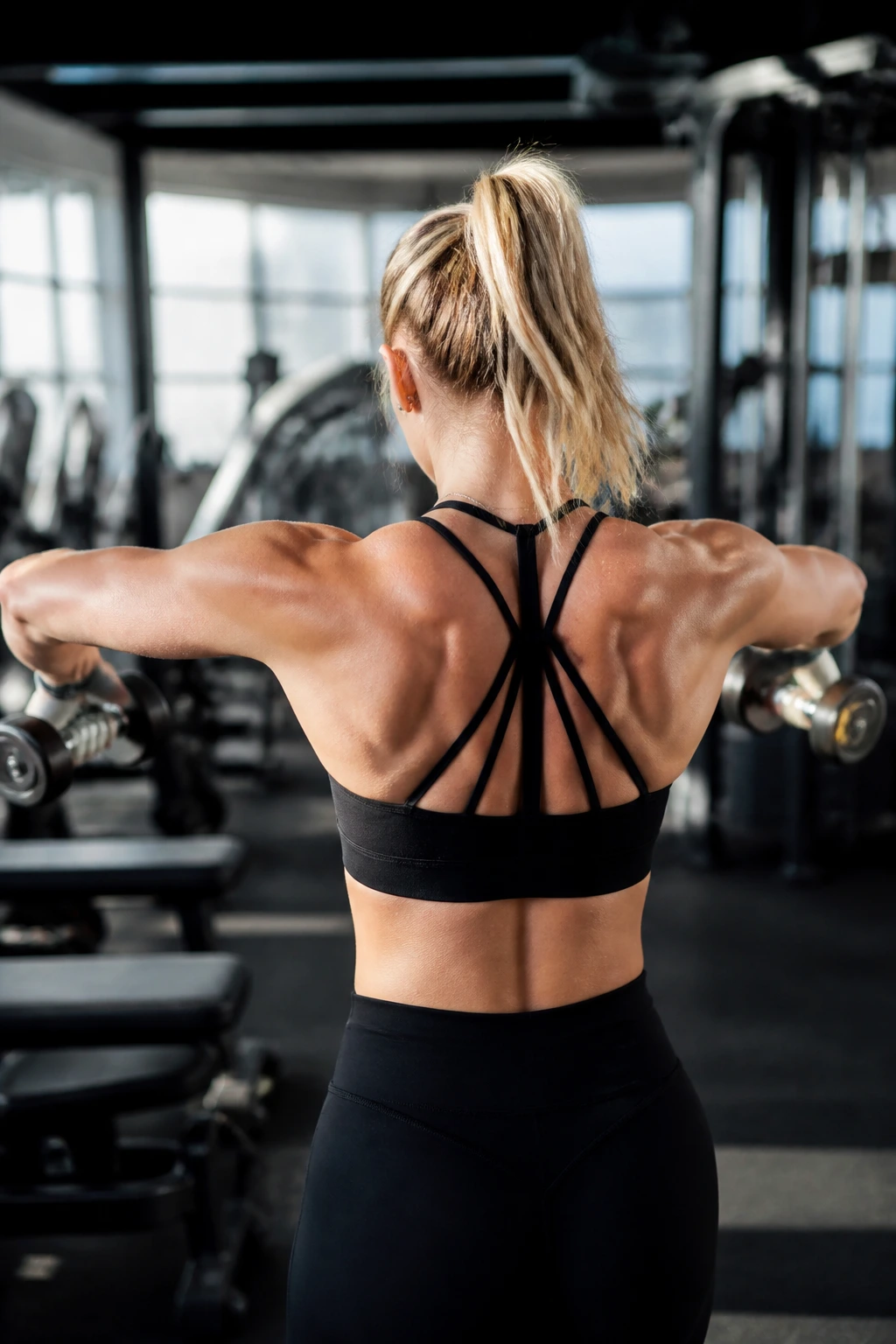
Rear delts are tiny, but they matter. They help your shoulders sit where they’re supposed to sit, and they clean up the look of your upper back in a way big presses never do on their own.
Why Rear Delts Matter
Use reverse pec deck, face pulls, chest-supported rows, rear delt raises, and prone Y raises. Keep the weights light and the reps high: 2 to 3 sets of 12 to 15. If you need to swing your body, the load is too heavy.
This is not a day for ego lifting. It’s a day for precision. The muscle should feel tired before the joints feel beat up.
A lot of beginners skip this kind of work because it doesn’t look dramatic. Then they wonder why pressing feels awkward. Funny how that works.
20. Full-Body Ladder Workout
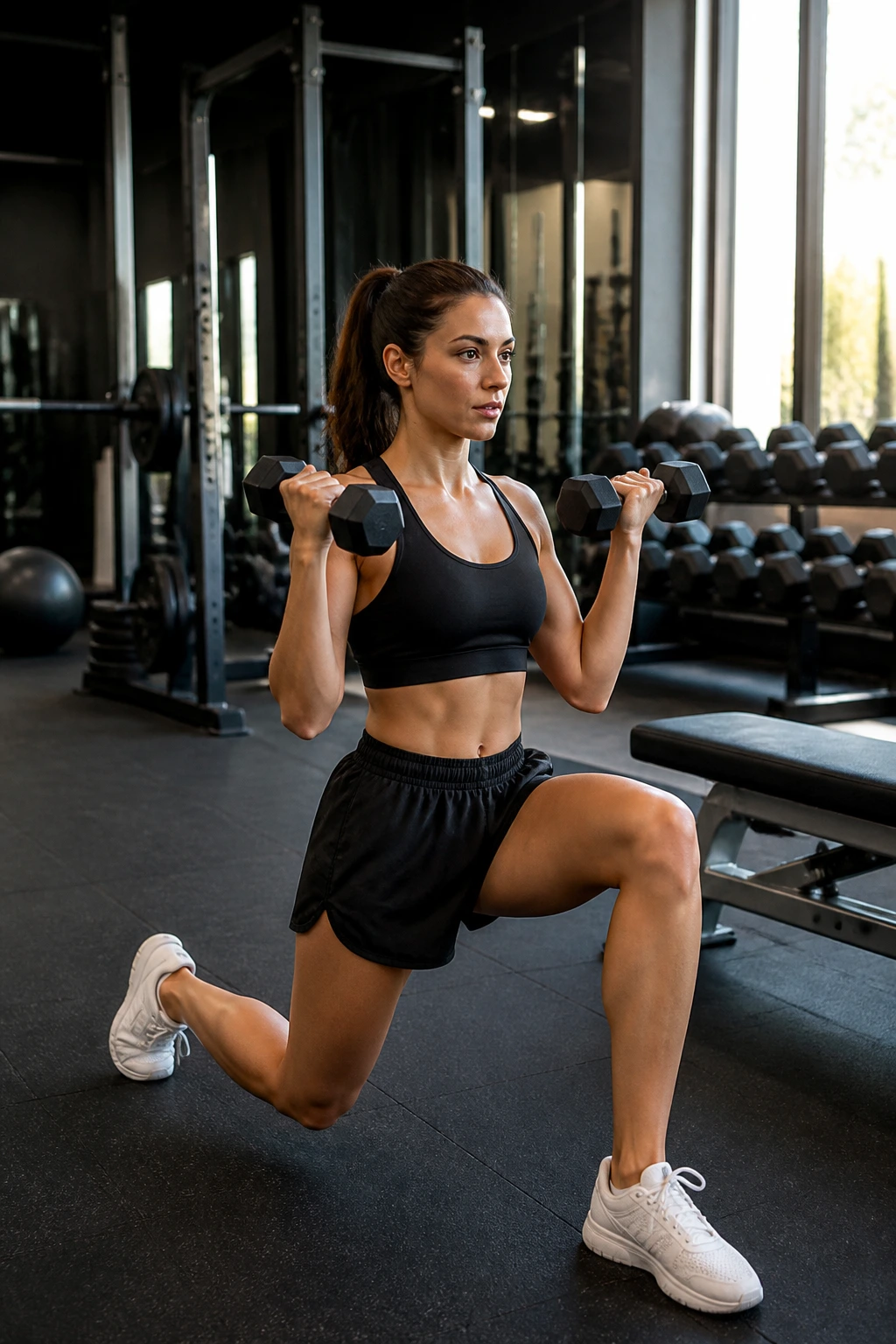
A ladder workout sounds fancy until you do it. Then it turns into a practical way to move through several lifts without getting buried in decision-making.
Start with 10 reps, then 8, then 6 for goblet squats, dumbbell presses, rows, and Romanian deadlifts. Do the full series once, rest 90 seconds, then repeat for 2 to 3 total rounds. Increase the weight slightly on the later rounds if the first one feels too easy.
The ladder format gives you an easy hook: start a little lighter, finish a little stronger. That progression helps beginners because it keeps the first set from feeling like a test.
If your form falls apart on the 6-rep round, don’t chase heavier weights. Keep the same load and make the movement cleaner.
21. Beginner Barbell Routine
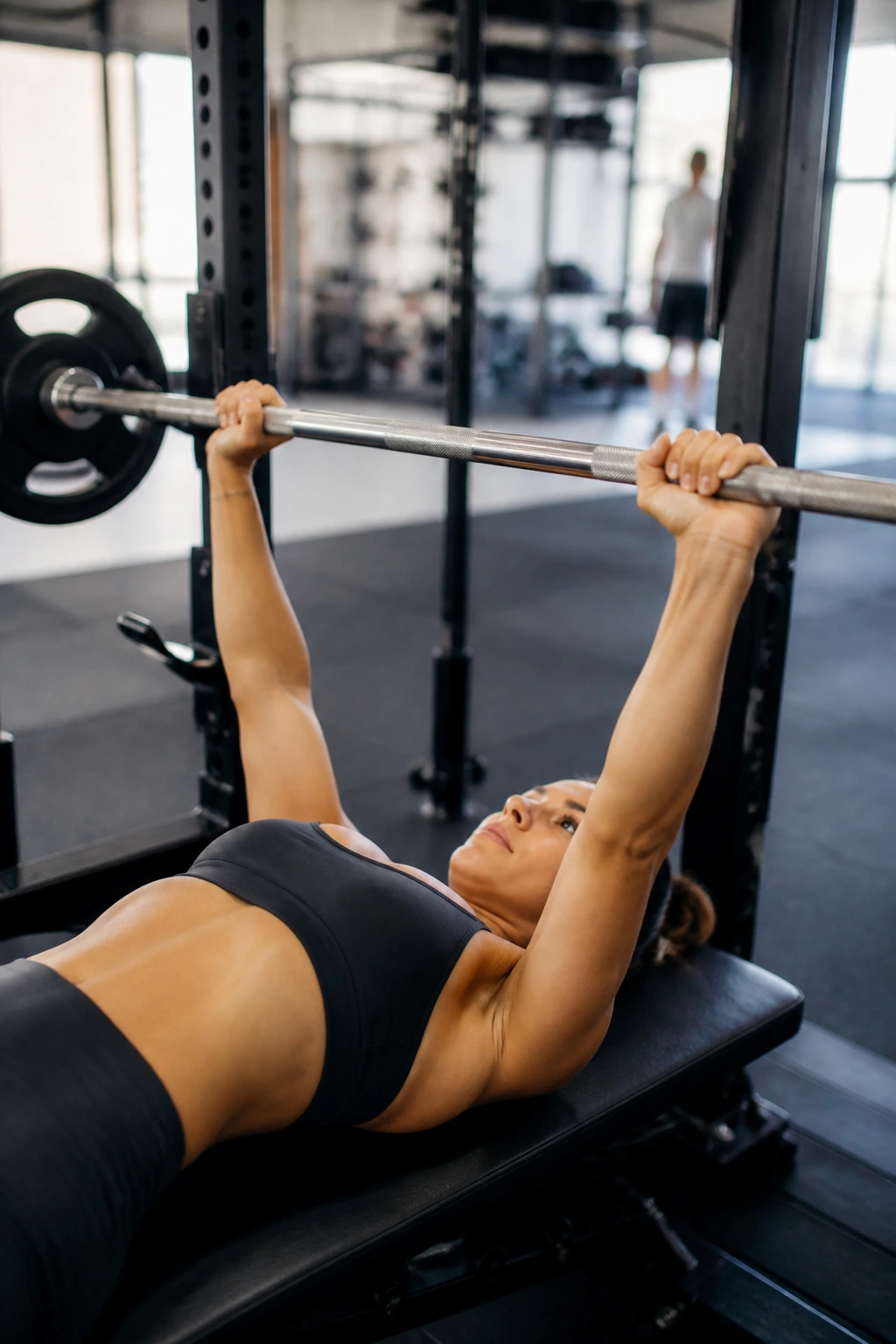
Barbells are not only for advanced lifters. They’re just another tool, and a very useful one once you’re ready for a fixed, stable load that can grow with you.
Use an empty bar or very light plates for box squats, bench press, Romanian deadlifts, bent-over rows, and hip thrusts. Stick with 2 sets of 5 reps on the main lifts. Rest 2 minutes if needed, especially on the squat and deadlift pattern.
The bar should feel manageable from the start. If the setup itself feels like a wrestling match, the weight is too much for day one.
This routine is best when you already know how to hinge and press with dumbbells and want to practice a more structured strength setup.
22. Recovery Gym Day
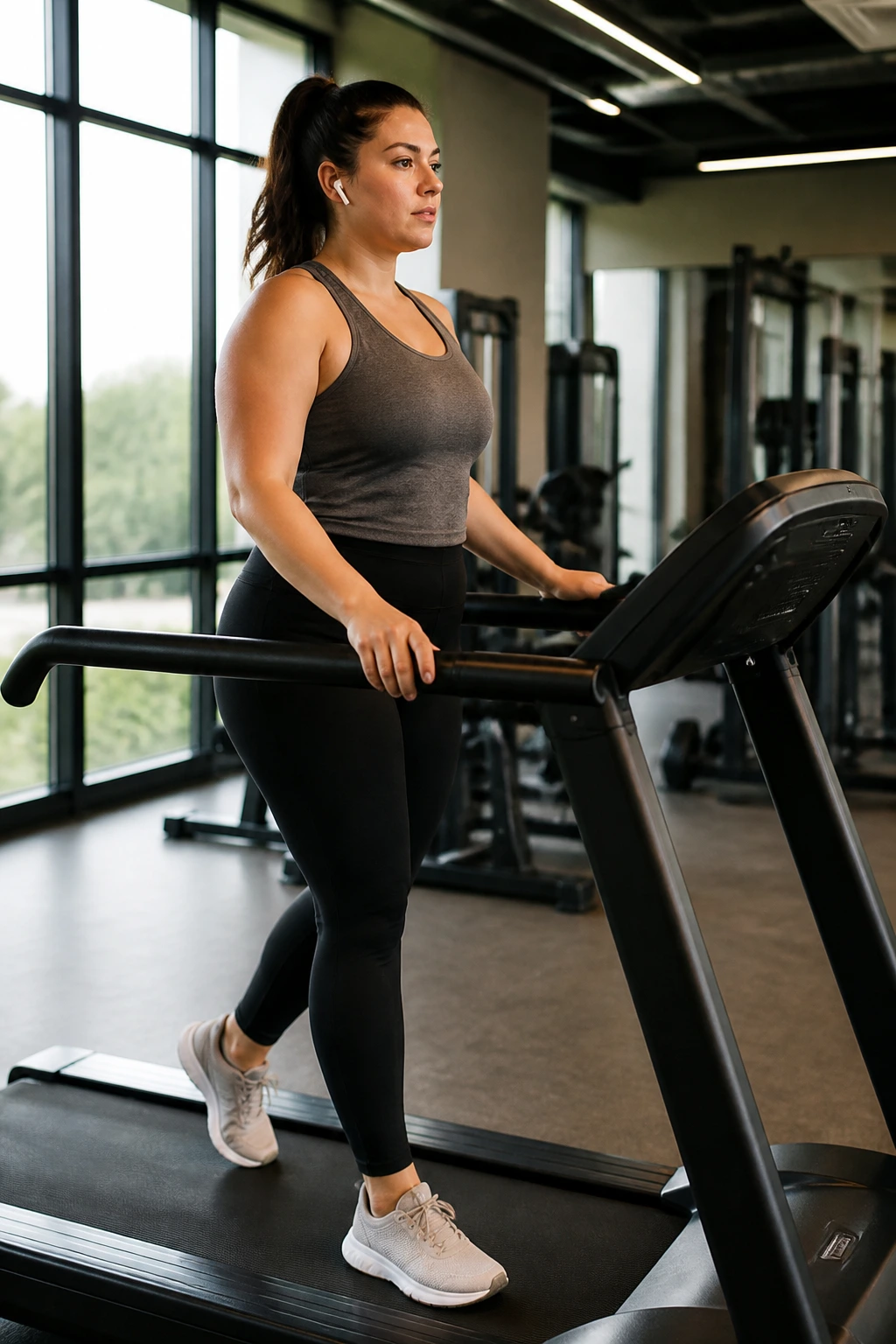
Do you ever need a gym day that feels like a reset instead of a performance? Good. That’s what this is for.
What Recovery Looks Like in a Gym
Walk on the incline treadmill for 10 minutes, then hop on the bike for 8 minutes at an easy pace. After that, do cat-cow stretches, hip flexor stretches, cable pull-throughs with a feather-light stack, and bird dogs. Keep everything smooth and pain-free.
The goal is blood flow and loose joints, not sweat stains. You should leave feeling a little better than when you arrived. That alone is useful.
This kind of session helps when your legs are stiff, your sleep was lousy, or your last workout left your body grumpy. Sometimes the smartest move is backing off on purpose.
23. Split Squat and Step-Up Session
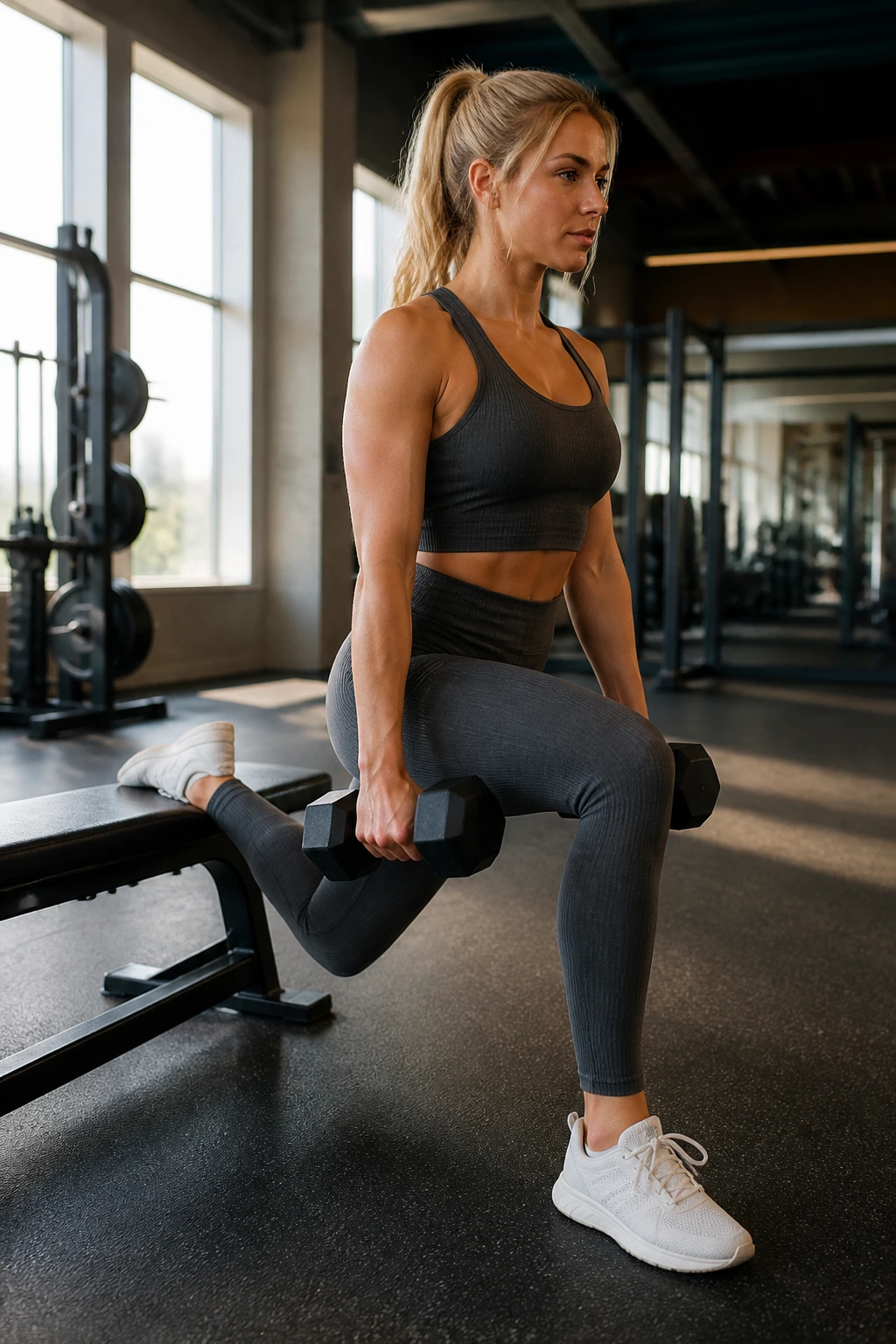
No, you do not have to barbell squat on day one. Single-leg work can build strength, balance, and leg shape with less setup and less intimidation.
Do Bulgarian split squats, step-ups, reverse lunges, lying leg curls, and calf raises. Use 2 to 3 sets of 8 reps per side for the leg moves and 12 reps for curls and calves. Hold dumbbells only if you can stay upright without wobbling.
What to Watch For
- Keep the front foot flat on split squats
- Push through the whole foot on step-ups
- Let the back knee move down, not forward, on reverse lunges
- Use a box or bench height that lets you control the descent
This workout exposes side-to-side differences fast. That can be humbling. It’s also useful, and that’s the point.
24. Fat-Loss-Friendly Beginner Circuit
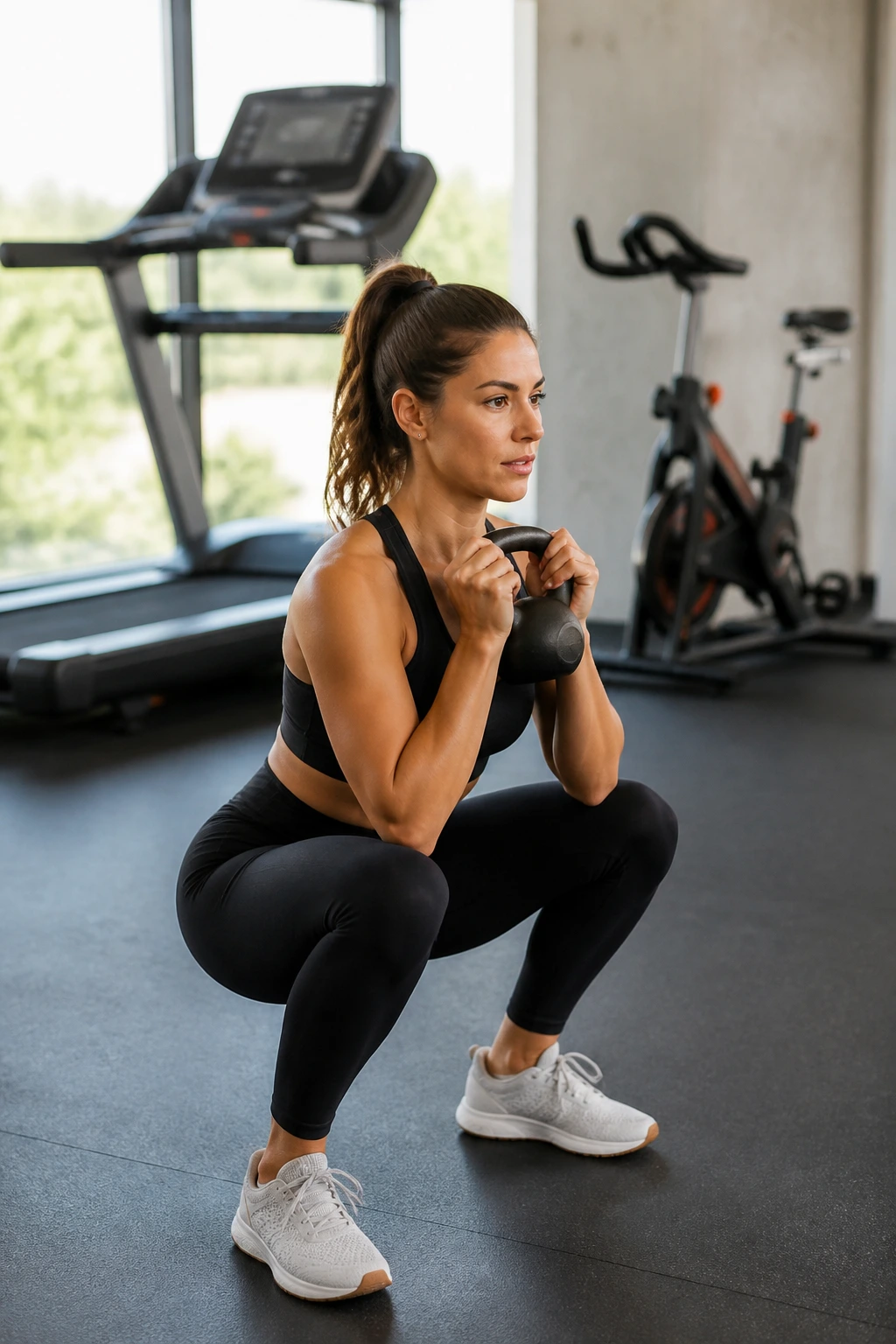
Sweaty doesn’t mean smarter, but a well-paced circuit can absolutely help you get more work done in less time. The trick is keeping the pace steady, not reckless.
Run treadmill incline walking, goblet squats, seated rows, dumbbell presses, and bike intervals in a loop. Use 2 minutes on the treadmill, then 10 reps of each strength move, then 2 minutes on the bike. Repeat the full circuit 4 times.
You should feel your heart rate rise and settle in waves. That makes the session more sustainable than trying to redline for thirty straight minutes.
This is the kind of workout that fits people who want a simple calorie-burning session with enough strength work to keep muscle on board.
25. Repeatable Three-Day Rotation
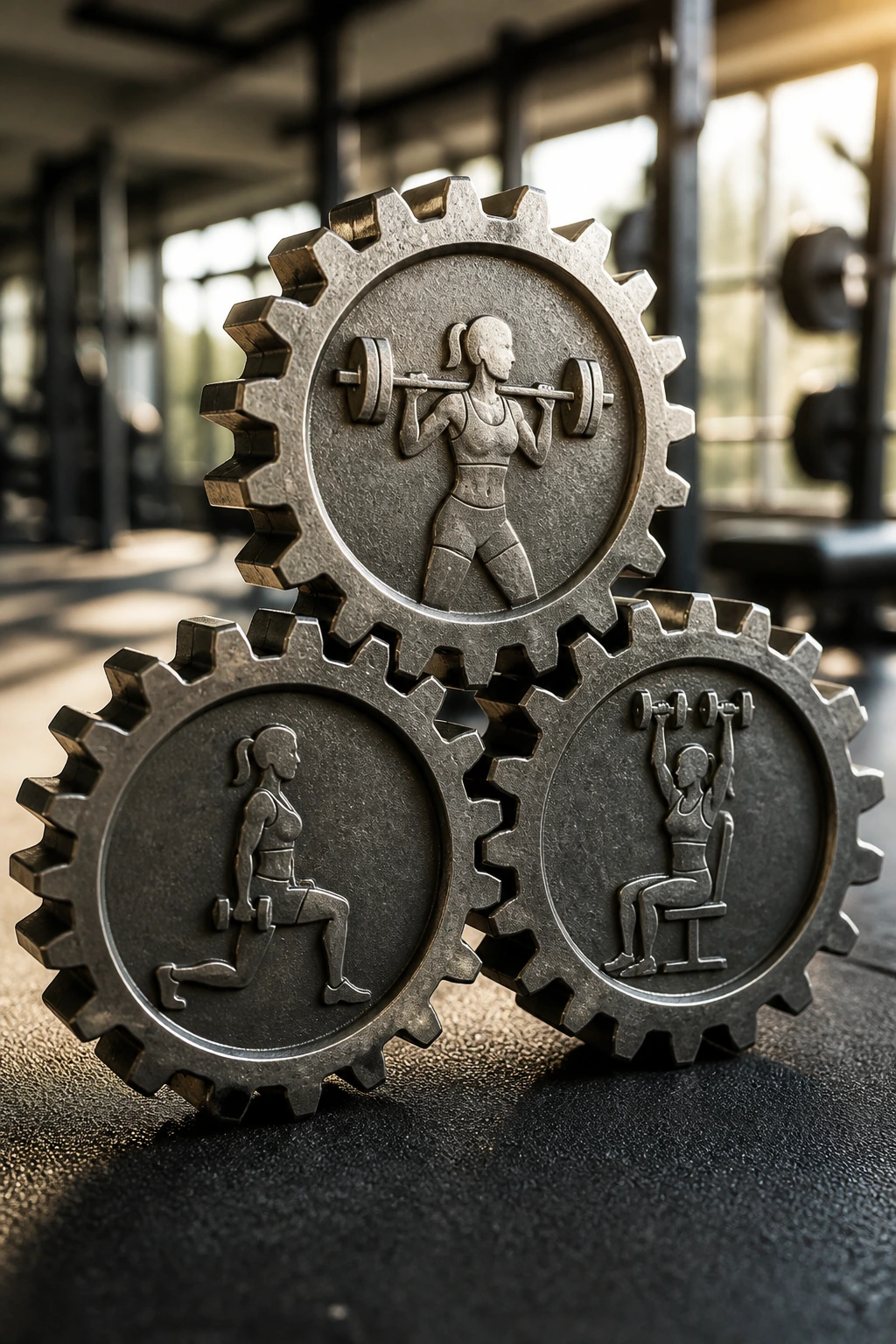
A clean weekly rotation is often better than twenty separate ideas. It gives your body a pattern, which makes progress easier to see and easier to trust.
How to Use the Rotation
- Day A: full-body machine circuit
- Day B: lower-body focus with leg press, hamstrings, and glutes
- Day C: upper-body push-pull work with a short cardio finish
Keep each day to 5 exercises, 2 to 3 sets, and 8 to 12 reps. Add a little weight when the final rep starts to feel too neat. If a session goes wrong, lower the load and keep the schedule.
That’s the part people miss: the best routine is often the one you can repeat without rethinking it every single time. A simple three-day structure gives you just enough direction and still leaves room to grow.
Final Thoughts
The best beginner gym routine is the one that makes the next visit feel possible. Not heroic. Possible. That usually means clear exercises, moderate weights, and enough rest that your form doesn’t fall to pieces halfway through.
Pick one routine that looks almost too easy on paper. Run it cleanly, write down the weights, and try to beat your own logbook by a small amount next time. Two extra reps. Five more pounds. Better control on the last set. That’s how a beginner plan stops feeling like a beginner plan.
And if the gym feels less confusing after a few sessions, good. That’s the real win.
