



Pregnancy yoga works best when it feels calm, not heroic. Most people do not need a deeper stretch or a prettier shape; they need more room to breathe, a steadier base, and a way to stop their back, hips, and ribs from arguing with each other for twenty minutes.
That changes as pregnancy changes. In the first trimester, fatigue and nausea can make even simple floor work feel off. In the second trimester, balance starts to shift and the body often wants open hips, longer side bodies, and less time lying flat. In the third, space matters most. A pose that felt lovely a month earlier may suddenly feel compressed, wobbly, or plain annoying.
I always think about support before shape. A wall, a chair, a block, or a folded blanket can turn a so-so stretch into something you can actually relax into. And if a posture creates pressure, dizziness, pinching, or a weird pulling sensation in the belly, that’s your cue to back out. No pose is worth wrestling with.
What follows is a set of prenatal yoga poses and gentle stretches that tend to work across different stages of pregnancy, with modifications that make them more useful than the glossy version you see in studio photos. Some are better early, some shine later, and a few earn their place in all three trimesters when you use them with a little common sense.
1. Cat-Cow Pose
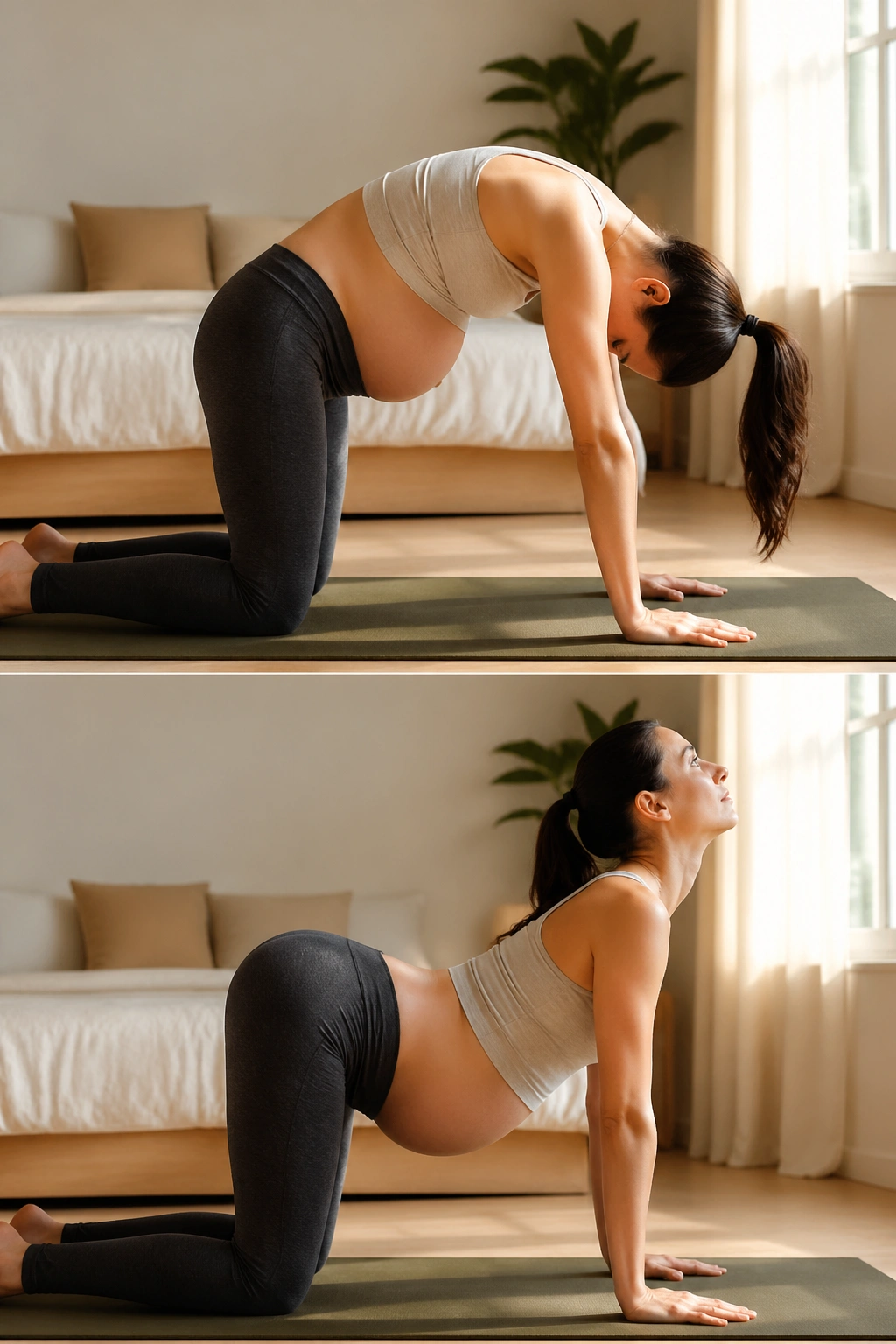
Cat-Cow is the sort of pose that looks almost too simple to matter, then saves your lower back on a day when everything feels stiff. It belongs early in a pregnancy practice because it gives the spine movement in both directions, opens the ribs for breathing, and lets the pelvis rock in a way that usually feels kind.
Why it feels so good
A lot of pregnancy discomfort shows up in the low back and between the shoulder blades. Cat-Cow gives both areas a chance to move instead of bracing. It also works well in the first, second, and third trimester because you can make the motion tiny or large depending on how you feel that day.
How to do it
Start on hands and knees with wrists under shoulders and knees under hips. Inhale as you tip the tailbone up, soften the belly, and broaden the collarbones. Exhale as you round the spine and press the floor away. Move slowly for 5 to 8 rounds.
- Use a folded blanket under the knees if the floor feels hard.
- Widen the knees if your belly starts to feel crowded.
- Keep the neck long instead of throwing the head back.
Tip: The breath should lead the movement, not chase it.
2. Supported Child’s Pose
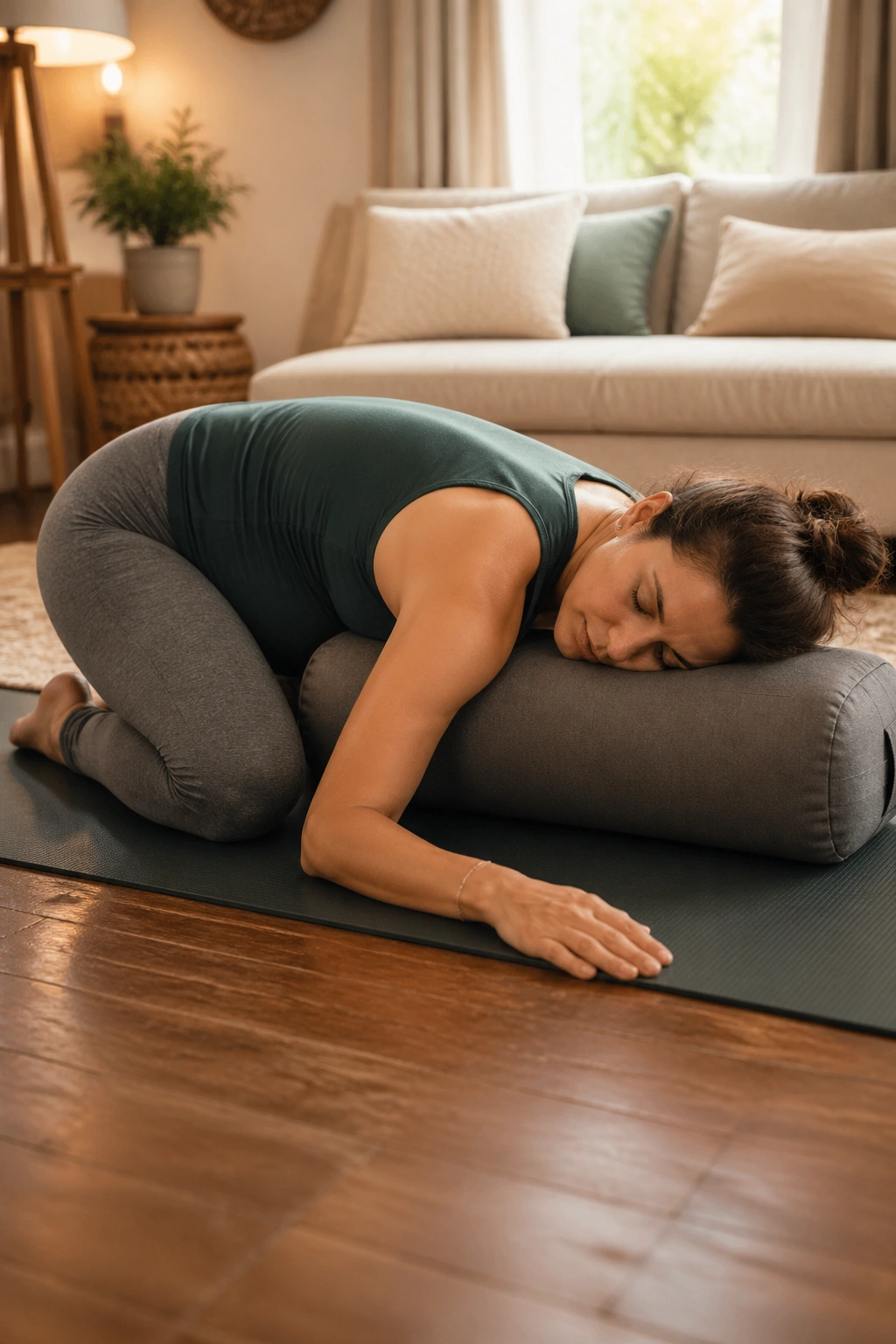
Supported Child’s Pose is one of the few positions that can make the nervous system feel like it finally got the memo. Resting the torso on a bolster or stack of pillows takes the pressure off the low back and gives the belly somewhere to go, which is a bigger deal than it sounds.
If you’re in the second trimester and floor work is starting to feel awkward, this pose can still be kind if you spread the knees wide and support the chest. In the third trimester, many people prefer a side-lying rest instead, but a wide-knee version can still work for short stretches when the torso has enough room.
The key is not to force your seat back too far. Let the hips stay high enough that the belly does not get squashed. If your knees dislike the kneeling position, skip it. That is not failure; that is good listening.
Use a bolster lengthwise under the chest, turn the head to one side, and breathe into the back ribs. Small exhale. Big payoff.
3. Bound Angle Pose
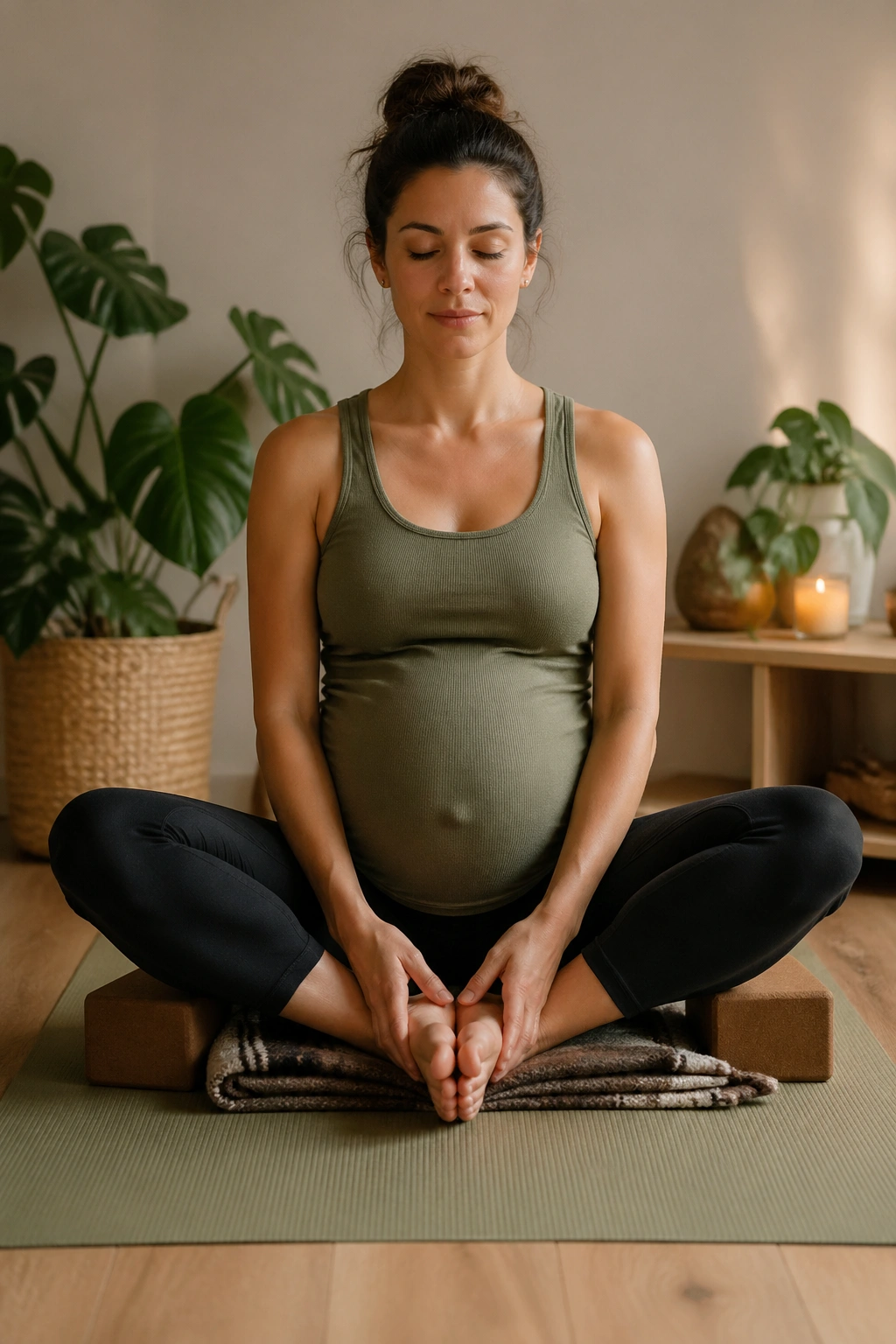
Why does Bound Angle show up in prenatal classes so often? Because it gives the inner thighs, hips, and pelvic floor a little release without asking you to twist, balance, or compress the abdomen. It looks gentle because it is gentle, and that is precisely the point.
Sit on a folded blanket so the hips tip slightly forward. Bring the soles of the feet together, then let the knees open only as far as feels comfortable. In the first trimester, this can be a nice seated opener. In the second and third, it often feels even better if you place blocks or pillows under the thighs so you do not have to hold the legs up by sheer force.
How to use it
Keep the spine tall for a few breaths, then lean forward only a little if it feels spacious. No yanking. No pressing the knees down. If the inner thighs are tight, stay upright and breathe there for a while instead.
A small detail matters here: the front of the pelvis should feel broad, not pinched.
4. Low Lunge with Blocks
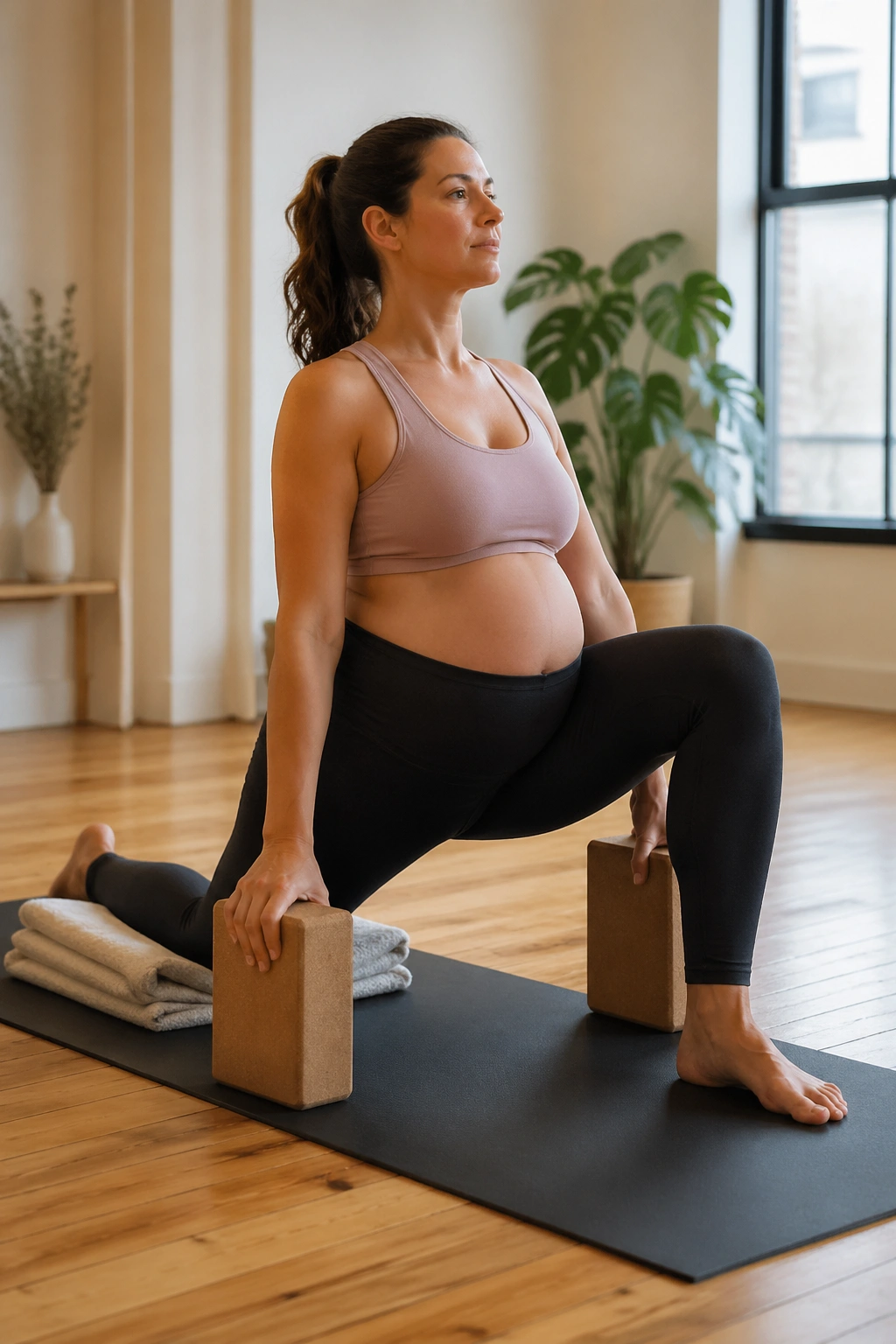
Picture a morning when the hips feel like they belong to somebody else. Low Lunge is the one I reach for. It gives the front of the hip a long, honest stretch and lets the back leg wake up without asking the body to do anything dramatic.
Start with the back knee down on a folded blanket. Bring both hands to blocks on either side of the front foot so the chest stays lifted. That higher hand position matters more in pregnancy than people think; it keeps the belly from collapsing forward and gives your spine a little dignity.
- Keep the front knee stacked over the ankle.
- Shorten the stance if your balance feels off.
- Tuck the back toes under only if that feels easy on the knee.
- Stay upright if the belly feels crowded.
This works well in the first and second trimester, and in the third if you keep the lunge shorter and the props higher. A low lunge should feel like a stretch, not a strain.
5. Goddess Pose
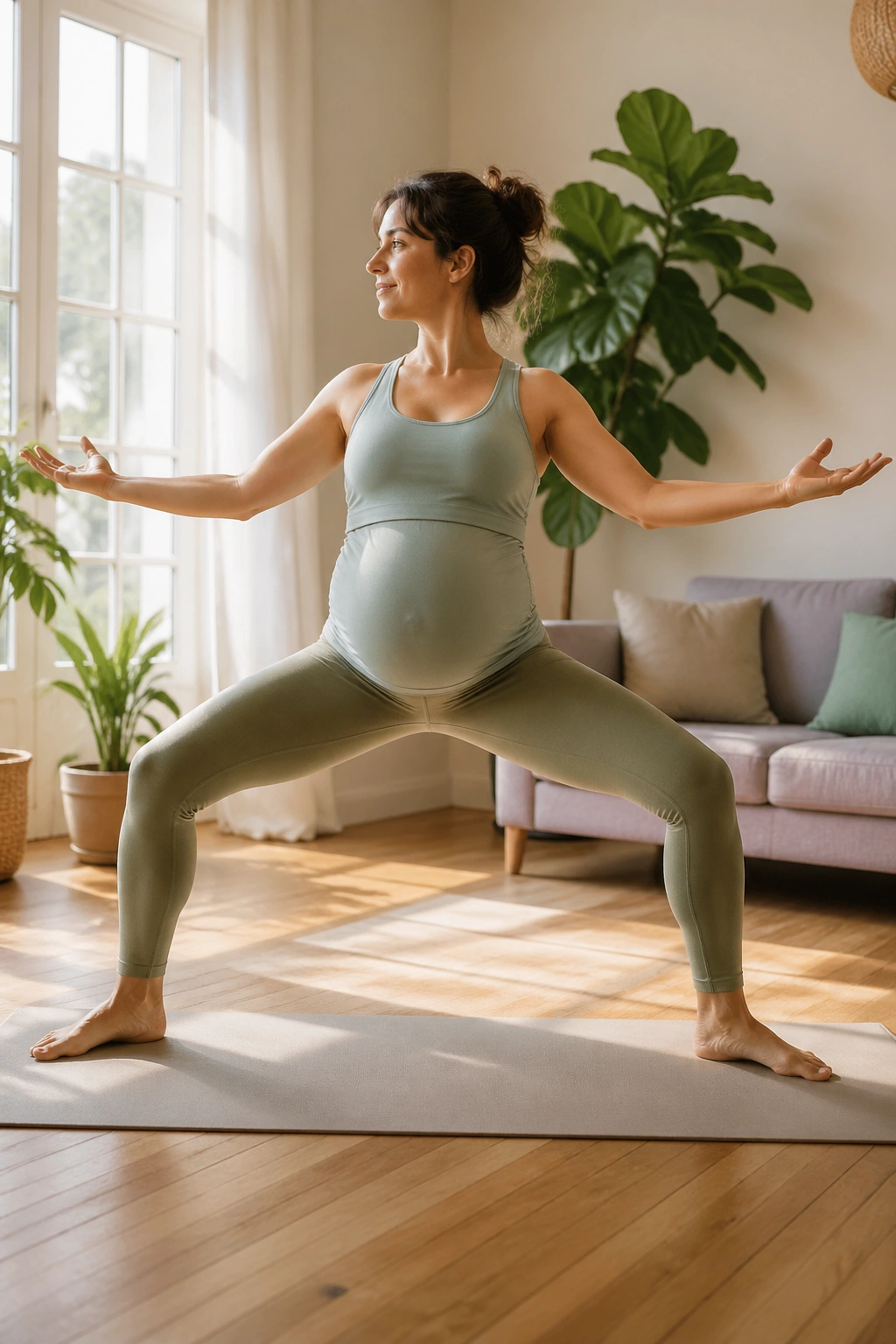
Goddess Pose earns its keep because it asks for strength without asking for a circus act. You stand wide, toes turned out a little, knees bent in line with the toes, and arms open or in cactus shape. The body feels grounded fast.
I like this pose in the second and third trimester when standing work starts to feel better than floor work. The wide stance creates space for the belly, and the bent knees bring the thighs and glutes into play in a way that feels steady rather than punishing. The pelvic floor gets a bit of attention, too, especially when you breathe low and slow into the sides of the ribs.
No need to sink into a deep squat. A shallow bend can be enough. If the knees complain, narrow the stance. If the lower back pinches, lift the chest and tuck the tailbone only slightly.
This is a pose that can look strong from the outside and still feel restful from the inside. That combination is rare. Use it.
6. Warrior II at the Wall
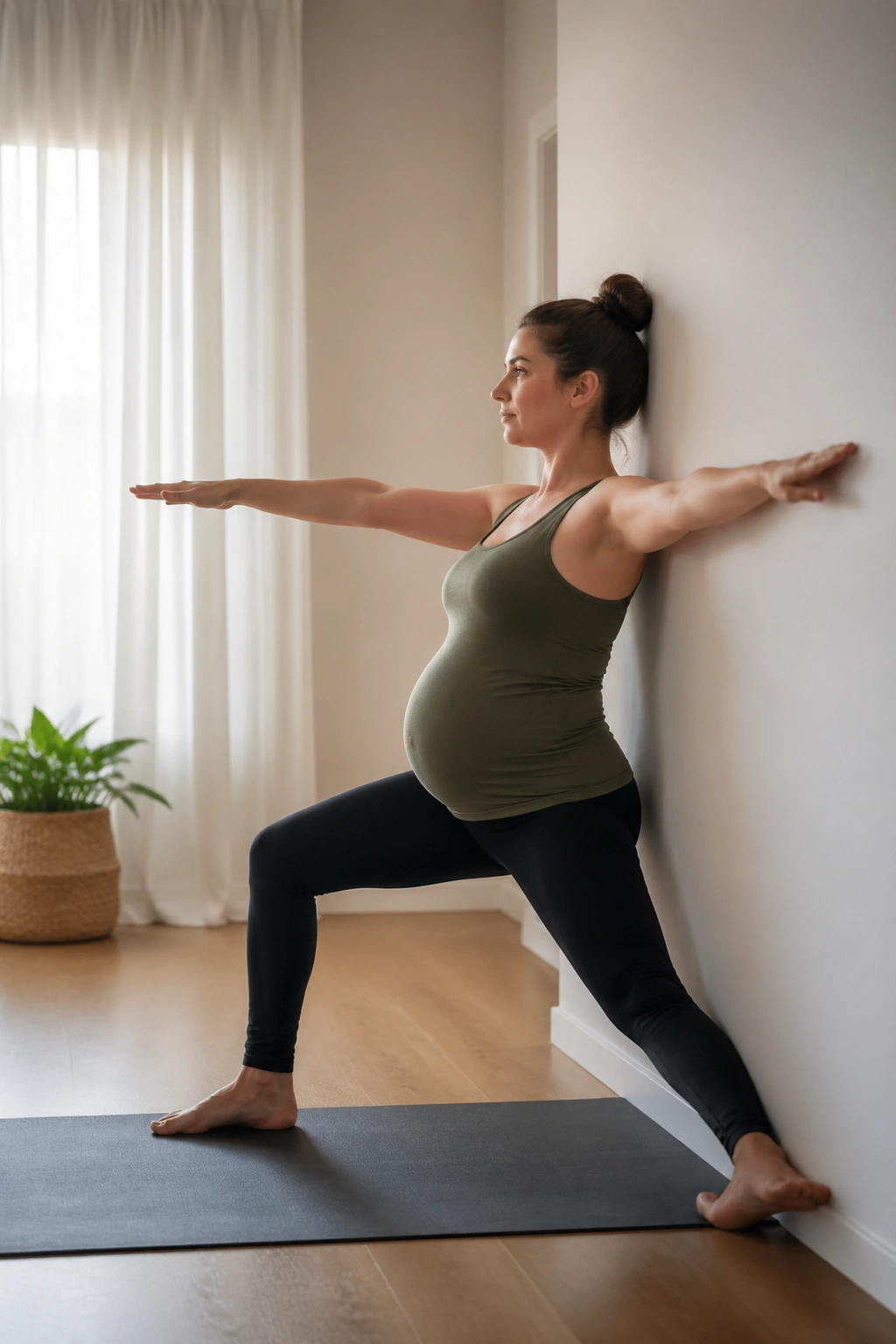
Compared with a free-standing Warrior II, the wall-supported version takes away the wobble and gives your hips something solid to trust. That matters more as pregnancy changes your center of gravity and balance starts to feel a little less predictable.
Stand beside a wall with the back side of the body close enough to brush it lightly. Step one foot forward, bend the front knee, and extend the arms. The wall helps you keep the torso upright, which keeps you from collapsing toward the front thigh. It also makes the back leg feel more awake, not more strained.
This is a smart second- and third-trimester pose because it lets you keep the shape of Warrior II without hanging all your weight into your joints. If the stance is too long, shorten it. If the arms get tiring, rest the back hand on the hip and keep the front arm forward.
The wall is there to reduce work, not to trap you in a rigid line.
7. Triangle Pose with a Block
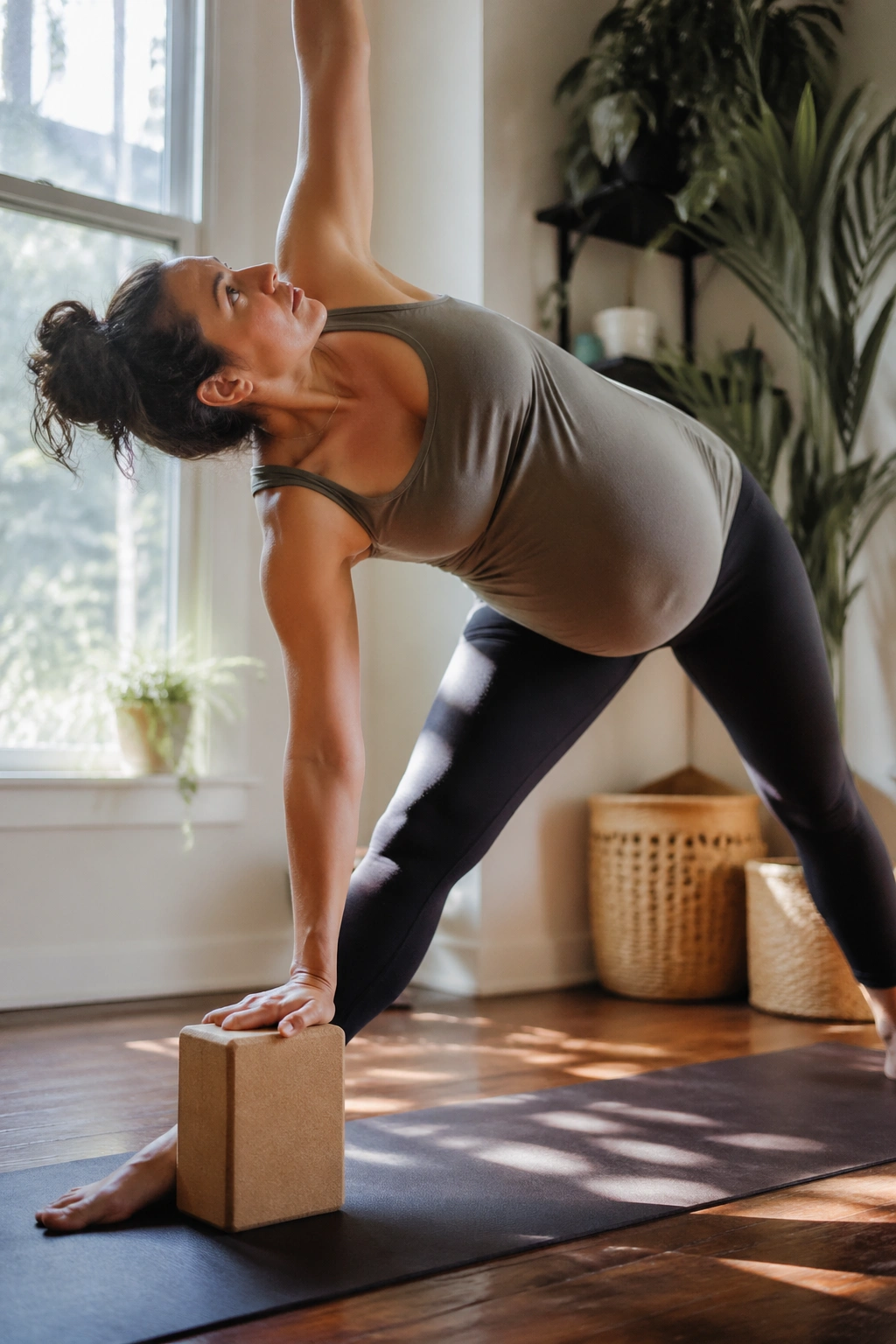
Triangle gets better with a block. Chasing the floor with your hand while your belly and hamstrings protest is just busywork. A block under the lower hand turns the pose into a real side-body stretch instead of a balance test you never asked for.
Set the feet a comfortable distance apart, with the front toes turned out slightly and the back foot angled in. Place the block on the inside or outside of the front shin, wherever the torso can stay long. Keep a small bend in the front knee if needed. The top hand can stay on the hip, reach up, or rest on the top shoulder.
What to watch for
- Keep the chest open rather than folding forward.
- Avoid dropping the lower ribcage toward the floor.
- Shorten the stance if the belly feels pulled.
- Keep the gaze soft; dizziness is not welcome here.
This pose is useful in the second trimester when side-body space often starts to feel precious. Done well, it gives you length through the waist and a sense of room through the ribs. That room matters.
8. Tree Pose by the Wall
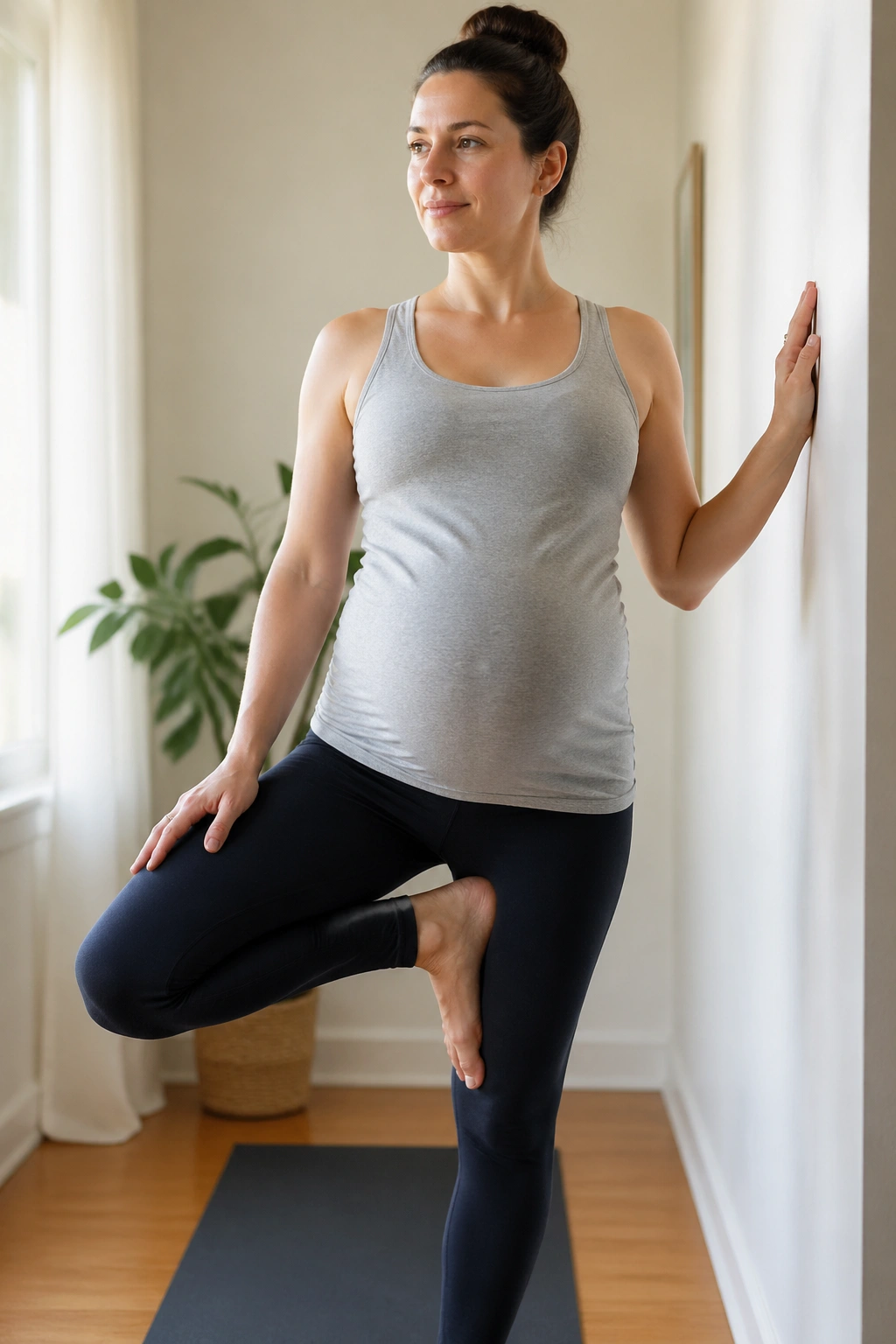
Tree Pose sounds innocent until one foot leaves the floor and your whole sense of balance changes. The wall fixes a lot of that. Stand one hip or shoulder near it, press the standing foot down, and place the lifted foot at the ankle or calf.
I like this one because it keeps standing balance in the practice without turning the session into a wobble-fest. In the first trimester, it can build steadiness when fatigue makes the body feel loose. In the second and third, it keeps the hips and core engaged in a low-drama way.
Do not press the foot into the inside of the knee. That is a bad trade. Calf or ankle is plenty. Keep the pelvis level, or close enough, and use one hand on the wall whenever you need it. There is no prize for doing Tree with no help at all.
Balance work in pregnancy should feel clean and calm. If your breath gets choppy, come down. That is the whole test.
9. Standing Wide-Leg Forward Fold
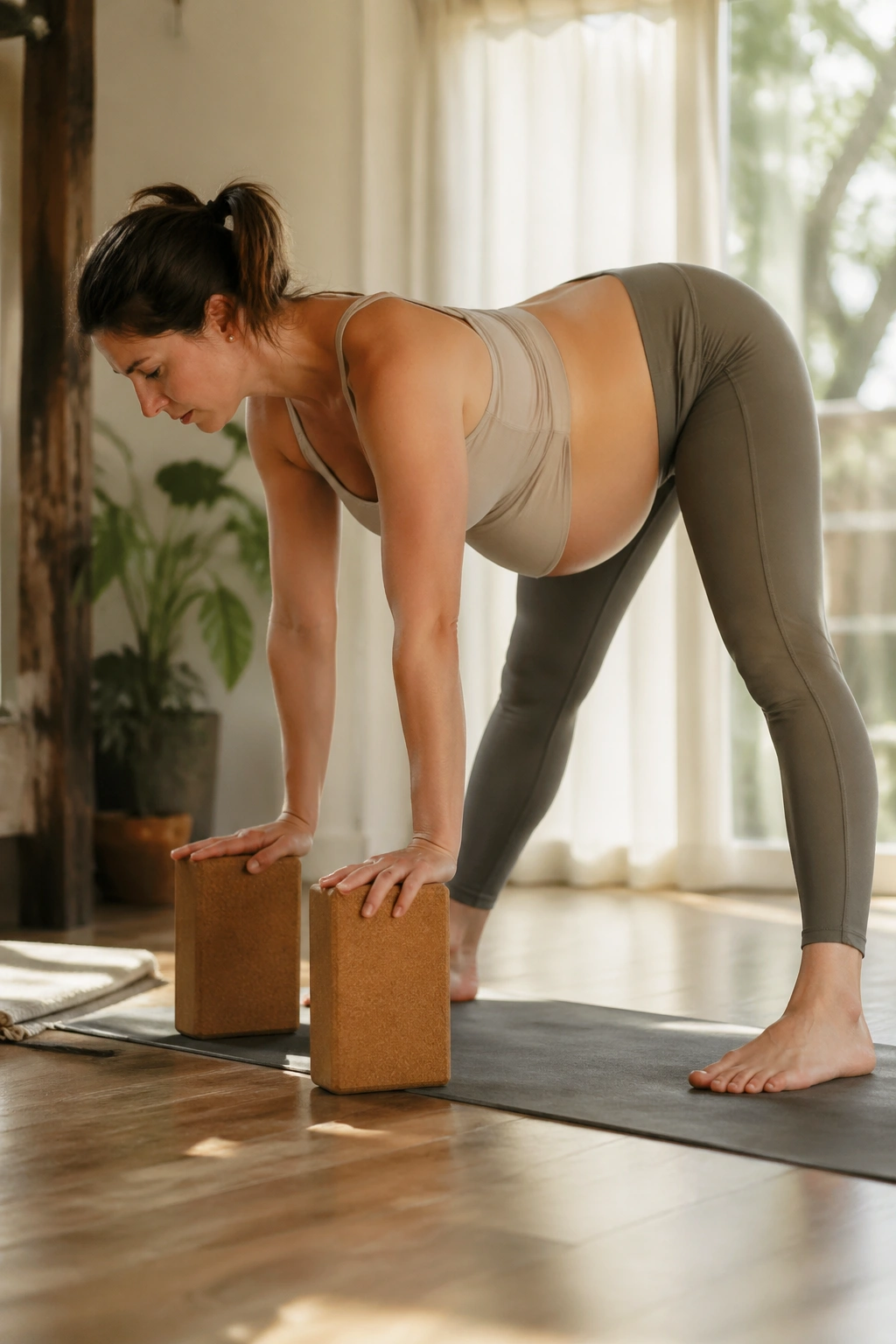
Need hamstring relief without folding your belly into your thighs? Use a wide stance and keep the fold shallow. This version of a forward fold gives the back line of the body some space while avoiding the crushed feeling that a deep bend can bring.
Set the feet wider than the hips, turn the toes in slightly, and place the hands on blocks, a chair seat, or the thighs. Hinge from the hips until the spine feels long. The knees can stay bent the whole time. In fact, bent knees are often smarter than straight ones here.
How to make it work
- Keep weight even through both feet.
- Stop the fold before the belly feels compressed.
- Rest the head only if the neck likes it.
- Come up slowly; dizziness can sneak in.
This pose tends to be most useful in the second and third trimester, when the back body wants space but floor work feels like too much. It is not about depth. It is about length.
10. Half Split with a Chair
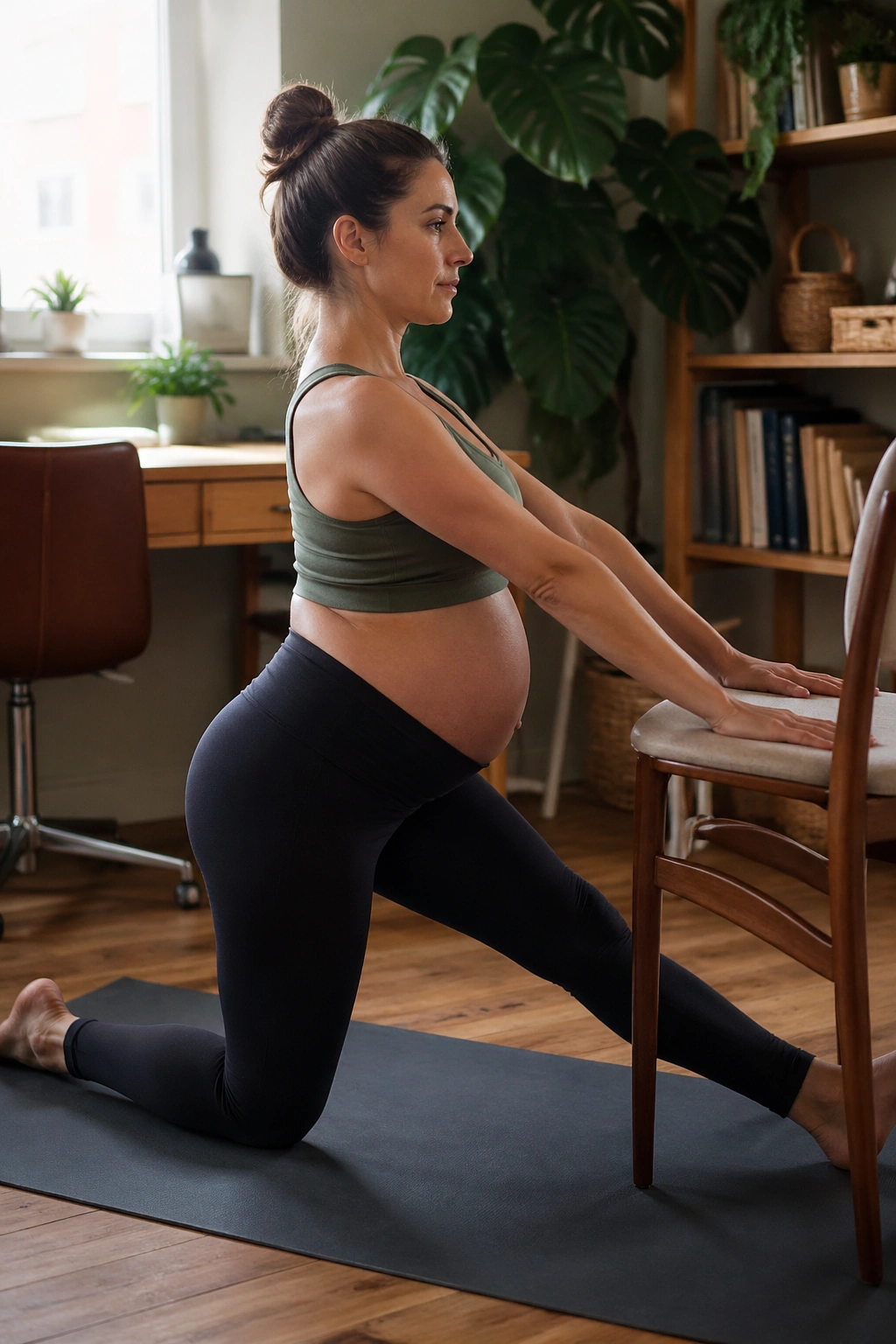
A chair changes everything here. Half Split can give you a clean stretch through the hamstrings without making you wrestle the floor or round into the belly. It is one of those poses that looks modest and feels extremely useful.
Come into a low lunge with the back knee down. Shift the hips back until the front leg straightens partway, keeping the front foot flexed or relaxed depending on what feels better. Place the hands on a chair seat or blocks so the spine stays long. If the stretch feels sharp, bend the front knee a little.
This is especially nice in the second trimester, when the back of the legs can tighten from standing and walking around with a changing center of gravity. In the third trimester, keep the motion small and the torso high. The chair saves the day.
- Keep the front toes pointing up or slightly inward.
- Don’t lock the knee.
- Keep the belly roomy.
- Breathe into the back of the thigh, not through it.
The hamstrings will tell you when they have had enough. Listen.
11. Figure-Four Stretch on a Chair
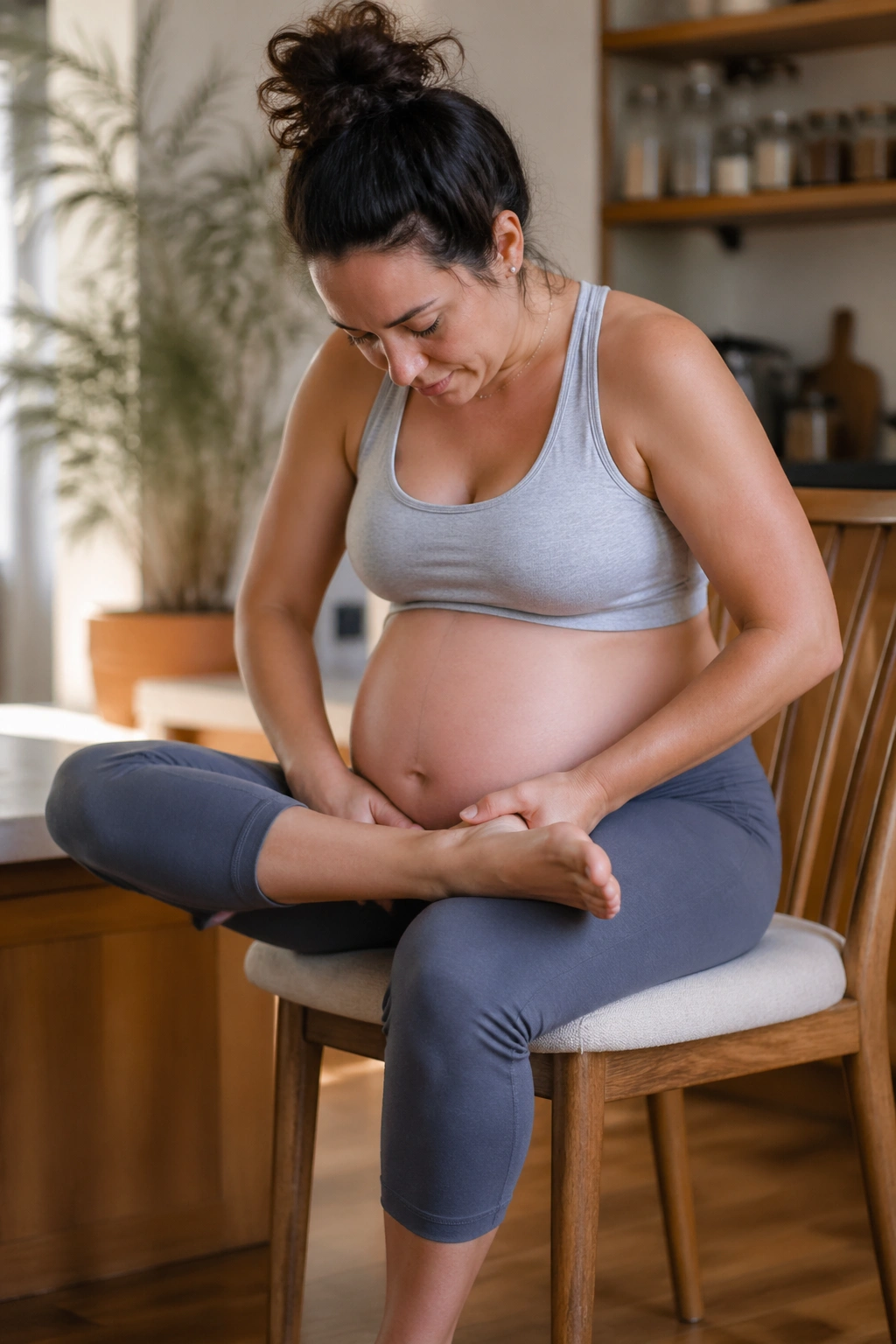
The seated Figure-Four stretch is the one I reach for when the outer hip feels glued shut. It opens the glutes and the side of the hip in a way that can feel almost unfairly good after a long stretch of sitting, driving, or standing with your weight shifted to one leg.
Sit tall on a chair. Cross one ankle over the opposite thigh, keeping the foot flexed. Let the upper body hinge forward only as far as the back stays long. If the knee feels cranky, back off. If the hip feels tight, stay upright and let the shape do the work on its own.
This version works well in the second and third trimester because it keeps you off the floor and away from positions that ask for a lot of abdominal compression. It also gives you a clean, controlled stretch instead of the kind that turns into a tug-of-war.
A chair makes the pose more predictable. That is a good thing. Pregnancy already provides enough surprises.
12. Puppy Pose at the Wall
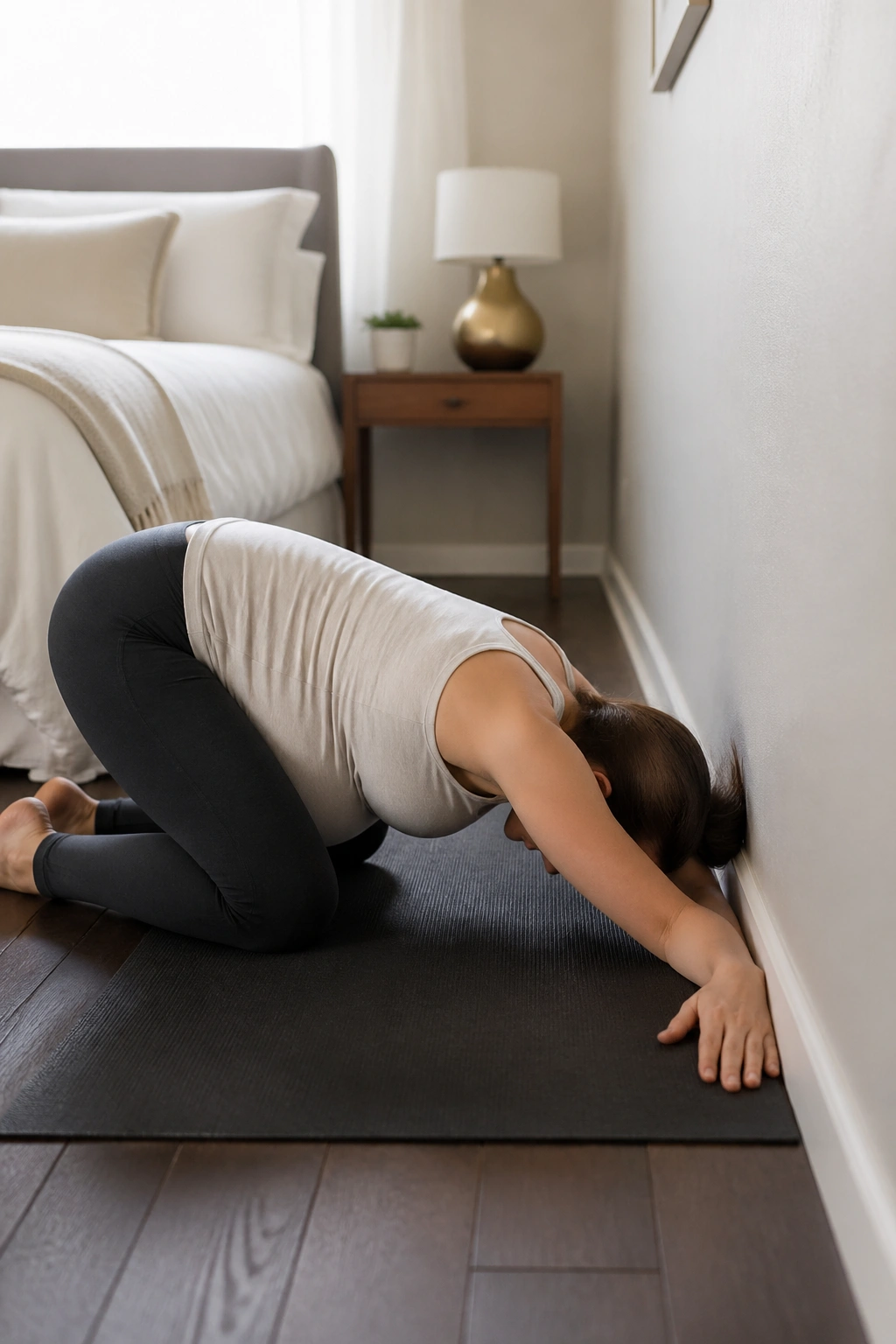
Puppy Pose is more useful than Downward Dog for many pregnant bodies, especially when the wrists, shoulders, or belly need a softer option. By using a wall or a high chair seat, you keep the weight out of the hands and leave room to breathe.
Stand facing a wall with the hands at shoulder height, then walk the feet back until the arms and spine form a long line. Let the chest drop toward the floor or the wall while the hips stay over the feet. If you want more shoulder opening, bring the hands lower or use a chair seat with forearms resting there.
This works in all trimesters when you keep the shape modest. It stretches the lats, chest, and upper back, which can feel dense from carrying extra weight forward. It also gives a nice pause if your usual practice feels too intense.
Compared with a mat-based Puppy Pose, the wall version is kinder to tired wrists and a more stable choice when balance feels off. Small angle, big relief.
13. Garland Pose with Heels on Blankets
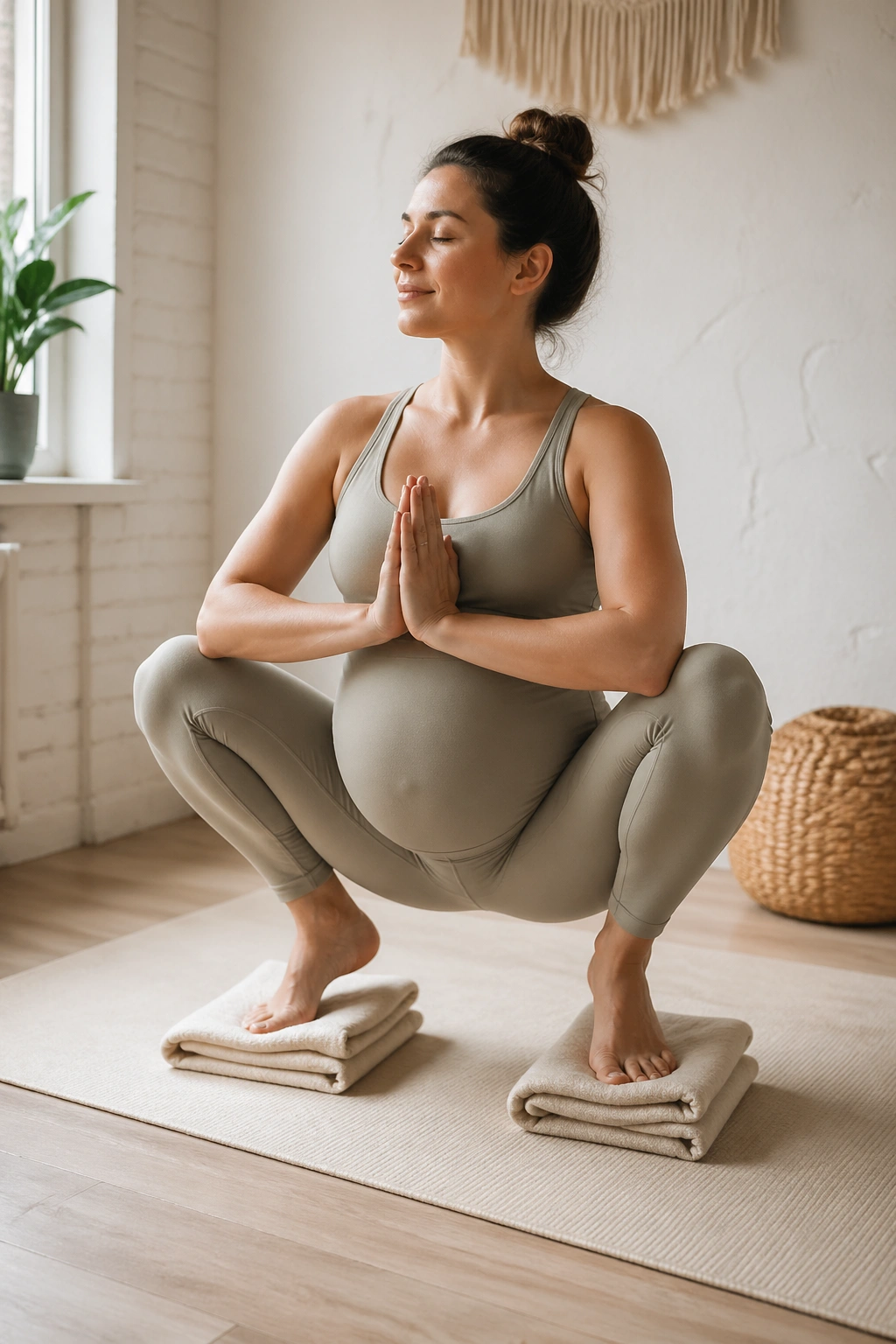
Garland Pose asks for a deep squat, but support makes it far less dramatic. When the heels are lifted on folded blankets or a rolled mat, the knees get less cranky and the pelvis can settle in without a fight.
Why support matters
A supported squat can be useful in the second trimester and sometimes the third, especially if you want to work on hip opening and lower-body mobility. It can also help you notice where the pelvic floor feels tight or braced. If that sensation turns into strain, come up.
Stand with the feet a bit wider than the hips, turn the toes out slightly, and lower into a squat only as far as the body allows. Bring the elbows inside the knees if that feels good, or rest the hands on a block. A blanket under the heels can make the difference between a usable pose and a wobbly one.
- Keep the spine long.
- Don’t force the knees apart.
- Stay near a wall if balance feels uncertain.
- Come up if the lower back starts to pinch.
Best rule here: depth is optional, support is not.
14. Side-Lying Savasana
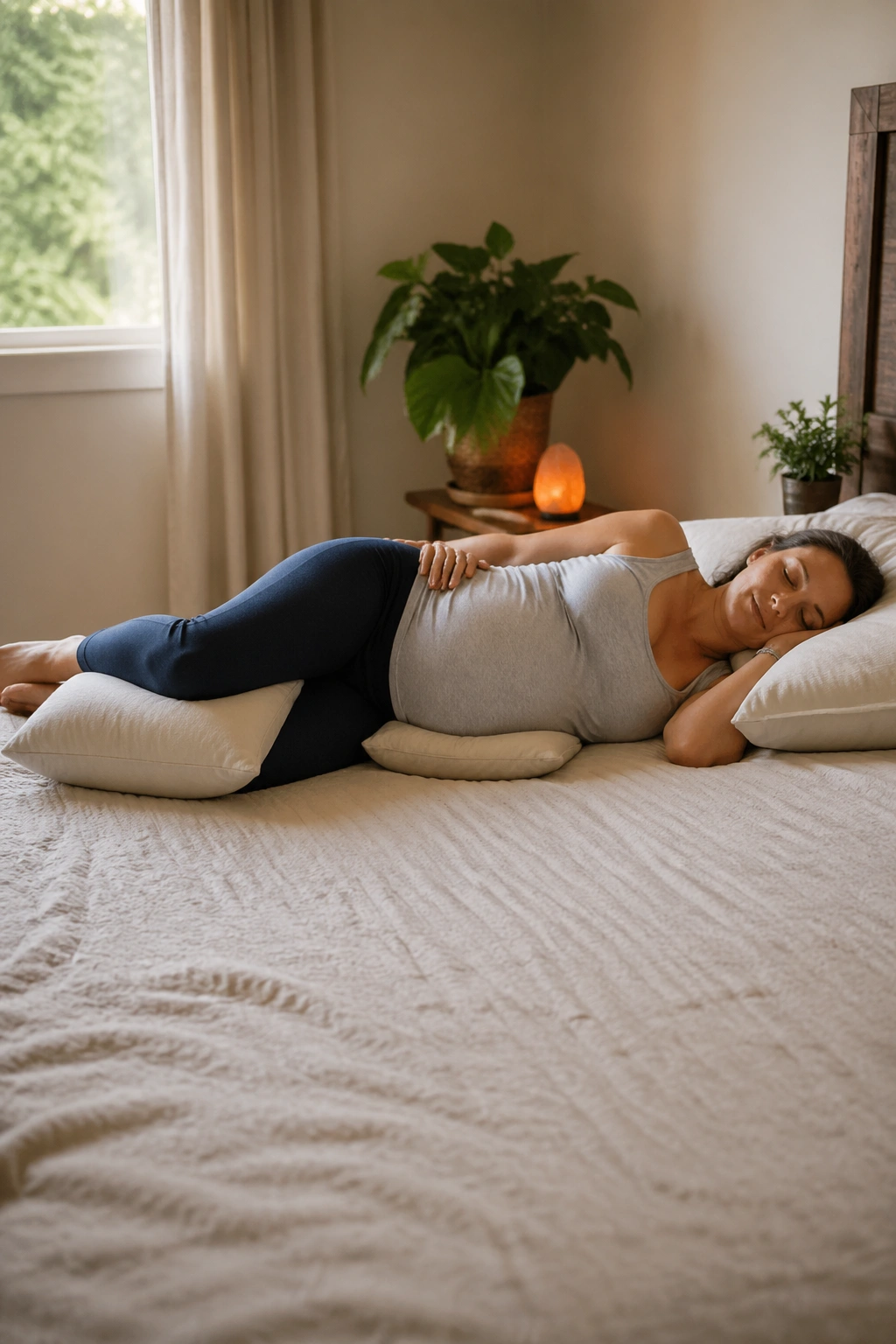
Sometimes the best pose is the one that looks least like yoga. Side-Lying Savasana gives the body a real chance to drop the guard, and in pregnancy that matters more than a fancy shape ever will.
Lie on one side with a pillow between the knees, another under the head, and one tucked under the belly if that helps. The top arm can rest on another cushion or drape forward. This position is a favorite in the third trimester because it avoids flat-on-back pressure and gives the ribs and belly room to settle.
A lot of people think rest poses should be short. I disagree. Rest is often the point. If you’ve been on your feet, carrying water weight, or dealing with that strange end-of-day pelvic heaviness, five slow minutes here can change the rest of the evening.
You can also switch sides halfway through. Keep the body soft, the jaw unclenched, and the breath easy.
15. Seated Side Stretch
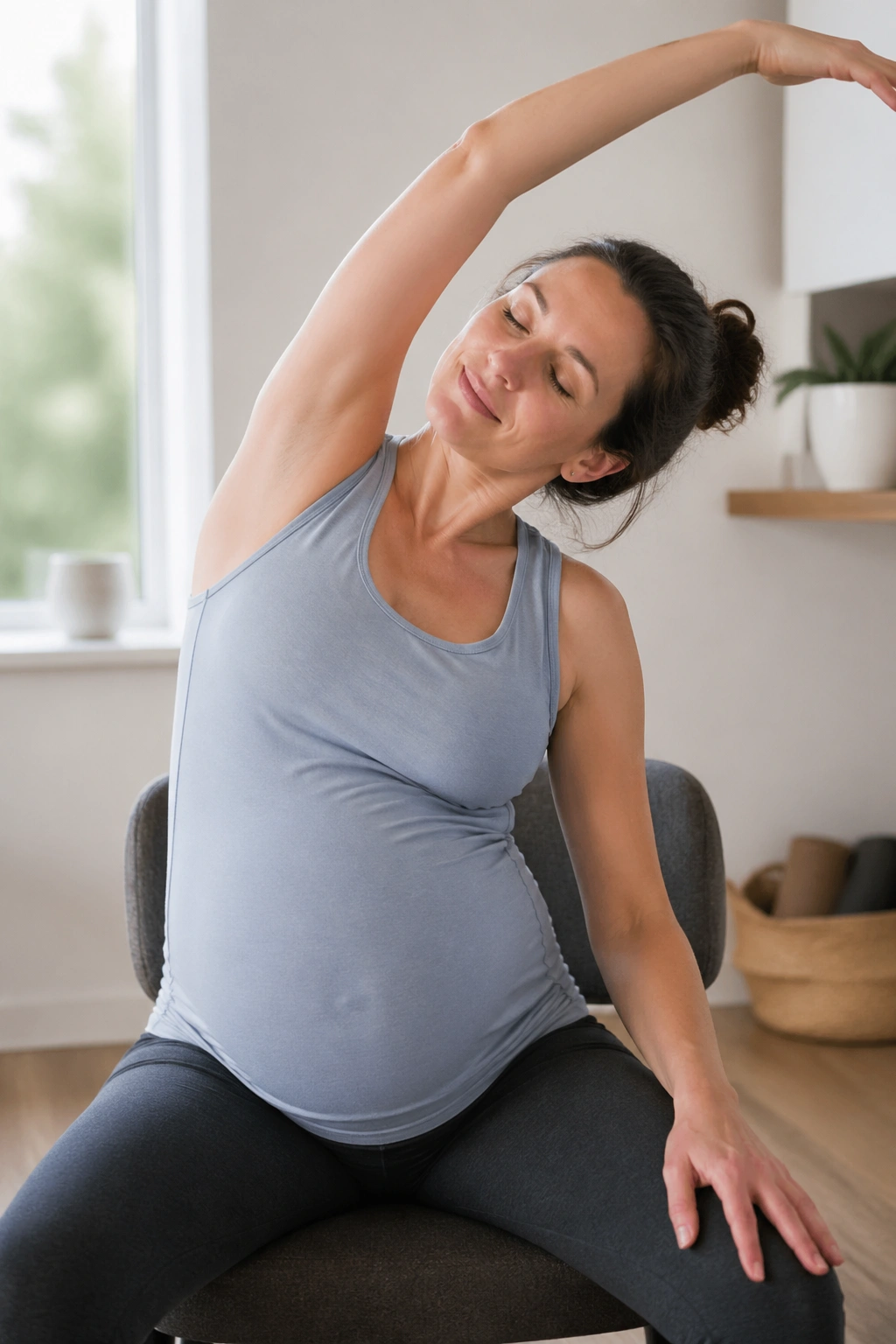
One arm overhead can do more for the ribs than a dozen vague “open up” cues. Seated Side Stretch creates length along the waist, clears space between the ribs, and gives the upper back a chance to stop hunching over the belly.
Sit on a chair or cross-legged on a blanket. Ground one hand, reach the other arm overhead, and lean gently to the side. The stretch should run from the hip to the fingertips. If the belly feels crowded, lift the bottom ribs instead of folding over. That tiny change makes the whole thing more comfortable.
How to keep the belly roomy
Keep the chest facing forward or only slightly angled. Do not crunch toward the floor. Think long, not collapsed. If one side of the neck tenses up, ease the shoulder away from the ear and shorten the reach.
This is a good all-trimester pose because it is easy to scale. In the first trimester, it can wake up sleepy side ribs. In the second and third, it can help with the tight, stretched feeling that builds around the waist.
A clean side bend can feel like opening a curtain.
16. Open Twist on Chair
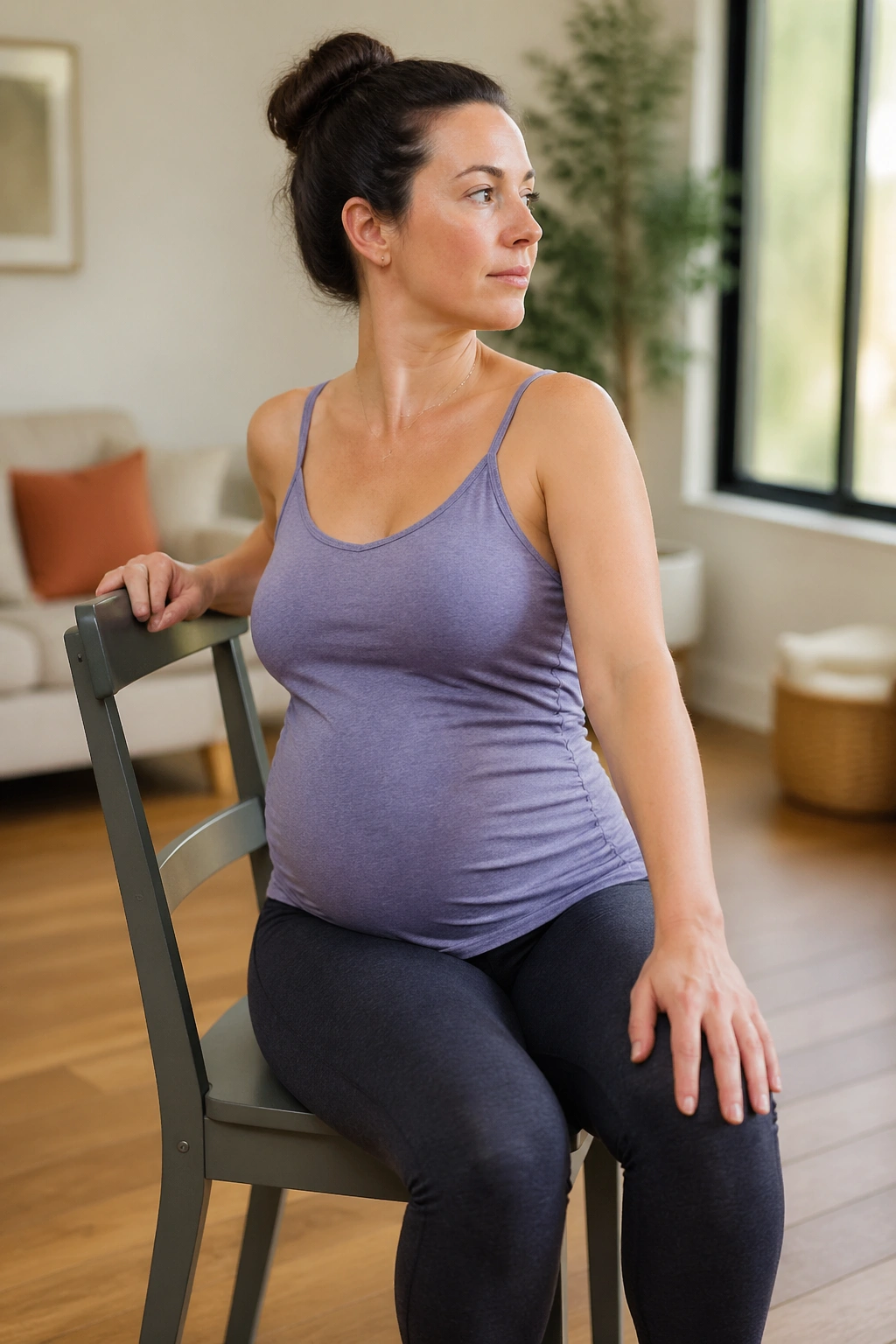
Your upper back gets tight from carrying everything forward, but the answer is not a deep twist that squishes the abdomen. The chair-supported open twist keeps the movement up high where it belongs.
Sit sideways on a chair with both feet planted. Inhale to grow tall. Exhale and rotate gently from the ribs, keeping the belly facing mostly forward. One hand can rest on the chair back, the other on the thigh. The twist should feel like a mild wring through the upper back, not a hard crank through the middle.
- Keep the pelvis still.
- Rotate from the ribcage, not the lower belly.
- Stop if the movement feels pinchy.
- Keep the breath steady and low.
This is a better choice in early and mid pregnancy than closed seated twists on the floor. In the third trimester, keep it tiny or skip it if even a small rotation feels odd. Open twist means room, not compression.
17. Supported Bridge with Bolster
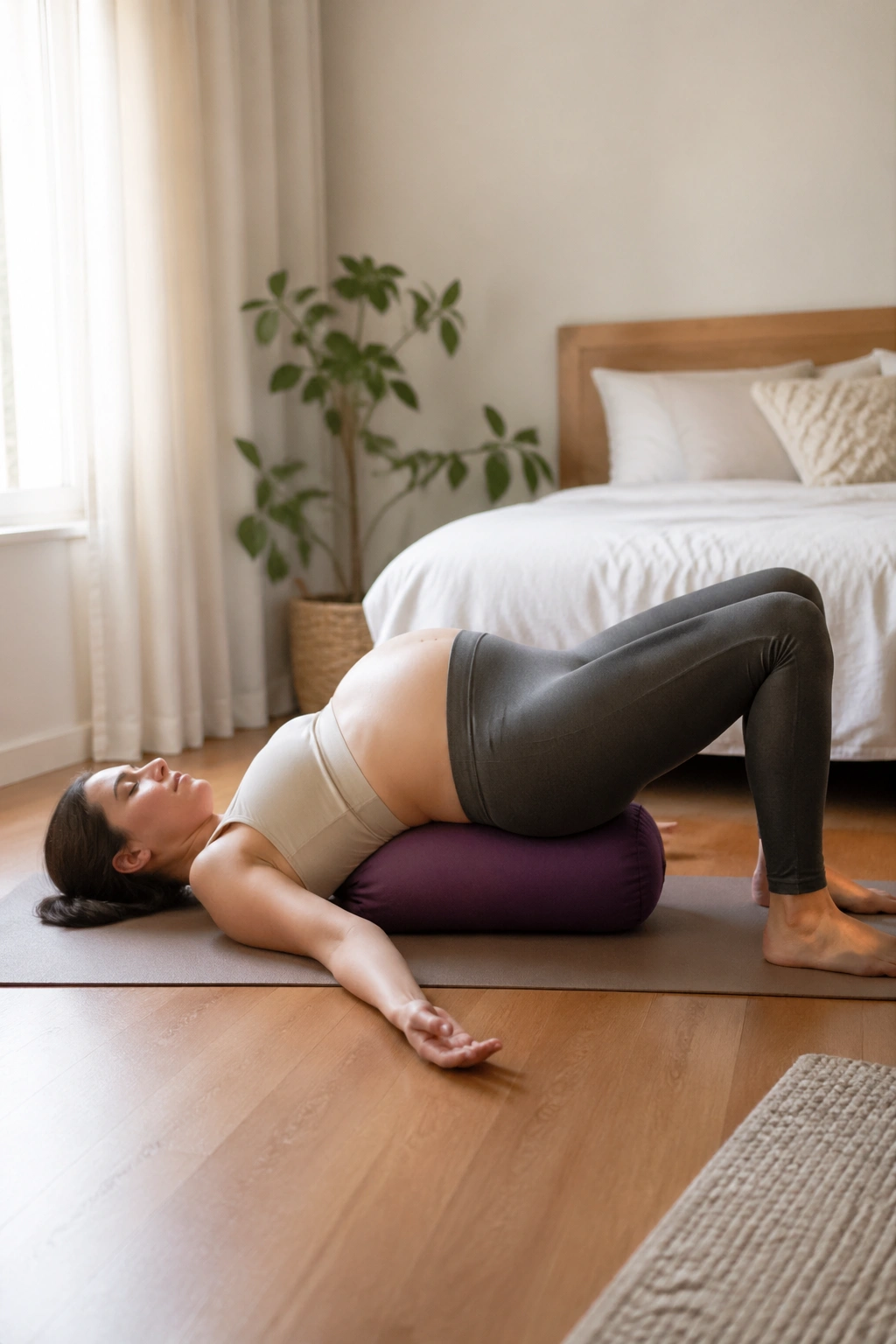
Supported Bridge is not the old yoga bridge you may remember from class. Here, the goal is a gentle heart opener with the torso elevated just enough to stay comfortable, not a big backbend or a long hold.
Place a bolster, firm pillow, or stacked blankets under the sacrum or lower back so the chest stays open and the neck can relax. The hips should feel supported, not shoved upward. If lying on your back feels fine for a short time, this can be a pleasant first-trimester stretch and sometimes an early second-trimester option with plenty of support. If it feels stuffy, dizzy, or odd, skip it.
This pose can ease the chest and front-body tightness that shows up when posture changes. It also gives the low back a break from holding everything. Keep the hold brief, maybe 30 to 60 seconds, and come out slowly.
Any breathlessness, pressure, or lightheaded feeling means stop right away. That part is non-negotiable.
18. Wall-Supported Restorative Savasana
A reclined rest on bolsters can be the nicest five minutes of the whole practice. When the body wants rest but lying flat feels wrong, a wall-supported version gives you the same sense of release with less pressure.
Set up near a wall or couch with the torso on an incline, knees bent, and pillows under the head, belly, and knees as needed. If side-lying feels better, take that version instead. The point is not the exact shape. The point is to let the shoulders sink, the jaw unclench, and the lower back stop doing unpaid labor.
This is one of the few poses that can serve all trimesters because you can adjust the angle and the support so aggressively. Make it more upright in the third trimester. Keep it softer in the first if you are tired or nauseated. In the second, it can feel like a reset between more active poses.
If you only have time for one calm minute on the mat, make it this one.
