



The promise of melting away abdominal fat with a single, magical exercise is one of the most persistent myths in the fitness industry. Let’s be clear: you cannot spot-reduce fat. No amount of crunches, sit-ups, or side bends will target the adipose tissue specifically around your midsection. That is not how human biology functions. The body burns fuel—fat and glycogen—systemically. When you create a caloric deficit and push your metabolism into a higher gear, your body decides where that fat comes from, often based on genetics and hormonal signaling.
If you want a leaner midsection, you need to raise your total daily energy expenditure and maintain muscle mass. The exercises below are chosen for their ability to recruit large muscle groups, skyrocket your heart rate, and force your body to work harder than a standard treadmill walk. We are looking for metabolic demand. When you force your legs, back, shoulders, and core to work in unison, the energy cost is significant. That is the key to shedding visceral fat.
1. Burpees
This is the movement everyone loves to hate, and for good reason. A proper burpee is a full-body assault that forces your heart rate to spike within seconds. You are dropping to the floor, pushing up, exploding back up, and jumping—it uses every major muscle group in the body.
Why It Works for Fat Loss
The metabolic cost of a burpee is exceptionally high. By transitioning from a horizontal position (push-up) to a vertical one (jump), you force your heart to pump blood against gravity repeatedly. This is an efficient way to burn calories in a short timeframe.
- The Set-up: Stand tall, drop into a squat, place hands on the floor.
- The Action: Kick feet back into a plank, perform a push-up.
- The Finish: Jump feet back to hands, explode upward into a jump, reach for the ceiling.
Pro tip: Don’t slow down at the bottom. The magic of the burpee is in the speed of the transition.
2. Mountain Climbers

Think of this as a running drill performed in a plank position. It puts your core stability to the test while keeping your legs moving rapidly. This is dynamic core work, which is infinitely better for your waistline than static crunches.
When you hold the top of a push-up position, your core muscles—specifically the transverse abdominis—are firing just to keep your spine straight. Adding the knee drive forces these muscles to stabilize you against the momentum of your legs moving. You are effectively performing a high-intensity interval workout for your abs while simultaneously keeping your heart rate in the fat-burning zone.
The key here is speed combined with strict form. Don’t let your hips bounce up toward the ceiling. Keep your body in a straight line from heels to head. If your hips are moving, you are wasting energy that should be going into your abdominal contraction. Focus on driving the knee toward the chest, not just kicking the legs back and forth.
3. Kettlebell Swings
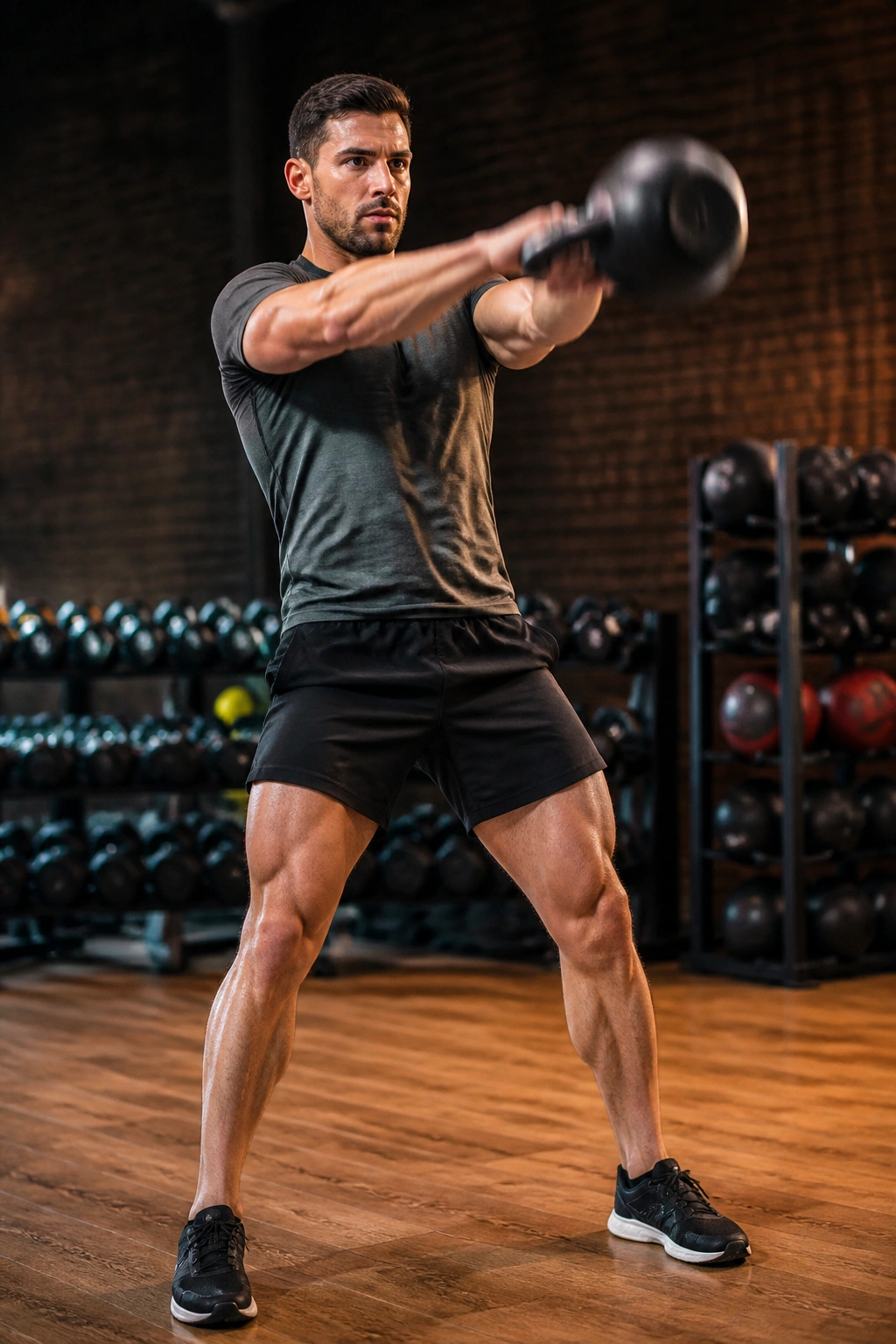
This is the king of the posterior chain. When you swing a heavy bell, you aren’t lifting with your arms; you are generating power from your glutes, hamstrings, and lower back.
The Mechanism of the Swing
The hinge is the most important part of this movement. You push your hips back, not down, feeling the tension load into your hamstrings. When you snap your hips forward, the bell flies up due to that momentum.
Why It’s Effective
- High Power Output: You are moving significant weight very quickly.
- Metabolic Demand: It trains your aerobic and anaerobic systems simultaneously.
- Minimal Space: You can perform this anywhere with one piece of equipment.
Warning: Do not round your back. Keep your spine neutral throughout the entire range of motion to avoid straining your lower back.
4. Jump Rope
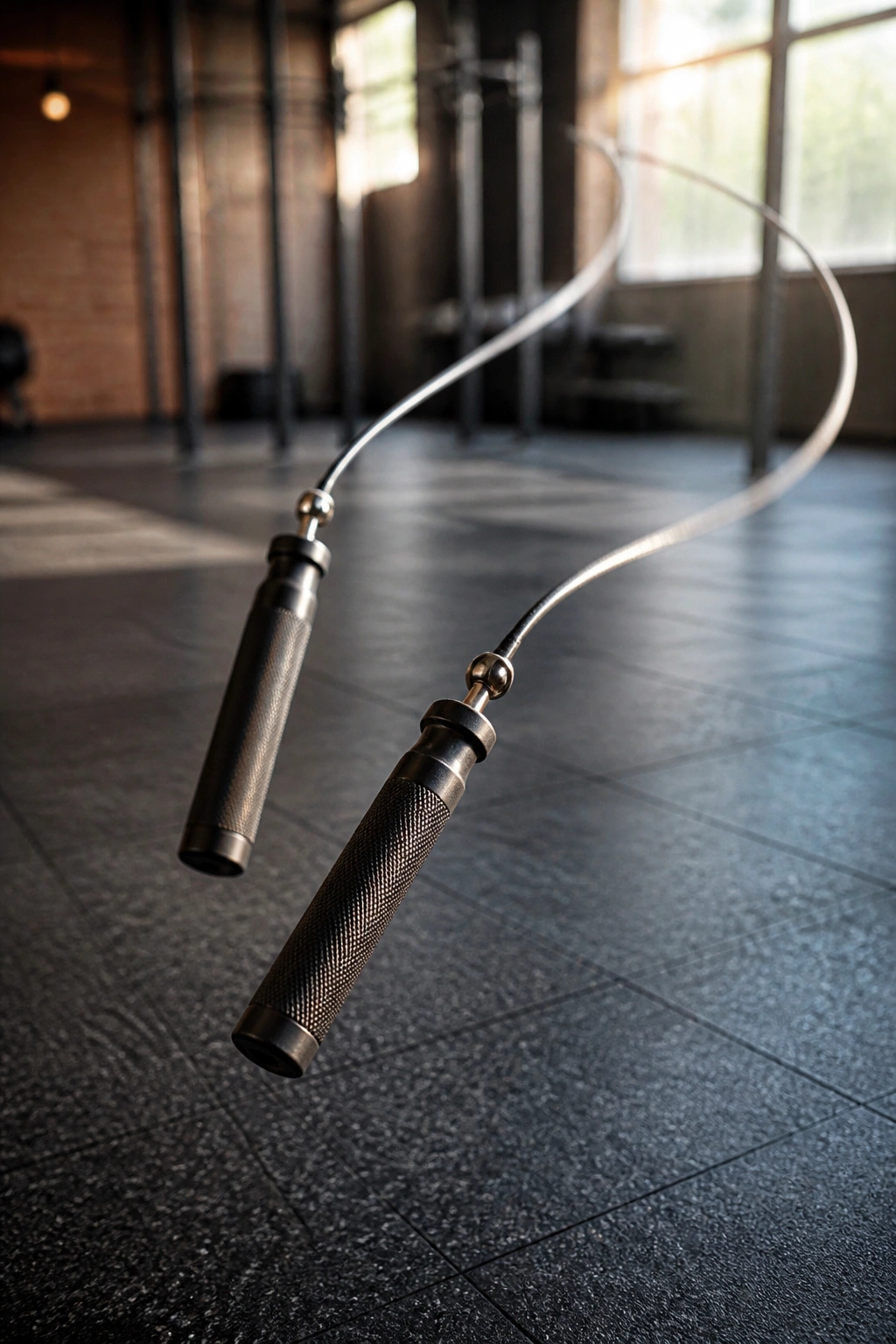
Forget the playground memories. High-intensity jump rope intervals are one of the most efficient tools for conditioning ever devised. It requires full-body coordination and keeps your heart rate elevated for the duration of the set.
Beginners often make the mistake of jumping too high or using their arms to whip the rope. You only need to clear the rope by an inch or two. Keep your elbows tucked in close to your ribs and use your wrists to generate the motion. It should be a rhythmic, quiet bounce on the balls of your feet.
If you trip, don’t get frustrated. It happens. The intensity of the exercise depends on keeping the pace consistent. If you stop every ten seconds, you lose the metabolic benefit. Aim for 60 seconds of continuous jumping followed by 30 seconds of rest. Repeat this for 10-15 minutes, and you will understand why boxers use this to stay lean year-round.
5. Battle Ropes

Battle ropes are fantastic because they remove the impact on your joints while placing an incredible demand on your shoulders, back, and core. Because you are standing while whipping the ropes, your core has to work overtime to keep you from being pulled off balance.
You can perform waves, slams, or circles. The variety is great, but the intensity is what matters. Set a timer for 30 seconds of work and 30 seconds of rest. By the third set, your shoulders will feel like they are on fire, and your breathing will be heavy.
This is a great finisher. After a heavy lifting session, spending five minutes on the ropes is the ultimate way to empty your tank. Remember to keep a slight bend in your knees and engage your glutes. If you lock your legs, you transfer all the stress to your lower back, which is exactly where you don’t want it.
6. Rowing Machine Intervals
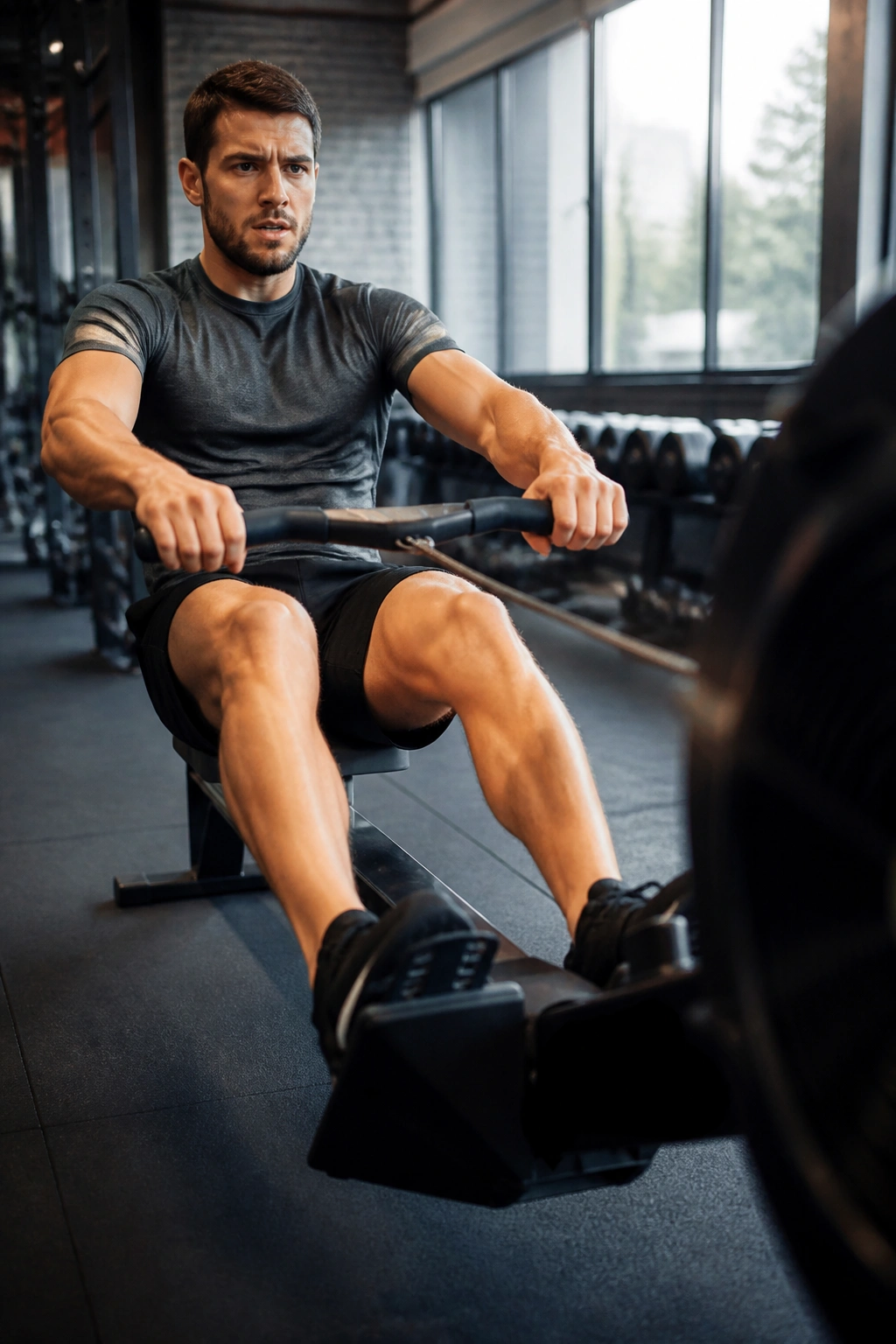
The rowing machine, or ergometer, is often misunderstood. People think it is an upper-body exercise, but it is actually a leg-dominant movement. Roughly 60-70% of your power comes from the leg drive.
When you drive through the footplates, you are using the largest muscles in your body—your quads and glutes. This drives up your calorie burn significantly. If you are just pulling with your arms, you will tire out quickly and burn very few calories.
Use a 500-meter sprint interval protocol. Row 500 meters at a hard, sustainable pace, then rest for 60 to 90 seconds. Repeat this for 20 minutes. It will tax your cardiovascular system far more than a steady, slow row, which is exactly what you need for body composition changes.
7. Sprints

There is a reason sprinters look the way they do. High-intensity sprinting utilizes fast-twitch muscle fibers, which have a high metabolic cost. It triggers an “afterburn” effect, known as EPOC (Excess Post-exercise Oxygen Consumption), where your body continues to burn calories after you have finished training.
You don’t need a track. You can do this on a hill, an empty street, or even a treadmill. Start with a warm-up—never sprint cold. Then, run at 90-95% of your max speed for 15 to 20 seconds. Walk or rest for a full minute or two, allowing your heart rate to come down.
Repeat this 6 to 10 times. This is not a marathon; it is a burst of high-intensity effort. The goal is to be completely gassed by the end of the sprint. If you feel like you could do another one immediately, you aren’t running fast enough.
8. Thrusters

If you want to know what “metabolic conditioning” feels like, perform a set of thrusters. This movement combines a front squat with an overhead press. You are pushing a weight from the ground to over your head in one fluid motion.
Why This Move is Brutal
- Full Body Engagement: Every muscle from your calves to your shoulders is firing.
- Gravity Defiance: Moving weight through such a large range of motion is incredibly taxing.
- Cardiovascular Spike: Your heart has to pump blood to both your legs and your upper body simultaneously.
Pro tip: Choose a weight that you can control. Form breaks down quickly when you get tired, and thrusters are the kind of movement that punishes bad form mercilessly.
9. Renegade Rows

Renegade rows are performed in a push-up position with a dumbbell in each hand. You row one dumbbell up while balancing on the other. This forces your body to fight rotation, which is the primary job of your deep core muscles.
If you find yourself twisting or rocking your hips from side to side, your core is not tight enough. The goal is to keep your torso perfectly parallel to the ground. If you cannot do this, lower the weight. Using a lighter weight with perfect form is significantly more effective than using a heavy weight and flailing around.
This exercise is excellent because it combines a strength movement (the row) with an anti-rotational stability movement (the plank). It is a two-for-one deal for your physique.
10. Box Jumps
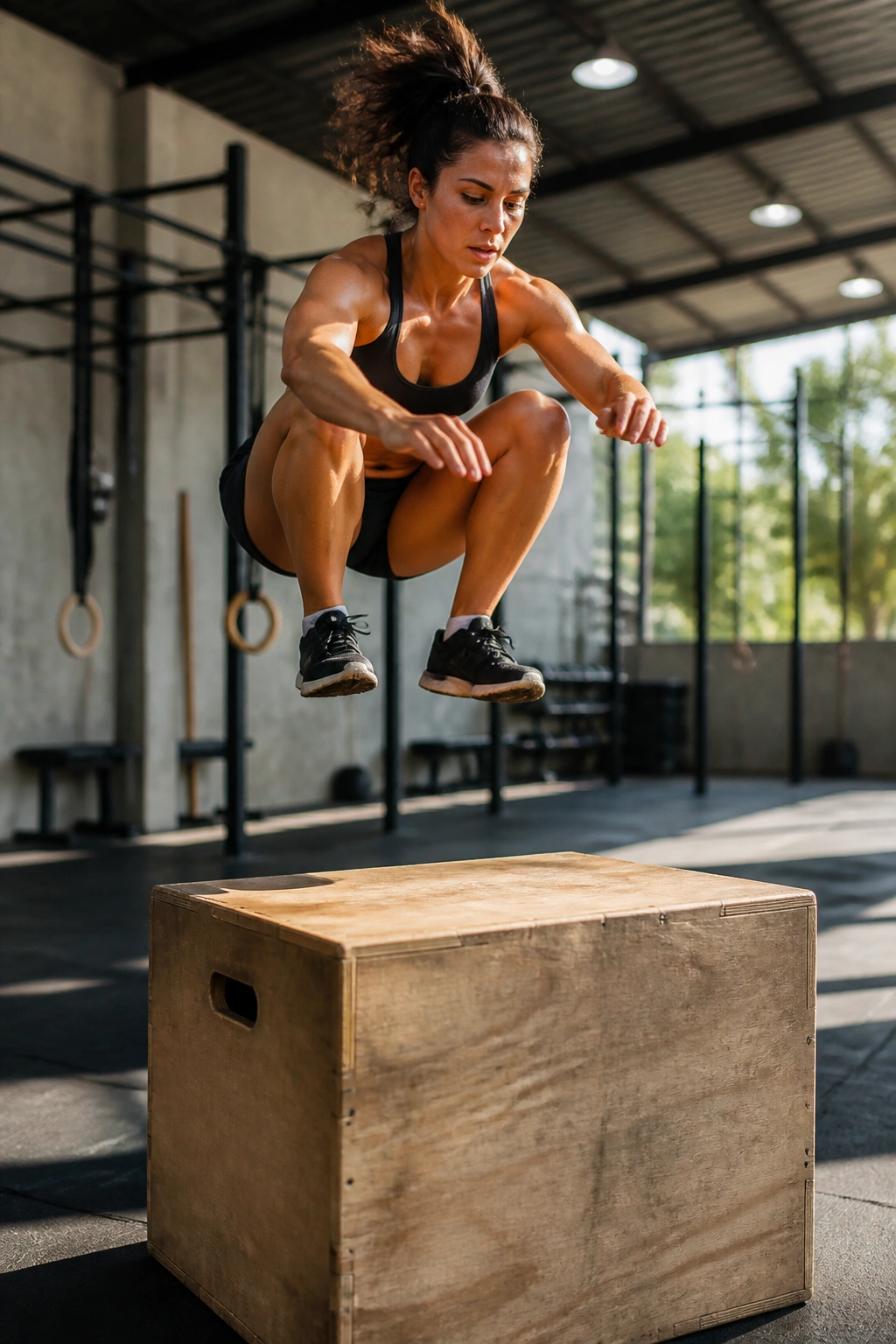
Explosive movements like box jumps recruit high-threshold motor units. These are the muscle fibers that are responsible for maximum power. By training them, you increase your athletic capability and metabolic rate.
Focus on the landing, not just the jump. Step down off the box instead of jumping down. Jumping down creates a high impact that can wreck your knees over time. Stepping down allows you to preserve your joints while still getting the benefits of the explosive upward movement.
If you don’t have a box, you can do broad jumps or tuck jumps. The goal is to get your feet off the ground and land with control. Keep your core tight to prevent your torso from folding forward upon landing.
11. Walking Lunges
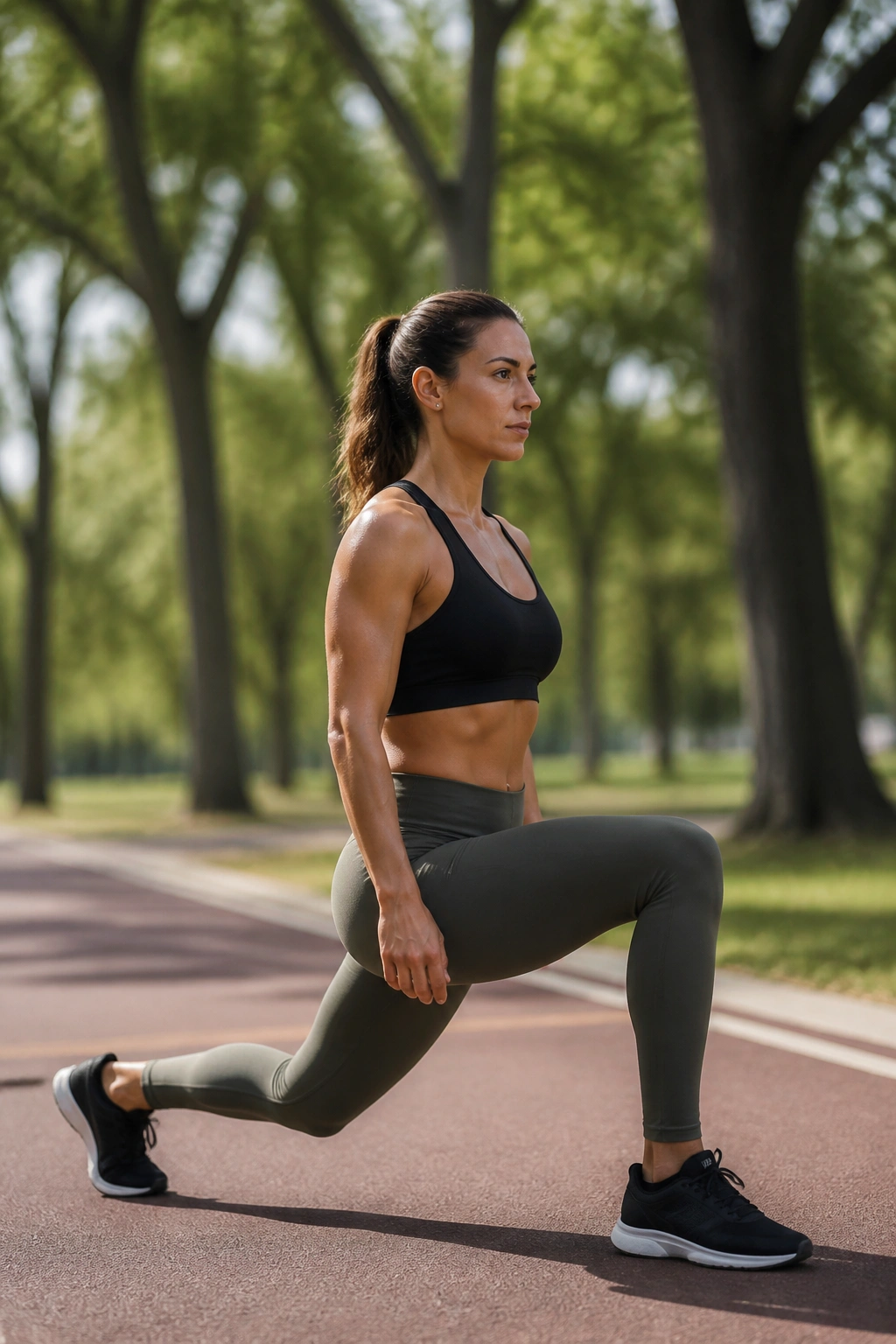
Lunges are a staple for a reason. They require balance, unilateral leg strength, and constant core engagement. By doing them while walking, you add a momentum component that increases the difficulty.
Keep your torso upright. Many people lean forward to make the movement easier, but this shifts the load from your glutes and core to your lower back. By staying tall, you force your abs to stabilize your spine.
Hold dumbbells if you want to increase the metabolic demand. Walking lunges with weight will turn a standard leg day into a full-body conditioning session. Take long enough strides that your front shin remains vertical at the bottom of the lunge to protect your knee.
12. Plank Jacks
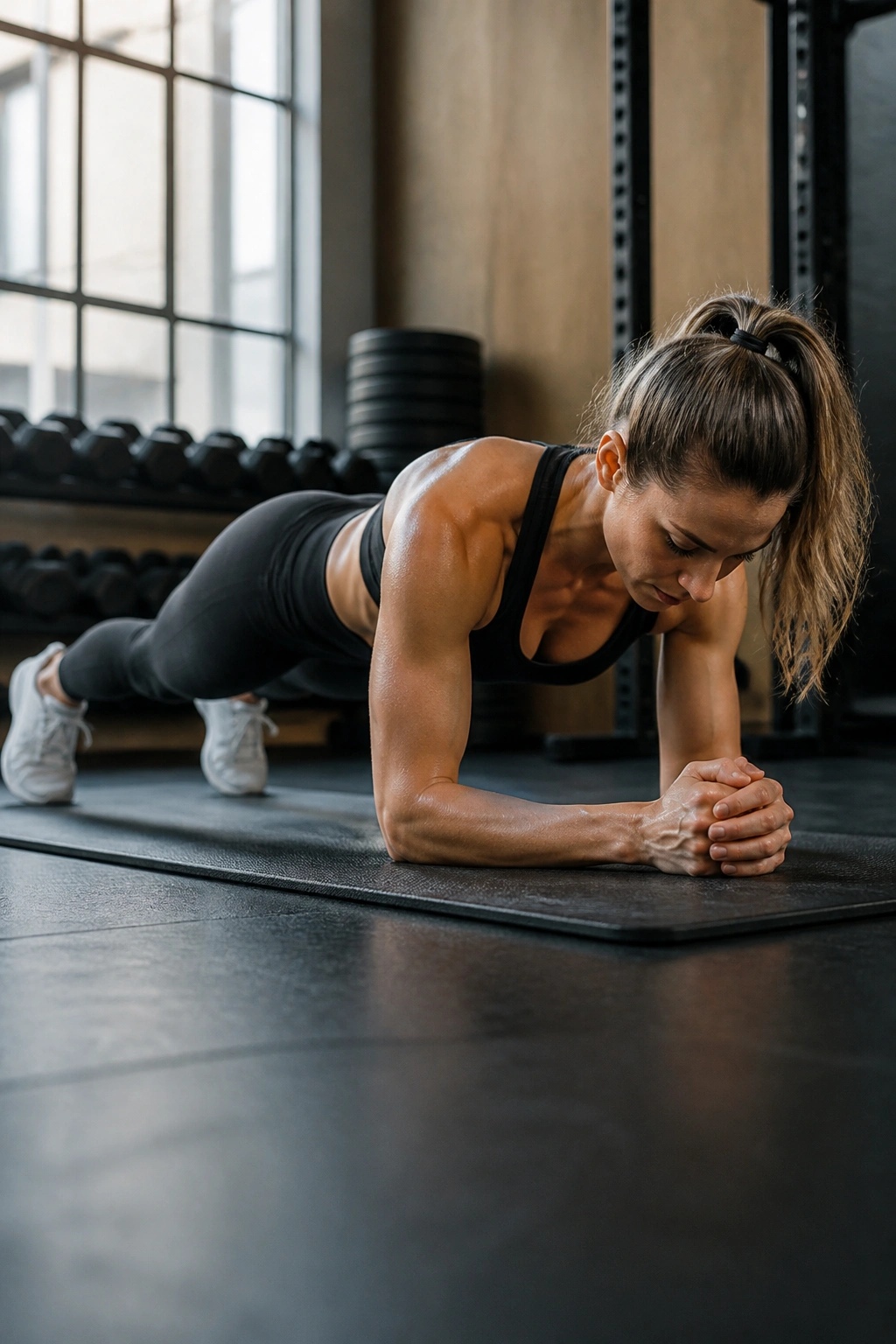
This is a variation of the plank that adds a cardio component. While holding a forearm plank, you jump your feet out and in, like a jumping jack. It forces your core to maintain a rigid position while your lower body moves rapidly.
The common mistake is letting the lower back arch when the feet kick out. Fight that urge. Squeeze your glutes and pull your belly button toward your spine throughout the movement.
This exercise is particularly good for lower abdominal engagement. You will feel the tension increase in the lower rectus abdominis every time your feet hit the floor. Keep the pace consistent to get the heart rate benefit.
13. Medicine Ball Slams

This is an aggressive movement that helps release tension while working your lats, shoulders, and core. When you slam the ball, you are using your core to generate force downward.
The key is to use a non-bouncy medicine ball—the kind filled with sand. You want the energy to be absorbed by the floor, not returned to you. Reach up high, extend through your toes, and throw the ball into the ground as hard as you can.
Follow the ball down with your body. Do not just bend over at the waist; squat as you slam. This makes it a full-body movement rather than a back-straining one.
14. Deadlifts

While often thought of as a pure strength movement, high-volume deadlifts are incredibly taxing. They engage the posterior chain, which accounts for a massive portion of your body’s muscle mass. The more muscle you engage, the more fuel you burn.
Keep your spine neutral. This is non-negotiable. If you feel your back rounding, your set is over. The deadlift is about pushing the floor away with your legs, not pulling with your back.
For fat loss, focus on moderate weight with higher repetitions (8-12 range) and shorter rest periods. You will find that your heart rate skyrockets, making this a strength and conditioning move wrapped into one.
15. Goblet Squats
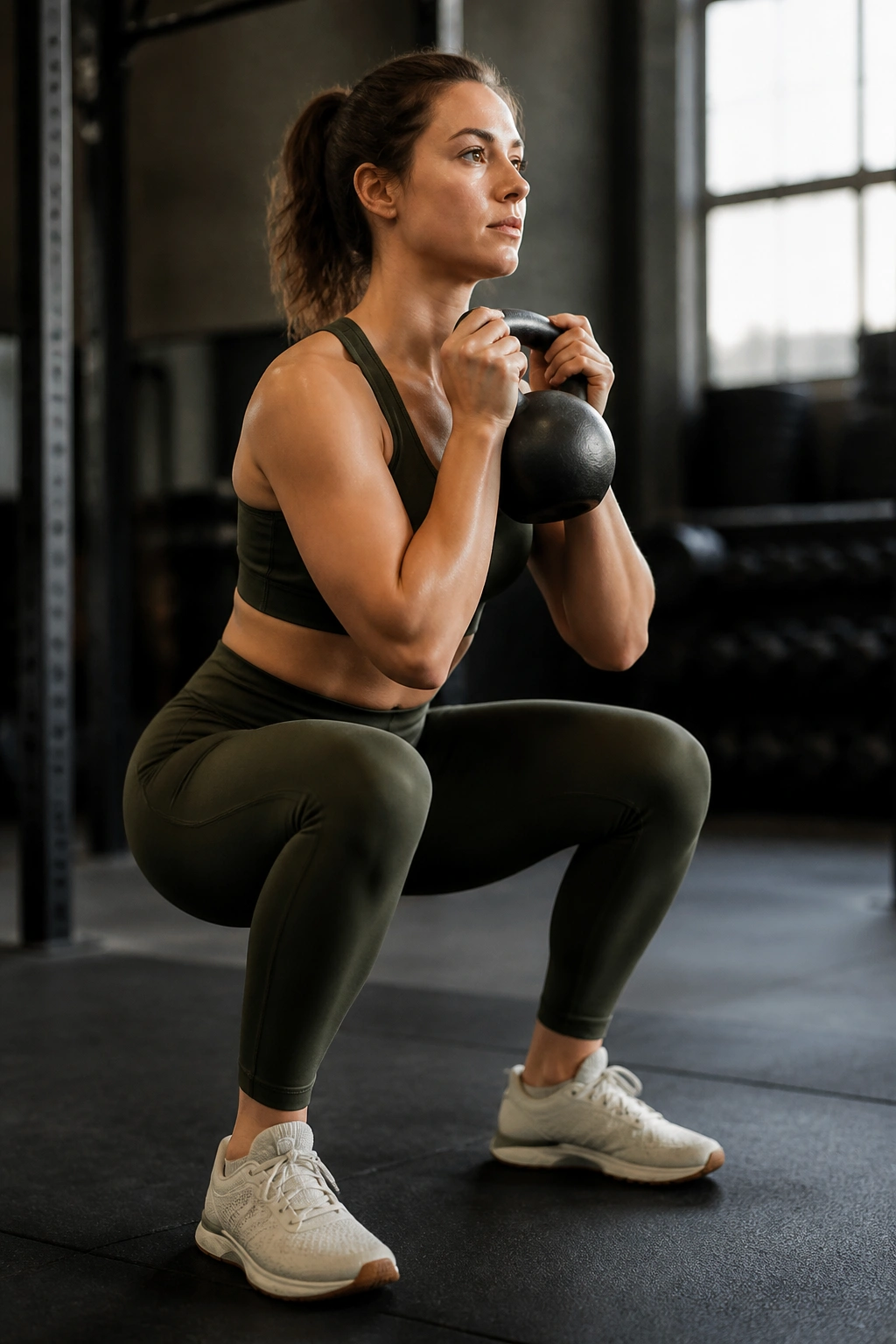
Holding a weight at your chest changes the center of gravity, forcing your core to work much harder to keep you upright. It is essentially a front squat, which is widely considered the superior squat variation for core activation.
Keep your elbows tight to your ribs and don’t let the weight pull you forward. If you feel yourself leaning forward, keep your chest up and push your knees out.
This is a great movement for beginners who aren’t ready for a barbell back squat. It teaches you how to maintain a vertical torso while sitting deep into the squat, which is exactly the position you need to master for long-term health.
16. Bear Crawls
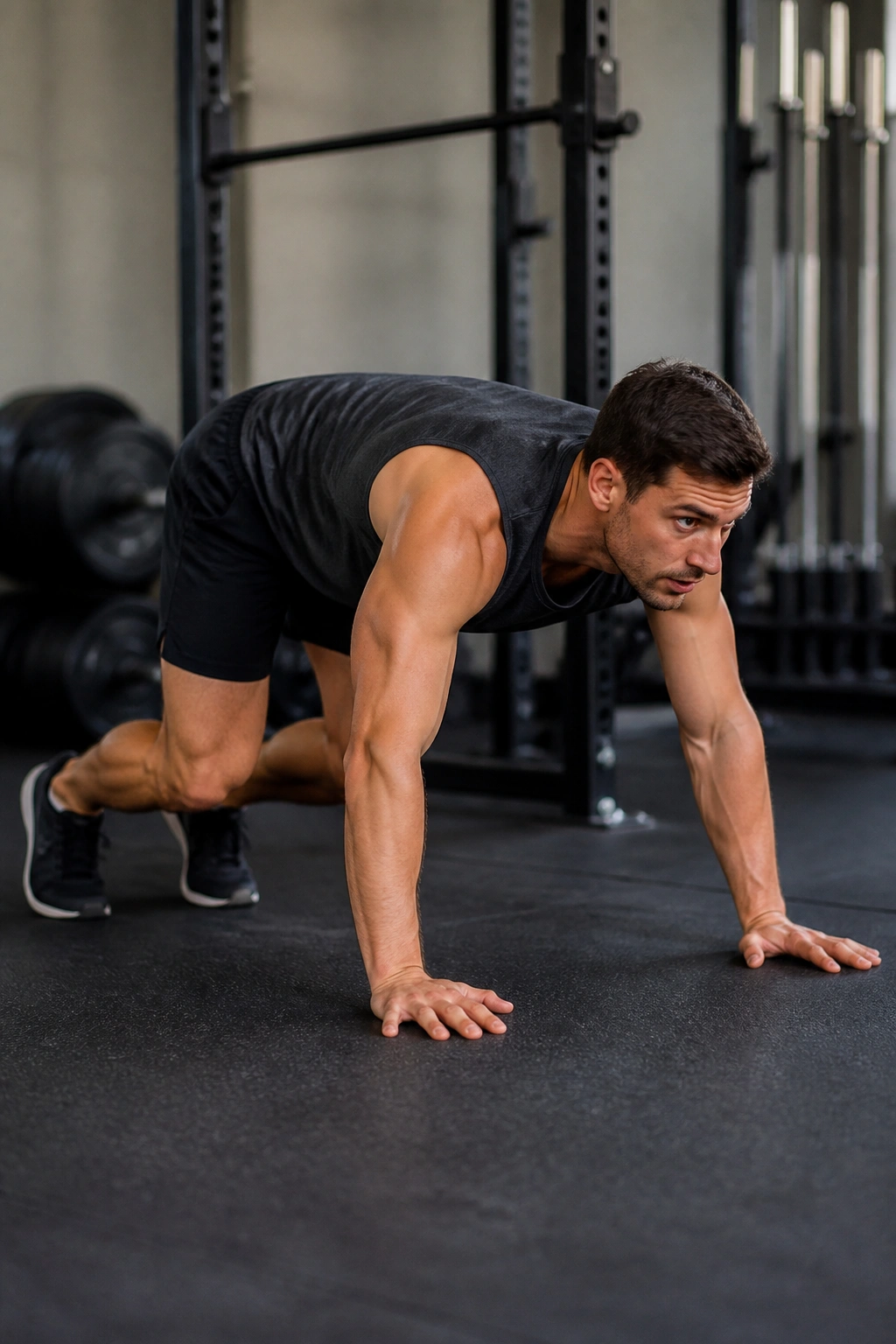
Bear crawls are deceptive. They look easy, but after 30 seconds, you will realize how challenging they are. You are moving your body in a quadrupedal pattern, which requires incredible shoulder stability and core control.
Keep your knees just an inch off the ground. If your hips are high in the air, you are just walking on your hands and feet. The goal is to keep your back flat, like a table.
This builds functional core strength. Because your limbs are moving in a cross-body pattern (opposite arm and opposite leg), you are forcing your brain and body to coordinate, which increases the intensity of the effort.
17. Bicycle Crunches

Contrary to popular belief, crunches can be effective if done with intention and rotation. The bicycle crunch is one of the few movements that hit the obliques, lower abs, and upper abs simultaneously.
Do not pull on your neck. Place your fingers lightly behind your ears and focus on rotating your torso, not just moving your elbows. You want to bring your shoulder toward the opposite knee.
Slow down. The slower you move, the harder the contraction. Many people speed through these, using momentum rather than muscle tension. Control the movement on both the contraction and the extension.
18. Incline Walking
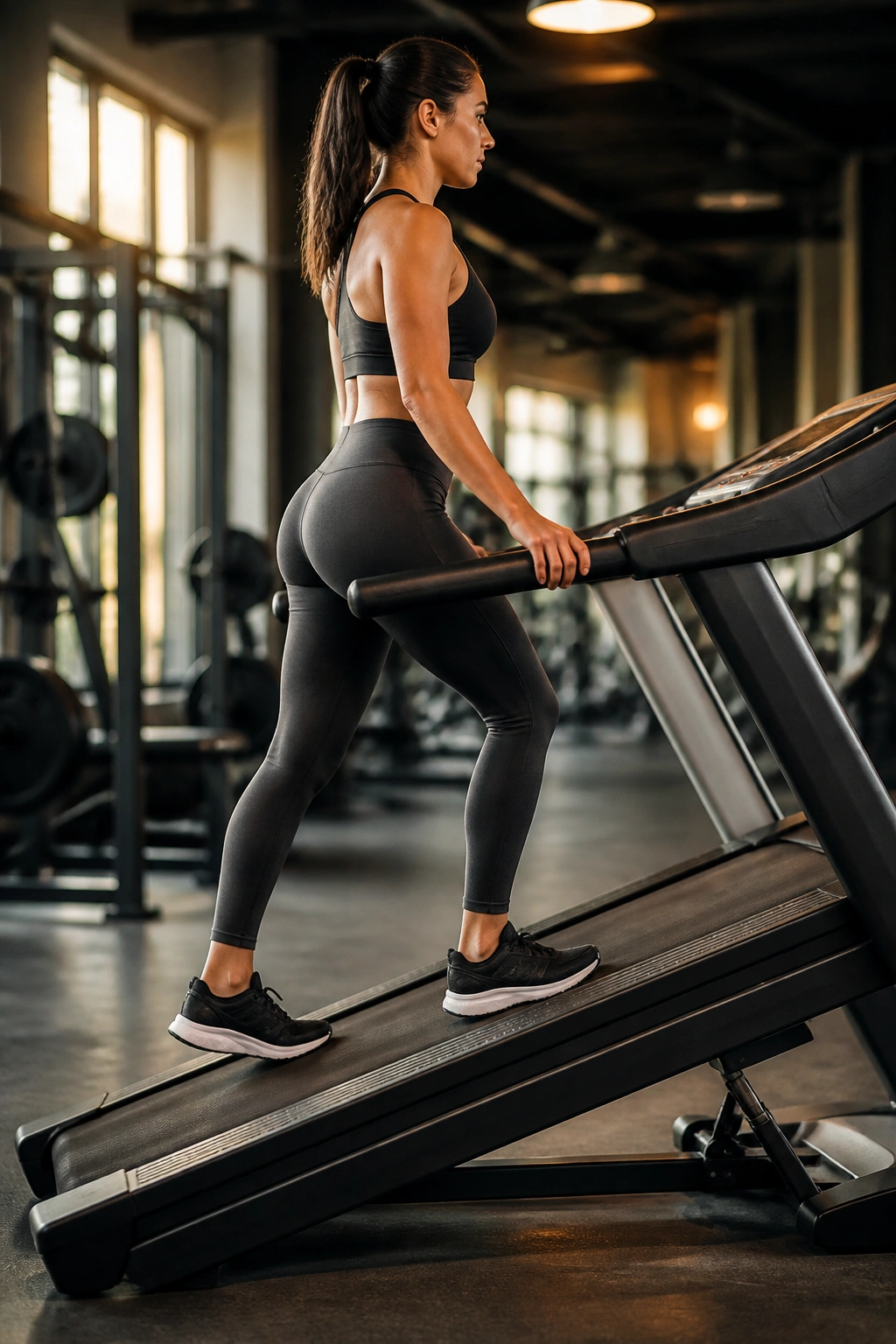
Sometimes, low impact is the right move. If your joints are tired or you are recovering from a hard week of lifting, incline walking is the best way to keep your heart rate up without destroying your body.
Set your treadmill to a steep incline—usually between 8% and 12%—and keep a moderate pace. You do not need to run. The incline forces your glutes and hamstrings to work hard, and the elevation changes the gait to be more demanding than flat-ground walking.
This is an excellent option for long-duration fat loss sessions. It is easy to sustain for 45 to 60 minutes, which allows for a high total caloric expenditure without the extreme fatigue of HIIT training.
19. Weighted Step-ups

Step-ups are a fantastic unilateral exercise. By isolating one leg at a time, you fix imbalances and force the core to stabilize against the asymmetry. Holding dumbbells adds a metabolic load that makes this an effective conditioning tool.
Find a box or bench that allows your thigh to be parallel to the floor at the top of the movement. If the box is too high, you will likely round your back to get up. If it is too low, you lose the range of motion.
Drive through the heel of the top foot. Do not push off with the bottom foot; use the lead leg to lift your entire body weight. This is where the work happens.
20. Overhead Press
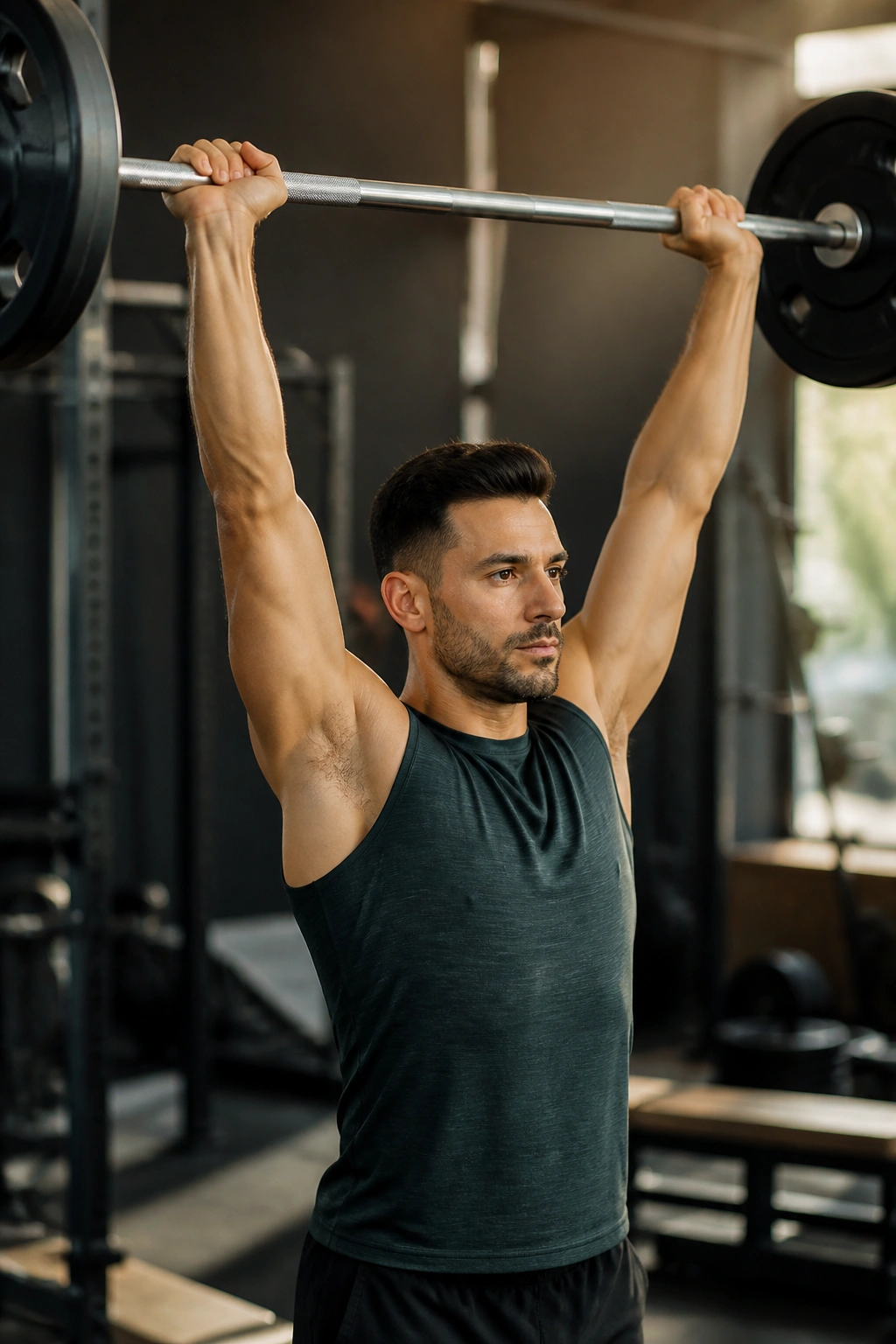
Standing overhead pressing requires an immense amount of core stability. You are trying to stabilize a weight above your head while gravity tries to pull it down. Your rectus abdominis, obliques, and lower back muscles are all firing to hold your spine rigid.
Don’t lean back. If you have to lean back to get the weight up, the weight is too heavy, or your thoracic spine lacks mobility. Push your head through the “window” created by your arms at the top of the movement to lock the weight out.
This is not just a shoulder exercise. It is a full-body test of stability. If your core is weak, your press will be weak.
21. Russian Twists
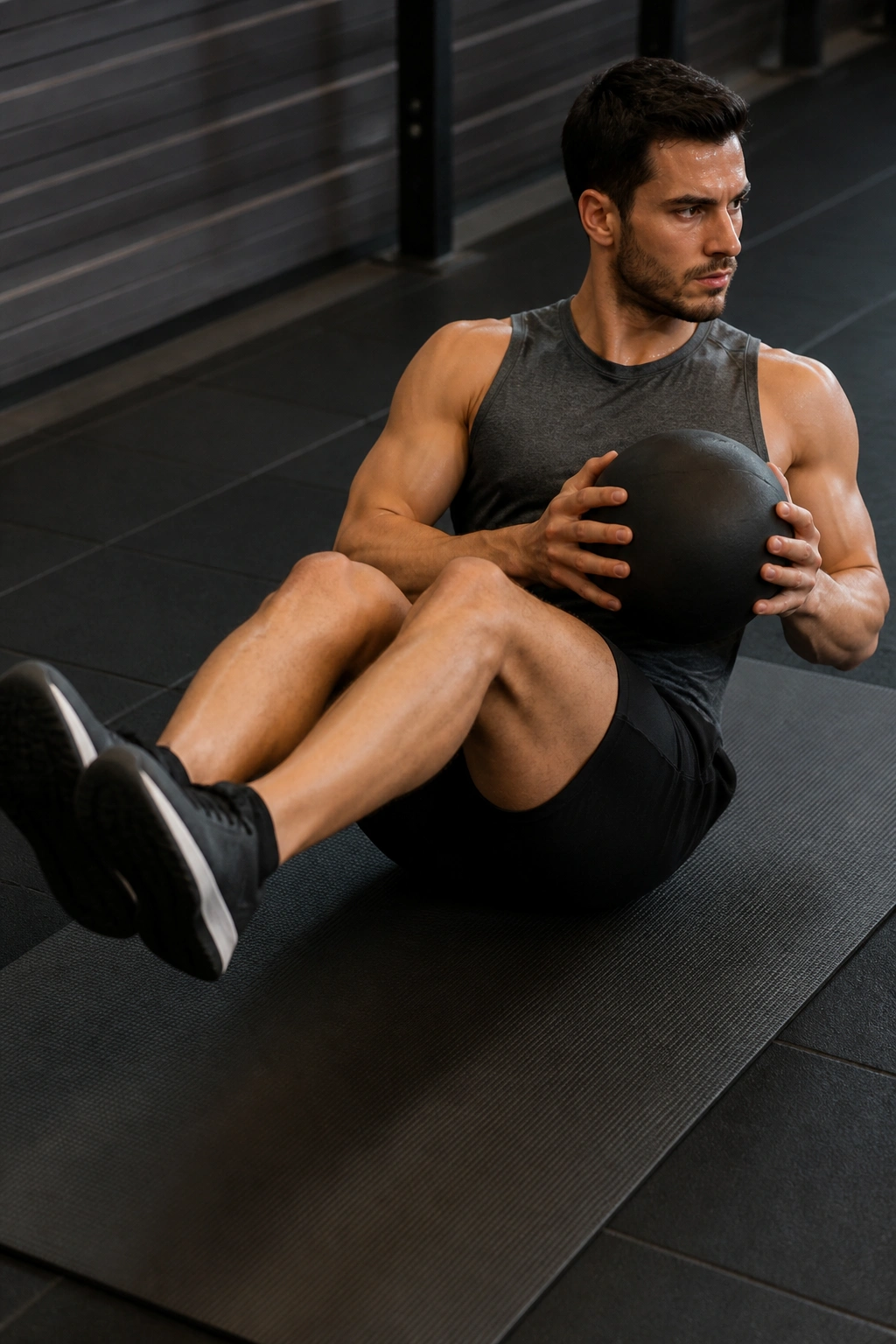
This is a focused rotational movement. By lifting your feet off the ground, you increase the lever arm on your core, making the rotation much more difficult.
Keep your chest up and your back straight. The rotation should come from your ribcage, not your lower back. If you feel this in your lumbar spine, stop immediately. You should feel it in your obliques and the deep muscles of your abdomen.
You can hold a weight or a medicine ball to add resistance. Start without weight to master the form. Rotation is a critical movement pattern that is often ignored in traditional gym workouts.
22. Swimming Laps

Swimming is perhaps the most underrated fat-loss exercise. The resistance of the water works your entire body in every plane of motion. You are constantly fighting to stay buoyant and moving, which forces your core to stay engaged the entire time.
You don’t need to be an Olympic swimmer. Just doing laps at a steady, moderate pace for 30 minutes will burn a significant number of calories. The water also creates a cooling effect, which helps regulate your temperature during long workouts.
It is also zero-impact, meaning you can do this daily without fear of overtraining your joints. If you have access to a pool, take advantage of it. It is one of the few workouts that leaves you feeling energized rather than beaten up.
Final Thoughts

Getting to a leaner body composition is less about finding a secret workout and more about consistency and intensity. You can perform the best exercises in the world, but if your diet does not support a caloric deficit, your body will hold onto its energy stores. There is no way around that thermodynamic reality.
Choose a few movements from this list that you enjoy—or at least, that you can tolerate—and incorporate them into your routine. Focus on progressing over time. Add a little more weight, do one more repetition, or shave a few seconds off your rest periods. Small, incremental improvements compound over months and years. That is how you build a body that is not only lean but also functional and strong. Stop looking for shortcuts and start focusing on the work that actually yields results.
