



A strong core feels different from a six-pack. You notice it when you pick up a grocery bag with one hand, when a squat stays steady instead of folding your ribs forward, or when your lower back stops doing all the work your abs were supposed to handle.
Most ab exercises fail for a simple reason: people chase the burn and skip the control. Fast crunches can leave your neck sore, your hip flexors cranky, and your trunk basically untouched. The moves that actually matter are usually slower, a little less glamorous, and far more honest.
Good core training is not only about visible abs. It’s about resisting motion, holding shape under load, and keeping your torso from wobbling when your arms and legs move. That means anti-extension work, anti-rotation work, flexion work, and a few carries that train the whole midsection without a single crunch.
The list below leans on exercises that earn their keep. Some are beginner-friendly floor drills. Some need a pull-up bar, cable stack, or dumbbell. All 18 can build a stronger core if you do them with enough control to make the rep count.
1. Dead Bug
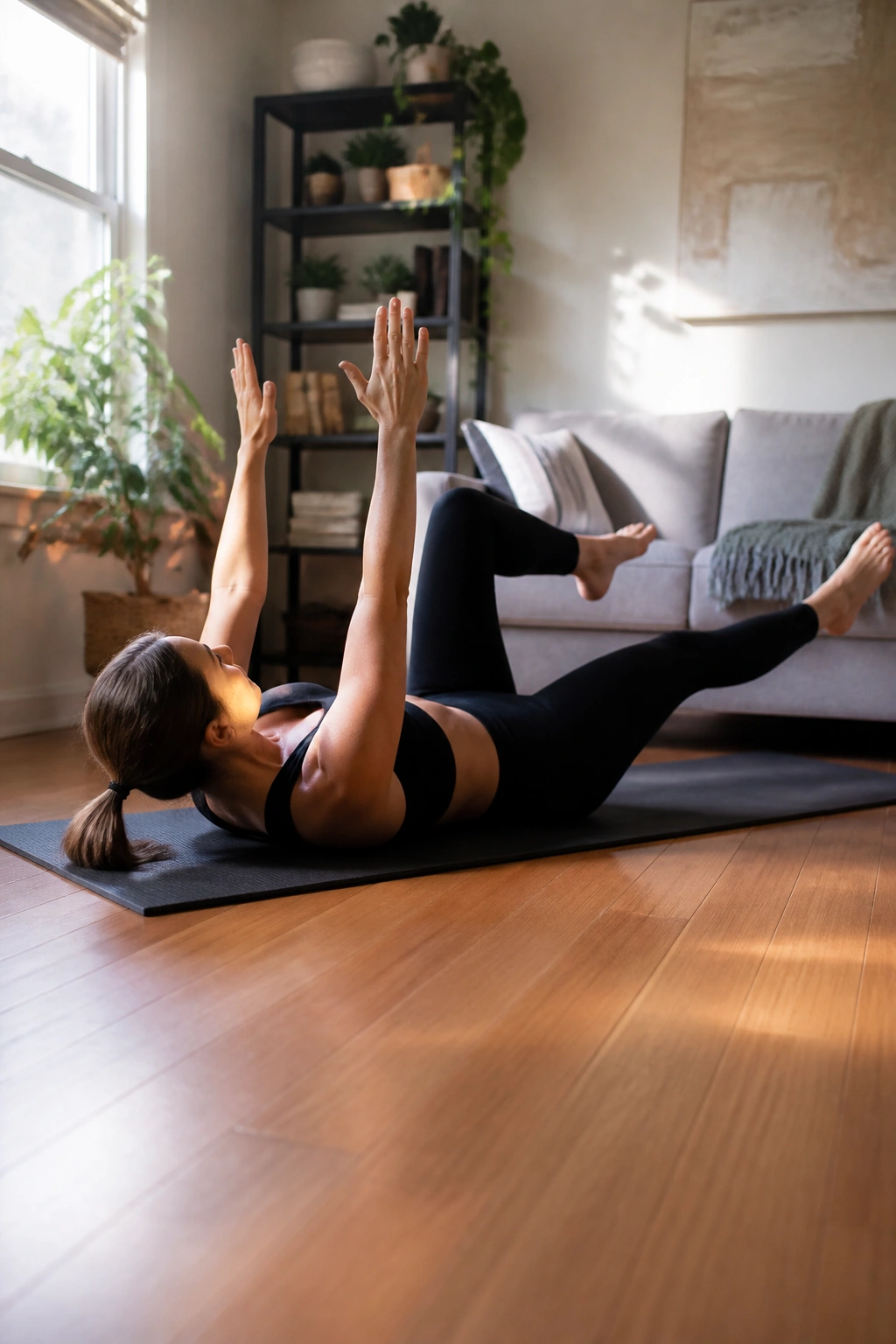
The dead bug looks almost too easy. That’s the trick. If your ribs flare and your lower back pops off the floor, the exercise stops being a core drill and turns into a race you’re losing.
Why It Works
The dead bug trains anti-extension, which is a fancy way of saying your abs learn to stop your back from arching when your limbs move. That skill carries over to lifting, running, and even just standing tall when you’re tired. It also teaches you to breathe while bracing, which is a skill most people skip.
Start on your back with your arms straight up and knees bent at 90 degrees. Press your low back gently into the floor, then lower the opposite arm and leg at the same time until they hover a few inches above the ground. Return with control. Keep your ribs down the whole time.
A good starting dose is 2 to 3 sets of 6 to 8 reps per side. Slow beats fast here. If your back arches, shorten the range and keep the movement small until you can stay flat.
Pro tip: exhale as the leg goes out. That little breath cue helps lock your ribs in place.
2. Reverse Crunch
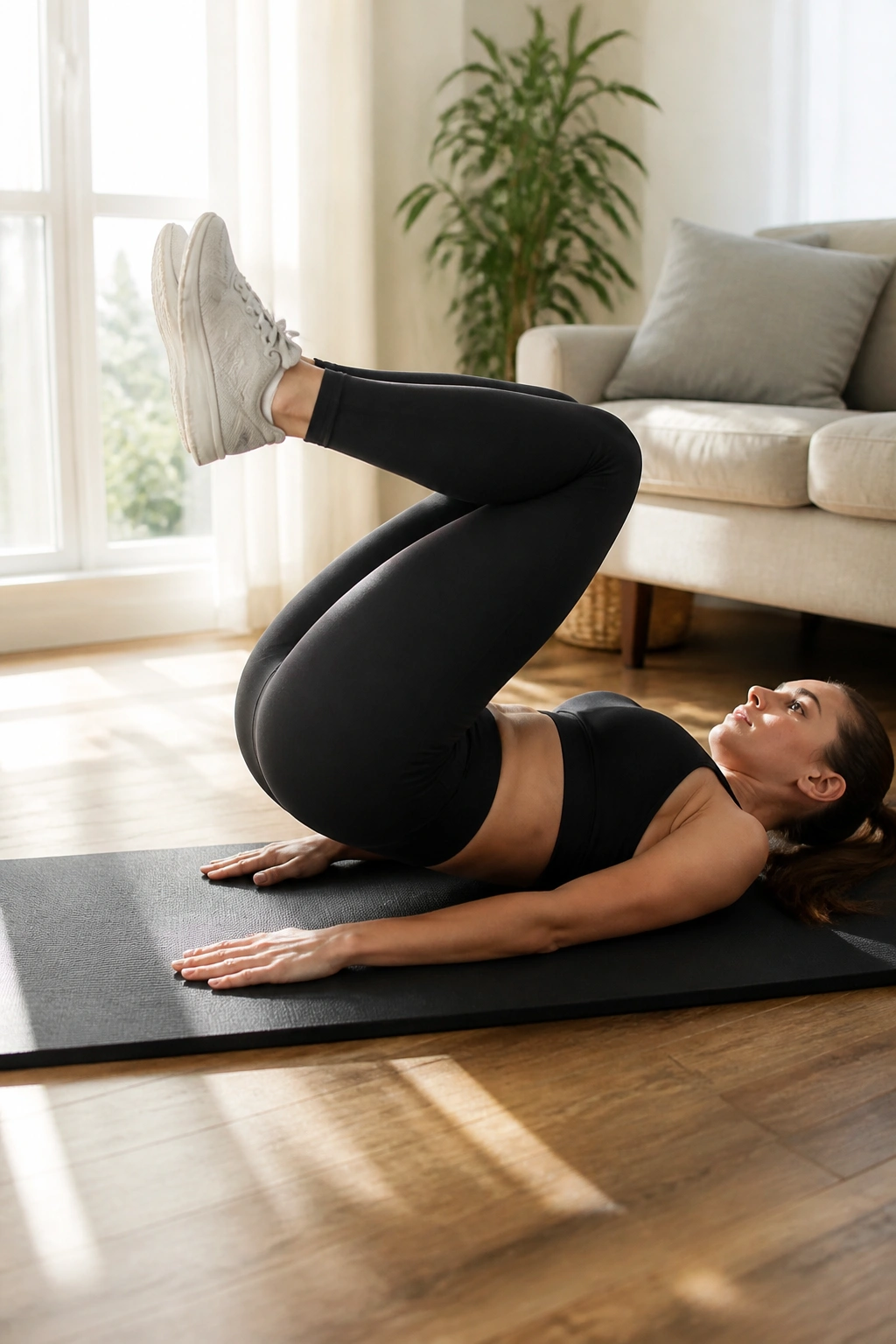
Reverse crunches are one of the few floor moves that can actually light up the abs without turning into a hip-flexor contest. The goal is not to swing your legs around like a metronome.
Lie on your back, bend your knees, and bring your thighs up so they’re roughly perpendicular to the floor. From there, curl your pelvis up and slightly off the ground. Think of bringing your belt buckle toward your chin. That tiny curl is where the work lives.
People usually go wrong by kicking the legs and hoping momentum does the rest. It won’t. If you feel the front of your hips more than your abs, slow down and make the curl smaller. A clean reverse crunch has a short range and a hard finish at the top.
Try 2 to 4 sets of 8 to 12 reps, pausing for one second at the top. The lower back should stay heavy on the floor until the pelvis starts to curl. That pause matters more than people think.
3. Forearm Plank
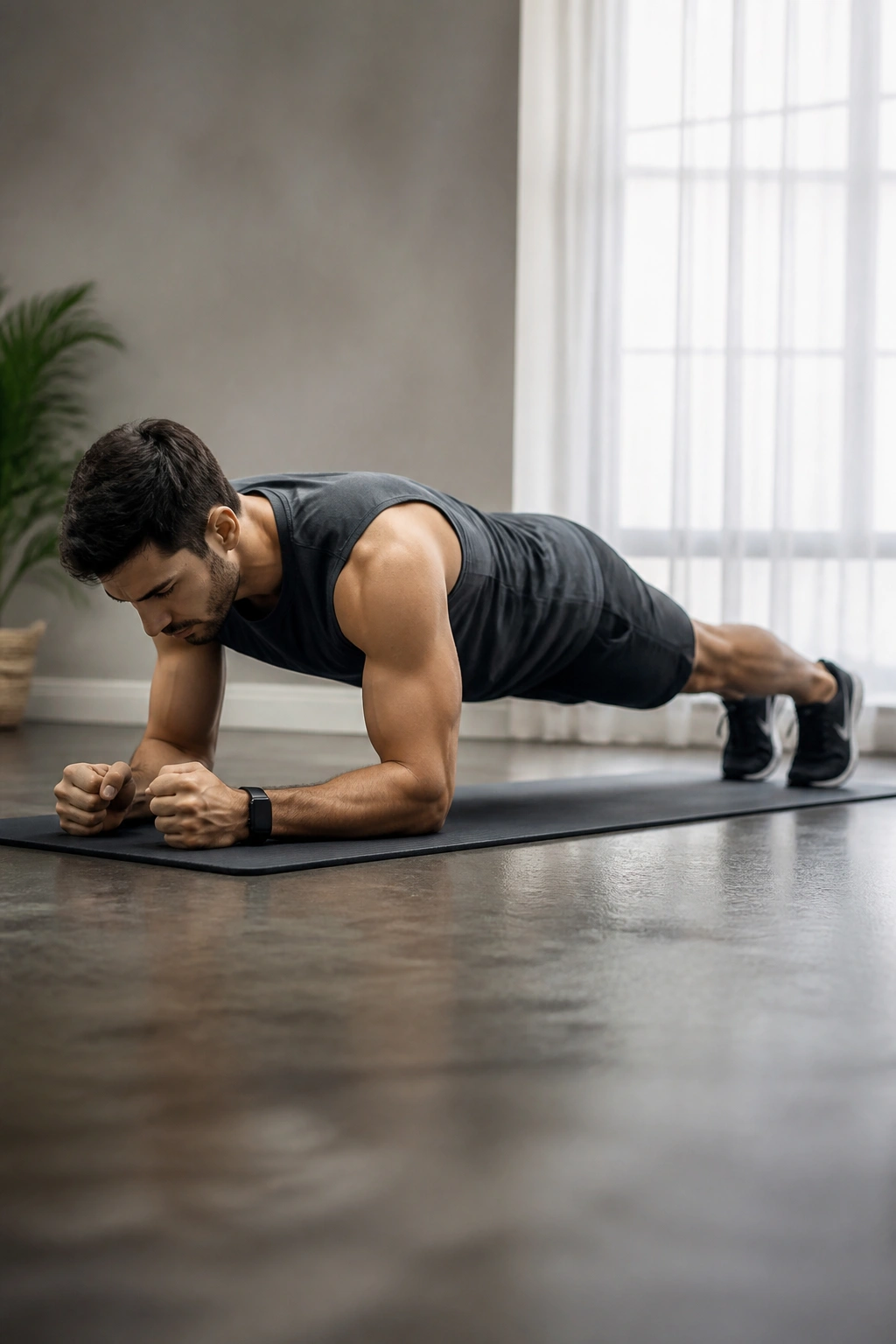
A plank is not a contest to see who can stare at the floor longest. Long holds with sloppy ribs, sagging hips, and clenched jaw muscles are mostly wasted time.
What to Watch For
The real job of the forearm plank is to teach your body to stay rigid under load. You want your body to look like one long line from head to heel, with your glutes on and your ribs pulled slightly down. If your lower back starts to dip, stop the set. That’s not weakness. That’s the set ending.
Set your elbows under your shoulders, tuck your toes, and squeeze your thighs. Push the floor away with your forearms. That last cue helps keep your shoulder blades active instead of collapsed. Breathe through your nose if you can, but don’t let the breath turn into a sloppy belly drop.
A strong hold is often better than a long one. Try 20 to 40 seconds for 3 to 5 sets, and make each one look sharp. If you can hold for a minute but your hips are doing strange things, shorten the time and clean up the form.
4. Side Plank
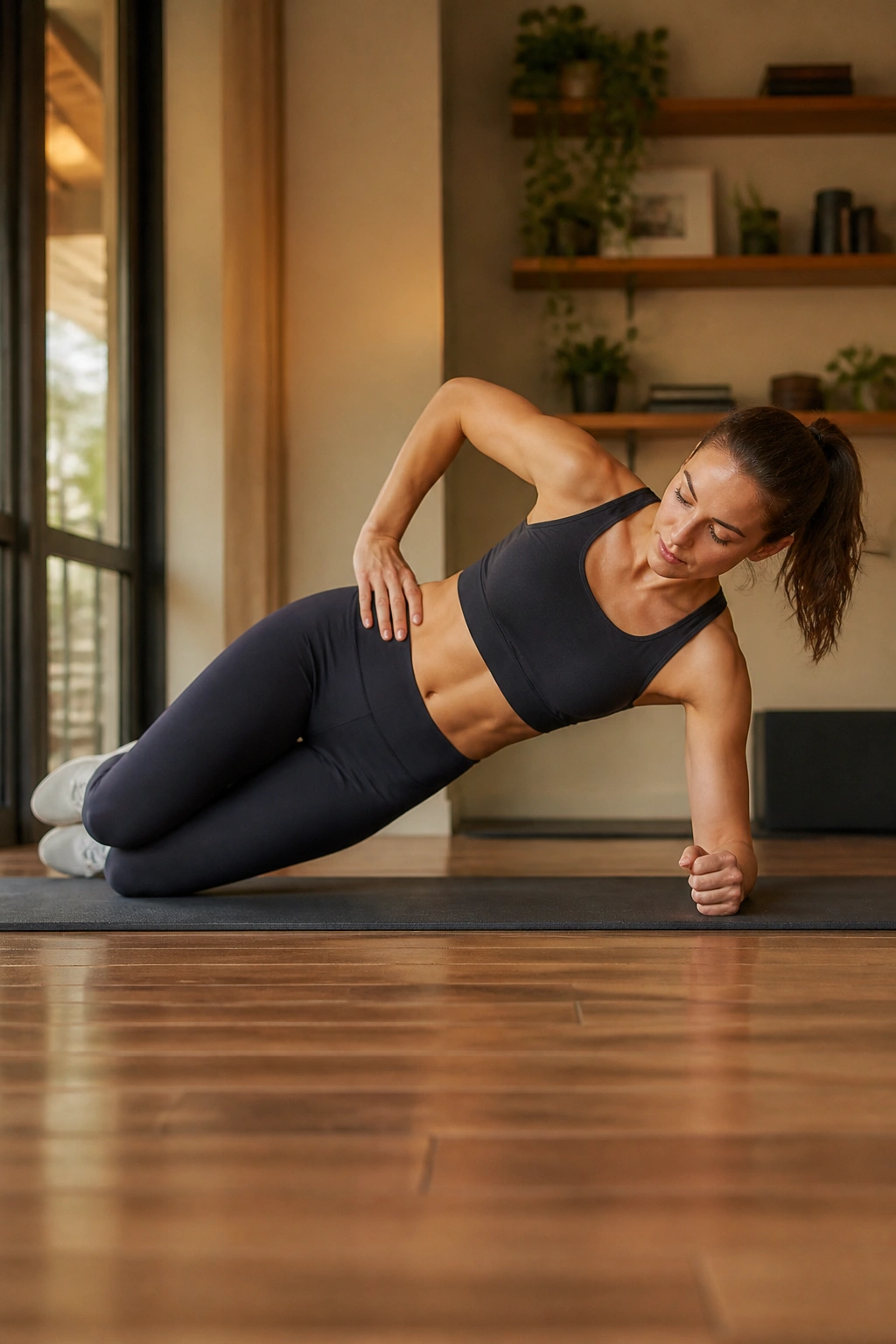
Side planks hit the obliques in a way front planks simply don’t. They also ask the glute medius and the muscles around the hip to help keep you from tipping over. That matters more than people admit.
The easiest version is on your forearm with your knees bent. Stack your shoulders, lift your hips, and draw your lower ribs toward your pelvis. A full side plank with straight legs is tougher because the lever gets longer and the hip wants to drift backward.
What makes it different is the sideways load. You’re not trying to crunch hard. You’re trying to not collapse. That makes the side plank one of the cleanest anti-lateral-flexion moves you can do without equipment.
Hold 15 to 30 seconds per side to start. If your neck feels crowded, reset your shoulder. If your hips sag, shorten the set. A shaky five-second hold with perfect lines beats a sloppy 30 every time.
5. Bird Dog
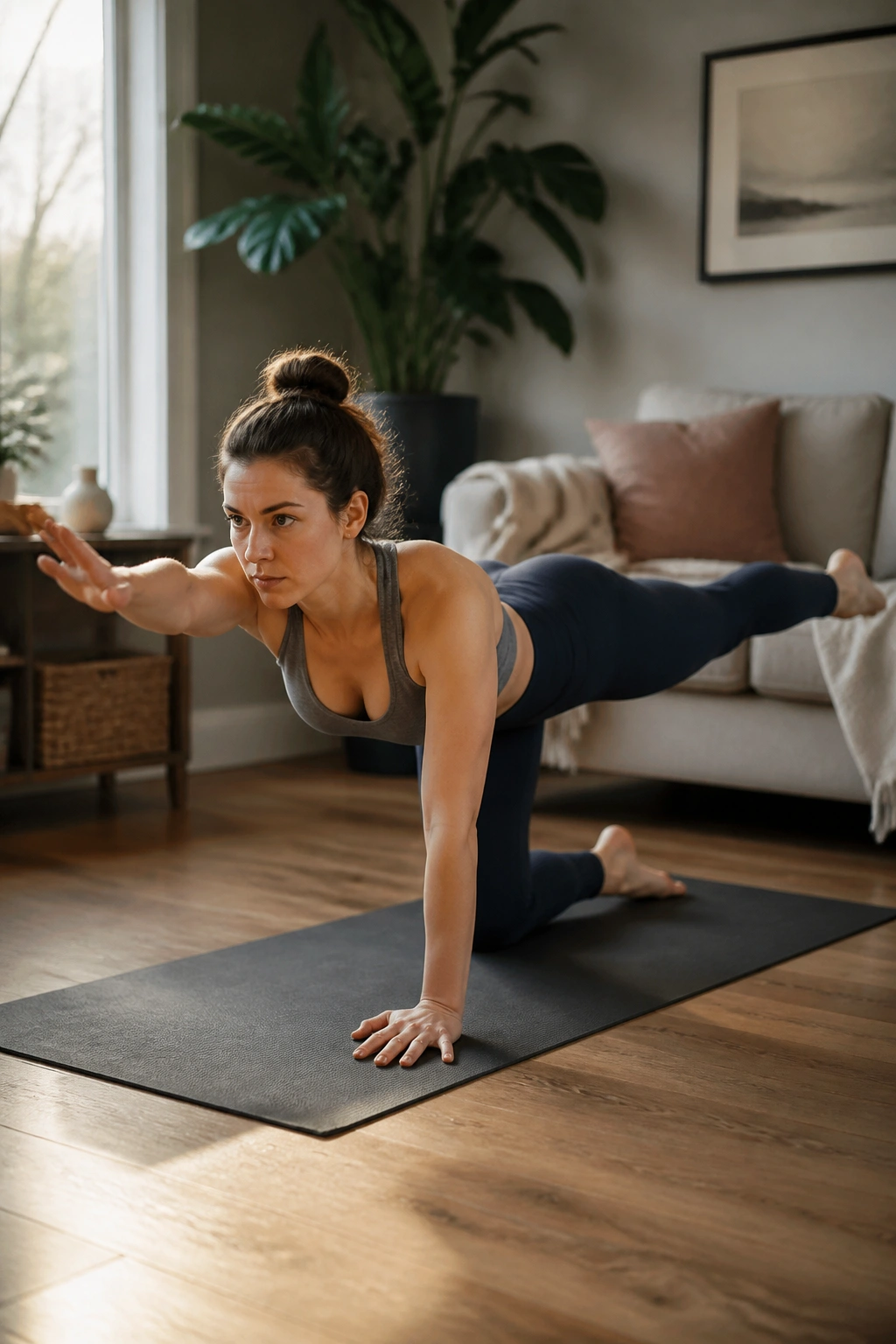
Why do so many people dismiss the bird dog? Because it looks gentle. Then they try it with real control and realize their trunk was wobbling the whole time.
How to Get the Most From It
Get on hands and knees, hands under shoulders, knees under hips. Reach one arm forward and the opposite leg back until both are long. Don’t lift them high. Long and level is the goal. A high leg usually means the lower back has started cheating.
Pause for 1 to 2 seconds at full reach, then come back without dropping into the floor. The stillness matters. Bird dogs train the body to keep the spine stable while the limbs do separate jobs, which is a big part of real core strength.
I like this move for people who hate floor crunches or who need something friendlier for the lower back. It’s also a solid warm-up before heavier lifting.
Do 2 to 3 sets of 6 to 10 reps per side. If the opposite hip twists open, make the reach smaller and slow the rep down.
6. Hollow Body Hold
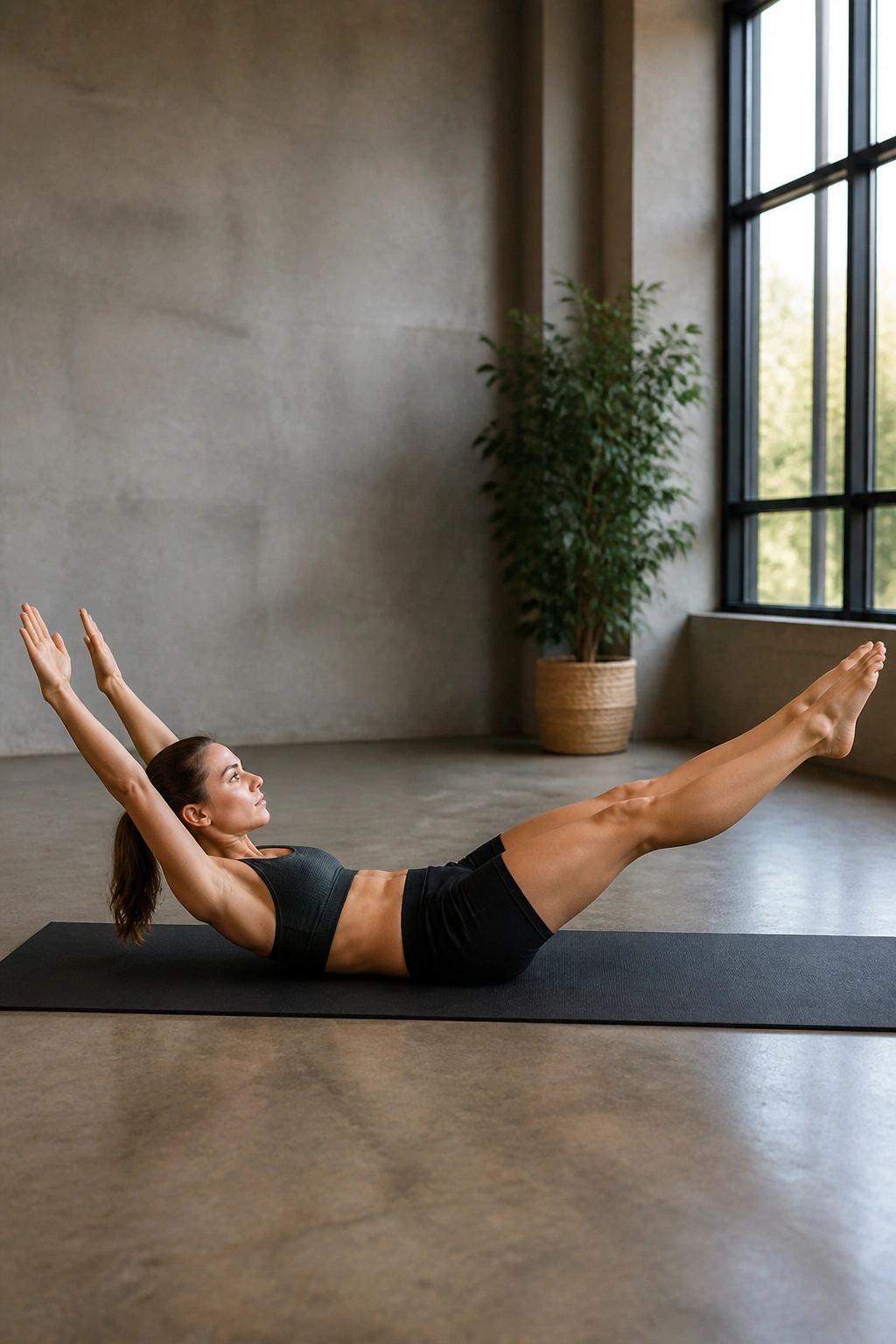
The hollow body hold looks simple until your abs start shaking after ten seconds. Then it becomes obvious why gymnasts use it so often.
Lie on your back and press your lower back into the floor. Lift your shoulders and legs, keeping your ribs tucked and your chin slightly down. If that’s too much, bend your knees and keep the shape smaller. No one gets extra points for suffering in the hardest version on day one.
This move is pure anterior core tension. It teaches your trunk to stay braced while the legs hover, which is one reason it pairs so well with pull-up work and gymnastics-style training. It also exposes weak links fast. If your back arches, the hold is too hard.
A smart starting point is 10 to 20 seconds for 3 to 4 sets. Short holds done cleanly build more useful strength than long holds done with a banana-shaped spine. Strange, maybe. True, though.
7. Hanging Knee Raise
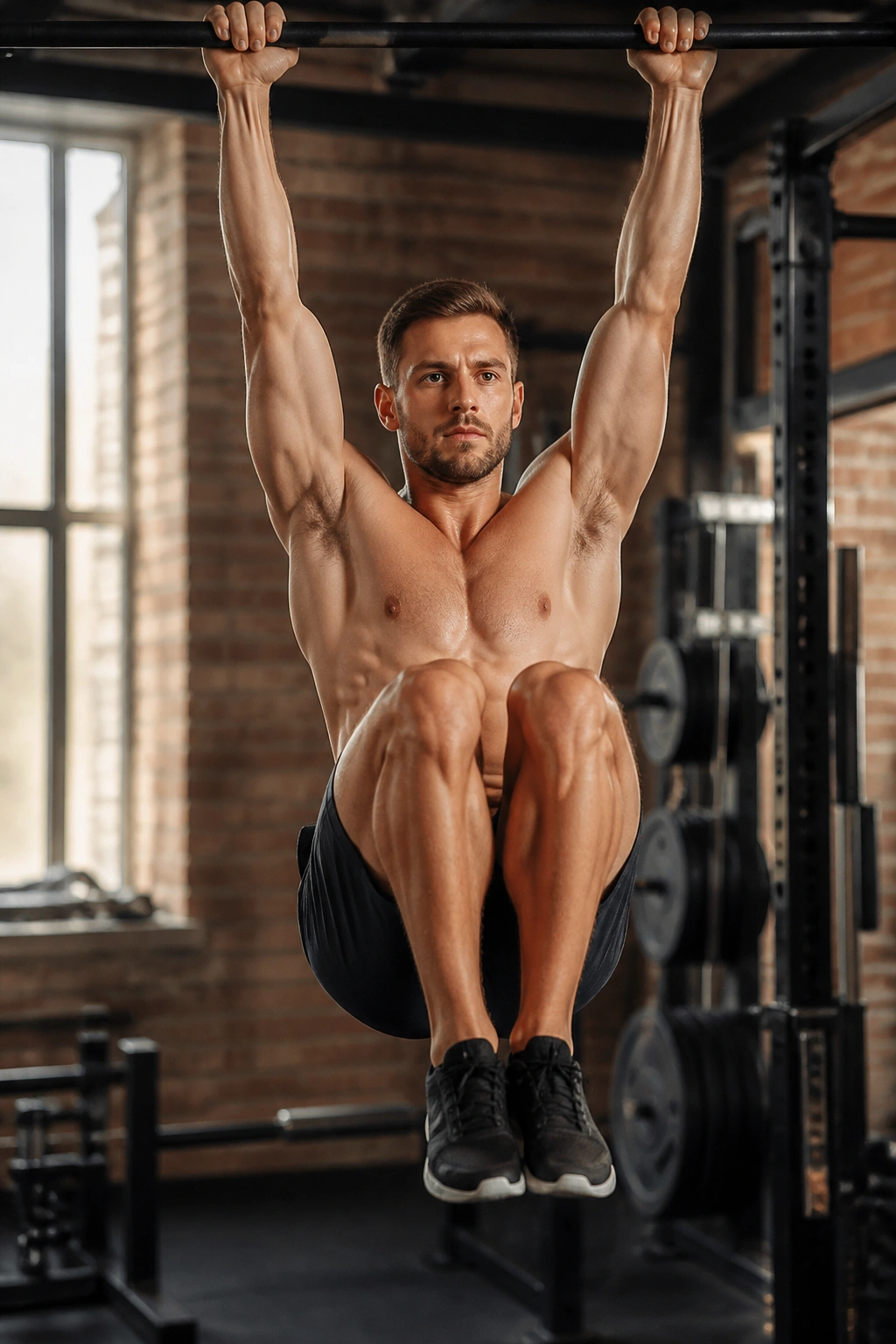
Hanging knee raises are one of those exercises that look dramatic and then punish every bit of impatience you bring to them. Swinging does not count.
Key Cues
Hang from a bar with your shoulders active, not hanging like dead weight. Bring your knees up toward your chest while keeping the torso quiet. The real finish is a small pelvic curl at the top, not just lifting the thighs. That curl is what gets the abs to finish the job.
If your legs swing back and forth between reps, slow the descent. If you still can’t stop the swing, bend the knees more and shorten the range. A captain’s chair version works fine too.
A solid target is 3 sets of 6 to 10 reps. Quality matters a lot here because the hip flexors want to take over fast. If your grip fails before your abs do, that’s useful information, not a disaster.
Do not kip the legs up. That turns a good ab exercise into a messy shoulder-and-momentum drill.
8. Cable Crunch
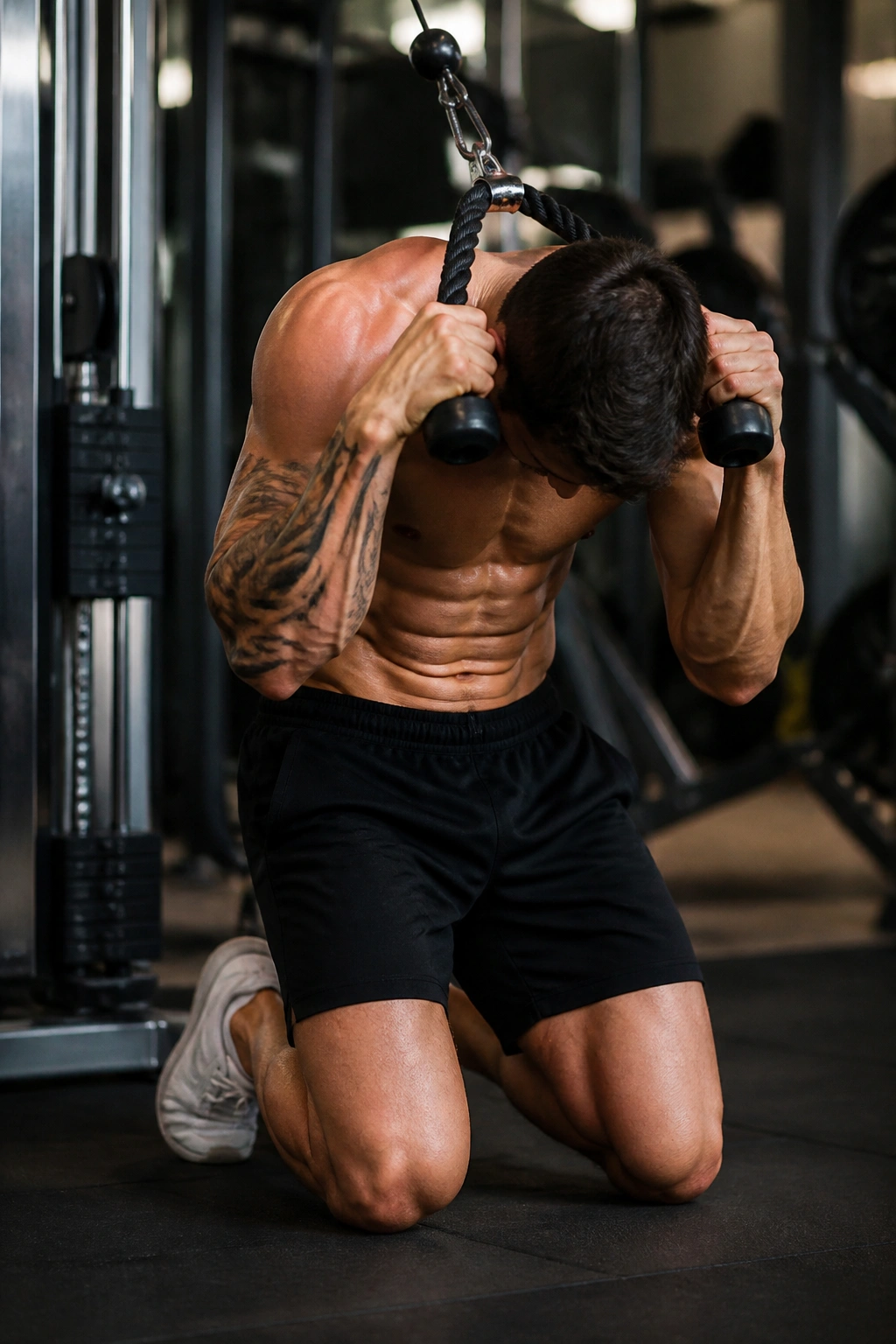
Want a move that lets you add weight in small, honest jumps? Cable crunches are hard to beat.
Why It’s So Useful
Kneel in front of a high cable with a rope attachment, hold the rope near your temples, and curl your ribs toward your pelvis. Your hips should stay mostly fixed. The motion comes from the spine folding, not from dragging the arms down like you’re chopping wood.
This is one of the best ab exercises for people who want progressive overload. You can add a little weight, keep the same form, and make the movement harder over time without turning it into a circus act. That makes it useful for both muscle growth and strength.
A good rep range is 10 to 15 controlled reps for 3 to 4 sets. Exhale as you crunch down. Pause for a beat when the abs are fully shortened. Then rise slowly. If the rope is yanked by the shoulders, the weight is probably too heavy.
9. Ab Wheel Rollout
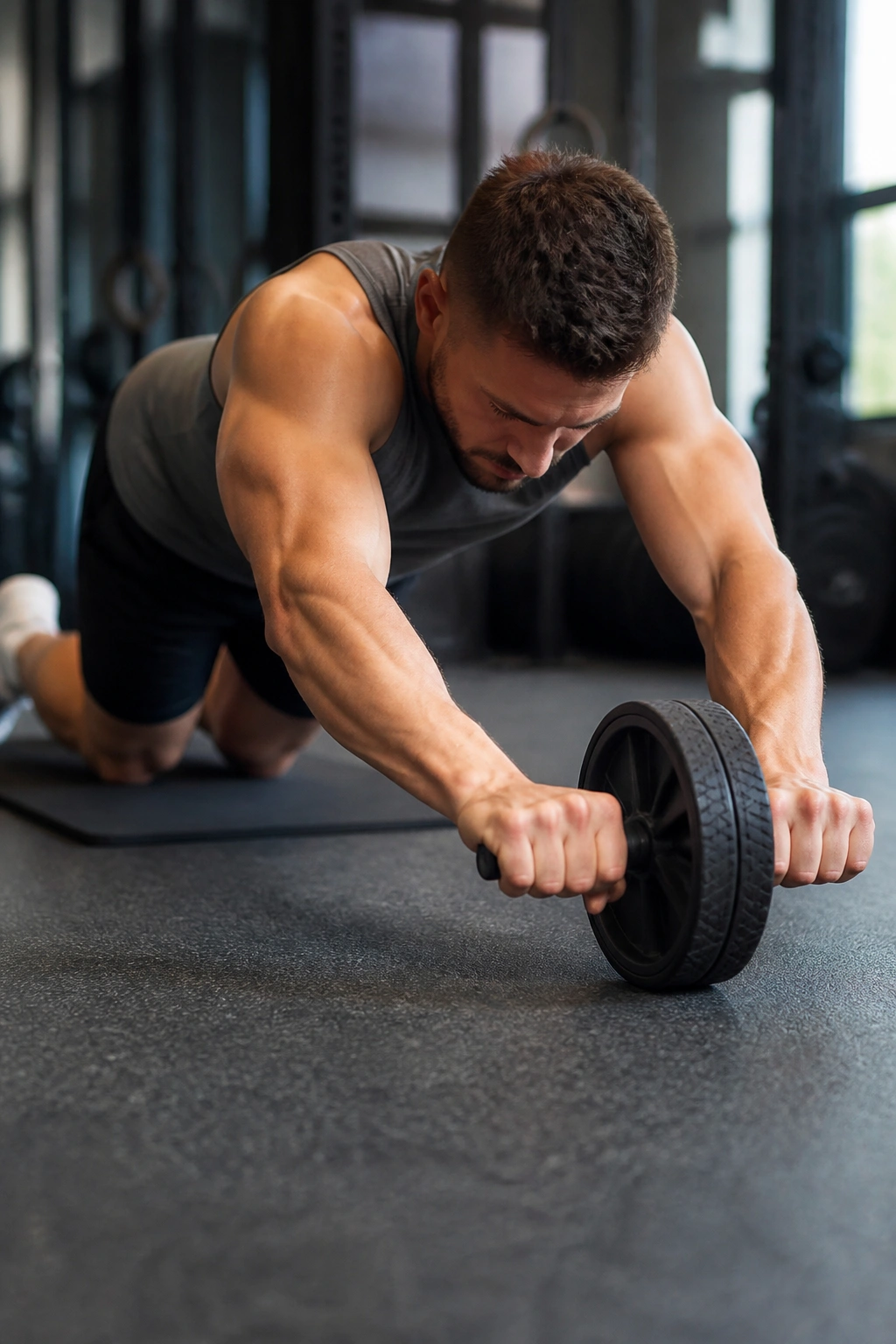
The ab wheel rollout is brutally honest. It tells you within one rep whether your core can hold a line or not.
Picture this: you kneel, grab the wheel, and roll forward just a few inches. If your lower back arches, your range is already too deep. That’s normal. It’s also the reason people get humbled by this exercise so fast.
Start from your knees, brace the glutes, and roll out until you feel your torso want to lengthen. Then pull yourself back by squeezing the abs and lats together. The movement should look smooth, not jerky. If you need to stop against a wall or a box, do it. Short range rollouts are still real work.
A practical dose is 5 to 8 reps for 3 sets. This is not a high-rep move. It’s a control move. Every inch matters, and every sloppy inch shows.
- Keep the ribs tucked.
- Squeeze the glutes before you roll.
- Stop before the back arches.
- Use a towel or mat if the knees get angry.
10. Pallof Press
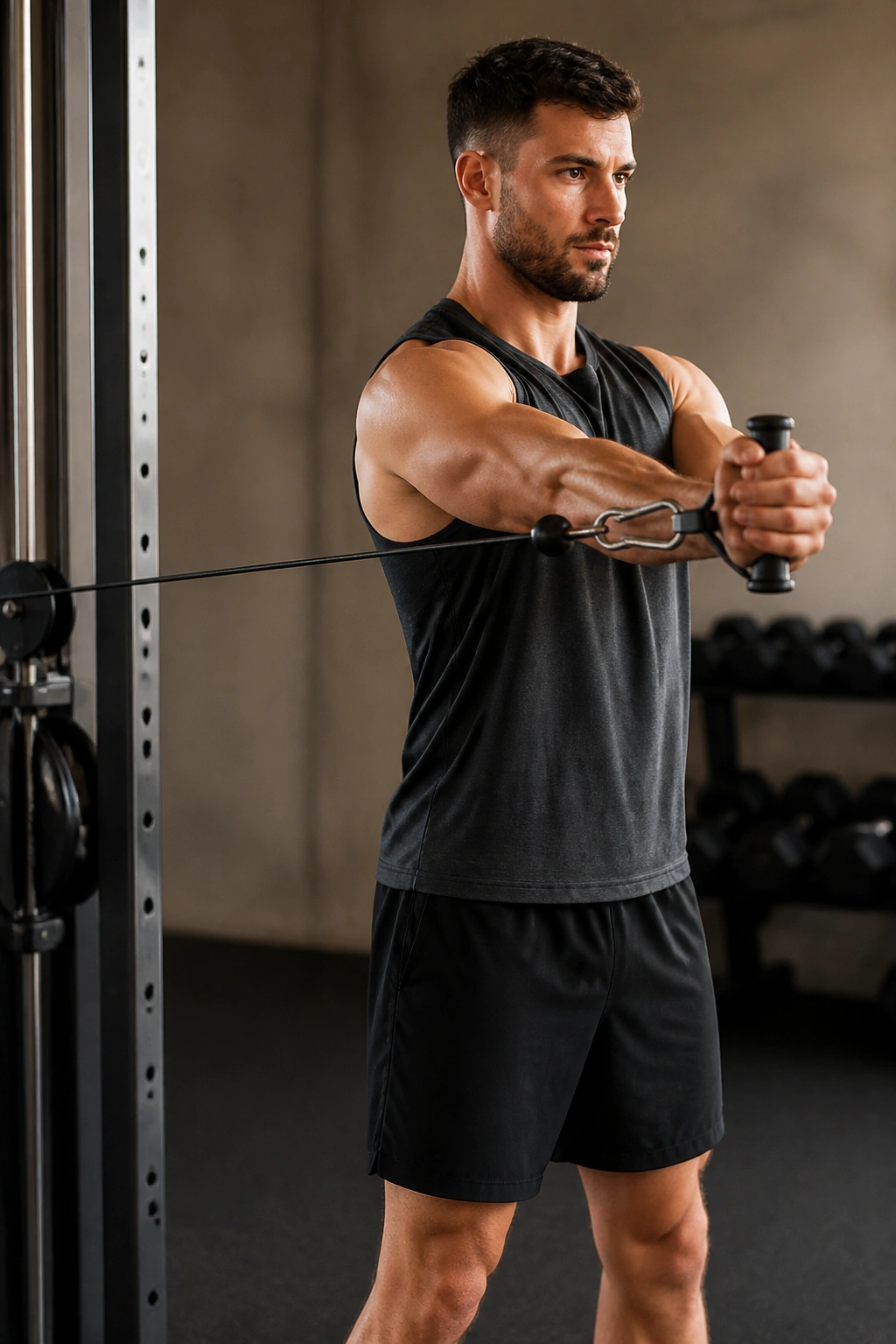
The Pallof press is one of the cleanest ways to train your abs without bending, twisting, or flopping around. It’s boring in the best possible way.
What Makes It Different
Unlike crunches, the Pallof press asks your torso to resist rotation. Set a cable or band at chest height, stand sideways to the anchor, and press the handle straight out from your chest. The load wants to twist you. Your job is to stay square.
That anti-rotation demand pays off in real life. Carrying groceries, throwing a punch, swinging a bat, and even changing direction while running all ask your trunk to control rotation. The Pallof press gets that done without beating up your spine.
Try it standing, half-kneeling, or with a step-out hold. A solid prescription is 8 to 12 presses per side or 15 to 20-second holds. If your shoulder drifts forward, reset. If your hips turn with the cable, lighten the load and clean it up.
11. Bicycle Crunch
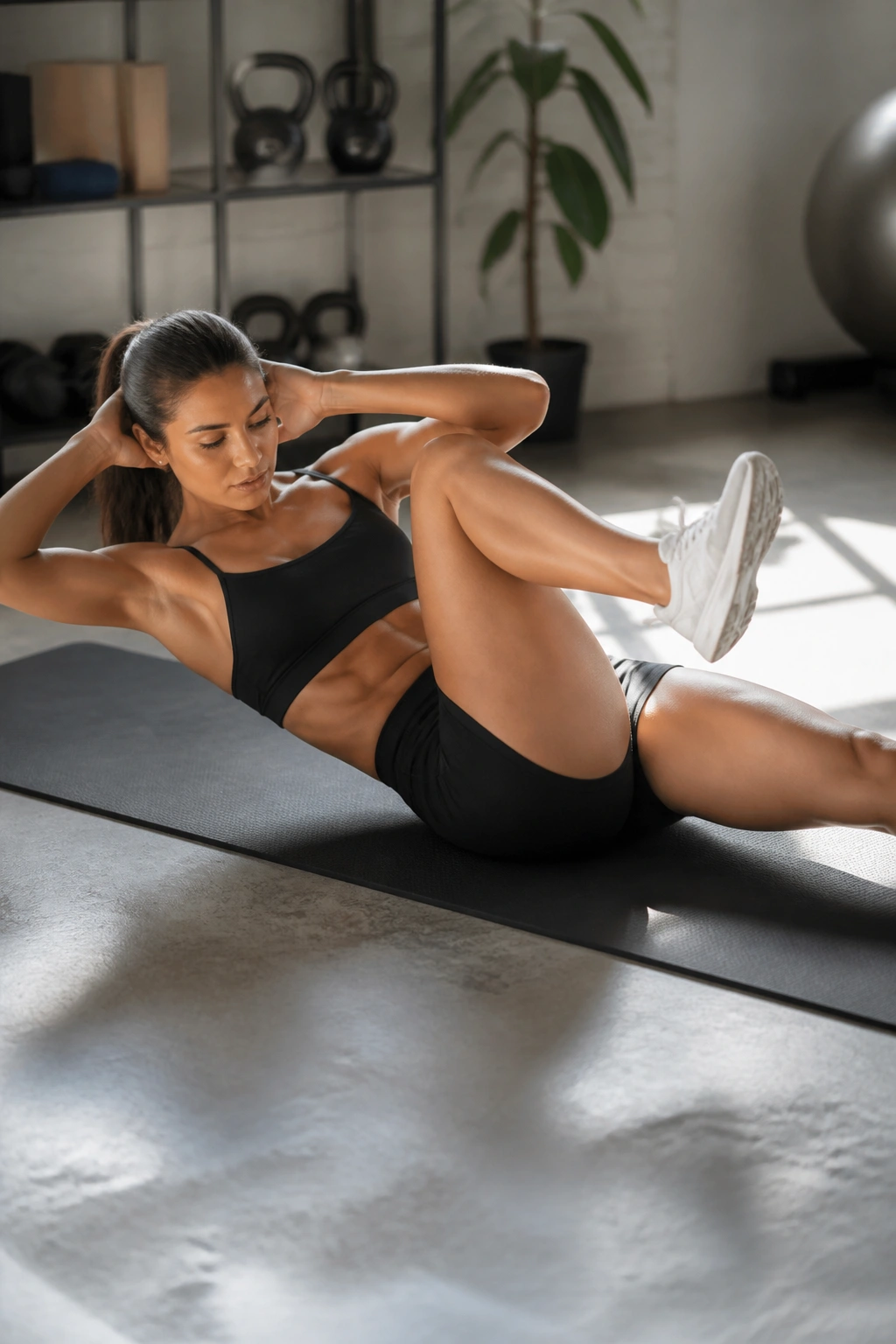
Bicycle crunches get a bad reputation, and a lot of it is deserved. Fast, sloppy reps are usually terrible. Slow, controlled reps can be useful.
Lie on your back, bring one elbow toward the opposite knee, and extend the other leg. The goal is not to slam the elbow and knee together. The goal is to keep the abs working while the torso rotates under control. If the neck is yanking, your hands are probably pulling too hard.
The best version feels deliberate. Each rep should have a twist, a reach, and a small exhale at the hard part. Keep the low back close to the floor. If it pops up, the range is too big or the speed is too high.
I’d treat bicycle crunches as a medium-intensity finisher, not a main strength move. 2 to 3 sets of 10 to 20 reps per side is plenty. More speed usually means less actual ab work. That’s the annoying truth.
12. Mountain Climber
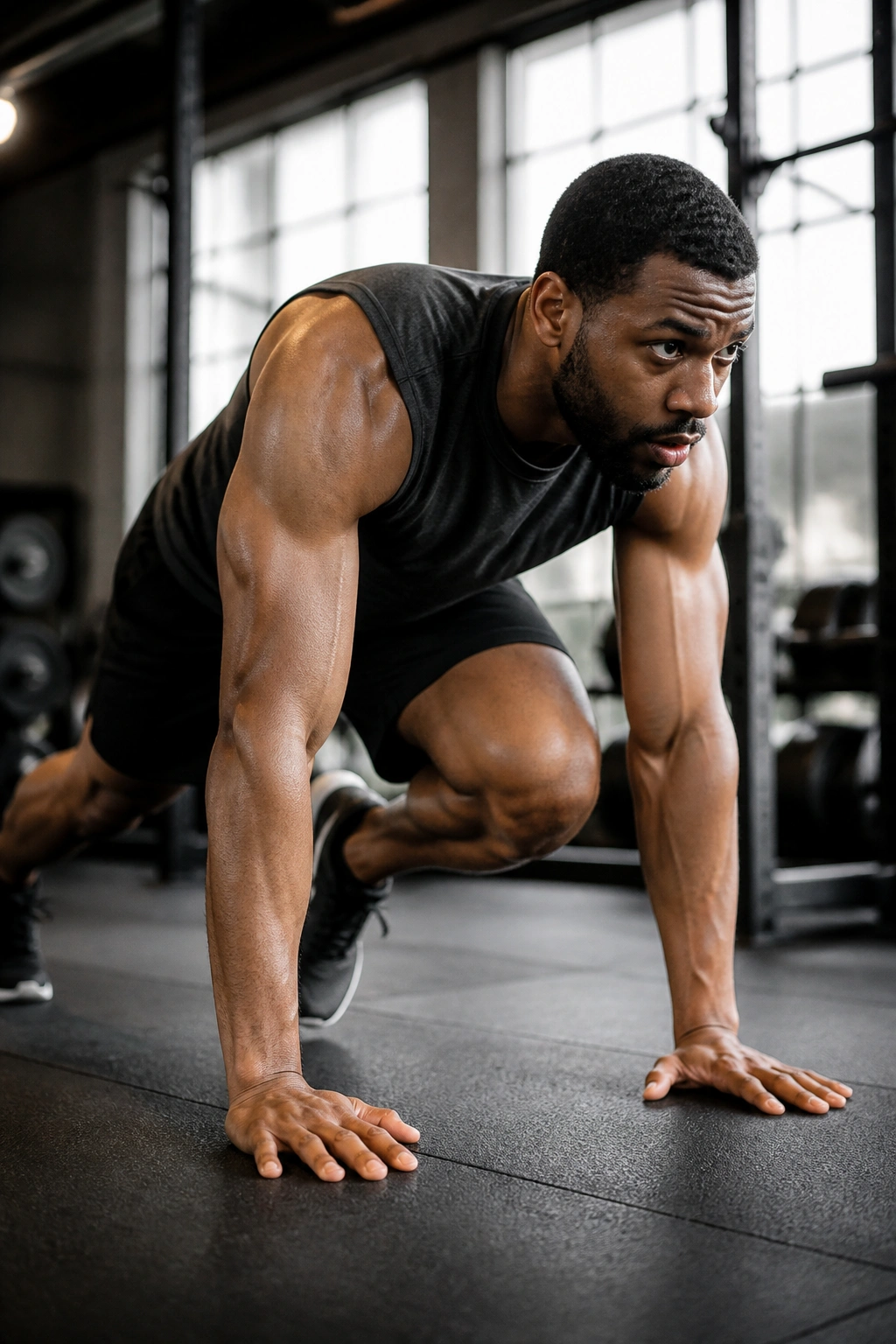
Mountain climbers should feel athletic, not frantic. If they look like a bee sting sent you running in place, the core is probably not doing much.
Your hands stay under your shoulders. Drive one knee toward the chest, then switch with control. The torso should stay braced, almost like a moving plank. When the hips hike up and the feet just blur across the floor, the exercise turns into cardio with a core costume on.
Quick Form Check
- Shoulders stay stacked over the wrists.
- Hips stay low and steady.
- Knees travel forward, not just down.
- Breathing stays rhythmic, not panicked.
A useful range is 20 to 40 seconds per set, especially as a finisher. Mountain climbers can raise your heart rate fast, which is useful, but the real value comes when the torso stays quiet while the legs move. That quiet middle is where the abs learn something.
13. Toe Touch Crunch
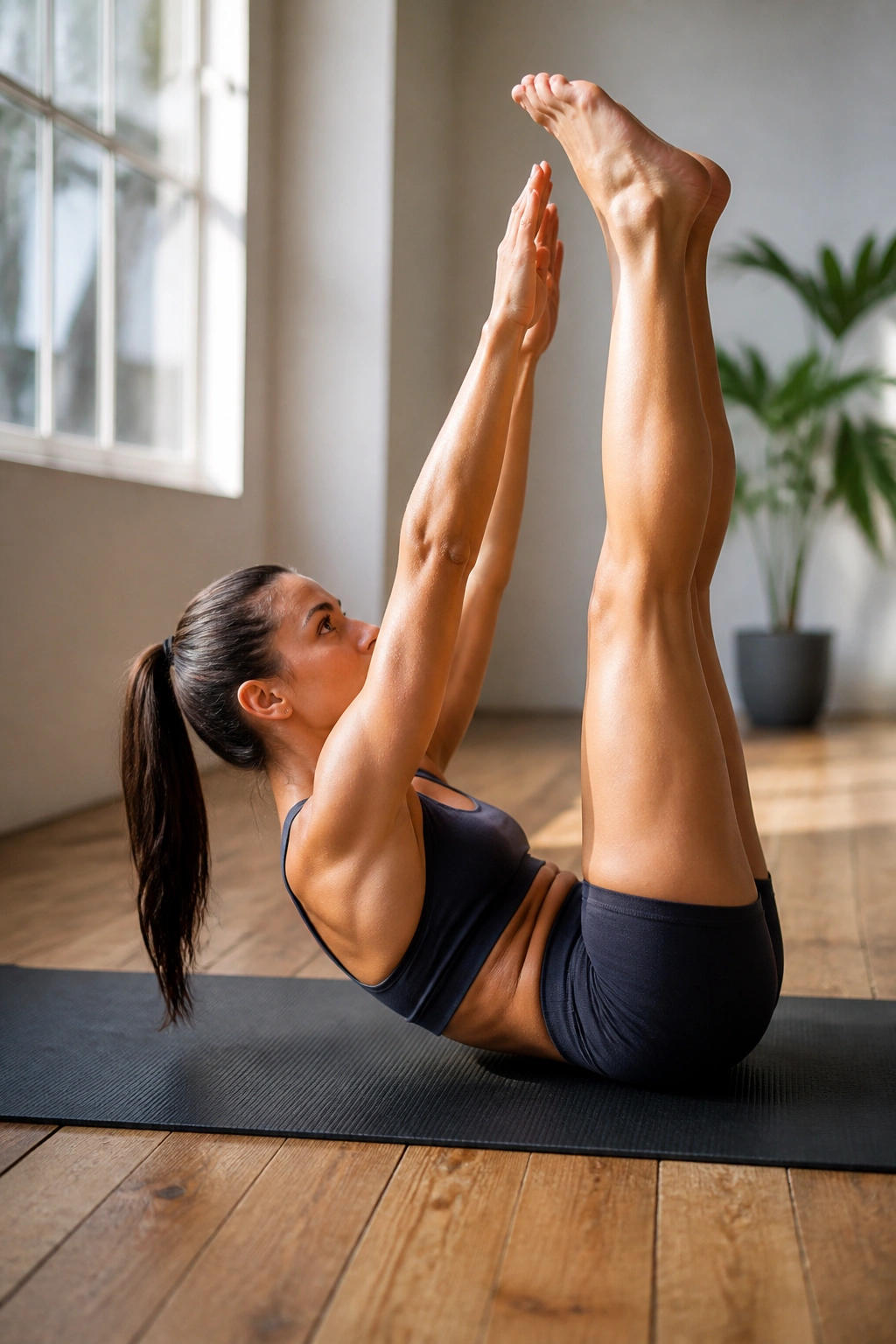
Toe touch crunches are sneaky. They look like a simple reach, then your abs start shaking halfway through the set.
Lie on your back with your legs up toward the ceiling. Reach your hands toward your toes as your shoulders peel off the floor. The rib cage should fold upward, and the exhale should be crisp. If the legs are bent a little, that’s fine. Straight legs are not a prize; they’re just harder.
What matters here is the finish. You want the abs shortened, not the arms flailing at the sky. A tiny pause at the top makes the rep much more honest. If your lower back starts arching, lower the legs a bit and control the descent.
I like toe touch crunches as a short finisher after heavier core work. 2 to 3 sets of 10 to 15 reps is enough for most people. Chasing huge numbers usually turns the exercise into a hip-flexor tug-of-war. That gets old fast.
14. V-Up
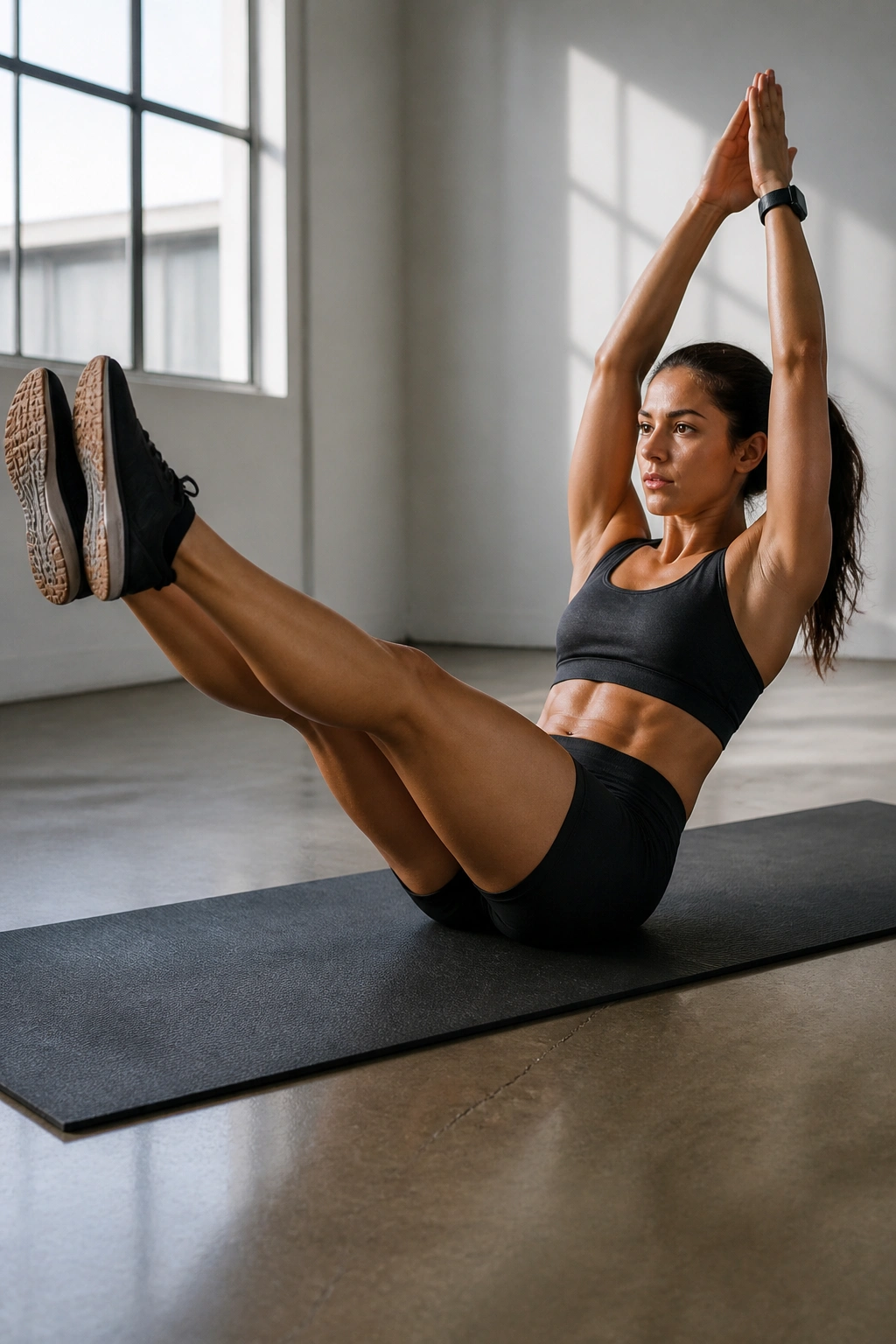
Can you move your upper body and lower body at the same time without collapsing in the middle? That’s the whole game here.
How to Scale It
A V-up starts from the floor with arms overhead and legs long. Lift both ends of your body toward each other, forming a V shape, then lower with control. The more synchronized the movement, the more the abs have to work to stop the spine from folding too far or the hips from taking over.
The full version is demanding. If it feels like a seizure of the hip flexors, scale it down. Try a tuck-up first, where your knees bend as you come up. Or keep one leg bent and one straight. That small change can make the rep useful instead of chaotic.
A reasonable target is 5 to 10 controlled reps for 3 sets. The lower back should stay calm on the way down. If it slams into the floor, the set is too hard or too fast.
15. Stability Ball Rollout
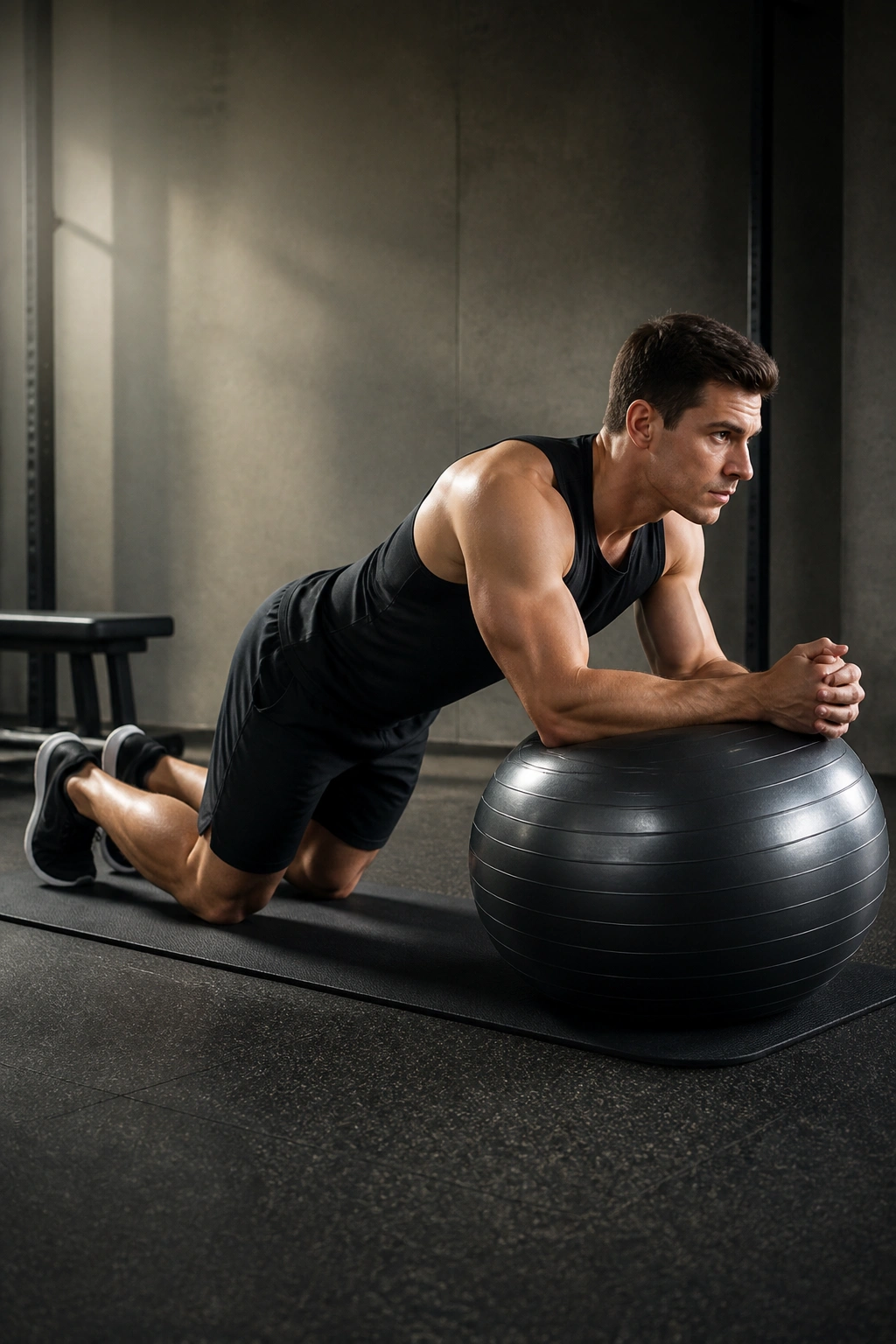
The stability ball rollout is the friendlier cousin of the ab wheel, but don’t mistake “friendlier” for “easy.” It still demands a lot of trunk control.
Kneel with your forearms on the ball, brace your midsection, and roll forward just until you feel the abs take over. Then pull back with the same steady control. The ball adds a little give, which helps some people learn the movement pattern before moving to an ab wheel.
Compared with the wheel, the ball usually feels less sharp on the shoulders and a touch easier to scale. That makes it a smart bridge exercise for someone who wants rollout strength but isn’t ready for the full version. If the ball shoots too far ahead, make the range smaller and keep the knees planted firmly.
Try 8 to 12 reps for 3 sets. The win here is not distance. It’s keeping the body long without letting the lower back sag.
16. Suitcase Carry
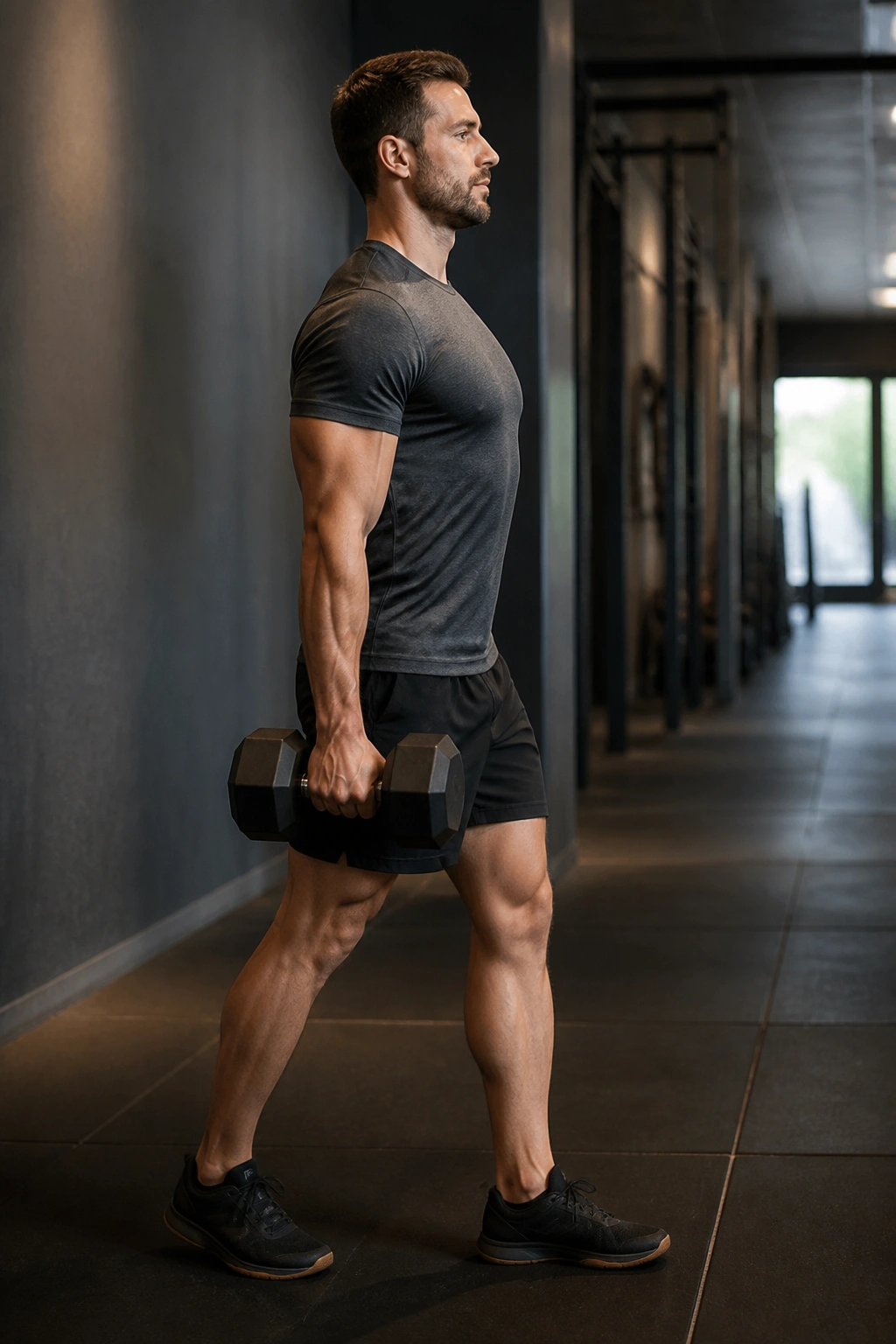
A suitcase carry is one dumbbell, one side, and zero mercy for bad posture. It looks too simple to matter. Then you feel your obliques start to work just to keep you from leaning like a half-collapsed fence.
Hold a heavy dumbbell or kettlebell in one hand and walk slowly and tall. Don’t let the weight pull your shoulder down or your ribs sideways. The torso should stay stacked over the pelvis. That’s the whole point.
This move trains anti-lateral flexion, which is a fancy term for resisting side-bending. It also gives your grip and hips a meaningful job. I like this more than a lot of flashy ab moves because it shows up in real life. Carrying a child, a toolbox, a suitcase—there’s the name, by the way—all ask for this exact skill.
Walk 20 to 40 meters per side or hold the weight for 30 to 60 seconds. Heavier is usually better, as long as you stay upright. If you lean, the load is too much.
17. Windshield Wiper
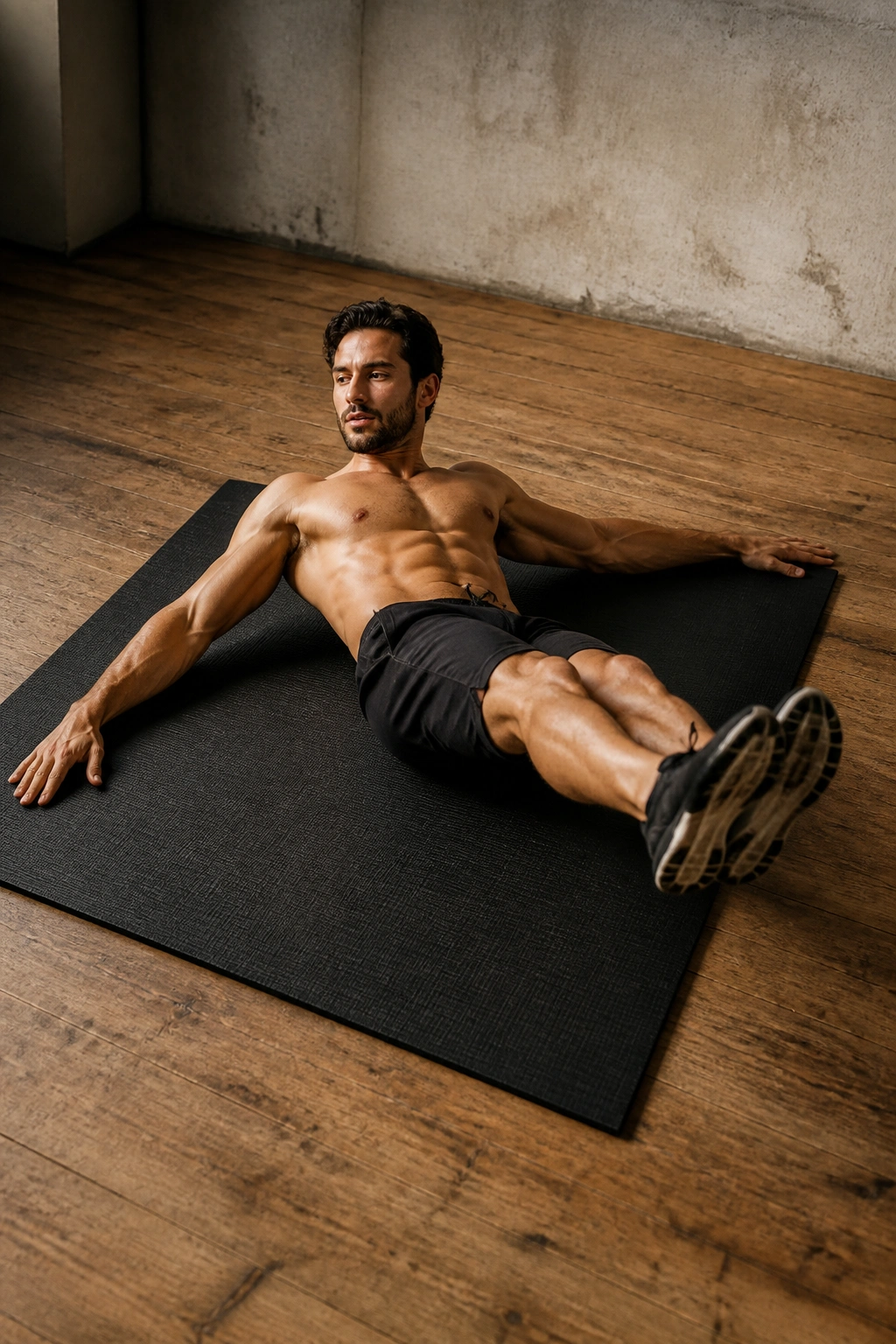
Windshield wipers are a hard move, and the hard part is not the legs. It’s the control.
What to Watch For
Hang from a bar or lie on the floor with your legs up, then lower them from side to side in a smooth arc. The obliques work to control the rotation, and the lower abs help keep the pelvis from spiraling out of control. If you rush, the exercise turns messy in a hurry.
Most people need a bent-knee version first. That shortens the lever and makes the motion more manageable. On the bar, keep the shoulders active so you’re not hanging loose through every swing. On the floor, keep the shoulders pinned and the movement slow enough to see it happen.
Start with 6 to 8 reps per side. If your range gets so wide that the back arches hard, stop and switch to a smaller version. This is one of those exercises where humility is useful. Use it. Your abs will thank you later.
18. Plank Shoulder Tap
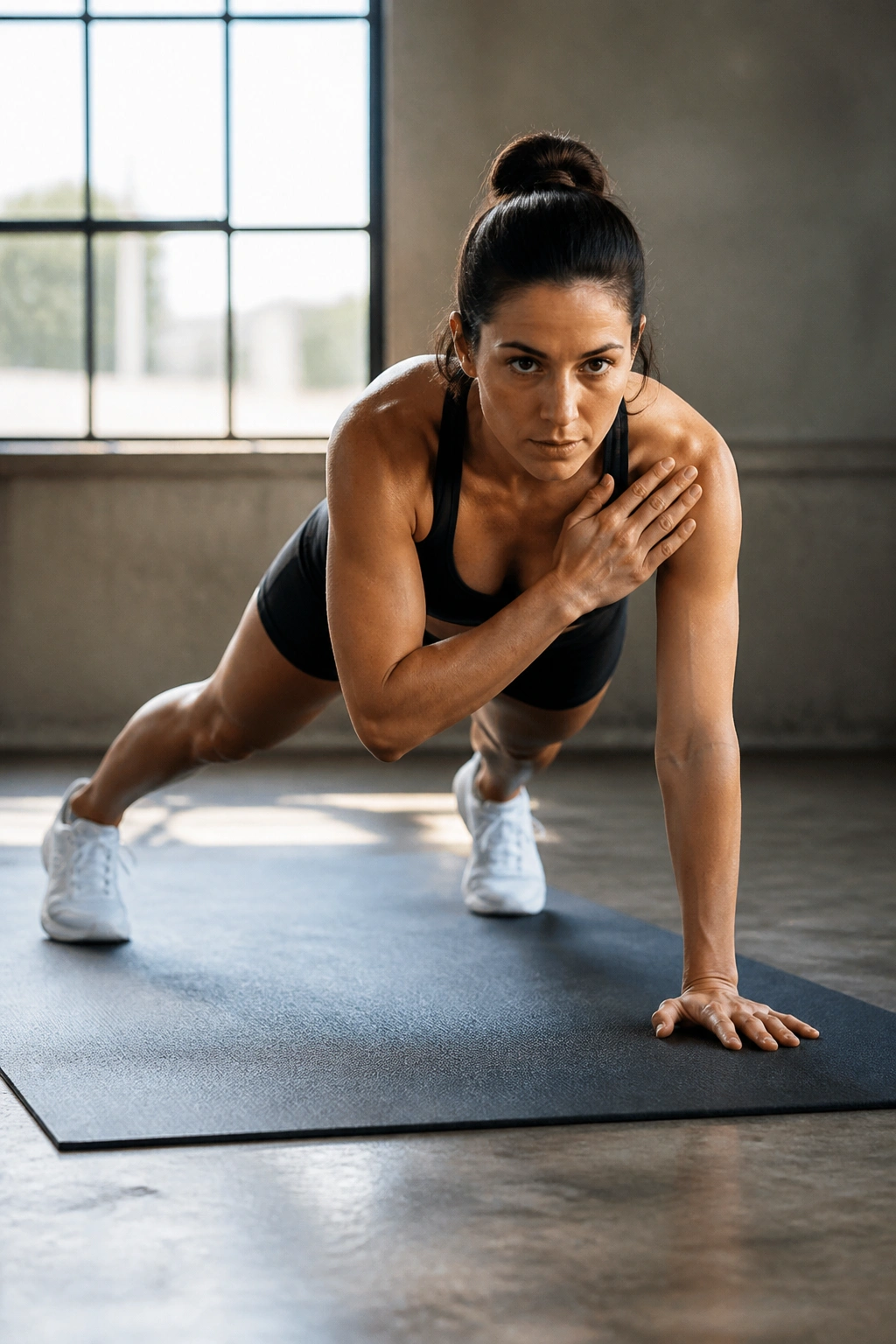
Plank shoulder taps are the kind of exercise that looks harmless until your hips start dancing all over the place. That dance is the point of the drill, in a nasty sort of way.
Get into a high plank with your feet a little wider than hip-width. Tap one shoulder with the opposite hand, then switch sides without rocking your pelvis. The wider your feet, the easier it gets. Narrow them and the anti-rotation demand jumps fast.
This move works well as a finisher because it asks for bracing, shoulder stability, and control under a tiny but annoying shift in weight. If you can tap without swaying, your core is doing useful work. If your hips swing open each time, slow down and spread the stance again.
Try 10 to 20 taps per side for 2 to 4 sets. Pair it with dead bugs and suitcase carries if you want a simple three-move core day that covers bracing, anti-rotation, and side stability without wasting time on junk reps.
