



The idea that you can simply perform a specific set of crunches or sit-ups to target the fat covering your midsection is one of the most pervasive myths in fitness. You have likely seen thousands of ads promising a “flat stomach in seven days” using one miracle exercise. It never works that way. The truth is much simpler, though perhaps less glamorous: you cannot choose where your body burns fat. That process is governed by your overall caloric balance, genetics, and hormonal health. However, you absolutely can build the underlying musculature that gives your midsection its shape, strength, and structural integrity.
When you train your core, you are not just working toward a visual goal. You are training the powerhouse of your entire body. A strong core stabilizes your spine, improves your posture, and makes every other movement—from carrying groceries to running a marathon—more efficient. The exercises below are designed to challenge your muscles through multiple planes of motion: flexion, rotation, and stability. Focusing on these movements will tighten the abdominal wall and improve your metabolic rate, which, when paired with a sensible approach to nutrition, is the only legitimate way to change your body composition.
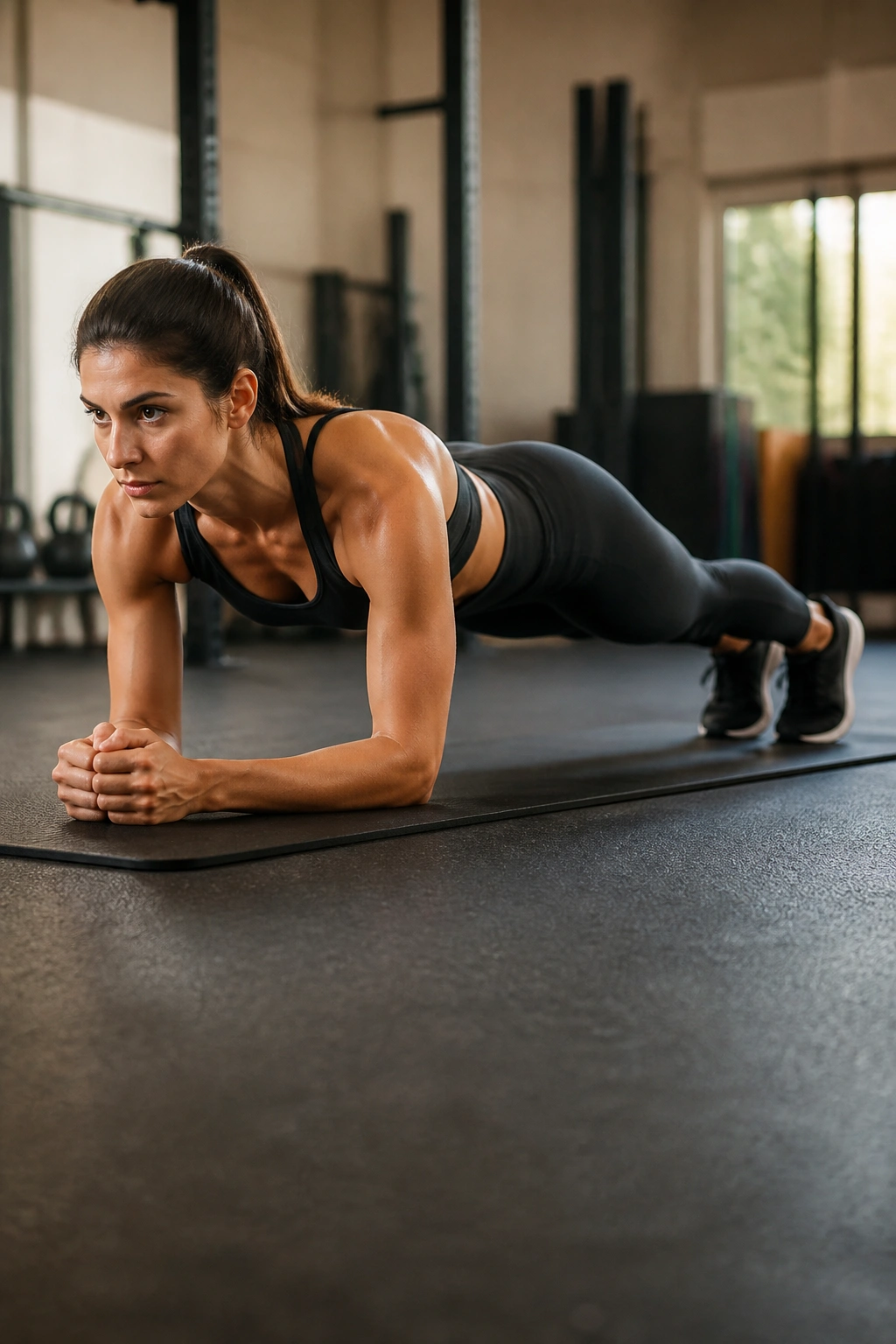
1. The Classic Plank
The plank is the foundation of isometric core stability. Unlike dynamic movements that require you to crunch or twist, the plank forces your muscles to resist gravity and maintain a rigid, straight line from head to heels. This is critical for building endurance in the transverse abdominis, the deepest layer of your abdominal muscles that acts like a natural corset for your torso.
How to Execute the Movement
Start by lying face down on a mat. Prop yourself up on your forearms, keeping your elbows directly beneath your shoulders. Extend your legs behind you, resting your weight on the balls of your feet. Your body should form a straight, stiff line—think of yourself as a solid board. Engage your glutes and squeeze your thighs to create total-body tension.
Critical Form Cues
- Avoid letting your hips sag toward the floor, as this puts unnecessary strain on your lower back.
- If your hips pike upward toward the ceiling, you are cheating yourself out of the core engagement.
- Keep your head neutral; stare at a spot on the floor about a foot in front of your hands to keep your neck aligned with your spine.
- Breathe steadily; do not hold your breath, as this creates intra-abdominal pressure that can raise your blood pressure during the hold.
Pro tip: If you can hold a standard plank for longer than 90 seconds without breaking form, you are no longer training for strength; you are training for endurance. At that point, start focusing on “creating tension” by pulling your elbows toward your toes—this will make a 30-second plank feel much more difficult than a 2-minute version where you are just sagging.
2. Mountain Climbers
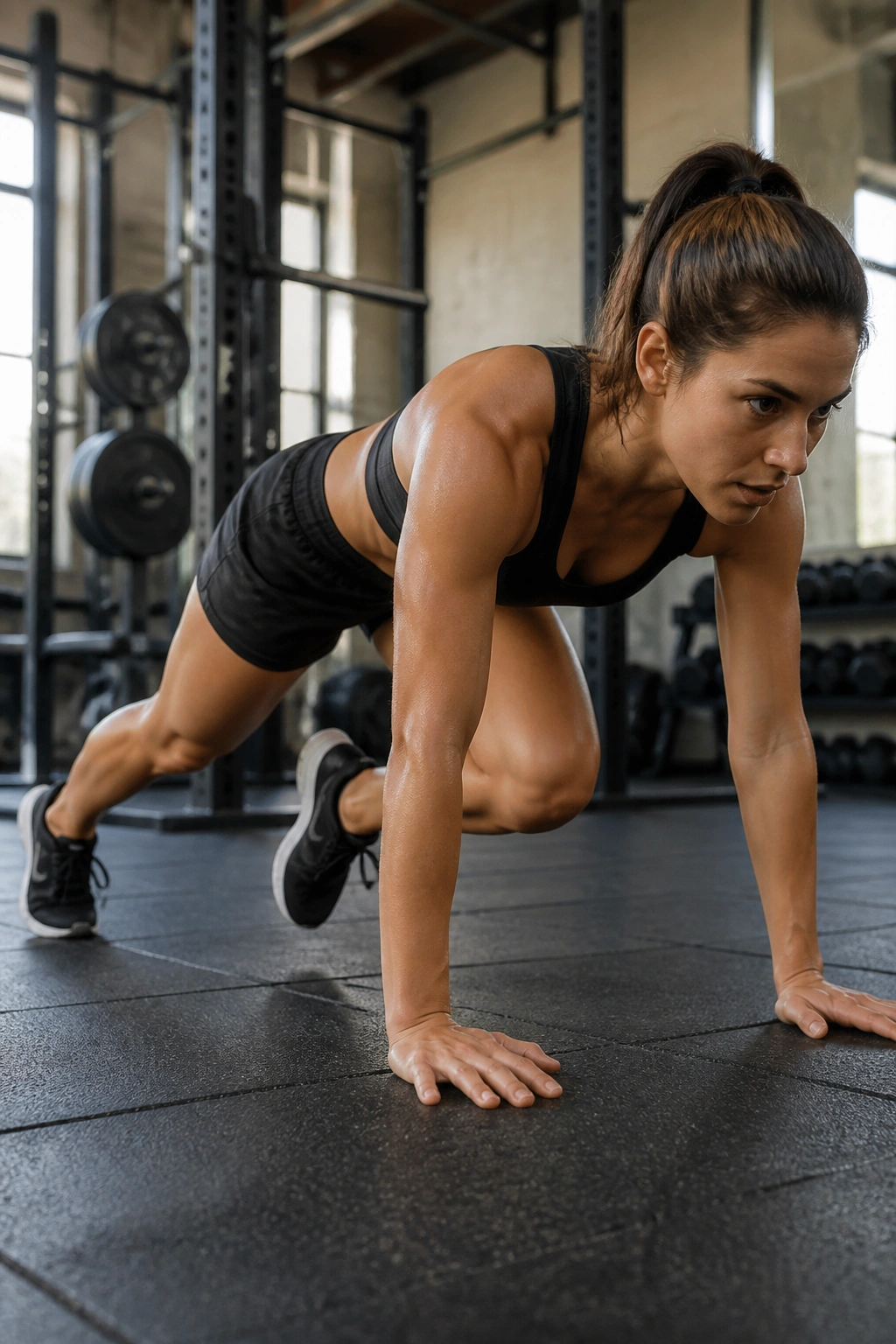
Mountain climbers are a fantastic way to elevate your heart rate while simultaneously challenging your core stability. Because you are in a plank position and moving your legs, your abdominals must work overtime to prevent your torso from rotating or collapsing. It is essentially a dynamic plank that incorporates a cardio element.
Setting Up the Rhythm
Start in a high plank position, hands planted firmly on the floor directly under your shoulders. Keep your body in a straight line. Bring your right knee toward your chest, then explosively switch legs, bringing the left knee in while extending the right. This should look and feel like you are running in a horizontal position.
Why This Move Works
The constant shifting of weight from one side to the other forces your obliques and deep stabilizers to fire rapidly. You have to maintain balance while your legs are moving beneath you, which requires a high level of neuromuscular coordination.
Common Mistake: Most people go too fast and lose control of their hips. They bounce their hips high in the air with every rep. Slow down. Focus on keeping your shoulders square and your hips glued to the same plane. It is much better to do 20 high-quality, controlled reps than 50 sloppy ones where your lower back takes the brunt of the load.
3. Russian Twists
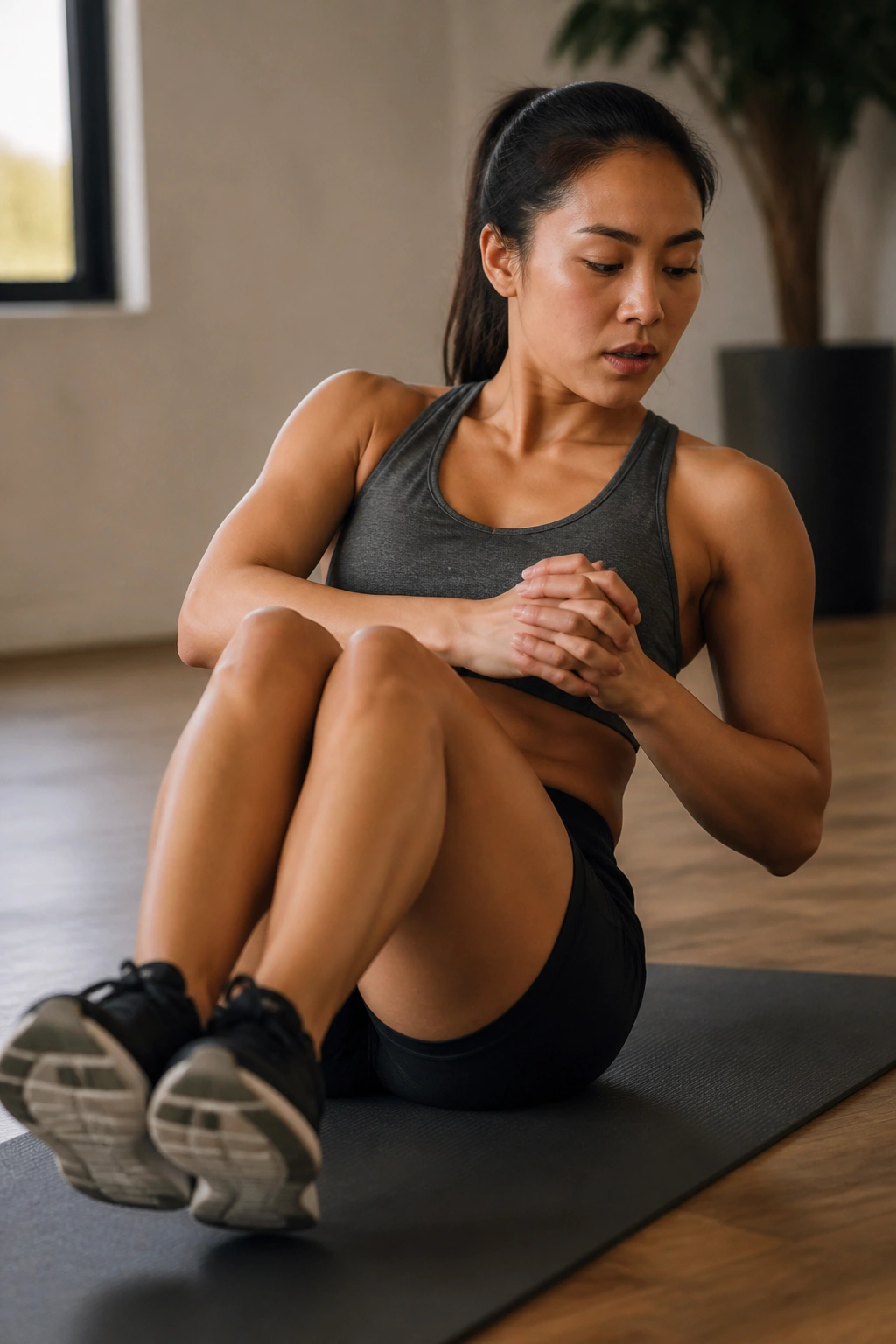
If you want to target the obliques—the muscles on the sides of your waist—the Russian twist is a go-to. Most people train their abs only in the sagittal plane (front to back), but the torso is designed to rotate. Training that rotation is key for a balanced, defined midsection.
How to Do It Correctly
Sit on the floor with your knees bent and your feet flat. Lean your torso back slightly until you feel your abdominals engage—usually at about a 45-degree angle. Clasp your hands together in front of your chest. Lift your feet a few inches off the floor to add a balance challenge. Rotate your torso to the right, tapping your hands toward the floor, then rotate all the way to the left.
Key Performance Details
- Keep your gaze following your hands; this helps you get a full range of motion.
- If you find your hips swinging from side to side, place your heels lightly on the floor until you build enough strength to keep them elevated.
- Do not round your shoulders. Keep your chest up and your back straight throughout the entire twisting motion.
Why this matters: When you lean back, you create a “time under tension” scenario for the rectus abdominis. By adding the rotation, you layer in the oblique engagement. It is a dual-purpose movement that adds a level of complexity many floor exercises lack.
4. Leg Raises
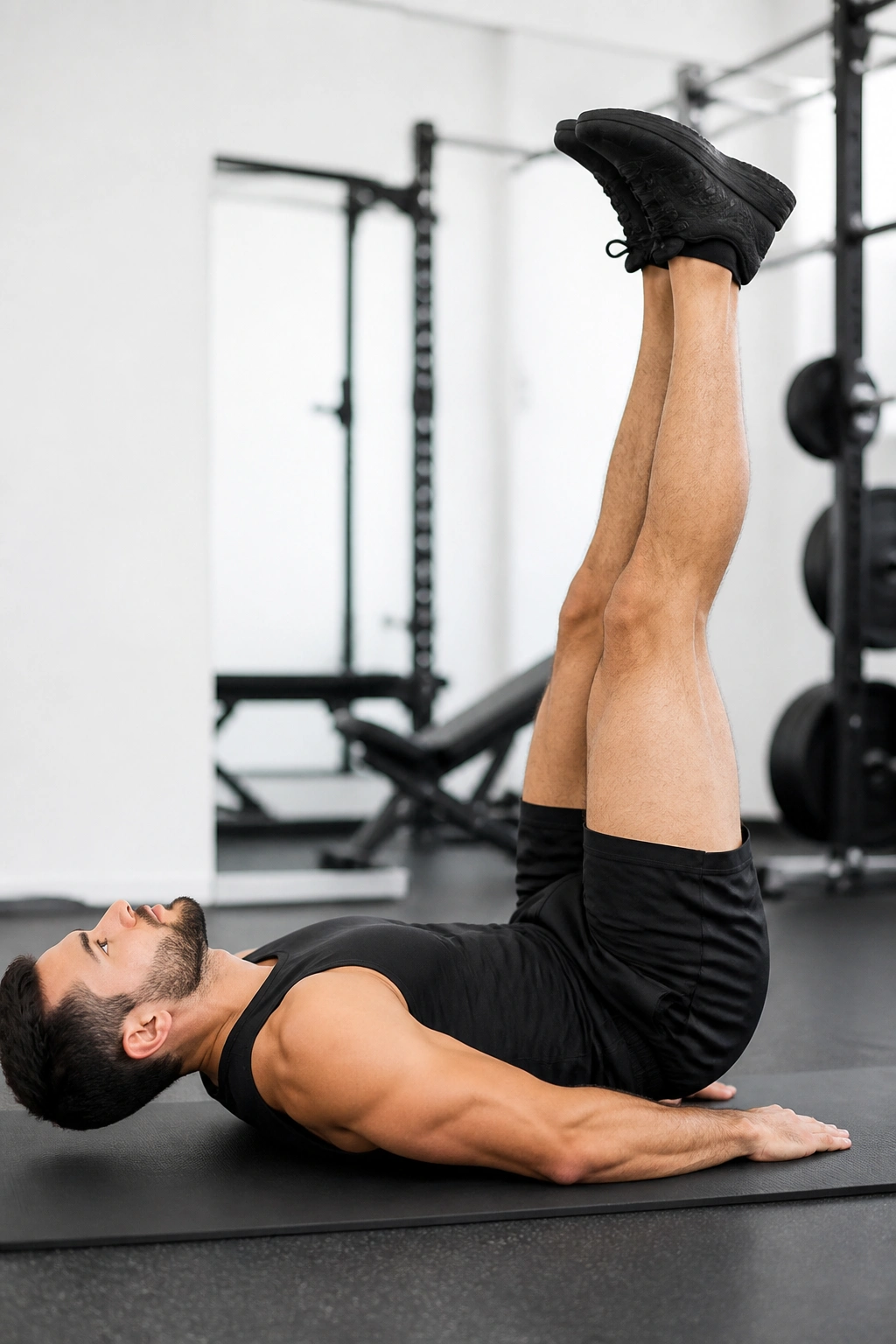
The lower abs are often the hardest part of the midsection to isolate. Because the lower rectus abdominis is responsible for lifting the pelvis and legs, leg raises are the gold standard for targeting this area.
The Mechanics
Lie flat on your back with your arms by your sides, palms facing down. Keep your legs straight (or slightly bent if your hamstrings are very tight) and lift them slowly until they are perpendicular to the floor. Lower them back down with control, stopping just an inch or two above the ground before repeating.
Avoiding Back Pain
The most common issue with leg raises is the lower back peeling off the floor. This signals that your abs aren’t strong enough yet to handle the weight of your legs. To fix this:
- Press your lower back into the floor for the entire duration of the set.
- If you cannot keep your back flat, put your hands underneath your glutes to provide a slight pelvic tilt.
- Do not use momentum. If you are swinging your legs up, you are using your hip flexors, not your abs.
Think of this movement as peeling your hips off the mat rather than just kicking your legs into the air. If you focus on using your lower abs to initiate the lift, you will feel a significant difference in how the exercise targets the midsection.
5. Bicycle Crunches
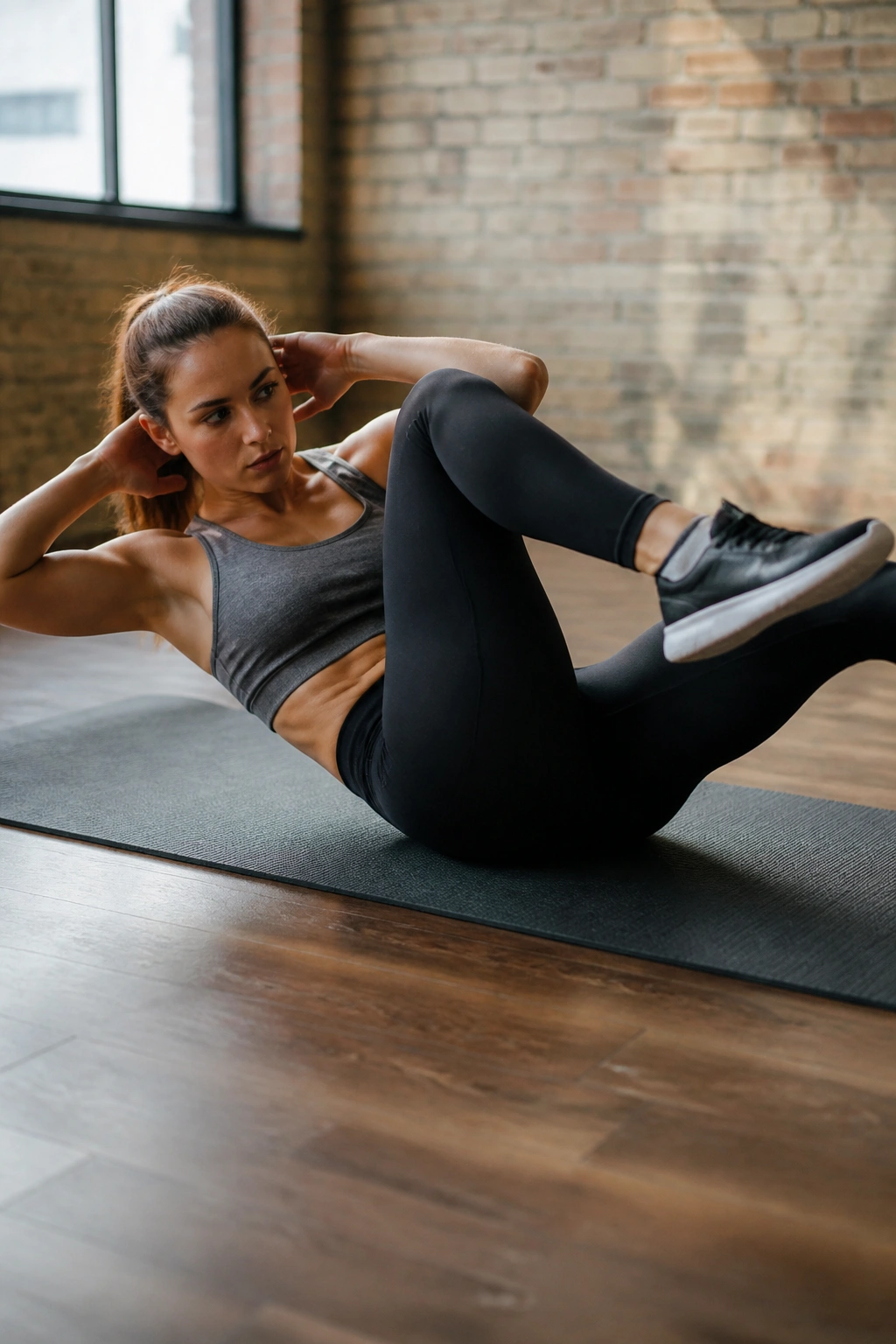
Evidence suggests that the bicycle crunch is one of the most effective movements for activating the rectus abdominis and the obliques simultaneously. It mimics a pedaling motion, requiring you to coordinate opposite shoulder to opposite knee.
Proper Execution
Lie on your back with your hands gently supporting your head—do not pull on your neck. Bring your knees to a 90-degree angle. Extend your left leg while bringing your right elbow toward your left knee. Switch sides, extending the right leg while bringing the left elbow toward the right knee.
Why Quality Beats Quantity
Many people rush this exercise, treating it like a speed contest. That is a mistake. Perform the movement slowly. Rotate your entire torso, not just your elbow. If you are just tapping your elbow to your knee, you are missing the rotation that makes this move effective.
Sensory Cues: You should feel a deep burn in the sides of your waist. If you only feel it in your hip flexors, you are likely pulling your legs too far inward without the torso rotation. Keep your elbows wide—do not let them cave in toward your face.
6. The Dead Bug
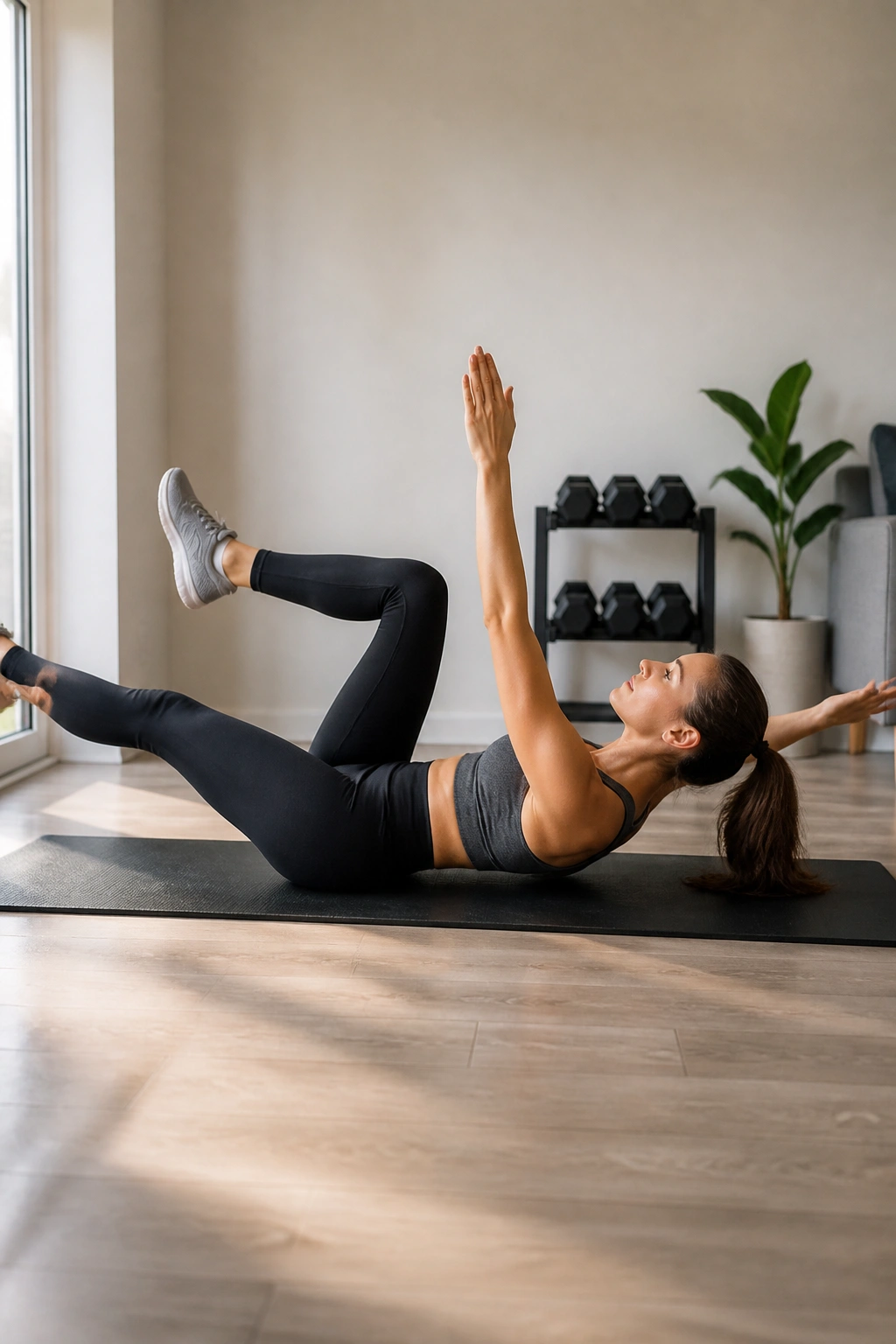
Do not let the name fool you. This exercise looks simple, but it is brutal when done with proper tension. It is arguably the safest and most effective move for learning how to dissociate your limb movement from your core stability.
The Setup
Lie on your back with your arms extended toward the ceiling and your legs in the air, knees bent at 90 degrees. This is your “dead bug” starting position. Your lower back must be pressed firmly into the floor.
The Movement
Lower your right arm behind your head while simultaneously extending your left leg straight out. Keep both limbs hovering just an inch above the floor. Pause for a second, then return to the start. Switch sides: left arm back, right leg out.
Why It’s Superior
Most core exercises emphasize flexion (bending forward). The dead bug emphasizes anti-extension. It teaches you to keep your spine neutral while your limbs move away from your center, which is the exact skill you need to prevent back injuries in daily life. If your back arches even a little during this move, stop and reset.
7. Bird-Dog
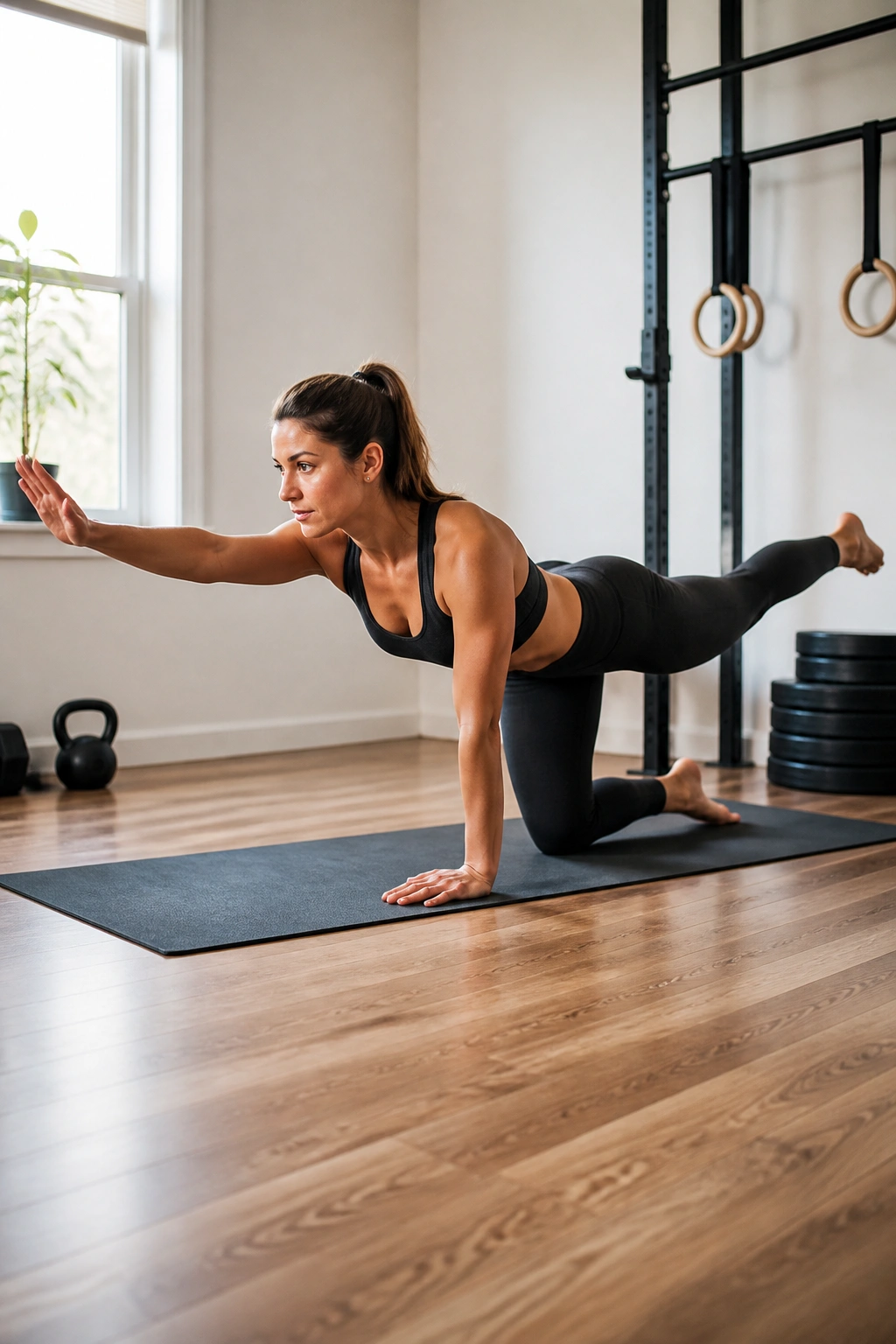
The bird-dog is a foundational move for spinal health. It requires you to maintain balance on a small base of support while extending opposite limbs. It targets the core, the glutes, and the back stabilizers all at once.
How to Perform It
Start on all fours, hands under shoulders and knees under hips. Keep your back flat—imagine there is a glass of water on your lower back that you cannot spill. Extend your right arm forward and your left leg backward at the same time. Hold for a count of two, squeezing your glute at the top. Return to center and switch.
Key Principles
- Do not rotate your hips when you extend your leg. Keep them square to the floor.
- Avoid hyper-extending your lower back. The goal is a straight line, not an arch.
- Move slowly. The balance component is what creates the core engagement.
8. Boat Pose
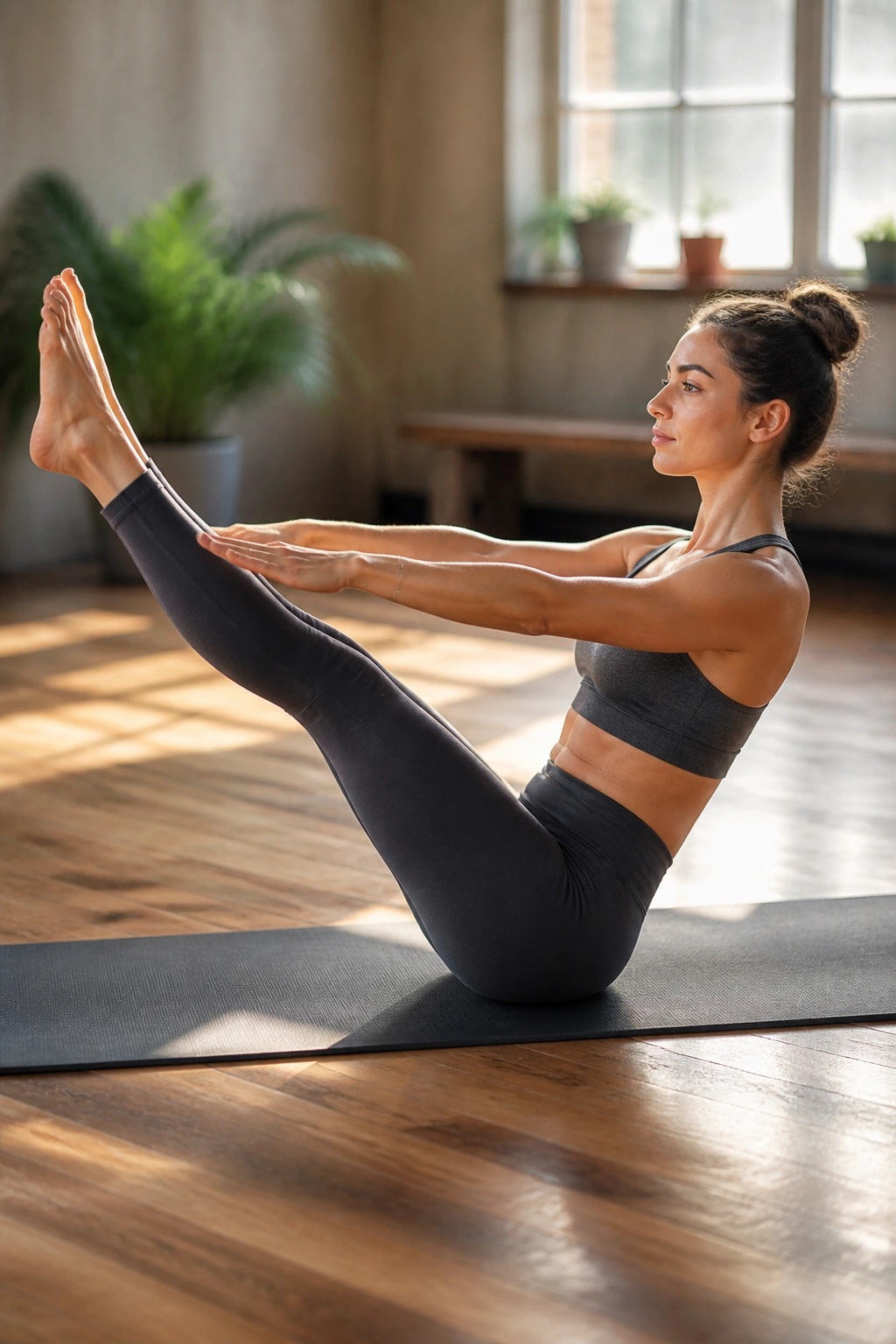
Borrowed from yoga, the boat pose is an isometric hold that targets the deep core and hip flexors. It is essentially a V-sit, held for time.
Holding the Shape
Sit on the floor. Lean back slightly, lifting your legs until they form a 45-degree angle with the floor. Extend your arms forward, parallel to the ground. Your body should form a “V” shape.
Refinements
- If your back rounds, you need to modify. Keep your knees bent (in “half boat”) until you gain the strength to hold the full position without compromising your spine.
- Focus on your breathing. Many people hold their breath during difficult holds, but that prevents your core from fully engaging.
- Keep your chest lifted. If you collapse forward, the focus shifts away from the abdominals.
9. Flutter Kicks
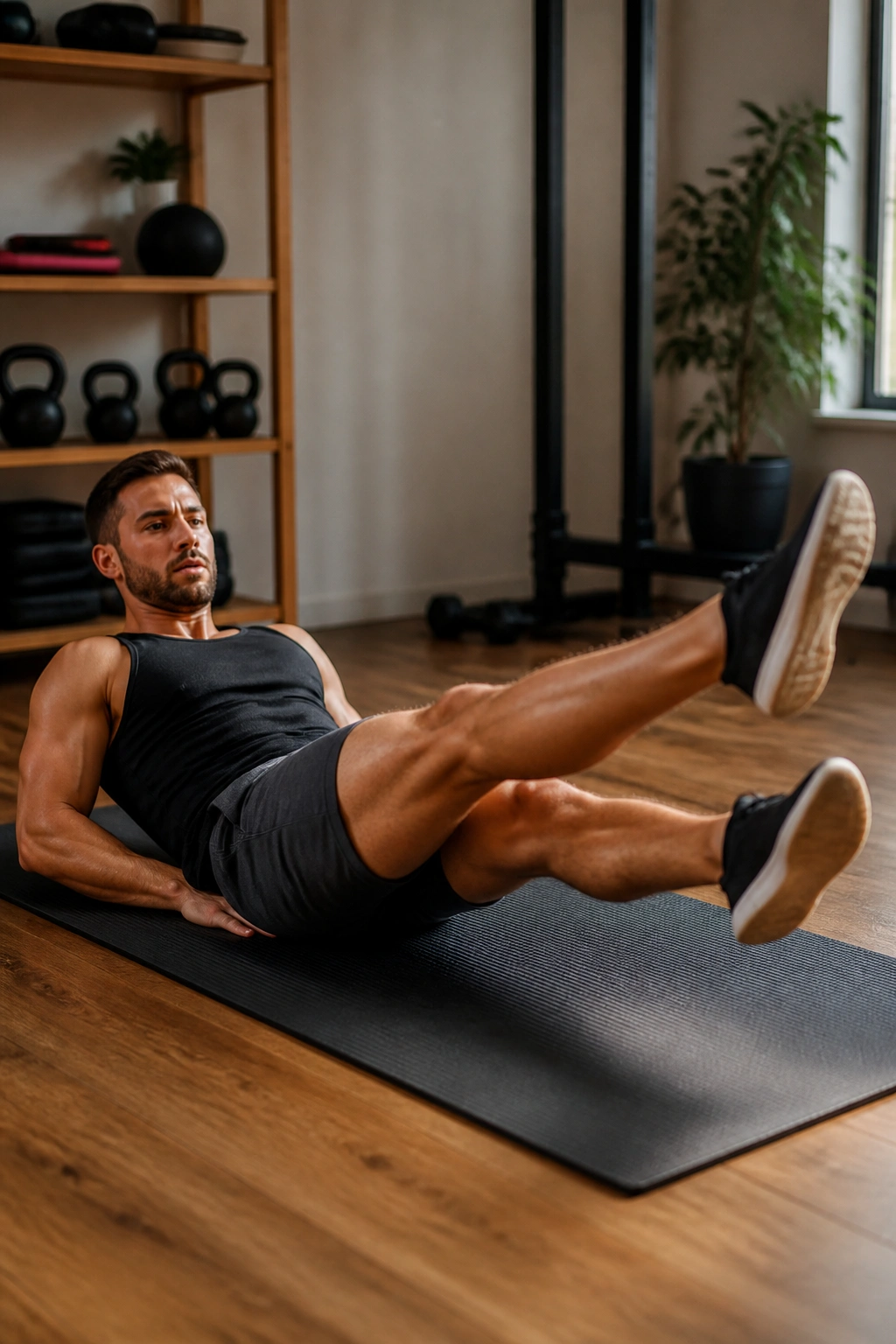
Flutter kicks are designed to challenge the endurance of your lower abdominal wall. They are notoriously difficult because they require you to maintain stability while your legs generate constant, small movements.
Mastering the Technique
Lie on your back, hands under your glutes for support. Lift your legs about six inches off the floor. Alternately kick your legs up and down in a small, rapid motion. The key is to keep the range of motion small—do not kick your legs high into the air.
The “Back Flat” Rule
Just like with leg raises, the moment your lower back leaves the mat, the exercise becomes ineffective and potentially harmful. If your back arches, kick higher. As you get stronger, you can gradually lower your legs closer to the floor.
10. Renegade Rows
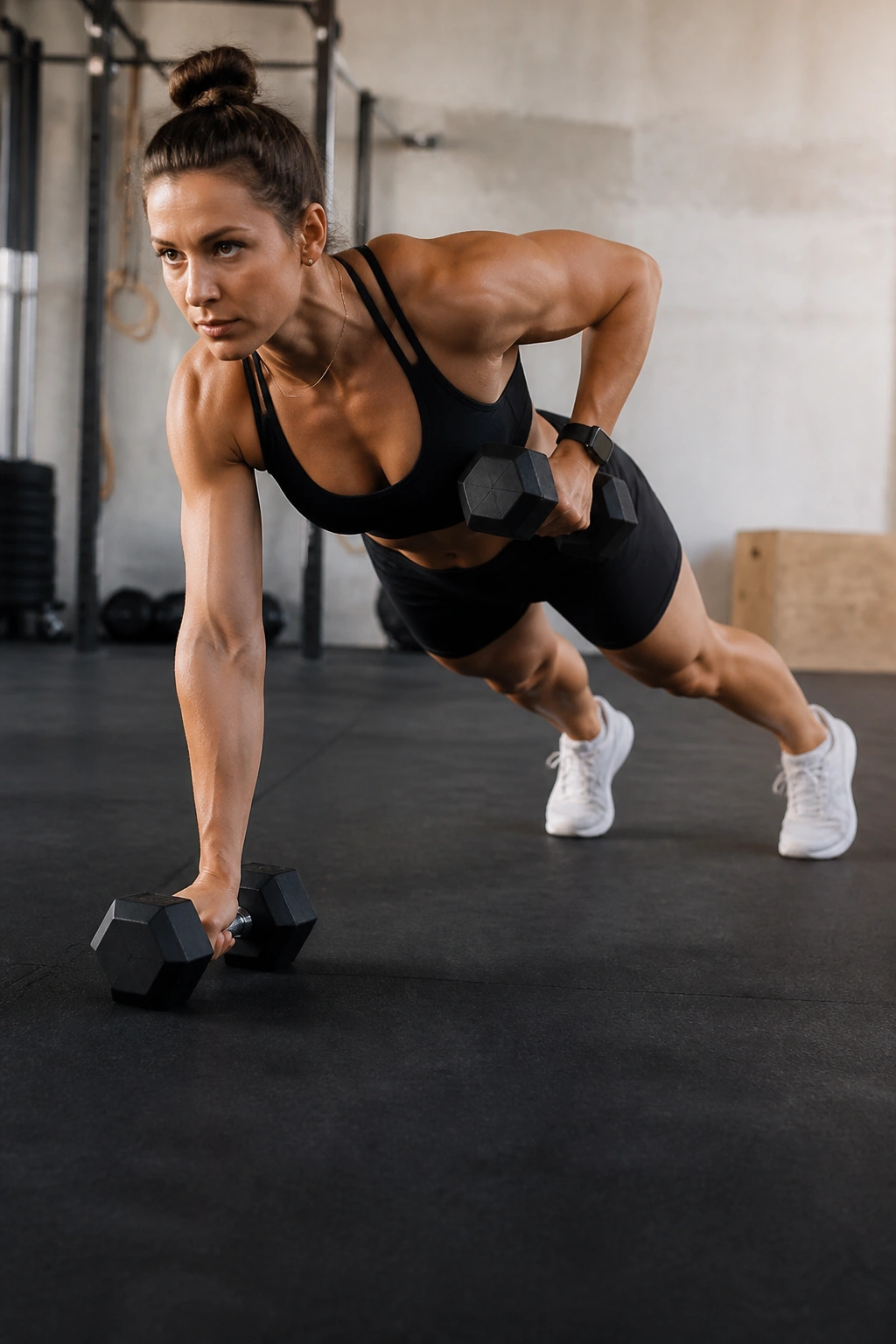
This is a full-body move that uses a plank position to build anti-rotational core strength. It is more advanced than a standard floor exercise because it involves external weight.
The Setup
Place two dumbbells on the floor, shoulder-width apart. Assume a high plank position, gripping the handles of the dumbbells. Keep your feet wider than shoulder-width to provide a stable base of support.
The Action
Brace your core tightly. Row the right dumbbell up toward your hip, keeping your elbow tucked close to your body. Return it to the floor. Repeat on the left side.
Why This Is Effective
The urge for your torso to rotate when you lift the weight is extreme. Your entire midsection must fire to resist that rotation. This is the definition of “functional” core training. Use a weight that is challenging but allows you to maintain a perfectly flat back throughout the set.
11. Hanging Leg Raises
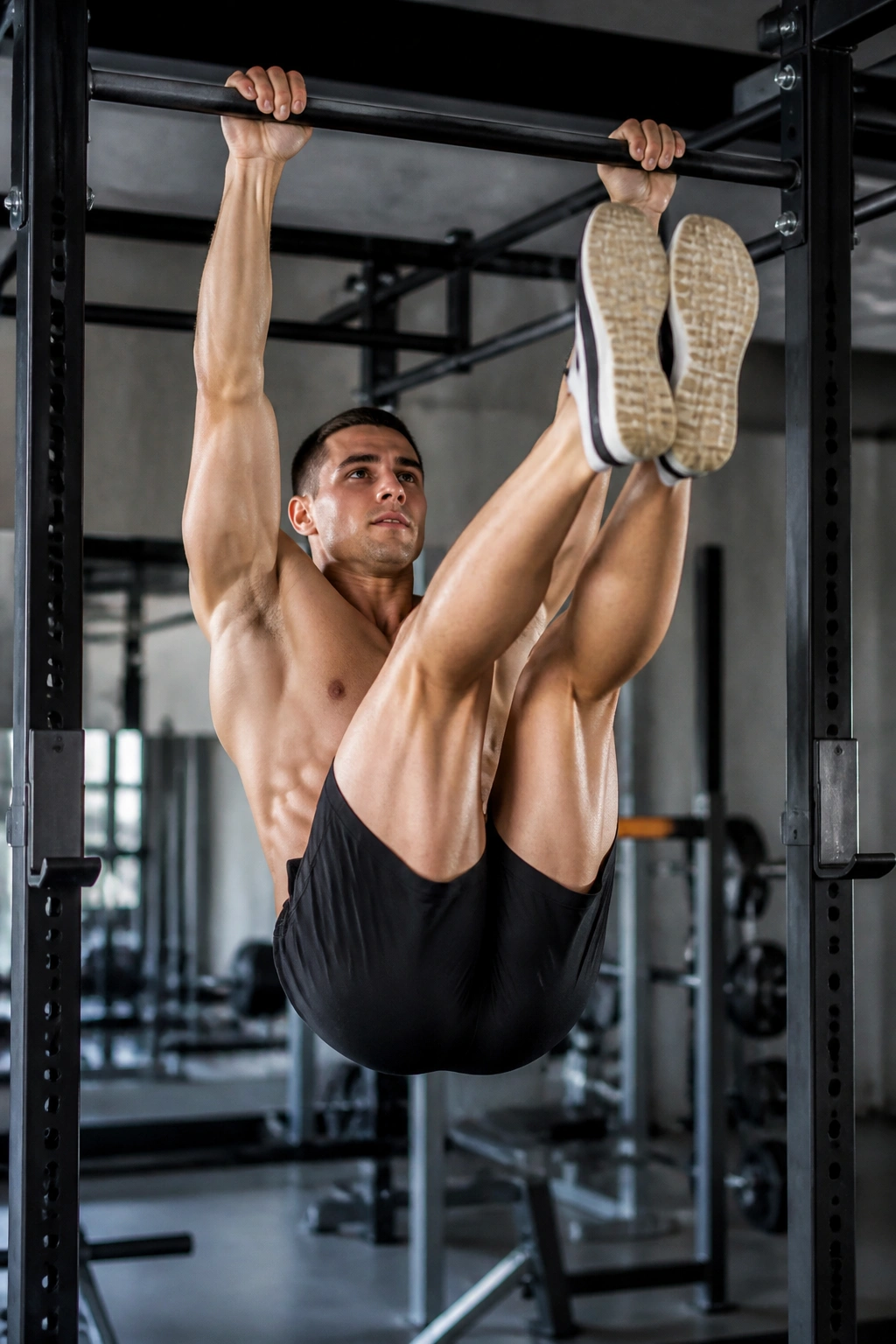
Once you have mastered floor-based leg raises, you may want to progress to the hanging version. This move adds a significant challenge: grip strength and the inability to use the floor for stability.
Execution
Hang from a pull-up bar with an overhand grip. Engage your shoulders—do not let them shrug up to your ears. With your legs straight (or knees bent if needed), lift your feet up toward the bar. Control the descent.
The “No-Swing” Rule
The biggest mistake people make is swinging their body like a pendulum. That is momentum, not muscle work. If you find yourself swinging, stop. Reset. Perform one rep with perfect control. It is better to do three perfect reps than ten swinging reps. This move puts your core under intense tension because it has to fight gravity from a vertical position.
12. Bear Crawls
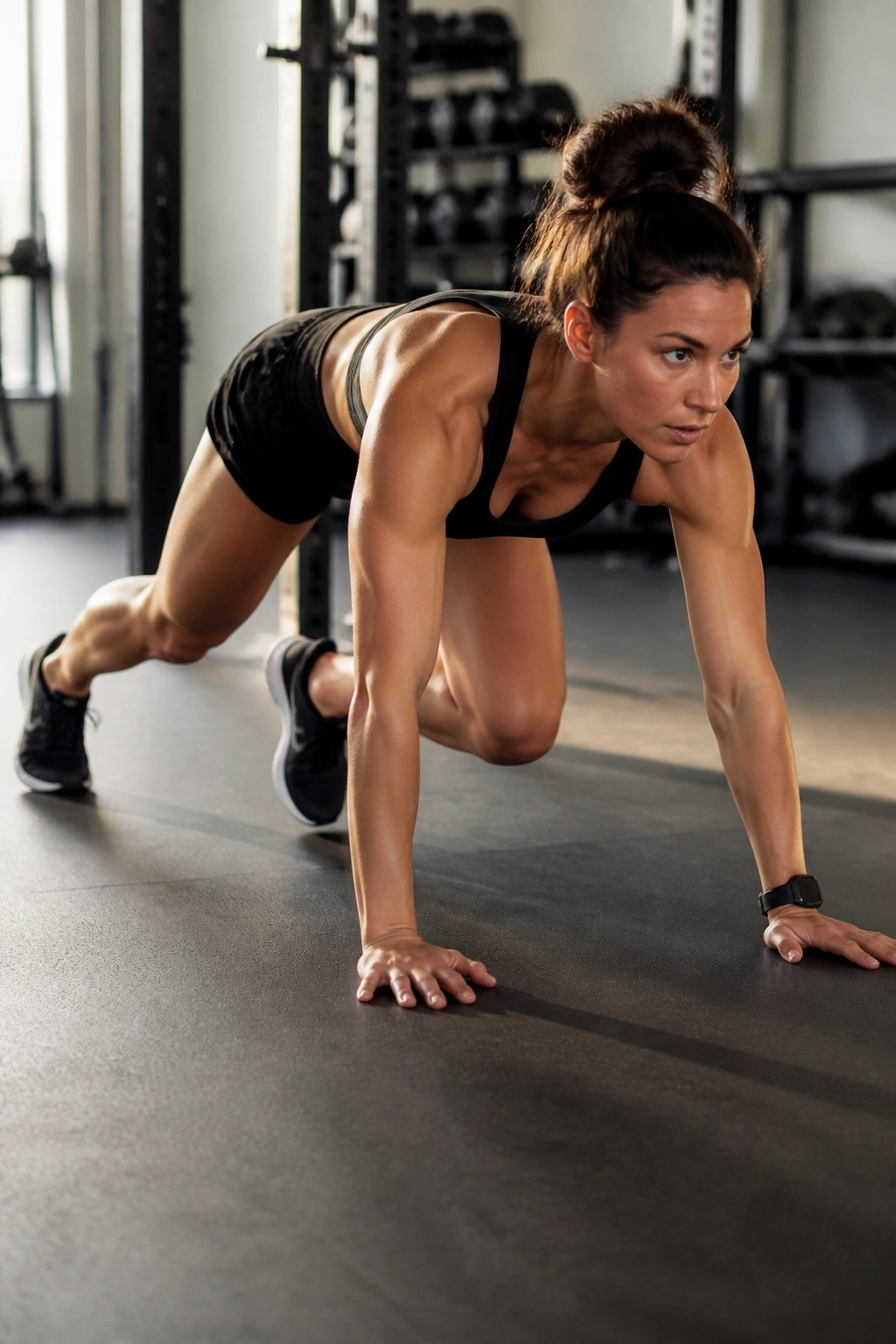
Bear crawls are an excellent way to integrate core training with movement. This exercise forces your body to maintain a stable, flat torso while your limbs are moving in a cross-body pattern.
How to Crawl
Get onto all fours, but hover your knees two inches off the ground. Crawl forward by moving the opposite hand and opposite leg at the same time—right hand and left leg, then left hand and right leg. Keep your back flat and your hips low.
Why It Works
It sounds easy until you try it for 30 seconds. The stabilization required to keep your spine from swaying side-to-side while you crawl is immense. You will feel this in your abs almost immediately.
13. Side Plank
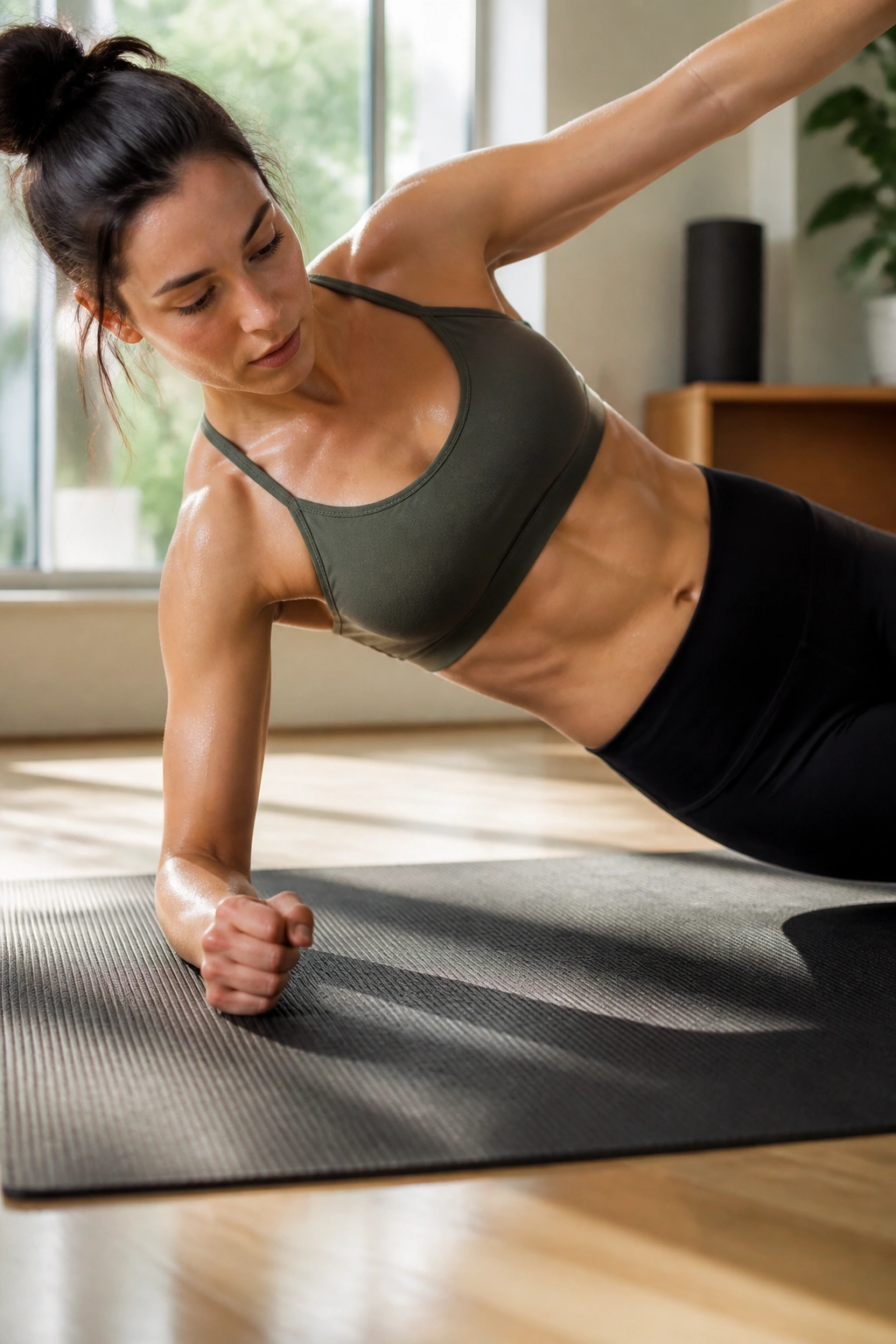
Most people neglect the obliques, focusing only on the “six-pack” front muscles. The side plank is arguably the best move for targeting the lateral chain of the core.
Setting Up
Lie on your side. Stack your feet on top of each other and prop yourself up on your bottom forearm. Lift your hips until your body forms a straight line from heels to head.
Key Nuances
- Do not let your hips sink toward the floor.
- Keep your chest square; do not rotate your torso toward the ceiling.
- Reach your top hand toward the ceiling to add a balance challenge, or place it on your hip if you are a beginner.
Pro Tip: If you want to increase the difficulty, perform “side plank dips.” Lower your hip just an inch toward the floor, then drive it back up using your obliques. This turns a static hold into a dynamic strengthening movement.
14. V-Ups
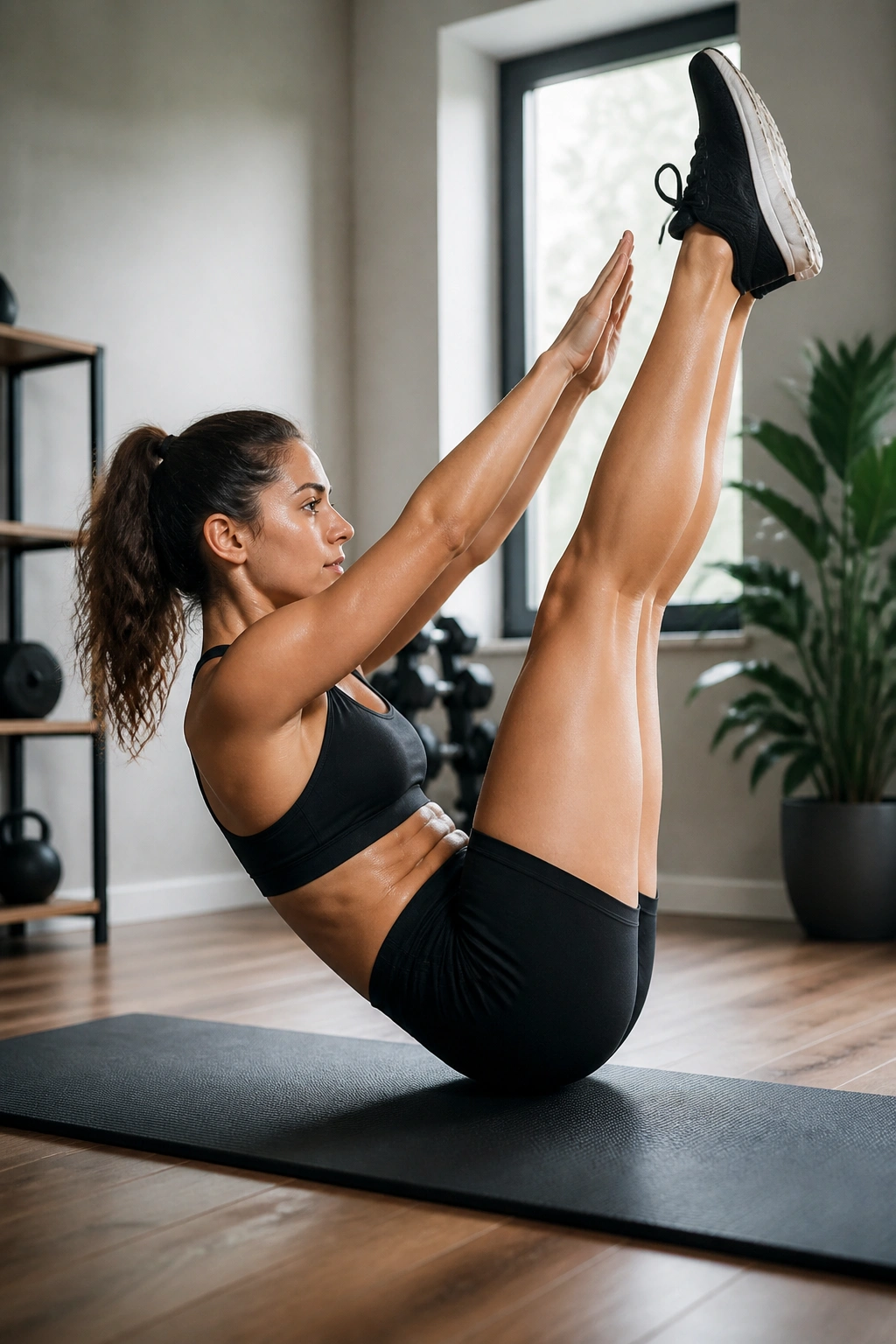
The V-up is an explosive core movement that requires significant flexibility and strength. It targets the upper and lower abs simultaneously.
The Motion
Lie flat on your back, arms extended behind your head. In one fluid motion, lift your legs and torso off the floor, meeting in the middle like a closing book. Your hands should reach for your toes. Return to the floor with control—do not just drop.
Safety First
If this feels too difficult, start with “tuck-ups” where you bring your knees to your chest instead of keeping your legs straight. The straight-leg version creates a longer lever, which makes the exercise significantly harder for your abdominals to manage.
15. Kettlebell Swings
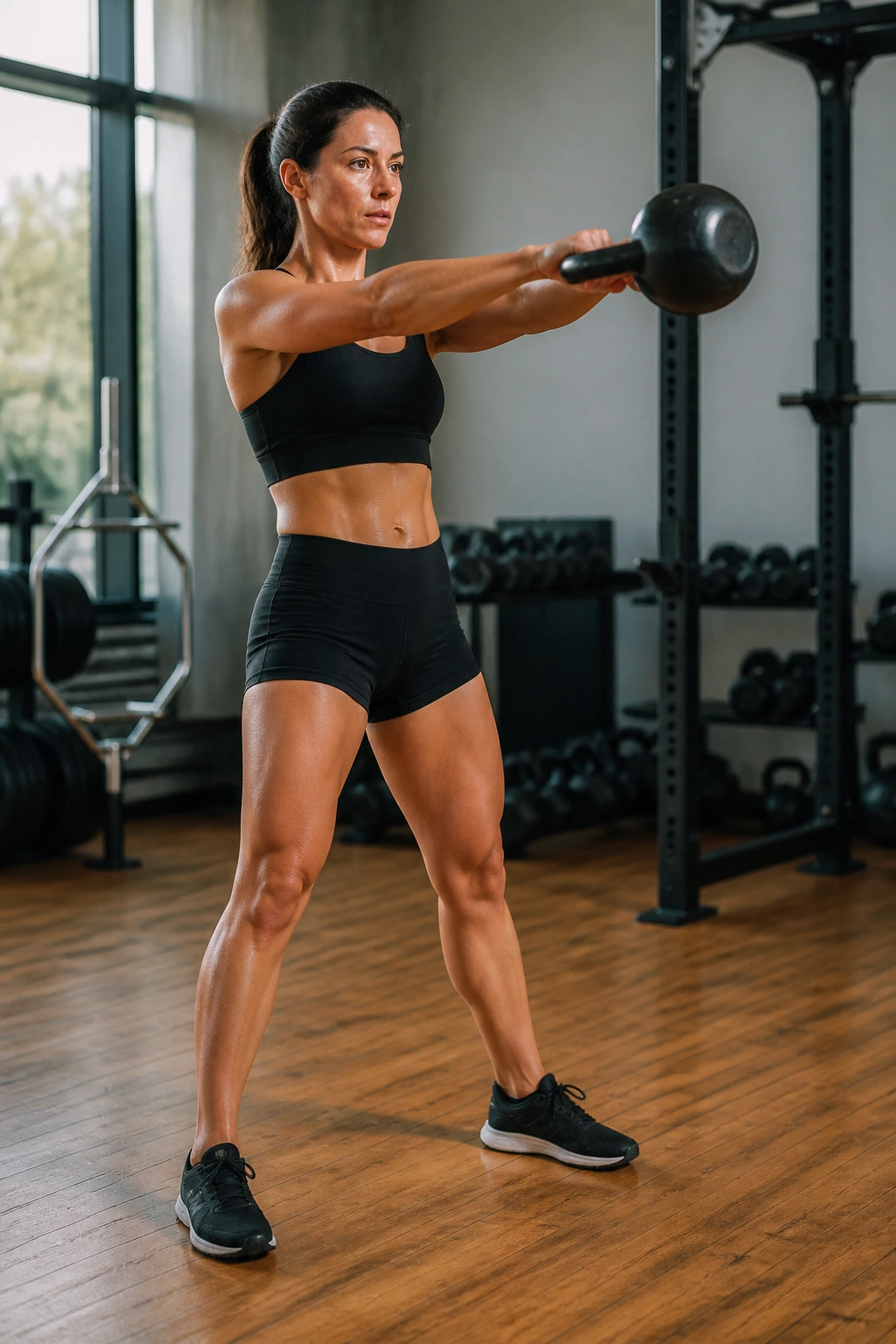
While often categorized as a posterior chain (glute and hamstring) exercise, the kettlebell swing is an incredible core stability move. You are bracing your core to stop the momentum of a heavy weight, which requires intense abdominal engagement.
The Mechanics
Stand with feet wider than shoulder-width. Hinge at the hips, grabbing the kettlebell handle. Hike the bell between your legs like a center in football, then explode your hips forward to swing the bell to chest height.
The Core Connection
Your abs are what stop the swing at the top. They have to contract forcefully to prevent your back from hyperextending as the bell reaches the peak of the arc. It is a violent, explosive movement that builds a very strong, dense midsection. Never use your arms to lift the weight; the power must come entirely from your glutes and core snap.
The Reality of Achieving a Flat Stomach

You can do every one of these exercises perfectly, five days a week, and still not see the results you want if your nutrition is not aligned. This is the part that many people want to skip, but it is the truth. A flat stomach is predominantly a result of body composition—specifically, having a low enough percentage of body fat to show the muscles you have built.
There is no “toning” food or “ab-specific” diet. You simply need to maintain a slight caloric deficit, prioritize protein to support muscle growth, and stay hydrated. Consistency with these workouts will build the shape of your abs, but consistency with your nutrition will determine the visibility of them. Do not fall for the trap of thinking that training is the only variable. It is a partnership: you train to build the strength, you eat to reveal it.
Sleep and stress management also play a larger role than most people admit. High levels of the stress hormone cortisol have been linked to an increase in abdominal fat storage. If you are training hard but not sleeping, or if your stress is chronically high, your body will fight to hold onto that fat. Treat your recovery with as much discipline as you treat your training sessions.
Final Thoughts
Building a strong, functional midsection is a marathon, not a sprint. It does not happen because of one “secret” exercise or a specific type of crunch. It happens because you consistently challenge your muscles through these movements, you progressively increase the difficulty, and you maintain a lifestyle that supports your goals.
Do not worry about hitting all 15 of these exercises in a single day. Pick three or four that you enjoy and can perform with perfect form, and build them into your routine. Focus on the quality of your movement, the tension in your muscles, and the mind-muscle connection. Your core is capable of incredible strength—give it the work it needs, and it will respond.
