



Belly fat is stubborn, and kettlebells are one of the few tools that make fat-loss work feel honest.
No, a kettlebell will not melt fat from one spot on your stomach. That part is fantasy. What it can do is drive your heart rate up, force your biggest muscles to do real work, and keep your core braced hard enough that your midsection has to earn its way through every rep.
That’s why kettlebell exercises for belly fat loss make sense when the goal is a smaller waist, better conditioning, and a body that holds onto muscle while body fat comes down. Swings, squats, carries, presses, and get-ups all ask for force, control, and timing. Done with short rest and enough load to matter, they burn a lot more energy than the usual lazy “toning” work people waste time on.
The useful moves are the ones that make your hips snap, your grip tighten, and your breathing turn loud. Start there.
1. Two-Hand Kettlebell Swing
The two-hand swing is the move most people should learn first, and the reason is simple: it gives you a huge training return without needing a lot of space or equipment. Your hips do the work, not your arms. That matters, because a proper swing loads the glutes, hamstrings, and trunk while keeping the heart rate climbing fast.
Why It Hits So Hard
A swing is a hinge, not a squat. You push your hips back, snap them forward, and let the bell float to chest height from momentum, not a front raise with fancy branding. When people do it right, their breathing gets sharp in a hurry.
- Use a bell you can control for 10 to 20 crisp reps.
- Keep your arms relaxed; they act like ropes.
- Stop the set when your back starts doing the work.
Best cue: imagine you are trying to throw the kettlebell forward with your hips, then catch it on the way down.
The swing works well in fat-loss sessions because you can repeat it in dense intervals. Ten swings every minute for 10 minutes is a classic setup, and it still works because it forces you to move with intent and recover quickly. If your swing feels like a front squat with a kettlebell held out in front, you’ve already gone off track.
2. Goblet Squat
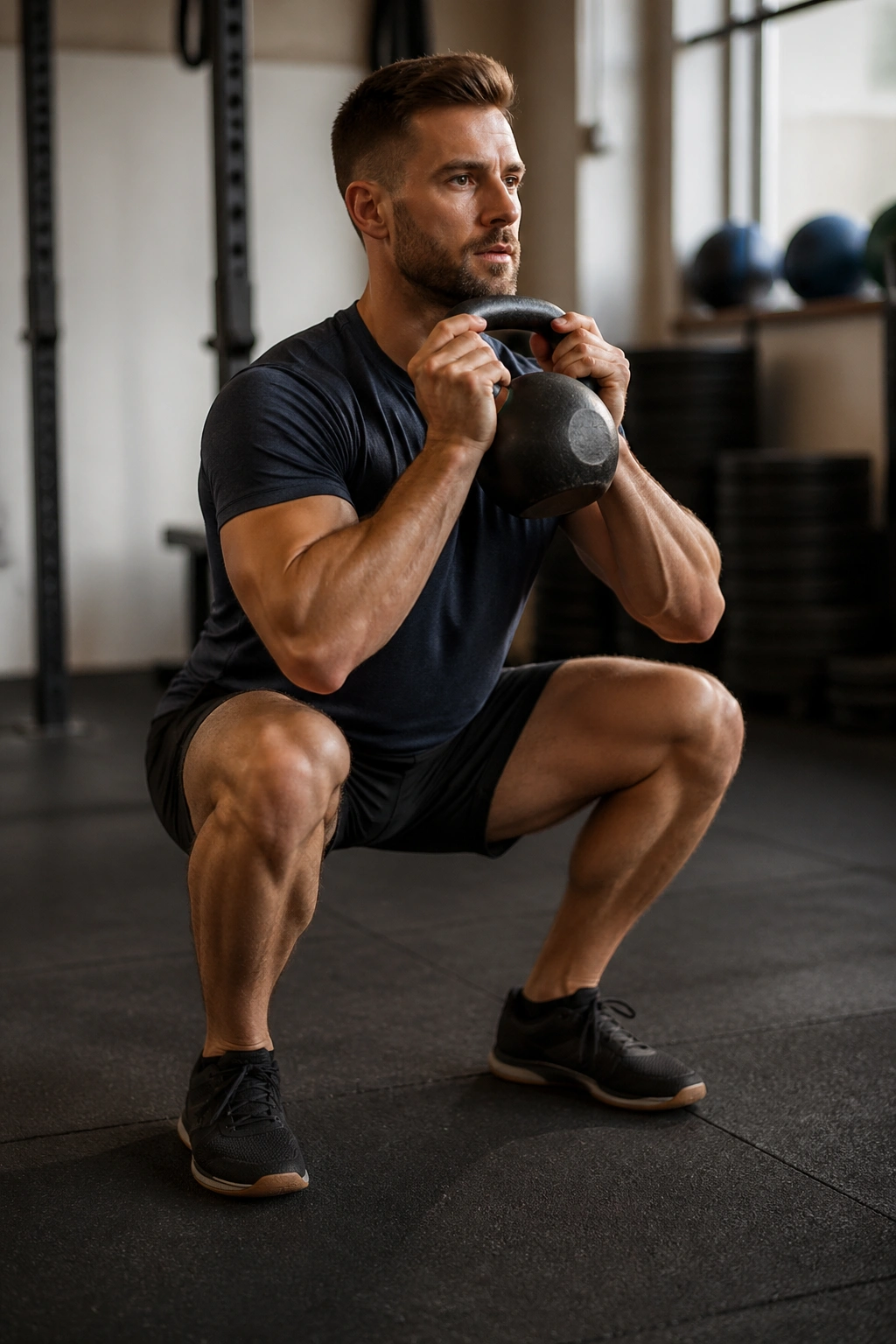
A heavy goblet squat does more for waistline work than a thousand lazy crunches ever will. That sounds blunt because it is. The goblet squat loads your legs, forces your trunk to brace, and makes you stay upright while your knees and hips bend together.
You hold the kettlebell at chest height, elbows tucked down, and sink between your legs. The front-loaded position means your abs and upper back have to work to keep you from folding forward. That’s the part many people miss. The squat looks simple, but the whole torso is on duty.
How to Make It Count
Try 3 to 5 sets of 8 to 12 reps, resting 45 to 75 seconds between sets. The reps should feel clean and deliberate, not rushed. If your heels lift, your stance is probably too narrow or the bell is too heavy for your current mobility.
A good goblet squat should leave your thighs hot and your midsection braced. You want to feel your feet planted, your knees tracking in line with your toes, and your ribs staying stacked over your pelvis. No flaring, no collapsing.
The nice thing here is that the goblet squat pairs beautifully with swings in a short circuit. One movement hammers the hinge. The other owns the squat pattern. Together, they cover a lot of ground fast.
3. Clean and Press
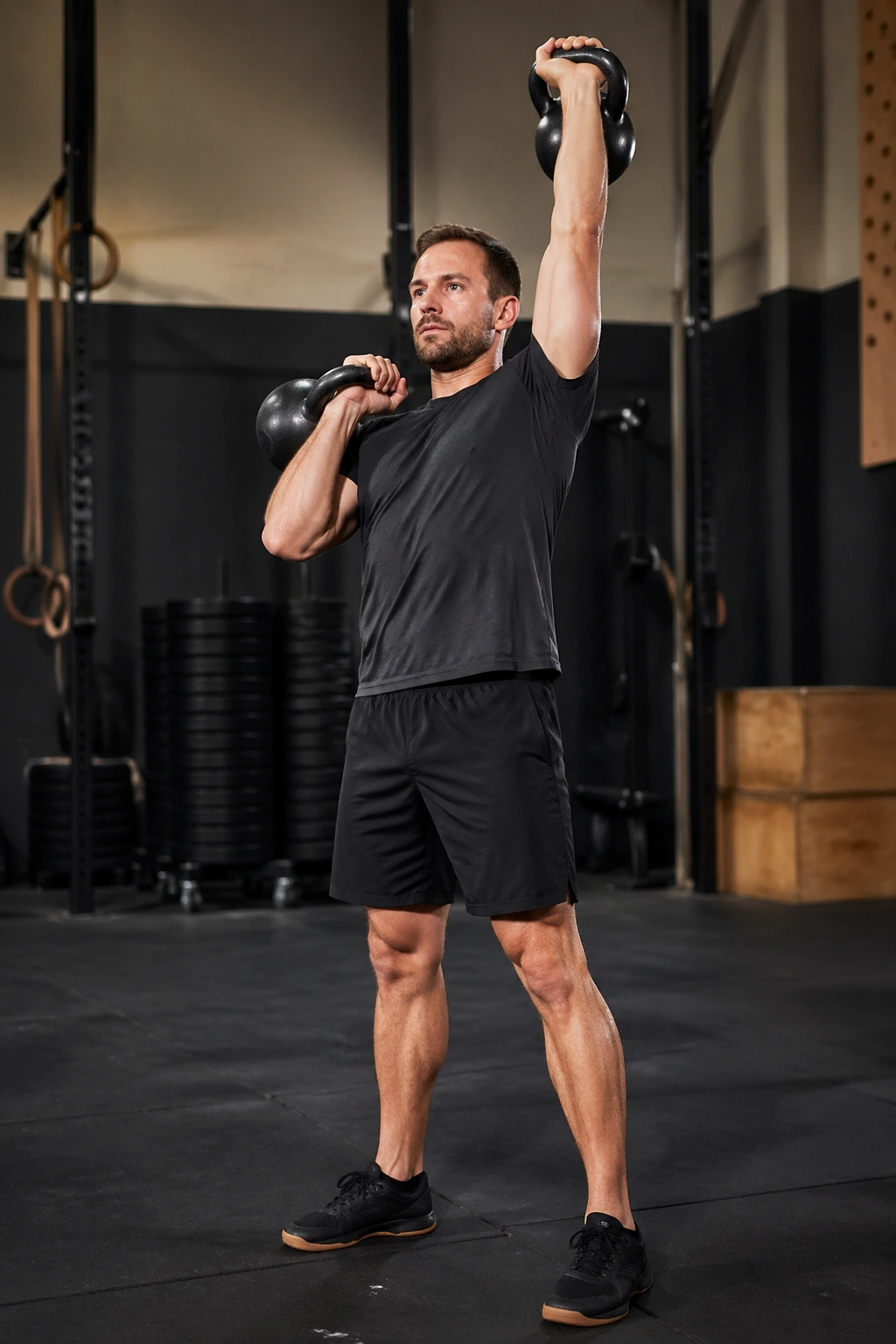
Why pair a clean with a press? Because one rep turns into a full-body event. The clean brings the bell from the floor or hang position into the rack, then the press finishes overhead with shoulders, core, and glutes all locked in.
A clean and press is not just a shoulder move. It asks for timing, grip strength, trunk control, and a decent amount of power from the hips. That makes it useful for fat-loss training, where you want more muscles involved and less wasted motion.
How to Use It
Start with 3 to 6 reps per side, then rest long enough to keep the reps sharp. If the bell crashes into your forearm or the press turns into a backbend, the load is too much or the technique is sloppy. Keep the wrist neutral in the rack and tighten your stomach before the press begins.
The clean should land softly in the rack position, not slam into your arm. The press should go straight up, with the biceps finishing near your ear and the ribs staying down. People love to turn this into a standing lean-back contest. Don’t.
A strong clean and press carries over into better posture, better upper-body endurance, and better conditioning. It also has a nasty habit of making you breathe hard even when the rep count is low. That’s a good sign. It means the exercise is doing its job.
4. Reverse Lunge
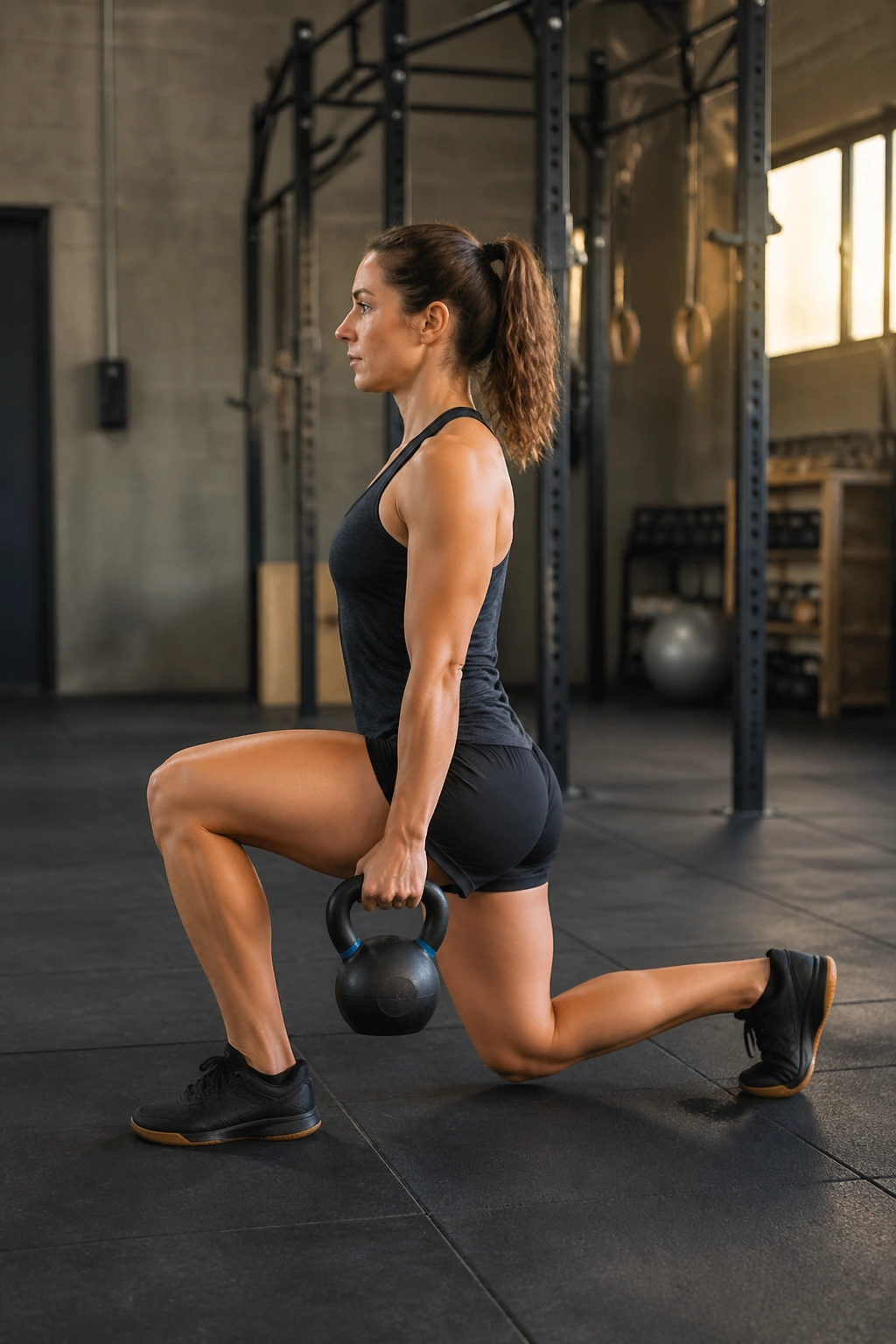
If your knees wobble, your balance feels shaky, or your hips get tight after sitting too long, the reverse lunge is a smart place to put your money. It is less jarring than the forward lunge and easier to control, which makes it friendlier for steady fat-loss work.
You can hold the kettlebell in the goblet position, at your side like a suitcase, or in a front rack. I like the suitcase version for beginners because it exposes side-to-side wobble fast. If one side of your body cheats, the bell tells on you.
What to Watch For
- Step back far enough that your front shin stays close to vertical.
- Keep your chest tall.
- Push through the front foot to stand.
The reverse lunge builds single-leg strength and asks your core to stop your torso from tipping. That anti-rotation work matters more than people think. A midsection that has to resist twisting under load is doing something useful, even if it doesn’t look flashy in a mirror.
Do not rush the descent. A slow lower with clean balance will train you better than sloppy reps done for speed. If you want a fat-loss angle, pair alternating reverse lunges with swings or carries and keep the rest short enough to stay warm.
5. Kettlebell Snatch
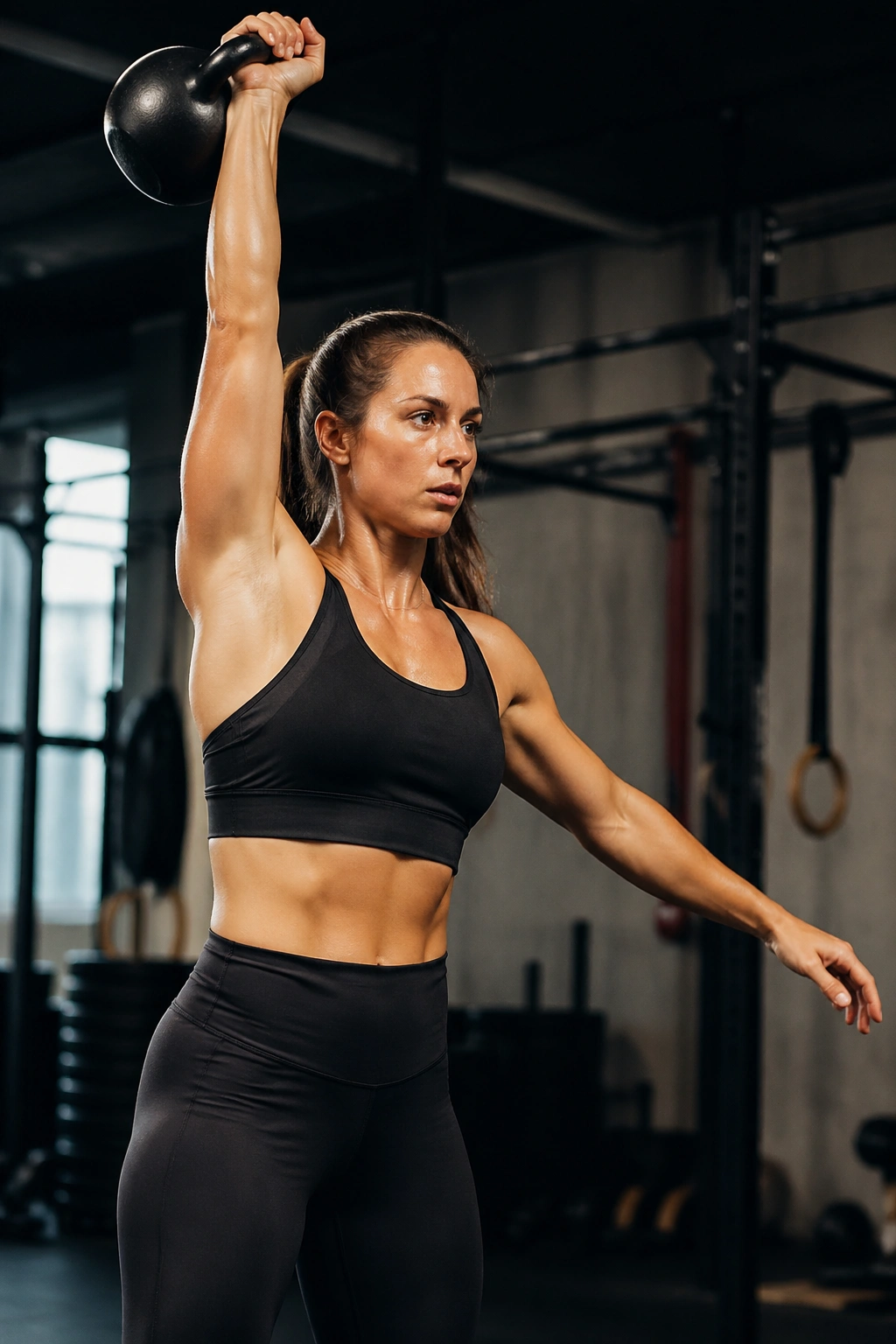
The kettlebell snatch is the most athletic move on this list, and it earns that spot. It sends the bell from swing to overhead in one powerful arc, which makes it a serious conditioning drill when your technique is ready.
This is not the exercise to force on day one. The hand has to rotate cleanly around the bell so it does not slap your forearm, and the bell should travel close to the body instead of looping out in front like a wild pendulum. When it works, it feels smooth and fast. When it doesn’t, your forearm reminds you for a while.
The Science Behind It
The snatch uses the hips, back, shoulders, grip, and trunk in one chain. That means more total work in less time, which is exactly why it fits fat-loss training so well. You are not just lifting; you are accelerating, controlling, and stabilizing over and over.
A practical way to train it is 5 reps per side for several rounds, or short intervals of 15 to 20 seconds with enough rest to keep the bell path clean. If the lockout overhead gets messy, strip the weight down and earn the speed back later.
The best snatch sessions feel hard without feeling chaotic. That distinction matters. Chaotic training is sloppy. Hard training is controlled, repeatable, and a little humbling.
6. Kettlebell Deadlift
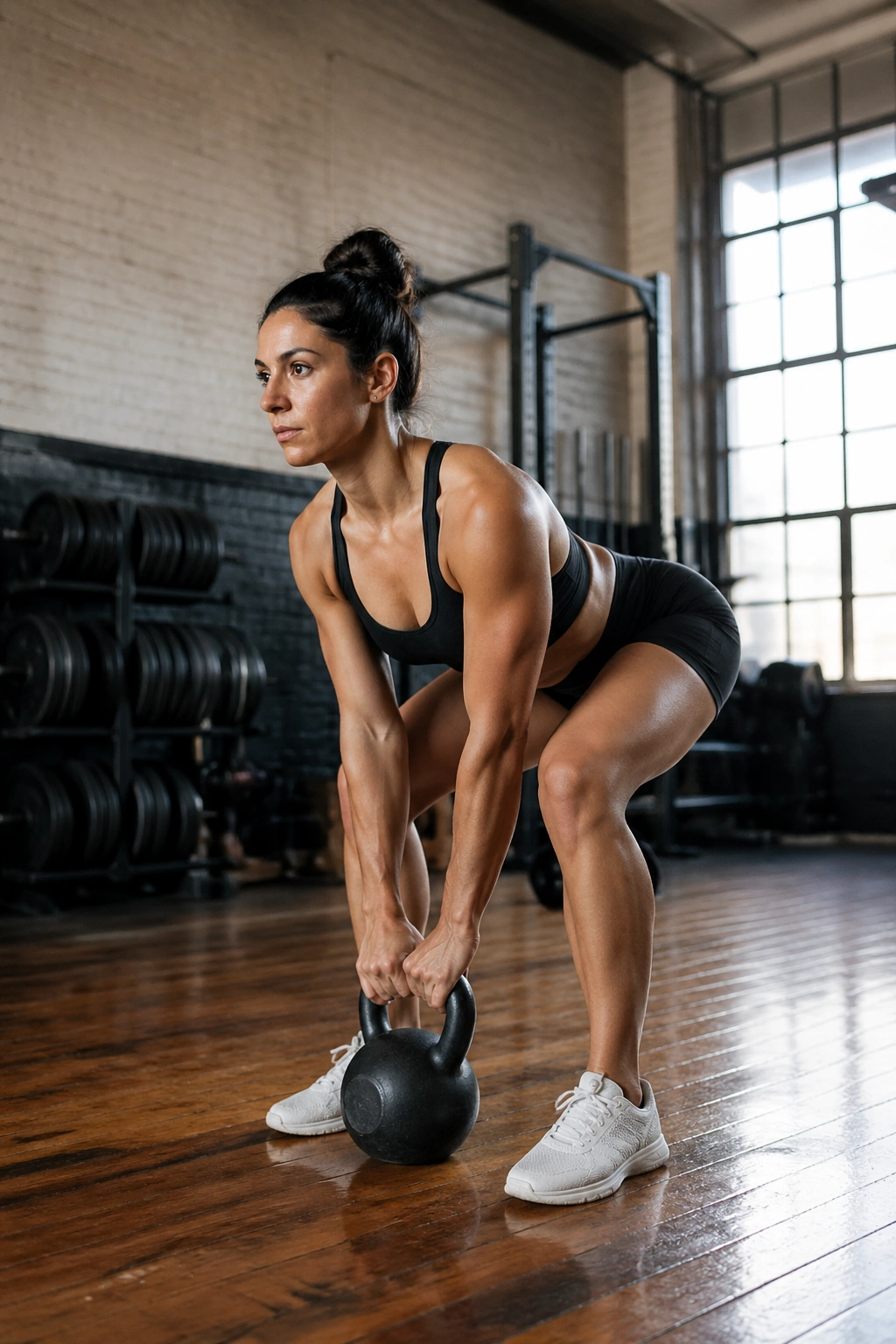
Compared with the swing, the kettlebell deadlift is the calmer cousin, and that’s a feature, not a flaw. It teaches the hinge without the speed. If your back rounds during swings or your hamstrings are still figuring out what to do, the deadlift gives you a cleaner starting point.
You set the bell between your feet, brace, push the hips back, and stand by driving the floor away. Simple. But not easy enough to get lazy about. The deadlift builds the same posterior chain muscles that make swings powerful: glutes, hamstrings, spinal erectors, and the deep trunk stabilizers that keep you upright.
Who It’s Best For
- Beginners learning the hip hinge.
- Lifter who wants heavier loading with less speed.
- Anyone who needs a safer way to build strength before moving to swings or snatches.
The nice part is that you can load a deadlift more heavily than a swing in many cases, which makes it useful for building muscle and keeping training honest. A stronger back side helps with calorie burn because bigger muscles cost more to maintain and train.
If you want a fat-loss circuit, use deadlifts early while your form is fresh. Then move into swings or squats for the heart-rate spike. That sequence makes more sense than starting with the most technical move while your grip is already fried.
7. Kettlebell Thruster
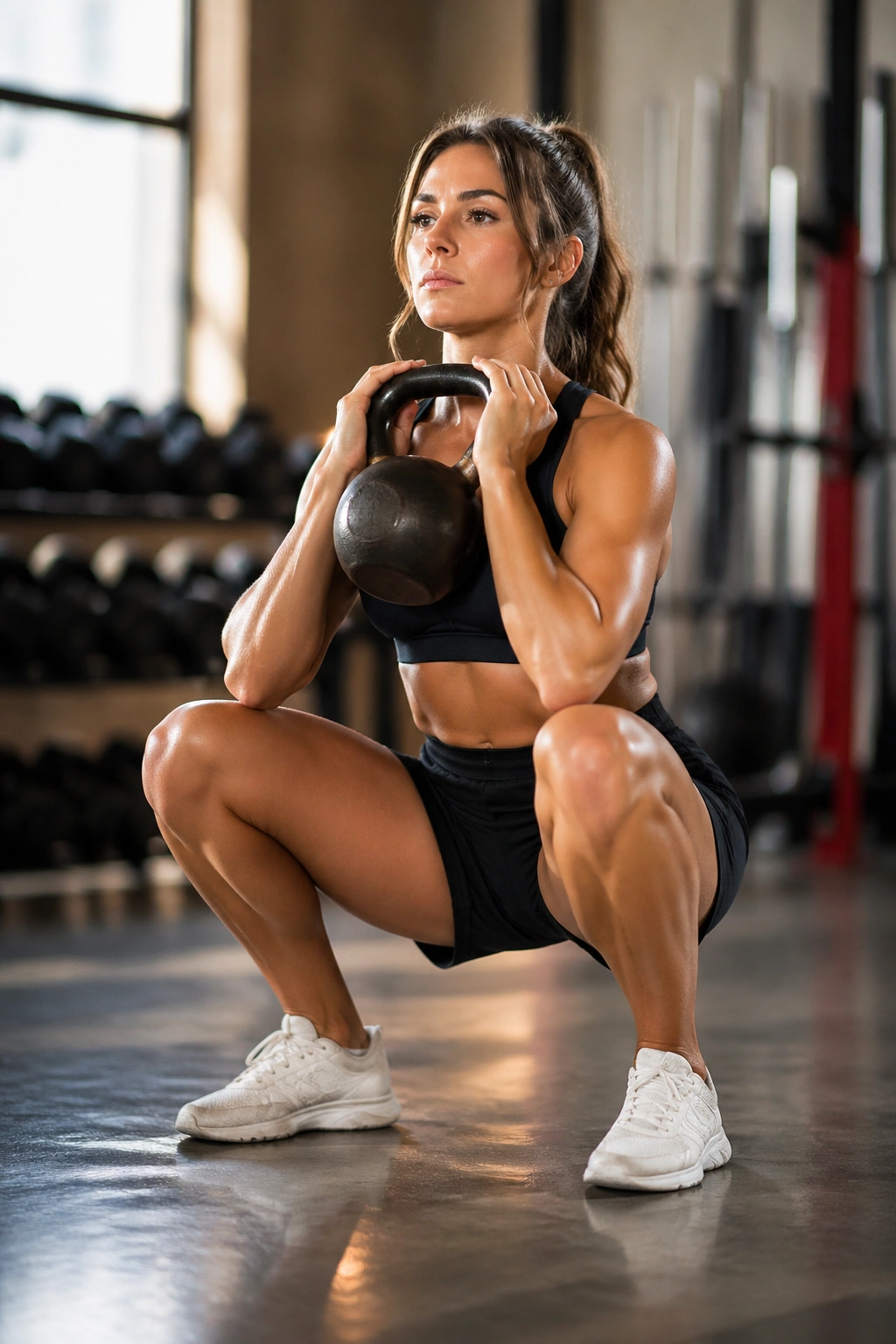
A thruster is a squat and press welded into one motion, and that alone should tell you why it earns a place here. It’s one of the fastest ways to make a light bell feel heavy. Legs drive the bell, shoulders finish it, and your core has to keep the whole thing from turning into a messy lean-back.
You dip into a front squat, stand hard, and use that upward drive to press overhead. The magic is in the link between the two phases. If you pause too long between squat and press, the move turns clunky. If you keep it smooth, it becomes a nasty conditioning tool.
Why It Burns So Fast
The thruster combines lower-body power with upper-body fatigue in the same rep. That means you get breathing stress and muscle stress at once, which is exactly what makes a short workout feel much longer than the clock says.
- Try 6 to 10 reps per side with one bell.
- Keep the elbows under the bell in the rack.
- Finish overhead with the ribs down, not flared.
This is one of those exercises that rewards rhythm. If your squat depth drops because the press is too hard, use a lighter bell and keep the pattern clean. A good thruster should leave your thighs burning and your shoulders warm, not your lower back irritated.
8. Renegade Row
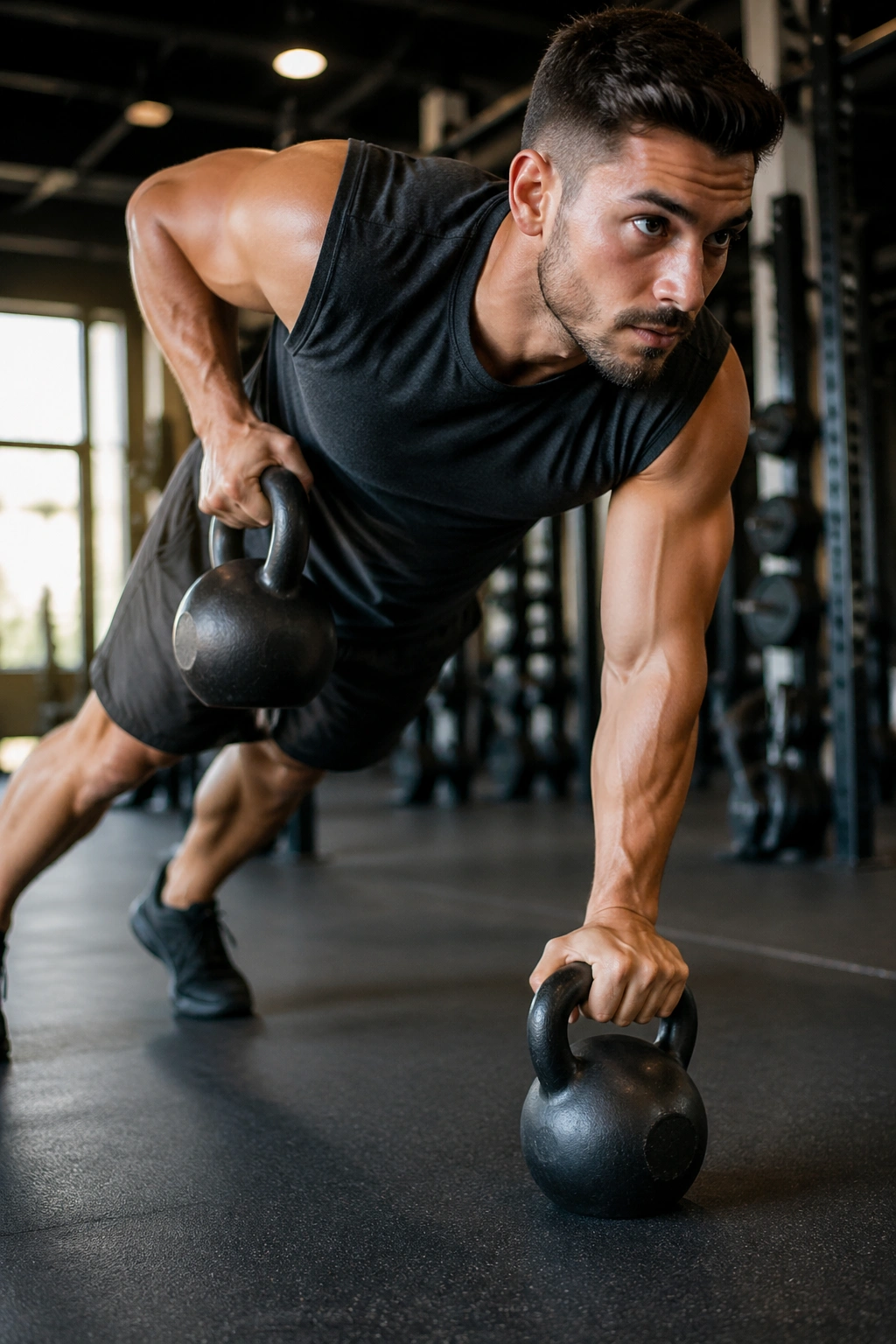
This is not a core exercise disguised as a back move. It is both. The renegade row forces your trunk to resist twisting while one arm pulls the bell toward your ribs, and that anti-rotation demand is a big part of why it works so well.
Set yourself in a strong plank position with your hands on the kettlebells, feet a bit wider than hip width. Row one bell at a time without letting your hips swing open. The temptation is to yank the weight fast. Don’t. Slow, controlled rows make the body work harder where it counts.
The row itself trains the upper back and lats, which help posture and support the shoulder girdle. The plank position keeps the abs, glutes, and even the inner thighs engaged. That is a lot of work for one movement.
A smart starting dose is 6 to 8 rows per side for 3 to 4 rounds. If the plank starts sagging or your shoulders crawl up toward your ears, shorten the set. Quality matters more here than brute force. There’s no prize for wobbling like a folding chair.
9. Farmer’s Carry
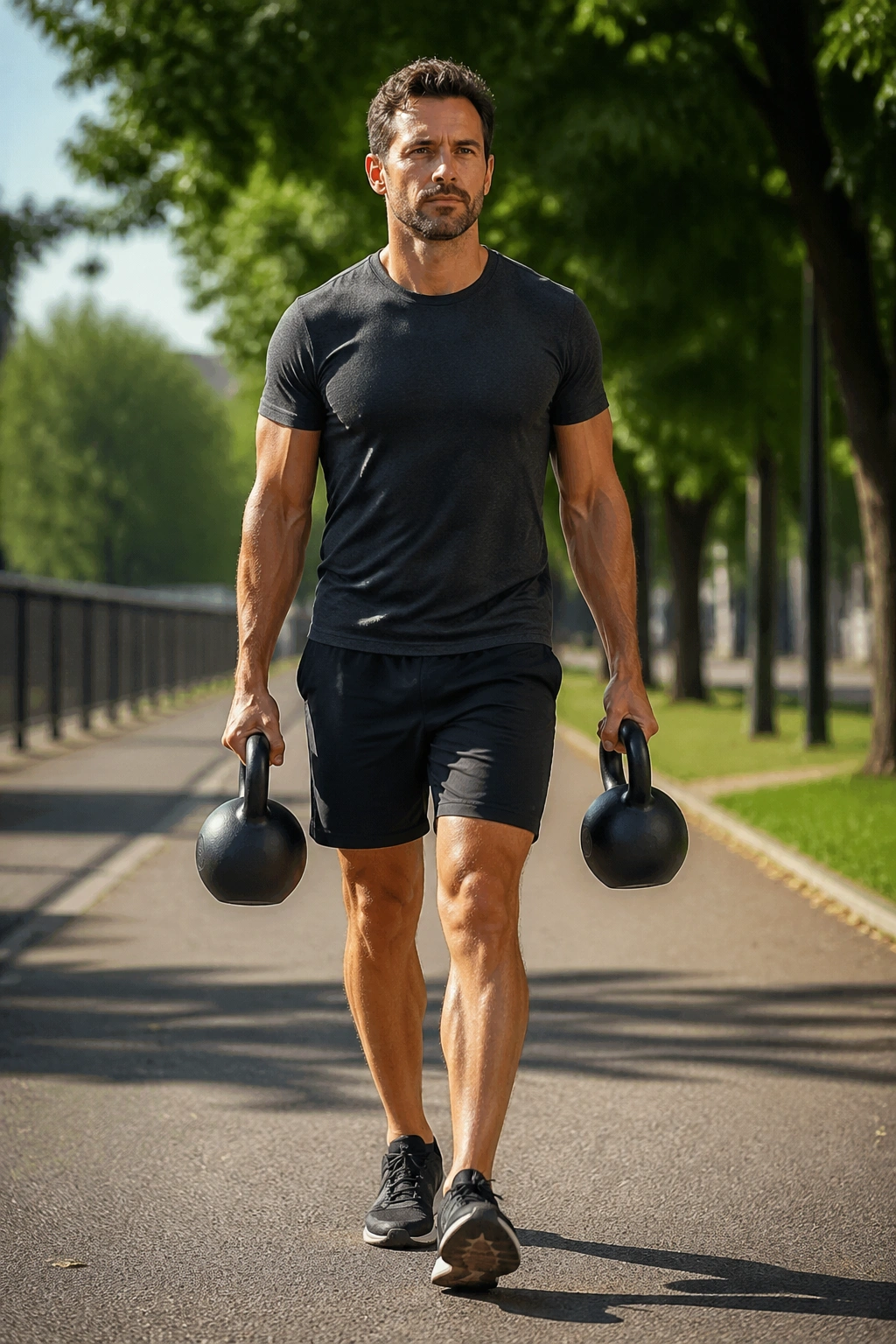
Why does walking with heavy bells belong in a fat-loss article? Because loaded carries are sneaky conditioning work. They train grip, posture, breathing, and trunk stiffness while asking your whole body to move with control. That combo is gold.
You can carry one bell suitcase-style or two bells at your sides. Walk tall, keep your ribs stacked over your pelvis, and don’t let the weight drag your shoulders down. The temptation is to lean away from the load or stare at your feet. Both usually make things worse.
How to Use It
- Walk 20 to 40 meters per set.
- Or carry for 30 to 60 seconds if space is limited.
- Rest long enough to keep posture solid on every round.
The carry is one of the best tools for training the body to stay braced under fatigue. It also exposes weak links fast. If your grip dies early, your midsection often follows. If one side feels much harder than the other, you’ve just learned something useful.
A suitcase carry is especially good because it challenges side bending, which many workouts ignore. That matters more than people think. A stable torso under load tends to look and feel better than endless twisting work with tiny weights.
10. Turkish Get-Up
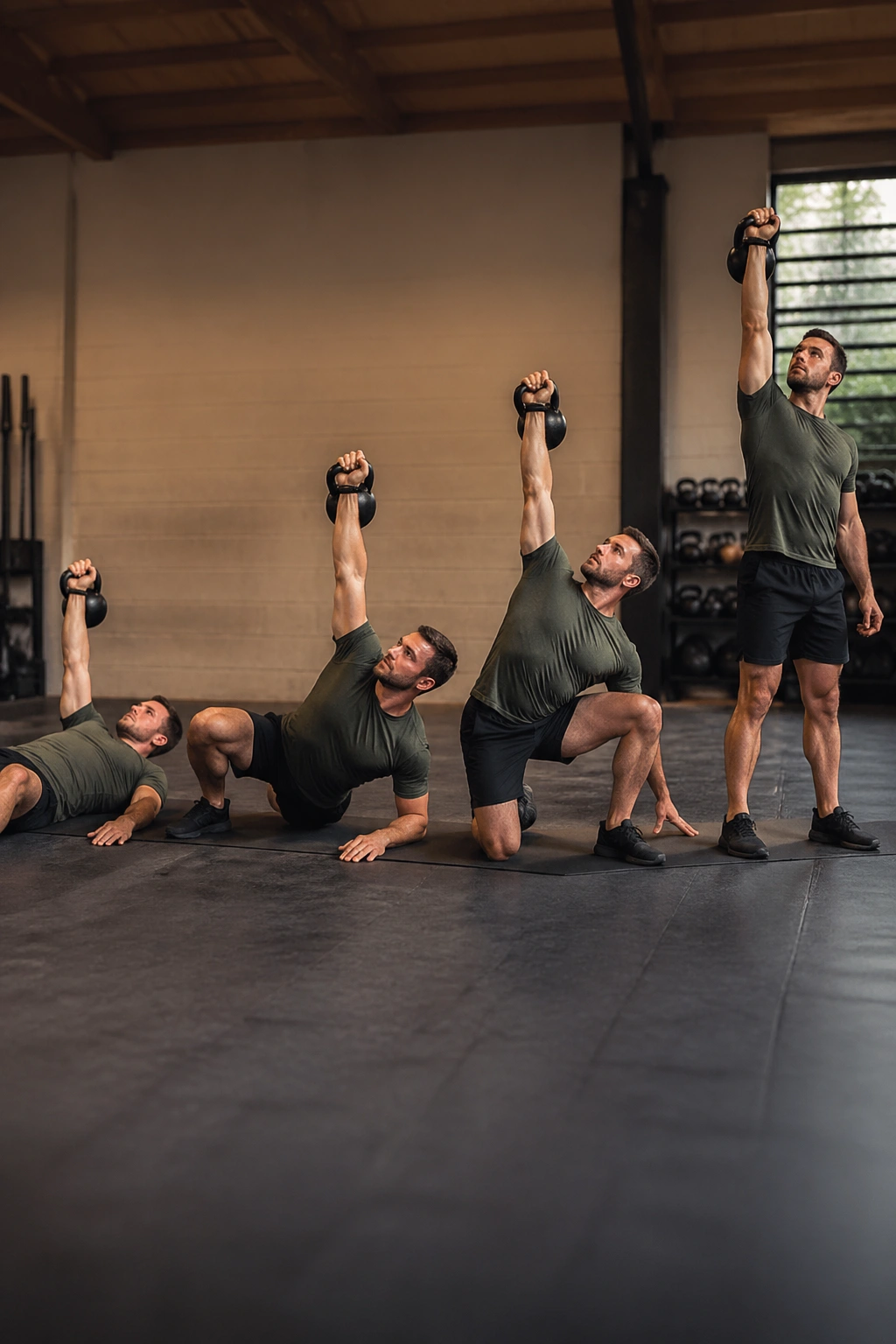
If you want one kettlebell movement that feels like a checklist for the whole body, this is it. The Turkish get-up demands shoulder stability, hip control, balance, and trunk strength in one slow sequence. It is not flashy. It is just brutally complete.
Most people rush the get-up and turn it into a scramble. That misses the point. Each transition matters: roll to elbow, post to hand, bridge the hips, sweep the leg, stand tall. The path is deliberate because the exercise is teaching control, not speed.
What Makes It Worth It
The get-up is excellent for building the kind of strength that carries over to daily life. You learn to organize your body under load, and that control can make the rest of your training cleaner too. For fat loss, it’s not the highest-rep burner on the list, but it makes the system stronger, which helps everything else work better.
Start light. A shoe balanced on a fist is a good drill before adding weight. Then use 1 to 3 reps per side and treat every rep like a skill drill. If you lose the bell overhead or rush through the bridge, the exercise stops being useful.
The get-up rewards patience. A lot of kettlebell work is about pace; this one is about precision. That combination is rare.
11. Figure-8 Pass
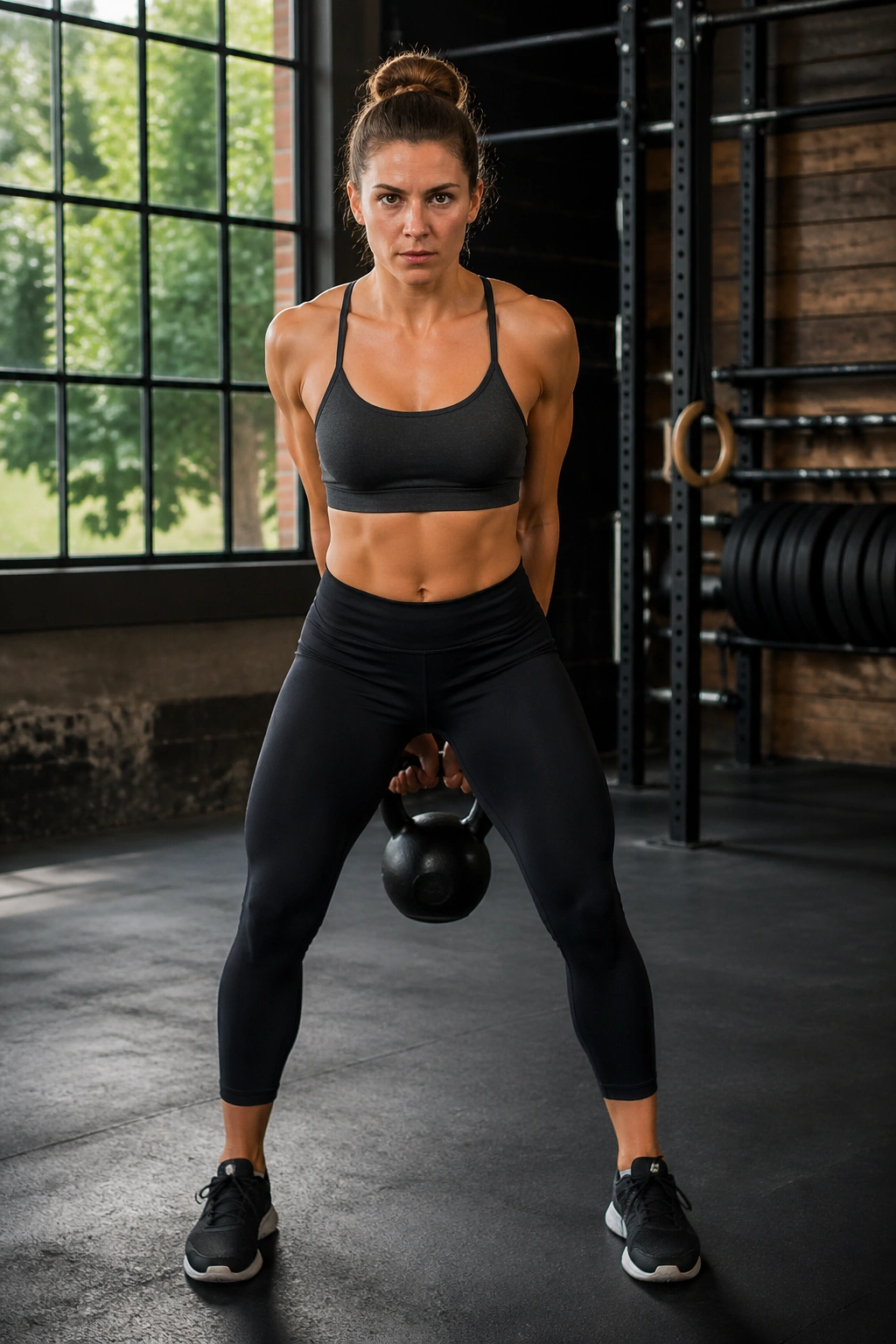
The figure-8 pass looks playful until you try it for a minute straight. Then the legs start talking, the grip warms up, and the core has to keep the trunk from wobbling as the bell moves in a tight loop between the knees.
This is a rhythm drill more than a strength lift, and that’s why it fits here. It keeps you moving, keeps the hinge pattern alive, and lets your heart rate climb without the sharp overhead demands of a snatch or press. Good conditioning work does not need to be dramatic.
What to Watch For
- Hinge at the hips; do not squat straight down.
- Keep the bell close to the body.
- Pass it smoothly, not with a yank.
A clean figure-8 pass should feel continuous. The bell changes hands behind the legs while your torso stays calm and your eyes stay forward. If your lower back starts taking the hit, shorten the range and slow the pace.
This move works well in interval blocks of 20 to 40 seconds. It’s especially handy when you want to keep training moving between heavier sets. Some people skip it because it looks too simple. Their mistake. Simplicity is often why a drill gets used in real life.
12. Kettlebell Complex
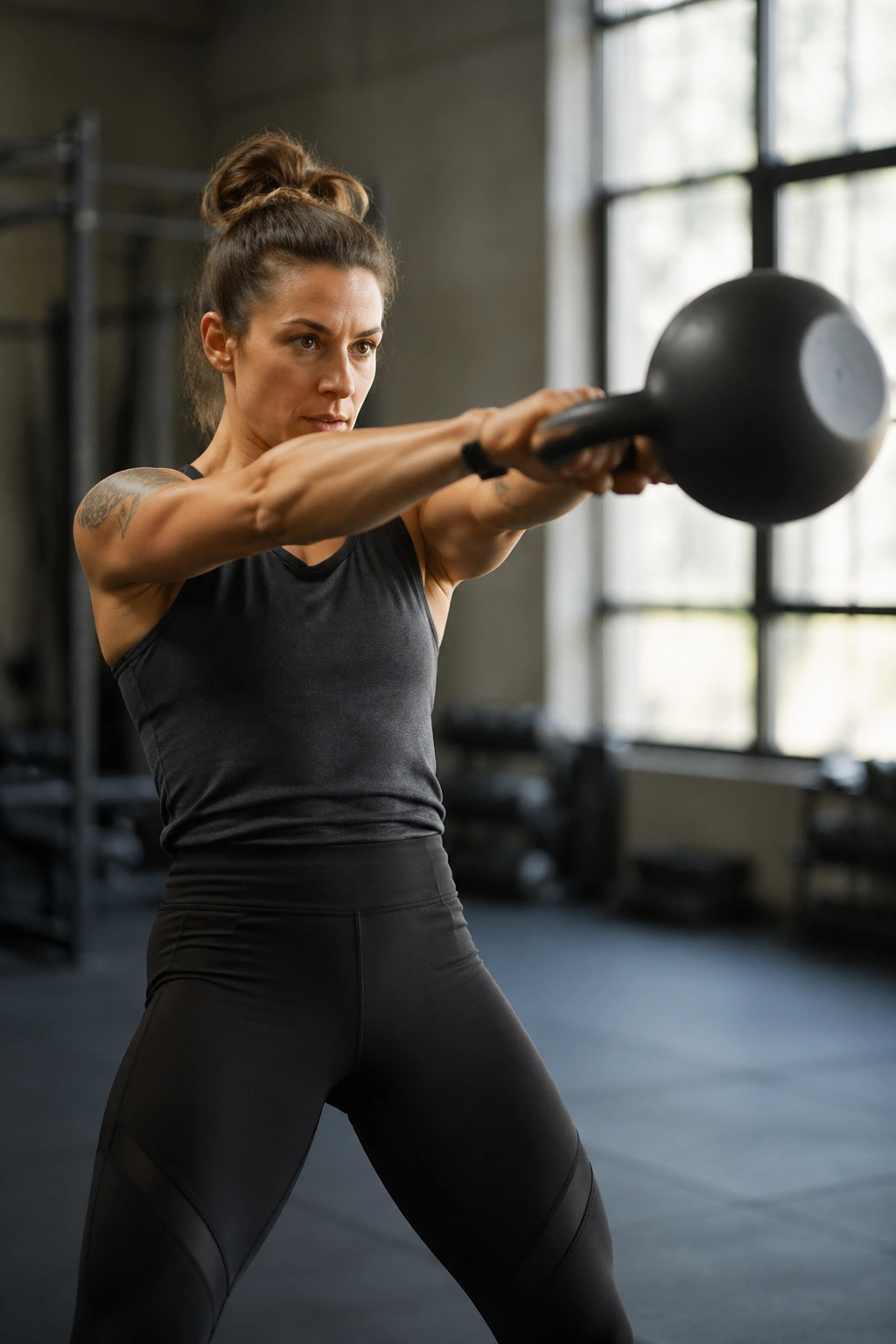
Unlike a single lift, a kettlebell complex keeps the bell moving from one pattern to the next with minimal rest. That’s the whole point: density. You stack swings, cleans, squats, presses, or rows into one chain, and the work adds up fast.
A solid beginner-friendly complex might look like this with one kettlebell: 5 swings, 5 cleans, 5 front squats, 5 presses per side. More advanced lifters can shorten the reps and raise the load. The bell should stay in your hands the whole time, so you spend less time setting up and more time working.
Why Complexes Work So Well
They combine strength and conditioning in one block. That means you get the muscle-building signal from the loaded movements and the breathless feeling that makes your body work harder overall. If belly fat loss is the goal, that kind of session is hard to beat because it keeps you moving without much dead time.
The catch is that form can fall apart if you go too heavy too soon. Keep the complex crisp. If the clean starts banging your wrist, or the squat makes the press messy, cut the load and clean up the sequence first.
A good kettlebell complex feels like organized chaos. Not random. Not sloppy. Just enough pressure to make you earn every rep. And that’s really the pattern across all 12 exercises here: big muscles, honest effort, short rest, and movements that make your midsection work whether it likes it or not.
