



Three day workout splits are the sweet spot for a lot of busy people. You get enough weekly training to build muscle, get stronger, and stay in shape, but you still have room for work, family, commuting, and the ordinary chaos of being alive.
That balance matters more than people admit. A five-day plan looks impressive on paper, sure, but if it turns your week into a scramble, it usually falls apart by the second or third week. Three solid sessions, done with intent, beat a perfect plan you never finish.
The trick is picking the right split for the right life. Some people need more recovery between heavy lifts. Others want a clean push/pull/legs rhythm. Some only have dumbbells, a garage, or a crowded gym with one free bench and a line of people waiting behind it. The best three-day setup respects those constraints instead of fighting them.
A good split also makes room for the boring stuff that works: compound lifts, enough sets to matter, a little accessory work, and honest effort. Nothing fancy. Just a plan that fits inside a real week and still leaves you able to climb stairs without muttering.
1. Push/Pull/Legs for Straightforward Muscle Building
Push/pull/legs is the split most people picture first, and there’s a reason it sticks around. It’s clean, easy to remember, and it gives each workout a clear job. One day for pressing, one for pulling, one for lower body. No mental gymnastics.
A clean weekly layout
- Day 1: Push — bench press, incline dumbbell press, overhead press, triceps pushdowns, lateral raises
- Day 2: Pull — pull-ups or lat pulldowns, barbell rows, chest-supported rows, rear delt work, curls
- Day 3: Legs — back squats, Romanian deadlifts, split squats, leg curls, calves
That structure works because fatigue stays local. Your pressing muscles get one day to shine, then they recover while you row and hinge. It’s simple enough to remember even when your week gets messy.
Push/pull/legs also scales well. Keep the main lift in the 3-6 rep range, then move accessories into 8-15 reps. You can make the whole session last 45 to 70 minutes without rushing. That’s the sweet spot for a lot of lifters.
If you like seeing a body part get hammered, this split delivers that feeling. If you hate long, wandering workouts, even better. No fluff. Just the work.
2. Upper/Lower/Full-Body for Better Recovery

What if your week feels a little unpredictable and you still want to train hard? Upper/lower/full-body is a nice answer because the third day doesn’t pile more fatigue onto one area. It spreads the work around.
Day one can be a heavier upper-body session with benching, rows, and shoulder work. Day two brings lower body with squats, hinges, and single-leg work. Day three becomes a full-body day with moderate loads and cleaner reps. That mix is easier on the joints than three straight body-part days.
Why the third session feels easier
The full-body day gives you a place to practice movement without trying to set records. Think 3 sets of 6-8 on a compound lift, then 2 or 3 accessory movements for 10-12 reps. You leave the gym with something done, not with your nervous system fried.
This split also handles missed workouts better than most. If you skip Tuesday, you can slide the week forward without wrecking the whole system. That matters more than people think. Real schedules wobble.
I like this one for people who want progress but also want to avoid feeling beat up all the time. There’s a little more recovery built in, and that can keep momentum alive for months.
3. Full-Body A/B/C for People Who Like Simplicity

Monday starts with squats. Wednesday starts with presses. Friday leans on hinges and rows. That’s the whole idea, and honestly, it’s hard to beat when you want training to feel almost automatic.
Three different emphases
- Workout A: squat, bench press, row, split squat, abs
- Workout B: deadlift or RDL, overhead press, pulldown, hamstring curl, carries
- Workout C: front squat or leg press, incline press, cable row, lateral raise, calves
Full-body A/B/C works because each lift gets repeated often enough to improve, but not so often that it feels stale. You learn the movements fast. Your technique tightens up. Loads climb in a way you can actually track.
The nice part is how easy it is to recover from. Three weekly hits are enough to drive growth, yet each session can stay under an hour if you keep accessory work honest. No wandering around the gym wondering what comes next.
This split is especially good if you miss a day now and then. Just keep cycling the sessions in order. Don’t restart the week like you broke the system. You didn’t.
4. Squat-Hinge-Push/Pull Hybrid for Strength

The best three-day split for getting stronger is often the one that looks a little plain. Squat one day, hinge another, then push and pull together on the third. That’s not flashy. It works.
The three-day map
- Day 1: back squat, paused squat, leg accessory
- Day 2: deadlift or Romanian deadlift, hamstring work, lower-back support work
- Day 3: bench press, overhead press, row, pull-up
That layout keeps the big barbell lifts close to the center of the week. You get real practice on each pattern without stacking too much lower-body fatigue into one session. Heavy squats and heavy deadlifts do not always play nicely together if you’re rushing.
A split like this is a good fit if your goal is strength first and size second. Use 3-5 reps on the main lift, then 5-8 on the secondary lift, then a short accessory block. You don’t need ten exercises to get stronger. You need crisp reps and a little patience.
One thing I like here is the rhythm. The week feels balanced. Hard legs, hard hinge, upper body. Simple enough to remember, but not so simple that it gets lazy.
5. One Big Lift and One Pump Finisher

Some people train better with a clear headline. Give them one heavy lift, then let them chase a pump for the rest of the session. That style works especially well if you like body-part training but can’t spend an hour and a half in the gym.
A chest day might start with bench press for 4 sets of 4-6, then move to incline dumbbell press, cable flyes, and a short triceps finisher. Back day starts with a row or pull-up variation, then adds pulldowns and rear delts. Leg day opens with squats or leg press, then shifts to hamstrings, calves, and one brutal final set of lunges.
Why this style stays useful
The heavy lift gives the day direction. The pump work does the rest. That second part matters because it lets you rack up volume without turning the workout into a max-effort test. Your joints usually like that arrangement better than a day packed with heavy compounds.
If you’re trying to train hard but not wreck yourself, this split is a good compromise. The main lift gets full focus. The finishers are there to create extra work, not drama.
And yes, the finisher should feel a little annoying. That’s the point.
6. Chest-Back-Legs With Tight Supersets

Old-school chest/back/legs still has a place, but I prefer it when the session is trimmed down and the exercises are paired with intent. Too many people turn this split into a long, wandering mess. It doesn’t need to be that way.
A compact version that works
- Chest day: bench press, incline press, flye, triceps
- Back day: pull-ups, row, pulldown, rear delts, curls
- Leg day: squat, hinge, split squat, calves
Pairing one push and one pull accessory can save time and keep the session moving. A chest press followed by a row. A flye followed by a rear delt raise. The antagonistic pairing helps keep the workout tight without feeling rushed.
This split suits people who like a body-part focus but want the clock to stay under control. It also works well in commercial gyms where the benches and cable stations are easy to access, but the racks are always occupied.
The honest downside is recovery. If you go too hard on every set, that third day can feel long and ugly. Keep the main lift strong, then let the accessories do what accessories are meant to do: fill in the work without stealing the show.
7. Dumbbell-Only Training for Small Spaces

A pair of dumbbells can carry a lot more training than people give them credit for. If you’ve got adjustable dumbbells, a bench, and maybe a mat, you can build a serious three-day week without touching a barbell.
A simple dumbbell week
- Day 1: goblet squat, dumbbell bench press, one-arm row, reverse lunge
- Day 2: Romanian deadlift, overhead press, chest-supported row, lateral raise
- Day 3: Bulgarian split squat, incline press, pullover or pulldown substitute, curls, triceps
Dumbbell work shines when you use unilateral movements and slower tempos. A 3-second lower on split squats changes the whole feel of the session. So does pausing at the bottom of a press. You’ll get less absolute load than with barbells, but the work still adds up.
This split is useful for home lifters and apartment lifters who need a quiet setup. It’s also easier on the learning curve. Dumbbells force cleaner form. You notice side-to-side differences fast.
Don’t chase novelty here. Stick with the same core lifts for a few weeks, add reps, then add weight. That steady grind works far better than constantly switching exercises.
8. Band and Bodyweight Work That Fits in a Spare Room
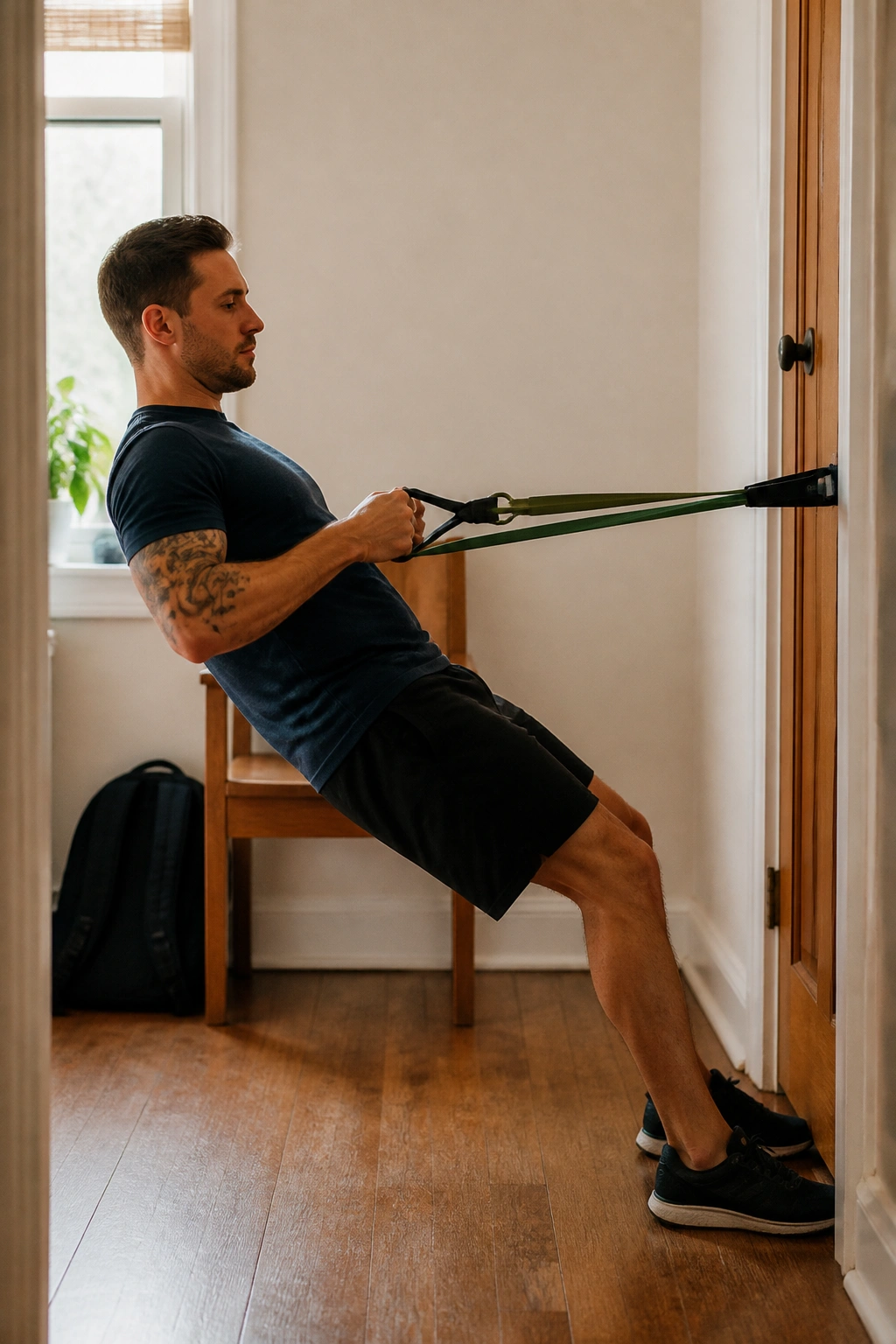
A spare room, a hallway, a patch of floor. That’s enough. If you’ve only got bands and bodyweight, you can still build a real three-day training habit, and it can be more effective than people expect.
What to keep nearby
- A long resistance band
- A loop band
- A sturdy chair or couch edge
- A backpack you can load with books
- A pull-up bar if you have one
Day one can center on push-ups, split squats, band rows, and planks. Day two can lean toward hip bridges, banded hinges, pike push-ups, and face pulls. Day three can circle back with step-ups, close-grip push-ups, curls with bands, and carries using a backpack.
The best part is the low friction. No commute. No waiting. No guessing whether the rack will be open. That makes it easier to stay consistent when life is noisy.
Band and bodyweight training does ask for creativity. You’ll need to work harder on tempo, range of motion, and volume. That’s not a flaw. It’s the job. Slow eccentrics and clean reps keep the work honest when the load itself is limited.
9. Machine-First Training for Crowded Gyms

Crowded gym? Fine. Machine-first training is underrated because it removes the little annoyances that eat up time. No hunting for plates. No waiting for a rack. No awkward setup for a movement you only half like anyway.
A fast machine-based week
- Day 1: chest press, seated row, leg press, leg curl
- Day 2: lat pulldown, shoulder press, hack squat or smith squat, calves
- Day 3: incline press, cable row, hip thrust machine or glute bridge, rear delt machine, arms
Machines make it easier to keep your sessions tight and repeatable. You can move from one station to the next without much setup, which is gold when you only have 40 to 50 minutes.
They also make sense for lifters who want a little less technical stress. The movement path is fixed. You can still push close to failure safely. That’s a useful combination.
Some people act like machine work is second-rate. I don’t buy that. If the choice is a clean leg press session three times a week or a barbell plan you keep skipping because the squat rack is occupied, the machine plan wins every time.
10. Powerbuilding When You Want Strength and Size

Heavy first, size second. That’s the core idea behind powerbuilding, and it fits a three-day week beautifully because you get room for both low-rep strength work and higher-rep muscle work without turning every workout into a marathon.
How a day usually looks
- Main lift: 3-5 sets of 3-5 reps
- Secondary compound: 3 sets of 6-8 reps
- Accessory work: 2-4 movements for 8-15 reps
Day one might be squat focus. Day two might be bench and upper back. Day three can lean into deadlift or overhead press with back-off volume. The exact exercise order matters less than keeping the main lift fresh and the assistance work focused.
Powerbuilding is a good fit if you like numbers. You can chase a heavier triple one week and more reps on a back-off set the next. That kind of progress feels obvious, which helps when motivation dips.
The trap is going too hard on the top set every single time. Don’t. Leave a rep in the tank on most weeks. Save the all-out grinders for the rare days when everything feels smooth and your technique stays locked in.
11. Athletic Work for Jumps, Sprints, and Strength

Explosive training feels different. The reps are lower, the rest is longer, and if you do it right, the room gets quiet between sets because you’re actually recovering instead of panting through everything.
Where the speed work fits
- Day 1: jumps, squats, single-leg work
- Day 2: throws, presses, rows, upper-body power
- Day 3: sprints, sled pushes, kettlebell swings, carries
This split makes sense for athletes, former athletes, and anyone who wants to feel more powerful without living in the gym. The sessions are often shorter than bodybuilding-style workouts, but they ask for sharper intent. Fast reps need to stay fast.
A lot of people mess this up by turning power work into cardio. That’s backward. If the jump height drops or the sprint form gets sloppy, the work is done. Save the gas for the next quality set.
This is also a smart split if you get bored with slow lifting. A few clean jumps and sled pushes can wake up the whole session. Just keep the total volume reasonable. Your knees will thank you later.
12. Beginner-Friendly Total-Body Training

New lifters usually do better when the same patterns repeat. You don’t need six different variations of a row before you’ve learned how to brace, squat, press, and hinge without wobbling around like a folding chair.
A simple beginner template
- Squat pattern: goblet squat or leg press
- Push pattern: bench press or push-up
- Pull pattern: row or pulldown
- Hinge pattern: Romanian deadlift or hip hinge drill
- Carry or core: farmer’s carry, plank, dead bug
Each workout can include one exercise from each pattern, then a few sets of 6-10 reps. That gives you enough practice to learn fast without burying yourself in soreness. Two or three sets per movement is plenty at the start.
The beauty of this split is how little decision-making it asks for. Same broad structure three times a week, small progress each session, and a lot less confusion. That matters. Beginners do not need complexity. They need repetition and a clean path.
Keep the first month boring on purpose. Boring is good here.
13. Short Finishers for Fat-Loss Support

If fat loss is the goal, the workout should still be about lifting. That part gets ignored too often. The weights keep muscle on your frame while the short finishers raise the work rate without eating your whole day.
A practical weekly setup
- Lift first: 3 to 4 movements for 6-10 reps
- Finish second: 8 to 12 minutes of intervals, sled pushes, bike sprints, or rower work
- Recover third: walk, sleep, eat enough protein
A split like this works best when the finisher is short and sharp. Ten rounds of 20 seconds hard, 40 seconds easy on a bike. A sled push for 6 trips of 20 yards. A rower circuit that doesn’t last long enough to turn ugly. Keep it tight.
The biggest mistake is trying to crush yourself every day. That usually just makes the lifting worse and the recovery messier. A short finisher should leave you breathing hard, not crawling out the door.
I also like this split for people who don’t enjoy long cardio sessions. You get the heart-rate bump, but it’s attached to a plan that still respects strength work. That’s a much better trade.
14. Recovery-First Weeks for Low Energy Days

What if sleep is bad, work is messy, and your body feels a little cranky? Train anyway, but make the week lighter and cleaner. Recovery-first three-day training has its place, and it’s smarter than trying to force a heavy plan through a rough patch.
The rules change a bit
Use RPE 6 to 7 most of the time. Leave 2 to 4 reps in reserve. Cut the exercise list down to 3 or 4 movements per session. Keep the whole workout under 45 minutes.
Day one could be squat, row, and carry. Day two could be hinge, press, and abs. Day three could be leg press, pulldown, and a light single-leg movement. Nothing fancy. Enough to keep the groove, not enough to drain the tank.
This split is one of the most honest options on the list. It admits that life outside the gym can be heavy. The workouts stay productive, but they don’t demand a heroic mood to get through them.
That can save a training week that would otherwise disappear. And sometimes that’s the whole win.
15. Glutes and Legs Priority Training

If your lower body is the project, stop hiding it behind random accessory work. Give it real structure. A three-day split can absolutely favor glutes and legs without turning every session into the same squatting loop.
A lower-body dominant week
- Day 1: squat, leg press, calf work
- Day 2: hip thrust, Romanian deadlift, hamstring curl
- Day 3: Bulgarian split squat, step-up, glute bridge, abduction work
That setup gives the glutes more than one angle. You get hip extension from thrusts and bridges, lengthened work from deadlifts, and single-leg loading from split squats and step-ups. That mix tends to feel better than blasting one movement over and over.
Upper body still has to show up, but it can stay modest. A row, a press, maybe some shoulders. Enough to keep balance. No need to let chest day steal the whole week.
This split is useful for lifters who want visible lower-body change and don’t mind putting their energy there. It also works well when the lower body is stronger than the upper body and you need more attention on the parts that actually need it.
16. Upper-Body Priority for Desk Workers

Sitting all day changes what your shoulders need. They usually want more pulling, a little more rear-delt work, and pressing that doesn’t beat up the front of the shoulder. A three-day split can be built around that pretty neatly.
A shoulder-friendly balance
- Day 1: bench press, row, face pull, triceps
- Day 2: overhead press, pulldown, rear delt raise, curls
- Day 3: incline press, chest-supported row, lateral raise, core work
The ratio matters. For many desk-bound lifters, two pulling movements for every pressing movement feels better over time. Not forever, not as a law, just as a useful bias when the upper back tends to get lazy.
This split also helps posture in a practical way. Rows, pulldowns, and rear-delt work train the muscles that keep the shoulder blades from drifting forward all the time. That does not magically fix sitting, but it does make lifting feel smoother.
I like this one for anyone whose shoulders get cranky after too much benching. The session still feels like training, but it behaves better the next day. That matters more than looking hardcore.
17. Travel-Friendly Training That Fits in a Hotel Room
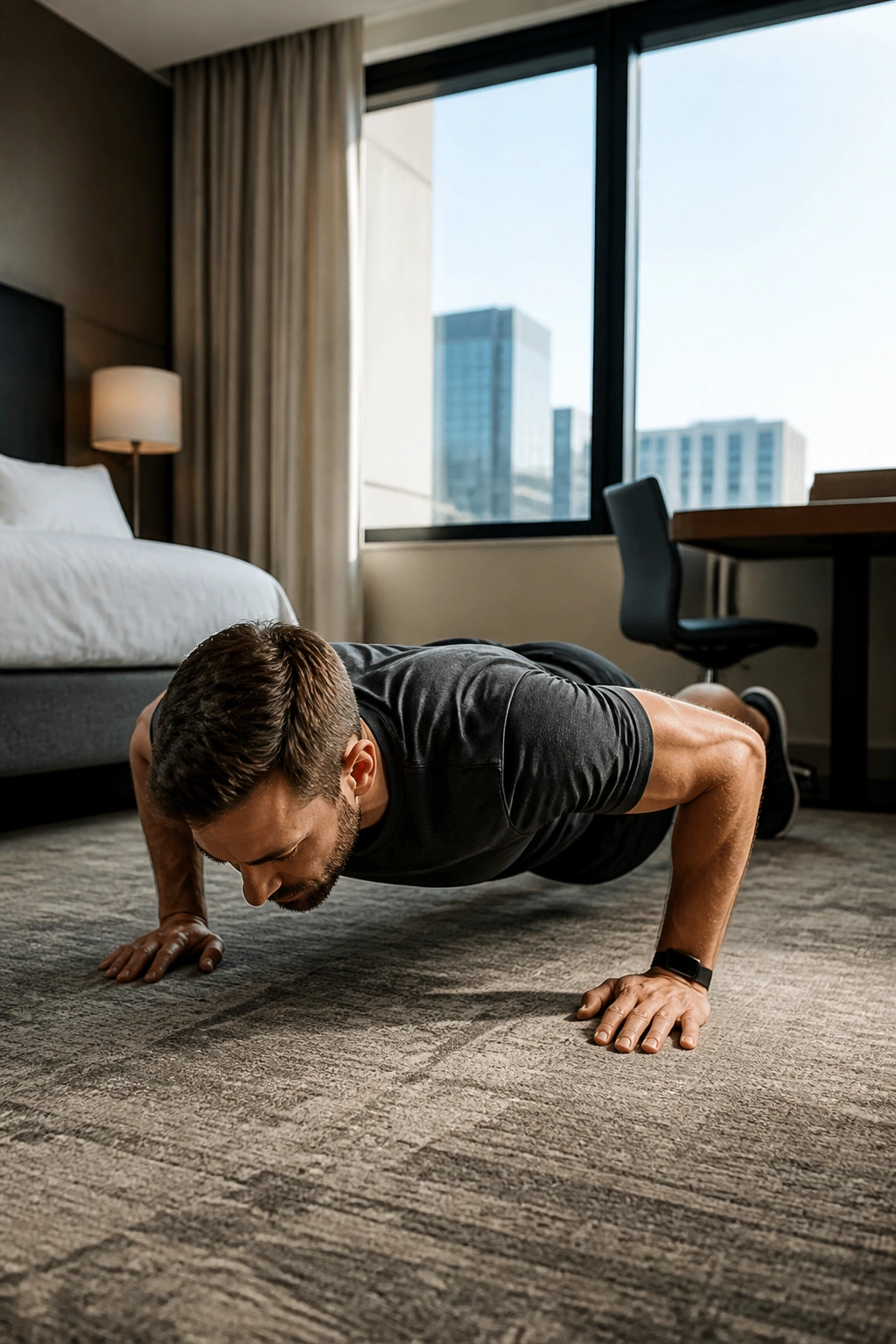
A suitcase, a doorway, a little floor space. That’s enough to keep a three-day habit alive when you’re away from your normal setup.
A travel week with almost no gear
- Day 1: push-ups, split squats, backpack rows, plank
- Day 2: pike push-ups, hip bridges, reverse lunges, band pull-aparts
- Day 3: step-ups, close-grip push-ups, single-leg RDLs, carries with a loaded bag
The trick is pacing. Use circuits or timed blocks. Forty seconds of work, 20 seconds to breathe, then move on. Or do 3 rounds of 5 exercises and call it a day. You’re trying to keep the pattern alive, not win a prize for suffering.
Travel training also benefits from a little humility. The workout is not going to look like your normal gym session. That’s fine. If you can keep the joints moving, the muscles working, and the week on track, you’ve done the job.
I’ve always liked this style because it removes the excuse that equipment is the whole story. It isn’t. Consistency is the story.
18. Strength-Endurance for People Who Work Hard All Day

Some weeks, the gym isn’t the hard part. Your job is. Or your sport. Or both. In that case, a three-day split should support your life, not fight it.
A practical work-capacity split
- Day 1: squat variation, row, farmer’s carry
- Day 2: hinge variation, press, sled push or sled drag
- Day 3: step-ups, pulldown, loaded carry, trunk work
This kind of training builds force without piling on unnecessary soreness. The rep ranges can stay moderate, around 5-8 on the main work and 8-12 on accessories. The loaded carries matter here. So do sleds, because they tax the legs and lungs without the same muscle damage you get from endless eccentric work.
That makes the split a good fit for contractors, warehouse workers, firefighters, athletes in preseason, or anyone who already spends a lot of time moving heavy things around. The gym work should leave you stronger for life, not wrecked by it.
The tone of the week is straightforward. Build, carry, move, recover. No drama. That usually ages better than a plan that tries to impress you every day.
Final Thoughts

Three-day training works because it respects reality. You can push hard, recover properly, and still have a life outside the gym. That combination beats heroic scheduling almost every time.
The smartest move is picking the split that matches your equipment, your recovery, and the kind of work you actually enjoy repeating. A perfect plan that bores you or beats you up is a bad plan. A plain one you can stick to is better.
Start simple. Keep the main lifts honest. Trim the fluff. Then let consistency do the boring, steady work that fancy routines usually promise and rarely deliver.
