



That dull, nagging ache behind your kneecap often shows up halfway through a run or settles in firmly the moment you stop. You know the feeling. It is that persistent, localized pain that makes stairs feel like a mountain climb and turns your recovery days into a test of patience. Runners often call it “runner’s knee,” a catch-all term for patellofemoral pain syndrome. It rarely happens because of one single event. Instead, it usually creeps up as a result of muscle imbalances, tightness in the hips, or restricted mobility in the joints supporting your knee.
Ignoring that tightness is a gamble most runners eventually lose. When your quadriceps are locked tight, they pull directly on the patellar tendon, keeping the kneecap out of its natural groove. When your hips are immobile, your knee compensates by absorbing impact it was never designed to handle. You do not need expensive gear or a complex clinical plan to address the root of this discomfort. Often, the solution lies in restoring the length and pliability of the soft tissues surrounding the joint.
Stretching is not just about lengthening muscle fibers; it is about communicating with your nervous system. By systematically releasing tension in the quads, hamstrings, glutes, and calves, you give your kneecap the room to track smoothly. This is not about forcing your body into painful shapes. It is about methodical, consistent maintenance. The following sequence moves from the hips down to the feet, addressing the kinetic chain that dictates how your knees function during every stride.
Why Your Knees Hurt and How Stretches Provide Relief
The knee is a hinge joint trapped between two powerful, mobile joints: the hip and the ankle. When the hip or ankle loses mobility—something that happens to almost every runner due to repetitive impact—the knee becomes the “victim” joint. It gets forced to rotate or shift laterally in ways it was never built to support. If your quads are pulling too hard, the kneecap grinds against the femur. If your hamstrings are stiff, your gait shortens, putting extra pressure on the joint during the landing phase.
Stretching addresses this mechanical mismatch. It reduces the resting tension of your muscles. High muscle tone keeps the knee in a state of constant compression, even when you are sitting at your desk. By actively lengthening these tissues, you allow the joint to decompress. You are effectively shifting your body from a state of mechanical stress to a state of neutral, efficient alignment.
This process is not magic, and it certainly is not instantaneous. If you have been tight for months, a single session will not fix the issue. You are trying to convince your nervous system that it is safe to relax. Consistency matters more than intensity. Think of these stretches as a daily hygiene practice, like brushing your teeth. Your muscles will respond when they learn they are not constantly under threat of injury.
Anatomy of a Proper Stretching Routine
Many runners approach stretching with the wrong goal. They try to “force” their muscles to grow, pushing until they feel a sharp, biting sting. That is counterproductive. When you push into a stretch too aggressively, your muscles trigger a protective reflex—the stretch reflex—that causes them to contract and tighten even further to prevent tearing. You end up tighter than when you started.
True mobility gains come from slow, controlled, and relaxed tension. Aim for a sensation that is challenging but manageable. You should be able to breathe deeply and slowly throughout every stretch. If you find yourself holding your breath or grimacing, you are past the point of benefit. Your muscles need oxygen to relax, and your brain needs to feel that the position is safe.
Before diving into this list, ensure your muscles are warm. Stretching cold muscles is like pulling on a frozen rubber band. It might snap or fray. Perform these moves after a run, or if you are doing them separately, take a ten-minute brisk walk or do some light calisthenics first. Let your blood flow warm the tissue so it becomes pliable and receptive to the lengthening process.
1. Standing Quadriceps Stretch
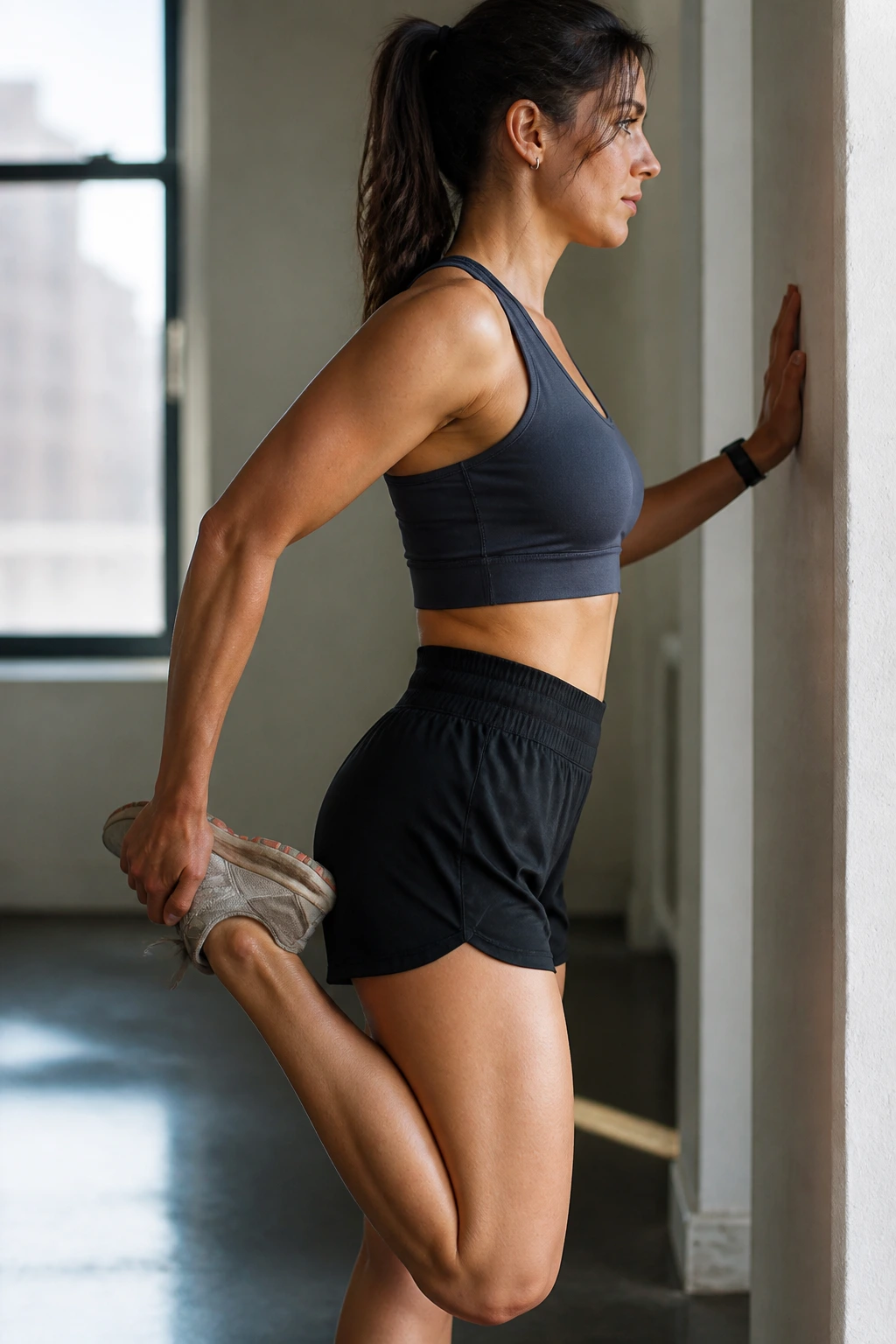
This is the classic, but most runners get it wrong by arching their back or pulling their knee out to the side. The key is isolating the quad without straining the lower back. Stand on one leg, holding onto a wall for balance if you need it. Reach behind you and grab your ankle.
Why This Matters for Runner’s Knee
Your quadriceps are the primary driver of knee extension. If they are shortened—which happens naturally from the constant pounding of running—they exert a constant, upward pull on your kneecap. This creates friction against the thigh bone. This stretch pulls the muscle away from the knee joint, relieving that upward tension.
Pro Technique Tip
Keep your knees side-by-side. If your knee drifts forward or out to the side, you lose the stretch. Tuck your pelvis under, squeezing your glute on the side you are stretching. You will feel a deep, intense pull down the front of your thigh. Hold for forty-five seconds. Do not bounce.
2. Hip Flexor Lunge
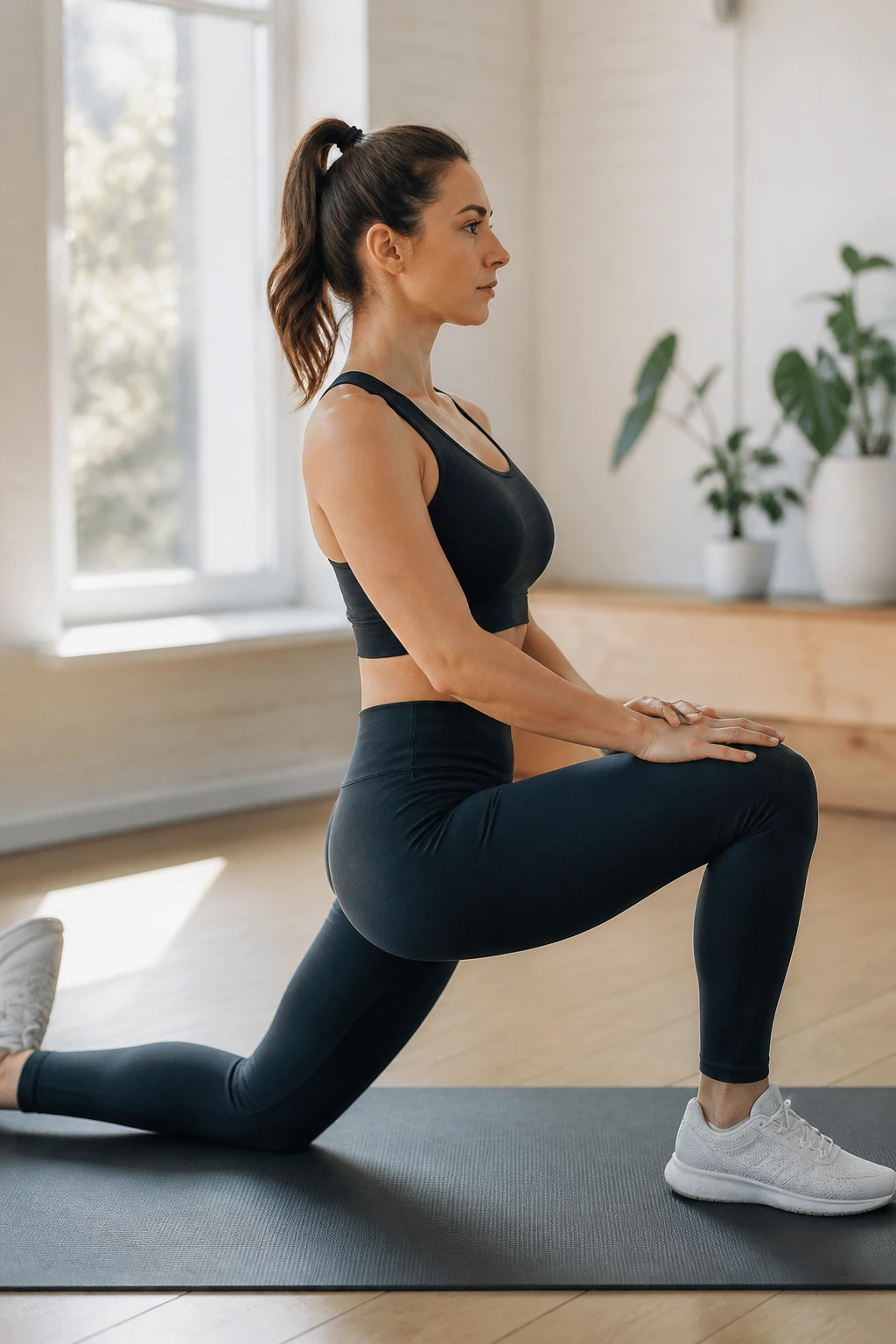
Your hip flexors, particularly the psoas, act as a bridge between your spine and your legs. When they are tight, they pull your pelvis forward, creating a forward-tilted posture that forces your quads to work harder to stabilize the knee. This creates a chain reaction of pain that ends at the kneecap.
How to Execute Properly
Get into a half-kneeling position with your right knee on the floor and your left foot flat in front of you. Shift your weight forward slightly, but keep your torso tall. Do not collapse into your lower back. Imagine your pelvis is a bucket of water; do not spill it forward.
Increasing the Intensity
To add a deeper dimension, reach the arm on the side of the kneeling leg toward the ceiling and lean slightly to the opposite side. This creates a diagonal line of tension from your hip, through your oblique, all the way to your knee. Hold for thirty to sixty seconds per side.
3. Standing Hamstring Stretch
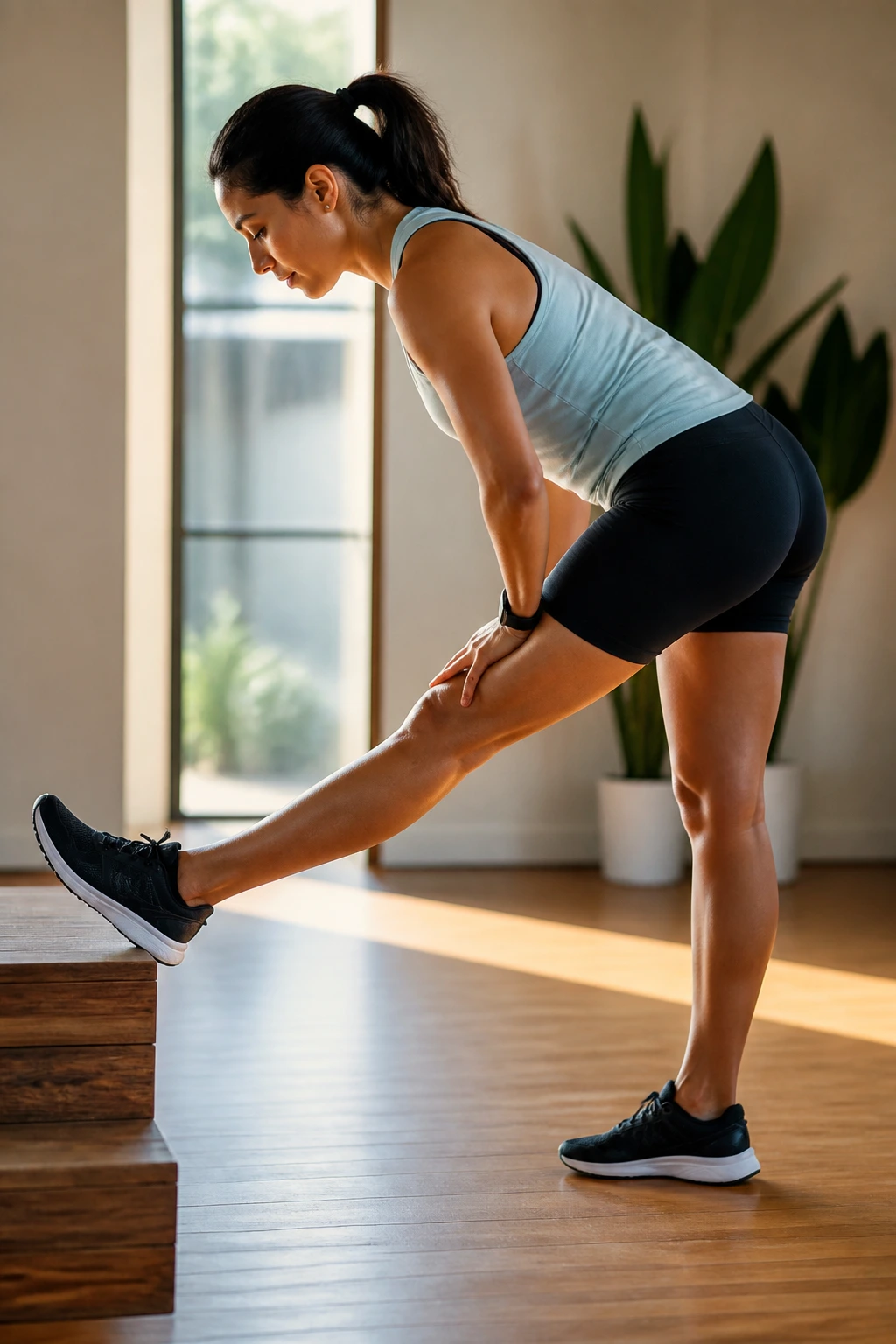
Tight hamstrings limit the extension of your leg. When you cannot fully extend your knee during the swing phase of your stride, your quadriceps have to overwork to compensate. This imbalance is a common contributor to patellar pain. You do not need to touch your toes to get the benefit.
The Mechanism
Place your heel on a low step, curb, or box. Keep your standing leg slightly bent to protect the knee. Hinge at your hips—do not round your spine—and lean your chest forward. You are looking for a gentle, uniform tension through the back of your thigh.
Common Mistakes
People often reach for their toes and round their upper back, which stretches the nerves in the spine rather than the hamstring muscle. Keep your chest proud and your back flat. If you feel a “tingly” sensation, that is nerve tension; pull back until the sensation is purely muscular.
4. IT Band Foam Roll
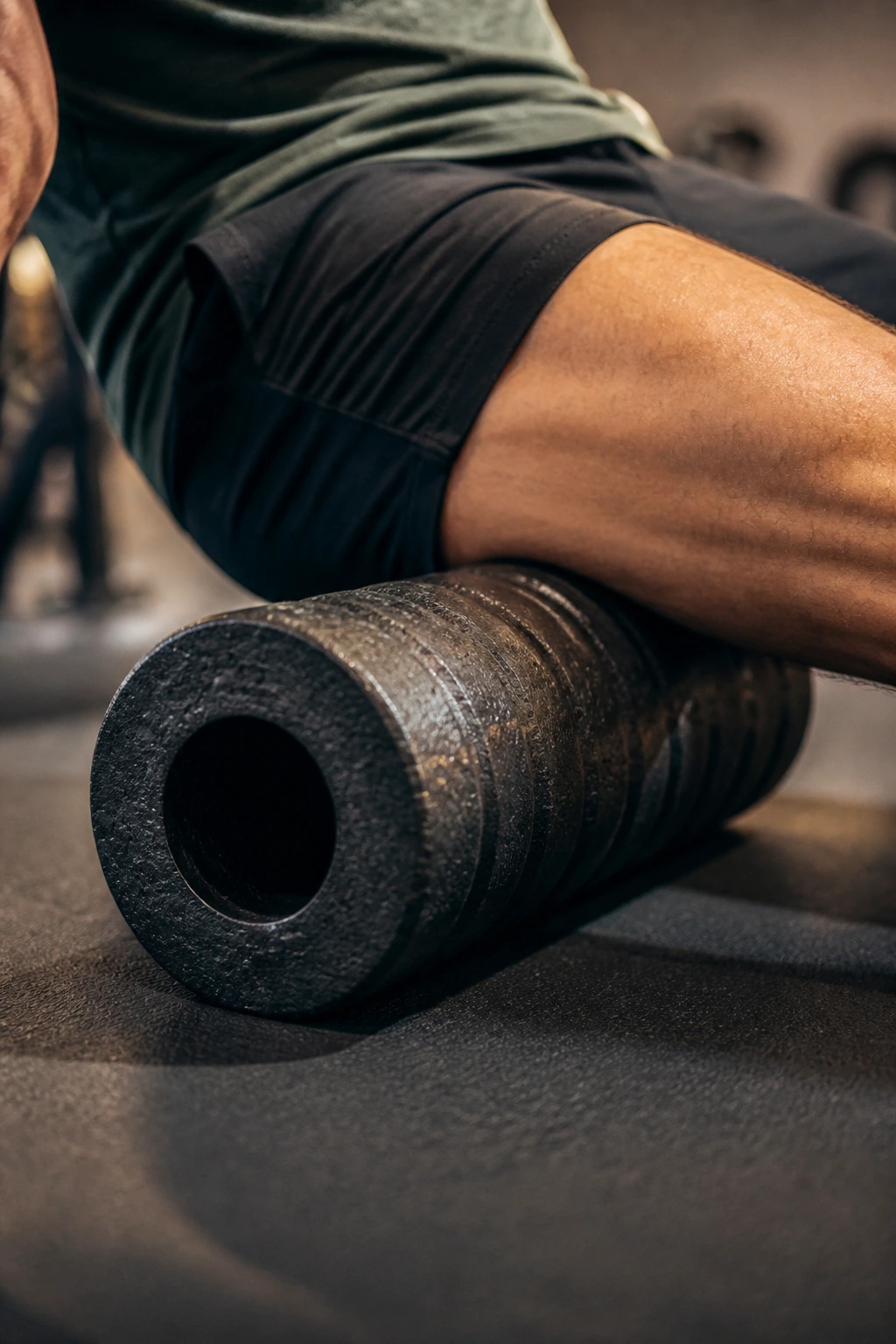
The iliotibial (IT) band is not a muscle; it is a thick, fibrous band of fascia that runs from your hip to your knee. It cannot be stretched in the traditional sense, but you can improve the glide of the tissues underneath it. When the TFL muscle at the top of the hip is tight, it pulls the IT band taut, tugging the kneecap laterally.
The Method
Lie on your side with the foam roller positioned under the outside of your thigh, just below the hip. Cross your top leg over the bottom leg, placing the foot on the floor for support. Roll slowly from the hip down toward the knee, but stop two inches above the joint. Do not roll directly over the knee joint itself.
Managing Discomfort
This will be intense. If you feel a particularly tender “knot,” pause on it and take three deep breaths. Let the muscle melt into the roller. If the pain is sharp and radiating, back off. You are looking for a deep, dull ache, not acute agony.
5. Figure-Four Glute Stretch
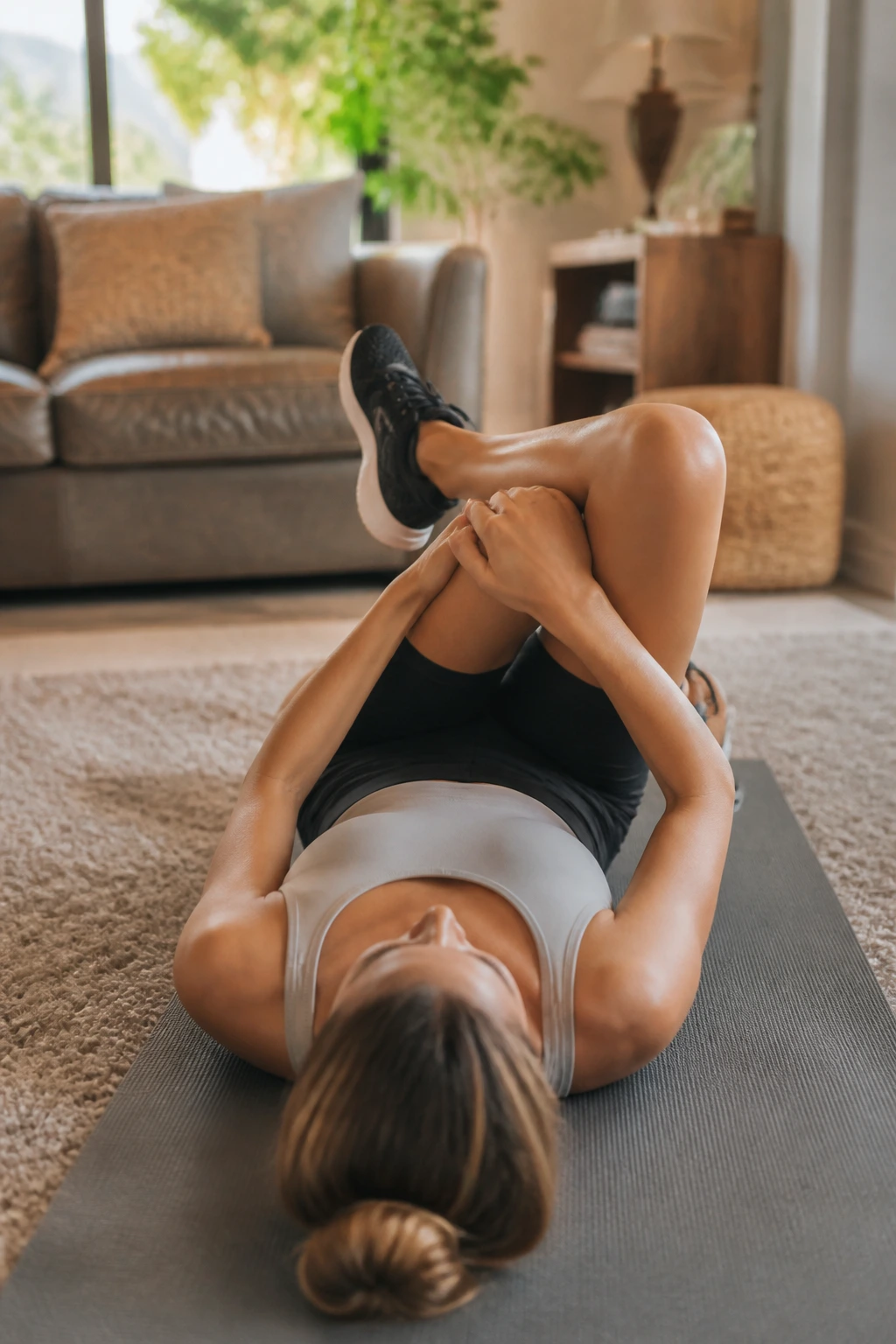
A weak or tight glute medius causes the knee to cave inward—a movement called “valgus collapse”—every time your foot hits the ground. This misalignment is lethal for knee health. Stretching the outer hip and glute helps reset your pelvic alignment.
Execution
Lie on your back with both knees bent. Cross your right ankle over your left knee, creating a figure-four shape. Reach through the gap and pull your left thigh toward your chest. Keep your head and shoulders flat on the floor.
The Sensation
You should feel this deep in your right buttock. If you feel it in your knee, adjust the angle of your leg. This is a very safe stretch because your back is supported by the floor, allowing you to relax completely into the movement. Hold for sixty seconds.
6. Pigeon Pose
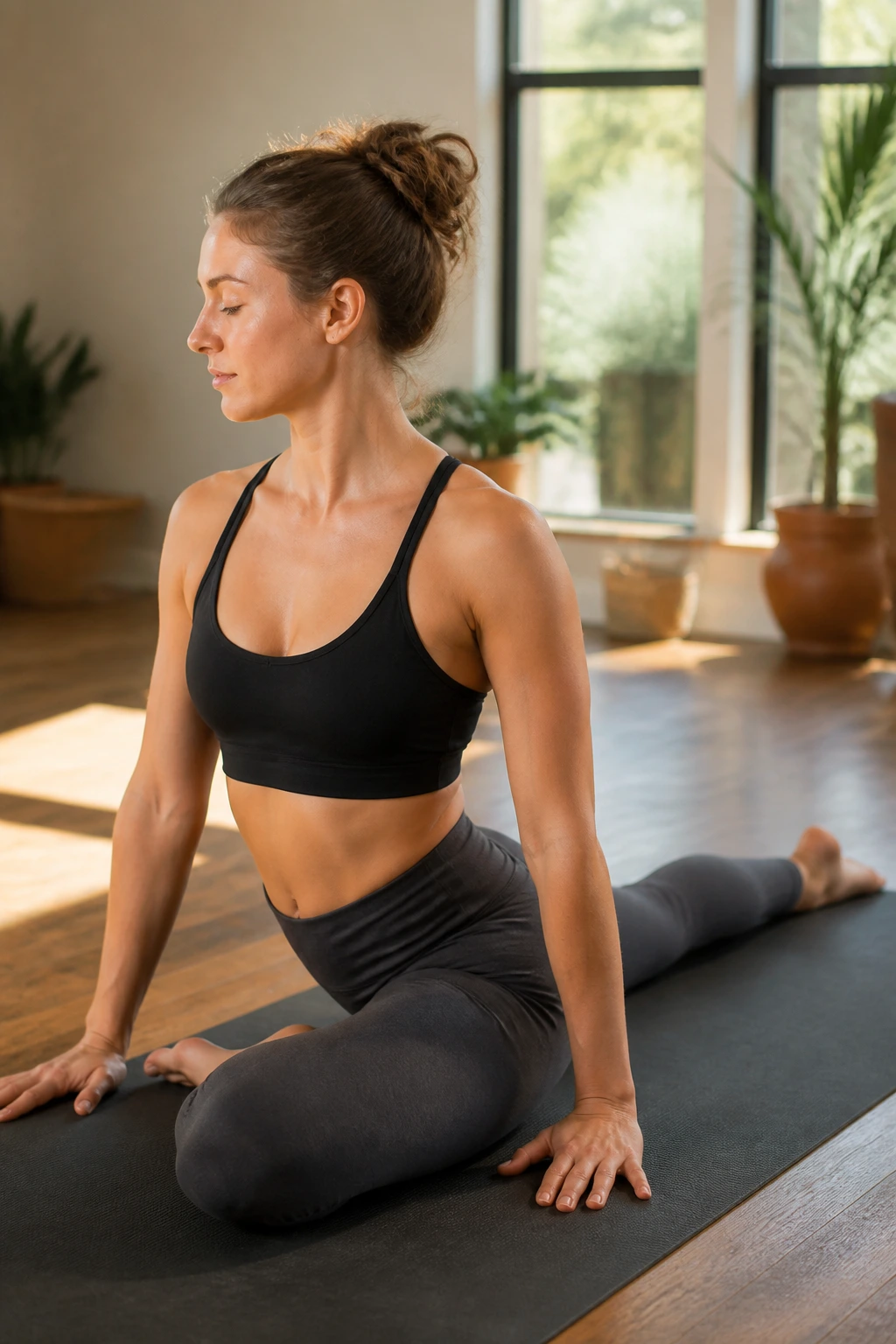
This is the ultimate hip opener. By rotating the leg externally, you target the deep rotators of the hip, including the piriformis. When these small muscles are tight, they prevent the hip from stabilizing the knee, leading to the dreaded “tracking issues” that cause runner’s knee.
Moving Into Position
From a tabletop position, bring your right knee forward toward your right wrist. Extend your left leg straight back behind you. Your right foot should be tucked toward your left hip. The goal is not to have your shin parallel to the front of the mat; that can put immense strain on the knee. Keep your foot close to your body if your hips are tight.
Breathing Through It
Stay upright on your hands or lower down to your forearms. Focus on squaring your hips toward the floor. If one hip feels significantly tighter, spend an extra thirty seconds there. This stretch is a slow burn; give it at least a minute to allow the deep tissues to release.
7. Calf Stretch at the Wall
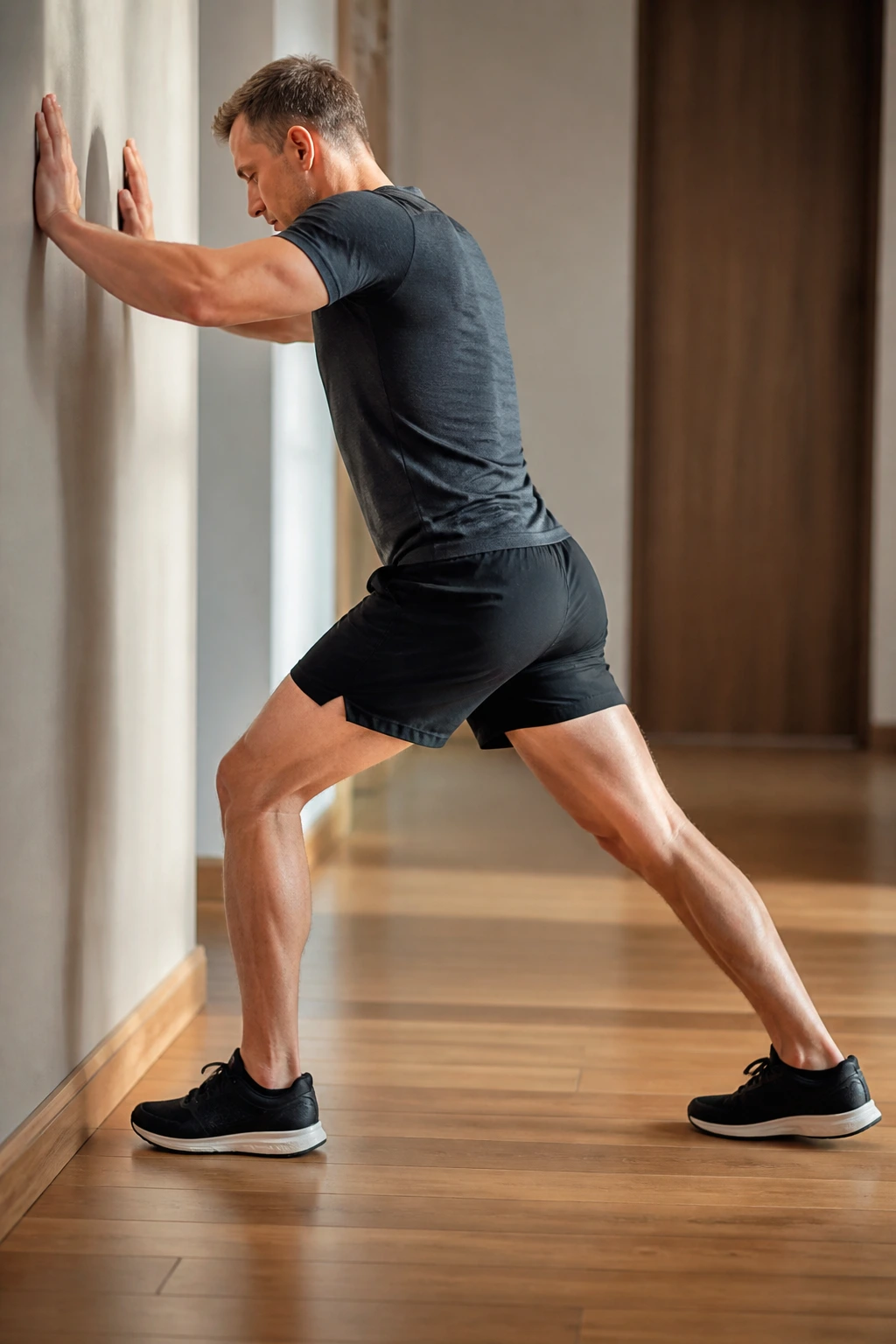
Your calves are often the forgotten culprit in knee pain. If your ankle dorsiflexion is limited—meaning you can’t pull your toes toward your shin—your knee will have to compensate by pronating (rolling inward) excessively during your gait. A tight calf essentially locks the ankle.
Finding the Sweet Spot
Stand facing a wall. Step your right foot back, keeping the heel pressed firmly into the ground. Bend your left knee forward, leaning your body weight into the wall. Keep your back leg straight. You want to feel a stretch in the upper portion of the calf, specifically the gastrocnemius.
The Second Variation
To target the soleus—the deeper muscle closer to the ankle—bend the back knee slightly while keeping the heel down. This variation often reveals hidden tightness that the straight-leg stretch misses. Spend time on both variations to ensure complete lower-leg mobility.
8. Butterfly Stretch
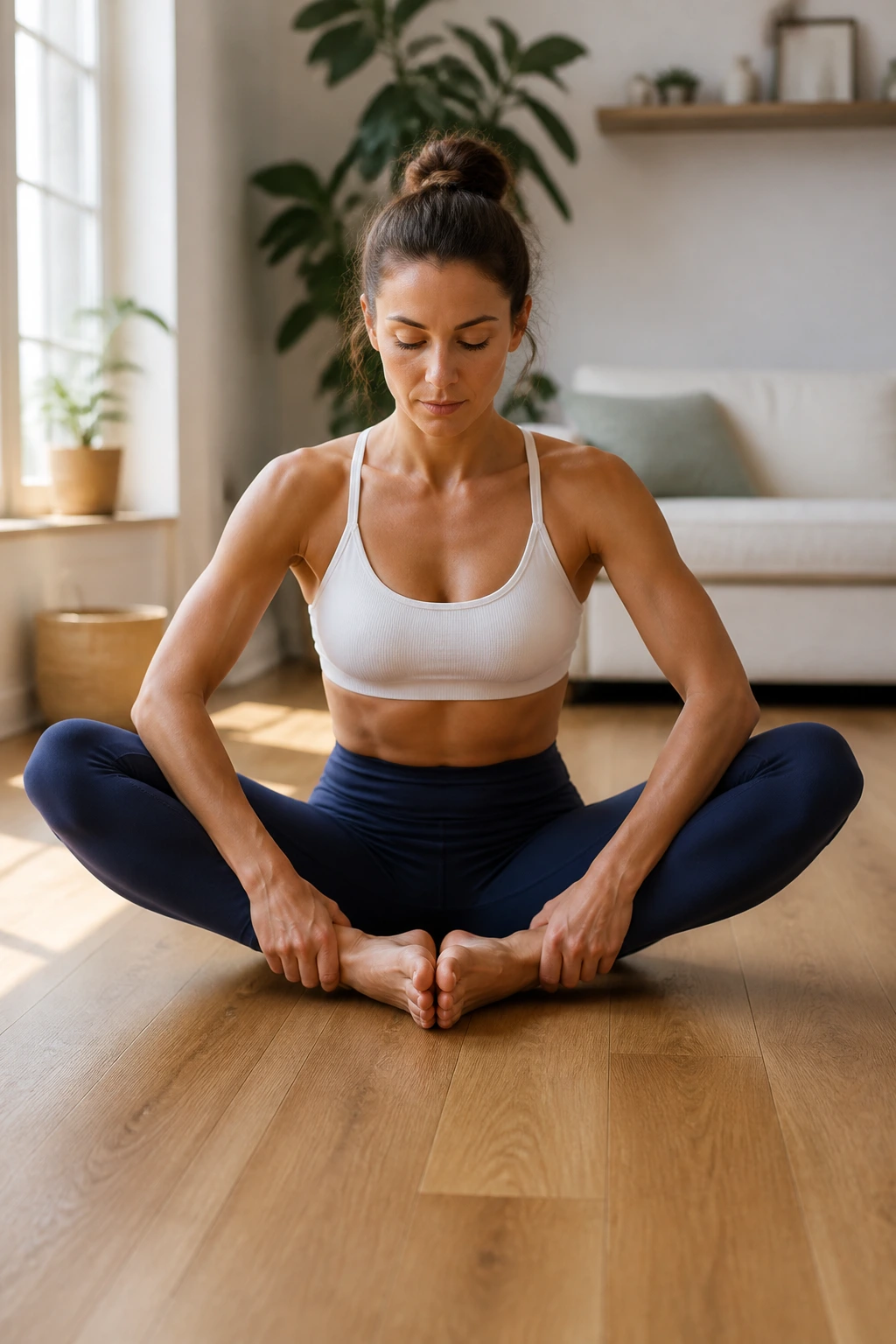
The adductors (inner thighs) pull the knee inward if they become too tight. This constant inward pull forces the patella out of its natural, centered groove. The butterfly stretch is a simple way to open up the groin and inner thigh tissues.
The Posture
Sit on the floor with your feet pressed together and your knees falling open to the sides. Hold your ankles or feet. Keep your spine long; do not slump. Use your elbows to gently—very gently—apply pressure to the inside of your knees.
Making It Effective
If your knees are high in the air, do not force them down. Place blocks or pillows under your knees for support. The goal is gravity, not brute force. Let your breath guide your knees closer to the ground over several minutes. This is a great stretch to do while reading or watching television.
9. Seated Glute Stretch
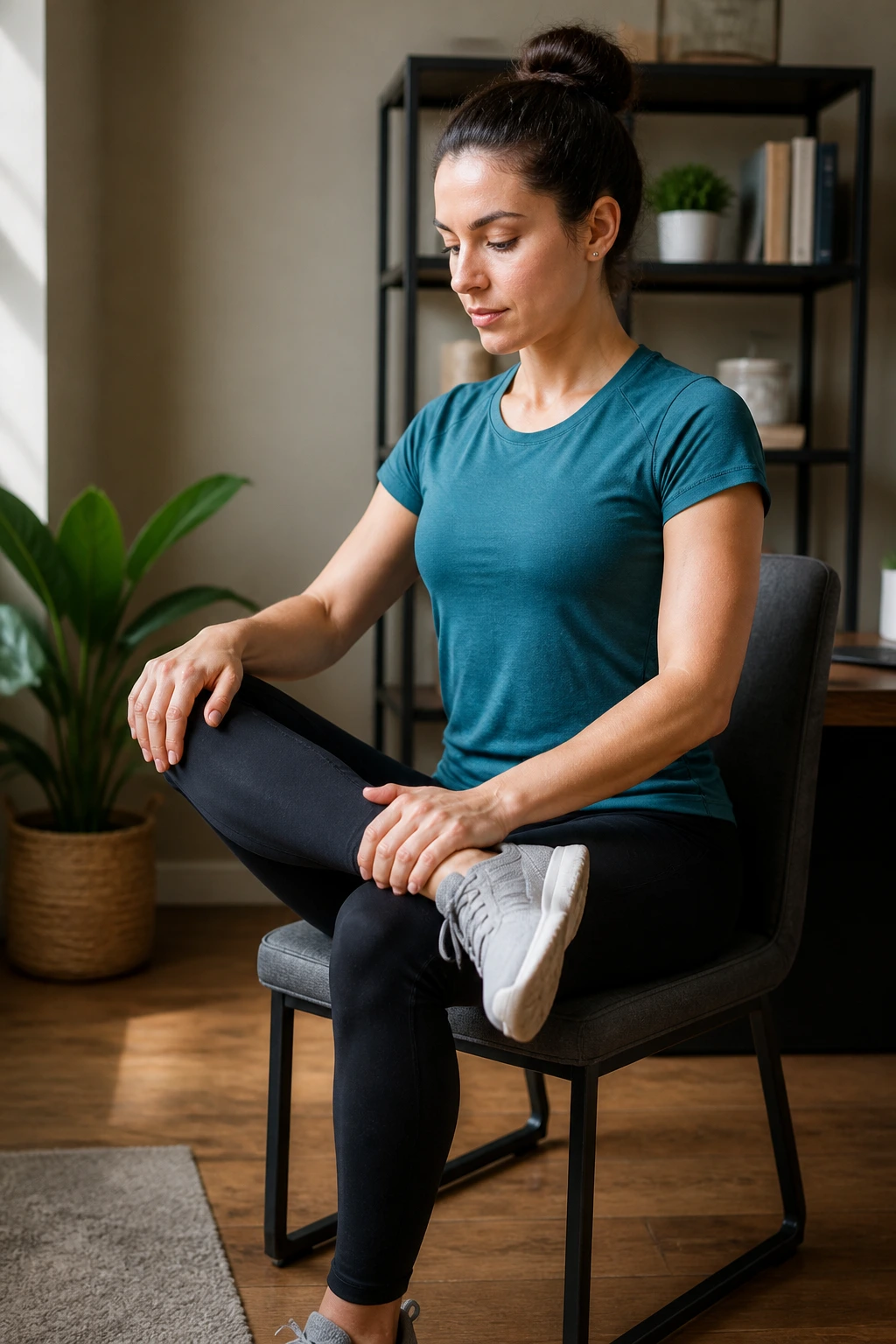
If you are at the office or cannot get down on the floor, you can still address your glutes. This chair-based stretch is surprisingly effective for relieving tension in the outer hip and stabilizing the entire pelvic region.
The Setup
Sit on the edge of a chair with both feet flat on the floor. Cross your right ankle over your left knee. Sit up straight, maintaining a neutral spine. Gently hinge forward from your hips, keeping your chest open.
Avoiding Compression
If you feel pinching in the front of your hip, pull your foot closer to your body. You should feel a stretch in the gluteal muscles on the side of the crossed leg. This is a subtle movement, but for runners with limited mobility, it is an accessible way to keep the hips loose throughout the day.
10. Quad Stretch on Your Side
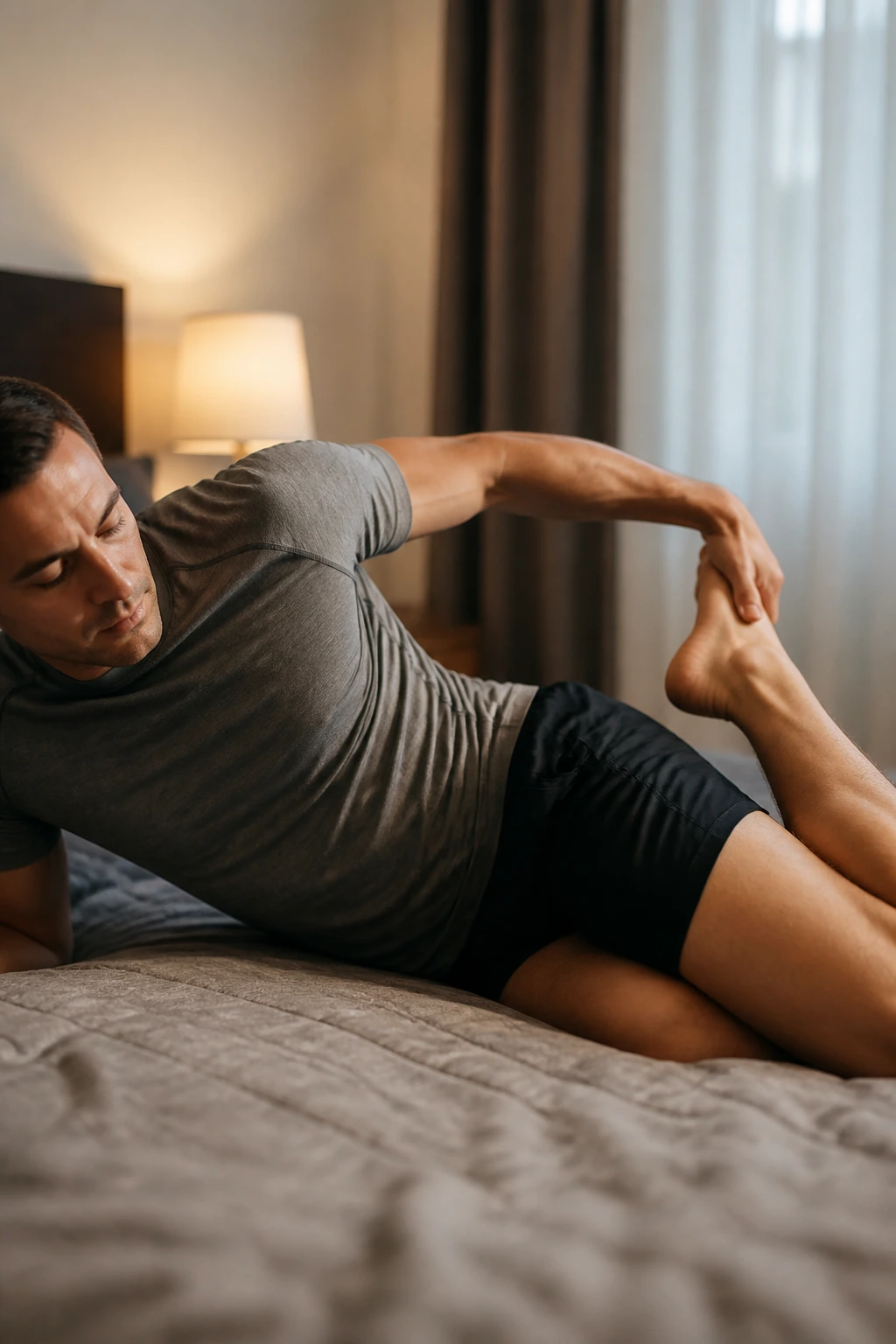
Some runners find that the standing quad stretch puts too much pressure on the knee or the lower back. Lying on your side is a safer, more controlled alternative that allows you to isolate the quad without the balance requirement.
Execution
Lie on your left side with your head resting on your arm. Bend your right knee and grab your right ankle with your right hand. Pull your heel toward your glutes. Keep your knees together—do not let the top knee drift up toward the ceiling.
The Pelvic Tilt
To really get into the hip flexor as well, squeeze your glute and push your hip bone forward. You will feel a dramatic difference in the intensity of the stretch. This is a gentle, stable way to work on your quads, making it perfect for the end of a long training week.
11. Knee-to-Chest Glute Stretch
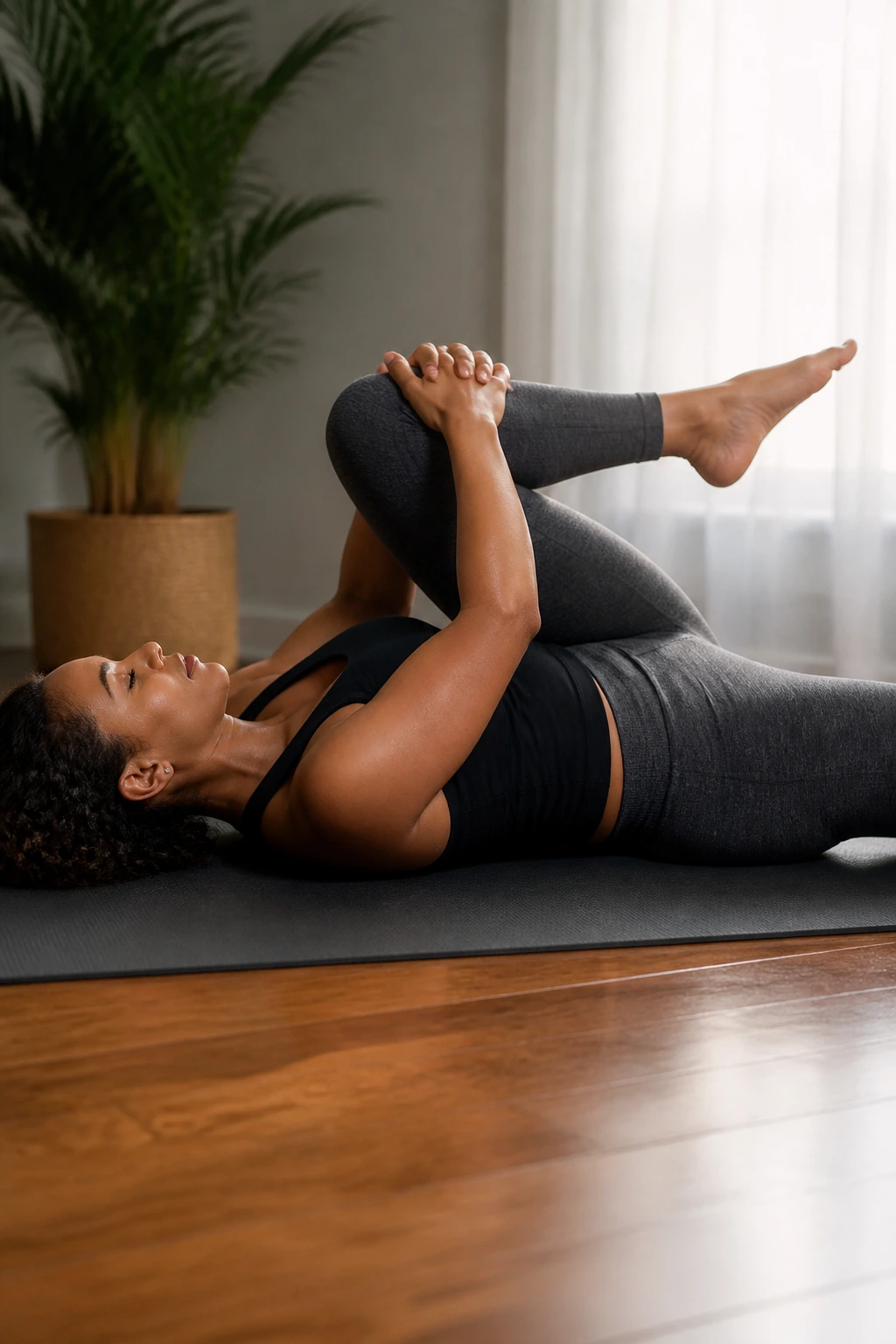
This is a dynamic way to mobilize the glutes and decompress the lower back. It targets the muscles that often spasm during long runs, which can lead to referred pain in the knee.
Moving Through the Stretch
Lie flat on your back. Pull your right knee toward your chest. Keep the left leg flat on the floor. Hold for a few seconds, then release. Repeat this motion ten times, then switch legs.
Why It Helps
This movement helps realign the pelvis. Often, runner’s knee is exacerbated by a pelvic shift. By alternating legs, you are gently rocking the pelvis into a better position, relieving the uneven stress that contributes to patellar tracking issues. It feels like a massage for your lower back and hips.
12. Clamshell Activation Stretch
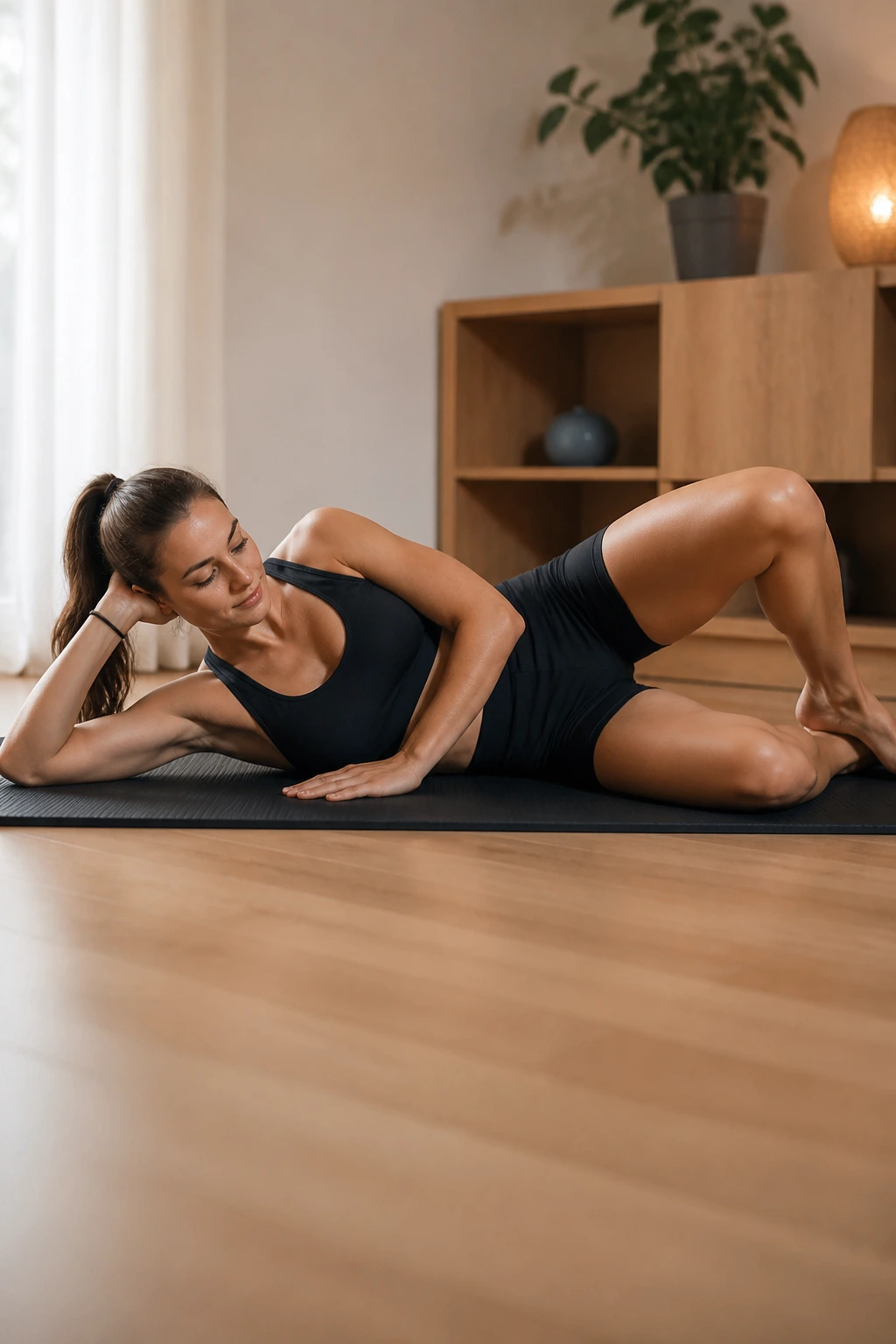
While often used as a strengthening exercise, the clamshell is also an excellent tool for stretching the deep hip rotators. Tight external rotators can pull the thigh bone into a position that stresses the knee.
Proper Form
Lie on your side with your knees bent at a forty-five-degree angle and your feet touching. Keeping your heels glued together, open your top knee as wide as you can without rotating your hips backward. Hold for a second at the top, feeling the deep hip muscles stretch and engage.
The Benefit
Focus on the stretch at the end of the range of motion. This is not just about power; it is about mobility. Doing two sets of fifteen on each side helps ensure that your hips are capable of rotating freely, which takes the torsional stress off your knees during your run.
13. Cossack Squat (Dynamic Mobility)
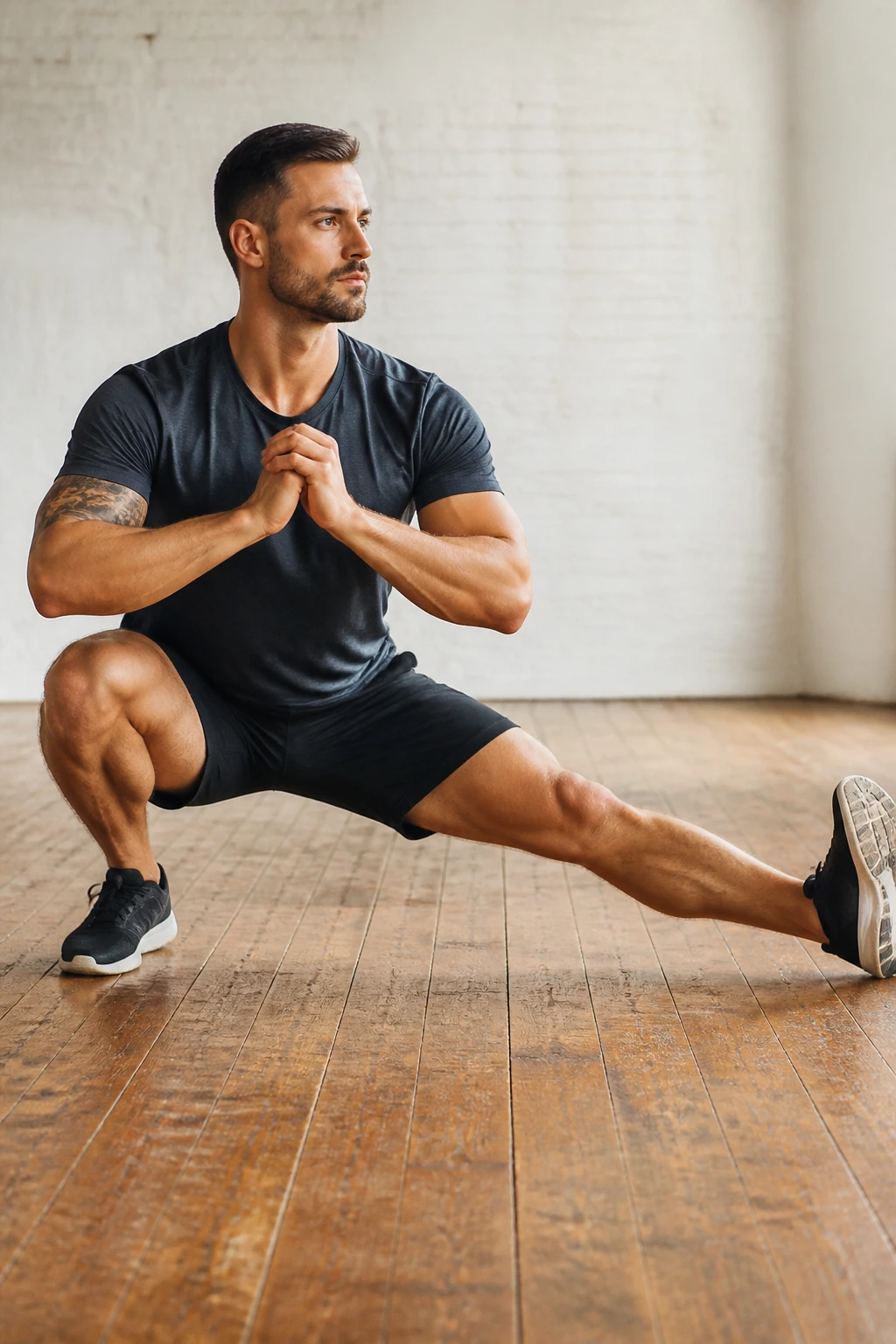
The Cossack squat is a fantastic dynamic stretch that hits the adductors, hamstrings, and ankles simultaneously. It forces your body to manage lateral movement, which is something runners often ignore.
The Movement
Stand with your feet wider than shoulder-width. Shift your weight to your right side, bending the right knee while keeping the left leg perfectly straight. Your left toes should point up to the ceiling. Keep your chest up and your heels on the ground.
Why It’s Unique
This stretch mimics the lateral stability required during trail running or when navigating uneven pavement. It mobilizes the hip joint through a full range of motion, which is crucial for preventing the knee from having to compensate for stiff hips. Start with a shallower squat if your knees feel sensitive.
14. Standing Hamstring Kickback
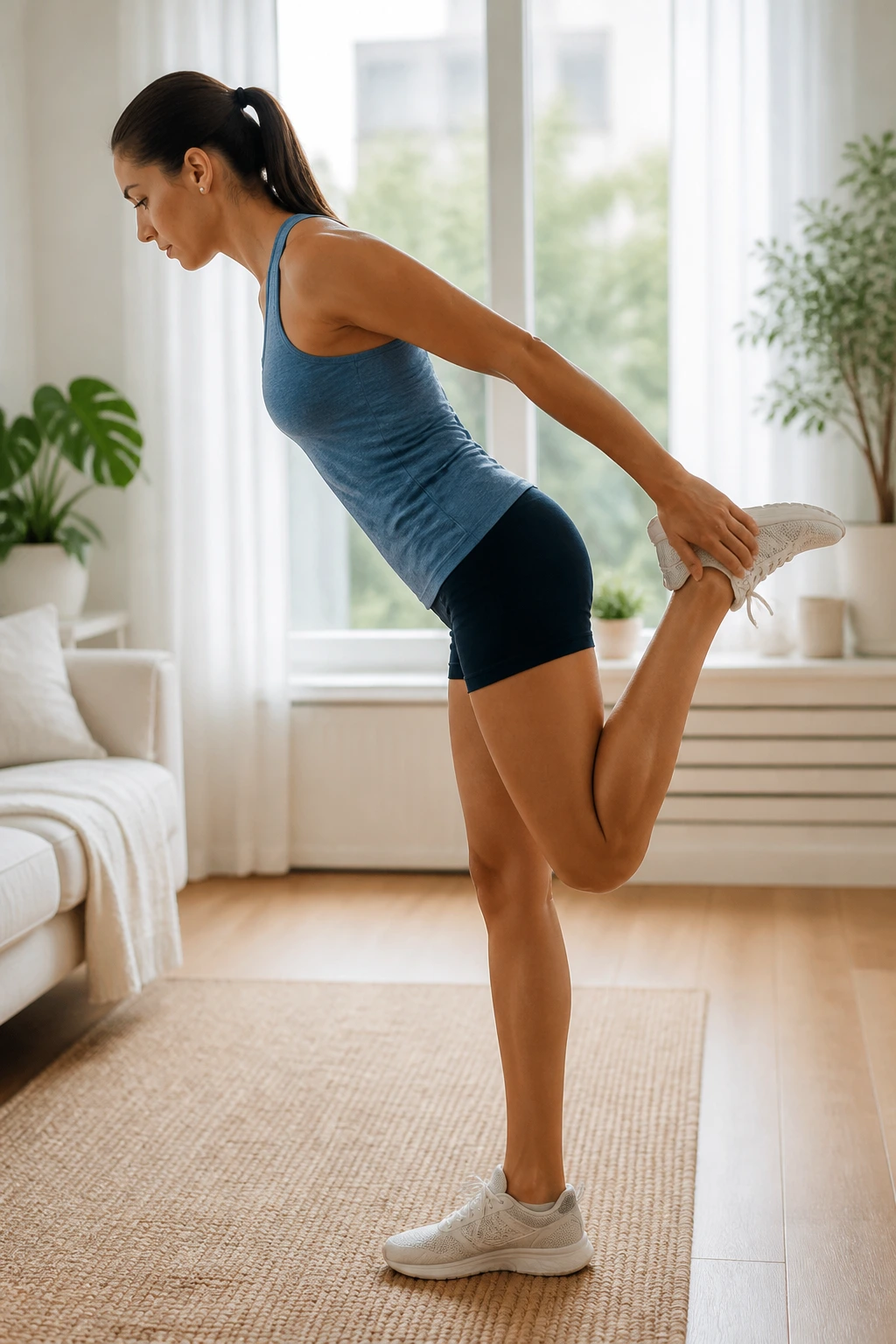
This is a subtle but effective way to mobilize the connection between the hamstrings and the knee. It helps release tension in the popliteal fossa—the space behind your knee.
Execution
Stand upright. Take a small step back with your right leg, keeping the heel off the ground. Bend your left knee slightly and hinge forward, feeling the stretch behind your left thigh. Now, pull your right heel toward your butt, engaging the hamstring.
The Focus
This creates a lengthening and shortening cycle that helps “grease the gears” of the knee joint. It is excellent for runners who feel a “catching” sensation in the back of their knee. Do this for ten repetitions on each side to loosen up before you head out the door.
15. Seated Forward Fold
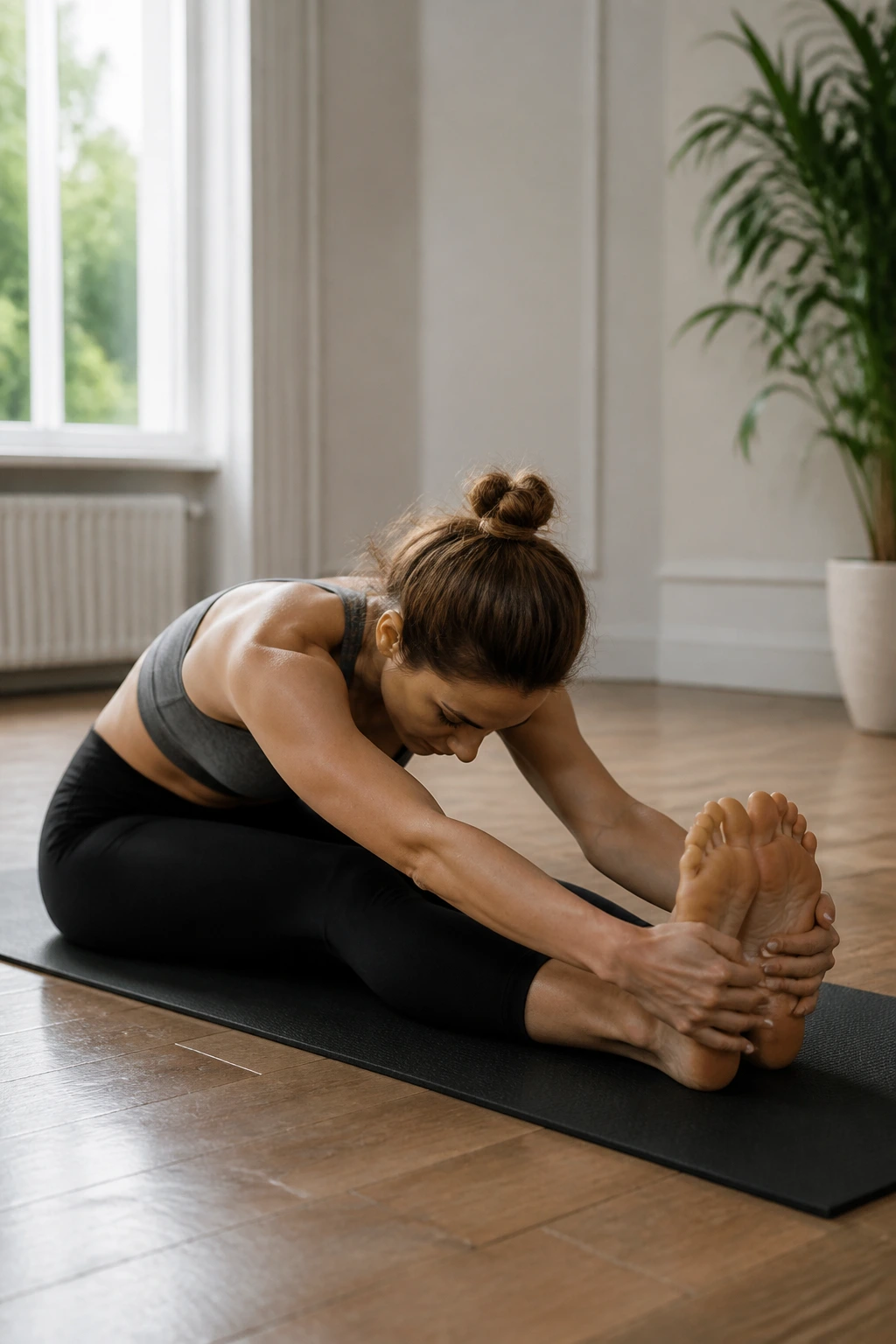
This is a classic yoga pose that, when done correctly, offers a comprehensive release for the entire posterior chain, including the calves, hamstrings, and low back.
The Approach
Sit with your legs straight out in front of you. Flex your feet. Inhale and reach your arms up, then exhale as you fold forward from your hips. Keep your spine long—imagine someone is pulling your head toward the wall in front of you.
Modification
If you cannot reach your feet, use a strap or a towel around the balls of your feet. Gently pull back on the strap to intensify the calf stretch. You should feel this from your heels all the way to your mid-back. It is a slow, meditative stretch that is best performed when your muscles are warm.
16. Piriformis Stretch (Lying Down)
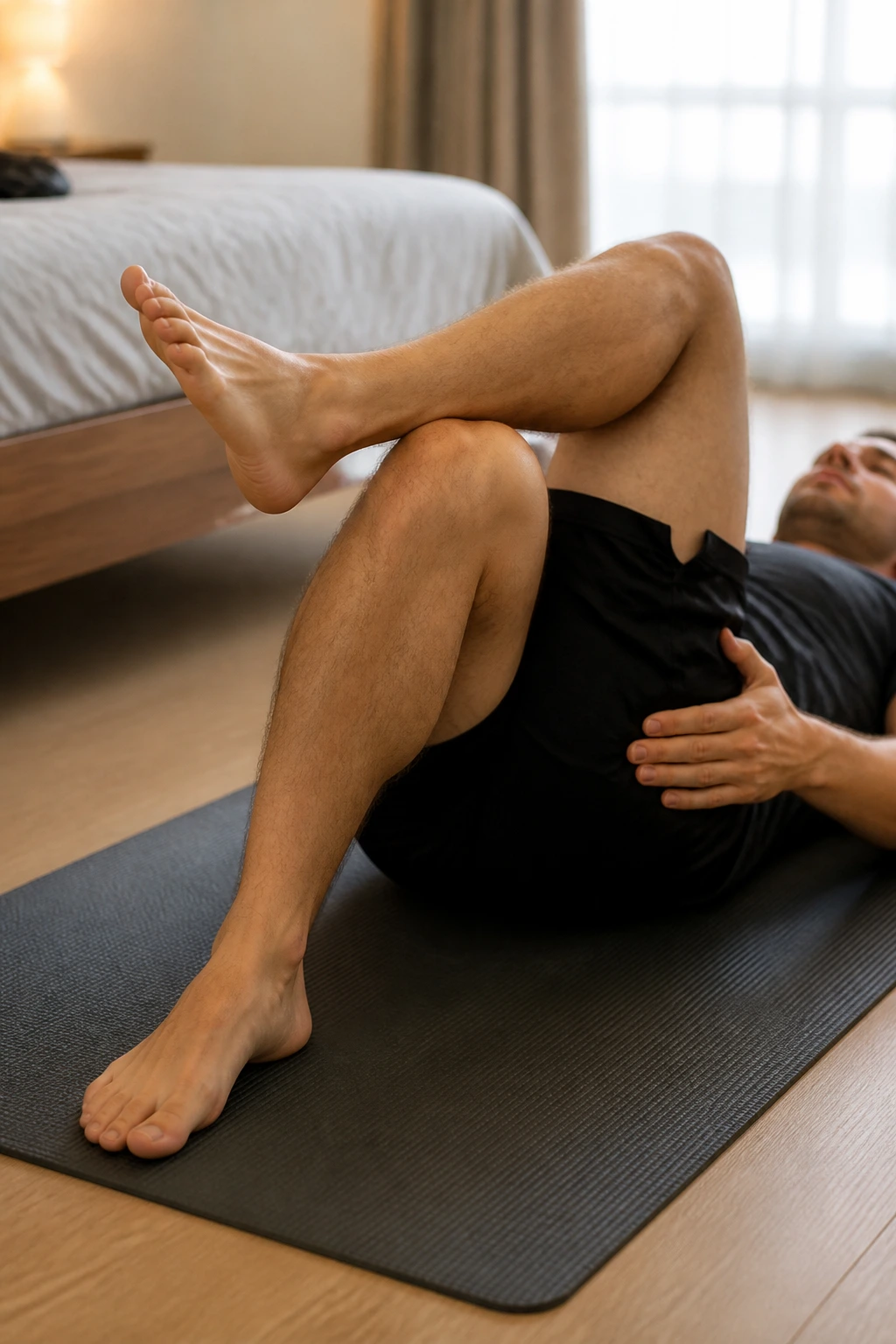
The piriformis muscle lies deep in the glutes and can compress the sciatic nerve, which often causes radiating pain that reaches the knee. Stretching it is vital for any runner suffering from localized knee issues.
The Move
Lie on your back, knees bent. Place your right foot over your left knee. Instead of pulling the leg to you, place your left foot on the floor and gently rock your knees to the left, letting the weight of your right leg pull your hip into a stretch.
The Feedback
You will feel this in the side of your hip. If you need more, you can manually guide the right knee away from you. This is a very targeted stretch; if you feel it in your knee, you have gone too far. Adjust your foot position until you feel the tension exclusively in your hip.
17. Couch Stretch
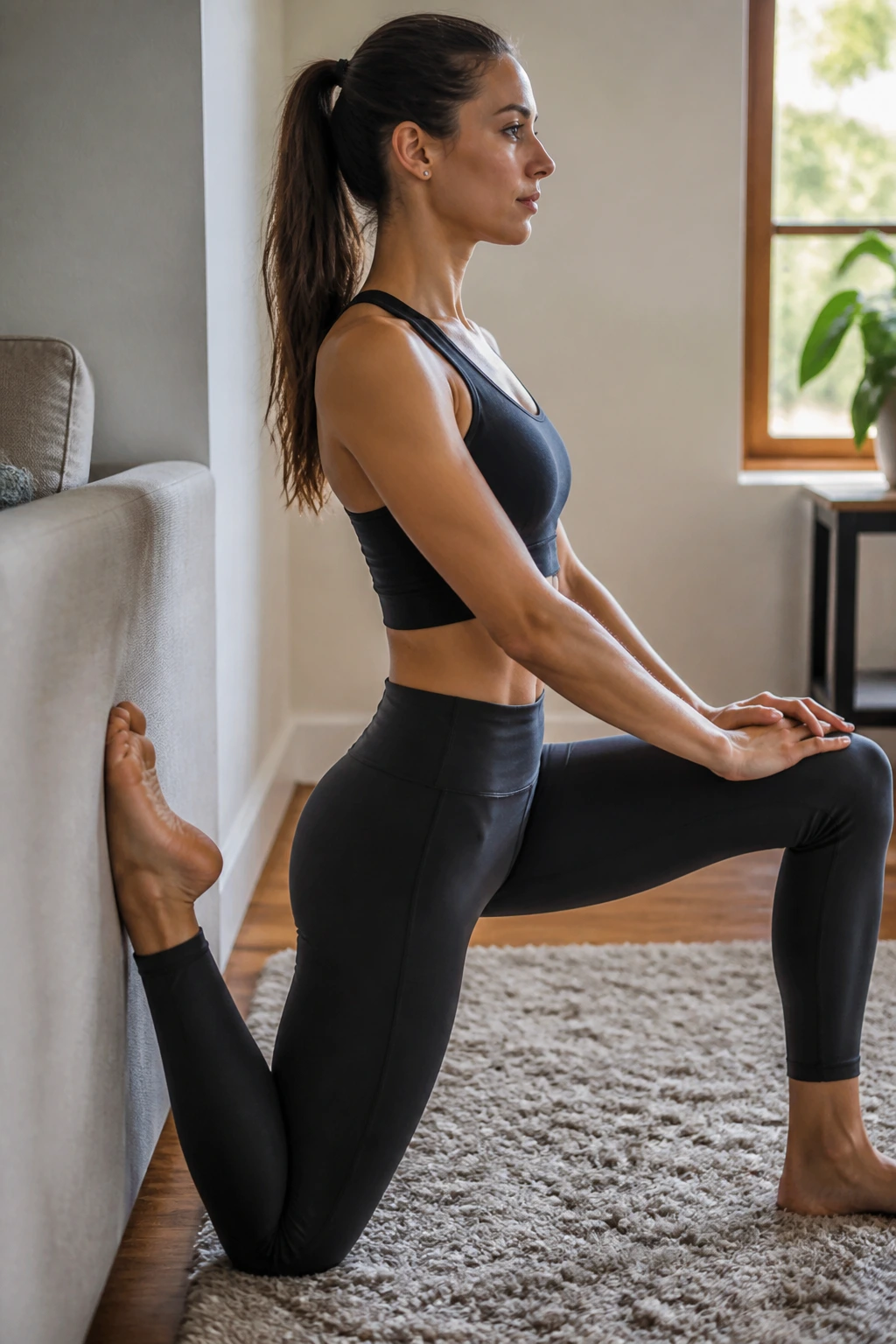
This is the “gold standard” for opening up the quads and hip flexors. It is intense, and it takes time to master, but it is perhaps the most effective stretch for knee pain related to tight thighs.
The Setup
Kneel on the floor with your back to a wall, couch, or chair. Place your right knee as close to the corner of the wall as possible. Bring your right foot up the wall. Step your left foot forward into a lunge.
The Intensity
Your goal is to get your torso upright. You will feel a massive stretch in your right quad and hip. If this is too much, move your right knee further away from the wall. This stretch physically forces the tissues to lengthen. Do not rush this; hold for at least sixty seconds per side, breathing through the intensity.
18. Ankle Mobilization
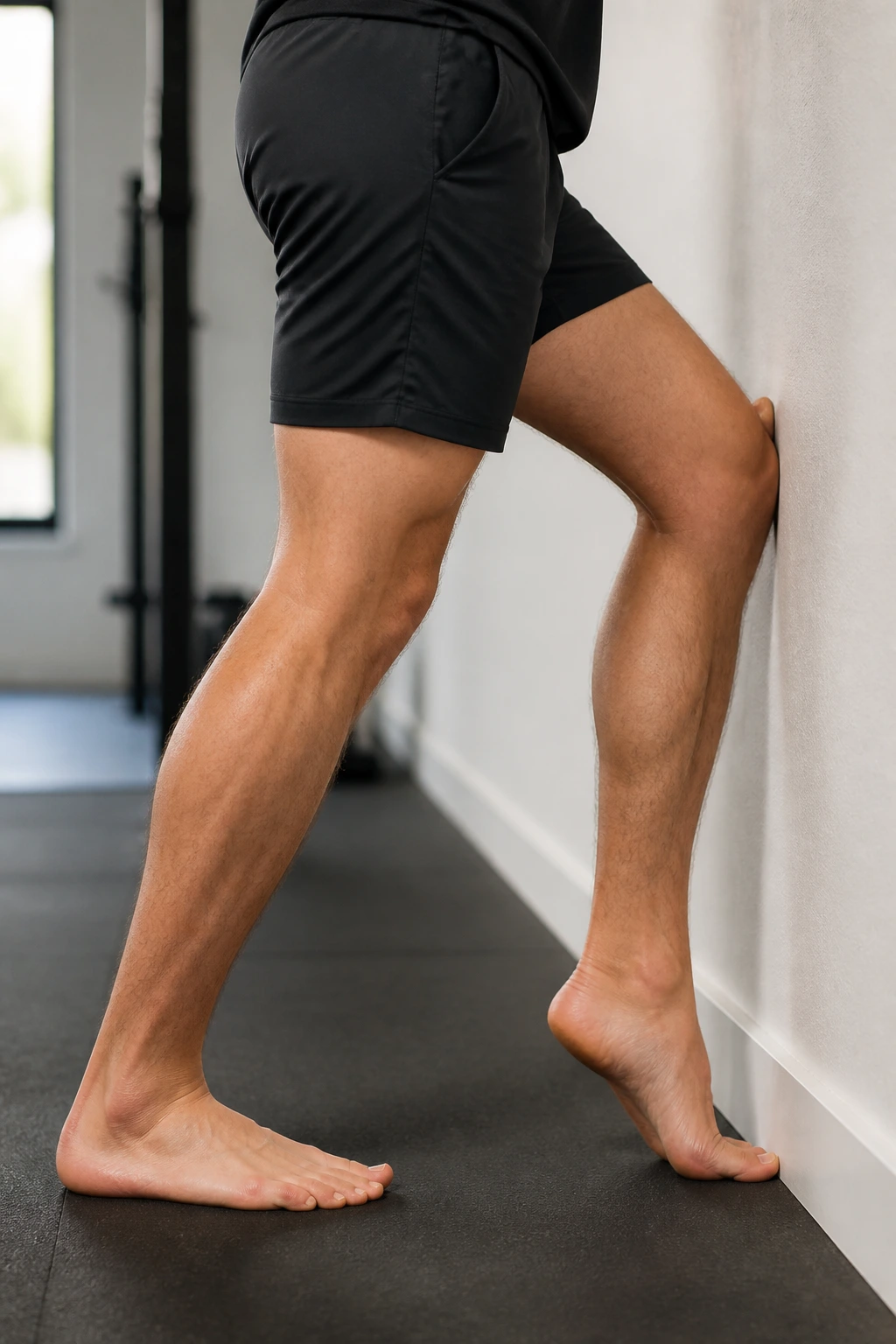
Sometimes the problem isn’t the knee; it’s the ankle’s inability to flex. A stiff ankle forces the knee to rotate inward, causing pain. This stretch mobilizes the talus bone in your ankle.
The Drill
Stand facing a wall with your toes a few inches away. Bend your right knee and try to touch it to the wall while keeping your heel flat on the ground. If you can do it easily, move your foot back an inch.
The Goal
You want to see how far back you can move your foot while still getting your knee to touch the wall without your heel coming off the floor. This improves your dorsiflexion, allowing your knee to track naturally over your foot during your run. It is a game-changer for stride efficiency.
19. TFL Release with Tennis Ball
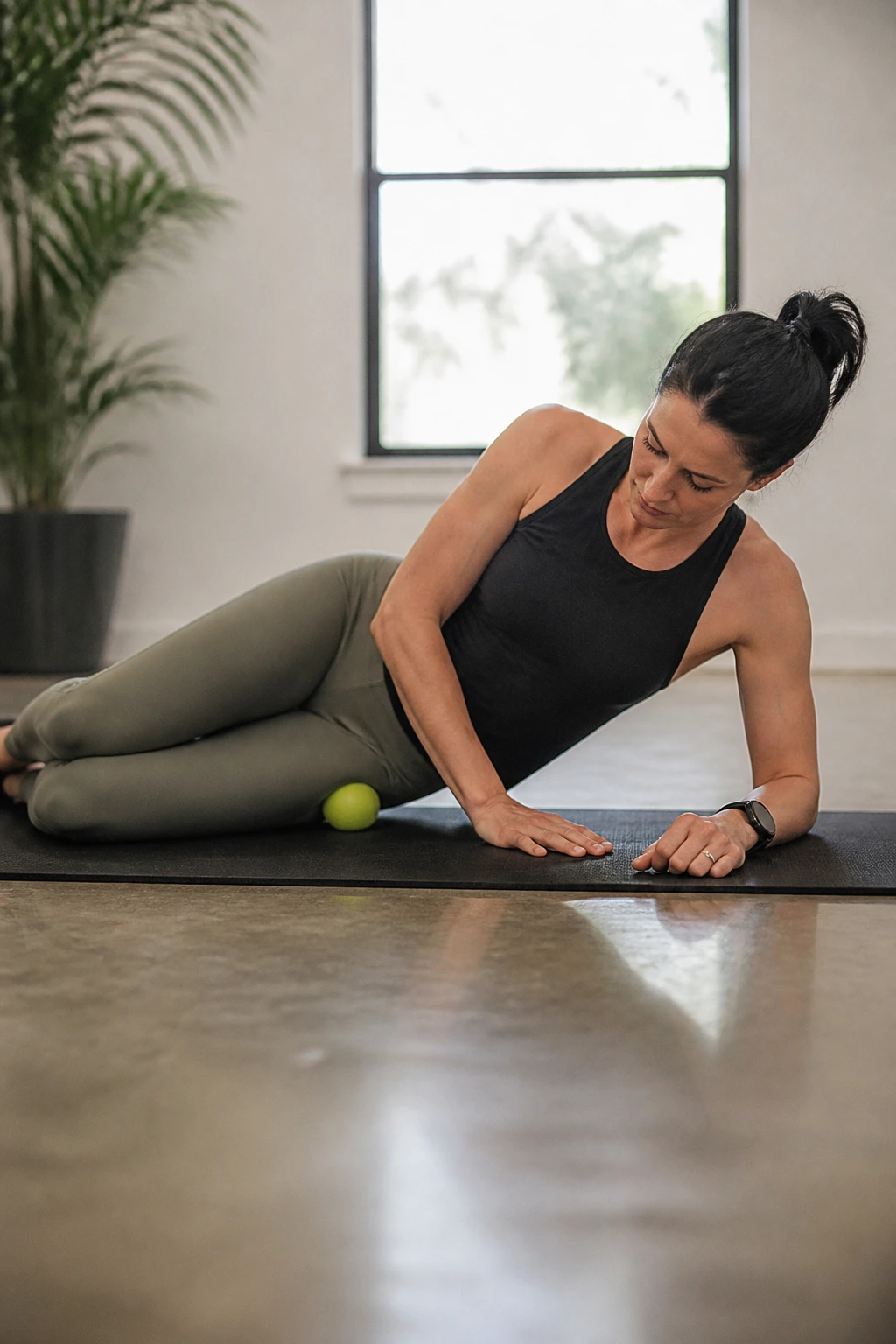
The tensor fasciae latae (TFL) is a small muscle at the top of your hip that connects to the IT band. When this little muscle gets tight, it wreaks havoc on your knee.
How to Do It
Find the soft spot just behind your hip bone. Place a tennis ball (or lacrosse ball) on the floor and lie on your side, positioning that spot directly on the ball. Support yourself with your hands.
The Release
Small, slow movements are the key. Do not grind back and forth aggressively. Just shift your weight until you find the “hot spot,” then hold. Breathe. You might feel a strange sensation—almost like a nerve twitch—but this is often where the knee tension originates. Two minutes on each side is plenty.
20. Butterfly Fold
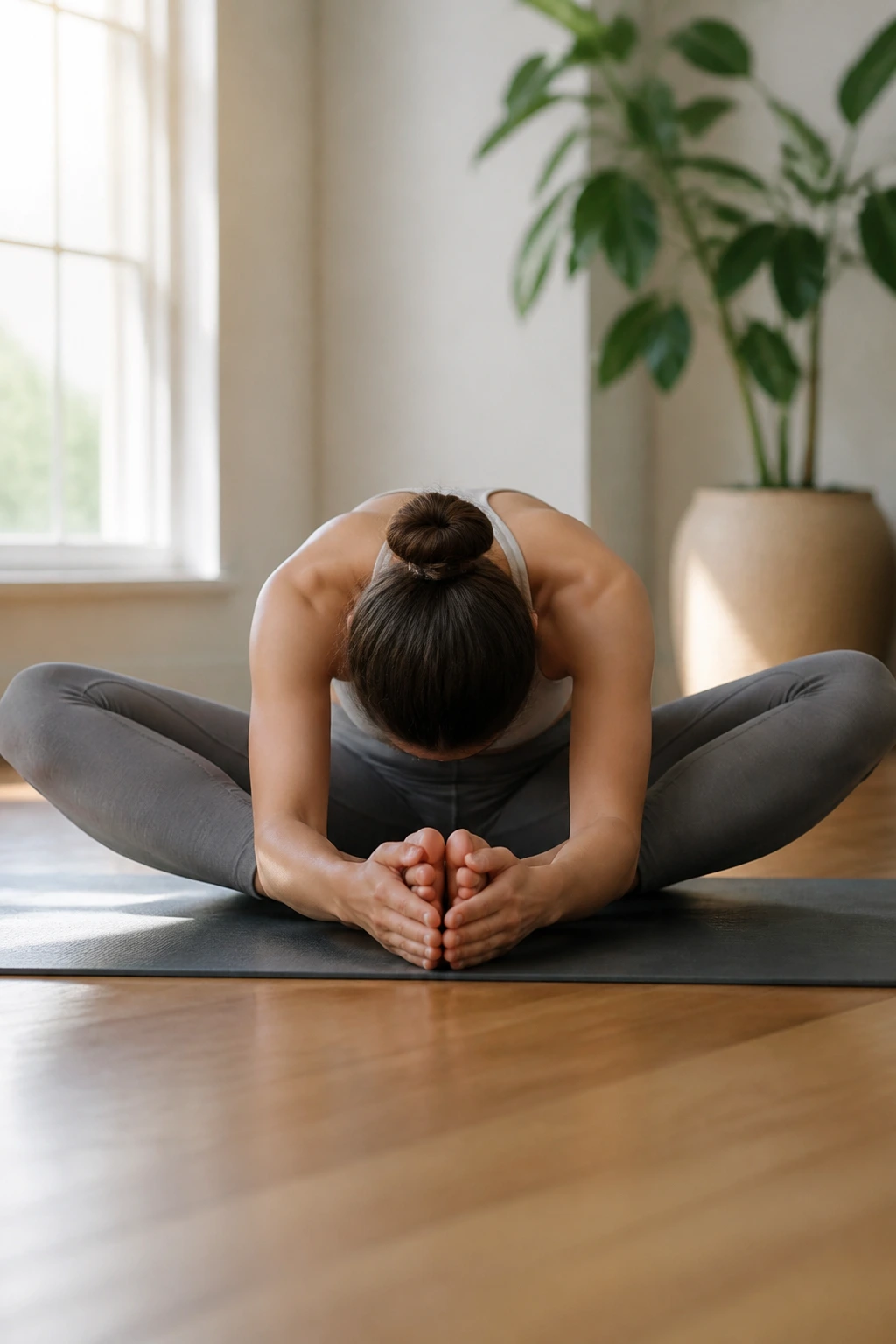
This is a deeper version of the butterfly stretch mentioned earlier, focusing on lengthening the inner thighs by adding a forward fold.
The Technique
Get into the butterfly position—feet together, knees out. Instead of just sitting tall, round your spine slightly and fold forward, reaching your chest toward your feet. This shifts the stretch from the upper groin to the lower inner thigh and hip rotators.
Why It Works
It combines hip opening with spinal decompression. For runners who sit at desks, this provides a vital release for the entire lower body. It helps balance the tension between the inner and outer hip, which is essential for proper knee tracking. Hold for two minutes, letting gravity do the heavy lifting.
Final Thoughts
Stretching is the silent work of a resilient runner. It is rarely the part of training that gets social media attention, but it is the part that keeps you on the road year after year. When you commit to these movements, you are essentially telling your body that you value longevity over intensity. You are investing in your joints so that you do not have to pay for them later with inflammation or forced time off.
Consistency remains your greatest tool. You do not need to do all twenty of these every single day. Pick five that hit your specific tight spots and commit to them for five minutes each evening. Over weeks and months, the cumulative effect of those five minutes will fundamentally change how your knees feel during and after your runs.
If you find that your pain persists despite these efforts, do not hesitate to seek professional guidance. A physical therapist can provide a level of diagnostic insight that no article can match, helping you identify if your pain stems from structural imbalances that require specific, corrective strength training rather than just stretching. Listen to your body—it is usually trying to tell you exactly what it needs before it resorts to yelling with pain. Stay patient, stay consistent, and keep moving.
