



A squat challenge looks simple right up until your thighs start arguing with you halfway through the set. That’s exactly why squat challenges you can do at home work so well: no machine, no big setup, no excuse to wait for the “right” gym day. A chair, a backpack, a wall, a timer — that’s enough to make your legs honest.
The good ones do more than pile on reps. They change the feel of the movement. Slow squats make you notice every inch of the descent. Pause squats strip away momentum. Jump squats turn your living room into a sweat test. And the quieter versions — chair taps, split squats, B-stance work — expose weak spots you can hide when you rush through regular air squats.
Form still matters. Feet stay planted. Knees track in the same direction as your toes. Your torso leans forward a bit if the variation asks for it, and that is fine. Pain is the line you do not cross; deep muscle work and a hard burn are one thing, sharp joint pain is another.
Some of these are strength challenges. Some are conditioning. A few are just mean in a very efficient way. Start with the one that fits your space and your mood today.
1. 10-9-8-7-6-5-4-3-2-1 Ladder
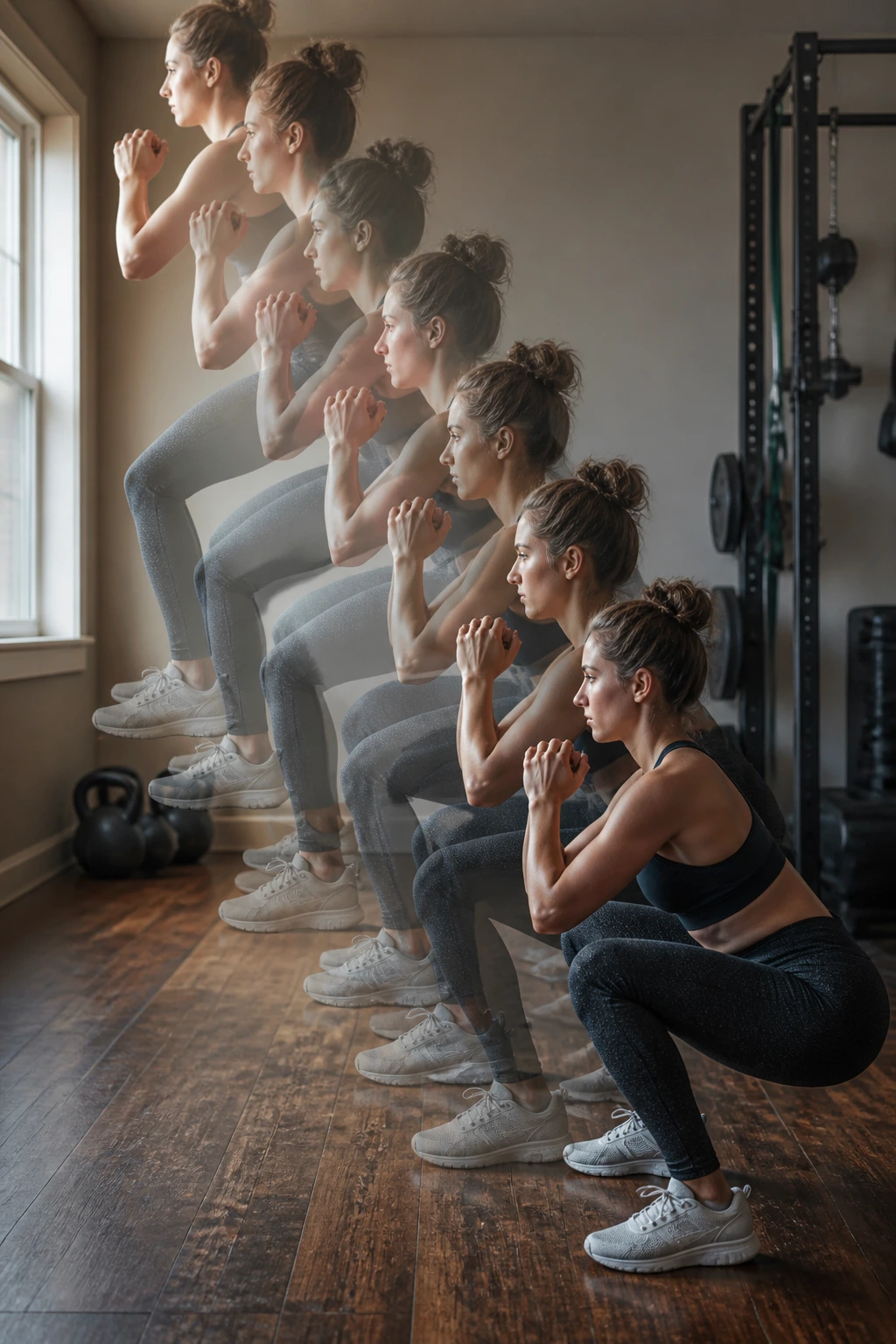
A descending ladder is a clean way to make squats feel manageable without making them easy. You do 10 reps, then 9, then 8, all the way down to 1. That gives you 55 total squats with a built-in sense of progress, because every round gets shorter and every count brings you closer to done.
The best part is the pacing. You are never staring at a giant block of work. You are just knocking out one small rung at a time, which is handy on days when motivation is thin and attention span is thinner.
Quick setup:
- Start with 10 reps and rest 15 to 30 seconds between rungs if you need it.
- Keep your chest tall and your heels down.
- Make the last three rungs look as clean as the first three.
- Want more work? Repeat the ladder once after a 60-second rest.
Simple. Honest. Effective.
2. 60-Second Max-Reps Test
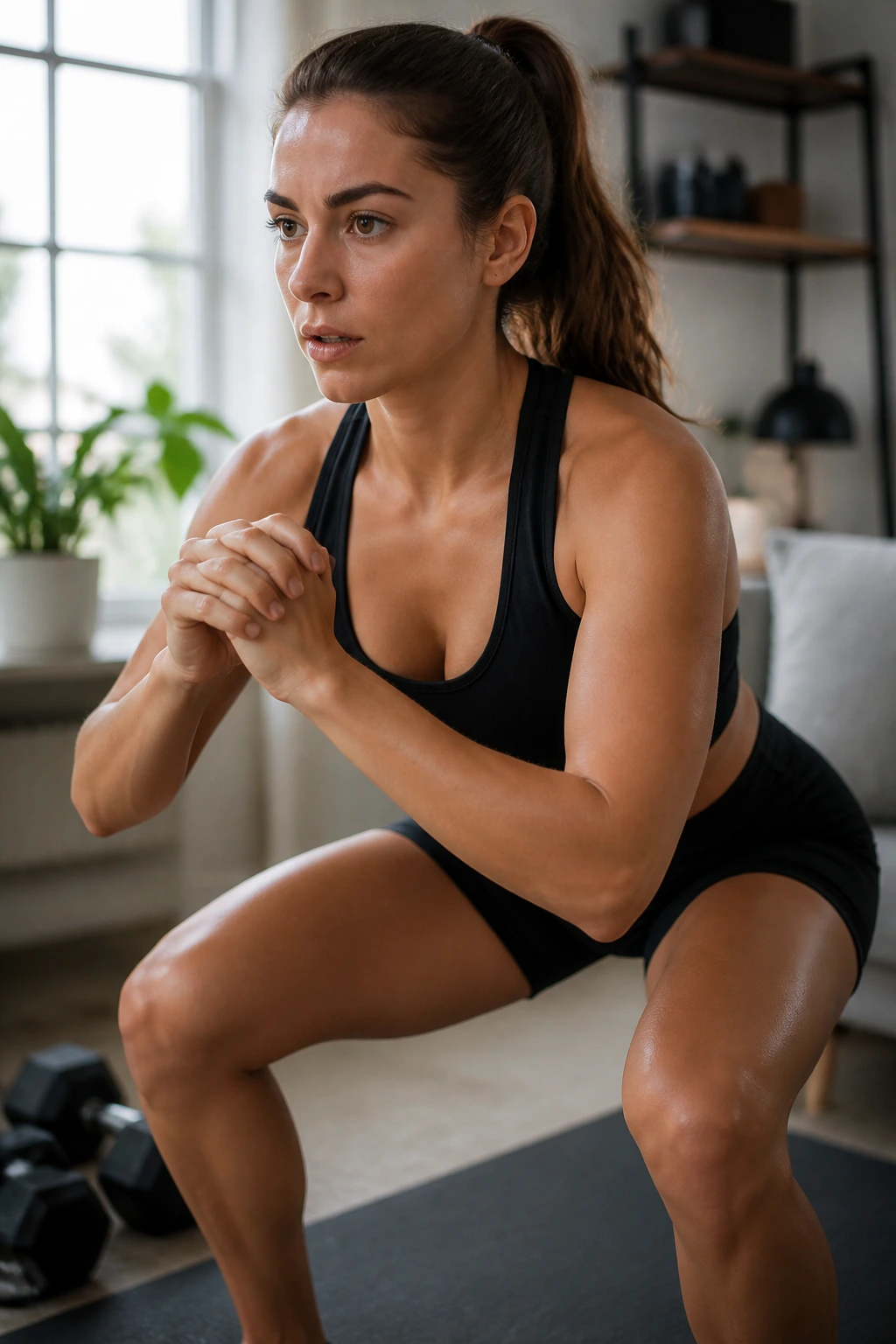
How many clean squats can you do in one minute without turning the movement into a bounce contest? That is the whole challenge. It sounds almost too plain, but a 60-second test tells you a lot about leg endurance, breathing, and whether your squat form falls apart when your heart rate climbs.
What Counts as a Clean Rep
A clean rep means you lower under control, reach a depth you can repeat, and stand all the way back up without hitching, bouncing, or chopping the movement short. If your first 20 reps are neat and your next 15 look like a different exercise, the score matters less than the quality.
Use the same stance every time you test. Same floor. Same shoes, or no shoes if that is your normal setup. That way the number means something.
Re-test every few weeks if you like tracking progress. Better pacing, cleaner depth, and fewer sloppy reps are all wins, even if the raw number only climbs a little.
3. 5-1-1 Tempo Squat Challenge
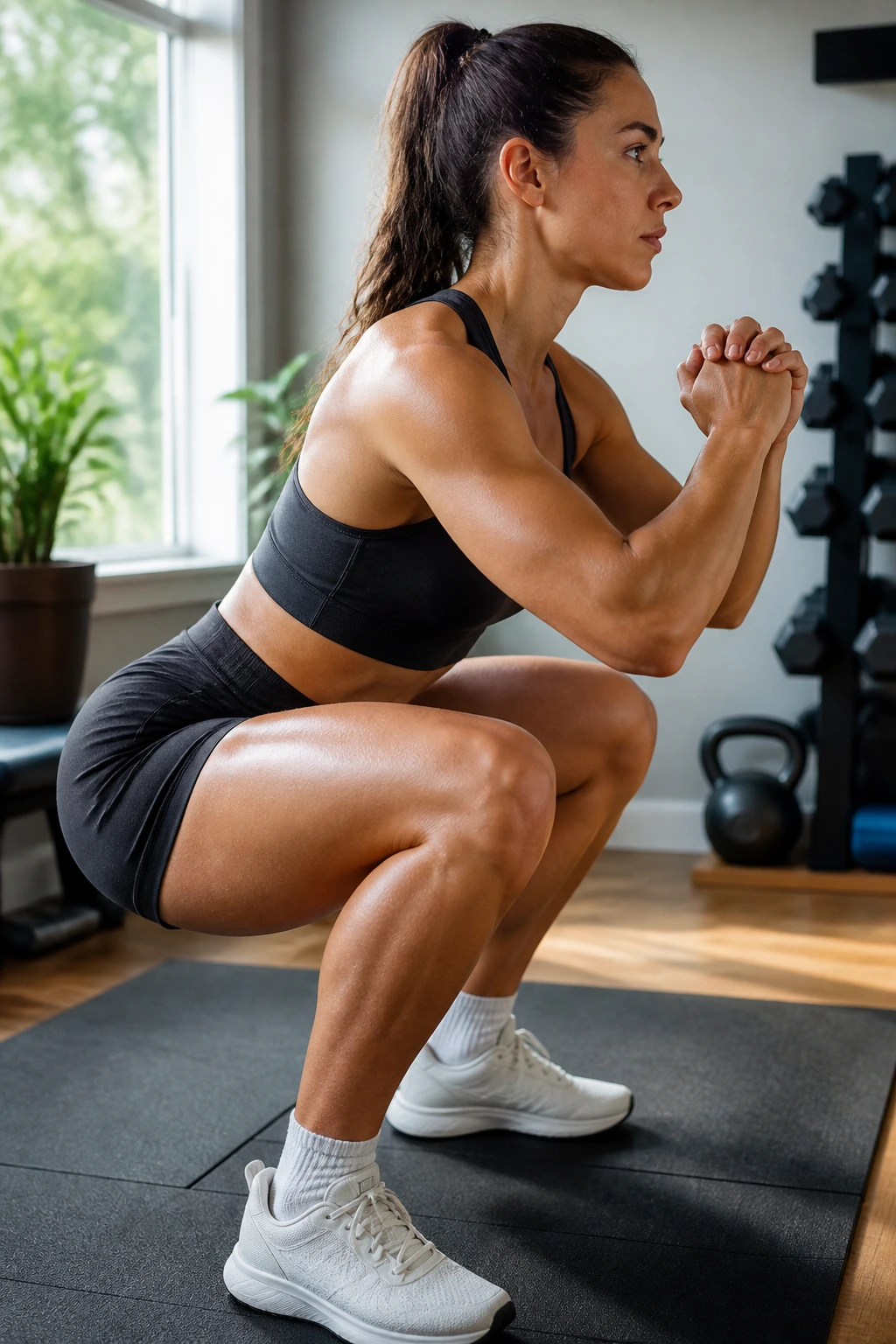
Slow squats make ordinary bodyweight work feel heavy. A five-second descent, one-second pause, and one-second rise turns each rep into a long, controlled grind. Ten reps can feel more demanding than twenty fast ones, which is why tempo work has such a loyal following among people who train at home with no weight at all.
The trick is not to collapse into the bottom. Lower yourself like you are trying to leave a clean footprint on the floor. Hold the bottom for a beat, then drive up without jerking.
The Tempo to Use
- 5 seconds down
- 1 second pause
- 1 second up
- Rest 45 to 75 seconds between sets
- Do 3 to 5 sets of 8 to 12 reps
If your knees cave inward or your heels pop up, the tempo is too ambitious for your current control. Shorten the count first. Depth can come later.
4. 2-Second Pause Squat Challenge
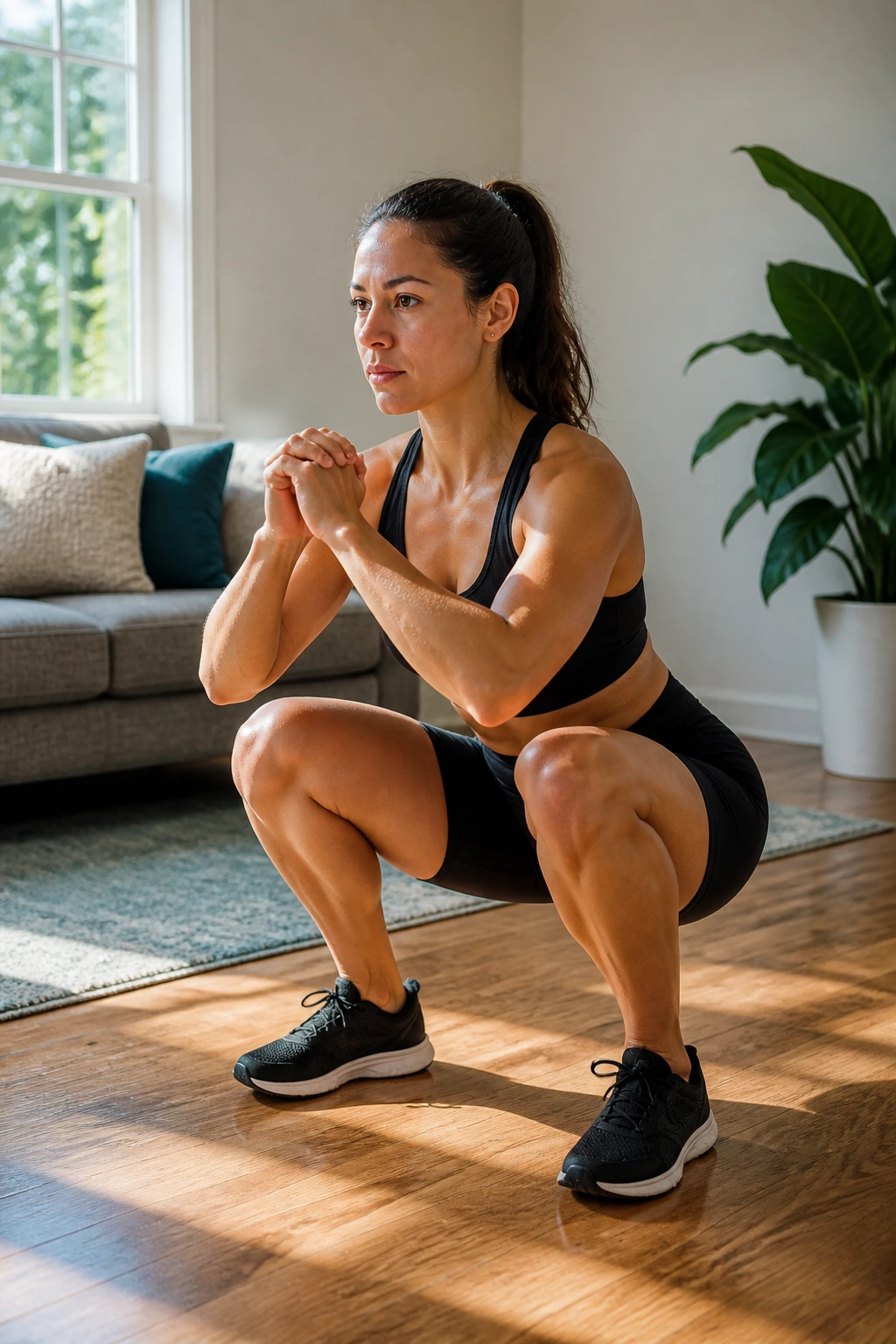
A pause squat is sneaky. The movement looks normal until you freeze at the bottom and realize how much you were relying on rebound. That little stop removes momentum and forces your legs, glutes, and trunk to do the work themselves.
The pause should happen in the deepest position you can own with a flat foot and a calm torso. Two seconds is enough to feel it. Longer pauses are fine if you can keep tension, but do not relax down there like you are sitting on a couch. Stay tight.
This is a good choice if your regular squats feel too bouncy or if you want better control at the bottom position. I also like it for people who rush through reps. A pause makes sloppy pacing obvious fast.
Try 3 sets of 10 to 15 reps, with 2 seconds held at the bottom of every rep. The burn arrives early.
5. 3-Pulse Squat Challenge
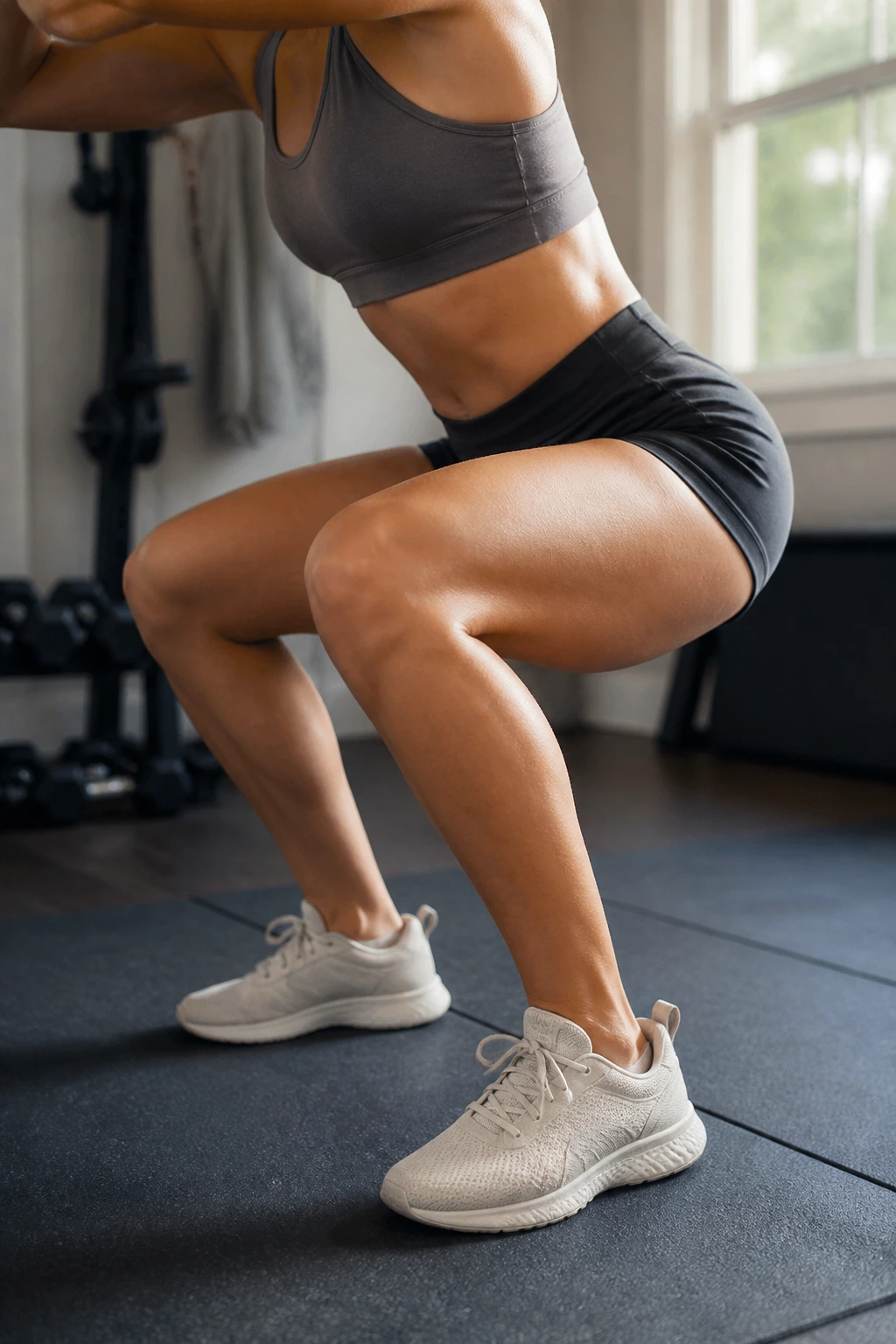
Pulse squats are not graceful. That is part of the appeal. You drop into a squat, rise a few inches, drop again, and keep pulsing in that small range before standing up. The constant tension lights up the thighs and glutes without giving your legs much chance to hide.
A good pulse stays low and controlled. The movement should be tiny — think 2 to 3 inches, not some huge bobbing motion that turns into a half-rep circus. Keep your chest up and your feet glued down.
If your knees are touchy, use shallow pulses and keep your range modest. A deep pulse that hurts your joints is not “hard work.” It is a bad setup.
One simple format: 10 regular squats, then 10 pulses, then stand and rest for 30 seconds. Do that for 3 or 4 rounds. It is short. It is ugly. It works.
6. Sumo Stance Squat Challenge
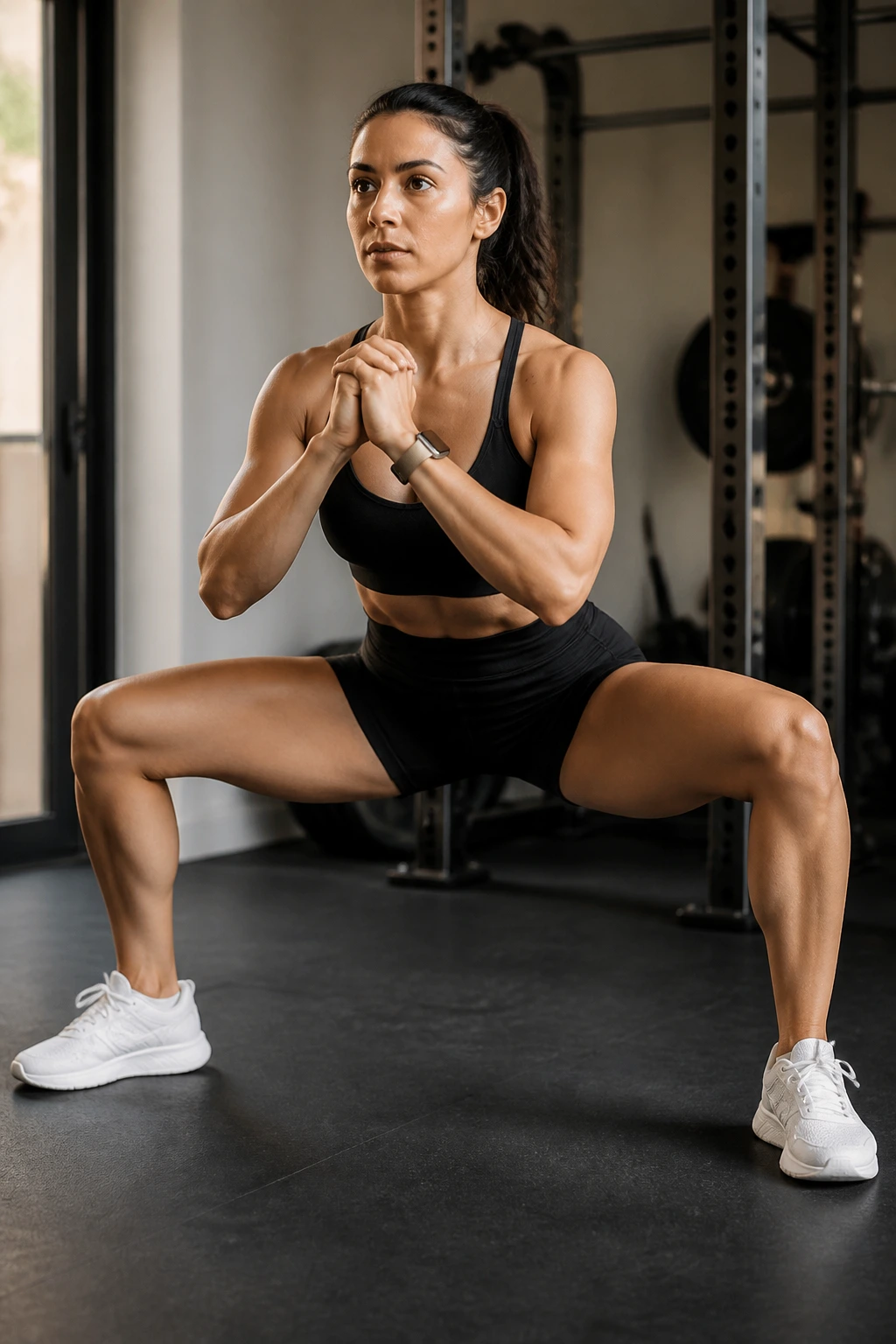
A wider stance changes the whole feel of the squat. With your feet set a little beyond shoulder width and your toes turned out about 30 to 45 degrees, the movement shifts more toward the inner thighs and glutes. Some people love it because it feels friendly on the hips. Others hate it because it exposes tight groins and stubborn ankles. Fair enough.
The key is not to force an exaggerated wide stance. Go only as wide as you can control without tipping forward or losing your knee tracking. Your knees should still follow the line of your toes on the way down and up.
Why It Feels Different
A sumo squat usually lets you sit a little deeper with a more upright torso. That makes it useful when regular squats feel cramped. It also gives home workouts a nice change of angle, which matters more than people think. Doing the same foot position every time gets stale fast.
Try 4 sets of 12 to 20 reps. If the burn shows up in your inner thighs after the first round, you are in the right place.
7. Split Squat Challenge
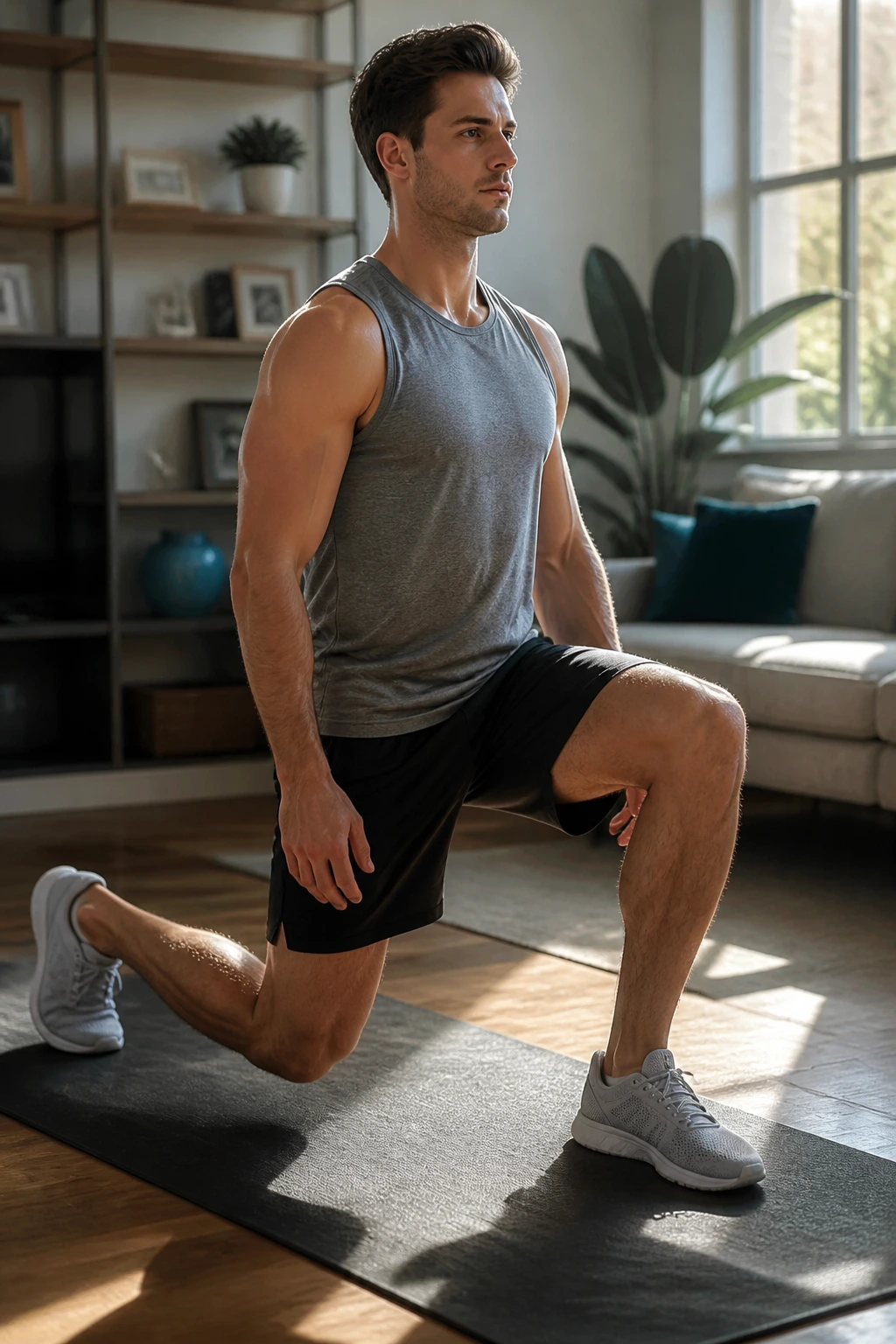
Split squats are the squat challenge that quietly humbles everyone. One foot stays in front, the other in back, and most of your weight lives on the front leg. The setup looks simple. The first few reps tell the truth.
Set Up the Split Stance
Place your front foot far enough forward that, when you lower, your front knee can bend without your heel lifting. Your back heel stays off the floor. Lower straight down, then drive through the front foot to stand.
That front leg should do the heavy lifting. If you bounce off the back leg or tip your torso too far forward, the challenge turns into a sloppy lunge.
Common Mistakes
- Standing too narrow, which makes balance harder than it needs to be
- Letting the front knee cave inward
- Cutting the depth short because the back foot feels awkward
- Rushing the descent and losing control
Aim for 8 to 15 reps per side. Add a second set before you add speed. Speed is usually the wrong fix here.
8. Chair-Touch Squat Challenge
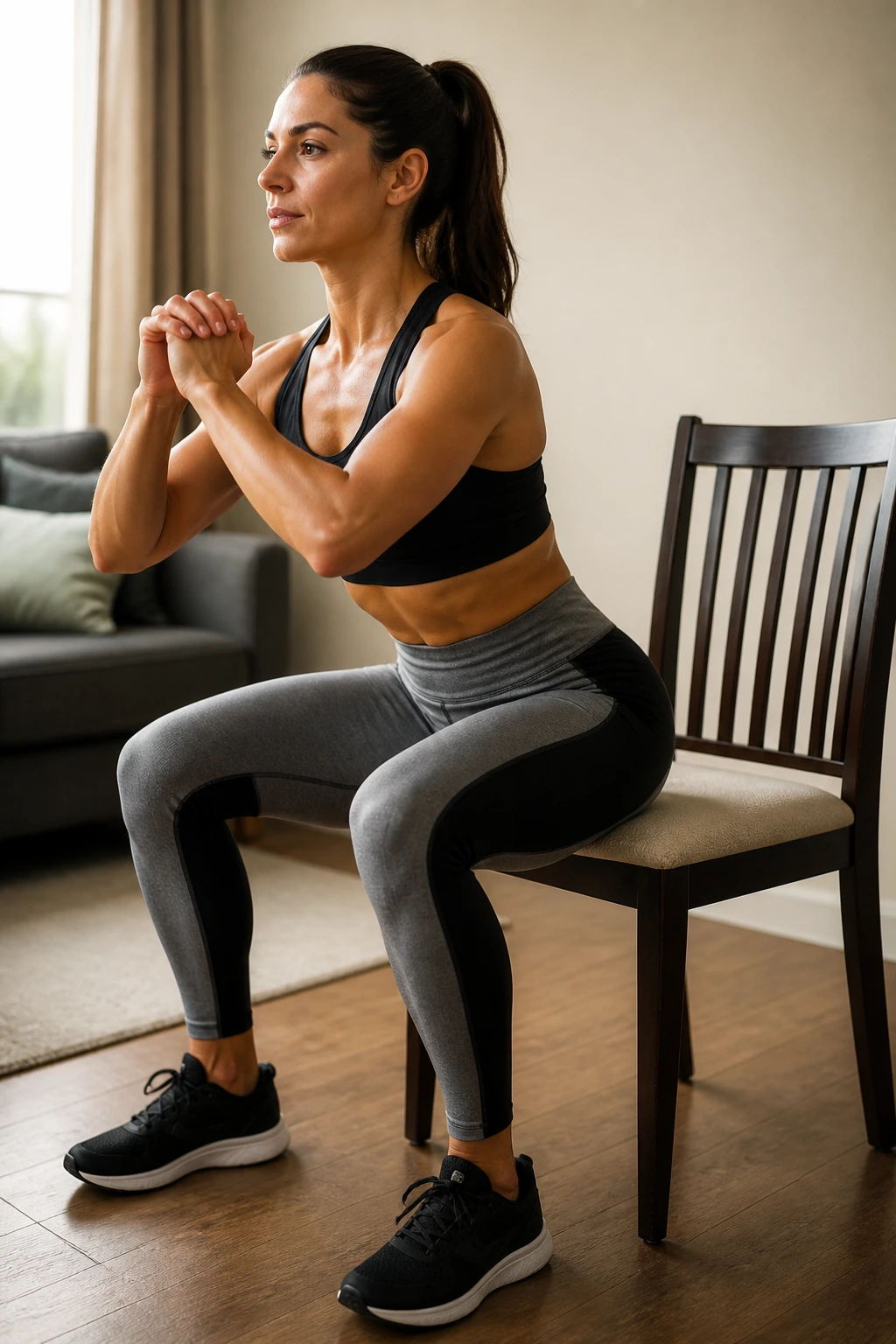
A chair is one of the best squat tools in a house. It gives you a repeatable depth target, which is gold if you tend to cut squats short or sink too deep on some reps and not others. Lower until your glutes lightly tap the chair, then stand back up.
The touch should be light. No plopping. No full sit. The goal is a consistent range of motion, not a rest break in the middle of every rep. A sturdy dining chair works well, and a lower couch edge makes the challenge a bit harder.
If you want to make it stricter, use a chair that sits just below parallel. If you want a beginner-friendly version, use a higher seat and slow the descent.
A chair-touch squat challenge is especially useful if you are teaching someone else to squat at home. It gives them a target they can feel, which is sometimes easier than explaining depth with words.
9. Wall Sit and Squat Combo
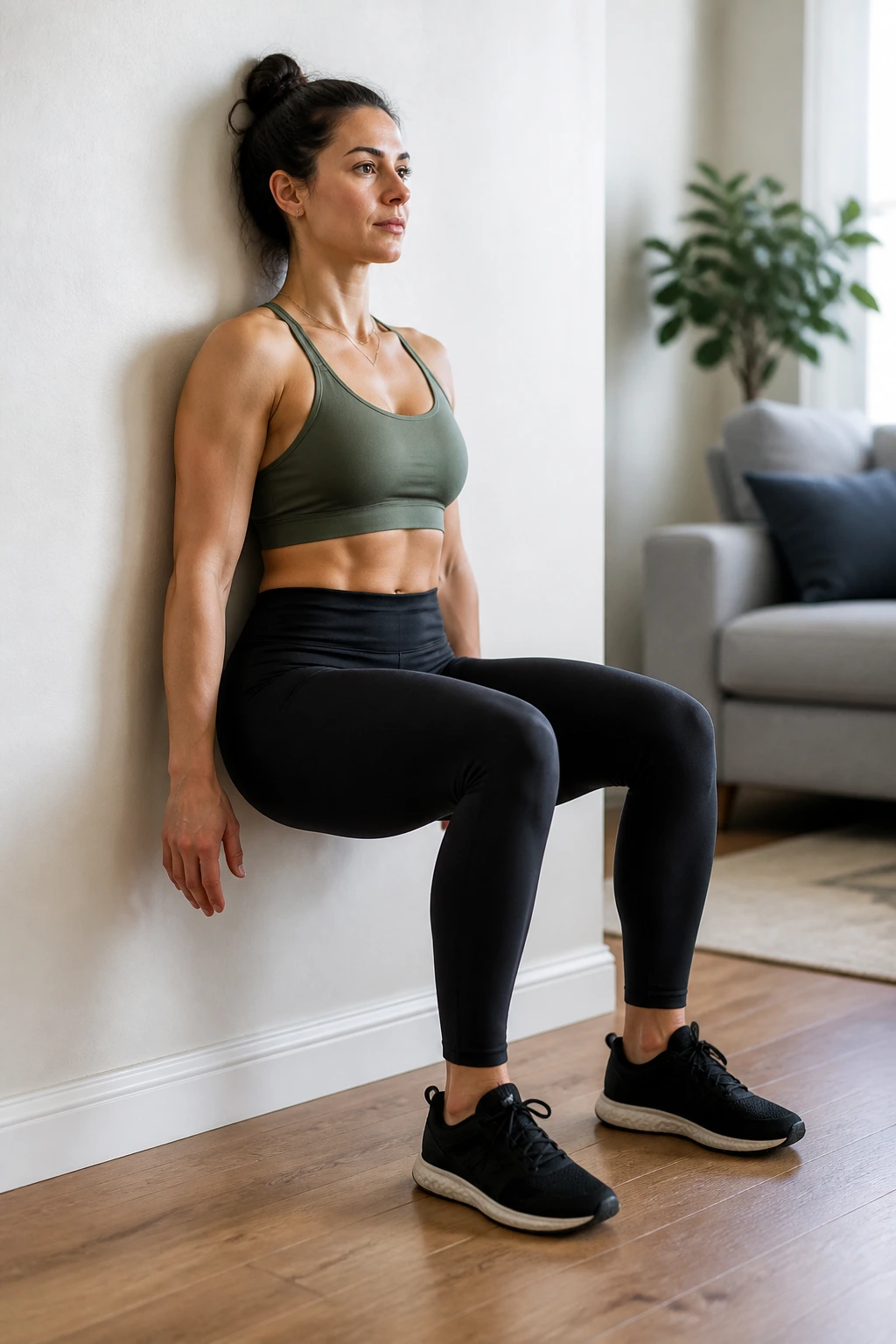
Wall sits and squats belong together more often than people admit. The wall sit fries your legs isometrically — no movement, lots of tension — and the squats that follow ask your muscles to keep going while they are already tired. That shift is what makes the combo sting.
Try 30 to 45 seconds on the wall, then step away and do 15 regular squats. Rest for 45 to 60 seconds and repeat for 3 to 5 rounds. If you want a cleaner challenge, keep the wall sit at exactly the same angle each time: knees roughly at 90 degrees, back flat, feet about 1 to 2 feet from the wall.
The wall sit should feel like a seat you cannot escape from. The squats afterward should feel clumsy for the first few reps, then settle into rhythm. That messy middle is where the challenge lives.
This one is a favorite finisher after a short home workout, because it doesn’t need equipment and it does not pretend to be elegant.
10. Jump Squat Challenge
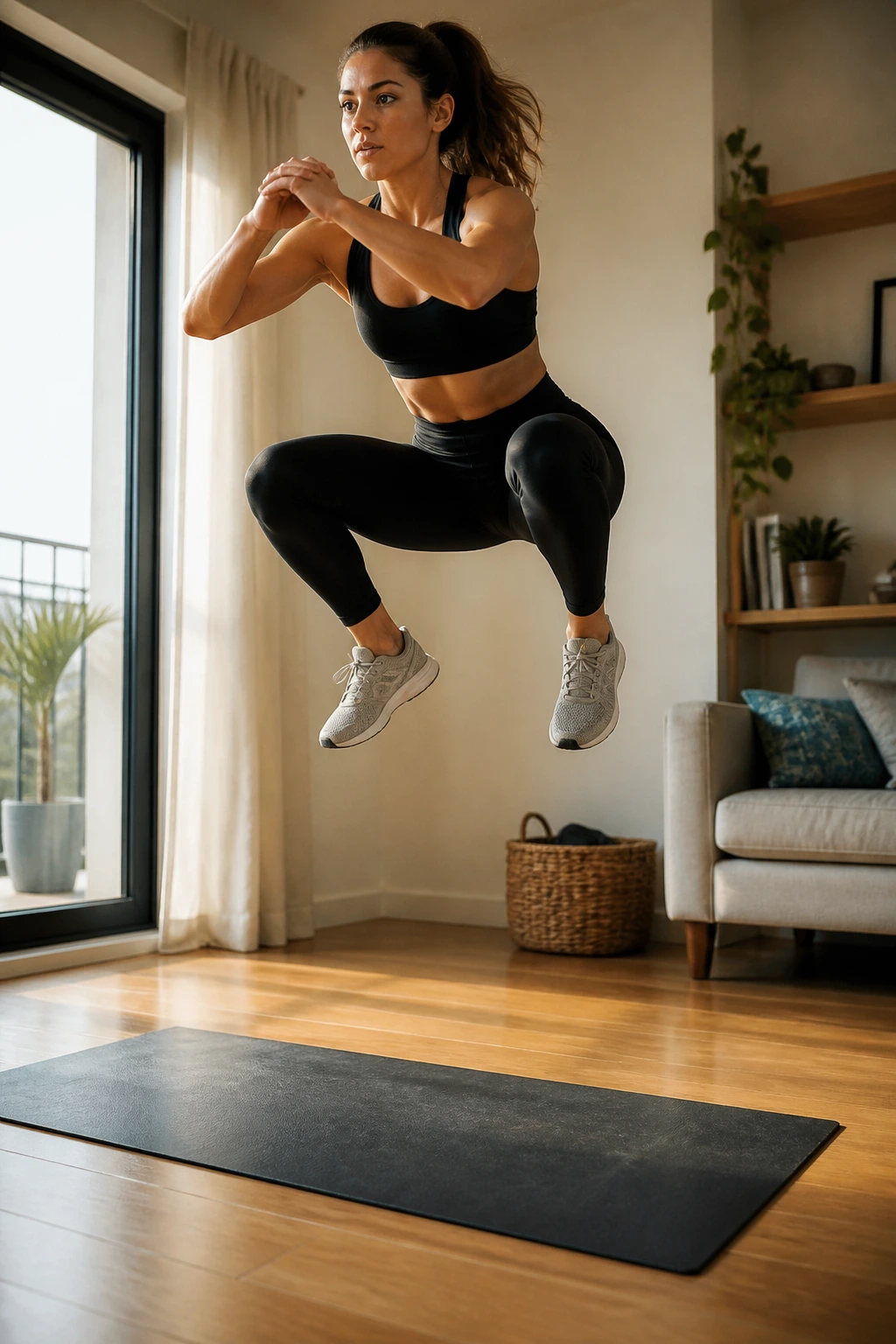
Jump squats turn a lower-body move into a power test. You lower into a squat, explode upward, land softly, and repeat. The landing matters as much as the jump. If your feet slap the floor and your knees cave in, slow down and clean it up.
A good jump squat feels springy, not frantic. Keep the jump modest if your joints prefer control over airtime. The goal is to produce force fast, then absorb it without losing position.
Who Should Skip This One
If your knees, ankles, or lower back are already irritated, this is not the place to push hard. Stick with regular squats, pause squats, or split squats first. Jumping on top of bad form is a fast way to make a home workout annoying.
A workable home version is 5 rounds of 8 jump squats, with 10 to 12 regular squats after each round. Rest 60 to 90 seconds between rounds. If you keep landing quietly, you are on the right track.
11. Backpack Loaded Squat Challenge
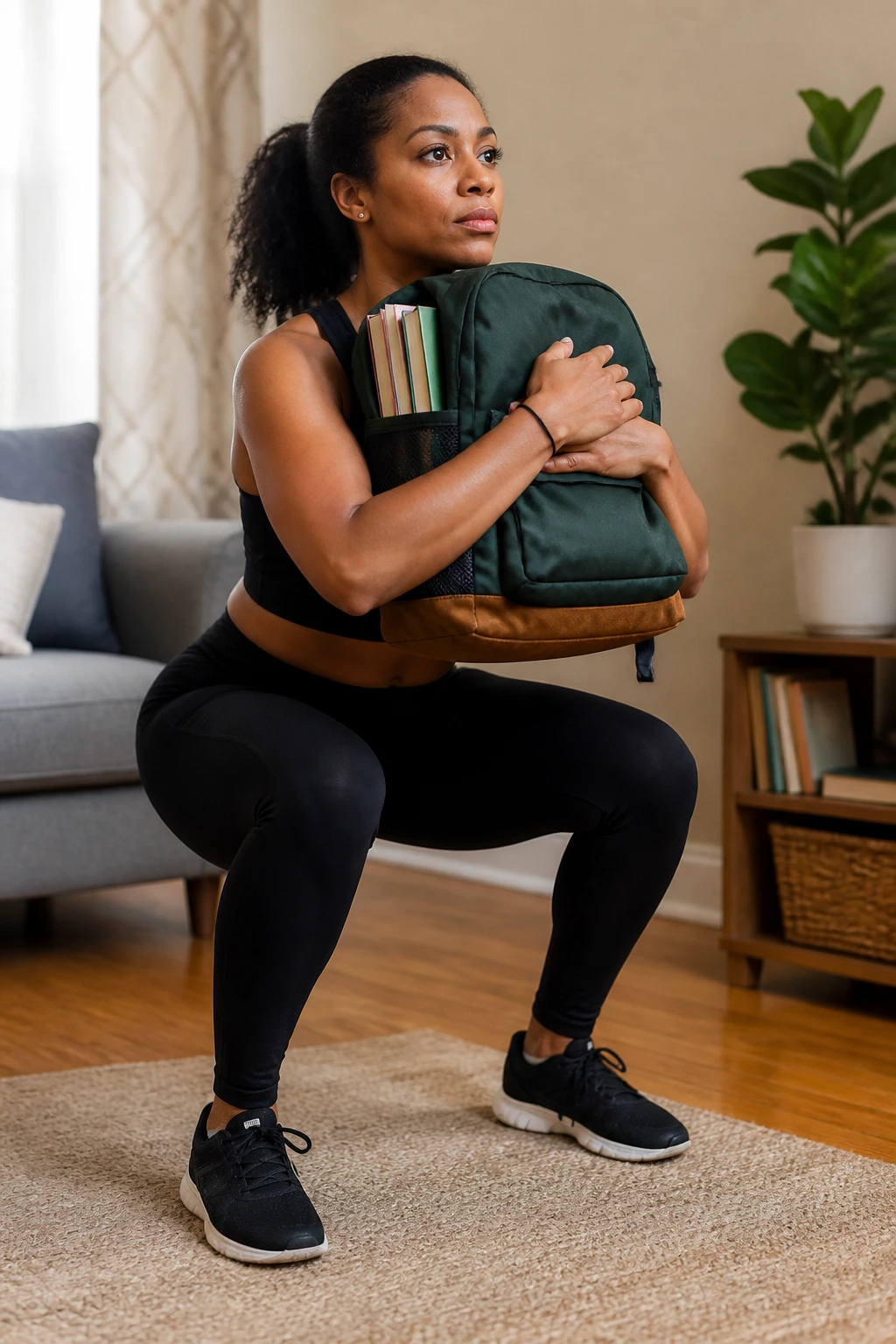
A backpack is a surprisingly useful squat tool. Fill it with books, water bottles, or canned goods, hug it close to your chest, and you have a simple home version of a goblet squat. The load changes the challenge fast, especially if bodyweight squats already feel too easy.
Keep the bag snug against your chest or upper abdomen so it doesn’t swing around. A loose backpack becomes a balancing problem, and that is not the point. If the straps dig in, wrap a towel around the bag or switch to a duffel with a firmer grip.
A good starting point is 10 to 20 pounds if you are using books or bottles, then adjust by feel. Work in 3 to 5 sets of 8 to 15 reps. If the last three reps slow down but your torso stays stable, the load is right.
This challenge works because it makes the squat feel honest again. No fancy rack. No intimidation. Just weight, legs, and a little patience.
12. Pyramid Rep Challenge
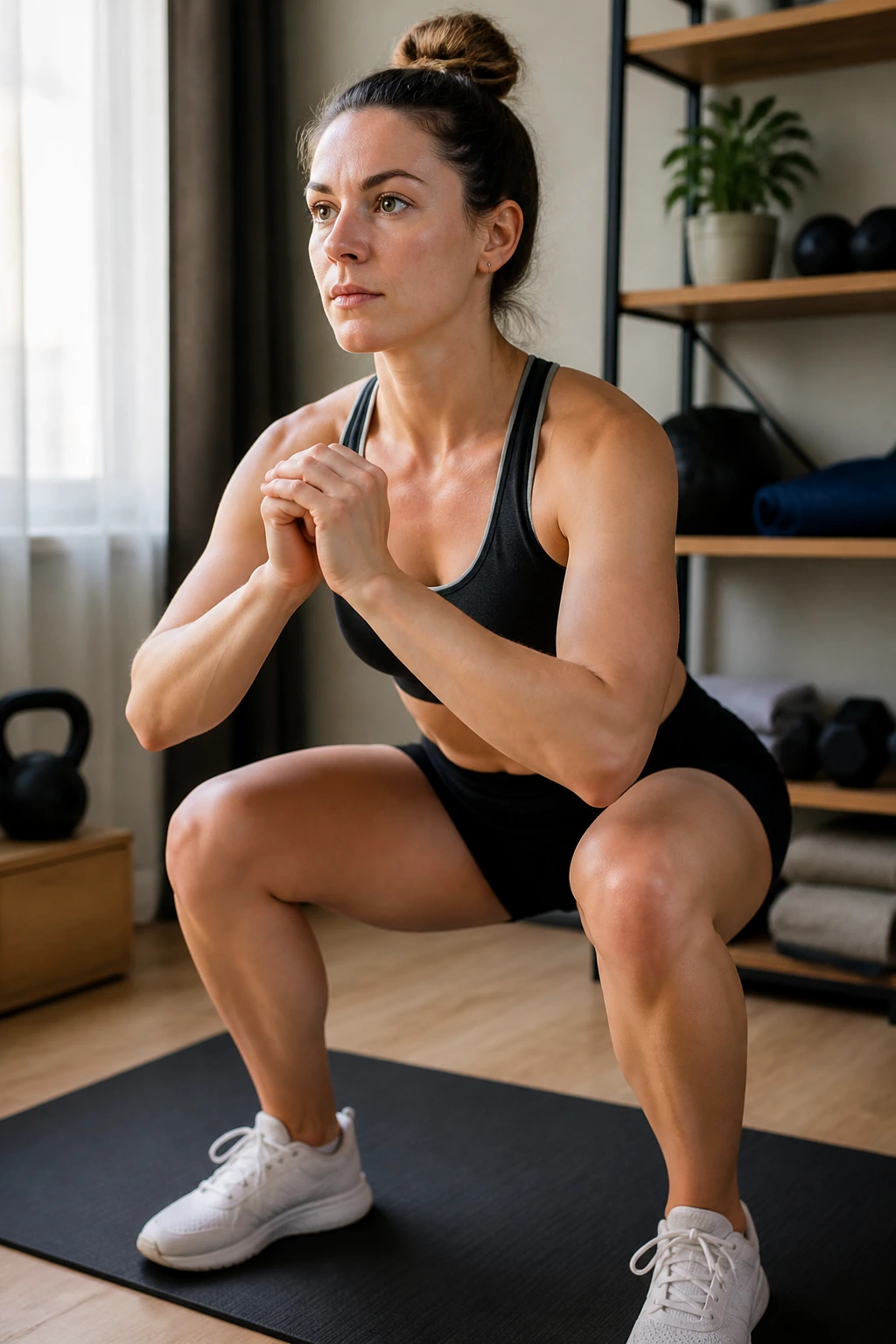
Pyramids are for people who like a clear climb and a clear descent. You might do 5, 10, 15, 20, 15, 10, 5 reps, resting 30 to 60 seconds between each round. The middle set is the mountain. Everything before it warms you up, and everything after it tests whether you can keep form when fatigue starts to creep in.
The shape matters. A pyramid challenges you to pace the first few rounds instead of racing them. That’s useful at home, where it is easy to get cocky with bodyweight work and then vanish into sloppy reps once the count rises.
You can make it easier by trimming the top set to 15. You can make it harder by adding a pause to the bottom of every rep. Either way, the structure gives the workout a clean arc, which I like. It feels organized without feeling sterile.
Pyramids also pair well with a stopwatch. When you know the entire session has a shape, you are less tempted to quit after the first hard round.
13. EMOM Squat Challenge
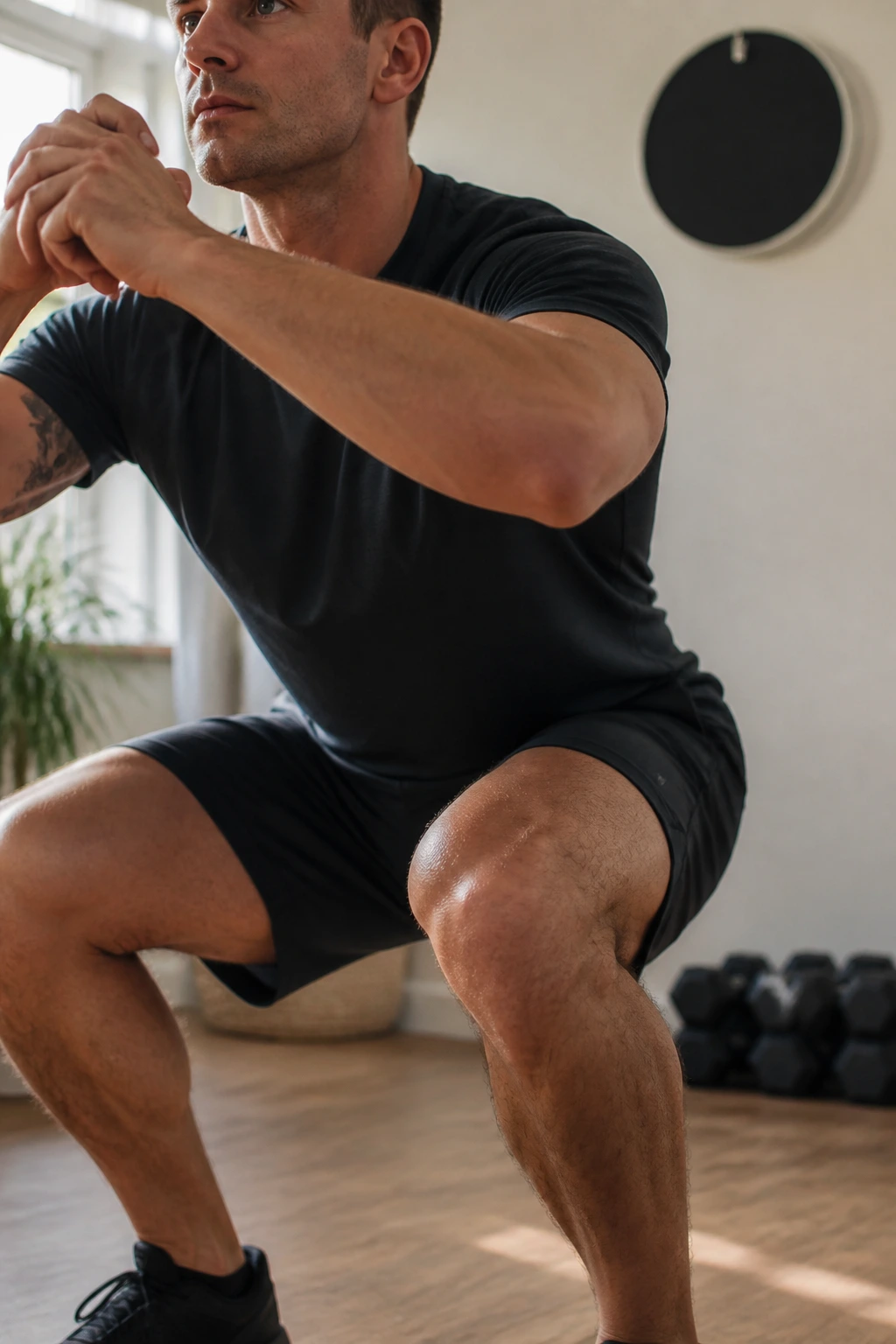
EMOM means “every minute on the minute,” and it is one of the cleanest ways to build squat endurance at home. You start a clock, do a set number of squats at the top of each minute, then rest for whatever time is left. The clock does the nagging for you.
How to Scale the Minute
Begin with 8 to 10 squats each minute for 10 minutes. If that leaves you gasping and gives you no rest, drop to 6 or 7 reps. If you finish each round with 30 to 40 seconds left, add a rep or two next time.
The point is not to survive by flailing. The point is to repeat clean reps under a predictable time cap. That teaches pacing better than a random burnout set ever will.
EMOM work feels sharp because you never fully cool down. Your legs stay warm, your breathing stays a little elevated, and the minute clock keeps everything tidy. It is a good format when you want structure without overthinking the session.
14. Bottom-Hold Squat Challenge
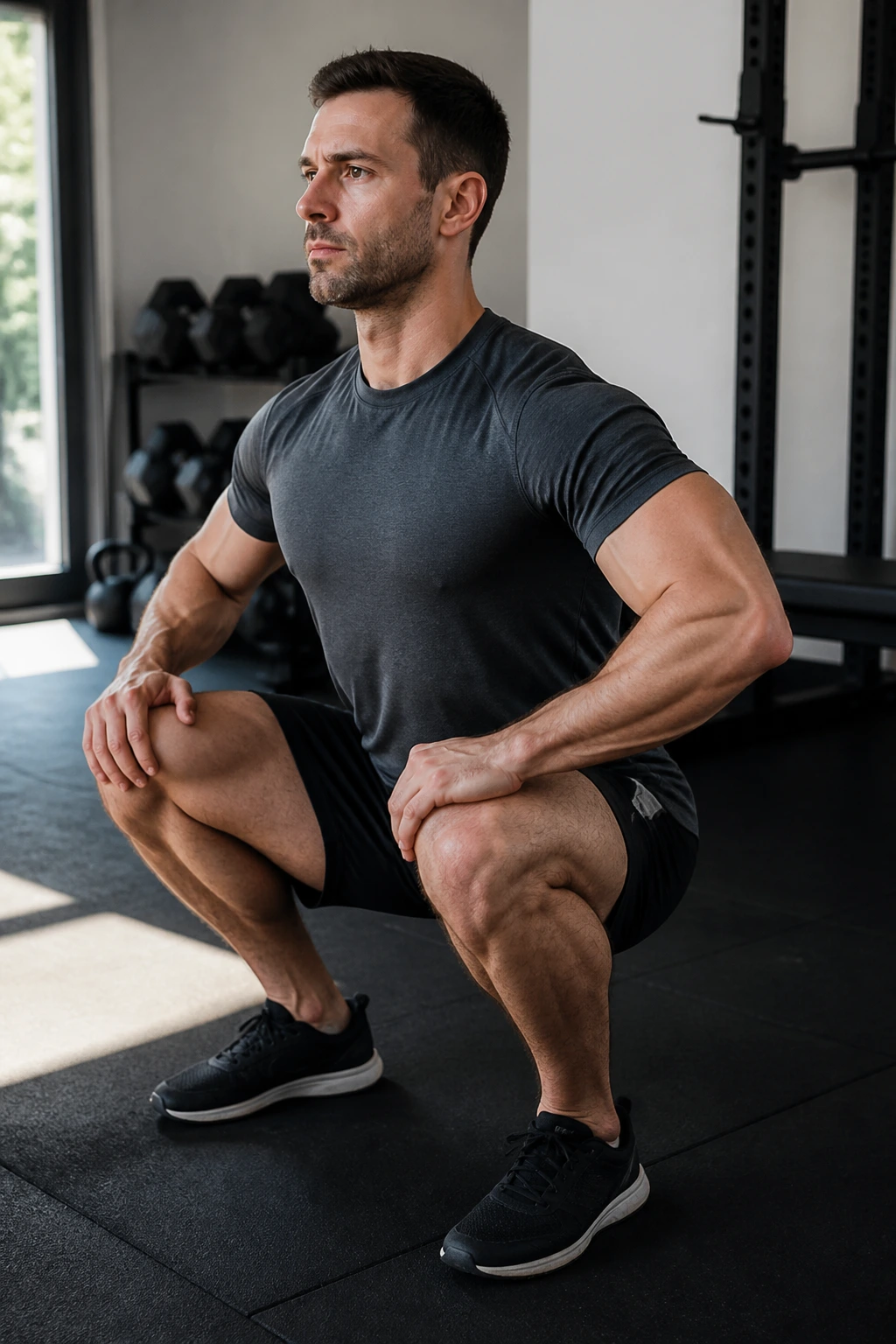
Holding the bottom of a squat is a different kind of hard. There is no rep count to hide behind. You simply sit in the deepest position you can own, keep your heels down, and stay there while your legs and ankles complain in their own way.
A clean bottom hold should feel stable before it feels miserable. If you are wobbling, shorten the depth a little and build from there. Two things matter most: flat feet and an upright chest that you can maintain without straining your lower back.
Start with 20 to 30 seconds and work toward 45 to 60 seconds over time. Rest for at least 30 to 45 seconds between holds. A few rounds is enough. This is not a challenge where more volume automatically makes it better.
The best use for a bottom hold is control. It teaches you where your sticking points are — ankle mobility, hip tightness, trunk position — and it makes regular squats feel cleaner afterward.
15. B-Stance Squat Challenge
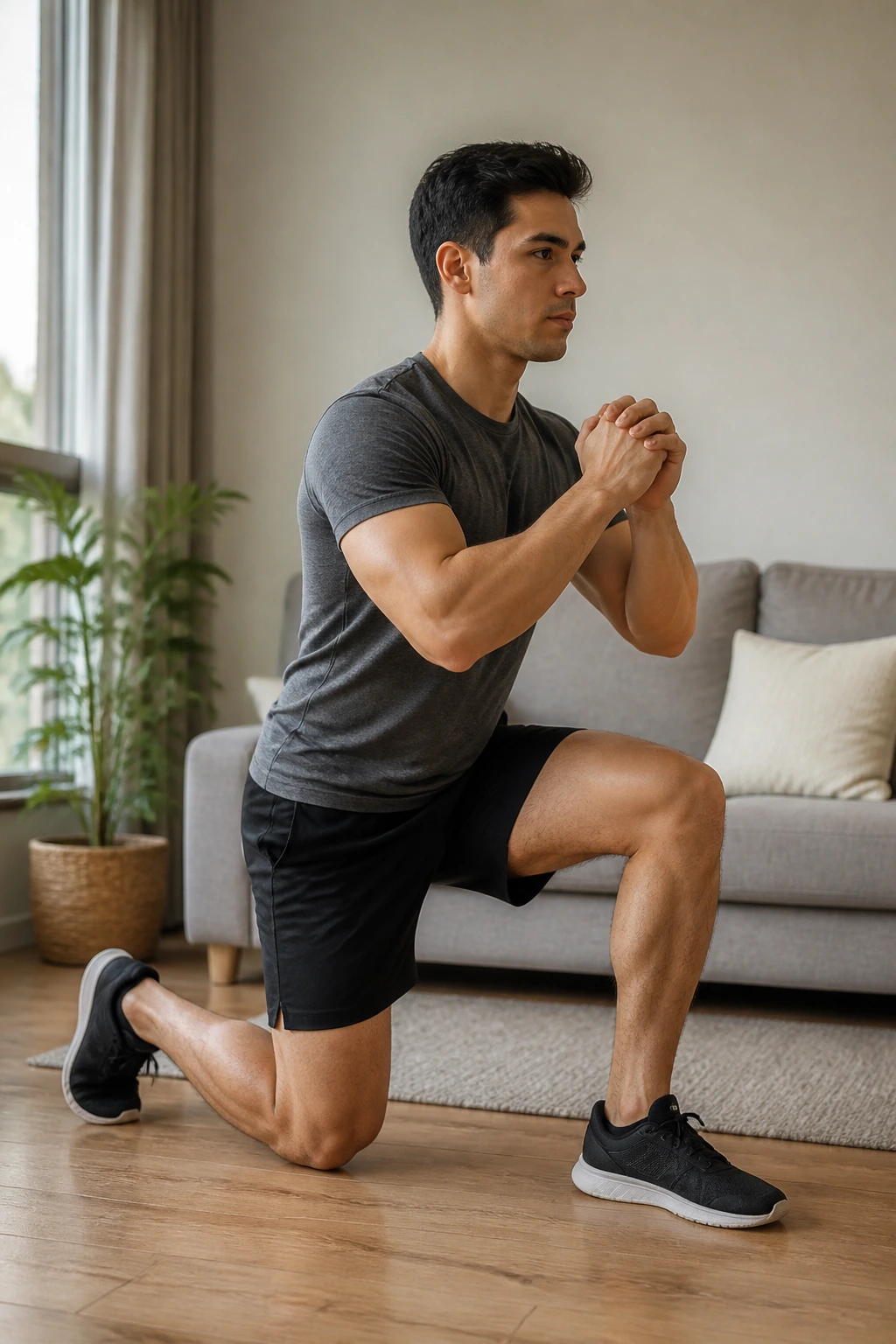
B-stance squats sit between a regular two-leg squat and a single-leg squat. One foot carries most of the load while the back foot stays on the floor like a kickstand. It looks small. It is not small.
The front leg should carry roughly 80 to 90 percent of your body weight. The back foot is there for balance, not assistance. Keep your hips square, lower under control, and drive through the front foot on the way up.
Why It’s a Useful Middle Step
If regular squats feel too easy but true single-leg work feels chaotic, this is a good bridge. You get unilateral training without the same balance demand as a full pistol-style squat.
Work 8 to 12 reps per side for 3 or 4 rounds. Switch sides slowly. Don’t rush the setup. The back leg often wants to cheat, so watch that front foot and make it do the actual work.
B-stance squats are underrated at home because they don’t need extra gear, and they expose side-to-side differences fast.
16. Cossack Squat Challenge
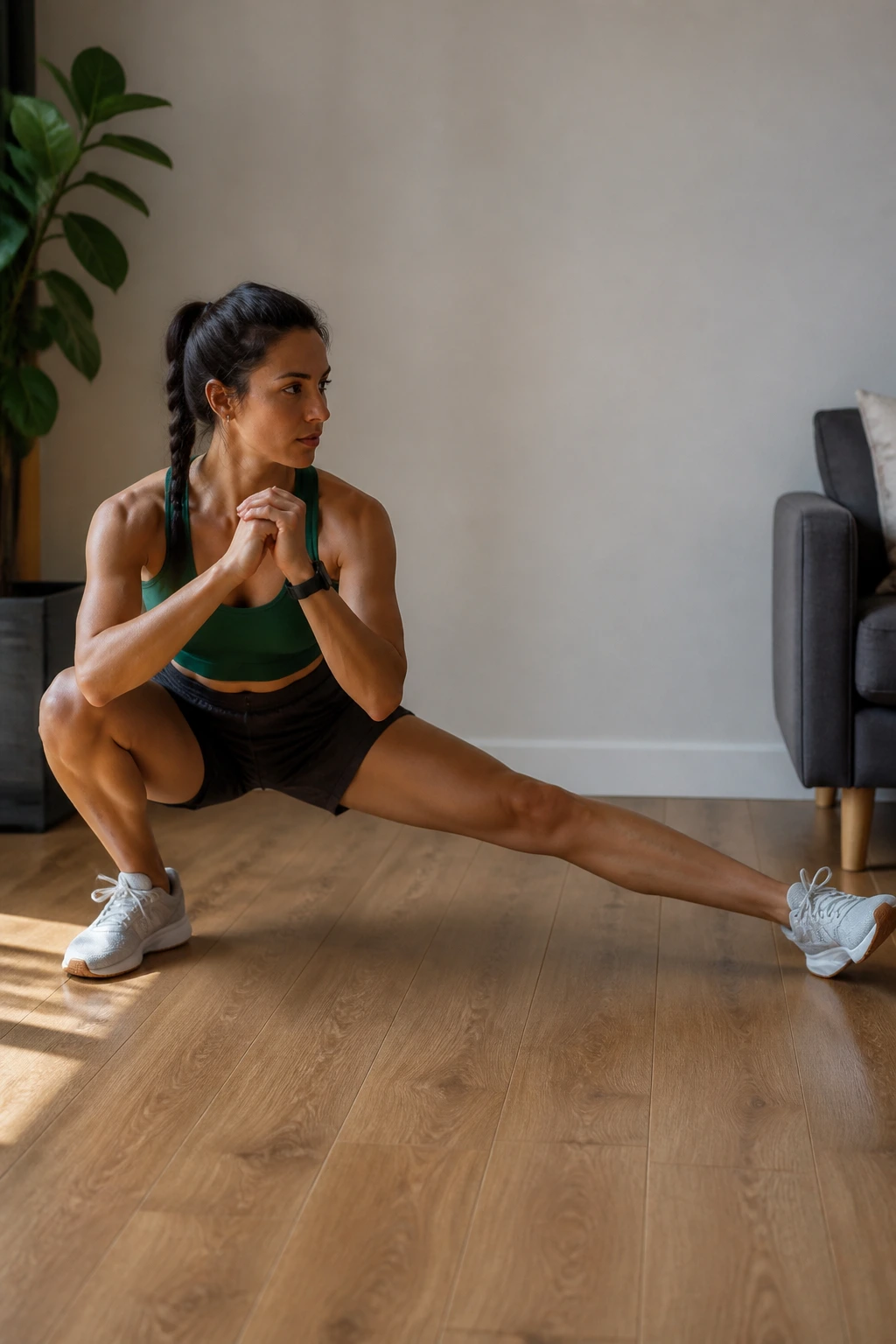
A Cossack squat moves side to side instead of straight up and down. One leg bends deeply while the other stays long, which puts the adductors, hips, and ankles on notice. It is part squat, part mobility drill, part wake-up call.
The first few reps may feel awkward. Good. That awkwardness tells you where your range is limited. Keep one foot planted, shift your weight to one side, and let the other leg lengthen without collapsing the arch of the working foot.
What Makes It Different
Regular squats mostly ask you to sit back and down. Cossack squats ask you to shift laterally, which is a different demand altogether. That makes them useful if your side-to-side mobility is a little rusty or if your inner thighs are tighter than you thought.
Try 5 to 8 reps per side at first. Go slow. Use a chair or wall for balance if needed. There is no prize for diving deeper than you can control.
This challenge is a little niche, but that is part of the charm. It breaks the sameness of a standard squat routine.
17. Assisted Single-Leg Squat Challenge
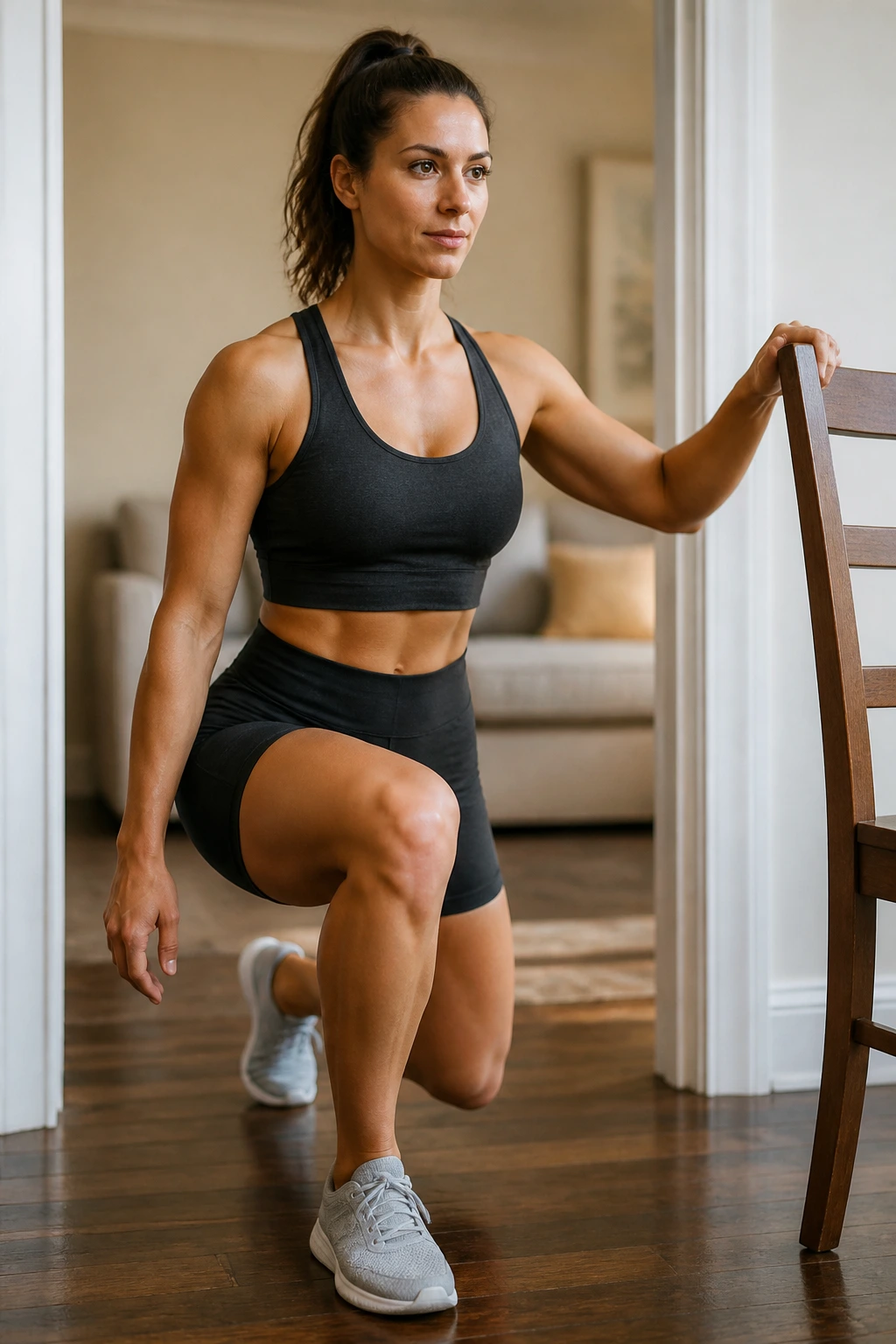
True single-leg squats are hard, and most people know it the first time they try one. An assisted version gives you a way to practice the pattern without face-planting into the floor. Use a doorframe, counter, sturdy table edge, or even a chair back for light support.
Use the Support, Don’t Hang on It
The support is there to guide balance, not to pull you through every rep. Keep one hand on the object, lower as far as you can under control, and stand by pushing through the working leg.
A box, chair, or low step can help here too. Sit back to a target if full depth is too much. You are training coordination, ankle strength, and unilateral control all at once. That is a lot for one exercise, so keep the reps modest.
A sensible start is 5 to 8 reps per leg for 3 sets. If the movement feels wobbly, slow down before you make it harder. Wobble usually means the setup needs work, not that you need more grit.
This challenge is worth your time if you want stronger legs without relying on two-leg patterns forever.
18. Resistance Band Squat Challenge
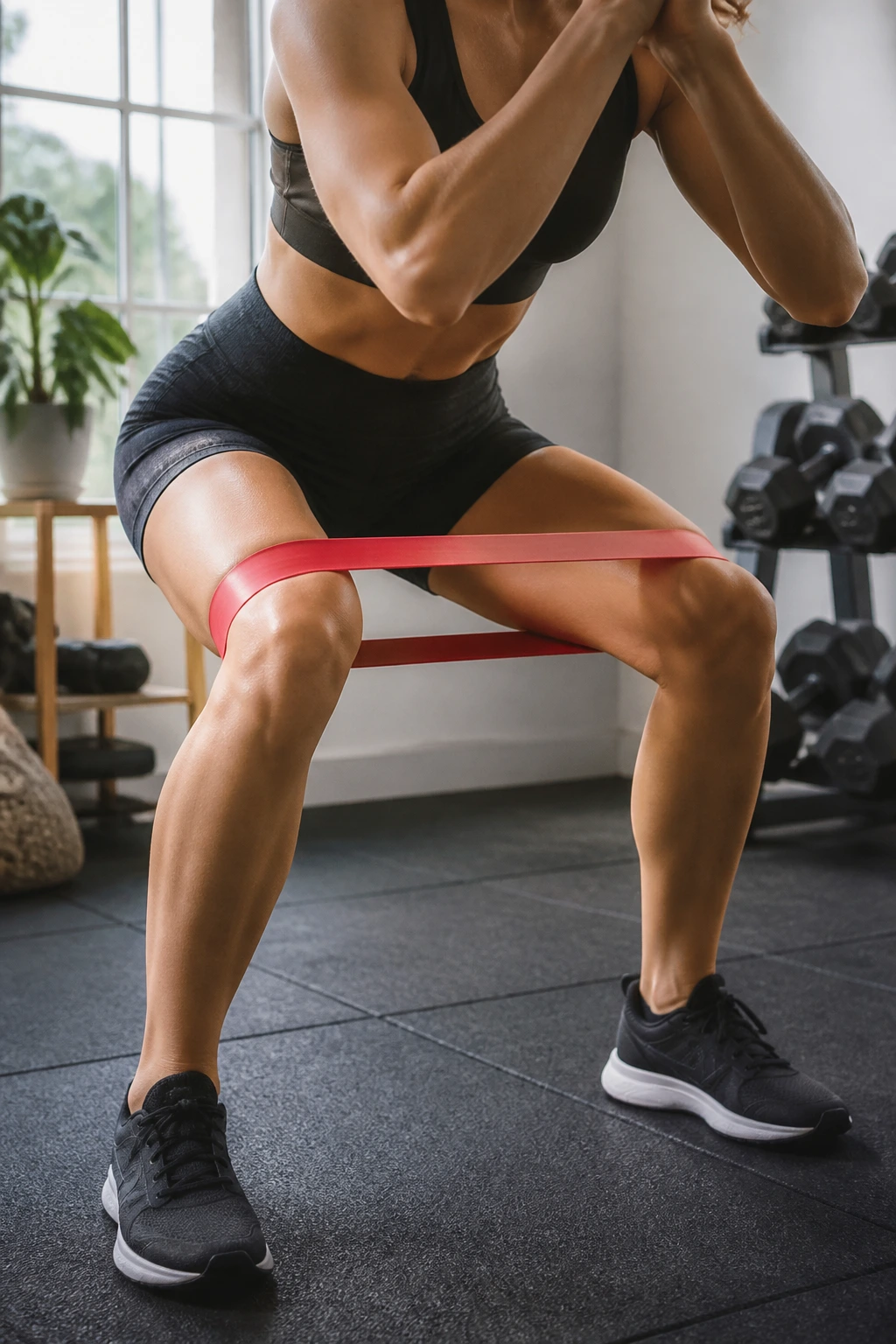
A loop band above the knees gives you a clear cue: push out a little, keep the knees from collapsing, and stay active through the hips. The band does not do the work for you. It simply makes sloppy alignment easier to spot.
Put the band around your thighs just above the knees. Stand with feet about shoulder width apart, lower into a squat, and keep light outward tension on the band the whole time. The cue is subtle. You are not trying to shove your knees wide open. You are trying to keep them steady and engaged.
This is one of the best home options if your glutes tend to disappear when you squat. It gives immediate feedback. If the band is rubbing hard or rolling up, your stance may be too narrow or your thighs may need a slightly thicker loop.
Try 15 to 25 reps for 3 to 4 rounds. Slow down the last five reps and keep the band pressure even. That is where the useful work lives.
19. Heels-Elevated Squat Challenge
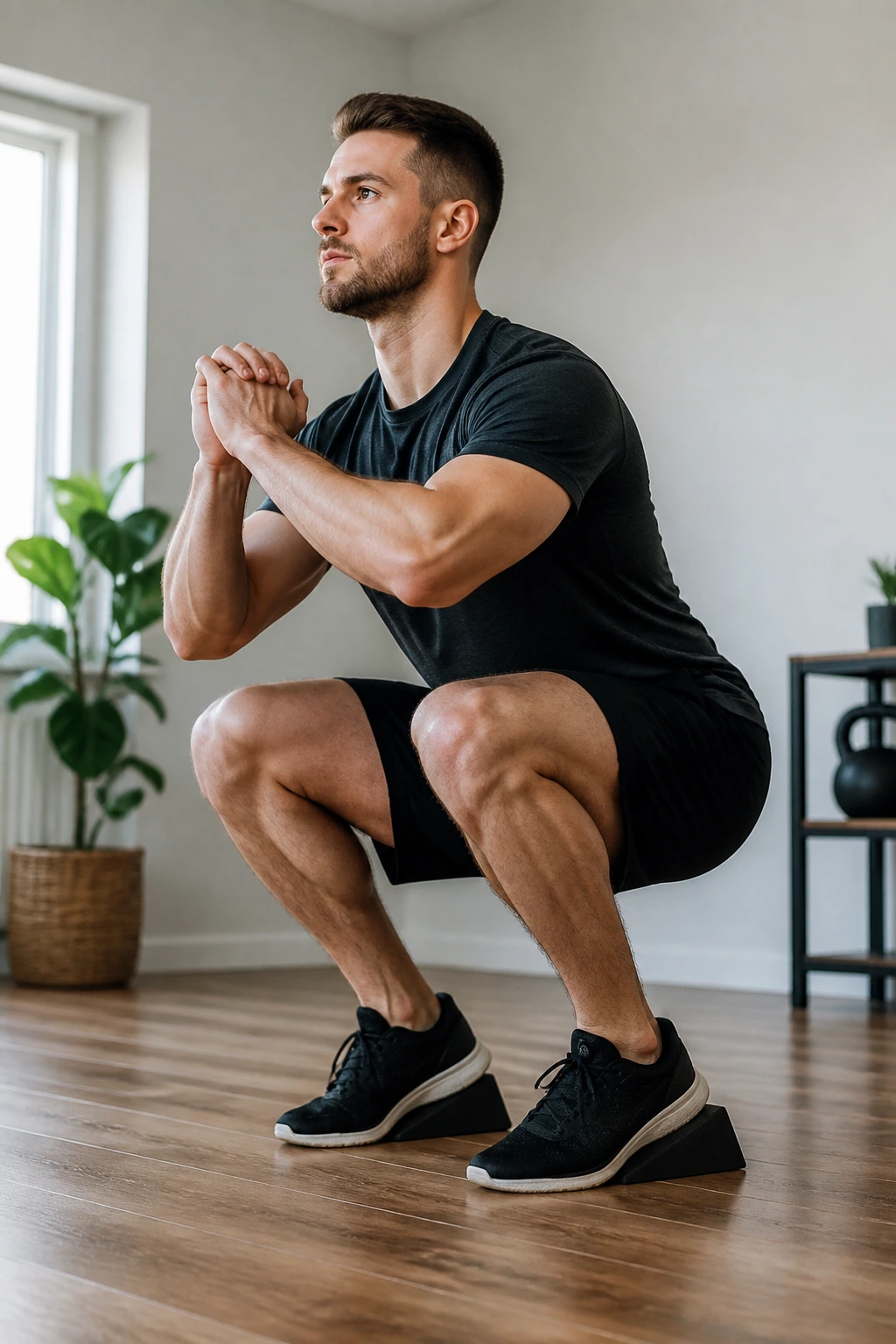
Raise your heels on a thin book, plate, or wedge, and the squat changes fast. Your torso can stay more upright, the knees travel forward a little more, and the quads take a bigger share of the load. It is a tidy solution when ankle mobility limits your depth at home.
The elevation does not need to be dramatic. An inch or two is enough. Too much height can make the movement unstable, which defeats the point. Keep your whole foot secure on the surface and stay balanced through the midfoot.
When It Helps Most
If regular squats feel blocked by tight calves or stiff ankles, this version lets you train a deeper position without forcing the issue. It can also be useful if you want more front-thigh emphasis and less hip-dominant work for a while.
A simple plan is 12 to 20 reps for 3 to 5 sets. Go slow on the way down and keep the knees tracking in line with the toes. If your heels wobble on the object, make the surface lower before adding reps.
This one looks small from the outside. Inside the set, it is not small.
20. The 21s Squat Challenge
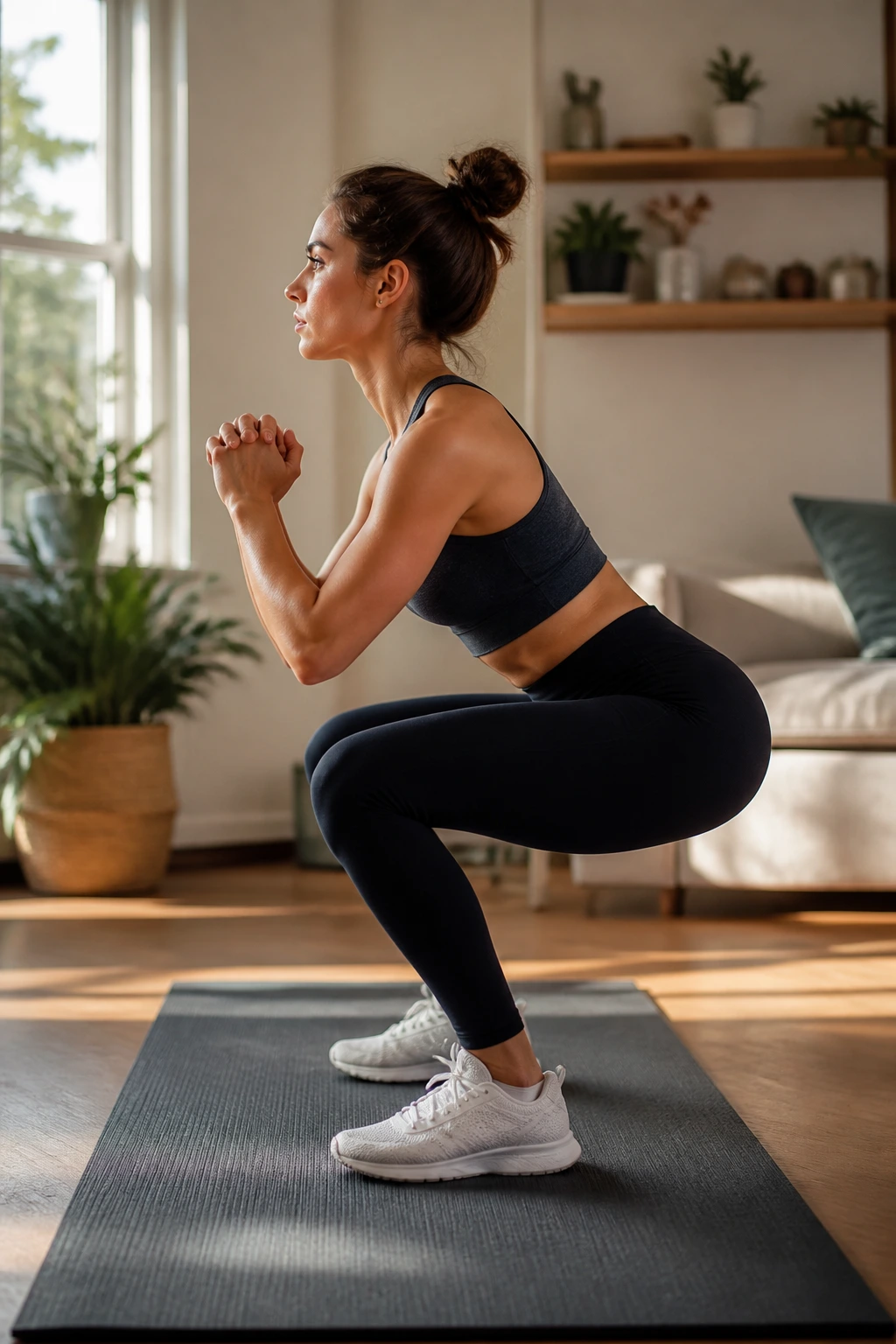
The 21s format is old-school and still mean in a good way. You do 7 squats in the bottom half of the range, 7 full squats, then 7 top-half squats. Twenty-one reps. Three different pieces of the same movement. The legs notice every part of it.
The bottom half usually feels hardest because the muscles are working where leverage is poor. The full reps ask you to stay smooth through the entire range. The top half sounds easy until your thighs are already cooked and even the short motion feels expensive.
That is why I like this as a final home squat challenge. It is compact, it needs no equipment, and it leaves no doubt about whether your legs are awake. If you want to make it nastier, add a 2-second pause on the full squats. If you want to keep it sane, rest for 60 to 90 seconds after each round and do only 2 or 3 rounds.
The best squat challenge is the one you can repeat next week with clean reps still in the tank. This one will usually tell you pretty quickly where your current line is.
