



Morning sickness has a nasty sense of humor. The foods you’d normally reach for first thing — hot coffee, buttery toast, a pan of eggs — can turn into a full-body rejection before you’ve even taken the first bite.
That’s why the best pregnancy breakfast ideas for morning sickness are rarely fancy. They’re usually mild, soft, a little salty or a little sweet, and easy to eat in small amounts. A breakfast that smells gentle and goes down without a fight is worth more than a “perfect” meal you can’t stand to look at.
The trick is to stop thinking in terms of big breakfasts. Think in bites. A few crackers before you get out of bed. Half a banana with nut butter. A small bowl of oats, not a mountain of them. Protein helps some people feel steadier, while bland carbs can take the edge off an empty stomach. Cold foods often smell less intense, which sounds minor until the scent of warm eggs makes you want to run.
If you’re vomiting repeatedly, losing weight, or can’t keep fluids down, that’s a different situation and deserves a call to your clinician. For the ordinary queasy mornings — the annoying, drag-you-around-by-the-collar kind — these breakfasts are the ones I’d keep on hand first.
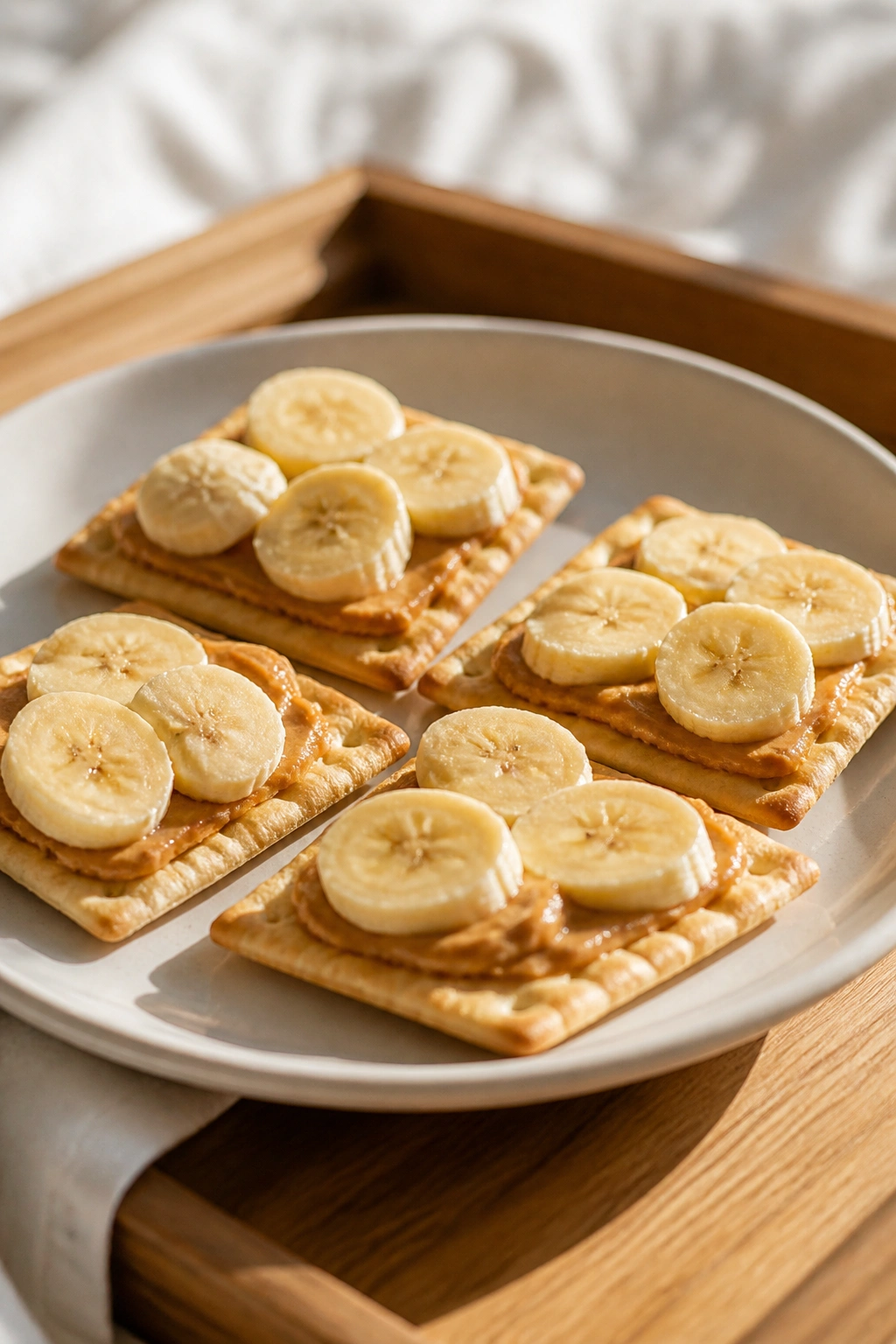
1. Saltines with Peanut Butter and Banana
Saltines are boring. That is exactly their superpower. When your stomach feels touchy, dry crackers give you a soft landing, and a thin layer of peanut butter adds enough protein and fat to keep the snack from disappearing in five minutes. Banana brings a little sweetness and potassium, which many people find easier to tolerate than anything sharp or acidic.
I like this one because it works in two modes. Eat two or three crackers in bed before you stand up, then build a tiny plate once you’re awake. Or keep it as a desk-side breakfast if the idea of a full meal still feels too ambitious. The key is restraint. A thick smear of peanut butter can feel heavy; a thin layer, maybe 1 teaspoon per cracker, tends to sit better.
- 4 to 6 saltine crackers
- 2 to 3 teaspoons peanut butter, spread thin
- 1/2 banana, sliced
- Pinch of flaky salt, if you want a little more saltiness
Best move: make the crackers first, eat slowly, and keep the banana slices small. Big bites can feel like too much when nausea is active.
2. Plain Oatmeal with Banana and Cinnamon
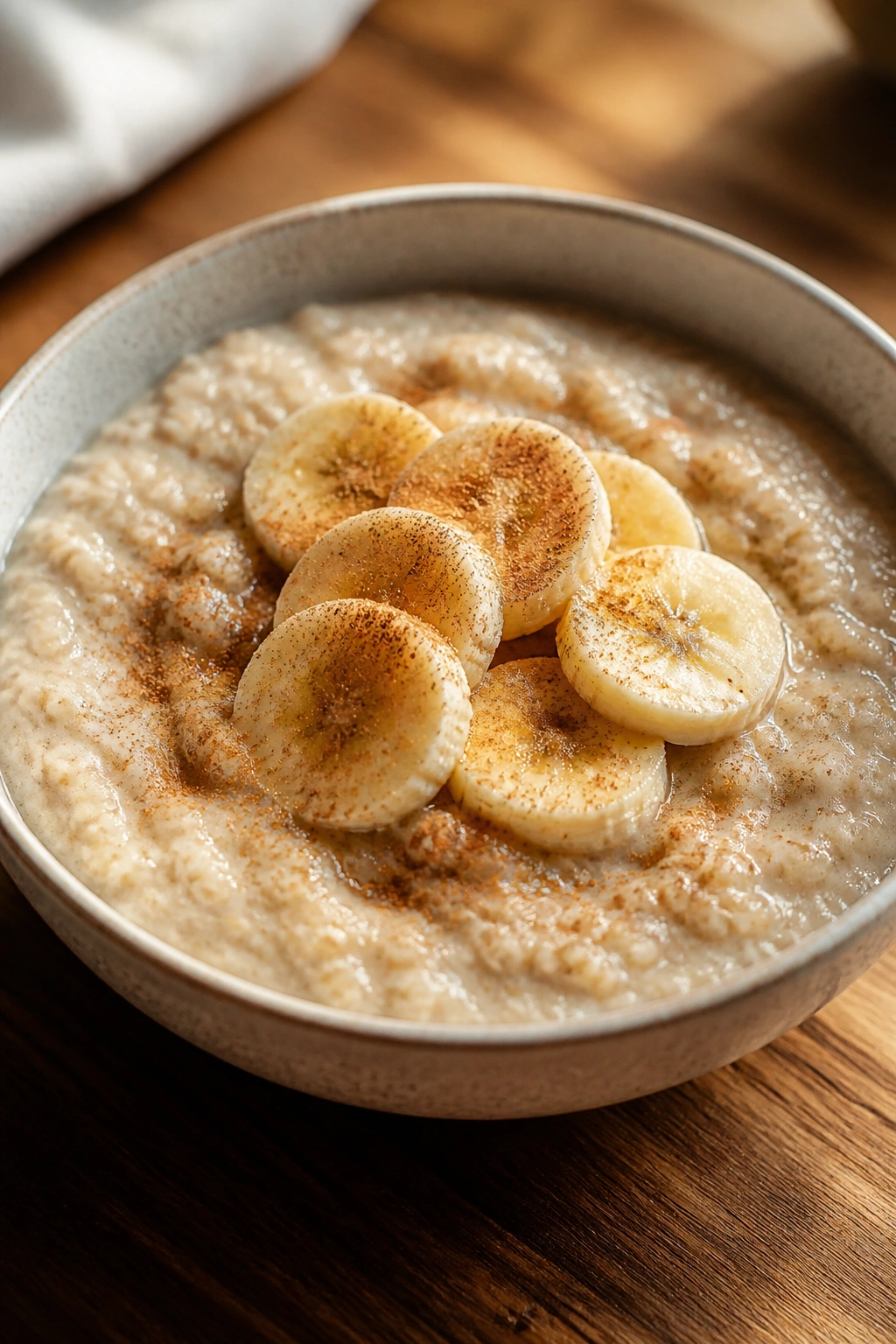
Why oatmeal? Because it is soft, warm, and predictable. A bowl of oats doesn’t ask much from a queasy stomach, and it gives you enough substance that you’re not hungry again an hour later. If hot food sounds better than cold food, this is usually one of the safest bets.
Keep the texture loose, not gluey. About 1/2 cup rolled oats cooked with 1 cup water or milk usually lands in a gentle, spoonable place. Stir in banana at the end so it softens without turning into paste. Cinnamon is optional, but a small pinch can help the bowl smell more inviting and less bland. If sweet smells bother you, skip the honey and keep it plain.
Some mornings I’d serve this in a mug instead of a bowl. Less visual bulk. Less pressure. And that matters when breakfast needs to be more about survival than pleasure.
A few people do better with oatmeal made with half milk and half water. Others want it thinner than the package suggests. The point is to keep it soft enough to swallow without much chewing. That little detail can make all the difference.
3. Greek Yogurt Parfait with Granola and Berries
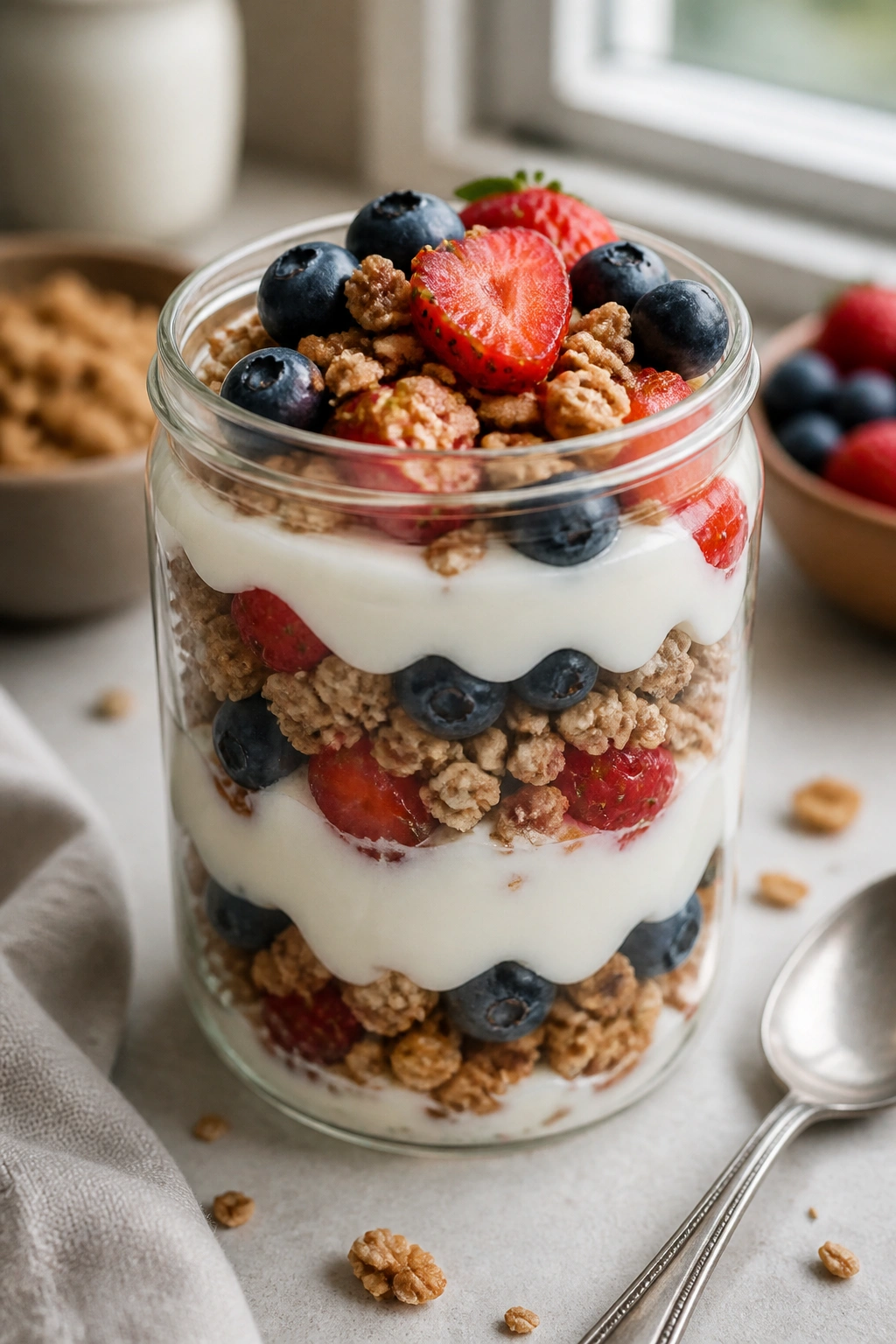
Cold breakfasts have a real advantage when nausea is hanging around. They don’t fill the kitchen with smells, and they can feel lighter than hot food even when they’re packed with protein. Greek yogurt is a strong choice because it brings more protein than regular yogurt, which may help you stay full a little longer.
Use plain or lightly sweetened yogurt if tangy flavors bother you. Start with about 3/4 cup yogurt, then add a small handful of granola and a few soft berries. I’d go easy on the granola at first. Too much crunch can be weird when your mouth feels dry or your stomach is already fussy. Strawberries, blueberries, or sliced banana work well. If dairy feels off, lactose-free yogurt is worth trying.
How to keep it gentle
- Choose pasteurized yogurt.
- Keep the portion small — a single bowl, not a giant parfait glass.
- Let frozen berries thaw a little so they’re not rock hard.
- Use a spoon, not a giant serving spoon. Sounds tiny. Helps a lot.
If tartness sets you off, stir in a teaspoon of honey or maple syrup. Enough to soften the edge, not enough to make the bowl cloying.
4. Ginger-Pear Smoothie

A smoothie is the move when chewing feels like too much work. It’s also one of the better options if you wake up with that hollow, shaky, queasy feeling and need something you can sip slowly without putting a plate in front of you. Pear is mellow, ginger brings a sharp little nudge that many people find helpful, and yogurt or milk adds body.
Keep it thin enough to drink without effort. Too thick and you end up slurping, which can make nausea worse. A good starting blend is 1 ripe pear, 1/2 banana, 3/4 cup milk or yogurt, and a small piece of fresh ginger — about the size of your thumbnail. If fresh ginger feels too strong, use 1/8 teaspoon ground ginger instead. Ice helps if cold drinks sit better than room-temperature ones.
The smell matters here. A smoothie with too much spice or too much fruit can turn loud in a bad way. Keep it calm. Quiet flavor, soft texture, no drama.
Sip it in small pulls over 10 to 15 minutes. Chugging a full glass fast is where this idea can backfire.
5. Scrambled Eggs on Toast
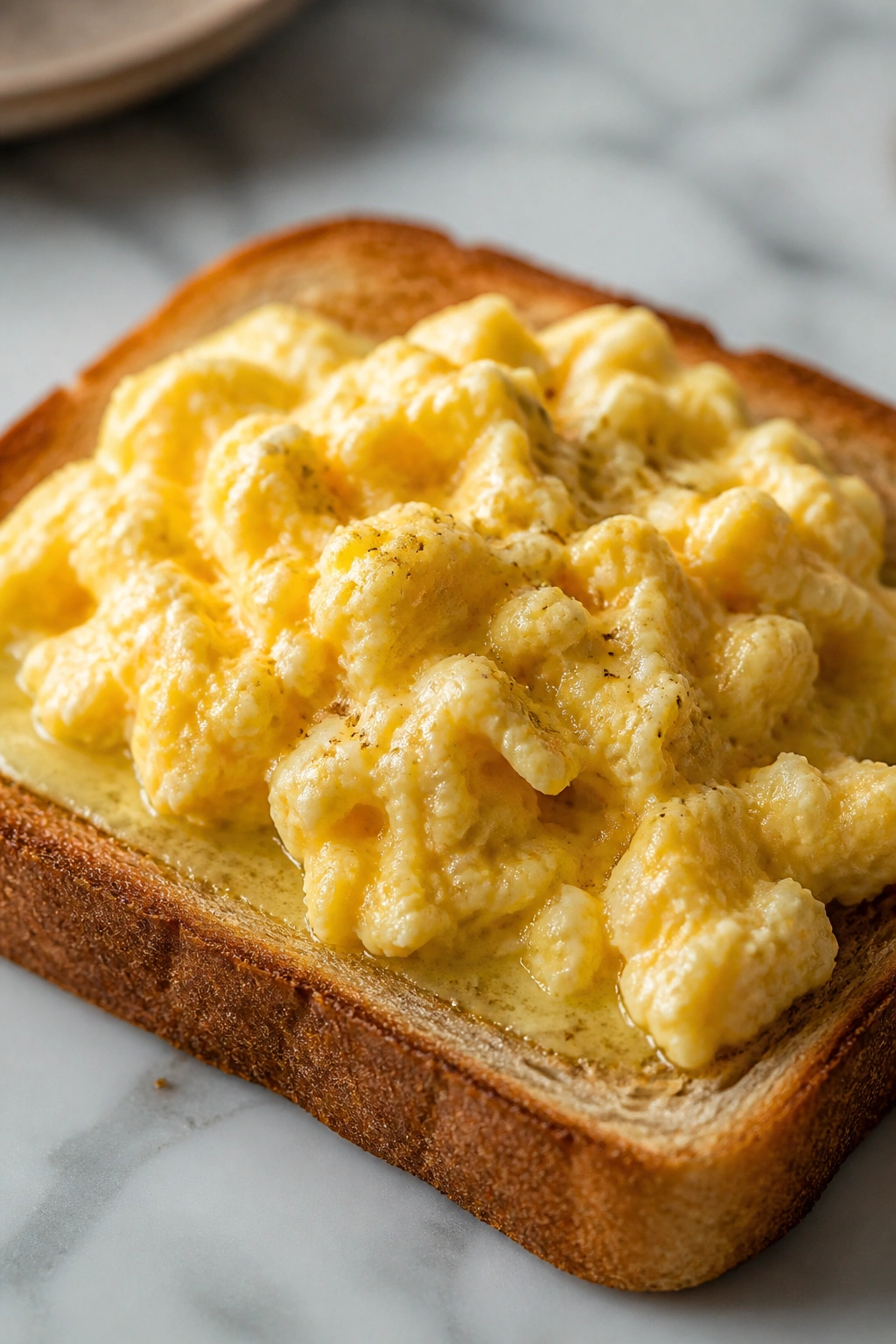
Savory breakfasts are the answer for some people who can’t face anything sweet before noon. Scrambled eggs on toast bring protein, salt, and a dry base that’s easy to nibble at first. They also let you start with one half of the plate if your stomach is only willing to negotiate.
The trick is to cook the eggs all the way through without making them rubbery. Use 2 eggs, whisked with a splash of milk if that sits well, then cook them over medium-low heat until they’re softly set and no runny streaks remain. Pile them onto one slice of toast, not two, unless you’re clearly hungry. A thin layer of butter or a little mayonnaise on the toast can add richness, though some people do better with plain toast only.
Hot eggs can smell strong, which is a dealbreaker for some kitchens. If that’s you, cook them in a nonstick pan with the vent on and eat near an open window. Or switch to cold eggs from a meal made earlier in the day. Not glamorous. Useful.
6. Avocado Toast with Lemon and Flaky Salt
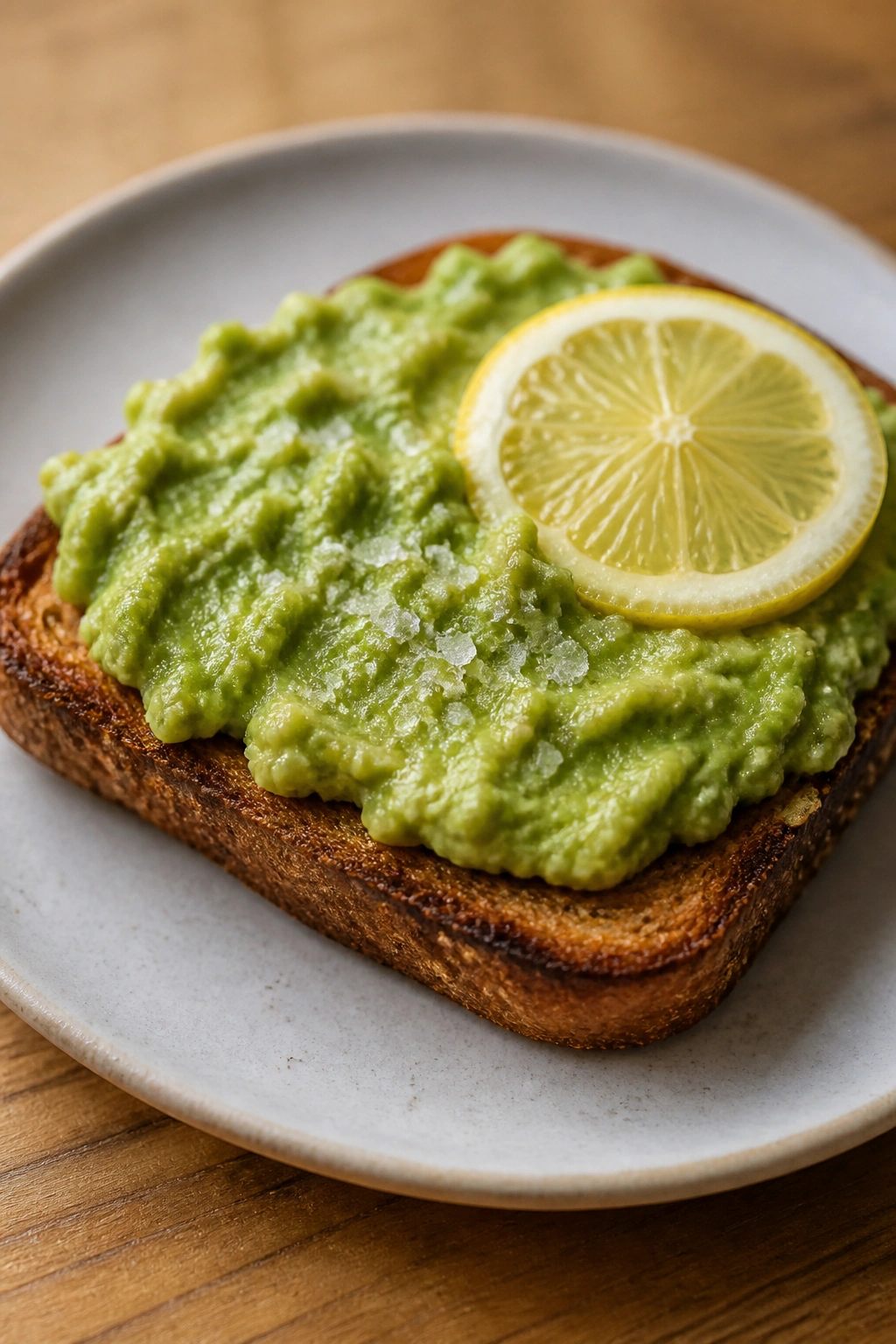
Avocado toast has a reputation for being trendy, but here it earns its place for a much simpler reason: it’s soft, mild, and easy to adjust. A slice of toast with half an avocado mashed on top can feel satisfying without being heavy, and the texture is gentle enough for a stomach that wants nothing sharp.
What makes this version work is keeping the toppings minimal. Too much lemon or too many spices can make the whole thing feel louder than it should. Use 1 slice of toast, 1/2 ripe avocado, a small squeeze of lemon, and a pinch of flaky salt. That’s enough. If you want more substance, add a sliced hard-cooked egg on top — fully cooked, no runny center — but only if eggs are appealing that day.
When avocado is the right call
- You want something soft but not sweet.
- You need a breakfast that feels filling in 5 bites or less.
- You can smell mild toast without getting turned off.
- You want fat and carbs together, which can hold hunger off for a while.
Avocado can turn brown and mushy if it sits too long, so make it fresh. Five minutes. Done.
7. Cottage Cheese with Peaches
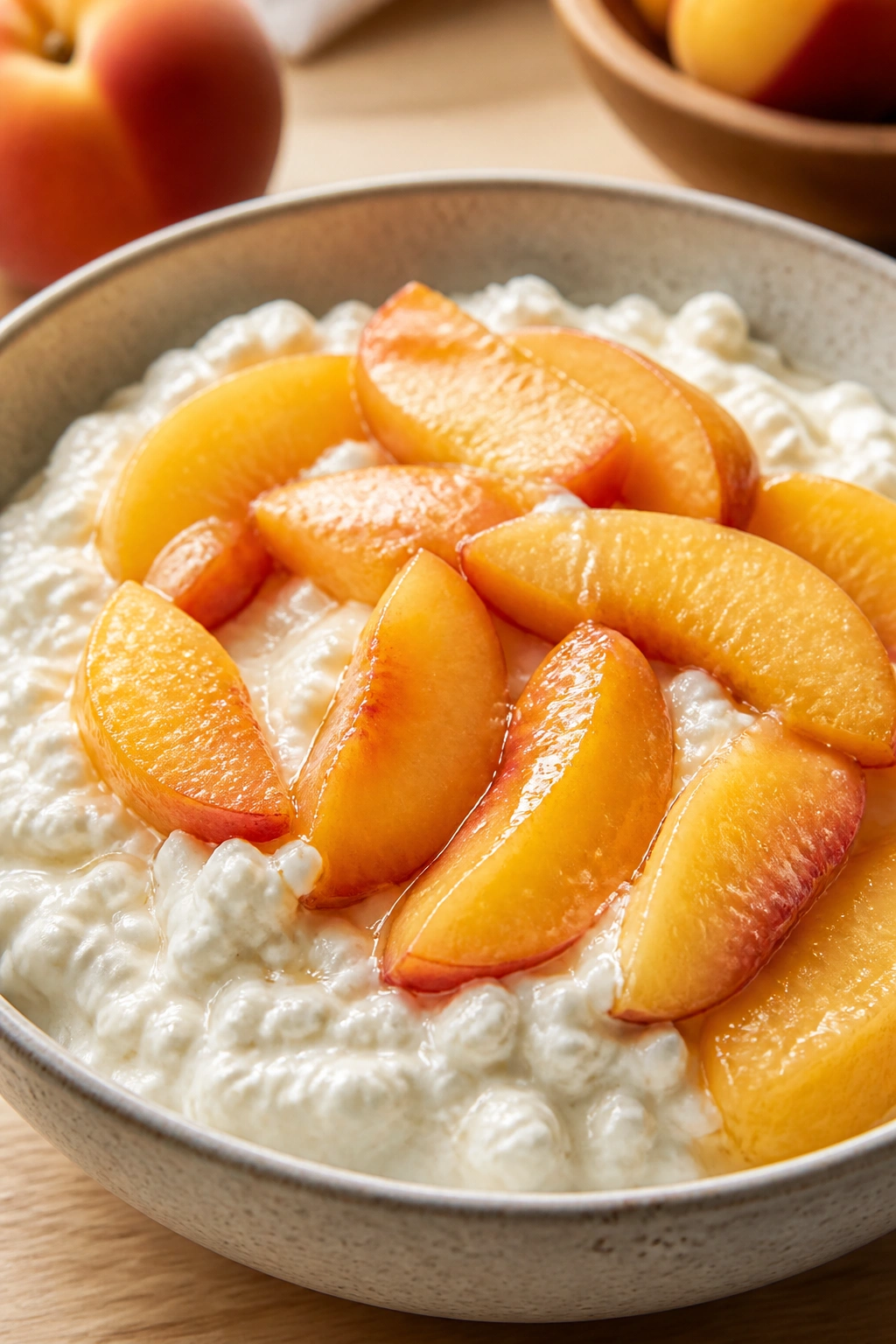
Cottage cheese is one of those breakfasts people either love or ignore completely, and for morning sickness it can be a sleeper hit. It’s cold, high in protein, and soft enough that you don’t need much jaw work. A few spoonfuls can carry you farther than a bowl of fruit alone.
Peaches are the friendly part of the equation. Their sweetness is gentle, and their smell is usually softer than citrus or berries. Use canned peaches packed in juice, fresh ripe peach slices, or even a spoonful of applesauce if peaches feel too fragrant. Start with 1/2 cup cottage cheese and 1/4 to 1/2 cup fruit. If the curds bother you, a blended cottage cheese can feel smoother and less weird.
I’d keep this breakfast cold and plain the first time you try it. No cinnamon. No big drizzle of syrup. If your stomach says yes, you can add chopped almonds or a sprinkle of oats later, but there’s no prize for making it more complicated than necessary.
Some people need a few bites before the protein starts to feel comforting. That’s normal. Slow beats ambitious here.
8. Rice Congee with a Soft Egg
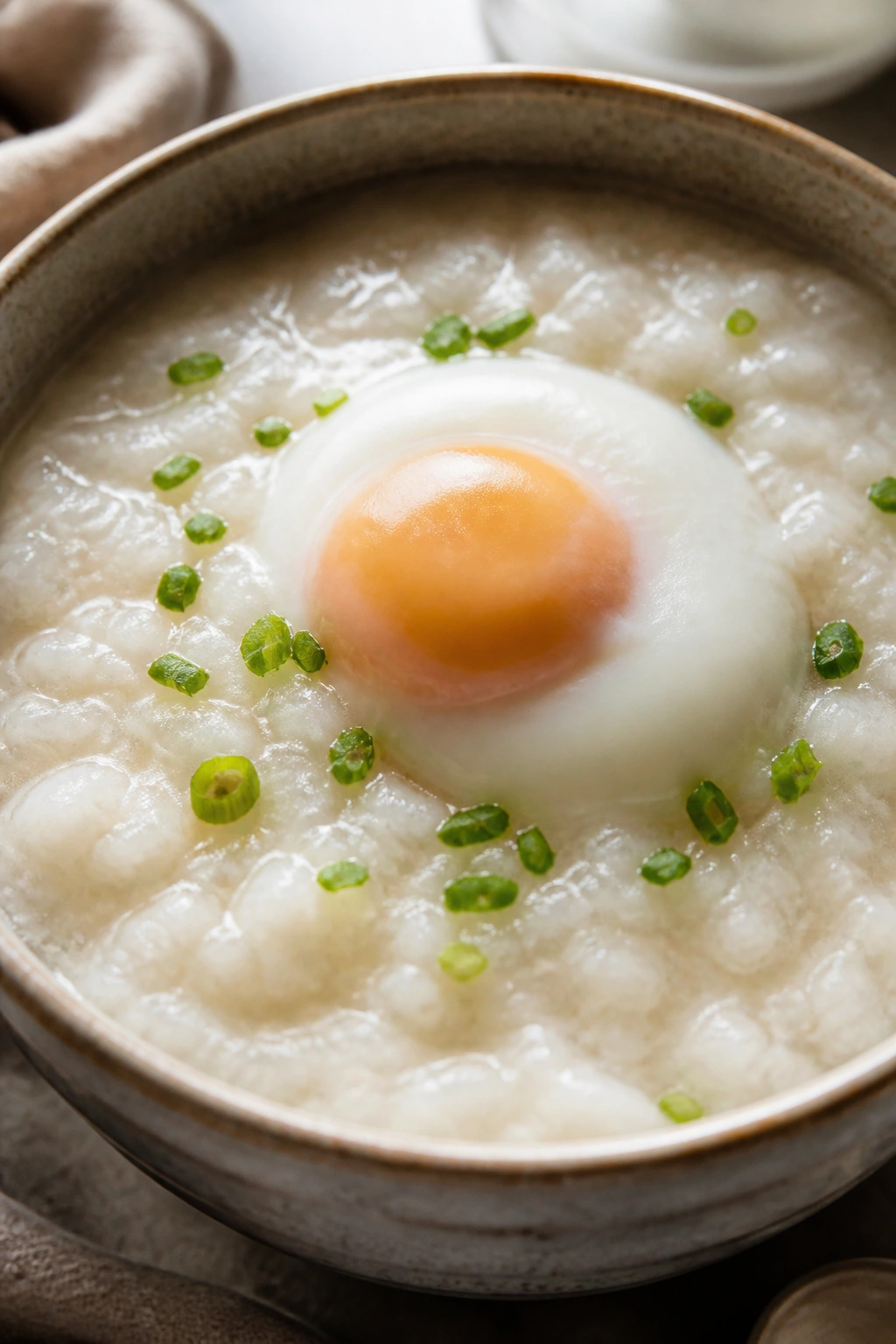
This one sounds like a dinner idea until your stomach meets it. Then it makes perfect sense. Rice congee is basically rice cooked down with a lot of liquid until it turns creamy and soft, which is exactly the kind of texture that can feel kind to an unsettled stomach. It’s warm, filling, and plain enough that it rarely feels aggressive.
Use 1/2 cup cooked rice with 2 to 3 cups water or mild broth, simmered until it breaks down. Stir often. The finished bowl should look loose and porridge-like, not stiff. Top it with a soft egg if eggs still appeal, but make sure the egg is fully cooked through. A little salt and a few drops of soy sauce can wake up the flavor without turning the bowl spicy.
- Cooked white rice works best.
- Add ginger slices while simmering if the smell helps you.
- Keep the broth mild, not heavy or greasy.
- Eat it warm, not piping hot.
This is one of the best options for mornings when chewing feels like work and your stomach wants calm more than flavor.
9. Mild Egg and Cheese Breakfast Quesadilla

A breakfast quesadilla can be surprisingly gentle when you keep the filling simple. Soft scrambled eggs, a small handful of mild cheese, and a flour tortilla make a compact, warm meal you can hold in your hand. That matters when sitting down to a full plate feels impossible.
Cook the eggs first, then tuck them into the tortilla with a modest amount of shredded cheddar or Monterey Jack. Fold, warm it in a skillet over medium heat for 2 to 3 minutes per side, and stop when the outside is lightly golden and the cheese has melted. You want warmth and softness, not a crisp shell that shatters everywhere. Cut it into wedges so you can eat in small pieces.
If cheese smells too strong, use less than you think you need. A couple tablespoons can be enough. Add a tiny bit of mashed avocado if you want more softness, but skip salsa if acid makes you gag. Tomatoes and nausea are not friends for everyone.
A quesadilla also travels well. Wrap it in foil and keep it nearby for the minutes after you wake up, when breakfast needs to happen fast and quiet.
10. Overnight Oats with Maple and Chia
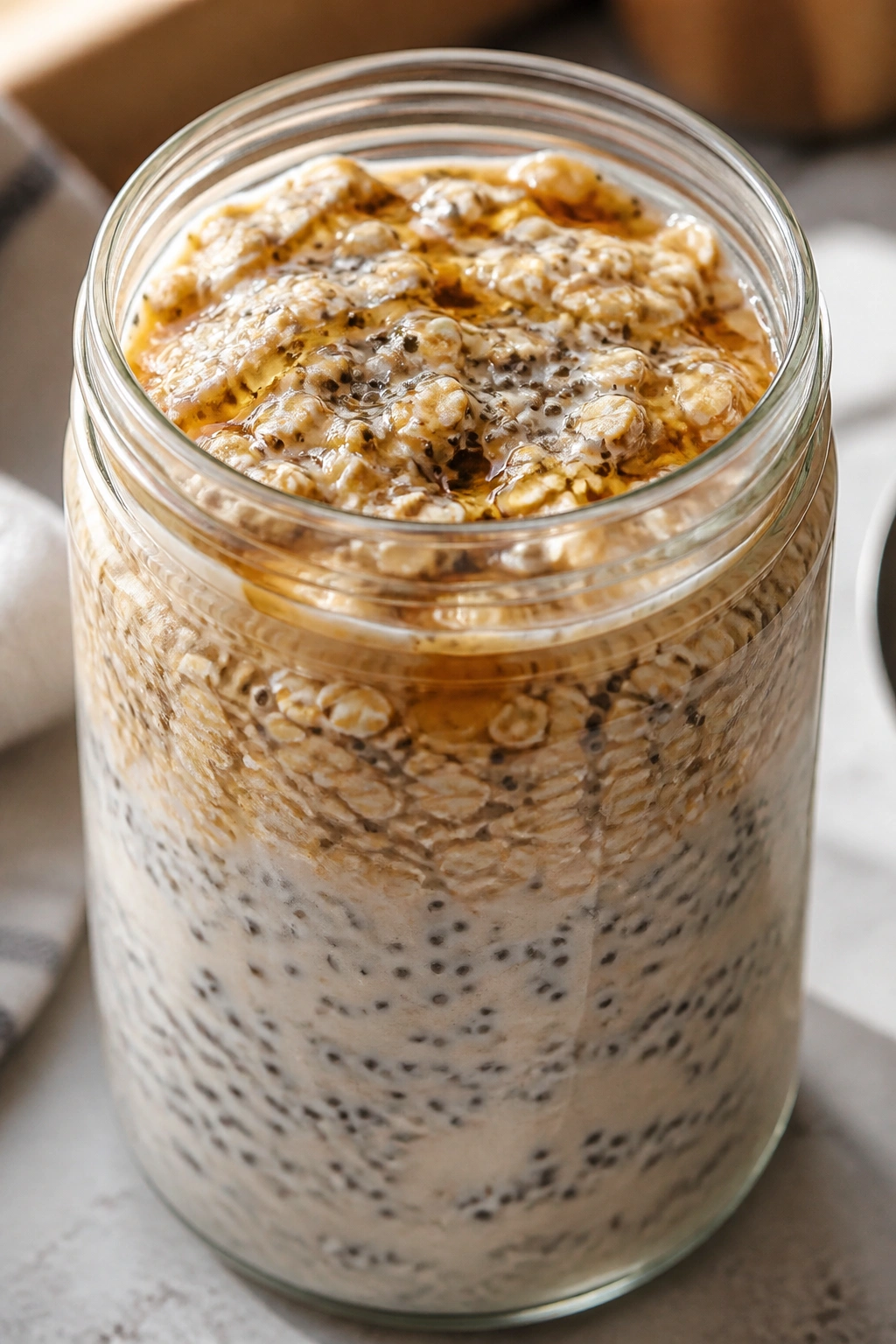
Overnight oats are made for mornings when you can’t deal with a stove. You mix them the night before, slide them into the fridge, and wake up to a cold, ready-to-eat bowl. That alone can make a bad morning easier. No smell. No pan. No waiting.
The texture is the whole game. Use 1/2 cup rolled oats, 1/2 cup milk, 1 tablespoon chia seeds, and 1 teaspoon maple syrup, then let it sit overnight until thick but still spoonable. If chia feels too gel-like, use 1/2 teaspoon instead. Add sliced banana in the morning, or a few berries if sweet fruit sounds okay. If thick breakfasts feel risky, stir in an extra splash of milk so it loosens up.
Cold oats are not for everyone. Some people find them soothing; others want nothing to do with a chilled breakfast. If you’re in the second group, warm it for 30 to 45 seconds in the microwave and stir well. The point is to keep the texture soft and familiar.
Make two jars at a time if you can. Future-you will be glad.
11. Whole-Grain Toast with Almond Butter and Apple
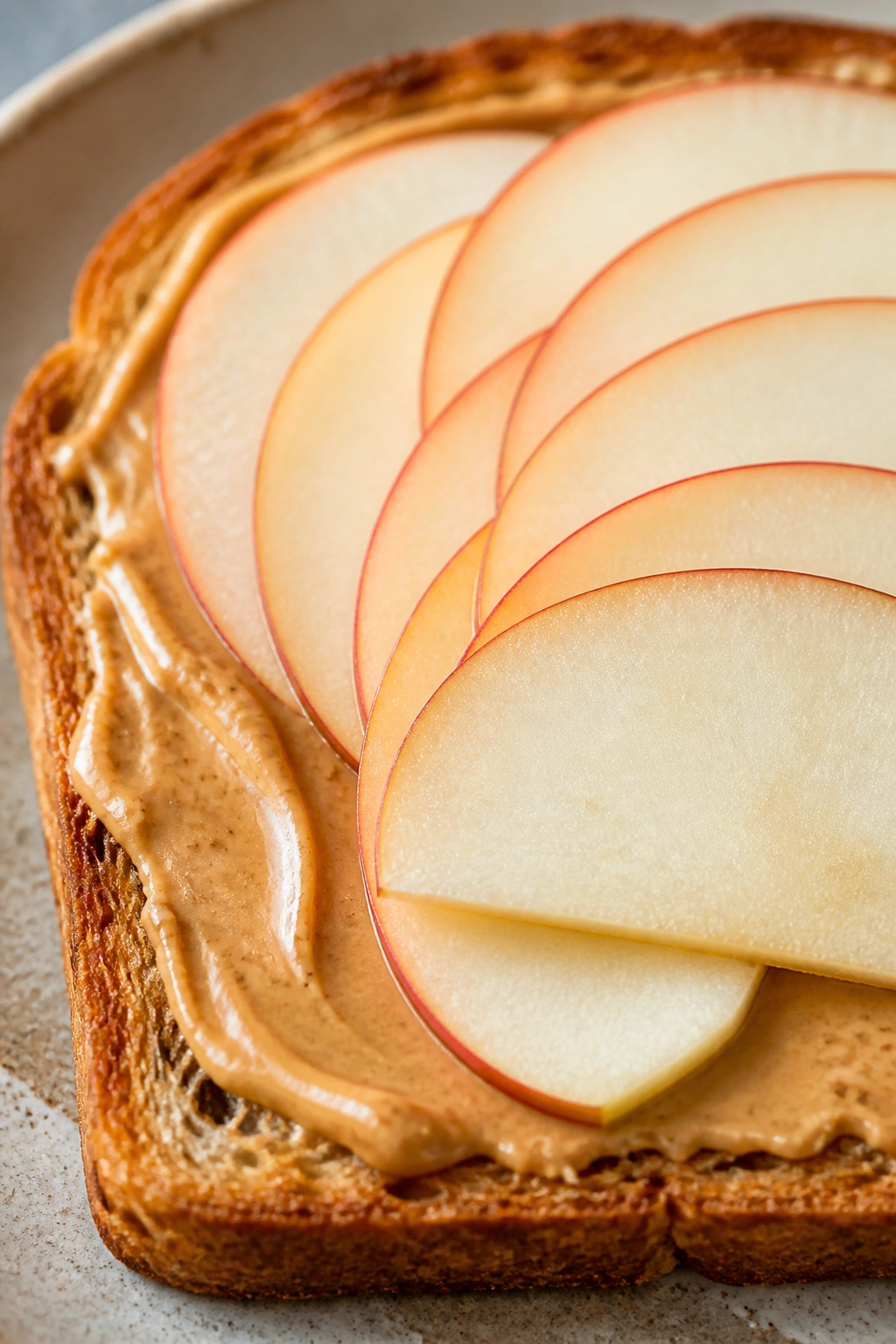
This breakfast works because it stays simple. Toast gives you a dry, easy base, almond butter adds protein and a little fat, and thin apple slices bring crunch without a huge amount of smell. It’s the kind of breakfast you can eat half of, put down, and come back to when your stomach settles.
Go with one slice of whole-grain bread if plain white bread feels too flimsy. Spread 1 to 2 teaspoons almond butter across the toast, then top with very thin apple slices. A tart apple can be sharp; a sweeter one often feels easier. If apple skin is too much texture, peel it. No rules here. Keep the pieces small so the bite stays gentle.
- Toast the bread lightly, not dark.
- Slice the apple paper-thin.
- Use creamy nut butter if crunchy feels like too much.
- Add cinnamon only if spice smells okay.
This is a good one for bedside breakfast too. A slice of toast and a small jar of nut butter can save a morning when getting to the kitchen feels like a project.
12. Frozen Waffle with Nut Butter and Berries
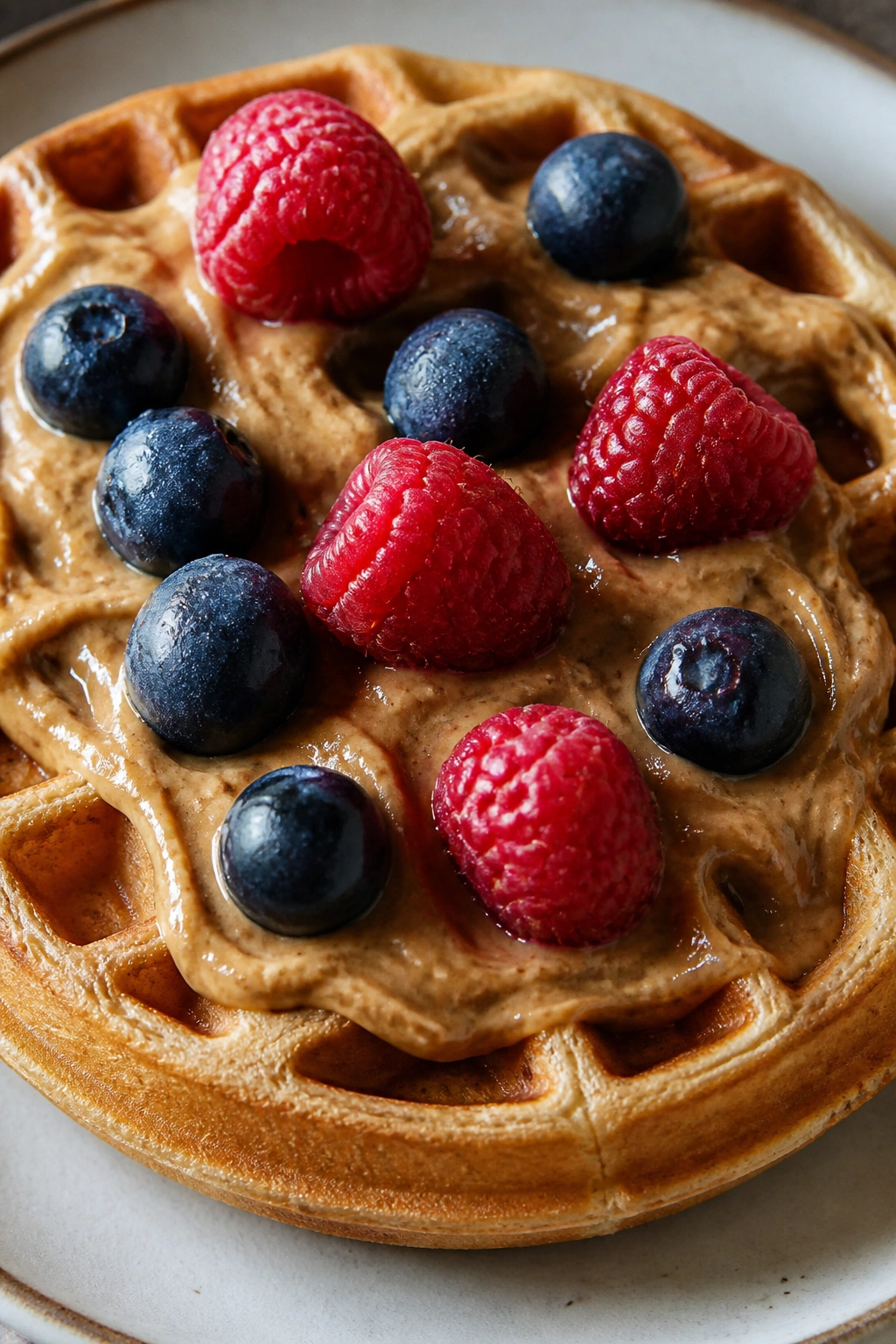
Frozen waffles are not glamorous, and that’s part of the appeal. They’re fast, predictable, and easy to dress up or keep plain. For nausea-prone mornings, the texture can be a win because you can choose how hot, crisp, or soft you want them. Some people want them toasted until the edges are dry. Others want them barely warmed so they don’t smell too strong.
A waffle with almond butter or peanut butter gives you more staying power than a waffle alone. Add a few berries if they sound pleasant, or skip the fruit if sweetness feels like too much. You can keep this breakfast half-cold by letting the waffle cool for a minute before topping it. That small move often helps with smell sensitivity. Hot buttered waffles can be too much. A warm waffle with a thin smear of nut butter is calmer.
How to make it easier on your stomach
- Use one waffle, not two.
- Keep the topping thin.
- Let it cool for 60 seconds before you eat.
- Choose berries that are fully ripe, or use banana instead.
If you wake up hungry but fragile, this is a solid middle path between a snack and a meal.
13. Banana Oat Muffins
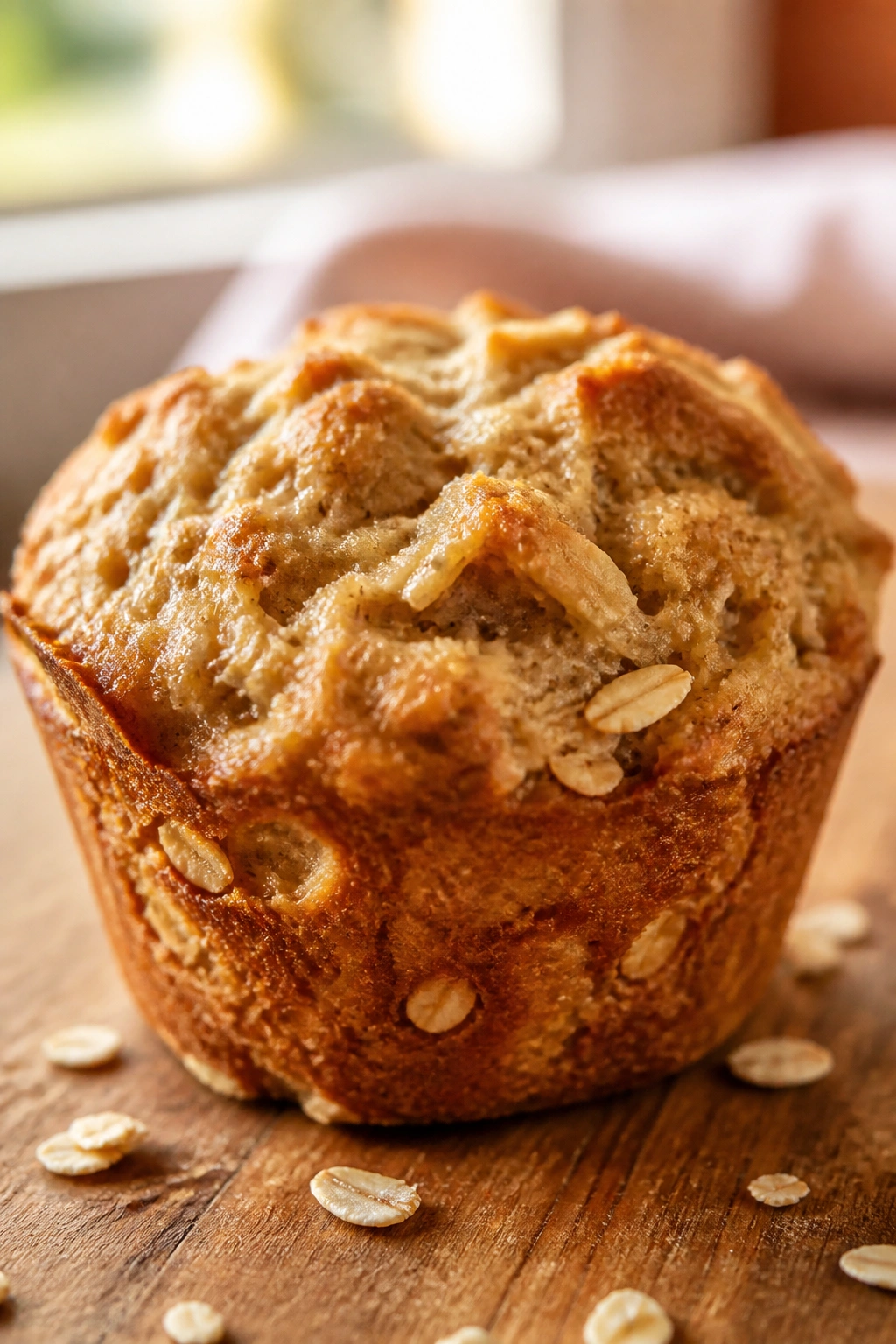
Banana oat muffins are a smart make-ahead option because they solve two problems at once: no morning cooking, and no strong smell waking up your stomach. One muffin can be enough for the first wave of hunger, and you can always grab a second later if you’re feeling steadier.
The best version is soft, not dry. Ripe bananas keep the crumb moist, and oats make the muffin feel a little more filling than a plain bakery-style cupcake. If you bake them yourself, avoid heavy spice. A little cinnamon is fine; a lot can be too much when nausea is active. Eat them at room temperature or slightly warm, depending on what your stomach handles better.
They freeze well, which is part of why I like them. Wrap each muffin individually, then thaw one on the counter or warm it for 15 to 20 seconds in the microwave. That gives you a breakfast that doesn’t require decision-making at 6 a.m.
A muffin also travels. Car, desk drawer, bag, bedside table — it works in all the places where “real breakfast” tends to fall apart.
14. Sweet Potato Yogurt Bowl
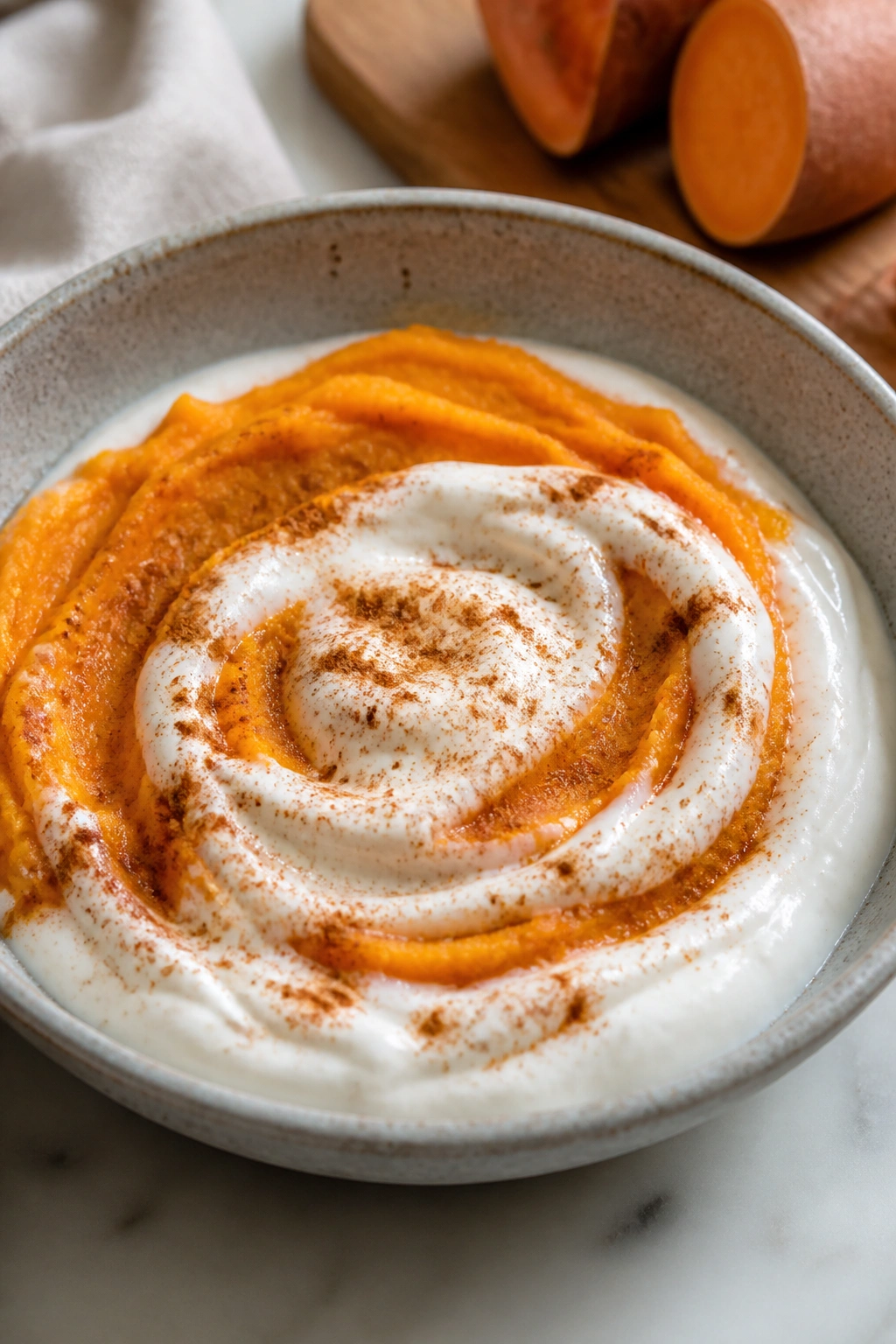
This is the breakfast I’d hand to someone who wants something soft, mildly sweet, and a little more filling than fruit alone. Sweet potato has a smooth texture when mashed, and it brings a gentle earthiness that can be easier to tolerate than sharper flavors. Yogurt softens it and adds protein, so the bowl feels more like a meal than a snack.
Use about 1/2 cup cooked sweet potato, mashed until smooth, then top with 1/4 to 1/2 cup plain yogurt. A light sprinkle of cinnamon or nutmeg can help, though both should stay subtle. If sweet smells bother you, keep it plain and add a few spoonfuls of granola or sliced banana only if the first bite goes well.
Cold or warm both work. That flexibility matters. A warm sweet potato mash can feel comforting in a way that cold foods can’t, while chilled yogurt keeps the aroma down. You get to choose which side of the morning you’re on.
It’s not a flashy breakfast. It doesn’t need to be. It’s soft, steady, and easy to portion out in small bites.
15. Cream of Wheat with Milk and Fruit
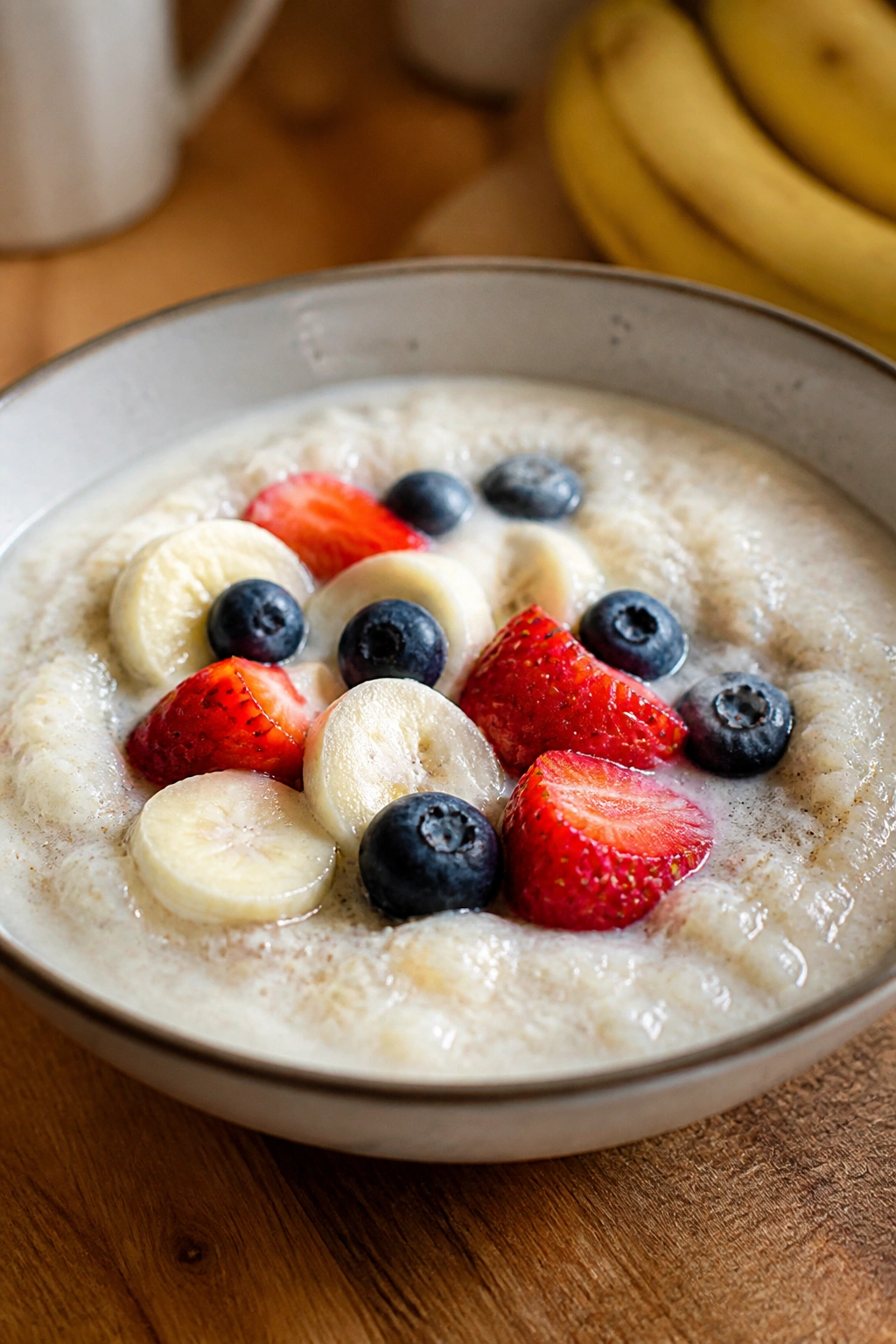
Cream of Wheat is one of those old-school breakfasts that still earns its keep. The texture is smooth, the flavor is mild, and it can be cooked thin enough to glide down without much effort. For a stomach that’s rolling a little, that matters more than whether the meal looks exciting.
Cook it with milk, water, or a mix of both, and stop before it gets too thick. You want a spoonable porridge, not a gluey paste. About 1/4 cup dry cereal with 1 cup liquid is a good starting point, then adjust to your taste. Top with a few berries, a spoonful of peaches, or a sliced banana if fruit sounds tolerable. A tiny dab of butter can help if you need a little richness.
- Keep the texture loose.
- Stir while cooking so it stays smooth.
- Use fruit that is soft, not tart.
- Eat it warm, not steaming.
If you have trouble with crunchy textures first thing, this one is worth keeping in rotation. It’s plain in the best possible way.
16. Chia Pudding with Mango
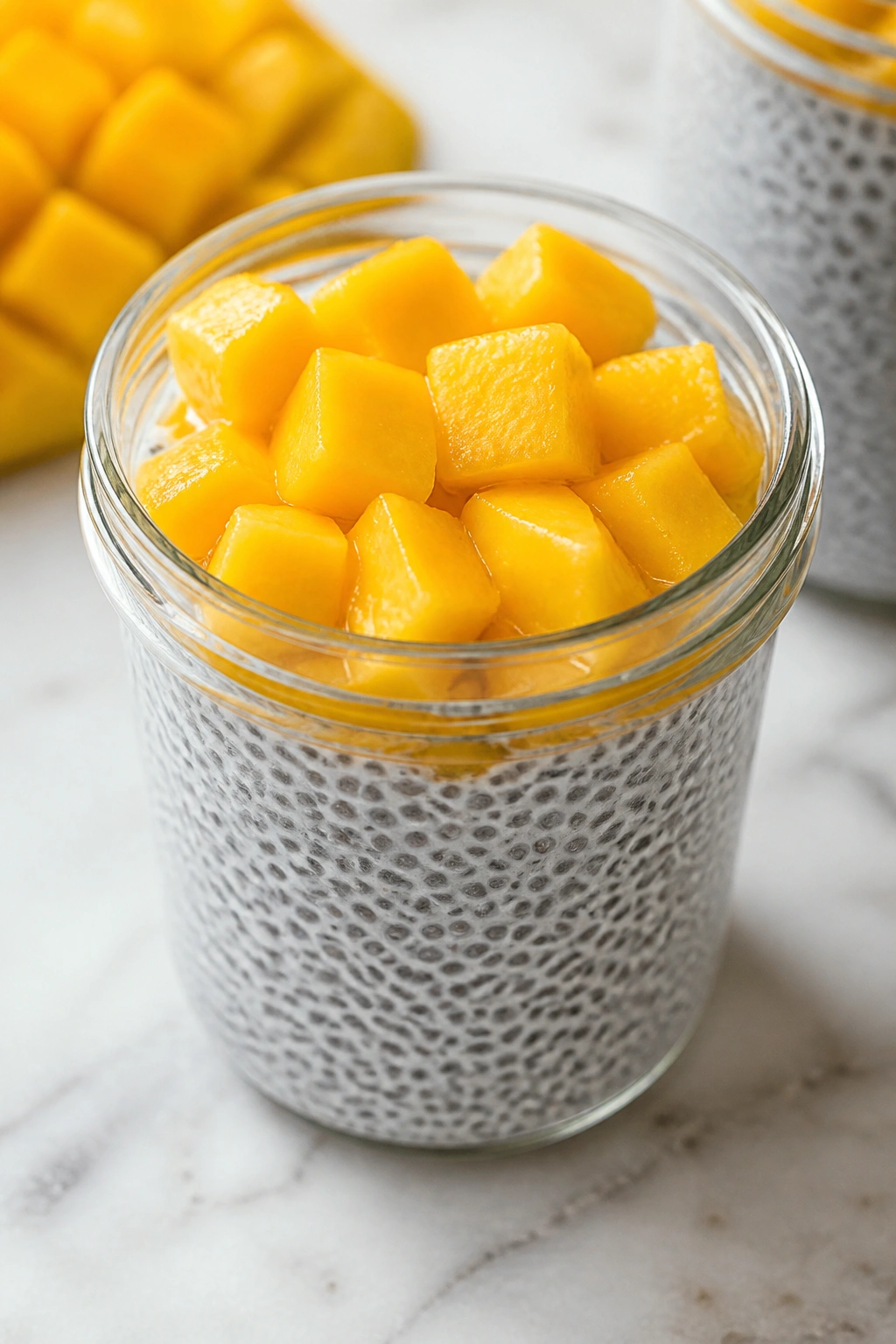
Chia pudding is a texture breakfast, which means people tend to love it or hate it. If you’re in the camp that likes a soft, cool, pudding-like spoonful, it can be a nice change from toast and crackers. If gelatinous textures make your stomach turn, skip ahead. No shame in that.
The basic setup is easy: 2 tablespoons chia seeds stirred into 1/2 cup milk or yogurt, then chilled until thick. Add mango on top because its sweetness tends to be round and mellow rather than sharp. The mango should be ripe and soft, not stringy. If the pudding gets too thick overnight, stir in a splash of milk before serving. That keeps it from turning into a rubbery lump.
What makes it work
The cool temperature keeps odors down. The small spoonful size keeps you from feeling boxed in by a giant serving. And the mango gives the bowl a little brightness without making it acidic or sour. That balance can matter on mornings when every flavor seems turned up too far.
Eat it slowly. Chia pudding rewards patience.
17. Plain Bagel with Cream Cheese and Cucumber
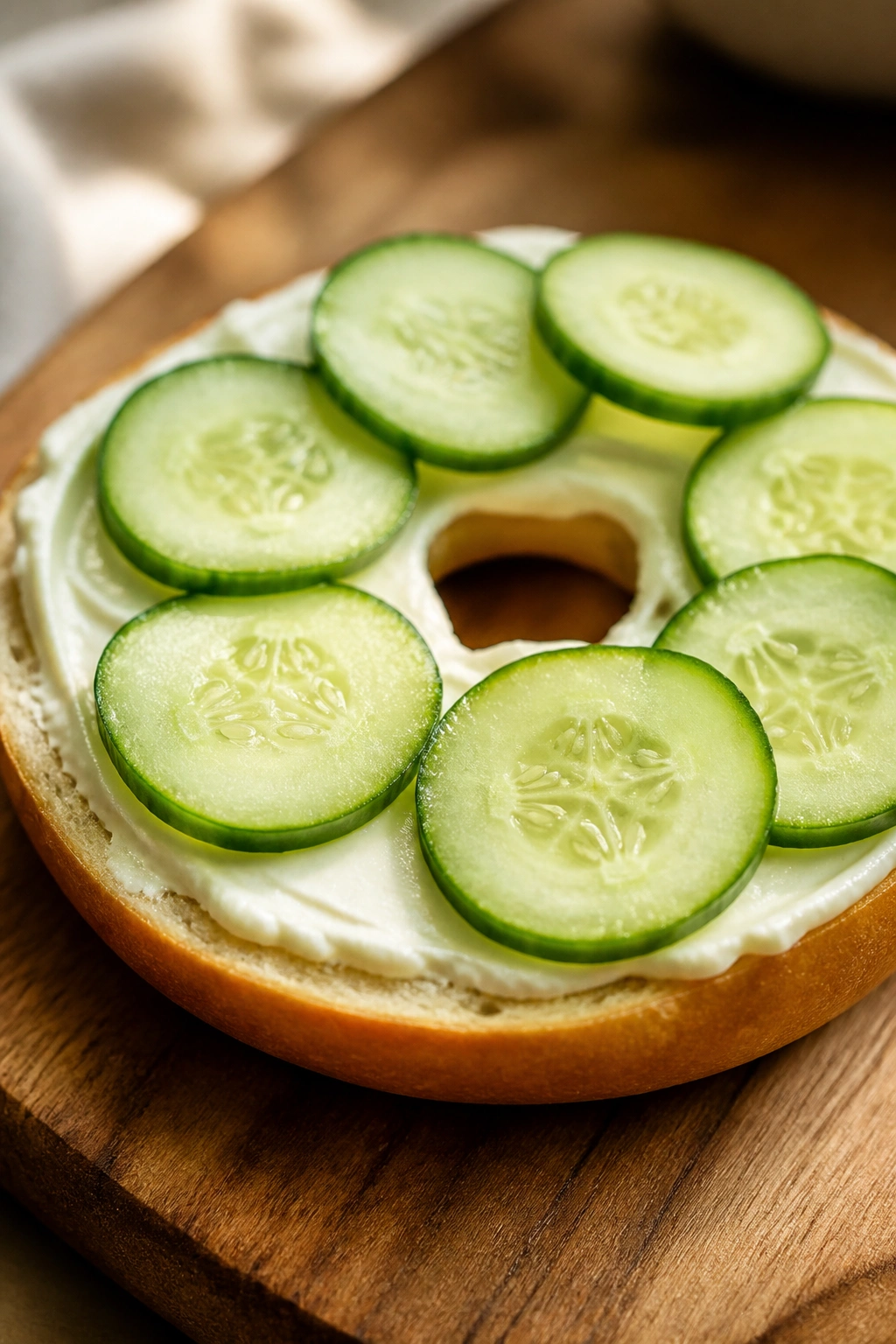
A plain bagel has a sturdy, familiar taste that many queasy stomachs accept better than fancier breakfasts. Cream cheese adds softness and enough fat to keep hunger from snapping back too fast, while cucumber gives a cool crunch that feels clean and light. The whole plate is mild. No loud smells. No sharp flavors.
Use a plain or lightly salted bagel, toasted only if the smell of warm bread feels okay. Spread on a thin layer of cream cheese — enough to coat, not enough to drip — and add a few thin cucumber slices. Peel the cucumber if the skin feels too rough. Seedless cucumber is even better because it gives you crunch without as much watery bite. If cream cheese seems too rich, use half cream cheese and half ricotta.
I like this breakfast when sweet foods sound unappealing. It has enough texture to feel like real food, but not so much that it becomes a project. That’s a useful middle ground on rough mornings.
You can cut the bagel into quarters and eat slowly, which helps when your appetite arrives in small waves instead of one clean burst.
18. Bean and Cheese Breakfast Wrap

If crackers and toast aren’t holding you, a mild breakfast wrap can give you more staying power. Beans add fiber and protein, cheese adds salt and softness, and a tortilla keeps the whole thing neat enough to eat with one hand if you need to sit near a window or take your time.
Keep the filling gentle. A few spoonfuls of mashed black beans or refried beans, a sprinkle of mild cheese, and maybe a scrambled egg if eggs still sound okay. Warm the tortilla in a skillet for 1 to 2 minutes so it bends easily, then fill and fold it. The wrap should be soft, not crispy. Crunch can feel too aggressive when nausea is high. If beans make you gassy, keep the portion small and see how you do.
- Use mild cheese like cheddar or Monterey Jack.
- Skip hot sauce.
- Mash the beans smooth.
- Cut the wrap in half so it’s easier to handle.
This is a better fit for mornings when you need something with staying power. Not delicate. Practical.
19. Cold Cereal with Banana
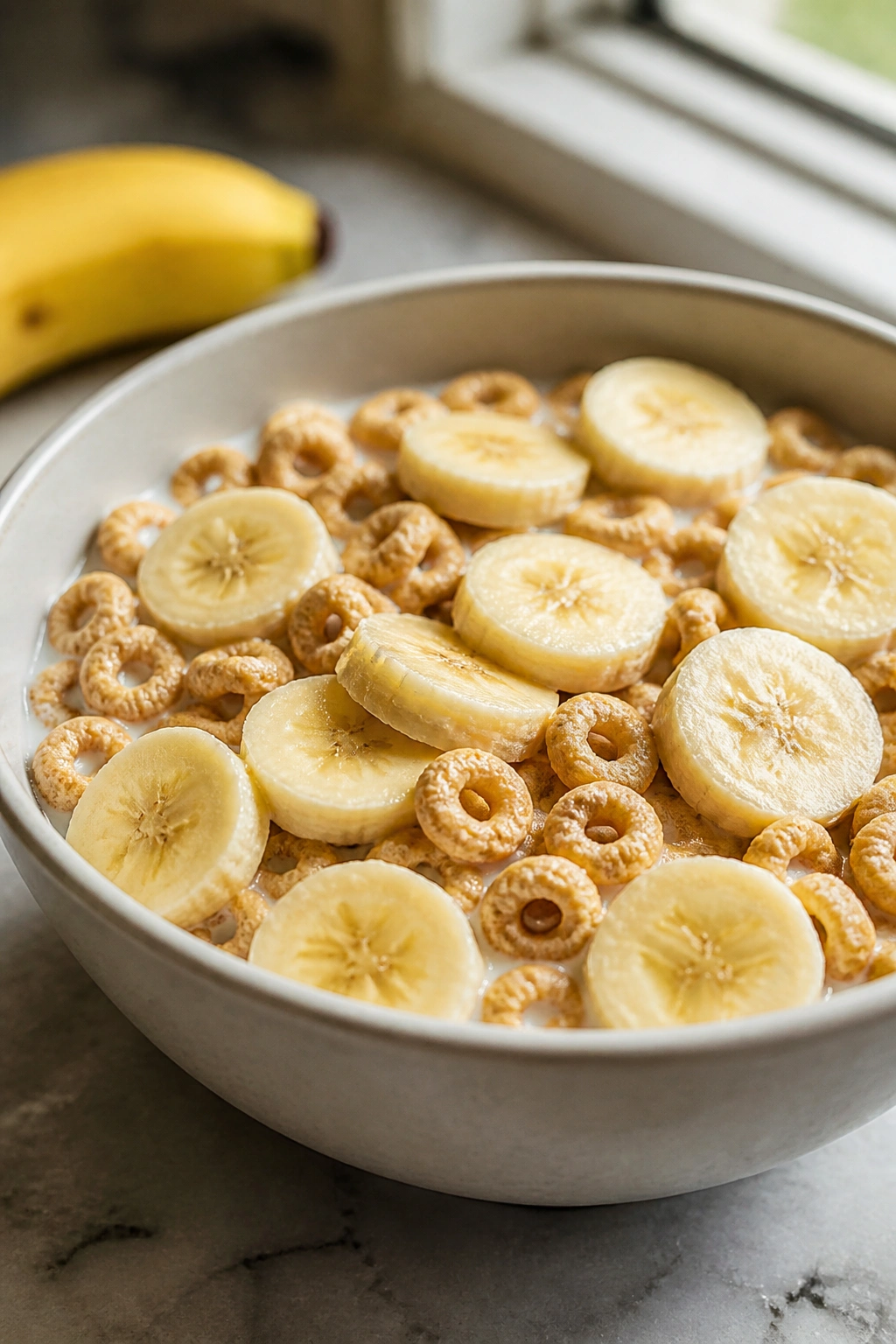
Cold cereal is plain old comfort food, and sometimes that’s exactly what wins. A bowl of cereal with milk and banana is fast, familiar, and easy to scale up or down depending on how your stomach is behaving. When mornings are rough, familiarity can be enough.
Choose a cereal that isn’t overloaded with sugar, since sweet cereals can feel cloying before breakfast has a chance to settle. Fortified options can also give you a little more nutrition for the effort. Pour a small bowl first. You can always add more. A sliced banana softens the edges and makes the bowl feel less bare. If milk smells off, try colder milk, a lactose-free version, or a smaller amount than usual. Some people even dry-snack the cereal for a few bites before adding milk. Strange? Maybe. Effective? Often.
This breakfast also works as a backup plan. Keep it in the pantry for the mornings when you cannot imagine cooking, chopping, or even standing still for long.
It’s not the most romantic breakfast on this list. It doesn’t need a sales pitch. It’s fast, easy to portion, and often exactly neutral enough.
20. Applesauce, Cheese, and Toast Plate
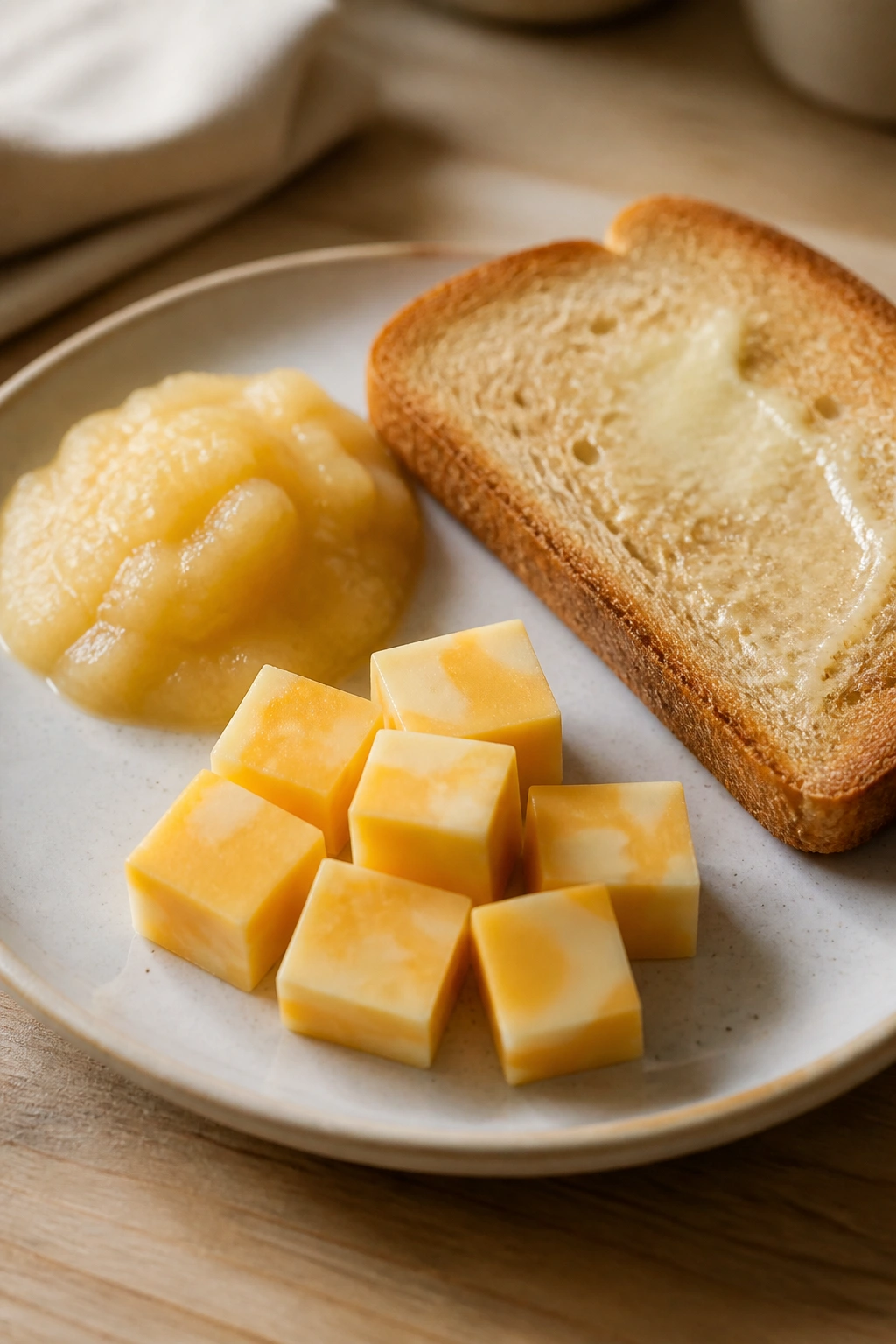
A little breakfast plate can work better than one big dish. Applesauce gives you something cool and soft, toast gives you carb comfort, and cheese adds a savory bite that can stop sweet fatigue from taking over. It’s the sort of meal that looks almost too plain — then turns out to be exactly what a queasy morning needed.
I like this one because it lets you eat in pieces. A spoonful of applesauce. A bite of toast. A cube or two of mild cheese. That rhythm helps when your appetite is unreliable and you want choices in front of you instead of one fixed bowl. Use pasteurized cheese, keep the toast light, and choose an applesauce that isn’t loaded with extra spice. Cinnamon applesauce can be fine, but if spice smells edgy, plain is safer.
- 1 small cup applesauce
- 1 slice toast, lightly buttered or plain
- 1 to 2 ounces mild cheese, cut into cubes or slices
- Optional: a few grapes or peeled pear slices
It’s a low-pressure breakfast. That’s the point. Sometimes the best morning meal is the one that lets you eat three separate tiny things instead of pretending you’re ready for one big plate.
Final Thoughts
The breakfast that works is the one your stomach agrees to meet halfway. That might be crackers and peanut butter one day, oatmeal the next, and cold cereal when heat feels like the enemy. Annoying? Absolutely. Useful? Also yes.
A pattern does show up if you pay attention: mild flavors, soft textures, and small portions tend to make the morning easier. Protein helps many people last longer, and cold foods often keep smells under control. None of that is fancy. It’s just practical.
Keep a short list on the fridge and a few backup foods in easy reach. The less effort breakfast takes, the more likely you are to eat before nausea gets louder than hunger.
