



The snack that gets you from lunch to dinner without the foggy late-afternoon crash usually looks plain on paper: high-protein snacks with enough substance to hang around for more than 20 minutes. A pastry can taste good at 3 p.m. and leave you hunting for more food at 3:40. A snack with 15 to 20 grams of protein tends to behave differently.
That difference matters more than people think. Protein slows the whole experience down a bit. You chew more. You stay full longer. If you pair it with fiber or a little fat, the snack stops feeling like filler and starts doing the job you wanted from it in the first place.
I’m also convinced that texture makes or breaks snack prep. Hard-boiled eggs go chalky if you cook them too long. Cottage cheese turns watery if you dump wet tomatoes straight into it. Greek yogurt can hold up for days, but only if you keep juicy fruit from flooding the container. Those little details are what separate “I should eat better” from a fridge full of food you’ll actually reach for.
And that’s the whole point here: snacks you’ll want to eat again, not duty-food.
What Counts as High-Protein Snacks
A snack does not need bodybuilder numbers to earn the label. If it gives you around 10 grams of protein or more, it’s already doing useful work. Once you hit the 15-to-20-gram range, the snack starts to feel closer to a small bridge meal, which can be a lifesaver on long workdays or after a workout.
Size matters, though. A 450-calorie “snack” loaded with syrup, chocolate, and oil may have protein, but it’s not solving the same problem as a compact yogurt bowl or a couple of egg muffins. For snack time, I like this rough split:
- 10 to 12 grams works for a short gap between meals.
- 15 to 20 grams works when dinner is still a few hours away.
- 20 grams or more makes sense after training or on travel days when meal timing gets messy.
Protein on its own can still fall flat. A plain tuna pouch gives you protein, sure, but not much pleasure. Add crunch, acid, salt, or fiber and the snack starts to feel like real food. That shift matters.
Taste matters too.
You are far more likely to keep eating high-protein snacks if they feel like something you chose, not something a fitness app assigned you.
Why High-Protein Snacks Feel More Satisfying
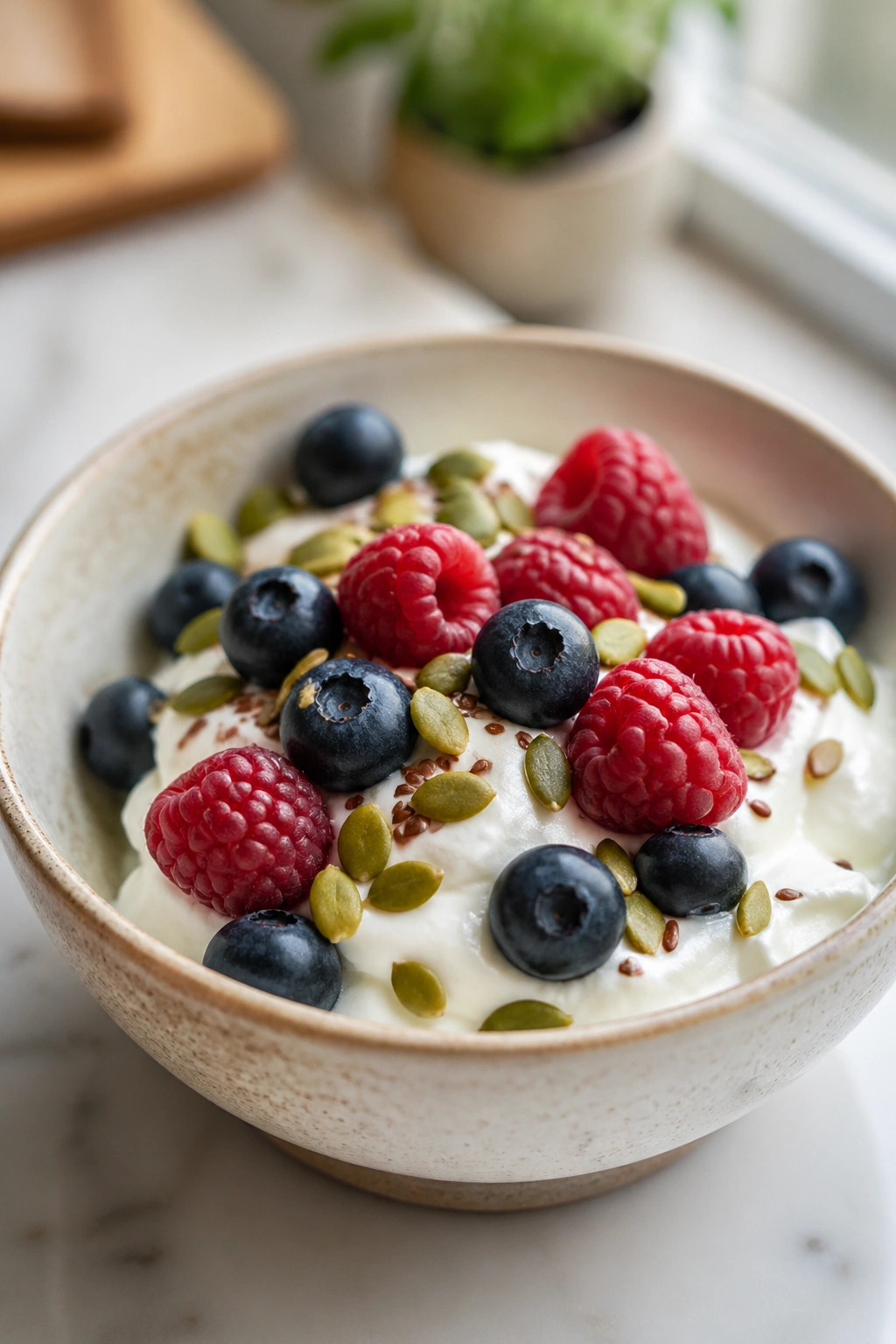
Why does a protein-heavy snack keep you steadier than a bag of crackers? Part of it is digestion speed. Protein takes longer to break down than refined carbs, and appetite research has repeatedly found that higher-protein meals and snacks tend to increase fullness more than low-protein ones of similar size.
There’s a mechanical piece too. Foods rich in protein often need more chewing and come with more structure. Think Greek yogurt, eggs, tofu, chicken, cottage cheese, edamame. They linger in a way that airy snack foods don’t. A 1-ounce cracker serving disappears fast. A bowl of skyr with seeds does not.
The pairing that works better than protein alone
Protein works hardest when it has backup:
- Fiber from berries, oats, vegetables, beans, or chia helps stretch fullness.
- Fat from nuts, seeds, avocado, or cheese helps slow the snack down.
- Acid and salt from lemon, pickles, mustard, or herbs make repeat eating far easier.
That last part gets ignored. A snack can have clean nutrition stats and still be a chore. If the flavor is dull, you’ll drift back toward whatever comes in a shiny wrapper.
Build around protein first. Then add crunch, freshness, or creaminess so it feels finished.
Meal Prep Tips for High-Protein Snacks That Stay Fresh
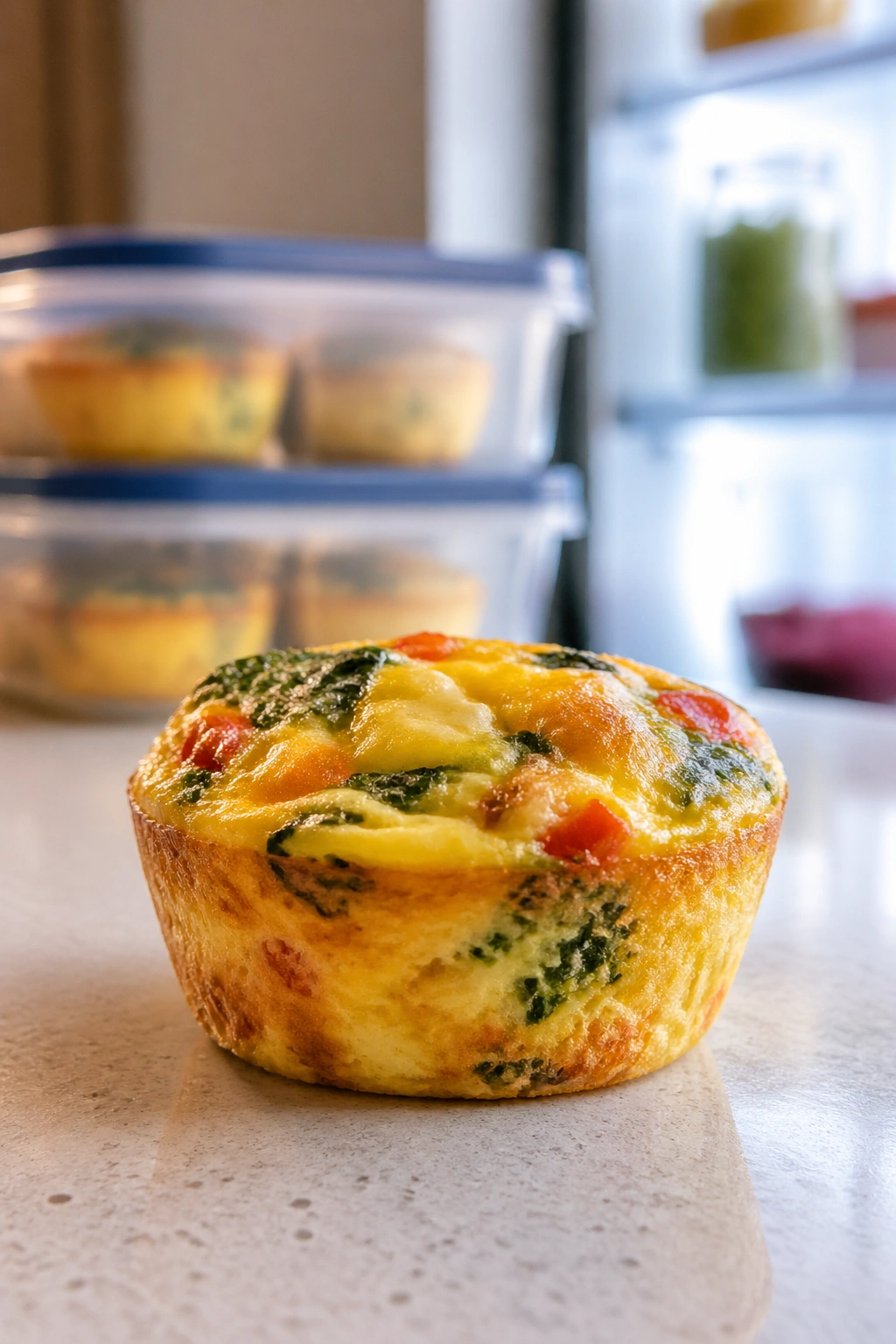
Soggy vegetables and rubbery proteins ruin snack prep fast.
The fix is not complicated, but it does require a little planning. Keep wet parts away from dry parts until the last minute whenever you can. Store cut cucumbers on a paper towel. Pack seeds separately from yogurt. Keep crackers, peppers, or cucumber rounds away from tuna and chicken salad until you’re ready to eat.
I like to keep three lanes of snacks prepped at once:
- Fridge snacks for the next 3 days: yogurt cups, cottage cheese bowls, egg muffins, chicken salad.
- Freezer snacks for later: egg muffins, smoothie packs, tofu cubes.
- Shelf-stable snacks for bags and desks: jerky, soy nuts, pumpkin seeds, lupini beans in pouches.
A few storage windows are worth remembering. Hard-boiled eggs keep about 1 week in the shell. Tuna or chicken salad is better within 3 days. Open cottage cheese and yogurt stay at their best if you portion them early and keep the lids tight. Tofu gets firmer after pressing and baking, then reheats well in an air fryer for 3 to 4 minutes.
Cold snacks should smell clean and sharp, not tired. If the container opens with that faint warmed-over fridge smell, skip it.
1. Greek Yogurt With Berries and Pumpkin Seeds
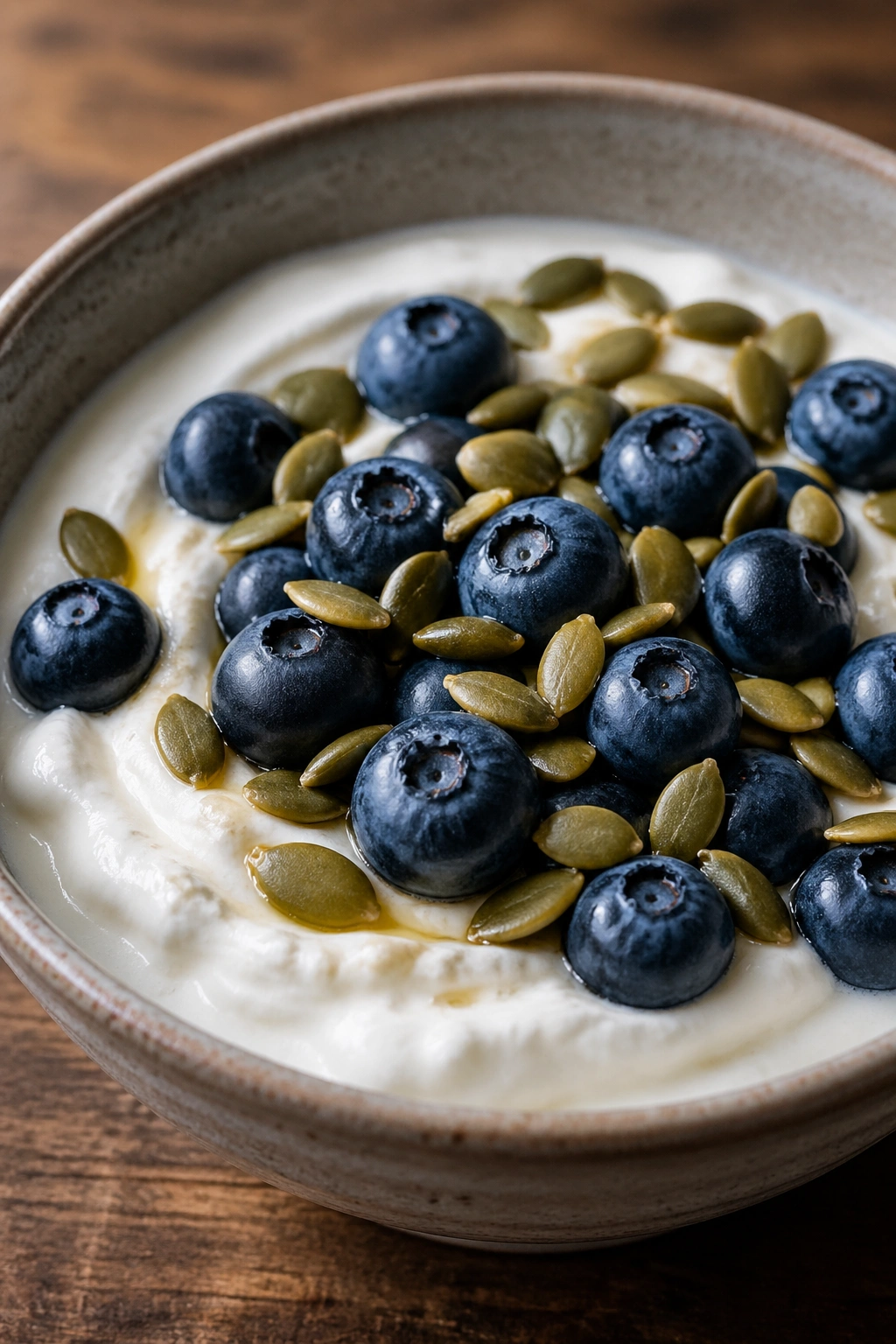
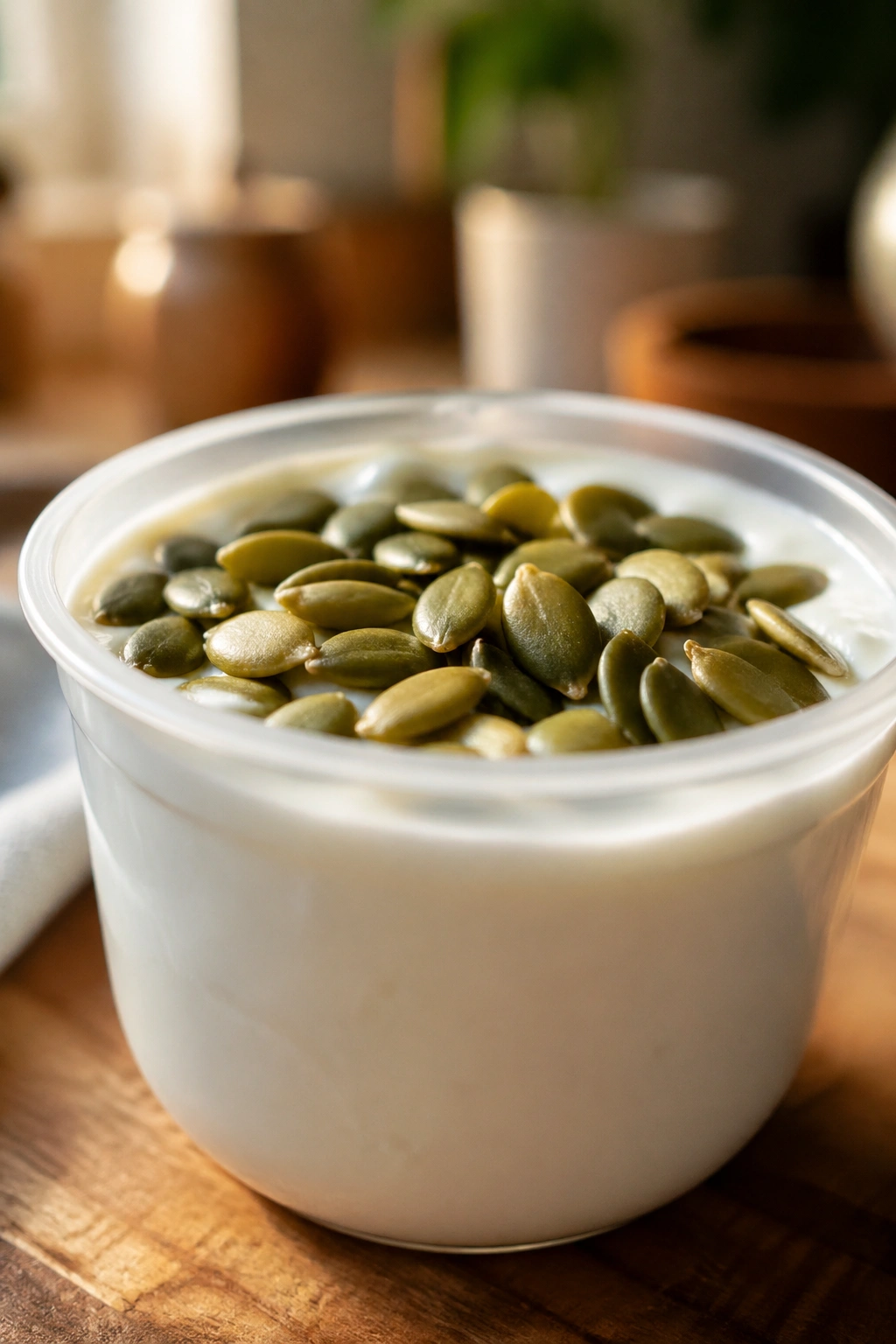
Greek yogurt earns its keep because it gives you a lot of protein in a small bowl without any cooking. A 6-ounce serving often lands around 15 to 18 grams on its own. Add 2 tablespoons of pumpkin seeds and you push that closer to 20 or even 22 grams, depending on the brand.
Why it works so well
The texture does part of the job. Greek yogurt is thick enough to feel substantial, and berries bring acidity that keeps the whole thing from tasting flat. Pumpkin seeds add crunch and another layer of staying power. You end up with protein, fiber, fat, and chew in one container.
Frozen berries can work, but they need handling. If you dump them straight into the yogurt the night before, they thaw into purple liquid and loosen the whole bowl. Better move: thaw them in a separate cup, drain excess juice, then stir them in right before eating.
Quick details worth knowing
- A 6-ounce plain Greek yogurt plus 2 tablespoons pumpkin seeds usually gives 20 to 22 grams of protein.
- Blueberries hold their shape better than raspberries over a day or two.
- Cinnamon, lemon zest, or a teaspoon of cocoa powder adds flavor without turning the snack into dessert.
- Full-fat and 2% versions taste richer; nonfat works, though the tang is sharper.
Prep note: If you want sweetness, use a teaspoon of honey rather than a heavy pour. Too much and you lose the clean, tart balance that makes this snack easy to eat day after day.
2. Cottage Cheese With Cucumber, Tomatoes, and Black Pepper
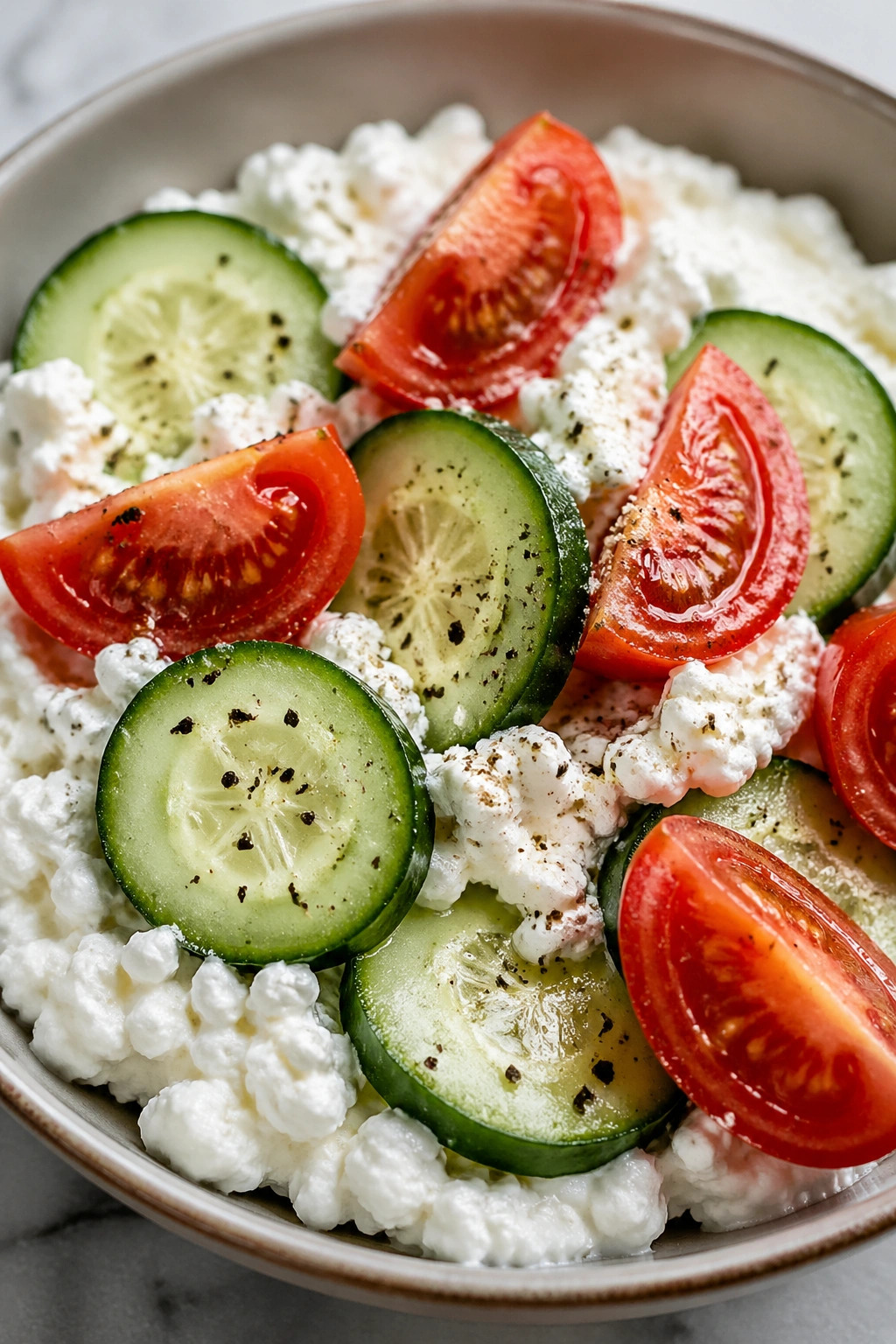
Cottage cheese makes more sense as a savory snack than a sweet one. I know the pineapple version has loyal fans, but a bowl with cucumber, tomatoes, pepper, and a few drops of olive oil feels far more like actual food.
Three-quarters of a cup often gives you 18 to 20 grams of protein, which is a strong return for something you can scoop into a container in under a minute. The curds bring salt and creaminess. Cucumber makes it crisp. Tomato adds acid and a little sweetness. Black pepper wakes the whole bowl up.
Texture is where people get tripped up. Wet vegetables will thin cottage cheese fast, especially after a night in the fridge. Seed the tomato if it’s juicy, or use halved grape tomatoes placed cut-side down on a paper towel for 10 minutes before packing. That one step helps more than any seasoning trick.
A tiny splash of red wine vinegar or lemon juice gives it a sharper edge. Chopped dill works too. So does everything seasoning, though I’d go light if the cottage cheese is already salty.
Desk-lunch energy in a snack cup isn’t a bad thing. Not when it keeps you full.
3. Hard-Boiled Eggs With Hummus and Carrot Sticks
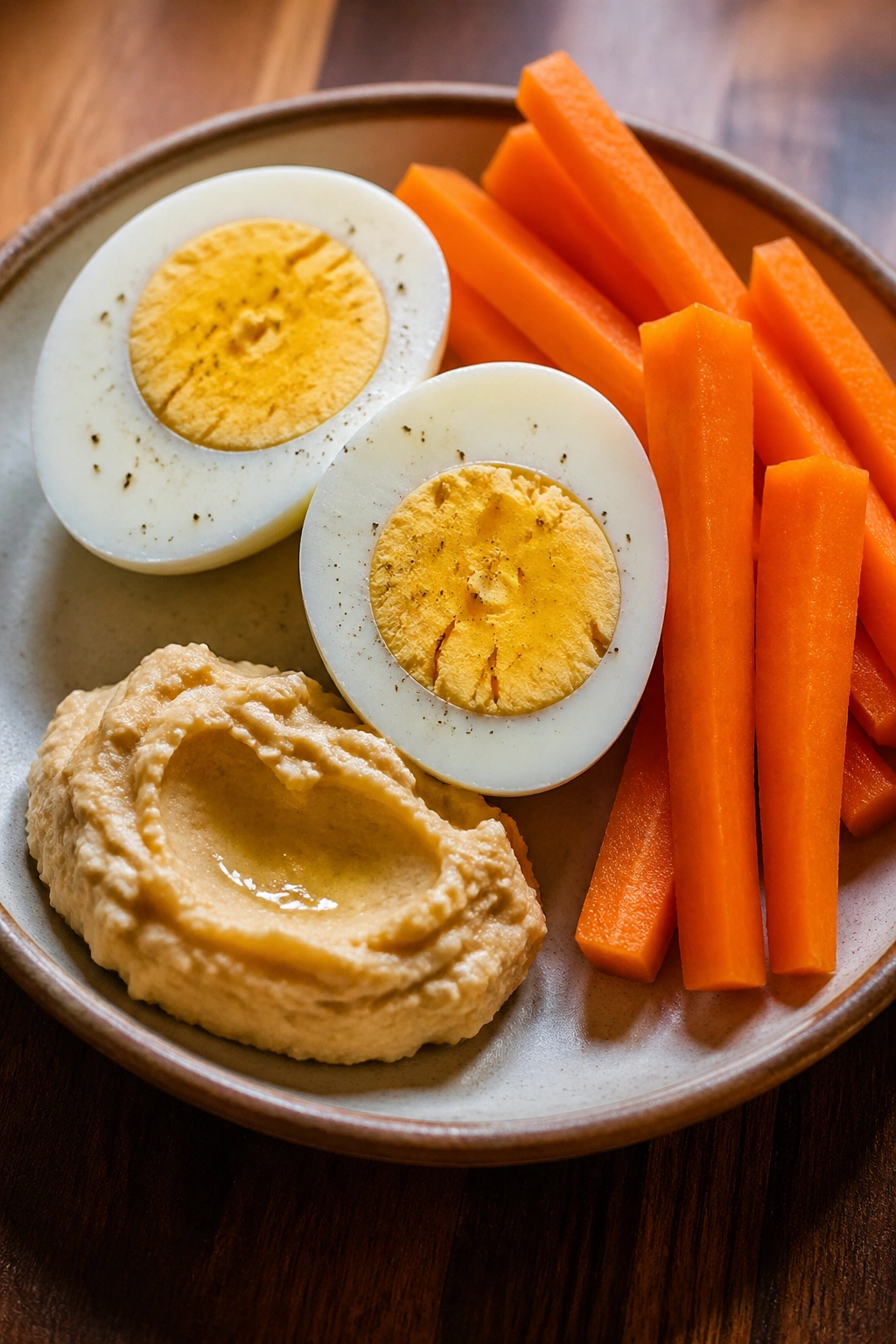
Why do eggs work so well at snack time? Because they’re compact, cheap, and easy to portion. Two large eggs with 3 tablespoons of hummus gives you around 15 grams of protein, and the carrots handle the crunch that eggs can’t provide on their own.
Protein aside, this snack is practical. Eggs travel well. Hummus gives you creaminess and fiber. Carrots hold up in a lunch bag better than cucumber or sliced apple, which start to look tired fast.
How to keep the eggs tender
Overcooked eggs are the main problem. The chalky yolk and that sulfur smell turn a solid snack into a punishment. I get the best texture by lowering eggs into boiling water, cooking them for 9 to 10 minutes, then shocking them in ice water right away. The yolks stay bright yellow, not dusty and green.
Store them in the shell if you can. Peeled eggs are convenient, but the shell protects texture and keeps them from picking up fridge odors.
A few small upgrades
Smoked paprika on the hummus helps. So does a pinch of flaky salt on the eggs. If you want more volume without adding much work, add sliced radishes or sugar snap peas beside the carrots.
Simple? Yes.
Boring? Only if you cook the eggs too long.
4. Tuna Salad Stuffed Into Mini Bell Peppers
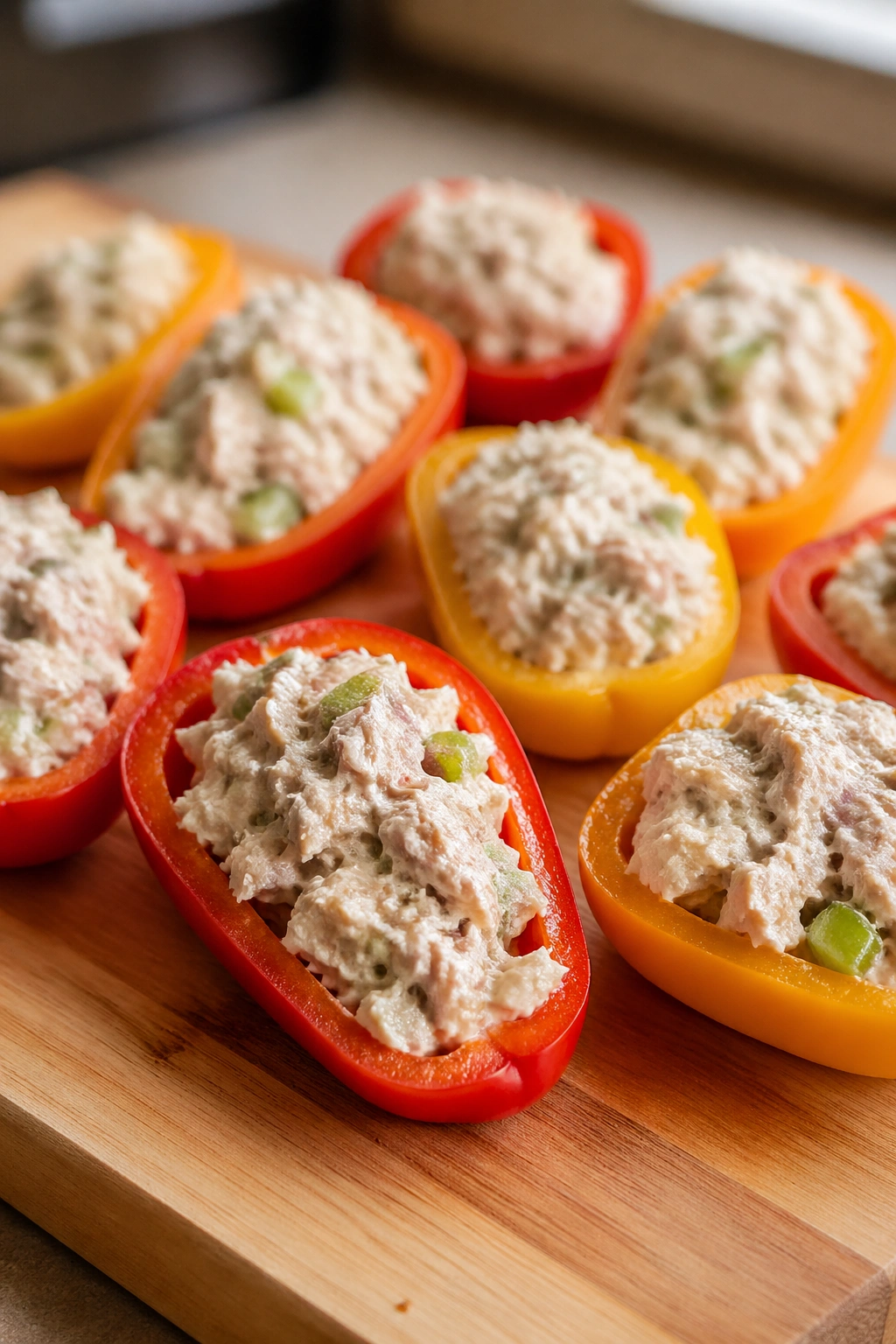
Picture a mid-afternoon snack that eats like a tiny lunch: cold, crisp, salty, a little sharp from mustard, and sturdy enough that you do not need crackers at all. That’s why tuna-stuffed mini bell peppers keep showing up in my own prep rotation.
Use one 5-ounce can of tuna or a tuna pouch, drained well, then mix it with 1 tablespoon Greek yogurt or mayo, 1 teaspoon mustard, a spoonful of chopped celery, and a squeeze of lemon. Stuff the mixture into halved mini peppers. Depending on the tuna and binder, you’ll land around 18 to 22 grams of protein.
The peppers matter more than they seem to. Their sweetness cuts the salt of the tuna, and their crunch makes the snack feel fresh instead of heavy. Crackers go stale or disappear. Peppers stay crisp.
- Water-packed tuna gives a cleaner texture than oily tuna in this setup.
- Mini bell peppers hold filling better than cucumber rounds, which can get slippery.
- Capers, dill, or chopped pickles lift the flavor without extra work.
- Pack the peppers and tuna separately if you need more than 1 day of storage.
One note from experience: keep the tuna salad thick. If it’s loose, it slides out on the first bite and turns your snack into a lap problem.
5. Steamed Edamame With Sea Salt and Chili Flakes
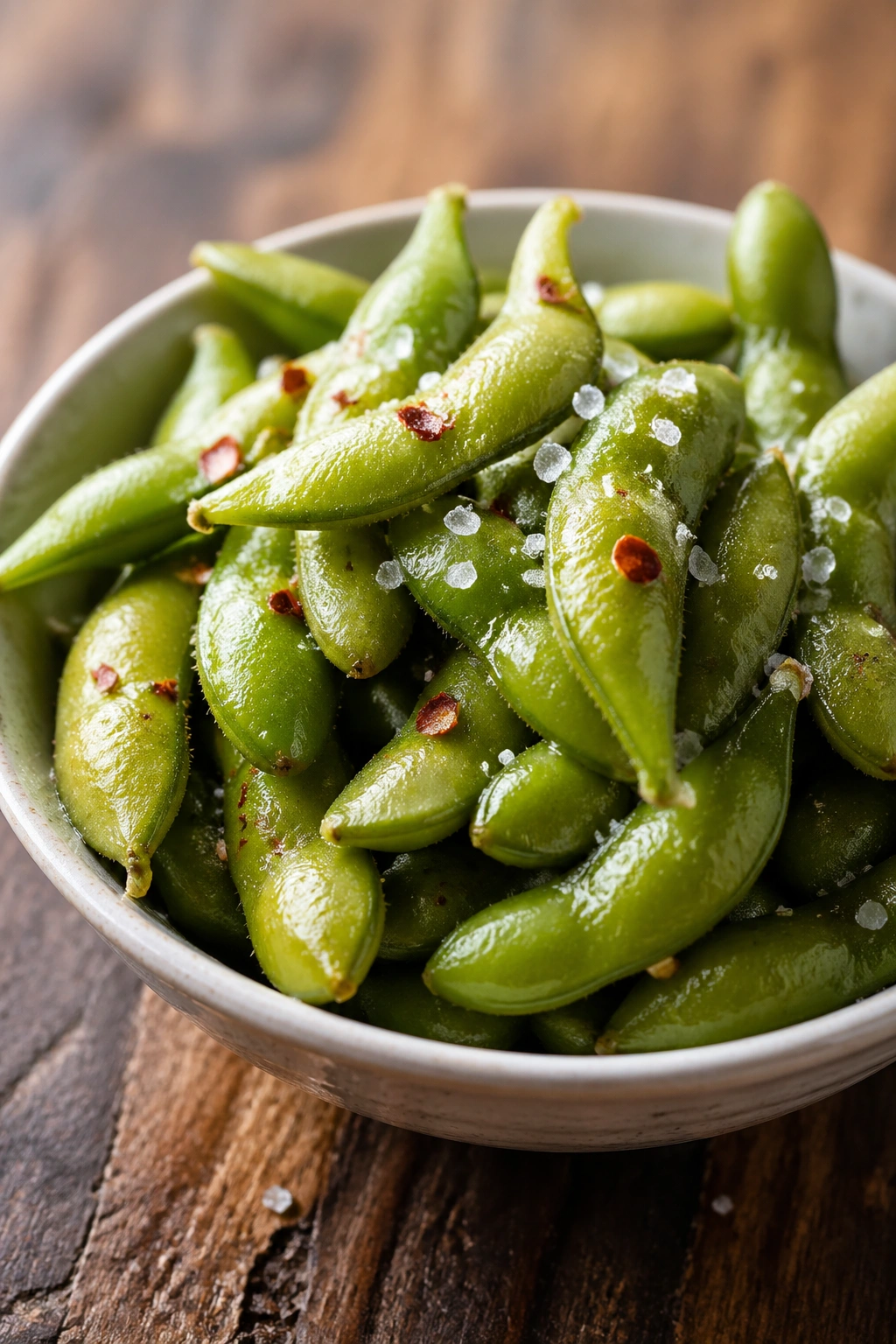
Edamame is one of those rare freezer-aisle foods that tastes bright and clean without much help. A cup of shelled edamame gives you around 17 grams of protein, which puts it right up there with the more obvious dairy and meat snacks.
Shelled edamame is the fastest route for meal prep. Three minutes in the microwave, a pinch of salt, maybe chili flakes or a few drops of sesame oil, and you’re done. In-shell edamame works too, though it slows you down because you have to pop the beans out as you eat. That can be useful on mindless-snacking days.
The flavor sits in a nice middle ground. It’s mild enough to pair with almost anything, but not bland. A little flaky salt and red pepper turns it into something you’ll keep reaching for. Lemon zest is good here too, especially if you’re tired of soy sauce.
Plant-based eaters already know this snack. Everyone else should.
Edamame also survives reheating and chilling better than people expect. Cold edamame in a lunch container still tastes good, which is not true of every bean. Lima beans, no thanks. Cold edamame, yes.
If you want to build it out, add sliced cucumbers or snap peas on the side. Keep the seasoning light. The natural sweetness of the beans is part of the appeal.
6. Turkey and Cheddar Roll-Ups
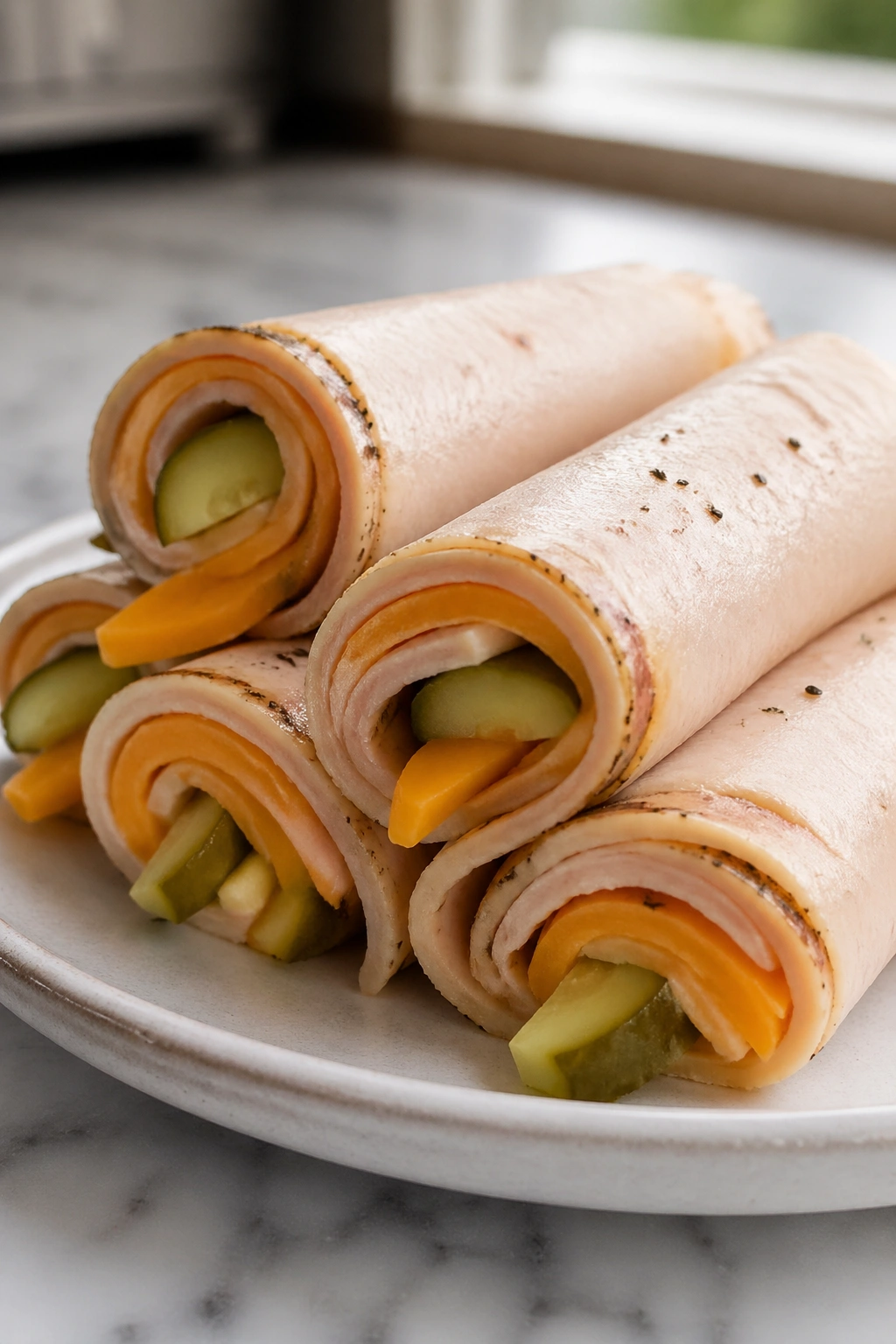
Unlike a packaged protein bar, turkey and cheddar roll-ups taste like real food. That alone gives them an advantage. Three slices of turkey wrapped around 1 ounce of cheddar usually lands in the 16-to-20-gram protein range, and you do not need a fork, spoon, or microwave.
The trick is picking turkey that’s thick enough to roll without tearing and cheese that holds shape. Thin deli turkey folded around a cheese stick works well. So do cheddar slices cut into strips. Add mustard inside the roll if you’re eating it soon, or bring the mustard in a tiny container so the meat stays dry.
Pickles belong here. A dill spear tucked into the middle gives acid and crunch, and it cuts through the salt and richness. Baby spinach can work too, though it adds bulk more than flavor.
Travel days are where this snack shines. It holds up better than yogurt, better than egg salad, better than anything that needs a spoon. Deli meat does bring sodium, so I would not build every snack around it, but for portability it’s hard to beat.
If your rolls keep unraveling, use a toothpick. Not glamorous. Works.
7. Protein Overnight Oats in Small Jars
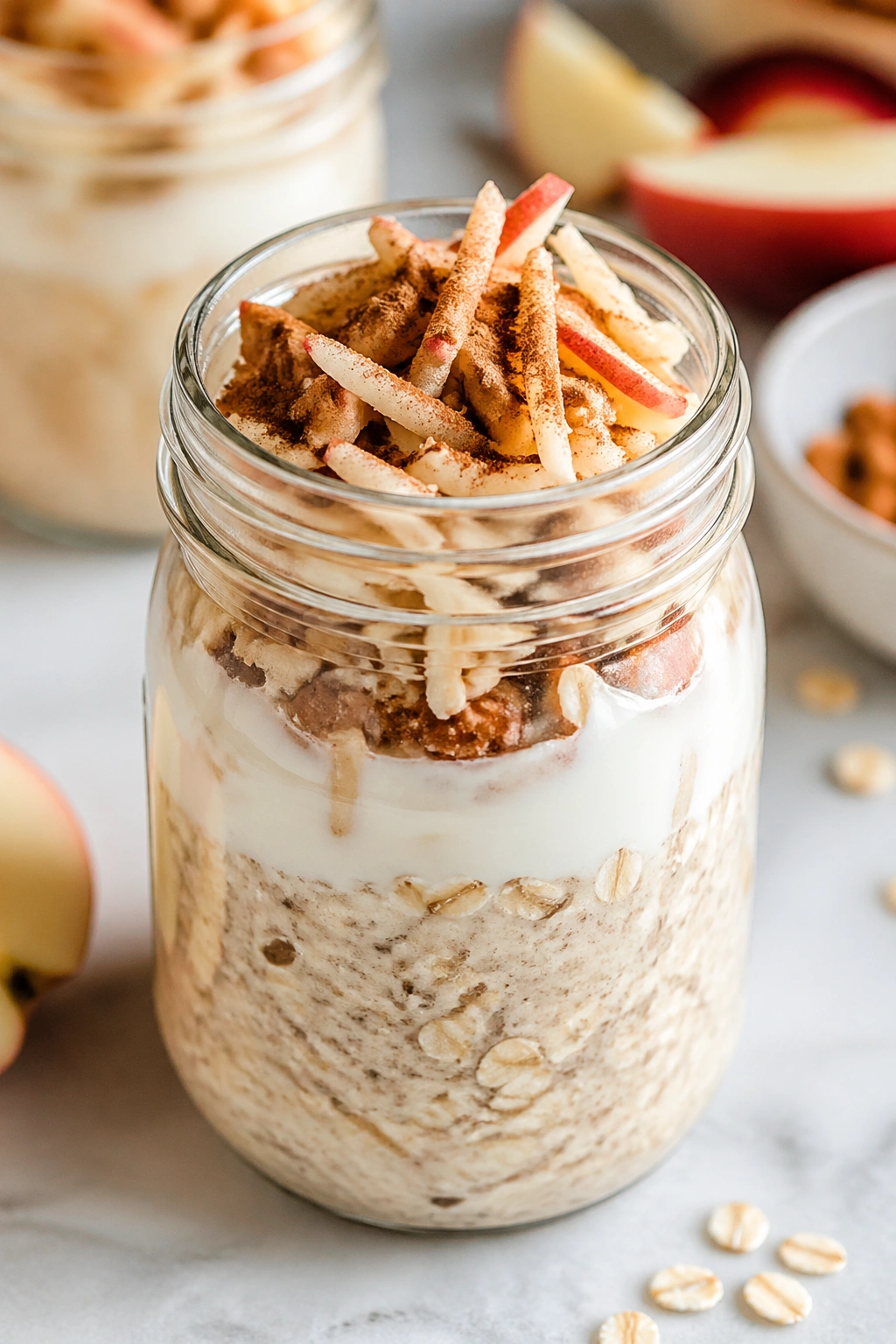
Overnight oats get labeled as breakfast food, but a small jar with enough protein makes a strong afternoon snack. The key word there is small. A giant mason jar turns it into a meal.
Build the jar with a protein-first ratio
Start with 1/2 cup old-fashioned oats, 1/2 cup milk, 1/3 cup Greek yogurt, and 1 tablespoon chia seeds. That base often gives 16 to 20 grams of protein, depending on the milk and yogurt. Stir it, chill it overnight, and the oats soften into something spoonable but still textured.
Quick oats turn mushy. Steel-cut oats stay too firm unless you soak them longer and use more liquid. Old-fashioned oats hit the sweet spot.
Good add-ins that do not wreck the texture
- Grated apple and cinnamon
- Cocoa powder and sliced banana
- Blueberries and lemon zest
- Peanut butter powder for extra protein without a greasy finish
A little salt helps more than people expect. It makes the oats taste fuller, not sweet in a flat way.
Use 8-ounce jars if you want true snack size. Twelve-ounce jars start innocent and end up feeling like second lunch.
8. Spinach and Feta Egg Muffins
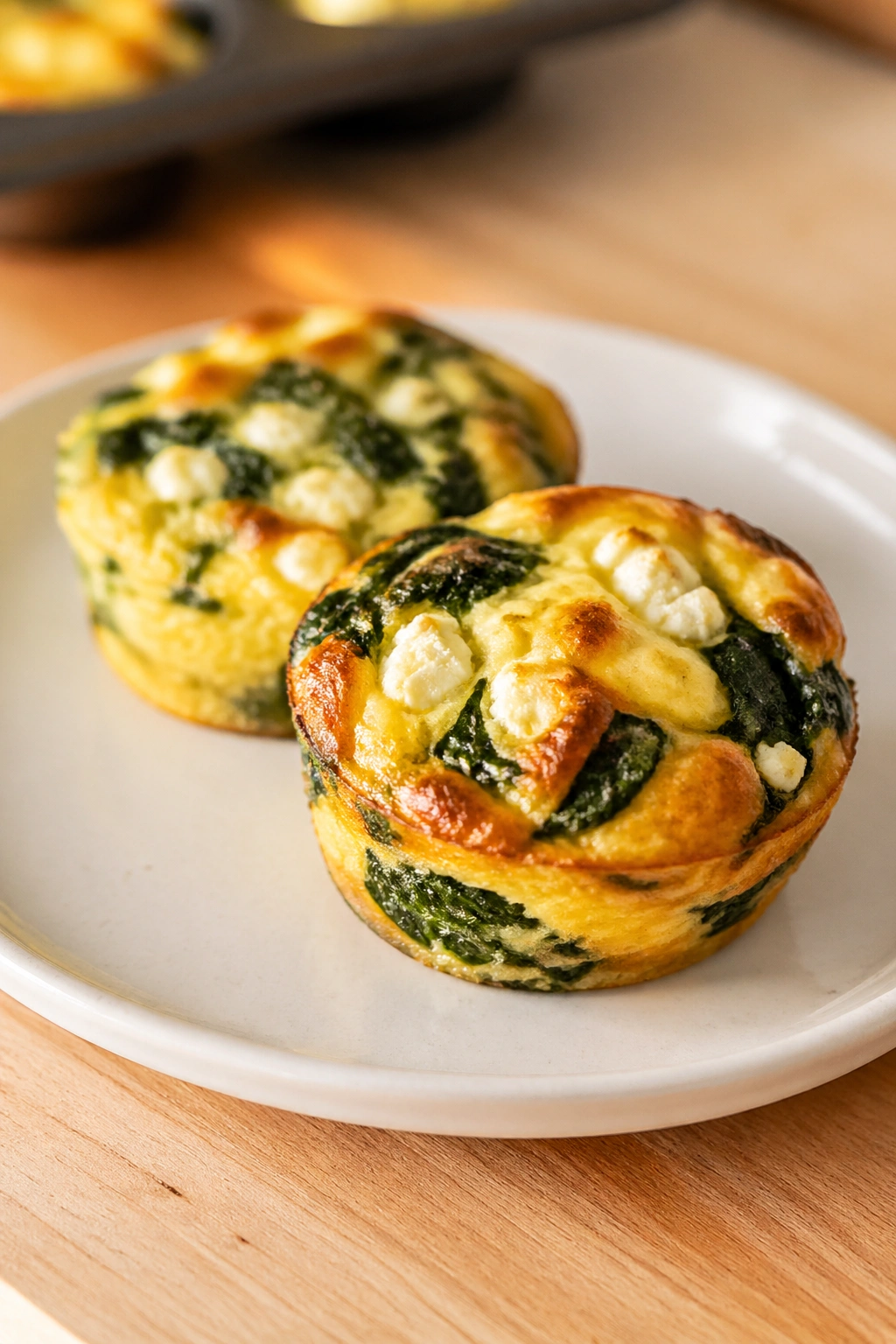
Egg muffins sound dull until you make a batch that reheats tender instead of rubbery. Then they start to look smart. Two muffins can give you 12 to 15 grams of protein, and if you mix cottage cheese into the eggs, the texture stays softer after chilling.
The formula I come back to uses 8 eggs, about 1/2 cup cottage cheese, a handful of chopped spinach, and 1/3 cup feta. Bake them in a greased muffin tin at 350°F until the centers are set, usually 18 to 22 minutes. Let them cool fully before storing. Warm egg muffins thrown into a container sweat and turn slick.
Watery vegetables cause most failures. Mushrooms, tomatoes, and zucchini can leak enough moisture to make the muffins spongy. Spinach works because it cooks down fast, and feta brings salt without extra liquid. Bell peppers are fine too if you cook them first.
These freeze well. Wrap two together, thaw overnight, then microwave for about 20 to 30 seconds. A dab of hot sauce wakes them up fast.
Cold, they’re decent. Warm, they’re better. That little reheating step is worth it.
9. No-Bake Peanut Butter Protein Bites
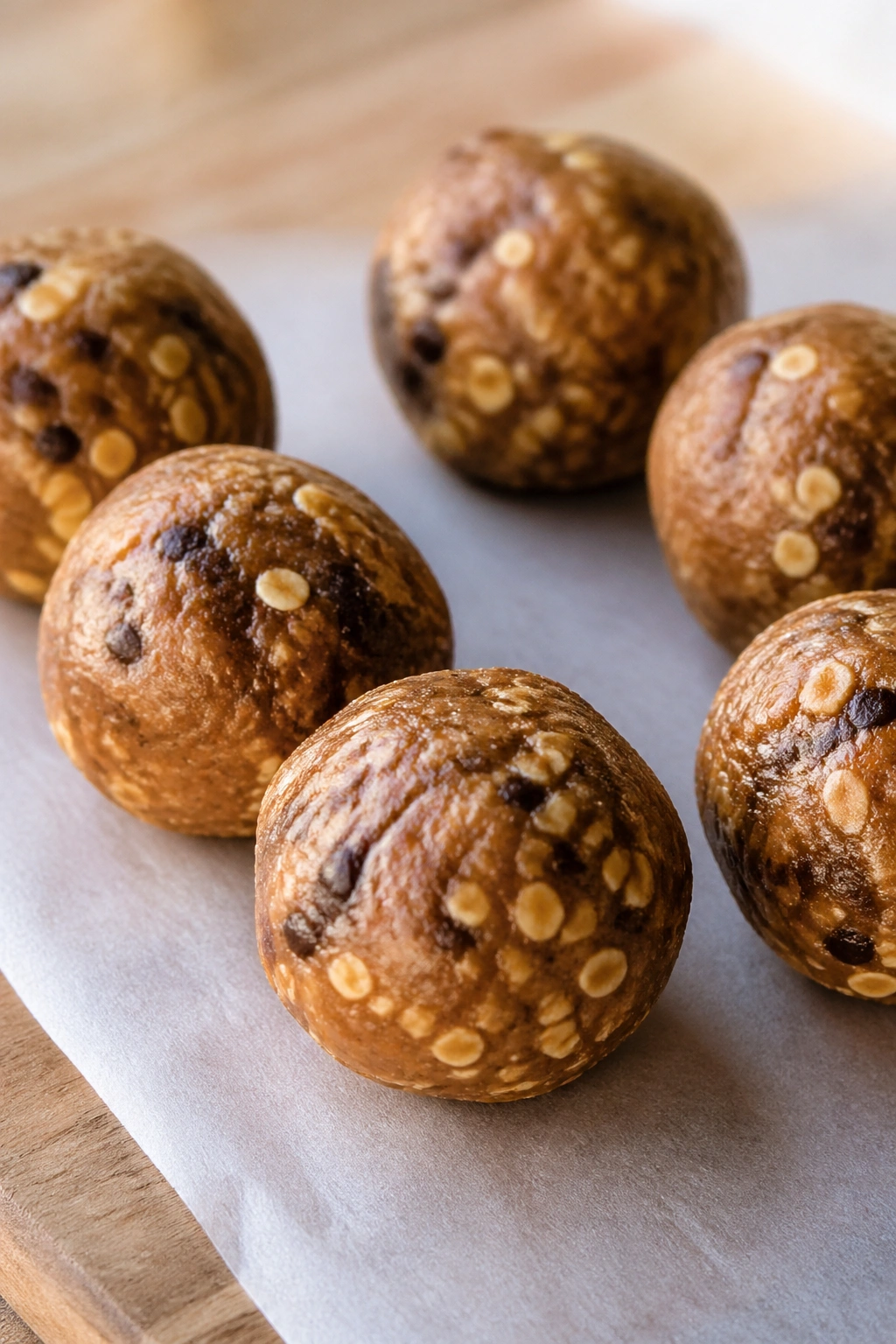
The good protein bite is small, dense, faintly salty, and sturdy enough that it does not smear all over the inside of a container. Two bites can deliver 10 to 12 grams of protein if you build them with enough protein powder and keep the oats in check.
A useful ratio is:
- 1 cup peanut butter
- 1 cup old-fashioned oats
- 2/3 cup vanilla or unflavored whey
- 2 tablespoons honey
- 2 to 4 tablespoons milk, added until the mix holds together
- 1 tablespoon ground flax or chia, if you want more texture
Stir, chill for 15 minutes, then portion with a small cookie scoop. Roll with slightly damp hands. If the mixture sticks, it needs more chill time, not more sweetener.
This is one of the rare sweet snacks I think earns its spot because it travels well and tastes decent cold. Still, there’s a line. Add too much honey or too many chocolate chips and you slide from snack into candy territory fast.
Use these on weeks when you know you’ll be out the door a lot. One or two in a container solves the “I need something now” problem without turning into a full pantry raid.
10. Jerky With Pistachios
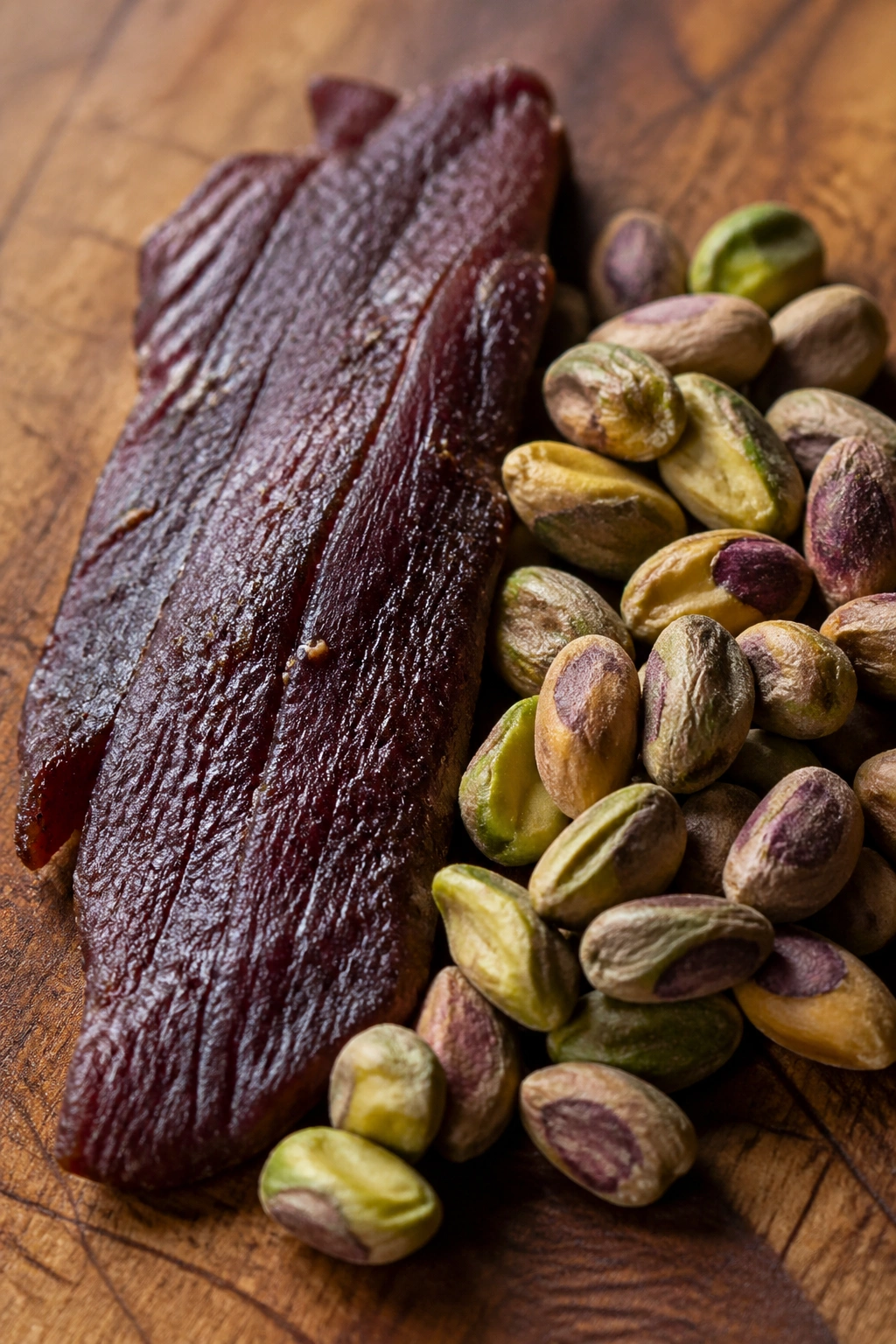
Jerky has one huge advantage: it can live in a backpack, desk drawer, glove box, or carry-on without drama. Pair 1 ounce of jerky with 1 ounce of pistachios and you usually land around 15 to 18 grams of protein, plus enough fat and crunch to make the snack feel balanced.
That portability matters more than nutrition labels sometimes suggest. A food you can keep near you has a better chance of saving you from the airport pastry case or vending machine chips.
Read the jerky label, though. Meat should be the first ingredient. Sugar does not need to be. If the jerky has 8 or 10 grams of sugar per ounce, it starts eating like candy with beef attached. Sodium will still be high in most versions. That’s the tradeoff.
Pistachios are a smart partner because they slow the whole thing down. You have to crack shells if you buy them in-shell, which cuts mindless eating. Shelled pistachios are quicker. Your call.
I would not build every snack week around jerky. I would keep two emergency packs around at all times.
11. Crispy Baked Tofu Cubes
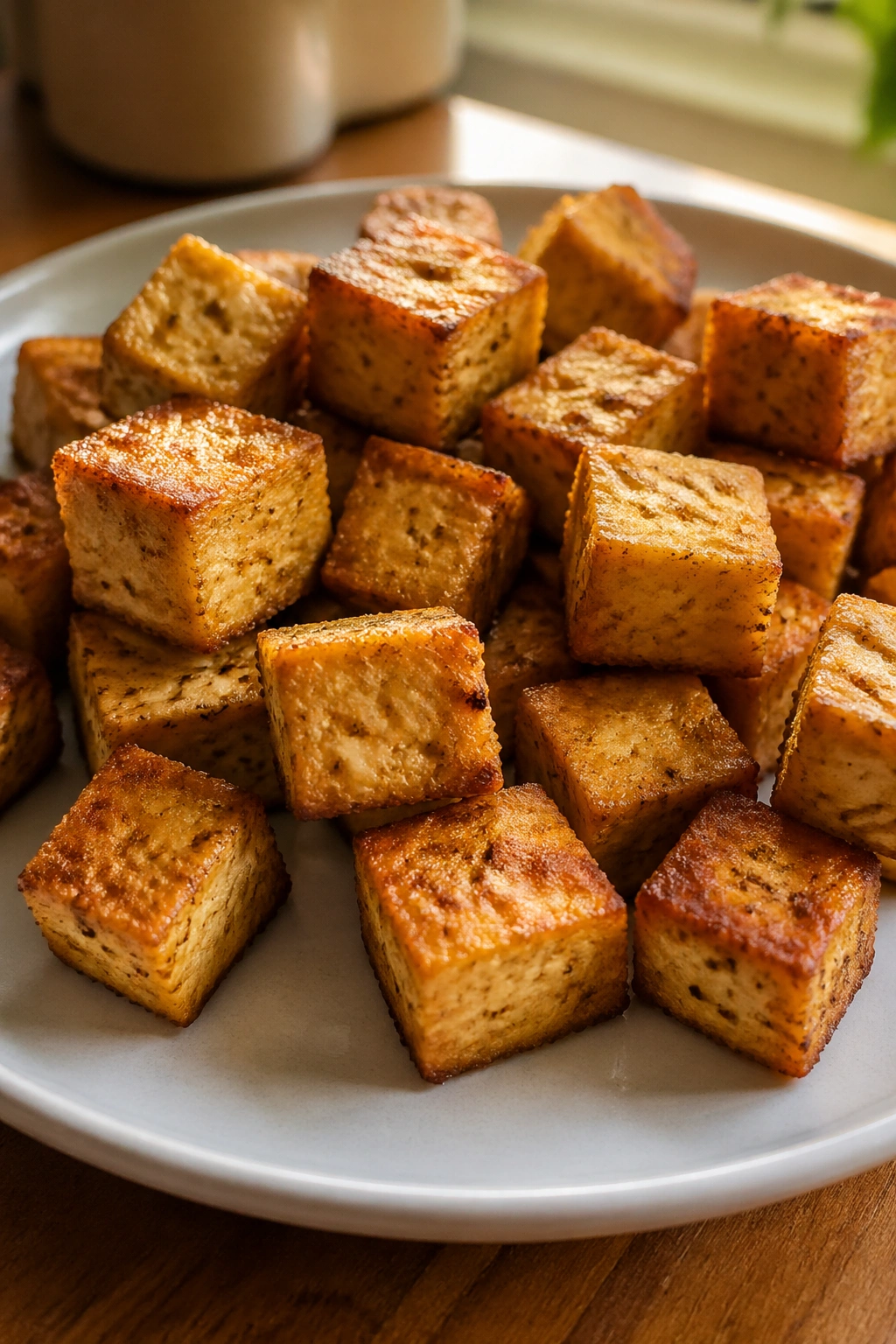
Tofu becomes snack-worthy only after you deal with texture. Soft, wet cubes dropped straight from the package into a container are not going to win anyone over. Press it, season it, crisp it, and 4 ounces gives you around 12 grams of protein with room to add flavor.
How to get the edges crisp
Use extra-firm tofu. Press it for about 20 minutes between clean towels with a skillet or cutting board on top. Cube it, then toss with 1 teaspoon soy sauce, 1 teaspoon oil, and 1 to 2 teaspoons cornstarch. Bake at 425°F for 25 to 30 minutes, turning once. The outside should look dry and lightly browned, not pale and damp.
Air fryers do a strong job here too. Around 375°F for 12 to 15 minutes usually gets you there.
Seasoning ideas that hold up cold
- Smoked paprika and garlic powder
- Soy sauce with ginger
- Curry powder and a pinch of salt
- Chili crisp added after baking, not before
Cold baked tofu with a dipping sauce works. Warmed for a few minutes, it works better. Pack sliced cucumbers or snap peas alongside and you’ve got a plant-based snack with chew, crunch, and staying power.
12. High-Protein Chia Pudding
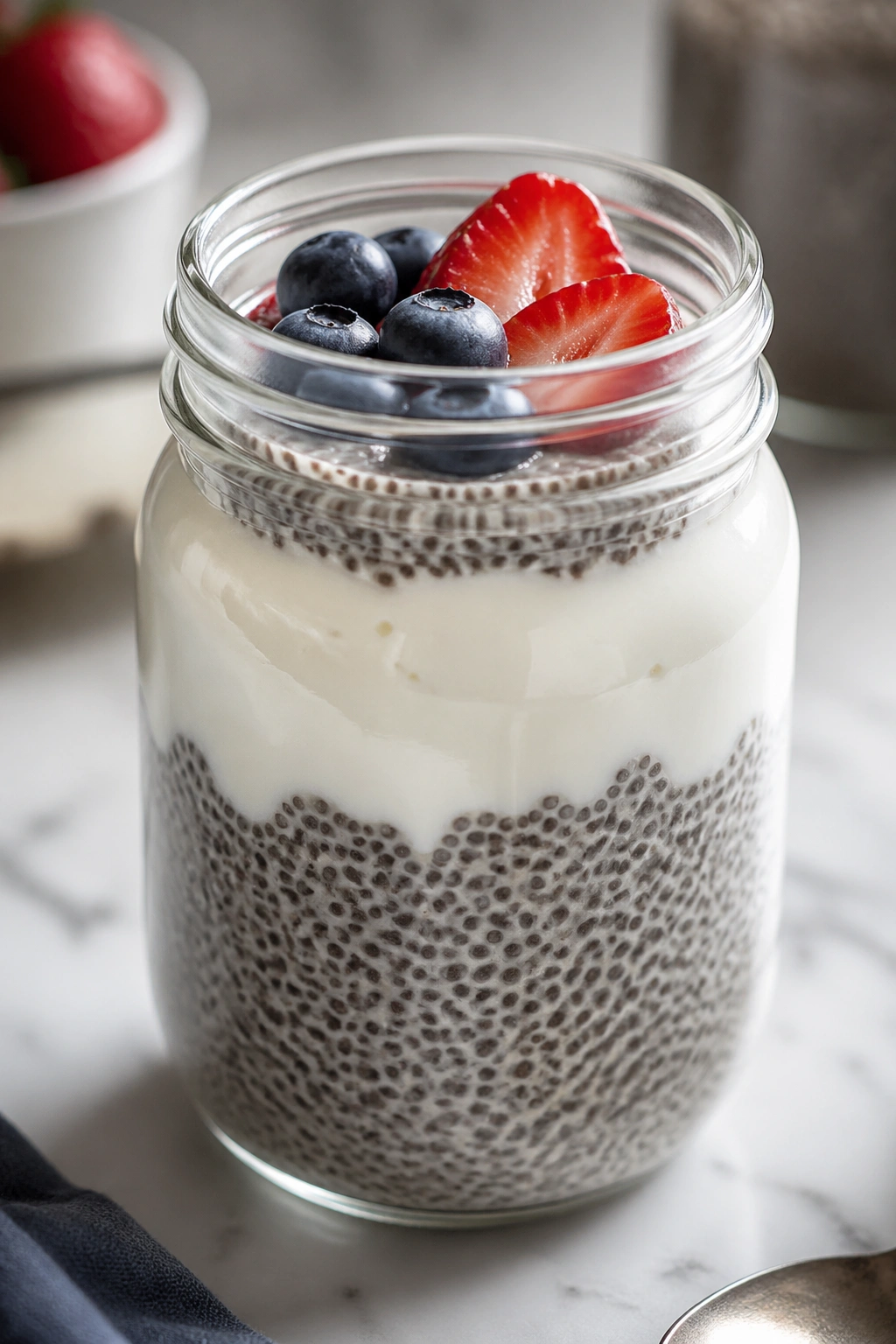
Can chia pudding carry enough protein on its own? Not quite. Chia seeds bring fiber and some protein, but not enough to make this a serious high-protein snack by themselves. The fix is adding Greek yogurt, skyr, or protein powder so the cup lands in the 15-to-20-gram range.
A ratio I like is 3 tablespoons chia seeds, 1/2 cup milk, and 1/2 cup Greek yogurt. Stir it well, wait 10 minutes, then stir it again. That second stir matters. Skip it and you get clumps stuck together at the bottom and a thin layer on top.
Vanilla, cocoa powder, cinnamon, mashed berries, even espresso powder can work here. Mango is tasty, though it loosens the texture more than berries do. If you add protein powder, start small. One scoop can turn the whole thing pasty if the liquid is not adjusted.
Texture decides whether people love or hate chia pudding. If you want it smoother, blend the liquid with the yogurt before adding the seeds. If you like the tapioca-style feel, leave it as is.
Cold from the fridge, it’s thick, cool, and filling in a way that surprises people the first time around.
13. Chicken Salad on Cucumber Rounds
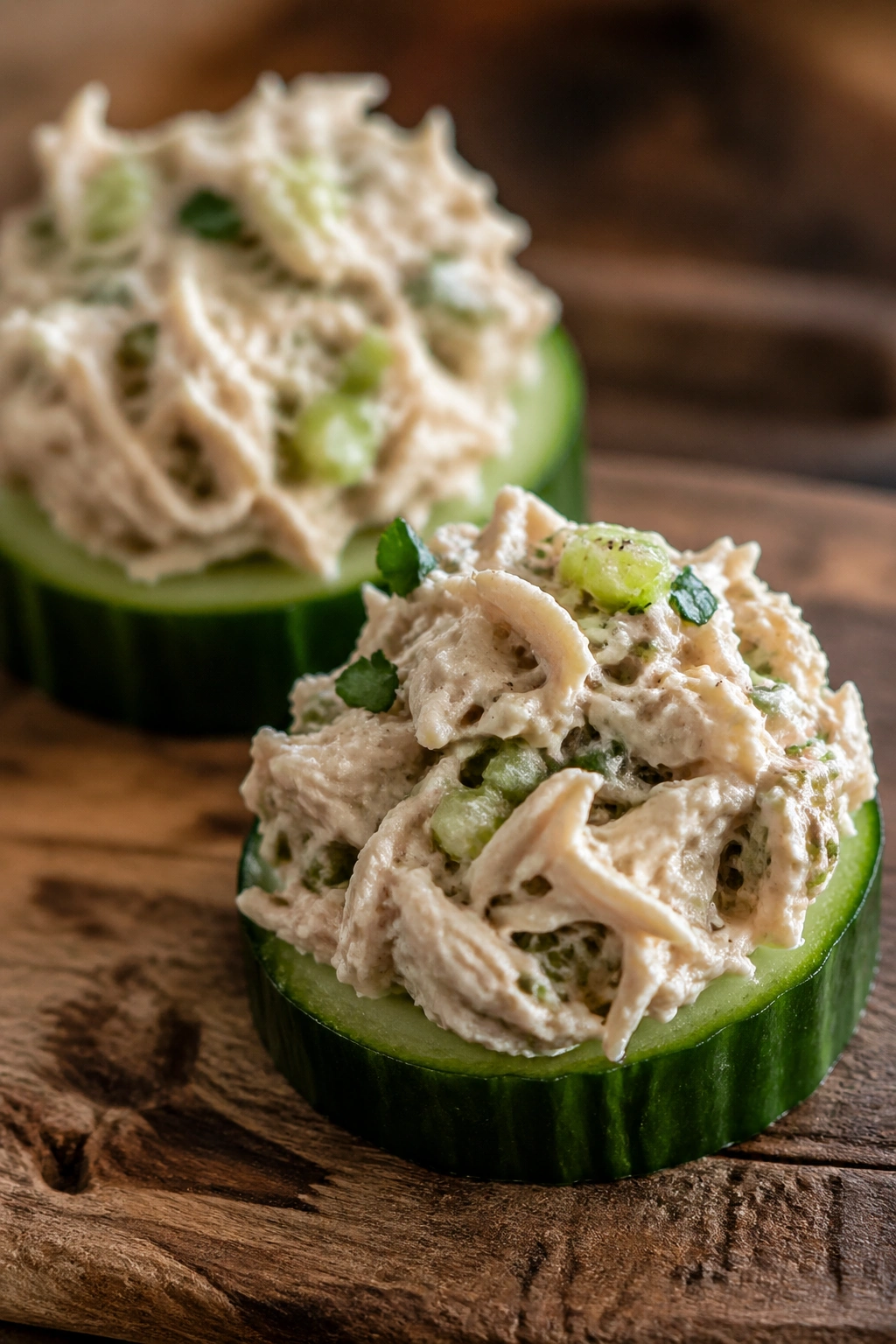
Chicken salad feels like lunch, which is exactly why it works so well as a snack when lunch is fading and dinner is still far off. A modest serving can give you 18 to 22 grams of protein, and cucumber rounds give you the fresh crunch that crackers usually take over.
Shredded chicken breast works best here because it holds dressing without getting pasty. Mix it with a spoonful of Greek yogurt or mayo, Dijon, chopped celery, and herbs. Dill is good. Chives are good. A squeeze of lemon helps wake up bland chicken fast.
The cucumber needs care. Slice it thick enough to support the topping — around 1/2 inch is a good target — and dry both sides on paper towels. Wet cucumber plus loose chicken salad equals a snack that slides apart.
- Rotisserie chicken breast saves time and holds flavor well.
- Keep the salad thick, not runny.
- Pack cucumber and salad separately if you’re prepping more than 1 day ahead.
- Eat within 3 days for the best texture.
If you’re bored of tuna and eggs, this one is a strong reset.
14. Roasted Soy Nuts and Pumpkin Seed Crunch Mix
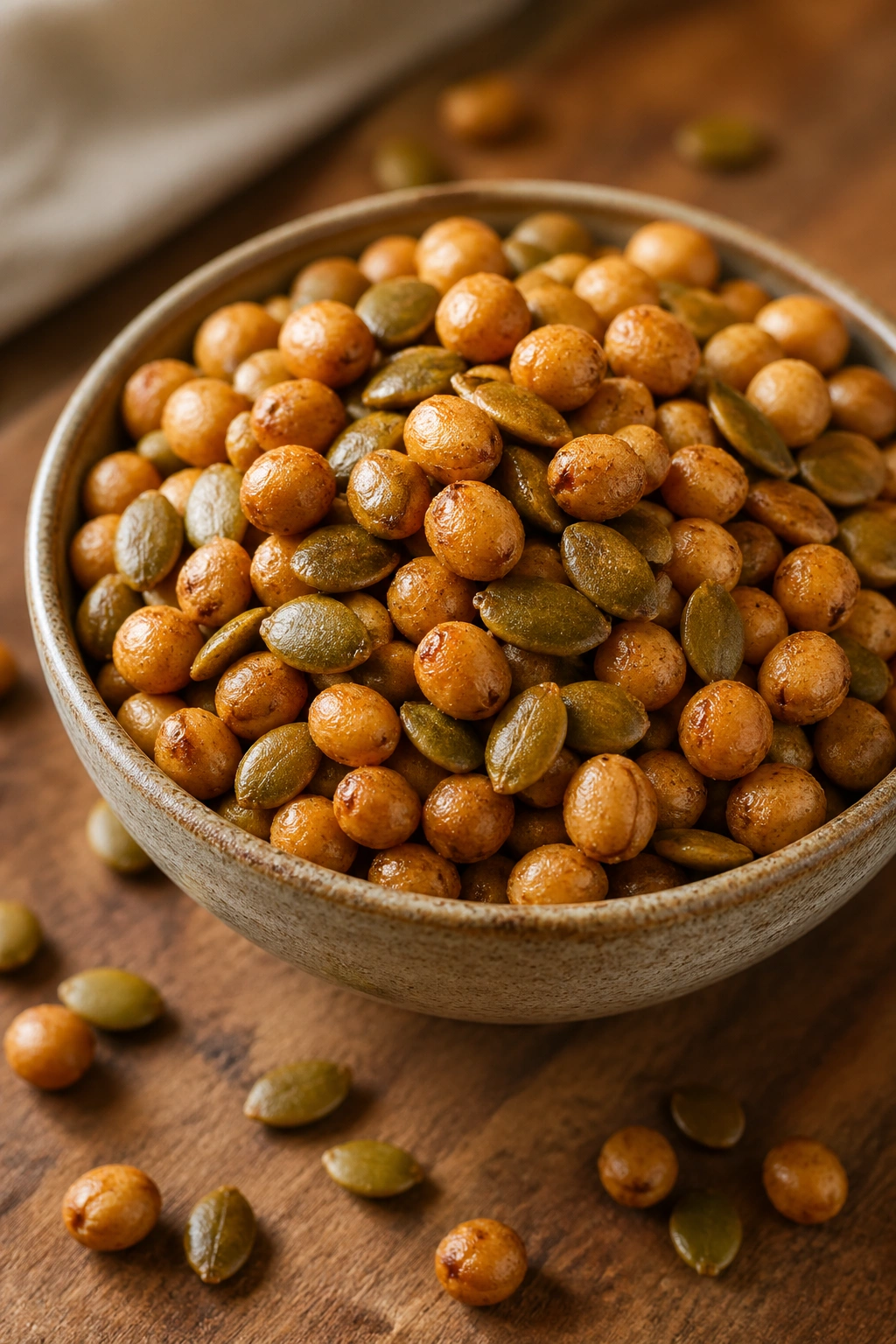
Most store-bought trail mix leans hard on candy, dried fruit, or giant clusters of sugared nuts. That’s fine for a hike. For a weekday snack, I’d rather have a crunchy mix built around soy nuts and pumpkin seeds, which can give you 14 to 16 grams of protein per portion without the sugar rush.
Roasted soy nuts are the key. They pack more protein per ounce than almonds or cashews, and they stay crisp for days. Pumpkin seeds bring minerals, crunch, and a slightly earthy flavor that helps the mix taste more like food than dessert.
A good portion is smaller than people expect. Think 1/4 cup soy nuts plus 2 tablespoons pumpkin seeds, maybe with a spoonful of roasted chickpeas if you want more volume. Toss in smoked paprika, onion powder, or a pinch of cayenne while the nuts are still faintly warm if you’re roasting them yourself.
This snack is calorie-dense, so portioning matters. Eating from the bag is how a snack becomes a full handful-and-a-half situation before you notice.
Still, for desk work and travel, it’s hard to beat that dry crunch.
15. Marinated Lupini Beans With Lemon and Herbs
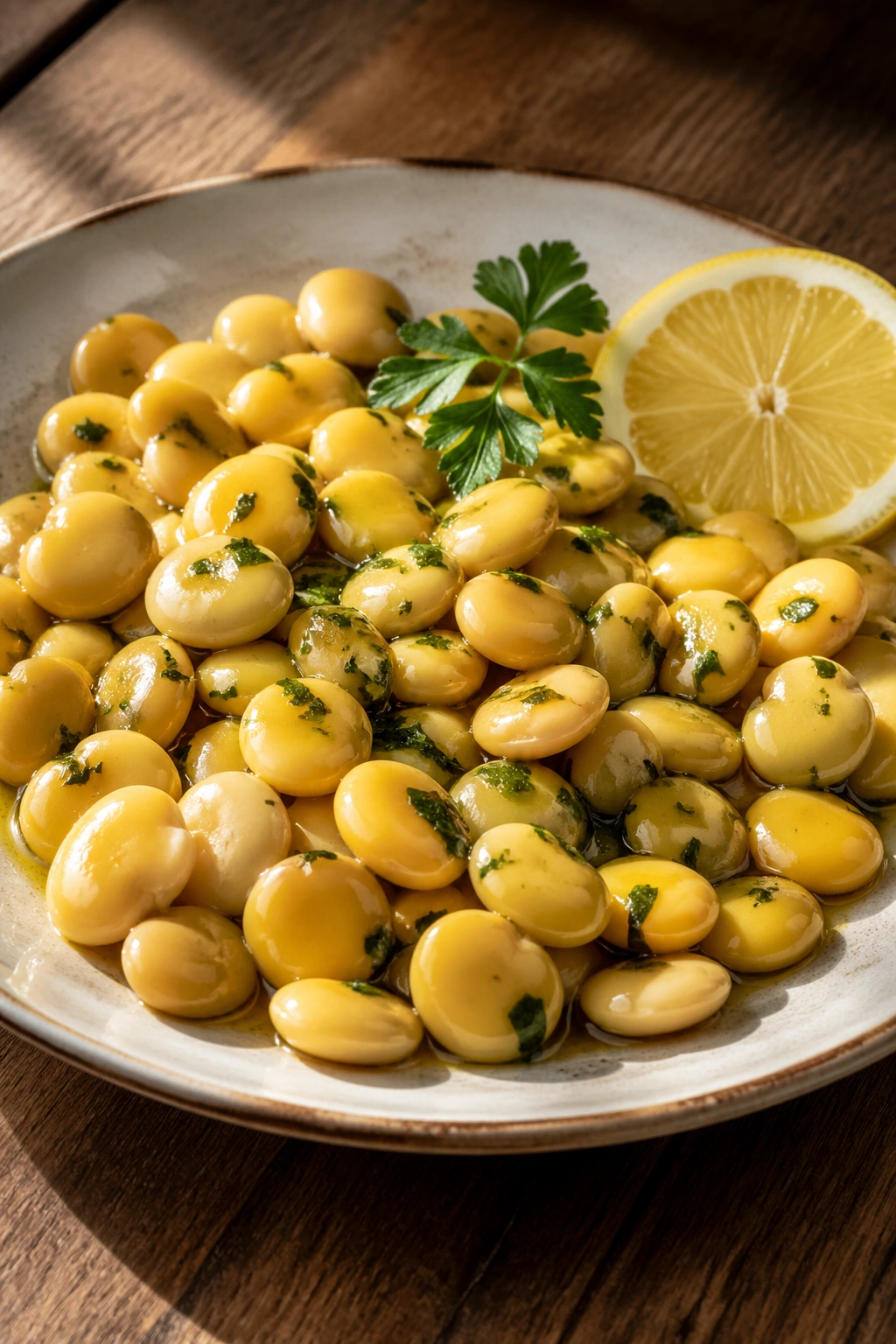
Lupini beans deserve far more attention than they get. They’re firm, a little briny, pleasantly chewy, and high in protein and fiber at the same time. A half-cup serving often gives you 12 to 13 grams of protein, which puts them well above chickpeas in the snack conversation.
If you buy them in brine, rinse them first. That washes off some of the salt and sharpness. After that, toss them with lemon juice, olive oil, chopped parsley or oregano, black pepper, and red pepper flakes. The beans hold flavor well, so even a short marinade helps.
Some lupini beans come with skins you squeeze off before eating. Others are ready straight from the pouch. Check the package. Once you get used to them, they’re oddly addictive — more substantial than edamame, less creamy than white beans, nowhere near as mushy as canned chickpeas can be.
They’re also useful for people who are tired of the same old protein snacks. Eggs, yogurt, turkey, repeat. Lupini beans break that loop without asking you to cook anything.
Cold, lemony, salty, fast. Hard to argue with that.
Final Thoughts
If you want high-protein snacks that pull their weight, aim for enough protein to matter and enough flavor to keep you coming back. Around 10 grams is a decent floor. Fifteen to 20 grams is where snack time starts to hold you steady in a noticeable way.
Texture is half the game. Crunchy peppers make tuna better. Dry cucumbers make chicken salad work. Pressed tofu beats soggy tofu every time. A few small prep habits change whether these foods feel fresh on day three or end up forgotten behind a carton of eggs.
I’d start with three formats, not fifteen all at once: one creamy snack, one grab-and-go portable snack, and one savory prep-ahead snack. That mix covers most real life.
Then pay attention to which container empties first. That’s usually your answer.
